Browsing Category

Travel

Trieste (1)


Scores of people come to this ancient seaport town each year to pay homage to James Joyce, who wrote his Ulysses   here. The city accommodates them by putting up plaques at about every corner, bridge, staircase, churchyard ever touched by his foot, seemingly not a millimeter of Trieste not once traversed by the master.

My first-day pilgrimage, though, honored a different man – one who is a serious contender on my who to take to a deserted island list. (Remind me to do a week of blogs about the rest of them.) Johann Joachim Winckelmann, the founder of art history and art criticism as we know it, known as the father of modern archeology, is buried here.

The man’s life reads like a Russian novel. Born into extreme poverty in Prussia, his father a cobbler, he dug his way out by his wits. Scholarly excellence landed him at a number of universities, studying first theology, then medicine, but ultimately falling in love with ancient languages and developing a passion for Greek art. He devised a system of learning new languages in what is claimed 6 weeks, eventually able to converse in 12 of them. He was appointed to ever more prestigious posts as researcher/librarian/envoy for German aristocrats and then various Italian cardinals who opened their ancient art collections to him and enabled him to participate at the digs of Pompeii and Hercanuleum. As papal antiquarian and later secretary to Cardinal Albani he had found a space that allowed for his intellectual acumen to blossom. And, one might add, his homosexuality to be silently tolerated.

Say what you want about dead, old, white men, or the idealization of the Greek male body, Winckelmann wrote the first defining book of how to approach art, both in terms of systematizing epochs of creative output, and also how to read an individual work of art. His 1764 History of the Art of Antiquity was recognized to be revolutionary, and had an influence on many great minds of his time: Kant, Herder, Goethe and Lessing, the painters Mengs and Oeser among them. It lays out a scientific methodology to approach both art and archeology.


It is not dry scholarship, though. If you read his 1755 Reflections on the Painting and Sculpture of the Greeks  you’ll find someone thinking through such cultural and technical factors as climate, freedom, and craftsmanship in explaining the art of a people all in a schmoozing writing style that feels like having a personal conversation. That probably helped to make him so influential in renewing Northern Europeans’ interest in the ancient Greeks.

Which, as we know, had some dire consequence independent of the gains for the world of art history. His enchanted proclamation of the linkage between ancient Hellas and Germany found eventually a willing ear in the philhellenic Führer of the third Reich: just look at the Olympics and then his propaganda surrounding the art of war, all wittingly embraced by all too many Germans steeped in classical education. Eliza Butler wrote a scathing analysis of the implications already in 1935, The Tyranny of Greece over Germany.  https://www.amazon.com/Tyranny-Greece-over-Germany-Eighteenth/dp/1107697646 

On his way back from Vienna to Rome in 1768, the guy met his premature end in Trieste, being murdered by a chance acquaintance he took to his bed, who coveted some coins he saw which turned out to be medals that Empress Maria Theresia had just bestowed on the writer. He was buried at a local church, but his bones were mixed up with others. Eventually they erected a cenotaph at the local Museo d’Antichitá. http://www.museostoriaeartetrieste.it


The neoclassicist sarcophagus is crowned with a melancholic figure holding a medallion with Winckelmann’s portrait. Underneath is a relief that shows him in a toga, shining a torch on representations of:  painting, sculpture, architecture, history, critique, philosophy and, sitting, archeology.

Can’t but grin, when you look at it. Unless you are a Reed Professor teaching Hume 110 and thinking about the current crop of students who want nothing to do with all of this any longer.

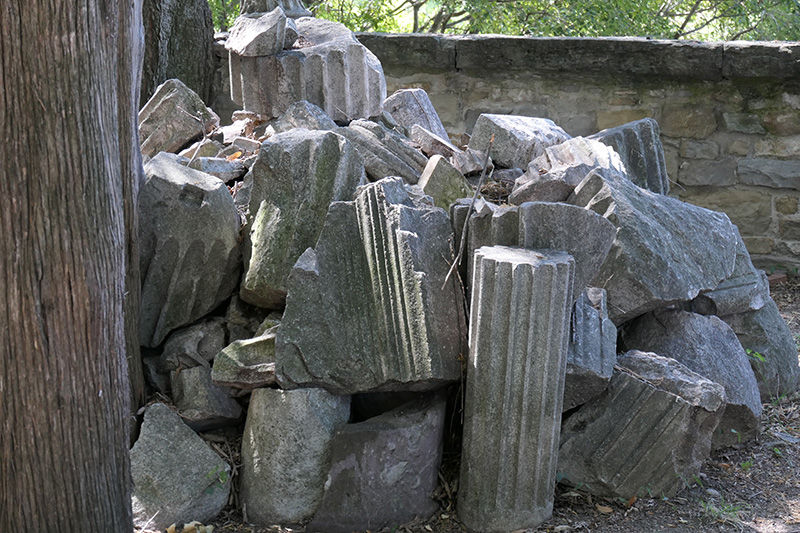
Outside is a lovely, quiet courtyard, seemingly untouched by the masses pursuing James Joyce, or any other masses, for that matter.

 

Vienna (4)

Ever heard of the Austrian Friedrich Stowasser? Yes, you have. You just know him under the name Hundertwasser, the short form of his chosen pseudonym Friedenreich Regentag Dunkelbunt Hundertwasser (full of peace rainy day darkly colored hundred water.)

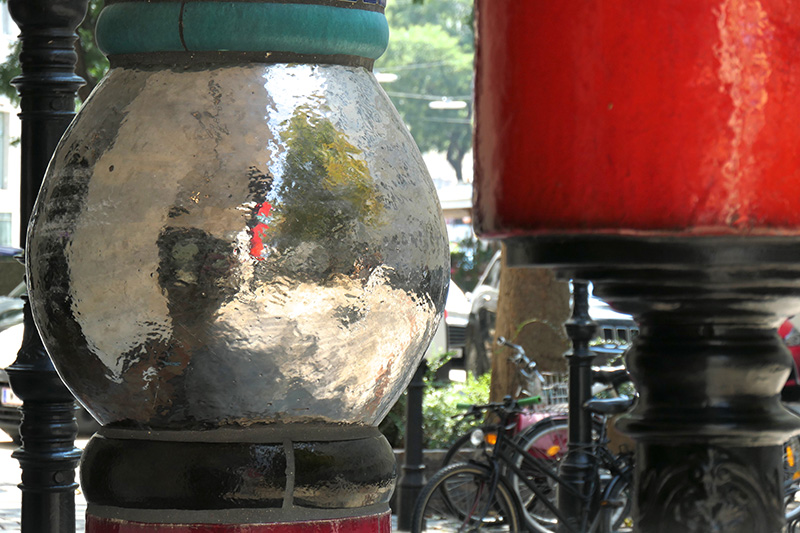
Yesterday offered views of an apartment house he built and a museum dedicated to him in a building of his own design (Kunsthaus Wien).

It is  sort of funny that I was reminded of an exclamation mark when looking at the output of a man who abhorred straight lines.


Also notable that an artist, who fought standardization at every step, created a major oeuvre without changing much through the years, having found a certain schtick and sticking with it until the end. (Judging this by what I saw at the museum, I am not familiar with his painting in depth.)

The straight exclamation mark-impression was triggered by the ways attention is demanded by every design trick in the book, beyond the absence of right angles. Look here!!! Here is color!! Here is surprise! Here is daring!! Here is norm breaking!! All delivered with messianic zeal, once you read the artist statements. Let’s show photos of all the famous company I kept! Let’s be flamboyant!!!!!!

My reaction was perhaps strengthened by the contrast effect provided by an exhibition of images by Finnish photographer Elina Brotherus across the upper two floors of the Hundertwasser house.

https://www.kunsthauswien.com/en/exhibitions/elina-brotherus/. 


Her art, on the whole, elicited associations to a colon: that threshold that invites you into something new and noteworthy. Brotherus, not particularly known in the US, is represented in major collections across European Museums and rightfully so. Her’s is quiet, piercing work, focused on self and landscape, depicting emotion with clarity and courage, confronting the viewer with deep personal revelations.

The mid-career exhibit also shows trajectory rather than stagnation – the recent years demonstrate less a focus on self and more an engagement with the world, through means of appropriation, choice of topics and collaborators and infusion of wit, rather than that nordic darkness so pressing in the early years.

A remarkable exhibit in content as well as form. My only quibble was the choice of image used to introduce the show: a reenactment of Kaspar David Friedrich’s “Der Wanderer über dem Nebelmeer” which allows you to see only the back of a person. It seemed motivated by the recognition factor of another famous piece of art and not all point to the strength of Botherus’ overall engagement with the viewer: looking straight at us in almost every photograph, face to face.  (I realized, by the way, when sorting through my photographs of the day – which were not only permitted but invited by exhibit instructions – that I had not taken a single one of her looking at me even though those comprise the majority of the show. It felt like the intimacy of her gaze demanding empathy had elicited just that – not to be disrupted by intrusive documentation. Maybe that explains the curatorial decision making.)

Another thought provoking day in Vienna. Another photographer among the multitudes ….


Vienna (3)


“We rarely see tourists here,” said the friendly woman at the neighboring table at a cafe.  “Are you looking for something specific? Have you finished the central district with all the palaces?” No and no were the respective answers – just wandering off the beaten path. Although impressed by the architectural symbols of power and wealth around the monumental palaces and national buildings, the beauty of a city that breathes history at every street corner, I am always more curious to see how people actually live.

Neighborhoods in the 6th and 7th district, for example are incredibly diverse, both with regard to architectural substance and groupings of wealth – some ritzy enclaves exist right next to streets and passages that have seen better times, approximately 300 years ago….

To give you a taste, I’ll first post some images of central Vienna, with its museums and imperial buildings.


Next there are your average neighborhoods, with a few new modern buildings thrown in, and with some streets that have the old core buildings intact and nicely renovated on one side, and ugly 1950s housing on the other erected after bombs destroyed the old substance.


Here are some incredible details that can be found on buildings everywhere.


And here is the truly interesting history: The planned housing of Red Vienna. (The following tidbits are excerpts of a comprehensive article on the socialist politics of Vienna in the 1920s) https://www.jacobinmag.com/2017/02/red-vienna-austria-housing-urban-planning

The granting of the right to vote to women and workers in 1918 led to an immediate rise to power by the Austrian social democrats. Through tax-based wealth redistribution, they engaged in massive investment in infrastructure after the catastrophe of world war I in general and in decommodifying shelter in particular. Vienna in the 1920s was the 5th largest city in the world and had catastrophic housing conditions. Trying to undermine speculation, the government bought up property, becoming the single largest real estate owner in the city by 1924. Between 1923 and 1934, it built over sixty thousand new apartments, which also served as job creators.

One huge project was the Karl Marx Hof, a massive apartment complex with 1400 units that hailed green inner courtyards, running water and toilets in each apartment, and in some areas communal kitchen to lighten the load of working women, and strengthen community ties.

“Neither the complexes nor the various companies and services established to support them were intended to make a profit. The city administration continued to run public services like gas, water, power plants, and public transportation and pushed to take over private industries including garbage disposal and the canals.Rents were calculated to cover these operating costs and nothing more; in 1926, they averaged about 4 percent of a worker’s monthly wage.”

With the advent of the economic crisis of 1929 and the festering conflicts of the urban/rural divide things went downhill fast. Loans from the League of Nations were to tie over the republic, but with austerity measures as strings attached. Restructuring programs dismantled the social infrastructure and actively slashed workers’ rights. Add the Nazi take-over, and the socialist dream was toast.

Today you can still visit the site and see the apartments, but history has not been on the side of socialist ideals, now even less so after the last election…..


Vienna (2)

As if their litte-red-riding-hood outfits aren’t torture enough, the flight attendants at Austrian Airlines have to listen constantly to Johann Strauss waltzes piped through the speaker system supposedly to prepare passengers for Vienna, the city of music.

You might roll your eyes on the plane, as I did, but once here the history of musicians living, working and dying in Vienna certainly grabs you, somewhat overwhelming in all its riches.  They are revered and remembered, as seen when walking through the city, the outlying villages that often housed summering aristocracy with their attendant composers or performers, and in the central cemetery where a whole section of honor graves is devoted to famous artists.

Let’s start with the latter: Vienna’s Zentral Friedhof can be reached by a comfortable 40 minute streetcar ride. It is the second largest cemetery in Europe, a peaceful place that is in alternation well tended and totally dilapidated, the latter particularly in the old Jewish section which is covered at times in knee-high fields of stinging nettles.. No wonder, given that there are no families left of those buried here in the 1800s.

The cemetery offers sections for all religions, all kinds of wildlife,

and houses famous musicians. Mozart’s remains were transferred here from a pauper’s grave;


Beethoven,

Brahms,

Schoenberg and Schubert are buried here;

so are Franz von Suppe and of course Johann Strauss.

For those of us devoted to some of their music paying respect tugs at some heart strings.


It doesn’t hurt either that the cemetery cafe offers by far superior fare than most other tourist trap cafes in the center city – and yes, I have tried a few…


Today I took the bus to the village of Kahlenberg, a small hamlet amongst endless vineyards, which has its own musical history. Schubert’s premiere performance of his Lied: Leise flehen meine Lieder took place at a birthday party here 190 years ago to the day, August 7, 1828.

There is a Linden tree dedicated to him across from the house (which later on housed the very first Austrian asylum for orphaned children.)


A long, hot hike through the vineyards with Vienna visible in the distance led to the village of Nussbaum, which celebrates several musical inhabitants of yore, among them Richard Tauber and Karl Millöcker.

And finally nearby there is the cloister of Klosterneuburg, dripping in wealth, but sharing it tastefully, both in its museal configurations and in its performance of live chamber music and operas throughout the summer in some sort of amphitheater.

For once I did not think about the catholic church’s means of acquisition of wealth (in this case the very first vineyards on Austrian soil) or its oppressive use thereof, but simply enjoyed a hot summer day under the beauty of enormous gothic steeples.


Did I mention it’s hot? Dinner at a traditional inn had me almost choke on my Knödel when these melted candles appeared in my line of sight.


Vienna (1)

Dear vicarious travelers:

As promised, here are some observations from the next leg of my trip, a stay in Vienna.

(Internet is infernally slow and spotty, so image sizes had to be scaled down.)

I had never been here before and find the contrast between the beauty of this city and the political (re)emergence of  right-wing forces with nationalist appeal somewhat hard to digest. On the surface, the world around me is suffused with light, art, culture, stunning architecture and seemingly innocent history which makes it a tourist’s paradise. Yet it’s brown   underneath.

I took the subway from the airport to my neighborhood in the 2nd district  – the public transportation system is remarkable and remarkably easy to use – and was greeted at the station with holocaust commemoration. The neighborhood is home to orthodox Jews, sights and smells reminding of years back in Brooklyn.

First meal was at a small, delicious Jewish cafe, then a a walk through the neighborhood. Markers of losses and persecution, as well as memorials to those who helped, can be found at various street corners.

Commemoration of war and fascism is visible in many places in the city, looming large, which makes you wonder why that dark history seems to be forgotten.


One of the most famous Viennese who had to flee in the 1930s was, of course, Sigmund Freud. The Berggasse house where he lived, practiced and wrote is now a museum, albeit not for long.

The house is up for renovation and they have to find an alternative place, one that is large enough to accommodate all those international pilgrims to the birthplace of psychoanalysis.


The museum displays some of his original writings, some furniture, lots of pictures, copies of letters etc – well done in the sense that it seems to preserve the atmosphere of those rooms. A display guide offered lots of text by Freud, from letters to those depicted on the available photographs. (Letters that confirmed, in my humble opinion, some of his misogynistic tendencies at least when it came to members of his family or patients who were not among the rich and famous.) The couch and chair were only there as models – they have found a permanent home in London since he took much of his household with him, seemingly without problems.


Contemporary art is displayed at the entrance of the house,


contemporary wit across the street. (Not a single Freudian joke to be had in the museum giftshop, by the way, it’s all very serious business….)

At the street corner is an old drugstore that seems to be frozen in time. The chatty proprietor, approaching his eighties and spright in his red sneakers, showed us a stool that Freud had sat on when he came to visit for chats with the owner’s father. He also smilingly pointed to the drawers that contained cannabis, apparently a frequent purchase in the 1920s. I now own a pack of bandaids that sat on the counter once touched by the master – perhaps I’ll use it as a gift to someone who is psychoanalytically inclined,which I am most assuredly not. The bandaids might not last long, though, given my swollen feet.

The heat is sweltering. People walk their dogs in fountains, the pigeons dare to lose their balance to get a sip, and the sculptures keep drink nearby.


Fire hydrants seem to be behind lock and key….and A/C is non-existent.  I am in heaven, regardless. The amount of visual stimulation has me buzzing!  To be continued.


180 degrees

Wikipedia tells me:

In film making, the 180-degree rule is a basic guideline regarding the on-screen spatial relationship between a character and another character or object within a scene. By keeping the camera on one side of an imaginary axis between two characters, the first character is always frame right of the second character. Moving the camera over the axis is called jumping the line or crossing the line; breaking the 180-degree rule by shooting on all sides is known as shooting in the round. The 180-degree rule enables the audience to visually connect with unseen movement happening around and behind the immediate subject and is important in the narration of battle scenes.

Ok, I won’t narrate battle scenes (I hope) but I will relate tales between a character and the happenings around that character while on the road, starting next week.

Here is the character, that younger self of mine, to whose past I’m still tied, on the right side of the imaginary axis.

In other words, curtains up for Europe next week. I am signing off, and will report, however haphazardly, from my travels for the next month.

Hope you’ll enjoy the vicarious adventures as well as the perfect symphony for travel – Sibelius himself wrote it while traveling in Italy, and the joy and levity is just the ticket!


The Ties that Bind


(Blest be) the Tie that Binds is a hymn written in 1782 by theologian John Fawcett. It was a celebration of ties to faith, family and community, devised when he made a decision to stay in a poorly paying job as pastor, instead of accepting a more highly compensated and prestigious posting somewhere else.

The phrase is ubiquitous these days, just check the list of TV episodes, regardless from which series, that make use of it, annotated by our friend Wikipedia. It was also a famous 1980 Bruce Springsteen song which you might or might not remember.


Memories are for many the ties that bind. Good or bad, cherished or unwanted, they provide the link to the past, even if they are at times a wobbly suspension bridge missing multiple rungs more than anything else. My memories of Holland are occasionally refreshed by treks back to the old haunts, when meeting my sister. It feels like a home coming of sorts, not so much tied to that particular place, but to particular preferences that were instilled there early. A preference for flatness over mountains, nature over urban living, travel and ultimately water.


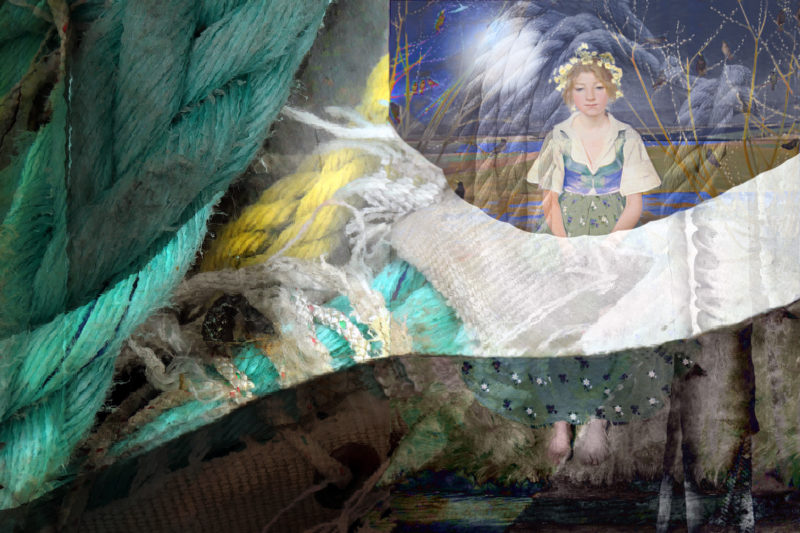
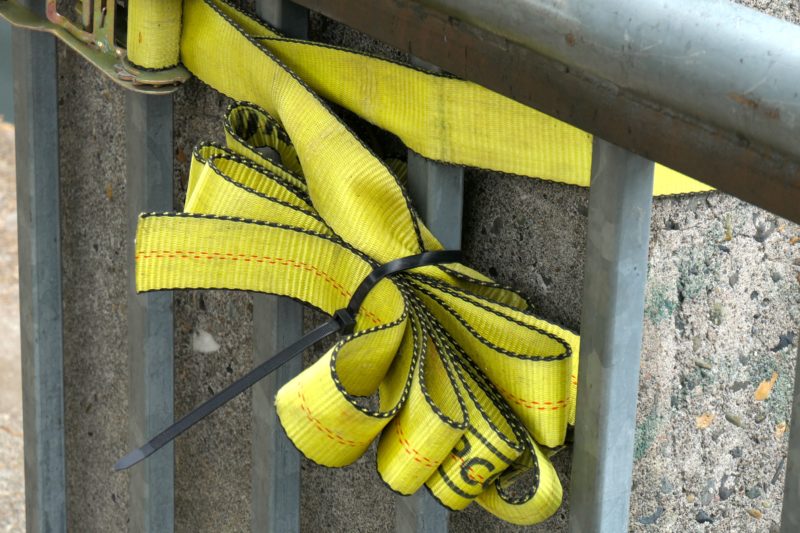
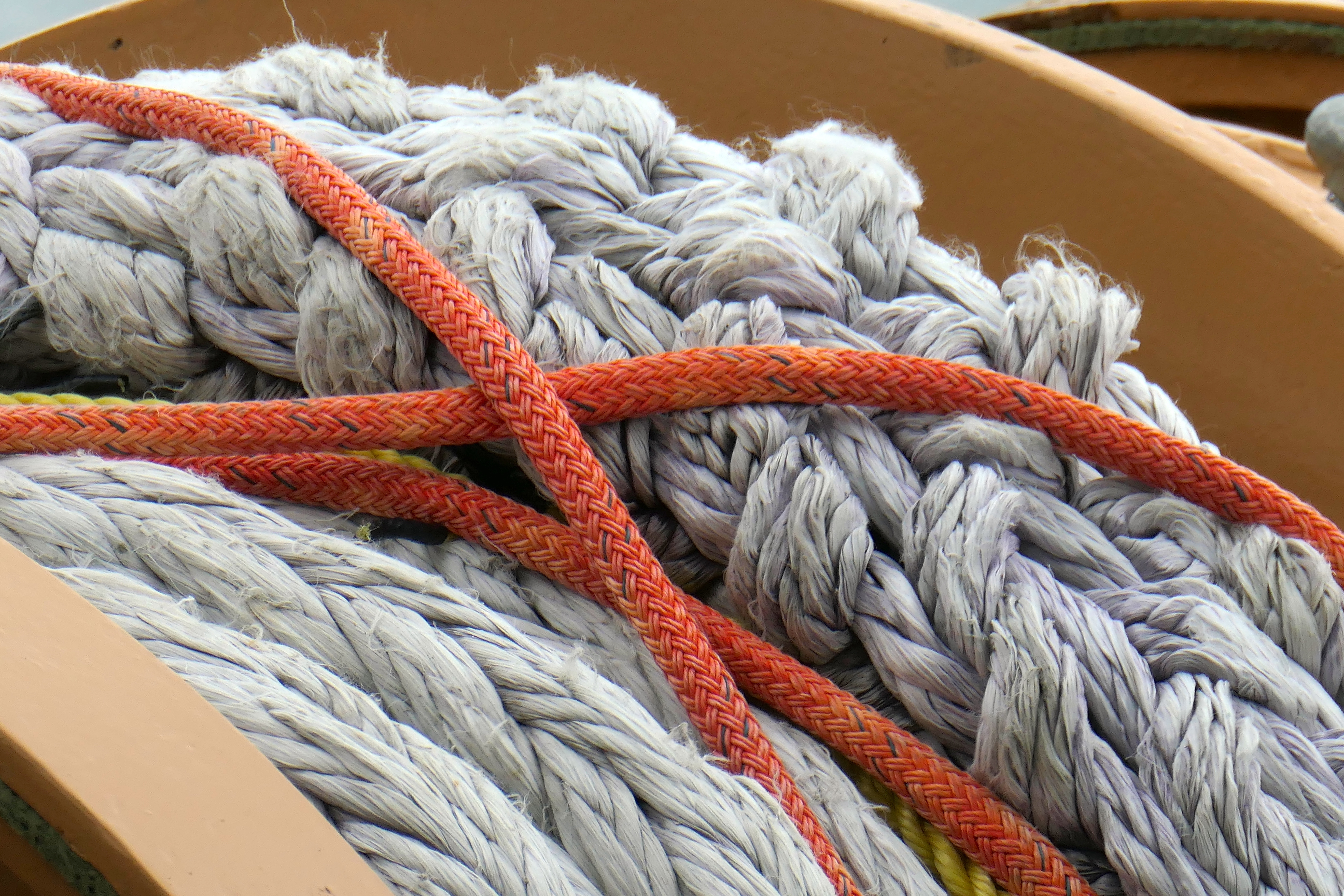
That fondness drew me yesterday, as every year, to the river at the Portland waterfront, where the fleet of ships was arriving for the annual Rose Festival. What caught my eye this year were the ropes tying those big ships to land.

The ropes seemed beautiful representations of the ties of remembrance: at times colorful and sturdy, at others frayed and spliced.  Safely knotted, carefully folded, coiled or stretched, they secure the past whether you want it or not. Memorial lariats might act at times as destructive constraints, but those cords can also keep you anchored, when remembering who you are and how you came to be that way provides some grounding in these challenging times.


I am signing off today for a week or so, since I am having surgery next week to remove a decidedly unfriendly gallbladder and won’t be having the clear head needed for writing. I’ll be back pestering you with politics in no time. And do watch the video so you can see I haven’t gone soft, still clinging to my idiosyncratic sense of humor.


In their own Words (and Pictures…)

Charleston SC is a city practically devoid of street art. There are a few official murals.
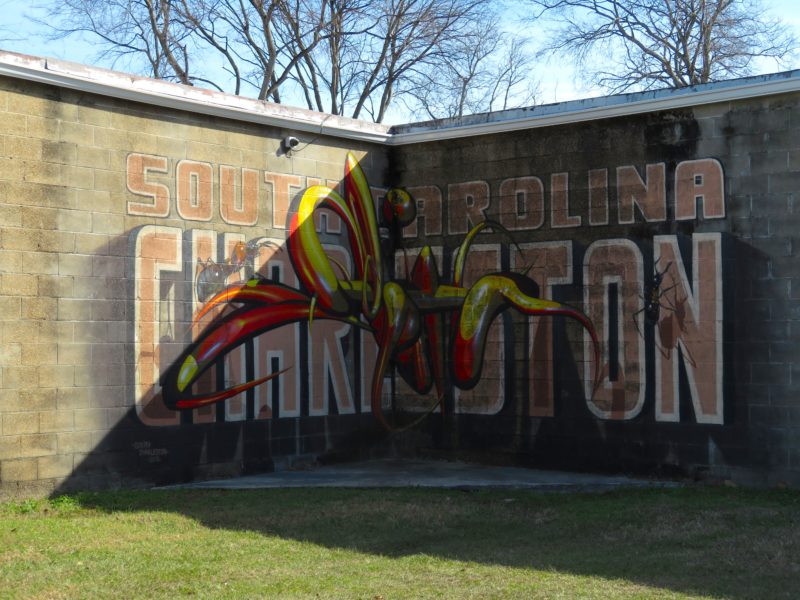
To find graffiti you have to scout the outlying areas, and even then the results are meager, hidden behind empty malls and off traffic arteries.

What you can spot in the city is small and unobtrusive.

The occasional writings in shop windows or on banners are supposed to be funny, I let you be the judge.

I was puzzled by this since I associate the East Coast with a lot of tagging activity and some really cool art works, in Miami in particular. Good weather leaves the stuff intact.  Not here, though.  And with these few exceptions, not political.


Luckily, there always photography….


A Walk on the Beach

The price you pay for traveling with your mother – or the adventures you experience, depending on perspective – is guaranteed to include visits to art museums, cemeteries, botanic gardens, explorations of graffiti  and the beach. And the occasional detour, if your mother is Frau Heuer.

The beaches around Charleston are diverse, and pretty empty during the winter. I presume during the  summer they are a zoo.

Beach towns vary. There are upscale neighborhoods (Isle of Palm), where the degree of wealth can be inferred from the car models rather than expressions of taste.

There are rather seedy neighborhoods (Folly Beach), which reminded me of spring break scenarios, minus the drunken crowds, given that it was December.


And then there are nature trails leading to somewhat hidden beaches, good for long walks and conversations;

the topic this time centering around race, as you’d predict. We would laugh around tidbits like this one:

In Search of the Black Confederate Unicorn

and think through issues of reconciliation (a topic I plan to explore in more depth at some future point here – I think it would be interesting to look at the various ways across time and places that people tried to come to terms with prior injustice.) For now, let this link with a conversation between the descendants of Dredd Scott and those of the other side be food for thought:

https://www.wnyc.org/story/american-pendulum-ii-dred-scott/

And speaking of food: the nice thing about traveling with your mother is that there is always a good meal guarantied.

With the appropriate drinks  

mystery deserts, refusal of  pumpkin spice

and strangely named waiters…