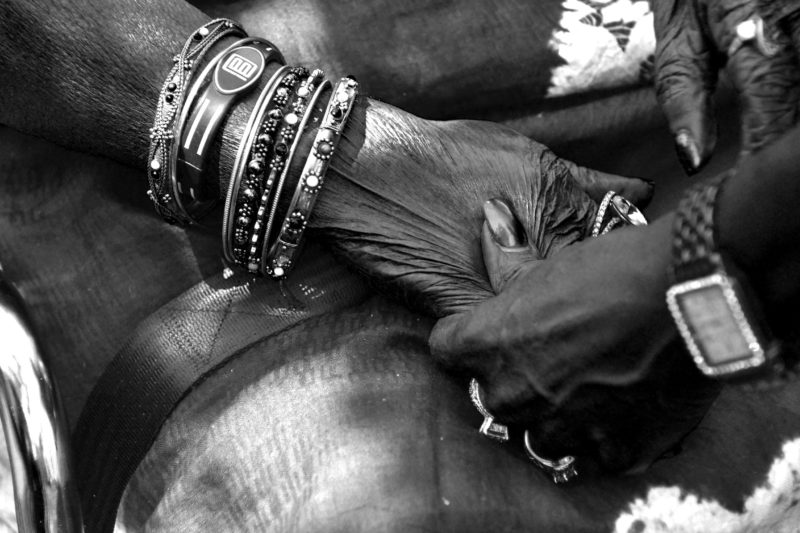
The last entry in this week’s “recent encounters” category is a simple one: a conversation about aging.
As luck would have it, I am surrounded by numerous people who are aging truly gracefully. They serve as models, as reminders how attitude can make a difference, as a life-line on those days where I throw yet another temper tantrum directed at my uncooperative body or the even less cooperative mirror…..
From my recent conversation I learned that there are now classes offered that help people like me to get their act together…..
One of those, Aging With Grace and Mindfulness, will be taught in October at the Multnomah Athletic Club. Led by a close friend and teacher extraordinaire, the course will help participants start and/or maintain a meditation practice and a positive outlook that will address the difficulties we face as we age. Topics will include resiliency, positive thinking, coping with chronic pain and finding purpose in life.
For details you can call the MAC and ask for info about Class Number AEC115.
The reason I am plugging for this is twofold: for one, I believe that we are all – aging or not – exposed to a world where resiliency and positive thinking are needed more than ever, given the abundance of bad news. Secondly, when pain hits or other restrictions from illness and decrepitude set in, it is hard to shift from good intentions to the actual practice of positive thinking. Having a guide and a small cohort surrounding you with shared goals and efforts can be supportive.
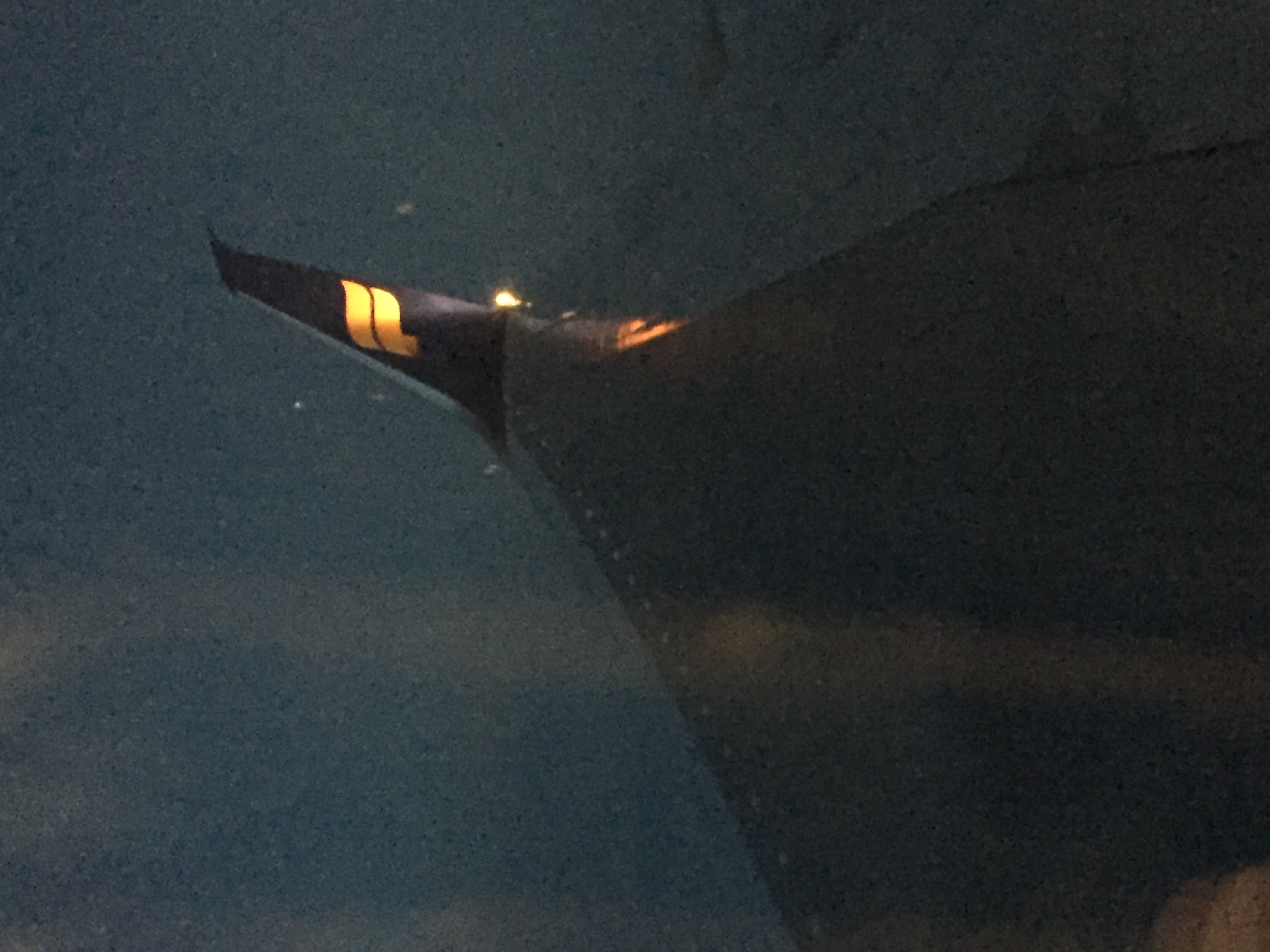
My best in the moment-moments, are, alas, when I am traveling. Being in the air, above it all, catapults me into happiness, partly because I am still able to do it. For today, then, I’ll try to recapture that feeling with photographic assistance. And then I’ll listen to a travel writer giving a TED talk about mindfulness while sitting still….. https://www.ted.com/talks/pico_iyer_the_art_of_stillness
Yesterday I mused about how we can influence people’s attitudes by selectively presenting bits and pieces of photographed reality – leaving out the ones that would wake people up. Today I am turning to creating reality with pictures, a.k.a Hollywood movies.
I have talked before about the Implicit Associations Test – IAT – the psychological measure that confirms how many of us hold stereotypical assumptions associated with racism. It is a test that looks at the strength of associations between concepts and even the most liberal takers have gasped at their scores. Mind you, it does not mean you are a racist; it just tells us that we have all learned associations between concepts that involve negative stereotypes associated with Blacks. https://en.wikipedia.org/wiki/Implicit-association_test.
Where did you pick up these stereotypes, assuming you were not raised in a white supremacist household, taught by bigots, hired by the KKK? Most answers involve some vague pointing in the direction of our culture. Of how movies represent Blacks, how colors are weighted with negativity/positivity, how the media (over)represent crime statistics, how sound-bite hits like “welfare queens” take root in our minds. And then there are serious analyses, that are required reading like this article by Ta Nehisi Coates:
All this comes to mind because I have been in bed with a nasty virus and indulged myself with watching even more inane movies than usual. Having now gotten into episode 4 of a sci-fi concoction called Defiance I thoughtthe least I could do for my brain is to check for stereotypes. The story is structured like a good old Western: stranger comes into a town that valiantly struggles for survival and rescues it single handedly from attack(s.) Stranger is appointed sherif, torn between the desires of the flesh and purer feelings of the soul when engaging with two sisters. They, in turn, are a raven- haired beauty who runs the local brothel and a blond haired beauty who happens to be the mayor. Even her outfits of white blouses and breeches make her look like the plucky ranch wife out of a John Ford movie. Our hero is the rugged looking B-version of Indiana Jones, except that all this plays in St. Louis, altered by alien invasion, so let’s call him Missouri Jones.
8 (alien and human) races live in relative peace in the remnants of St. Louis with a token agreement that they can all preserve their traditions. Except when the humans decide they do not like something, like torture, and intervene and, since they are the good guys, sort of get away with it. There is a Romeo and Juliette subplot with, I swear, two 14 year-olds, from the two most powerful families in town. One that is human and looks slightly hispanic or native American, can’t tell. And one that is of an alien race that goes for all white all the time, preferably shot with a softening lens. They are the bad guys. Hm, you say, white=bad, that is progress. Not so fast. They are so white that they almost seem like albinos, and act so weirdly that they can more easily classified in the zombie family. Fear not then, the claim of white=good pretty much is untouched. Particularly when the white Missouri Jones displays knowledge of all kinds of alien technology that he scavenges from crashed spaceships and then uses as weapons against the primitive hordes attacking the town. Must have taken a long-distance course while slumming in the bad lands.
The number and variety of alien creatures threatening humankind must have had special effects guys drooling for months.
But the darkest danger comes from – hello – an old white woman, the ex mayor. I guess misogyny topped racism in this one, using every evil queen formula in the book. And, any Blacks? Yes, a token one, a single young, earnest guy whose role is mostly confined to being the love/hate interest of our hero’s alien sidekick, a young girl he rescued and raised.
My photographs will surround the isolated young Black deputy with a family today.
New Year’s resolution #3: We, as a nation, should do everything in our power to acknowledge the existence of racism, explicitly or implicitly expressed, and the hold it has on our society, preserving inequality and power structures.Then fight it. I am grateful for those who give much in this struggle.
I’ve talked about sloth, gluttony, envy and pride this week; proscriptions to work instead of play, accept a sparsely filled larder, resist comparisons to others and do all this meekly, were, I believe, given in one form or another during tribal, feudal, or modern historical times (capitalism and socialism, as enacted, alike.) They all came with the promise of some better life at some future point (and in some future realm if you believe in heaven.) Clearly something is needed to regulate human interaction before all hell breaks lose when competing for limited resources. Or resources that someone does not want to share, even if there was enough for all, in principle.
So if a world is structured by inequality, exploitation and effacement, how do you live a right (a good) life? I am picking up here on Judith Butler’s writings who, in turn, works on this very question originally posed in Adorno’s Minima Moralia. Perhaps you know her as one of the most famous American scholars of feminism. She has since turned to thoughts on how we can live with each other, in a world divided by nationalism, resentment and hatred, a fear of change and a return to autocratic longings.
Reading her texts is rough going, I admit, (the title of one of her recent books alone speaks of that….Notes Toward a Performative Theory of Assembly) but the link below outlines an interview that I found clear and thought provoking, particular in light of our selective attention. Just think about two concurrent disasters – the rains in Texas and in SouthAsia. Close to 2000 people have died over there, rarely do we notice while discussing the plight of Houston.
Butler claims that we need to acknowledge our interdependence and our vulnerabilities in our interactions with those who are different from us; however, we have the opportunity at this historical moment, to seek change towards a less hierarchical and discriminating world by allying with those we traditionally shunned. In a world sliding into ever more precarious circumstances for an ever increasing number of people we can engage in a politics of alliance and make progress by living with each other, together, performing resistance not for personal liberty but for collective change.
My take-away, then, is that rather than worrying about the deadly sins, I should pour my energy into being part of a movement that is accepting, inclusive and hell bent on making this world more just. First step in that direction today: make my voice heard about the nixing of DACA. It might put my soul in limbo, but my conscience in just the right place.
Photographs are work in progress on the Refugee/Mobility series, showing (mostly) isolated figures in transit.
PS: Between Labor Day and travel next week blog will be catch-as-catch can.
I’ve mentioned before that I don’t like to cook. I like to eat but am pretty indifferent to what kind of food, and once I find a dish I like I am known to order it in perpetuity. That said, I’m a glutton when it comes to all things sweet. I inhale candy, chocolate, pastries, tortes, you name it and am forever grateful for those who indulge my sucrose addiction.
In unpleasant contrast, I find myself borderline, no, seriously puritan when it comes to other people being preoccupied with and fond of high-end cuisine. There is a little voice in the head that complains when I join my family at a restaurant for a meal the price of which could easily feed half of an African village for a week. Their appreciation and knowledge of, their joy and reveling in good food is completely supported by me, but my participation in those meals is somehow triggering a sense of guilt.
Memories of hunger’s destruction were never far in a post-war German childhood, some of them direct experiences of people close to me, with lingering consequences to their health. Being forced to eat unpalatable food, both at home and in boarding school, did not make it any easier. My political awakening during the late sixties was also colored by issues of famine: Stalin’s punishment for the inability to deliver his agricultural production goals was starving at least 3 million people in Ukraine. The deliberate starvation of Leningrad was the most notorious example of the Nazis’ policy of killing by hunger during their invasion, which in the early 1940s caused the death of four million Soviet citizens in the western parts of the Soviet Union they occupied. These numbers paled in comparison to Mao’s great leap forward which, combined with drought and poor weather-caused the deaths by famine of 36 million Chinese during the period from 1958-1961 (and that is not counting the 40 million births that did not happen because of these 3 bitter years as they are called colloquially.)
Hunger’s Bride (2011) from the Holocaust series: The Defiance in their Faces
One of my most vivid memories, now 36 years ago, is food related as well. I had just moved to NYC from Germany and found the apartment burglarized, most of what little stuff I had brought, including inherited pieces of jewelry, gone. The walls were smeared with food remnants from the fridge, and the cops judged it to be the work of junkies, who had managed to climb into the 3rd floor bathroom window the size of a postage stamp. I was pretty devastated until my roommate brought home a bagful of luxury food from Zabar’s. I exploded in wrath (another one of the 7 deadly sins.) And I mean exploded. How could you possibly offer food to comfort the loss of mementos? The realization of cultural differences did not help to make me feel better.
Village custom had the family of the deceased place a piece of bread on the departed’s chest, and someone hungry enough signed on to eat that bread believed to have soaked up all the sins of the deceased which would now lodge in you. Hunger making you willing to pawn your own soul….. and lest you think this was purely medieval superstition, the last known sin eater died in England in 1906!
The recurrent heat this summer has induced a certain idleness, which, as it turns out, I cherish. The absence of pressure to keep a tightly regulated schedule is one of the greatest gifts of retirement. You’ll find me happily nodding off in the lawn chair during the middle of the day until I wake with start, heart racing: it’s a sin!
Acedia, or idleness, was indeed counted among the deadly sins, number 8, to be precise, after pride, greed, lust, envy, gluttony, and wrath. The concept dates back centuries to early monastic orders who needed structured rules and labor to maintain a functioning monastic life. Idleness was seen as threatening spirituality as well through restlessness, boredom and physical drowsiness.
By the end of the 13th century the concept was increasingly applied outside of the cloister walls to the population in general, in parallel with the development of a new commercial economy based on chronological clock-time, rather than the agrarian calendar ruled by the seasons and religious festivals. Sloth was attacked as the enemy of an orderly and productive life. For all, that is, except the aristocratic classes where idleness was equated with a space where creativity could flourish. Those not engaged in productive labor scored an exception again! And justified it by pointing back to the Greek philosophers who held a renowned antipathy to labor.
With the rise of industry, and its need for punctual and synchronized labor, the condemnation of idleness became more intense; racist tendencies were fed by condemning the “idleness” perceived in (poor) criminals and less civilized nations, ethnographers joining the church and state representatives in this approach. Language picked up on it as well – in German, for example, the words Faulheit (laziness) and Fäulniss (putrefaction) share the same root. Order, thrift and industry became hallmarks of the rise of industrial production, serving capitalism regardless of the welfare of those it exploited. Children were deemed to be ready to work at age 9 (even by Karl Marx!) The one exception to this chorus of “reformers” was Marx’ son-in-law, Paul Lafargue, who wrote a brilliant treatise on “The Right to be Lazy,” but he was the only 19th century socialist who did not bow before the altar of industriousness.
Eventually, towards the end of the 19th century resistance to labor would be conceptualized in a different way. Rather than seeing laziness as minds craving idleness, scientists started to understand that bodies experienced fatigue. To maximize productivity you had to understand what a human body could endure and how strength could be maintained. Although moralizing writers continued to preach about the pitfalls of sloth, it was the economy of energy that became central to industrialists. Fatigue became associated with physical and mental breakdown which threatened ever increasing productivity needed by a capitalist system.
Having now tried to condense several chapters of Anson Rabibach’s riveting The Human Motor: Energy, Fatigue, and the Origins of Modernity into 502 words, fatigue sets in. So let me take a nap while you enjoy the link below!
One of my important goals in life is to be rational. I’ve always found irrationality to be a threat, leading to various forms of hysteria or ill-advised judgments, an impediment to being a scientist. I’ve always been drawn to role models that were rational or that had an interest in rationality, scientific or not. Freud belonged to that category.
I do not consider his work scientific, but I believe he was one of the great thinkers of our time; he alerted us to the weakness of human rationality and the need to understand the causes for that weakness so that we could strengthen rationality’s force against baser instincts.
(Confetti)
The classic biographies fill in the detail, from Ernest Jones in the 1950s, Peter Gay in the 1980s, (devoured by anyone who was in analysis at the point) and now one by Élisabeth Roudinesco, Freud: In His Time and Ours which I have on my reading list due to the review attached below.
All this comes to mind because I found myself wandering toute seule through a botanical garden in San Diego, filled with dying palm trees and cacti of all sorts, free associating at the sight of these strange and unfamiliar shapes. Yes, it was hot; yes, I had skipped breakfast. Still, I felt completely irrational in my inability to stick to the plain perceptions of what was there in terms of botany.
(Cucumbers)
The plants, at times creepily, took on a life of their own. I tried to remind myself that free association was originally a process believed to be the sign of a creative mind.
(Octopi)
The poet Friedrich Schiller wrote in a (1788) letter concerning the impediments to creativity to his friend Christian Gottfried Körner: (excerpted and translated by me)…. it is not a good thing if reason examines the flow of ideas too restrictively at the doorstep. Seen in isolation, an idea can seem unimportant or too out-of-left field, but perhaps it will gain importance through the next one that follows. Perhaps the first idea can become meaningful if coupled with other equally feeble ones. Reason cannot make a judgement on this unless it has stood aside long enough to permit such a coupling that can then be assessed. I wonder if in creative minds reason has recused herself from guarding the doorstep, allowing ideas to flow in pell-mell, and only then the mind surveys and probes the mounting heap. (Freud, by the way, acknowledges Schiller’s original idea of free associating, in multiple places in his books.)
So, let’s take my associations as proof of creativity, rather than heat stroke. Next time, I’ll visit the waterlily garden instead….
I figured we’d end the week that covered uncertain feelings with something more uplifting – laughter.
The photographs of friends and acquaintances speak for themselves, I hope.
And if you have the energy in this weather to read, here is a short article on research into laughter that you might – perhaps – find funny. And I quote: There is a long, semi-illustrious history of scholarly investigation into the nature of humor, from Freud’s Jokes and Their Relation to the Unconscious, which may well be the least funny book about humor ever written, to a British research group who claimed they had determined the world’s funniest joke. Despite the fact that the researchers sampled a massive international audience in making this judgment, the winning joke revolved around New Jersey residents: A couple of New Jersey hunters are out in the woods when one of them falls to the ground. He doesn’t seem to be breathing; his eyes are rolled back in his head. The other guy whips out his cell phone and calls the emergency service. He gasps to the operator: “My friend is dead! What can I do?” The operator says: “Take it easy. I can help. First, let’s make sure he’s dead.” There is silence, then a shot is heard. The guy’s voice comes back on the line. He says, “OK, now what?”
One of the things I learned to my great satisfaction is that I am not the only one who produces my own tears of laughter when telling a joke, to the point of not being able to finish it, in front of my eye-rolling family. (I have long given up trying to tell jokes in public.) Apparently a lot of people think their stuff is funny when others do not. And yet, the laughter often brings on laughter, as a shared social activity rather than via agreement on the intended humor.
Laughter, just like tears, is a social affair after all, helping to bond people together, and to reduce their stress hormones to improve physical well being. It is indeed the case that laughter can heal. It is also true that it is really tricky to study……
We’ve had sweat yesterday; we’ve had tears the day before; now all we need is blood, right?
Then they’ll sing to us about emotions – the spinning wheel of our existence….
Blood it shall be – the blood that gets curdled by fear. Turns out that a good amount of fear does indeed increase the blood-clotting protein – factor VIII – in your veins, making blood less likely to flow out in case your fear is justified and you find yourself bitten by that bear….. http://www.newsweek.com/horror-movies-can-be-bloodcurdling-406593
Don’t you love science?
Fear and anxiety are actually evolutionary adaptive, since they reduce risk taking and motivate us to take precautions. They also produce physiological changes in your body that help with the reaction to danger, the gift or light response. These feelings become problematic, however, when they are inappropriately intense in the face of non-threatening stimuli, if they last longer than necessary and if they interfere with daily functioning. Phobias come to mind, of something as harmless as public speaking, the wind, or birds, or spiders or, as in my case, turtles. Luckily, treatment of phobias is a success story. It is not necessarily easy, but massively effective for most people who suffer from phobias. (Look who is photographing turtles….)
Anxiety disorders are another story. We’re seeing a rough combination here of a high (and rising) prevalence and difficulties finding appropriate treatments. Medications have side effects, many are highly addictive, and the most promising approach of combining them with talk therapy is not easily available to many patients.
Some of the most exciting contemporary research in psychology is linked to problems with anxiety. I am referring here to the field of epigenetics. People always wondered if a tendency towards anxiety is genetically transmitted, as in “Grandpa’s DNA carried the predisposition and you’ve inherited it.” It is more complicated than that (or perhaps we should say there are additional complications.)
We have discovered that methyl groups, a common structural component of organic molecules, attach to the outside of genes sometimes due to bad diet or hunger, or exposure to harmful chemicals, and they set of a cascade of cellular changes. Turns out that these changes can be passed down to the next generation. And we now know that they can be the result of traumatic experiences as well: severe stress of all kinds, be it persecution, child abuse, heavy drug use or anything else; these experiences leave molecular scars, carved on the outside of our genetic skeleton, so to speak, and they can be passed on to future generations. You might have inherited your mother’s nose, but also her predisposition towards anxiety because she was bombed out as a child.
Before it gets all too depressing, let’s look at the bright side: a) epigenetic studies do no just find negative behavioral changes transmitted across generations. People who lucked out to have ancestors with experiences that made them happy or resilient will benefit from that. And b): predisposition does not mean guaranteed experience as much research with identical twins has shown. Genes are not expressed all the time. They need to be turned on and if you’re lucky there is no trigger; you can also use cognitive tools to combat tendencies that make your life harder. You can literally reverse the change to your DNA that way. That, however, will be talked about in a week on thinking, not feeling……
In general I read pretty broadly, or, truth be told, skim pretty broadly. But once in a while an essay catches my attention that has me read deep, long and hard, or provides the pleasure of really expanding my horizon.
The Economist article below is such an instance: it describes how research into a basic human activity – crying – evolved over the years. Not so many years, as it turns out.
The concept of emotions themselves dates back only to the 19th century, when French philosophers tried to understand our feelings as reflexes, not “moral sentiments or accidents of the soul.” So many feelings, and so many of them culturally specific:
“basorexia, the sudden urge to kiss someone; or matutolypea, the ill-temper that flourishes between the alarm-clock and the day’s first cup of coffee. For Anglophone readers, some of her subjects are mysteries locked behind the door of someone else’s culture. Amae, a Japanese term that describes the comfort felt when you surrender, temporarily, to the care and authority of a loved one. Liget, an angry enthusiasm that buzzes in the Ilongot tribe of the Philippines, pushing them to great feats of activity – sometimes agricultural, sometimes murderous. Awumbuk, a feeling of emptiness after visitors have departed, is experienced by the Baining people of Papua New Guinea”
Give me good old guilt, or anger, or surprise, any time…… Or a good cry, for that matter. My lachrymal life seems to have been severely curtailed with increasing age. More simply said, it’s very hard to cry these days.
And that despite the fact that I fall squarely into the group that, according to modern research, cries the most: those living in affluent, democratic, extroverted, and individualistic countries. I certainly do not belong currently in the category of people who are under severe stress – physiologically, economically, emotionally – and who are much less likely to cry than the rest of us even though they would be most justified. The energy is simply not available to them.
(Photographs, by the way, come from visits to museums and cemeteries – I do not take picture of actual people crying….)
Darwin assumed that tears had no function. Modern psychologists assume the opposite – tears have an important role, they make us empathic, an important trait for our species which has a long, helpless childhood, a vulnerable period for survival. Tears elicit care, protection and love from adults (in theory)…. and silent tears aimed at the protecting parent do not give away weakness to predators, as vocal cries would do.
Loss, failure and helplessness produce tears, as do positive situations where tears help to bond relationships. How others react to tears matters as well – positive feedback or scorn will shift your own experience of crying. As will illnesses like depression – crying does not provide the relief it does when done for extraneous causes. Thus, crying is not universally alike, nor is it always good or always bad – context will make all the difference.