Browsing Category

Psychology

Astrological Aestethics

For Thursday’s timely entertainment here are your horoscopes in art terms…. that is if you are an artist or interested in art. Or not. Never mind what I think about them, or that the astrologer considered Michael Jackson as the greatest US post war artist…..

Astrological Aesthetics: June 2017 Horoscopes

They are, of course fun to read and nonsense, but that is true for most types of entertainment….

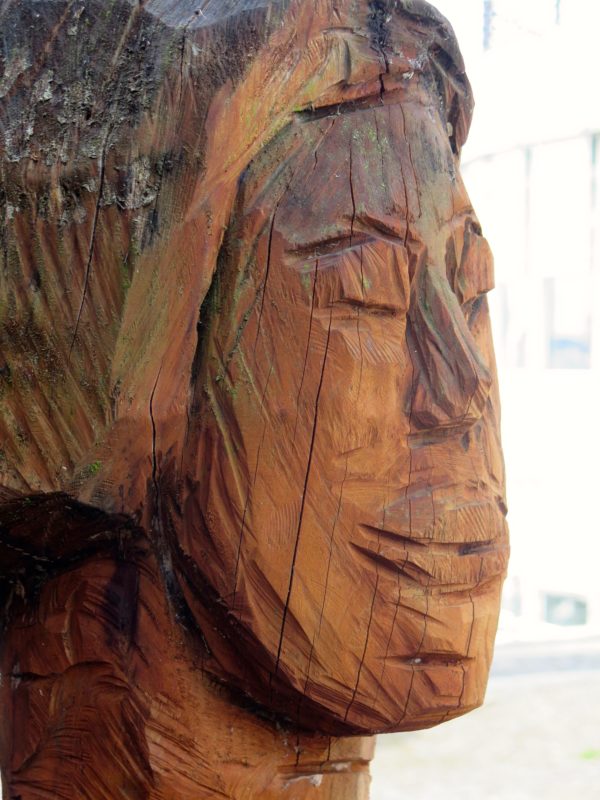
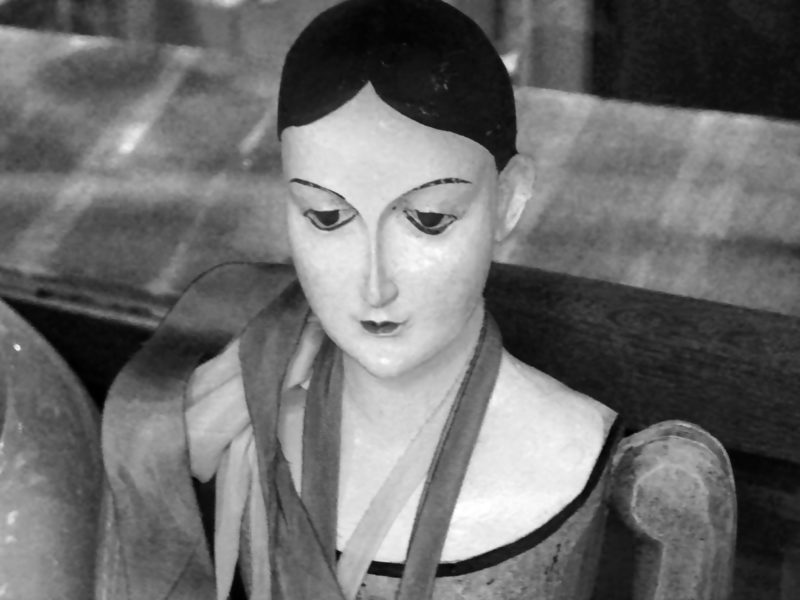
(Photographs depict some, not all, of the signs – you get to figure out which is which….)

And just in case, let’s follow up with horoscopes that scientists would write….

http://www.newstatesman.com/sci-tech/2013/01/if-scientists-wrote-horoscopes-what-yours-would-say

I won’t go into the details of the debate – after all, this week is about entertainment, not education…. says the bossy, assertive pisces  🙂


Throwing

This week we had marching, hiking, flying, switching lanes and finally: throwing. As in throwing obfuscation out there, sowing confusion.

Despairing mermaid?

Meet Robert Proctor, a science historian at Stanford, who studies how people deliberately obfuscate evidence that undermines their claims and, more importantly, their bottom line. He coined the wonderful term agnotology, the study of deliberate propagation of ignorance. Now why would we, at this point in time, be so interested in willful acts of spreading confusion or deceit, to sell a product or win a favor? You tell me 🙂

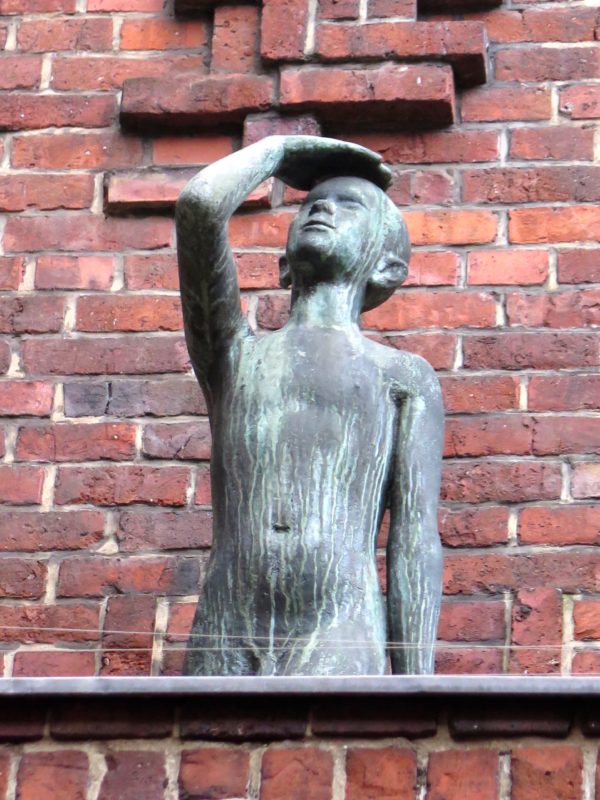
Wooden statues at base of crane

The link below is a wonderful article about Proctor’s work – starting with an investigation of the actions of the cigarette industry, continuing with a look into climate change denial and a focus on the current administration’s skills in deliberately keeping people ignorant or worse, convincing them of things that are not true to fact.

http://www.bbc.com/future/story/20160105-the-man-who-studies-the-spread-of-ignorance


Stained glass windows in a derelict building

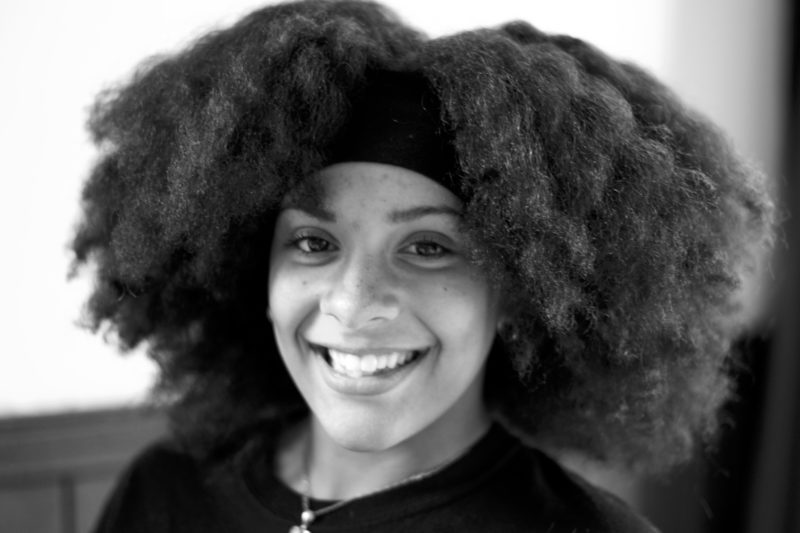
Photographs are of some of the more confusing vistas I encountered over the last months and a face that mirrors confusion pretty accurately, in my opinion.

Now what?

Switching Lanes

If you google Wilfrid Voynich, Wikipedia lists his professions as: Revolutionary; Antique Book Seller. How’s that for an interesting shift in live(s)?  If you read up on him, he was switching lanes many, many times in his life, sometimes voluntarily, sometimes forced, in politics, relationships, (pre)occupations and more.

Voynich, Voynich you mutter, where do I know that name from? Most likely in connection with the famous  medieval manuscript that to this day has never been deciphered – a vellum codex filled with an unknown language, drawings of scientific matters, and all kinds of other riddles now residing at Yale. The articles below provide you, in turn, with the newest insights about the manuscript and a short history of Voynich’s life.

Regarding the former, I simply adore the idea that it was after all a hoax perpetrated by some person in the 14oos (carbon dating proved that the codex was indeed generated at that time) trying to make a quick gold ducat from some gullible aristocrat. The smartest cryptographers of our century have not been able to break the code, and the drawings do not concur with any realistic botanicals of our world. It sure fooled many, seemingly continues to fool, for a long time.

Secret Knowledge—or a Hoax?

Regarding the latter, the life of this Polish Leftie, it was one hell of a ride and certainly he’d be on my list of people to take to a deserted island.  (As, for that matter, would be his wife Ethel Boole Voynich, an amazing character in her own right, allied with Karl Marx’ offspring, supporter of revolutionary causes, novelist – here is a video of her on her 95th birthday  https://www.youtube.com/watch?v=TYoxNOJ5fwk in 1959.) Check her out.


Traversing the Globe….

Just think of a life like this:

http://www.historyfiles.co.uk/FeaturesEurope/EasternPoland_Voynich01.htm

Short summary : Voynich was born in 1864 to a Polish family in Lithuania. While a student at the University of Moscow in 1884 graduating in chemistry, he joined the Polish nationalist movement. A year later, he was arrested and accused of engaging in revolutionary activity. He spent 18 months jailed in the Warsaw Citadel and was sentenced without trial to five years exile in Siberia. There he acquired a working knowledge of some 18 languages (!)  – and here I was proud that I have working knowledge of 4…..

He escaped into Mongolia in 1890, made his way through China and eventually reached Hamburg, Germany, boarding a ship to England.

He joined a circle of political exiles in London and worked for a period translating and publishing revolutionary propaganda for distribution in Russia; he abruptly stopped when his political mentor accidentally died; on recommendation of someone from the British museum who knew about his language skills, he opened a bookshop  in London and quickly gained a reputation as a resourceful and knowledgeable dealer. Unclear where his starting capital came from, although he has been rumored to be allied with wealthy female admirers. In any case, he discovered several astounding books, the Voynich manuscript included, and was convinced until his death that we would crack the code to figure out the black magic contained in it.

The flexibility, the stamina, the determination to survive, the smarts and the ability to adapt all truly impress me.

Please don’t touch. ART!

Hiking

Yesterday it was all about marching. Today it’s going to be about hiking.  Alas, not the real thing, given that trails are muddy streams and/or blocked by landslides wherever you look in this extraordinarily wet state this spring.

Instead, it is about what a Black woman experienced when hiking the Appalachian Trail last year. A young friend sent me the link in response to my “profiles in courage” some weeks back.  The article is long, revealing worlds most of us simply never encounter much less understand, heartbreaking and uplifting at the same time. Do yourself a favor and read it through to the glorious end. I felt that if only an iota of the gleaned knowledge sticks in my memory and helps me act differently in this world, there might be progress.


https://www.outsideonline.com/2170266/solo-hiking-appalachian-trail-queer-black-woman

Photographs are of young people of my acquaintance. I experience them as quite resilient right now and try to imagine that that carries over into their young adulthood – I even have the occasional fantasy that things might have improved by the time they hit their twenties. Probably groundless optimism, or wishful thinking or both. I so want them to be not harmed permanently  by racism.  It almost hurts how much I want that.


Resilience

Today’s profile in this week on courage is about a man who lost his face. It was literally eaten up by a bacterial infection the day after birth. Worse than the physical assault and the endless reconstructive surgeries it necessitated throughout his life, was the fact that his parents abandoned him on the spot.

He lived to write a book about surviving in the absence of love, a void confirmed by a harrowing meeting with his mother when he seeks her out as an adult. 38 years of the most painful life culminate in encountering a shallow, narcissistic, defensive human (?) being who accuses him of making her feel bad. Howard Shulman, then, is testimony to resilience, a capacity to persist in the face of, in his case, unimaginable difficulties.

http://narrative.ly/as-my-face-disappeared-so-did-my-mother-and-father/?utm_source=Narratively+email+list&utm_campaign=89cbd9ffd2-EMAIL_CAMPAIGN_2017_04_02&utm_medium=email&utm_term=0_f944cd8d3b-89cbd9ffd2-66322689

Passover inspired my associations with courage this week; it was a week that saw official US governmental reflections on the holocaust describe it as a something where chemical weapons were not used on “one’s own people,” who had been sent to holocaust centers (known to the rest of us as concentration camps). The decision who is one’s own, and who is not, based on race, orientation, religion and in Shulman’s case mere looks, who deserves abandonment or even death is not something only from the history books. Imagine my joy, then, when a message of inclusivity reached me from North Dakota, headlined: the most radical seder in the history of North Dakota: progeny had created a special seder plate.

“Last night our seder plate included the normal stuff (bitter herbs, boiled egg, lambshank-beet, matzoh) and then:
an orange symbolizing gender equality;
a brick symbolizing stonewall + trans liberation;
a key symbolizing an end to mass incarceration;
olives symbolizing Palestinian liberation;
coffee beans symbolizing modern slavery;
a tomato symbolizing undocumented liberation;
a burning cop car symbolizing burning cop cars;
a packet of yeast symbolizing RISING UP;
and a shell with burned sage acknowledging our host, and acknowledging that this is all stolen land. “
There is hope!


The Fight against Racism

Today I want to celebrate the courage of a woman known to all of us and the determination and ingenuity of a man known to – I daresay – none of us. I am talking about Rosa Parks, whose courage to insist on her bus seat when challenged by a white man gave rise to the civil rights movement. (Coincidentally, another person not giving up his seat made the news yesterday – a doctor was forcibly and violently dragged from his United Airline seat, paid for and entered legally, after United failed to find volunteers to accommodate their own employees’ needs, and did not offer the amount of money needed to persuade fliers to volunteer their seats.  Flying while Chinese has become another source of danger, apparently. But I digress.)

Rosa Park’s house was about to be razed rather than made into a museum – this country has apparently no interest in a memorial to the successful fight of racism, however unfinished. Ryan Mendoza, an artist living in Germany, managed to dismantle it and reconstruct it bit by bit in his Berlin garden, covering the cost of the transatlantic transport himself.  Details of this amazing feat below.

http://www.dw.com/en/why-rosa-parks-house-now-stands-in-berlin/a-38343924

And while we’re at it, here is another example of private initiative and determination to fight racism. Leaves me in a good mood this morning (as long as I don’t read the rest of the news.)

http://www.dw.com/en/children-are-our-future-german-footballer-gerald-asamoah-tackles-racism-at-school/a-37826264

Featured image says: Mobile Tolerance Zone

Converting Loss

It takes enormous courage to deal with traumatic injury or other assaults on your physical existence.

Here is the most encouraging story of a man who turned the loss of his limbs after climbing into a Blizzard into a life changer for himself and others afflicted with amputation.  We are not just talking adjustment, we are seeing defiance of despair and constructive ways of handling traumatic change.  I was beyond impressed reading this story:

The Rock-Climbing Prodigy Who Lost Both His Legs – And Now Builds Bionic Limbs

And since he was stricken during a blizzard I dug out some snow photos, their romantic appearance hiding the dangers associated with true winter. Give me rain any time!


Courage

Salvador Dali Impression d’Afrique (excerpt)

This week Jews around the world celebrate Passover, a commemoration of the Jews’ exodus from Egypt, complete with tales of miracles, plagues, blind faith, leadership and a number of ritual foods that stand in for various experiences during slavery and the flight.

I have always associated the story of exodus with the concept of courage (either that or a desperation so deep that one was willing to throw all realistic beliefs overboard and entrust oneself into the hand of an unknown entity.) I prefer the idea of courage: the courage to break away, up and go regardless of an unknown and likely insecure future, the bravery to defy oppression.

Salvador Dali Plage avec telephone (excerpt)

This week, then, will be devoted to stories about courage that I have found in my reading, gleaned from various sources. I have no clue how I will choose the photographs to accompany them, so expect occasionally strange pairings. For today they will be excerpts from paintings I saw in January in a exquisite exhibit of surrealists at the Kunsthalle Hamburg. They remind me of the trek through deserts, the parting of the red sea, the plagues descending n Egypt and voices calling from the wilderness.

Yves Tanguy Dehors (excerpt)

Here is the first link:http://www.thedailybeast.com/articles/2017/02/05/in-france-a-farmer-turned-migrant-smuggler-has-become-a-popular-

Someone courageously helping exiles to get to a new, safer place seemed the appropriate choice for the night of the first Seder.

Max Ernst Düsterer Wald (excerpt)

Snag

Yesterday I came across the link below about a photographer who visited his dying mother at his childhood home in Canada to say good bye. On his way back to the airport, he noticed the beauty of little pieces of plastic caught on fences all along the roads. He eventually compiled a series, Snag, of astounding ephemeral beauty and wistfulness to mourn his mother’s loss. Rather than putting unexpected objects in familiar places (yesterday), these are familiar sights seen with a different framing.  Do yourself a favor and look at it for all the three minutes it takes, it’s worth it and will produce that moment of pause that we’re after this week.

https://www.washingtonpost.com/news/in-sight/wp/2017/03/13/these-forgotten-shreds-of-plastic-helped-a-photographer-mourn-his-mom/?hpid=hp_no-name_photo-story-a%3Ahomepage%2Fstory&utm_term=.6789ac458b72

When my father died I was not yet photographing, that came some years later. If I had had a camera, I would have perhaps snagged the many little pieces of paper that I found when clearing out his home. He had left incredibly organized lists who to call, what to cancel, whom to inform, what went where, which banks and insurances to deal with, accounts listed etc.

I cannot begin to describe how helpful that was, particularly given that I had about ten days overseas to settle whatever was necessary and empty the apartment together with my sister. He had the most distinct, small, idiosyncratic hand-writing. And with every sigh of gratitude that these papers delivered they also produced tears at the thought that I would never see this writing again.

One small strip was on his nightstand where he had jotted down a Tolstoy quote, apparently important to him. I have never found the source of it, and I can only quote from hazy memory since I can’t find the paper scrap in the chaos of my own desk, but it went something like this: the only superior power I acknowledge is kindness.  (Really, that can’t be the true quote, since Tolstoy was so into religion…) in any case: the point is that kindness was something my Dad pursued and pursued successfully. He would have been 95 next week, a long 15 years without him.

Photographs of abandoned paper(s) I’ve found here and there.

Piles

It’s not the piles per se that bring me joy. They fit into this week’s theme of joy only in the sense that they are testimony to a life that has become free of the compulsion to be a diligent Hausfrau.

I have piles in the sink more often than not. Easily justified by the fact that you should not waste water and electricity on a half-full dishwasher, and you might as well load it only if the sink is full…..

I have piles of shoes at the kitchen door, easily explained by the need for bringing out the dogs at unanticipated times day or night.

I have piles of laundry waiting to be ironed and folded  (I spare you the sight) – easily justified by the fact that I find ironing quite therapeutic, and so like to do it for drawn-out sessions.

I have piles in the yard, from weeding, or pruning, or other clean-up activities and am often too stiff or tired to pick them up after I did all the work that produced them in the first place.

The joy lies in the freedom just to leave them be – no bending to social control issues of what would the neighbors think (we are blessed with terrific ones.) No responding to inner impulses of a deeply ingrained sense of duty. No compulsion towards neatness, just glorious choice to spend my time on what matters to me more than getting rid of piles…… as, for example, producing art, writing blogs, reading or amusing myself with this singing wonder:

http://www.broadwayworld.com/videoplay/VIDEO-Randy-Rainbow-Is-Putin-on-the-Ritz-in-Latest-Song-Parody-20170306