Browsing Category

Psychology

Self Recognition

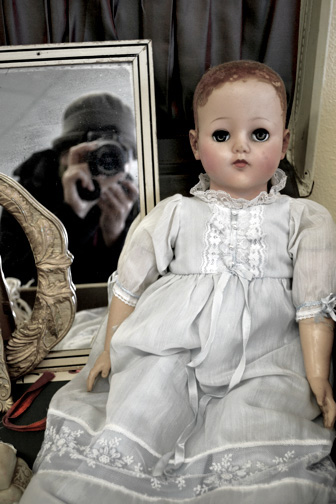
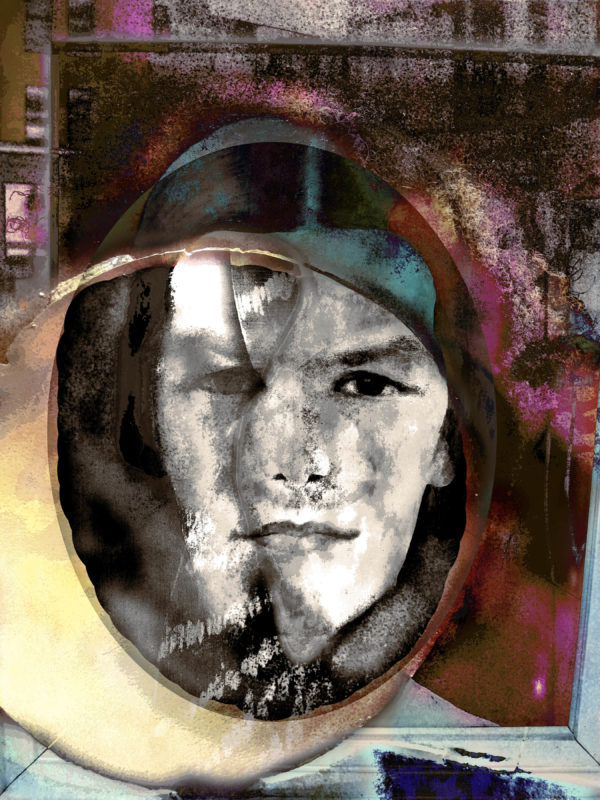
It’ll be short today – I came across a fascinating article on a photographer who reenacts portraits of his ancestors; Christian Fuchs, a Peruvian artist, has been doing this since he was 10 years old. Having explored his immediate family tree, he is now venturing out to do genealogy research since he believes he is distantly related to Queen Elizabeth I, Mary Queen of Scots, and William Shakespeare as well.

Why all this in a week devoted to face recognition?

I believe that people like to see familiar attributes in both those who come before them and those who come after.  “My, little – fill in the name – looks just like aunt Mathilda, doesn’t she?” There must be some comfort in there, some sense of continuity, a sense of tribe. Which is how we started this week – namely that the whole concept of recognition is important in order to distinguish between friend and foe. Maybe some need that sense of belonging so badly that they are willing to switch their own looks for those of their family – if only temporarily….Check out the link if only for the pretty amazing pictures.

http://www.bbc.com/news/magazine-38828042

In any case, here is to the tribe called: friends!!!

Cross-Race Face Recognition

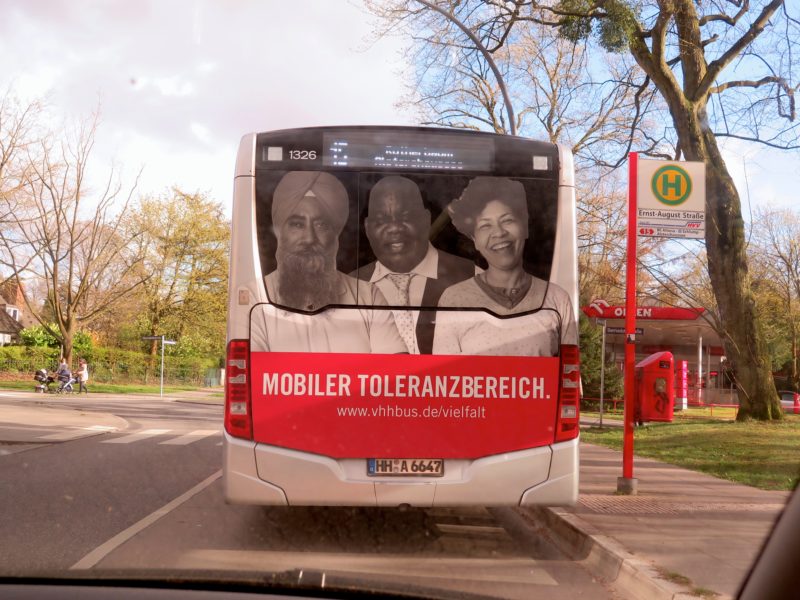
Any discussion of faces has to include some discussion of race. There is a cliche that has been around for years: “they all look alike to me.” Often, this cliche is offered with Caucasians talking about Asians, but all other groups can be considered as well. More important, and unhappily, the cliche has a core of truth.

Many studies have compared people’s ability to recognize faces of their own race with their skill in recognizing other faces. Some of the evidence comes from laboratory studies. Troublingly, some of the evidence comes from police records. The results are clear. The error rate for Whites identifying Blacks (or vice versa) is about 50 % higher than the error identifying a same-race face. Other results show a similar pattern for Whites and Asians, and also for young people recognizing old people and vice versa.

Interestingly, this effect is not a direct psychological result of racism, but of course it can and does have racist consequences. Specifically, the evidence says that the degree of difficulty you’ll experience in recognizing other- race faces is independent of your degree of prejudice. What does matter (at least to some extent) is degree of contact, but we need to be careful here; the effect does not depend on whether you see a mix of black and white faces as you go down the street. Instead, the effect depends on whether there is a mix of black and white faces in your social life – so that you routinely need to distinguish and identify specific individuals of other races. Even here, though, the difference for other-race recognition remains, it’s just smaller. The effects of racial segregation, then, do persist and lead to something that has dire consequences in criminal proceedings, since mis-recognizing a face by witnesses to a crime can lead to wrongful convictions.

Oddly enough, there is at least some indication that the specialized mechanisms for face recognition (see all of this week’s blogs) are less used for other-race faces. As a result, in recognizing them, people often seem to shift into a less effective feature-by-feature analysis. Peculiarly this sometimes makes them more accurate in describing other- race faces but less so in recognizing them.

I am attaching a classic result for the details: http://digitalcommons.utep.edu/cgi/viewcontent.cgi?article=1004&context=christian_meissner

If you want to read a compilation of more recent exploration of the topic look here (truth in advertising, it’s a volume I edited heavily since it was written on or near our kitchen table.)

https://www.amazon.com/Science-Perception-Memory-Pragmatic-Justice/dp/019982696X/ref=sr_1_3?ie=UTF8&qid=1487348239&sr=8-3&keywords=daniel+reisberg


For the Birds

We have been discussing the specialized skill of recognizing faces. What other specialized visual skills do people have? As it turns out, there is debate over how exactly to define the “face skill.” Some people think that the mechanisms we use to recognize faces are only used for faces. Other people think that these same mechanisms are used whenever two factors are in place. First, you are making judgements within a massively familiar category. Second, what you are judging is the identity of a specific individual within that category.

Some of the evidence for this debate is fun, although, tragically, it does involve brain damage which obviously is no joke. In particular, we’ve already talked about prosopagnosia and what it does to face recognition. But there is a well documented case of a prosopagnosic farmer who lost the ability to tell his cows apart. There is a prosopagnosic woman who lost her ability to tell cars apart and can only find her own vehicle in a parking lot by reading license plate after license plate. Try that at the mall… And finally, there is a prosopagnosic birdwatcher who lost the ability to distinguish different types of warblers.

And then there are the chicken sexers… they can tell apart, in hour-old chicks, who is female (valuable as ehh producers) and who is male (less valuable commercial commodity.) The do not use the face recognition processes; instead they know exactly where to look and for what to look. If you’d learn their simple trick, you, too, could be a chicken sexer!

http://scienceblogs.com/twominds/2008/04/14/how-to-sex-a-chick/

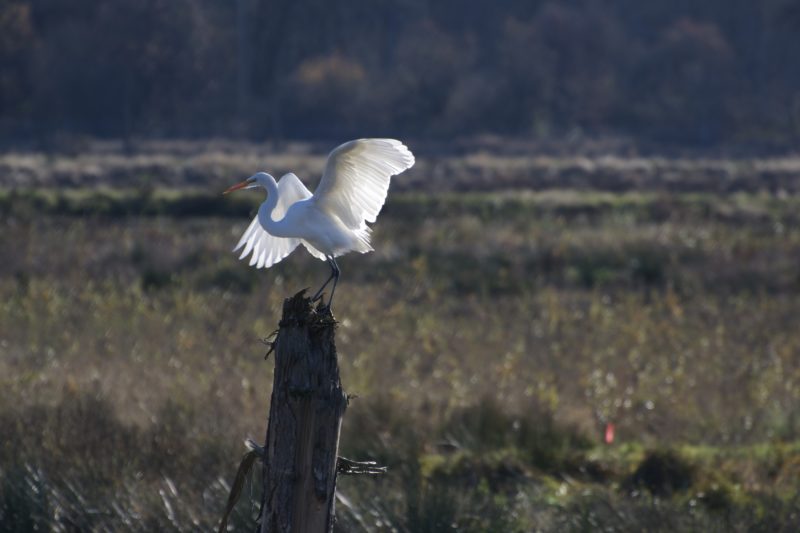
I, of course, am talking about all this to display some of my favorite bird watching images….

Hide and Seek

On Monday we mentioned evidence that face recognition follows different rules than other forms of recognition and is served by specialized brain tissue. But what are those rules?

The first part of the answer lies in the fact that we don’t recognized faces by looking at the individual features. Instead, we recognize faces by perceiving complex relationships – the spacing of the eyes relative to the length of the nose and so on.

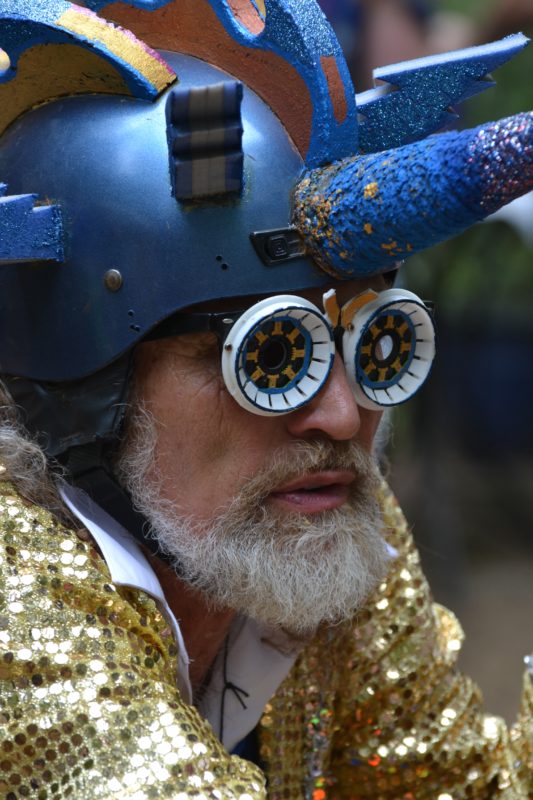
Common sense says that you best disguise a face by changing or hiding the features (unless you have access to a costume featured  in today’s cover ….). It turns out, though, that you can much more successfully disguise someone by changing familiar proportions into something else. For example, a hat pulled low, a cap or bandana, or bangs added, hiding the forhead and therefore changing the face height, are extremely effective as a disguise.

But it is not just the relationships. People recognize faces by comparing the relationships of the face in question to their understanding of an average or typical face with its relationships. As a result, people are actually more successful in recognizing portraits that distort the face, slightly exaggerating the ways in which the face differs from the average face. You can take this too far, and lose recognition, but a slight charicature helps recognition.

In fact, with a bit of computer manipulation you an distort a photograph by slightly exaggerating the relationships. You then show people the actual (accurate!) photograph of someone and then the distorted one and ask them which photo is a better likeness. People choose the exaggerated photo, apparently thinking that the inaccurate image is more accurate.

Of course, caricatures are perhaps more common in editorial cartoons than in fine art. However, modern portraiture has really committed to showing the essence of a person rather than his or her photographic likeness. Maybe then, the modern artists are more sensitive to psychological mechanisms and less to the demands of visual accuracy.

https://www.wired.com/2011/07/ff_caricature/.


I came across an article about (gorgeous)photographs of transgender people who seem to exaggerate stereotypic notions of femininity or masculinity in terms of outfits, make-up, body shapes and musculature. I wonder if we are seeing a parallel here with regard to being recognizable – given how little society recognizes them, in every meaning of the word, maybe slight caricature is the visual equivalent of “woman!”  or “man!”  – just wondering.

http://hyperallergic.com/357978/photographic-portraits-of-transgender-life-in-the-west-village/?utm_medium=email&utm_campaign=Photographic%20Portraits%20of%20Transgender%20Life%20in%20the%20West%20Village&utm_content=Photographic%20Portraits%20of%20Transgender%20Life%20in%20the%20West%20Village+CID_02932d0611b8b29450010cedb98b119e&utm_source=HyperallergicNewsletter&utm_term=Read%20More


Seeing with my Heart

Yesterday’s post was about people who are bad at face recognition. It is a recent discovery how common this problem is. My Oma already knew that some people are bad at recognizing faces, but she certainly didn’t realize how extreme the differences in ability can be. Today let’s look at the other end of things, namely people who are especially good at face recognition.

You might think that you’ll find these super recognizers in certain professions, but there is no evidence for that. Many people assume that police officers, for example, are particularly good at recognizing or remembering faces. In fact, in may court rooms judges assume an identification coming from a police officer deserves more trust. However, when you do the comparison between cops and civilians, cops have no edge.

http://journals.plos.org/plosone/article?id=10.1371/journal.pone.0150036

As a different possibility, you might think that portrait artist have a great advantage however there is no evidence for that either. In fact, we saw a hint of the evidence yesterday, with one prominent portraitist who is actually quite impaired in face recognition. More generally, though, head to head comparisons between portrait artists and others show no difference.

However, there are huge differences in recognition skills among all people and so you can find artists and police officers and ordinary civilians who are “super recognizers.” Just as there might be some mechanics, teachers or nurses who stand out in that regard.

You may have seen the article in the New Yorker how London’s Scotland Yard is trying to locate these people and try to recruit them and they are, of course, on the right track.

http://www.newyorker.com/magazine/2016/08/22/londons-super-recognizer-police-force

These people are virtually perfect in their face recognition even when they have not seen the person for a dozen years, even if the person has dramatically changed their appearance through aging or cosmetics or anything else. You might think that this talent would be a blessing, but at least one super recognizers say the opposite. Imagine you are approaching someone and say, “Didn’t you work at the bookstore 15 years ago?” when you immediately recognize the Powell’s clerk…. Many people would and do find this creepy, as if you were stalking them and will leave you without answer in a hurry.

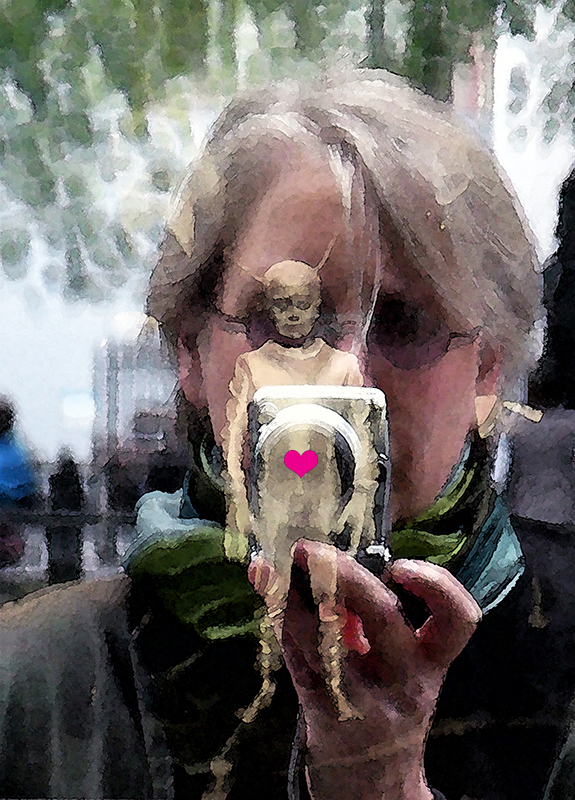
Well, I, personally, am looking with my eyes, but seeing with my heart (and if that fails, with my camera)….. after all it’s 2/14

Happy Valentine’s Day!


Where do I know her from?

This week we are trying to get back to psychology for a little bit.

I thought I’d start with faces.

Overall humans are extraordinarily good at recognizing faces, and this cannot be a surprise. After all, we all need to know who is friend and who is foe. As a matter of fact there is reason to think there is a special hunk of the brain that is specialized for just this purpose. It’s call the fusiform face area, or FFA. Scientists have believed for years that damage to the FFA is what causes the pattern, sometimes also called face blindness, more properly called prosopagnosia.

People with this disorder cannot recognize their friends, or, for that matter, their spouses or children, or for that matter themselves. They will in some cases think that someone is staring at them, when in fact they are looking at a mirror.

It has become clear, though, that many people have prosopagnosia from birth with no detectable brain damage. One famous case was Oliver Sacks, another remarkable case is the artist Chuck Close. Think about his portraits. They are made up of a mosaic of little tiny pieces because he is unable to recognize the whole Gestalt.

http://www.mosaicartnow.com/2010/07/prosopagnosia-portraitist-chuck-close/

A further key point is that prosopagnosia is NOT all or none. Many people have degrees of this limitation and get through life by recognizing friends or family by focusing on particular items like jewelry or ponytail; they are only lost if these things change.

https://www.youtube.com/watch?v=dxqsBk7Wn-Y

If you are curious to know if you have hints of prosopagnosia, point google at “Cambridge Face memory test” and in 20 minutes you know where you stand.

http://www.bbk.ac.uk/psychology/psychologyexperiments/experiments/facememorytest/startup.php


Open that curtain

We must reach out even if it is uncomfortable. It needs to happen. It might be a tenuous connection, if any connection at all, but would be a start. I, for example, buy the street roots publication from every vendor I encounter, even if I end up with multiples of the same issue. That dollar is not what it’s about, but the looking in the face and talking to someone who is having harder times than you are.  I roll down my window and give 25 ç to any homeless vet at the traffic light. Just to t a l k to them and not avert my gaze.

We had dinner this week with Republican acquaintances. Wondering how to broach topics and learn about a diametrically opposed world view. Did not discuss politics, mind you, but kept a door open to learn more about the why’s at a later point in time. Hopefully.

I photographed the MLK middle school music performance at Jefferson High School this week as well. The adult drummers are friends from my other volunteer gig and had asked me to help out. I had little light to work with and so yelled at Hakim “Don’t move!” in order to get a focused picture. The immediate reaction: “Woman, don’t you ever say those words to a Black man.” I wanted to collapse with embarrassment right then and there. I never think about what the police would say to me, or someone holding me up on the street.  Missteps will happen, we will all put our foot in our mouth at times, but that should not keep us from forming connections that stretch our narrow horizon.

Samara, the 13 year-old who sat next to me before the performance, spontaneously offered me a list of her strengths after a bit of conversation. She could dance, sing, be patient for the three days it took to braid her hair and she always saved up her snacks to bring to school, because so many of her friends were really hungry. Again, I felt uncomfortably ashamed. When have I last gone hungry?

Which one of them is food insecure?

What I am really saying here is that it is easier to remain in our white middle-class bubble, but leaving it is what matters to create new alliances. If I can do it, anyone can do it – Forge some new connections!  And now I am disconnecting my brain for the weekend. It’s been a long week.

Involuntary Connection


You know me. Well, some of you do. I like to dress eclectically and mix up Target with Givenchy, although my Burberry raincoat will not see the light of day ever again, being banned to the closet. In addition, death has been a maid-in-waiting way too many times during my 6.5 decades. So Elfriede Jelinek, the Austrian writer and playwright who received the 2004 Nobel Prize in literature, should be close to my heart. Some of her main themes, suffusing almost everything she writes, are death and fashion – not necessarily in that order.  They pop up in many of her “ novels and plays that with extraordinary linguistic zeal reveal the absurdity of society’s clichés and their subjugating power” (words in  italics are from the Nobel Committees announcement.) 

https://en.wikipedia.org/wiki/Elfriede_Jelinek

I like her fierceness, but not her voice. “Mein Ton ist Hohn,” she once proclaimed, “my voice is contempt.”

Last week I photographed rehearsal for a staged reading of one of her plays, Jackie O., presented here in town by the incomparable Boom Arts. The play features a monologue by Jackie Onassis, musing about her life, about the role clothes play in hiding the emptiness of her existence or providing the exoskeleton for someone slowly disappearing.  It was a sparse, discerning show directed by Alice Reagan from Barnard, played elegantly and at times with such vulnerability by JoAnn Johnson that you could hear your own heart cracking.

http://www.orartswatch.org/global-voices-get-a-fair-hearing/

Now,why all this during the week devoted to “connectedness?” The play made it brilliantly clear how Jackie Onassis was connected to the corpses around her, literally dragging them by a rope wherever she went. Not just her murdered husband and brother in law, but the many miscarriages she endured due to venerial disease that her husband’s philandering had inflicted upon her. Psychologically she was even more connected to visions and memories of JFK’s mistresses, Marilyn Monroe chief among them. An invisible triangular bond between wife, husband and lover choked her thinking, forcing her into attack mode alternating with extreme defensiveness.

It is scary to see the long lasting effects of moral violations, taking hold in our hearts and making our brains into garbage cans filled with obsession, even when death has long removed the players.

(By sheer coincidence, this is what I found yesterday at Jefferson High school in North PDX.)


And this in the NYT last evening. https://www.nytimes.com/2017/02/08/world/europe/letters-from-jacqueline-kennedy-to-the-man-she-didnt-marry.html?hp&action=click&pgtype=Homepage&clickSource=story-heading&module=second-column-region&region=top-news&WT.nav=top-news

Let’s hope Jackie found some peace in her connection to Onassis.

Disconnected

If I asked you about connectedness, what would come to mind? Love, family, friendship, community would pop up for me.  That connectedness can be disrupted by voluntary acts: you break up, you move away, you disengage   – or are subjected to those actions by the person(s) you’re close to. Hurts, but can be handled.

Then there are the external forces that impose forced disconnection in the most brutal ways.

War. Prison. Illness.

I do not have to spell out the ravages of war.

Prison came to mind not only because it has become a for-profit industry in this country that has seen skyrocketing stock values – note the date, November 9th! –  a day after the election…

https://www.bloomberg.com/news/articles/2016-11-09/private-prison-stocks-are-surging-after-trump-s-win

but because of this https://www.washingtonpost.com/local/public-safety/fcc-made-a-case-for-limiting-cost-of-prison-phone-calls-not-anymore/2017/02/04/9306fbf8-e97c-11e6-b82f-687d6e6a3e7c_story.html?tid=ss_tw&utm_term=.6605cadcb9db

If you ever wondered if imprisonment in this country is about rehabilitation not just retaliation, think through what it means not to be able to make/afford phone calls to stay connected to your family.

The majority of us, reading these musings, are likely to be safe from these two causes of violent disconnection. The third one, not so much.

Disease can force you apart.

Mild versions: Anyone who’s ever dealt with a bout of cancer knows the feeling: you can’t stand some people and cut them off, because they are just too hard to be around in their overbearing ways. Some people, in reverse, cut you off, because they feel awkward, don’t know how to talk to you, or don’t want to be confronted with thoughts of their own fragility. Or you are just too exhausted from chemo to maintain a social fabric that includes more than the most intimate people.

Strong versions: Depression. The clinical kind, not our garden variety-bouts in dark Portland winters. Here are words that describe it better than I could – put it on your to-read list: http://www.tabletmag.com/jewish-arts-and-culture/books/223625/depression-classic?utm_source=tabletmagazinelist&utm_campaign=fa20efbdf9-EMAIL_CAMPAIGN_2017_02_06&utm_medium=email&utm_term=0_c308bf8edb-fa20efbdf9-207667521

And then there is Alzheimers. A few days ago I would have said it is the emperor of disconnection. But then I had the privilege to visit with a couple that is going through the worst cruelty of loss of self and recognition in an advanced stage of the disease for one of them. But I SAW connection. I saw hands reaching out, an occasional spark in the eye, a determination to be connected by the healthy spouse. I do not know if that spouse has a choice to stay so close or not: love might be too strong,  a sense of responsibility too ingrained to give up; choice or not – I was in awe how human dignity is expressed and maintained in a connection combating the evil of that illness.  Man, does that give me hope.


Reconnecting

Back to normal, or so I hope. Your daily picture resumes with an interest in connections/connectedness this weekObviously a broad umbrella term, which I hope to fill with diverse reports.

We start with some photographs that made me happy. Kukatonon, the afternoon dance and drumming program in North Portland, had their annual fundraiser on Saturday. A mother, Bahia Overton, openly talked to the assembled crowd about the difficulty of being Black in lily white Portland, and how much safe spaces with a focus on shared Black history, African traditions and simple connectedness meant for the kids as well as the parents.

It took courage for Bahia to talk so openly about discrimination and fears in front of a partly White donor crowd and I applaud her. Meanwhile, in the backroom where the kids were eagerly awaiting their performance, that connectedness was displayed in spades. They laughed, they sang, they helped each other with their hair and costumes, and they took, of course, ubiquitous selfies.


And the guests formed their own community, however limited to their once-a-year encounter, since many of us are repeat visitors, feeling connected by a sense of supporting an important cause.

Anti-apartheid activist and former congress woman Elizabeth Furse.

It took an incredible amount of work for all the staff to pull this event off, superb volunteerism that makes safe spaces possible. Nothing but respect for them.

Community. One of the best forms of connection!