Browsing Category

Travel

Infamous poet, ineffectual spy.

So far this week, aside from a guy on balls, we’ve met a woman pretending to be a man, a woman acting like a man (instantiated lust and violence included) and today we’ll travel with an Englishwoman from the early 1600s who was scorned for making money as an independent writer. More tellingly, she was attacked for her open discourse on sex and relationships, depicting in no uncertain terms the double standards held for women and men and writing about (homo)sexuality like a man.

Aphra Behn’s writing, in novels, plays and poems, was considered scandalous; even posthumously, centuries later, people like Alexander Pope and contemporaries had this to say: Behn “might have been an honor to womanhood—she was its disgrace. She might have gained glory by her labors—she chose to reap infamy.”

Robert Markley, a current scholar of 17th century theatre, phrases it this way: “In their ironic treatment of female chastity and masculine constancy…her comedies present a sophisticated and sympathetic understanding of the ideological complexities of women’s existence in a misogynistic society.”

She had quite a bit of adventure under her belt before she rose to “infamy:” travel to Surinam, where she met and befriended some of the natives, leading to a searing condemnation of slavery in her most famous novel Oroonoko. An assignment as spy under the code name Astrea, hired by Charles II during the Interregnum to find and turn some guy in Holland, a job that she failed miserably. She was thrown into debtor’s prison because her meager allowance ran out and she had been borrowing money for the trip back to England, money that the British government refused to refund. Eventually she started writing enormously successful plays with psychological insights way ahead of her times.

Heralded by her peers as a successor to Sappho, her poetry was explicit about sexuality. Her most famous poem is called The Disappointment.  Here is a quote about if from the Poetry Foundation: (click on title to read the poem.)

The Disappointment” has been traditionally interpreted to be about impotence. But it is also about rape, another kind of potency test, and presents a woman’s point of view cloaked in the customary language of male physical license and sexual access to females. The woman’s perspective in this poem provides the double vision that plays the conventional against the experiential.”

More detailed discussion of her works are here:

https://www.poetryfoundation.org/poems/43639/the-disappointment

And her life in general, here:

The First English Woman to Make a Living as a Writer Was Also a Spy

I was struck when I compared these three adventure-seeking women as to how much they had in common, across centuries: they were not willing to conform to the gender rules of their times, and tied sexuality in direct and explicit ways to their assessment of gender relations or their enactment of gender relations – throwing all caution to the wind. They were willing to be bad girls, in contrast to the good little women who surrounded them. Got to see the world, too, this way.

Yesterday’s NYT editorial spoke to this distinction of Madonna/Whore in clear and concise ways, and clarified the role of misogyny as “the law enforcement arm of patriarchal order, which has the overall function of policing and enforcing its governing norms and expectations.” Including the function of punishing the bad girls and rewarding the good ones….  click on photo for full article.   Hey, I stayed away from contemporary politics for at least 6 paragraphs!

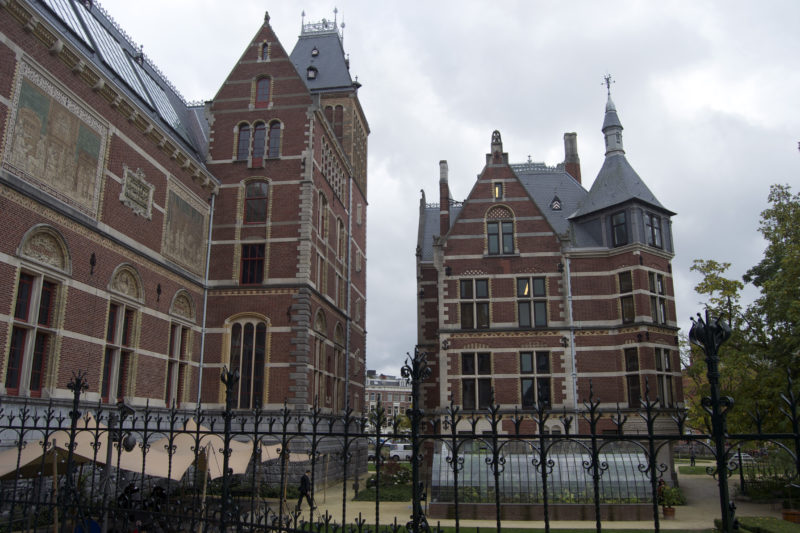
Photographs from Holland, where Behn did not excel at spying.

Lügen haben kurze Beine


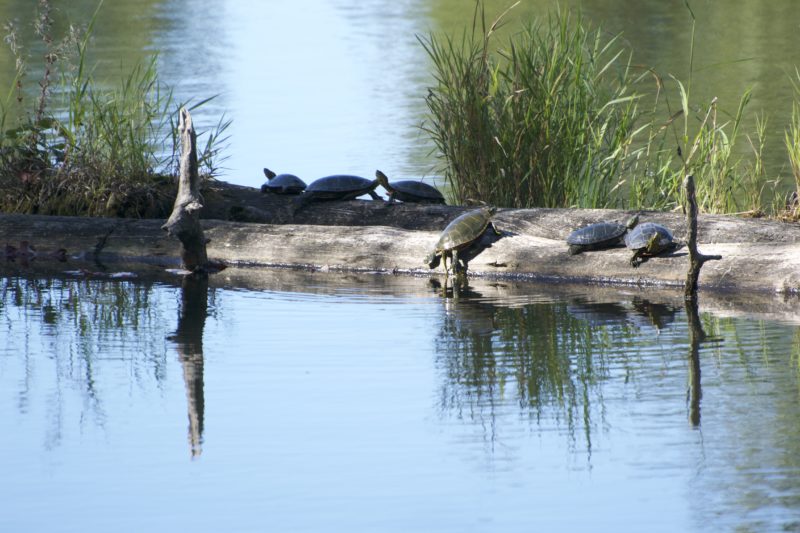
Lies have short legs is one of the most commonly used German proverbs, implying you won’t get far with them. I was reminded of that phrase when photographing turtles and their short legs last Friday on an insanely beautiful Indian summer day out in Washington. Since I had every intention not to talk about politics during this week’s blog I won’t (for the most part) and instead regale you with another terrific travel adventure, conveniently linked to turtles.

Before I do so, though, let me point you to some psychological research attached at the end of today’s blog. The references might be of interest to those interested in understanding the evolutionary (dis)advantages of lying. My current favorite is towards the bottom: the Pinocchio Effect – nose temperature rises during lying…. maybe that’s why certain liars have to crumple it so often.

In the meantime, let’s flee to the turtle-paradise of the Galapagos Islands, specifically to the small island of Floreana, as did a bunch of truly strange people before us. I’ll skip the early inhabitants, marooned on the island in the 18oos and departing when a prison colony was established there by Equador by stealing some boats.

Rather, let’s look at the early 1930s when a Berlin couple, escaping married life of each to someone else, ventured to try a nudist life on the island. Dr. Ritter was a dentist (which probably led him to decide that in the absence of dental care to have all his teeth pulled and replaced by steel dentures. Rumor has it the same was true for his lover, Dore Strauch, and they shared the one set between them…) They settled on Floreana, trying hard to live off the land which was perennially short of water.

Another German family, the Wittmers, settled on the opposite side of the island; eventually, a mystery lady, “Baroness” Wagner de Bosquet and her male harem of 3 men, Robert Philippson, Rudolf Lorenz, and Felipe Valdiviseo appeared and she soon announced herself to be Empress of Floreana.

The Austrian woman seemed to have had  a zest for life, particularly its more carnal aspects, attracting many a yacht to this “end of the world,” to greet those sailors with ardor. She also got into endless fights with Dr. Ritter and was prone to violent fits if people did not heed the arbitrary rules she decided to impose. It did not end well.

We do, however, not know exactly how it ended for her – she simply disappeared with one of her lovers, after two others turned up dead on another island; and Dr. Ritter, a vegetarian, died of food poisoning, with Dore Strauch somehow making it back to Germany. A few other mysterious deaths occurred in the following years – an eyewitness account can be found in Frau Wittmer’s book Floreana – A Woman’s pilgrimage to the Galapagos. She died in 2000 at the age of 95, her family these days firmly established in the hospitality business on the island. Not that I’ve ever been there – and not on my list either, frankly, since all the excitement seems to have run out by the mid 1930s.

Here is some fascinating documentary footage and a link to a fuller exploration of the tale, a link I simply picked because I adored the title:

“The gruesome Tale of the Galapagos Islands’ Nietzsche-fueled Homesteader Death Showdown…..”

https://gizmodo.com/the-gruesome-tale-of-the-galapagos-islands-nietzsche-fu-1743091190

I WILL succeed in distracting us from the Kavanagh saga, eventually, but for now psychological research on lying can be found here:

Abe, N. (2011). How the Brain shapes deception: an integrated review of the literature. The Neuroscientist 17(5), 560–574.

Anthony, C. I., & Cowley, E. (2012). The labor of lies: how lying for material rewards polarizes consumers’ outcome satisfaction. Journal of Consumer Research 39, 478–492.

Bond, C. F., Jr., & DePaulo, B. M (2006). Accuracy of Deception Judgements. Personality and Social Psychology Review 10(3), 214–234.

Campbell, W. K., Hoffman, B. J., Campbell, S. M., & Marchisio, G. (2011). Narcissism in organizational contexts. Human Resource Management Review 21, 268–284

Dechêne, A., Stahl, C., Hansen, J., & Wänke, M. (2010). The truth about the truth: A meta-analytic review of the truth effect. Personality and Social Psychology Review 14(2), 238–257.

DePaulo, B. M., Kashy, D. A., Kirkendol, S. E., Wyer, M. M., & Epstein, J. A. (1996). Lying in everyday life. Journal of Personality and Social Psychology 70(5), 979–995.

Ekman, P. (2003). Darwin, deception, and facial expression. New York Academy of Science 1000, 205–221.

Ekman, P., & O’Sullivan, M. (1991). Who can catch a liar? American Psychologist 46, 913–920.

Levine, E. E., & Schweitzer, M. E. (2014). Are liars ethical? On the tension between benevolence and honesty. Journal of Experimental Social Psychology 53, 107–117.

Milán, E. G., & López, E. S. (2012). Researchers Confirm the “Pinocchio Effect”: When you lie, your nose temperature raises. http://canal.ugr.es/social-economic-and-legal-sciences/item/61182.

Piff, P. K., Stancato, D. M., Coté, S., Mendoza-Denton, R., & Keltner, D. (2012). Higher social class predicts increased unethical behavior. Psychological and Cognitive Sciences109(11), 4086–4091.

2018: A Space Ball Odyssey

Photograph from the web

I don’t know the man. In fact never heard of him before, until I came across a description of his latest adventures.

But I consider myself a soul mate since he combines a zest for adventure with a hefty social consciousness, an eye for fashion and a sense of the ridiculous.  All traits I either have or aspire to….

Who am I talking about as a potential travel companion? Why, Steven Payne. The man who recently bounced across the Alps on a space hopper. Glad you never heard of him either.

We should have, though. He is a man on a mission, a former physics teacher trying to get attention for the problem of homelessness by doing weird trips that has him roughing it outside. Roughing, that is, with a tweet suit, a pith helmet, a waistcoat and an umbrella, to ensure that the stereotypic image of a traveling Englishman is not endangered.

The idea of this particular venture was born while sharing a meal with a homeless man. When he asked him how arduous life on the street is, the man answered,”It’s something that you thought could never happen to you, until it does. As if you, all of a sudden, had to cross the Alps on a space ball.”


The trip lasted 17 days, taking a partial route traversed by Hannibal before him, from Turin to Grenoble. Prepared with 5 balls, appropriately named and sorely needed, Payne made it despite altitude sickness (some peaks as high as 2000 meters/ almost 7000 feet) a heat stroke and a twisted knee. Hm, what would I have given to be there to photograph…. not that I have the stamina to hike that far and high, much less to balance on one of those contraptions.

https://www.dailymail.co.uk/travel/travel_news/article-6183827/Meet-Steven-Payne-Englishman-bounced-Alps-space-hopper.html

You can follow his adventures on FB under Pilgrims Progress.

When I started to photograph some 10 years ago, I took quite a few images of homeless people here and abroad. I had not thought it through, had no education about what is acceptable, what is ethical, what is or should be taboo in street photography. I stopped doing it pretty soon thereafter, after helpful discussions in photo critique groups that I joined; even though my shots of people preserved their privacy – taken so that no faces were visible – I consider it now exploitative.

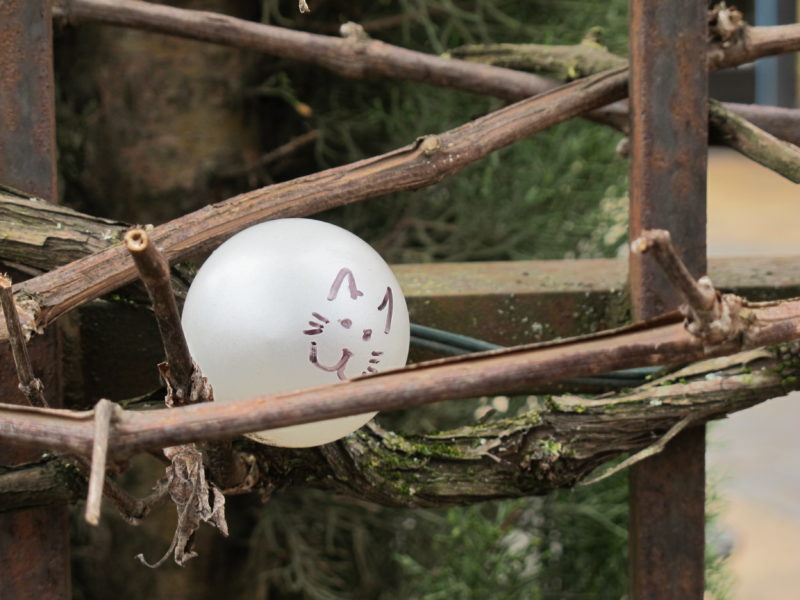
For photographs today, then, I picked round objects in honor of the space balls, particularly the ones named Napoleon Blownapart and Hanniball. Alas, not one of my round choices a good mode of transportation……

Wanted: Time Machine

One of my many reactions to the events of these long weeks has been: let me run away!  Won’t do, of course, but a woman can dream. Dreams that include a variety of travel companions who strike me as people I’d love to run away with and learn from.

One of them is Jeanne Baret, who was the first woman to circumnavigate the globe, although she had to do it as a man. Well, dressing, looking and acting like a man.

Born into a poor, illiterate family in France in 1740, she was trained as a herbalist to be a healer, eventually becoming an expert botanist. During her foraging outdoors she met recently widowed naturalist Philibert Commerçon. Soon they would share a bed as well as their passion for the world of plants.

In 1766, on the recommendation of the famous botanist Linneaus, Admiral Louis-Antoine de Bougainville hired Commerçon for his expedition exploring the new world. The latter took his lover on board, disguised as a man since the French Navy did not permit women on their vessels. Baret took care to bind her breasts, never undress in public and she slept in his cabin. More importantly, though she did all the work required by one hired as assistant (or beast of burden), hacking her way through jungles, carrying the heavy wooden botany presses, the containers filled with specimen, facing unknown dangers in a new world, while traveling on  a small supply ship for three years.

She was the one who discovered the bougainvillea named in honor of the ship’s commander. A commander who secretly admired her, but also took care to stress that this was not to be a model, once she was discovered.

Baret, with tears in her eyes, admitted that she was a girl, that she had misled her master by appearing before him in men’s clothing at Rochefort at the time of boarding…that moreover when she came on board she knew that it was a question of circumnavigating the world and this voyage had excited her curiosity. She will be the only one of her sex to do this and I admire her determination…The Court will, I think, forgive her for these infractions to the ordinances. Her example will hardly be contagious. She is neither ugly nor pretty and is not yet 25.
Louis Antoine de Bougainville, Journal, 28-29 May 1768


Rumors had, of course, flown about that she was not a man. For a while she countered them with tales of having been castrated while imprisoned earlier. But eventually she was discovered while exploring in Tahiti, or so the tale goes – there seems to be a bit of fudging of the truth to preserve her honor and that of the captain who would otherwise have been liable in court – crew members actually forcibly stripped her in New Ireland. She and her lover ended up in Mauritius working for the French East India Company establishing a botanic garden. When he died a few years later, she was thrown out and never saw the collection again that she had helped to build. A genus named after her, Baretia, was soon reclassified and renamed Quivisia.


Upon return to France she spent years in litigation to receive some of her lover’s estate that he had promised; an annual state pension on account of her services (petitioned for by her former captain!) saved her until her death in 1807. Only in 2012 was a new species of night shade, Solanum Baretiae, found in Equador and Peru, named after her. The woman had pluck, was driven, did not give up, and followed her passion. My kind of travel companion, although I probably would not have been able to keep up with her, ever.

Here is her story in some detail:

https://www.npr.org/sections/krulwich/2012/01/23/145664873/the-first-woman-to-go-round-the-world-did-it-as-a-man

And here is a link to the botanical description of the new species named in her honor – don’t waste time to read it, just marvel with me at the conventions of scientific writing that are now adopted by botany, while Baret counted leaves and risked her life…

https://www.ncbi.nlm.nih.gov/pmc/articles/PMC3254248/

And tomatoes are of course part of the nightshade family.

Modes of Transportation

I got to Europe, how else, by airplane. The worst ecological footprint imaginable.

What I found in Holland, of course, were bikes. All kinds, all colors.


Vienna, on the other hand, had one of the most efficient and well organized public transportation system one could want – busses, a tram, and a subway that was utterly modern behind its art deco station doors.


Unless you looked at the wiring, which was exposed and looking suspect….

Italians not only love their scooters, but depend on them, given the absence of parking spaces in narrow streets.


They also repair them, cursing under their breath…..

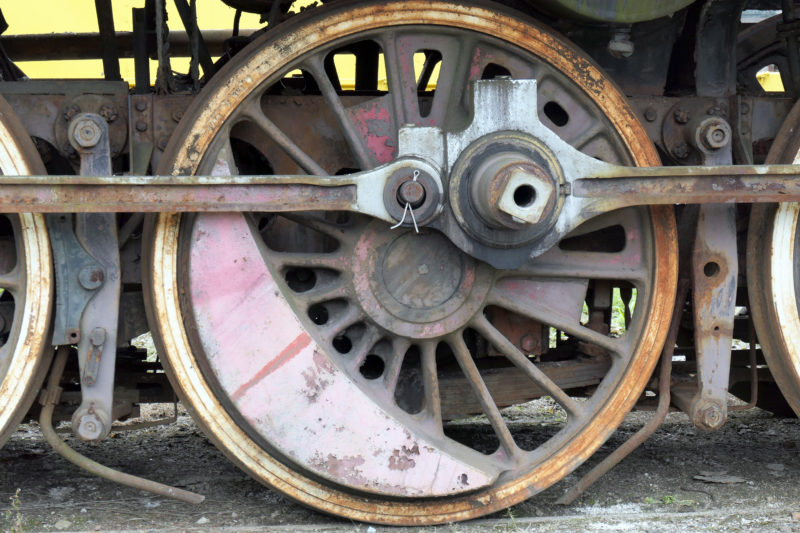
Ljublijana has opted for traffic free streets in the center and a network of buses for the rest of town. It also sports a railroad museum that is a fascinating place to visit.

Trains arrived in Slovenia in 1846 and have played a large economic part since then. The museum started to present a permanent exhibit of old steam locomotives and artifacts at a roundhouse depot in 1996, improved with new additions in 2004. The collection comprises some 60 locomotives and 50 other vehicles – not all on display, though.

https://en.wikipedia.org/wiki/Slovenian_Railway_Museum


The site was completely devoid of people when I photographed even though it was a Sunday afternoon, giving it an eerie feel.  So much decrepit beauty….


I continue to rely on my feet, back home.

Grafitti – the Old Fashioned Version

Painting on public surfaces is nothing new – I don’t have a clue to when we can date back the earliest frescos, but they have been around for a long time. I was reminded of that during my exploration of churches these last weeks.  I had the chance to see some fragmentary early frescos, in addition to the later baroque splendor of the various naves I visited.

In Trieste the main spot is the Cattedrale di San Giusto Martire which has frescos, both painted and as mosaics.  The roman, then gothic structure was consecrated in 1385. It is the seat of the Bishop of Trieste. In 1899 Pope Leo XIII granted it the status of a basilica minor.

An added attraction for some months of the year is a sculpture of he martyr St. Justus submerged in sea water. the long story can be found here:

https://bestoftrieste.com/2016/10/29/survival-guide-san-giusto-the-patron-saint-of-trieste/

The short version: Romans drown Christian; gets miraculously washed ashore and buried. Trieste diving community centuries later places a statue with church and military pomp and circumstances into the sea; after annual retrieval and cleaning, it gets displayed at the cathedral until its St. day on November 3. There’s so much to do other than helping the poor……

Some modern sculpture melts successfully into the rest of the architectural riches.

A much smaller one was the Basilica of St. Silvestro, reformed evangelical church of the Swiss and Valdese that dates back to the 12.th century. The frescos here spoke to me in the quietude of the space.

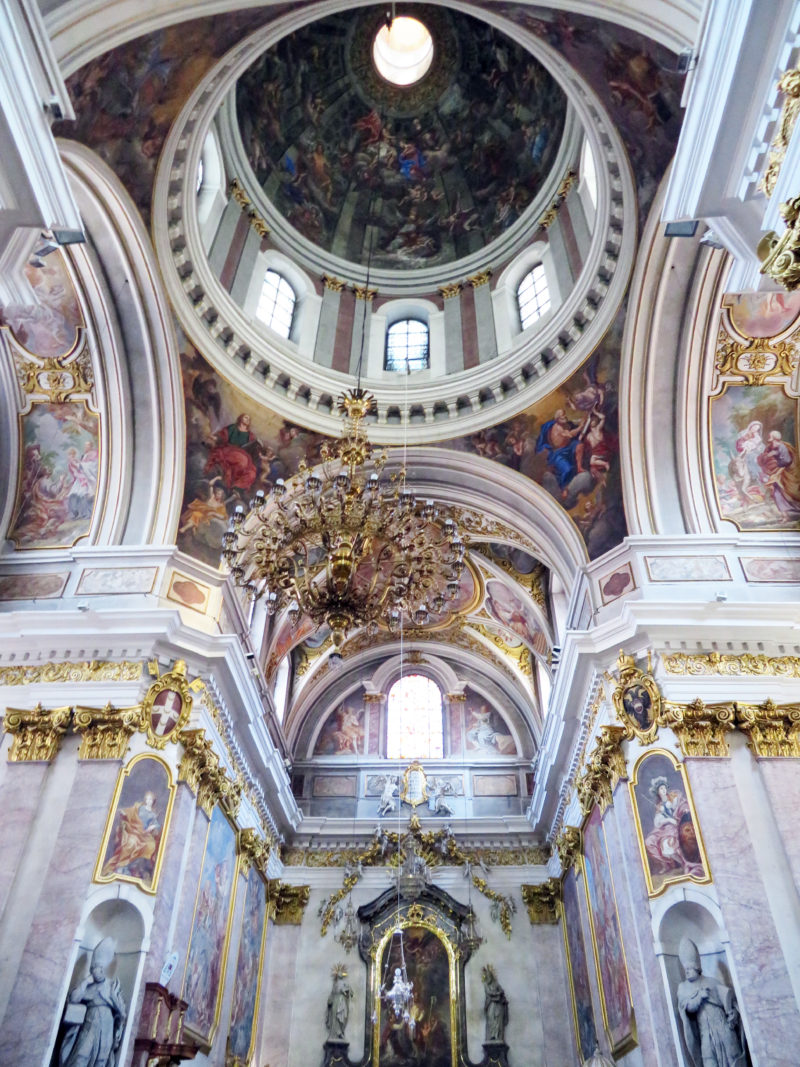
In Ljubljana the only church I visited was the cathedral, Church of St. Nicholas. https://www.visitljubljana.com/en/visitors/things-to-do/sightseeing/the-cathedral-church-of-st-nicholas/

The church was founded in 1262; various instantiations emerged throughout the centuries. The dome fresco was painted in 1844 (originally they had a fake painted dome until they erected the real thing.) Overall, Baroque splendor, what can I say, down to the lighting.


Again with some modern and actually gripping simplicity in the mix – here with stations of the cross.

These were sacred spaces, enjoyed by, admittedly, hordes of humanities, eager to cross off a must-see item on their European tour. So much so that churches have begun to charge for entry. Which irritated me to no end. It just seems wrong.

Both in Alkmaar, Holland,


and at St. Stephen’s Cathedral in Vienna you can set foot into the church, getting some glimpses of the over all structure.


You can light your votive candles.

But soon you encounter the barrier to the cashier if you want to go on to see details or special projects.

I guess a reflection of the church in our modern world of worldwide travel.


One of the must see itms on the list when visiting old European cities is churches – don’t rely on my assessment, just look at the hordes of people

And we resume


Your Daily Picture is back, reasonably recovered from jet lag and filled to the brim with materials gleaned throughout my trip to Europe. I will pick and choose some of the things I saw during the last three weeks to give you a little taste of the variety.

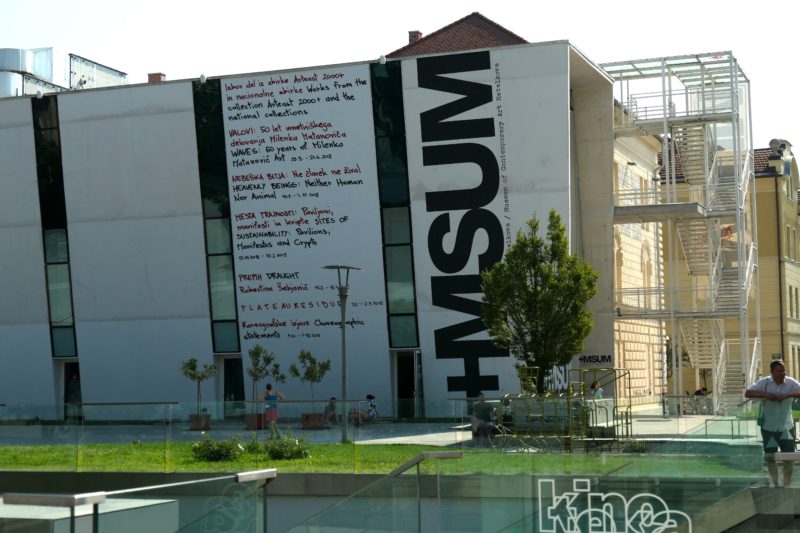
For today I’ll offer my thoughts on a museum of contemporary art in Ljubljana, Slovenia, my last leg of the 4 country  tour. Click on the link below.


Art on the Road: Slovenia

Trieste (4)

The Risiera de San Sabba was one of 4 Italian concentrations camps, the only one with its own crematorium. According to the Italian historian Elio Apih, “it was a microcosm of the forms and methods of Nazi policies and repression, where techniques of racial and political deportation and elimination were applied….” The camp was a hub for organizing Nazi military actions to round up partisans and Jews; it served as containment station for the Jews who were then deported to Auschwitz and other camps; it was also the place where political prisoners were killed.

Up to 5000 of them, is estimated by the latest historical research; a trial against the commanders in1976 was unable to establish exact figures. What was confirmed, though, was the fact that most of the killings were perpetrated by clubbing and beating to death. Hanging was second, and occasionally people got shot. The room where these atrocities were committed was immediately adjacent to the cells where prisoners were held, so that they were surrounded by the screams soon to be their own.

Screams were heard and tolerated by the Italian neighbors, who by this time were whipped up into a fascist frenzy by Mussolini, and had no problem with the German occupation, having been manipulated into nationalistic hatred against Bolshewiks and Slavic refugees/or Italian, Slovenian and Croat resistance fighters.


The building was originally a rice husking factory at the outskirts of Trieste. Himmler sent his forces to San Sabba in 1943 to start the killings. The factory housed the SS, some Ukranian collaborators,  and 17 micro-cells for those awaiting their death in place. Each cell, 1.20 meters long and 2 meters high held up to 6 prisoners, sometime for up to 6 months.


The Hall of Crosses, next to them, housed the Jews slated for transport. The upper floor were used for forced labor of the prisoners.


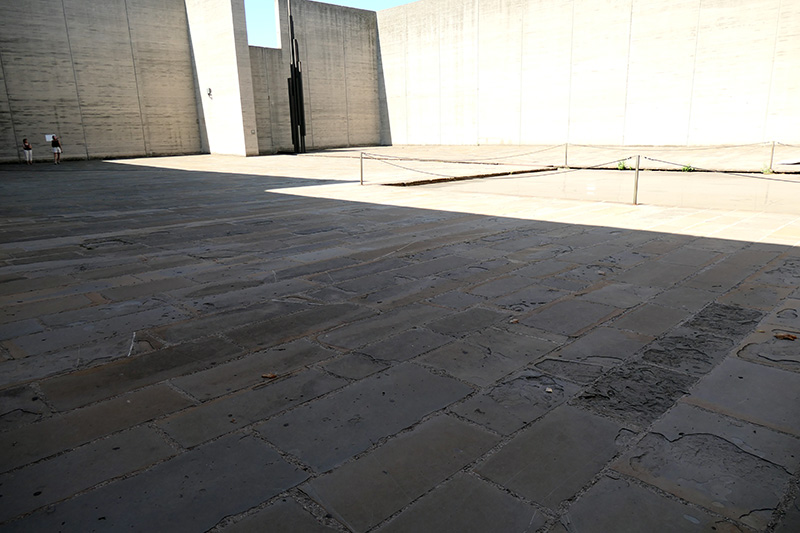
The inner courtyard now displays a large metal sculpture and a large metal plate on the ground, delineating the crematorium, the smoke path and the chimney. Ashes were thrown into the nearby sea.


The memorial site is extremely well designed with cement walls enclosing the sides not occupied by the original buildings, adding to the claustrophobic nature of the place. There are traveling exhibits about other horrors committed under fascism, and visitors are mainly school groups; not too many tourists to be seen.

There was a trial against two of the commanders of the Risiera camp in 1976. One of them received a life sentence, but never served since the German authorities were not obliged to hand him over due to some 1942 bilateral agreement…. (!) The museum was built and eventually opened in 1975 as a National Monument.

Part of me understands why one would not want to spoil a holiday in such a beautiful area with the darkness that surrounds you when entering the memorial.

Part of me wants to make it obligatory so that we understand the nature of  (creeping) fascism and the horrors that ensue.


Trieste (3)

Trieste has a long and checkered history, a unique blend of ethnicities, cultures, religions and political systems. For centuries it was part of the Austro-Hungarian Empire. During the 1930s it became a fascist bastion, fueled by the influx of slavic refugees who provided an easy target for nationalism. Immediately after World War Two, Trieste, on the border with Yugoslavia, was recognised as a free state under international law, though it remained under military occupation until 1954, when it was returned to Italy. For Churchill it was the southern outpost of the “Iron Curtain” dividing the West from the communist East.

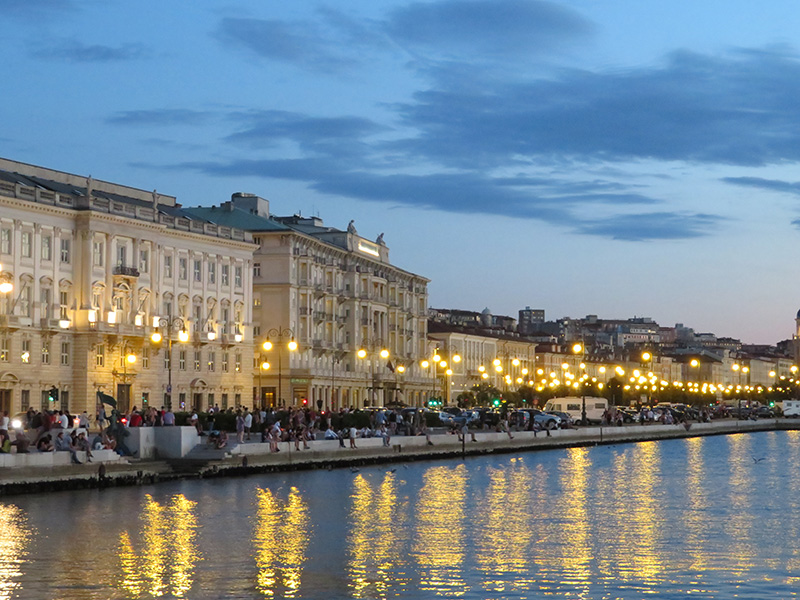
The architecture of the city mirrors this past. The main square, Piazza dell’ Unita, has three sides occupied by splendid Habsburg buildings; the fourth is the sea. A plaque commemorates the spot where Mussolini announced his policy of racial laws against the Jews. The Catholic Church of Saint Antonio shares space on the Grand Canal with the Serbian Orthodox Church; the synagogue is two minutes away.


If you think of the lay-out as concentric half-circles, this is the core of the historical wealth of the town, with shipping insurance buildings, town hall, stock exchange and so on, flanked by yacht and industrial harbors. The next ring up consists of small alleys (formerly the ghetto) leading to streets with imposing houses of the (upper middle class.)


Eventually you get to the real, non-touristy quarters where much of the population lives, and then the peripheral apartment blocks for the working class.


It is a city of riches, which those who fight for Trieste’s independence on the basis of a 1947 United Nations Security Council charter (which recognised Trieste and its surroundings – including parts of what is now Croatia and Slovenia – as a free state, with both Italian and Slovenian as official languages, subject to the appointment of an internationally recognised governor,) don’t want to share with Italy. They get laughed off by both the law and their fellow Triesteans, who have a rather optimistic outlook on life and easy going mentality.

And when you walk so much you find the best little osterias sans touristes…..


Trieste (2)

I can never remember if it’s today or tomorrow that a young friend of mine celebrates his birthday. To err on the side of being early, I dedicate this sampling of Trieste’s people to him today. He is brave and cheerful enough to wear red scarves hand-knit by yours truly, wickedly smart, provides the best book recommendations, and occasionally saves my son from being eaten by leopards and giraffes (don’t ask.)

The women of Trieste transport the kiddos


Deal with mopey teenagers

Do the shopping


Love color


Navigate the uneven streets in high heels


Stick by their guys

And walk the dogs


The men hang out


P

OK, they walk the dogs, too


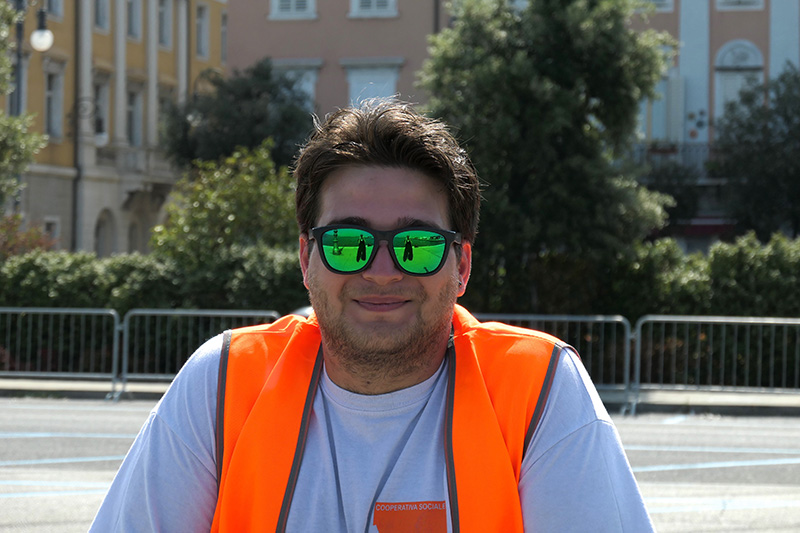
And e v e r y o n e wears these shades….

Happy birthday, Conor! I hope one of these days we’ll travel en famille.