Browsing Category

Nature

Random Thoughts.

Not the most gripping title, I know. But that is what happened during a walk yesterday, a walk that you would have surely enjoyed for the views. The plan had been to go on some more distant photo adventure with my friend Ken. Had to scratch that because I did not want to expose him to my lingering cold during a long car ride.

Mt. St. Helens

Mt. Adams

Mt. Hood

So I went to walk closer to home, looking at the mountains from afar, immediately roped into thoughts about – you guessed it – our assaults on climate commitments. We are in the middle of a snow drought, with abnormally low levels of snow, predicting high dangers for the upcoming fire seasons, and generally poor water conditions which affects fisheries and agriculture.

Spring arrives early, wild currants blooming.

Instead of leaning in to protect the common good and avert the worst climate disasters, we learned that Trump is to repeal the landmark Climate Finding in a huge regulatory rollback. The administration is trying to get rid of the “endangerment finding” — the scientific investigation that led the EPA to conclude that climate change is dangerous to humans, with six greenhouse gases posing a threat to public health and welfare. It could also include the repeal of federal regulations on planet-warming emissions from cars and trucks. The Trump administration is also separately moving toward repealing all climate regulations for power plants, the second highest-emitting sector of the economy. Trump’s press secretary proudly touted this package as the largest deregulatory action in American history.

My thoughts jumped from dismay about the accumulation and maximizing profits (what this is all about) to disgust about the sheer cruelty of it all – the reckless endangerment of communal health. Morbidity and mortality are all going to rise, all affecting the poor, the very young and the very old disproportionately. Had me thinking about kids again and the most upsetting thing I read this week.

ProPublica had an in-depth report about kids in detention camps. Thousands are detained with their families, some close to a year, although a long-standing legal settlement generally limits the time children can be held in detention to 20 days.

Missing out on education? “School” classes allow only 12 students of mixed age groups and last for just one hour. Slots are assigned on a first-come-first-served basis and staff leading the class distribute handouts and worksheets to those who made it inside.

Age appropriate nutrition? Food comes with worms and mold, and repetitive meals with portions too small, so that adults go hungry and often take from kids. Water is unclean, toilet facilities unspeakable. Rooms, with metal cots, are overcrowded, some holding up to 20 people. Extreme cold has them suffer.

The biggest complaint is the lack of appropriate medical care. People are constantly sick, measles are spreading. Legal representatives declared in court that more than 700 complaints since last August noted that children with medical problems frequently experience delays, dismissals, or lack of follow-up. Even after hospitalization, denied for so long that babies develop additional diseases like pneumonia, children returning to the camps are refused follow up medication.

Here are letters written by interned children – I guess your first reaction, like mine originally, is to not want to read, given the sense of sadness and helplessness in general, with no capacity for more. But I beg you, be a witness. It will be coming to somewhere near all of us: Federal records reveal ICE is secretly expanding into 150+ facilities across nearly every state — many near schools, medical offices, and places of worship. DHS asked the General Services Administration to hide lease listings and bypass normal procedures – you wonder why.

Thoughts jumping from greed to cruelty to amazement at the natural beauty around me, still accessible and open to all. That, in turn, led to thinking about National Parks, severely impacted by financial cuts on all levels. On top of it, the Trump administration has ordered the National Park Service (NPS) to remove historical signs at at least 17 national park sites across six states that we know of, including one at the Grand Canyon and another at Glacier National Park. The former referenced the displacement of Native Americans, the latter how climate change is contributing to glacial loss at the park in Montana. A sign was removed at Big Bend National Park in Texas, that referenced geology, fossils, and prehistoric history, some of which were written in both Spanish and English. In Wyoming’s Grand Teton National Park, officials also removed a sign referencing Native American history.

The National Parks Conservation Association (NPCA) says that the removals are an attempt to erase history. The Sierra Club is suing the administration for refusing to disclose how the sign removals are being carried out. A librarian led organization, Save our Signs, is collecting photographic evidence of the signs out there, so that we remember what they said before removal. Here is their website.

“To all your readers, please go out and collect photos of signs at National Parks before they are removed, to help us all collectively remember our history – the good, the bad, everything.”

SOS hosts an online database archiving photographs of all sign removals. The group also asks NPS visitors to submit photos of empty spots where signs used to be and of creative responses, like protest art, that have been put up where NPS signs were removed.

So if you are traveling farther than I am currently, you know what to do! The only sign I’ve come across the last days was this – I approve this message!

And in honor of the plastic duck I saw yesterday among all the real birds here is TajMahal

Song for the Rainy Season

Looking at the wondrous waterfalls and an old, abandoned house at the White River in WA earlier this fall, I was reminded of Bishop’s poem Song for the Rainy Season. The poem’s short lines and enjambment establish a kind of breathless rhythm, matching my breathless climb back up from the river, once I had explored the ruins. The poet describes the beauty of a wet landscape with a home embedded within, in the tropical forests of Brazil where she lived for some 15 years. The rainy season has arrived here in the Pacific Northwest and adjacent High Desert regions as well, and before you rush to wish for a return of the dry, read the 6th stanza. Some of the magic and coloring will all dry up….

Song for the Rainy Season.

Hidden, oh hidden
in the high fog
the house we live in,
beneath the magnetic rock,
rain-, rainbow-ridden,
where blood-black
bromelias, lichens,
owls, and the lint
of the waterfalls cling,
familiar, unbidden.

In a dim age
of water
the brook sings loud
from a rib cage
of giant fern; vapor
climbs up the thick growth
effortlessly, turns back,
holding them both,
house and rock,
in a private cloud.

At night, on the roof,
blind drops crawl
and the ordinary brown
owl gives us proof
he can count:
five times–always five–
he stamps and takes off
after the fat frogs that,
shrilling for love,
clamber and mount.

House, open house
to the white dew
and the milk-white sunrise
kind to the eyes,
to membership
of silver fish, mouse,
bookworms,
big moths; with a wall
for the mildew’s
ignorant map;

darkened and tarnished
by the warm touch
of the warm breath,
maculate, cherished;
rejoice! For a later
era will differ.
(O difference that kills
or intimidates, much
of all our small shadowy
life!) Without water

the great rock will stare
unmagnetized, bare,
no longer wearing
rainbows or rain,
the forgiving air
and the high fog gone;
the owls will move on
and the several
waterfalls shrivel
in the steady sun.

By Elizabeth Bishop

Music today is by Brahms, the Sonata contains motifs of his Rain Song.

Pillars of Color.

Walk with me, before I take off for Thanksgiving, driving South to see the kiddos.

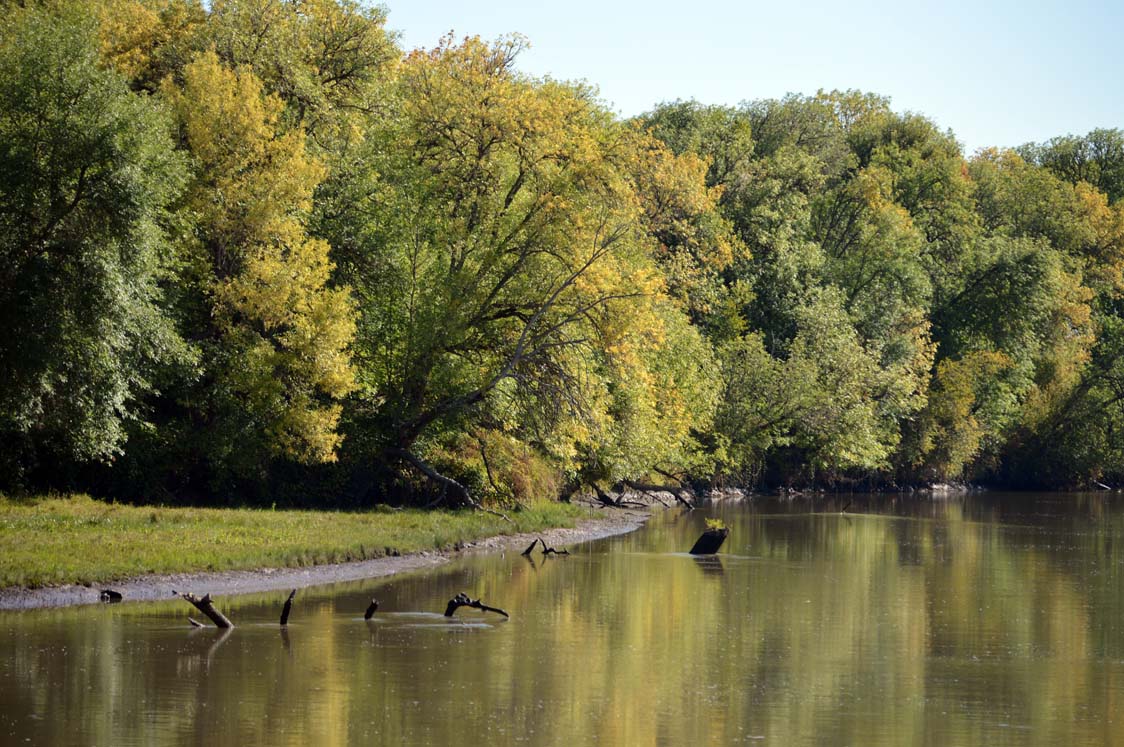
The trees were in full glory, emanating golden light, or sometimes green-tinged yellow brilliance.

A few reds thrown in, here or there, claiming attention.

I had no clue that there is a huge difference between the yellowing of fall leaves, and those turning red. Scientists apparently understand the biological process of the former, and have only speculations about the latter, (or so I learned here.)

When trees start to retrieve nitrogen they need for photosynthesis in fall, they break down the green chlorophyll in their leaves. This exposes the yellow pigments that were there all along. Case solved.


For red (or orange) looking leaves, trees have to produce a brand-new chemical, just before the leaves fall from the tree. Why take on that energy cost?

Scientists are divided about the likely options. Many of them believe that it has to do with protection against the sun, a kind of sunscreen that helps shelter the trees against surplus light when chlorophyll activity is declining.

Susanne Renner at Washington University in St. Louis explains: “There are a lot of high-tech, biochemical, physiological experimental papers showing that one function [of red pigment] is photoprotection.” Arguments in favor come also from correlational observations: Northern Europe, with much less solar irradiation in fall, has fewer trees turning red than we have in the States.

Alternatively, red pigments might be protecting the tree’s ability to recover nitrogen from the leaves. Tree species that co-exist with nitrogen-fixing bacteria, which give them abundant nitrogen, generally do not turn red.

Other scientists are not convinced and suggest a very different cause: insects. It turns out that aphids can tell the difference between red and yellow, and much prefer to lay eggs on the latter. Trees, then, could protect themselves against these pests if they evolved to turn red. As a bonus, there is the chance that the red-color pigments have anti-fungal properties that would serve trees well.

Not knowing the right answer, or the list of them, doesn’t faze me one bit. I am just so incredibly happy to look at the beauty, to understand that it has a purpose in addition to making my heart sing – once again grateful for fall.

Soon there will be no leaves left.

In Blackwater woods

 
Look, the trees
are turning
their own bodies
into pillars
 
of light,
are giving off the rich
fragrance of cinnamon
and fulfillment,
 
the long tapers
of cattails
are bursting and floating away over
the blue shoulders
 
of the ponds,
and every pond,
no matter what its
name is, is
 
nameless now.
Every year
everything
I have ever learned
 
in my lifetime
leads back to this: the fires
and the black river of loss
whose other side
 
is salvation,
whose meaning
none of us will ever know.
To live in this world
 
you must be able
to do three things:
to love what is mortal;
to hold it
 
against your bones knowing
your own life depends on it;
and, when the time comes to let it
go,
to let it go.

By Mary Oliver

The sandhill cranes added to the joy of the day.

Music today “Der Einsame Im Herbst” (the Lonely one in Autumn) from Mahler’s Lied von der Erde.

Have a good Thanksgiving week – I’ll be back by beginning of December.


A King who couldn’t stop the Tide.

Green King tides on the Pacific coast this weekend. Blue waves in other parts of the country a few days later.

(Photographs from the outing – note how the light shifts in the span of just 48 hours and how the trees are shaped by their environment.)

Got me thinking about William Makepeace Thackeray’s insights about the power (or lack thereof) of men to stop the tides and his savage novel, Vanity Fair, converted into a brilliant movie (2004) by the mother of New York City’s newly elected mayor. Convergence!

Thackeray was an interesting character – born in India, sent to England at age 5 after being orphaned, educated in brutal school settings, gambling away much of his inheritance. A smart, extremely perceptive satirist, allergic to hypocrisy and liberal to the core – he fought for suffrage, legislature term restrictions and an end to classism. Some of his social critique of Victorian society is almost too on the nose for our own times.

His poem below is often misinterpreted to claim the King thought he was almighty and tried to stope the waves, when it really says the opposite. His immoral life full of raids, killing and looting, he gets cold feet towards the end of it. Caught with remorse and fear of consequences (thoughts of will I get into heaven, one might wonder,) he, I speculate, tries to appease the judging power with submission. The sycophantic parasites surrounding him being too dense to even catch his drift. Plus ça change….


King Canute


KING CANUTE was weary hearted; he had reigned for years a score,
Battling, struggling, pushing, fighting, killing much and robbing more;
And he thought upon his actions, walking by the wild sea-shore.

‘Twixt the Chancellor and Bishop walked the King with steps sedate,
Chamberlains and grooms came after, silversticks and goldsticks great,
Chaplains, aides-de-camp, and pages,—all the officers of state.

Sliding after like his shadow, pausing when he chose to pause,
If a frown his face contracted, straight the courtiers dropped their
jaws;
If to laugh the king was minded, out they burst in loud hee-haws.

But that day a something vexed him, that was clear to old and young:
Thrice his Grace had yawned at table, when his favorite gleemen sung,
Once the Queen would have consoled him, but he bade her hold her tongue.

“Something ails my gracious master,” cried the Keeper of the Seal.
“Sure, my lord, it is the lampreys served to dinner, or the veal?”
“Psha!” exclaimed the angry monarch, “Keeper, ’tis not that I feel.

“‘Tis the HEART, and not the dinner, fool, that doth my rest impair:
Can a king be great as I am, prithee, and yet know no care?
Oh, I’m sick, and tired, and weary.”—Some one cried, “The King’s arm-
chair!”

Then towards the lackeys turning, quick my Lord the Keeper nodded,
Straight the King’s great chair was brought him, by two footmen able-
bodied;
Languidly he sank into it: it was comfortably wadded.

“Leading on my fierce companions,” cried he, “over storm and brine,
I have fought and I have conquered! Where was glory like to mine?”
Loudly all the courtiers echoed: “Where is glory like to thine?”

“What avail me all my kingdoms? Weary am I now and old;
Those fair sons I have begotten, long to see me dead and cold;
Would I were, and quiet buried, underneath the silent mould!

“Oh, remorse, the writhing serpent! at my bosom tears and bites;
Horrid, horrid things I look on, though I put out all the lights;
Ghosts of ghastly recollections troop about my bed at nights.

“Cities burning, convents blazing, red with sacrilegious fires;
Mothers weeping, virgins screaming vainly for their slaughtered
sires.—”
“Such a tender conscience,” cries the Bishop, “every one admires.”

“But for such unpleasant bygones, cease, my gracious lord, to search,
They’re forgotten and forgiven by our Holy Mother Church;
Never, never does she leave her benefactors in the lurch.

“Look! the land is crowned with minsters, which your Grace’s bounty
raised;
Abbeys filled with holy men, where you and Heaven are daily praised:
YOU, my lord, to think of dying? on my conscience I’m amazed!”

“Nay, I feel,” replied King Canute, “that my end is drawing near.”
“Don’t say so,” exclaimed the courtiers (striving each to squeeze a
tear).
“Sure your Grace is strong and lusty, and may live this fifty year.”

“Live these fifty years!” the Bishop roared, with actions made to suit.
“Are you mad, my good Lord Keeper, thus to speak of King Canute!
Men have lived a thousand years, and sure his Majesty will do’t.

“Adam, Enoch, Lamech, Cainan, Mahaleel, Methusela,
Lived nine hundred years apiece, and mayn’t the King as well as they?”
“Fervently,” exclaimed the Keeper, “fervently I trust he may.”

“HE to die?” resumed the Bishop. He a mortal like to US?
Death was not for him intended, though communis omnibus:
Keeper, you are irreligious, for to talk and cavil thus.

“With his wondrous skill in healing ne’er a doctor can compete,
Loathsome lepers, if he touch them, start up clean upon their feet;
Surely he could raise the dead up, did his Highness think it meet.

“Did not once the Jewish captain stay the sun upon the hill,
And, the while he slew the foemen, bid the silver moon stand still?
So, no doubt, could gracious Canute, if it were his sacred will.”

“Might I stay the sun above us, good sir Bishop?” Canute cried;
“Could I bid the silver moon to pause upon her heavenly ride?
If the moon obeys my orders, sure I can command the tide.

“Will the advancing waves obey me, Bishop, if I make the sign?”
Said the Bishop, bowing lowly, “Land and sea, my lord, are thine.”
Canute turned towards the ocean—”Back!” he said, “thou foaming brine.

“From the sacred shore I stand on, I command thee to retreat;
Venture not, thou stormy rebel, to approach thy master’s seat:
Ocean, be thou still! I bid thee come not nearer to my feet!”

But the sullen ocean answered with a louder, deeper roar,
And the rapid waves drew nearer, falling sounding on the shore;
Back the Keeper and the Bishop, back the king and courtiers bore.

And he sternly bade them never more to kneel to human clay,
But alone to praise and worship That which earth and seas obey:
And his golden crown of empire never wore he from that day.
King Canute is dead and gone: Parasites exist alway.

By William Makepeace Thackeray

What he said.

***

Before we expect miracles to follow Tuesday’s election outcomes, here are some reflections on what is ahead of us – not meant as downers, but as a reminder that work lies before us.


Election lawyer Marc Elias predicts Republicans’ reactions and further assault on voting rights.

Hadas Thier at Hammer & Hope writes thoughtfully about the challenges to Mamdani’s delivery of much that he promised voters.

Both reads highly recommended.

He will have help, though, from a lot of accomplished women on his transition team:

Former First Deputy Mayor Maria Torres-Springer, former Federal Trade Commission Chair Lina Khan, nonprofit president Grace Bonilla and city budget expert Melanie Hartzog will be his transition co-chairs. Progressive political strategist Elana Leopold, a de Blasio alum and senior Mamdani campaign adviser, will serve as the transition’s executive director.

Together, they have backgrounds in social services, finance, city budgeting and housing development. Their roles on the transition team — meant to smooth the mayor-elect’s path from election in early November to inauguration in January — often serve as a de facto audition for appointments to City Hall. (Ref.)


Music today promises unity in diversity, jazz from Sweden, not too far from King Canute’s home in Denmark, to celebrate what the electorate managed to pull off.

Barbie lost her surf board….

He, on the other hand, is looking for Barbie…

Whining or Warning.

· I'll bring you both. ·

How come on some days light just suffuses your soul, uplifts your spirits, fills you with joy at the ways a landscape transforms and brings out color? And on other days: nada, zip, nothing, foul mood solidly anchored in place, refusing to budge? You really should reconsider coming with me on my walk – I am not fun to be with, at all.

Then again, what nature has to offer might delight you, which is enough.

And it is right in front of our doors – we can heed the National Park Service urging us all to stay home from the big parks during the shutdown, since they lack the personell to provide safety, and more importantly, monitor fires, which are more likely to happen with increasing number of visitors. The beauty can be found in your neighborhoods – you just have to look within a 20 mile radius, in local preserves.

I can barely motivate myself to write today – too many frightening or dismaying topics competing for attention. Even some intrinsically fascinating new scientific data remind me of what is unfolding around us. I could not but think of all the people now carrying whistles to warn of ICE approaching neighborhoods to snatch brown people, when I read about birds developing specific warning calls directed at species not just their own, about brood parasites like cuckoos that lay their own eggs into others’ nests to be raised at the expense of the host birds’ offspring.

Here is the thing: the calls – dubbed whining – are nearly identical for 21 different species of birds, spanning several continents and millions of years of evolution, as reported in a new study published last week in Nature Ecology & Evolution. For birds that live in areas with a high frequency of brood parasites, the alarm call is ‘understood’ regardless of species.

“If this call is something like a ‘universal word’ for a brood parasite across birds, we should expect different species to respond equally to hearing it—even when it is produced by a species they have never seen before,” the authors write. “We found exactly this: When we played calls from Australia to birds in China (and vice-versa) they responded the same…. The evolution of the whining vocalization is affecting patterns of cooperative behaviors between birds around the world.”

“The findings suggest the alarm call has both innate and learned characteristics: responding to the alarm by investigating the threat is innate, while making the whining sound under the right circumstances is learned.”

(An in-depth introduction to animal communication and intent can be found here. It’s complicated and there’s a lot of disagreement between scientists. Our household included.)

Back to humans: Whistles are not enough. So I will offer you words today, someone else’s, which are a better alarm than I could provide in any case.

Jet Heer has written for numerous publications, including The New YorkerThe Paris ReviewVirginia Quarterly ReviewThe American ProspectThe GuardianThe New Republic, and The Boston Globe. Here are excerpts from his latest in the Nation, commenting on the video sent by the President on Sunday, a president who is currently demolishing the White House, reversed promises of aid to Ukraine, getting the military used to firing on civilians in a trial run in the Caribbean, before they will be let loose at home, and feeding billions into a South American right-wing regime at the expense of farmers and ranchers at home, never mind the USAID programs that could have run on that money, saving millions of vulnerable lives.

Heer on Trump’s latest:

But on Saturday, Trump posted on Truth Social a disturbing video, almost certainly created by AI, that indicated he was less inclined to refute the accusation of royal aspirations than to revel in the fantasy of being a sovereign who could degrade his subjects with impunity. The New York Times offered a typically euphemistic description of this “fake video,” writing delicately that it “showed him wearing a crown and flying a jet labeled ‘King Trump’ that dumps brown liquid on protesters.” The newspaper went on, with only slightly more candor, to explain that the video depicted the president “dropping a brown liquid resembling feces onto the heads of protesters, who appeared to be gathered in a city.

As distasteful as Trump’s video is, it deserves to be talked about without evasion: It’s a fantasy of Trump as a king who drops shit on peacefully protesting citizens exercising their First Amendment rights. In other words, Trump was shit-posting in every sense of the word.

The normal response to such posts is to tut-tut them as breaches of presidential norms and civility. But such prim rejoinders are beside the point. Trump was twice elected president. Whether we like it or not, he is the norm, and mourning for a lost era of politeness has done nothing to stop him.

The normal defense by Trump’s supporters to such vulgarity is to dismiss it as a joke and ask why the president’s critics don’t have a sense of humor. But this MAGA apologia is no more convincing than liberal opprobrium.


Trump’s unhinged scatological nightmare is not so much a satirical transgression as a revelation, a key to the impulses of his authoritarian politics. He has always been moved by anger and resentment against those he thinks are insufficiently respectful of him. As his political career has progressed, these vengeful motives have only grown more sadistic. It’s not enough to politically defeat his foes or to enact policies they dislike. Trump clearly wants to humiliate and debase his enemies.

Trump’s disgusting post is only one piece of evidence pointing to the fact that the No Kings accusation is completely on the mark. If Trump is energized by personal vengefulness, he is surrounded by cronies more than willing to harness that anger toward their political goal. They too want Trump to be a king, not just to degrade the opposition but to enact an irreversible political transformation pushing America to the right.

Writing in Semafor, David Weigel noted that Trump has wide approval among Republicans in a project of reviving the “imperial presidency” (which was only modestly rolled back after the Watergate scandal and Richard Nixon’s 1974 resignation). [W]ith a few libertarian exceptions, [Republicans] see a lot to like about Trump stripping power from the legislative branch of the US government. Trump is undoing post-Watergate norms that took away the president’s right to impound congressionally appropriated money, strike enemies without congressional approval, and govern without the distraction of politicized investigations—and most Republicans would respond: What’s wrong with that? Who, they wonder, has actually benefited from reining in the “imperial presidency”?

Stephen Miller, the agenda-setting White House deputy chief of staff for policy, has claimed that Trump enjoys “plenary authority” as president, meaning his power is nearly without limit. Steve Bannon, an unofficial adviser who has long shaped MAGA ideology, has been even more explicit in celebrating the unchained presidency, delighting in the fact that Congress is as servile and irrelevant in Trump’s America as the Duma is in Vladimir Putin’s Russia.

All of these policies, combined with Trump’s likely illegal unilateral bombing campaign in the Caribbean seas, are assertions of the power of an absolute sovereign. Trump is trying to rule as a king, and not a benign one. He thrills at being a monarch who craps all over the people of the world and his nation’s constitutional traditions. In that sense, his AI post is truly an honest expression of his goals.”

I don’t blame the – let m guess – many of my readers who chose to skip reading the excerpts listed above – we all try to curate how much bad news we can tolerate before descending into the kind of mood I am currently in, or worse. It’s just not how my brain works, and sometimes the price I pay is substantial. Maybe another nature outing is called for…. that, or a strawberry milk shake, which reliably works as consolation….

Ok. Mahler works too, most of the time. Here is his symphony that is more sympathetic to the cuckoo …

Paper wasp nest.

In the woods.

· Not a Children's Fairy Tale. ·

“Do you hunt?” Imagine yourself an old woman, stuck in a dentist chair, mouth wide open, drill awaiting and being asked that question. You can’t laugh out loud or you’d spit out all the cotton balls surrounding the ruin of a tooth….

The wonderful dentist’s assistant, formerly having served as a soldier in Afghanistan, had regaled me with tales of her elk hunting, and abruptly stopped her detailing how she learned to dissect a deer in her childhood when she saw me blanching ever so slightly. When I shook my head to her question, she proceeded to talk instead about how much it meant to have access to food when you grew up poor in Oklahoma.

Provisional crown now in place, I have been wandering through the woods, trying to distract myself from sad thoughts of poverty and hunger with the beauty around me. To no avail. What stood out were the mushrooms, finally sprouting after a too dry summer and now a bit of rain, but they, too, reminded me of food. We have several neighbors who regularly hunt for mushrooms, including immigrants from Poland who are unafraid to identify what is (un)safe in the mycological realm. For them, I hope, a hobby, not a need – but for how many people will foraging become a necessity – and how many live in an environment where that is even possible?

This spring, the Trump administration canceled 94 million pounds of food aid, cut $500 million in deliveries from a program that sends U.S.-produced meat, dairy, eggs and produce to food banks and other organizations across the country — about a quarter of the funding the program received in 2024. (Here is a list of all the needed food that is no longer available.)

The Lancet newest study from June predicts the U.S. funding cuts to USAid food programs could result in more than 14 million deaths internationally, including more than 4.5 million children under age 5, in the next five years.

And a food crisis in general is predicted by our very own Labor Department, which publicly argued in a document filed in the Federal Register last week that Trump’s immigration raids have devastated the agricultural workforce. The document also indicates that American workers are simply not interested in and do not have the skills to perform agricultural jobs.

Why let a good crisis go to waste? The department seeks a new rule that brings in guest workers through the H-2A program at lower wages, potentially reducing wages across the spectrum for all farmworkers, regardless of legal status. Mind you, H-2A work has been likened to slave labor – the laborers have no protections, no bargaining rights, are not paid overtime, can work only for a year with a specified employer. Unclear if the proposed wages are enough to even attract foreign workers; they certainly will drive the remaining US workers to seek work elsewhere.

“Only one of two things can be true: Either Trump’s Labor Department actually believes that Trump’s immigration enforcement is destroying the agricultural sector and threatening food security, or they are pretending this threat is real in order to crush wages for both foreign and domestic agricultural workers. Neither look particularly good.” (Ref.)

Hunger: WIC runs out this week. Due to Republican’s government shutdown, healthy food benefits for women, infants and children are on the brink. That means going hungry for nearly seven million women and children in this country. WIC serves 53% of all infants born in this country! That includes many military families who now lose WIC support, while also not being paid during the shutdown. The consequences are real – which is why WIC was instituted in the first place: it reduces poor birth outcomes, supports healthy child growth and reduces future bad health costs. A win not just for the recipients, but society at large.

There are now claims that the administration will take money gained from tariffs and shift them over to fund special supplemental nutrition program during the shutdown. However, it is unclear how much money the White House intends to spend, how the process will unfold, or if it is even legal. So far, then, empty words, intended to calm an increasingly worried population.

WHAT WE CAN DO, NOW, when the need is spiking:

Get in touch with local food banks and start donating. (No expired or open packages, please.) For mothers with infants and children baby formula is an important item. So are baby food in jars, milk, cheese, yogurt, (if the particular food bank takes fresh items) Iron-fortified cereals, whole wheat bread, brown rice, whole wheat pasta, and whole grain tortillas. Eggs, dried or canned beans ( black beans, lentils, and peas), peanut butter, and canned fish (tuna, salmon, sardines). Canned fruits and vegetables. And, of course, money. It will go to what is most needed.

For us in Oregon it can be the Oregon Food Bank.

Here is a different idea: Two Can Tuesday. It is a project that our household has supported for a long time – for its ease and direct results. Every Tuesday we put a plastic bin with donations for the local food back at the curb and a neighbor makes the round to pick it up and bring it over to neighborhood house free food pantry. You can be a volunteer for an existing round, or establish your own program in your own neighborhood. TcT will train you and help. Just email TwoCanTuesday. In my particular hood donations go to Neighborhood House. Some generous businesses participate as donation drop off sites as well.

Basics Market in Hillsdale, Butterfly Effect Art Space in Multnomah Village, Driftwood Coffee on SW Vermont, Garden Home Community Library,KinderSpirit Preschool

Then there is the Congregation Neveh Shalom food pantry: 2900 SW Peaceful Lane, deliver items directly between 8am-5pm Monday-Friday. Please leave your donation in bins with the security guard outside the synagogue’s main gate.

Canned Veggies: corn, green beans

Canned Fruits: peaches, pineapple, pears

Tomato Products: diced tomatoes, jars of tomato sauce

Pasta: spaghetti, penne

Rice: white, brown

Beans: black, pinto, garbanzos, refried, kidney

Protein: peanut butter, canned tuna, salmon & sardines Broth: veggie, beef, & chicken

Baking supplies: oats, flour (whole wheat, white), Crisco, oil (vegetable, canola), sugar, cake & muffin mixes,

Drinkables: boxed alternative milks (oat, rice, soy, almond), coffee, tea, juice boxes

Kid Friendly Foods: jam, jelly, chips, crackers, fruit snacks, cereal, granola bars, pouches of veggies, protein, fruit for babies

Spices: salt, peppers, garlic powder, onion powder, oregano

It is all about protecting the children, children who have lost so much security already since this administration started to wield the cutting ax. Here are some facts assembled by ProPublica, as of April this year. It has gotten worse since. ( Full article here.)

The staff of a program that helps millions of poor families keep the electricity on, in part so that babies don’t die from extreme heat or cold, have all been fired. The federal office that oversees the enforcement of child support payments has been hollowed out. Head Start preschools, which teach toddlers their ABCs and feed them healthy meals, will likely be forced to shut down en masse,some as soon as May 1. And funding for investigating child sexual abuse and internet crimes against children; responding to reports of missing children; and preventing youth violence has been withdrawn indefinitely.

The administration has laid off thousands of workers from coast to coast who had supervised education, child care, child support and child protective services systems, and it has blocked or delayed billions of dollars in funding for things like school meals and school safety.

Trump’s goal of shuttering the Department of Education: in the works, already, some 2,000 staffers there have lost or left their jobs.

At the Department of Health and Human Services, Robert F. Kennedy Jr., the agency’s secretary, has dismissed all of the staff that had distributed $1.7 billion annually in Social Services Block Grant money, which many states have long depended on to be able to run their child welfare, foster care and adoption systems, including birth family visitation, caseworker training and more. The grants also fund day care, counseling and disability services for kids. (It is unclear whether anyone remains at HHS who would know how to get all of that funding out the door or whether it will now be administered by White House appointees.)

Next on the chopping block, it appears, is Medicaid, which serves children in greater numbers than any other age group. If Republicans in Congress go through with the cuts they’ve been discussing, and Trump signs those cuts into law, kids from lower- and middle-class families across the U.S. will lose access to health care at their schools, in foster care, for their disabilities or for cancer treatment.”

And that is all before we consider the effects of environmental deregulations, harming the children of the world, not just our nation’s, and the outcome of the anti-vaccination campaigns imposed by DHS. Or zip-tying toddlers in pajamas with hands behind their backs during nightly raids (Chicago), while using chemical agents, repelling down from black hawk helicopters onto the roofs of apartments buildings. Can you imagine the panic a three year old feels, ripped out of bed, separated from parents, standing in the cold darkness, zip-tied?  Reported by ABC7, the local news affiliate in Chicago:

When we have reached a point where violence towards and blatant disregard for kids – their hunger, their safety, their health – is met by “F— them kids!”, you wonder if we’ll ever get out of the woods again.

(And, for what it’s worth, I am not the only one focused on this. I wrote this Monday; on Tuesday this came to my inbox, with obvious parallels in slightly more professional form…)


Music today by Mirel Wagner, a two album wonder from 10 years ago. This song captures hunger like no other.

When the Cellar Children see the Light of Day is the full album. I don’t understand why we no longer hear from her. Such a talent.

Getting off anti-depressants.

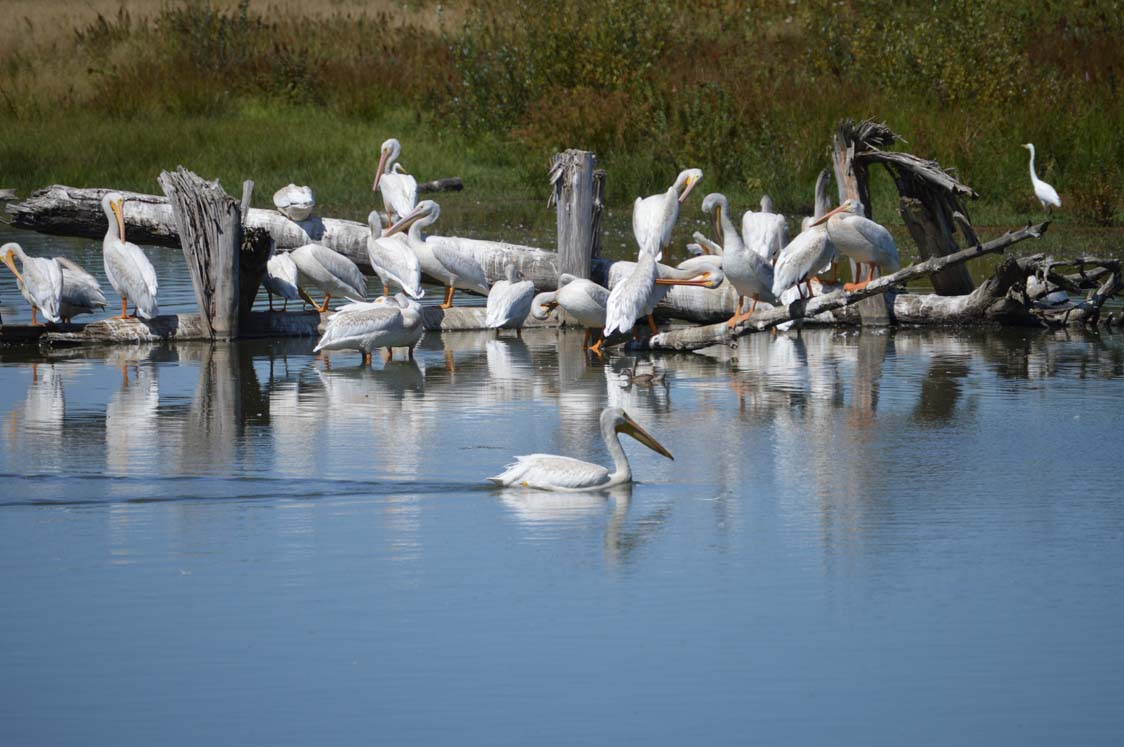
Walk with me, into a fall landscape, the air filled with the trills of migrating sandhill cranes. We won’t get to see them, but scoops of pelicans instead, circling high and eventually resting on what is left of the ponds.

There is yellow around,

and orange/red,

and brown,

and the occasional daily wildlife unexpectedly appearing deep in the woods.

The oaks are taking on a brownish hue, their leaves already falling,

the flickers flitting from one tree to the next.

Farmers are mowing the meadows, and the remaining short grass forms golden, wave-like patterns, a sea minus the threat of drowning.

Nature’s beauty swept away sadness – which brings me to today’s topic, my familiar rant against claiming scientific data when the reported pattern is ambiguous, in this case about getting off longterm anti-depressants. The issue came up during a long car ride when we listened to an NPR Shortwave podcast describing the withdrawal symptoms that some people report after years and years of taking popular antidepressants, SSRIs like Zoloft, Prozac or Lexapro. Below is a summary of our reactions, two psychologists trying to be careful.

First of all, I strongly believe anti-depressants are a valuable and often necessary tool in the fight against depression. They do have occasional side effects during use, but they are life savers, literally, for people living with clinical depression due to biological factors. They also work for people who experience overwhelming sadness due to short term events in their lives, making it possible to return to normalcy after existential threats or losses. Do we have an over-prescription problem, with 1 in 10 Americans currently on anti-depressants? I don’t know. The problem for today’s conversation is what happens when you get off of the meds.

The Shortwave podcast started with a human interest story of an investigative reporter who had been on SSRI’s for 15 years; she had gotten onto them for, as she remembers, mild problems. After all this time, she then did off-ramping with guidance from her doctor, with successively smaller doses across 1 month. (This is the way recommended by the companies who sell the drugs, stressing that the dosage and timing of this off-ramp needs to be proportional to what you took and for how long.) Despite this careful and planned exit from the drug, she was apparently thrown into both psychological and physical horror experiences. Scouring the internet she found many reports of people, now even in support groups, claiming something similar happened to them after long-term use (years, not months). She found no matching reports from people who used the meds for less than a year. Symptoms reported included existential dread, panic attacks, fatigue, dizziness, and diarrhea, among others. She found no longterm epidemiological studies to document these patterns.

So what’s going on here? Do we take these self reports at face value? Do we trust the implication that these drugs have some previously undocumented side effects with long term use, perhaps disrupting some sort of internal system?

Let’s check a bunch of possibilities first:

  • We are dealing with self report on the internet and these reports might be sustained, encouraged, and even over-stated, thanks to the patterns of internet culture. We’re also missing a crucial comparison: Are symptoms more frequent among people coming off the drug than they are for randomly selected people in the population of similar age and similar circumstances? The symptoms may be more common for people coming off of SSRI’s, but we don’t know, and this question is clouded by the reliance on self report. Maybe other people, not coming off meds, are experiencing similar problems at a similar frequency, but (with no encouragement and no support groups calling for information) have no reason to come forward and report their experience. In short: Understanding the pattern requires comparison about exactly who is going through these problems and, among other concerns, any reliance on volunteered self report raises the possibility that numbers are inflated by encouragement to report or some sort of band wagon effect.

  • Next, do we know if all those reporting followed the tapering required for off-ramping? We have no reliable information about whether some of the people – perhaps many of the people – reporting these problems just stopped abruptly taking the meds. And if it turns out that people did taper off the drug properly, are the problems reported specific to SSRIs or can similar problems be documented for other psychological meds stopped after long-term use? (If so, this is not a problem of SSRI’s, and may not even be a problem somehow linked to anti-depressants per se.)

  • Similar concerns attach to the reported difference in experience between long-term users and short-term users. The claim is that these problems are specifically associated with long-term use, and specifically with SSRI’s. We need real data on this before drawing conclusions, and the problems already described – with volunteered self-report – are also a limitation here?

  • In addition, the idea here is that people say their symptoms after leaving the drug are much worse than the problems that put them onto the drug in the first place. Can we count on this memory being accurate – especially since people are remembering their initial status years, and perhaps decades, back?

Assuming all of these questions are answered to our satisfaction, – the self reports are real, the frequencies hold, long-term vs short term differences are established, memory serves accurately – there is still a large scale question about cause and effect.

As one complication, during long-term use the person has obviously aged. We know that age changes things in the body, leaving you less resilient. More, external things can get harder with age, including a loss of economic safety, a place in the world, a shrinking of your circle of friends and family due to death. In other words, if your symptoms are worse when you leave the drug, is it possible that your life has gotten objectively worse? Or that your life problems are just as they were “pre-drug,” but your ability to cope is diminished? Add to that that many SSRI patients are female, and many go through menopause during long-term use. In these ways, if the person’s problems after leaving the meds are worse than problems before the meds, this may have nothing to do with the meds themselves!

These are all answer-able questions, and – of course – maybe the withdrawal patterns for some long term users are real, and maybe their frequency is not matched by short term users. Maybe there are good answers to the question of what causes these patterns. The key, though, is that the initial report (the sort of science reporting we all encounter in the news, on social media, leaves out information that is crucial for understanding what’s going on. Scientists generally are alert to this worry, but journalists are not, nor are most members of the public.

So far, it seems that any claims about long-term SSRI use aren’t justified – and, given recent events in the news, we need to be alert to unwarranted claims about medicine or medication.

Should researchers take steps to remove this ambiguity? Yes!

In the meantime, it would be a mistake to forgo the clinical use of medications that we know have helped millions of people. I fear that podcasts like these might be detrimental to people who take the reporting at face value and make medical decisions that would be different otherwise.

Music today a favorite cello concerto. Conductor C. Eschenbach was 80 at the time of this recording.He turned 85 this February and is still actively working.

Il Tempo Fermo.

I have been absolutely hooked on an album by Fabrizio Cucco, called Tempo Fermo. It unfolds slowly, getting more powerful with each subsequent listening, creating and simultaneously satisfying a sense of longing. It is sung in Italian, so you might wonder why I am posting it with pictures of Portland Japanese Garden, an altogether different culture. Well, depending where you inquire, the English translation of the title says Down time, or Time Standing Still.

That is the garden for you: it forever offers down time, a shelter from thinking hard, feeling hard, worrying hard.

It provides beauty, in so many different dimensions, differences in patterns, from whole vistas to the smallest details.

Light,

and color.

It offers calm, as only nature can do, even if nature is pushed into defined configurations by mostly invisible sources (from garden designers to the knowledgable gardeners, who one encounters occasionally.)

It provides the comfort of familiarity, a place to return to that greets you with old standbys, or that you proudly assess for seasonal changes, like the familiar decorations alternating across holidays in your childhood home. Except here it is not decorations, it is nature itself that changes with the shifting amounts of daylight and temperatures. Change that is of the essence, not some imposed by-product of celebrating seasonal events.

Visiting the garden, like yesterday morning, also elicits, on occasion, my hopes for the other translation of the phrase tempo fermo: time standing still.

For a short moment I wished for time to stand still, to be preserved, just like my photographs preserve my way of seeing the world around me. I wanted not to have to leave the hazy light of the early morning, the still cool air before the heat settles in, the company of a friend who relishes quietude just as much as I do. I wanted to put that moment into a piece of amber, a moment when I could still walk and climb stairs, when pain was perfectly manageable, when news were tuned out and my brain switched away from analysis to simple, grateful awareness of nature’s beauty.

I wanted to hold on to a moment where the world can still be healed, in theory, where gardens can still defy the challenges brought on by climate change change, where frequent outings are not a luxury out of reach. Time standing still, so that no more deaths are accrued on the battlefields, the regions of genocidal starvation, the areas of natural disasters.

That wish – Time, stand still! – is of course one that has been shared by many people across the centuries. It has been experienced, most often in the context of love, longing, separation. Listen to one more piece of music that encapsulates the notion – from the 17th century by John Dowland.

Then again, here is the thing: if time stood still there would be no music. After all music is an unfolding in time – we have to switch from stand-still to procession, if we want to experience that art form. Beauty, then, offered in development rather than permanence, in “becoming” – I take that as a major consolation for futile longings of halting time!

And here is yet one more perspective on time:

On Meditating, Sort Of

 Meditation, so I’ve heard, is best accomplished
if you entertain a certain strict posture.
Frankly, I prefer just to lounge under a tree.
So why should I think I could ever be successful?
 
Some days I fall asleep, or land in that
even better place – half-asleep – where the world,
spring, summer, autumn, winter –
flies through my mind in its
hardy ascent and its uncompromising descent.
 
So I just lie like that, while distance and time
reveal their true attitudes: they never
heard of me, and never will, or ever need to.
 
Of course I wake up finally
thinking, how wonderful to be who I am,
made out of earth and water,
my own thoughts, my own fingerprints –
all that glorious, temporary stuff.

By Mary Oliver

Catching up.

Walk with me, before the heat sets in, very early morning. I know, it has been a long time, longer than anticipated. Had a bit of a rough stretch here, paralyzed by what is unfolding in our world, unable to face it with my usual determination. Then again, resignation is a luxury. Particularly when blessed with a position of privilege. So, shall we dive back into it, the rumination on where we are and perhaps what can be done about it? I vote yes, with hopes of not getting overwhelmed quite so soon again. Nature walks to the rescue….

Heron at his/her morning toilette

I think what got to me was the opening of more camps here and the forced abduction of humans, without legal recourse, to prisons abroad, sanctioned by a Supreme Court who knows that torture and slave labor are awaiting at those sites. What is here they call migrant tent camps or detention centers. You could also call them concentration camps for long term American residents who have not been convicted of any crime and face deportations to countries they’ve never set foot in. (A reminder: Mere unlawful presence in our country is not a crime. It is a violation of federal immigration law to remain in the country without legal authorization, but this violation is punishable by civil penalties, not criminal.)

Concentration camps hold a special place in the imagination of people like me growing up in post-war Germany. I’ll write about that history and the emergence of a secret police which paved the way, a bit later. Today, walking in this amazing landscape, I am reminded that we don’t have to look to Europe for these kinds of atrocities. Our very own history contains plenty applicable examples – all based on the Merriam-Webster definition of concentration camp:

“A concentration camp is a facility where large numbers of people, often political prisoners or members of ethnic or religious minorities, are detained in small spaces under armed guard without fair trial or legal process. These camps are typically associated with harsh conditions.”

The recent history is probably remembered by most of us: the 1942 interment of Japanese-Americans in camps, most of them US citizens, no less. But there were other, earlier examples.

Take 1927, for example, when the Mississippi river flooded, with extensive damage to Mississippi, Arkansas, and Louisiana. Hundreds of thousands of people were displaced and put in camps, segregated by race, since this was during Jim Crow. Black camps quickly turned to labor camps, run by the National Guard, forcing refugees to work on white-owned plantations or doing repairs, rebuilding the levees, unloading supplies from ships, all as unpaid labor. Black evacuees were, in contrast to Whites, not allowed to leave and go North by decree of the Governor. People trying to escape or refusing labor were beaten or killed by National Guard troops. 300 000 Black Americans, interned in 154 camps, sleeping on the wet ground, provided with scant food.

All this on the heels of the Tulsa Massacres in 1921, where 6000 Black Americans were put into an internment camp with forced labor requirement.

Thistle, chamomile, a house finch in an elderberry bush, bindweed, mallow and mystery flower…

Further back, the bloodshed proceeded unimpeded. Andrew Jackson proposed that

 “emigration depots”were introduced as an integral part of official US Indian removal policy. Tens of thousands of Cherokee, Muscogee, Seminole, Chickasaw, Choctaw, Ponca, Winnebago and other indigenous peoples were forced from their homes at gunpoint and marched to prison camps in Alabama and Tennessee. Overcrowding and a lack of sanitation led to outbreaks of measles, cholera, whooping cough, dysentery and typhus, while insufficient food and water, along with exposure to the elements, caused tremendous death and suffering.

Thousands of men, women and children died of cold, hunger and illness in camps and during death marches, including the infamous Trail of Tears, of hundreds and sometimes even a thousand miles (1,600 km). This genocidal relocation was pursued, Jackson explained, as the “benevolent policy” of the US government, and because Native Americans “have neither the intelligence, the industry, the moral habits nor the desire of improvement” required to live in peace and freedom. “Established in the midst of a… superior race, and without appreciating the causes of their inferiority… they must necessarily yield to the force of circumstances and long disappear,” the man who Donald Trump has called his favorite president said in his 1833 State of the Union address.” (Ref.)

Red-winged blackbird, a kingfisher diving and a purple martin.

American history – soon to be deleted from a curriculum near you. One can see that as sort of a lie, a criminal lie: the erasure of what we should remember, our very own atrocities.

The lie of active forgetting.  While humans are doomed to forget and be forgotten, that is a passive process.  Instead I am referring to active forgetting.  Erasure comes when a society takes active steps to forget the horrors it has committed.  These steps often include developing a counter mythology to help erase the truth.  Think of your typical mid-20th century American Western.  Myths about savage Indians harassing “innocent” settlers, particularly white women and children, requiring the cavalry ride to the rescue.  This is just one of many examples of how American society actively erased the truth about settler genocide of Indigenous societies.  Not savage Indians, but Indigenous civilizations whose only “crime” was thousands of years of occupation and use of American land and resources.  Scores (if not more) of ethnic cleansing and genocide campaigns repackaged as “civilization” rightfully replacing bloodthirsty, ignorant “me talk dumb ug-um Indian” savagery. And all of this in turn allows a society to actively forget, or erase, the atrocities it has committed.” (Read Akim Reinhardt’s full, thoughtful essay on suppression of historical knowledge here.)

Babies!!!

Egret and heron were spooked when I walked up.

There are obviously a number of reasons why public education is currently under relentless and brutal attack. But erasing the knowledge of painfully violent and unjust history is surely one of them.

Deer jumping across the path in front of me

We walk here on land of the Atfalati [aˈtɸalati], also known as the Tualatin or Wapato Lake Indians, a tribe of the Kalapuya Native Americans who originally inhabited villages on the Tualatin Plains in the northwest part of the U.S. state of Oregon. In 1856, the tribe was removed to Grand Ronde Reservation, some sixty miles southwest of their original homeland. Another forced relocation – a story for another day.

Bunnies at breakfast.

This turtle was on the path nowhere near water. Must have made a wrong turn. Just like this country.

Music today by Walter Zanetti. Might have poste before. Beautiful enough to repeat endlessly….