 November 20, 2025
Walk with me, before I take off for Thanksgiving, driving South to see the kiddos.
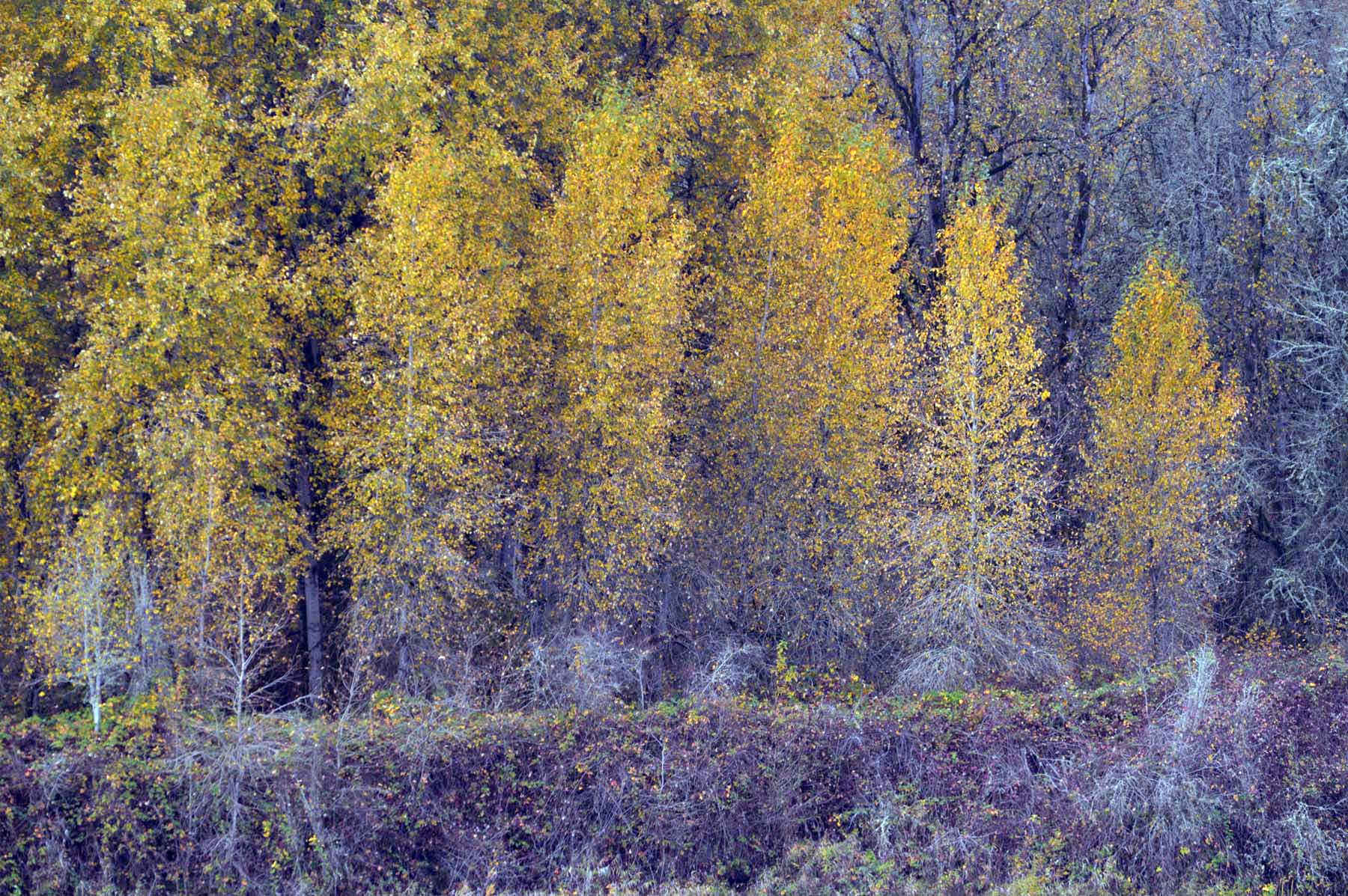
The trees were in full glory, emanating golden light, or sometimes green-tinged yellow brilliance.


A few reds thrown in, here or there, claiming attention.

I had no clue that there is a huge difference between the yellowing of fall leaves, and those turning red. Scientists apparently understand the biological process of the former, and have only speculations about the latter, (or so I learned here.)
When trees start to retrieve nitrogen they need for photosynthesis in fall, they break down the green chlorophyll in their leaves. This exposes the yellow pigments that were there all along. Case solved.


For red (or orange) looking leaves, trees have to produce a brand-new chemical, just before the leaves fall from the tree. Why take on that energy cost?
Scientists are divided about the likely options. Many of them believe that it has to do with protection against the sun, a kind of sunscreen that helps shelter the trees against surplus light when chlorophyll activity is declining.

Susanne Renner at Washington University in St. Louis explains: “There are a lot of high-tech, biochemical, physiological experimental papers showing that one function [of red pigment] is photoprotection.” Arguments in favor come also from correlational observations: Northern Europe, with much less solar irradiation in fall, has fewer trees turning red than we have in the States.
Alternatively, red pigments might be protecting the tree’s ability to recover nitrogen from the leaves. Tree species that co-exist with nitrogen-fixing bacteria, which give them abundant nitrogen, generally do not turn red.

Other scientists are not convinced and suggest a very different cause: insects. It turns out that aphids can tell the difference between red and yellow, and much prefer to lay eggs on the latter. Trees, then, could protect themselves against these pests if they evolved to turn red. As a bonus, there is the chance that the red-color pigments have anti-fungal properties that would serve trees well.

Not knowing the right answer, or the list of them, doesn’t faze me one bit. I am just so incredibly happy to look at the beauty, to understand that it has a purpose in addition to making my heart sing – once again grateful for fall.


Soon there will be no leaves left.


In Blackwater woods
Look, the trees
are turning
their own bodies
into pillars
of light,
are giving off the rich
fragrance of cinnamon
and fulfillment,
the long tapers
of cattails
are bursting and floating away over
the blue shoulders
of the ponds,
and every pond,
no matter what its
name is, is
nameless now.
Every year
everything
I have ever learned
in my lifetime
leads back to this: the fires
and the black river of loss
whose other side
is salvation,
whose meaning
none of us will ever know.
To live in this world
you must be able
to do three things:
to love what is mortal;
to hold it
against your bones knowing
your own life depends on it;
and, when the time comes to let it
go,
to let it go.

The sandhill cranes added to the joy of the day.

Music today “Der Einsame Im Herbst” (the Lonely one in Autumn) from Mahler’s Lied von der Erde.
Have a good Thanksgiving week – I’ll be back by beginning of December.


Sara Lee Silberman
Wonderful photos and poem!
Safe travels! Happy holiday!