Browsing Category

Science

Borrowing today.

Here you see me, with my morning coffee cup, thinking what I should do for the next blog. I was working on a longer piece, but would not finish in time. My focus was drawn to the cup because I had recently encountered a series of paintings containing cups, presented by the inimitable French gallerist Yoyo Maeght.

So I thought, let’s offer some of those and some additional ones, celebrating the joys of hot coffee during cold days. Or any day, come to think of it. After all, new Harvard research shows that 2 to 3 cups a day are tied to significantly lower dementia risk, and slower cognitive decline. (Not the decaffeinated kind, though – the more caffeinated, the better, it looks like.)

Paul Cézanne, Woman with a Coffeepot (1890–1895)

Just then, a friend sent me the essay below, which I decided to post in full. It is something I rarely do, but the writing resonated on so many levels and the shared love for birds is obvious. The observations and emotions expressed feel familiar in almost uncanny ways. At the same time I decidedly disagree with some of the sentiments. A piece to make me think, then, so very welcome. The author is Chloe Hope who has been writing about death and birds with sensitivity and wit for quite some time now. Here is her substack link, so you can see for yourself.

You get the somewhat haphazard combination, in other words, of a borrowed text and a borrowed visual idea, the former defiant, the latter comforting. I guess as good a combination as any to start our week with.

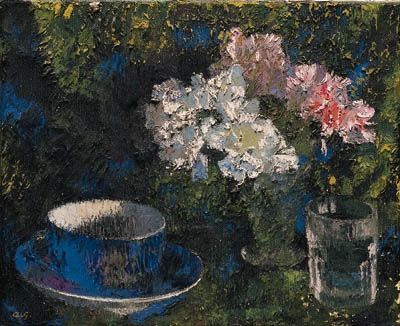
Félix Vallotton Nature morte avec des fleurs (1925).

in accordance

one eye on the sky…

By Chloe Hope

Someone in the village has been feeding the Kites. There’s an unusual number, wheeling above the valley—David counted forty, the other day, spinning a languid gyre. I’ve a cricked neck from holding my face parallel to the sky, and at times they hover so low I can see the whites of their glassy eyes. Their constant spectre is as intimidating as it is hypnotic, and they drift overhead like a half-remembered dream, while we press on below. One eye on the sky. I find myself envious of their honeyed glide. The grace with which they seem to meet the day. I have, of late, become increasingly irritated by my seeming inability to feel a sense of ease. The news cycle exhausts and demoralises. What was a creeping sense of disquiet has become a steady march of dread, and the crumbling of systems which long presented themselves as trustworthy continues unabated—each passing week seeing the circle of complicity widen, and the nature of what was being protected grow ever darker. The news is magnetic interference and my mind a compass needle that cannot find true north. I am exquisitely disoriented by this moment in time. My defensive go-to, since childhood, in the face of confusion and unrest, is to sense-make. The tumult that infused my youngest years saw understanding become sword and shield—and confusion my mortal enemy. Those grasping arms served me well; until, of course, they didn’t. Until wielding tools of rationale became as insane as the thing I was fighting. Some things will not yield to understanding. Certain darknesses have no angle from which they begin to resolve, and to keep searching for one eventually becomes its own kind of madness.

Henri Matisse Laurette with Coffee Cup (1917)

Over the years, I have had the extraordinary good fortune of being involved in the early weeks of many a young Bird’s life. As with any newborn being, there are exciting points of progression which way-mark their developing birdness: eyes opening, pin feathers forming, perching. A particular favourite of mine to witness, however, is the first wing stretch. Any wing stretch is a joy to see, but there’s something about the first one that feels seismic—as though the wings themselves are making a declaration of intent to the sky—“Soon, vaulted blue. Soon.” Each time the sight lands sharp in my chest, the strange sting of something so perfect it makes me nervous. Each time I am made to question what I will declare to the sky. A wing is a refusal of gravity; a rebuttal, made of bone. The architecture so ancient it renders us a footnote. Feathers extend in graduated tiers, the whole apparatus light but not frail—hollow bones latticed within, muscles knitted along the keel. When a Bird lifts its wings, it is shaping pressure. Curving and carving air. Whether Robin or Raptor, they sense the invisible and answer in accordance.

Francisco de Zurbaran Still Life with Chocolate Breakfast Undated

Flight is a holy intimacy with the world, one clearly reserved for those who know how to belong to it. And few belong to it more completely than the Andean Condor. These spectacular Birds have a wingspan of over 10 feet, stand more than a meter tall and, weighing 15kg, are among the largest flying Birds in the world. At the turn of the decade, a study of these Condors revealed that, while airborne, they flap their wings less than 1% of the time. One of the Birds monitored flew for over five hours, travelling more than 100 miles, without beating their wings once. These magnificent beings take to the skies, and surrender to the currents they find there. They do not fight the air they’re met by, nor wish for better winds. They sense what is, and answer in accordance—and the world, thus met, holds them aloft. Their surrender is not capitulation, but an active and intelligent response to the world exactly as it is. And their radical trust ignites my own.

Henri Fontain LaTour Vase de fleurs avec une tasse de cafe (1865)

Surrender is exquisitely difficult—for me, at least—and it seems that no matter how many times I manage it, it never becomes something that I know how to do. I’ll mither and loop, all while knowing there is an alternative, but it somehow feels out of reach. I wonder whether the act of letting go, of yielding to the very is-ness of things, tends toward rocky terrain because some part of us knows that a day exists, suspended in the geography of the future, where the final task to be asked of us will be that very thing. Each time I open my arms and tilt my head to the sky, and meet the world on its own terms in a posture of vulnerability, I am preparing for—and speaking to—my ultimate surrender.

It’s windy here, today. There’s a horizontal line of chimney smoke scoring across the garden. The Kites are undeterred—in fact I think they’re playing in it. May we each meet the day with the grace of these Red Kites, and may we each meet Death with the grace of a soaring Condor.

Jean Etienne Liotard Lavergne Family Breakfast (1754)

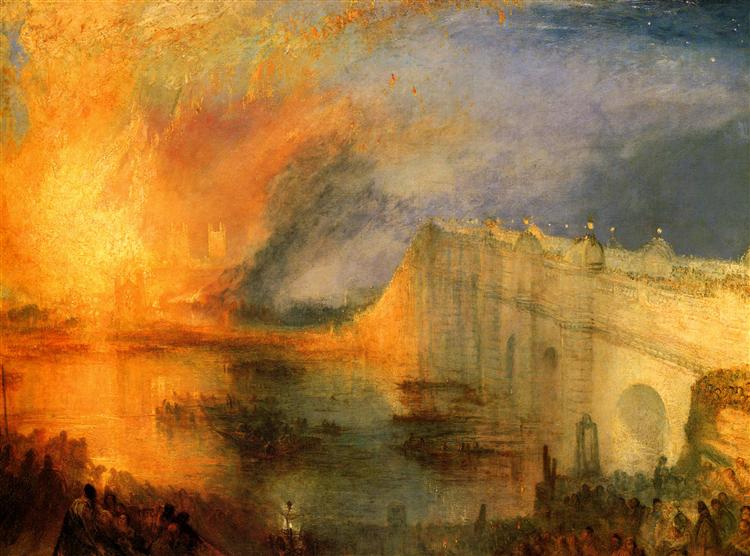
“Suspended in the geography of the future” – I just love that phrase; it applies not just to eventualities we meet in our own lives, but also in the unfolding of art history. Just look at the Liotard version of breakfast and then take in Juan Gris – a mere 160 years apart.

Juan Gris Breakfast (1914). 

What sticks with me, though, from the essay, is the distinction between capitulation and surrender, and the sense that an unwillingness or inability to surrender might be problematic. That we have to practice surrender for the day when it is inevitable. I disagree. I think we have to practice NOT to surrender, particularly as women in this world, or as people dealing with illness. Why worry about attitude, when death might sneak up on us unexpectedly, or soothe us into a non-conscious state before departure, or simply declare the time is now. You don’t expect an emotional stance from a baby being birthed, it simply has no choice in the matter. Why then from the person who is equally forcefully dragged into the reverse process?

The implication is somehow that an approach of a certain kind can and will ease things at the end. Yet I have seen during hospice work that all 4×4 combinations – letting go, fighting against, good death, bad death – regularly occur. Why use energy now to shape yourself into something you hope matters, when that energy could be used to pursue what you love now, what feels comfortable now, what strengthens you in daily struggle now? There are dangers to surrendering in advance – in politics as much as on the sick bed.

I’ll place myself happily among the group of defiant young women and their cups below, by one of Sweden’s foremost contemporary painters. Just dare me to let go!

Karin Mamma Andersson About a Girl (2005.)

It is claimed that Johann Sebastian Bach insisted on his morning cuppa.  “Without my morning coffee, I’m just like a dried up piece of roast goat.” Here is his Coffee Cantata.

Édouard Vuillard Tasse et Mandarine (1887)

Foggy Times.

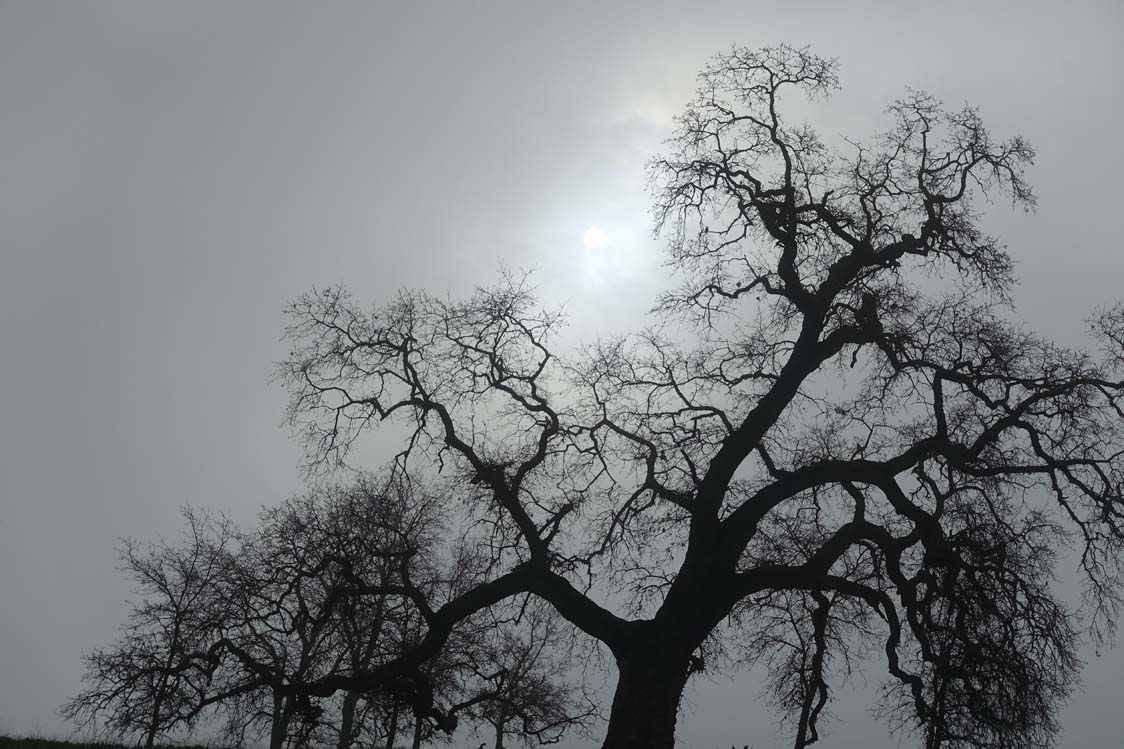
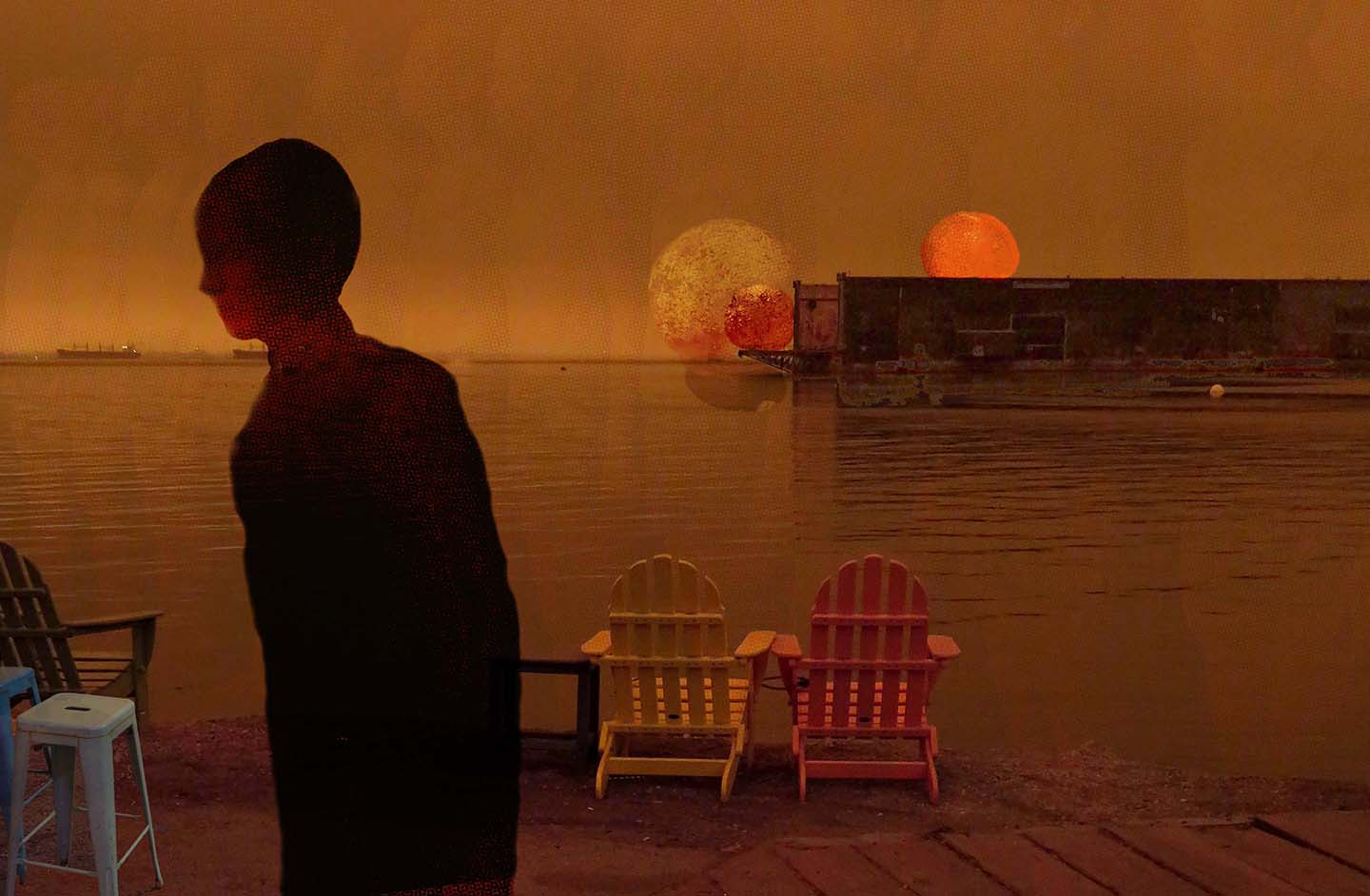
Walk with me, up and down the hills of the San Ramon Valley, morning fog enhancing the beautiful shapes of the leafless oak trees at this time of year. The contrast of dark limbs against gray air is striking. Stark, though, as is much that is going through my mind which switched from fog to smog all too easily. I had just read news about changes in laws about pollution, and then came across a list of all the administrative decisions that affect our health in more or less direct ways. I’ll summarize below – the full set from which I borrowed can be found here.

Let’s start with pollution, given my associations to smog. The Trump administration has declared the EPA will no longer consider any monetary benefit from saving lives and protecting health when regulating toxic, fine-particle pollution. A life – yours, mine, that of your kids or grandkids – is now valued a $0 instead of the previous $10 million, when balanced against the cost of regulating the industry. As of January 2026, only the cost to industry will be considered, not tempered by concern for our health.

And should you develop lung problems, cancer or other diseases, good luck with your health insurance. The “Big Beautiful Bill” is predicted to deprive over 15 million people of health insurance, by slashing support for Affordable Care Act policies and by tightly restricting eligibility for Medicaid and CHIP, the Children’s Health Insurance Program. Medical experts predict more than 50.000 preventable deaths as a consequence, of course affecting the most vulnerable among us.

It is not just small particle pollution that potentially makes us sick. Mercury and other poisonous heavy metals were under strict emission control before. No longer. ” Nearly 70 of the nation’s largest fossil-fuel power plants have won exemptions from limits on the metals they spew into the air.”

Measles are running rampant, not just causing potential death in some cases, but more frequently life-long disability. They also wipe the slate clean in the sense that whatever immunity you built to other diseases through prior exposure, is lost. Your body now has to start from scratch.

Vaccines could prevent scores of horrible diseases. Many are no longer recommended; among them hepatitis A and B, rotavirus, RSV, meningococcal disease, influenza, and Covid. Don’t get me going on the absence of scientific reasoning in this area. Or the presence of absolute cult-like thinking around conspiracy theories tied to vaccines.

Another impact on our health rests on the changed recommendations about what we should and should not eat. The food pyramid has been turned upside down, with beef tallow, butter and red meat now on the top. (Never mind the environmental consequences related to climate change from such changes.) Whole grains have been placed at the bottom. The fat content of whole milk is also recommended again. Our leading cause of death in this country – heart attacks and strokes – will be shooting further upwards.

These are all changes that will directly affect the nation’s health. Indirectly contributing will be the fact that the National Institute of Health is under assault by the administration. Medical research has been undermined by the termination of grants, (including hundreds targeting infectious diseases), and Trump has proposed a 40 percent budget cut for 2026, after already more than 15% of the staff have been fired.

Trump has also  withdrawn us from the World Health Organization, decimating the budget of the global health agency. That impacts us nationally, since the spread of HIV, tuberculosis, or pandemics knows no borders. These diseases are now less monitored and certainly less effectively fought given the withholding of funds.

The daily news grabs so much attention regarding the war-like actions we see in Minnesota, or the threats of war directed at other nations, the impunity of whole government agencies when they defy the law or judicial verdicts. The less spectacular actions around environmental or health protection easily fall through the cracks of the attention economy. But they will have a huge, long-lasting impact that affects us as well as future generations.

All receding into the fog created by the onslaught of too many bad news at once….

I’ll try and lift the mood after such a downpour of bad news. At least this bit of gallows humor around “acquiring” Greenland made me smile. Tells you about the state of my brain … Seriously, though, if you want to learn about the true rationale(s) underlying the Greenland fixation, read this.


Seeing and not seeing.

My mother, working on her dissertation in the field of agricultural sciences, conducted a series of experiments in the university greenhouse in 1948. I don’t think I ever learned the details of the experimental set up – differences in light exposure, application of fertilizers, varying combination of seedlings? – but I do remember her strong affect even in the repeat retelling of the tale: one night towards the end of the experiments, a rabbit snuck inside and consumed the crops, nothing left to measure and document the effects of independent variables, a full year of work down the drain. Or into the bunny’s belly, as the case may be.

The memory emerged when I got notice about an ongoing art project that sounds fascinating – and vulnerable to similar and other external forces. London-based artist Almudena Romero, in collaboration with the Institut national de recherche pour l’agriculture, l’alimentation et l’environnement (INRAE), is creating a huge living photograph of a human eye, visible in the South of France next summer, a project titled Farming Photographs.

The image is formed by growing plants, a biological rather than mechanical process, fragile but sustainable in the sense that image creation can happen anywhere, at any time, without using chemical resources for production and preservation. The artist carefully chose old and contemporary varieties of wheatgrass plants with differing genetic pigmentation. They were planted in a huge field, with photosynthesis producing emerging colors that create, in turn, the contours and planes of the image. (Demonstrations are from her website.) By the end of the season the wheat will be milled and the flour distributed for consumption to the surrounding communities.

The mix of land art, focus on ecological responsibility, and reference to the scientific functions of eyes in nature (think, for example, eyespot mimicry, where butterflies and other animals display eye-like patterns in their wings or plumage to deter predators,) is a smart combination. In some ways it is ironic, though, that the immense photograph will only be visible from a perspective high above – unless it is planted in a valley surrounded by hilltops, the visual angle that encompasses all 5 acres of pixels will require an airplane or drone – adieu sustainability….

I am fully admiring, though, of the artist’s willingness to take risks – so much can go wrong with environmentally based art. Beyond rabbits, deer, and other species fond of greenery or trampling paths to water sources, think pests, think vandals, and last but not least weather, from drought to deluges. A very courageous woman!

Seeing, being seen, not seeing – here a a few other thoughts, randomly associated, that occupied my brain these last days, with varying degrees of dismay. Weather first, since that was just mentioned. The devastation that the current rains and ensuing floods have brought to both, Washington and Oregon, are immense. Barely a blip in the national media, consumed with all the other bad news in our world, but also part of a trend to simply hide bad facts, with the intent that ignorance will lead to less push back. The flooding and landslides have hit poor communities particularly hard, and we know that FEMA, eviscerated by the current administration, will be of little help.

Photocredit Reuters

Soon, we no longer have to hide data – we simply refuse to collect them in the first place. The Trump administration has decided to shut down our premier research institution around climate and weather, the National Center for Atmospheric Science in Colorado. Director of the Office of Management and Budget Russell Vought told a reporter that the center is “one of the largest sources of climate alarmism in the country” and that the government will break it up.

All grants to them have been terminated, and it will be dissolved. There has never been a time when that kind of research was more urgent – fire and flood prediction are directly link to possible protection of lives and livelihoods. The political decision to deny the existence of climate change translated directly into harm done to communities all over the country, the entire nation.

Since 1960, NCAR scientists have studied Earth’s atmosphere, meteorology, climate science, the Sun, and the impacts of weather and climate on the environment and society. Climate scientist Katharine Hayhoe wrote that “[d]ismantling NCAR is like taking a sledgehammer to the keystone holding up our scientific understanding of the planet.” (Ref.)

Being seen: ICE accidentally published a watch list of immigration lawyers. Doing your job now qualifies you to be on an enemy list, open for being spied on and harassed. Nothing to see here.

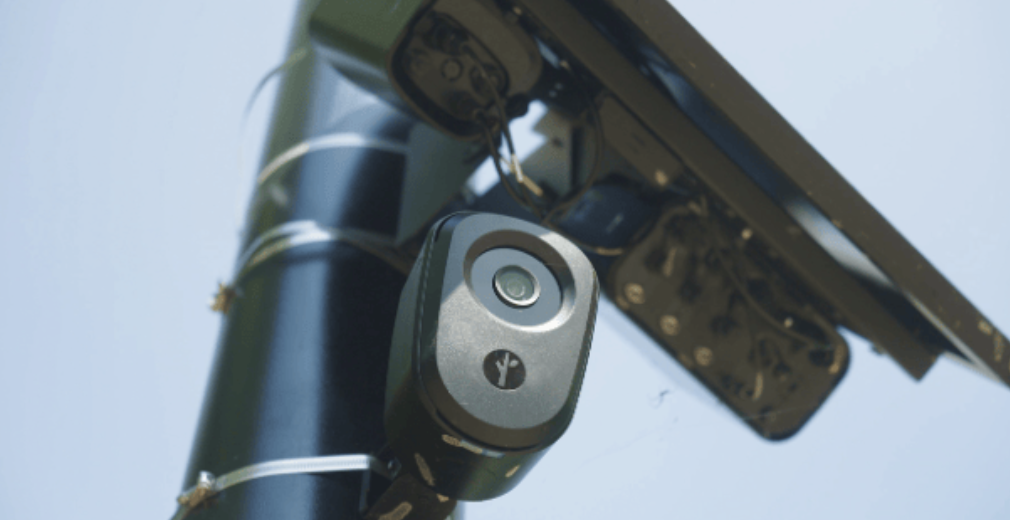
And talking of spying: Have you heard about FLOCK?

Flock Safety is a company that makes specialized Automatic License Plate Reader systems, designed to scan and photograph every plate that passes, 24/7. Unlike gated-community or private driveway cameras, Flock systems stream footage to off-site servers, where it’s processed, analyzed, and added to a growing cloud database. Currently, there are probably well over 100,000 Flock cameras installed in the United States and increasingly rapidly. To put this in perspective, that’s one Flock camera for every 4,000 US citizens. And each camera tracks twice as many vehicles on average with no set limit. (Ref. ) Have you seen one in your neighborhood?

Here is the issue: so far, Flock tracks License plate numbers, vehicle color/make/model, time, location. Some cameras can capture broader footage; some are strictly plate readers. But there is no reason to believe it cannot be extended to tracking who sits in the car, who drives it, etc. And while these cameras don’t capture people right now, “they do capture patterns, like vehicles entering or leaving a neighborhood. That can reveal routines, habits, and movement over time, logging every one of our daily trips, including gym runs, carpool, and errands. Not harmful on its own, but enough to make you realize how detailed a picture these systems build of ordinary life.”

Who has access to these data? Using Flock’s cloud, only “authorized users”, which can include community leaders and law enforcement, ideally with proper permissions or warrants, can view footage. Residents can make requests for someone to determine privileges. Flock claims they don’t sell data, but it’s stored off-site, raising the stakes of a breach. The bigger the database, the more appealing it is to hackers. Unlike a home security camera that you can control, these systems by design track everyone who comes and goes…not just the “bad guys.”

If you think footage was misused (hacked, leaked online, used by people to stalk you or harass you) you can request an audit or raise it with your HOA or local law enforcement. By then, though, the damage is done.

Out of sight: here is a news item that really raise my blood pressure through the roof: The CDC is funding a study on the Hepatitis B Vaccine inGuinea – Bisseau (West Africa). For screaming out loud: this is unethical!

An unsolicited (!) grant for Bandim Health Project, a research company in Denmark with ties to the anti-vaccine movement, allows a study with randomized, controlled trials in which you withhold a proven, life-saving vaccine from newborn babies. WE KNOW that the vaccine works, and so withholding this from half of the babies in the study condemns them to possible life long illness and liver failure, if they contract the disease – a possibility which is hugely more likely in a poor African nation where it is rampant. It is countries like these, with a 12 % prevalence rate of Hep B, where the birth dose of vaccination matters most. and according to UNICEF, Guinea Bissau has one of the highest infant mortality rates in the entire world.

Anyone wonders, why this is not done with little white American babies if needs to be done at all?

Can’t take our eyes off them for one second …. an oldie confirms, although this music refers to someone positive!

He is so on target…

I am not quite ready to resume writing during my Thanksgiving break, but thought we all might benefit from someone else’s wisdom. I am, for obvious reasons, quite alert when lung cancer patients reach the end of the road or, as Paul Brown himself put it, disappear into oblivion.

I look up to him as a model of how to apply courage and rationality to his very last appeal – the last column he wrote for the Guardian last week. It was introduced as “I have watched politicians failing yet and yet again: lessons from a life as an environment writer. Paul Brown looks back at his career reporting on the climate crisis, failed summit and nuclear power – and how to do it well.”

There’s a pattern of politicians learning the inconvenient truths of climate change – and then falling short
We, in the climate business, all owe a great deal to Mrs Margaret Thatcher. Her politics were anathema to me and to many Guardian readers. But she prided herself on being a scientist before she was a politician.

It was Thatcher’s inquiring mind that first demanded a scientific briefing about the dangers of the hole in the ozone layer, and subsequently on another even greater potential catastrophe, climate change. She was at the height of her influence on the international stage.

Meanwhile, the Guardian was getting more and more interested in the environment. Friends of the Earth and Greenpeace had grown into large, radical campaigning organisations, alongside more established organisations such as the WWF. Their young membership increasingly looked to the Guardian to report their activities and advertise green jobs.

As a general reporter on the paper, first assigned to cover nuclear power when the science editor was ill, I was allowed to sign on as a crew member of various Greenpeace ships. I went on voyages to block the Sellafield pipeline draining plutonium into the Irish Sea, and I took trips round the coast highlighting sewage dumping and all manner of unlicensed chemical waste pipelines.

I began to report from international conferences trying to protect the seas and fish stocks, and best of all I spent three months in Antarctica on a Greenpeace boat that tried, and eventually succeeded, to get Antarctica accepted by the international community as a world park. In Antarctica, I got 26 pieces in the paper via satellite – the first journalist to file direct from the icy continent.

As I came back, Thatcher was in New York warning the UN about the dangers of climate change. Shortly afterwards, I found myself reporting from Geneva as Thatcher and other European leaders warned that the world was headed for disaster if it did not cut down on the use of fossil fuels.

Back in London, Peter Preston, the Guardian’s then editor-in-chief, who once encouraged me by saying you could not write about anywhere properly unless you have been there, called me into his office and made me environment correspondent. The Green party had got 16% in the European elections, and Thatcher thought they were a threat.

Sixteen years in the job followed. Most of the time, I sat beside John Vidal, who had an interest in everything. He took to editing the weekly environment pages, and then periodically dropping everything to head off after a maverick idea which generally turned into a brilliant story. More than once he left a note on my desk: “Could you do the pages this week, gone to Africa.”

It was clear from the beginning of my new job that Thatcher’s understanding of the science clashed with her ideology. Curbing the free market was not going to happen. Instead, she did what all politicians do – divert attention by creating something else. In this case, it was the Hadley Centre for Climate Prediction and Research, to study the subject better. The centre is now one of our world-renowned institutions.

But this pattern of politicians learning the inconvenient truths of climate change and then falling short in the actions required to solve the problem has continued ever since. In fact, with the recent advent of blatant climate deniers, it has got far worse.

In the 1990s, I travelled to a rollercoaster ride of international conferences. At the Earth summit in 1992 in Rio, Brazil, I saw George HW Bush and Fidel Castro walk past each other in the corridor, pretending they could not see each other. Oh, for a camera rather than a notebook!

That summit saw the setup of the climate change convention, the biodiversity convention and much else, although it failed to do enough to protect forests. The agreements set up in Rio de Janeiro sent me globe-trotting to various conferences of the parties (Cops) in capital cities around the world to report on the snail’s pace of progress on climate.
President George HW Bush looks the other way as the Cuban leader Fidel Castro passes in front of him at the Earth summit, 1992. Photograph: Omar Torres/AFP/Getty ImagesBack home in the 1990s, the UK was in recession. The Guardian news desk’s interest in the environment, once the Earth summit was over, was minimal. House repossessions and job losses were rightly more immediate and pressing.

But as the decade progressed, the Conservatives were ousted in 1997 and then, as John Prescott became environment secretary, the environment news kept moving up the agenda. By the time of the second Earth summit in Johannesburg in 2002, it was back at the top of the news list.

By the autumn of 2005, I was run off my feet. After the catastrophic foot and mouth epidemic, every department – home, foreign, city and features – wanted to know each day what story (or stories) I had for them. And every section naturally wanted their story first. Vidal had taught me one good lesson: that it was possible to get away with absences from your desk if you came back with a good story. At the same time, the Guardian Foundation and various UN institutions had adopted me as a tutor on environment matters and began sending me to eastern Europe and Asia to teach other journalists how to cover this subject. By 2005, the pressure of work became too great and I took redundancy. Six months after I left, the Guardian had five people doing my old job.

I have spent the 20 years since writing about climate change and related matters for a huge variety of publications – including hundreds of Weatherwatch and Specieswatch columns for the Guardian. I have attended more conferences, such as the Cops in Paris and Warsaw, and helped train young journalists on how to cover these bewildering events, giving something back to the profession that has given me so much.

But I have also watched in continuing dismay what we might call the Thatcher syndrome: apparently intelligent politicians failing yet and yet again to have the courage to implement the decisions necessary to tackle the ever more imminent danger of climate change. Of course, as at the recent Cop30 in Brazil, they have been beset by more fossil fuel lobbyists than environmentalists, a phenomenon that was first reported by Vidal and I in the 1990s. Do the well-funded fossil fuel lobbyists always have to win?


And there has been another – in my view, very sinister – development, which has put back the cause of action on climate change into very dangerous territory: the latest “nuclear renaissance”. I started covering the nuclear industry in the early 1980s and, like all well-trained journalists, was neutral then. Nuclear power was a success story because it was part of the National Coal Board and its true costs were hidden, not just from consumers but from the government.

The first nuclear renaissance took place in the late 1980s when the Sizewell B nuclear power station was being built. Several more were on the drawing board, but Thatcher demanded to know the cost and the resultant price of electricity to consumers, and was so enraged that she and the government had been lied to about the real cost that she cancelled the rest of the programme. It was one of my more memorable stories.

At least two more “renaissance” moments have come and gone, mostly also on cost grounds, but now Keir Starmer’s government has gone completely gung-ho on nuclear – to the utter dismay of many environmental campaigners.

The government subsidies are simply huge: a nuclear tax is being levied on hard-pressed consumers. What is the government thinking of? The fossil fuel industry, which has thrown its weight behind nuclear power, is of course delighted; all these decades of new construction without any electricity to show for it gives at least another decade or two of unabated burning gas. It is no accident that Centrica invested in Sizewell C – after all, it is primarily a gas company. With Sizewell C likely to take 10 to 15 years to build, that is a lot of extra gas being burned and profits for shareholders.

But the biggest mystery is small modular reactors (SMRs), which are theoretically built in factories and put together on site, making them easier and cheaper to build. SMRs originally were defined as generating less than 300MW, about a third of the size of a traditional nuclear or gas station, but have now been redefined by Rolls-Royce to mean 470MW because even on the drawing board the company could not make the economics work.

Several have been promised, but the problem is that they do not yet exist, except on paper or on a computer. No factory has been built to make their components, no prototype has been built, no licensing process has taken place. All that is known about them is that (also on paper) they produce more hotter waste at the end of their lives.

I know many of my colleagues at the Guardian would disagree, but as I disappear into oblivion after 40 years of covering this industry, I would ask them to keep looking at it closely.

Paul Brown
Former environment correspondent

I have posted about the dangers of SMRs before in the context of a documentary film involved with. Here is a clip that explains the problems, and the opportunities lost, if we pursue the wrong path.

Photomontages were created in the context of that project a few years ago.

Music today is from an album by BlankFor.ms – After the Town was swept away.

Pillars of Color.

Walk with me, before I take off for Thanksgiving, driving South to see the kiddos.

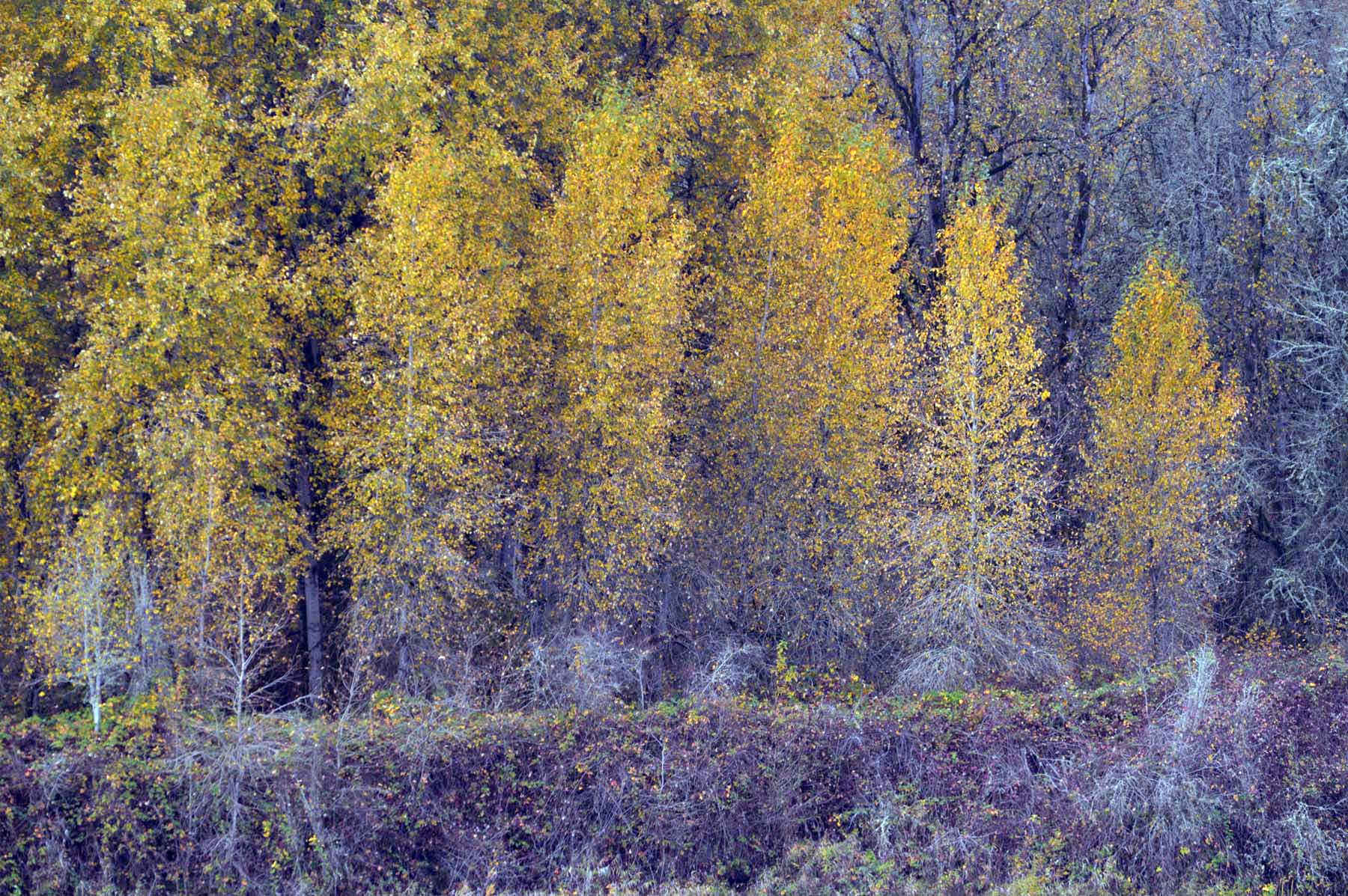
The trees were in full glory, emanating golden light, or sometimes green-tinged yellow brilliance.

A few reds thrown in, here or there, claiming attention.

I had no clue that there is a huge difference between the yellowing of fall leaves, and those turning red. Scientists apparently understand the biological process of the former, and have only speculations about the latter, (or so I learned here.)

When trees start to retrieve nitrogen they need for photosynthesis in fall, they break down the green chlorophyll in their leaves. This exposes the yellow pigments that were there all along. Case solved.


For red (or orange) looking leaves, trees have to produce a brand-new chemical, just before the leaves fall from the tree. Why take on that energy cost?

Scientists are divided about the likely options. Many of them believe that it has to do with protection against the sun, a kind of sunscreen that helps shelter the trees against surplus light when chlorophyll activity is declining.

Susanne Renner at Washington University in St. Louis explains: “There are a lot of high-tech, biochemical, physiological experimental papers showing that one function [of red pigment] is photoprotection.” Arguments in favor come also from correlational observations: Northern Europe, with much less solar irradiation in fall, has fewer trees turning red than we have in the States.

Alternatively, red pigments might be protecting the tree’s ability to recover nitrogen from the leaves. Tree species that co-exist with nitrogen-fixing bacteria, which give them abundant nitrogen, generally do not turn red.

Other scientists are not convinced and suggest a very different cause: insects. It turns out that aphids can tell the difference between red and yellow, and much prefer to lay eggs on the latter. Trees, then, could protect themselves against these pests if they evolved to turn red. As a bonus, there is the chance that the red-color pigments have anti-fungal properties that would serve trees well.

Not knowing the right answer, or the list of them, doesn’t faze me one bit. I am just so incredibly happy to look at the beauty, to understand that it has a purpose in addition to making my heart sing – once again grateful for fall.

Soon there will be no leaves left.

In Blackwater woods

 
Look, the trees
are turning
their own bodies
into pillars
 
of light,
are giving off the rich
fragrance of cinnamon
and fulfillment,
 
the long tapers
of cattails
are bursting and floating away over
the blue shoulders
 
of the ponds,
and every pond,
no matter what its
name is, is
 
nameless now.
Every year
everything
I have ever learned
 
in my lifetime
leads back to this: the fires
and the black river of loss
whose other side
 
is salvation,
whose meaning
none of us will ever know.
To live in this world
 
you must be able
to do three things:
to love what is mortal;
to hold it
 
against your bones knowing
your own life depends on it;
and, when the time comes to let it
go,
to let it go.

By Mary Oliver

The sandhill cranes added to the joy of the day.

Music today “Der Einsame Im Herbst” (the Lonely one in Autumn) from Mahler’s Lied von der Erde.

Have a good Thanksgiving week – I’ll be back by beginning of December.


Clouds out of Balance.

I seem to be coming back to clouds. Not a surprise, surely, for a photographer. I wrote about them, among others, in the context of poetry of exile, or metaphorically linking them to the insights modern genetics can bring us.

What approach shall we take today? Start with Aristophanes’ Cloud Cuckoo Land (nephelokokkȳgía (νεφελοκοκκυγία), a satire of a bird-built city in the clouds meant to ridicule Athenians for living in a fantasy world rather than facing reality? Now used as an insult for naive, slightly deranged people bent on conspiracies that the impossible might happen?

Or start with Anthony Doerr’s novel of the same name, which links multiple narrators across 600 years in a time-traveling puzzle celebrating the power of stories? A puzzle that provides the hope – or fantasy? – that some permanence of tales told echoes the permanence of our world, despite predictions to the contrary? (I am not a fan of his, I think I reviewed All the Light that we can see here earlier in not too friendly a way. But Cloud Cuckoo Land is beloved by many readers who cling to the bit of optimism it provides.)

Shall it be Shelley, the poet famous for his poem, among others, that personified a cloud as a sentient narrator? The Cloud is a long poem (thus linked, not posted here in full,) beautiful, wistful, complex and, as it turns out, not entirely true.

By Percey Bisshe Shelley

The fourth line in the last stanza of the poem is both true and false – it turns out certain kinds of clouds ARE changing (at least where they are operating), and not for the better, leaving dead zones behind. Functionally dead clouds, then, in a challenge to Shelley. (And yes, as you might have anticipated, we are ending up with science, after all these longwinded throat clearings.)

Here is a summary of findings as reported in a long read from the NYT last month.

Basically, different clouds have different roles in the regulation of our climate systems. Some have a cooling effect of land or water, some warm the earth’s surfaces.

Low clouds – puffy cumulus, stratocumulus and flat stratus layers – help with cooling by reflecting light back upwards from their white surfaces and casting shade onto the world below due their density. They absorb heat from the earth and also radiate it back into space in equal measure, because the water droplets they consist of are warm, thus not trapping warmth overall.

High clouds – cirrus and cirrocumulus – on the other hand, are warming our world, counterintuitively so, given that they are much colder, filled with ice crystals. The sun permeates them, because they are less dense. And they act like a blanket to earth, not sending the warmth back into space.

Until serious global warming began, the clouds protected us on net, with the lower ones outweighing the damage done by the higher ones. But now we have a feedback loop where global warming is making the low clouds steadily disappear where they are needed, while the high ones further heat up the planet. Climate change has shifted wind patterns and expanded the tropics, the storm systems with cumulus clouds are drifting towards the poles, and so leaving large stretches open to sunlight. With heat thus increasing, it feeds into drift patterns that expand vulnerable land areas even further.

Succinctly put: the delicate energy balance of sunlight coming in, some of it being reflected, and some of it being absorbed, no longer holds. When low cloud cover diminishes, the scales tip. More solar energy gets trapped in oceans and land surfaces, leading to higher temperatures, more intense heatwaves, and increasingly unpredictable weather. (Ref.)

What can be done, specifically regarding cloud covers? We could certainly try and reduce contrails, (short for condensation trails), which are formed when hot exhaust from an airplane’s engines meets the cold upper atmosphere, causing water vapor to condense into visible ice crystals.

“When the air at cruising altitude is cool enough and moist enough, these contrails spread into high, thin layers that contribute to atmospheric warming. It’s entirely possible for airlines to avoid flying at altitudes where the air is conducive to forming contrails. A 2020 study found that adjusting the cruising altitude of just 2 percent of flights could reduce contrail warming by nearly 60 percent, without using much more fuel.”

(Not to be mistaken for the conspiracy theorists’ assumption of “chemtrails,” the idea that these trails are composed of harmful chemicals intentionally sprayed into the atmosphere for nefarious purposes, spreading Covid or other viruses, poisoning our environment with other chemical or biological agents. Cloud Cuckoo Land….)

Contrails can clearly be harmful in terms of producing blanket clouds aggravating global warming. Flying less, overall, might be suggested as a solution, rather than simply wishing for flying at lower altitudes! But we keep our head in the clouds….

Images from a series – Fragility – currently in the works, that contextualizes environmental harm and protection.

Music matches the mood.


Getting off anti-depressants.

Walk with me, into a fall landscape, the air filled with the trills of migrating sandhill cranes. We won’t get to see them, but scoops of pelicans instead, circling high and eventually resting on what is left of the ponds.

There is yellow around,

and orange/red,

and brown,

and the occasional daily wildlife unexpectedly appearing deep in the woods.

The oaks are taking on a brownish hue, their leaves already falling,

the flickers flitting from one tree to the next.

Farmers are mowing the meadows, and the remaining short grass forms golden, wave-like patterns, a sea minus the threat of drowning.

Nature’s beauty swept away sadness – which brings me to today’s topic, my familiar rant against claiming scientific data when the reported pattern is ambiguous, in this case about getting off longterm anti-depressants. The issue came up during a long car ride when we listened to an NPR Shortwave podcast describing the withdrawal symptoms that some people report after years and years of taking popular antidepressants, SSRIs like Zoloft, Prozac or Lexapro. Below is a summary of our reactions, two psychologists trying to be careful.

First of all, I strongly believe anti-depressants are a valuable and often necessary tool in the fight against depression. They do have occasional side effects during use, but they are life savers, literally, for people living with clinical depression due to biological factors. They also work for people who experience overwhelming sadness due to short term events in their lives, making it possible to return to normalcy after existential threats or losses. Do we have an over-prescription problem, with 1 in 10 Americans currently on anti-depressants? I don’t know. The problem for today’s conversation is what happens when you get off of the meds.

The Shortwave podcast started with a human interest story of an investigative reporter who had been on SSRI’s for 15 years; she had gotten onto them for, as she remembers, mild problems. After all this time, she then did off-ramping with guidance from her doctor, with successively smaller doses across 1 month. (This is the way recommended by the companies who sell the drugs, stressing that the dosage and timing of this off-ramp needs to be proportional to what you took and for how long.) Despite this careful and planned exit from the drug, she was apparently thrown into both psychological and physical horror experiences. Scouring the internet she found many reports of people, now even in support groups, claiming something similar happened to them after long-term use (years, not months). She found no matching reports from people who used the meds for less than a year. Symptoms reported included existential dread, panic attacks, fatigue, dizziness, and diarrhea, among others. She found no longterm epidemiological studies to document these patterns.

So what’s going on here? Do we take these self reports at face value? Do we trust the implication that these drugs have some previously undocumented side effects with long term use, perhaps disrupting some sort of internal system?

Let’s check a bunch of possibilities first:

  • We are dealing with self report on the internet and these reports might be sustained, encouraged, and even over-stated, thanks to the patterns of internet culture. We’re also missing a crucial comparison: Are symptoms more frequent among people coming off the drug than they are for randomly selected people in the population of similar age and similar circumstances? The symptoms may be more common for people coming off of SSRI’s, but we don’t know, and this question is clouded by the reliance on self report. Maybe other people, not coming off meds, are experiencing similar problems at a similar frequency, but (with no encouragement and no support groups calling for information) have no reason to come forward and report their experience. In short: Understanding the pattern requires comparison about exactly who is going through these problems and, among other concerns, any reliance on volunteered self report raises the possibility that numbers are inflated by encouragement to report or some sort of band wagon effect.

  • Next, do we know if all those reporting followed the tapering required for off-ramping? We have no reliable information about whether some of the people – perhaps many of the people – reporting these problems just stopped abruptly taking the meds. And if it turns out that people did taper off the drug properly, are the problems reported specific to SSRIs or can similar problems be documented for other psychological meds stopped after long-term use? (If so, this is not a problem of SSRI’s, and may not even be a problem somehow linked to anti-depressants per se.)

  • Similar concerns attach to the reported difference in experience between long-term users and short-term users. The claim is that these problems are specifically associated with long-term use, and specifically with SSRI’s. We need real data on this before drawing conclusions, and the problems already described – with volunteered self-report – are also a limitation here?

  • In addition, the idea here is that people say their symptoms after leaving the drug are much worse than the problems that put them onto the drug in the first place. Can we count on this memory being accurate – especially since people are remembering their initial status years, and perhaps decades, back?

Assuming all of these questions are answered to our satisfaction, – the self reports are real, the frequencies hold, long-term vs short term differences are established, memory serves accurately – there is still a large scale question about cause and effect.

As one complication, during long-term use the person has obviously aged. We know that age changes things in the body, leaving you less resilient. More, external things can get harder with age, including a loss of economic safety, a place in the world, a shrinking of your circle of friends and family due to death. In other words, if your symptoms are worse when you leave the drug, is it possible that your life has gotten objectively worse? Or that your life problems are just as they were “pre-drug,” but your ability to cope is diminished? Add to that that many SSRI patients are female, and many go through menopause during long-term use. In these ways, if the person’s problems after leaving the meds are worse than problems before the meds, this may have nothing to do with the meds themselves!

These are all answer-able questions, and – of course – maybe the withdrawal patterns for some long term users are real, and maybe their frequency is not matched by short term users. Maybe there are good answers to the question of what causes these patterns. The key, though, is that the initial report (the sort of science reporting we all encounter in the news, on social media, leaves out information that is crucial for understanding what’s going on. Scientists generally are alert to this worry, but journalists are not, nor are most members of the public.

So far, it seems that any claims about long-term SSRI use aren’t justified – and, given recent events in the news, we need to be alert to unwarranted claims about medicine or medication.

Should researchers take steps to remove this ambiguity? Yes!

In the meantime, it would be a mistake to forgo the clinical use of medications that we know have helped millions of people. I fear that podcasts like these might be detrimental to people who take the reporting at face value and make medical decisions that would be different otherwise.

Music today a favorite cello concerto. Conductor C. Eschenbach was 80 at the time of this recording.He turned 85 this February and is still actively working.

Don’t zero in on the Bees.

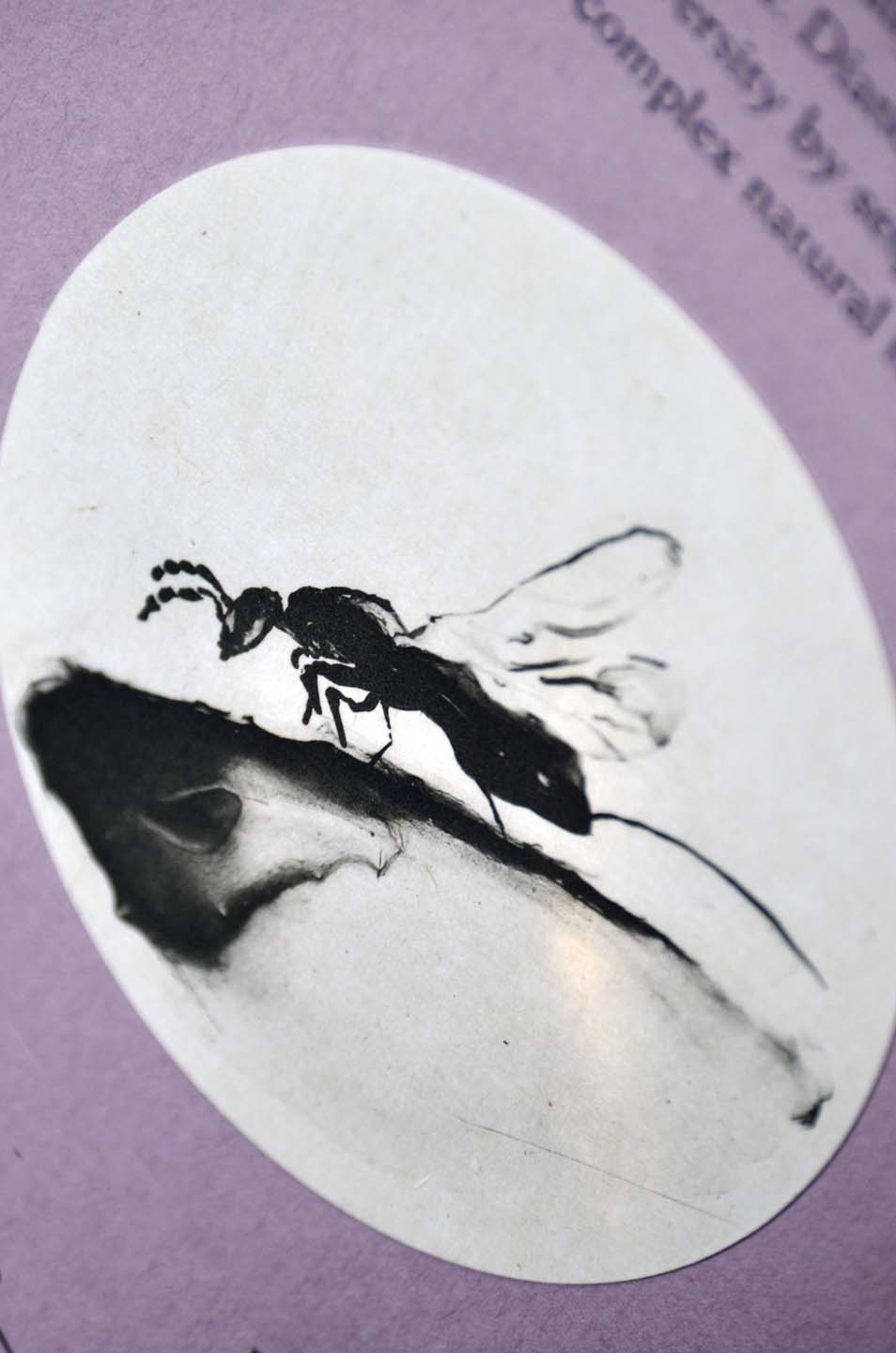
Too hot to hike. Too hot even for a walk around the corner. So I photograph in the garden, bees and bumblebees visiting the flowers in their late-summer state, a mix of full glory and early decay.

Not a random choice, of course. It all started with a book by Christian Wiman, award-winning poet, editor, translator, essayist, and theology professor of Religion and Literature at Yale Divinity School and the Yale Institute of Sacred Music.

A compilation of diverse entries, Zero at the Bone: Fifty Entries Against Despair, finds ways to communicate the complex relationship between hope and despair even for those of us who do not share the faith – or any faith – so central to its author.

Part autobiography, part poetry, part analysis of the importance of a moral and ethical existence in a world where many have turned away from these criteria to protect their own comfort and/or lust for hierarchical status and power, the book instructs, challenges, affirms, and repeatedly uses terrific wit to make the medicine go down.

I was drawn to the text of someone as different from me as possible – deeply religious vs. completely agnostic and missing pretty much any spiritual bone – because I heard an interview where he voiced something after having undergone a bone marrow transplant, something I could not agree with more, having experienced serious cancer:

I hear that kind of carpe diem language — there’s a famous line from Wallace Stevens: “Death is the mother of beauty,” meaning that we can’t, can’t ever perceive our lives until we look through it through the lens of death, but if you look through the lens of death, then it’s suddenly much more abundant and beautiful and sharp. And I have come to think that that is just a load of crap. [laughs]

I was also drawn to what I sensed amid his profusely proffered doubts and tribulations: a steadfastness in trust in a higher power that I can only dream of, actually truly envy. I found his entries against despair in some ways helpful, nonetheless, by pure association, however distant from the core approach.

As it turned out, the title of his book refers back to a phrase in a poem by Emily Dickinson, A narrow Fellow in the Grass (#1096) which is the gold standard when it comes to describing a sense of constriction and fear, the encounter with a snake leading to tightened breathing and cold (zero) seeping through the bone. For Wiman, zero refers to other things as well, often in relation to despair, it can be a name given to G-d, or an empty soul.

There’s much to learn from his writing, much that spoke to me as an artist as well.

Why does one create? Two reasons: an overabundance of life and a deficiency of it; a sense that reality has called out in such a way that only your own soul can answer (I create “in return” said Robert Duncan,) and in a simultaneous sense that in that word “soul” is a hole that no creation of your own can ever fill.” (p.73)

In any case, I assumed that I was not going to review the entire book (previously done by others here and here, for one), just highly recommend it. I tried to find a poem by the author instead, that would convey the central themes of his thinking, the depth of his way of honing himself, refusing to go under, if only with proud sarcasm (note that the last word in it is entirely ambiguous – it could refer to his first name, or his faith.)

Here is the poem: (and here is a convenient link to the scientific research that has shown bees to have not just numerical skills – they can count up to 4 landmarks – but also a concept of nothing (zero) to be a number below the ones they could identify. Bringing real world applications and insights into the framework of asking the big questions is something I found – and liked – frequently in Wiman’s poetry.)

Even Bees Know What Zero Is

That’s enough memories, thank you, I’m stuffed.
I’ll need a memory vomitorium if this goes on.
How much attention can one man have?
Which reminds me: once I let the gas go on flowing
after my car was full and watched it spill its smell
(and potential hell) all over the ground around me.
I had to pay for that, and in currency quite other than attention.
I’ve had my fill of truth, too, come to think of it.
It’s all smeary in me, I’m like a waterlogged Bible:
enough with the aborted prophecies and garbled laws,
ancient texts holey as a teen’s jeans, begone begats!
Live long enough, and you can’t tell what’s resignation, what resolve.
That’s the bad news. The good news? You don’t give a shit.
My life. It’s like a library that closes for a long, long time
—a lifetime, some of  the disgrunts mutter—
and when it opens opens only to an improved confusion:
theology where poetry should be, psychology crammed with math.
And I’m all the regulars searching for their sections
and I’m the detonated disciplines too.
But most of all I’m the squat, smocked, bingo-winged woman
growing more granitic and less placable by the hour
as citizen after citizen blurts some version of
“What the hell!” or “I thought you’d all died!”
and the little stamp she stamps on the flyleaf
to tell you when your next generic mystery is due
that thing goes stamp right on my very soul.
Which is one more thing I’m done with, by the way,
the whole concept of soul. Even bees know what zero is,
scientists have learned, which means bees know my soul.
I’m done, I tell you, I’m due, I’m Oblivion’s datebook.
I’m a sunburned earthworm, a mongoose’s milk tooth,
a pleasure tariff, yesterday’s headcheese, spiritual gristle.
I’m the Apocalypse’s popsicle. I’m a licked Christian.

BY CHRISTIAN WIMAN

And let me just get a bit of snark in at the end:

When I searched for the poem on google, the Search assist box popped up on top, as it is now wont to do. I never use these LLM for queries, forever raging at the amount of resources, water and electricity in particular, wasted by Chat GPT. An even better reason to ignore it: just look at the crap it delivers in the automatically appearing summary!

The poem: What looks like a satisfyingly irate tirade is really a call to recalibration. Shifting our focus away from self to soul might be quite the intellectual challenge, given how much we – I – have been tied to questions of the self, the way it is generated, mirrored in the approval of others, feared to be lost when body starts to rule mind, but it could just be an antidote to despair. Anything but what bees can and cannot do….. and if there is an intersection, it’s the one between suffering and the power of faith (whatever it might be you believe in.)

Live long enough, and you can’t tell what’s resignation, what resolve.” I will cherish this line from the poem, during any and all periods of resigned or resolved eye-rolling!


And here are Satie’s musical vexations.

Time for a Regular Appearance.

I lied. It’s time for two regulars: sun flowers, which I perennially photograph during August, and my usual rant against the perversion of scientific findings.

You might or might not have heard about an increasingly hostile debate around the health effects of seed oils. Oils extracted from canola, soybean, corn and, yes, sunflowers, are common cooking staples in American kitchens and the fast food industry. Fitness gurus and other influencers on the internet are claiming that these oils are the source of our deteriorating health and the obesity epidemic, responsible for inflammatory processes in our bodies and even diabetes. The most powerful among them, our very own Secretary of Health and Human Services Robert F. Kennedy Jr., claims we are unknowingly poisoned by these seed oils and demands a return to beef tallow or rendered animal fat in cooking.

Many Americans are already reducing their use of seed oils in their own kitchen, and so are restaurants and fast food chains on a larger scale, with real economic consequences for many farmers invested in seed crops. What does science say about the “bad for your health” allegations?

In short: BS.

The main claim of seed oil opponents states that seed oils’ high omega-6 and low omega-3 composition causes an imbalance that may increase the risk of chronic conditions by boosting inflammation in the body. Scientific studies show no impact of increased intake in omega-6 on inflammatory processes. With regard to obesity, note that seed oil-fried foods are also high in refined grains, added sugar, and sodium. If you eat fast food, it is the combination that leads to adverse health, not an isolated ingredient. and of course almost 75% of the American diet consists of ultra-processed foods…

Further, seed and plant oils reduce “bad” cholesterol, thus lowering the risk of stroke and heart attacks, according to the American Heart Association. It also looks like swapping less than a tablespoon a day of butter for equal calories of plant-based oils could lower premature deaths from cancer and overall mortality by 17 %. Beef tallow, of course, is much higher in saturated fat, it has 109mg of cholesterol per 100g. So adding it to your diet will heavily impact heart disease. But that is not the only problem.

If we look at the large picture (why has that become so difficult???)  beef tallow generates 11.92kg of carbon per kg, on the top end of the list of foods with the highest GHG emissions. “Beef itself is the most heavily polluting food group on the planet, emitting twice as many greenhouse gas emissions as the next on the list (dark chocolate. Hmmm.) Cattle ranching causes the highest amount of destruction of rain forests, with deforestation from cattle ranching releasing 340 tons of CO2 annually, making up 3.4% of global emissions. Pasture-raised cows that feed on grass account for 20% higher GHG emissions than grain-fed cattle. Further, when accounting for soil carbon sequestration and carbon opportunity costs, the total carbon footprint of pasture-raised operations is 42% higher.” (Ref.)

For now, we still have choices. We can avoid fast food, no matter what it is fried in, if we have the time and energy to cook and the money to buy healthy ingredients with the same calorie load, still finding seed oils or olive oil (which really is the healthiest way to cook) in the store. Consider how many people’s lives actually don’t fit those requirements.

***

We do not have choices for other decisions made by this disaster of an administration. In May, they canceled the financial support for the development of bird flu vaccines. This week, it was announced that one of the greatest discovery in all of science was going to be terminated.


Kennedy offered the – FALSE – rationale that “that mRNA vaccines do not protect against respiratory illnesses like Covid and the flu, and that a single mutation in a virus renders the vaccine ineffective.” Here are counter arguments offered by multiple scientists in the NYT yesterday. Please realize that these arguments are supported by a body of science, studies with hundreds of thousands of people (and in case of older vaccines with decades of experience). They are not selectively picked, they are peer-reviewed and replicated.

Millions of people were saved from Covid deaths by the fast development and flexible adjustment of these vaccines, which have far fewer side effects than traditional ones. In addition, that technology offers real promise for cancer patients, colon and pancreatic cancer high on the list, with break throughs on the horizon. Its inventors won the Nobel Prize in 2023. And lest you think, other nations will pick up the slack, that won’t be easy given the financial limitations and number of researchers familiar with the domain.

Not developing these vaccines will kill people who could otherwise live. Simple as that.

And as Jamelle Bouie put it succinctly, “I think it is hard for some people to really their heads around the reality that Kennedy is staunchly anti-vaccine and thinks that people should suffer through disease and that those who die deserved it and that those who survive are a better order of human being.”

( I’ll add, this is the guy who talks about Miasma theory as a valid explanation of illness (the idea that it is bad air around you that causes disease, not the microbial germs that get you.) And he doesn’t even get that right – claiming “that Miasma theory emphasizes preventing disease by fortifying the immune system through nutrition and reducing exposures to environmental toxins and stresses,” which it never did.

I am also reminded of something that French-Algerian galleries Sabrina Marami said about one of Jorge Tacla’s paintings, commemorating the 7.0 earthquake that struck Haiti some years back. “Structural vulnerability amplifies disaster. The invisible architecture of inequality determines the scale of loss.

Jorge Tacla 7.0 (2011)

We all need relevant structures in place before disaster strikes, whether natural or man-made catastrophes, pandemics or diseases. Inequality, however, affects outcomes even worse for disadvantaged populations.

If you have education, you can make healthy choices. If you have money, you can buy healthy food and live further away from pollutants. If you can follow the science, you can make informed decisions about what is recommendable and what not. If you have the funds, you can go abroad and take care of your health care needs there or have the relevant medications shipped to your home. Masses and masses of people lack all of that, for no personal fault, but an education system rigged to keep them either in the dark, or open to propaganda that falsifies claims in pursuit of ideology. One that certainly keeps them poor.

Kennedy, in complete contradiction to his assurances during confirmation hearings, gutted the CDC vaccine committee, replacing the 17 nonpartisan medical experts with eight individuals who Democrats say were handpicked to advance an anti-vaccine agenda. A group of Senators is now launching a partisan probe of Kennedy’s vaccine policies. In a letter to Kennedy, they demanded answers about the process behind Kennedy’s gutting of the CDC’s vaccine committee and other policies.

As your new ACIP makes recommendations based on pseudoscience, fewer and fewer Americans will have access to fewer and fewer vaccines,” the senators wrote. “And as you give a platform to conspiracy theorists, and even promote their theories yourself, Americans will continue to lose confidence in whatever vaccines are still available.”

With regard to infectious diseases this vaccine denialism is particularly worrisome. Fewer vaccinations means less herd immunity, something which protects all those who cannot be protected through vaccinations: newborn babies and the elderly, people with compromised immune systems, or those undergoing chemotherapy. Herd immunity is achieved when a sufficient number of people is vaccinated against a particular virus – for measles that means 95% of the population, for polio 80%. (Ref.) The mNRA vaccines were promising agents to reach the goal intended by herd immunity: to slow down the spread of infection, protecting people who had no other chance to protect against the disease.

I cant help but think of Goethe’s description of the devil in Faust (I): “I am the spirit that negates….”

(Except Mephistopheles was smart.)

Mephistopheles:
I am the spirit that negates.
And rightly so, for all that comes to be
Deserves to perish wretchedly;
‘Twere better nothing would begin.
Thus everything that your terms, sin,
Destruction, evil represent—
That is my proper element.

– Kaufmann, Walter (1963). “Introduction”. Goethe’s Faust : part one and sections from part two (Anchor books).

Mephisto:
Ich bin der Geist der stets verneint!
Und das mit Recht; denn alles was entsteht
Ist werth daß es zu Grunde geht;

Drum besser wär’s daß nichts entstünde.
So ist denn alles was ihr Sünde,
Zerstörung, kurz das Böse nennt,
Mein eigentliches Element.Faust. Eine Tragödie von Goethe(Part 1 about line 1340)

Here is (yes, difficult but interesting) music that offers a lot of Mephisto’s original lines from Faust. I’ll go eat sunflower seeds now, forgoing the dark chocolate….

Sunscreen, fitted shirts and other lifesaving devices.

So it turns out that anatomically modern humans (AMH) knew a trick or two that ensured their survival and evolution into Homo Sapiens while their contemporary Neanderthals bit the dust, eventually. During the Laschamps geomagnetic excursion, about 41 000 years ago, our planet lost its magnetic bearings for some 2000 years. During the shift, the earth’s magnetic shield was reduced to 10 percent of its strength, exposing everything on its surface to a flood of cosmic radiation, and auroras floating everywhere, down to the Sahara desert.

Researchers at the university of Michigan point to the fact that clever AMHs figured out a way to protect against radiation exposure, covering themselves with ochre, smearing mud all over their bodies and faces. They also invented techniques to produce tailored clothing (compared the Neanderthals’ loosely draped capes) which shielded their bodies from burns and cancer-inducing rays. (I learned about all this on the consistently funny and informative 404 Media Post.) These folks also point out that if such a geomagnetic shift happens in the future, ochre sunscreen would be the least of our worries. All technologies would likely fail….

But really today we just want to slather on the factor 50 and explore the reopened wildlife sanctuary, now that nesting season is completed. Walk with me through a wonderland of fluff balls,

protective mothers,

Nutria be gone!

tending their nest and rolling eggs.

Turtles were out, and blue herons,

flocks of egrets hanging out at the waters edge, as did bald eagles.

Swallows came and went

Kestrels rested.

Fish were jumping (trout? carp?) and little critters emerged from their burrows.

Lupines in full splendor, spit bugs (aka cuckoo spit in German) everywhere, and the contrast of light and dark green marking the season of leafing.

Eagles and osprey soaring, and red winged black birds singing. My soul did as well.

Not exactly tailored clothing, but a home-made costume accompanied this wildlife enthusiast Matt Trevelyan on a long, long hike to raise funds for the endangered curlew. wild story – he walked 53 miles in 3 days across England to raise awareness as well as money for the cause. so you know what music will be today, an old favorite on YDP. This album raises fund as well.