Browsing Category

Poetry

Blind Faith

img_1498-copy

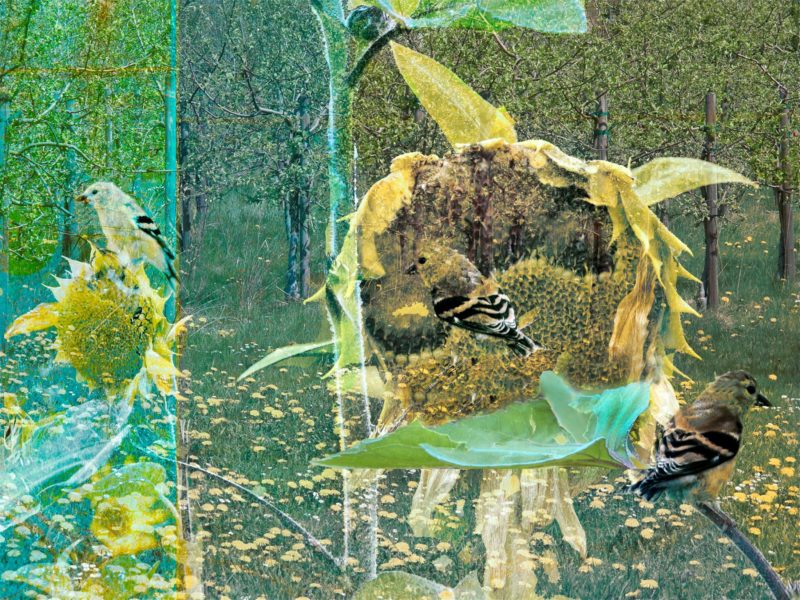
Don’t call me Pollyanna. In fact, those who know me often complain about my tendency towards catastrophic thinking. But the only light that gets through my swollen lids right now is strong light.  So this week’s theme will be the search for bright spots. In the visual as well as the thought-inspiring world.

The poem below by 1996 Nobel Laureate W. S. reminds us that there were always people bent and/or stumbling on destruction. Though we have no guarantee of retreat from those impulses or those means, we can hope. Which in turn allows us to muddle on. Not that hope and blind faith are enough. But maybe they keep us going in the direction of action. I read the poem as an expression of ultimate faith in humanity even when history teaches us the many exceptions where that faith has been destroyed – and so I find it to be a bright spot.


img_1497-copyDiscovery 

I believe in the great discovery.
I believe in the man who will make the discovery.
I believe in the fear of the man who will make the discovery.

I believe in his face going white,
His queasiness, his upper lip drenched in cold sweat.

I believe in the burning of his notes,
burning them into ashes,
burning them to the last scrap.

I believe in the scattering of numbers,
scattering them without regret.

I believe in the man’s haste,
in the precision of his movements,
in his free will.

I believe in the shattering of tablets,
the pouring out of liquids,
the extinguishing of rays.

I am convinced this will end well,
that it will not be too late,
that it will take place without witnesses.

I’m sure no one will find out what happened,
not the wife, not the wall,
not even the bird that might squeal in its song.

I believe in the refusal to take part.
I believe in the ruined career.
I believe in the wasted years of work.
I believe in the secret taken to the grave.

These words soar for me beyond all rules
without seeking support from actual examples.
My faith is strong, blind, and without foundation.

By Wislawa Szymborska
from View With a Grain of Sand
Harcourt Brace

urban-sketchbook-2-copy-2

Truth, then and now


Barbarians 2

EXPECTING THE BARBARIANS


What are we expecting, gathered here in the marketplace?


It’s the barbarians, they are coming today.


Why is nothing happening in the Senate house?

Why are the senators just sitting, passing no laws?


Because the barbarians are coming today.

What new laws could the senators pass?

The barbarians will come and do the legislating.


Why is the emperor up so early this morning,

sitting at the main gate of the city,

high on his throne, dignified, wearing his crown?


Because the barbarians are coming today

and the emperor expects to be introduced

to their leader. He’s especially eager

to give him a parchment scroll. On it

he’s written a number of titles and names.


Why did the consuls and praetors come out today

dressed in their red, embroidered togas? Why

are they wearing bracelets studded with amethysts

and rings with brilliant, glittering emeralds?

Why today are they carrying their valuable canes

beautifully inlaid with silver and gold?


Because the barbarians are coming today,

and such objects delight the barbarians.


Why are the best orators not here as usual

to offer their eloquence, to speak their wisdom?


Because the barbarians are coming today,

and they are bored by speeches and oratory.


Why all of a sudden is there uncertainty

and confusion? (How serious everyone looks.)

Why are the streets and squares emptying so quickly,

sending the gathered crowds back to their home?


Because it’s night and the barbarians didn’t come.

And people came back from the border country

to report there are no barbarians any more.


So now what shall we do without barbarians?

Those people were a kind of solution.


– Constantine P. Cavafy

This poem is from a book Poems 1904 that was the first published volume of Cavafy’s poetry.  It is the most recent translation from the Greek by Paul Merchant (I am posting here with his gracious permission) and published by Tavern Books in Portland.  http://www.tavernbooks.com

The introduction of that book gives you a glimpse of this tormented poet, who is considered the most distinguished Greek poet of the 20th century.

E.M.Forster brought him to the attention of readers in 1919, describing hims as “a Greek gentleman in a straw hat, standing absolutely motionless at a slight angle to the universe.” The poem inspired Waiting for the Barbarians (1980) a novel by South African novelist J.M. Coetzee, winner of the Nobel Prize for Literature in 2003. Both poem and novel are considered crucial metaphors in literary reactions to western colonialism and the war on terror.


Barbarians


Betrayed

Pythia copy 2

I will rise and go
Down into Troy, and ere the stars come forth
Talk with the wild Cassandra, for she says
A fire dances before her, and a sound
Rings ever in her ears of armed men.
What this may be I know not, but I know
That, wheresoe’er I am by night and day,
All earth and air seem only burning fire.
—Alfred, Lord Tennyson, Oenone (last lines)  (of a book-length but beautiful and haunting poem)

Dionysus copy 2

Christa Wolf’s Cassandra is, by the way, still on my top twenty list of books I liked the best.

Brains and Personality

DSC_0106Felix Crow
BY KAY RYAN

Crow school
is basic and
short as a rule—
just the rudiments
of quid pro crow
for most students.
Then each lives out
his unenlightened
span, adding his
bit of blight
to the collected
history of pushing out
the sweeter species;
briefly swaggering the
swagger of his
aggravating ancestors
down my street.
And every time
I like him
when we meet.


https://www.poetryfoundation.org/poems-and-poets/poets/detail/kay-ryan

DSC_0137

DSC_1002

Poet Laureate, Pulitzer Prize winner, fellow of both Guggenheim and McArthur foundations…. the woman is smart as a whip and I’ve never read an unsentimental poet I liked more, well, still thinking about Philip Larkin.

DSC_0139

Bound to Nature

Sauvie copy 2
From Endymion
A thing of beauty is a joy for ever:
Its loveliness increases; it will never
Pass into nothingness; but still will keep
A bower quiet for us, and a sleep
Full of sweet dreams, and health, and quiet breathing.
Therefore, on every morrow, are we wreathing
A flowery band to bind us to the earth,
Spite of despondence, of the inhuman dearth
Of noble natures, of the gloomy days,
Of all the unhealthy and o’er-darkened ways
Made for our searching: yes, in spite of all,
Some shape of beauty moves away the pall
From our dark spirits. Such the sun, the moon,
Trees old and young, sprouting a shady boon
For simple sheep; and such are daffodils
With the green world they live in; and clear rills
That for themselves a cooling covert make
‘Gainst the hot season; the mid forest brake,
Rich with a sprinkling of fair musk-rose blooms:
And such too is the grandeur of the dooms
We have imagined for the mighty dead;
All lovely tales that we have heard or read:
An endless fountain of immortal drink,
Pouring unto us from the heaven’s brink.
     —John Keats
DSC_0082

Sitting down with Love

· Faith expressed beautifully ·

IMG_2513Love
Love bade me welcome: yet my soul drew back.
Guiltie of dust and sinne.
But quick-ey’d Love, observing me grow slack
From my first entrance in,
Drew nearer to me, sweetly questioning
If I lack’d anything.
A guest, I answer’d, worthy to be here:
Love said, You shall be he.
I the unkinde, ungrateful? Ah, my deare,
I cannot look on thee.
Love took my hand, and smiling did reply,
Who made the eyes but I?
Truth Lord, but I have marr’d them: let my shame
Go where it doth deserve.
And know you not, sayes Love, who bore the blame?
My deare, then I will serve.
You must sit down, sayes Love, and taste my meat:
So I did sit and eat.

       —George Herbert

I had never read anything of his and asked Laurel who he was: “Love (III) is the most well known poem by George Herbert. He was a seventeenth-century metaphysical poet, a generation after John Donne. T. S. Eliot brought both Donne and Herbert back to prominence. In 1971, while I was visiting England (on $5.00 a day), I made a little pilgrimage from London down to Salisbury, and from there to Herbert’s little stone church in nearby Bemerton. Unlike Donne, Herbert wrote only religious poems, and arranged them beautifully in his book, The Temple. Ralph Vaughn Williams’s Five Mystical Songs is from The Temple. George Herbert has been my favorite poet since my teens.”

Laurel Hicks, you are making my day!

IMG_0995

Thinking about Magic while trying to fall asleep.

· And someone unbeknownst to me captured it perfectly ·

The Mermaid

CLOSED EYELIDS

                There is a winged silence precedes sleep,

                That gathers underneath her cloudy wings

                The tiny fluttering peeping scattered things –

                My thoughts – and stills them into slumberings.

                                                                              Florence S. Small

The Director

The Magician copy

I’ve tried really hard to find out anything about Florence Small, as has Laurel, to no avail.  There was a painter in Victorian England by that name who also published a lovely children’s book, but her middle name is different. So it is a riddle, but one in keeping with the mystery of the images…..

Synergy


DSC_0071
syn·er·gy
noun
“The interaction or cooperation of two or more organizations, substances, or other agents to produce a combined effect greater than the sum of their separate effects.”
The “other agents” in this case are your’s truly and two remarkably knowledgeable people: Laurel Hicks who is a walking encyclopedia for poetry and Paul Merchant who is a poet and translator of Greek poetry.
I have sent photographs and montages to Laurel, who then picked a fitting poem for each day; she had spontaneously posted a poem for one of my images of birds on FB which gave me the idea. Paul, on the other hand, gave me a volume of poetry by Constantine Cavafy that he recently translated, and I will present one poem here with montages that I created for it, by the end of the week. So stay tuned – this week will be a treat thanks to these two.
DSC_0062
Be like the bird, who
Halting in his flight
On limb too slight
Feels it give way beneath him,
Yet sings
Knowing he hath wings.
—Victor Hugo

I am not Brave

The pendulum has swung back in current assessments of German resistance to the Hitler regime. Earlier historians condemned an entire people for blindly and passively following fascistic leadership into the abyss, dissecting the authoritarian personality structure of an entire nation, the inbred conformity. Praise went to the very few public exceptions, like the von Stauffenberg plot of July 20th, or the siblings Scholl of the White Rose. More recent debate has explored what it means to live in a totalitarian state, where a method of punishment was taking hostage of kith and kin, and where the ruthless and systematic nature of Nazi surveillance and repression eliminated most possibilities of domestic opposition. With the onset of the war any and all regime criticism was considered treason, punishable by death.

I do not know what I would have done.  All the more reason to remember the brave.

I am not brave


The Brave


The brave know

They will not rise again

That no flesh will grow around them

On Judgement morning

That they won’t remember anything

That they won’t see anyone ever again

That nothing of theirs is waiting

No salvation

No torture

I

Am not brave.


Marie Luise Kaschnitz (translated by Eavan Boland)

https://www.britannica.com/biography/Marie-Luise-Kaschnitz

Our Duty to Witness

Primo Levi’s appeal to all of us – as you’ll see in the poem below – could not be more timely. It is upon us to make sure that history does not to repeat itself.

http://www.newyorker.com/magazine/2015/09/28/the-art-of-witness

The montage refers to Levi’s book The Periodic Table, photograph taken at KZ Ravensbrück. There is a new exhibit in Berlin right now about the inmates in this women’s camp who were doctors and nurses and forced to work in the infirmaries without means to treat the sick and dying.  https://www.charite.de/fileadmin/user_upload/Ausstellungsflyer_Med_Vers_Rav.pdf

Periodic Table new

Shema

You who live secure
In your warm houses,
Who return at evening to find
Hot food and friendly faces:

Consider whether this is a man,
Who labours in the mud
Who knows no peace
Who fights for a crust of bread
Who dies at a yes or a no.
Consider whether this is a woman,
Without hair or name
With no more strength to remember
Eyes empty and womb cold
As a frog in winter.

Consider that this has been:
I commend these words to you.
Engrave them on your hearts
When you are in your house, when you walk on your way,
When you go to bed, when you rise.
Repeat them to your children.
Or may your house crumble,
Disease render you powerless,
Your offspring avert their faces from you.
Primo Levi
(Translated by Ruth Feldman & Brian Swann)