Browsing Category

Psychology

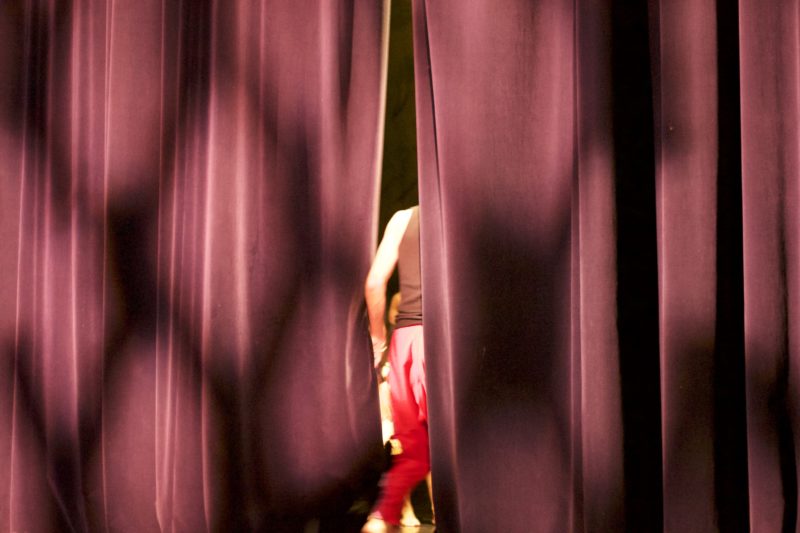
Open that curtain

We must reach out even if it is uncomfortable. It needs to happen. It might be a tenuous connection, if any connection at all, but would be a start. I, for example, buy the street roots publication from every vendor I encounter, even if I end up with multiples of the same issue. That dollar is not what it’s about, but the looking in the face and talking to someone who is having harder times than you are.  I roll down my window and give 25 ç to any homeless vet at the traffic light. Just to t a l k to them and not avert my gaze.

We had dinner this week with Republican acquaintances. Wondering how to broach topics and learn about a diametrically opposed world view. Did not discuss politics, mind you, but kept a door open to learn more about the why’s at a later point in time. Hopefully.

I photographed the MLK middle school music performance at Jefferson High School this week as well. The adult drummers are friends from my other volunteer gig and had asked me to help out. I had little light to work with and so yelled at Hakim “Don’t move!” in order to get a focused picture. The immediate reaction: “Woman, don’t you ever say those words to a Black man.” I wanted to collapse with embarrassment right then and there. I never think about what the police would say to me, or someone holding me up on the street.  Missteps will happen, we will all put our foot in our mouth at times, but that should not keep us from forming connections that stretch our narrow horizon.

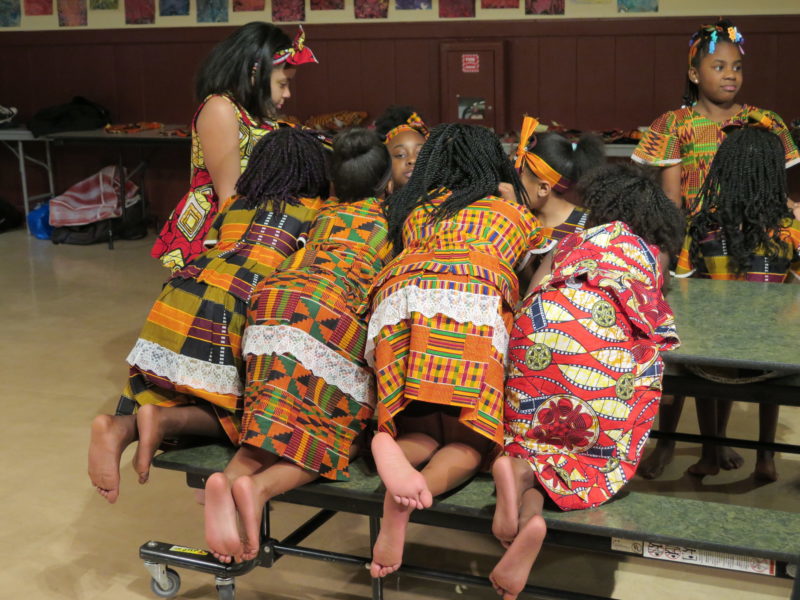
Samara, the 13 year-old who sat next to me before the performance, spontaneously offered me a list of her strengths after a bit of conversation. She could dance, sing, be patient for the three days it took to braid her hair and she always saved up her snacks to bring to school, because so many of her friends were really hungry. Again, I felt uncomfortably ashamed. When have I last gone hungry?

Which one of them is food insecure?

What I am really saying here is that it is easier to remain in our white middle-class bubble, but leaving it is what matters to create new alliances. If I can do it, anyone can do it – Forge some new connections!  And now I am disconnecting my brain for the weekend. It’s been a long week.

Involuntary Connection


You know me. Well, some of you do. I like to dress eclectically and mix up Target with Givenchy, although my Burberry raincoat will not see the light of day ever again, being banned to the closet. In addition, death has been a maid-in-waiting way too many times during my 6.5 decades. So Elfriede Jelinek, the Austrian writer and playwright who received the 2004 Nobel Prize in literature, should be close to my heart. Some of her main themes, suffusing almost everything she writes, are death and fashion – not necessarily in that order.  They pop up in many of her “ novels and plays that with extraordinary linguistic zeal reveal the absurdity of society’s clichés and their subjugating power” (words in  italics are from the Nobel Committees announcement.) 

https://en.wikipedia.org/wiki/Elfriede_Jelinek

I like her fierceness, but not her voice. “Mein Ton ist Hohn,” she once proclaimed, “my voice is contempt.”

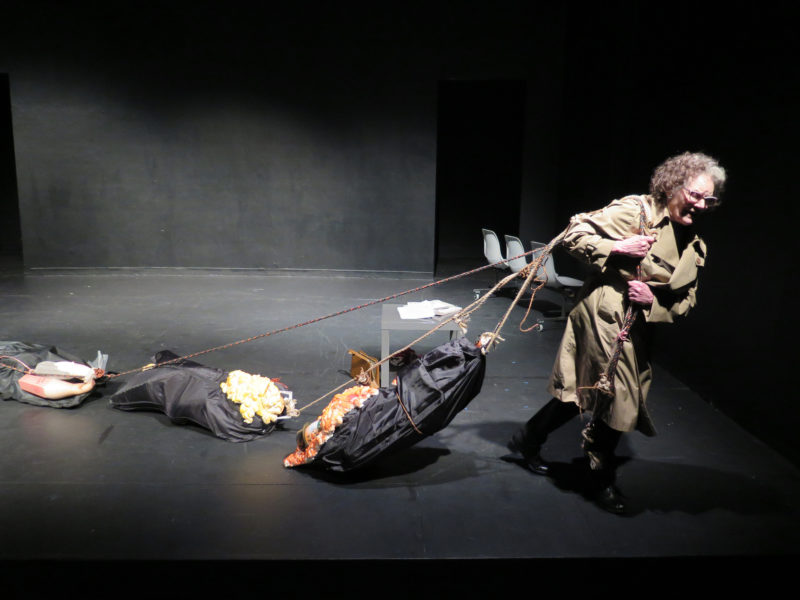
Last week I photographed rehearsal for a staged reading of one of her plays, Jackie O., presented here in town by the incomparable Boom Arts. The play features a monologue by Jackie Onassis, musing about her life, about the role clothes play in hiding the emptiness of her existence or providing the exoskeleton for someone slowly disappearing.  It was a sparse, discerning show directed by Alice Reagan from Barnard, played elegantly and at times with such vulnerability by JoAnn Johnson that you could hear your own heart cracking.

http://www.orartswatch.org/global-voices-get-a-fair-hearing/

Now,why all this during the week devoted to “connectedness?” The play made it brilliantly clear how Jackie Onassis was connected to the corpses around her, literally dragging them by a rope wherever she went. Not just her murdered husband and brother in law, but the many miscarriages she endured due to venerial disease that her husband’s philandering had inflicted upon her. Psychologically she was even more connected to visions and memories of JFK’s mistresses, Marilyn Monroe chief among them. An invisible triangular bond between wife, husband and lover choked her thinking, forcing her into attack mode alternating with extreme defensiveness.

It is scary to see the long lasting effects of moral violations, taking hold in our hearts and making our brains into garbage cans filled with obsession, even when death has long removed the players.

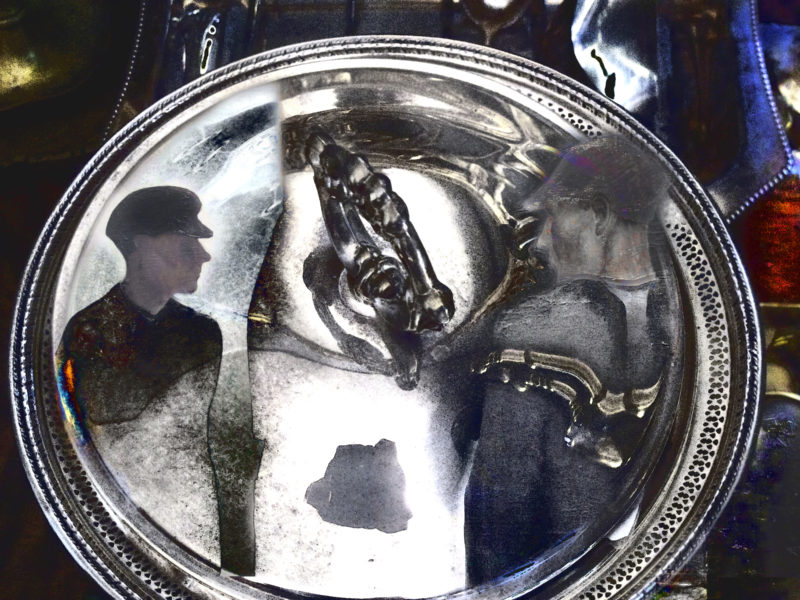
(By sheer coincidence, this is what I found yesterday at Jefferson High school in North PDX.)


And this in the NYT last evening. https://www.nytimes.com/2017/02/08/world/europe/letters-from-jacqueline-kennedy-to-the-man-she-didnt-marry.html?hp&action=click&pgtype=Homepage&clickSource=story-heading&module=second-column-region&region=top-news&WT.nav=top-news

Let’s hope Jackie found some peace in her connection to Onassis.

Disconnected

If I asked you about connectedness, what would come to mind? Love, family, friendship, community would pop up for me.  That connectedness can be disrupted by voluntary acts: you break up, you move away, you disengage   – or are subjected to those actions by the person(s) you’re close to. Hurts, but can be handled.

Then there are the external forces that impose forced disconnection in the most brutal ways.

War. Prison. Illness.

I do not have to spell out the ravages of war.

Prison came to mind not only because it has become a for-profit industry in this country that has seen skyrocketing stock values – note the date, November 9th! –  a day after the election…

https://www.bloomberg.com/news/articles/2016-11-09/private-prison-stocks-are-surging-after-trump-s-win

but because of this https://www.washingtonpost.com/local/public-safety/fcc-made-a-case-for-limiting-cost-of-prison-phone-calls-not-anymore/2017/02/04/9306fbf8-e97c-11e6-b82f-687d6e6a3e7c_story.html?tid=ss_tw&utm_term=.6605cadcb9db

If you ever wondered if imprisonment in this country is about rehabilitation not just retaliation, think through what it means not to be able to make/afford phone calls to stay connected to your family.

The majority of us, reading these musings, are likely to be safe from these two causes of violent disconnection. The third one, not so much.

Disease can force you apart.

Mild versions: Anyone who’s ever dealt with a bout of cancer knows the feeling: you can’t stand some people and cut them off, because they are just too hard to be around in their overbearing ways. Some people, in reverse, cut you off, because they feel awkward, don’t know how to talk to you, or don’t want to be confronted with thoughts of their own fragility. Or you are just too exhausted from chemo to maintain a social fabric that includes more than the most intimate people.

Strong versions: Depression. The clinical kind, not our garden variety-bouts in dark Portland winters. Here are words that describe it better than I could – put it on your to-read list: http://www.tabletmag.com/jewish-arts-and-culture/books/223625/depression-classic?utm_source=tabletmagazinelist&utm_campaign=fa20efbdf9-EMAIL_CAMPAIGN_2017_02_06&utm_medium=email&utm_term=0_c308bf8edb-fa20efbdf9-207667521

And then there is Alzheimers. A few days ago I would have said it is the emperor of disconnection. But then I had the privilege to visit with a couple that is going through the worst cruelty of loss of self and recognition in an advanced stage of the disease for one of them. But I SAW connection. I saw hands reaching out, an occasional spark in the eye, a determination to be connected by the healthy spouse. I do not know if that spouse has a choice to stay so close or not: love might be too strong,  a sense of responsibility too ingrained to give up; choice or not – I was in awe how human dignity is expressed and maintained in a connection combating the evil of that illness.  Man, does that give me hope.


Reconnecting

Back to normal, or so I hope. Your daily picture resumes with an interest in connections/connectedness this weekObviously a broad umbrella term, which I hope to fill with diverse reports.

We start with some photographs that made me happy. Kukatonon, the afternoon dance and drumming program in North Portland, had their annual fundraiser on Saturday. A mother, Bahia Overton, openly talked to the assembled crowd about the difficulty of being Black in lily white Portland, and how much safe spaces with a focus on shared Black history, African traditions and simple connectedness meant for the kids as well as the parents.

It took courage for Bahia to talk so openly about discrimination and fears in front of a partly White donor crowd and I applaud her. Meanwhile, in the backroom where the kids were eagerly awaiting their performance, that connectedness was displayed in spades. They laughed, they sang, they helped each other with their hair and costumes, and they took, of course, ubiquitous selfies.


And the guests formed their own community, however limited to their once-a-year encounter, since many of us are repeat visitors, feeling connected by a sense of supporting an important cause.

Anti-apartheid activist and former congress woman Elizabeth Furse.

It took an incredible amount of work for all the staff to pull this event off, superb volunteerism that makes safe spaces possible. Nothing but respect for them.

Community. One of the best forms of connection!


Fading into the Background

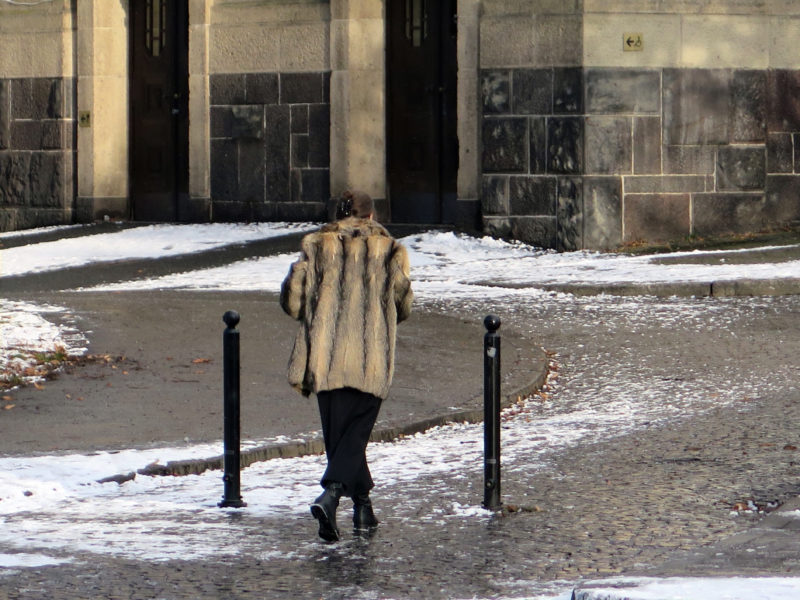
This morning I saw a woman in her 70s with flowers face painted on her face. I overheard that she had a face-painting birthday party for her grandchild on the weekend, and decided to keep the flowers since they were so cheerful. It felt daring and of course I loved it. It also reminded me of the many beige and brown outfits I saw during my travels, something considered elegant and flattering and “feminine”, when really few people can pull it off. Mostly it just makes you somewhat invisible (look at the cover photo….). I so often think about Hannah Arendt donning her lover Heidegger’s favorite brown dress during a reunion after the war. Brown? The color of hamsters and Nazis? Having kept it in the first place?

Paula Becker Modersohn – Old Woman – in her museum in Bremen – the first ever museum built for a female painter!

During a conversation later in the morning a friend and I mused about why women always take themselves back, rather than making themselves visible. in a less literal way as well. Or shall we say “in the linguistic way.” We often devalue ourselves in advance, using hesitating language.

Below is a link to a rather self-helpish, if that’s a word, tutorial, but one that nicely summarizes what psychologists have shown as typically female speech patterns. I copied the most important points for your perusal.

I thought this portrait at the Whitney by John Wilde of his wife Helen (1950) called Work Reconsiderd #1 nicely points the way:

1. Drop the “just:” “I’m just wondering …” “I just think …” “I just want to add …” “Just” demeans what you have to say. “Just” shrinks your power. It’s time to say goodbye to the justs.

2. While you are at it, drop the “actually.” “I actually have a question.” ” I actually want to add something.” “Actually” communicates a sense of surprise that you have something to say. Of course you want to add something. Of course you have questions. There’s nothing surprising about it.

3. Don’t tell us why what you are about to say is likely to be wrong. We are still starting sentences with, “I haven’t researched this much but …” “I’m just thinking off the top of my head but …” “You’ve clearly been studying this longer than I have, but …”

We do this for lots of reasons. We don’t want to appear arrogant. We aren’t totally sure about what we are saying. Or we fear being wrong, and so we buffer the sting of a critical response by saying up front, “I’m not totally standing behind what I’m about to say, but …” Then, no one has the chance to say back, “Well, I know you strongly believe this, but I entirely disagree.”

No matter what the reason, doing this takes away from the power of your voice. Time to change the habit.

4. Don’t tell us you are going to “just take a minute” to say something. Often, in presentations or meetings, I hear women say, “I’d like to ask you to take just a minute to consider this idea” or “Now, I’m going to take just a few minutes to tell you about our product.” Think about how much stronger it sounds to simply say, “I’d like to tell you about our product.”

Go ahead and only take a minute, if that’s appropriate, but skip using the phrase “just a minute” in a talk or presentation. It sounds apologetic and implies that you don’t think what you are about to say is worthy of time and attention.

5. Don’t make your sentences sound like questions. Women often raise the pitch of their voice at the end of a sentence, making it sound like a question. Listen to your own language and that of women around you, and you are likely to notice this everywhere. Unsurprisingly, speaking a statement like a question diminishes its power. Make statements sound like statements; drop the tone lower at the end.

6. Don’t substitute a question for a statement. You might think you are “suggesting” increasing the marketing budget by asking, “What about increasing the marketing budget?” in a meeting, but your colleagues aren’t likely to hear an opinion (and certainly not a well thought-out opinion) in your question. When you have something to say, don’t couch it in a question.

http://www.taramohr.com/8-ways-women-undermine-themselves-with-their-words/

Here’s to strong and colorful women – and those who love blue hats.

Guy Pene Du Bois, Woman with Cigarette (1929)  at the Whitney


On the first day of 2017

If your resolutions list looks like mine, it is fossilized as well. Since they are always the same resolutions you don’t need to write them out every year – you just keep them in a folder – where they have been for the last centuries….. (photo is of art by Steve Tilden – thank you for letting me use it for a joke, comrade!)

Just in time comes yet another psychological tool kit that promises more success for this round.

https://www.youtube.com/watch?v=DpbCMzQqZAU

This is the scientist behind the program called WOOP: https://www.youtube.com/watch?v=7mobxikaYgU

WOOP stands for: Wish/Outcome/Obstacle/Plan.  The claim is that envisioning the positive alone is worse than anticipating obstacles for which to plan. Why not give it a try since everything else has failed? I’ll report back by the end of this year…..hah!

Here are some of my obstacles that no plan whatsoever overcomes:

Being a chicken   

being a chicken trying to differentiate between realistic fear and paranoia,


bing a chicken forever pursuing the lofty goal of abstract thinking while scared,   


and being a chicken who is hooked on c h o c o l a t e (or salty licorice, caramels, marshmallows, bonbons of all kinds except jelly beans….)


Conditional Optimism

The link below is something to cheer us all up. Pinker is a smart cookie, if there ever was one. Cognitive psychologist at Harvard who always surprises with a new turn in his research topic choices. The Language Instinct” (1994) was one of his earlier books that was fun. These days he writes about aggressionThe Better Angels of our Nature, (2011) and how the mind works in general. Books that can be understood and are certainly of value to a general audience.

Here is a quote from the interview below:

“I’ve never been “optimistic” in the sense of just seeing the glass as half-full — only in the sense of looking at trend lines rather than headlines. It’s irrational both to ignore good developments and to put a happy face on bad ones. 

As it happens, most global, long-term trends have been positive. As for the future, I like the distinction drawn by the economist Paul Romer between complacent optimism, the feeling of a child waiting for presents, and conditional optimism, the feeling of a child who wants a treehouse and realizes that if he gets some wood and nails and persuades other kids to help him, he can build one. I am not complacently optimistic about the future; I am conditionally optimistic.”

http://www.vox.com/science-and-health/2016/12/22/14042506/steven-pinker-optimistic-future-2016

So folk, let’s congregate to figure out how to build the equivalent of a treehouse starting 1/20/2017.


Maybe these are still ahead, after all.

Fence Posts

dsc_0588-copy

As I have described before, my mother used to climb over fences. Sometimes in order to take short cuts. Often times in order to snip off some seed pods that she would later propagate in her greenhouse. Frequently just for the defiance inherent to the act of trespassing.

dsc_0321-copy

dsc_0255-copy


It put the fear of God into me as a child and made for a huge dilemma. Obedience to rules and regulations was a large part of upbringing in the 1950s. So which rule scored: the one to obey your parent who with a huge grin encourages you to struggle up and over that fence, or the one that is focussed on property rights? And why did we never get caught?

img_1861-copy

I do climb over fences myself, nowadays, occasionally. It still puts a frisson into me, but also a loving memory of a woman who was caught in her age and time but willing to rebel at the tiniest occasions that opened up for her.

img_3071-copy

Fences are probably an overused photographic motif, but I figured a few of my favorites can join the fray.As can a perfect version of the appropriate song: https://www.youtube.com/watch?v=YHLr3FzgpOY

dsc_0284-copy

dsc_0426-copydsc_0275-copy

Passing Through

img_5172-copy-2

Since the blog tackles forms of passages this week, I thought the article below might be of interest.

http://www.3quarksdaily.com/3quarksdaily/2014/03/mental-illness-the-identity-thief.html

Written by a bright, but young and very earnest philosopher, it tries to provide answers to the question of identity during and after severe illness. Clearly you are not the same body after amputation or other impactful physical losses. Are you also not the same mind during and after bouts of serious mental illnessbe it depression, bipolar disease or other such ailments? Grace Boey approaches the question with a premise that there is an authentic self, that can be stolen, harmed, delayed, or prevented from development.

Even if I shared the assumption of the existence of a “real” self – which I don’t, given that I subscribe to Marx’ analysis of how the existing (and always changing) surround continually shapes our consciousness – her answers are muddled. I am only posting the article since it was an interesting thought exercise for me to figure out what to make of the question. As someone who has both seen physical and psychological change writ large in her life, I have never felt that irretrievable and missing parts affected a sense of who I am. Change happens, whether through illness or other factors, and you just add the experience to the self-portrait, like slapping on another layer of paint, or varnishing it, even if those new layers usurp others. The question of lack of control over personality traits vanishing or being subdued is one shared by all humanity, healthy and ill alike, so why waste worry on it? Just as we no longer speak of schizophrenics, but instead of people suffering from schizophrenia, to make clear that the disease is not the person, we should not equate traits with self. There is a whole emerging literature on the self in both cognitive and social psychology that provides some insights (for the curious: check out Hazel Marcus’ research, who teaches at Stanford.) I will write about it in a future post.img_4872-copy

So I figure we’re just passing through different states and stages, all of our lives, and they will shape us and enrich us if we don’t cling to the “what was” or the “could have beens.” Most of us have the choice to look at the bright side. I don’t mean this in a flippant way, I know the toll that depression can take; but I truly believe we are just better off if we accept change as a constant, and self as a growing entity.

img_4697-copy-2

Passages

1016-gq-fefw01-01-i-took-my-son-to-fashion-week-illo-2Today the door opens to a New Year, at least in the Jewish calendar. I decided to devote this week’s blog to passages, transitions, an odd assortment of things being in flux, rather than stuck! Speaking of being stuck (no longer): it looks like the notification for the daily post is working again, miracle of miracles…… welcome back!

Today’s passage story comes from no other than Michael Chabon, he of Cavalier&Clay and the Yiddish Policemen’s Union, among other prize winning books. His story is about his youngest son, whom he took to the Paris fashion week as a Bar Mitzvah present  (it helps if your Dad writes articles for sponsor GQ…). The young man is in the process of defining himself and trying to find his own tribe – and a knowledge about and love for design play an essential role. (Photo from the article.)

http://www.gq.com/story/my-son-the-prince-of-fashion

I react to accounts of parents writing about their children in great detail  with ambivalence, as I do looking at revealing portraits of children taken by their parents. There is a fascination and intimacy rarely matched, but would I like to be the later adult with so much of me made public?  I was thinking of that again when I read about the suicide of Sally Mann’s oldest son, Emmett, this June, after struggling with schizophrenia in his adulthood.

http://www.nytimes.com/2016/09/07/arts/design/sally-mann-cy-twombly-remembered-light.html?_r=0

But back to passages into a realm of your own: just as a youth discovers fashion, so can we old ones discover style. My model here, in both meanings of the word, is Bridget Sojourner, 78 year old great grand mother who I am all ready to emulate (alas, I don’t have that hair….)

http://www.telegraph.co.uk/fashion/people/bridget-sojourner–78-year-old-great-grandmother-turned-style-ic/

 images bridget-sojourner-1 Time to reinvent my closet in 5777….bridget-2-1