Monthly Archives

June 2026

Why is small never enough?

The weather has made it possible, nay, required, to be out and about lot. Last week I went on several walks, one of which was meant to visit the birds but I encountered an explosion of wildflowers instead.

Nothing particularly special – everything particularly beautiful in its unassuming presence.

Which had me thinking again about how artists portray flowers, from the early botanical sketches that served as tools for learning about the plants of the world and their function,

to the symbolism contained in medieval paintings or Victorian floriography, speculations about the secret meaning of flowers.

You can see it in the pre-raphaelites painters: Lawrence Alma-Tadema, for example, rendered the tragic tale of Emperor Heliogabalus watching his guests suffocate under a shower of rose petals (in the old story they happened to be violets – death by flower, who knew….). The artist chose the species specifically for its association with corruption and death, but the subject, I wager, for the ability to paint something big….

Lawrence Alma-Tadema The Roses of Heliogabalus (1888)

It seems to be never enough to just depict a simple flower as is, in an attempt to convey the sense of joy it inspires, hanging out in the meadows, at the forest borders, in modern times as well.

Photographers choose particular flowers that lend themselves to an emphasis of form, stark contrast, like Imogen Cunningham’s calla lilies or magnolia blossoms, abstracting an essence. If they do photograph less defined flora, they often apply post processing filters to give the image a mysterious hue.

Imogen Cunningham Two calla lilies (1920)

Edward Weston Purple leaved flower

20th/21st century painters go big – man, everyone always goes big these days, abstracting the plants or unifying them to the point of un-recognizability.

Real daisy meadow…

Takashi Murakami Field of Smiling Flowers, 2010

And then there are the installations using actual floral parts, either collected over time, or grown into absurd topiaries…. again, nothing won’t do unless humongous. (I was introduced to this work by an article asking: why did Jeff Koons make a giant puppy? I, too, wonder about that…)

Jeff Koons Giant Puppy (1992 to present )

Even one of my favorite contemporary artists focussed on nature joins the trend (I will write about him and his work one of these days in full).

herman de vries 108 pound rosa damascena at the 2015 Biennale Dutch Pavilion

Don’t get me wrong – there is a meaningful place for large works, no doubt. An important place. But the tendency to use subjects that are small and make them big in either size or accumulation seems to imply that that is the locus of awe – when really it should be felt when you encounter the miniature version indefatigably sprucing up the landscape under natural, often adverse conditions.

I fear that the preoccupation with spectacle really leads to a withering of our ability to detect, appreciate and protect what is small. Just like wildflowers being classified as “weeds” had to make room for more showy varieties, or blossoming meadows were replaced by spectacular lawns, truthful depictions of something unassuming gains no attention when placed next to artificial elevation of a subject.

Give me a tiny aster anytime…. and give me depictions in a format that I can take home, hang on the wall, enjoy every day as a reminder of the reality of beauty in the world, and my role as its steward.

Here is a sampling of what I saw:

Music today echoing some happiness.

Quail Eggs

A lot of eggs popped up last week. First a nest with duck eggs right off the footpath – unclear who was more startled, the duck who sat on them when I walked by, or I, when the duck flew up in a panic, practically fluttering into my face. (If s/he does that every time someone walks by, I predict there will be zero ducklings hatched…)

Next I saw a number of eggs or egg-shaped forms of various materials arranged in the house of a friend. A ceramic artist herself, she creates beauty with whatever she finds.

We shared the excitement of seeing bushtit parents flying in and out of a nest next to her kitchen window. Alas, the very next day the nest was destroyed by predators. Another generation lost.

My friend sent me home with a bag of quail eggs which are now on my windowsill until they, predictably, rot and start to smell up the kitchen. The eggs, in turn, triggered thoughts about genetics, since I had just read Brian Klaas’ fascinating essay about research into genetics and the question who owns your genome. If researchers discover information about our genome that contradicts everything we believe to be true about ourselves, should we be allowed to interfere with publication of that knowledge? Should they be allowed to withhold that information from us? And how are those questions linked to potential abuse by people with racist agendas? If you find the introduction below of interest, here is the link to the whole piece:

“…..Thus began a descent down a fascinating rabbit hole into the thorny philosophical debates that define modern research into population genetics. What happens when longstanding historical narratives of identity collide with hard genetic evidence? Should DNA scientists always publish findings that could destroy a population’s sense of itself? And, if not, who gets to decide which kinds of scientific research are too sensitive to release?”

Science caught my eye, or my brain, as the case may be. But so did poetry – again related to stories of origin, linkage to tribal membership as juxtaposed to “others,” and, of course, quail eggs. The lines below were published in 2022 (link in the title.)

Sonnet with Bird

1. Seventeen months after I moved off the reservation, I traveled to London to promote my first internationally published book. 

2. A Native American in England! I imagined the last Indian in England was Maria Tall Chief, the Osage ballerina who was once married to Balanchine. An Indian married to Balanchine! 

3. My publishers put me in a quaint little hotel near the Tate Gallery. I didn’t go into the Tate. Back then, I was afraid of paintings of and by white men. I think I’m still afraid of paintings of and by white men. 

4. This was long before I had a cell phone, so I stopped at payphones to call my wife. I miss the intensity of a conversation measured by a dwindling stack of quarters.

5. No quarters in England, though, and I don’t remember what the equivalent British coin was called. 

6. As with every other country I’ve visited, nobody thought I was Indian. This made me lonely.

7. Lonely enough to cry in my hotel bed one night as I kept thinking, “I am the only Indian in this country right now. I’m the only Indian within a five-thousand-mile circle.” 

8. But I wasn’t the only Indian; I wasn’t even the only Spokane Indian.

9. On the payphone, my mother told me that a childhood friend from the reservation was working at a London pub. So I wrote down the address and took a taxi driven by one of those London cabdrivers with extrasensory memory.

10. When I entered the pub, I sat in a corner, and waited for my friend to discover me. When he saw me, he leapt over the bar and hugged me. “I thought I was the only Indian in England,” he said.

11. His name was Aaron and he died of cancer last spring. I’d rushed to see him in his last moments, but he passed before I could reach him. Only minutes gone, his skin was still warm. I held his hand, kissed his forehead, and said, “England.” 

12. “England,” in our tribal language, now means, “Aren’t we a miracle?” and “Goodbye.” 

13. In my strange little hotel near the Tate, I had to wear my suit coat to eat breakfast in the lobby restaurant. Every morning, I ordered eggs and toast. Everywhere in the world, bread is bread, but my eggs were impossibly small. “What bird is this?” I asked the waiter. “That would be quail,” he said. On the first morning, I could not eat the quail eggs. On the second morning, I only took a taste. On the third day, I ate two and ordered two more. 

14. A gathering of quail is called a bevy. A gathering of Indians is called a tribe. When quails speak, they call it a song. When Indians sing, the air is heavy with grief. When quails grieve, they lie down next to their dead. When Indians die, the quails speak.

By Sherman Alexie

(Alexie has acknowledged sexual misconduct allegations in 2018, and apologized. Many of his prizes and fellowships were rescinded or renamed. I do not know if he has written a novel since then, but his short writings appear on his substack. As always, we can debate if you can separate the person from the work, but I often go back to reading his words.)

May the quails be silent this weekend, and may lots of eggs hatch….

***

Speaking of hatching: PLEASE SAVE THE DATES:

I have two exhibitions coming up. One will hang at the Columbia Gorge Museum in Stvenson, WA, starting June 24, 2026 with a reception on September 11th, 2026 ( a combined celebration of lace artist Maggi Hensel Brown and community lace makers and my photographic work.)

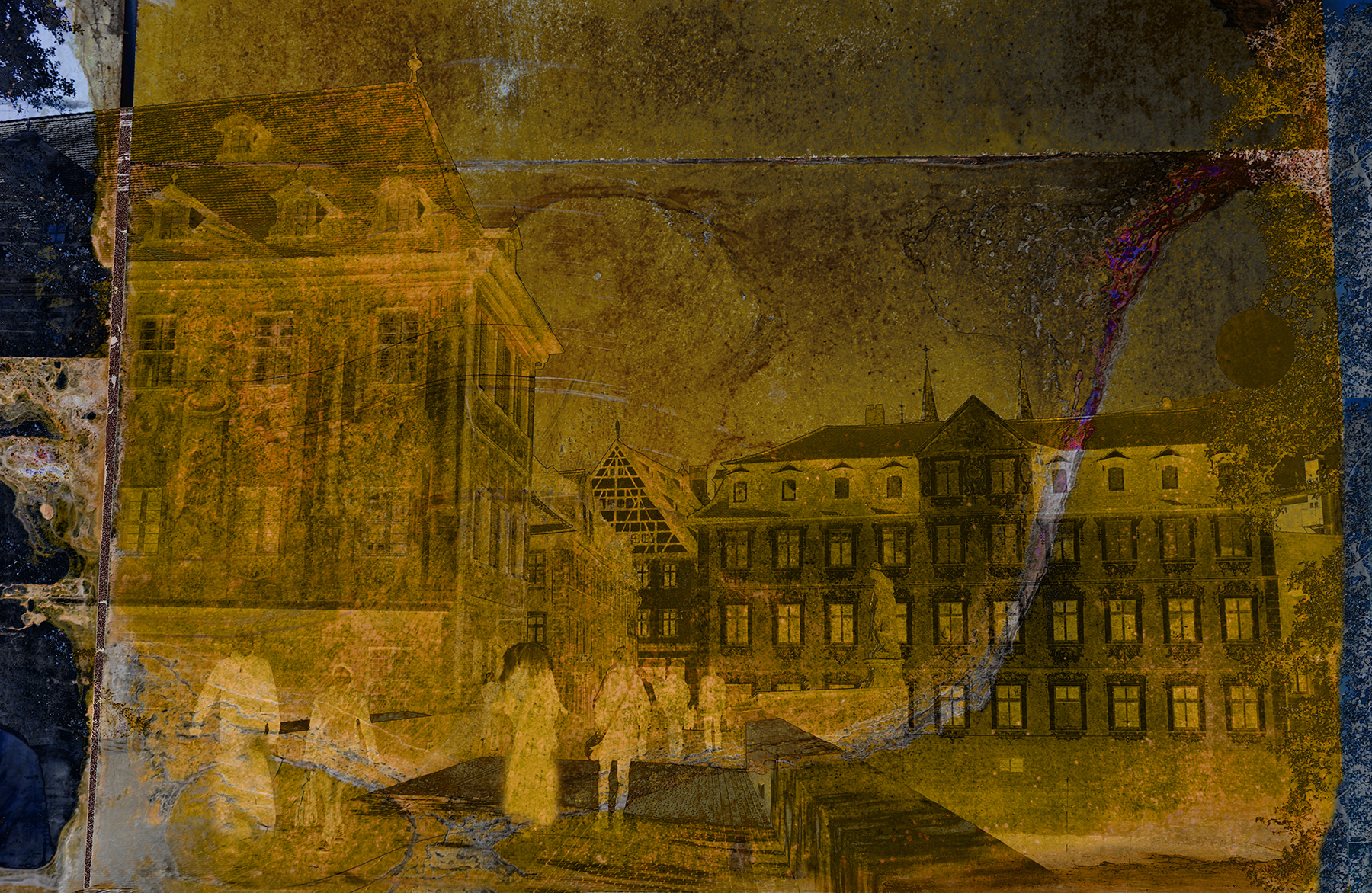
Fragility is a 2025 series of photomontages that grew out of ongoing concern about insufficient environmental protection. Fauna and flora in the depicted landscapes – photographed mostly around the Pacific Northwest – are endangered. Climate change and the renewed threat of industrial extraction of resources, forests and minerals alike, will do irreparable harm. I thought the ephemeral nature of clouds and the fragility of lace (superimposed on the landscapes) were fitting symbols for why we need step up in our efforts to turn things around.

The other one opens with a reception on February 5, 2027 6-9 PM at the Patricia Reser Center for the Arts.

Collective Effervescence brings together the work of Diane JacobsSusan Murrell  and my own to explore our evolving relationship with the natural world. Rooted in shared energy, connection, and interdependence, the exhibition examines how human actions shape and destabilize the landscapes we inhabit. Through painting, photography, printmaking, and mixed media, we create environments that are at once familiar and altered. Together, we invite viewers to look closely, to explore and perhaps share the artists’ fervent belief that we can have a positive impact on preserving nature, once we shift from individual awareness to shared responsibility, and from observation to action. My contributions come from a new series When We Broke the World.

I will post more detailed information closer to the dates – just put them in your calendars for now!

Music today is from all around the world, I guess every shared gene pool! A collection of modernized folksongs. A beautiful album by Marisa Anderson.

The Kids are Alright.

“Education is not the filling of a pail, but the lighting of a fire. For the mind does not require filling like a bottle, but rather, like wood, it only requires kindling to create in it an impulse to think independently and an ardent desire for the truth.— Plutarch (often misquoted as William Butler Yeats.)

***

Finally, finally I made it to the Portland Art Museum, recently reopened after extensive architectural additions. I had heard nothing but positive reports about the ways two existing buildings are now connected by a glass pavilion. Can confirm that the design and execution, carried by a millions-of-dollars fund raising campaign, really work. Nothing glossy or ostentatious about them, overall functional and, from some perspectives, beautiful. A detailed account of the project can be found in my Oregon ArtsWatch colleague Brian Libby’s interview of the architects here.

I had not come for the novelty, though. Nor the David Hockney: Works from the Collection of Jordan D. Schnitzer and His Family Foundation. exhibition – I was never a fan. Or the Rick Bartow exhibition – with few exceptions, not my cup of tea. (Probably heresy to admit that in this town.)

My visit led me to the basement, or what is officially called the lower level of the North Wing. I wanted to explore the HeART of Portland Visual Art Exhibition, featuring over 100 works of students in our public schools, from Kindergarten to 12th grade, and a collaborative art project, Windows of Our Future, inspired by the Museum’s new Rothko Pavilion and the Hockney exhibition. I had read about the Museum’s vision to strengthen its youth and community outreach, investing in more education, and making space for programs in the revamped buildings. What a terrific development, particularly in economically distressed times where art education is one of the first things to be on the chopping block.

For the 2026 youth exhibition, every visual arts teacher in town was invited to pick one student’s work from their respective classes. In addition, some 2500 kids worked on the Windows of Our Future project, covering a glass wall of the remodeled Lana and Chris Finley Learning Studio.

Art ranged from works on paper – drawings, painting, prints, photography – to fabric art, collages, mobiles and sculptural exploration.

Must have been a bear to hang – and was beautifully done so! Hats off to whoever had to tackle works by an age range of 5 to 16 or so years, differing degrees of talent, – some impressive, others compensated by remarkable enthusiasm, and subject matters ranging all over the map.

Each piece was offered with information, provided either by the teacher or the student themselves. Very helpful for those of us no longer adjacent to art education, with kids long gone. I found the thought processes of the students almost as fascinating as the levels of sophistication exhibited in some of the works themselves.

One can debate whether this is a representative sample – after all the professional art teachers selected likely the best of the year’s output – but does that really matter? What convinced here was the freshness, the passion that kids put into their work, the insights into curricula that introduce many different forms of art and artists as a starting point for the students to find their own voice.

What impressed were multiple references, by teachers and students alike, to the importance of process, of exploration rather than insistence on perfect outcomes. Some of the works carried a sense of wonder, sometimes about the world, sometimes about the artist’s own capacity to pull something off to their liking.

I felt wonder, that’s for sure, being in the presence of so much imagination, creativity and conceptual ideas. In short: in the presence of art, embraced by a generation of young people ready to launch their talents into the world.

***

I had some time left and skimmed through the current photography exhibition, Together, a theme focussed on communal actions and relations. As per usual, the selections from the archives, including recent acquisitions, were soundly and predictably curated. Once, just once, I would like to be surprised, though, by what is included, or who is left out up there. (Speaking of surprise (and I digress): the 2026 Artists’ Biennial: The Price of the Ticket at Oregon Contemporary holds some serious eye openers. Ox is only open on the weekends, but I highly recommend planning a visit.)

Simone Leigh Sentinel IV (Gold) (2021)

Walking back to the entry level, I passed through Here we Are, smartly chosen works of contemporary art from the museum’s collection. It was poignant to read curator Sara Krajewski’s helpful outlines of thematic subjects of these accomplished adult artists, some of them quite famous. Many themes completely echoed what I had seen an hour earlier in the students’ works: “sense of self and identity“,  “relationships to place,” “the human connection and the creative process.” Confirmation that some foundational and universal issues forever work their way into art, regardless the age (or stage) of the artist.

Carrie Mae Weems Painting the Town #1 (2021)

William Kentridge Dancing Couple (2003)

Then again, everything here was quite big in contrast to the students’ ability to pull some punches with small-sized formats.

Elias Sime Tightrope: Eyes and Ears of the Bat (1) (2020) Reclaimed electrical wires on wood.

And not a full critter in sight (unless I missed it) – in contrast to the fascination expressed in the younger students’ offerings. So many animals, so many versions. I wonder if something gets lost on the way by growing up, and a preoccupation with fauna labels you in some ways. Come to think of it, equine depictions wended their way through art history, from the paintings of aristocrats’ steeds to the horses of August Macke. Not all had to be “Monarch of the Glen”-type roaring stags, or the sweet avians of the Dutch Golden Age. Rousseau’s jungle creatures, or Picasso’s bulls anchor us in the recent past. So maybe I am just picking up a coincidental lack of representations, in no way typical for adult artists?

Paul Klee, move over…..

***

A photograph by Wolfgang Tillmans dominated a wall. His abstract work is done without a camera – he uses chemical solutions on different papers and exposes them to light waves, sometimes manipulating the canvas in the process. During a retrospective of his work at MoMa 4 years ago, he was compared to a genius by Peter Schjeldahl in the New Yorker, and every other critic, trying to find superlatives from brilliant to extraordinarily gifted, joined the chorus. I happen to agree, the man is a phenomenon with the camera. In fact, a postcard of one of his photographs has been hanging forever on that sacred space reserved for portraits of grandchildren, a.k.a. our fridge. A constant reminder of what to aspire to, in front of my eyes on a daily basis.

Wolfgang Tillmans Greifbar 50 (2017)

Yet I also concur with critics’ cautiously uttered sentiments, that his abstract work is less impressive than his representative photographs, although I would not go as far as to say they belong into the lobby of boutique hotels, as more belligerent voices suggested.

I think one of the problems about the abstract works is the fact that important pointers contained in the titles get lost in translation. Look, for example, at the signage for the PAM acquisition of Greifbar 50 (2017).

It talks about free style swimming, and a gay bar in Berlin by the name of Greifbar, a pun on fondling opportunities at a bar. (The bar at Prenzlauer Berg happens to have closed its doors permanently after the Covid pandemic, one of the last joints that offered pornographic films in the front room and a dark room in the back notorious for wild nights, open sex and a leather scene.)

Greifbar, however, also means “within reach,” a desired goal or object about to be on hand.

The term ultimately only makes sense in the context of the name of the series of abstracts Tillmans has been exploring. The series is called FREISCHWIMMER, which has nothing to do with free style swimming. Instead, it refers to one of the most coveted items of a German childhood, a badge received after passing a municipal swim test. Success required 15 minutes in the water with breast stroke and back stroke, diving for an object at 2 meter depth, jumping into the water from a certain height and answering some water safety questions. Once you had that piece of fabric in your hand (often in the form of a little seahorse to be sewn onto your bathing suit,) you were allowed to enter public pools on your own and swim there without adult supervision. Freedom beckoned!

We would spend endless summer days with friends at the pool, prepubescent or just entering puberty. During the 60s and 70s, long before the internet and TV offered plenty of nudity, it was a place to see people in various stages of undress, to touch each other surreptitiously in the crowded water. We would lie on closely spaced towels in the meadows around the pool, apply coconut oil to each other’s skins, and watch people disappearing behind the public rest- or changing rooms, for what we could only wildly guess at at the time, where “kissing” was the height of illicit behavior (I earned my Freischwimmer badge at the age of 10.) We would feel our bodies cooled by the wind when biking back home late afternoons all those years, damp swimsuit under cotton dresses. It was utterly physical, it was fluid in terms of developing an understanding of our own sexuality, straight or gay, it was a taste of independence, a new stage of life, freer, more agentic, adulthood with its assumed perks seemingly within reach.

I can see how Tillmans, a master of representative depiction, yearns to find new independence in an abstract medium. I can see the seduction of exploring new ways of expression that might potentially recreate the sense of discovery of who we are and what we can pull off, reliving younger ages when the world was still seemingly open. I can also speculate about the acknowledgement provided by hindsight, that much of what developed in us was caused by elements of chance, now reproduced with the processes he uses to generate these enormous abstracts. So many possible interpretations, but free style swimming not among them.

***

Serendipity ruled when I left the museum, ready for one last shot capturing Ugo Rondinone’s sculpture at the 10th Ave exit. The Sun encircled a school bus, a golden halo surrounding a stand-in for education. More power to PAM, fostering new generations, instructing them in the making or experiencing of art, kindling independent thinking and creativity. I very much hope that stamina and/or funds are sufficient to succeed with their goals. It would be to the benefit of all of us.

——————————

Artist for the title image:

Goslings Galore

I turned around the corner, and just like that, there were two families of geese. Completely unperturbed by my presence, they walked up from the lake shore, through the grass, onto the path, not 2 meters away from me.

The German word for the way goslings follow a leader in a straight line is “Gänsemarsch”, geese march. Not to be confused with goose stepping, which in German is called Stech Schritt, literally translated as stabbing step.

Goosesteps

A collector of   walks, I was practicing my llamastep
when one of   those white geese with the knob
of cheddar on its bill honked at the goslings
ignoring the art of the rank and file so adored
by Mussolini and other assorted lunatics
who I have trouble believing could ever raise one leg
parallel to the earth they scorched without falling
prey to gravity that was given a special kind of dominion
over the fascist paunch, a shabby thing
I have never seen hang around the waist of a goose,
though who can say for sure under all that heavenly
down where the hips of a goose begin and end; and even
if   tomorrow some budding scholar published a treatise
titled The Mystery of Goose Hips to fanfare,
it would be an exaggeration of   the grossest kind
to equate a goose’s trumpet with the barking
from the balcony by the sad bullies whose love
of   the locked leg I will never understand
since the knee was so obviously made to flex,
which means locking one is most likely a kind of sin
against Darwin or God, both of whom I think
would disapprove of anything so unnatural
as even twenty people moving in stiff unison
to music unless the brass and strings
were just about to sway and bend to the hot
version of  “When the Saints Go Marching In.”

by TOMÁS Q. MORÍN

I associate goose stepping with authoritarian leaders, although it originated in 18th century Prussia under Prince Leopold I. Locked knees, lifted to a 90 degree angle, brought crashing down with a loud slap, a totally unnatural and physically demanding, if not exhausting form of walk.

Originally performed by batallions or platoons, it was meant to impress with physical prowess, and disciplined determination. By the time Mussolini and Hitler made it one of their trademarks, something else was added to the mix. The synchronized mass movement of bodies was participatory without being democratic. People bought into the mass spectacles, but it was directed top down, all in service of a leader. I am thinking back to what Hannah Arendt wrote about Totalitarianism: an organized, privileged elite pushes masses together into a form of experienced unity that relieves the individual of a sense of isolation. Our need for belonging is sated by participation in a larger whole, the nation or paternalism of some charismatic leader.

Synchronized movement fosters a loss of self, a bonding to or being usurped by some larger unit, taking with it the worries and the loneliness generated by a society in flux. That kind of de-individuation might also, however, lead to complete abdication of responsibility, or upholding of one’s individual moral standards. A mass becomes a mob….. and at the center of it is always a component of fostered hatred.

Arendt, writing about a time when goose stepping was on the rise in Germany between the world wars, described it succinctly:

Enough. I have to stop thinking about urgent political, historical parallels, or I go nuts. Let’s just marvel at the fluffiness of the goslings, the nurturing parent geese, the poet’s ability to distance himself from the horrors with a good portion of humor.

And here the Boss version of the Saints marching…..

1783

Never in a million years would I have come across this album, 1783 by Aquakultre (Lance Sampson), if not for a friend who sent me the link. It could not have been more timely. The week was filled with news about the racist decisions of our Supreme Court and subsequent actions by Southern states to cull Black voters’ rights for fair representation. All were embraced with glee and loudly-voiced satisfaction by those who relish the fact that they no longer have to hide their longing for White Supremacy. The Voting Rights Act, meant to protect disenfranchised minorities, is, by all intents and purposes, dead.

The music recounts, in loosely connected tracks, the experience of a particular population of Blacks from 1873 onwards to the present day. It retells both historical facts and deeply personal family history of what it meant to arrive in Nova Scotia after the end of the Revolutionary War, when some 3500 Black loyalists, slaves who had helped the British in exchange for freedom, fled to the area around Halifax. I had, of course, never heard of any of this, and did a deep dive into the history.

Charleston, SC close to slave exchange.

Luckily, the joy brought by the music – funk, R&B, and soul that so dominated my younger years, bringing back terrific memories of good times suffused with d’Angelo, Curtis Mayfield, Stevie Wonder, Marvin Gaye – softened the horrors of what I heard described, and found written later.

From the beginning, the Black loyalists were exposed to mistreatment, cheated of land grants, forced to work on public projects under severe conditions and refused to be given equal status. Things did not improve with the arrival of some 2000 other Black refugees in the Province, displaced by the War of 1812.

Despite exposure to open racism and school segregation lasting until 1954, Black communities formed and flourished. One such example was Africville, founded in 1848 by Black refugees, centered around The Seaview African United Baptist Church, established in 1849. The township was systematically cut off from neighboring Halifax. No roads, health services, water treatment or sewer provided. City government located industrial waste sites as well as the town dump next to the township, increasing health problems for the inhabitants. Residents relied on local springs that were soon contaminated by the railway and surrounding industrial waste. No schools with properly educated instructors. Because it was an unregulated area, it attracted people selling illicit liquor and sex, largely to the mass of transient soldiers and sailors passing through Halifax, exposing Africville’s inhabitants to more poverty and crime.

Africville suffered damage and deaths during the 1917 Halifax explosion. It received modest relief assistance from the governmen, but none of the reconstruction and none of the modernization invested into other parts of the city at that time. It was widely regarded as a “slum” populated by “squatters”, but residents paid taxes, had meaningful employment, tended their gardens, raised their children and took pride in their homes, however modest. Those who lived there recall a community of brightly painted houses where neighbour helped neighbour.” (Ref.)

And then, before you knew it, Halifax decided to raze Africville completely in the 1960s, to make way for industrial development. Between 1964 and 1970, residents were removed with many families being placed in public housing projects, their belonging transported, literally, in dump trucks. Homes were demolished and the church bulldozed in the middle of the night. The entire population, a close-knit community, was displaced. The areas where people were relocated were openly hostile and aggressive towards their new neighbors.

Eventually, people organized and fought for decades, to seek redress. In 2010, after a long struggle, a settlement was finally reached with the city which included 2.5 acres of land to serve for the reconstruction of the church, $3 million toward the construction costs and a formal public apology by Mayor Peter Kelly. Something immaterial but equally important, namely community bonds, could not be as easily brought back to life. Easily being a relative term, given a half century of fight for justice….

Aquakultre learned to play the guitar in prison. His album recounts both the violence his family had to endure (his great-great grandfather was hung on the gallows as an innocent man), black-on-black violence festering among economic duress, but also the love and nurturance extended towards children. He sings of the importance of mail to both soldiers in the field and fathers in prison. Audio tapes of grandmothers recounting stories are interspersed, and gospel choirs reinforce a sense of spirituality that helped struggling folks through it all. 1783 is a beautiful album for its music and its spirit. And a testament to hope, willpower and resistance, not to give up and lay down. Exactly what we need to remember, in 2026.

Denial is no longer an option: there is a war on Blackness going on, on so many levels. It is not just the attack on voting rights by federal forces, including a Supreme Court that acts as a group of far-right operatives serving Trump’s et al. goals. It is enacted in the education “reforms” that ban teaching of racism in schools, erasing the nation’s memory of the toll exerted by anti-black violence. It is the discrimination against and attacks of scholars who document the cost of institutionalized racism. It is the removal of Blacks from administrative offices, government related jobs and the military. It is the language now publicly used again by politicians that reveals their racisms, from “quiet, boy” to get your “cotton picking” hands out of here….

But the spirit of the Civil Rights movement is not easily silenced. We saw that spirit this weekend in Selma, where over 5000 people marched across the Edmund Pettus Bridge protesting against Jim Crow 2.0. Here is an eyewitness report and analysis of the threat to multiracial democracy by Sherrilyn Ifill.

To cite Rep. Justin Jones (D-Tn), acknowledging the courage and valor of those coming before us in a fight for justice, equality and a multiracial democracy:

“Our ancestors have carried us too far, our martyrs sacrificed too much, our movement grown too large to stop now. We stand in a legacy of liberation, a legacy of good trouble, a legacy of elders who trained us for this moment. No Jim Crow. No New Confederacy. No Going Back!”

Let the rest of us be worthwhile allies.

The second track of the 1783 album, Bags packed, references a 1999 documentary film, Loyalities, about the story of two women in Nova Scotia in this century, one White, one Black, who realize they are related through slavery, and return to South Carolina to explore the history.

The award winning film is remarkable, describing the history as well as the personal tensions between the descendants of slaves and plantation owners, respectively. Very much worth viewing.

Since I have never been to Nova Scotia, photographs today are from South Carolina, Magnolia plantation and Charlestown. Plantations surrounded by swamps with poisonous snakes and alligators – flight was a risky endeavor even before the slave hunters caught up.

I’ll take it all.

Instructions on Not Giving Up

 
More than the fuchsia funnels breaking out
of the crabapple tree, more than the neighbor’s
almost obscene display of cherry limbs shoving
their cotton candy-colored blossoms to the slate
sky of Spring rains, it’s the greening of the trees
that really gets to me. When all the shock of white
and taffy, the world’s baubles and trinkets, leave
the pavement strewn with the confetti of aftermath,
the leaves come. Patient, plodding, a green skin
growing over whatever winter did to us, a return
to the strange idea of continuous living despite
the mess of us, the hurt, the empty. Fine then,
I’ll take it, the tree seems to say, a new slick leaf
unfurling like a fist to an open palm, I’ll take it all.

by Ada Limón


The greening of the trees? Really the greening of everything else as well. Whether you look up or down, the sheer saturation and brightness of every plant is the cheeriest sight imaginable. Verdant renewal.

I’ll take it all, as well.

The weeds in my garden, alas, are growing faster than everything else, and so I will make it short here today, so I can go out there and tackle them, ruthlessly.

Three recommendations for things to watch (and I might have recommended one already, if so, blame the repetition on an aging brain.

A Canadian series on Amazon Prime or Hulu, Coroner, (not The Coroner), is a police procedural from Toronto, tackling relevant contemporary themes, from racism, houselessness, queerness, military PTSD, tribal issues to the lure of cults, with a surprising amount of candor and criticism. It centers around the family story of said coroner, her father battling dementia, her gay son, and a mother who abandoned her as a child. Every time it threatens to veer into soap opera territory it rescues itself, and the cast is the most diverse cast I have seen on TV in a long time. The only downer were the last episodes of the last season, which didn’t know how to rap up, featured some deus-ex-machina concoction and a somewhat pathetic ending in the true meaning of the word pathos. Overall intelligent entertainment.

And speaking of racism, here is an astounding film capturing its essence. Black Girl is not for the faint of heart, it is enraging and very sad, but a masterpiece, created by Ousmane Sembène in 1966 to expose French Colonialism. For anyone keen on classic art films, do not miss it.

My last suggestion might be the one mentioned before: the eternally long and equally important documentary that partially explains America today as written up in this Atlantic essay. The link provided by the Atlantic does not work. Here is one I found that shows the full running time of The Sorrow and the Pity. Yes, 4 hours of your life, but none better spent. Marcel Ophuls made this film about the collaboration between the Vichy government and Nazi Germany during World War II. He uses interviews with a German officer, collaborators, and resistance fighters from Clermont-Ferrand. They comment on the nature of and reasons for collaboration, including antisemitism, Anglophobia, fear of Bolsheviks and Soviet invasion, and the desire for power.

Yes, deep into the weeds of politics. I, on the other hand, will be deep into the weeds of my garden, momentarily.

For today I feel like traditional Senegalese music, in honor of the Black Girl.

The Boost We Could Use.

Yesterday I spent a lot of hours in a meeting at the Patricia Reser Center for the Arts. In between conversations and checking out the lay-out of the building for a planned exhibition, I caught some glimpses of the art currently on display.

I said glimpses and I mean glimpses. This is not a review, just what my camera was drawn to for quick snaps when walking the halls. Or my iPhone, as the case may be.

Upstair is devoted to The Nest Project, work by Debbie Baxter, in the context of the current show at the Reser: Hope is beyond Words. The multi-partner art exhibition focuses on survivors of domestic and sexual violence in Oregon. It was created in collaboration with the City of Beaverton Police Department and City of Beaverton, Family Peace Center of Washington County, and Patricia Reser Center for the Arts. (Run time April 3 – May 17, 2026)

A huge actual nest filled with down is an attention magnet, and photographs line the walls depicting various instantiations of Baxter’s idea of having people strip to their newborn status and find shelter in often fetal positions in the handmade nests created on each occasion. (David Slader at ArtsWatch described the project at length last year.)

Image by Debbie Baxter from her website.

The main gallery downstairs features a collection of works by people who experienced abuse. Here is the gallery blurb:

Uplifting voices and holding a safe space for self-expression, Hope is Beyond Words showcases creative works drawn from survivors’ experiences. Serving as a catalyst to prompt conversations about collective responsibility and eliminating violence in our communities, individuals come together to help other survivors realize they are not alone that behind the faceless statistics, trauma affects real people in our lives. Demonstrating the human spirit through visual art and written word, individuals from Beaverton and Washington County share insights into the complexities, struggles, realities, and resilience of experiencing trauma, recognizing that everyone deserves to be physically and emotionally safe in our community.

The cocoon can be entered. Fashioned by multiple artists, from what looked like paper machee and coffee grinds.

Two things stood out for me – the variety of ways to express loss and resilience, and the range of ability to elicit curiosity as well as empathy. As I said, this was not an occasion for me to linger with the work, or take it all in. But I WAS taken in by something that could have easily been trite, and has become such a fashionable mechanism to elicit viewer interaction: the opportunity to write down a few words related to the focus of the exhibition, in this case survivors.

Seeing them strung up on the walls, the words spoke to me, and actually gave me a lift. Some earnest about self acceptance, some brutally honest, some just witty. All meant to boost without sneering, and that, truly, hit the spot.

The strangest juxtaposition to a short (6 minute) clip I had watched that very morning, sent by a friend. “The Employment is clever, handpainted animated work from 2008, by Santiago “Bou” Grasso  an Argentinian artist, describing the alienation in a capitalist world, where people are treated as and become objects. Not so at the Reser: people communicating with people, creating bonds through shared experiences or just empathy, and giving comfort. And advice: If life gives you lemons, become a used-car salesman…

The boost needed for this weekend.

Music to get us into the weekend.

.

The Blog That Wasn’t.

Yesterday, the plan had been to write about various ways to reform the Supreme Court after the disastrous partisan decision making of the last years, usurping legislative power without accountability to the people. There are more, and interesting, suggestions beyond the proposals to enlarge the court or to limit the years of tenure in the wake of eviscerating the Voting Rights Act. But I found it too depressing to think that that the political will is too weak for radical restructuring. It would also require election majorities that are right now uncertain given the election interference and manipulations, by, among others, the very Court we are talking about. I could not stomach it.

Give me some green.

All I wanted to do was walk for so long that fatigue would overtake worried thinking. Walk I did.

Marvel, too. It was just too beautiful. Flowering everywhere.

Romantic vistas.

Water like marbled paper.

Birds not far behind.

Including a bald eagle that landed smack in front of me, checked out what’s for breakfast, and then swooped away to find more optimal hunting grounds.

So, all the content you get today, is pictures. And a reminder to be careful with language when you detect invasive plants on your walks or in your garden. Here is what I read from the Center for Plants and Culture, on of my favorite websites ever. ( Text copied below since I want to walk walk walk again today as well):

“Plants are not inherently invasive. They can become problematic when introduced into ecosystems—particularly when human activity alters those ecosystems in ways that favor spread and impact. Therefore, calling a plant an “invader” doesn’t just misplace the blame—it can also shift attention away from the human conditions that created the problem in the first place.

Music today is appropriately Brahm’s Spring Quintett.

Just when you were feeling fine….

Finally!

Walk with me, back to our old haunts, Oak Island in full spring regalia.

Before you can even appreciate the views, another sense is stimulated: clouds of sweet hawthorn blossom-scent waft across the meadows. So many of those trees in bloom, predominantly white, but a few pink ones sprinkled in here or there.

The oak trees are leafing out, some of the fresh leaves still uncoated by the least amount of dust. They reflect the light, shining golden green.

Colors are intensified by a grayish sky, providing a terrific contrast effect.

Dog roses embrace trees.

Cherries are already setting fruit, but otherwise blossoms everywhere.

Some old apple trees,

and friends,

and myriad wild flowers, Camassia Quamash among them sprinkling the grass with sky blue.

And of course hawthorn everywhere, sometimes veering on pink.

The waters are still, the occasional carp jumping, robin unperturbed by the splashes in the water.

The woods had a fairy tale quality, including rings nourished by cow droppings.

Heart singing. That was Tuesday.

Maybe just stick with the photographs.

________________________________________________________________________________________

I feel so thoroughly gutted by Wednesday’s Supreme Court decision eviscerating what was left of the Voting Rights act, that I don’t have it in me to write much until my rage settles. I will link to a couple of smart pieces, though, that will lay out what we are now facing without too much jargon or getting into the legal nitty gritty.

Here is a gift link to Adam Server in The Atlantic.

Here is Leah Litman, one of the most astute court observers.

Here is the Brennan Center for Justice.

And here is an NYT timeline of the Voting Rights Act.

It didn’t take 24 hours for the fallout to emerge: Mississippi and Alabama announce that they will eliminate their Black majority districts. Louisiana is literally suspending their primaries to draw more racist maps. The legacy of MLK Jr., John Lewis and so many others who fought for and paid a bloody price for the ability to vote and be fairly represented all down the drain courtesy of the Roberts Court. With the most disingenuous rationale, they are ushering in a period of drastic reduction in minority representation in the name of equal protection. Perverse.

I am just floored. Although not surprised.


Music is self explanatory…..

_________________________________________________________________________________________

Some things to bring potential cheer towards the end of the week:

There is a closing reception for the photo exhibition “Lloyd Center Journal”, at the gallery of PLACE, 735 NW 18th Ave at Johnson St. Regular Viewing Hours: M-F, 10-6. If you are in town this Friday, 5/1, you are invited to the Closing Reception from 5:30-7:30 pm, with Artist Talk (Horatio Law at 6pm), and guest speakers Tanya Gossard of Slabtown Tours and Norm Gholston of Architecture Heritage Center (6:15pm) on the history and architecture of Lloyd Center. (Quick reminder: this Friday we are called not to shop or work as a form of protest against what is raining down on this nation.)

On Saturday is the opening reception at the Columbia Gorge Museum for Indelicate, a new show of works around women’s roles in service to a society that wanted them stay at home. Featured are actress, writer and artist Jessalyn Maguire, and Sonia Kasparian, fashion designer and artist from Season 17 of “Project Runway. I have not yet seen the exhibition but look forward to exploring it at a later point.

May 02, 2026, 6:00 PM – 8:00 PM

Columbia Gorge Museum, 990 SW Rock Creek Dr, Stevenson, WA 98648, USA

Tulips


Tulips

The tulips are too excitable, it is winter here.
Look how white everything is, how quiet, how snowed-in.
I am learning peacefulness, lying by myself quietly
As the light lies on these white walls, this bed, these hands.
I am nobody; I have nothing to do with explosions.
I have given my name and my day-clothes up to the nurses
And my history to the anesthetist and my body to surgeons.

They have propped my head between the pillow and the sheet-cuff
Like an eye between two white lids that will not shut.
Stupid pupil, it has to take everything in.
The nurses pass and pass, they are no trouble,
They pass the way gulls pass inland in their white caps,
Doing things with their hands, one just the same as another,
So it is impossible to tell how many there are.

My body is a pebble to them, they tend it as water
Tends to the pebbles it must run over, smoothing them gently.
They bring me numbness in their bright needles, they bring me sleep.
Now I have lost myself I am sick of baggage——
My patent leather overnight case like a black pillbox,
My husband and child smiling out of the family photo;
Their smiles catch onto my skin, little smiling hooks.

I have let things slip, a thirty-year-old cargo boat
stubbornly hanging on to my name and address.
They have swabbed me clear of my loving associations.
Scared and bare on the green plastic-pillowed trolley
I watched my teaset, my bureaus of linen, my books
Sink out of sight, and the water went over my head.
I am a nun now, I have never been so pure.

I didn’t want any flowers, I only wanted
To lie with my hands turned up and be utterly empty.
How free it is, you have no idea how free——
The peacefulness is so big it dazes you,
And it asks nothing, a name tag, a few trinkets.
It is what the dead close on, finally; I imagine them
Shutting their mouths on it, like a Communion tablet.

The tulips are too red in the first place, they hurt me.
Even through the gift paper I could hear them breathe
Lightly, through their white swaddlings, like an awful baby.
Their redness talks to my wound, it corresponds.
They are subtle : they seem to float, though they weigh me down,
Upsetting me with their sudden tongues and their color,
A dozen red lead sinkers round my neck.

Nobody watched me before, now I am watched.
The tulips turn to me, and the window behind me
Where once a day the light slowly widens and slowly thins,
And I see myself, flat, ridiculous, a cut-paper shadow
Between the eye of the sun and the eyes of the tulips,
And I have no face, I have wanted to efface myself.
The vivid tulips eat my oxygen.

Before they came the air was calm enough,
Coming and going, breath by breath, without any fuss.
Then the tulips filled it up like a loud noise.
Now the air snags and eddies round them the way a river
Snags and eddies round a sunken rust-red engine.
They concentrate my attention, that was happy
Playing and resting without committing itself.

The walls, also, seem to be warming themselves.
The tulips should be behind bars like dangerous animals;
They are opening like the mouth of some great African cat,
And I am aware of my heart: it opens and closes
Its bowl of red blooms out of sheer love of me.
The water I taste is warm and salt, like the sea,
And comes from a country far away as health.

by Sylvia Plath

One of the highlights of spring is my annual trek to the tulip farm. This year I missed the seasonal opportunity, since I came back too late from California. However, a bouquet of tulips was waiting for me upon my return, sent by the kids, considerably brightening last week, even when the flowers reached their old Dutch Master phase of drooping heads and falling petals.

They brought nothing but unadulterated joy, starting with the loving gesture, then beauty, both in prime and in decay. Most importantly, though, they served as daily reminder that nature just produces the most incredible forms and color, each and every year again, the renewal of spring, rebirth.

I could not possibly conceive of tulips as the enemy, the intruder, a force imbued with aggression, disturbance, a bout of suffocation. That is, of course, how tulips are depicted in the poem below, at least superficially. Deep down the poet acknowledges the power nature exerts in anchoring us in life, rather than letting us slip into oblivion, even if she fights tooth and nail to be granted the latter.

Plath wrote this poem a few days after she left the hospital in 1961, where she had spent almost two weeks after an appendectomy. Some weeks earlier, she had miscarried, making me speculate that hormonal shifts and grief added to the experience of pain after surgery, the anger at a mutilated body, the rage against an “awful baby”. At this point, she had been married for 5 years, was the mother of a toddler, and her first suicide attempt safely in the distant past. Yet the darkness of depression raised its head. The ugly lure of death lurked seemingly again. With her marriage breaking up the next year, despite the birth of another child in April 1962, she told friends that a recent significant car accident had been an attempt to end her life. She saw it through the next year by inhaling gas from the stove, ending her life at age 30.

Her son followed in her footsteps, many years later. Her husband’s lover, one cause for the dissolution of the marriage to Plath, also killed herself and the 4 year old daughter she had with Hughes. So much death and destruction.

But the point I am trying to make here, is that under the guise of animosity towards the floral intruders, even in the middle of shattering sadness, Plath captures the vibrancy, the saturation of color, the intensity and above all the life force of tulips to perfection. Her desired state of white, flat, silent oblivion, described in excruciating details, just as the physical dread after surgery, is the perfect foil for the explosion of red insistence by the tulips: dragging you back into existence, wanted or not.

Of course, I cannot help but point out that the aggressive lure of tulips pushed people not just back into life but also down into ruin – the 17th century tulip mania, a speculative bubble that led to an economic crash. Plath’s poem, however, is not about general insights, but a very subjective, personal experience of the dialectic between her desire for extinction and the tulip’s refusal to grant it. Would not have worked with buttercups, or forget-me-nots, or lilies or carnations.

My tulips open my heart with joy; the poet’s words open it with empathy for someone suffering so. But I will cling to the former for a while longer, before I acknowledge that no magic flower exists that can beat clinical depression. Holding on to cheer as long as I can.

Here is some music for spring.