Browsing Category

Technology

“As real as it gets.”

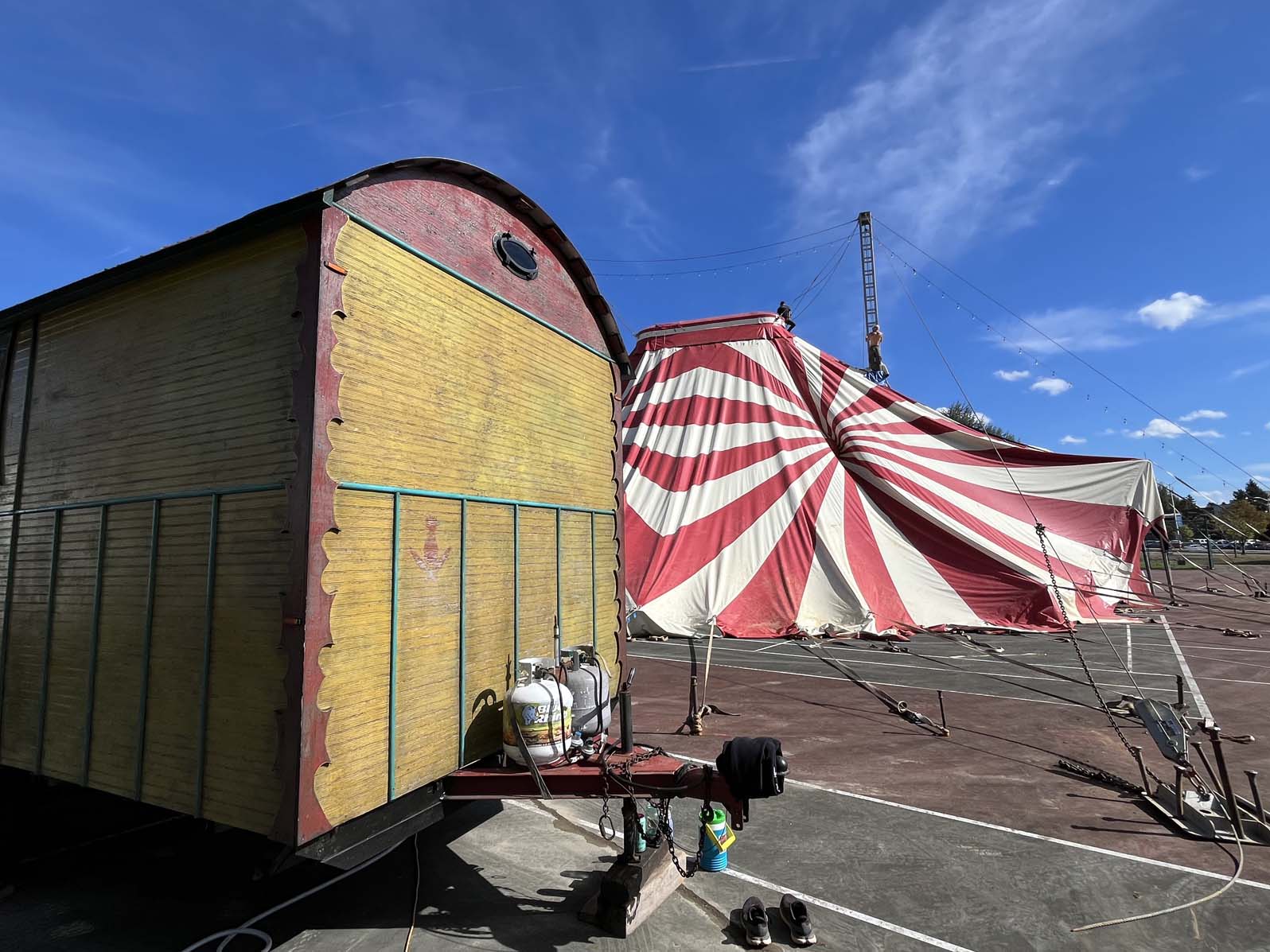
“As real as it gets!” were the words of Ruth Wikler, Clark College Foundation’s Director of Arts Programming, Partnerships and Philanthropy, when we mused about the differences between shallow Artificial Intelligence-created entertainment, called art by some, and what surrounds us when we actually experience a performance. A conversation brought on by standing on tennis courts generously provided by the facility folks at Clark College in Vancouver, WA, before refurbishing the courts. Yesterday morning it was the site of a large circus tent in the process of being erected, by invitation of the Clark College Foundation.

Pitching the big top tent.

In an era where access to higher education gets increasingly difficult, often for economic reasons, philanthropy-oriented foundations play an ever more important role. Clark College Foundation, an independent, self-governed nonprofit that partners with Clark College to improve higher education access, student success, and community engagement, distributed $1.8 million in scholarships, special awards, and financial support to hundreds of students in the 2024-2025 school year alone. The Foundation contributed $5.1 million in total support to the college that same year. In the process, the foundation brings a variety of engaging cultural events to town for the rest of us. Wikler, founder of Boom Arts and from 2019 – 2023 Director of Programming, Circus Arts at TOHU, has been innovative and creative in her new role, able to capitalize on an extensive net of connections she has made in the national and international art world to draw top notch performers to Vancouver.

Blaze Birge and Ruth Wikler in conversation.

This summer, the foundation presented Arts&Clark, a series of amazing performances at the Vancouver Arts&Music Festival. This week, they brought the circus to town. A unique one, at that – AI, eat your heart out!

Flynn Creek Circus has been touring the country for more than 20 years, a small, independent, self-contained organization with artists living on site and the entire ensemble helping with all chores, from providing pre-tour support, generating lighting, costumes, music and props, pitching and pulling down the tents, postering and advertising the show, staffing the ticket office or ushering pre-show.

Importantly, the circus seeks out rural areas and is focussed on next generations – both in terms of programming but also educating the artists of the future: the circus supports Circus Mentors Inc., which experientially engages rural youth in the arts, particularly physical arts; the circus also has an apprenticeship program which promotes mentorship relationships between new artists and seasoned professionals.

Clark College Foundation, together with Clark College Athletics, attempts to raise the next generations as well, fundraising for Clark College Athletics Scholarships with this circus visit. A portion of each ticket, and all proceeds from opening night, support this cause, helping promising athletes from across our region to participate in higher education. The college offers both transfer degrees and vocational degrees – and circus has a long history of vocational education. Circus is, of course, a fitting venue in the most direct way for this cause – all artists there are athletes (some have arrived from professional sports), training rigorously and working as a team to deliver safe shows many times week.

Blaze Birge and David Jones, founders of Flynn Creek Circus.

The founders, Blaze Birge and David Jones, had impressive solo and partnered artistic engagements to show for before they built this traditional circus community. The many awards presented to them do not just recognize exceptional physical or theatric skills, however. Flynn Creek Circus is also recognized in the larger community for its history of combining physical acts with narratives that echo the treasure trove of collective human wisdom, from myth to fairytales. Binding physical artistry into story telling, sometimes funny, sometimes gut-wrenchingly emotional, creates a shared world between performers and audience: a specific physical world and one of shared feelings, something AI is simply unable to generate, being located outside that present universe.

I imagine living the life of traditional wayfarers for more than two decades cannot always be easy. There is hard physical labor inside and outside of the top tent, unpredictability in sales and income (and depending on it to stay independent,) there are likely not always friendly social encounters as experienced by all seasonal travelers. Age gets to your body, with acts likely to have to be retired at some point. Responsibilities add up, for the collective and gear alike. Yet this duo shows nothing but passion for maintaining the traveling circus tradition, feeding our need for story telling, and investing in education for the physical arts as well as all the technical and managerial issues associated with it. They frequently serve as jurors in circus competitions, are contributing members to the American Circus Alliance and
engage in multiple nonprofit projects to support performing arts in the U.S.

It is as real as it gets.

Of course, it is not just the relationship between audience and artists. The interplay between the performers onstage, the collaboration, the in-the-moment reaction to risk or needs is utterly absent from artificial intelligence which has no agency in any given moment. Intelligence, or having a skill set is not enough – you need to be curious, and leaning into anticipatory sensitivity, if you don’t want to risk your life/health or that of you partners during dangerous maneuvers, something still unique to humans, as far as I can tell.

Again, as real as it gets.

I had a chance to photograph the pitching of the tent and talk to the founders just 2 days before the performances start. It brought back thoughts from many years ago, when I was writing about a different circus world, in Montreal, Canada and reminisced back to the small traveling circuses of my child hood in Germany. I figured I’m allowed to repeat them here, since they feel as fresh and as applicable as then, particularly since Flynn Creek Circus is in some ways so similar in set up to the 195Os self contained wandering shows visiting my rural village. Here it is breathing 21st century energy into a great American tradition: the traveling tented circus. No need for animals to put on a great show. Coming together under the big top still makes for a terrific night out, now perhaps more than ever, since we are so increasingly isolated from group experiences.

From my own childhood experience:

There was a clown or two, some jugglers, and high wire and trapeze acts that went to the core of the experience: a shared range of emotions between members of the audience and the performers. There was distributed anticipatory anxiety, moments of collective breath holding and then exuberant relief by one and all when once again the laws of nature were seemingly defied, or at least nature’s wrath held at bay. 

There was an immediacy to the experience, and a connectivity, that for me defines this discipline in contrast to many other endeavors in the performing arts: not just skill acquired over years of practice, a sense of the possible, a tackling of the impossible (all of which can be said for musicians, actors and dancers as well who personally interact at least in theory with the audience before them)  – but an element of elective risk taking that in the moment is understood by both acrobat and audience to entail danger, to depend on the confidence and skill or strength of the performer and which is open to, potentially catastrophic, failure.

It does not matter if the connection is made because you admire the daring, or long for the physical prowess or marvel at the creativity of the act. It does not matter, although perhaps plays a role, that circus comes to you – at least during its traditional history and these days when performed in public spaces. What matters is that a bond is established between acrobats and audience, where at any given moment our knowledge of what is norm for a human body, and what is pushing it to the extreme, allows us to connect to those who challenge those norms in front of our very eyes, making us an accomplice to triumph or failure. Circus at its truest conjures empathy between humans who share physical boundaries and an emotional economy, both now challenged. 

Circus has come a long way since I sat trembling in the village bleachers. Like any other art form it is struggling to evolve in ways that are meaningful and evocative and to secure autonomy in a world that has made culture a commodity. I certainly got glimpses of the possibility of something radical, utopian, critical and emancipatory in contemporary circus – all that we demand from art. 

Inside the tent.


You have a chance to see all of this unfold in this week’s performances of The Bridge, a tale of wolf and man inspired by nordic folklore and fairy tale characters.

Tickets start at $23 and some performances are geared towards kids, others are adults only, Oct 2-5 at Clark College Tennis Courts, Corner of Fort Vancouver Way & E. McLoughlin, Vancouver, WA 9866. (Clark College Purple Parking Lot is close and convenient.) Wheelchair accessible.

Do yourself, your family and friends a favor and secure those tickets!

In addition to the Jones duo, there is a large cast of diverse artists, apprentices and support staff.

Jesse Patterson as the Red Countess.
Cory Blackthe Puppy
Nick Hardenthe Emperor
Jessica Perry Millerthe Star
Rylan Rydenourthe Troll
Jeremy Cifoniethe Ferry Man
Jacy Jonesthe Raven
Katie RussoWolf in Sheep Clothing
Shem Biggiethe Wolf
David Jonesthe Goat
Blaze Birgethe Goat’s Shadow
Richie AldereteBunnyboy
Ilana Rosethe Witch
Donna Lukinthe Mushroom
Dave Wagarthe Lantern
Rachel Birgethe Sheep Lady
Bodhie Devriesthe Wolf
Maya DeLocheTent Assistant
Laurie WulfekhuleCostumes
Esther de MontefloresMarketing Research

Venice Drowning

“Enter this sublime corrosion,
Venice drowning in emotion.”
— Venice Drowning, Duran, Duran

The real Venice is not only drowning in ever more frequent and intense flooding caused by climate change, but also in visitors. Like many other cities in Europe, overcrowding by tourists is a serious issue. On the one hand, the traveling masses contribute to the local economies, on the other hand they devour resources subsequently no longer available to those who need them in place. Venice alone has over 8300 spaces rented out by AirB&B, rooms, apartment or houses no longer on the market for locals in need. During the summer, tourists outnumber locals 2:1! This is one of the reasons of brain-drain – educated people are leaving the city, pursuing better options outside of tourism, and leaving a decimated population behind.

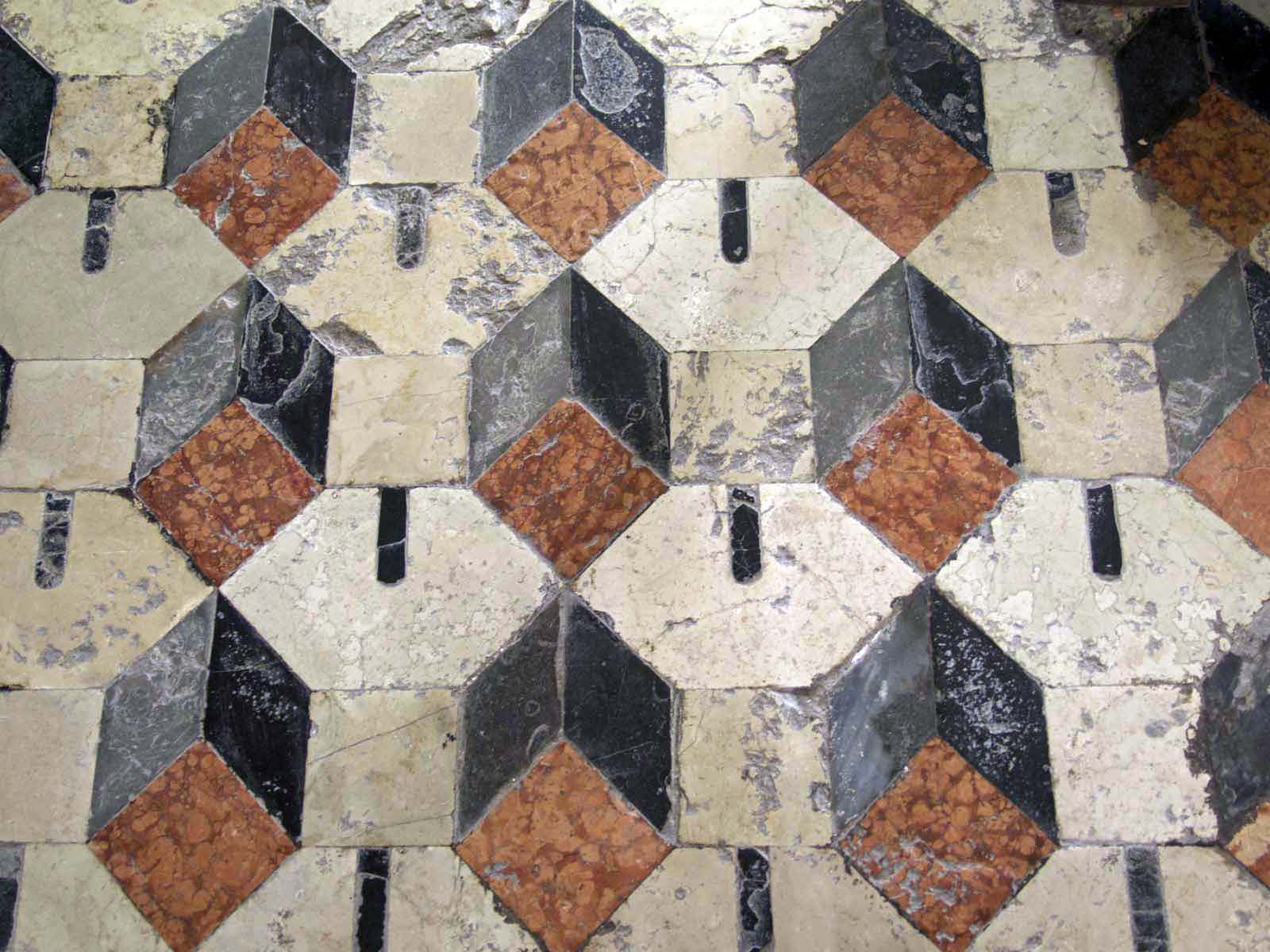
The city also deals with the damage brought to its streets and canals by accumulating trash; the wake of the many boats used for commerce as well as tourism is destroying house and bridge foundations, with repair funds then not available for prevention measures against flooding in general. The many, many feet entering historical sites across Italy, like churches and cathedrals, also wear out church and public building floors, often of archeological or art historical significance (thus today’s pictures from someone who participated in the tourism onslaught, admittedly. Tiles are marble, terracotta, mosaics – the gamut – all beautiful.)

Venice tried to lower the number of visitors by imposing an entrance fee, to no avail. They have now doubled the price of a daily admission ticket (over $10 per person), but if you read the conditions it is clear that there are more exceptions than rules: free after 4:30 pm, free if you stay in Venice proper itself, required only on certain days of the year, etc. – real decreases in number of visitors will have to be achieved by barring rentals, a legally difficult thing to pull off in a free market economy.

In any case, my thoughts went back to the exquisite days I spent in Venice by myself a decade or so ago, marveling at the displays of the Venice Biennale, when I read what our new administration pronounced recently regarding applications for showing at next year’s Biennale. For one, selections are to be announced in September, allotting an astonishingly short timeline, 8, instead of the customary 11 months for artwork preparation.

More importantly, “collaborating artists and curators are now expected to outline how their program ideas “will work to advance the interests of the United States in program administration, design, and implementation.” The proposal review criteria will evaluate an artist’s “ability to showcase American exceptionalism and innovation.” A funding limitations and restrictions section forbids any funds to be used for programming related to Diversity, Equity, and Inclusion (DEI) in accordance with President Trump’s executive order mandating the end of DEI initiatives at the federal level. (Ref.)

People have contacted the ECA and also the National Endowment for the Arts (NEA), responsible for convening the panel of proposal reviewers, for additional information regarding the shortened timeline, and what constitutes American values. So far, no clarification. Perhaps not surprising, given that the ENA, along with the National Endowment for the Humanities and the Institute of Museum and Library Services, is one of multiple government agencies President Trump has threatened to eliminate in his federal budget.

A gentle reminder: deciding which art was (un)acceptable was a huge part of Hitler’s use of his powers (as a slighted artist himself seeking sweet revenge) and the Nazis in general.

“After the Nazi seizure of power in 1933, Germany’s new rulers organised so-called ‘Schandausstellungen’ (condemnation exhibitions) across the Reich; these would ultimately serve as the blueprint for the 1937 Munich exhibition. The exhibitions, which had titles such as Schreckenskammer (Chamber of Terror), Kunst im Dienste der Zersetzung (Art in the Service of Subversion) and Entartete Kunst (Degenerate Art), were united by a common theme: they denounced works of art which were interpreted as an attack against the German people and as symptoms of a cultural decline inextricably associated with liberal democracy. The exhibitions argued that this art had been nurtured by those politicians who had betrayed Germany by signing the Versailles Treaty (the peace treaty that ended the First World War), condemning Germans to a life in servitude to outside forces, and who had thereafter promoted utterly destructive social and cultural trends. Many of the artworks displayed in these early exhibitions would later be confiscated in 1937, recorded on the inventory, and displayed in the Munich exhibition of Degenerate Art. Such pieces included Otto Dix’s anti-war paintings that depicted the gruesome reality of trench warfare and the emotionally and physically crippled veterans it produced. These were denounced as an attack on the honour of the German soldiers and an assault on their heroic memory.

It applied the ‘racial science’ of the day to the art world, establishing a disturbing connection between artistic expression and mental or physical disabilities, both of which were supposed to be eradicated from the ‘racial community’. According to this perspective, all artworks inherently mirrored the racial quality of the artists themselves. This meant that artists considered racially healthy would produce art that celebrated and furthered the advancement of the German race as a whole. By extension, individuals with mental or physical ‘defects’ were thought to be capable only of producing art that mirrored their ‘racial deficiencies’. (Ref.)

Maybe the US contribution to this year’s Architectural Biennale in Venice, should be considered along the administration’s criteria.- For a Biennale titled “Intelligens. Natural. Artifical. Collective,” curated by Carlo Ratti and devoted to illuminating architectural and design solutions for a world threatened by climate change and environmental destruction, the Americans picked: THE PORCH. Yup, that place that the exhibiting teams of architects call an “architecture of generosity.”

Well, I have obviously not seen it first hand, and one can also argue that porches are a place of socializing and potential connection, and extend beyond domesticity, given that we find porches occasionally on civic buildings, libraries, grocery stores, public housing. Oops, is that DEI already? Yet porches are also primarily places of rest, when really we are called to action, at a time when the pressing environmental issues demand solutions.

All the other pavilions went in that direction, exploring tools of technology, artificial intelligence and collective action (under the umbrella of the title) to propose future-oriented designs. Here is a detailed overview of what is currently on offer. Some exhibitions are interactive, bringing the points home in sometimes uncomfortable ways. The German Pavilion, for example, exhibits Stresstest, where you enter a room that makes you suffer from the heat emitted by AC and other technologies.


German Pavilion curators pose a critical question: How will humans, animals, plants, and infrastructures withstand these rapidly accelerating developments? The exhibition takes an urgent tone, warning that some European cities could become uninhabitable within a few decades. Despite this imminent threat, climate-adapted urban planning is still not being prioritized. The “STRESSTEST” exhibition aims to make this future urban climate both physically and psychologically tangible, asserting that architecture and landscape architecture can and must play a crucial role in creating climate-resilient cities.” Can you imagine something like this now funded by the US administration? Despite its relevance for the health and survival of our very own population?

“Kabage Karanja, co-founder and director of Cave_bureau based in NairobiKenya, and Kathyrn Yusoff, professor of Inhuman Geography at the University of London, were the curators of the British Pavilion Titled GBR – Geology of Britannic Repair, the exhibition reflects on Britain’s architectural legacy and its entanglement with histories of colonialism, geological extraction, and the urgency of the climate crisis. In recognition of their exploration of the relationship between Great Britain and Kenya, focusing on themes of reparation and renewal, the Pavilion curators and commissioner were awarded a Special Mention for National Participation by the Biennale jury.” You think a proposal like this would even be read by the current US administration? Never mind receiving awards?

How will American artists be able to resist muzzling and still create something that speaks to contemporary society, much less has a chance of being awarded grants that allow exhibitions? How will we not become the laughing stock of the world?

In any case, if I were able (and willing) to travel to Venice right now, one of my first visits would be to the Procuratie Vecchie, a building running along one side of St. Mark’s Square, now open to the public for the first time in 500 years in its new form as the San Marco Arts Centre (SMAC). For its opening, they are featuring two architecture-themed solo shows, one a retrospective of the Austrian-Australian architect Harry Seidler—dubbed “the high priest of modernism”—and the other the first international exhibition of the pioneering landscape architect Jung Youngsun. Both promise to be fascinating.

Seidler brought Bauhaus to Australia, and his work is true to his maxim: “Architecture is and always was above all, an art form; that interdependence exists between all the visual arts… The form that architecture takes should have its roots and marriage with painters and the world of the other visual arts. They are all intertwined, and they all reflect the impetus of our time.”

YoungSun Jung has done incredible cross-cultural adaptations of landscaping styles to her native Korea and was a pioneer as a woman in a male dominated discipline.

And then you can go and feed the pigeons on St. Mark’s Place. They will probably still be around when the whole of the island has been washed away…. it is expected to have sunk completely by the year 2100. Details on causes for the sinking and proposed mitigations (all limited and insanely expensive) here.

And here is, of course, Duran-Duran.

Pulling Strings.

What would you say are the most important tools harnessed by early mankind? Fire? The Wheel? Agriculture? Does string even come to mind?

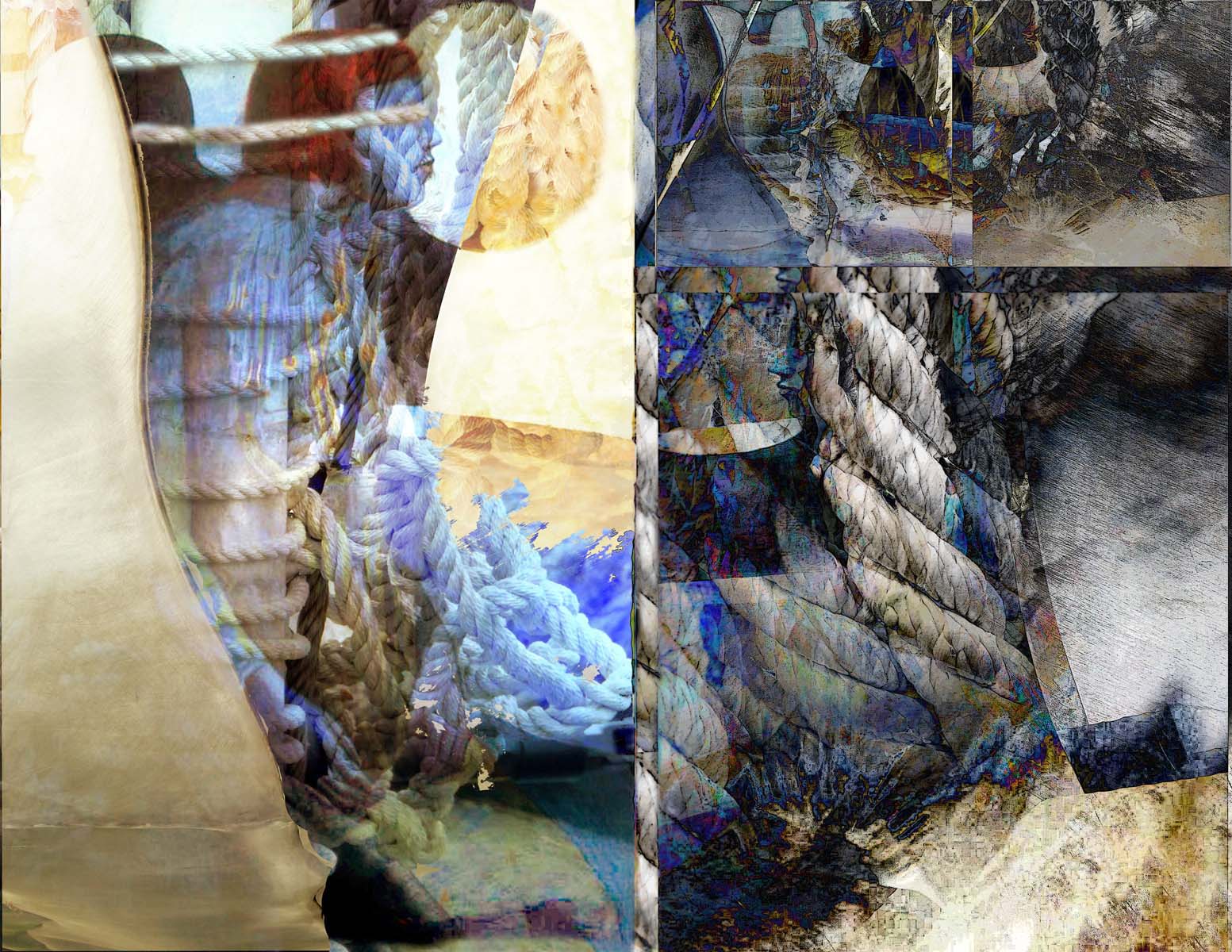
It did not, for me, until I embarked on a bit of reading about the history of string after I was stupefied by an archeological find that dates some 35.000 years back, a tool that allowed a small group of people working together to produce meters and meters of strong rope in about 10 minutes.

Single threads are not particularly useful. Twist them into yarn, though, or make yarn into strands, or strands into string and then ropes, and you have something that powerfully affects your interactions with the world. Our idioms tell the tale: learn the ropes, spin a yarn, hang by a thread, tie the knot, thread the needle, string along, cut the cord, moral fibre, loose the thread – where was I?

A string can cut, choke, and trip; it can also link, bandage, and reel. String makes it possible to sew, to shoot an arrow, to strum a chord. It’s difficult to think of an aspect of human culture that is not laced through with some form of string or rope; it has helped us develop shelter, clothing, agriculture, weaponry, art, mathematics, and oral hygiene. Without string, our ancestors could not have domesticated horses and cattle or efficiently plowed the earth to grow crops. If not for rope, the great stone monuments of the world—Stonehenge, the Pyramids at Giza, the moai of Easter Island—would still be recumbent. In a fiberless world, the age of naval exploration would never have happened; early light bulbs would have lacked suitable filaments; the pendulum would never have inspired advances in physics and timekeeping.” (Ref.)

We lace our shoes with string, we get sewn up on the operating table with string, our clothes are woven from twisted fibers, and much of what is tied in knots depends on cordage. Hunting or camping involves plenty of ropes. String has been used as a form of mathematical expression by indigenous people in South America thousands of years ago. A system of knots and tassels hanging from a central strand would record census data and tax information. The language of modern technology refers to strings and threads as well – string theory, web-sites, links, Threads (e.g. the replacement site harboring all of us fleeing from formerly known as Twitter.)

One of the biggest and most consequential uses of string were, of course, the ropes and woven sails that enabled naval exploration: centuries of warfare, colonialism, but also economic trade and scientific exploration depended on cordage that made those boats functional. It was not just the rigging of sails. You also need rope to tow ships, and, to this day, tie even modern ships in harbor. You need hoist cables for cranes, winches, and dumbwaiters as well as woven fenders.

The history books tied rope making to early inventions and practices in Egypt, between 2000 and 1750 BCE. But archeologists knew of much earlier use by indigenous people of ready-made threads, like grasses, vines and pliable roots. Eventually people discovered that you can twist the fibers extracted from plants and animals into ropes, with pliable plants like agave, coconut, cotton, willow, and pond reeds producing strong fibers.

Here is the finding that blew my mind: archeologists unearthed tools made in the Paleolithic, some 35.000 – 40.000 years ago, that were used to manufacture rope. Excavated from a cave in southwest Germany, these are ivory batons, about 8 inches long, that have four holes containing 6 precisely carved, sharp spiral grooves.

The scientists experimented with replicas of the tools (called a Lochstab in German) to see what could possibly be processed with them.

Individual holes of the Lochstab did not prove effective for pretreating sinew, flax, nettles, and hemp, but we achieved positive results for cattail, linden, and willow. Cattail was particularly applicable because the Lochstab could help to remove the starch for consumption by crushing the outer harder surface of the stems while separating the fibers for cordage. The use of cattail for making rope is well documented ethnographically, and archaeological accounts exist, in particular for later periods. Cattail is highly useful for food, cordage, and basketry.

The tool’s relevance lies in making thicker, stronger rope consisting of two to four strands. We twisted and fed bundles of cattail leaves through the holes. The holes help to maintain a regular thickness of the strands and facilitate the addition of new material necessary for making long stretches of rope. The grooves help to break down the leaves and orient the fibers while maintaining the torsion needed for rope making. The four-holed tool is then pulled with regular speed over the strands . Behind the tool, the strands combine automatically into a rope as a result of their twisting tension. The number of holes used determines the thickness of the rope. Because one person is needed to twist and maintain tension on each of the strands and one to operate the Lochstab, three to five people would be needed to use a four-holed Lochstab for rope making. Our experiments using cattail and four or five participants typically produced 5 m of strong and supple rope in 10 min.”

What fascinates me is not just that they figured out this tool per se. Using it also required social cooperation, communication and shared goals, bonding the people to each other and thus gaining an advantage over groups that had less developed technology and reciprocal labor. Shared labor led to in-group cohesion, augmenting survival. 35.000 years ago!

Here are some musical references to skipping rope – a childhood activity I preferred much over tug-of-war, wouldn’t you know it. There is Ukrainian composer Viktor Kosenko‘s 24 Children pieces that include jumping rope, Khatchaturian‘s Skipping rope, there is the Children’s Suite Op. 9 by Ding-Shande, really a sweet piece also referring to jumprope, and a piece for harp by Carlos Salzedo that includes Skipping Rope.

Dropping the Ball

Driving east on Highway 14, you are surrounded by a desert landscape with lots of transmission towers and electricity lines. The view brings to mind the problems with our electric grids. Here are just some of the issues we’re facing:

  • Grids do collapse, leading to black-outs both during intolerable heat or cold spells when demand exceeds supply, like the December blackout in Texas in 2021.
  • Grids are threatened in their security, open to physical attacks as well as hacking. North Carolina, Nevada, Oregon and Washington state have experienced almost 1000 physical attacks against the electric grid in the last decade, for example.
  • Grids have caused wildfires, leading to enormous human, infrastructure and economic loss.
  • Grids in many states lack federal oversight, and can also set their own price range dependent on demand –  prices have been as low as $20-$50 a megawatt-hour versus more than $4,000 during periods of stress, and the grid operators pull every trick in the book to keep these pricing structures intact.
  • Grids will be affected by the increasing demand from electric vehicles and heat pumps. Increased demand meets less supply during decarbonization efforts trying to shut down nuclear- and fossil-fuel plants. The grids do not yet have sufficient capacity to take in renewable sources of energy and deliver them reliably when needed.

As so often, many of these problems are caused by one simple thing: greed. Take wildfires, for example. Grids in California, Texas and Hawaii are operated by private companies. There is very little oversight as to how they maintain their grids. The money necessary for modernization is spent elsewhere.

As U.S. District Judge William Alsup, in charge of PG&E’s criminal probation for utility-caused wildfires in 2010, stated: “Pacific Gas & Electric Company, though the single largest privately-owned utility in America, cannot safely deliver power to California. This failure is upon us because for years, in order to enlarge dividends, bonuses, and political contributions, PG&E cheated on maintenance of its grid — to the point that the grid became unsafe to operate during our annual high winds, so unsafe that the grid itself failed and ignited many catastrophic wildfires.” (Ref.)

The same accusation is now raised with the Maui fires. Hawaiian Electric is charged with gross negligence, accused of consciously delaying grid repair and maintenance, updating efforts that would have avoided the deadly fires. (Ref.)

One of the ways that could reduce wildfire risk is putting the power lines underground, but that is wildly expensive. It also leads to further divisions among the rich and the poor: low-income communities have an increased wildfire safety deficit, because longstanding policies require communities to pay a huge share of putting power lines underground, and they simply cannot afford that.(Ref.) PGE for decades refused to do this for its own hesitancy to spend money, but has come around since the California Camp and Dixie fires, the Mosquito fire possibly as well, but estimates a cost of $ 20 billion, which will be turned over to consumers. A frightening but informative book on the entire debacle, by the way, is Katherine Blunt’s California Burning.

Wires could be better maintained, with regular crews cutting branches that could touch wires and ignite, or fall on them and down the wires which then spark dry grass into fire. There is also the possibility of public safety power shut-offs, when wind and heat make the situation particularly dangerous. But those black-outs have consequences, not just for productivity reasons, but medical reasons as well, with people dependent on electricity for lifesaving appliances.

Privately owned utilities make money on large capital investments that boost the overall value of their systems. They do not make money on day-to-day operations and maintenance expenses like inspections and tiny replacements here and there. Under pressure to cut expenses, they ultimately cut expenses to the point where they aren’t doing enough to evaluate the risks throughout the system. For the very same reason, they do not add changes to the grid that could improve transmission by up to 30% and lower prices at the same time.

To reach our climate goals, we need to expand grid capacity by 43% in 2035, according to Princeton University’s Repeat Project. Yet we are looking at years and years of wait time to get renewable power sources connected to the transmission lines. In the meantime we could use a new technology: laser sensors that can send the companies real time data about the status of the power lines, to make decisions about sending juice down the line. They are part of a package of transmission enhancing technologies that can tie us over until enough new lines are in place. They include wires that can carry more transmissions, software that helps to avoid congestions, and laser sensors, that tell us about exact wind, heat and wire sag conditions, allowing to determine what is safe in terms of power line load. (Ref.) The “dynamic line rating” tells the utility when a wire is cool enough to be able to handle more electricity flow.

The problem, here again, is that the incentives to use these relatively cheap measures are counteracted by the fact that electricity company get rewarded for building new and more infrastructure, rather than updating what is already there.

That means big expensive projects like new transmission towers are enticing for a utility’s balance sheet– and its shareholders. Lower cost technologies – like sensors or rewiring an existing line – don’t seem as appealing in comparison, says Marissa Gillett, chair of Connecticut’s Public Utilities Regulatory Authority.” (Ref.)

There are two potential things that could be done to improve the grid security situation. For one, we could have a federal agency that had authority over the entire electric grid – right now there is none in place whatsoever. It could ask for and enforce a potential law, a Grid Security Act that shifts the burden of risk – now on all of us – to the utilities and providers. That law could be modeled on what Congress enacted to address widespread corporate fraud in another self-regulatory environment (Wall Street) after the Enron debacle. Sections 302 and 404 of the Sarbanes-Oxley Act require that the Chief Executive Officer (CEO) and Chief Financial Officer (CFO) of publicly traded companies certify annually (under civil and criminal penalties) that the company has adequate internal controls for disclosure and financial reporting.

Secondly, we should pass a bi-partisan whistleblower protection provision proposed by Senator Chuck Grassley (R-IA) and Senator Edward Markey (D-MA) in 2020 (which was derailed by COVID-19 and never brought to a vote.) It would provide protections to employees of the electric grid – right now it is completely legal under federal law for an electric grid utility to fire an employee who reports violations of, for example, reliability or critical infrastructure protection standards.

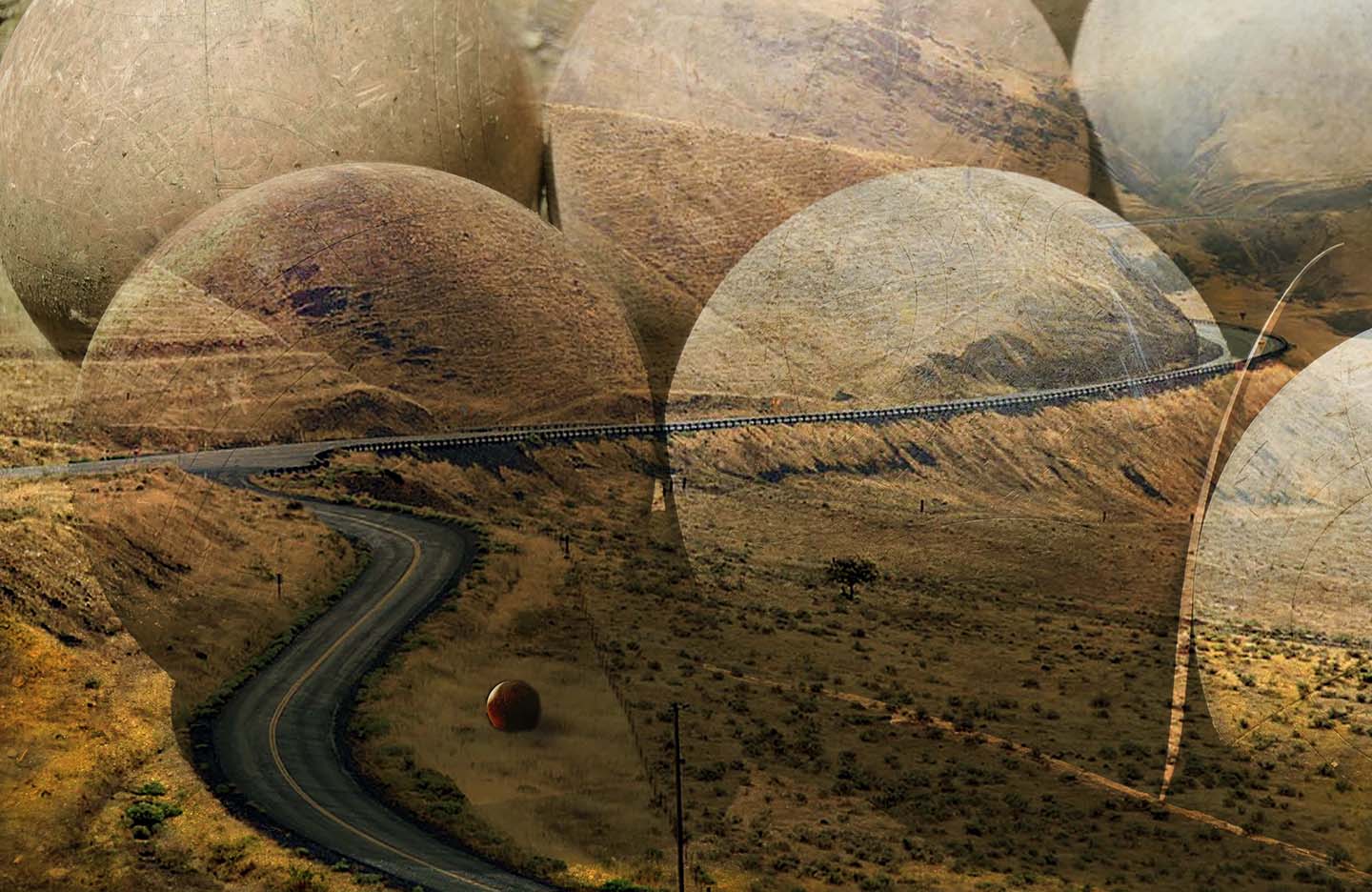
Photomontages today are some examples of a new series that evolved out of my work on Jan Haaken’s documentary film explaining the false promises of a nuclear renaissance. My recent blog about the film Atomic Bamboozle and the danger of small modular reactors can be found here. The images represent these SMRs, but I thought for today’s musing they might as well stand in for all the balls we dropped by not reining in private ownership of the electric grid and making sure public interest and safety comes first.

Music today by one of my favorite composers, Leos Janáček. In the opera Káťa Kabanová a couple worries about an approaching storm. She starts to tell him about the new invention of lightning rods. He angrily refutes the idea that storms could carry electricity and insists they are a punishment from God. You know how that will end, right? Aria starts around 1.18.01

Stardust

“There is in the universe neither center nor circumference.” – Giordano Bruno, On the Infinite Universe and Worlds, 1584.

JUNE 9th, 2023 was one of my lucky days. After a week that saw so many bleak events across the world, I found myself surrounded by beauty, and urgent reminders that the universe is larger than our tiny selves.

Lucky, because I was alerted to the photographic exhibition by coincidence: an instagram post by the preeminent print studio in town, Pushdot, saying that one of their clients had a show that very day – and only that day – in my neighborhood.

Lucky, because the artist is a friend and colleague who spontaneously agreed to meet me at the venue before official opening, so I could avoid inside crowds.

Lucky, because I got a one-on-one tutorial about how the stunning abstracts on display were created.

From the top: a number of artists and organizations came together to offer a music and art festival at Lewis & Clark College last Friday. EARTH’S PROTECTION, hosted by Resonance Ensemble and featuring special guests, included a drumming and dance demonstration by the Nez Perce performing ensemble Four Directions, information booths from Portland Audubon, and Songs for Celilo by composer Nancy Ives and Poet Ed Edmo – their tribute to the human, cultural, and planetary costs of the 1957 flooding of Celilo Falls which was premiered at The Reser last year and reviewed in OregonArtswatch. At the center of the evening concert was the Oregon premiere of Sarah Kirkland Snider’s Mass for the Endangered, with projections by Joe Cantrell and Deborah Johnson. What would I have given to hear the music – but again, I can still not be inside with lots of people.

Joe Cantrell Jingle Dance (2023)

However, I could visit the art exhibition accompanying the proceedings: Joe Cantrell‘s We are ALL ONE.

Cantrell was born into the Cherokee nation in Tahlequah, Oklahoma, over 70 years ago. He served two tours with the Navy in Vietnam, including as a diving officer in the Mekong Delta, and then worked as a photojournalist in SouthEast Asia until 1986. The pronounced mildness in his eyes and the gentleness of his demeanor belie the traumatizing experiences that defined his younger years. During his decades in Oregon, he taught both, at the Pacific Northwest College of Art and the Oregon College of Art and Craft. He is a photographer of note in so many ways, providing portraiture and event documentation for art organizations around town, but also specializing in Fine Art photography with his exploration of flora and rocks and fossils.

Joe Cantrell

We connected a few years ago over a shared preoccupation with the ways external or internal components of our experience merge to affect our work. Joe has better ways than I to define the process, ways that are rooted in and amplified by his heritage as a Cherokee, focussed on the interconnection of all things, embracing a multitude of perspectives, be it science, philosophy, history, and, of course, art. His work shines not only due to this conceptual grounding, though. He is ever curious to explore and apply technological advancements that allow him to create work that is unusual, and, yes, I repeat myself, stunningly beautiful.

Joe Cantrell Coming Home (2023)

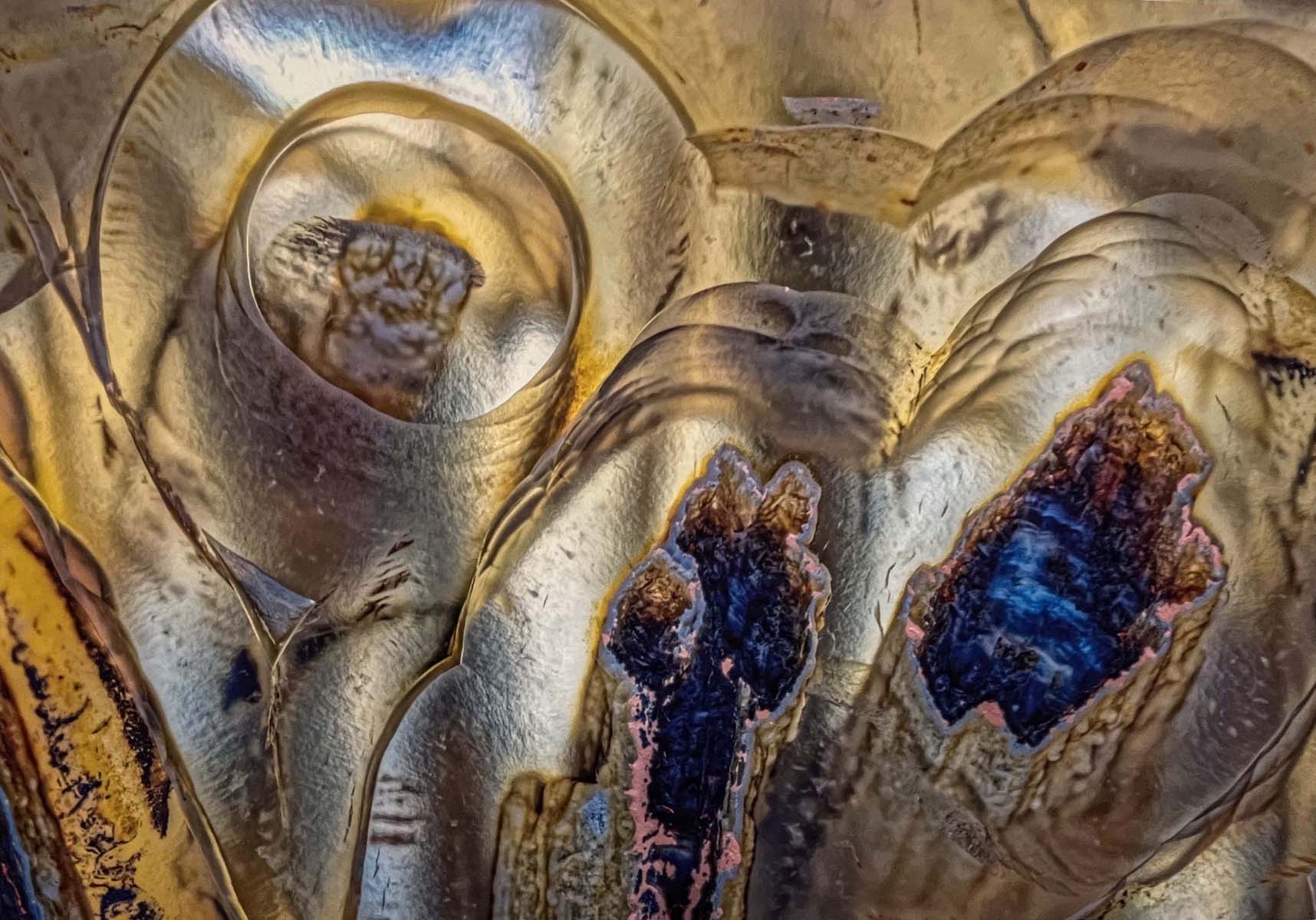
The images on display were photographs of fossils and polished rocks, macro photography that goes deep inside the object to the very last level that can be captured in focus, then the next one, and the next one, until the surface is reached. A new computerized technology then stitches all of these individual takes together until the full image is constituted, abstractions and configurations resulting from stacking of sometimes more than 70 individual photographs of a single layered object. The color is natural and not photoshopped and appears during post-stitching.

Joe Cantrell Peace (2023)

One of the objects for macro exploration.

Clockwise from left: Joe Cantrell Reef (2023), Oregon Wood (2023,) Fourth Dimension (2023)

Joe Cantrell Stasis (2023)

What emerges are worlds of swirling waves, clouds, geometric patterns capturing all the movement of the elements one can imagine going into the formation of these rocks, the ice, the storms, the droughts, the millennia of relentlessly pounding external forces. A mirror image of the photographs we now receive from space through incredible technological advances, of worlds, of universes, here all captured in a single fossil or a fragment of a rock, for us to behold, whether in our hands – the object itself -, our eyes – the art that emerged from the vision, skill, and patience of the artist -, or our minds – the concept that relations can be captured multi-directionally, as long as we give up the notion that we are the center of the world.

Joe Cantrell Barton (2023)

Joe Cantrell The Gates of Hades (Welcome!) (2023)

Joe Cantrell Fractal Playpen (2023)

The stones include Oco, opals, trilobite, and different kinds of agate.

Sometimes natural forms have been preserved in amber or are fossilized in other ways, like these dinosaur feathers and the insect.

Joe Cantrell Dinosaur Feather & Amber – 320 million years old, give or take (2023,) Fungus Gnat (2023)

Joe Cantrell Ammonite (2023)

Again, Giordano Bruno, 16th century scientist, philosopher, heretic:

“There is no top or bottom, no absolute positioning in space. There are only positions that are relative to the others. There is an incessant change in the relative positions throughout the universe and the observer is always at the centre.”  On the Infinite Universe and Worlds, 1584.

Let me juxtapose that with Joe’s perspective, in his own words:

“Yet in a universal perspective (whether we are aware or not, the one in which we all exist) our entire planet seems microscopic, and we, with all our “achievements,” and superstitions and egos, an insignificant, self-destructive nothing. BUT, we are part of All That! See!

Resonance Ensemble’s call to action for this festival was dedicated to protecting the earth, learning to be stewards rather than clinging to ownership with the rights to limitless extraction. Joe’s work addressed those issues with a message derived from earth materials themselves: Let us center ourselves a bit less and join the whole a bit more, acknowledging shared origins. The profusion of color, form, movement and subtlety inside all of these photographs will help to do just that, reminding us of one of the ultimate building blocks of the universe we inhabit: cosmic dust linking us all.

Joe Cantrell Lillian (2023)

Music today is a 2020 version of Sarah Kirkland Snyder’s Mass for the Endangered. It is a celebration of, and an elegy for, the natural world—animals, plants, insects, the planet itself—an appeal for greater awareness, urgency, and action. She explains:

“The origin of the Mass is rooted in humanity’s concern for itself, expressed through worship of the divine—which, in the Catholic tradition, is a God in the image of man. Nathaniel and I thought it would be interesting to take the Mass’s musical modes of spiritual contemplation and apply them to concern for non-human life—animals, plants, and the environment. There is an appeal to a higher power—for mercy, forgiveness, and intervention—but that appeal is directed not to God but rather to Nature itself.”

And here is the Agnus Dei from An African-American Requiem by Damien Geter, performed by the Resonance Ensemble some years back.

Art (?) on the Road: SENSORIO at Paso Robles, CA.

I had no clue what to expect for Sensorio. Some sort of light show, Fields of Light, the kids said. Found ourselves in a long queue at an extensive parking lot on the outskirts of Paso Robles, CA, sun going down rapidly around 4:30 pm. Tickets on line, conferring special VIP status, had been sold out, but we plebeians were assured the box office still held plenty. At $50 a person, no less.

The mood was excited, families with frolicking kids, not perturbed by the security checks once the line got moving, with the list of prohibited items long, yet guns unmentioned when knives and pepper spray were. Eventually you walked up to a compound with food carts (bringing your own food and water strictly forbidden less commerce suffers!), a stage with live piano music similar to that heard in airport departure lounges or Nordstrom’s lingerie departments. With dusk descending, open fire places warmed the revelers across that public square.

Our walk around a looped path through an undulating landscape (shaped to large extent by man, as I later learned, to maximize visual/spatial effects for these 15 acres originally meant to be a golf course) began with stellar views of dark silhouettes of oak trees against a setting sun, sky beautiful with ever deepening pastels.

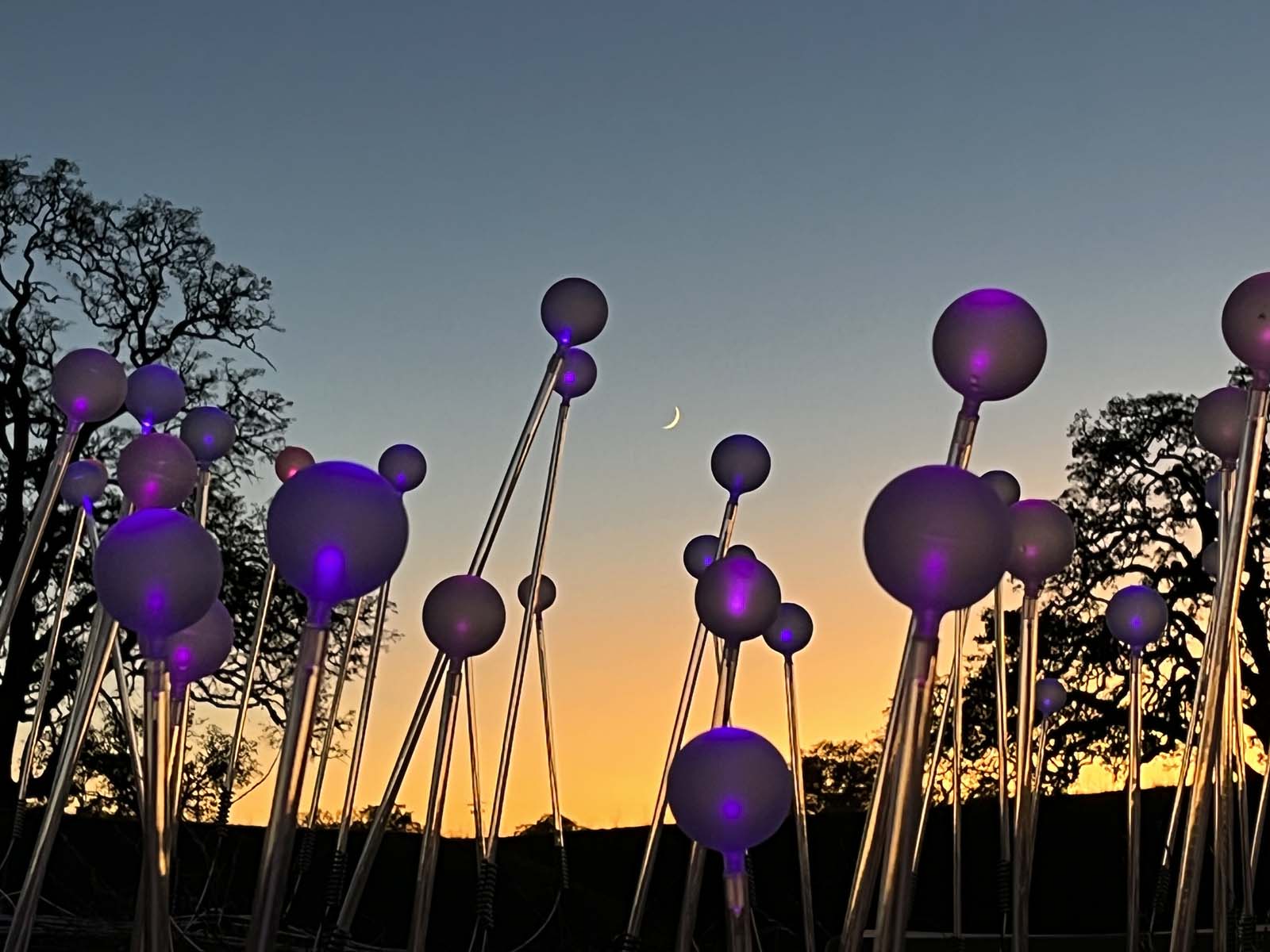
I was simultaneously amused and irritated, a state that seems to arise more and more frequently as I age. Maybe we are allowed a set amount of tolerance across our life time and if dished out generously early, you find yourself with limited supplies in later years. In any case, I certainly did not join in the chorus of adulation found in all of the reviews I subsequently read, LA Times, The Smithsonian and The Guardian included – instead I had to fight the overwhelming urge to point out that we were surrounded by fields of colorless sperms. 100.000 of them, if we believe the artist’s website regarding numbers, glass bulbs linked to light sources sticking out of the ground and connected by optic fiber cables that reminded of a web of blood vessels, sending them on their journey. I was grinning inanely, while keeping my mouth shut to respect the sensibilities of my adult kids.

The views soon shifted into something entirely different, when the spheres on their stems began to glow in ever changing colors, morphing in slow rhythm from pink to purple, red to blue to green, with patches of one color bordering on multiple different ones – sort of your artificial tulip farm. I happily gave in to the pull of light and color, associated with our traditional attempts to brighten the dark time of year, or our human desire for spectacle – for that it was. A true spectacle transforming the land, and practically every last person documenting this technological bloom with their iPhone visibly in hand, a shaping of these masses into visual clones, yours truly included.

It WAS pretty. It was also bordering on Kitsch. A passage came to mind from a book I recently devoured and will probably recommend here soon: Trust by Hernan Diaz. (And no, I am not quoting by heart, had to go back and look it up…)

Kitsch. A copy that is so proud of how it comes close to the original that it believes there is more worth in this closeness than in the originality itself. …Imposture of feeling over actual emotion; sentimentality over sentiment…Kitsch is always a form of inverted Platonism, prizing imitation over archetype. And in every case, it’s related to inflation of aesthetic value, as seen in the worst kind of kitsch: “classy” kitsch. Solemn, ornamental, grand. Ostentatiously, arrogantly announcing its divorce from authenticity.”

The artist responsible for the installation is British/Australian Bruce Munro who specializes in vast, immersive light formations, with a now famous track record of international successful exhibitions. What little I read about and from him, he would be perfectly amenable to having his work called anything you want, spectacle included, as long as it serves its function: encouraging a shared experience reminding of nature among the visitors. Seems like a decent soul. He got he idea originally during a visit to the desert; multiple of these installations can now be found across the globe.

“In 1992, journeying to Uluru through the Red Desert in central Australia, Munro felt a compelling connection to the energy, heat and brightness of the  desert landscape, which he recorded in his ever present sketchbooks. Field of Light is the embodiment of this experience.  Munro recalls “I wanted to create an illuminated field of stems that, like the dormant seed in a dry desert, would burst into bloom at dusk with gentle rhythms of light under a blazing blanket of stars”.

***

First installed in 2019 as a temporary exhibition, the Paso Robles show has now become a permanent feature of the region. And in celebration of that region which is known for its wine production, an additional part has been added to the original fields: a compound of towers, comprised of 17,000 locally sourced wine bottles that are lit with morphing colors as well, each column looking like a gaudy crystal prism dropped from some giant’s chandelier.

The reference to the trade of the region is no singularity – there has been an emerging trend among vintners, vineyards and tourism agencies to add art to the repertoire of other offerings to attract visitors. The NYT called it the Vine Art Movement -” a coterie of art entertainments at wineries and related establishments seeking to infuse culture into viticulture.” Some have serious art collections, some commission work of contemporary artists (several of the fiber artists I interviewed this summer had commissions for fiber installations at wineries across the country,) many elevate local artists with rotating exhibitions of photographs or paintings (full disclosure: I have shown at wineries as well.) (The NYT link above provides more detail.)

While walking among those towers we were blasted with music that sure sounded like Ladysmith Black Mombaza, offering stirring African a capella melodies, but we remained totally bereft of clues to the choice in this context. When I searched for information about the music, I learned that originally there was a piece for 11 voices commissioned from Orlando Gough, a terrific contemporary British composer, to be looped electronically or occasionally presented live with 69 singers. When I listened to what was available on his website referenced to the Sensorio spectacle, it did not sound like what we heard on site. No explanatory information provided anywhere else.

***

I think what got me was the sight of an owl silently gliding away from the trees, fleeing the lights. The cost of light pollution to birds and insects is high (I wrote about it previously here). And a global wave of light art, ubiquitous particularly during the darker months of the year highlights – pun intended – the way we usurp nature, abolishing what exists for the shape we want to enjoy, imposing our desire for spectacle, however artful, onto those who will be dispersed or endangered. We are true agents of the Anthropocene in this regard, part of humanity that feels free to interfere with nature at will. The interaction of art, technology and nature, celebrated by so many, does produce beauty, no question. Cui bono comes to mind in this context, though, who profits, eventually?

What is the price and paid by whom?

Music today is an older album by Gough, Message from the Border.

Sonic Spectres

Let me add to the lot of mind-boggling concepts I introduced this week – Fontana’s sound sculptures made of environment-specific noises, Hoyt’s Afro-Sonic Mapping, the Caretaker’s musical representations of the slide into dementia – one more maven who is a game changer with communicating ideas by means of auditory output: Kristen Gallerneaux.

To call her a renaissance woman is likely an understatement. She is a sound-based artist, curator, and sonic researcher with a Ph.D. in Art Practice & Media History (UC San Diego), an MA in Folklore (University of Oregon), and an MFA in Art (Wayne State University), as well as the Curator of Communication and Information Technology at The Henry Ford Museum in Detroit, Michigan, where she is in charge of one of the largest historical technology collections in North America. She writes for a variety of scholarly and popular journals, and her 2018 book High Static, Dead Lines was well received.

One of the most fascinating aspects of her explorations is for me the fact that this highly educated, scientifically versed woman does not shy away from topics that might elicit eye-rolling at best and ridicule at worst among her academic peers: the pursuit of sounds associated with a paranormal culture, the possibility of sonic spectres, the idea that objects have a life of their own beyond their relationship to humans (object-oriented ontology.)

I don’t care where unusual interests get started – in her case perhaps with the confluence of upbringing in a Spiritualist household, the lasting damage done to her hearing by badly treated childhood diseases that led to sound-distortions or – generation, or an immersion in folklore and/or narratives from her Métis ancestry (the folks from intermarriage between the first French settlers and the indigenous populations of her native Canada.) I do admire when those interests become passions, ignoring academic head winds and/or popular approval while searching for answers for tricky questions. And I gladly expose myself to unusual topics when they are offered in an approachable way, with clarity, directness and lack of pretensions, as her work does in spades, writing and compositions alike. Plus how can you not be curios about an artist who answers the question of whether she believes in the supernatural with this gem:

“…as for the question “Do you or do you not believe?,” I usually find myself citing one of my particularly witchy academic mentors, who once said, “I don’t believe in ghosts, but I’ve met them plenty.” It perfectly summed up my noncommittal, gray-zone syncretic beliefs.” 

One of my favorite examples of her work is a sound and video exploration of a phenomenon called The Hum. Perhaps acoustic, perhaps psychological, it is a consistent, low-pitched noise or vibration, experienced by a small percentage of people across the world (often plagued by subsequent dizziness, headaches and insomnia) – in Auckland and Taos, in Bristol and until 2020 in Windsor, Ontario. You can find a worldwide map of reports here. Most dispatches come from urban areas, which suggests it might be industrial or urban low frequency noise pollution. Except it isn’t. There are not many scientific studies of this experience, but the ones that we have exclude natural sources (aurorae, lightning, meteors, volcanoes, waterfalls and ocean waves) as well as radio waves or microwave equivalents. Acoustic sources are unlikely, because if you bring multiple Hum experiencers into a room they all match the Hum to different acoustic frequencies. People are now exploring internal neurological processes for lack of satisfying external signal explanations, but here and now we simply do not know what’s going on. One might, of course, ask why should Auckland, for example, have a higher percentage of people with internal neurological quirks than, say, Sidney? Or why does the Hum disappear when industrial steel mills cease operations (like they did last year in Windsor, Canada?)

In any case the black& white video about the Hum is a terrific example of being open to variable explanations and pursuing them with intellectual rigor as well as visual tricks that allow us to believe in gray zones, after all.

For once, let me run with a wild fantasy. Let’s assume we organize a scéance and Gallerneaux is willing to attend. She might want to call on communing with Caroline Furness Jayne. Who, you ask? Jaynes is the author of a 1906 book on string figures, found globally. Known to us as cat’s cradle, they come in immense variations, and are apparently developed completely independently across world cultures. We know little about Jayne (bios are padded with info about her more famous parents and/or son) other than that she was interested in ethnological studies, a consummate traveler, dead for unknown reasons at age 36. Inspired by anthropologist Frans Boas, she researched scientific papers on string figures and published an anthology with places, names and instructions on how to generate these complicated cat’s cradles. You can find the book and the drawings here. And Gallineaux recently released music (Strung Figures, a terrific album) based on the book and those string figures, at the artist’s band camp site.

Surprise! Not Jayne, it is Harry Everett Smith who appears. (I’ve never attended a scéance, so give me some slack in making this all up.) Who he? Come on: The Magus with a magpie mind, as someone once called him, compiled the six-record collection Anthology of American Folk Music. But he was also declared to be an “anthropologist, ethnomusicologist, abstract painter, experimental filmmaker, and full-time eccentric. Smith’s interest in exposing unseen connections — his own form of artistic alchemy — drew him to create artwork that brought together diverse elements in new and exciting combinations.”(Ref.)

Sounds like a soul mate to Gallineaux, particularly when you now add that he was deeply interested in all things occult and worked with string figures. Here is a sampling from an exhibition of his string figures in Brooklyn, 9 years ago. Smith left an unfinished thousand-page manuscript on the practice, with some plainly false claims, I’d add, having skimmed some excerpts. But I’m sure he and today’s sound artist would have a lot to talk about.

Except that he, eschewing academics, might not grasp the mathematical connections to knot theory, and pictorial topology. I bet the bank she would. And, more importantly, be able to teach all of us about it in ways that we can grasp. In the meantime, let’s go dance to Finger Catch from Strung Figures.

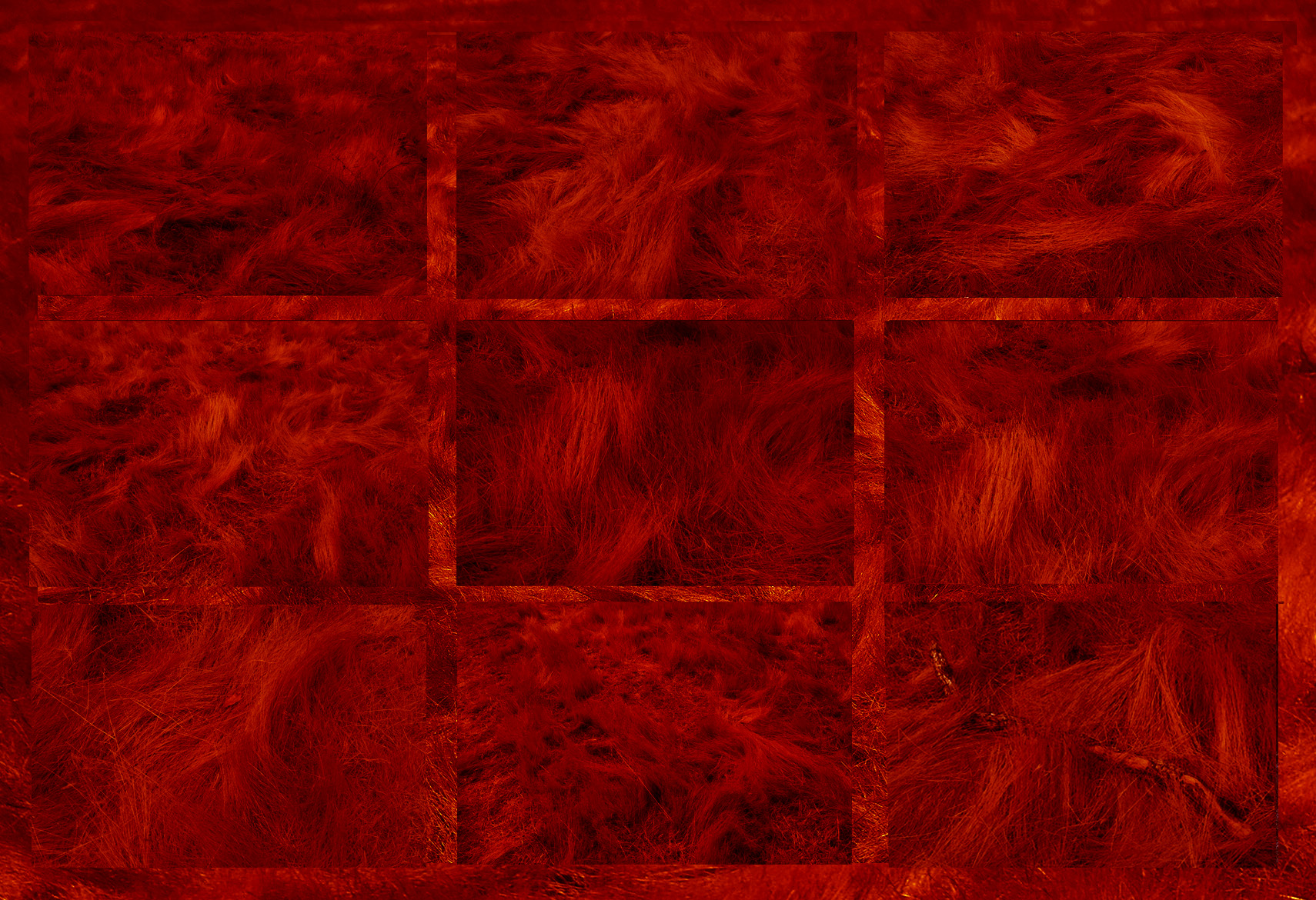
Photographs today from fields of dried grass, windswept, where the only noise other than the occasionally lowing cow was the rustle when the breeze appeared. How could it not remind me of visualized sound waves?

.

Railroads, relegated

Perhaps it’s fitting to end the week with musings on trains, a medium that connects. The thoughts were triggered by the news that about 24 hours after California led 16 states in challenging the president’s farcical ‘national emergency’ the administration plans on cancelling $929m in grants for what Mr Trump has called a “failed” project: high-speed rail in California.

The bullet speed – train project has indeed seen its share of problems, recently described by Governor Newsom in his State-of the State – address. Overrunning costs and delays have plagued the project and led to scaling the project down and focusing on connecting regions in the Central Valley for now. Just the reminder that Trump needed to rage against the “green disaster.”

He would have probably waged war against an earlier train project as well, the historic transcontinental Sunset Route that connected Louisiana to California and helped shift migratory patterns: people trying to escape the remnants of slavery and the segregation of Jim Crow laws moved en masse from New Orleans to Los Angeles, establishing a large Creole population.

Financed by four railroad barons (and built by Chinese labor) the train connections brought huge commercial interests to southern CA, followed by a speculative real estate bubble. The exodus of black people from the South to the West Coast was spearheaded by the families of the Pullman porters who were employed by the railroads. Many others followed and by the 1940s doubled the black population of LA, helping to diversify the city.

Parts of that line are still in use by Amtrak, although havoc reeked by hurricane Katrina in 2005 still hasn’t been fully repaired over a decade later.

https://www.atlasobscura.com/articles/sunset-route-railroad-los-angeles

Maybe it will eventually make its way into a book that describes railroad lines that were lost: “The lost railways disappeared for all sorts of reasons. They were outcompeted by airlines, better roads, bigger railroads, or speedier subways. Or they were brought down by wars. Or they simply grew old. Sometimes, they were flawed from the beginning.” I would not have minded to accompany the author on a trip visiting all those sites spread across the world…. the photographs are amazing.

https://www.amazon.com/Lost-Railway-Journeys-Around-World/dp/178131747X

Then again, maybe all that travel, by train in particular, might unleash madness – here is a fun report on the Victorian belief that train rides could cause instant insanity…https://www.atlasobscura.com/articles/railway-madness-victorian-trains

What we know for certain, though, is that train traffic takes business away from car, truck and bus traffic, and thus the fossil industry. More importantly, high-speed railways compete with plane travel/transport and thus would drastically reduce greenhouse gas emissions. Here are the particulars ( and a description of conservatives screaming about it….) https://www.vox.com/2019/2/8/18215774/green-new-deal-high-speed-train-air-travel

Here is my favorite train poem (Auden) with music by Benjamin Britten:https://www.youtube.com/watch?v=zmciuKsBOi0

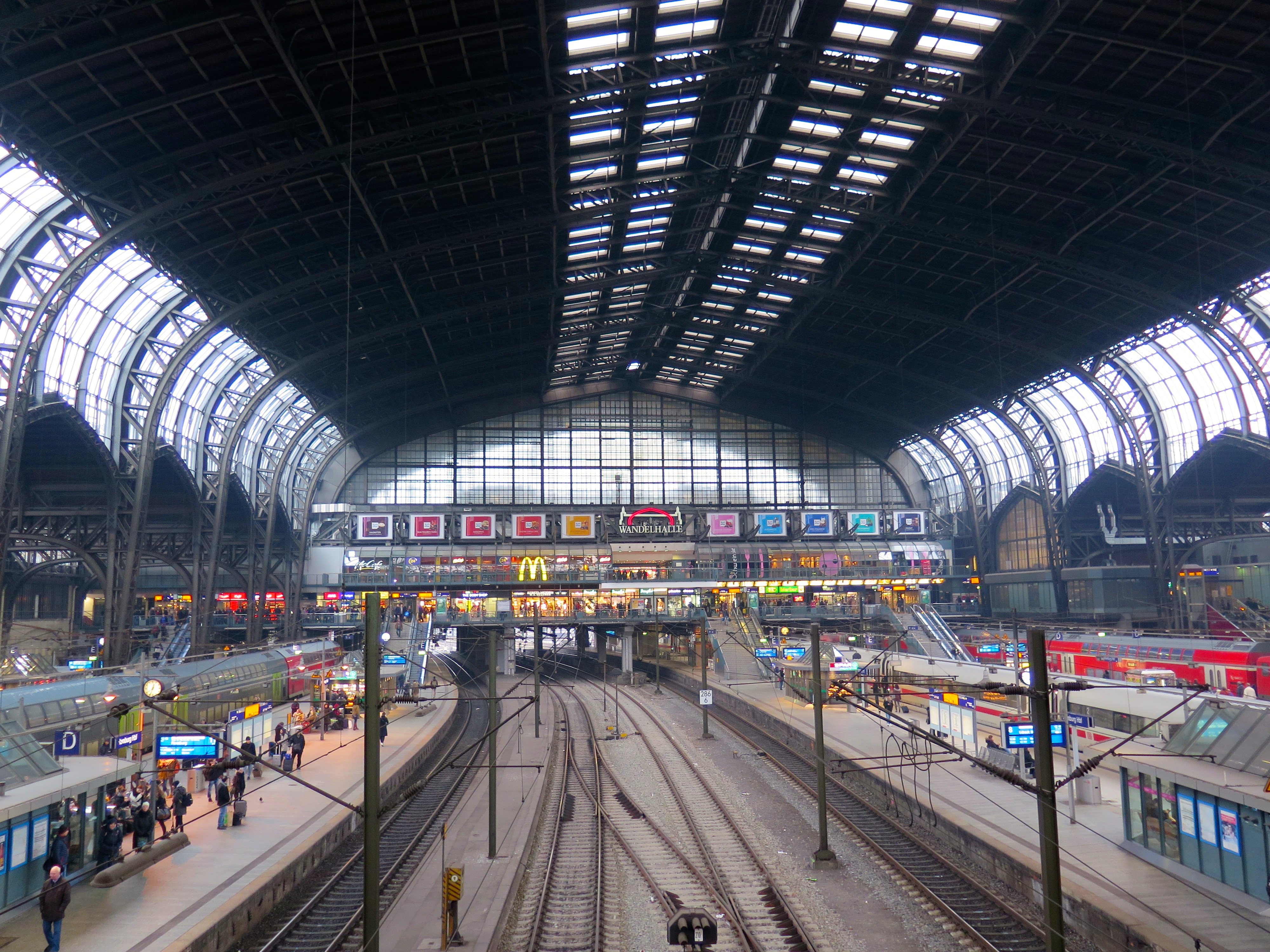
Photographs today are of trains and stations encountered in my travels.

And for those who like celebrations:

https://www.youtube.com/watch?time_continue=22&v=Y6UV2Of1L8E

Berlioz’s grand cantata for tenor and six-part chorus was commissioned by the Chemin de Fer du Nord to mark the opening of the Paris to Lille and Brussels railway line in June 1846. Having just undertaken an arduous European tour largely by stagecoach, Berlioz was an enthusiastic advocate of train travel and jumped at the chance, completing the work in a few days.


Pigs and Pioneers

On Monday I reported on young artists working for change, on Tuesday on a long-ago icon being subjected to change, and today I am turning to someone who completely changed her life. Dr. Neena Roumell is the mother of one of my closest friends. Trained in developmental psychology by Barry Brazelton among others, she worked for large parts of her life with infants and their parents in the Detroit, MI area and authored books on fathers and infant attachment.

Recently married, she and her husband Atto Assi, a petroleum engineer from the Ivory Coast, decided in 2007 to pack everything up and move to Hawaii to start a self-sustaining farm. Now in her early 80s, Neena looks back at a decade + of adventure, learning, hard, hard work and incredible achievements.

Upon arrival the two cleared the 25 acres they had purchased from remnants of sugar cane and shrubbery, with their own physical labor as everything else they did. They built a house and water purification systems run by solar power, distilling drinking water.  They also constructed a green house, that provides zucchini, strawberries, tomatoes, cucumbers and numerous other fruits; together with an extended vegetable garden, and citrus and banana plants, they have their own basic food supply covered. I am trying to imagine tending to the gardens in a climate that drops 200 inches of rain annually on the Big Island….wimping out right there.

Next they planted 3500 oil palms, with the original seeds provided by the former Dean of the College of Agriculture at UH Hilo, who shared their interest in growing fuel crops to make the islands fuel-independent. Crushing the seeds provides bio-fuel, as do left-over restaurant oils with an extraction method devised by Atto. At peak, they can produce 240 gallons of bio-fuel per day. Trucks, tractors and generators are all covered by their yield, the rest is sold. Neena also wrote grants that received USDA support for their conservation efforts, helping them to set up the next big project:

A piggery!

Pigs are an essential staple of the Hawaiian diet and there used to be thousands of pig farming operations on the islands. The industry shrunk to next to nothing because of the smells associated with the trade and the incredibly unhealthy run-offs contaminating soil and water, and so most meat has to be imported, at high cost. There is a new movement now, however, joined by Neena and Atto, that reconnects to traditional Korean natural farming, a method that eliminates both odor and run-off problem. The approach uses IMOs, indigenous microorganisms, that break down the waste when combined with solar positioning and natural ventilation for drying and cooling.  Details here: https://www.hawaiitribune-herald.com/2014/02/10/hawaii-news/pioneering-piggery/

Key elements are a mix of homemade bacteria solutions applied to beds of organic mulch and logs that generate heat during the fermentation of the waste products, which is funneled off naturally. The beds stay dry, the piglets are snug and warm. The piglets are also fed a homemade diet of agricultural waste, algae, academia nuts, purple potatoes, papayas and tapioca. What started with 70 pigs is now a growing operation of hundreds, planned to peak at 1000.

Our pioneering farmers so far have only had occasional help, including numerous Wwoofers (WWOOF is a worldwide movement linking volunteers with organic farmers and growers to promote cultural and educational experiences based on trust and non-monetary exchange, thereby helping to build a sustainable, global community.) They are now hiring help, given how the farm has grown.

 http://wwoof.net  


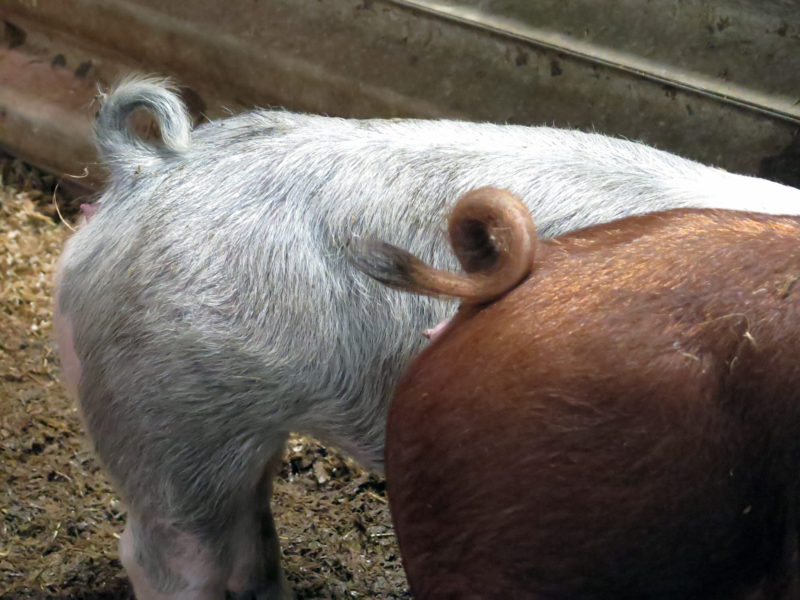
I don’t aspire to be a newly minted farmer in my 80s. I do, however, hope to have the pioneering spirit and physical strength to try out novel ways of being at any age that remains to me. I also hope to visit Hawaii at some point in time to take photographs myself. Today’s images are either sent by Neena or depict pigs that crossed my way stateside.


Fleeting Usage. Lasting Damage.

Living in a sandcastle might be considered fleeting. Then again, this guy managed to do it for decades….

http://www.bbc.com/news/av/world-latin-america-42761099/the-brazilian-man-who-lives-in-a-sandcastle


The more serious issue, and one to stay, is related to the fact that global reserves for sand are being exhausted. Demand has led to extraction that is reaching dangerous levels.

https://theconversation.com/the-world-is-facing-a-global-sand-crisis-83557

Sounds improbable, huh? Isn’t there sand all around us, every coastline in the world? It turns out that the demand for constructing buildings and roads, glass and electronics, for land reclamation, shale gas extraction and beach re-nourishment programs has made sand the most extracted resource in the world, exceeding fossil fuels.

And the staggering numbers (details in the link above) are perhaps not even accurate because much of the record keeping is hidden. Profiteering across national borders, since local supplies are now exhausted in many countries, has become common and are hurting entire countries.


Sand mining disproportionally affects developing countries and fragile environments. Nothing fleeting about the damage done to coastal communities that have fewer barricades against tropical storm damage; nothing fleeting about the consequence of extraction in Africa and Asia: left-over hollows develop into standing water pools that are breeding sites for malaria carrying mosquitoes and other diseases. Sand extraction in river deltas often leads to influx of saltwater that threatens local drinking water supply.

Let’s counterbalance the bad news with a splendid poem by a Dutch poet, a poem that somehow resonated strongly with me for its optimism and focus on the positive results of shared efforts.

Photographs are from the US and Holland.