Browsing Category

Music

Mars on my Mind.

Well, well, well. Mars plans scuttled, with new attention instead directed to the moon by Musk, or so I hear. Another failed prediction, and waste of a perfectly abominable T-shirt he wore the day when leaving DOGE in the dust.

Mars-related thoughts, though, were mostly triggered by a Japanese mini series currently on Prime, Queen of Mars. It provided the appropriate level of distraction for a head-cold addled brain and a body that did not leave the house for days. I don’t know how they pull it off every single time, but Japanese Sci-Fi productions just have me cheering.

Beautiful people, serious method acting; broken families, families reunited! Good guys, bad guys, in-between guys shifting allegiances. Bad guys clearly labeled by looks – the military alone composed of star troopers, German Nazi lieutenants, an officer inexplicably looking like Ursula the sea witch in The Little Mermaid. Good guys win – yeah. Happy Ends rule! Mysterious objects appearing and disappearing, supernatural phenomena backed by some crafty AI visuals. Science rules!

The plot is perfectly commensurate with brain fog (spoiler alert!)

100 years from now, Mars has been colonized for 40 years, to extract valuable minerals. Profit rules! Now holding some 100.000 inhabitants, economically presented in the film by some 45 extras in changing costumes, the planet is governed by the Interplanetary Space Agency.

Plucky group of early settlers resists the organization’s attempts to repatriate them to Earth – Mars is their home! They also refuse requirements of machine-human interphases, not having surveillance tags implanted in hands and communication devices in foreheads. Young blind heroine gets kidnapped by profusely apologetic settlers to stop repatriation, then joins their cause.

Evil head of Space Agency, accepting bribes of mining companies and other extraction forces, has more than repatriation plans. Power rules! She wants to explode the planet to create an environment with atmosphere and water in 1000 years (Long-termism rules!), doomed remaining settlers be damned.

Feisty combo of two aging scientists and two young lovers separated by 140 million miles use mysterious objects to expose the rot at the core of the agency. Along the way we are advised we should take risks for science, not be afraid of the unknown and listen to the calls from the Universe. Curiosity rules!

The series was adapted from an original novel commissioned from sci-fi writer Satoshi Ogawa and created by Japan’s Broadcasting Corporation (NHK) in commemoration of its 100th anniversary. The narrative core, then, rests on communication, radio waves, and celebrates the underground neighborhood radio station that helps our protesting settlers topple the surveillance state. Radio rules!

They play with interesting concepts associated with communication – everyone in the movie speaks a different language, simultaneously translated by either embedded or clipped-on devices, a veritable cave of Babel, given the subterranean Martian accommodations. Subtitles rule!

Communication between Earth and Mars has a 10 minute time lag in 2125, originally. So how do you converse if it’s never “with” each other? The blind heroine has acute hearing to compensate for visual deprivation, important to the plot. And eventually we discover the value of interplanetary exploration by some means of echolocation….. A paean to auditory power.

Truth be told, these were three hours of my life well spent – there was something endearing, amusing, and at times thought provoking to this series. It makes a clear case for what is ethically and morally right – oh, do we need those reminders in our time – without being patronizing. The cinematography is beautiful in its own right. The film never yields to the temptation to speed up to move the plot along, but allows lingering. Very much recommend.

***

The broadcast I am really longing for, however, does not yet exist: a full recording of Jennifer Walshes new opera about the take-over of Mars by toxic tech bros, as experienced by an all female astronaut team on a mission to Mars. Here is the trailer. The themes cover some of the same ground as the Japanese mini series. As the composer declares: “when we talk about Mars we are talking about ourselves – about our ideas of the future, and about the operations of power in the present.” She refers back to the likes of Peter Thiel  who told the New York Times: “Mars is supposed to be more than a science project. It’s … a political project.” Consequently the opera explores the reaction of these 4 women astronauts to “isolation, sinister ideologies, the prospect of alien life and a vibe shift toward corporate authoritarianism,” when the tech bros take over (Ref.)

Apparently the women are able to overcome a bleak future with hopeful, defiant and, importantly, collective resistance. Although it would have been easier if they had not mistakenly taken with them the wrong on-board entertainment compilation. For nine long months all they have is Shrek the Third and a few seasons of The Real Housewives of Beverly Hills…

Who needs Mars when I was able to hike in New Mexico? Photographs today from Kasha-Katuwe Tent Rocks National Park. As close to Mars as I’ll ever come.

Music a nod to sensitive listening skills and subsequent translations into different auditory configurations; a wonderful new album by the Vision String Quartet, which really should be named the Listening String Quartet. In the Fields is inspired by Bela Bartok’s Fourth String Quartet, but adds experimentation on Ravel and Dvorak, among others.

Leave mothers alone!

Here is the good news: you can keep the popcorn in the cupboards and avoid empty calories if you don’t watch the Korean and Dutch movies I’ll introduce today. However, both cinematic explorations under review have brain power and pretty amazing visuals. If you are a fan of disaster movies, science fiction films or mysteries, as I am, you’ll be riveted.

Here is the bad news: you will need a lot of buttered popcorn to erase a bad aftertaste left by watching the movies under discussion. Both delve deeply into psychological issues using women as projection screens of stereotypical, often misogynistic concepts, centered on versions of manipulative women and bad mothers. Sufficiently warned?

Alice Neel Mother and Child (1982)

SPOILER ALERT! I will reveal plots.

I turned to The Great Flood on Netflix without any prior knowledge, simply because I saw it was a Korean film; they are known for excellent apocalyptic movies. I find disaster porn to be the perfect distraction from real life affairs since they remind me that things could be worse, and usually have a happy ending for a select few. We can dream of being the lucky ones!

The story unfolds in the predictable manner; some catastrophic weather event (asteroid melts arctic – buy that!), sets all of Seoul under water; heroine plus child live in a 30 stories apartment building, stratified along class lines, inhabitants now jamming the stairways to get to safety. A male figure appears, half threat, half protector, to guide her and child to a helicopter waiting for them on the roof. It turns out she is the remaining lead researcher in a secret UN project. They are trying to develop AI programs intent on preserving humanity’s emotional tool bag for whatever comes after humanity gets wiped out. Without her being rescued the program is doomed. Along the way she encounters massive challenges, physically and morally, revealing herself to be a tough cookie and originally not particularly attached mother.

Suddenly the film switches gears, and it turns out (for all I could decipher, since there are enough plot holes to drive a truck through,) that she volunteered to be a subject in the data extraction of human emotions for her research project. Looks like it to me, though, that the extracting powers are not interested in human emotions per se, but the shaping of emotions deemed appropriate for a good mother. She finds herself in a time loop, going through thousands of simulations of the same disaster scenario, (conveniently indicated by the changing numbers on her t-shirt for the dull viewer), finding “better” ways to handle ethical dilemmas in order to reach the goal state: a reunion with and rescue of her child lost along the way. Who turns out not to be a child at all, but a preprogrammed AI creature. With some sort of diabetes, no less, making us wonder if they had bad programmers or this was another ruse to instill extra “nursing” tendencies in a woman who had not given birth.

Kaethe Kollwitz Mütter (1911)

Across all these re-iterations of her flight we see her develop from an emotionally distant care taker to someone who is deeply attached to the child. She is ever more engaged in being there for other people in distress, even if that might harm herself or her goals. Along the way AI is shaping her, by providing adaptive memory clues and selective reinforcers, tweaking algorithms towards a preferred outcome. Just as we, the viewers, are shaped by finding our own stereotypes confirmed – isn’t it comforting to see someone evolve to be nurturing, sensitive, present, attached, servile and self-less? A “good mother”, in other words?

Helene Schjerfbek Mother and Child (1886)

As someone who currently holds two young mothers closely in my heart, mothers who could not possibly do a better job than they are doing already, I was irked that the film regurgitated every single societal demand imposed on mothers, in order to bestow the final award, success of the mission. It overshadowed the larger philosophical – and interesting – question the movie raises, how Artificial Intelligence can shape us all – and theoretically in all directions, towards becoming good, or evil, or accepting evermore incoherent entertainment….when looking at the evolution of this film. In contrast to what I watched next, though, the movie rocked!

***

The Shouwendam 12 runs on Amazon Prime. I love to watch Dutch movies for a number of reasons. They help me keep in touch with the language, provide blissfully normal looking actors (no Hollywood glam here, ever) and offer glimpses into the darker aspects of the human psyche (which I attribute to Holland’s colonial past rather than the darkness of the northern latitudes of Scandi-Noir films.)

At first glance, the series presents the familiar script of whodunits: teenagers disappear from the village 25 years ago, someone with amnesia comes back to figure out if he is one of them, a suspicion shared by some in the village, but not others. Then someone gets murdered and a hastily called detective, with the help of the young village cop, tries to find the culprit, setting her eyes on the amnesic newcomer. So far, so typical.

All of a sudden, the series picks up rocket speed with multiplying subplots involving drug dealing, gay sex, child abuse and the like. People start dropping like flies, each killed in a different fashion, with our guy having alibis for many of them, but not all. The script is clever in the sense that we really don’t learn the full extent of a very complicated narrative until the last (10th!) episode.

Paula Modersohn-Becker Stillende Mutter (1903)

Spoiler: the whole set-up revolves around women who have lost their minds, quite literally, after having or losing a child. In the mildest version, the detective is deemed incompetent because she is still shattered by losing her son to suicide. Two cases of postpartum depression then depict women with murderous impulses, trying to kill their babies or killing someone else. Finally, the main culprit is a woman completely deranged after losing her lover to suicide and their unplanned baby in a subsequent miscarriage. She goes out to revenge those losses, murdering everyone who ever harmed her lover, who was one of the missing village kids ago from all those years ago. She drags her brother – hinted to be incestuously bound to her – along in the psychotic scheme, pretending to be the “returning” amnesiac to rattle the villagers into revealing the secrets tied to the disappearances. She escapes punishment by jumping off the church tower in the end, while he shows some redeeming feature by preventing her from killing yet another innocent victim, before he is sent to prison.

It is beyond infuriating. Women are presumed to be murderous harpies under the influence of hormonal imbalance. One is shown to be suffering the hallmarks of clinical depression before she tries to drown her daughter, others are depicted just as murderously aggressive crazies. Instead of giving the viewer tools to understand postpartum depression and its harrowing burden on new mothers, it simply terrifies us with what these women are capable of with destructive intensity.

Mary Cassat Mother and Child (1880)

No mention of the gradation seen in the real world. Up to 85% of mothers experience postpartum blues, a slight impact on mood with hormonal shifts, which remits spontaneously 2 weeks or so after delivery. Then there is postpartum depression, which is clinically indistinguishable from garden-variety depression, with sadness, anxiety and hopelessness often part of the picture for a longer stretch, infinitely treatable. And then there is postpartum psychosis, appearing directly after birth for maybe 1-2 in a 1000 women (if that – the data vary widely). A rare event, and often coinciding with the emergence of dormant bipolar disease, triggered by the stress of pregnancy and birth.

If movies want to raise larger questions – is AI a dangerous tool or possibly preserving the essence of humanity; are given life events a path to madness under certain circumstance – please find something that does not involve motherhood. Mother bashing has such a long and treacherous history, we should really move beyond that. True not just for movies, but also for books – just look at all the new memoirs about and by mothers, or the endless novels about bad mothers

Max Ernst- Die Jungdrau züchtigt das Christuskind (1926)

True, too, for operas: just think Madame Butterfly willing to give up her child, or Azucena in Verdi’s Il Trovatore with her fragile mental equilibrium, not knowing which baby went into the pyre and which she kept and raised as her own. Or Bellini’s Norma, who spares her child, but that was that for sane actions. The Queen of the Night is an ambivalent mother in Mozart’s Magic Flute, and Cherubini’s Medea is the worst of them all, killing both of her children in an act of revenge.

Enough mother bashing! Could you please leave them alone?

Here is a naughty child instead, for today’s music, in the end (at ca. 39 minutes into the video) crying for Maman, no less. L’enfant et les sortilèges is a beautiful opera by Maurice Ravel.

Mother and Child, 1902 by Pablo Picasso

Pablo Picasso Mother and Child (1902)

Steadfastness.

A Third Way: Between mute submission and blind hate – I choose the third way. I am ṣāmid.Raja Shehadeh, A Journal of Life in the Westbank (1982).

I am writing this on the last day of Hanukkah, the Jewish celebration of a miracle during ancient times of war (between two Jewish factions, no less.) It is a minor holiday for us, in contrast to Christmas for others, coming up in a few days. The promise of peace through a newly born savior is central to Christianity, even though one might wonder about the seeds of conflict already inherent in the Christmas story per announcement in Luke 2:14 : “Glory to God in the highest heaven, and on earth peace to those on whom his favor rests.” Favoring one set of people over others is a recipe for conflict, in my opinion, and currying favor in order to be in the desirable in-group has often implied exclusion of others. But I digress.

Today’s thoughts are about peace, the absence thereof, and the steadfastness of those who try to dream about a just world amidst war and violence, including the anti-Semitic mass murder in Australia last week and the ongoing genocidal actions in Gaza for the last 2 years.

There is a term in Arabic, Sumud, which means “steadfastness” or “steadfast perseverance”. In one interpretation, it encompasses everyday nonviolent resistance against injustice imposed on you. Sumud is an alternative to and rejection of passive submission to oppression and dispossession. It became an important aspect of Palestinian existence under Israeli occupation, summarized early by Edward Said as work which “becomes a form of elementary resistance, a way of turning presence into small-scale obduracy.” (Ref.)

Folks at the Arab Educational Institute in Bethlehem defined the sumud concept as, “on the one hand, [relating] to a vertical dimension, ‘standing strong’ on the land, having deep roots. On the other hand”, sumud indicates “a horizontal time dimension – an attitude of patience and persistence, of not giving up”, despite the odds. (Ref.) I chose photographs of roots and trees for this reason today.

A person who practices sumud is called ṣāmid, and I can think of no better example right now than Ahmed “Muin” Abu Amsha, a musician, sound engineer, composer, and music educator from Gaza. He has steadily worked with children under the onslaught of bombs and drones, teaching them music that incorporated the sounds of the drones, making something terrifying into something beautiful. He insists that music is just as important as finding shelter and food, a steadfast focus on something more than war. His choir, Gaza Birds Singing, has provided meaning for so many youths living under excruciating existential threat. Watch for yourself.

Sumud is also the title of a new, short film by documentary film maker Jan Haaken, featuring a Portland anesthesiologist who regularly travels to Gaza to provide assistance to a medical system under systematic attack, and Omar El Akkad, a now Portland-based author whose most recent book, One Day, Everyone Will Have Always Been Against This, won the 2025 National Book Award for non-fiction.

Truth be told, I had to force myself to watch these 27 minutes, given how overwhelmed I feel by my mix of emotions every time I think of Gaza. The sorrow over the Israeli victims of the Hamas attacks; the subsequent killing, maiming and psychological torture of Palestinian men, women and children for two full years. The horrid and completely counterproductive Israeli response, with our tax dollars supporting an indiscriminate war against civilians. The lack of will of the political establishment around the world to put an end to the slaughter. The undeniable fact that the current “cease fire” is a sham, with more than 360 Palestinians, mostly kids and the elderly, killed since it was announced 10 weeks ago. I just want to hide my head in the sand.

I did watch, though, and learned a lot, much of it new to me, including the report of the anesthesiologist on the systematic nature of the injuries they encountered with victims all waiting in lines at food distribution centers. But much of the film also gave me renewed hope that there are people out there who can and will help, with their courage, their wisdom, their insights and longing for justice, to move ahead. These are, of course, people who need us, in return, to join for collective actions that might have an impact on ending the war. In an earlier print interview, author Omar El Akkad outlined his observations and recommended action, asking: “How does one finish the sentence: ‘It is unfortunate that tens of thousands of children are dead, but …’”

Pondering this sentence might be a first step towards overcoming the tendency to avoid facing what is going on in the Middle East, a tendency otherwise fueled by the need to keep one’s peace of mind somewhat intact in the face of the onslaught of bad news in our world. If we want to be agents of peace, we likely need to leave our clinging to peace of mind behind. Period. It’s our turn to embrace the concept of steadfastness, not as cultural appropriation but as an expression of solidarity with victims everywhere.

If you are interested in screening this documentary with a group of friends or colleagues for free, you can go to the website. In the lower left corner is a red square where you can apply for a free link to see the film.

***

People who decry the extent of Palestinian suffering are constantly challenged to justify themselves, particularly so if they are Jewish. Anyone standing in solidarity with Palestinians is tagged as suspicious, as if support for this devastated population necessarily involves anti-Semitism. This challenge, though, is incoherent, and there should be no obstacle to asserting two simple concepts at once: a respect for Jewish lives and a respect for Palestinian lives; a rejection of anti-Semitism, and an abhorrence of the indiscriminate killings of Gazan civilians. Why do I have to defend myself for these simple, humanistic statements? Why do I have to justify them and defend myself against the bizarre notion that these views are anti-Semitic?

Just look at the table of contents of the current issue of Jewish Currents, the award-winning quarterly of politics, culture, and ideas. There you will find a plethora of reports and analyses authored by people raising their voices against those who have distorted all discussions of the war in Gaza and the future for a Palestinian homeland, deliberately (and falsely) equating anti-Zionism with anti-Semitism, and falsely condemning calls for Palestinians statehood as anti-Semitic. Amid the horrors of the reality in Gaza, it is dismaying that so much time and energy are now spent defending against how the notion of anti-Semitism is instrumentalized to push through political projects that are rooted in very different considerations.

A poignant summary comes from Will Saletan at The Bulwark, noting how supporters of contemporary Zionism, ever more exclusionary and territorially expansive, play into the hands of anti-Semitic terrorists like the Bondi Beach murderers.

Supporters of Israel have shifted their position again. Any endorsement of Palestinian statehood, they contend, is an invitation to antisemitic violence.

This is a false and dangerous argument. If you tell people that accepting Palestinian statehood is tantamount to promoting or provoking the murder of Jews, you’re erasing the nuances that make coexistence possible. You’re conflating Palestinian autonomy with opposition to Israel. You’re conflating opposition to Israel with hostility to Jews. And you’re conflating hostility to Jews with murder.

All of these conflations serve the interests of antisemitic terrorists. Their goal is to polarize the issue. They want to equate supporting Palestine with killing Jews. Prominent supporters of Israel are now, in effect, endorsing that equation.

***

I started with references to the sound of drones, and I will end with another one.

Let me close with a poem by Mosab Abu Toha, who received the Pulitzer Prize for Commentary with essays published in the New Yorker this year (2025). His first volume of poems won the American Book Award, the Palestine Book Award and Arrowsmith Press’s 2023 Derek Walcott Poetry Prize.

Things You May Find Hidden in My Ear

For Alicia M. Quesnel, MD

I
When you open my ear, touch it
gently.
My mother’s voice lingers somewhere inside.
Her voice is the echo that helps recover my equilibrium
when I feel dizzy during my attentiveness.

You may encounter songs in Arabic,
poems in English I recite to myself,
or a song I chant to the chirping birds in our backyard.

When you stitch the cut, don’t forget to put all these back in my ear.
Put them back in order as you would do with books on your shelf.

II
The drone’s buzzing sound,
the roar of an F-16,
the screams of bombs falling on houses,
on fields, and on bodies,
of rockets flying away—
rid my small ear canal of them all.

Spray the perfume of your smiles on the incision.
Inject the song of life into my veins to wake me up.
Gently beat the drum so my mind may dance with yours,
my doctor, day and night.

BY MOSAB ABU TOHA


Music today is more by the Gaza Birds Singing – here, here and here.

The entire album, Wings over Wire, can be found on Bandcamp for a pittance. All proceeds for purchase go to the Gaza Bird project.

Go on, sing!

The essay below was written before the horrific events of the last days, the mass shootings at Brown University and Bondi Beach, the stabbing of a righteous couple. I wondered this morning, if it would be frivolous to post it. But it ends with thoughts of having to create light when there is none, reminders of making a world shine during difficult circumstances. I think that core message is what we need. So here goes….

_____________________________

Hah! The universe tells me to think, not mope.

I had barely started to whine about the fact that I miss live singing, both as a participant and a listener, when, within 24 hours, interesting pieces about singing popped up in my news feed, in publications as diverse as The Guardian, Nature and High Country News.

It began with listening to Bach’s Christmas Oratorio, familiar from childhood. In retrospect, it seems as if we sang not just in this season but all the time in the 50s and 60s – in class rooms, at services, at demonstrations, at parties, on school field trips in the busses, and eventually at live performances. Belting out the newest hits from the Beatles or the Kinks, Procul Harum, the Stones, Joan Baez, Joni Mitchell, Bob Dylan, Traffic, Jonny Halliday and Gilbert Bécaud, you name it. Informed by listening to Radio Caroline or Radio Luxembourg under the covers on contraband tiny transistor radios, strictly prohibited in my boarding school. No matter how much I loathed being stashed there, when we sang, a sense of community took over.

(Portraits today of people of that – my – generation. I always wonder what someone’s musical taste might be, why I stereotype many of them as (Grateful)Deadheads, and if I’ll ever find a match to my idiosyncratic musical preferences.)

Later I joined choirs, until chemo wrecked my voice; then regularly attended choral concerts, until the Covid pandemic shut down my ability to be in close proximity to large crowds. These days what goes for singing is croaking along to my Bandcamp collection in the privacy of my car on solo rides to my nature outings. Oh well. Could be worse.

I was squarely reminded of that, when I read about people who have made it their business to sing to people on their deathbeds. The assumption is that it calms the dying, and allows them to cross the threshold, accompanied by soft, slow melodies and harmonies sung by up to 4 practiced people who travel to homes and hospices. Importantly, they only sing their own compositions, assuming that more familiar tunes would “keep” you from letting go, clinging to or (re)living the past. Hmmm.

I am firmly convinced that we have no agency in the choice of timing our exit, as I have discussed previously, and so nothing we do or don’t do, will have any influence. But would a music lover feel more comfortable with simplistic, if sweet tunes by these threshold choirs, than the familiar sounds of, say, a Mahler or Schubert song cycle? For that matter, would one feel comfortable with strangers in the room (though still better than the traveling harpists so prevalent in local hospitals…)? You can read all about the choirs here.

***

As it turns out, not surprisingly, hard times, punctuated by traumatic events like 9/11 or the pandemic, have an impact on songs. Interesting research, recently published in Nature, analyzed 50 years of song development (1973 – 2023) for the lyrics of songs on the US Hot 100 Billboards. (Heads up for sampling bias: certain genres are not reflected in these charts, from rap to early punk, which was censured, just think Ramones or Sex Pistols. Reggae and Latin music was extremely popular but did not make it into these charts since at the time based in club culture.)

But for the general popular music we see clear trends: across time, themes of stress and negativity increased, while simultaneously the lyrics got less and less complex. Across the same 50 years, rates of depression and anxiety increased, as did the negative tone in the media and fiction books, amidst recent drops in IQ and PISA test scores.

Preferences in music consumption could mirror what is going on in the surrounding culture and one can speculate about what emotional regulation we choose in response to what is happening around us. We can select music that aligns with our current affective state (stressed), or we can listen to music that brings us closer to a goal state (happy) – in short, we can regulate our moods by choosing particular musical coping mechanisms. The research here was interested if that happens in ways we can predict for society as a whole, particularly during periods of traumatic events.

As it turns out the prevalent mood congruent trends were NOT amplified during 9/11 or Covid; in other words, people did not listen more to upsetting music when they felt particularly frightened. If anything, people chose to listen to more positive music instead, modulating their mood perhaps in ways that allowed them to make it through these hard times.

The complexity of lyrics – or absence thereof – is currently affected by yet another variable: the arrival of AI on the scene. Here is Timothy Snyder’s description of the AI renditions of classic Christmas songs, musical score intact, lyrics changed, as experienced in a coffee shop just a few days ago. In his inimitable prose:

My guess would be that someone, somewhere, entered an instruction to generate winter and Christmas songs that avoided “controversial” subjects such as divine and human love. And so we get mush. In a reverse sublimation, the sacred becomes slop.

The carols bear a message about love, one that that no machine will understand, and that those who profit from the machine perhaps do not want us to understand. Love begins humbly, takes risks, recognizes the other, ends in pain, returns as song. And begins humbly again.

As always, his essay is worth a quick read.

***

Let’s end on a more positive note, though, keying in on A or C major (preferred keys by Earth, Wind and Fire, one of my favorites, as it turns out.)

I found the poem below about singing songs that are also centered on love, incredibly perceptive as well as motivating. The poet Valencia Robin was a recipient of a National Endowment of the Arts Fellowship, her poems have appeared in a wide-range of journals, anthologies and podcasts including The Best American Poetry, The New York Times, Poetry Daily. Here she cites a quite familiar line from The Essential Earth Wind and Fire, album 2002, track 9 All About Love, a song that inspired the poem:

And if there ain’t no beauty, you gotta make some beauty,” 

Have Mercy,

Listen to me Y’all……

Ars Poetica

I woke up singing
my favorite song as a kid 
and I mean, really singing, 
catching myself all morning, 
asking myself what it means, 
a reminder perhaps
that we can be strange
— we wake, we sing, 
we wonder why we’re singing, 
we realize how seldom we have a song 
in us anymore, remember how we 
used to play/be Aretha and Anita 
or Earth, Wind and Fire — Maurice 
bringing it, sending us on one of the few oldies 
where the words ‘right on’ don’t sound silly,
standing in the middle of the room 
giving our all to the olive-green sofa
and wood paneling, mama at work
— we even had his little laugh down
and when’s the last time we believed 
what we were saying so completely, 
all that 70’s positivity, all that gospel
pretending to be the devil’s music
— and is that what ruined us, why we’re so bad 
at real life — practically screaming the last line, 
And if there ain’t no beauty, you gotta make some beauty, 
deciding without even knowing we’d decided 
that that — Lord help us — was the dream.

by Valencia Robin.

It’s still the dream. And about time, that poems titled Ars Poetica don’t just give a nod to Horace (he wrote the very first poem with that title about the craft of writing poetry), but acknowledge the likes of Maurice White whose poetic lyrics motivated and uplifted generations.

And now excuse me while I slink off to hum this and grab the camera to make some beauty out of a dreary winter landscape. You can come along, if you sing!

Lazy Monday.

· Silly Pictures - Few Words. ·

I started to look at memes which are sprouting after the Louvre heist, but then thought they are probably all in your view already, related by everyone from OPB to Town and Country Magazine….

I also found myself thoroughly out of touch with the dominant meme references to a Bollywood movie called Dhoom 2, featuring similarly daring jewel robberies and managing to make more money than any previous action caper at the time. I’m getting old or out of mainstream – probably both. Apparently the cinematic thieves were given another chance at (a reformed) life. We wait to see what happens to the real life suspects apprehended yesterday.

The heist had come up in the context of thinking about museum staff or leadership who are currently sacked or deciding to resign for far more worrisome reasons – refused censorship among them – than lack of museum security. But then I was simply too lazy to dredge up all the examples that had accumulated in my inbox across the last months.

So I turned to a more familiar and easier knowledge base instead: memes about classical works of art. For your amusement, then, some images dedicated to several friends of mine (you know who you are!) and one of self portraiture – you may guess.

Given the medley of memes, starting with the Louvre heist, music today is a medley of French composers, some famous opera music included, mostly warhorses. Which brings me to the educational part of Monday:

Here is a hilarious introduction to all that’s wrong with contemporary opera…..

Thank you, L., for sending this. Made me snap out of it.

And in the interesting people department….

About time we introduce some new members to that idiosyncratically chosen group, don’t you think?

The first person should have been known to me, but wasn’t. I only learned about them when a dear friend sent me a bundle of postcards from a current blockbuster exhibition in Hamburg, Germany. She knew how much I wished to see Rendevous of Dreams at the Hamburger Kunsthalle, celebrating a century of Surrealism and juxtaposing some of the works with those of German Romanticists who were influenced by some of the same inspirations as the more modern movement.

 “The supernatural and irrational, dreams and chance, a feeling of community and encounters with a changing natural world were vital sources of inspiration for German Romanticism and shaped international Surrealism differently a century later.” (Ref.)

Toyen The Dream (1937)

If you live in northern Germany, go see paintings by Max Ernst, Meret Oppenheim, René Magritte, Salvador Dalí, Valentine Hugo, Toyen, André Masson, Paul Klee and Caspar David Friedrich (1774–1840) and Philipp Otto Runge (1777–1810,) while I longingly stare at the postcards.

So: here is Toyen, a name that means “it is he” in Czech, but could also be a play on the French citoyen,) chosen by a painter originally named Marie Čermínová (1902 -1980) who refused to use any feminine endings in her own language (which contains linguistic gender differentiation). They were a firebrand, left home as a young teenager and followed progressive political movements while attending  UMPRUM (Academy of Arts, Architecture and Design) in Prague. They worked closely with fellow Surrealist poet and artist Jindřich Štyrský until Štyrský’s death, collaborated with the future Nobel prize-winning poet Jaroslav Seifert, and poet František Halas. Living for some years in Paris, they and Styrsky founded an artistic alternative to Abstraction and Surrealism, which they dubbed Artificialism.

Toyen Among the Long Shadows (1943)

Their output was prolific, in paintings, drawings and book illustrations even during the years when they went underground during the Nazi Occupation in Prague, sheltering Jewish poet Jindřich Heisler. The two moved to Paris permanently after the war and joined the Paris Surrealists. Even when fascism struck and attacked a person and their work, they did not give an inch, much less capitulated. I am so grateful for models that indicate you can – and must – follow your passion, even under the most dire of circumstances.

The work is ravishing. If you live in Great Britain, you had a chance to see some of it at Richard Saltoun Gallery in London. Dreaming in the Margins was up until October 4th (this blog got delayed, alas, by reports on more pressing current events…) You can still look at the website, though.

Toyen THE LAW OF SILENCE (1953)

Toyen’s sexuality is unknown, since they avoided revealing any details about their personal life, creating a mysterious persona, but their public styling cut across gender boundaries. This fluidity was one of the factors that led to an artistic focus on themes of gender, politics, and eroticism, but they also created highly political art that addressed women’s experiences, misogyny and the destructive effects of war and authoritarian regimes. Here is a longer biographical sketch of the artist which labels Toyen as transgender.

Toyen Eclipse (1968)

***

I really can’t figure out how that artist escaped me, given my preoccupation with Surrealism this year with all those centennial celebrations (and prior to that just my affinity to some of the female artists of that movement before they were introduced to mainstream audiences.)

I am less perturbed by the fact that I had never encountered Frank Menchaca, the second person for today’s addition to the interesting people department, a composer who turns out also to be a visual artist, a poet and writer, with a foot in the sustainable energy business and education. Talk about a renaissance man. His visual art work can be perused on his website (link in name) that offers some 14 galleries. I came across his music first; just like Toyen cross-referenced poetry in her illustrations and other works, Menchaca links some of his compositions to poetry, in direct and indirect ways. As you know, I am a sucker for cross overs. And I feel certainly encouraged by people who do not restrict themselves to one creative or intellectual area only, even if standards of excellence might differ across media. I allow myself too often to beg off of some project just because I am not good (enough) at it, and it is so easy to retreat to the familiar.

What brought me to Menchaka is a piece titled Crows listening to Wallace Stevens. It can be found on an album The Demon rubs his Palm which I have listened to so often now that I can whistle in the demon’s company. By all descriptions, the music relates to multiple contemporary composers like John Luther Adams, for example. I wouldn’t know. I do know Steven’s 13 Ways of looking at a Blackbird, though, given that I spent an entire spring 15 years ago creating drawings and montages for the stanzas of this poem that I found wonderfully challenging to interpret. Early days for me regarding the craft, but I still like the ideas.

Here is my exhibition statement from 2011:

Wallace Stevens’ poem Thirteen Ways of Looking at a Blackbird, first published in 1913, has been hailed as an imagistic masterpiece. Stevens himself called it “a collection not of epigrams or ideas, but of sensations.” A first reading of the 13 stanzas, each mentioning the blackbird, offers indeed a multitude of sensory modes and perceptions. On closer inspection, though, the poem hints, as so much of Stevens’ work, at the relation between the perceivers and the world they perceive, extending our focus beyond perception to thoughts and feelings as well. Yet the text is challenging, frequently switching perspectives between who does the looking and who beholds whom in knowledge of the world. For good measure, Stevens adds the occasional barb, sufficiently opaque to leave the reader even more unsettled. Who would know that “the bards of euphony” refers to his critics (Stanza X) or that the men of Haddam, a hamlet in Connecticut, embarked on a futile search for gold (Stanza VII).

My challenge was to provide sufficiently representational images to echo the content of the stanzas, but to stay abstract enough to mirror the reticence of the poem’s language. I tried to convey my sense of the poem as a whole, taking as my guide the notion that our perception inevitably goes “beyond the information given,” such that the phenomenal world can never be objectively represented but consists rather of a chain of apperceptions guided by interpretation. To accomplish this goal, I, among other things, replaced the poem’s blackbird with glass marbles that were montaged into my drawings and photographs from my daily environment.

Thirteen Ways of Looking at a Blackbird

I
Among twenty snowy mountains,
The only moving thing
Was the eye of the blackbird.


II
I was of three minds,
Like a tree
In which there are three blackbirds.


III
The blackbird whirled in the autumn winds.
It was a small part of the pantomime.


IV
A man and a woman
Are one.
A man and a woman and a blackbird
Are one.


V
I do not know which to prefer,
The beauty of inflections
Or the beauty of innuendoes,
The blackbird whistling
Or just after.


VI
Icicles filled the long window
With barbaric glass.
The shadow of the blackbird
Crossed it, to and fro.
The mood
Traced in the shadow
An indecipherable cause.


VII
O thin men of Haddam,
Why do you imagine golden birds?
Do you not see how the blackbird
Walks around the feet
Of the women about you?


VIII
I know noble accents
And lucid, inescapable rhythms;
But I know, too,
That the blackbird is involved
In what I know.


IX
When the blackbird flew out of sight,
It marked the edge
Of one of many circles.


X
At the sight of blackbirds
Flying in a green light,
Even the bawds of euphony
Would cry out sharply.


XI
He rode over Connecticut
In a glass coach.
Once, a fear pierced him,
In that he mistook
The shadow of his equipage
For blackbirds.


XII
The river is moving.
The blackbird must be flying.


XIII
It was evening all afternoon.
It was snowing
And it was going to snow.
The blackbird sat
In the cedar-limbs.

BY WALLACE STEVENS

Again, here is the full album, best listened to without interruptions, and on multiple occasions, when the connections become ever more visible, or should I say audible, rooted in a poem performed at the end.

Il Tempo Fermo.

I have been absolutely hooked on an album by Fabrizio Cucco, called Tempo Fermo. It unfolds slowly, getting more powerful with each subsequent listening, creating and simultaneously satisfying a sense of longing. It is sung in Italian, so you might wonder why I am posting it with pictures of Portland Japanese Garden, an altogether different culture. Well, depending where you inquire, the English translation of the title says Down time, or Time Standing Still.

That is the garden for you: it forever offers down time, a shelter from thinking hard, feeling hard, worrying hard.

It provides beauty, in so many different dimensions, differences in patterns, from whole vistas to the smallest details.

Light,

and color.

It offers calm, as only nature can do, even if nature is pushed into defined configurations by mostly invisible sources (from garden designers to the knowledgable gardeners, who one encounters occasionally.)

It provides the comfort of familiarity, a place to return to that greets you with old standbys, or that you proudly assess for seasonal changes, like the familiar decorations alternating across holidays in your childhood home. Except here it is not decorations, it is nature itself that changes with the shifting amounts of daylight and temperatures. Change that is of the essence, not some imposed by-product of celebrating seasonal events.

Visiting the garden, like yesterday morning, also elicits, on occasion, my hopes for the other translation of the phrase tempo fermo: time standing still.

For a short moment I wished for time to stand still, to be preserved, just like my photographs preserve my way of seeing the world around me. I wanted not to have to leave the hazy light of the early morning, the still cool air before the heat settles in, the company of a friend who relishes quietude just as much as I do. I wanted to put that moment into a piece of amber, a moment when I could still walk and climb stairs, when pain was perfectly manageable, when news were tuned out and my brain switched away from analysis to simple, grateful awareness of nature’s beauty.

I wanted to hold on to a moment where the world can still be healed, in theory, where gardens can still defy the challenges brought on by climate change change, where frequent outings are not a luxury out of reach. Time standing still, so that no more deaths are accrued on the battlefields, the regions of genocidal starvation, the areas of natural disasters.

That wish – Time, stand still! – is of course one that has been shared by many people across the centuries. It has been experienced, most often in the context of love, longing, separation. Listen to one more piece of music that encapsulates the notion – from the 17th century by John Dowland.

Then again, here is the thing: if time stood still there would be no music. After all music is an unfolding in time – we have to switch from stand-still to procession, if we want to experience that art form. Beauty, then, offered in development rather than permanence, in “becoming” – I take that as a major consolation for futile longings of halting time!

And here is yet one more perspective on time:

On Meditating, Sort Of

 Meditation, so I’ve heard, is best accomplished
if you entertain a certain strict posture.
Frankly, I prefer just to lounge under a tree.
So why should I think I could ever be successful?
 
Some days I fall asleep, or land in that
even better place – half-asleep – where the world,
spring, summer, autumn, winter –
flies through my mind in its
hardy ascent and its uncompromising descent.
 
So I just lie like that, while distance and time
reveal their true attitudes: they never
heard of me, and never will, or ever need to.
 
Of course I wake up finally
thinking, how wonderful to be who I am,
made out of earth and water,
my own thoughts, my own fingerprints –
all that glorious, temporary stuff.

By Mary Oliver

For these Streets.

Must admit, I felt lousy yesterday. Not sure if I am coming down with the crud or if the regular culprits are acting up, fact is, I was in pain and I needed a boost. So I splurged, bought a new album on Bandcamp and can now pretend that my head spinning comes from some truly captivating music, rather than a shot immune system.

Not so many words then, today, to give you more time to listen. Just an introduction to the young composer who posesses what I count as some of my most admired attributes: curiosity and an integration of learning across categorical boundaries. Said more simply: during the isolation of the Covid epidemic, the guy devoured literature, poetry and film from a particular historical era (the 1930s), listened to classical music from same period, and then synthesized all of this into music for an octet. The jazz album has now come to fruition: For these Streets, by Adam O’Farrill.

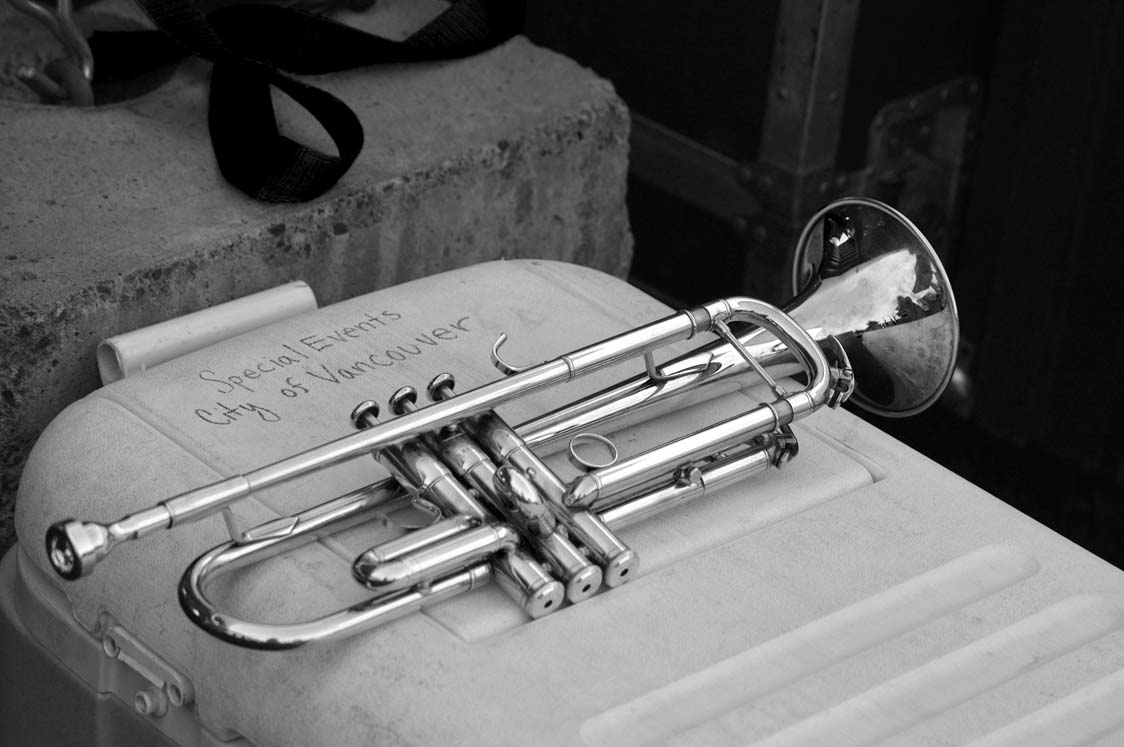
His trumpet is embedded in a stellar cast, with Tyrone Allen II on double bass, Patricia Brennan on vibraphone, Tomas Fujiwara on drums, Mary Halvorson on guitar, David Leon on alto saxophone & flute, Kalun Leung on trombone & euphonium and Kevin Sun on tenor saxophone & clarinet. So much talent in one place, often split up in sub-sections, so it always feels intimate, not overpoweringly loud.

So much insight, too, into the realities, despair and precoccupation of an era some 60 years before the composer was even born, now just 30 years old. From what I have read, he explored books about wanderers, Miller’s Tropic of Cancer, describing the loneliness and isolation of the expat walking the nightly streets, and Steinbeck’s The Grapes of Wrath witnessing the misery of the Depression (4 tracks echo this novel, Swimmers, Migration, The Break had not come, and Rose, like a mini Suite.) Virginia Woolf’s The Waves was absorbed, as was the poetry of Octavio Paz.

The track Nocturno, 1932 riffs off one of his poems, “Nocturne of Saint Ildefonso,” that is a contemplation of the evolution of one’s life time, a circular tale about origins and endings, walking the streets of Mexico. It is a tricky feat of temporal dislocation, embedded in the poet’s ever recurring theme of searching for one’s identity. The central square in Mexico City is focal, thus today’s photographs of the Zócalo and surrounding streets. Linked to at the end of the post.

The musician watched Charlie Chaplin’s City Lights, and listened to various classic composers who found their way into his tracks: Carlos Chavez’s Preludes for Piano, Messiaen’s “Diptych,” Ravel’s Piano Concerto in G Major and Stravinsky’s “Dumbarton Oaks” chamber concerto among them. Probably my imagination, but I hear late Frank Zappa here as well. Christopher Laws at Culturedarm has a more learned review. (I would not be able to identify the particular pieces, just the likely classical composers.)

This was a poster I photographed at the Hotel Majestic. My shots of the Zócalo were from their restaurant balcony.

I can only describe impressions, after just a few rounds of listening, obviously. The music captures some of the despair of the era, the hectic brought on by industrialization and the introspective quality of artists thrown into a time not unlike our’s, when big changes loom, and external forces close in, depriving us of the ability to prosper psychologically as well as existentially. But the album also conveys, besides the imagery of walking the streets at night in anguish, the freedom of walking through environments that stimulate you and feel like home. I used to walk in New York at night, during the various years I lived there, and remember that feeling of both, being safe among all those people, part of some amorphous sense of shared humanity, but also alone, always a foreigner.

Very, very grateful to this music for bringing back those memories. I am reminded of a freer, more adventurous, more optimistic self, instead of today’s aching crone who hasn’t walked at night in I don’t know how long. Must change that. Except here I’d be in the company of coyotes…

Then again, I am determined not to get sucked into reminiscence tunnels, leaving that to Paz. Here and now: a brilliant album by one of Brooklyn’s most promising young musicians. I feel better already.

Here is the original Spanish version and here the English translation of the Octavio Paz poem. Yes, I lied. More to read. I’m keeping up with posting long poems this week…)


Ghost Stories.

As per usual, one thing led to another while I was wandering among the Victorian houses of Eureka, CA on my most recent jaunt. Struck me as sort of a ghost town (more on that in a minute).

The Louvre Cafe has clearly seen better times…

Associative jump to Victorian ghost stories, and, inevitably, Montague Rhodes James (1882 – 1936). He was a British medievalist scholar, widely respected as provost of King’s College, Cambridge and of Eton College, as well as Vice-Chancellor of the University of Cambridge. He also authored numerous volumes of ghost stories which had a large impact on the horror genre, partly due to their juxtaposition of humor and the supernatural.

One of his most famous stories, Oh, Whistle and I’ll Come to You, My Lad (1904), can be found in a collection called A Warning to the Curious. It is a clever and funny tale named after a poem by Robert Burns, filled with often ironic allusions to world literature, Shakespeare and Coleridge as well as the bible. It is about a stodgy, slightly off Professor enamored with his own rationality, who spends a week’s vacation at the sea coast, pocketing a bronze whistle he finds in an abandoned Knights Templar cemetery along the beach. Soon he feels as if he is being followed. When he inspects the whistle in his room, with weird inscriptions seeming to reference the bible, strange noises begin startling him during the night. In short order things get sketchy and the Prof will never be the same again, as you will be able to see for yourself, when watching this remarkable, brilliant short film made for the BBC in 1968, and starring Michael Hordern. Watch it for the character acting alone. Such a difference from today’s horror flics. It’ll make your day! Well, it did mine.

Although my day was already pretty good, having listened to a new music album by Paul Roland, the expert on turning Victorian murders, supernatural experiences or horror stories into the most pleasant songs. He transformed James’ stories into ballads, sung with the voice of a bard found in your nearest corner pub, publishing this enchanting collection just last week. Here is his version of Whistle and I’ll Come to You. How can you not like a song that starts with the lines “Professor Parkins was a man of few words, but all of them were long, oh so long…” or a songwriter, who manages to get the essence of a story crammed in verse form into a ballad without losing any of the essential narrative and wit.

A warning to the curious could also be found on the walking path along the bay in Eureka. The path, lined with encampments of houseless people, runs behind the large mall and a strip of motels where I stayed.

This small town has seen its share of horrors, both on the extending and the receiving end. It is a harbor town in Northern California in Humboldt County, which derived its name from the Greek motto εὕρηκα (heúrēka), which means “I have found it!” It was missed by the European explorers for the longest time, due to a combination of geographic features and weather conditions which concealed the narrow bay entrance from view, and so was settled relatively late, around 1850. It did not take that long – but 10 years, in 1860 – for settlers and gold seekers to massacre the native population, the Wiyot people, mostly women and children, at a time when the adult males were away for an annual ceremony. The remaining populations sought shelter at Fort Humboldt, but over half died of starvation, with the army withholding proper care.

Not done yet. In 1890, with recent economic downturns and a growing sinophobia and violent acts against Chinese immigrants, a group of 600 White vigilantes forcibly and permanently evicted all 480 Chinese residents of Eureka’s Chinatown.

Photographs of Victorian beauties in Eureka from the city website.

The city thrived on the lumber trade, extracting what they could from the surrounding Red Woods, as well as fishing, and these days tourist trade. The timber economy of Eureka rises and falls with boom-and-bust economic times, certainly declined after the Second World War and even more so after the 1962 Columbus Day storm that felled so many trees that there was a glut in the market. The region is also site to large earthquakes and in danger of tsunamis. After 1990, regulatory, economic, and climate change-related events led to a contraction of the local commercial fishing fleet as well. The city these days is struggling, and it is visible in many closed or for sale properties when you walk around.

It is also quite evident that people are suffering – California is currently the state with the largest number of houseless people, and Humboldt County is having an above average share of them. There are opposing forces, as we, of course, see all around the country, that differ in ways how to approach this difficult situation. There are those who want to pursue actions that criminalize the people living in tents and cars for lack of available alternatives. They are bent on preserving public space for parking lots rather than low income housing for poor people, with the general idea that their presence impedes on commercial interests in town, always regressing to the long disproven claim that the presence of the poor will attract more crime.

But not all is a horror story! The good people of Eureka soundly defeated a measure meant to exclude houseless populations from housing availability in the city center in favor of parking lots during the last election. Despite a millionaire and his buddies investing $1.6 or so million in a campaign to maintain exclusion, ballot measure F passed in favor of the vulnerable population.

The story now unfolds around efforts to increase penalties for those living outside. City Council meetings have become land wars between the factions who want to criminalize homelessness and those who want to go about the problem by other means. Emotions run high, but there is clearly a movement that tries to protect those who cannot protect themselves.

The center of the city has a lot of spiffy stores for tourists, an opera house and a terrific bookstore, Bookleggers.

Mostly, you find interesting stuff a bit further away or in the back alleys, just like in San Francisco – lots of creative murals,

and a clear proclivity for cats…

Maybe we need to turn to witch stories next….

And as this day’s news of the Pope’ death demands some acknowledgment – he prayed daily with and for the Gazans and repeatedly rebuked the Trump administration over its stance on migrants and the marginalized – here is Mozart’s Lacrima. I got the musical idea from a different source – one of my steady readers has a cool website from which I derive news about rock and metal music. They had a Lacrima of a different sort today, by a band named Ghost no less…. thank you, Fox Reviews Rock!

The Ruckus Clause

Remember the Ruckus Clause in the Constitution – the one that says if you create a ruckus in this country while legally visiting from another country, your permit will be revoked and you will be sent back? Ruckus, mind you, defined as voicing an opinion that is opposed to administration think, not a crime, a riot, a participation in illegal activities – simply making use of free speech? Free speech guaranties that apparently no longer apply to green card holders or other legal foreign residents?

Well, I don’t remember it either, but here is Marco Rubio on the specifics of PhD candidate Rumeysa Ozturk:

“We revoked her visa … once you’ve lost your visa, you’re no longer legally in the United States … if you come into the US as a visitor and create a ruckus for us, we don’t want it. We don’t want it in our country. Go back and do it in your country.”

This is, of course, was the Tufts woman who was snatched by plain clothed, masked goons pushing her into a car and abducting her to an unknown site, unable to speak to her lawyer for 24+ hours and not until after she was in Louisiana — despite a court order that she not be moved from MA. For having voiced an opinion in a student news paper as one of four co-authors, a year ago no less, about Israeli attacks on Gaza and university divestment from funding warfare in the Middle East, with no evidence produced that she did anything unlawful. Rubio claims that they are doing it every day, having revoked around 300 visas so far on the basis of disliked speech, not criminal action.

Then there is the Russian dissident, a scientist from Harvard medical School, who was arrested yesterday upon re-entry at our borders, returning from a research trip to France and having some undeclared items due to messed up papers in her luggage. If she is deported to Russia she will likely not survive as a known, outspoken critic of Putin and the invasion of Ukraine. some claim we are now helping to squash dissent as demanded by our newest ally.

Never mind all the tourists who have been detained, some under torture-like conditions, eventually needing medical attention.

I am trying to get the point across that many people shrug when “Venezuelan gang members” are shipped off to a gulag abroad without due process. That some people are more concerned when they are coming for foreign academics or simple tourists from western countries. That WE ALL should be frightened, however, for one and all, once the normalization of abduction, neglect of Habeus Corpus, and absence of any recourse that due process would allow, has taken place. Every single person can be snatched and disappeared, just as 1930s Germany or contemporary Russia model, with claims that the officials know what they are doing and punishing criminals – how can you prove that you are not, when sitting in a cell with 80 other women, unable to speak the language (some tourists) and no access to lawyers in Louisiana, if you are lucky, or El Salvador, if you are not?

Is it surprising that many countries in the world have now posted official travel warnings against visiting the United States? Or, more nightmarish to me, that prominent scholars of fascism have chosen to leave this country and teach abroad (historian Timothy Snyder and philosopher Jason Stanley of Yale among them?)Not counting the brain drain of our best scientists leaving for countries where their work is revered and can continue in contrast to here with all the department closures?

I was thinking about all this while watching how various wildlife traverse our garden, how freely they move, with no borders to stop them and certainly no ICE or Customs personal snatching them into custody, moving them to unknown locations or sending them back to places where there is existential threat waiting for them.

The deer come and go.

The coyotes come and go, blissfully ignoring my wildly barking dog.

The squirrel has claimed the owl house.

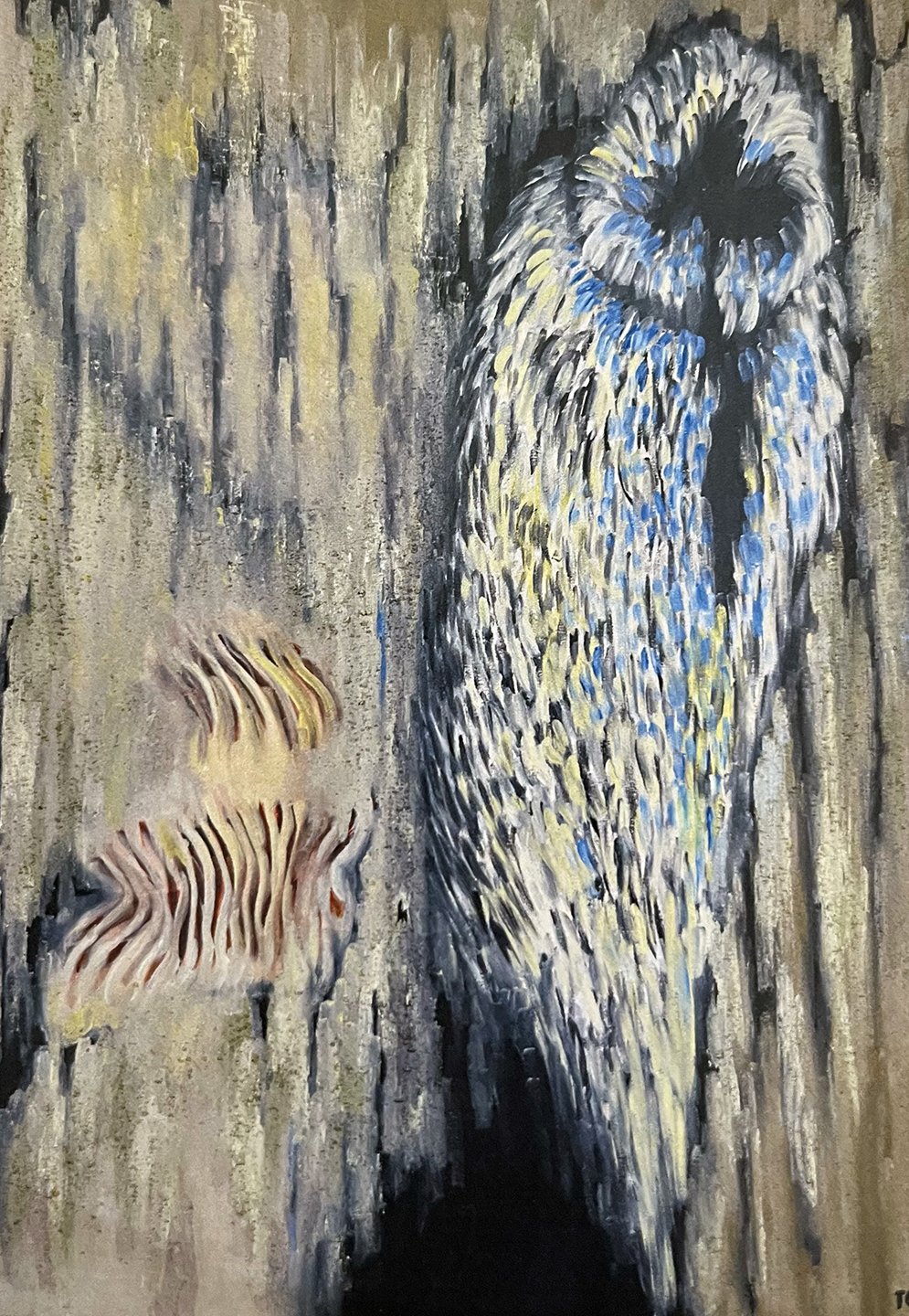
The owl has claimed the redwood where the crows nest. (That is a crow behind the owl, unsuccessfully yelling at the owl.)

The finches and sparrows and various other birds freely come and go, ready to snatch nesting materials.

One of the people detained upon entry to the US last week was composer Andrew Balfour, on his way to perform with the Amabile Choirs at Carnegie Hall, conducting selections from his work Tapwe: Songs of Truth. There was some mistake in his papers, and he was held for hours in isolation, phone and luggage taken from him, until he was given a choice: he could wait (for days) for an immigration judge to decide his detention, or he could take a flight back home to Toronto, to which he was then escorted by armed guards. He was lucky – some have been kept in detention for 2 weeks, completely clueless about what the accusations consisted of.

Anyhow, Balfour is a singular musician in the sense that he has two things that matter for his creative focus: his love for sacred music by Renaissance composers, particularly British ones, and his identity as a Cree, infusing indigenous spirituality into the music he creates. The music I am linking to today takes scores from Byrd and Tallis, and arranges them around Cree and Ojibway words. The project, called Nagamo , which means “sing” in Cree, is not a translation of the old texts, but an infusion of indigenous perspective. It’s quite something.

If you are interested in the whole composition, go here.

Below are some parts that I picked, demonstrating diversity of melodic and rhythmic approaches.

And at the very end you can watch a short video that introduces the composers and his biography.

Let the music fill you with a sense of resolve – people have overcome injustice and trauma for centuries.