Browsing Category

Documentary Film

Steadfastness.

A Third Way: Between mute submission and blind hate – I choose the third way. I am ṣāmid.Raja Shehadeh, A Journal of Life in the Westbank (1982).

I am writing this on the last day of Hanukkah, the Jewish celebration of a miracle during ancient times of war (between two Jewish factions, no less.) It is a minor holiday for us, in contrast to Christmas for others, coming up in a few days. The promise of peace through a newly born savior is central to Christianity, even though one might wonder about the seeds of conflict already inherent in the Christmas story per announcement in Luke 2:14 : “Glory to God in the highest heaven, and on earth peace to those on whom his favor rests.” Favoring one set of people over others is a recipe for conflict, in my opinion, and currying favor in order to be in the desirable in-group has often implied exclusion of others. But I digress.

Today’s thoughts are about peace, the absence thereof, and the steadfastness of those who try to dream about a just world amidst war and violence, including the anti-Semitic mass murder in Australia last week and the ongoing genocidal actions in Gaza for the last 2 years.

There is a term in Arabic, Sumud, which means “steadfastness” or “steadfast perseverance”. In one interpretation, it encompasses everyday nonviolent resistance against injustice imposed on you. Sumud is an alternative to and rejection of passive submission to oppression and dispossession. It became an important aspect of Palestinian existence under Israeli occupation, summarized early by Edward Said as work which “becomes a form of elementary resistance, a way of turning presence into small-scale obduracy.” (Ref.)

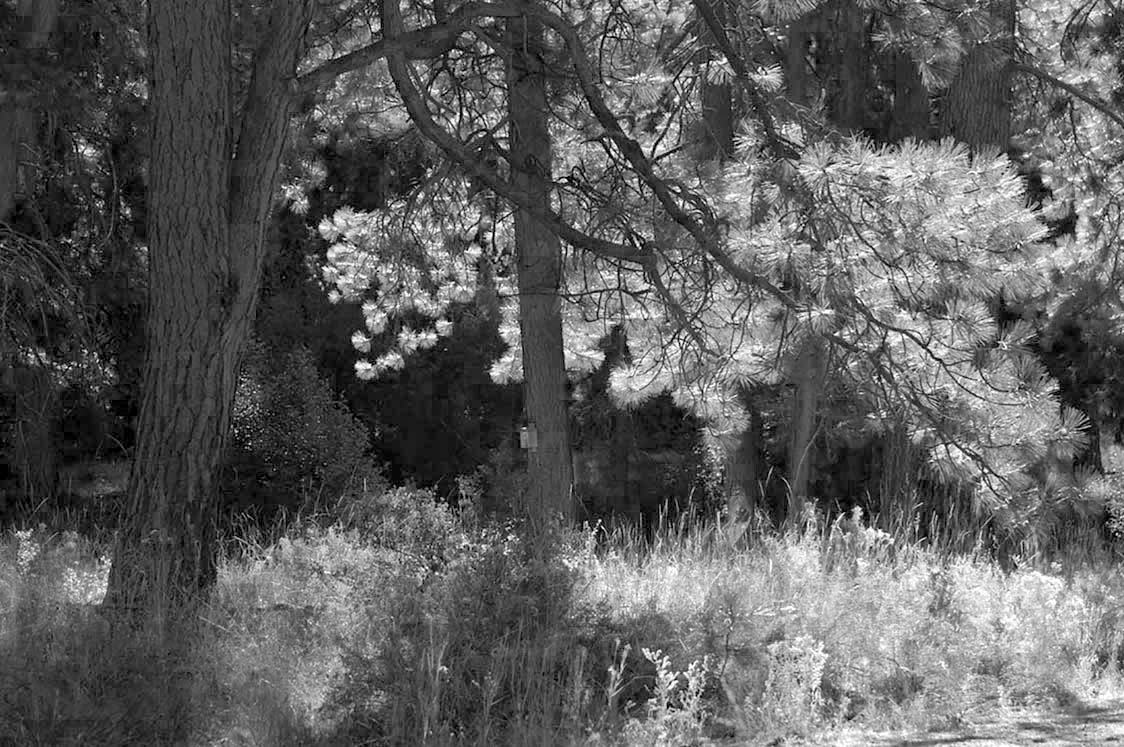
Folks at the Arab Educational Institute in Bethlehem defined the sumud concept as, “on the one hand, [relating] to a vertical dimension, ‘standing strong’ on the land, having deep roots. On the other hand”, sumud indicates “a horizontal time dimension – an attitude of patience and persistence, of not giving up”, despite the odds. (Ref.) I chose photographs of roots and trees for this reason today.

A person who practices sumud is called ṣāmid, and I can think of no better example right now than Ahmed “Muin” Abu Amsha, a musician, sound engineer, composer, and music educator from Gaza. He has steadily worked with children under the onslaught of bombs and drones, teaching them music that incorporated the sounds of the drones, making something terrifying into something beautiful. He insists that music is just as important as finding shelter and food, a steadfast focus on something more than war. His choir, Gaza Birds Singing, has provided meaning for so many youths living under excruciating existential threat. Watch for yourself.

Sumud is also the title of a new, short film by documentary film maker Jan Haaken, featuring a Portland anesthesiologist who regularly travels to Gaza to provide assistance to a medical system under systematic attack, and Omar El Akkad, a now Portland-based author whose most recent book, One Day, Everyone Will Have Always Been Against This, won the 2025 National Book Award for non-fiction.

Truth be told, I had to force myself to watch these 27 minutes, given how overwhelmed I feel by my mix of emotions every time I think of Gaza. The sorrow over the Israeli victims of the Hamas attacks; the subsequent killing, maiming and psychological torture of Palestinian men, women and children for two full years. The horrid and completely counterproductive Israeli response, with our tax dollars supporting an indiscriminate war against civilians. The lack of will of the political establishment around the world to put an end to the slaughter. The undeniable fact that the current “cease fire” is a sham, with more than 360 Palestinians, mostly kids and the elderly, killed since it was announced 10 weeks ago. I just want to hide my head in the sand.

I did watch, though, and learned a lot, much of it new to me, including the report of the anesthesiologist on the systematic nature of the injuries they encountered with victims all waiting in lines at food distribution centers. But much of the film also gave me renewed hope that there are people out there who can and will help, with their courage, their wisdom, their insights and longing for justice, to move ahead. These are, of course, people who need us, in return, to join for collective actions that might have an impact on ending the war. In an earlier print interview, author Omar El Akkad outlined his observations and recommended action, asking: “How does one finish the sentence: ‘It is unfortunate that tens of thousands of children are dead, but …’”

Pondering this sentence might be a first step towards overcoming the tendency to avoid facing what is going on in the Middle East, a tendency otherwise fueled by the need to keep one’s peace of mind somewhat intact in the face of the onslaught of bad news in our world. If we want to be agents of peace, we likely need to leave our clinging to peace of mind behind. Period. It’s our turn to embrace the concept of steadfastness, not as cultural appropriation but as an expression of solidarity with victims everywhere.

If you are interested in screening this documentary with a group of friends or colleagues for free, you can go to the website. In the lower left corner is a red square where you can apply for a free link to see the film.

***

People who decry the extent of Palestinian suffering are constantly challenged to justify themselves, particularly so if they are Jewish. Anyone standing in solidarity with Palestinians is tagged as suspicious, as if support for this devastated population necessarily involves anti-Semitism. This challenge, though, is incoherent, and there should be no obstacle to asserting two simple concepts at once: a respect for Jewish lives and a respect for Palestinian lives; a rejection of anti-Semitism, and an abhorrence of the indiscriminate killings of Gazan civilians. Why do I have to defend myself for these simple, humanistic statements? Why do I have to justify them and defend myself against the bizarre notion that these views are anti-Semitic?

Just look at the table of contents of the current issue of Jewish Currents, the award-winning quarterly of politics, culture, and ideas. There you will find a plethora of reports and analyses authored by people raising their voices against those who have distorted all discussions of the war in Gaza and the future for a Palestinian homeland, deliberately (and falsely) equating anti-Zionism with anti-Semitism, and falsely condemning calls for Palestinians statehood as anti-Semitic. Amid the horrors of the reality in Gaza, it is dismaying that so much time and energy are now spent defending against how the notion of anti-Semitism is instrumentalized to push through political projects that are rooted in very different considerations.

A poignant summary comes from Will Saletan at The Bulwark, noting how supporters of contemporary Zionism, ever more exclusionary and territorially expansive, play into the hands of anti-Semitic terrorists like the Bondi Beach murderers.

Supporters of Israel have shifted their position again. Any endorsement of Palestinian statehood, they contend, is an invitation to antisemitic violence.

This is a false and dangerous argument. If you tell people that accepting Palestinian statehood is tantamount to promoting or provoking the murder of Jews, you’re erasing the nuances that make coexistence possible. You’re conflating Palestinian autonomy with opposition to Israel. You’re conflating opposition to Israel with hostility to Jews. And you’re conflating hostility to Jews with murder.

All of these conflations serve the interests of antisemitic terrorists. Their goal is to polarize the issue. They want to equate supporting Palestine with killing Jews. Prominent supporters of Israel are now, in effect, endorsing that equation.

***

I started with references to the sound of drones, and I will end with another one.

Let me close with a poem by Mosab Abu Toha, who received the Pulitzer Prize for Commentary with essays published in the New Yorker this year (2025). His first volume of poems won the American Book Award, the Palestine Book Award and Arrowsmith Press’s 2023 Derek Walcott Poetry Prize.

Things You May Find Hidden in My Ear

For Alicia M. Quesnel, MD

I
When you open my ear, touch it
gently.
My mother’s voice lingers somewhere inside.
Her voice is the echo that helps recover my equilibrium
when I feel dizzy during my attentiveness.

You may encounter songs in Arabic,
poems in English I recite to myself,
or a song I chant to the chirping birds in our backyard.

When you stitch the cut, don’t forget to put all these back in my ear.
Put them back in order as you would do with books on your shelf.

II
The drone’s buzzing sound,
the roar of an F-16,
the screams of bombs falling on houses,
on fields, and on bodies,
of rockets flying away—
rid my small ear canal of them all.

Spray the perfume of your smiles on the incision.
Inject the song of life into my veins to wake me up.
Gently beat the drum so my mind may dance with yours,
my doctor, day and night.

BY MOSAB ABU TOHA


Music today is more by the Gaza Birds Singing – here, here and here.

The entire album, Wings over Wire, can be found on Bandcamp for a pittance. All proceeds for purchase go to the Gaza Bird project.

The Palestinian Exception

I don’t sleep very well since the L.A. fires broke out. I have this recurrent thought of “One moment you sit in the boat, the next you drown in the water,” an obviously inappropriate metaphor regarding the type of catastrophe, but a perfect one capturing the nature of the suddenness of unexpected disaster.

I try to soothe myself to sleep with thoughts like “The kids are safe, they are physically unharmed. They got out alive, they are physically unharmed.” I try to generate images of an armada of kayaks, canoes, motorboats, rafts, paddle boats circling the displaced and coming to their rescue – so, so many people have reached out, offered and provided help, throwing the metaphoric life preservers. I try to imagine forces that will eventually bring light back to the darkness, for the many thousands of people far more harmed than my own.

Still can’t sleep. I say to myself, “At least my kids aren’t facing death as soldiers or civilians in Ukraine. At least they aren’t bomb and starved in Gaza.” Somehow downward comparison does little during restless nights, when you look at your own family’s photographs of an urban landscape resembling a bombed Hiroshima.

Gaza is, of course, not only coming up in my nightly distress – the hopeful news of a cease fire came out yesterday, reminding us of what is at stake. Here is a link to a collection of experts from different backgrounds discussing the questions raised by the potential ceasefire. As of this morning, the Israeli cabinet has not even been convened to ratify the agreement, since the powers that be are backpedaling.

In this context I thought you might be interested in related issues closer to home, faced by students and academics in this country who protest Israel’s war as well as our participation in it. (If you want to read a hair-raising report on American involvement in the atrocities committed in Gaza, here is the newest in-depth assessment by Pro-Publica.) The academic situation recalls the days of McCarthyism. (Similar if not worse conditions apply to Europe, in particular Germany, I might add.)

Here is the press release of an upcoming documentary film that I very much encourage PNW folks to attend.

Portland, OR – The Palestine Exception, a Portland-based documentary film directed by Jan Haaken and Jennifer Ruth, will screen at Cinema 21 on January 26, 2025. The screening will be followed by a panel and Q and A moderated by Marlene Eid, producer and Psychology faculty member at Portland Community College, and panelists Stephanie Wahab, professor of Social Work at PSU, Hannah Alzgal, a PSU alum featured in the film, and the film directors.

Here is the link to a trailer, so you can judge for yourself.

The Film

After years of right-wing assaults on higher education, attacks took a new form in 2023 and 2024 that many activists describe as the new McCarthyism. As students across the country organize protests against Israel’s war on Gaza, decades-long taboos in academia around criticism of Israel—the “Palestine exception”—are shattered.

A Palestinian-American PSU student in the film recounts the deeply personal toll of administrative reactions to the protests : “I think the school didn’t ever consider the fact that there are actual people that attend [their] university that are genuinely, and I mean really being affected by what’s going on. They’ve lost land, family members… Approaching me as if I’m deserving of being collectively punished is part of this idea that [they] don’t care about Arab suffering.”

The Palestine Exception features professors and students as they join calls for a ceasefire and divestment from companies doing business with Israel and face waves of crackdowns from administrators, the media, the police and politicians. Scholars from diverse disciplines explain what is at stake in these protests and why so many young people identify with the Palestinian cause. The documentary unfolds as a story of college campuses as sites of both rebellion and repression, where personal and collective histories converge in unexpected ways. 

About the Filmmakers

Jan Haaken is professor emeritus of psychology at Portland State University, a clinical psychologist, and award-winning documentary filmmaker. Her documentary films focus on work carried out in contested social spaces and sites of political controversy. Haaken has directed nine feature films, including most recently the 2-part Necessity Series: Oil, Water, and Climate Resistance and Climate Justice & the Thin Green Line and Atomic Bamboozle: The False Promise of a Nuclear Renaissance. Jennifer Ruth is a professor in the School of Film and associate dean in the College of the Arts at Portland State University. She writes extensively about academic freedom and higher education. She is the co-editor, with Valerie Johnson and Ellen Schrecker, of The Right to Learn; Resisting the Right-Wing War on Academic Freedom. The producers are Jan Haaken and Marlene Eid, a faculty member at Portland Community College. Eid founded and was the first president of PCRF, Palestine Children’s Relief Fund, chapter in Portland, Oregon.

Music today was played by the West-Eastern Divan Orchestra in Ramallah many years back. The orchestra of Arab and Jewish musicians was founded by Edward Said and Daniel Barenboim 25 years ago. Here is the organization’s statement from August of last year (2024)

As we witness and mourn tens of thousands of lives destroyed and communities shattered while political courage remains absent, we, the musicians of the West-Eastern Divan Orchestra, are horrified and deeply saddened by the extreme escalation of violence in the Middle East, which continues to intensify daily.

The profound humanistic commitment of Maestro Daniel Barenboim and the late Palestinian intellectual Edward Said stands at the core of our orchestra. In and through our music we seek to model a life of mutual recognition between equals.

We call on the local and the international communities and their leaders to stop procrastinating and put an end to the cycle of violence by effecting a permanent cease-fire, ensuring the safe return of all hostages and unlawfully held detainees. It is imperative to work toward a long-lasting peaceful resolution grounded in equality.

August 2024

Protecting the Region

21 years ago two environmental organizations, Columbia River United and Clean Water Columbia, joined hands to form the Columbia Riverkeeper. The organization’s goal is to protect clean water, defeat fossil fuel terminals, and engage those living along the Columbia River, with the help of rural and urban communities, tribal nations, local businesses, strong coalitions, and its members.

During this time they have been amazingly successful in accomplishing many of their goals. Their organizing, protesting and legal actions contributed to (and in some cases singularly generated) important outcomes benefitting the environment and our region’s people.

In 2011 Riverkeeper, with the leadership of Umatilla and other tribes, pushed Oregon to adopt the nation’s most protective limits on toxic pollution in fish.

In 2014 they helped to stop coal export when Oregon rejected a dock-building permit. Their law suit had the Army Corps agree to reduce toxic oil discharges from large dams.

In 2015 their actions led to a landmark Fossil Fuel Resolution being passed in PDX, the oil refinery plans in Longview, WA were exposed, and the Columbia estuary remained LNG-free.

Six years of engagement finally led to a defeat of the Millennium coal terminal in Longview, Washington in 2017.

And in a major victory after the derailment and subsequent fire of a crude oil-carrying train along the river in 2016, the Port of Vancouver voted to end Tesoro’s oil-by rail terminal lease and Washington Governor Jay Inslee rejected the proposal in 2018 (Tesoro sought to ship over 131 million barrels of oil per year down the Columbia River.)

2021 was a successful year for the Riverkeeper as well – they helped to ensure that the Millennium coal export terminal proposed in Longview, Washington, lost its rights to build along the Columbia. And their lobbying contributed to the Washington Department of Ecology’s denial of permits for a proposal to build the world’s largest fracked gas-to-methanol refinery, citing significant negative impacts on our climate and the Columbia River. (Northwest Innovation Works, the project backers, may appeal the decision.)

Columbia Riverkeeper, our members, and our allies have together defeated more than a dozen fossil fuel export proposals targeting the Columbia River. Collectively, we have prevented the fossil fuel industry from turning the Lower Columbia into a fossil fuel highway. In the process, we have helped fight climate change and forged lasting bonds of friendship, solidarity, and political will. ”  (Ref.)

What makes an organization so effective? I decided to look at a single project – the fight for cleanup of a toxic site near the Bonneville Dam, Bradford Island, to see if I could find some answers. The U.S. Army Corps of Engineers dumped toxic pollution in and along the Columbia River at Bradford Island for over 40 years, and resisted until now to be put on the Superfund List of the EPA that releases critical funds for waste removal. The resident fish show the highest pollution in the PCN.

Statistics from the Columbia Riverkeeper Website

After years of pushing from concerned citizens, tribal governments, activists, non-profit organizations and a few politicians, the EPA announced plans to list the site and a large adjacent section of the river to the nation’s toxic cleanup program in September 2021. That started a 60 day process of public comment collection which closed last week. Over 1600 people and seven organizations submitted comments in support for the Superfund listing.

The key to success lies in forming alliances, which the Riverkeeper has focussed on for 20 years of its existence. Below are just some who signed the letters pleading with politicians.

Among the most important allies are the tribal nations of the regions who bring knowledge and leadership to the protection of the land and river. In this particular case the Yakama Nation has led this fight for over a decade.

It helps to have smart legal council that pushed politicians and administrations and that communicates in clear and direct language so that complex issues can be grasped. In a region that counts many Spanish speaking folks it is also great to have bi-lingual messaging happen in both English and Spanish, distributed on youtube or soundcloud, mediums easily available to all.

Bonneville Dam

Having a website that makes every action transparent, delivers details and references (my source, certainly, of a lot of what I list) is a huge help. The site also links to other forms of education, in this case, for example, a webinar on Bradford Island issues. A good website provides overview over the history of the organization, step by step achievements for various projects, naming of all involved, calls to action with helpful details, anything that encourages readers to feel they are welcome and potentially of use in working for the shared goal of environmental projection. https://www.columbiariverkeeper.org delivers on all of those fronts.

Involvement that goes deep into communities providing all kinds of solidarity and support in both directions. Interviews with tribal representatives and community organizers, or community forums allow all to speak and ask questions help to spread the word and increase involvement.

Fundraising, from artists who donate part of their sales to local coffee shop owners who provide freebies keeps the target in view.

And speaking of which, this Thursday, 11/18/2021, Columbia Riverkeeper is hosting a virtual screening and panel discussion fundraiser regarding a documentary film that, as my regular readers know, I’ve been involved with as production photographer: “Necessity Part II: Rails, Rivers & the Thin Green Line,” a film by Jan Haaken and Samantha Praus. I have reported previously on the documentary which depicts the regional struggle for environmental protection in Oregon Arts Watch here and my own blog here. Proceeds from the fundraiser go to the Columbia Riverkeeper and the documentary project.

Panelists include:

  • Jan Haaken, Professor Emeritus of Psychology, Portland State University and documentary filmmaker
  • Cathy Sampson-Kruse, Waluulapum Band, Confederated Tribes of the Umatilla Indian Reservation, Associate Producer, and champion of the Thin Green Line movement. 
  • Direlle Calica, Confederated Tribes of Warm Springs, Director, Institute for Tribal Government, Portland State University
  • Lauren Regan, Executive Director and Senior Staff Attorney with Civil Liberties Defense Center 
  • Jan Zuckerman, Local activist, retired teacher, and a founder of the Environmental School

Here is the direct link that allows you to sign up, or just check it out, if only by watching the trailer. I photographed the agricultural efforts along the river once again last week. Maybe the images of orchards and vineyards encourage you to support, if you can, those who are fighting the good fight to have the region protected for future generations, a region for which a healthy Columbia is essential.

Fish in the river, fruit and grapes on land can flourish if we protect and fairly distribute water resources. Unfortunately that is often under dispute. Here is the latest conflict: a week ago the city council of The Dalles on the Columbia River, approved an agreement to deliver an undisclosed amount of groundwater to Google, which plans to build new data centers in the city. With the council’s unanimous vote, the tech giant has pushed through another key piece of its plan to expand its operation in the Columbia River Gorge. The residents were NOT happy, particularly since the amount of water to be secured has never been revealed, and is actively kept secret (including a threatened law suit about disclosure requirements.) The levels of water in people’s wells is already sinking, and no one knows what provisions were included in the contract to ameliorate the effects of further droughts. This is only a month after a huge package of tax breaks was voted upon in favor of Google. Dams, potential pollution and climate disasters, and now the sale of water to tech companies – protection of the river is more urgent than ever.

Music today from Indian Records Umatilla.