It takes enormous courage to deal with traumatic injury or other assaults on your physical existence.
Here is the most encouraging story of a man who turned the loss of his limbs after climbing into a Blizzard into a life changer for himself and others afflicted with amputation. We are not just talking adjustment, we are seeing defiance of despair and constructive ways of handling traumatic change. I was beyond impressed reading this story:
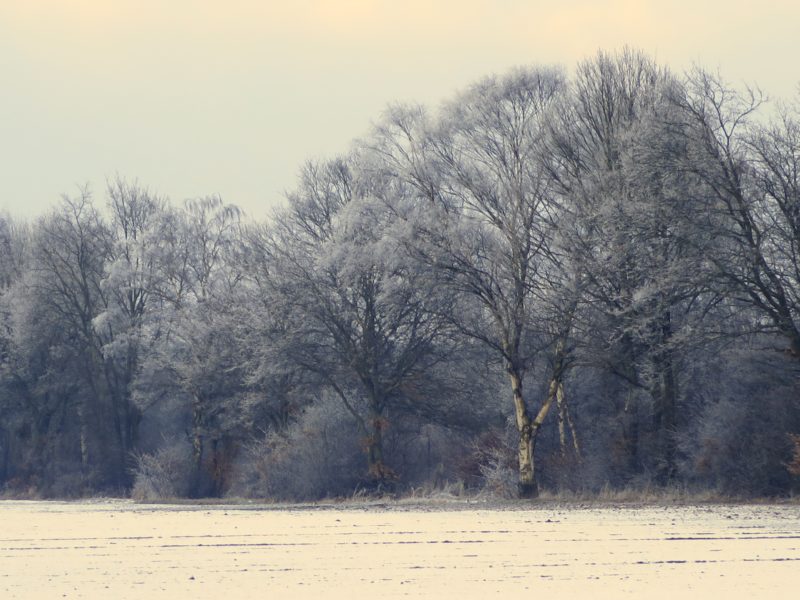
And since he was stricken during a blizzard I dug out some snow photos, their romantic appearance hiding the dangers associated with true winter. Give me rain any time!
This week Jews around the world celebrate Passover, a commemoration of the Jews’ exodus from Egypt, complete with tales of miracles, plagues, blind faith, leadership and a number of ritual foods that stand in for various experiences during slavery and the flight.
I have always associated the story of exodus with the concept of courage (either that or a desperation so deep that one was willing to throw all realistic beliefs overboard and entrust oneself into the hand of an unknown entity.) I prefer the idea of courage: the courage to break away, up and go regardless of an unknown and likely insecure future, the bravery to defy oppression.
Salvador Dali Plage avec telephone (excerpt)
This week, then, will be devoted to stories about courage that I have found in my reading, gleaned from various sources. I have no clue how I will choose the photographs to accompany them, so expect occasionally strange pairings. For today they will be excerpts from paintings I saw in January in a exquisite exhibit of surrealists at the Kunsthalle Hamburg. They remind me of the trek through deserts, the parting of the red sea, the plagues descending n Egypt and voices calling from the wilderness.
Yesterday I came across the link below about a photographer who visited his dying mother at his childhood home in Canada to say good bye. On his way back to the airport, he noticed the beauty of little pieces of plastic caught on fences all along the roads. He eventually compiled a series, Snag, of astounding ephemeral beauty and wistfulness to mourn his mother’s loss. Rather than putting unexpected objects in familiar places (yesterday), these are familiar sights seen with a different framing. Do yourself a favor and look at it for all the three minutes it takes, it’s worth it and will produce that moment of pause that we’re after this week.
When my father died I was not yet photographing, that came some years later. If I had had a camera, I would have perhaps snagged the many little pieces of paper that I found when clearing out his home. He had left incredibly organized lists who to call, what to cancel, whom to inform, what went where, which banks and insurances to deal with, accounts listed etc.
I cannot begin to describe how helpful that was, particularly given that I had about ten days overseas to settle whatever was necessary and empty the apartment together with my sister. He had the most distinct, small, idiosyncratic hand-writing. And with every sigh of gratitude that these papers delivered they also produced tears at the thought that I would never see this writing again.
One small strip was on his nightstand where he had jotted down a Tolstoy quote, apparently important to him. I have never found the source of it, and I can only quote from hazy memory since I can’t find the paper scrap in the chaos of my own desk, but it went something like this: the only superior power I acknowledge is kindness. (Really, that can’t be the true quote, since Tolstoy was so into religion…) in any case: the point is that kindness was something my Dad pursued and pursued successfully. He would have been 95 next week, a long 15 years without him.
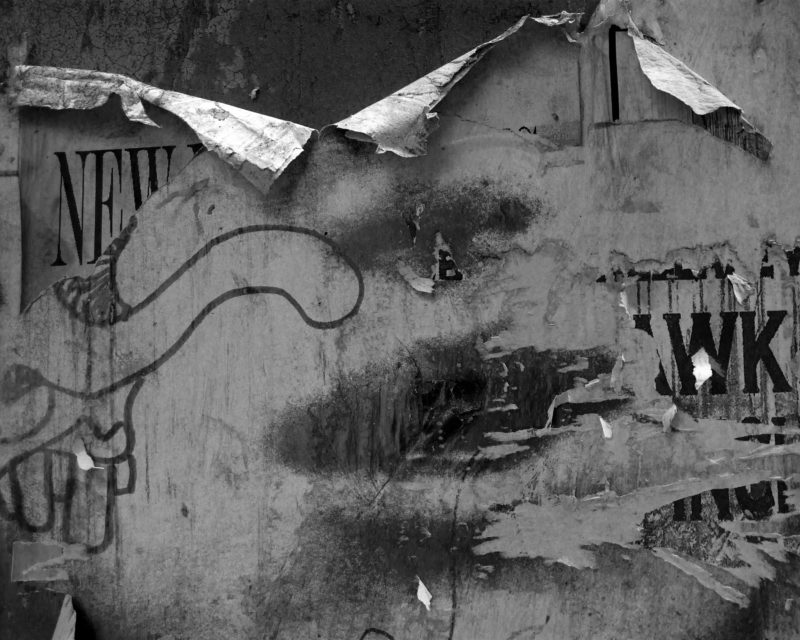
Photographs of abandoned paper(s) I’ve found here and there.
It’s not the piles per se that bring me joy. They fit into this week’s theme of joy only in the sense that they are testimony to a life that has become free of the compulsion to be a diligent Hausfrau.
I have piles in the sink more often than not. Easily justified by the fact that you should not waste water and electricity on a half-full dishwasher, and you might as well load it only if the sink is full…..
I have piles of shoes at the kitchen door, easily explained by the need for bringing out the dogs at unanticipated times day or night.
I have piles of laundry waiting to be ironed and folded (I spare you the sight) – easily justified by the fact that I find ironing quite therapeutic, and so like to do it for drawn-out sessions.
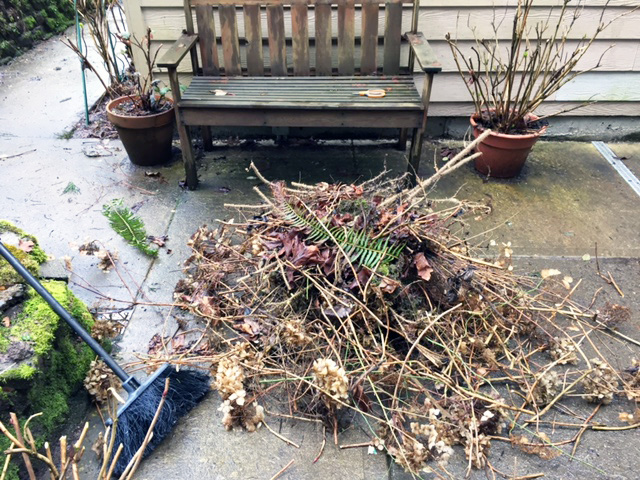
I have piles in the yard, from weeding, or pruning, or other clean-up activities and am often too stiff or tired to pick them up after I did all the work that produced them in the first place.
The joy lies in the freedom just to leave them be – no bending to social control issues of what would the neighbors think (we are blessed with terrific ones.) No responding to inner impulses of a deeply ingrained sense of duty. No compulsion towards neatness, just glorious choice to spend my time on what matters to me more than getting rid of piles…… as, for example, producing art, writing blogs, reading or amusing myself with this singing wonder:
It’ll be short today – I came across a fascinating article on a photographer who reenacts portraits of his ancestors; Christian Fuchs, a Peruvian artist, has been doing this since he was 10 years old. Having explored his immediate family tree, he is now venturing out to do genealogy research since he believes he is distantly related to Queen Elizabeth I, Mary Queen of Scots, and William Shakespeare as well.
Why all this in a week devoted to face recognition?
I believe that people like to see familiar attributes in both those who come before them and those who come after. “My, little – fill in the name – looks just like aunt Mathilda, doesn’t she?” There must be some comfort in there, some sense of continuity, a sense of tribe. Which is how we started this week – namely that the whole concept of recognition is important in order to distinguish between friend and foe. Maybe some need that sense of belonging so badly that they are willing to switch their own looks for those of their family – if only temporarily….Check out the link if only for the pretty amazing pictures.
Any discussion of faces has to include some discussion of race. There is a cliche that has been around for years: “they all look alike to me.” Often, this cliche is offered with Caucasians talking about Asians, but all other groups can be considered as well. More important, and unhappily, the cliche has a core of truth.
Many studies have compared people’s ability to recognize faces of their own race with their skill in recognizing other faces. Some of the evidence comes from laboratory studies. Troublingly, some of the evidence comes from police records. The results are clear. The error rate for Whites identifying Blacks (or vice versa) is about 50 % higher than the error identifying a same-race face. Other results show a similar pattern for Whites and Asians, and also for young people recognizing old people and vice versa.
Interestingly, this effect is not a direct psychological result of racism, but of course it can and does have racist consequences. Specifically, the evidence says that the degree of difficulty you’ll experience in recognizing other- race faces is independent of your degree of prejudice. What does matter (at least to some extent) is degree of contact, but we need to be careful here; the effect does not depend on whether you see a mix of black and white faces as you go down the street. Instead, the effect depends on whether there is a mix of black and white faces in your social life – so that you routinely need to distinguish and identify specific individuals of other races. Even here, though, the difference for other-race recognition remains, it’s just smaller. The effects of racial segregation, then, do persist and lead to something that has dire consequences in criminal proceedings, since mis-recognizing a face by witnesses to a crime can lead to wrongful convictions.
Oddly enough, there is at least some indication that the specialized mechanisms for face recognition (see all of this week’s blogs) are less used for other-race faces. As a result, in recognizing them, people often seem to shift into a less effective feature-by-feature analysis. Peculiarly this sometimes makes them more accurate in describing other- race faces but less so in recognizing them.
If you want to read a compilation of more recent exploration of the topic look here (truth in advertising, it’s a volume I edited heavily since it was written on or near our kitchen table.)
We have been discussing the specialized skill of recognizing faces. What other specialized visual skills do people have? As it turns out, there is debate over how exactly to define the “face skill.” Some people think that the mechanisms we use to recognize faces are only used for faces. Other people think that these same mechanisms are used whenever two factors are in place. First, you are making judgements within a massively familiar category. Second, what you are judging is the identity of a specific individual within that category.
Some of the evidence for this debate is fun, although, tragically, it does involve brain damage which obviously is no joke. In particular, we’ve already talked about prosopagnosia and what it does to face recognition. But there is a well documented case of a prosopagnosic farmer who lost the ability to tell his cows apart. There is a prosopagnosic woman who lost her ability to tell cars apart and can only find her own vehicle in a parking lot by reading license plate after license plate. Try that at the mall… And finally, there is a prosopagnosic birdwatcher who lost the ability to distinguish different types of warblers.
And then there are the chicken sexers… they can tell apart, in hour-old chicks, who is female (valuable as ehh producers) and who is male (less valuable commercial commodity.) The do not use the face recognition processes; instead they know exactly where to look and for what to look. If you’d learn their simple trick, you, too, could be a chicken sexer!
On Monday we mentioned evidence that face recognition follows different rules than other forms of recognition and is served by specialized brain tissue. But what are those rules?
The first part of the answer lies in the fact that we don’t recognized faces by looking at the individual features. Instead, we recognize faces by perceiving complex relationships – the spacing of the eyes relative to the length of the nose and so on.
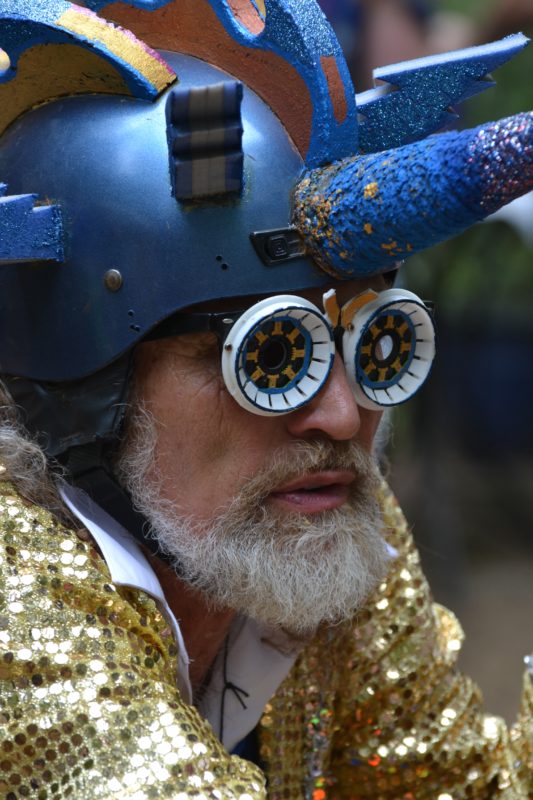
Common sense says that you best disguise a face by changing or hiding the features (unless you have access to a costume featured in today’s cover ….). It turns out, though, that you can much more successfully disguise someone by changing familiar proportions into something else. For example, a hat pulled low, a cap or bandana, or bangs added, hiding the forhead and therefore changing the face height, are extremely effective as a disguise.
But it is not just the relationships. People recognize faces by comparing the relationships of the face in question to their understanding of an average or typical face with its relationships. As a result, people are actually more successful in recognizing portraits that distort the face, slightly exaggerating the ways in which the face differs from the average face. You can take this too far, and lose recognition, but a slight charicature helps recognition.
In fact, with a bit of computer manipulation you an distort a photograph by slightly exaggerating the relationships. You then show people the actual (accurate!) photograph of someone and then the distorted one and ask them which photo is a better likeness. People choose the exaggerated photo, apparently thinking that the inaccurate image is more accurate.
Of course, caricatures are perhaps more common in editorial cartoons than in fine art. However, modern portraiture has really committed to showing the essence of a person rather than his or her photographic likeness. Maybe then, the modern artists are more sensitive to psychological mechanisms and less to the demands of visual accuracy.
I came across an article about (gorgeous)photographs of transgender people who seem to exaggerate stereotypic notions of femininity or masculinity in terms of outfits, make-up, body shapes and musculature. I wonder if we are seeing a parallel here with regard to being recognizable – given how little society recognizes them, in every meaning of the word, maybe slight caricature is the visual equivalent of “woman!” or “man!” – just wondering.
Yesterday’s post was about people who are bad at face recognition. It is a recent discovery how common this problem is. My Oma already knew that some people are bad at recognizing faces, but she certainly didn’t realize how extreme the differences in ability can be. Today let’s look at the other end of things, namely people who are especially good at face recognition.
You might think that you’ll find these super recognizers in certain professions, but there is no evidence for that. Many people assume that police officers, for example, are particularly good at recognizing or remembering faces. In fact, in may court rooms judges assume an identification coming from a police officer deserves more trust. However, when you do the comparison between cops and civilians, cops have no edge.
As a different possibility, you might think that portrait artist have a great advantage however there is no evidence for that either. In fact, we saw a hint of the evidence yesterday, with one prominent portraitist who is actually quite impaired in face recognition. More generally, though, head to head comparisons between portrait artists and others show no difference.
However, there are huge differences in recognition skills among all people and so you can find artists and police officers and ordinary civilians who are “super recognizers.” Just as there might be some mechanics, teachers or nurses who stand out in that regard.
You may have seen the article in the New Yorker how London’s Scotland Yard is trying to locate these people and try to recruit them and they are, of course, on the right track.
These people are virtually perfect in their face recognition even when they have not seen the person for a dozen years, even if the person has dramatically changed their appearance through aging or cosmetics or anything else. You might think that this talent would be a blessing, but at least one super recognizers say the opposite. Imagine you are approaching someone and say, “Didn’t you work at the bookstore 15 years ago?” when you immediately recognize the Powell’s clerk…. Many people would and do find this creepy, as if you were stalking them and will leave you without answer in a hurry.
Well, I, personally, am looking with my eyes, but seeing with my heart (and if that fails, with my camera)….. after all it’s 2/14
This week we are trying to get back to psychology for a little bit.
I thought I’d start with faces.
Overall humans are extraordinarily good at recognizing faces, and this cannot be a surprise. After all, we all need to know who is friend and who is foe. As a matter of fact there is reason to think there is a special hunk of the brain that is specialized for just this purpose. It’s call the fusiform face area, or FFA. Scientists have believed for years that damage to the FFA is what causes the pattern, sometimes also called face blindness, more properly called prosopagnosia.
People with this disorder cannot recognize their friends, or, for that matter, their spouses or children, or for that matter themselves. They will in some cases think that someone is staring at them, when in fact they are looking at a mirror.
It has become clear, though, that many people have prosopagnosia from birth with no detectable brain damage. One famous case was Oliver Sacks, another remarkable case is the artist Chuck Close. Think about his portraits. They are made up of a mosaic of little tiny pieces because he is unable to recognize the whole Gestalt.
A further key point is that prosopagnosia is NOT all or none. Many people have degrees of this limitation and get through life by recognizing friends or family by focusing on particular items like jewelry or ponytail; they are only lost if these things change.
If you are curious to know if you have hints of prosopagnosia, point google at “Cambridge Face memory test” and in 20 minutes you know where you stand.