First they were confined to slavery in Egypt, then to wandering in the desert.
Now Jews around the world celebrate Passover Seders on Zoom or Skype, confined to their dwellings. I have not decided whether it is helpful to draw the parallels to prior suffering – and the fact that it was overcome – as is custom during the service around the Seder table. Or if it is just reminding us that history repeats itself, and the sense of prevailing danger and unstoppable evil never ends.
Luckily we can distract ourselves with poetry.
Bracha Meschaninov, a South African Jew who moved with her family to New York state, published a poetry collection, Tender Skin,over 20 years ago that focusses on daily Jewish life. The simplicity of her poems hides the depth of the ideas, almost cunningly, as if she is not allowed to reveal her true intellectual strength.
This in turn, brought to mind two films I can recommend, (diametrically opposed to the life that today’s poet embraces.) Unorthodoxis a Netflix production loosely based on an autobiography by Deborah Feldman, describing a young Hasidic woman’s escape from her marriage and the confines of the communal system she lived in. One of Us , also on Netflix, is a documentary following several young people who made the same decision and paid extreme prices for trying to find their own way. It is a remarkable film, without the glitz that the Netflix series managed to add – although the main actress’s performance is stellar and worth alone to watch Unorthodox. If you have bandwidth only for one for this topic, choose One of Us.
Back to Pesach – here is something that feels probably quite familiar to several of us:
Pesach
House cleaned more or less kitchen surfaces covered more or less food ready more or less an experience of redemption more or less
The Seder
We chewed the hand-made bread of redemption and wine specially made children primed for performance… performed and wonderful guests came and prayed yet his eyes were sad and her skin showed strain
We left Mitzraim but in pain we stayed.
And here is the fitting musical accompaniment sent by a friend.
Chag Sameach!
And here are the traditional songs with explanation.
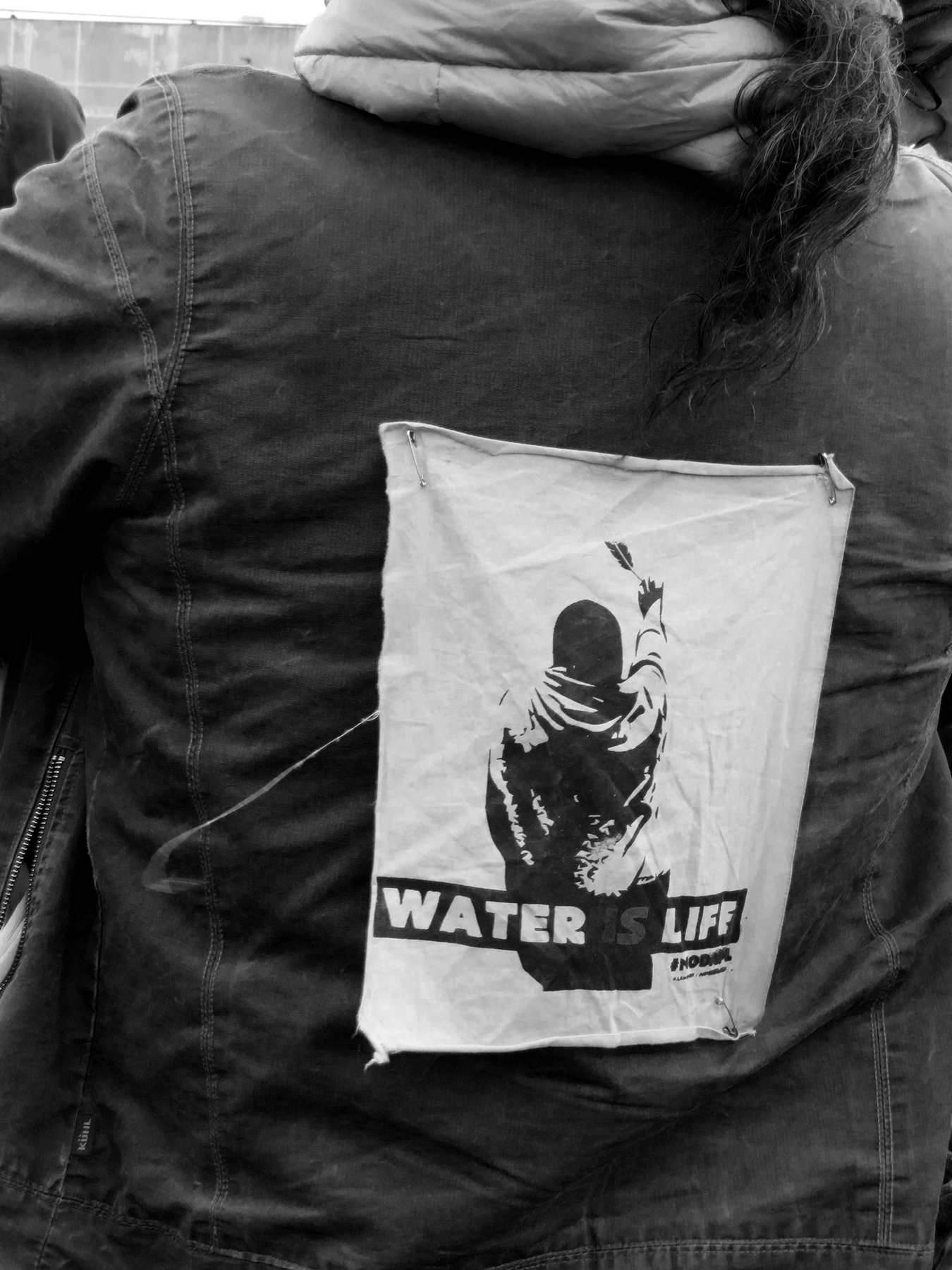
TIMES ARE HARROWING for people trying to protect Indigenous ancestral land and prevent accidents from pipeline spillage that would poison and pollute the regions’ land and water. The movement is taking place on many fronts, several of them cultural and artistic, including an Oregon-produced documentary film,Necessity: Oil, Water, and Climate Resistance, that focuses on the work of climate activists on the front lines and movement lawyers involved in supporting that struggle. And last week a group of Native American leaders and community allies in Portland gathered at the Port of Vancouver to protest the dangers of the continued use and expansion of pipelines, and alert us to what is going on farther north.
The Wet’suwet’en people in northern British Columbia, trying to stop construction of the Coastal GasLink pipeline (CGL,) were arrested by Canadian police and tactical teams in the dark of night by militarized police with night vision and automatic weapons, their camps destroyed and media hindered on filming and reporting the police action. The BC Supreme Court granted the company behind the Coastal GasLink project, TC Energy, an injunction to continue construction activities and issued an enforcement order for the RCMP to clear the area.
“TC Energy says it reached agreements with 20 elected First Nation bands along the pipeline’s route and has the necessary permits to build. It has hailed the Coastal GasLink project as a way to create jobs and bolster economic development. But Wet’suwet’en hereditary chiefs, who under Indigenous law hold authority over approximately 22,000sq km of land, say they never gave Coastal GasLink their consent to move ahead with the project.”
Protests are an urgent summons during a time when the 2019 UN Climate Change Summit failed to deliver, and scientific predictions of how fast we are approaching a point of no return are growing more dire by the day. The summons try to reach those who deny the dangers (or the very existence) of the climate emergency, those who ignore it and those who are giving in to helpless passivity in the face of it.
Cathy Sampson-Kruse, a Umatilla Tribal ElderPaul Che oke ten Wagner of the Vancouver Island Saanich Tribe
Those who are determined to raise awareness about the crisis, call for change, at a minimum, of our behavior, or, more urgently, of our whole system of relating to nature and each other. They are forging alliances across a whole spectrum of organizations and participants, setting aside differences in ideology and strategic approaches, and join forces to rescue this planet in whatever fashion is still possible. By necessity.
*
NECESSITY: OIL, WATER, AND CLIMATE RESISTANCE is a locally produced documentary film, directed by Jan Haaken and co-directed by Samantha Praus, that focuses on the work of climate activists on the front lines and movement lawyers involved in supporting that struggle.
Here is a trailer of the feature length film, that describes what is at stake for the health of our waters and the populations that depend on them.
https://vimeo.com/297226350
*
THE FILM INCLUDES conversations with lawyers who are central in protecting those who protect the waters. The conversations make it clear what is involved with organizing the movement and defending those who are accused of crimes around protest actions or to be made an example by the legal system to alert those who are contemplating joining the protest movement. One of the defenses under consideration is the Necessity defense, which states that when all legal and political means are exhausted it might be necessary to engage in non-violent illegal action to prevent irreversible harm.
One of the lawyers is Tara Houska, whose incisive opinion piece, My Culture is not Super Bowl Entertainment, was published on Super Bowl weekend in the New York Times. It called out the lasting damage done to Native Americans with the exploitation and degrading of their culture, particularly during the Super Bowl. The continuing use of mascots, and the nostalgic racism transmitted with stereotypes of the fallen noble savages is dehumanizing, and it hurts every new generation of Native American children, never mind their parents who have to live in a world with systemic suppression of opportunities to right the historical wrongs.
Tara Houska, Couchiching First Nation Anishinaabe
People like Houska, an Ojibwe from Couchiching First Nation, are changing that. As a tribal attorney, the Campaigns Director of Honor the Earth, co-founder of Not Your Mascots, a non-profit committed to eradicating Native stereotyping, and founder of the Giniw Collective, she pushes back, fights hard and smart, and is central to building alliances with those who can and want to be supportive. Here is Houska in a TED talk on the Standing Rock resistance movement.
One of her statements during the interview struck me as particularly important. Roughly paraphrased, as best as I remember: as allies, non-Native Americans have to learn to listen and respect that there is knowledge and wisdom regarding goals and strategies to combat environmental destruction and other consequences of climate change. As survivors of genocide, indigenous people all over the world have accumulated strength and insights that should not be superseded by Whites rushing in and thinking they know the next best tactic to achieve shared goals. Leadership in coalitions needs to be assigned to those whose very existence is threatened by potential environmental disasters.
*
IN THE INTENSIFYING conflict between industry and climate protesters, SLAPP suits abound. These are Strategic lawsuits against public participation (SLAPP) that are intended to censor, intimidate, and silence critics by burdening them with the cost of a legal defense until they abandon their criticism or opposition. These are in some ways only place holders, until state legislatures get their ducks in a row to pass laws that make anti-pipeline and other protest activities a crime. Since 2017 18 states have put forward legislation criminalizing protest, constitutional rights be d-mned. West Virginia, as just one example, has hearings today, February 10, on industry-drafted legislation (HB 4615) that would make peaceful civil disobedience against gas pipelines and other fossil fuel projects a felony.
Luckily there are experienced people one can turn to for issues concerning civil rights. One of them is Lauren Regan, a founding member and executive director of the the Civil Liberties Defense Center (CLDC) based in Eugene, OR, which supports “movements that seek to dismantle the political and economic structures at the root of social inequality and environmental destruction. We provide litigation, education, legal and strategic resources to strengthen and embolden their success.”
As a trial lawyer she handles state and federal criminal defense, SLAPP defense, grand jury resistance, and federal civil rights litigation against police and government agencies for violating the rights of activists and organizations – 3000 cases across the last 15 years together with her staff attorneys.
Lauren Regan, Executive Director at the Civil Liberties Defense Center
Here she is in a podcast where she talks about surveillance of social movements. (It starts out with very loud music, be warned, but then goes to normal decibels…)
The topic of alliances, in all their strength and challenges, came up in our conversations here as well. You cannot swoop in and take over what are the existential fights of certain groups. To achieve trust, furthermore, and create a blueprint for constructive collaboration, you need to connect and build relationships before crisis hits. That means extensive and longitudinal involvement between and learning from allies, so that a structure is established that carries everyone through when the need arises.
Given the potential increase in actions around climate resistance movements, this is something to be acknowledged.
*
NECESSITY: OIL, WATER, AND CLIMATE RESISTANCE, depicting the efforts and challenges of the resistance movement, was selected by the Doc Society NYC for their Inaugural Climate Story Lab as a film about climate resistance that could make a difference. The non-profit organization, with their mission “dedicated to the impact of art and the art of impact,” supports the production of documentary films and helps to connect them to global audiences.
Their partnering with the NECESSITY project makes it feasible to produce a film series featuring different regions where Indigenous and non-Indigenous allies confront the fossil fuel industry. The documentary series will educate about the front lines of climate resistance, including lessons that climate activists are learning about legal tactics and various rights and risks associated with the calls in the movement for acts of civil disobedience. Bearing witness – one possible contribution to climate activism in joint efforts to protect the planet.
Sometimes a piece of writing makes me drool. This, for example:
“The piece of music I have in mind lasts only forty-five seconds, which is shockingly brief measured against the inner world it evokes. In what I now know is a fragmentary motif, a few lowing bass notes rise like bubbles from the bottom of a pool, becoming increasingly ragged as they approach the surface. They get close enough to one another to imply melancholy harmony before they dissipate. The riff repeats only once, a little more achingly. Then the bass hands its figurative duties over to a dulcimer, whose jaunty fatalism carries the mood forward even as a more deliberate structure begins to eat away at the oceanic resonance of those bass notes. As the bass recedes into a supporting role, providing squiggly accents at odd intervals, a mental image slides back into inaccessibility too. In my memory, the soundtrack, by Henny Vrienten, to George Sluizer’s 1988 film The Vanishing, was an expanse of fretless bass only, mournful and spare, diaphanous and purplish, like neon light filtered through glass bricks. I feel a spasm of disappointment in realizing its magic is more contained than I recalled, that the film’s music on the whole is not remarkable enough to justify a soundtrack album in which I could wallow between viewings.”
Jaunty fatalism, oceanic resonance…. now wouldn’t you have liked to coin those terms? The short essay goes on to describe the actual affinity to The Vanishing beyond loving the introductory music: a longing for time spent without supervision, without fulfilling expectations of constant busyness, of “a reflexive drive to busyness defined my experience of free time as a terrifying void to be filled, a wish for blithe indifference to the internalized requirements of managerial bureaucracy,”(another winner!) (The film refers to a young French couple going on vacation before crisis erupts, evoking French cinematic history of all those aimless hours spent in Provençal town squares and at Mediterranean beaches.)
Loitering, in other words, seems to be a thing of the past. And even if you manage to take a bit or a lot of time off work, the space that opens is filled with: sound. Books on Tape at the elliptical. Music in your headphones while doing routine tasks like ironing or the dishes, or folding the laundry or cooking. Podcasts while taking a walk. I think the last one irks me the most – how are you going to hear yourself think, which is what walking allows you to do in the most effective ways possible? Never mind being connected to the soundtrack of nature that happens during walks in the woods, or connected to humanity which happen if you walk the city? From the New Yorker essay, linked above:
There, it becomes apparent that writing and walking are extremely similar feats, equal parts physical and mental. When we choose a path through a city or forest, our brain must survey the surrounding environment, construct a mental map of the world, settle on a way forward, and translate that plan into a series of footsteps. Likewise, writing forces the brain to review its own landscape, plot a course through that mental terrain, and transcribe the resulting trail of thoughts by guiding the hands. Walking organizes the world around us; writing organizes our thoughts.
Writing might organize the thoughts, but walking actually improves the content of them – there are numerous studies now that show that creativity and problem solving is enhanced because of free floating attention and spurious environmental stimulation during walks. That will not happen if your attention is focused on following Chris Hayes’ arguments.
Another way of looking at it:
On my afternoon walk I would fain forget all my morning occupations and my obligations to society. But it sometimes happens that I cannot easily shake off the village…What business have I in the woods, if I am thinking of something other than the woods? Henry David Thoreau, 1862, in an essay entitled “Walking”
The short clip below has been around for some years now, watched by millions of people. It is an appeal by a to-be-born daughter to her father, to create an environment where she does not have to deal with male condemnation, aggression and violence. Think of it what you will – I believe you will join me in feeling irritated by the comments that can be found after the video.
This is a random sample, and typically amplified by almost 1000 likes in the last of the ones above, for example, ranting against “toxic femininity and the cult of victimhood.”
I think they should all be forced to watch at least two of the movies listed below, to get their heads straightened out. Some of the films I could link to, the others can be found on Amazon, if you have a membership there. All have central characters that are strong women or girls, defying the odds, refusing to be silenced in coercive environments.
And then there is The Little Mermaid. The movie, not the H.C.Andersen tale. A recent article in The Smithsonian argues that this was a revolutionary feminist film 30 years ago.
“The central story of The Little Mermaid is, of course, 16-year-old Ariel’s identity crisis. She feels constrained by her patriarchal mer-society and senses she doesn’t belong. She yearns for another world, apart from her own, where she can be free from the limits of her rigid culture and conservative family. Her body is under the water, but her heart and mind are on land with people. She leads a double life. She is, essentially, “in the closet” (as symbolized by her “cavern”—or closet—of human artifacts, where the character-building song “Part of Your World” takes place).
When Ariel ventures to tell her friends and family about her secret identity, they chastise her and tell her she must conform. She must meet her father’s expectations, sing on demand, perform for the public and give up all hopes of a different life. Her father, King Triton, even has her followed by a court official. In her misery, Ariel flees to the sea witch Ursula, the only strong female in the entire film and thus Ariel’s only female role model. At this point, the movie becomes truly subversive cinema.”
Ok, Ursula is gender fluid, empowering and dishes out this or that feminist advice. But she also teaches Ariel “how to get her man” with tricks and make-up, and the movie ends with a happy end, girl gets boy. The original mermaid’s suicide was not something American audiences would have tolerated. So let’s not add it to the list of compulsory movie watching for misogynists. I think we have enough contenders, as is.
Photographs today are some strong girls, captured in 2013 at an interdenominational Peace Camp. What would I give to see what has become of them 7 years later.
Così fan tutte, misogynist for some, a forerunner to feminism for others, shall be today’s musical selection.
Hate to admit it, but when everyone swooned for John Travolta in Pulp Fiction I had a crush on Harvey Keitel. Riddle me that.
The memory came up when I listened to an interview by Terry Gross with the author Mattathias Schwartz covering his thoughtful and perceptive piece for the NYT on Mike Pompeo. The article is a must read, particularly in combination with his profile of Brennan from some months back.
Keitel’s name surfaced in the context of his role as The Wolf in Pulp Fiction and parallels were drawn to our current Secretary of State. Fixers wherever we look, it seems, this week….seamlessly transitioning from fiction to reality, from the halls of congress to the hotels in Hanoi.
Full disclosure: I happen to know Matt, see him once every other year or so for an evening. He notes in the interview that he does not easily attribute “smarts” to people but acknowledges that Pompeo is smart. Same could be said for Matt and one should add the equally important “not boring.” The sheer diversity of topics he tackles and subjects he latches onto is mind boggling. No wonder that his work is snatched up by major news publications, from the New Yorker, the NYT, the Wall Street Journal, Bloombergs, the LRB to The Intercept, and winning prizes. His New Yorker story, “A Massacre in Jamaica,” on the Christopher Coke extradition, won the 2011 Livingston Award for international reporting.
I could not find a link to a free version of Pulp Fiction. Just as well, since the topic of The Rapture came up in the interview (das Jüngste Gericht). Apparently there have been public references in Pompeo’s speeches to this spectacle brought down from up high. His avoidance to be nailed down by Matt’s questions of how much his Christian beliefs about the end times influence his politics made me once again wonder where we have landed in 2019 in this country. Which gives me, of course, the opportunity to link to a movie of same name, seen by almost 1 000 000 people on YouTube alone (and produced by Fallen World Productions, no less!)
Maybe watching something like this offers a glimpse of the universe of those who govern us or those who want to be ruled by the current administration….
Then again, why waste our time.
Let’s watch this instead, still a trailer, but the full documentary had its premiere day before yesterday in DC by the NAACP Legal Defense Fund and co-sponsored by Rep. Terri Sewell (D-AL) and Rep. John Sarbanes (D-MD); it can soon be ordered.
Rigged: The Voter Suppression Playbookdescribes what happens if political operatives try to subvert the sacred American principle of “one person, one vote,” hatching and pursuing this plan for years with too few of us noticing. Rather than worry about the Rapture, maybe we should worry about the reality of the decline of democracy. If only to ensure that we’ll get rid of fixers in the next round. Here is a good suggestion for a start, written by another of these young brilliants, Jamelle Bouie. :https://www.nytimes.com/2019/02/28/opinion/the-electoral-college.html?action=click&module=Opinion&pgtype=Homepage
Photographs are of old Dutch church murals about the Rapture.
How can you not be drawn to a movie review of an epic about the massacre of American Indians titled Serious Reservations? The body of the review, some 12 years ago, delivered as well when describing what was wrong with HBO’s Bury my Heart at Wounded Knee. Giving due where due was earned, it nonetheless concluded with the following paragraph:
But there, precisely, is the problem. Through no fault of its own except tardiness, Bury My Heart at Wounded Knee seems as if we’ve already seen it. Slow to build to a horrific last half-hour, its punches have been telegraphed. Since Dee Brown published his scholarly indictment more than 35 years ago, we’ve forded this river many times—carried, of course, on his shoulders, but still: We have guilt-tripped from the insouciant artfulness of Smoke Signals to the earnest moralizings of Walker, Texas Ranger; from Dances With Wolves, in which Kevin Costner sought if not to cross over at least to cross-dress as an aboriginal, to Into the West, Steven Spielberg’s nine-hour inquiry into lynching bees, land grabs, Bible nuts, prophetic utterance, and buckskin sex. This cultural appropriation—of glass beads, turquoise buckles, and dead buffalo, as of the blues—is our principal business, the marketing of murdered difference.
I was reminded of that because yesterday was the anniversary of a different historical event: Occupy Wounded Knee started on 2/27 in 1973.
I did not live in the US at that time but the protest received much attention in Germany, as did all things Native American which seems to have a deep place in the subconscious of the German left – I have always wondered if that is due to the fact that we can stand up for victims without for once being counted as the perpetrator. Mere speculation, of course.
In any case, in 1973 a group of 200 or so Oglala Lakota (Sioux) activists and members of the American Indian Movement (AIM) took over a tiny town known for its history — Wounded Knee, South Dakota, which had seen a massacre of 146 Native American men, women and children by white military forces 83 years earlier.
There was already trouble on the Pine Ridge Reservation when the caravan arrived and took over the public buildings. AIM had been called in by tribal leaders who tried to oust what they considered a corrupt tribal president, Richard Wilson. When impeachment proceedings failed, the U.S. Department of Justice sent out 50 U.S. Marshals to the Pine Ridge Reservation to be available in the case of a civil disturbance on 25 February 1973.
The takeover on 2/27 started a 71 day siege and armed conflict, with US marshals together with the FBI and National Guards blocking entrance and exits to the occupied town and preventing food from coming in, cutting off water and electricity. At that time it was the longest lasting “civil disorder” in US history. When a pilot tried to drop food from his plane on the 50th day of the stand-off, people ran out to grab it when agents opened fire. In the end the conflict saw two protestors dead and one agent paralyzed. As one former member of AIM told PBS, “They were shooting machine gun fire at us, tracers coming at us at nighttime just like a war zone. We had some Vietnam vets with us, and they said, ‘Man, this is just like Vietnam.’ “
Here is a summary of the time and what followed it from 6 years ago – I assume the statistics have not changed much and they are frightening.
The 2019 Oscar winning movie has been, shall we say, quite controversial. Here is a summary of much that was deemed problematic in this country trying to come to terms with race relations:
I am not writing much about it, because I’ve done so before and the sources above are informative, but also because I want to share what made me laugh, laugh hard.
Here are some of the spot-on the responses to a tweet by Jemelle Hill, staff writer at The Atlantic, after the announcement at the Oscars. They are various clever permutations from a Twitter thread ( with senders’ names cut for brevity.)
Green Book thinks you’re articulate and can assimilate well, but don’t move to where it lives.
Green Book was uncomfortable voting for a black governor in Florida and Georgia.
Green Book wants you to see both sides.
Green Book understands there “may” be Injustice but doesn’t like how and when you protest.
Green Book is very concerned about the level of gun violence in Chicago
Green Book thinks it’s incredible you’re NOT the first in your family to attend university
Green Book moved to this neighborhood for its vibrance and culture and also calls the police at least three times a week.
And enrolled their children in a charter school.
Green Book loves Kanye
Green Book has evolved into “not seeing color at all.”
Green Book is all for diversity in schools but doesn’t think their kids should be used in some experiment.
Green Book needs to see a permit.
Green Book is acutely aware of Reverse Racism.
Green Book is not racist, but….
Green Book thinks we should stopp talking about identity politics.
“Green Book wants to know why you can use N-word but Green Book can’t
Green Book just wants to wait for all the facts, okay? And then
when they come out, it’s in Green Book’s best interest to look into what happened before the camera started rolling.
Green Book never owned slaves and doesn’t see why it should be punished for things that happened centuries before it was filmed!
Green book think Colin Kaepernick is misguided, but seems like a smart articulate guy who really believes in what hes doing
Green Book wants to know where you’re *really* from.
Green Book truly believes that all movies matter.
Green Book and Howard Schultz grew up in the same projects
Green Book going around saying it “knows Spike Lee” without any further context
Green Book sometimes calls Jamie Foxx “Will Smith”.
Green Book claps on the 1s and 3s.
Green Book went to Avery and has a mixed cousin that attends Hillman
Green Book OBVIOUSLY hates that word and didn’t mean it that way, it was just caught up in a heated gaming moment.Green Book was chained to a black woman at a college protest 50 years ago.
Green Book thinks you’re “the help”.
Green book believes all lives matter
Green Book donated to the NAACP this month at work
Green Book wishes you would just get over it.Every time someone brings up slavery, GREEN BOOK yells, “I wasn’t there!”
Das doppelte Lottchen was one of the most famous children’s books of all time in Germany. It was written by one of my favorite authors as a child, Erich Kästner, and my American readers know it as The Parent Trap. Since we are doing movies this week, here are the links to an early version made by Disney and the 1950s German original underneath, with the author himself as the narrator.
The literal translation of the title is “Little Lotte, doubled.” I cannot help but think of Erich Kästner now as Erich, doubled, since I have recently learned a lot about the man I revered as both a politically progressive journalist and writer in the first half of the last century and a man who intuitively understood children well. He wrote the most unimaginably inventive literature that guided them through the difficult years of growing up. One of his most famous books, Emil and the Detectives, was a lesson about what can be achieved with solidarity when individualism fails.
What I learned shifted the picture in a not too positive direction. He was a deeply troubled soul, drowning his sorrows in alcohol and dying, eventually, a miserable death of esophageal cancer after life time of smoking. Those self-regulating habits covered a long, complicated history with women, who he betrayed, exploited, cheated on and eventually dumped – all, but his overly dominant mother. In some ways even she was kept at a distance after a childhood enmeshment that lasted into adulthood – they wrote each other daily, and his letters were full descriptions of his sex life in every sordid detail, reports on his adventures and the Vd he contracted, and regular proclamations that no one mattered more to him than she. But he lived far enough away that it was only letters. All this accompanied by his dirty laundry that she washed and sent back until he was in his 50s.
Born in Dresden in 1899 he would have been 100 years old last Saturday. His mother pushed him to excel, often threatening suicide and having him drag her back from the bridges;
It is rumored that his real father was a doctor in a household where she worked as a domestic; his official father seems to have been in the picture only by name, excluded by the folie á deux of mother and son. Gifted, precocious, Kästner went on to receive a doctorate in literature and worked in Berlin as a journalist, writer and poet during the Weimar Republic. As a representative of the Neue Sachlichkeit his poetry combined distancing, satire and a sharp eye for the political developments of the day.
His progressivism did get him in trouble, in some ways. He was arrested twice by the Gestapo, his books were publicly burnt – and yet….. He stayed in Germany for all of the Nazi rule, saw his friends emigrating, incarcerated and committing suicide or being killed, while he had some understanding with Goebbels that he was to engage in a large movie project to distract the masses: the Tales of the Baron von Münchhausen. Which he did.https://www.dailymotion.com/video/x101n37
After the war he became a newspaper editor in Munich, had a secret relationship and child with someone while being officially together with his companion from the Berlin years. His output dwindled, he never wrote poetry again and refused to discuss what had happened during the 3rd Reich. He even limited the contact to his mother who did not live to see her only grandchild.
Then again, he was a committed pacifist and actively fought, demonstrated and agitated against a re-armament and military build-up of the new German Republic. Marching in the streets, if need be. As I said, Erich, doubled.
Here is one of his poems that I have always liked. It riffs off a Goethe verse from Mignon’s Lament: Kennst Du das Land wo die Zitronen bluehen? You know that land where lemon groves bloom?
You know that land where canons bloom was a devastating parody of the German predilection for militarism.
The Portland International Film Festival – PIFF – has a long (42 years and counting) and honorable tradition of focusing on controversial subjects. This year is no exception. On March 8th, International Women’s Day no less, it features the world premiere of Our Bodies Our Doctors, a documentary film by Janice Haaken exploring the experiences of contemporary abortion providers.
The team: Director Jan Haaken front center; from left to right: Katrina Fairlee, Sound Recordist, Timothy Wildgoose, Photography, Caleb Heyman, Co-director of Photography, Samantha Prauss, Assistant Director. Not featured: David Cress, Producer.Eric Edwards, Co-Director of Photography and director Jan Haaken
Last Saturday the nation was called “to rally for a Day of Mourning at the epicenters of infanticide…”by evangelical Christians urging all to wear black, refuse to shop and repent for the sin of abortion. (I believe same-sex marriage was thrown in for good measure.)
And we are in a position where handbooks appear that give practical advice to those in need of reproductive services, presuming the end of Roe vs Wade is coming. Activist and writer Robin Marty guides readers through various worst-case scenarios of a post-Roe America, and offers ways to fight back, including: how to acquire financial support, how to use existing networks and create new ones, and how to, when required, work outside existing legal systems. https://www.sevenstories.com/books/4159-a-handbook-for-post-roe-america
Security Measures at Clinics
*
The documentary, Our Bodies Our Doctors, provides a fascinating window into the many ways that contemporary abortion providers see their work endangered, undercut and complicated, even before potential Supreme Court decisions alter our legal history.
“This is a film that truly SHOWS truth to power, exposing the daily realities of performing procedures from providers POV and why they fight for reproductive justice.”— Gloria Steinem, writer and activist
It tells the rarely-discussed story of what it means to be confronted by threats of violence and facing intensified political threats and efforts to criminalize abortion. It opens a window into the lives of these doctors, nurses and other personnel who have devoted their careers to ensuring women have access to skilled, compassionate care. The film also features Portland providers, often unsung heroes, who have taken national leadership roles in the fight for reproductive justice. It really provides insights that are hard to come by otherwise and makes them available to those who choose to go to one of the two screenings at the Whitsell Auditorium.
“This film feels nothing short of revolutionary. The experiences of abortion providers have for too long been left out of the pro-choice vs. pro-life debate, and presenting these doctors with honesty and compassion will have a profound impact on the discourse around abortion in this country.” — Grayson Dempsey, Executive Director, NARAL ProChoice Oregon
Office Decor
*
As a still-photographer on the set of the film, able to follow many of those interviewed at a close distance, I was struck by what preoccupied the thinking of many of the providers: concern for the lives and well-being of their clientele. Here is a doctor making breakfast on the run for her young kids before she hops on an airplane to be of monthly service in areas that no longer have abortion providers, wondering if she packed her bullet- proof vest. She really is concerned, though, about the fact that the lack of access to information, care and providers, the lack of money to undertake long travel or take days away from work all lead to much more advanced pregnancies in the patients she’ll be seeing, potentially precluding help for those women.
Here is another doctor who relates how the increasing rates of catholic-owned hospital beds in any given city, all of whom deny abortion care and employment for those who want to offer it, affects where you live and work and which patients are likely to be underserved even more than they used to be.
Then there are the young medical students who decry the ever diminishing opportunity to be actually trained as abortion providers.
Lecture and Lecturers at OHSU
Or the independent feminist reproductive health centers who have to close shop because of the current situation.
One of my favorites was the doctor who found her participation in roller derbies the best medium to release the accumulated stress and tension brought on by the daily misery she is seeing, difficulties based on economic issues just as much as the assault on reproductive rights.
And I could certainly relate to the reproductive justice warrior – cum – poet, (or should it be the other way around?) Judith Arcana, who spent much of her early life engaged in educating about the legal and health related issues, wondering why we at our age have to go back to the bad old times. As a member of the pre-Roe Chicago-based underground abortion services collective JANE she had an unobstructed view into the problems of that era. http://www.juditharcana.com/home
Judith Arcana
It doesn’t really matter that concerns about unwanted pregnancy have given way to longing for grandchildren, as in my case, when you see reproductive rights, fought for with sacrifices by so many generations of women, have come back under full frontal attack.
*
In this context, it is probably valuable if we re-familiarize ourselves with what the legal issues are. A recent, informative summary can be found here:
The decision guaranteeing abortion rights in the United States, found in Roe v. Wade (1973), was based on a right to privacy, which the court found to be primarily protected by the Fourteenth amendment’s “concept of personal liberty and restrictions upon state action” and the Ninth amendment’s “reservation of rights to the people”. Religion really played no role in it, although it did in Planned Parenthood vs Casey (1992) There the woman was granted the right to her own conception of her spiritual imperatives. As Justice Kennedy wrote, “At the heart of liberty is the right to define one’s own concept of existence, of meaning, of the universe, and of the mystery of human life.”
Contrast this with the Right to Life Act (2007) co-sponsoredd by Tom Price and Mike Pence, and similar ones introduced later as The Life at Conception Act in 2013 and 2015which would in effect outlaw all abortions.
The original 2007 text reads in full:
To implement equal protection for the right to life of each born and preborn human person, and pursuant to the duty and authority of the Congress, including Congress’ power under article I, section 8, to make necessary and proper laws, and Congress’ power under section 5 of the 14th article of amendment to the Constitution of the United States, the Congress hereby declares that the right to life guaranteed by the Constitution is vested in each human being.
The terms “human person” and “human being” include each and every member of the species homo sapiens at all stages of life, including, but not limited to, the moment of fertilization, cloning, or other moment at which an individual member of the human species comes into being.
Not only do these principles equate a few cells clustered together at fertilization with a fully cognizant person, providing the same rights to both. More importantly the principles are based on the underlying assumption that G-d provides the zygote with an immortal soul at the moment of conception – and that makes it a person. I am attaching a link to a speech by Vice President Pence so you can hear for yourself the kind of arguments that are shaping the beliefs of the evangelical base:https://www.youtube.com/watch?v=s2s9YTswNUs
You might privately hold this belief; but the constitution’s non-establishment clause demands that no private religious beliefs are enshrined in law. A legal proscription regarding abortion based on belief in immortal souls would really establish a kind of State religion, something clearly unconstitutional.
We do need both – a strong defense of what our constitution is all about provided by lawyers who are able to uphold women’s rights; but also an introduction to the human side of abortion, provided in this case by a film maker like Jan Haaken, who creates an unflinching portrait of the kinds of players and dilemmas involved. Her film-making generates empathy which results in better understanding of the issues. This, in turn, might lead to actions supporting those who fight a pretty lonely battle at the frontiers of the current conflict zones, sometimes literally.
Add puzzlement to the topics of anger, laughter and tears of previous blogs this week when discussing movies/performance art. Your puzzlement since today’s title suggest that I am talking about a movie I cannot possibly have seen. My puzzlement about what possibly to expect from a director who manages to either really hit or really miss in whatever he produces.
I am talking about Alfonso Cuarón whose movie Roma is about to arrive in Portland in early December, and also to be launched on Netflix at the same time. The film is a portrait of a maid’s life in an upper-class Mexican family against the backdrop of the 1970’s, a psychological study of human relations. It also is:
“…. a kind of snapshot Marxist adventure told from a family-eye view. It takes us to a corrupt hacienda at Christmas time, with “Jesus Christ Superstar” on the turntable, where the decadent bourgeois swells toasting their good fortune seem to be whistling past the graveyard of the land grabs that are being whispered about; or out into the streets on June 10, 1971, with the audience plunged into the roiling fear and bloodshed of the Corpus Christie Massacre, the state-sanctioned attack on student demonstrators that heralded a new era of clampdown in Mexico.”
Seems to be an Oscar contender, according to the reviews below.
I will report, when I’ve seen it, but here is my real question: Have you watched some of Cuarón’s movies before?
Great Expectations (1998) was a failed film (unless you like the color green which suffused it to no end), an assessment notably shared even by the director.
“Y Tu Mamá También” (2001) was brilliant brilliant, brilliant. If you ever need a spark to feel alive, go see it.
Gravity (2013) really re-inforced gender stereotypes despite Sandra Bullock’s heroine being hailed as an exceptionally strong woman. It was an inane, sappy, boring, sentimental movie. One could say I didn’t like it.
And now comes Roma, which everyone is hyping to the high heavens.
How to account for such a trajectory? You tell me! If a surgeon would show an equal distribution of one death per life saved, or an engineer had one building collapse for everyone that stands, they’d be soon disbarred, or whatever the equivalent professional demise is called. How can an artist survive this?
Photographs were taken in Mexico City, from the Colonidad Roma neighborhood of the movie’s title and adjacent quarters where I stayed last year.