Browsing Category

Poetry

All this to prove we cared.

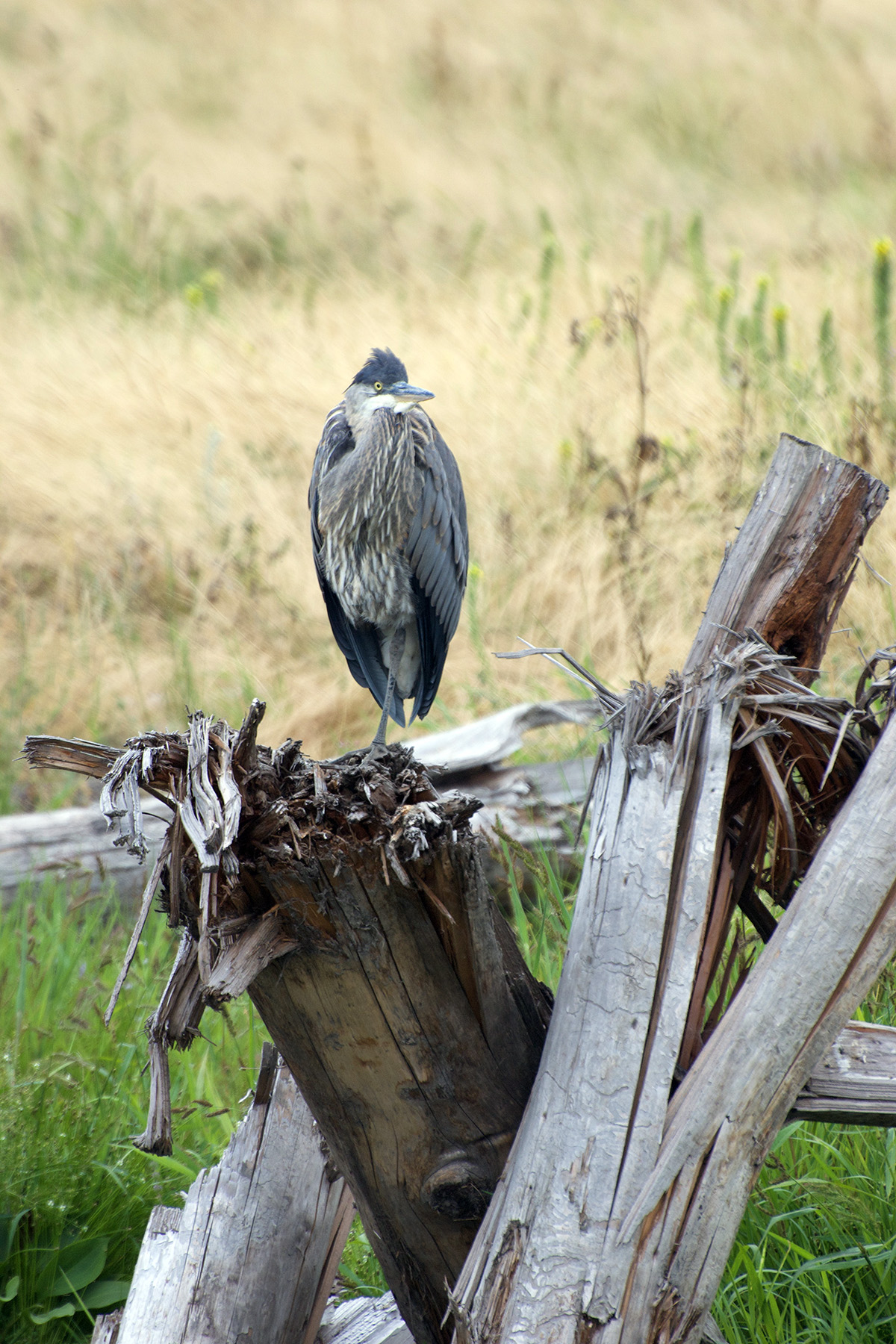
Lots of birds on yesterday’s walk, searching for and bringing back nesting materials, some birds in their bright mating colors already.

I was reminded of a Robert Frost poem, The Exposed Nest, that provides for me at its core a sense of unease around unresolved moral issues.

The poet sees his young companion, perhaps his child, trying to build a shelter out of grass and ferns. It’s not just play but the desire to protect a ground-nest full of fledglings that was accidentally disturbed by someone mowing the meadow. The innocent birds are left defenseless – you do want to protect them from “too much world” (and all the danger that implies,) but the very act of building a shelter might frighten the parent bird away, leading them to abandon their brood.

We saw the risk we took in doing good, but dared not spare to do the best we could though harm should come of it…” – all this to prove we cared.

There is this sense of moral obligation, but also of having to make a choice between errors of omission and error of commission. Damned if you do and damned of you don’t.

Prove that we care – to whom? To nature? The young child who needs a model? Some higher power that set moral standards? The self that has an internalized vision of what it means to be a good person?

In the poem they decide to fashion a shelter. Then all is left hanging in the air, an irritatingly incomplete gesture. The narrator doesn’t go back to check on the fledglings’ survival, he turns to other things or conveniently claims to have forgotten if they did or did not return. Clearly there is a defensiveness against accepting the outcome of one’s action, should one have made the wrong choice. We fed our pretense or our hope to be “good,” but that’s enough. Let’s not dwell on potentially dead, abandoned birds…. since we suspect that’ll be the outcome in a world that is cruel to the innocent. (The poem was written in the middle of WW I, after all.)

Uneasy parallels to our current situation as well where we have a chance to alter some that ails the world beyond pandemic: we need to make risky choices, unable to predict the outcome. In contrast to the narrator, we do have to face the results, though, unable to turn to other things since our decisions affect us all, not just some creatures we can keep out of our sight. Our choices are not just some gestures, demanded by our need to appear moral – if they are immoral choices, we will all be exposed to the harm that comes from them. And (feigned) ignorance after a bit of initial commitment stands in the way of finding solutions. If we don’t know what needs to be handled and how to fight for it, we are doomed to suffer the consequences. Mull that while trying to photograph a Northern Harrier…

The Exposed Nest

Robert Frost – 1874-1963

You were forever finding some new play. 
So when I saw you down on hands and knees 
In the meadow, busy with the new-cut hay, 
Trying, I thought, to set it up on end, 
I went to show you how to make it stay, 
If that was your idea, against the breeze, 
And, if you asked me, even help pretend 
To make it root again and grow afresh. 
But ’twas no make-believe with you to-day, 
Nor was the grass itself your real concern, 
Though I found your hand full of wilted fern, 
Steel-bright June-grass, and blackening heads of clover. 
‘Twas a nest full of young birds on the ground 
The cutter-bar had just gone champing over 
(Miraculously without tasting flesh) 
And left defenseless to the heat and light. 
You wanted to restore them to their right 
Of something interposed between their sight 
And too much world at once—could means be found. 
The way the nest-full every time we stirred 
Stood up to us as to a mother-bird 
Whose coming home has been too long deferred, 
Made me ask would the mother-bird return 
And care for them in such a change of scene 
And might our meddling make her more afraid. 
That was a thing we could not wait to learn. 
We saw the risk we took in doing good, 
But dared not spare to do the best we could 
Though harm should come of it; so built the screen 
You had begun, and gave them back their shade. 
All this to prove we cared. Why is there then 
No more to tell? We turned to other things. 
I haven’t any memory—have you?—
Of ever coming to the place again 
To see if the birds lived the first night through, 
And so at last to learn to use their wings. 

Luckily the walk provided sights that led to more hopeful thoughts as well.

Birds that have pretty safe nests:

Fearless hares

And optimistic taggers

Here is a beautiful Sonata by Delius, composed in the same year as the poem was written. The cellist is outstanding.

Antidote

So here I am wrecking my head over what I could possible offer this week to cheer us all up and distract us from all things virus-related for a measly five days. Not going to mention Corona once, at least not directly. Wish me luck.

(And if the options below have you rolling your eyes, at least admit that the photographs are pretty nifty given that they were taken while I was writing, through the window onto my balcony – the doves make regular appearances these days, drinking from the dish in the middle of rain…)

So, what shall we discuss? The Guardian offers antidotes, as a daily regimen, but honestly, do they excite you?

Looks like I am reduced to posting an animal video, good grief.

However, it perfectly captures my current vocalizing….

Maybe I’ll find something slightly more sensible, as always, with music.

And here it is: Schubert’s Die Taubenpost (Carrier Pigeon). It was the last song he wrote in his life, part of Schwanengesang D 957, a collection of songs published posthumously. Hah, got the education in, anyhow! Here is the text, check out the very last stanza: Longing…. the messenger of constancy. THAT is the concept to think about today!

Sky

Dancing is generally believed to be a normal part of motor development …. and thwarts aggression, relieves tension, and strengthens the pair bond.” 

Yup. Oh, to dance again. Turns out, that sentence included two words I replaced with dots, namely the words: for cranes.

I learned about the use of cranes’ dancing at the website of the International Crane Foundation, the only place in the world where all 15 species of cranes can be observed. In Baraboo, southern Wisconsin, no less. Hard for me to imagine to see these birds in exhibits in a refuge, though, rather than in the wild, where they represent such freedom.

I have written about them before, with a few scientific details. Today I want you to see them through the lens of a poet. Linda Hogan is currently the Chickasaw Nation’s Writer in Residence and lives in Tishomingo, Oklahoma.

I have introduced her work here before, a poem about herons, I believe, since her concern for ecological matters, cultural heritage and dispossession of Native Americans is, as my regular readers know, something I share (as part of my documentary film focus for Necessity – Oil, Water and Climate Resistance – there will be an on-line screening for Earth Day – check the link.)

Others more knowledgable than I have also shown admiration of Hogan’s writing: she is the recipient of numerous prestigious awards including the American Book AwardGuggenheim Fellowship for Creative Arts, US & Canada, and the Lannan Literary Award for Poetry.

The Sandhills

BY LINDA HOGAN
The language of cranes
we once were told
is the wind. The wind 
is their method,
their current, the translated story 
of life they write across the sky. 
Millions of years
they have blown here
on ancestral longing,
their wings of wide arrival, 
necks long, legs stretched out 
above strands of earth
where they arrive
with the shine of water, 
stories, interminable
language of exchanges 
descended from the sky
and then they stand,
earth made only of crane 
from bank to bank of the river 
as far as you can see
the ancient story made new.

*

This concludes a week where meadows, fields, flowers, birds and sky were all still to be seen on walks, and brought to you as tokens of nature that exist independent of our human worries. Reminders, too, that there are still many pleasures to be had.

And talking about pleasure:

Leaving Mizraim

First they were confined to slavery in Egypt, then to wandering in the desert.

Now Jews around the world celebrate Passover Seders on Zoom or Skype, confined to their dwellings. I have not decided whether it is helpful to draw the parallels to prior suffering – and the fact that it was overcome – as is custom during the service around the Seder table. Or if it is just reminding us that history repeats itself, and the sense of prevailing danger and unstoppable evil never ends.

Luckily we can distract ourselves with poetry.

Bracha Meschaninov, a South African Jew who moved with her family to New York state, published a poetry collection, Tender Skin, over 20 years ago that focusses on daily Jewish life. The simplicity of her poems hides the depth of the ideas, almost cunningly, as if she is not allowed to reveal her true intellectual strength.

This in turn, brought to mind two films I can recommend, (diametrically opposed to the life that today’s poet embraces.) Unorthodox is a Netflix production loosely based on an autobiography by Deborah Feldman, describing a young Hasidic woman’s escape from her marriage and the confines of the communal system she lived in. One of Us , also on Netflix, is a documentary following several young people who made the same decision and paid extreme prices for trying to find their own way. It is a remarkable film, without the glitz that the Netflix series managed to add – although the main actress’s performance is stellar and worth alone to watch Unorthodox. If you have bandwidth only for one for this topic, choose One of Us.

Back to Pesach – here is something that feels probably quite familiar to several of us:

Pesach

House cleaned
more or less
kitchen surfaces covered
more or less
food ready
more or less
an experience of redemption
more or less


The Seder

We chewed the hand-made bread
of redemption
and wine specially made
children primed for performance… performed
and wonderful guests came and prayed
yet his eyes were sad and her skin showed strain

We left Mitzraim
but in pain we stayed.

And here is the fitting musical accompaniment sent by a friend.

Chag Sameach!

And here are the traditional songs with explanation.
The world keeps ending, and the world goes on.

A timely poem to end the week. The poet is Franny Choi, author of the poetry collections Soft Science (Alice James, 2019) and Floating, Brilliant, Gone (Write Bloody Publishing, 2014). She is a Gaius Charles Bolin Fellow at Williams College, a member of the multidisciplinary artists of color collective Dark Noise, and a cohost of the Poetry Foundation’s podcast, VS. Links to more of her writing can be found here.

Friderike Heuer Connection (2017)

The World Keeps Ending, and the World Goes On

By Franny Choi

Before the apocalypse, there was the apocalypse of boats:
boats of prisoners, boats cracking under sky-iron, boats making corpses
bloom like algae on the shore. Before the apocalypse, there was the apocalypse
of the bombed mosque. There was the apocalypse of the taxi driver warped
by flame. There was the apocalypse of the leaving, and the having left—
of my mother unsticking herself from her mother’s grave as the plane
barreled down the runway. Before the apocalypse, there was the apocalypse
of planes. There was the apocalypse of pipelines legislating their way
through sacred water, and the apocalypse of the dogs. Before which was
the apocalypse of the dogs and the hoses. Before which, the apocalypse
of dogs and slave catchers whose faces glowed by lantern-light.
Before the apocalypse, the apocalypse of bees. The apocalypse of  buses.
Border fence apocalypse. Coat hanger apocalypse. Apocalypse in
the textbooks’ selective silences. There was the apocalypse of the settlement
and the soda machine; the apocalypse of the settlement and
the jars of scalps; there was the bedlam of the cannery; the radioactive rain;
the chairless martyr demanding a name. I was born from an apocalypse
and have come to tell you what I know—which is that the apocalypse began
when Columbus praised God and lowered his anchor. It began when a continent
was drawn into cutlets. It began when Kublai Khan told Marco, Begin
at the beginning
. By the time the apocalypse began, the world had already
ended. It ended every day for a century or two. It ended, and another ending
world spun in its place. It ended, and we woke up and ordered Greek coffees,
drew the hot liquid through our teeth, as everywhere, the apocalypse rumbled,
the apocalypse remembered, our dear, beloved apocalypse—it drifted
slowly from the trees all around us, so loud we stopped hearing it.

Notes:“Bedlam of the cannery” is borrowed from Martín Espada.

Friderike Heuer Isolation (2017)

Here she is on a PBS NewsHour reciting and discussing another one of her poems filled with courage not drowned out by anger.

Friderike Heuer Looking for Jobs (2017)

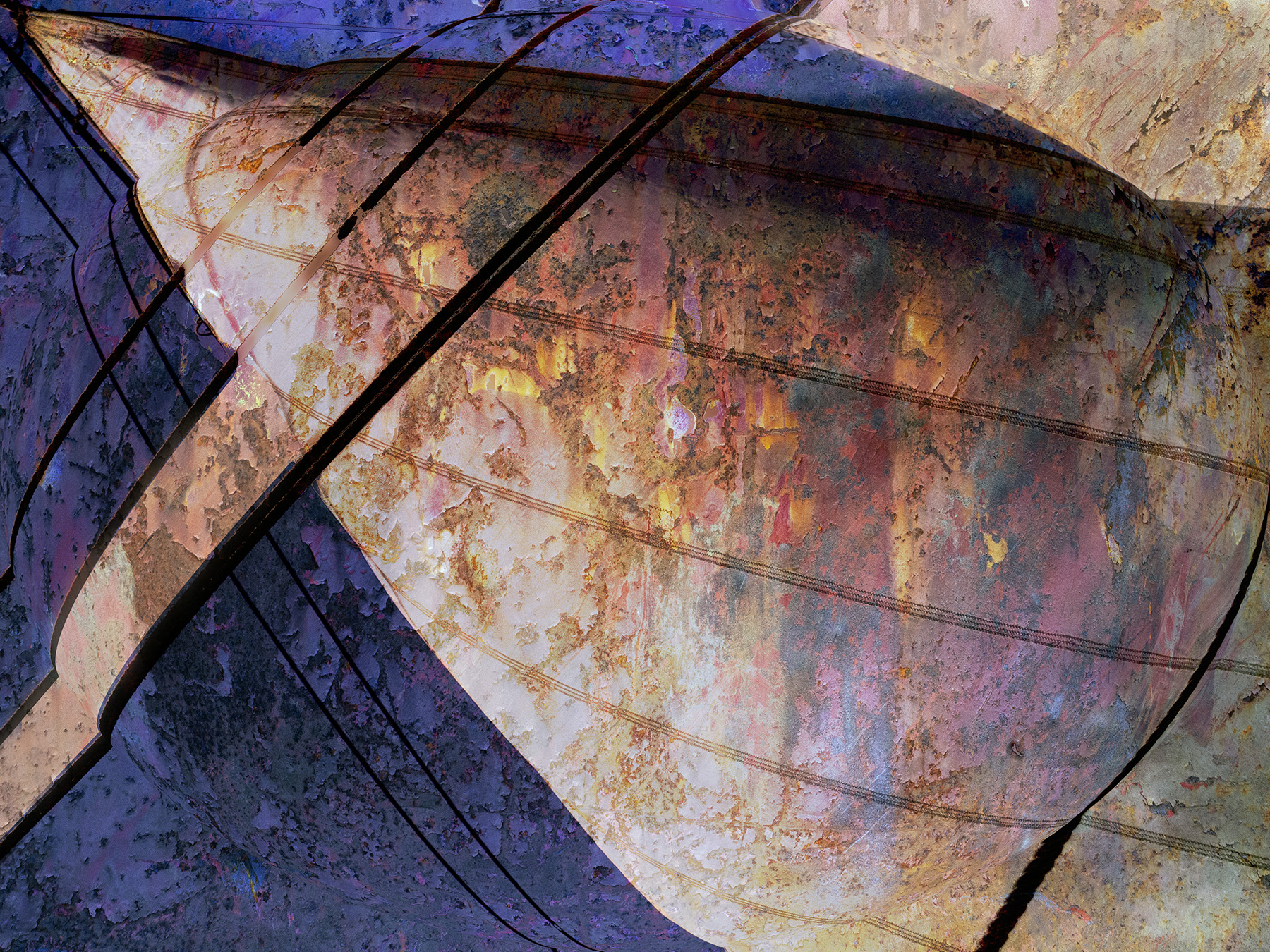
Photographs are from my 2017 photomontage series The Refugees’ Dreams.

Friderike Heuer From Ruins to Ruins (2017)

Music today by Aram Khatchaturian. It, too, has courage.

Friderike Heuer Fire (2017)

Ach, Emily….

Dickinson, she leaves me confounded. Always. And now this poem, that I have been mulling over for some weeks. What to make of the words below, what do they intend to represent? (You can tell I am still thinking about yesterday’s musings about artists and representation….)

By the Sea

Published 1896 (posthumously)

I started Early – Took my Dog –
And visited the Sea –
The Mermaids in the Basement
Came out to look at me –

And Frigates – in the Upper Floor
Extended Hempen Hands –
Presuming Me to be a Mouse –
Aground – opon the Sands –

But no Man moved Me – till the Tide
Went past my simple Shoe –
And past my Apron – and my Belt
And past my Boddice – too –

And made as He would eat me up –
As wholly as a Dew
Opon a Dandelion’s Sleeve –
And then – I started – too –

And He – He followed – close behind –
I felt His Silver Heel
Opon my Ancle – Then My Shoes
Would overflow with Pearl –

Until We met the Solid Town –
No One He seemed to know –
And bowing – with a Mighty look –
At me – The Sea withdrew –

So here is a woman poet, a recluse, who never saw the sea, I am told, writing about her visit. Planning a visit, note, not a walk on the beach, or a look at the water, but an encounter. She left early, thus avoiding being caught by the dark, took the protective dog, sensible precaution if you think this is about a woman out there on her own. She encounters a world just like the one she knows from home, the women at the bottom, the men on top. The mermaids doing what women do so well, looking their sisters over, judging.

The sailors trying to get their hands on you and rope you in – all menacing enough to induce that familiar feeling, being just a little mouse easy to be stepped on in the sand.

A slightly hypnotizing ballad rhythm, interspersed with these long dashes, making you stop and take in what she says.

And then she’s in the water – no man moved her; did she move herself into the waves, slowly going in like so many before her, ready to give up? Or is the ocean approaching, about to drown her, or representing a sexual danger – or enticement – an interpretation frequently offered because of the various items of clothing described in the inevitable rising, items that hint at fetishistic objects? Is the dew drop on a dandelion leaf describing her sense of diminutiveness, fragility, to be devoured by the floods, water returning to water, like dust to dust? Or is it a watery pearl, a metaphor for an altogether different aspect of the female anatomy?

But then she starts to move herself – just like she set out for the visit (remember started in the first line?) she now sets to leave, willing it, with him (the sea took on a personal pronoun) following. Her shoes filled with foam, a precious, pearly gift, or something to weigh her down or a tantalizing allusion to other bodily fluids, she turns her back on the pursuer. He decides to bow out – this time – once she reaches solid ground, anchored in community unfamiliar to his solitary existence.

Death? Desired or inflicted? Sex? Desired or inflicted? A feminist clarion call? I couldn’t care less. The poem whispered something altogether different in my ear in our current situation of unfamiliar danger.

We have a choice.

We can succumb to varying forms and degrees of despair, feeling helpless like little creatures easily crushed. We can give up and step into the devouring vastness of fear, letting it drown us. We can permit the lead of fomenting depression weigh down our shoes. We can allow panic to rise practically to our throats and choke us.

Or we can turn our backs to all that, willing it. There is no guarantee of safety – the sea – be it our fears, sadness or the pathogen itself – might not be willing to bow out the next time. But here and now, we can start to step back from it, both literally and metaphorically, and turn our eyes to the solid town, the community of friends, neighbors and strangers, who can act in solidarity (albeit in physical distance) to get us all through this, if not make us safer. We can focus on increasing support for those in need instead of catastrophizing. We can organize or be part of a movement that will carry the lessons we learn during crisis into a reshaping of our society for the better in the long run.

I know those words are more easily written than enacted. I have days where I barely make it out of bed. But we can alternate – on days where I am low, you can lift me up, and I’ll do the same on other days for you.

We can refuse to be a mouse!

So what happened to the dog – so prominently mentioned in the very first line and disappeared ever since as if protection was but an illusion?

Why, modeling social distancing, of course!

Where’s Milo???

Here is Copland’s music for some of Emily Dickinson’s poems. Hang in there, folks!

Divided Time

This week’s juxtapositions will end with a contrast of time frames. The photographs were taken within a window of 2 hours and mostly through the window of the car, across a space of some 25 miles, driving up the Pacific Coast from Newport, OR to Lincoln City, OR. The weather changed from sun to rain to hail and back multiple times. The color of the water alternated accordingly, sometimes three bands of different color simultaneously, unusually vivid in the cold air.

Today’s poem, on the other hand, spans seemingly all of historical time and the geographical space between Africa and the Caribbean. It looks into the pit of despair and emerges with renewed determination to look forward and resume a rightful place in history, or start history altogether – which is my own goal after yet another week of this interminable flu.

Walcott, who won the Nobel prize in literature in 1992 as well as a MacArthur Foundation genius award, died this month two years ago. He taught at various ivy league institutions, dividing his time between Boston, NYC and St. Lucia, the caribbean island where he was born. A lot of his poetry deals with the consequences of colonialism, slavery, and displacement. The work asks questions about memory in the absence of the typical memorial markers found in nation states, and the broken links of tribal narratives that come with forced exodus.

His poem The Sea is History weaves biblical and historical events together in wonderful ways, showing the parallels in lack of established “factual evidence” and yet richness in assumed underlying truths. You can just hear how the colonial interrogators are defied by the persistence of memory, however drowned in the sea, its return to power and will towards a new history, a right to place by the person who answers, representing all those who were subjugated far too long.

The Sea Is History

Derek Walcott

Where are your monuments, your battles, martyrs?
Where is your tribal memory? Sirs,
in that gray vault. The sea. The sea
has locked them up. The sea is History.

First, there was the heaving oil,
heavy as chaos;
then, likea light at the end of a tunnel,

the lantern of a caravel,
and that was Genesis.
Then there were the packed cries,
the shit, the moaning:

Exodus.
Bone soldered by coral to bone,
mosaics
mantled by the benediction of the shark’s shadow,

that was the Ark of the Covenant.
Then came from the plucked wires
of sunlight on the sea floor

the plangent harp of the Babylonian bondage,
as the white cowries clustered like manacles
on the drowned women,

and those were the ivory bracelets
of the Song of Solomon,
but the ocean kept turning blank pages

looking for History.
Then came the men with eyes heavy as anchors
who sank without tombs,

brigands who barbecued cattle,
leaving their charred ribs like palm leaves on the shore,
then the foaming, rabid maw

of the tidal wave swallowing Port Royal,
and that was Jonah,
but where is your Renaissance?

Sir, it is locked in them sea sands
out there past the reef’s moiling shelf,
where the men-o’-war floated down;

strop on these goggles, I’ll guide you there myself.
It’s all subtle and submarine,
through colonnades of coral,

past the gothic windows of sea fans
to where the crusty grouper, onyx-eyed,
blinks, weighted by its jewels, like a bald queen;

and these groined caves with barnacles
pitted like stone
are our cathedrals,

and the furnace before the hurricanes:
Gomorrah. Bones ground by windmills
into marl and cornmeal,

and that was Lamentations – 
that was just Lamentations,
it was not History; 

then came, like scum on the river’s drying lip,
the brown reeds of villages
mantling and congealing into towns,

and at evening, the midges’ choirs, 
and above them, the spires
lancing the side of God

as His son set, and that was the New Testament.

Then came the white sisters clapping
to the waves’ progress,
and that was Emancipation – 

jubilation, O jubilation – 
vanishing swiftly
as the sea’s lace dries in the sun,

but that was not History,
that was only faith,
and then each rock broke into its own nation;

then came the synod of flies,
then came the secretarial heron,
then came the bullfrog bellowing for a vote,

fireflies with bright ideas
and bats like jetting ambassadors
and the mantis, like khaki police,

and the furred caterpillars of judges
examining each case closely,
and then in the dark ears of ferns

and in the salt chuckle of rocks
with their sea pools, there was the sound
like a rumour without any echo

of History, really beginning.

*

And as the most effective anti-depressant ever, let’s hear it for caribbean music, dreaming ourselves into the lesser Antilles.

Finally….

After passing unanimously in the Senate last year, yesterday the house passed the Emmett Till Antilynching Act , with 4 House members voting No – Amash (I-MI) Gohmert (R-TX) Massie (R-KY) Yoho (R-FL) –
which makes lynching a hate crime. It only took 120 years!

Let us celebrate with a poem that transcends time.

Antebellum

By Gregory Pardlo

Unfinished, the road turns off the fill
from the gulf coast, tracing the bay, to follow
the inland waterway. I lose it in the gritty
limbo of scrub pine, the once wealth
—infantile again, and lean—of lumber barons,
now vested in the state, now sanctuary for renegades
and shamans, for pot growers and moonshiners,
the upriver and clandestine industries that keep
mostly to themselves.

Misting over a lake-front terraced lawn, evening’s pink
tablet, japanning lawn and lake, magnolia leaf,
ember easing, dips and gives gilt to the veiled
nocturne vanishing in the view: the hint of maison
through the woods faint as features pressed on
an ancient coin. Swart arms of live oaks that hag
their bad backs surreptitiously, drip Spanish moss
like swamp things out of where a pelican taxis limp-
legged across the lake, pratfalls awkward as a drunk
on a bike. The bat above me, like a flung wristwatch

Gregory Pardlo is the author of Totem, which received the APR/ Honickman Prize in 2007, and Digest, (Four Way Books, 2014). His poems have appeared in American Poetry ReviewBoston ReviewThe NationPloughsharesTin House, as well as anthologies including Angles of Ascent, the Norton Anthology of Contemporary African American Poetry, and two editions of Best American Poetry. He is the winner of the 2015 Pulitzer Prize for Poetry. The Pulitzer judges cited Pardlo’s “clear-voiced poems that bring readers the news from 21st Century America, rich with thought, ideas and histories public and private.” In 2017, Pardlo was awarded a Guggenheim Fellowship. He is poetry editor for the Virginia Quarterly Review and teaches in the MFA program at Rutgers University, Camden.

And here is someone we hear too rarely.

Hand on my Heart

Hand on my heart, this poem followed me into my dreams. Beneath the I-5 underpass near our house lives a homeless person, who does not even own a tent. He sits in piles of garbage, for weeks, months now and we all drive by.

Meditations in an Emergency

by Cameron Awkward-Rich

I wake up & it breaks my heart. I draw the blinds & the thrill of rain breaks my heart. I go outside. I ride the train, walk among the buildings, men in Monday suits. The flight of doves, the city of tents beneath the underpass, the huddled mass, old women hawking roses, & children all of them, break my heart. There’s a dream I have in which I love the world. I run from end to end like fingers through her hair. There are no borders, only wind. Like you, I was born. Like you, I was raised in the institution of dreaming. Hand on my heart. Hand on my stupid heart.

Cameron Awkward-Rich, both a poet and a critic, is the author of Sympathetic Little Monster (Ricochet Editions, 2016) and Dispatch (Persea Books, 2019), winner of the 2018 Lexi Rudnitsky Editor’s Choice Award. His poetry has appeared in Narrative, The Baffler, Indiana Review, Verse Daily, The Offing, and elsewhere, and he has received fellowships from Cave Canem and The Watering Hole. Cam holds a PhD in Modern Thought and Literature from Stanford University and is Assistant Professor in Women, Gender, Sexuality Studies at the University of Massachusetts Amherst.

Our Place in the Struggle of the World

It is Tuesday morning after the debacle in IOWA. We don’t know the caucus results yet, but the delay and the mistrust after the screw up with the data transmission hurts the potential frontrunners and helps the laggers. Make of that what you will. More frighteningly, it has given rise to tons of conspiracy theories, and adds worry to scenarios where technology is all we have in the election – not the paper trail that is still there to count in IA. Most frighteningly, the voter turnout, by the information we have at this time, was not as high as expected. If that translates into the general election, we have reason to be fearful. Clouds hanging over us.

Sunday morning’s walk at the riverfront took place with the clouds coming in. Or going out, who knows in this crazy weather world anymore.

The mood expressed by the graffiti was dark as well.

Some fearful:

Some angry.

Knowing how I could go home to a dry house, a filled pantry, a privileged life, made me feel ashamed while thinking about the youth or whoever it is who express their rage and fear for us to see, mostly unheard. Watching the homeless shuffle along the Esplanade, trying to keep warm, caused a sense of continued helplessness.

Thinking about how many people I know who feel for those who suffer, but also increasingly express compassion fatigue, when they deal with the detritus or the shootings at night or the dangers of garbage fires. There was a moment there, on that walk, where I just longed for peace. For all. Which is, of course, unobtainable without justice. So we must be allies in the struggle. Thoughts just in time for the beginning of Black History Month as well.

Here is a text poem by Jamaican born Claudia Rankine, echoing the sentiment,

from Don’t Let Me Be Lonely

By Claudia Rankine

Mahalia Jackson is a genius. Or Mahalia Jackson has genius. The man I am with is trying to make a distinction. I am uncomfortable with his need to make this distinction because his inquiry begins to approach subtle shades of racism, classism, or sexism. It is hard to know which. Mahalia Jackson never finished the eighth grade, or Mahalia’s genius is based on the collision of her voice with her spirituality. True spirituality is its own force. I am not sure how to respond to all this. I change the subject instead.

We have just seen George Wein’s documentary, Louis Armstrong at Newport, 1971. In the auditorium a room full of strangers listened to Mahalia Jackson sing “Let There Be Peace on Earth” and stood up and gave a standing ovation to a movie screen. Her clarity of vision crosses thirty years to address intimately each of us. It is as if her voice has always been dormant within us, waiting to be awakened, even though “it had to go through its own lack of answers, through terrifying silence, (and) through the thousand darknesses of murderous speech.”

Perhaps Mahalia, like Paul Celan, has already lived all our lives for us. Perhaps that is the definition of genius. Hegel says, “Each man hopes and believes he is better than the world which is his, but the man who is better merely expresses this same world better than the others.” Mahalia Jackson sings as if it is the last thing she intends to do. And even though the lyrics of the song are, “Let there be peace on earth and let it begin with me,” I am hearing, Let it begin in me.

Let us be uplifted.