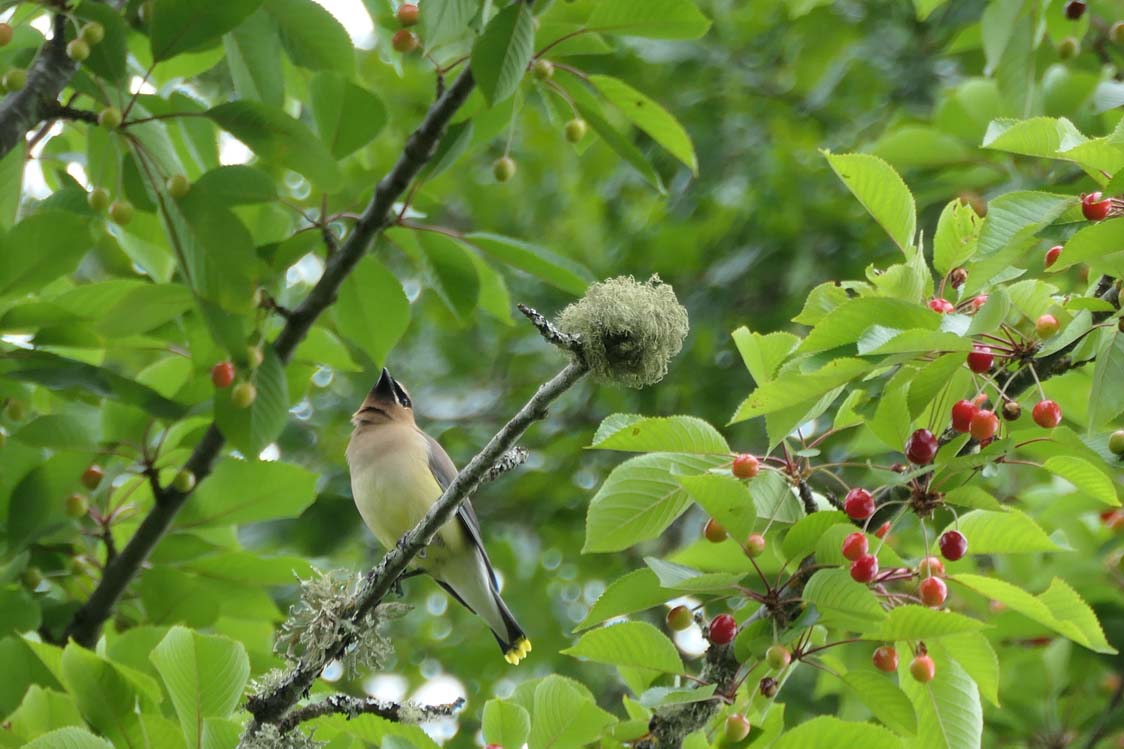
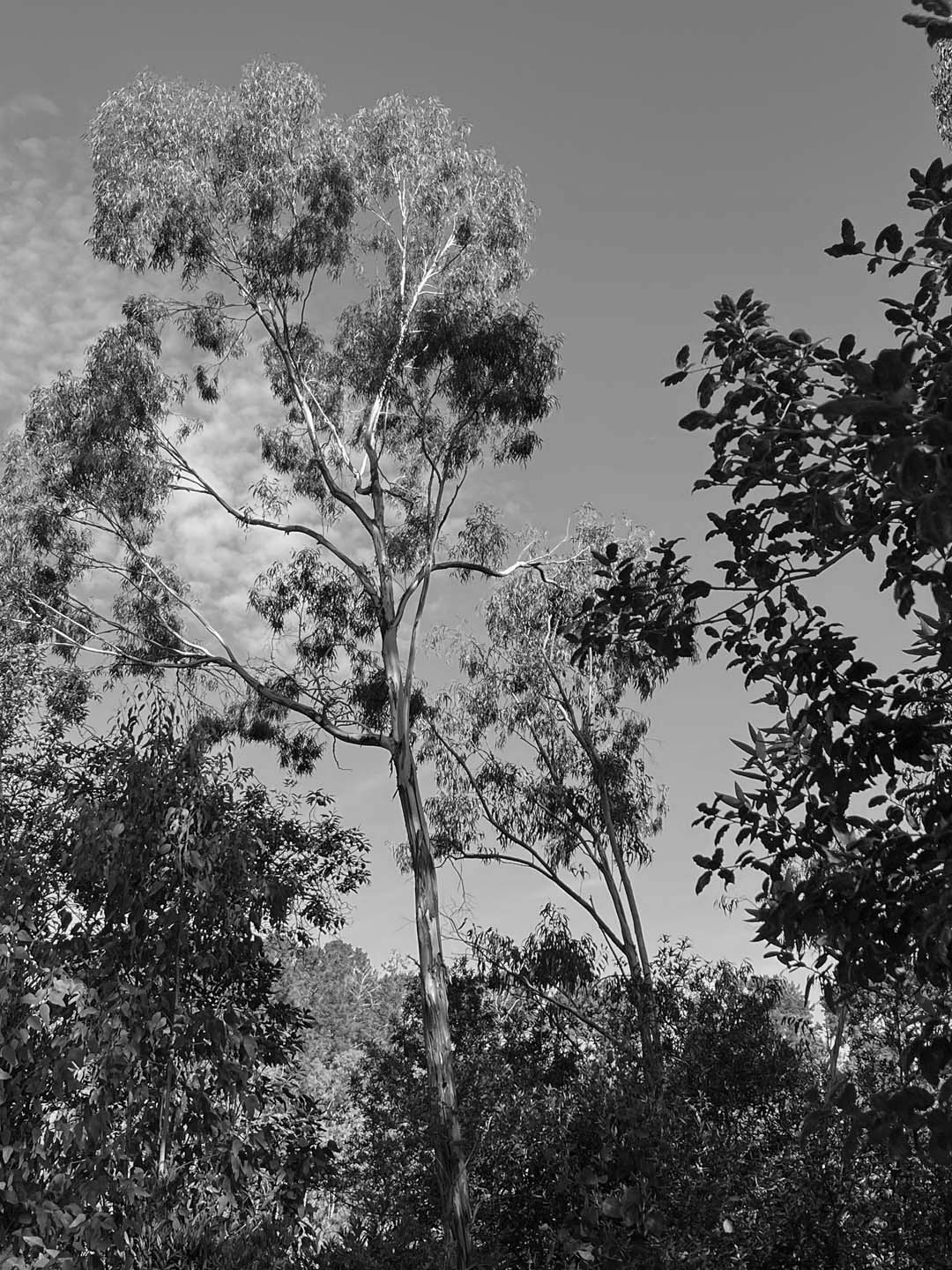
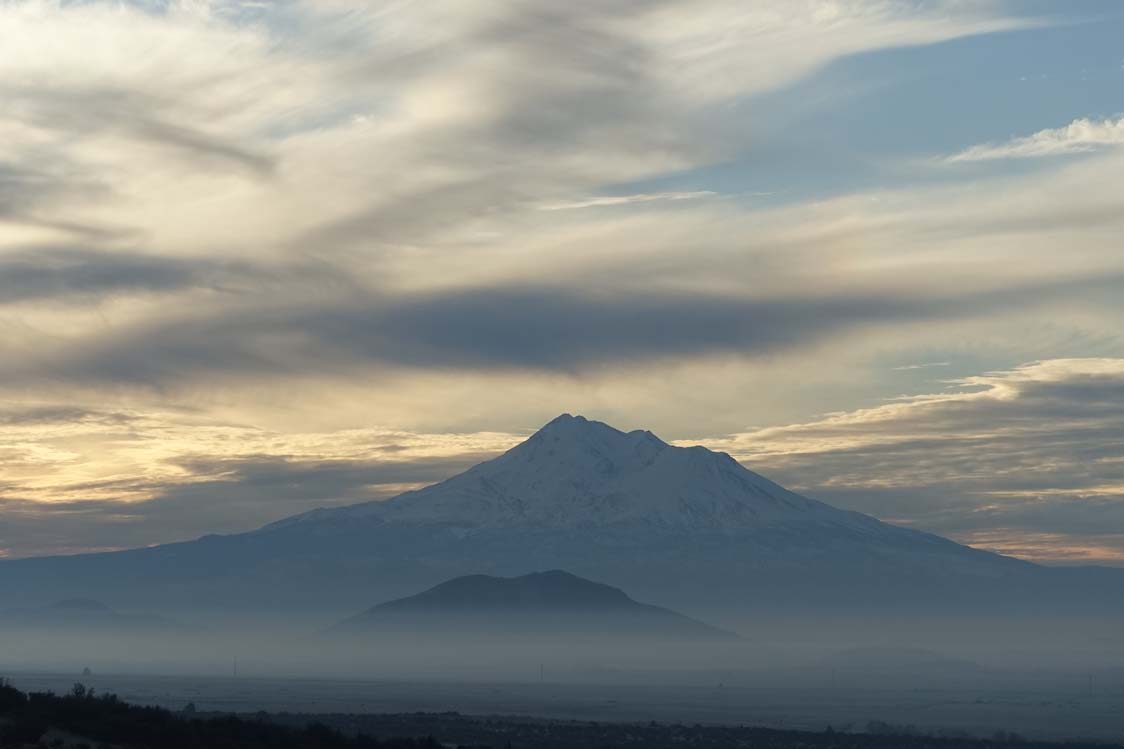
More than the fuchsia funnels breaking out of the crabapple tree, more than the neighbor’s almost obscene display of cherry limbs shoving their cotton candy-colored blossoms to the slate sky of Spring rains, it’s the greening of the trees that really gets to me. When all the shock of white and taffy, the world’s baubles and trinkets, leave the pavement strewn with the confetti of aftermath, the leaves come. Patient, plodding, a green skin growing over whatever winter did to us, a return to the strange idea of continuous living despite the mess of us, the hurt, the empty. Fine then, I’ll take it, the tree seems to say, a new slick leaf unfurling like a fist to an open palm, I’ll take it all.
The greening of the trees? Really the greening of everything else as well. Whether you look up or down, the sheer saturation and brightness of every plant is the cheeriest sight imaginable. Verdant renewal.
I’ll take it all, as well.
The weeds in my garden, alas, are growing faster than everything else, and so I will make it short here today, so I can go out there and tackle them, ruthlessly.
Three recommendations for things to watch (and I might have recommended one already, if so, blame the repetition on an aging brain.
A Canadian series on Amazon Prime or Hulu, Coroner, (not The Coroner), is a police procedural from Toronto, tackling relevant contemporary themes, from racism, houselessness, queerness, military PTSD, tribal issues to the lure of cults, with a surprising amount of candor and criticism. It centers around the family story of said coroner, her father battling dementia, her gay son, and a mother who abandoned her as a child. Every time it threatens to veer into soap opera territory it rescues itself, and the cast is the most diverse cast I have seen on TV in a long time. The only downer were the last episodes of the last season, which didn’t know how to rap up, featured some deus-ex-machina concoction and a somewhat pathetic ending in the true meaning of the word pathos. Overall intelligent entertainment.
And speaking of racism, here is an astounding film capturing its essence. Black Girl is not for the faint of heart, it is enraging and very sad, but a masterpiece, created by Ousmane Sembène in 1966 to expose French Colonialism. For anyone keen on classic art films, do not miss it.
My last suggestion might be the one mentioned before: the eternally long and equally important documentary that partially explains America today as written up in this Atlantic essay. The link provided by the Atlantic does not work. Here is one I found that shows the full running time of The Sorrow and the Pity. Yes, 4 hours of your life, but none better spent. Marcel Ophuls made this film about the collaboration between the Vichy government and Nazi Germany during World War II. He uses interviews with a German officer, collaborators, and resistance fighters from Clermont-Ferrand. They comment on the nature of and reasons for collaboration, including antisemitism, Anglophobia, fear of Bolsheviks and Soviet invasion, and the desire for power.
Yes, deep into the weeds of politics. I, on the other hand, will be deep into the weeds of my garden, momentarily.
For today I feel like traditional Senegalese music, in honor of the Black Girl.
The tulips are too excitable, it is winter here. Look how white everything is, how quiet, how snowed-in. I am learning peacefulness, lying by myself quietly As the light lies on these white walls, this bed, these hands. I am nobody; I have nothing to do with explosions. I have given my name and my day-clothes up to the nurses And my history to the anesthetist and my body to surgeons.
They have propped my head between the pillow and the sheet-cuff Like an eye between two white lids that will not shut. Stupid pupil, it has to take everything in. The nurses pass and pass, they are no trouble, They pass the way gulls pass inland in their white caps, Doing things with their hands, one just the same as another, So it is impossible to tell how many there are.
My body is a pebble to them, they tend it as water Tends to the pebbles it must run over, smoothing them gently. They bring me numbness in their bright needles, they bring me sleep. Now I have lost myself I am sick of baggage—— My patent leather overnight case like a black pillbox, My husband and child smiling out of the family photo; Their smiles catch onto my skin, little smiling hooks.
I have let things slip, a thirty-year-old cargo boat stubbornly hanging on to my name and address. They have swabbed me clear of my loving associations. Scared and bare on the green plastic-pillowed trolley I watched my teaset, my bureaus of linen, my books Sink out of sight, and the water went over my head. I am a nun now, I have never been so pure.
I didn’t want any flowers, I only wanted To lie with my hands turned up and be utterly empty. How free it is, you have no idea how free—— The peacefulness is so big it dazes you, And it asks nothing, a name tag, a few trinkets. It is what the dead close on, finally; I imagine them Shutting their mouths on it, like a Communion tablet.
The tulips are too red in the first place, they hurt me. Even through the gift paper I could hear them breathe Lightly, through their white swaddlings, like an awful baby. Their redness talks to my wound, it corresponds. They are subtle : they seem to float, though they weigh me down, Upsetting me with their sudden tongues and their color, A dozen red lead sinkers round my neck.
Nobody watched me before, now I am watched. The tulips turn to me, and the window behind me Where once a day the light slowly widens and slowly thins, And I see myself, flat, ridiculous, a cut-paper shadow Between the eye of the sun and the eyes of the tulips, And I have no face, I have wanted to efface myself. The vivid tulips eat my oxygen.
Before they came the air was calm enough, Coming and going, breath by breath, without any fuss. Then the tulips filled it up like a loud noise. Now the air snags and eddies round them the way a river Snags and eddies round a sunken rust-red engine. They concentrate my attention, that was happy Playing and resting without committing itself.
The walls, also, seem to be warming themselves. The tulips should be behind bars like dangerous animals; They are opening like the mouth of some great African cat, And I am aware of my heart: it opens and closes Its bowl of red blooms out of sheer love of me. The water I taste is warm and salt, like the sea, And comes from a country far away as health.
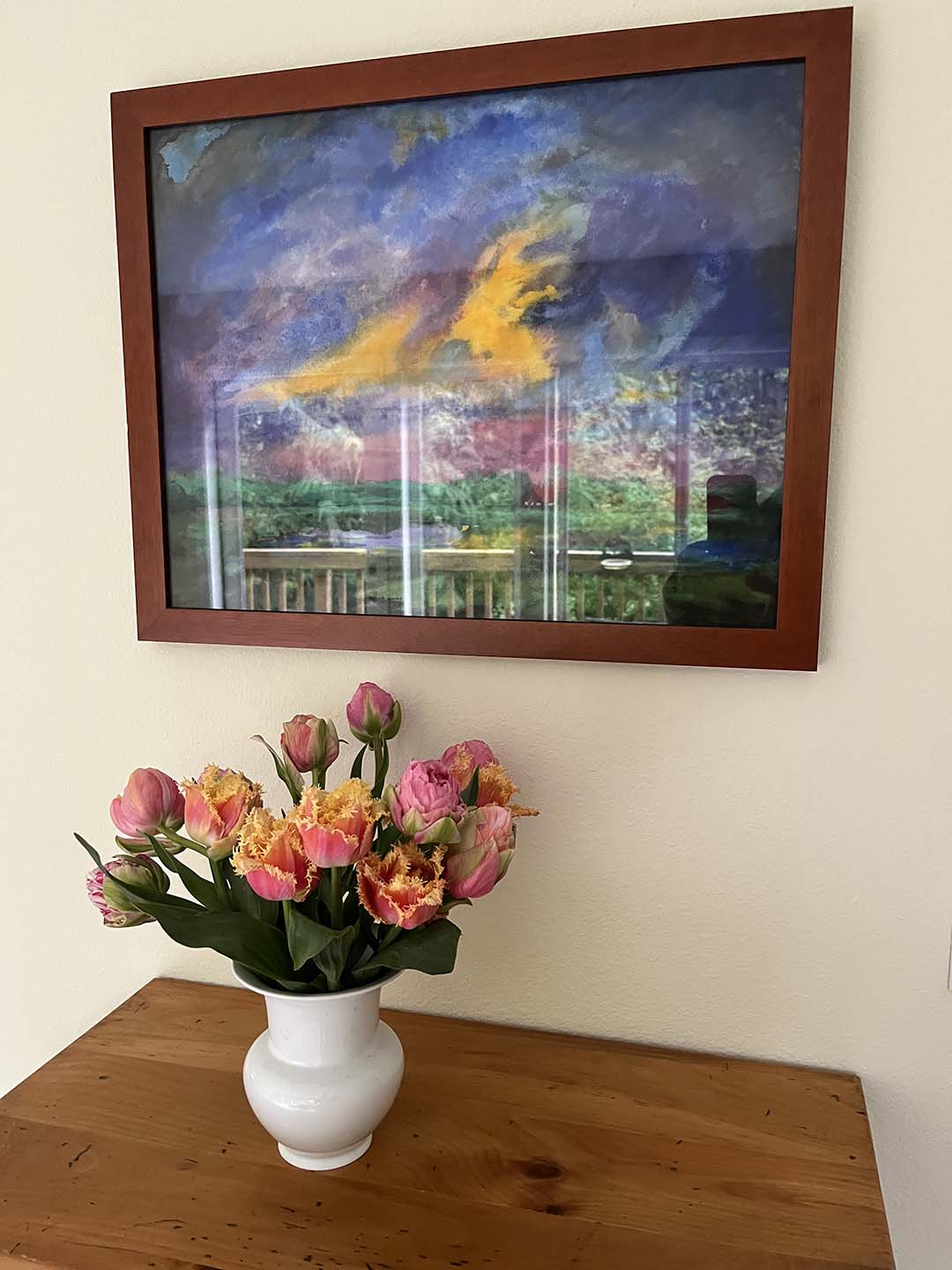
One of the highlights of spring is my annual trek to the tulip farm. This year I missed the seasonal opportunity, since I came back too late from California. However, a bouquet of tulips was waiting for me upon my return, sent by the kids, considerably brightening last week, even when the flowers reached their old Dutch Master phase of drooping heads and falling petals.
They brought nothing but unadulterated joy, starting with the loving gesture, then beauty, both in prime and in decay. Most importantly, though, they served as daily reminder that nature just produces the most incredible forms and color, each and every year again, the renewal of spring, rebirth.
I could not possibly conceive of tulips as the enemy, the intruder, a force imbued with aggression, disturbance, a bout of suffocation. That is, of course, how tulips are depicted in the poem below, at least superficially. Deep down the poet acknowledges the power nature exerts in anchoring us in life, rather than letting us slip into oblivion, even if she fights tooth and nail to be granted the latter.
Plath wrote this poem a few days after she left the hospital in 1961, where she had spent almost two weeks after an appendectomy. Some weeks earlier, she had miscarried, making me speculate that hormonal shifts and grief added to the experience of pain after surgery, the anger at a mutilated body, the rage against an “awful baby”. At this point, she had been married for 5 years, was the mother of a toddler, and her first suicide attempt safely in the distant past. Yet the darkness of depression raised its head. The ugly lure of death lurked seemingly again. With her marriage breaking up the next year, despite the birth of another child in April 1962, she told friends that a recent significant car accident had been an attempt to end her life. She saw it through the next year by inhaling gas from the stove, ending her life at age 30.
Her son followed in her footsteps, many years later. Her husband’s lover, one cause for the dissolution of the marriage to Plath, also killed herself and the 4 year old daughter she had with Hughes. So much death and destruction.
But the point I am trying to make here, is that under the guise of animosity towards the floral intruders, even in the middle of shattering sadness, Plath captures the vibrancy, the saturation of color, the intensity and above all the life force of tulips to perfection. Her desired state of white, flat, silent oblivion, described in excruciating details, just as the physical dread after surgery, is the perfect foil for the explosion of red insistence by the tulips: dragging you back into existence, wanted or not.
Of course, I cannot help but point out that the aggressive lure of tulips pushed people not just back into life but also down into ruin – the 17th century tulip mania, a speculative bubble that led to an economic crash. Plath’s poem, however, is not about general insights, but a very subjective, personal experience of the dialectic between her desire for extinction and the tulip’s refusal to grant it. Would not have worked with buttercups, or forget-me-nots, or lilies or carnations.
My tulips open my heart with joy; the poet’s words open it with empathy for someone suffering so. But I will cling to the former for a while longer, before I acknowledge that no magic flower exists that can beat clinical depression. Holding on to cheer as long as I can.
–Nerve/Effrontery//Bile//something bitter to endure//bitterness of spirit : Rancor// an abnormal outgrowth of plant tissue usually due to insect or mite parasites or fungi and sometimes forming an important source of tannin see gall wasp illustration//a skin sore caused by chronic irritation// a cause or state of exasperation.
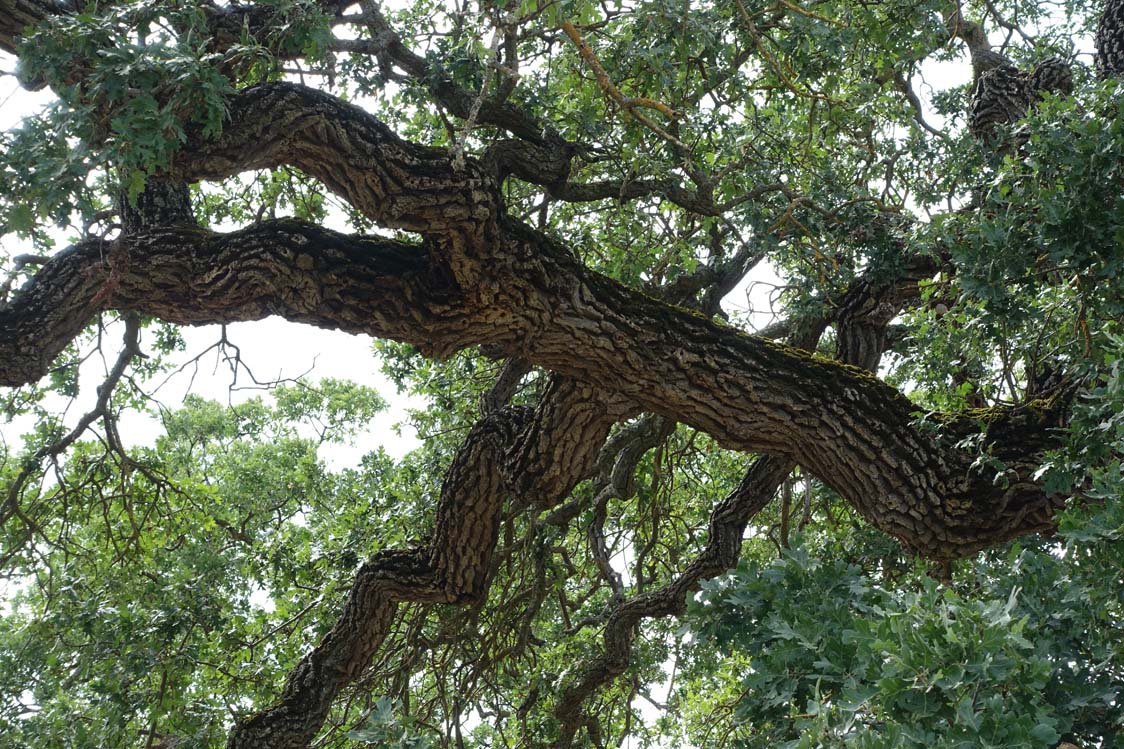
Last weekend a severe rain storm hit the Bay area. I found large numbers of oak galls under the trees during subsequent walks. The Diablo Mountain range is full of healthy oaks, not yet hit by oak wilt, the fungal disease ravaging the eastern parts of the US.
The funny, apple-like appendages you see on oak trees during spring and summer,
and then on the ground later in the season, are actually small temporary homes of wasps.
These tiny wasps use certain chemicals mimicking growth hormone to induce growth on the leaves and branches of oak trees, reminiscent of tumors, but not really harmful. There are many species of these gall wasps (800 in the US alone), and they all produce different kinds of galls, often on the very same tree.
The larvae use the galls for shelter and food, and eventually the fully formed wasps bore holes into the wall through which they emerge. Their reproduction is pretty nifty, too:
“Many species have alternating generations, meaning all of the adults emerging from galls during one time of the year are female-only, while the adults emerging in a different season have both males and females. Most species have females that can reproduce using parthenogenesis when they emerge by themselves. This means that their eggs are essentially clones of themselves. What’s more, some species appear not to have any males at all.” (Ref.)
The galls sustain a large ecosystem of birds and ground mammals, but also had their benefits for humans. People have used them to make indelible ink for more than 1400 years. If you squash the pulp of galls and add iron sulfate ((FeSO4) and mix in a binder, usually gum arabic, you get a grey ink that will eventually darken to a purplish black. Use was widespread, and often specified by law: Great Britain and France specified the content of iron gall ink for all royal and legal records to ensure permanence. The United States Postal Service had its own official recipe that was to be used in all post office branches for the use of their customers. In Germany the use of special blue or black urkunden- oder dokumentenechte Tinte or documentary use permanent inks is required in notariellen Urkunden (Civil law notarylegal instruments) (I am told by Wikipedia).
I’d rather think about the beauty of those structures, here on my last day in California. And the poetic response they elicit, with so many subtle meanings of the term added, the bitterness of bile, the gall to spit out endless vitriol…
GALL
Those from Aleppo were bitterest, yielding the vividest ink. More permanent than lampblack or bistre, and at first pale grey, it darkened, upon exposure, to the exact shade of rain-pregnant clouds, since somewhere in the prehistory of ink is reproduction: a gall-wasp’s nursery, deliberate worm at the oak apple’s heart. We knew the recipe by heart for centuries: we unlettered, tongueless, with hair of ash, the slattern at the pestle, the bad daughter. But all who made marks on parchment or paper dipped their pens in gall, in vitriol; even the mildest of words like mellow fruitfulness, of supplication like all I endeavour end decay equally in time with bare, barren, sterile; the pages corroding along all their script like a trail of ash (there is beauty in this) as the apple of Sodom, the gall, turned in the hand from gold into ashes and smoke.
We have no other time than here and now
A time that's cheating us with half-filled bowls
We have to drink since refills are denied,
In front of our paradise
The sword already lurks, for which we, the heirs of lost sons
driven from their land, were chosen
We grew old, before given a chance of ever being young
Our current life a state of not-yet-dying
We once arrived naively filled with faith
Into a century ravaged by storms
Our prior hopes replaced by stunned internal silence
Aid only possible for those who'd loudly cry
We furtively dream of woods and meadows
and a morsel of happiness thrown at our feet
But no tomorrow will restore the present day
we have no other time than here and now
We have no other time than here and now
We have no other time than here and now
We have no other time than here and now, here and now,
than here and now, here and now, here and now, here and now
Jewish poet Mascha Kaléko’s later writing was suffused with the experience of exile. Moving from Poland to Germany, fleeing to the US during Nazi rule, eventually emigrating to Israel where a lack of Hebrew isolated her even more, she was a chronicler of hardship, crushed hopes, victims of displacement.
Little of her oeuvre is translated into English. I tried my hand on the verses above, fully aware I’m not a poet. I kept her punctuation, but was obviously unable to maintain the rhyming scheme. I was more interested in getting the meaning across, her acknowledgement of an inevitable fate and yet an insistence on agency, amidst the most dire circumstances.
During this week in particular I have been thinking about the fate of the displaced, in all the ongoing war zones, the fate of those for whom the sword is lurking, whose lives already are or will be exposed to existential threat.
The whole of Tuesday, after the early Presidential threats of exterminating an entire civilization, never to be restored again, I was in such a state of anticipatory anxiety that I could barely function. Then I woke up enraged this morning, feeling the emotional abuse of threatened violence, keeping a world holding its breath, manipulation only matched by that of the stock market. Those thousands killed, kids included, billions spent, our defensive arsenal depleted. Our reputation in the world in ruins, international transportation made more expensive, an oppressive Iranian regime more secured than ever. A people promised liberation offered obliteration on the turn of a dime, on the whim of either a madman or an intentional manipulator. And none of it providing the security that it won’t start again at any moment in time.
The poem reminded me to stay focused on the here and now, because that is all we have, and should not waste with fears about an unpredictable future. You can go further, though, beyond the “all we have.” WE HAVE the here and now, and as such we can make use of it, with something, anything, to affect what future will arise. Maybe we can render aid to those who are muted into silence, after all, not expecting them to shout for it. Maybe we can refill the bowls of the thirsty, in defiance of the rules.
And just maybe we can unite to rip the swords out of the hands of the bloodthirsty, sadistic monsters that destroy the world for power and riches. We are in a here and now where action is still possible.
We can refuse to join the cult of lemmings bent on self destruction, reverse direction – in the here and now.
A much more elegant and extended version of those thoughts expressed by Rebecca Solnit can be found here.
I look at a typical day right now (see below) and am not surprised that I am at times overwhelmed. As you likely are. So I will take a little time off from regular posting, go visit my kids down South, and along the way gather some renewed energy.
Morning: I read poetry, made for the moment, by Lebanese-Armenian poet Perla Kantarjian. Beirut is in flames as I write this. Under the cover of another war next door. If I had the energy I would write about the long-term environmental consequences of all the burning oil, in addition to the human suffering right now, but I don’t.
So I cry.
***
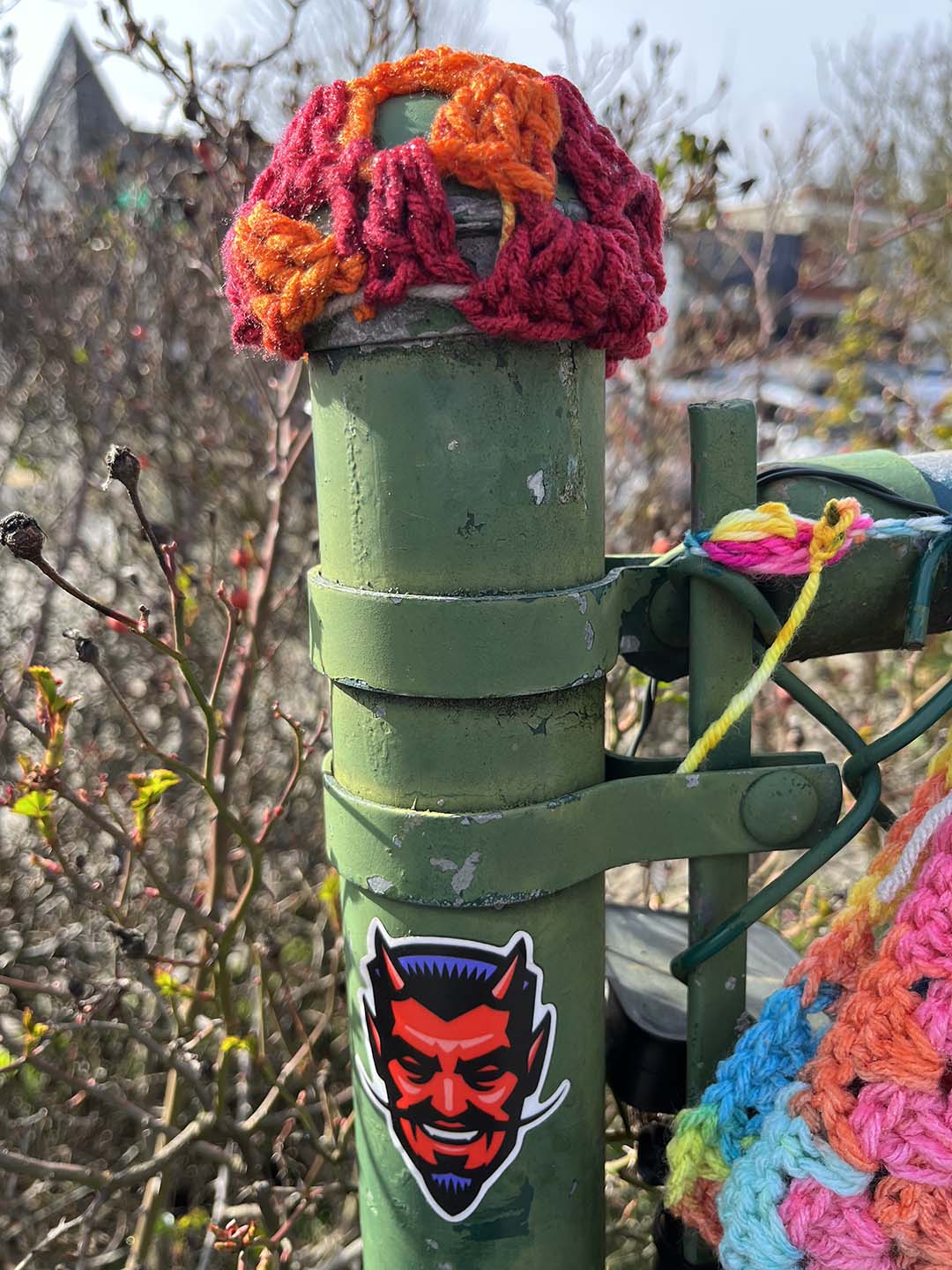
Then I go for my neighborhood walk, and find a fence made beautiful with eye candy – a group of crafters probably decorated together during the recent yarn crawl. This is an annual Portland experience, an event for fiber enthusiasts — knitters, crocheters, spinners, weavers, and felters — who spread through the city on a particular day to explore and support the many independent shops in and around Portland, Oregon, rather than buy on-line. Such a spot of upbeat color.
So I rejoice.
***
In the evening, I think through what art I saw that lingered from this day. Without competition, it was a project filmed in 2002 near Lima, Peru. A Belgian and a Mexican artist mobilized some 800 people to shovel sand to shift the top of a dune. You are rolling your eyes? Francis Alÿs is a multidisciplinary artist who focuses on shared cultural histories, urban engagement, and the human impact on the environment. I saw his work years back at the Tate Modern, and continue to follow what he is doing. Here is an older project particularly apt for our current situation: It was called Cuando la fe mueve montañas (When Faith Moves Mountains) – and really: isn’t that what we need right now? Even if change is imperceptible, going slow, needing a lot of organizing and solidarity, something IS happening? Watch the video and see how students define their understanding of art, its social context and implications, the consequences of communal action.
So I feel hope.
I also feel whiplash, with all those intense emotions shifting constantly. Time to take a break! I’ll be in touch sporadically.
I am skirting the issue. I should be writing about the politics of war, but my head would explode. Let’s turn to the interesting people department instead. Given that it is Women’s History month, I’ll start with a 19th century poet and union leader attuned to skirts.
The Skirt Machinist
I am making great big skirts For great big women— Amazons who’ve fed and slept Themselves inhuman. Such long skirts, not less than two And forty inches. Thirty round the waist for fear The webbing pinches. There must be tremendous tucks On those round bellies. Underneath the limbs will shake Like wine-soft jellies. I am making such big skirts And all so heavy, I can see their wearers at A lord-mayor’s levee. I, who am so small and weak I have hardly grown, Wish the skirts I’m making less Unlike my own.
Lesbia Harford was an Australian poet, lawyer and labor activist. Her father abandoned the family after bankruptcy, her mother toiling to get the 4 young siblings fed and educated. Harford was one of the first women to get a law degree at Melbourne University in 1915, where she became interested in the politics of class relations as well as feminism. She decided to work in the garment factories to understand truly the conditions of working class life, particularly among women. Despite having congenitally defective heart valves which made physical labor difficult, she went on to become a leader of the Industrial Workers of the World (IWW) around 1916.
She was openly bisexual, often in polyamorous relationships, and radically honest in her poetry around feminine issues that would not be discussed in public. She died from tuberculosis at age 36, her last years of life tortured by illness and dependency.
The poem struck me as both anguished and angry. Here is this small person, overwhelmed by the weight of the production task, metaphorically as well as literally. Stunted, she sews for women who are clearly of a different class, unrestrained in their consumption, free to eat and rest. Yet even these Amazon-sized women are burdened by the weight of heavy skirts, jelly-like limbs prohibiting escape.
Heaviness even when the contraptions of previous eras – the crinolines, the farthingales, the petticoats – were long abandoned. Skirt length and materials varied across time, of course, not least affected by the economics of any given era. If you look at shapes and lengths in relation to war vs. peace times, for example, you find straight correlations, with skimped materials when times are hard. Length also, eventually, became a means of protest and liberation – the mini skirts of the 1960s the most famous example.
***
Skirts were on my mind for a number of reasons. I had read about a woman who collected woolen skirts for decades from Midwestern thrift stores, up until she was 89. For the next 10 years – Audrey Huset lived until her 99th birthday – the collection of over 1000 vintage skirts was stashed in cartons in a garage. Her granddaughter, artist Mae Colburn, started to archive them in 2022, with the help of her parents, professors of costume design and photography, respectively. They sorted them according to a range of colors, plaids, and silhouettes – here is the link to the digital archive where you can be amazed at the collection.
I try to wrap my head around the motivation: how can you accumulate so much stuff, without even using the garments? Then again, I can just see the joy of the hunt, the glory of a find of an unusual specimen, the hope that these will make some warm recycled rugs in the future, the physical pleasure of touching woven wool of that period (much denser and of higher quality than what we see today.) A passion that gets you out of the house and in contact with people into your high eighties…still. Collectors are a mystery to me.
***
Then another skirt appeared on my screen. An expert knitter, designer and dancer had shared the instructions for a voluminous, long skirt she called the Paris skirt, and asked her 35.000 subscribers on Instagram (or anyone else) to knit along. There was a huge resonance, an exploding array of pictures posted of the variations generated by knitters across the globe. A new community instantly created, although I have asked myself how people who have not been knitting for ages, could afford to participate.
The pattern is not difficult. The materials required, on the other hand, are prohibitively expensive, if you do not already own a stash of remnant wool accumulated across many former projects. The mohair wool, for example, costs an average of $30 or so for 50 grams, which give you some 500 yards (the project requires over 2700 yards for larger sizes, and that does not account for knitting with double or triple strands that give the skirt some heft and bounces on the bottom.) Five different sizes of circular knitting needles required: the largest alone, US 13 mm, costs easily $27. If you had to start from scratch you could spend $300 or more, for a homemade skirt!
But again, the use of leftover materials is a sustainable practice, and the making of your own clothes a political act. Add a community that derives a sense of connectedness from the shared experience, and you have truly accomplished something. The designer herself considers knitting a form of resistance.
***
Then a book appeared in the mail, a gift from a friend who rightly anticipated my pleasure of receiving it. Loosely bound in recycled (and strangely fragrant) jeans material, it is titled Fav Pieces of, followed by some 50 names of people from across the globe. Let’s ignore the fact that the choice of font, an illegible page of contents, and an occasionally tortured introduction trying to provide intellectual heft, all scream for attention. It is, after all, published by Thaddaeus RopacPublisher of Modern Art. (I did not yet see the book on their publications website.)
Let’s focus instead on the fabulous idea of editors Frauke von Jaruntowski and Gerhard Andraschko Sorgo, to collect essays from people with various backgrounds about their favorite piece of clothing or other adornments. And admire the range of images provided with the design, including portraits of items, owners, or both, and some contextual pictures that are meaningful, ranging from laypersons’ snapshots to serious photography.
The essays make us think about our relationship to clothes and, in turn, the ways beauty norms, body image, experienced gaze, memory, class conformity, politics, moods as well as our yearnings, influence our consumerism – or our rejection of it.
It is a fascinating read, if only for the comparison between explanatory attempts. Some people reveal intensely private information, others block with superficial description. Multiple owners describe how the item makes them feel internally for its own relevance, history or associations. Several emphasize how a given piece allows them to create a persona projected outwards. A few discuss the relevance of fashion in their lives, yet others the need for comfort, rather than public effect. Some are eloquently descriptive of beauty, others refer but to function.
Oversharing, reticence, courage to expose vulnerability, vanity, strategic self positioning, thoughtful introspection, or simple autobiographical anecdotes – all can be found between two covers.
Only two skirts made the list. One is from an exchange between designers, a hand-stitched, non-traditional patchwork quilt in return for hand painted plates. The essay informs about the history of Scottish tartans, symbol for traditional Clans. It then turns to lovely interpretation of the possible meaning of patch-worked remnants, creating a style that belongs to all. A Mix-and-Match Clan for a rootless citizenry, a remix overcoming divisions, and an important reminder that we can create something new from old. The reader truly understands why that is a favorite piece in this context.
The other skirt appears to have been protectively underused, in contrast to its oft worn twin in more muted colors, both purchased at KENZO in 1980’s London, simultaneously. The beloved bright one was a match for the buyer’s brilliant mood at the time, the darker one more likely acceptable in the owner’s day-to-day existence. A short comment on personal history that brought the good mood in the 80s in stark relief, and a cryptic snippet on how she regrets not having worn the favored piece enough, are the parentheses for the half-page long musings.
***
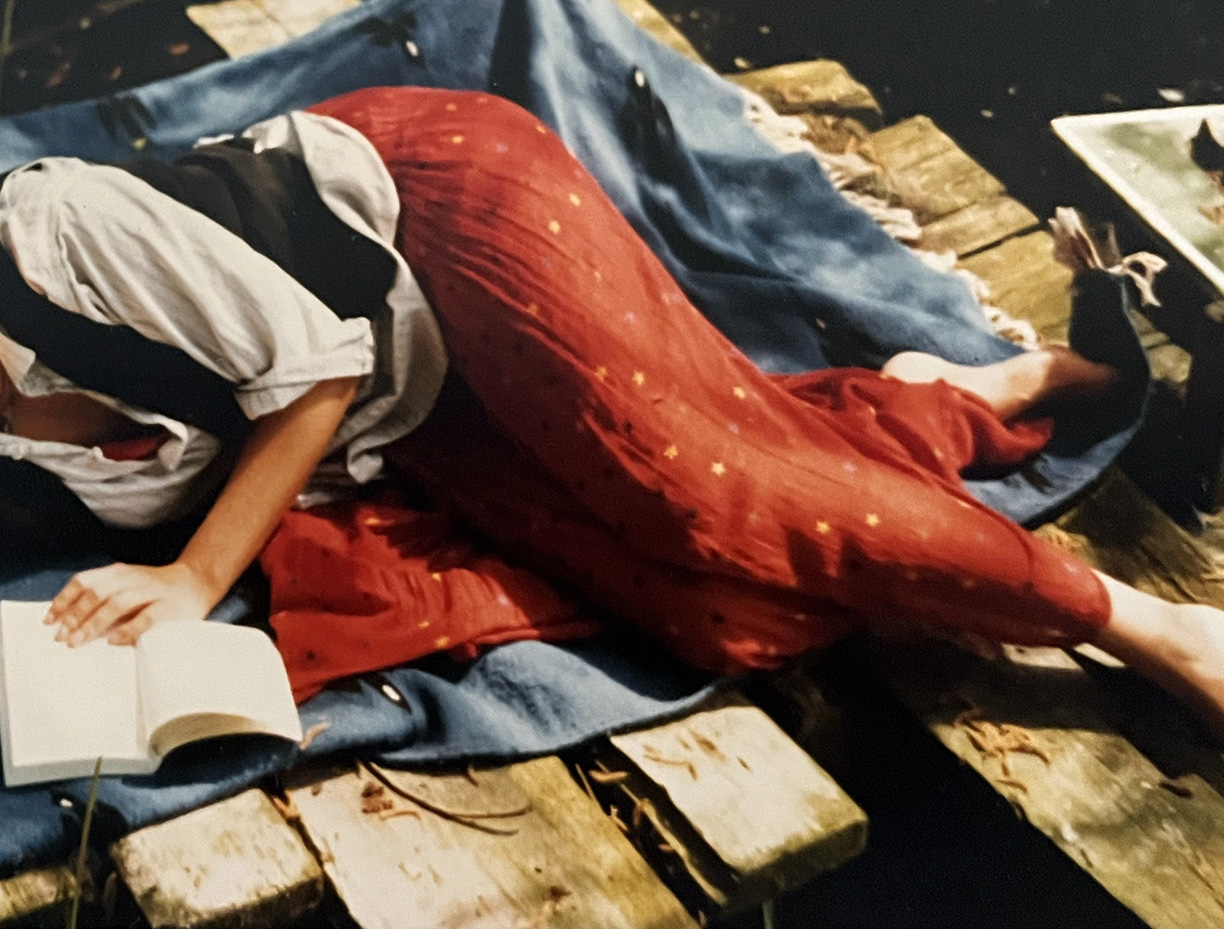
I used to wear skirts all the time. These days, not so much. I live in the functional, no need to think, can get dirty, ready to hike, comfortable uniform of pants and sweaters. But my favorite item in my closet is indeed a skirt, and it has accompanied me through good times and bad ones, for probably 20 years or longer. It replaced an old, red, star-sprinkled favorite that somehow got lost during emigration. I wear it when I travel, when I give lectures, or when I need a boost to my sense of who I am, during tricky encounters.
I picked it for my double portrait sessions with Henk Pander when he was still alive, a project, Eye to Eye, where he painted the photographer, I photographed the artist, across weeks of sittings. The skirt felt like the appropriate feminine counterweight to the absence of feminine symbols, eradicated by mastectomies for cancer. It’s most important attribute, other than a cheerful patchwork of patterns, is that it is light and wide enough to run in. No heavy skirts, no constricting pencil shapes ever again!
The skirt is also associated with something I am occasionally proud of: resisting overconsumption, for the most part, sticking to the tried and true. (I previously reviewed fiber artists, Ophir El-Boher, who embodies that concept in her art.) Of course that, too, comes from privilege. When you have permanent space to store things forever, when you have enough clothing that any one item is not worn to threads, when you have the funds to buy good quality that lasts, it is easy to do the right thing and not yield to compulsive purchases. In that way, then, the skirt reminds me to be grateful for all the choices I have.
Music today leads us back to the top – the fate of seamstresses in an exploitative economy. A Yiddish Ballad about the 1911 Triangle Shirtwaist Factory fire.
As with all Dickinson poems, interpretations range widely. Is she talking about a mechanistic model of a brain here, which catastrophically stops functioning if parts of it are ruptured, never to be whole again? Is she musing metaphorically about a descent into mental illness, describing the fragility of our cognitive apparatus and our ability to maintain mental stability? Or is she referring to a sudden rush of ideas and speculations, when we are distracted from our train of thought, wildly drawn in different directions, unable to close the floodgates? You tell me.
I’ve been thinking about brains this weekend. About those that seemingly stopped running “evenly – and true – and delivered some huge cognitive dissonance instead. And about those that are not really fully formed brains, yet display a surprising amount of human brain function, set in recognizable grooves and growing towards a more and more familiar shape.
The first category arose from the 76th Berlin Film Festival, with someone who stunned with statements during the opening press conference that directly contradicted what they had said previously. Jury president Wim Enders (yes, that Wim Wenders) was asked about the “selective” solidarity shown to Gaza, Iran, Ukraine, and other war torn regions around the world, with Gaza willfully ignored. His answer?
“We have to stay out of politics because if we make movies that are dedicatedly political, we enter the field of politics,” he said. “But we are the counterweight of politics, we are the opposite of politics. We have to do the work of people, not the work of politicians.”
This is the same brain that announced 2 years ago: “The Berlinale has traditionally been the most political of the major festivals, and it is not staying out of politics now, nor will it do so in the future.”
Cognitive dissonance in the service of avoiding engagement in the genocide debate, of combating the fear of being called anti-Semitic for any word uttered on behalf of Palestinians, of yielding to the pressure of having to align with Germany’s “Staatsräson.” How does an intelligent brain cope with this?
Arundathi Roy withdrew from the festival in protest. “To hear them say that art should not be political is jaw-dropping. It is a way of shutting down a conversation about a crime against humanity even as it unfolds before us in real time – when artists, writers and film-makers should be doing everything in their power to stop it.”
I could not agree more.
***
The second category of brains are really minuscule little brain balls or so called “Human Brain Organoids (HBOs),” tiny, 3D versions of a human brain the size of a peppercorn. The unexpected discovery of these things during research with stem cells in 2011 led to a flurry of research programs, from understanding how brains develop in a fetus, to possible ways to combat cancer.
These organoids mimic the developmental trajectories, cellular composition, neural circuits, and anatomical structures of the in vivo human brain (Seto and Eiraku, 2019). Some of them develop spontaneously from cell cultures, grow on their own and have the characteristics of multiple brain regions. Others are manipulated by scientists gearing them towards specific brain functions, and still others are “assembloids, fusing various specific brain regions, or organdies from non-brain regions, like muscles or retinas.
No longer science fiction: you can take material from donors with certain neurological diseases, including microcephaly, Alzheimer’s disease, or Timothy syndrome, grow these HBOs from their stem cells, and then subject them to any imaginable medical intervention/drug/manipulation to see if you can figure out a way to combat the disease. No worry about side effects or dangers to a living person, all trials done just on these brain balls in the lab.
Researchers have lately been able to transplant these organoids into animals, mice, rats and monkeys among them, and have shown that they can restore malfunctions in those host animals – helping them to reestablish motor functions that were damaged, improve memory in those that had memory and learning difficulties, and helped with healing of the visual cortex in rats that were blind.
Scientists have even, believe it or not, been able to produce interphases with these HBOs and computer systems, allowing them to play a simplified version of computer games. Theoretically, you could build systems where these neuronal structures power computers on a large scale, making the significant energy demands from current AI systems obsolete.
A groove made from a combination of biological substance and silicone…. what could go wrong? What swerving splinters will create havoc?
One big unknown, hotly debated, is the question of HBOs developing consciousness, and the associated ethical issues.
I am not going into the whole consciousness debate today. Let me just sketch the basic definitions psychologists use to distinguish types of consciousness. One is phenomenal consciousness – having the raw experiences that go with sensations and emotions.
The other is access consciousness. An entity has access consciousness when it has access to information and in most cases can use that information in some fashion. Access is obviously a matter of degree. A thermostat has limited access – it registers the temperature and reacts accordingly, by clicking on or off. We would obviously not call that consciousness. We use the general term access consciousness only if there is a fairly broad range of access and also a broad range of ways in which that information gets used.
Consider Tina who is now aware that Thai food is extremely spicy. Her knowledge comes from just having read about the way Thai food is prepared. Or her knowledge is derived from the pain in her mouth after her first bite, reaching for a glass of milk to handle it. The former is access, the latter phenomenal consciousness.
Given those different kinds, scientists do wonder where the line is for non-human entities to display access consciousness, or for animals, who we often grant even phenomenal consciousness. The organoids have access to information and act on it in predictable fashion, in complex ways.
Once you acknowledge a form of consciousness, all kinds of ethical principles kick in. Here is the long version of the arguments applied to human brain organoids for those who are interested.
Pandora’s box comes to mind, if you ask me. But then again, my brain is perhaps too small to calibrate the relative merits and flaws of creating brains in a dish.
By Else Lasker-Schüler, translated by Eavan Boland.
***
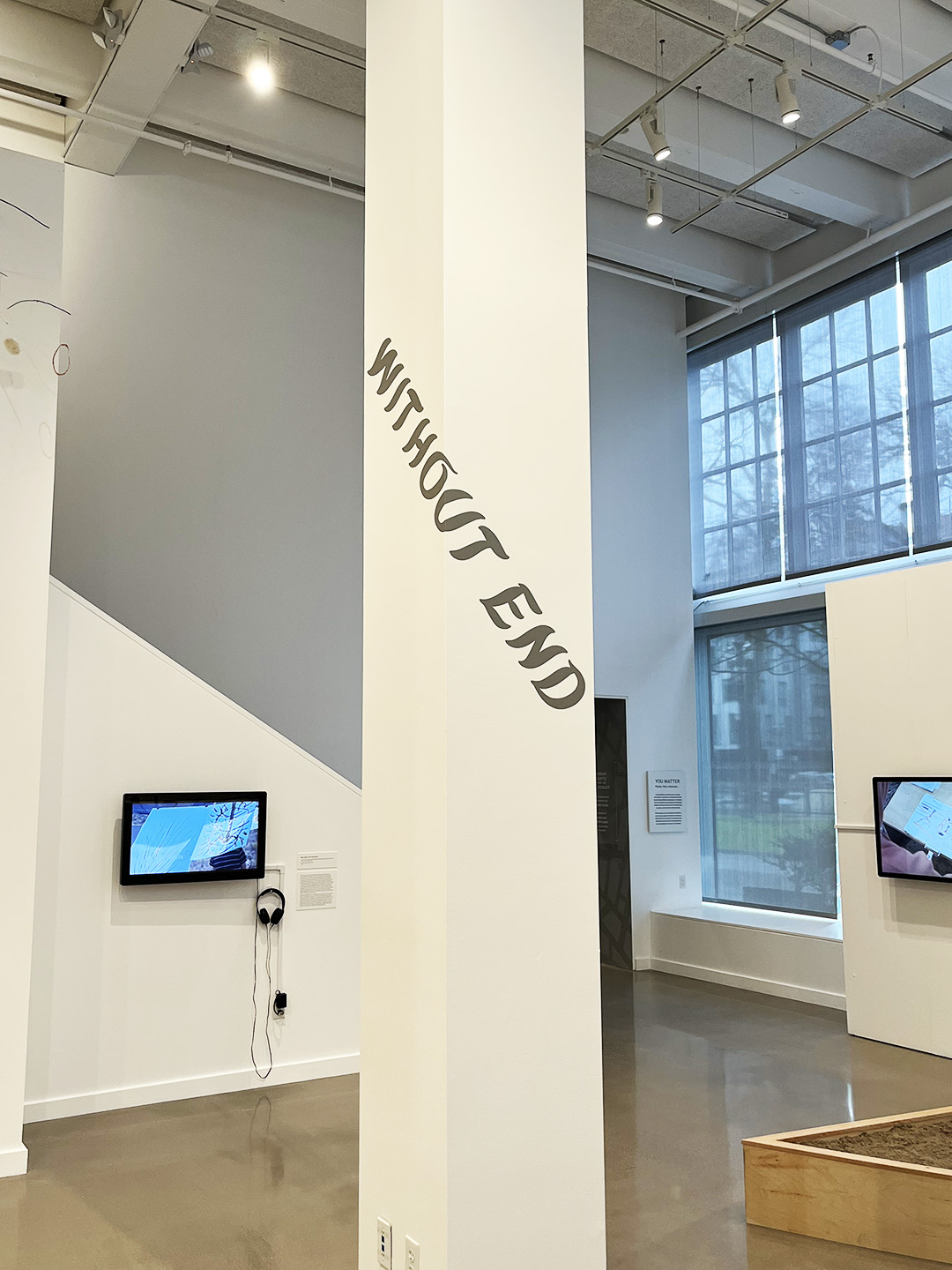
It was pure coincidence that I visited Cara Levine‘s exhibition Without Endat the Oregon Jewish Museum and Holocaust Education Center during the same week that my kids arrived in town. They are permanently relocating as survivors of the Altadena /Eaton Fire that destroyed their house, their neighborhood, their newly planted gardens and every memento they owned from more than three generations. Not a coincidence, then, that Levine’s current work, concerned with grief elicited by climate-related natural disasters and originating in exactly those same (Palisade) fire-induced losses, intensely resonated on a personal level.
Levine’s work has focused on loss, grief and pain of all kinds across the years of her practice since she earned a BFA from the University of Michigan in Ann Arbor, MI (2007) and an MFA from California College of the Arts in San Francisco, CA (2012). More importantly, though, it has offered perspectives on both, the causes of losses and communal ways in which healing can be implemented. Put differently, the work is not exclusively focused on individual experience, but on unveiling the collective circumstances that are producing loss, as well as offering tools to overcome trauma.
Before I get into the specifics, let me emphasize what I consider the strongest aspect of her work before us.
Real grief strikes down to the bone. There are no layers, no occlusions, no obscurations that it does not penetrate – they all become irrelevant. Levine’s sculptures and installations have that same directness: what you see is what you get. In our world where art often takes pride in obscurity, the need for deciphering, the veiled references, the analyses left to those in the know, her work will have none of that. Language is explicit, forms are defined, function leaves no room for interpretation. The art directly communicates shared human experience, and the artist is on an equal level with the viewer, no hierarchical distancing allowed. This, of course, is the basic element of communal experience, a focus of Levine’s makings, just as much as the individual’s grief.
***
I first came across Levine’s projects in 2022, when I was writing about the waves of eco-anxiety and post traumatic stress disorder of climate catastrophe survivors seen by clinical psychologists. Therapists face both increasing number and intensifying depth of anxiety disorders related to climate change. Data from the general population confirmed the trend. “A 2020 poll by the American Psychiatric Association showed that “more than two-thirds of Americans (67%) are somewhat or extremely anxious about the impact of climate change on the planet, and more than half (55%*) are somewhat or extremely anxious about the impact of climate change on their own mental health.”
What could be done before you need to find a therapist? Some political moves might help activists. Science is contributing tools to fight collective helplessness. And then there is art: Levine and other contributing artists invited people to participate in physically digging a hole to throw in their grief. For seven days, echoing our Jewish custom of sitting Shiva after a death – a time when community meets and supports the mourner – a large hole was dug in Malibu. The project happened on the grounds of the Shalom Institute campus which was devastated by the Woolsey Fire of 2018, an early taste of the fiery destruction to come. It struck me at the time that digging that hole might be one of the ways in which we could dig ourselves out of one: forming alliances (the contributors ranges from Chumash tribal leaders to cantors from local Synagogues) would provide an exit to suffering grief in isolation. Alerting community to the causes of wild fires might also lead to collective action to tackle climate change denials.
A video of the project can be watched at the current exhibition. So can a subset of exhibits from Levine’s project alerting us to the number and types of deadly shooting of unarmed civilians.
***
This is not a Gun (TINAG) was triggeredby an article in 2016 Harper’s Magazine that depicted objects held by unarmed victim of police shootings. The artist carved replicas of these innocuous objects, and workshop participants created ceramic models while discussing topics of racism and police brutality often associated with these kinds of shootings.
One of the most famous of these cases happened in New York City in 1999, when unarmed 23-year-old Guinean student named Amadou Diallo was struck with 19 of 41 rounds fired by four New York City Police Department plainclothes officers. They were charged with second-degree murder and subsequently acquitted at trial in Albany, New York on the grounds that they had a reasonable expectation to be endangered and drew a gun first in self defense.
Since then, long-term data collection revealed the fact that these shootings disproportionally victimize Blacks and other people of color. But there is also research evidence that Blacks and Whites both misperceive something innocent to be a weapon more often, if the object is held by a Black rather than a White person. In other words, all of us are likely to exhibit modern racism or implicit racism – automatic, unconscious, unintentional – still being tied to a culture that routinely links the idea of Blacks with the idea of deviant behavior, or a set of ideas, mostly bad, that concern violent crime, poverty, hyper sexuality or moral corruptness.
You might not act on those beliefs, you might deny them, but the associations are carried by most of us through permanent exposure to the linkage of Black to negative or threatening concepts, whether we are aware of it or not, whether we have the best of intentions and the most egalitarian politics. (For a more detailed discussion see my review here.) Projects like Levine’s draw attention to the stereotypes (and for that matter the historical burden of racism) with the hope of motivating people to intercept their own mental associations.
Acknowledging the existence of racism, explicitly or implicitly expressed, and the hold it has on our society is the necessary antecedent to fight it. I can scarcely imagine a more timely reminder given what is unfolding in our communities at this very point in time, regardless of the color of unarmed victims of state violence.
***
The new work in this exhibition centers around containers of sand, intended to be deposits of what we release into them – drawing our sorrows, by hand or dowel. For those dealing with climate-related losses a lasting memento is offered – “silver linings” made of pewter filling in the contours of a sand drawing (by appointment, see the OJMCHE website)
They will be given to the participants and a replica stored in the artist’s collection. Examples from prior studio work are on display.
Sands shift, patterns will disappear, but the act of thinking what to depict and the physical act of drawing might very well form a containment that holds the grief momentarily outside of ourselves. Only to return.
Without end. As the aptly chosen exhibition title suggests.
Maybe the healing comes not from the unrealistic termination of the pain, but the insight that we walk on shared ground, sand before us containing multitudes, a communal experience. Certainly in the case of our own family’s post-fire trajectory, community sustenance made all the difference. The help – emotional, physical, financial, spiritual – being extended from the farthest corners was medicine. Solidarity as a first hand experience.
But maybe it is also a time to put the aspect of healing on a slow burner, and instead increase the heat of resistance against forces that create avoidable losses in the first place. Climate change denial is just one of the aspects of hostility towards science that we are currently experiencing, but one that has huge implications for the planet at large. Our time is running out to implement the necessary changes that can prevent the worst suffering for millions of people killed or ravaged by loss through climate catastrophes.
An installation of imprinted birchwood panels on some sort of infinity loop names types of loss, predominantly private causes, but also some of the general political challenges we face, from the legality of immigrants, the divisiveness in our society, to the lack of protecting our earth. I found myself longing for stronger words, in visually more prominent positions. The TINAG project was so courageous and openly political. Why not here? We live in an age of multiple mass extinctions around the world, at a time when authoritarian or even fascist history repeats itself in a variety of disguises across nations. This is a time of pandemics, starvation and withholding of medical or economic aid that dooms hundreds of thousands of people. Horror without end.
How do you draw a representation of genocide in a sand installation? The birchwood would have held the word.
***
What held grief was a dream catcher high up, pretty easy to miss, commemorating the untimely death of artist Peter Simensky, chair of the Graduate Fine Arts MFA program at California College of the Arts, Levine’s friend and mentor, to whom this exhibition was dedicated. For those unfamiliar with this unusually creative, political and perceptive artist, here is a link to an exhibition booklet from a previous memorial exhibition at Reed College’s Cooley Gallery and here is a link to his website.
I could not discern if one element of the dream catcher was indeed made out of pyrite, a kind of rock central to Simensky’s last artistic endeavors, Pyrite Radio works. Doesn’t matter. Whatever form his signal takes, I believe it will contain pride and joy at what is on display in the gallery below, the courage not to walk away from grief included.
I am not the praying kind, but you can hear me occasionally mumbling to the universe in general, sometimes begging, sometimes announcing gratitude. Last week I could not help but whisper to the trees around me, ” I am so, so grateful.”
It was on a hike with my son in the Robert Sibley Volcanic Regional Preserve, located in the Oakland Hills of the East Bay region of San Francisco. A skyline path around the rim of the volcano offers breathtaking views. A bit later you descend into a forest with ancient redwood trees, brooks meandering, occasionally forming small pools. Monarch butterflies flit around, in January! Eventually you climb back up, a steep, steep ascent through stands of eucalyptus trees, those best smelling of all invasive plants.
I could not help but think back to another time when we walked under eucalyptus trees in a park not far from the current one. Walk is a generous word – my son moved forwards on crutches with superhuman determination to get back on his feet. Finally out of a wheelchair after a catastrophic paragliding accident on the cliffs of the Pacific, multiple surgeries for broken back and other shattered bones behind him, he was set on regaining his mobility. Then, we lasted for probably 20 minutes, my silent prayer, “Let him walk pain free again.”
Now, we hiked for almost 2 hours, the only thing confining the length of the hike or slowing his step being his huffing and puffing mother.
There are temptations that parents face when confronting a suffering child: (false) promises of improvement (when you have no clue if, or when, or how complete healing might happen) and comparisons to one’s own list of life’s disaster and ways of overcoming them. Either one might make you feel better, but betray and/or burden the child. I don’t know if or how much I yielded to those temptations 6 years back. The months spent with him during recovery are a blur for the most part, hard memories tentative and quickly pushed away when reemerging. But I do know that I tried not to yield.
I was surprised when I came across the poem below, by a poet whose intellect, politics and endurance I admire. It features a mother squarely beseeching, no, scolding her son not to take the easy way out, given that she herself is persisting in her struggles. Here was a parent not shy to admonish, to lay out her exertions as a demand that they would not be in vain.
Likely these lines should not be read as announcing a debt (worst kind of parenting), but read as a model (hopeful kind of parenting.) Not as an obligation, but as a desire to convey strength.
Life will hold other challenges for our children, and maybe one day I will not bet able to shut my mouth and instead utter the last line of Hughes’ poem not exactly under my breath. “And life for me ain’t been no crystal stair.”
It will come from love, though, and the unending desire to protect your own from harm. However many times I have seen this young phoenix rising from the ashes, I still have written in my heart: “Don’t you fall now.”
A prayer, not a demand.
Mother to Son
Well, son, I’ll tell you: Life for me ain’t been no crystal stair. It’s had tacks in it, And splinters, And boards torn up, And places with no carpet on the floor— Bare. But all the time I’se been a-climbin’ on, And reachin’ landin’s, And turnin’ corners, And sometimes goin’ in the dark Where there ain’t been no light. So boy, don’t you turn back. Don’t you set down on the steps ’Cause you finds it’s kinder hard. Don’t you fall now— For I’se still goin’, honey, I’se still climbin’, And life for me ain’t been no crystal stair.
A friend reminded me of this poem, fit for Martin Luther King Day. Even more meaningful in this year of 2026, when powerful forces try to turn the clock back on history. There is no question in my mind that our response to the attempts to weaken or abolish the achievements of both, the Civil Rights Movement, and peace keeping organizations across the globe, are well served by Angelou’s reminders below.
We can rise, if we summon the courage.
Still I Rise
You may write me down in history With your bitter, twisted lies, You may trod me in the very dirt But still, like dust, I'll rise.
Does my sassiness upset you? Why are you beset with gloom? ’Cause I walk like I've got oil wells Pumping in my living room.
Just like moons and like suns, With the certainty of tides, Just like hopes springing high, Still I'll rise.
Did you want to see me broken? Bowed head and lowered eyes? Shoulders falling down like teardrops, Weakened by my soulful cries?
Does my haughtiness offend you? Don't you take it awful hard ’Cause I laugh like I've got gold mines Diggin’ in my own backyard.
You may shoot me with your words, You may cut me with your eyes, You may kill me with your hatefulness, But still, like air, I’ll rise.
Does my sexiness upset you? Does it come as a surprise That I dance like I've got diamonds At the meeting of my thighs?
Out of the huts of history’s shame I rise Up from a past that’s rooted in pain I rise I'm a black ocean, leaping and wide, Welling and swelling I bear in the tide.
Leaving behind nights of terror and fear I rise Into a daybreak that’s wondrously clear I rise Bringing the gifts that my ancestors gave, I am the dream and the hope of the slave. I rise I rise I rise.