Browsing Category

Justice

Springsteen and Springfield.

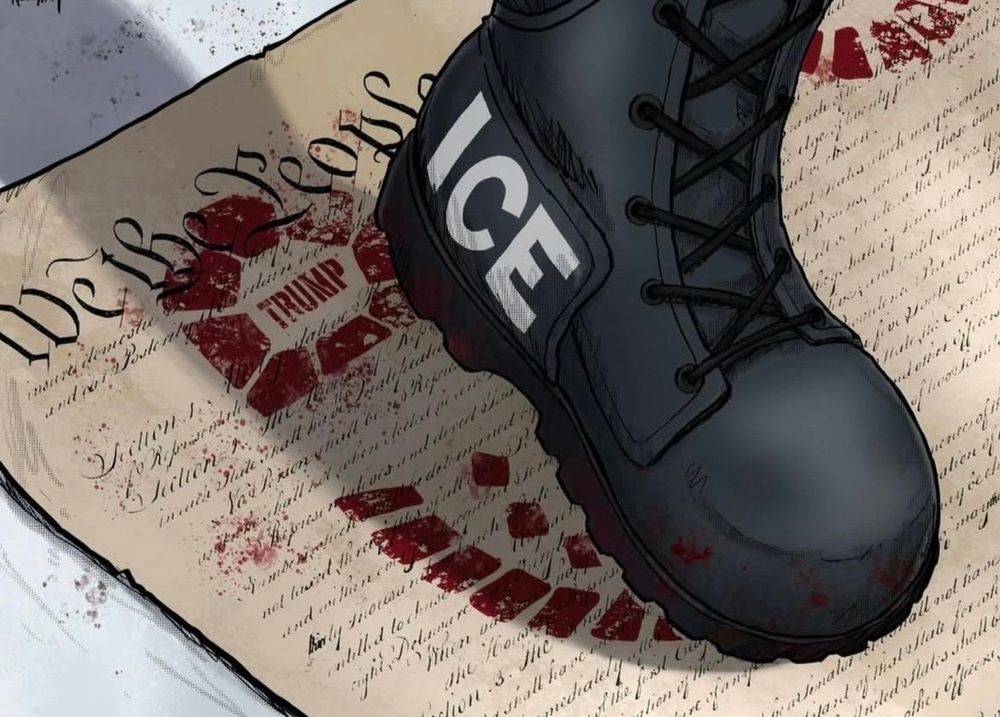
The Boss composed, recorded and published a new song this weekend, honoring the victims of the killings in Minneapolis and decrying the lawless violence and harassment rained on that city by various state organizations, including Immigration and Customs Enforcement, ICE.

In case you are inclined to belittle ICE as a threat, you are out of touch with your President. His most recent fundraiser explicitly raises dispatching ICE as a threat if you do not send the financial support he desires at the end of the survey.

***

While all eyes are on Minnesota, a new round of true ethnic cleansing is pending. Tens of thousands of Haitians in Springfield, Ohio, who are here under legal protection, will lose that status – by the stroke of the presidential pen – on February 3rd. 1000 ICE personell is slated to arrive on the 4th and begin removal of non-criminal, tax paying, integrated citizens. Brown ones, though.

***

It is easy to be captured by the tragic ramifications of the extra-legal killings of individuals, whether bystanders or detainees in camps. They should not detract from our attention, though, to all the other things going on, out of sight in the camps, or in plain view in the courts and the news where administration officials state their demands.

Minneapolis U.S. District Court Chief Judge Patrick Schiltz, a Republican, wrote in a new court filing, “ICE has likely violated more court orders in January 2026 than some federal agencies have violated in their entire existence,” in close to 100 instances and counting. “This list should give pause to anyone — no matter his or her political beliefs — who cares about the rule of law.” (Ref.)

Out of sight, human and civil rights violations are happening for detainees. As just one example, the tent camp in Fort Bliss, Texas, holds over 2000 detainees. Lawsuits by the ACLU and Human Rights Watch, are alleging that detained immigrants are subject to beatings and sexual abuse by officers, as well as medical neglect, hunger and insufficient food, and denial of access to attorneys. Several instances of intentional crushing of testicles of young immigrants remind of eugenic practices known from another dark time in history. Female inmates report on rampart human trafficking and sexual abuse. And don’t get me started on the incarceration of infants and small children.

Access to attorneys is affected by strategic transfer of detainees across multiple states with little or no notice. These transfers are disrupting legal cases, delaying hearings, and denying access to attorneys, never mind leaving families without information as to the whereabouts of their loved ones. This increasingly frequent practice, every time a court hearing or some such is imminent, is harming due process and basic legal protections.

***

In the aftermath of the killings in Minneapolis, public backlash seemed to impel the Trump administration to change course. Border Patrol commander Gregory Bovino, a top official in Trump’s nationwide immigration enforcement operations, was removed (he’ll continue just in another part of the country.) He was replaced by Border czar Tom Homan (he of the $50.000 bribe in a paperbag). Has anything changed?

Homan, just like Miller, Noem, and the President himself, have spent months telling the militias that they are the victims and can act with impunity. Peaceful protesters, making use of their constitutional rights, are treated as the aggressors. Today, Homan reiterated these sentiments and recited the extortionist and coercive demands in AG Bondis letter – turn over your voter rolls, abandon your state policies, and give us Medicaid data & we’ll end the occupation and terrorization of a state – as the terms for withdrawals. (Ref.)

The intermittent shifts in tone, now rescinded, and replacement of one figure head for another, seemingly less aggressive one, hold the danger of what sociologists call “symbolic compliance.” The institution violating civil rights gives the public just enough symbolic victories that it stops momentum towards demands for accountability, insisting on meaningful change.

***

And this is where the Democrats need to be held to account: this is the moment, during household and spending debates, where they have an opportunity to put the breaks on a continuation of the abuses by ICE and DHS visible to all of us. What is at stake is best laid out by two experts on Totalitarianism. Timothy Snyder explains the political consequences of living with paramilitary forces. (In case you wondered if that term can be justly applied to the goons on hand, read here.)

Masha Gessen describes the psychological consequences of a state using terror, including our attempts to find explanations that would assure us we will never be the victims. An illusion, of course.

“The toolbox isn’t particularly varied. President Trump is using all the instruments: the reported quotas for ICE arrests; the paramilitary force made up of thugs drunk on their own brutality; the spectacle of random violence, particularly in city streets; the postmortem vilification of the victims. It’s only natural that our brains struggle to find logic in what we are seeing. There is a logic, and this logic has a name. It’s called state terror.”

Will Democrats find the spine to call for the abolishment of ICE, the impeachment of persons responsible?

One can hope.

Alas, my predictions align more with some random comment in my inbox:

Here is Billy Bragg with City of Heroes.

A Way Forwards.

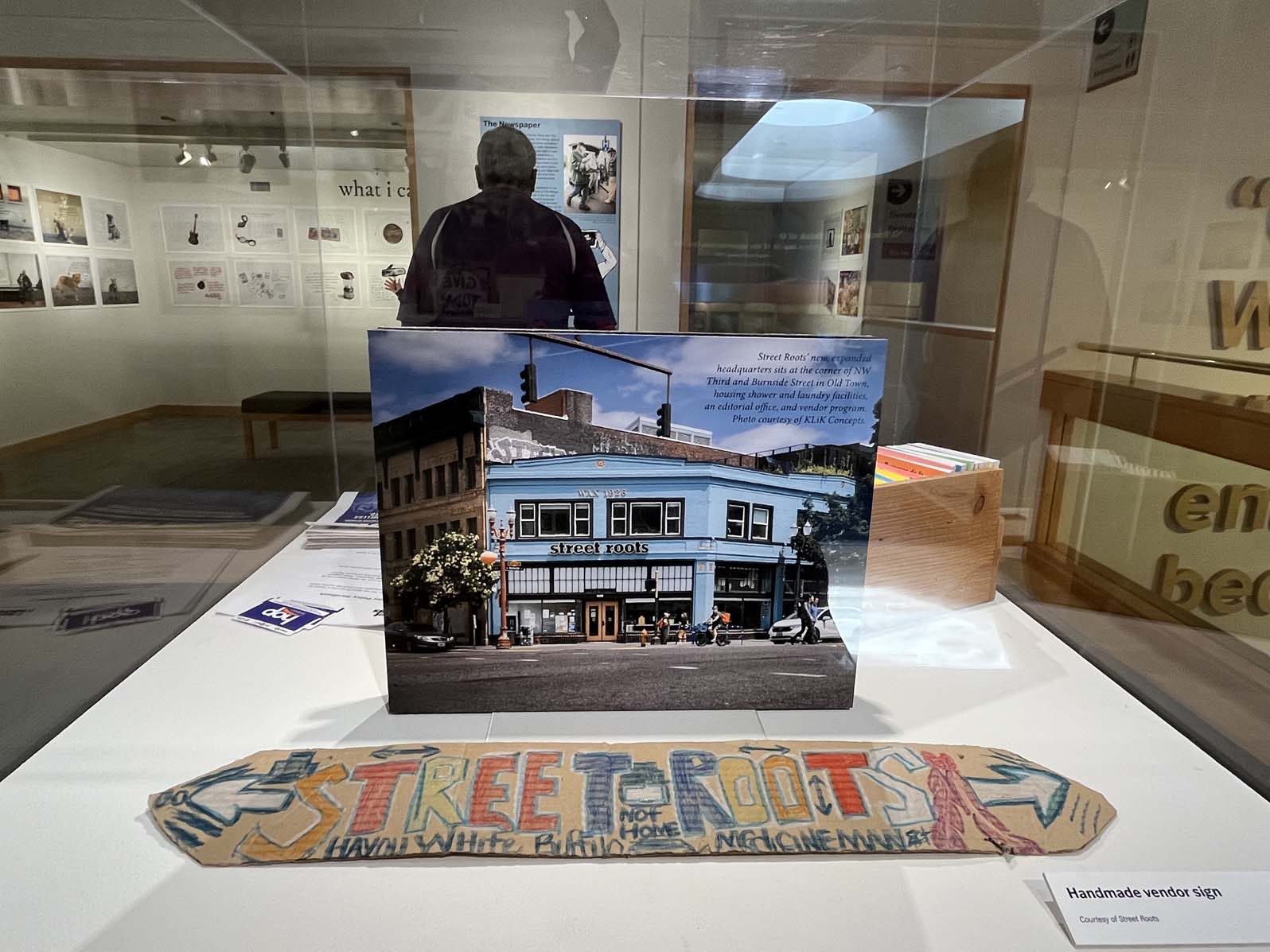
· Oregon Historical Society presents: Street Roots - Providing Income Opportunities and Independent Journalism as Portland’s Street Paper Since 1999. ·

“You’ll be my first sale of the day!,” a woman in a wheelchair suggested to me, holding up a bundle of Street Roots newspapers while I walked next to her in the South park blocks. I had literally just left the Oregon Historical Society’s current exhibition celebrating 25 years of Street Roots publishing, looking at it together with Jim Lommasson, a friend and fellow photographer who has powerful work up in the show. Vendor Karen’s optimistic smile sparkled just as much as her zircon-encrusted sandals, lifting me out of very dark thoughts about the current and future plight of the unhoused in our city, our country.

Over 100 vendors, some 50% unhoused and all living below the poverty line, sell weekly newspapers published by Street Roots, a non-profit Portland newspaper covering local as well as national news, offering opinions and art. In operation since 1999, the newspaper serves as a means for vendors to earn some income – a single issue costs $1 – and helps to forge contact between the housed and unhoused population in the human encounters around the street sales. Many of the vendors have consistent spots and regular buyers, they and their customers getting to know each other.

The organization, led by interim executive director Rebecca Nickels, provides more than just an opportunity to make money and community connections. The new building in Old Town offers opportunities for showers and laundry, help with administrative chores and opportunities for education or communal gatherings. With the move, Street Roots is in dire need to raise the funds for new operating coasts and changes in staff structures, not an easy task in the current economic and political climate.

Old vs. new digs….

Here is an in depth introduction about outreach by my ArtsWatch colleague Elizabeth Mehren, writing some months back about the weekly poetry workshop for vendors (for transparency, I regularly participated as a volunteer in that workshop before my immune system went south, some years ago.)

The exhibition at OHS presents a mix of informative text, objects related to the vendors’ trade and art by those involved with the newspaper. It depicts determination and resilience, as well as the difficulties and dangers of being unhoused. In the reverberating words of Kaia Sand, uttered at a previous showcase of vendors’ poetry, “There is a lot of courage out there.” Sand recently stepped down from her position as executive director of the organization after 7 years, and now writes an excellent column and a book about homelessness.

***

An entire room at the OHS gallery is filled with a collaborative project between photographer Jim Lommasson and vendors who wrote their thoughts and comments on pictures he took of their possessions, objects or animals that had particular meaning for them. There is a wall of dogs that tugs at your heart strings.

Jim Lommasson and collaborators what i carry.

There are items to cope with the hunger,

Jim Lommasson and collaborators what i carry.

the cold,

Jim Lommasson and collaborators what i carry.

the existence within a society that has turned its back on the unhoused, at best, and criminalizes and threatens them, at worst.

Jim Lommasson and collaborators what i carry.

And there is the constant reminder of the fragility of it all, with life-long, meaningful possessions lost to theft or, more frequently, sweeps.

Jim Lommasson and collaborators what i carry.

what i carry is an ongoing project by Lommasson, in which he uses his camera as well as his deep sense of justice to depict populations that have been displaced due to varying, most often traumatic, causes. His work with refugees, survivors of genocide and the Holocaust, whose few mementos are often the only thing that survived into life in the diaspora, has found national recognition. The photographs with their added commentary by the participants have been exhibited in countless national museums, including the Dallas Holocaust and Human Rights Museum, Ellis Island Museum of Immigration, NY, the National Veterans Art Museum, Chicago, the Japanese American National Museum, L.A, and the United Nations Headquarters in NYC.

Jim Lommasson in front of the images.

For the new project with Portland’s unhoused population, he faced a specific hurdle: you have to find individuals willing to participate, take a picture of what they offered, then print the work, and bring it back to the respective person for commentary: but where to find them in a population that is constantly on the move, due to the vagaries of street life and the constant pressure by the police to move away from previous spots, including regular sweeps of encampments? It took up to half a year to find some of the participants again. Street Roots, however, was one of the few institutions eager to support the project, and opened their doors to the photographer, with many of the regulars at the poetry workshop quickly engaged. Here is a detailed introduction to the series, exhibited at an earlier date at Place in full.

In our conversation we both agreed how working with this population immediately called out our very own stereotypes about the unhoused. The degree of learnedness and sophistication displayed in interaction around text and literature was a surprise. Just goes to show how deeply ingrained our prejudices are, our assumptions about what is or isn’t likely to be associated with precarious existence.

What Lommasson’s project does, however, is independent of the educational status of his collaborators. It unveils the humanity contained in all people, housed or unhoused, depressed and anxious or not, addicted in some fashion or another (easier to hide with a roof over your head, I might add) or not, sharing a place where we feel we belong – or are told that we don’t.

It is profound work that has the potential of opening someone’s eye to the underlying similarities rather than differences, of closing the gap between “us” and “them,” of diminishing stereotypes that continue to harm the pursuit of solutions addressing homelessness.

***

I did not ask vendor Karen in the wheelchair how she felt about the live TV remarks of well-known moderator and political commentator Brian Kilmeade last week. My sincere hope was that she had not heard them. I had not been able to shake the thoughts during my exhibition visit of what it must feel like to be unhoused and hear that someone publicly declares I should “simply be killed by involuntary lethal injection,” (after the Fox&Friends co-hosts discussed involuntary incarceration if “they refuse all the help regularly thrown at them.”) Kilmeade apologized several days later for “callous” remarks.

What is even happening? The U.S. homeless population includes over a million children and tens of thousands of veterans, many of whom served in Iraq or Afghanistan. Does poverty or mental illness, often PTSD-induced, justify extrajudicial mass killings? Does our desire to be spared the exposure to poverty and mental illness warrant detention camps? Scott Turner, Secretary of Housing and Urban Development in the second Trump administration, thinks so. During his confirmation hearings he indicated he would agree with his President’s plans. In Trumps own words:

Under my strategy, working with states, we will BAN urban camping wherever possible. Violators of these bans will be arrested, but they will be given the option to accept treatment and services if they are willing to be rehabilitated. Many of them don’t want that, but we will give them the option.We will then open up large parcels of inexpensive land, bring in doctors, psychiatrists, social workers, and drug rehab specialists, and create tent cities where the homeless can be relocated and their problems identified. We will open up our cities again, make them livable and make them beautiful.”

Trump has now issued an executive order on July 24, calling for civil commitments of homeless people, criminalizing harm reduction efforts, an end to “housing first” policies and federal law enforcement assistance to help local governments sweep encampments. It follows the Supreme Court’s Grants Pass v. Johnson decision to criminalize public sleeping by those who are houseless, even if no shelter or other options available.

In a 6-3 decision written by Justice Neil Gorsuch, the Supreme Court ruled that cities enforcing anti-camping bans, even if homeless people have no other place to go, does not violate the Eighth Amendment’s prohibition on cruel and unusual punishment. Gorsuch was joined by the rest of the court’s conservatives, including Chief Justice John Roberts.”

Since May 1, Oregonians living in encampments in forests have been evicted as well. (Ref.)

(I wrote about the historical, economic roots of No Trespassing laws regarding public lands following the abolition of slavery earlier here.)

Where are the unhoused supposed to go? Treatment and services are, of course, not just woefully underfunded, but simply not available for a large part of the population expected to agree to them. Here are the facts for Portland this summer:

Multnomah County’s Homeless Services Department estimates there are over 7,000 unsheltered homeless residents in the county as of May (likely a severe undercount). Since the beginning of the year, Mayor Wilson, who ran on a compassionate platform for the election, has added 430 new shelter beds, totaling 1,300 city-run beds. Including Multnomah County-funded shelters, 2,454 beds are available to local homeless residents on a given night (this number can be verified.) At least 4500 people then face civil or criminal penalties if found outside. Violation of the city’s current ordinance addressing “conduct prohibited on public property” is punishable by a $100 fine or up to seven days in jail.

Wilson has also increased the number of sweeps of encampments compared to his predecessor Mayor Wheeler, according to the statistics provided by the latest Impact Reduction Program, to an average of 26.6 sweeps a day, 4,815 for the first six months of 2025. The city sweeps homeless residents at a higher rate than its West Coast peers, and homeless residents in Multnomah County die at a higher rate than any other West Coast county with available homeless mortality data, as reported by Street Roots and ProPublica June 11.

Photograph part of the exhibition.

Many worry that the city’s clear investment in temporary shelters has led to a disinvestment of permanent housing. To be fair, in the last 8 years, the city built 2,238 permanent supportive housing units, which are currently in operation, and has 361 units in the pipeline to be built. That’s above its goal of building 2,000 units by 2028, but the number of people finding themselves without housing has dramatically increased over prior projections as well, and is likely to increase with the current trajectory of our economy.

The National Alliance to end Homelessness has an informative primer on the negative effects of criminalizing homelessness.

Two things stand out: By criminalizing people now, people who have nowhere to sleep other than the park or the street, you will make it harder for this population to land housing at any point in the future, given their criminal record. So the claim that it is about decreasing homeless populations is logically fallible.

Secondly, if you have the option to crack down punitively, you will likely ignore more structural remedies, since they would cost you more money up front. Building housing, the ONLY way out of the catastrophe we are experiencing here on the West Coast, will take a backseat. So will upping universal rental assistance, repairs to public housing, and funds for eviction prevention.

Found on a bookshelf at the old Street Roots Building – photograph by author.

One can only hope the exhibition at OHS educates large numbers of people about how much difference organizations can make in empowering and supporting the unhoused, paving a way back into a more secure life. These organizations, in turn, deserve our renewed, vigorous support.

Reading the newspaper, sold by Karen, Sept 10-16 2025 edition.

Late June (Dis)Pleasures.

Walk with me. A sedate stroll on Sauvie Island, easing us into a week where I will be working on a longer writing project and thus not posting across the 4th of July holiday.

Nature put on a show. Then again, when does it not?

Bloom and setting of fruit happening simultaneously for the black berries.

Oregon grapes already basically ripe,

while Hawthorne berries showed only a hint of the red that will later attract birds and squirrels alike when reaching full saturation.

Oak galls galore, a consequence of chemical injections by wasps who benefit from these growths.

Flowers in the meadows competing for my breathless mutterings – Oh, beauty!

Rufus Towhee hopping around, distracting me away from their nest, while ground squirrels watched with amusement.

Water levels high at the lake, serene at the canals, and small clouds lightening the grey skies.

The ospreys reliably resettled their nest that I visit every year.

If you stand close by, quietly, long enough, there will be coming and going, with lunch provided for those who wait long enough and screech loud enough.

Nature, relying on us to preserve it, since we have stressed it already so close to the limits. Preservation that will be made infinitely harder with the abominal Supreme Court Chevron decision last week which, as Zoe Schlanger at The Atlantic put it, shoved American environmentalism into legal purgatory. Read it and weep. The kneecapping of federal regulators will, of course, not just harm the environment, but also have huge implications for consumer protection.

This implies not just safety for what you eat and drink, or cars and planes, or warnings about chemical agents that might be harmful. It fully embraces the issue of pharmacological treatments, their safety and access granted to them, including the long sought prohibition of oral abortifacients. It also implies that a judge or a panel of judges can make decisions on the availability or necessity of vaccines. Think of another pandemic rolling around, and the judiciary, filled with anti-vaxxers, decides that vaccination is illegal. It will affect labor regulations, from workplace safety to pay requirements to the sales of goods no longer considered fairly made.

We cannot even conceive of the extent of the consequences this decision will have for the American people. Protection blown to the winds like grass seeds.

Justice Kagan’s dissent in Loper Bright Enterprises vs Raimondo is worth contemplating.

A rule of judicial humility, gives way to a rule of judicial hubris. In one fell swoop, the majority today gives itself exclusive power over every open issue—no matter how expertise-driven or policy-laden—involving the meaning of regulatory law. As if it did not have enough on its plate, the majority turns itself into the country’s administrative czar.”

Regarding stare decisis, the respect for previously made decisions:

It barely tries to advance the usual factors this Court invokes for overruling precedent. Its justification comes down, in the end, to this: courts must have more say over regulation—over the provision of health care, the protection of the environment, the safety of consumer products, the efficacy of transportation systems, and so on. A longstanding precedent at the crux of administrative governance thus falls victim to a bald assertion of judicial authority. The majority disdains restraint, and grasps for power.

Mullein has the symbolism attached that it opens channels of communication with a higher power. Man, do we need that…..anybody out there????

Well, so much for sending you off to a holiday week. Enjoy your fireworks while they are still safely regulated in defiance of profiteering at all cost.

Music today is the Prelude to Bach’s Cello Suite # 2 in D-Minor. You can read darkness into it, or, as I do, a moment of hope. Preludes are beginnings – and we can always begin anew, putting things right. Eventually. Hopefully.

Juneteenth 2024

Today is Juneteenth. We mark the day in 1865 when the last of enslaved Black Americans in Texas first learned of the Emancipation Proclamation – more than two years after it was issued. It is a day that reminds us that change is not just desirable, but possible. That liberation is to be celebrated as a shift from a status quo – slavery – to a goal, however compromised in its evolution: freedom and equality for all.

Photographs today were taken 10 years ago when I still worked as a volunteer photographer with dance groups for teaching kids African dance, drumming and customs.

Seems like the perfect day to ask the question why so many powerful forces in this country, most densely represented in the current Supreme Court constellation of judges, want to revert from the change that we celebrate to a situation that enshrines the status quo at the very time when slavery was alive and well.

I am, of course, talking about the embrace of Originalism, the legal theory that judges should interpret the Constitution exclusively in ways the Founders meant it.

Let me count the ways in which this approach, heavily promoted by right wing forces across the judiciary, is problematic. For a more in depth discussion of the issues I strongly recommend a new book by Madiba K. Dennie, The Originalism Trap. The legal commentator, previously a counsel at the Brennan Center for Justice and professor at New York University School of Law, is now a deputy editor and senior contributor at the critical legal commentary outlet Balls and Strikes, which I follow closely. Her new book reveals the many inherent faults of this supposed intellectual theory that treats civil rights gains as categorically suspect, eager to roll them back, reverting the country to the inequitable version of the past.

Here are the bullet points as expressed by her:

  • Originalism is the idea that the meaning of the Constitution is fixed in time, locked in when the Constitution’s provisions were ratified. If you asked an originalist how you should interpret the Constitution today, they would tell you there’s only one way you can legitimately interpret it: the way it was interpreted 200 years ago. Originalism is ostensibly tied to a single point in time, and as a result, it bakes the biases and bigotries of that time into constitutional interpretation. 

  • Even if there was a single objective historical meaning of the Constitution (and there isn’t), and even if the Court relied on the finest historians to unearth that meaning (and it doesn’t), it would still be irresponsible to cast aside all the ways democracy has evolved in the intervening centuries and relinquish our right to self-governance. A well-intentioned liberal originalist would still be outsourcing constitutional interpretation to 18th century men who couldn’t possibly imagine a modern pluralistic society. That does a disservice to the whole nation, and poses an unique threat to historically marginalized people.

Dennie favors an alternative approach dubbed inclusive constitutionalism. It focusses on the fact that our nation adopted the Reconstruction Amendments in the wake of the Civil War. The 13th, 14th and 15th amendments were added to the Constitution and abolished slavery, granted equal rights to formerly enslaved people, and enshrined the right to vote for people of all races.

In the scholar’s words:

“They instruct us to create an equitable multiracial democracy in which everyone can live freely, equally, and with dignity. Inclusive constitutionalism argues that the whole Constitution must be interpreted through that lens. Legal interpretation should be guided by the Reconstruction Amendments’ expansive principles and their unfinished mission to foster a democratic society with equal membership for all.

Inclusive constitutionalist courts would protect people’s right to make decisions about their own bodies and to live with dignity. They would protect people’s right to make decisions about their communities and participate in the political process. And they would recognize all people as legitimate members of their communities.”

Of course all 300 million of us are currently ruled by nine unaccountable people, the majority of whom want to turn back the clock and have the power to do so for the rest of their lives. There will have to be structural reforms like court expansion and term limits as some limitations on the court’s authority in addition to demanding a retreat from originalism as selectively applied as it is right now. It would truly be in the spirit of Juneteenth, or the promises of democracy, providing equal rights to all marginalized or hierarchically locked in place groups.

Happy Juneteenth! A federal holiday. Never mind that in Alabama, Arizona, Arkansas, Florida, Idaho, Iowa, Louisiana, New Hampshire, Oklahoma, South Carolina, Tennessee, and Texas, Republicans have passed laws to prevent teachers from teaching kids why. It’s not just the Judiciary …..

Ok, time to turn away from doom and gloom to celebrate the spirit of Juneteenth: here is Jean Baptiste to the rescue, with music to dance to!

Protecting the Young

Let’s treat ourselves with something amusing, if slightly moralistic, at the end of this week: a short animated film about the strenuous efforts of parental love. Enjoy the clip while you can, because much darker contemplations follow in short order…

Would a parent risk their own life, like we’ve seen in that charming animation, if that pregnancy was violently imposed on them, created by rape, and secured by laws that demand forced birth? You probably have seen the same statistics as I did this week, horrifying enough that I could not just ignore them.

Since the SC Dobbs decision revoked the rights and protections offered by Roe vs Wade not so many months ago, some 64.500 pregnancies resulted from rape in the 14 states that now have complete abortion bans. (If that number is not horrifying enough, think about this one: it is estimated that 5% of all rapes result in pregnancy. That means that you have a 20 fold number of rapes that occurred in these states, within less than two years.

Friderike Heuer Jupiter’s Moons (2023) Figures by Paula Modersohn Becker (1876 – 1907)

What do we know about children born from rape? Psychologists have identified a number of factors that severely impact the development of these secondary victims of the crime. Risk factors are pregnancy and delivery, bad parent-child relationships, stigmatization and discrimination, identity issues, and, last but not least, significant numbers of infants being farmed out to foster care where they often enter a cycle of violence themselves since that system is not in good shape or under supervision.

The post-traumatic stress experienced by the mothers who were raped can influence the development in utero of these babies, as does the frequent intake of anti-depressant and anti-anxiety medications to deal with the horrors of PTSD, or self-medicating with alcohol and/or drugs, substances that affect embryonic development.

For many mothers it is hard to love a child that was forced on them twice, first by the rapist and then the state depriving them of bodily choices. According to the research literature, communities treat children of rape with disdain and families, communities and the children themselves are hyper-vigilantly looking for negative traits that might have come down to them from the criminal.

Many of these children, later on trying to get a handle on their identity, want to know their fathers despite the harm those brought upon their mothers, and that leads to internal conflict and a sense of guilt, particularly if these rapes occurred during war times.

These combined factors, exacerbated by the rape victims’ shame and/or anger, predict serious mental health consequences for the majority of children born this way.

Friderike Heuer Aphrodite (2023) Portraits by Helene Schjerfbeck (1862 – 1946)

As I said, I could not avoid touching on these issues, given their political importance in a country that is trying to take rights and decisions away from women, and willfully ignores what happens to their children as well.

Let’s have music that might lift the mood a bit, again related to some sort of animation. When was the last time you listened to Peter and the Wolf ? There is a reason it has had such staying power.

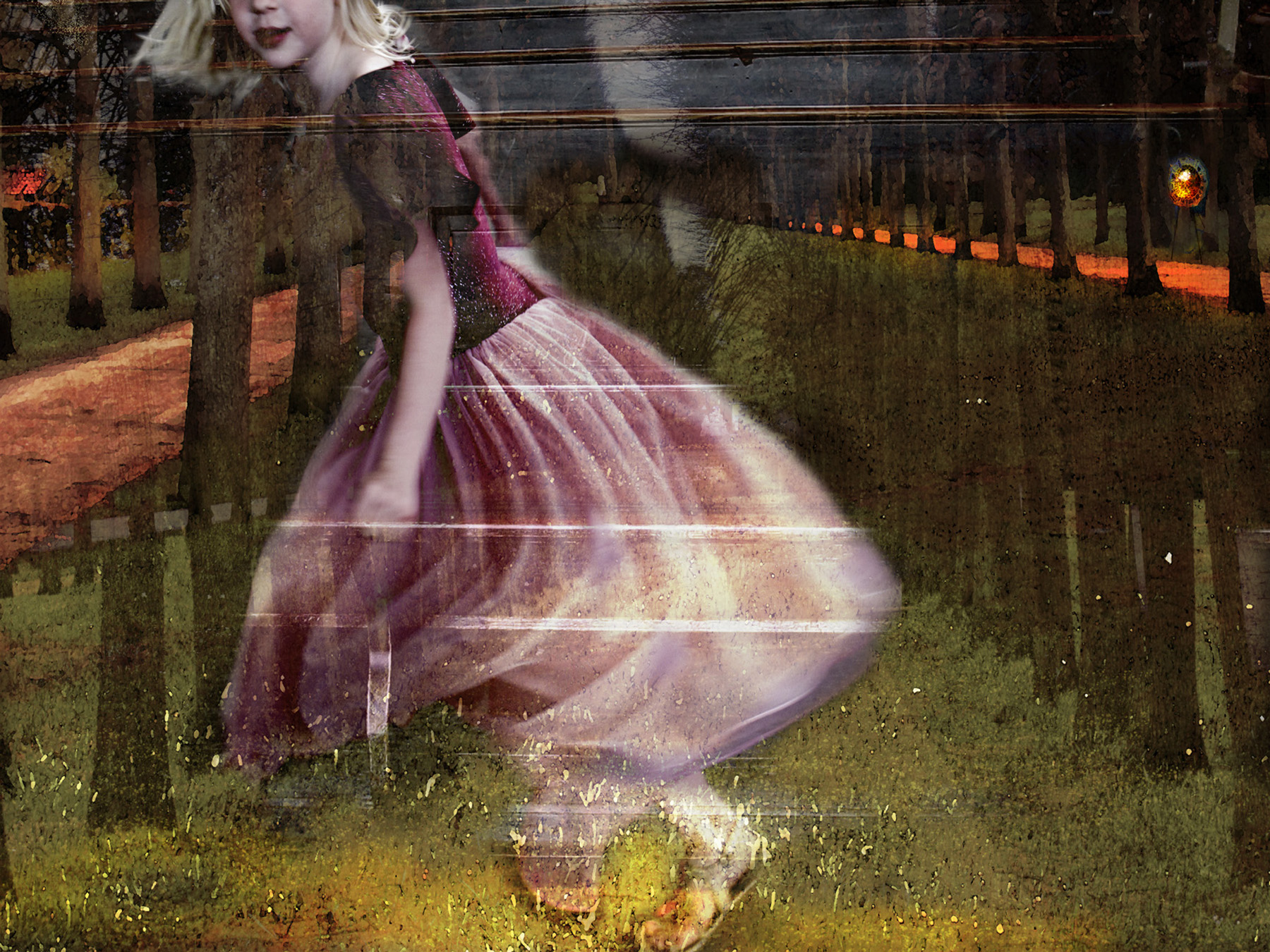
Today’s photomontages are from an ongoing series that attempts to bring painters I cherish into my contemporary world. The two on offer happen to depict women protecting their children in landscapes I photographed in the US and in Europe.)

Learning from the Best

I came across the document from 1944 by chance, but was immediately intrigued. The Simple Sabotage Field Manual was originally written by the OSS (Office of Strategic Services,) the forerunner to the CIA, an organization formed as an agency of the Joint Chiefs of Staff to coordinate espionage activities behind enemy lines for all branches of the United States Armed Forces.

It gives detailed instructions how to harm productive outcomes in organizations of all kinds and was distributed by the Allies to cooperative citizens in Europe during the war. Declassified in 2008, finally, it has made the rounds in business schools and board rooms. (Ref.)

Part of the instructions focus on slow-walking the decision-making process, trusting that a delayed outcome, as it often does, has adverse consequences. In that regard it reminds me of the insane slow-walking by multiple players that we are seeing in our current political landscape. Those in power can delay and defer, until it is too late – court cases becoming moot, or their outcomes no longer able to influence real world results. Simple sabotage? I’d say a more serious one, if you consider the real life consequences of these actions.

As one example, think of gerrymandering election districts, which will remain on the ballot if the judges don’t pick up the cases or slow-walk them through the court system. A good example here is the Supreme Court’s glacial pace in the Alabama gerrymandering case which led to allowing maps it later held were unconstitutional and discriminatory to be used in the 2022 midterm election. Citizens were deprived of their rights simply through slow -walking.

Currently, the Ohio AG is slow-walking a petition to put an anti-gerrymandering amendment onto the November 2024 ballot, again potentially curtailing significant rights to Ohio citizens. (Ref.)

Another issues is connected to Congress’ slow-walking of aid decisions – any delay of potential help for Ukraine, for example, indirectly aides and abets the aggressor in this war, with irreversible consequences, if the delay leads to Russia winning the war. Here is an excellent essay about this topic by Yale historian Timothy Snyder from just yesterday.

Another example that springs to mind are the legal issues associated with Trump indictments, across multiple states and for diverse accusations.

Judge Cannon in Florida, presiding over the stolen documents case, for example, has managed to drag out the proceedings in ways that will open possibilities for the accused to claim political interference in the election campaign once he was chosen in the primary, or, worse, allow himself as future president to attempt self-pardoning.

Then there are the cases that are on hold while the issues of absolute immunity, claimed by Trump, are waiting for appellate or Supreme Court decisions.

In addition, we are waiting to see how the Supreme Court contorts to handle the Colorado and Maine 14th amendment cases where Trump was not permitted to appear on the ballot for the primaries (note, NOONE has said or argued that he is prohibited from the ballot in a general election, as afar as I know, so far.) A timely decision is of incredible importance, since recent polls reveal that Americans who plan to vote for Trump in 2024 claim they would change their vote if a jury convicts him of a crime.

The best summary of the 14th amendment issues, pro and against Trump, can be found here, by legal scholar Ian Millhiser. Another great break-down of what individual scholars of constitutional law fear or predict regarding the SC decision-making process was offered in yesterday’s Washington Post.

As you will see, slow-walking is high on the list for an institution that wants to see a certain outcome without making itself vulnerable to accusations of putting – yet again – a thumb on the scale of an election outcome….

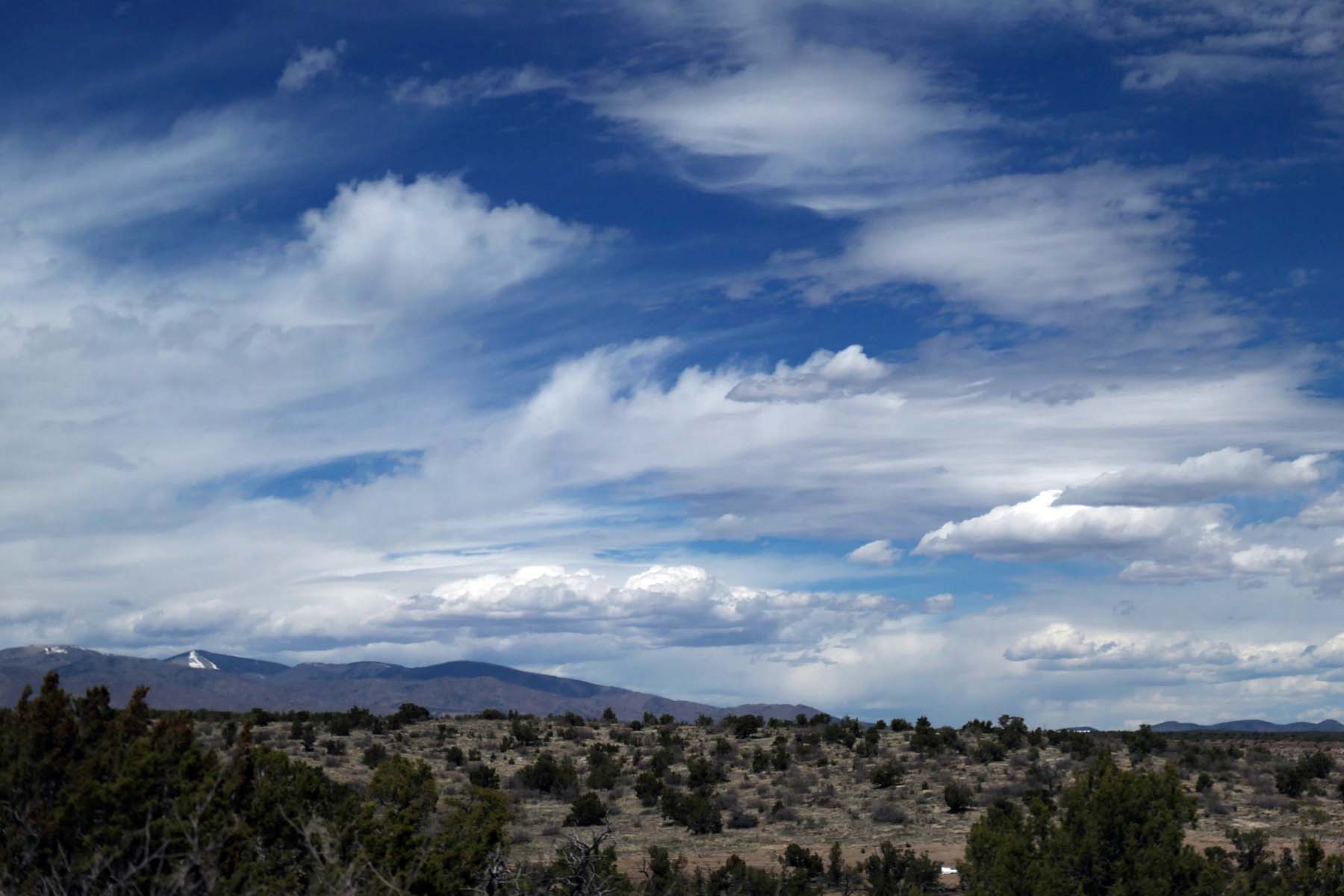
Photographs today show cloud-laden vistas, the fog of war against democracy was my immediate association. The sabotage manual and its instructions to fog up the process is still in use.

Music is Debussy’s Fog (Brouillard) from the Preludes.

Here is the full Prelude set, if you want to have your dark winter evening filled with light….

Jurisprudence for the Bad Times

7/25/023

This appeared in my inbox yesterday, after Netanyahu and his brethren had pushed through legislation that a majority of Israeli citizens opposes. Unless you live under a rock, you will have heard in the news or read in our own major newspapers about the changes that drive Israel in the direction of other small, autocratic countries like Hungary and, increasingly, Poland, and the huge opposition they ignited. I thought I’ll summarize the major points best I can, but with a focus on what it implies for women, Jewish, Arab and Palestinian women alike. (Correspondingly, photographs today are street shots of women across the years.)

I used to be on the Board of the local Chapter of NCJW, the National Council of Jewish Women, before it closed its doors here in Portland, and am still receiving important information from the national group. Much of today’s information was gleaned from there.

The basics: The State of Israel has no formal constitution that anchors a separation of powers, preventing the executive or legislative bodies from accumulating too much say through a structural system of checks and balances. The judicial system, in particular the Supreme Court, served as a check on governmental excesses or violations of human rights instead, particularly those affecting minorities and women. It functioned around a “reasonableness doctrine,” which permitted the court to overturn government decisions that they felt lacked standards of basic fairness and justness, and the rulings did not require unanimity from the full bench.

The reasonableness doctrine, that very tool to curb power grabs by the legislative, has now been scrapped by the coalition of Netanyahu, far-right factions in his government and the ultra-Orthodox. More is in the wings, including the proposal that the court needs full bench agreements, and a new bill that will allow to override court decisions with a simple majority vote of the Knesset (Israel’s legislature). There is also a proposed bill that stipulates pure government control over the appointment of judges, and a proposal that would turn legal advisers who serve government ministries from professional appointees accountable to the attorney general into political appointments controlled by Cabinet ministers. Add to all that the hope of the extremist religious factions to move closer towards a theocracy, where many legal decisions will be in the hands of religious courts.

The specifics:

Last week there was an emergency meeting convened by the Labor Party and others at the Knesset under the title: “Emergency conference on the elimination of the status of women.” Points of discussion were far right proposals to advance the “right” to gender segregation, as well as their bill towards expanding the rabbinic courts’ powers in matters of divorce to include alimony and custody elements, with dire ramifications for the rights of women in divorce proceedings. And, importantly, the extremists’ move to disband the National Authority for the Advancement of the Status of Women, an independent watchdog that preserves and protects women’s rights.

According to the Israel Democracy Institute, this is the status quo:

The current situation in Israel is that women’s rights are not adequately protected. Women are not appropriately represented in the senior ranks of government ministries and local authorities (only 14 of the 257 local authorities are headed by women); many women are the victims of various forms of violence (the estimate is that approximately a million women and children in Israel are exposed to domestic violence); women suffer significant wage differentials in the job market; and a large percentage of working women hold low-paying jobs, especially women from groups that are the victim of discrimination, such as the ultra-Orthodox and Arabs.

If the legislative proposals became law, the situation would be far worse.

For one, the composition of any future court would shift even more heavily male and conservative, if the appointing committees would be under the control of the radicalized government. If the courts can no longer effectively provide constitutional reviews of proposed laws, the protection of women and minorities would suffer. The proposed amendment of the anti-discrimination law will harm women. Right now the law says that gender segregation is unlawful discrimination. The ultra-Orthodox would like to reinstate gender segregation in all forms, thus excluding women from public office, the courts, and the like (women are already minimally represented as is.)

Even if the courts could still fulfill their role in protecting against discrimination, the proposed bill that a simple majority of the legislative body could overrule the court, would leave women without ANY recourse.

And women’s rights in rabbinical courts are considered by many to be a travesty. Included in the proposed legislation to expand the power of rabbinical courts in civil matters is the adjudication of child support even without the consent of both parties, contrary to the current situation where if one of the spouses requests transferring the child support case to the family court, they can do so. Women who want a divorce are often forced by these courts to sign all of their rights away to be granted the legal separation. (Ref.)

Women’s advocacy groups like Bonot Alternativa called for a strike last week.

“One in three women experiences ‘get’ (divorce) extortion and are forced to give up their rights to free themselves from marriage. One in every 10 court procedures in the rabbinical court lasts over two years and causes a case in which the woman and hundreds of other women are refused a get each year and join the ranks of the agunot (chained women).”

Here is a link of an interview by Daliah Litwick of three Israeli women involved in the opposition to an expansion towards theocratic rule. It provides a lot of details of what the stakes are.

The options:

Hundred of thousands have marched in Israel in protest across the last months. Many professionals, military personnel included, have threatened strikes or absence from work duties. Eminent politicians across the spectrum, including former and current presidents, have warned against pushing the new legislation through, seeing it as a dangerous undermining of democracy.

There are also people who study resistance, in particular non-violent resistance from a general and a Jewish perspective. Just last week, a conference took place in Israel, organized by Bar Ilan University and the German University of Leipzig. Titled Non-Violent Resistance: Multi-disciplinary perspectives from the past, present and future for today’s democracies, the conference showcased lecturers from diverse fields and backgrounds. They tackled a lot, from the Hebrew Bible as Resistance Literature, to the Strategy and Principles of Non Violent Civil Resistance on a pragmatic level. It was surely no coincidence that the key note, presented by Menachem Mautner, the Danielle Rubinstein Professor of Comparative Civil Law and Jurisprudence at the Tel Aviv University, Faculty of Law, was titled – Jurisprudence for the “Bad Times.” Maybe their insight and knowledge can be applied to a contemporary crisis as Israel experiences it right now.

We will see how much and how long an active opposition to those undermining democracy can endure. Seeing the commitment by such large numbers of Israelis so far is providing some hope.

Here is NCJW’s solidarity statement from yesterday.

Here is a wild collection of variations on a theme – The People United Will Never Be Defeated.

Rest in Power, Frederic Rzewski.

Women and Words

Layli Long Soldier’s (Oglala Lakota) first full-length collection Whereas (2017) won the National Books Critics Circle award and was a finalist for the National Book AwardHer poem above was published in 2018, in one of the most interesting anthologies around: The New Poets of Native Nations. 21 authors write about their thoughts and experiences of being indigenous people in America, with work published after the year 2000, the heirs to Joy Harjo and Sherman Alexie.

New Poets of Native Nations gathers poets of diverse ages, styles, languages, and tribal affiliations to present the extraordinary range and power of new Native poetry. … Collected here are poems of great breadth — long narratives, political outcries, experimental works, and traditional lyrics — and the result is an essential anthology of some of the best poets writing now.” 

The diamond structure of the poem allows the reader to find their own path – combinations of diverse actions taken or ignored, for past, present or future. At the core, inevitably presented and crossed, is grief. But at the beginning and the end is an “us,” the reason why this poem stirs me. The words “as we” and “our faces” acknowledge, in my mind, that grief is shared, and action as well as consequences can be communal. The harmful ones, but the empowering ones as well.

By the way, all the words in this poem also appear in a Native American Apology Resolution, signed by then President Obama. Never heard of it? I hadn’t either – it wasn’t a direct apology from the government, but rather apologizing “on behalf of the people of the United States to all Native peoples for the many instances of violence, maltreatment, and neglect inflicted on Native peoples by citizens of the United States.” The resolution included an important disclaimer as well: Nothing in it authorizes or supports any legal claims against the United States, and the resolution does not settle any claims. Robert T. Coulter, executive director of the Indian Law Resource Center, pointed to the “overwhelming silence” regarding the resolution. “There were no public announcements, there were no press conferences, there was no national attention, much less international.” No wonder we didn’t know.

***

In a month that has seen the highest Court in the land generally rescind rights that were granted to the vulnerable or those with less power in our social, historical and political landscape, it is important to remember that we can and must build coalitions.

On June 22, 2023, the United States Supreme Court refused to hold the United States accountable for water rights it holds in trust for the Navajo Nation. In times of increasing water scarcity and competition for water, this is a blow to the spirit of preceding treaties.

In another ruling, 303 LLC Creative vs Elenis, discriminatory behavior was given the green light for a business offering customized expressive services, allowing it to violate state laws prohibiting such businesses from discrimination in sales (as it turns out, the facts presented for this case were based on lies, but the Court seemed to be not caring or oblivious.) The revival of the ugly spirit of Plessy vs Ferguson is going full speed ahead.

And a 6-3 majority on the Court dismantled affirmative action in college admission policies, a process originally granted due to an acknowledgment of structural racism. Note, it did so for elite educational institutions (and likely to extend to businesses and institutions of all kinds focused on diversity, equity and inclusion), but leaving the practice standing for military academies. I am paraphrasing someone who said this first: minorities can die in the bunker, but not share the boardrooms…) which struck me as particularly apt.

Here is a summary by lawyer and court observer Dahlia Lithwick on the outcome of this term – I am quoting her verbatim because she is succinct and hits the nail on the head.

To see why this term was not some kind of triumph for moderation, consider the decisions that commentators have deemed huge victories for the left. Moore v. Harper simply rejected the independent-state-legislature doctrine, a fringe theory that was rendered toxic by its central role in Donald Trump’s failed coup; at the same time, the court awarded itself ongoing authorityto rein in any state courts that it deems to have gone “too far” in protecting democracy, codifying a minority viewpoint into law. United States v. Texas merely put a new limit on the outrageous collusion between red states and a clutch of rogue Trump judges eager to seize control over immigration enforcement. Haaland v. Brackeen followed precedents reaching back two centuries in upholding Congress’ power to protect Native people; even then, it left the door open to future legal attacks on Indigenous rights. Allen v. Milligan affirmed an interpretation of the Voting Rights Act that has stood for nearly four decades and imposes moderate limits on racial gerrymanders. It was arguably the one clear-cut “liberal” victory of the term, and that’s only because the protection of voting rights has now become coded as an exclusively liberal concern. Even that “win” came only after the court left an illegal gerrymander in place for the 2022 midterms, and after years of attacks on Section 2 of the Voting Rights Act that left it much weaker than it used to be.

Now consider this term’s victories for the right. Biden v. Nebraska abolished a program that would’ve forgiven $430 billion in student debt for 43 million borrowers by concocting a self-contradictory theory of standing then relying on a “major questions doctrine” that isn’t a real doctrine303 Creative v. Elenis gave for-profit companies a First Amendment right to discriminate against LGBTQ+ people for the first time ever. Students for Fair Admissions put an end to race-based affirmative action in higher education as we know it. Jones v. Hendrix condemned innocent people to languish in prison under illegal sentences through no fault of their own. Sackett v. EPA revoked federal protection over millions of acres of wetlands in a grievous blow to the Clean Water Act that will devastate sensitive ecosystems, endangered species, flood control, and drinking water. These decisions were interspersed with smaller conservative rulings that promoted key tenets of the conservative legal project, including one that offered an existential threat to unions’ right to strike and yet another favor to corporations that seek to dodge lawsuits.

The grief – The grief – The grief – The grief.

Yet, there are also words full of fire, thoughtfulness and resistance. Do read the dissent in the Affirmative Action case penned by Justice Ketanji Brown Jackson (starting on page 72 of this link) – I’d give my right arm to write with such clarity, persuasiveness and power. Converting grief to light across our faces, summoning communal resolve to serve justice. Let’s choose the right action – and the right team.

Here are the words of a man who knew:

“We must take sides. Neutrality helps the oppressor, never the victim. Silence encourages the tormentor, never the tormented. Sometimes we must interfere. When human lives are endangered, when human dignity is in jeopardy, national borders and sensitivities become irrelevant. Wherever men and women are persecuted because of their race, religion, or political views, that place must – at that moment – become the center of the universe.” 

― Elie Wiesel, The Night Trilogy: Night, Dawn, The Accident

That place has never been far from home….

Photographs from New Mexico, where the poet Long Soldier resides.

Music was written and performed during a time of hope and glimpses of change. Why should we not also hope that we can win back what is so systematically destroyed right now? There must be a path.

Seeking Distraction

Walk with me. Walk, I said, not run, I can’t keep up.

Running would make me tired, though, helping with sleep. Too many thoughts intruding, among them repeat disbelief when thinking about the filmed German interview of average people in an average small town wishing for the return of the NSDAP (National Sozialistische Deutsche Arbeiter Partei – Hitler’s Party) while planning to vote this weekend for the right wing extremist AfD candidate in local elections. Apparently they are not extreme enough. When confronted with the question” What about the 6 million Jews murdered during the NSDAP’s rule, they shrugged. Literally shrugged. The AfD now shows 20 % in national polls.

Then again, this week saw the extremist group ˆMoms for Liberty” posting a Hitler quote in one of their newsletters. This is the group trying to get their members on every school board in the country, known for harassment campaigns against teachers, educators and parents. The group has backed bills banning transgender women and girls from playing women’s sports, and encouraged book bans. Their annual summit this year will feature multiple 2024 presidential candidates, including Donald Trump, Nikki Haley, Ron DeSantis, Vivek Ramaswamy, and Robert F. Kennedy, Jr.

Also this week we have yesterday’s Supreme Court 6 : 3 decision Jones v. Hendrix, written by Clarence Thomas, that has been called a tragedy, and I cannot detect a smidgen of exaggeration. Basically you no longer have recourse in this country when you were sentenced to prison for a crime that turned out to be no crime, or for a time period that exceeds a legal limit. Habeas Corpus proceedings to correct the errors made by federal courts have been effectively denied by the right wing of the court. Justice Jackson wrote a powerful dissent, worth a read.

Meanwhile in Texas, Governor Abbot made sure that my insomnia continues: signing a new law that deprives outdoor workers of water breaks, undermining any safe guarding of the health of manual laborers. With temperatures up to 122 degrees ( 50 Grad Celsius!) this week, it is no surprise that the first workers are dying from heatstroke.

Death by maritime creatures was also on the table this week: BBC reports that the Russians have doubled their population of dolphins, trained to attack divers and/or spy, at their naval base on the Crimea naval base, that part of Ukraine they annexed illegally in 2014.

A video from 2020 is going viral again: California Kayakers getting swallowed by a humpback whale and then spit out again…. they survived. How is that going to help getting to sleep, when your kids kayak in CA???

In D.C., in the meantime, Indian Prime Minister Narendra Modi is received with all the bells and whistles of a government courting the business opportunities and strategic relationships with the Indian Subcontinent, particularly in view of recent developments involving China. Never mind that Modi has abetted mass murder, is yielding an iron fist against any form of resistance, engages in religious persecution and has forced, bribed or persuaded mass media and social media to prevent access to any information critical of him and his government. Here is a short essay by Arundhati Roy in The Guardian that fills in the facts. I am also re-upping a link to a lecture she gave this March in Sweden on the issue of Freedom of Speech and failing democracy – a masterpiece of political thought.

And talking about democracy, before we all despair, here is some good news: last week the Michigan House and Senate both passed a package of eight election bills implementing large parts of Proposition 2, a constitutional amendment that called for numerous pro-voting changes within the Michigan Constitution. Elections matter!

In times of irritation there is always the cop out of Positive.News, a British news website that tries to make you less upset, I guess. This week I learned that a zero emissions shuttle service debuted at Glastonbury, UK, an AI pollution-preventing ‘crystal ball’ was launched to help alert swimmers in Devon when the water is too dirty, Sea Watch celebrated the return of minke whales and 60 percent of Brits now carry a reusable bottle, compared to just 20 per cent eight years ago, giving plastic bottles a shove. And no, dear British Readers, I am not making fun of this effort. Just documenting how desperately one has to look for something, anything good to counterbalance the upsetting in the world….

I also learned here that “Sleep matters for the grey matter,” with researchers from the UK and Uruguay asserting that daytime napping may help to preserve brain health by slowing the rate at which our brains shrink as we age.

That’s what I’ll do: nap. Thinking of June meadows, counting lazuli buntings and swallows instead of sheep, dolphins, humpback or minke whales.

Sleep WILL arrive. Or a shriveled brain. One or the other.

And here is a summer symphony.

Staying connected

Valentine’s Day has come and gone, but I am still thinking about it. That is partly because my inbox yesterday contained a moving essay about the historical origins of the celebration and some associations to the war in Ukraine by Timothy Snyder. The thought of loss of life and loved ones in war feeds into a question the day always poses for me: what is harder, feeling isolated in a world where romantic love, or love of all kinds, is celebrated when you don’t have a longed-for partner, being single or a widowed, for example. Or is it worse to actually have a love in your life but be unable to connect to them, because you are locked away, be it through pandemic lockdown, exile, displacement or prison.

Which brings me to the actual thought-provoking issues that I recently learned about. (I am summarizing an article by KERI BLAKINGER from the Marshall Project who provides sources; a shorter version can also be heard in a podcast here.)

The number of contraband cellphones has exploded in US prisons, particularly since the onset of the Covid epidemic when incarcerated people were basically left to rot and die in our prisons, with no protective measures and little if any medical care. It is almost like they felt they had nothing to lose if they were potentially culled by the disease and wanted to stay connected to their families and friends during times were supervised prison visits were no longer available due to the pandemic.

Possessing electronic devices other than those regulated by prison administration is a crime; they are assumed to be used for illicit activities like trafficking drugsmaking threats and running scams. Being caught with them makes, at a minimum, for losing privileges, more likely being put in solitary confinement, and in some cases producing new criminal charges. Never mind that in almost 100% of the cases contraband cellphones have been brought in and sold for a steep prices (up to $6000) entirely by staff, and not by visitors who have to undergo electronic searches before meeting their loved ones. Occasionally there are drop off’s by drones into remote corners of the prison areas, but those, too, happen under the “blind”eyes of the supervising and bribed wardens.

By all reports the biggest usage is reserved for connecting to those you left behind in the outside world, literally zooming with mothers on deathbeds, or seeing your children grow up.

Other uses are equally upsetting when you think about the implications. Cellphones are used to make videos depicting the inhumane conditions of our prison system from the quantity and quality – or lack thereof – of rotten food,

to the medical conditions of those who are refused medical care, to the sickening conditions of the cells, full of mold and walls left covered with vomit and feces. ( I have previously written about the hunger in prison catastrophe here.) Grievance procedures have been helped with these videos, as has a DOD law suit against the state of Alabama over prison conditions. (The prison administration has acknowledged the ever deteriorating conditions but claimed they do no violate the constitution.)

Cell phones allow incarcerated persons to earn money, by selling artwork on line, or publishing articles, or doing gig work. They are also an enormous help in gaining an education. Some incarcerated people in Georgia, for example, run a computer science course on a group messaging app. Some 300 participants, across states, are using Harvard’s CS50 materials which are all on-line, for a class that is self guided and self graded, and of course, illegal in a prison system that values punitive over rehabilitative actions.

People also learn medical procedures from the internet when the prison infirmary fails them and even order contraband antibiotics with these illegal devices to save the lives of their mates.

Here is a stunning fact, though. Contraband cellphones are most predominant in the worst of prisons, which might correlate with the presence of gangs there, who provide a structural network for the acquisition of these devices. It might also have to do with the fact that those human beings put in cages in these hellholes have no longer much to lose. However, it seems an entirely male thing. Women prisons have not seen any of the recent proliferation of illicit devices.

Why, you ask? Or I asked, wondering. Incarcerated women, 80% of whom are mothers, do not want to risk losing access to their kids, with visitation rights immediately endangered if they are found out. A sliver of connection not willing to be sacrificed for daily contact that might bring about a punishment of permanent loss. Let that sink in, the day after Valentine’s Day.

Photos today from a pre-pandemic visit to one of Oregon’s prisons.

Music today is an album by incarcerated persons, “Tlaxihuiqui” (pronounced tla-she-wiki), which means “the calling of the spirits” in the Uto-Aztecan language of Nahuatl — it was recorded over four days and released by Die Jim Crow Records. I am linking to it here – you need to scroll down and click on the individual tracks. They are as distinct from each other as they come.