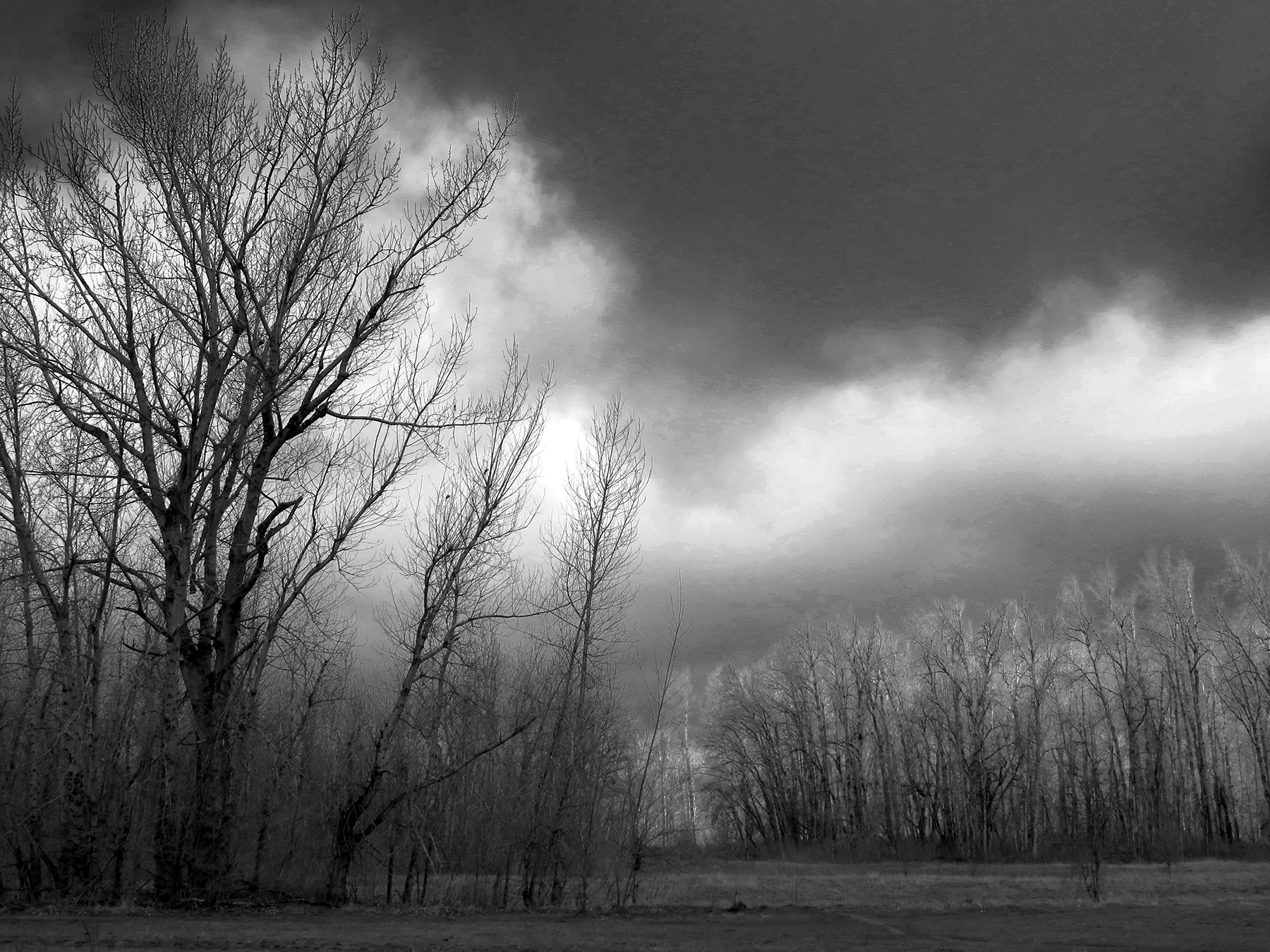
Let’s just look at the BRIGHT side. That’s what the views suggest – there are so many spots lit up. That was true for the landscape as photographed 2 days ago, which had this weird partial lighting when the sun peeked through the clouds.
But it is also present in what is on offer this week in the cultural landscape – I will post longer essays in days to come on two of the three things I urge you to visit, and photographs for the third. Each one in its own right is a testament to resilience, finding joy in hard places, fashioning the world with new perspectives and refusing to give in. In other words, they help us look at the bright side.
For now I recommend, highly, a visit to OJMCHE to see their new exhibitionSouthern Rites. The expressive photographs of Gillian Laub, thoughtfully and confidently curated by Maya Benton and The Center for International Photography, introduce us to a new generation of young Black people living in the American South, their losses, challenges and perseverance. The exhibition also offers welcome education on some of the legal issues involved with inter-racial relations.
February 5, 2020 – May 24, 2020 724 NW Davis Street Portland OR 97209 Opening on First Thursday.
*
Also of interest, starting First Thursday as well, is an exhibition at Gallery 114 that will communicate joy. Ebullience, initiated by Gallery 114 member Joanne Krug and her husband, displays both 2D and 3D art created by artists living with intellectual or developmental disability. The artists have found a place to be creative at the Portland Art and Learning Studio, part of Albertina Kerr, under the caring and smartly involved directorship of Chandra Glaeseman. I can’t wait to report in detail on the work that is done there, and the art that will be on display at 114.
*
The third recommendation regards two 50 minute-long performances this weekend of How to Have Fun in A Civil War, created and performed by Ifrah Mansour (Somalia/U.S.). Offered by Boom Arts in conjunction with the 30th Annual Cascade Festival of African Film, the multimedia performance event will make your heart softer.
Mansour revisits her childhood memories during the 1991 Somali civil war to confront violent history with humor, and provide a voice for the global refugee stories of children. How to Have Fun in a Civil War, is a one-act multimedia play, which explores war from an idyllic viewpoint of a seven-year-old Somali refugee girl. The play weaves puppetry, poetry, videos and multiple oral stories taken from community interviews to tell a captivating story about resilience while pushing the audience to engage in a healing process that is still raw for survivors of the war.
Here is a more detailed review. And here is a video of her explaining her project.
February 8th at 1:00pm & 9th at 5:00pm – PCC Cascade, Moriarity Hall Theatre, on the corner of N. Killingsworth and Albina ( enter on Albina)
For the last bit of this week, a bit of PR for one of the projects I am involved in as set photographer: OUR BODIES OUR DOCTORS. I’ve written about it before here. And here is an overview article on the multi-pronged legal and political assaults on our rights. Don’t let them be swept away by floods resembling the current state of the Willamette river….
On this Important Anniversary of Roe v. Wade Cinema 21 Hosts a Special Screening of OUR BODIES OUR DOCTORS Winner “Best Documentary Feature” 2019 Portland International Film Festival The event includes WE ARE FORBIDDEN, a short film directed by Cheryl Strayed and Brian Lindstrom.
On this anniversary of Roe v. Wade, Cinema 21 hosts a special screening of OUR BODIES OUR DOCTORS, Winner of “Best Documentary Feature” at the 2019 Portland International Film Festival as well as Best of SIFF and the “Lena Sharpe Persistence of Vision Award” at the 2019 Seattle International Film Festival. This feature length film has been described as “bold and brave” and “nothing short of revolutionary” in the depth of its portrayals of the work of abortion providers.
OUR BODIES OUR DOCTORS features Portland providers, often unsung heroes, and the creative work of feminist clinics in the Pacific Northwest.
“When I took on this documentary project, I was struck by how little people knew—even those that are pro-choice—about what’s actually involved in abortion care. What I found in making OUR BODIES OUR DOCTORS was a quiet rebellion in the field of medicine led by a new generation of progressive physicians fighting religious control over healthcare. The providers in the film take up difficult questions: How do they deal with the emotional and political aspects of abortion? What makes second term abortions medically and emotionally challenging, for the providers themselves and for their women patients? These are areas where pro-choice films have previously not ventured. But the providers featured in this film—and many of their patients–are bold and brave enough to take us there.” – Jan Haaken, Director
Screening with WE ARE FORBIDDEN, a 10-minute film directed by Brian Lindstrom and Cheryl Strayed.
In parts of Nepal, menstruating girls and women are considered impure. They are banished from their homes or sequestered to a room; forbidden from eating most foods and not allowed to attend school, visit a temple or even look at male family members. In this moving short film, nine Nepalese girls share their menstruation stories. The film derives its power from allowing the girls to speak for themselves, demonstrating their courage, strength and inspiring desire for change.
Providers featured in the film will join Director Jan Haaken and Producer David Cress for a Q&A session after the screening. Co-directors Brian Lindstrom and Cheryl Strayed will be present at the event.
“While a handful of forthrightly pro-choice documentaries have successfully conveyed the enhanced urgency of the issue in the 2010s – few films have managed to offer a truly novel perspective that goes beyond red-alert despair about the state of the world… OUR BODIES OUR DOCTORSis a smart, affecting documentary… Shining a light on the abortion issue from a vital yet neglected angle.”
–Cinema St Louis
“This film feels nothing short of revolutionary. The experiences of abortion providers have for too long been left out of the pro-choice vs. pro-life debate, and presenting these doctors with honesty and compassion will have a profound impact on the discourse around abortion in this country.”
“The only dream worth having is to dream that you will live while you are alive, and die only when you are dead. To love, to be loved. To never forget your own insignificance. To never get used to the unspeakable violence and vulgar disparity of the life around you. To seek joy in the saddest places. To pursue beauty to its lair. To never simplify what is complicated or complicate what is simple. To respect strength, never power. Above all to watch. To try and understand. To never look away. And never, never to forget.” ― Arundhati RoyThe Cost of Living (1999)
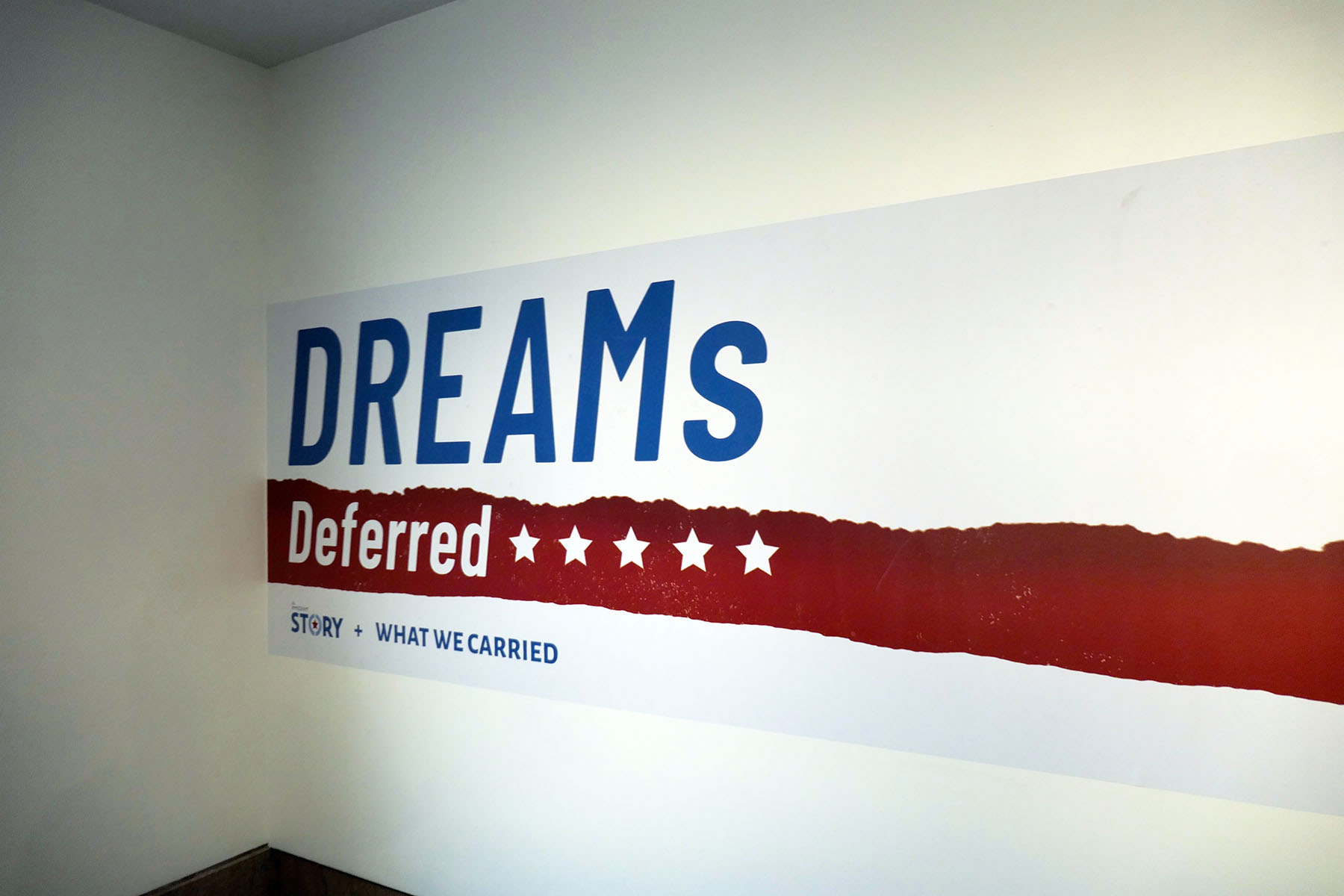
If it weren’t for that pesky number at the end of the quote, dating it some 20 years back, you might as well imagine that Arundathi Roy crafted that paragraph with an eye on the exhibition currently on display at the Oregon Historical Society, DREAMs Deferred.
Roy frequently writes about the fate of minorities, refugees or displaced people on the Indian subcontinent. The focus of the DREAMs Deferred exhibit is somewhat closer to home, asking what happens to those who came to our country from Mexico or Latin America as young children of undocumented parents. The collaborative work on display shows a combination of six portraits and short-form narrative accounts of young undocumented immigrants, joined by photographic documentation of some treasured objects that were chosen by them be taken on the hazardous journey. The thrust is indeed: Watch! Try and understand! Never look away! These are your neighbors. These are people who just like the rest of us seek love, overcome obstacles and indescribable challenges, pursue a simple life and do not confuse the things that matter with those that should be ignored.
Portraits of DREAMERS combined with narrative and object description
The dream, the aspiration, is to live while you’re alive – something not guaranteed in the places that were left behind, with often existential threat forcing parents to bring their children to an unknown country that then was not known for its hospitality if you were non-white and poor, and is even less so today. DREAMERS, as these young people are known, existed in a legal limbo until the Obama administration in 2012 announced the DACA (Deferred Action for Childhood Arrivals) policy, which brought a pause to potential deportation if you qualified. You had to be younger than 16 upon arrival to the US, lived here (endless documentation needed) for at least five years, be between 15 and 30 year old and either in school, or graduated, or a veteran of the Army or the Coast Guard, and have no convictions for felonies, significant misdemeanors (DUI included) or multiple misdemeanors. (Here is a small window into the insane bureaucracy involved for (re)application.)
Yessica Perrez Barrios, portrait by Sankar Raman
Approximately 700.000 people were protected by DACA until the Trump administration decided to rescind the policy in 2017. Their fate rests now with the US Supreme Court, with cases to be decided this June. Add to that the fate of 250.000 offspring of those Dreamers, who are US citizen because they were born here, but would be separated from their parents if deportation ensued. The Supreme Court cases also reach potentially beyond those young people now involved and living in limbo – there is the distinct possibility that any future President will be denied the right to implement progressive immigration reform through executive action. (Legal details can be found here.)
Opening of the exhibit. Sankar Raman, left, with guests.
*
The small, beautifully curated exhibition provides an intimate window into the lives, thoughts and emotions of six very different undocumented people from Mexico and South American countries, made possible with support from the Zidell Family Foundation. The concept was developed by The Immigrant Story (TIS,) a local non-profit organization which is playing an important and increasingly visible role in capturing our attention about the plight of those in our community who do not have the legal protections the rest of us enjoy. “The right to have rights,” to use Hannah Arendt’s phrase from “The Origins of Totalitarianism (1951), is, after all, restricted to citizens, and according to the United Nations, there are a record 65.6 million people who have been forcibly displaced; 22.5 million are considered refugees; ten million people currently stateless, all deprived of basic rights you and I take for granted.
Folks at TIS, guided, pushed, prodded and supported, if my intuition is correct, by founder and Board president Sankar Raman, understand the persuasive power of narrative relative to the value of statistics. If you aim for empathy and inclusion, as their mission statement implicates, storytelling is essential. Trained as a physicist, Raman holds a Ph.D. in Engineering and retired from the High Tech industry some years back, with an arsenal of skills when it comes to the technical challenges of organizing multi-pronged, group-based work. He arrived in the US from India in the beginning of the 1980s, just as I arrived from Germany. Given our similarity in age and comparable levels of education, I could not but wonder, while in conversation with this passionate man, how the difference in the color of our skin affected the process of immigration and integration.
Sankar Raman, President of the Board at THE IMMIGRANT STORY, photographer.
*
By the time you leave the exhibition you have become if not familiar, then somewhat connected to those who shared their thoughts, joys and fears. Partly that has to do with the quality of the portraits, photographed by Raman. Larger-than-life faces all with eyes directed straight at the viewer express a range of emotions across subjects. Whistfulness alternates with exuberance, pensiveness with caution. There is a naturalness to them, even though they are obviously staged, that speaks to both the skill of the photographer and, more importantly, to the trust established between artist and subject. There is a poise that reveals these young people know that what they are doing is important. Telling their stories cannot be an easy thing even for the more gregarious among them. The use of a color palette focused on optimism rather than foreboding also draws you in. Strong work.
Ivan Hernandez, portrait by Sankar Raman
*
“Strong work” is probably the weakest of the descriptors used in evaluation of photographer Jim Lommasson’s output. He is something of a role model if not a hero to many local and national photographic artists both for the quality of his workmanship and the choice of subject matters. A demonstrably humble man, he likely grimaces at such a label, but that is how the community sees him. As does the jurying set who decides to award grants and prizes, including the Dorothea Lange-Paul Taylor Prize (2004) a coveted recognition from the Center for Documentary Studies at Duke University.
Jim Lommasson, photographer.
Lommasson does not shy away from difficult topics, or political discourse transmuted into emotionally charged images and text. The artist somehow manages to communicate the raw essence of his subjects, their suffering and their triumphant survival no matter where he directs his lens. From American boxing rings, to the postwar existence of wounded veterans of the Iraq and Afghanistan wars, to documentation of mementos of generations of Holocaust and genocide survivors in his most recent project: What we carried: Fragments from the Cradle of Civilization, the work invites us to think about our shared humanity. Us and hundreds of thousands of viewers nationally, given that his work has been displayed at numerous museums, including the Ellis Island Immigration Museum, which alone has half a million visitors come through on an annual basis.
Judge Torres’ passport. One of the objects carried to the US.
Invite is perhaps the wrong term. Lommasson forces us to engage with the images, objects – in the DREAMs Deferred display as well – that were selected by those who had to leave home, not just because of their poignancy, captured without any sentimentality in the photographs. We are forced to engage because of the platform given to the voices of those who carried these objects into the unknown: the images provide the surface on which the explanatory narratives unfurl, in the handwriting of the refugees.
What they carried and what it meant to them.
I forget where I picked this up, but the artist from the very start of his career as a photographer was motivated by a child’s question on viewing (bland) images: “So what?” Not for a moment does his documentary work afford this sentiment. No “So what?” possible in the presence of the anguish, grit and will towards survival in his depictions. Lommasson’s desire to show that at the core we are all one, in our vulnerability, in our hopes, in our rights to have rights, finds the perfect expression in his art. In this focus he reminds me of Anjum, the central character in Arundathi Roy’s newest novel The Ministry of Utmost Happiness, who lives in a deserted Muslim graveyard just outside New Delhi. She is able to make borders disappear between men and women, animals and humans, life and death. As the author herself (approximately) put it in her PEN America Arthur Miller Freedom to Write lecture last May – we turn to people like these when seeking shelter from the tyranny of hard borders in an increasingly hardening world.
Sankar Raman and Jim Lommasson, collaborating on this exhibit.
*
How would it feel, if you were ripped out of your teenage universe at age 15, mourning the loss of the all-important cohort, forced to study in a foreign language and live in a foreign country, constantly worried about your ability to put down some roots? What would it take to have great academic success while fearing you will be denied access to college? And now, less than a decade after your arrival, you own a flourishing practice as a family therapist, helping, among others, Spanish speaking clients to deal with the existential strain of displacement, or the hardship of living with uncertainty? Liliana Luna, who I met at the exhibit opening, can tell you all about it.
Liliana Luna, one of the people portrayed in this exhibition.
How would one cope if being sent back to a country that you last saw as a toddler? Having to leave a close-knit community of co-workers in case of deportation, evidenced by many of the OMSI staff who came to the exhibit opening to celebrate their colleague? Miguel Rodriguez is out of the woods in this regard, having been granted legal status.
Miguel Rodriguez, one of the participants, in front of Judge Torres’ portrait.
Given his work in the community through his non-profit engagement at Through a Latinx Lens, he would be able to tell you, however, countless stories of those out there living in constant fear of what the future holds. Dreams deferred, indeed.
It is upon all of us to make sure they do not shrivel, fester, or explode.
DREAMs Deferred: January 10 – April 12, 2020
Oregon Historical Society 1200 SW Park Ave Portland, Oregon 97205
There will also be a Live event at Lincoln Recital Hall, Portland State University 1620 SW Park Avenue, Portland OR 97201.
Saturday, April 11, 2020. 7 p.m. to 10 p.m.
DREAMs Deferred Live kicks off at 7 p.m. with a culturally specific musical performance from this region. Afterward, from 8:30 p.m. to 10:00 p.m., six different storytellers from Mexico and Central America will share unique stories about the arduous and frequently dangerous journeys that brought them across the border to the United States.
Happy New Year to one and all. And what should it be, dear reader, the first weekly topic of 2020? What is the appropriate choice for a year looming in front of us like an iceberg, with the distinct options of either collision or rapid melting, not sure which one would be worse?
Should it be art? Politics? Literature? Nature? A snippet of them all, in combination? I’ll see what I can do.
What I can easily do is recommend a writer, Barry Lopez, who does it to perfection, creating that amalgam of politics and nature in his most recent book Horizon. Others agree: It’s a beautiful, sorrowful autobiographical epic that feels like a final reckoning of sorts: with the difficulty of living a moral life today, with our estrangement from nature, and with the spectacular mess we’ve made of things. There’s not an iota of righteousness or judgment, but instead, abundant reminders of human possibility in desperate times. (You can find the whole conversation between John O’Connor, a journalism professor at BU and Lopez here.)
Lopez has excelled at both fiction and non-fiction writing that concerns the interface between nature and the more domesticated world, with his two early non-fiction works probably known best, Of Wolves and Men (1978) and Arctic Dreams (1986)—the latter a winner of the National Book Award. His writing is valuable for both the explanations he offers as to how we got to where we are, but also for the suggestions, both practical and political, of how we might handle what is in front of us – (which is why I was thinking of him when facing the calendar page with its fresh round numbers…)
I have been using the week between the years, my time “off,” for extended walks in the woods, all around Portland, in contrast to Lopez’ extensive travels to the less explored corners of the earth, but I think the conclusions are the same, no matter where you are: to connect to nature you need to stop controlling it, you need to stop talking and start to listen, start shifting the focus of your attention. This is one of the reasons why I photograph such a variety of things on my walks – not “just” the birds, but the trees, the plants, the vistas, the rivers, with widely distributed attention.
Found this garbage receptacle with sticker at the entrance to Forst Park on Firelane 1
Connecting to nature, to understand what is at stake as well as what can heal, is one of the greatest demands of our time. We might think we are far enough away from the fiery catastrophes unfolding in Australia, or the traumatic floods engulfing Indonesia, but the planet is connected. What we do matters, even in minute ways.
And no, this is not Cassandra Heuer speaking, this is a determined, energized and hopeful citizen of 2020, looking forward to summoning all in solidarity with the goal of protecting what needs protecting. If you don’t have the time to tackle the 500+ pages, here is a lovely comprehensive review of Horizon ending with these words:
Horizon is long, challenging and symphonic. Its patterns only disclose themselves over the course of a full, slow reading. Rhythms rise and surge across 500 pages; recursions and echoes start to weave. This is a book to which one must learn to listen. If one does, then – to borrow phrases from Lopez – “it arrives as a cantus, tying the faraway place to the thing living deep inside us”. He has given us a grave, sorrowful, beautiful book, 35 years in the writing but still speaking to the present moment: “No one can now miss the alarm in the air.”
And talking about something symphonic, here is Dvorak to guide us to a new year, making a new world.
Lopez lives along the McKenzie river in Oregon’s Mt. Hood State Forest. Photographs are from that forest photographed during bygone trips.
And this is me in my rain pants in the new year:” Stay intrepid!” is my resolution.
Today I offer some insights brazenly stolen from a list found in The Nation, a useful reminder that there are points of hope.
Optimistic we can keep the ball rolling
Good stuff that happened this year:
Legal Victories for the Activists Fighting for Families on the Border
Continued Progressive Investment in the Work of Stacey Abrams
The Supreme Court Saves the Census
Optimistic we’ll find the right role models
Louisiana Reelects a Democratic Governor
Democrats Take Control in Virginia
We Finally Get Closer to Passing the Equal Rights Amendment
The 1619 Project (a wide-ranging editorial package including essays, images, and reported stories, and a radical challenge to the idea that “slavery was a long time ago”; it firmly roots the United States’ societal problems and inequalities in its treatment of black people. )
Optimistic we’ll stand our ground
The Continuation of the Demographic Revolution
Pelosi Retakes the Speaker’s Gavel
Trump Is Impeached
Optimistic we can look beyond ourselves
To read details about these hopeful signals, go here.
Optimistic we’ll see beyond black&white
Or just read or listen to Amanda Gorman, who was chosen the National Youth Poet Laureate in 2017. I’m optimistic: the kids will save us. (And in honor of her being from L.A., today’s photographs were taken there, at The Broad, with an eye on optimism…)
Optimistic we can preserve Little Red Riding Hoods’s resistance
— An original poem written for the inaugural reading of Poet Laureate Tracy K. Smith at the Library of Congress.
There’s a poem in this place— in the footfalls in the halls in the quiet beat of the seats. It is here, at the curtain of day, where America writes a lyric you must whisper to say.
There’s a poem in this place— in the heavy grace, the lined face of this noble building, collections burned and reborn twice.
There’s a poem in Boston’s Copley Square where protest chants tear through the air like sheets of rain, where love of the many swallows hatred of the few.
There’s a poem in Charlottesville where tiki torches string a ring of flame tight round the wrist of night where men so white they gleam blue— seem like statues where men heap that long wax burning ever higher where Heather Heyer blooms forever in a meadow of resistance.
There’s a poem in the great sleeping giant of Lake Michigan, defiantly raising its big blue head to Milwaukee and Chicago— a poem begun long ago, blazed into frozen soil, strutting upward and aglow.
There’s a poem in Florida, in East Texas where streets swell into a nexus of rivers, cows afloat like mottled buoys in the brown, where courage is now so common that 23-year-old Jesus Contreras rescues people from floodwaters.
There’s a poem in Los Angeles yawning wide as the Pacific tide where a single mother swelters in a windowless classroom, teaching black and brown students in Watts to spell out their thoughts so her daughter might write this poem for you.
There’s a lyric in California where thousands of students march for blocks, undocumented and unafraid; where my friend Rosa finds the power to blossom in deadlock, her spirit the bedrock of her community. She knows hope is like a stubborn ship gripping a dock, a truth: that you can’t stop a dreamer or knock down a dream.
How could this not be her city su nación our country our America, our American lyric to write— a poem by the people, the poor, the Protestant, the Muslim, the Jew, the native, the immigrant, the black, the brown, the blind, the brave, the undocumented and undeterred, the woman, the man, the nonbinary, the white, the trans, the ally to all of the above and more?
Tyrants fear the poet. Now that we know it we can’t blow it. We owe it to show it not slow it although it hurts to sew it when the world skirts below it.
Hope— we must bestow it like a wick in the poet so it can grow, lit, bringing with it stories to rewrite— the story of a Texas city depleted but not defeated a history written that need not be repeated a nation composed but not yet completed.
There’s a poem in this place— a poem in America a poet in every American who rewrites this nation, who tells a story worthy of being told on this minnow of an earth to breathe hope into a palimpsest of time— a poet in every American who sees that our poem penned doesn’t mean our poem’s end.
There’s a place where this poem dwells— it is here, it is now, in the yellow song of dawn’s bell where we write an American lyric we are just beginning to tell.
Optimistic we can stretch our sense of proportion beyond the electoral college….
Enjoy someone else’s perpetual optimism… I’m signing off for a week’s break. See you in January after I’ve restocked the archives!
Optimistic I’ll catch footage in some unexpected places…
“He is formless, almost faceless, a man whose countenance is a caricature, a man whose framework seems cartilaginous, without bones. He is inconsequent and voluble, ill poised and insecure. He is the very prototype of the little man.”
Guess who? No, not that one. One of his predecessors, dangerously underestimated in these early words written by Dorothy Thompson, one of America’s most urgent, eloquent voices against Nazism. Her description of Hitler, as cited above, and her later flaming resistance against all things fascist led her to be thrown out of Germany in 1934, after having been one of the first successful female correspondents for the American media in Europe.
The woman was a marvel. Self-made, in many respects, suffragists, radio journalist, book author, political activist, she was a public speaker, on air for 15 nights and days straight after Germany invaded Poland in 1939. She became a source of facts and opinions for millions of American women who now had an alternative to what they were regaled with by their husband.
Her 1941 essay in Harpers, Who Goes Nazi?, is one of the most astute psychological assessments from a non-psychologist that I have read. Ever. She basically invents (or describes?) an upper-middle class dinner party with various and diverse guests (notably absent, alas, any person of color, which is probably historically an accurate scenario) and predicts for each person how likely they would join the Nazi movement if arriving on our shores. (It is no co-incidence that one of her three husbands, Nobel prize – winner Sinclair Lewis, wrote one of his famous novels, It can’t happen here, during their short marriage.)
If you took that essay and simply replaced the historically fixed term Nazi with a contemporary equivalent of immoral, unethical politician, you might have a perfect fit between the types of people she describes and those threatening an end to democracy who we are currently observing here and many European countries. Think impeachment and removal. Or the absence thereof, as the case may be….
December color!
Just as I worried in yesterday’s blog, I worry here: why don’t we learn from history? When it is all laid out for us in perfectly witty, insightful, premonitory writing?
“It’s fun—a macabre sort of fun—this parlor game of “Who Goes Nazi?” And it simplifies things—asking the question in regard to specific personalities. Kind, good, happy, gentlemanly, secure people never go Nazi. They may be the gentle philosopher whose name is in the Blue Book, or Bill from City College to whom democracy gave a chance to design airplanes—you’ll never make Nazis out of them. But the frustrated and humiliated intellectual, the rich and scared speculator, the spoiled son, the labor tyrant, the fellow who has achieved success by smelling out the wind of success—they would all go Nazi in a crisis. Believe me, nice people don’t go Nazi. Their race, color, creed, or social condition is not the criterion. It is something in them.”
One more remarkable item of courage and honesty associated with this path breaker: the woman who was on the cover of Time, declared together with Eleanor Roosevelt as undoubtedly the most influential women in the U.S., played by Kathrin Hepburn in Woman of the Year, and an early ardent supporter of Zionism, changed her views after visiting Palestine in 1945. Subsequently,
“She ran into difficulties, including accusations of anti-Semitism, which she strongly rebuffed, after being warned that hostility toward Israel was, in the American press world, “almost a definition of professional suicide”.[10][11] She eventually concluded that Zionism was a recipe for perpetual war.[12]“
She was silenced indeed, as are so many contemporary journalists in this country, who follow suit. Here is a 4 minute trailer to a documentary about her, laying out what happened to her career and livelihood, with lectures canceled, newspaper assignments withdrawn and a general shunning initiated by those who could not tolerate any criticism at all of the state of Israel. And the official accusation was, of all things, being too soft on Germany…. something taken out of thin air, to persuade a public open to that villain schema at that time. Sounds familiar?
Photographs today are from my Oaks Bottom Tuesday walk taken last week.
Music is in honor of Beethoven’s birthday yesterday, a brilliant, pure, fear-acknowledging and fear-conquering piece that seems in line with Thompson’s character, the Streichquartett #14.
My thoughts have a tendency to wander through weird pathways – wouldn’t you know it, dear reader. Here is a map of yesterday morning’s procession, just for the fun of it.
A misty morning, moss brilliantly green…..
I started out to find a translation for the German word Moralpredigt: to sermonize from a moral high ground (there is NO dictionary translation…) because I intended to introduce the topic of gift giving in this consumers-on-steroids time of the year, with wagging fingers. (Never mind that I had broken my own vow not to buy anything in these December weeks before Hanukah and Christmas, because I found a perfect thing for the kids’ garden on Saturday.)
Literally translated, the German phrase says: first comes the guzzling, then the morals. Guzzling? Alternative words were given as feeding, gorging, devouring – all somewhat connected to the animal realm. Which is of course how some relate to the poor (who are so hungry that food comes before morals) – those animal who dare to steal the turnips from the masters’ fields….
Thoughts of turnips turned to thoughts of sugar beets turned to thoughts of molasses, since earlier that morning on my Sunday walk a friend had introduced me to the Great Molasses Flood of 1919. Ever heard of it? US Industrial Alcohol (USIA) had built shoddy tanks in 1915 to hold molasses used for manufacturing munitions and liquor. A tank fell apart, releasing all of its contents into the streets of Boston.
“More than two million gallons of thick liquid poured out like a tsunami wave, reaching speeds of up to 35 miles per hour. The molasses flooded streets, crushed buildings and trapped horses in an event that ultimately killed 21 people and injured 150 more. The smell of molasses lingered for decades. One hundred years later, analyses have pinpointed a handful of factors that combined to make the disaster so disastrous. Among them: flawed steel, safety oversights, fluctuating air temperatures and the principles of fluid dynamics.”
This, in turn, had me think about first comes the guzzling, then the morals bit in relation to the rich, rather than the poor. Let’s extract money first, safety comes later – if at all.
Which brought me to thoughts about the present state of affairs: with the sorry end of the climate conference in Madrid, we are once more reminded that we simply don’t learn from history, even if prevention, in this case, would protect literally humanity’s survival, rather than a single Boston neighborhood. As the Washington Post put it: U.N. climate talks end with hard feelings, few results and new doubts about global unity. Never mind that the existential real life consequences of this failure are not even mentioned in the headline…
Not learning from history, giving in to greed and courting disaster, then, were the bits that brought my thoughts back to where I started: the craziness of giving gifts just for the sake of – well, of what, indeed? We had the perfect analysis of the need to forgo consumption of goods that will loose their allure or their functionality, or both, in no time, already almost a decade ago. Gifts are bringing death and destruction to people and environments in developing countries: here is the link to the articleThe Gift of Death by George Monbiotwhich was supposed to be the heart of today’s post! It is bitingly funny and achingly sad.
Photographs are from yesterday’s walk in Tryon Creek, my Sunday morning routine.
An unusual capture of a pileated woodpecker and his turf in the mist from far away…
Music today is as far away from profit and greed as we can get. Field never got his recognition as the predecessor to Chopin’s development of nocturnes – and yet his pieces are as beautiful as they come.
I truly wonder how much courage it takes to be a journalist these days. It has become literally an existential choice for many – we know through the CPJ, the committee to protect journalists, of at least 21 journalists who have been killed while doing their job in 2019 alone. This is true for Syria, Libya, the Philippines, but also for countries in Africa, the Ukraine, Honduras and, of course, Mexico. Never mind Turkey and Russia, countries where it is harder to access accurate data.
I was thinking about this when reading the report of a young investigative journalist who went undercover in Poland this year, to explore how we are all manipulated by information put out by troll farms. What might happen to you when you are discovered to be a spy?
Take Katarzyna Pruszkiewicz who joined a private firm, Cat@Net, this year, which sets up fake social media accounts to influence consumers and voters. People pretending to be private individuals, cat pictures, favorite recipes and all, churn out messages dictated from above, that have social and political content. They include right wing as well as left wing subjects, since confrontation between these two increases traffic. They create a sense of trust between those who receive your messaging and the trolls, and eventually they can start with the real manipulation of public opinion.
In this particular case, the majority of the firms employees are people living with disability. Not only are their employment options in Poland (as here) limited, and this kind of work can be done from their home computer. It also allows the company to derive substantial public subsidies from Poland’s National Disabled Rehabilitation Fund. According to the Reporters Foundation, the company has received about 1.5 million zloty ($386,000) from the fund since November 2015. In other words, vulnerable populations are dragged in to manipulate a naive and vulnerable public.
Here was a typical task of the undercover journalist (source here):
“…operate anonymous accounts with instructions to promote content produced by TVP, Poland’s state broadcaster, which is widely reviled by critics for its extreme partisanship and hate speech directed against minority groups. ‘It would be great if you posted positive comments about the government’s subsidy for TVP and the television licence fee,’ read an email from her manager. An internal report seen by the Guardian details how the fake accounts were used to denigrate legitimate criticism of the broadcaster. According to an analysis by ISD Global, a London-based thinktank that studies global trends in extremism and polarisation, Cat@Net accounts created up to 10,000 posts in defense of TVP, with a potential reach of 15 million views.”
The problem is, of course, that there are no easy ways to regulate this kind of propaganda. It is not hate speech, it is not inciting violence. Which is also true for more home-grown trolls: just think about what the super PACs have been doing since the US Supreme Court lifte spending limits in 2010. 9 years later the number of super PACs has increased from 83 to 1565 for the 2020 election cycle.
Independent expenditures represent spending by individuals, groups, political committees, corporations or unions expressly advocating the election or defeat of clearly identified federal candidates. These expenditures may not be made in concert or cooperation with, or at the request or suggestion of, a candidate, the candidate’s campaign or a political party.
Where do we think those unrestricted expenditures are going? A lot of this is used to influence user comments on social media.
We have no way of knowing if what we read is propaganda from national sources or international actors. Or a way to distinguish between those who are “merely” trolls, or something altogether more sinister. Just think about the numbers we are talking about: in October Twitter, in keeping with its recent promise to Congress to be transparent about its attempts to prevent election interference on its platforms, released more than 10 million tweets that had been circulated by propaganda farms and their associated puppet accounts.
We have also have in many cases no way of examining the content for accuracy. Which is why we are all the more dependent on professional journalism and uncorrupted journalists to tell us the facts. Journalists who will be attacked and in some cases killed for doing their job. Hats off, then, to the women (and men) who pursue this path!
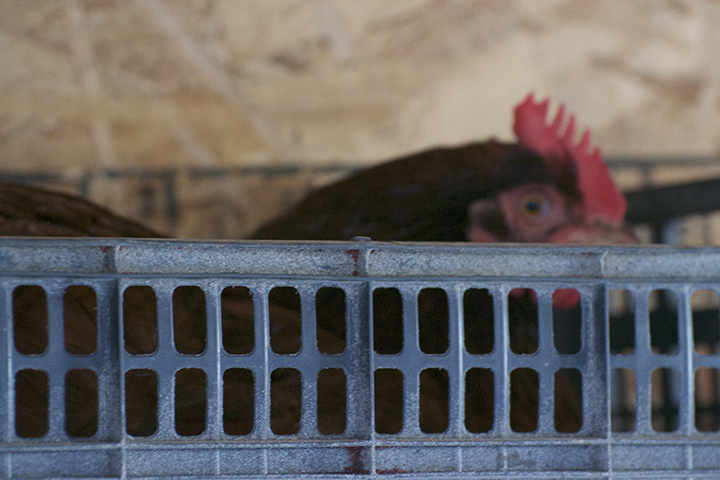
Photographs are of farmed goats, not trolls. Also some chickens, since the female reporters are anything but.
Music is familiar to you, the only one I could think of about trolls, in the halls of the political kings, here and abroad….
Yesterday I wrote about some reasons why people distrust or outright reject science: contradictory findings are held against the validity of the scientific enterprise, debunked studies are seen as signs of sham proceedings, problems with replicability are justifying overall doubtfulness.
Let’s look at this a bit more closely. Non-replications (which, by the way, happen mostly in the areas where the social and personality variables of are investigated,) and de-bunking are actually signs of a robust health of science, rather than the opposite. People care to get it right. Science is a cumulative enterprise that happens slowly, over time, with careful calibration. It is open to explore where things might have failed or, more likely were dependent on contextual variables that we are unable to re-create.
This is not picked up in news reporting which, for obvious purposes, goes for the latest, the flashy, the new. Nor do you read in the news each and every case of where replications succeeded – far outweighing the opposite cases, but not considered news-worthy. You have a real sampling problem here: I tell you the bad, because it sells the paper – never mind, it sells the on-line ads – but m silent on far more frequent good outcomes.
These are, alas, not the only causes for our view of science as untrustworthy. Science is often met with loud opposition, and those who oppose it know how to manipulate the general population. Think of what vested interest managed to do: if science was a threat to profit it was ignored, dissed, or its results never published. This is true for the tobacco industry, the fracking industry, the pharmaceutical industry – you probably can add considerably to this list. Threatened interests withhold science, they disparage science, they lie about science. (Here is a series of clever articles on the whole issue.)
Then there is the enlistment of “merchants of doubt,” who as willing media create “balanced” debates where, say, one scientist denying the causes and consequences of the climate crisis (or the crisis outright) is confronted with another scientist describing a different picture. Never mind that only a few scientists agree with the former and 99 % of the rest agree with the latter. Just this week 11.ooo of them urged us to change energy, food and reproduction habits or face dire consequences….
Manipulation is all too often willingly received, though, by the public and none of us is exempt. Inconvenient findings might be a threat to our worldview, or a threat to our comfort levels in living our lives, a threat to the status quo that provides longed-for stability and maintenance of status for some of us. Climate science is a good example: acknowledging the physics, the facts about greenhouse gasses, would compete with a system’s need to protect free enterprise, avoid government intervention, compete with a solar power industry overtaking the coal industry, etc.
It would force us to face changing our own behavior from what we eat to if and how we travel, keep the house warm, buy clothes, you name it. Or think mandatory vaccines – g-d forbid the government infers with parents’ rights, (particularly when vaccines concern STD’s and a presumed impact on (to be deterred) sexual behavior is part of the equation.) Thus the public is perfectly happy to listen only to the data that confirm their worldview, or disparage data altogether as untrustworthy if they don’t.
This is true for the opposite side of the political spectrum as well. If you look at the left’s receptivity (or absence thereof) to data about gene manipulation, nano technology, nuclear power or factory farming you see some of the same picture. I am the first to admit my own cherry picking of data: I am following research on Alzheimers, since it is one of the things I dread most in life – loosing my brain. I am way less critical towards studies that bring me comfort, than those that don’t. Case in point: a recent finding that sleep might help to prevent the disease. Well, let’s be more precise: there is the assumption that something that happens during sleep, your brain getting washed, quite literally, with slushing waves of cerebrospinal fluid that takes the gunk in there away, is beneficial to your mental health. Tell that to this passionate sleeper.
New research from Boston University suggests that tonight while you sleep, something amazing will happen within your brain. Your neurons will go quiet. A few seconds later, blood will flow out of your head. Then, a watery liquid called cerebrospinal fluid (CSF) will flow in, washing through your brain in rhythmic, pulsing waves.
Note, this does not allow us to make causal claims, even the correlations are tenuous, there might be a third variable problem, but oh, do I like a study like this, since as a deep sleeper it ever so marginally reduces my fears. Cherry picking, as I said. You will not find me promoting studies that seem to correlate frequent use of Benadryl with Alzheimers, on the other hand, since it would require changing my allergy medication habits…..
One more thing, and then I am done with the bully pulpit:
Science matters. Doing science right matters. Policy issues should be driven by science and not by individual taste or belief or industrial greed. But there is also a case to be made for some policy issues to be independent of science, and we have to be very careful in distinguishing the two. Take, for example, the argument that has been around for a while, that discrimination against the LGTBQ population should be prohibited because science has determined that genetics play a role in who you are and as who you present. What if science turns around and we find out it is all about social construct, not genes? Is it ok to discriminate then?
The point here is that there are moral arguments that should be independent of science, no matter what scientific claims we hold true at any given point in time.
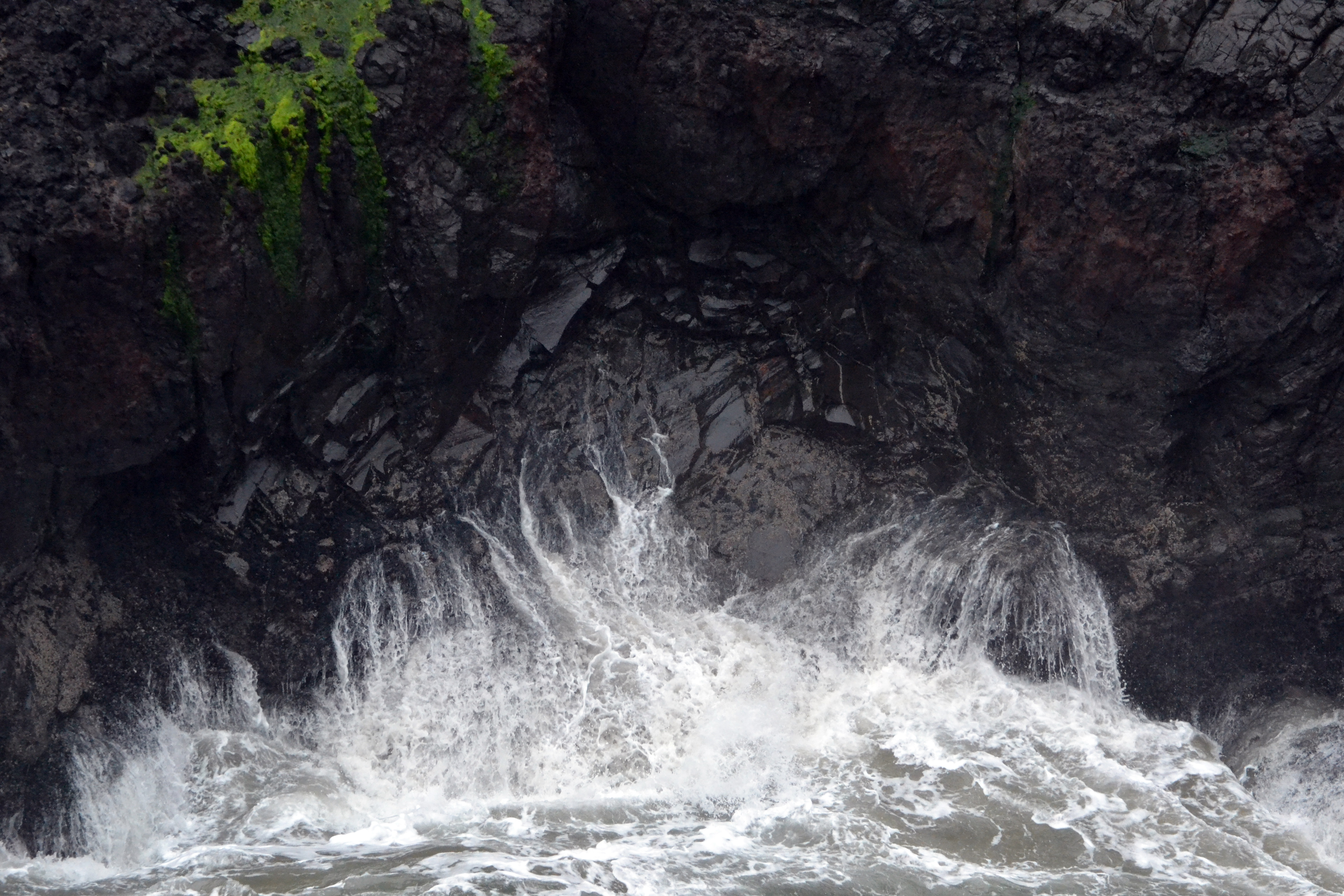
And now, if you excuse me, I am off to catch a few winks of brain washing before I consider writing on morality…. Photographs are of waves, of course.
We started the week with magic, then miracles. Can witchcraft be far behind? Tired yet of rhetorical questions?
I just learned that Sylvia Federici, professor emerita at Hofstra University, renowned political theorist and feminist activist had a new book out: Witches, Witch-hunting and Women (2018). It expands on topics found in her seminal work from about 15 years ago, Caliban and the Witch: Women, the Body and Primitive Accumulation (2004), which was formative reading. (I have not yet read the new one, except excerpts.)
I’ll try and introduce the main themes of her work, as far as that is possible in this short space. I’ll then link to a short chapter on gossip that is available online and makes for fascinating reading.
Traditional explanations for the witch hunts of the 16th and 17th century across Europe, and later in South America concerned 2 factors: for one, scapegoating was needed to explain the deaths from epidemics, wars and hunger (it was the Little Ice Age after all). Secondly the catholic church felt its grip slip, particularly during the time of reformation and needed to show some power. Witch hunts were born, (and not the kind that certain presidents prone to cry victimhood claim, either) and cost the lives of between 80.000 and over 100.000 mostly older women, the statistics vary. Many myths about witch hunts are still alive and well.
Sylvia Federici explores different territory. She looks at the transition from feudalism to new capitalistic economic systems, leading up to the industrial revolution . Where before men and women shared agrarian work, a commons and open cohabitation, now laborers were needed for piece work, eventually confined to factories. That meant that (unpaid) domestic work fell entirely to the women who were also supposed to produce ever more children to be subjugated to production’s demands. Women who kept contraception, pregnancy and child birth in female hands were declared witches: midwives, herbalists who provided contraception, abortionists. Their ability to help women control their own bodies was dangerous to the system that needed to expand the labor force. Women, who refused to be confined to newly “private” marriages that subjugated them to reproductive servitude and complete dependence since their labor was unpaid, were also declared witches.
This means that with the advent of capitalism a new sexual division of labor came into existence that deepened the differences between women and men, male and female labor, devalued women’s work, subordinated women to men, and condemned women to unpaid labor. It is significant, in this context, that, by the sixteenth century, in some European towns, women were practically forbidden to work for a wage and in the ideology of the witch-hunt a connection was made between women seeking money and making a pact with the devil: it was the devil that gave witches money in times of need. Also prostitutes were seen as witches, as they sold their services for money.
Anything that could keep women in their place and keep them from finding collective power or solidarity or just emotional closeness to others, was pursued. Here is but one example: gossip used to be a positive term applied to women friends who would get together and chat. During the 17th century it was suddenly loaded with negative connotations – talk outside the house (and its possibility to break the isolation that women felt) had to be stopped. The same courts who pursued witches also tortured and punished “gossips” who were seen as a danger to the hierarchical status quo in male-dominated households. They might teach other women about reproductive issues, they might relate historical knowledge of times when women were on more equal footing, they might suggest ways to rebel. You can read an excerpted chapter here.
Violence against women, the killing of women has not abated. It might not be done after trials in church courts, but we see it on a daily basis in the world around us, from domestic violence to the killing of political activists to the slaughter of Kurdish politicians by the invading Turkish army. We see it in selective infanticide across cultures, where girls are aborted or killed for being the wrong gender. No witchcraft involved. No devil either. Simple structural demands from a particular economic system, hunger for power, and desire to maintain a hierarchical status quo, with silent acquiescence enforced.
Just give me a magic wand, already.
*
Since witches refused to be photographed and given the associations to the demands of capital and hierarchies within the labor force, photographs are of industrial staircases today. We know who’s up and who’s down….
Music is a witch mix – pick and choose!
Here is a French witch (It is rumored opium-addicted Berlioz wrote this for his infatuation with a Shakespearian actress who wrote him off as crazy and obsessive yet later married him (briefly) when she heard this piece was about her. ) Gossip!
Here is a Czech witch met by Dvorak at noon
and here is a Scottish witch (this was written as a requiem for her, quite recently.)