Browsing Category

Politics

The Album of Death

The ten days between Rosh Hashana and Yom Kippur give people who are not completely saintlike (those latter automatically inscribed into the Book of Life) or completely wicked (who will be inscribed into the Book of Death) a chance to escape the fate of death next year: by doing a lot of things that convince the scribe to put your name in the right book.

Death, then, is a concept that comes up a lot during the High Holidays, even if well meaning friends had not sent you a -as it turns out- quite moving essay from the New Yorker, when they know you don’t particularly like to read the New Yorker….  https://www.newyorker.com/culture/personal-history/questions-for-me-about-dying   

What I like to read, wouldn’t you know it, are analyses that show how the manipulation of what we see or don’t see of death can affect our willingness to support our government’s decisions to go to war. Particularly if they are written by a smart legal scholar from Emory, who – Boston folks take notice -will talk on this topic at a Harvard International and Global History Seminar this Wednesday.

The link below is a short abstract of Mary Dudziak’s paper; the gist of which goes as follows: as long as we are prevented from paying attention to the product of war – dead human bodies – we will allow the restraints on presidential powers to shrivel. Our distance to visible death “helps to produce the profound apathy that characterizes contemporary American war politics. This apathy enables the current legal structure of war authorization: Congress fails to act, and presidents rely on new interpretations of outdated authorizations, or their own constitutional power. Ultimately, I argue, a crucial and unexamined factor in the atrophy of political restraints on presidential power to use military force is the distance between American civilians and the carnage their wars have produced.”

Her paper goes on to show how the US manipulated imagery so that war efforts were supported by the civilian population already during WW II. “Using censored and uncensored World War II casualty photographs, I show the way the very view of war death was managed by the U.S. government for the purpose of maintaining domestic mobilization. Civilians therefore engaged a curated view of death meant to enhance their support for the war effort.”

https://papers.ssrn.com/sol3/papers.cfm?abstract_id=3004292#.WXYfKGHPxhM.twitter

One of our nation’s New Year resolutions, then, should be an increased awareness of the multitude of factors that support war mongering. Only if we know the strategies used can we fight them to decrease our spreading of death across the world.

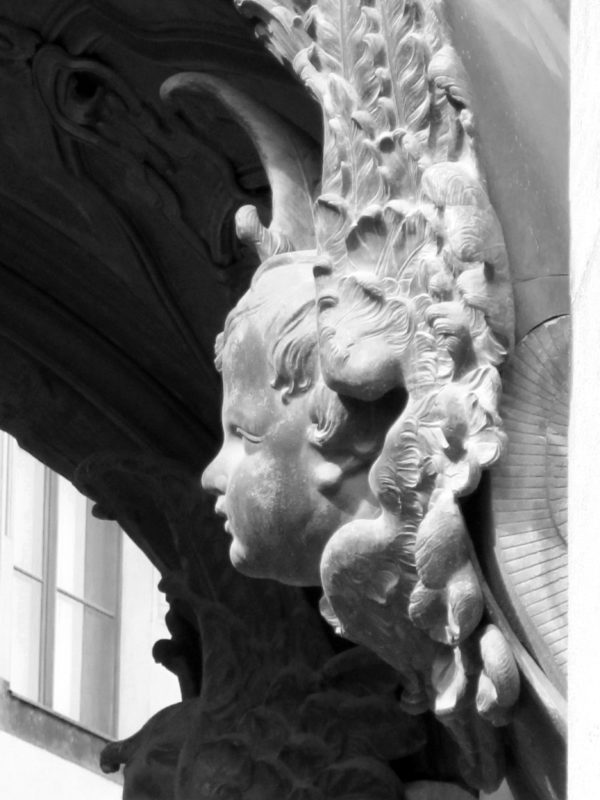
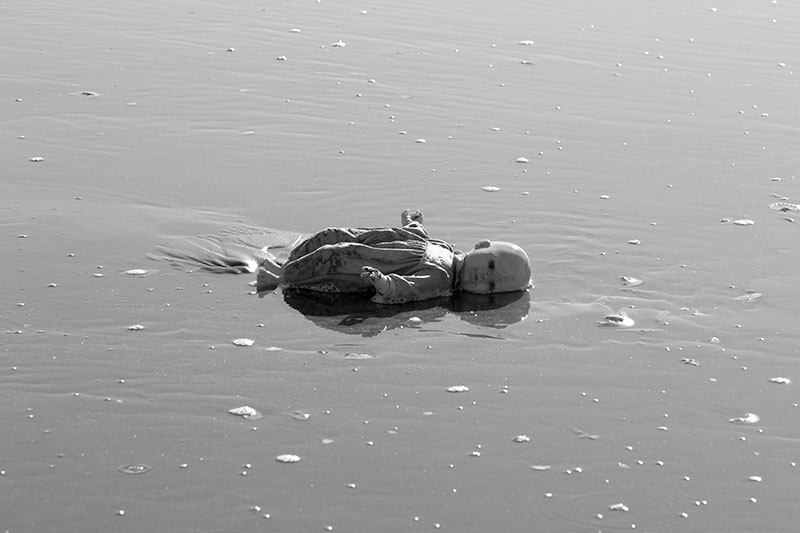
Assuming you have squeamish reactions to the chosen images for today, let’s just say they ain’t images of humans… just a lost doll and some beach jetsam.

New Year’s Resolutions

This week we observe Rosh Hashana, the Jewish New Year. It is the beginning of a ten day period of penitence that culminates in Yom Kippur, the day of atonement. It is customary to contemplate one’s missteps and symbolically throw them away with pebbles or breadcrumbs into a body of running water.

It is psychologically astute for religions to provide these points of renewal. Miserable behavior can only be changed if it is acknowledged in the first place, and the promise of forgiveness or some other form of clean slate enables contemplation rather than avoidance. I’ll leave it open as to what constitutes a sin (or why sins have been defined by those in power to regulate) but there is no doubt in my mind that we can all work on being better human beings. Well, I should and will work on it.

I wish the same could be said for nations, our’s in particular. So for this week’s blog I chose topics that warrant New Year’s resolutions of society at large to search for better solutions. I will start with one that is hyper-controversial: abortion.

Everyone agrees in the ideal there should be none.

Those who scream the loudest against them are also those who are the least willing to provide educational and financial resources to prevent pregnancies in the first place. For the time being, however, abortions are legal under certain conditions, although many factions in this country are doing everything they can to change that.

http://www.refinery29.com/2017/06/158903/abortion-laws-by-state

This includes pulling funding for the clinics that offer safe procedures, harassing the providers and patients to the point of maiming and killing them. On the legal end, we see this:” As long as Roe v. Wade stands, states can regulate abortion (before the point of fetal viability) as they see fit. It has allowed anti-abortion politicians to go on the offensive: In the first six months of 2017 alone, a total of 431 provisions restricting abortion access were introduced at the state level. Out of these, 41 had become law by June.” (Citation from attached link above.)


The working environment in women’s clinics reflects both the threat abortion providers are under and their indomitable spirit to fight for the rights of women with humor, bravery and remembrance.

They know that they offer a host of services that are invaluable for reproductive justice and healthcare for the poor, abortion being just one of them.

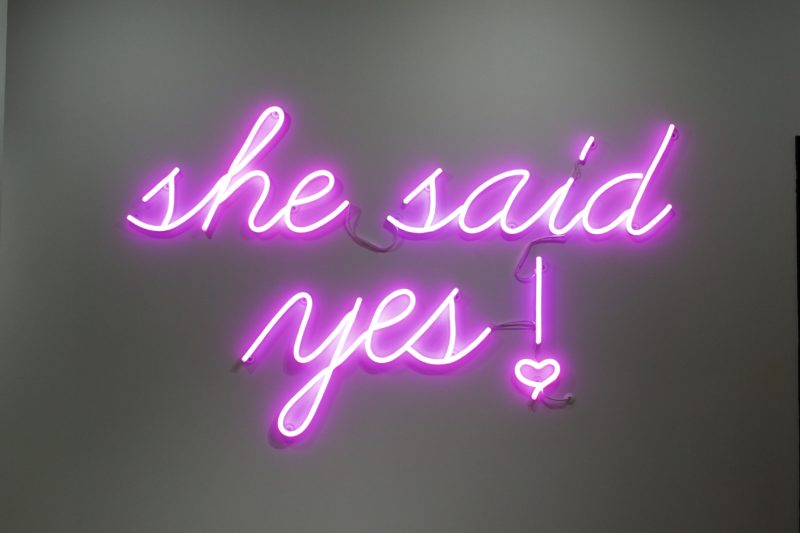
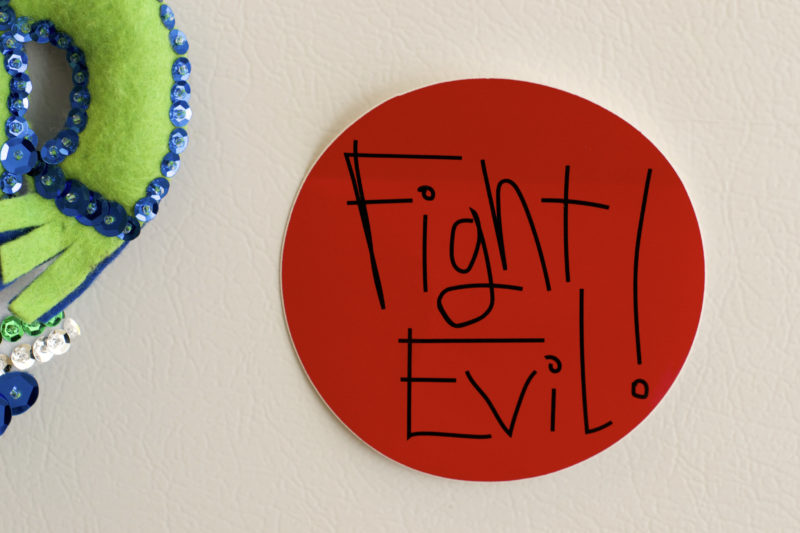
Today’s photographs, taken in the kitchens and hallways of women’s clinics, are witness to the conditions and determination described above. I wish we as a society would find a solution that protects women’s choices in ways that go beyond the letter of the law.


Es gibt kein richtiges Leben im falschen.

· Wrong life cannot be lived rightly (Adorno) ·

I’ve talked about sloth, gluttony, envy and pride this week; proscriptions to work instead of play, accept a sparsely filled larder, resist comparisons to others and do all this meekly, were, I believe, given in one form or another during tribal, feudal, or modern historical times (capitalism and socialism, as enacted, alike.) They all came with the promise of some better life at some future point (and in some future realm if you believe in heaven.) Clearly something is needed to regulate human interaction before all hell breaks lose when competing for limited resources. Or resources that someone does not want to share, even if there was enough for all, in principle.

So if a world is structured by inequality, exploitation and effacement, how do you live a right (a good) life? I am picking up here on Judith Butler’s writings who, in turn, works on this very question originally posed in Adorno’s Minima Moralia. Perhaps you know her as one of the most famous American scholars of feminism. She has since turned to thoughts on how we can live with each other, in a world divided by nationalism, resentment and hatred, a fear of change and a return to autocratic longings.

Reading her texts is rough going, I admit, (the title of one of her recent books alone speaks of that….Notes Toward a Performative Theory of Assembly) but the link below outlines an interview that I found clear and thought provoking, particular in light of our selective attention. Just think about two concurrent disasters – the rains in Texas and in SouthAsia. Close to 2000 people have died over there, rarely do we notice while discussing the plight of Houston.

https://theotherjournal.com/2017/06/26/worldless-without-one-another-interview-judith-butler/

Butler claims that we need to acknowledge our interdependence and our vulnerabilities in our interactions with those who are different from us; however, we have the opportunity at this historical moment, to seek change towards a less hierarchical and discriminating world by allying with those we traditionally shunned. In a world sliding into ever more precarious circumstances for an ever increasing number of people we can engage in a politics of alliance and make progress by living with each other, together, performing resistance not for personal liberty but for collective change.

My take-away, then, is that rather than worrying about the deadly sins, I should pour my energy into being part of a movement that is accepting, inclusive and hell bent on making this world more just. First step in that direction today: make my voice heard about the nixing of DACA. It might put my soul in limbo, but my conscience in just the right place.

Photographs are work in progress on the Refugee/Mobility series, showing (mostly) isolated figures in transit.

PS: Between Labor Day and travel next week blog will be catch-as-catch can.


Envy

Originally I thought I’d write about envy, another of the 7 deadly sins, in the context of being a woman artist. It had come up while reading a review of a current exhibition (NYC friends, don’t miss this one!) of works by an artist I greatly admire, Helene Schjerfbeck.

Four Uncompromising Finnish Women Artists

You can find a detailed description of her life and development as a portrait painter in the link below written by the folks who put on a fabulous retrospective at the Schirn in Frankfurt 2 years ago.

http://schirn.de/schjerfbeck/en/

I find myself often envious of women who have the courage and the discipline to go against the grain of their own time, who believe in the power of their work and don’t succumb to the familiar sense of being an impostor when doing their work outside of the traditional parameters.


I changed my mind about the focus of today’s musings, though, when remembering an article that one of the fellows at the American Enterprise Institute published some years back in the National Review. Not sure if reading it will make you laugh or cry or scream or hang your head in despair, but it is certainly timely food for thought. http://www.nationalreview.com/article/209555/wealth-virtue

The author, Michael Novak, tries to make the case for the superiority of capitalism in both practical and moral terms, the latter clearly linked to tenets of religious, judeo-christian philosophy, as far as I could tell. The list of ten points that he claims make capitalism the moral choice includes things like freeing the poor from indolence (!), strengthening civility to protect people’s achievements etc….. but here is the bit on envy.

“10. Finally, it is one of the main functions of a capitalist economy to defeat envy. Envy is the most destructive of social evils, more so even than hatred. Hatred is highly visible; everyone knows that hatred is destructive. But envy is invisible, like a colorless gas, and it usually masquerades under some other name, such as equality. Nonetheless, a rage for material equality is a wicked project. Human beings are each so different from every other in talent, character, desire, energy, and luck, that material equality can never be imposed on human beings except through a thorough use of force. (Even then, those who impose equality on others would be likely to live in a way “more equal than others.”) Envy is the most characteristic vice of all the long centuries of zero-sum economies, in which no one can win unless others lose. A capitalist system defeats envy, and promotes in its place the personal pursuit of happiness. It does this by generating invention, discovery, and economic growth. Its ideal is win-win, a situation in which everyone wins. In a dynamic world, with open horizons for all, life itself encourages people to attend to their own self-discovery and to pursue their own personal form of happiness, rather than to live a false life envying others.”

I will not begin to count all that is wrong in his assumptions or which phrases had me snort particularly loudly, but point to the simple fact that our undoubtedly capitalist country is riddled with envy. Read any analysis of why our current president was elected, and it partially boils down to that very sentiment. Blacks not waiting in line with the disenfranchised white working class? Welfare queens getting “free passes?” Immigrants scooping up what belongs to the nationalists? Women demanding equal pay? The personal pursuit of happiness seemingly doesn’t cut it when spontaneously engaging in social comparison. Self discovery is not up to par fighting envy when seeing your neighbor’s Porsche while you struggle to pay the rent. The claim that capitalism is not a zero-sum system in which someone’s gain does not come with someone else’s loss is simply idiotic. There, I’ve gone into text analysis after all…

Unfair distribution of riches, at all times in human history, have led to envy. Thus it was imperative to impose strong impediments to acting out on that feeling, particularly given the numbers involved: the powerless many being envious of what the powerful few hoarded. Religion was up to the task: making envy a deadly sin that endangers the immortality of your soul was a significant threat. The story of Cain and Abel, the biblical prototype for envy and its dire consequences, is not coincidentally one of the first we learn about in the Holy Books.

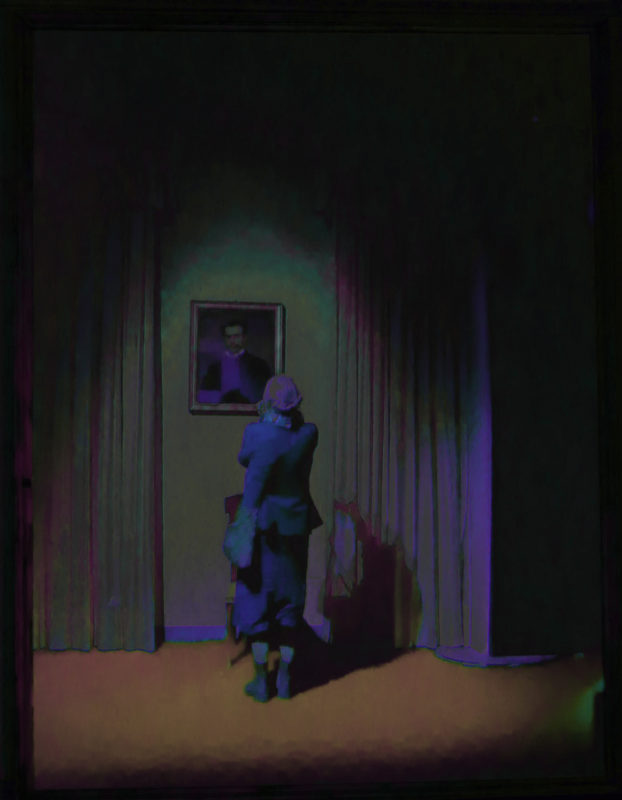
Photographs are Self-Portraits that have none of the freedom of creation that I envy Schjerfbeck et al. – the constraint of seeing yourself in a reflective context leaves much to be desired.

Propaganda Films

Today I will keep it short – between the tragedy in Barcelona and the insanity coming out of the White House and its congressional enablers, I have to catch my breath. Below is the link to a selection of choice propaganda films and a link to the full documentary that Leni Riefenstahl made of the ReichsPartei Tag in 1934 in Nürnberg, as a timely reminder. She was such a gifted filmmaker in the service of such an evil force.

Holocaust Memorial Berlin

13 Fascinating Propaganda Films


Triumph of the Will, choreographed like a Wagnerian opera, is renowned and reviled as the best propaganda film ever. Here is a short overview of her life as Nazi supporter, no matter how much she later denied it.

https://www.theguardian.com/world/2003/sep/10/film.germany

Yesterday the Boston Holocaust Memorial was vandalized, the glass shattered with rocks. I told myself all week, that history does not repeat itself, but my skin is covered with goosebumps.

Entrance to the Jewish Cemetery in Berlin

The Partition of Hindustan

70 years ago this August the colonial powers divided what was known as Hindustan into two entities – India and Pakistan. One was supposed to hold a majority of Hindus, the other a majority of Muslims. The British could do this for all of their occupied provinces – the remaining  princely States, of which there were several, could determine their own fate. Kashmir decided on independence only to see immediate war between India and Pakistan vying for dominance.

The reality for an independent Muslim State was made possible by the pressure of Mohammed Jinnah on the British colonial administration, but the idea reaches further back: Muhammad Iqbal, an ardent admirer of Goethe, who studied law and philosophy in Germany, declared it was time for Muslim independence. He presented his 2-Nation theory first in 1930; it eventually became the MountBatten plan that divided the country.

The result was carnage, with up to 2 million people estimated having lost their lives, hundreds of thousand of women raped, with unimaginable numbers (15 million) having to seek new places to live. And Pakistan got the short end of the stick. While India settled onto a contiguous territory, Pakistan had 2 far-flung parts, was involved in conflicts with Kashmir and Belutschistan and had to see Bangladesh partition off. It is ethnically much less homogeneous than India is. Religious conflicts, with Sunni extremists attacking Shiites with increasing frequency, make life hazardous. 42% of all adults cannot read or write; conservative Islamists and Mullahs torpedo the healthcare system and build their own religious schools which house and indoctrinate large numbers of the male offspring of the poor. And three weeks ago the Pakistani High Court removed elected prime minister Nawaz Sharif from office, due to behind the scenes pressure by the military. The country is not enjoying the peace and stability that its founders had envisioned. And, according to the Financial Times, last year saw diverse means of propaganda – from balloons to pigeons….https://www.ft.com/content/048603f2-89fe-11e6-8cb7-e7ada1d123b1  

Alas, the tenor of the article show how high tensions are.

When large part of the populous can’t read, visual communication through news programs, documentaries and movies take on an increasingly important role. One way of propaganda, then, is to withhold the communication of the other side. This has been the case for endless years in the conflict between India and Pakistan. Each country censored their own political filmmakers, but also the movies from the other country, depriving their populations of something that could lead to an rapprochement in joint appreciation of Bollywood and whatever comes out of Karachi. Since so many more households now have satellite dishes rather than old fashioned antennas, the banning of TV channels had become easy. And Pakistanis have far fewer computers that allow them internet access to Indian movies than their Indian counterparts.

This year Pakistan lifted the ban on movies – and India is discussing if they should follow suit http://www.hindustantimes.com/bollywood/pakistan-lifts-ban-on-indian-films-should-india-follow/story-AByHLRPErIQVaoVtyR2IwI.html

Here is a topic-specific overview of relevant Pakistani movies for those who are interested.

Pakistani Cinema Had Its Own Way of Looking at Partition Too

Photographs were snapshots of a short performance by a lovely young member of the Anjali School of Dance in Hillsboro.

Dead Meat

No, the title is not a description of my current state – it is the pointer to today’s topic of propaganda: the divide between those of us who eat meat and those who don’t.

I have previously written about my thoughts on the divide between mass agricultural production and production on small farms. Not many happy cows found at either, is the short version.  Today I am more interested in the acrimony between those advocating for a stop to all animal husbandry, and those who cannot live without heir steak. Or their porkchops. Or their eggs.  Or their milk and cheese. Or their leather belts and shoes, for that matter.

In danger of sounding like you-know-who, there are good and bad guys on both sides. Well, really, there aren’t in white supremacist rallies, don’t get me going. But there are along the continuum of vegans to paleo-dieters. And both have amply employed propaganda. Case in point is the film Cowspiracy, which claims that those of us who eat meat cannot be counted as good environmentalists.

https://www.youtube.com/watch?v=S-XP79o8gqQ

It bases its claims on scientifically debunked statistics that agricultural animals are responsible for 51% of the greenhouse gas emissions that hurt our planet. The factual number is closer to 15 % and that’s due to emissions from livestock agriculture including the methane from animals’ digestive systems, deforestation, land use change and energy use. The remaining pollution really lies at the feet of the fuel fossil industry.

Here is a short article on why this propaganda film is self-defeating and hurtful to the cause of environmentalism.

http://climateandcapitalism.com/2016/02/13/22449/

Another film also aimed at animal cruelty, Okja, is less of a documentary and more of a movie. Heavy-handed ideological promotion, nothing else. Why did I watch it? Because I watch anything with Tilda Swinton in it, here playing the baddie, and Joon-ho Bong as director ( who I liked from Snowpiercer.) Pure propaganda.

Let me hasten to say that of course it would be terrific if those of us who like and can afford meat would eat less or none at all. It is healthier, it is better for the environment on many levels, and it would help those who live in poorer countries whose scarce national resources get destroyed by our demand for hamburgers. And I am also aware that the meat industry wins first prize when it comes to propaganda: here is a good summary in a Frontline  piece.

http://www.pbs.org/wgbh/pages/frontline/shows/meat/politics/

Photographs are of members of a vegan organization /PDX chapter who were demonstrating and informing in front of Powell’s Bookstore today. They showed movies that they made under “threat to their lives” going undercover in the agricultural industry. That was repeatedly emphasized.  Got lots of attention. And now let me think, guilt twinges and all, about Bratwurst for dinner.

Don’t be a Sucker

Propaganda and Psychological Warfare, a classic written by Terence Qualter in the 1960s, defines propaganda as the deliberate attempt by some individual or group to form, control, or alter the attitudes of other groups by the use of instruments of communication, with the intention that in any given situation the reaction of those influenced will be that desired by the propagandist.  

(The late French philosopher Jaques Ellul claimed (in Propaganda: The Formation of Men’s Attitudes):“Propaganda by its very nature is an enterprise for perverting the significance of events and of insinuating false intentions… First of all, the propagandist must insist on the purity of his own intentions and at the same time, hurl accusations at the enemy. But the accusation is never made haphazardly or groundlessly. The propagandist will never accuse the enemy of just any misdeed; he will accuse him of the very intention that he himself has and of trying to commit the very crime that he himself is about to commit.”

When focussing on the manipulative aspects of that kind of communication it is easy to overlook that propaganda need not be used for nefarious purposes only. Admittedly bad intentions seem to be the regular mode. But it can be used for the greater good as well – a case in point is the link below, a propaganda film made in the late 40s in this country.  I chose it, of course, in light of the despicable events from last week, as evidence that we, as a society, are seemingly moving backwards rather than forwards. I wish Fox News or whatever other channel you-know-who watches would show this clip.

Not that I think it would make much of a difference. Charlottesville is the tip of the iceberg, and the tragedy on Saturday is not just about the violent and murderous actions of some heinous fringe element, or even the tacit support they receive from the highest places in government.

The tragedy is the underlying complicity of so many millions of voters and hundreds in Congress not regarding the violence but regarding the general goal of returning to a predominantly White, Christian and preferably male dominance in this nation. White supremacy is not just about yelling Nazi slogans in the street. It is about the belief that Blacks and their culture, deep down, are not equal to Whites. It is about the belief that voter registration laws, mass incarceration, private prisons, housing and school segregation and so on are desirable political tools to separate the races, elevating one over the other. These days I think of American racism as a field of lava bubbling over a widespread area underground, with the occasional outburst through a hole around the hotspots of the alt-right. Everyone decries the explosions, but is in fact part of that lava field that steadily increases the heat.

Here is commentary from a young woman who defines some of the complicity; I admire her insight and outspokenness.

http://www.newyorker.com/culture/jia-tolentino/charlottesville-and-the-effort-to-downplay-racism-in-america


Racism kills

Returning to propaganda, though, my point is that clever communication has enormous consequences, from war movies to advertisement. Governments use propaganda, movements use it, individuals use it, and being aware of our constant exposure to it matters, both to protect oneself from undue influence or to realize that one has to stretch beyond advantageous beliefs and stereotypes. I’ll stop before I sound like a propagandist myself.

The problem is called racism – to remember means to fight!


The Berlin Wall

Yesterday, August 13, was the 56th anniversary of the building of the Berlin Wall. In contrast to the US where current wall- building fantasies focus on keeping people out, the Berlin Wall was built to keep people in.

The German Democratic Republic (GDR) had started out with about 19 million people after the war, occupied by Soviet forces after the partition of Germany in its entirety. Berlin was an island within East Germany that was ruled by the Western allies. The GDR was bled dry to pay war reparations to the Soviet Union, and life was difficult particularly when compared to the West German counterparts where the economy picked up at significant speed with the help of the Marshall Plan.

Soon then, young people, particularly the better educated ones, left East Germany to seek their fortune in the West. Between 1948 and 1961 when the wall was built,  2.5 million people fled East Germany. The Soviets put an end to that literally by fencing and walling the country in, separating not one country from another, but dividing basically one city regardless of how families and friends got ripped apart.

We know how it ended, some 28 years later, with the power of democratization and the lure of capitalism uniting the divided country. It has not necessarily been a happy ending for many in the East who thought salvation would come with an opening to the West, but that is a topic for a different day.

Today I am more interested in the psychology of propaganda around the wall – see the clip below masterfully painting the division between good guys and bad guys. Which ones are we, you ask? Depends which wall you are talking about…..or who you ask, I guess.


And I am also attaching a commentary of an important friend of the current wall-planner-in-chief, the remarks made during the 1oth anniversary of the fall of the wall. Propaganda as well.

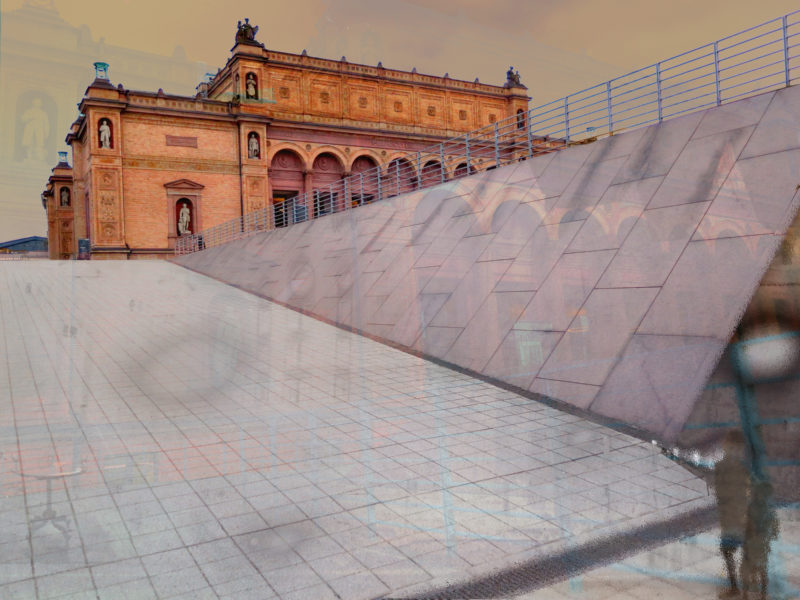
Photographs are of contemporary Berlin.

Tuesday’s Question

My eye was caught today by numerous articles that point to the Trump administration’s decision to disenfranchise the weakest links in our society. Here is a sampling, sadly by no means the whole list:

The disabled: https://www.dailykos.com/stories/2017/8/7/1687507/-Advocates-fear-the-disabled-are-next-on-Trump-s-hit-list

The old: http://thehill.com/regulation/healthcare/345411-fight-over-right-to-sue-nursing-homes-heats-up

The addicted: http://www.npr.org/sections/health-shots/2017/08/02/541071209/should-the-opioid-crisis-be-declared-a-national-emergency   

The opioid crisis has led even the republican commission calling for a declaration of national emergency. Drug overdosing now costs more lives than gun homicides and car crashes combined and hits primarily the poor in minority neighborhoods and increasingly in the middle of the country. So far the administration is only talking about drug enforcement rather than treatment options. The White House is proposing to slash the budget of the Office of National Drug Control Policy from $388 million to $24 million and end programs including the High Intensity Drug Trafficking Areas and Drug-Free Communities, according to a draft budget document. and of course their health care bill would have no longer required insurers to cover substance abuse and mental health services and would have rolled back expanded Medicaid, a program that covers behavioral health services.

Here is a short essay on how true compassion looks like:

The blurred boundaries of mothering an addict

Today’s question then, is:

When will the hypocrisy of touting Christian values and then acting against them be obvious to all?