Browsing Category

Politics

Smudge

Not sure which weighs more heavily in today’s offering: the joy to see a fearless young man – the poet –  on his way to recognition or the pain at the thoughts of a then 15-year old writing a poem about parents’ attempts to protect black children by beating conformity into them.

You judge for yourself.

But be sure to keep Malachi Jones on your radar.

Malachi Jones, 17, Wins Prestigious $10,000 Scholastic Art & Writing Award for 2018

Here is an excerpt – the whole poem can be found in the link attached below.

“Smudge” by Malachi Jones

When A Black Man Walks

Lots of reading material today, each one informative in its own right and/or a literary feat. Not much I have to add in my own words. Neiel Israel’s poem sets the stage – in brilliant, musical, goose bumps – producing performance.

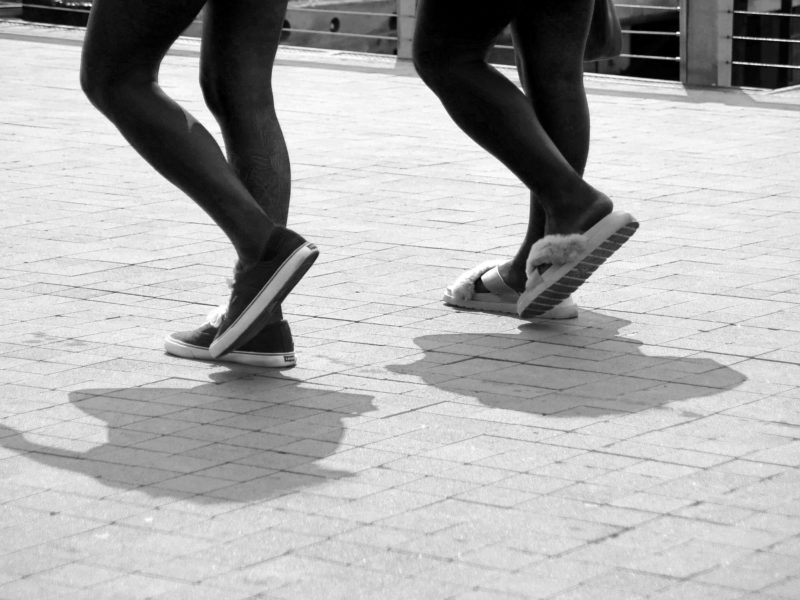
The NYT this week picked up a topic related to racial discrimination while walking – what happens to jay walkers. Here is a graph that makes it easy to understand.


https://features.propublica.org/walking-while-black/jacksonville-pedestrian-violations-racial-profiling/

But of course that is the least of it when you have to fear for your life while out there doing your thing. I think it cannot be repeated often enough – and it is NOT hyperbole – that when you are Black in this country, no matter how educated, how law-abiding, how cautious – you worry about your or your children’s exposure to racism with lethal consequences. And that worry in itself affects your health.

http://theconversation.com/racism-impacts-your-health-84112

Walking While Black

Magnolia Flowers

Yesterday’s question about flowers as a topic for Black poets might be answered with today’s poem by Langston Hughes.

I have seen various interpretations of this poem including some that go beyond the obvious juxtaposition of the beautiful with the ugly South in terms of suffering and poverty. They hint at lynchings – stumbling onto the toes of those taken down in the dark. I, of course, have no clue. Like for every other poem of Hughes that I know, though, I revere the sheer power of creating an indelible image with words.

I chose to devote this week to Black poets because of their strength to look into the abyss, not shy away from it, and force us to give it a good look, too. This is not meant to depress, although I grant it is likely a by-product. I want to remind of the voices that are generally not encountered by us as symbols of empowerment, determination and persistence. The 50th anniversary of MLK’s assassination seemed a good benchmark. His voice cannot be unheard.

https://www.theatlantic.com/entertainment/archive/2018/04/revisiting-martin-luther-king-jrs-most-haunting-sermon/556277/


my dad asks, “how com black folks can’t just write abut flowers?”

A couple of years back I insensitively scolded a friend of mine for helicopter-parenting her daughter. The then 12-year old had not yet been allowed to go by herself to the corner store, much less take a public bus. “What are you worried about, here in Beaverton?” (Middle-class suburb of Portland, for the uninitiated….) “Hanin wears her Hijab,” was the answer.

Parenting is hard enough. Parenting a child who is potentially exposed to harassment, attacks or, in the worst cases, death when simply being in the public sphere, is inconceivable to me. How do you live with the constant anxiety? How do you prepare them for what awaits them once they leave the house? How can despair be held in check?

The thoughts were triggered by reading the piece below by Aziza Barnes, a forceful, uncompromising, unstoppable young voice who either invents or remembers a parent who so wishes one could simply look away, in her title.


Knowing 911 by heart at the age of 2.

The killings of Justine Damond, Keith Lamont Scott, Philando Castile, Alton Sterling, Walter Scott, Tamir Rice, Laquan McDonald, Michael Brown, to name just the ones that became famous because we saw the videos that showed they were either children and/or running away, are back in my thoughts after the recent tragedy involving Stephon Clark. Shot multiple times in the back, while holding a cell phone claimed to have been mistaken for a weapon, in his grandma’s yard. And then this:

http://www.latimes.com/local/lanow/la-me-stephon-clark-video-mute-20180331-story.html

What do you tell your children?

Large Apocalyptic Numbers

Photograph from article below

I very much wanted to write about something positive today, about personal courage, creativity, art, solidarity – your pick. All of that can indeed be found here:

https://theintercept.com/2018/03/26/yemen-war-three-year-anniversary-haifa-subay-street-art/

The article describes how women in Yemen deal with the horrors of the Saudi led/US supported war that started in March 2015, by designing and painting street art that expresses the conditions of their existence.

And yet – I had to look up the facts around that war, and the numbers are apocalyptic. This report gives you the larger picture:https://www.amnesty.org/en/latest/news/2015/09/yemen-the-forgotten-war/

Here is a short summary three years into the war. The Red Cross calls it the world’s single largest humanitarian crisis.

(Images are from the US – I have never been to Yemen.)

The total number of people in need of humanitarian assistance in Yemen is 22.2 million – or 76% of the population – including 11.3 million children.

The Saudis and allies have hit Yemen with 15,000 airstrikes.

5,000 children have been killed.

8,700 civilians have been killed

50,000 civilians have been wounded

1.9 million children are not in school, and both sides have recruited children, some as young as ten, as fighters

11.3 million children need humanitarian assistance, with many on the verge of going hungry.

All in all, 22.2 million Yemenis of all ages need humanitarian assistance, 3/4s of the population.

There have been a million cholera cases and there is the threat of another outbreak.

The International Rescue Committee (IRC), a U.S. aid organization, says one child younger than 5 dies in Yemen every 10 minutes from preventable causes.

And why? Under dictator Ali Abdullah Saleh Yemen had been recipient of much Saudi aid (which went mostly into his bank account). The Saudis tried to spread their form of Wahhabism producing a backlash amongst the Yemeni Shiites, the Houthis.  In 2012 Saleh was overthrown and in the ensuing chaos the Houthis tried to engage in a coup. This led Saudi crown prince MbS (Mohammed bin Salman) to start the bombing campaign, claiming the Houthis were Iranian agents (something widely rejected by scholars.)

Most importantly three years of bombing, with the help of Western allies, have indiscriminately targeted civilian populations.

We are, of course, not supposed to talk about that.

http://thehill.com/opinion/international/380630-only-in-washington-is-a-debate-about-war-in-yemen-controversial

The Trump administration urged silence during the recent visit of MbS in Washington DC. G-d forbid, large numbers of weapons sales could be endangered…..


Large Divergence in Numbers

Politico posted an article yesterday that compared the Trump administration’s reaction to the disasters caused by Hurricanes Maria in Puerto Rico and Harvey in Texas, respectively. Even for hardened souls like me the numbers were astounding; I had known of a systematic neglect of one population compared to the other, but not realized the extent. 

Here is the full article https://www.politico.com/story/2018/03/27/donald-trump-fema-hurricane-maria-response-480557

Here is another summary:

At the end of the Spanish-American war in 1898, Puerto Rico was ceded by Spain to the US. In March 1917, over 100 years ago, Puerto Ricans were granted statutory US citizenship. Of the roughy 3.3 million people living on the island, more than 45% exist below the official poverty level – and that was before the Hurricane hit, and the tourist $$, one of the main employment/income options, dried up as a consequence.

Puerto Rico is a self-governing commonwealth in association with the United States. The chief of state is the President of the United States of America. The head of government is an elected Governor. There are two legislative chambers: the House of Representatives, 51 seats, and the Senate, 27 seats. Note then, Trump is the head of state here, you know, the guy whose personal travel cost could have covered over 90% of the $36 million it costs the Federal Emergency Management Agency operations to deliver food and water to the island for three months. https://www.independent.co.uk/news/world/americas/us-politics/trump-travel-costs-pay-food-water-puerto-rico-three-months-hurricane-a8242736.html


Of course this administration is not the only force of darkness – quite literally so on the island that still lacks electricity in large swaths after six months since the storm’s landfall. Competing visions of how to rebuild after the storm, and how to restructure large parts of the political as much as the physical landscape, are clashing at this very moment. https://theintercept.com/2018/03/20/puerto-rico-hurricane-maria-recovery/

Here are the relevant excerpts from the instructive article above:

Six months into the rolling disaster set off by Maria, dozens of grassroots organizations are coming together to advance precisely this vision: a reimagined Puerto Rico run by its people in their interests. Like Casa Pueblo, in the myriad dysfunctions and injustices the storm so vividly exposed, they see an opportunity to tackle the root causes that turned a weather disaster into a human catastrophe. Among them: the island’s extreme dependence on imported fuel and food; the unpayable and possibly illegal debt that has been used to impose wave after wave of austerity that gravely weakened the island’s defenses; and the 130-year-old colonial relationship with a U.S. government that has always discounted the lives of Puerto Rico’s black and brown people.

There is also another, very different version of how Puerto Rico should be radically remade after the storm, and it is being aggressively advanced by Gov. Ricardo Rosselló in meetings with bankers, real estate developers, cryptocurrency traders, and, of course, the Financial Oversight and Management Board, an unelected seven-member body that exerts ultimate control over Puerto Rico’s economy. For this powerful group, the lesson that Maria carried was not about the perils of economic dependency or austerity in times of climate disruption. The real problem, they argue, was the public ownership of Puerto Rico’s infrastructure, which lacked the proper free-market incentives. Rather than transforming that infrastructure so that it truly serves the public interest, they argue for selling it off at fire-sale prices to private players.

I visited Puerto Rico 6 years ago for a memorable week. My photographs were lost, as were all of the trip to Istanbul that same month, don’t ask or I cry and I have reached my quota of tears already for the week. Luckily I have children who share some of my interests and so am able to post recent documentation of Puerto Rico’s graffiti  – my son was there some weeks ago for work and granted me use of his images. I hope to return one day soon together with many other tourists, spending our dollars in support of the local economy in large numbers.


Large Numbers

I’ll devote this week to large numbers: let’s start with Saturday’s #MarchforOurLives in Portland.

Some estimated 12.000 Portlanders came out to protest US gun culture, the influence of the NRA, the cowardice of our congress, all of which perpetuate the danger of being killed by guns in everyday life.

The march was of course a sister march to the main event in Washington, D.C., where the incredible young survivors of the Parkland shooting had organized some 850.000 people in solidarity for the cause.

I cannot watch a clip of the astounding speech and silence of one of the leaders of Parkland, Emma Gozales, without starting to cry. But I will watch again – and hope you will too – this clip of the 9 year-old firecracker grandchild of Marin Luther King, who has her own dream.Young children spoke in large numbers – in addition to Yolanda there was 11 year-old Naomi speaking up for all the stories of slain black girls that are never told outside of statistics. There was the boy from Chicago who saw his own brother get murdered when leaving church; there were numerous survivors of the school shooting all demonstrating poise, thoughtfulness and a determination to be agents of change.

The Sunday editorials were in large numbers expressing hope that this generation will bring about change, expressed with varying degrees of skepticism, depending on what news outlets you read. I am deeply hopeful. Perhaps not in the short term since structural obstacles are huge and money is in favor of the status quo. But the young adults have been politicized, and they have know-how of communication tools that will empower them. Voter Registration alone has soared during the marches and even though November is a long time off, the momentum will be a main focus of the the leadership coming out of Parkland.

They are also trying to form alliances with populations that are usually separate. White kids from Florida mowed down by a school shooter link with black kids experiencing the threat of shooting death every day in the projects of Chicago – united they might, just might combat racism in their own ranks.


The large numbers of signs and placards in PDX ranged from angry to poignant to witty to sad.


It was raining, it was cold, but the mood of the crowd was energized and optimistic.

Blue wave, here we come. In large numbers.

The Year of the Dog

Today the Chinese celebrate New Year and usher in the Year of the Dog.

I went to Portland’s Chinese Garden last week to take stock of the preparations for the celebration. As always, it did not disappoint. An unusually sunny February day intensified the technicolor colors of the decorations, but also made for beautiful reflections in the pond.

Super-sized lotus blossoms and a happy dragon vied for attention; the few displays of dogs were small and hidden, but amusing.

An exhibit of Loren Nelson’s photographs of flowers was worth the visit alone. He is one of Portland’s preeminent photographers with no fear when it comes to contrast in his images.http://www.lorennelsonphoto.com/Artist.asp?ArtistID=46480&Akey=Q457TBG7

Here is a link to an article that explains what the Chinese New Year is all about and how it is celebrated both on the main land and in the diaspora. Photos alone are worth a look.

http://www.independent.co.uk/news/long_reads/chinese-new-year-2018-year-of-dog-february-zodiac-calendar-a8202216.html  

It’s a happy time.

I did not have to search far for dogs in Chinese art that matched the beauty of the day. The Metropolitan Museum has a timely exhibition for the Year of the Dog, displaying dog sculptures of which I chose the ones below.

https://www.metmuseum.org/exhibitions/listings/2018/year-of-dog

Here are some of Saturday’s images of the seasonal beauty of the Chinese garden, regardless of holiday celebrations.


And then there is this:

May this be the year when this dog is chased out of sight and when these homeless, who congregate in Old Town around the Chinese Garden, find safety and permanent shelter.

Shared Interests

For this week’s blog theme I want to match things I saw last week with some counterparts in art. Since the week was filled with interesting stuff it should be an enjoyable ride.

My best experience last week was seeing performance artist Penny Arcade in Longing lasts Longer and I cannot quite tell whether I laughed more or kept more tears back during her event last Friday. Mostly the show made me think, and experience awe at the physical energy and intellectual courage of a woman my age (mid to late 60s) who takes no hostages. A singular monologue, accompanied by intelligently chosen music and creative lighting offered the most incisive assessment of our current cultural dilemmas. She tackled an astonishing array of topics, without sacrificing depth for breadth, with a killer wit.

NYC friends, check out her next engagement at Lincoln Center on 2/15. Run, don’t walk!http://pennyarcade.tv ,


Much focused on gentrification of both, neighborhoods and ideas, pointing to the consequences of eradicating the visibility of alternatives, which were often provided in neighborhoods that are now mainstreamed for economic exploitation. Because of the gentrification theme I picked Vernon How Baileys’ sketches of NYC and some of my own photos as illustrations. (The performance, by the way, was presented by Boom Arts which once again made alternatives visible compared to our usual fare available in PDX. Check out what they offer next: http://www.boomarts.org)


Arcade is based in NYC and I lived not far from her geographically in the 70s and 80s – East vs West Village. Might as well have been two different universes in other ways, given my life at the New School.

But gentrification was only one of the topics that were tackled by the artist. They included the current political insanity, a brilliant analysis of the difference between nostalgia and longing, with the former being thoroughly discarded, a poignant comparison between the inclusiveness and tolerance of the queer community of old, and the absence of those characteristics we experience today. As an academic I, of course, related particularly to her description of the tyranny of fragility, the insane insistence of safe spaces and coddling of all kinds in our institutions of higher learning.

https://en.wikipedia.org/wiki/Penny_Arcade_(performer)


Arcade, whose life could be succinctly described as the epitome of (voluntary as well as forced) risk-taking, mourned the absence thereof in today’s youth brainwashed to seek security and be the perfect consumers. Her criticism was counterbalanced, in the most poignant fashion, by sage advice to embrace the few periods of freedom you have in your life. For once, I heard advocacy for self acceptance rather than striving for external recognition, that wasn’t corny or clichee’d. Her rage against a society that ignores the dangers of AIDS, while conveniently filling the coffers of the Pharma industry that sells life-saving drugs sans mentioning the looming, debilitating side effects, was fueled by the loss of many of her friends and acquaintances to the scourge.


I left with a sense of sheer gratitude that people like Arcade exist and refuse to be silenced. I left with a sense that those of us who try to make our critical assessments of the world we live in known, are not alone, even if in a minor league…. and I left with a sense of wonder how age can be defied in the most dignified fashion by refusing to yield to the societally imposed rules of dignity. Friday night was a gift.


Here is more on the sketches by Baily, and below I add some photographs of the new skyline of NYC that he could not have envisioned in his wildest dreams.


The Artist Who Captured Early 20th Century NYC: 15 Sketches by Vernon Howe Bailey

The Blues.

Today’s report is brought to you by the color BLUE mixed with the feeling of blue. The sadness was triggered by an essay that describes with great respect and insight the hospice work done by prison inmates for their fellow inmates who are dying.

The Prison Where Inmates Help Each Other Die With Dignity

In theory that work should be done by trained personell who have been taught to cope with the physical and psychological demands associated with being with the dying. And there are many, as I can report from my own experience as a hospice volunteer some years back. Of course the US prison system is all too glad to cover its lack of personell, and being overwhelmed with an aging prison population that has ballooned to insane numbers given the mandatory sentencing structure, by allowing inmates to do its work for free.

By the article’s reports those death-doulas do enjoy their jobs though, and feel that it has constructive effects for the long term, including during re-entry into society. I do not know if we have trustworthy statistics to back that up.

This is particularly likely given how hard it is to come by reliable numbers in prison reporting in the first place. What we do know, though (see the link below) is that most of the deaths (40%) occur before someone is convicted, and the majority of those in the week after arrest. No helpers are available for those jailed with an accusation.

https://www.muckrock.com/news/archives/2017/apr/13/how-many-die-each-year-prisons/

I tried to find some blue colors that are reasonably cheerful so we can focus on the good parts, rather than the despair: there are people in the hardest situations, in our prison system, who are reaching out and giving comfort to others. May we all follow that example.