Browsing Category

Politics

Sacrificial Lamb or Sheep for Slaughter?

· The Armed Man/Agnus Dei ·
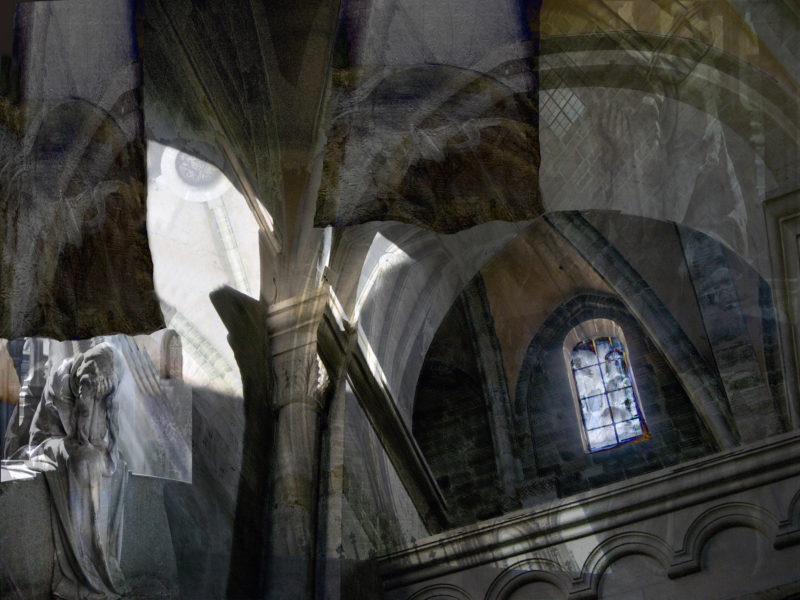
I remember the collective gasp of students in my social psychology class when they saw a movie about gender differences – often assumed to disadvantage women. They heard Ursula LeGuin, a feminist if there ever was one, hold forth on the fate of young men: across the centuries they were expendable, used as cannon fodder. The role of sacrifice – in the case of the Agnus Dei, the lamb of God, to save all of humanity, in the case of the soldier to save the fatherland – runs through almost all historical narratives like a red thread. Where runs the line, though, between the selfless lamb and the flock of dumb sheep?

Karl Jenkins’ movement Agnes Dei (music here: https://www.youtube.com/watch?v=vgvqkL4qlow) is one in a long succession of sometimes stunning compositions using the liturgical theme (and handily provided by Wikipedia.) Not the worst company….

The montage used a grieving figure from a grave side in a Paris cemetery. It struck me that I found only female figures displaying emotional distress or anguish – the men, if depicted at all, usually have their likeness, mustaches, pith helmets and all, carved in stone, or they are displayed as resting bodies. Mourning is women’s work, it looks like. After all, male display of emotions around death and dying might weaken the resolve of the next round of cannon fodder……
IMG_2136     IMG_2211    IMG_2126


Firestorm

· The Armed Man/Angry Flames & Torches ·

9 Torches A copyFreud wrote in Civilization and Its Discontents (1930), “The present cultural state of America would give us a good opportunity for studying the damage to civilization which is thus to be feared.” His enduring nightmare, that America, with its notions of Exceptionalism and Manifest Destiny, would be “gain[ing] control over the forces of nature to such an extent that with their help they would have no difficulty in exterminating one another to the last man” was made real in 1945. In August of that year atomic bombs were deployed over Hiroshima and Nagasaki, killing over 100.000 people immediately, 10s of thousands through radiation exposure later, and devastated most of the attacked cities. Current talk of “Let’s make America great again!” hints at a willingness to repeat this kind of strategic annihilation, and one wonders if and what we’ve learned from history, if anything at all; it also makes Freud seem quite prescient.

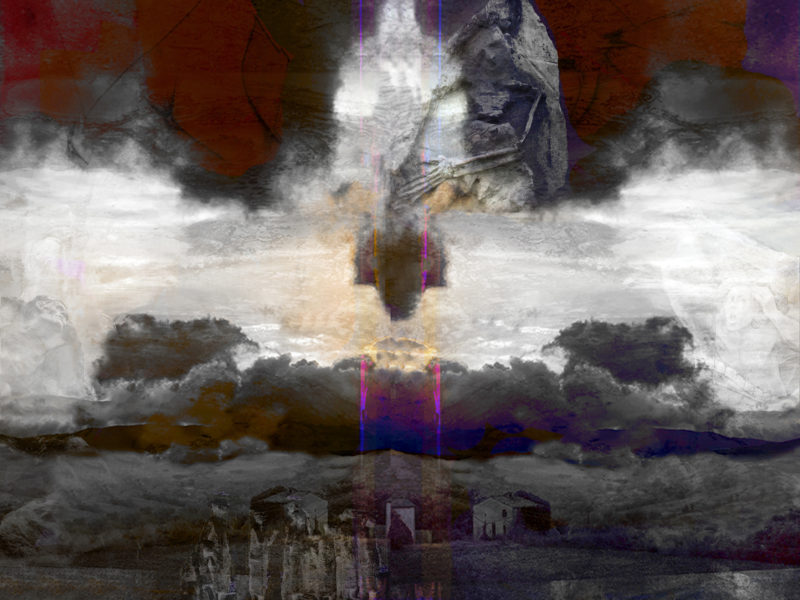
Jenkins’ The Armed Man devotes two movements to the horror caused by nuclear incendiary devices, Angry Flames (https://www.youtube.com/watch?v=Fy3K9wbHA7w) and Torches (https://www.youtube.com/watch?v=roNU_ORGTSk). I configured the landscape in the montage Angry Flames as some kind of Rohrschach depiction in reference to the Freudian analysis. I added photographs of figures from a sculpture which has an interesting history. A war memorial in Hamburg, celebrating soldiers with the slogan “Germany must live even if we have to die,” is now prominently faced with a “counter-memorial,” a sculpture by Alfre Hrdlicka that depicts the Hamburg firestorm (the largest areal bombing before Dresden and Hiroshima by allied forces) and the loss of life when concentration camp inmates were put on board of a ship that the British sank.

For Torches I used a photograph of an amazing exhibit I saw in Paris, that documented a different kind of loss of life: Prune Nourry’s Terracotta Daughters.

(http://www.prunenourry.com/en/projects/terracotta-daughters.)

The artist created over a hundred of these girls to point to selective abortion practices in Asia, which have far reaching consequences.

IMG_1765 

Käthe Kollwitz (1867 – 1945)

· The Armed Man/Kyrie Eleison ·

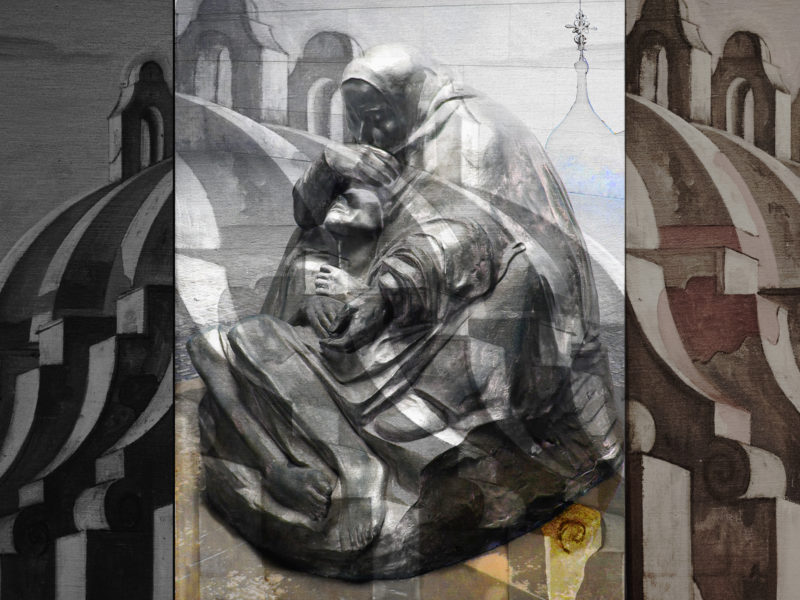
The third movement of Jenkins’ The Armed Man is called Kyrie Eleison (Lord, have Mercy on us) – music here: https://www.youtube.com/watch?v=C5BfirqTqm8.  In response to this plea I created a montage around a sculpture by Käthe Kollwitz. The sculpture depicts a grieving mother holding her fallen son and is located at the Neue Wache in Berlin, a memorial that commemorates the victims of war and tyranny http://www.visitberlin.de/en/spot/neue-wache-memorial. Kollwitz lost her own son in the first weeks of WW I in Flanders – as an underage volunteer he had needed his parents written consent to enlist. His father refused, but his mother’s declared patriotism led her to persuade him to provide the signature. She worked for 18 years after her son’s death to finish a sculpture commemorating the losses for parents – it is placed near the Flander’s grave of the soldier.

kaethe-kollwitz-damals-noch

We associate the topics of death, war, loss, poverty and parental love very much with this particular artist. Along comes a fascinating biography, Kollwitz by Yury and Sonya Winterberg http://www.randomhouse.de/Buch/Kollwitz/Yury-Winterberg/e446036.rhd, which shines new light on her life and work. New to me, anyhow. Painstaking archival work and interviews with three of her surviving grandchildren reveal an even more complex story. On the one hand, she was preoccupied with death, growing up in a household that saw three of her siblings perish young. On the other hand, she possessed an extraordinary life force, was sensual, and openly acknowledged her bisexuality. The love for her children, it is hinted in the narrative, was overbearing bordering on abuse when it came to interacting with her sons in sexualized situations. Her self-assurenedness made her a center of her social circles, and many a famous artist, including Ernst Barlach and Berthold Brecht adored her. Her membership in diverse women’ organizations can be counted as early feminist engagement.

IMG_3322

She looms large as a model for progressive political engagement – the Nazis eventually declared her art degenerate – and yet many of her most famous political posters were commissioned, with her complaining that she was “dragged” into politics. She wrote about her son’s death as a sacrifice that would be a source for creative renewal in her own work, but mourned the loss of her oldest grandson in WW II as final proof that “war is wasting the seeds of the future.” She was strong, demanding, ahead of her times and probably hard to live with. Her art work is extraordinary (over 100 self-portraits alone) and much of it a timely reminder of the ravages of war.

.katalog24

Never again war

Kunsthalle im Lipsiusbau Dresden

· Staatliche Kunstsammlungen Dresden ·

IMG_2894 copy

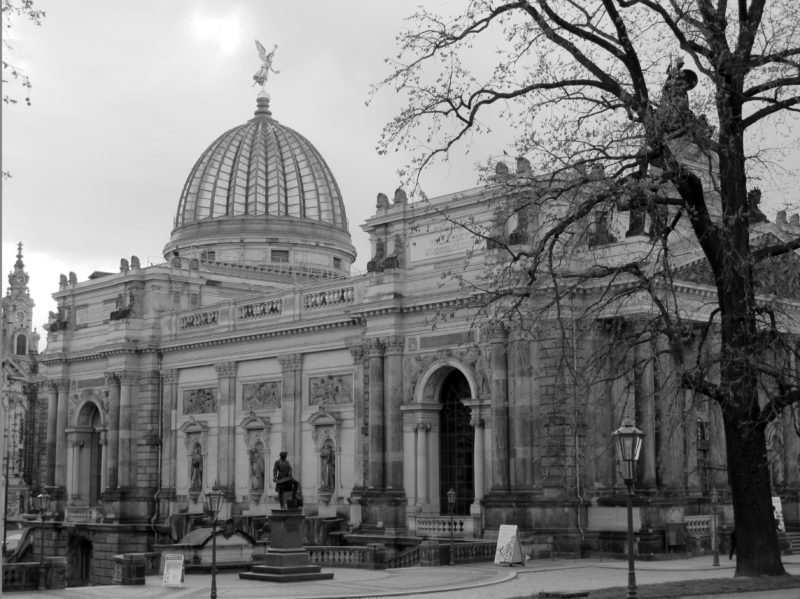
Dresden, often called”Florence at the river Elbe,” is a beautiful city, and one of contrasts. Having suffered through one of the worst allied bombing attacks of WW II which cost 25.000 lives and burnt much of its famous architecture, the old part of town is now restored and glorious. The new part of town, on the other side of the river, is vibrant and artsy.  Dresden is, however, also home to the far-right PEGIDA (Patriotic Europeans against the Islamisation of the West) movement and a stronghold of the populist party AfD (Alternative for Germany) that scored mightily in recent state elections despite (or because of) its anti-immigrant, nationalistic, and authoritarian leanings.

The upcoming exhibition in the Lipsiusbau (its dome nicknamed the lemon squeezer) is thus a timely look into some of the horrid ideas associated with neo-nazi and other right-wing movements. Surveying the non-human – On the aesthetics of racism explores how racists often tried to justify their notions with scientific arguments. http://www.skd.museum/en/special-exhibitions/surveying-the-non-human/index.html (link in english). Among other things, the project displays an as yet unexamined obsessive collection of pictures by the Dresden ethnologist and anthropologist Bernhard Struck (1888—1971) as well as pieces by Fabio Mauri and Arnold Franck. I am reminded of the fabulous Carri Mae Weems show at the Portland Art Museum some years back. Her work tackled the same issues through photography.

Since today is Yom HaShoa and anti-Semitism is alive and well in some parts of those populist movements, I am adding one of my favorite photos of the New Synagogue in Dresden. Completed in 2001, it was built on the same location as the Semper Synagogue (1839–1840) which was destroyed in 1938, during Kristallnacht. The building stands at the edge of Dresden’s old town, the latter carefully restored in all its baroque  detail, the former refusing to be a replica of what was lost (although some parts of the destroyed synagogue are incorporated into the walls.) It is a dramatically modernist building, built slightly off plumb, to remind of the traditional isolation of the Jewish community from the city.

IMG_2990 copy