Browsing Category

Literature

Giant Troubles

Some nights ago at the dinner table we once again joked about how utterly different we are from each other (you can do that safely after some 40 years of marriage.) These differences are nowhere more pronounced than in our approach to dealing with lurking disaster. Where my beloved tries to keep it out of mind until it HAS to be tackled, I like to stare the dragon in the eye well in advance, if only to communicate that he’s found a foe at eye-level… but really to prepare myself for all that might be in the wings. This attitude – rather than morbidity – is the reason why I read everything about cancer that I can get my hands on, curious about both the nature of the beast, and the nature of the medical system bent on fighting the scourge. (I’ve previously written about it from a cancer patient’s perspective here.)

Some of the most interesting writing comes from scientists who work in the field and share both of these questions; some comes from perceptive novelists who cloak their knowledge in tapestries of stories easier to comprehend. I’ve come across both types recently and thought I’d offer a summary of what I’ve learned.

Here is the good news: People live longer. Here is the bad news: geriatric populations are increasingly susceptible to cancer, and are often only diagnosed when the cancer has spread (metastatic cancer.)

Here is the good news: cancer research is laser-like focused on developing drugs that deal with this problem. Here is the bad news: we will have a market demand to the tune of 111.16 billion dollars by 2027 to treat global metastatic cancer, because the incidence of cancer, particularly breast cancer, is generally on the rise, independent of an aging population.

Here is the good news: there are more and more specialized tools aimed at spread and/or recurrence of cancer. In addition to traditional chemotherapy we have targeted chemo therapy with far fewer side effects, hormone therapy and immunotherapy. Here is the bad news: almost all of these new approaches cannot cure metastatic disease and extend life expectancy by, if you are lucky, a few years, but usually more in the ball park of months. We have not been able to eradicate the disease any more than we did over the last century, with minor exceptions, facing 10 million cancer deaths around the world each year.

It is, of course, nothing to scoff at to have more time to live – I am the last person to be casual about that. And maybe the advances in metastatic cancer research will lead to the realization of permanent remissions or even prevention, eventually. It is also understandable that a for-profit industry focusses on where the demand lies: in desperate patients’ plea for help, to the tune of $ 10.000 a month which these medications now cost in the majority of targeted approaches. Why explore ways to prevent cancer in the first place when that will affect the bottomline of an industry treating it? I guess, theoretically, you could make a fortune on selling preventative medications as well, should you be able to develop them, – never mind the favor to mankind to eradicate the scourge – but then again, people might have very different thresholds to spend money on a potential threat compared to spending money when the threat is actually consuming their bodies.

The good news: some determined scientists are nonetheless pursuing the holy grail: understanding the history of the first cell that eventually morphs into the disease. Here is a thought-provoking compilation of essays that help laypeople like me understand how the science proceeds. Azra Raza, the Chan Soon-Shiong Professor of Medicine and Director of the MDS Center at Columbia University in New York, lays out what we know about carcinogenesis, and reports on the obstacles faced by research into the way cancer comes into existence.

She describes in clear language (and delightfully poignant literary references) what cognitive biases drive medical research (independent of potent economic forces like grant money or market demands.) She explains why we are seemingly stuck in a rut, continuing to look for answers in places where we have not found them, late in the game of spreading cells. (I have been told that big pharma is now on to this, pouring a lot of money into curative or pre-causative research, contrary to her claims.)

Her suggestion is to focus instead on the pathways that first cells take before they morph into the beast that precedes the body’s breakdown, describing an “organized decay, consecutive and slow, sometimes taking years, slipping—slipping, until the crash comes,” located in one of the body’s immune cells.

Cancer can be perceived as an independent life-form. It is not a parasite because it originates in the host tissue. It is not a “normal” tissue culture cell line that has been induced to grow in vitro, already half-way to transformation. And it is not like jellyfish and other lower order species that can revert to an earlier stage of their lifecycle under stress and restart as newborns. It behaves like a new animal that arises within an animal...I propose that the fertilization step involves the fusion of a blood cell with a stressed tissue cell that initiates the murderous journey. A Giant cell is born containing opposing, conflicting, paradoxical “multitudes” within it.

Researchers who look into these cells found that they unexpectedly appeared when cells are under stress, for cancer cells brought on by chemotherapy, for example. More precisely, these giant cells are a state of cancer cell, one where cell division is paused during external attack; instead, the cell doubles or fuses its genome, protecting its DNA. When the stressor is gone, the cell reignites division and sends now more resilient progeny on their way to distant sites, more aggressively growing and invasive cancer cells – treatment-resistant metastases.

These giant cells happen under normal circumstances to protect us in times of stress and are benign. So what turns them into a malignant state? That is where research must be done – and incentivized – exploring that moment of transition and the causes that come before. (Or so it is suggested – I am not trained in oncology, so can just report what I read. )

I am not trained as a scholar of literature, either, but I do know what I like to read. And Margaret Drabble’s The Dark Flood Rising is among the best recent books capturing aging, disease and dying in not at all morose ways. In fact, it is witty, as is her wont, but also genuinely humane, and precisely observed. It had me laugh and cry in alternation. It also had me grateful for making me think about cancer not as some dire, biologically hard to understand, scientifically mysterious thing (as the medical literature does) but as a condition that requires an appropriate human response, be that determination, or patience, or courage, or humor, or tears, or …. I’ll won’t be able to list the whole repertoire. The point is, there are humanistic aspects of dealing with or learning to deal with illness that go beyond the understanding that would allow us to synthesize some miracle medication. These aspects are somewhat in our control which is the most comforting thought of all.

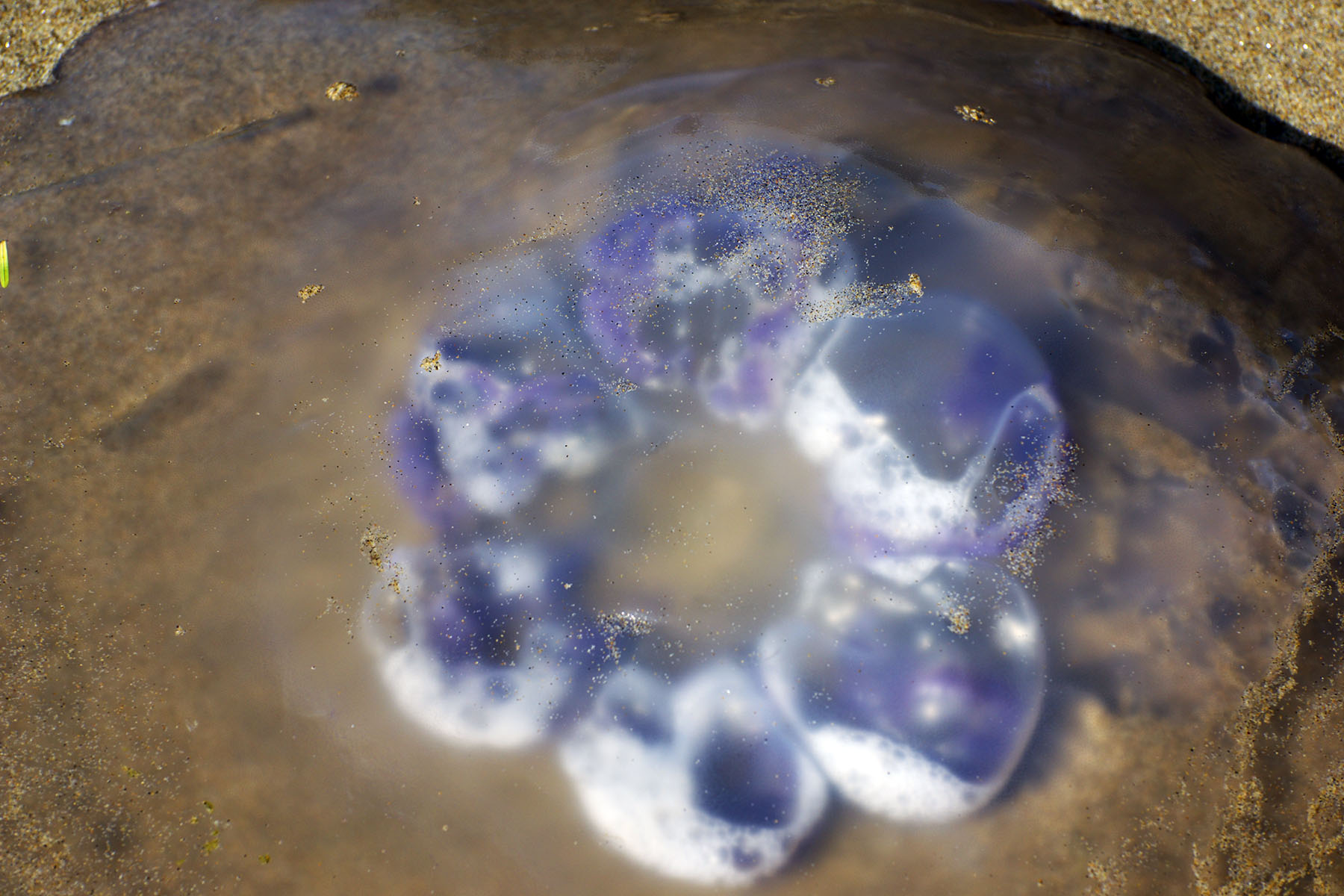
Photographs of jellyfish today, reminding me of giant cells, emphasize that blobs can contain beauty, too, not just destructive potential.

Music today is derived from a literature overview of how music affects cell growth, cell migration, proliferation, colony formation, and differentiation ability or death of cancer cells. Folks, I have no clue if these experiments are viable (although they are published in respectable medical journals.) It was just strange to read that different music has different effects. Note, these are done with cell cultures in the lab, under carefully controlled conditions, not in humans who listen to music, so it is unclear how much we can transfer anything of this to actually listening to music.

The first movement from Mozart’s Sonata for Two Pianos in D Major, KV. 488 seems not to affect some type of human breast cancer cells (MCF-7) but caused cell death (apoptosis) in another one (MDA-MD-231.)

Ligeti’s first movement of Atmospheres, on the other hand, caused significant cell death in MCF-7 cells that had ignored Mozart….

Riddle me that.

PS: Just so you know how things work around here – this is the response I got across the breakfast table to today’s musings:

So here’s part of my view of upcoming disasters or threats….

You’ve heard this stanza from me before.

From Coleridge, The Rime of the Ancient Mariner

Like one, that on a lonesome road
Doth walk in fear and dread,
 And having once turned round walks on,
 And turns no more his head;
Because he knows, a frightful fiend
Doth close behind him tread.

Satire and Drama

In lieu of actual travel I have lately been gorging on foreign films set in different continents. A slice of Africa, bits and pieces of Europe, a view of New Zealand and Korea, all available at the push of a button (Netflix and Amazon Prime, alas.)

I might have picked them for their differences in locale, but ended up contemplating them for their similarities along other dimensions, family ties being one of them. So here is my best shot at comparative movie reviews, with two discussed today, the other two in the next installment. (And if you want to watch true travel movies, here is a list.)

Let’s begin with two films from England and New Zealand, that treat the relationships between cousins and the effects of parental abandonment in very different ways while simultaneously acknowledging the lasting damage done to children’s souls.

The Pursuit of Love is a 3-part BBC adaptation of a 1945 novel by Nancy Mitford, which skewered the foibles of English gentry, a barbed satire of class and gender relations, xenophobia, and a paean to english fortitude against German War aggression. (“Utter, utter bliss,” was the book’s reception by the Daily Mail at the time.) Written and directed by Emily Mortimer, the film is visually slick time travel, surely appealing to fans of Howard’s End, or Bridgerton, or any other BBC production that revels in period costumes and an excess of upper-class decoration, even if the acting here is quite over the top. It has some tricks up its sleeves, though, one of them the incorporation of modern (pop/rock/country)music that hits the spot and another the interspersing of historical footage showing war-time conditions.

The storyline in the film focusses on two cousins who grow up together, one abandoned by her mother early in life, the other caught in an aristocratic household where education is anathema and male dominance rules. Their friendship sustains them but is also a cause for bitterness and competition since each sees in the other what they themselves lack. Clinging to fairy tale beliefs that love will rescue them – love and marriage being the only escape routes open in any case – they throw themselves blindly into fraught relationships and pay the price in respective ways. Sins of the older generation – parental abandonment among them – are reenacted by the next, and in the end women and daughters, struggling for freedom or caught in convention, all loose.

The film tries to draw attention to Mitford’s early descriptions of women’s fates in a society that punished female independence by dividing women into madonna and whores. Some insightful observations on how their wings are clipped from the start are, unfortunately, later superseded by a pat on the back to the faithful wives and mothers who stick to their lot after all. Here and here are two different mainstream reviews.

It’s eye candy for the highbrow set and was, admittedly, a pleasant diversion for this middlebrow viewer even though it lacked the biting quality of the novel. A bit of melodrama goes a long way on nights too hot to fall asleep…

Instead of binge-watching, one might as well use the time to read a biography of the Mitford sisters, since the adapted novel was a roman-à-clef, loosely based on the Mitford family constellations. There are (too) many books to choose from, depicting the choices these sisters from a minor aristocratic British family made, from going full fascist, with Hitler as wedding guest, joining communist movements, becoming novelists and journalists, running an enterprising country estate as a business that catered to historical nostalgia. I recommend Laura Thompson’s The Six – The Lives of the Mitford Sisters. It describes in detail how of the six sisters three became Nazis, one a socialist journalist after a bout with the Communist Party, one a liberal satirical novelist who informed on her Nazi sisters, and one a duchess. The psychological role played by sibling rivalry is cleverly explored in this biography.

In contrast, Cousins, a film from New Zealand directed by Ainsley Gardiner and Briar Grace Smith (who wrote the underlying novel) is one that I cannot recommend highly enough. It follows the intertwined fates of three cousins from a Maori background whose lives are upended by racism, colonialism, greed and just tragic blows of fate. “Who needs another dark story?”, you might be thinking right now, but let me assure you the darkness is balanced by light and there is a peacefulness that descends from true emotional attachment and love that buoys your belief in humankind. Well, it did for mine. It is also cinematically as lush as they come, with landscape and interiors greatly impacting the mood of the film, with none of the staged feeling that you got when contemplating yet another flower-laden British dining room, 800-thread count linen closet or fox hunt from Pursuit of Love.

The three cousins are represented by three actresses for childhood, young adulthood and older age each, and it is often hard to decide which one of the nine makes the strongest impression, they are all so glorious in how they convey their character. One of the cousins, Mata, product of a mixed marriage, is forcibly taken away from her Maori mother and deposited in an orphanage by her disappearing White father. “Adopted” by an exploitative woman, she spends her life unable to overcome her losses, eventually descending into mental illness and homelessness. She is allowed one summer away from the orphanage as a child with her extended indigenous family, bonding with two cousins who try to find her for the rest of their lives after she is forced to return to slave-like conditions. The two cousins have diverging paths as well – one escapes an arranged marriage and becomes a lawyer fighting for Maori rights and treaties, estranged from her family because of her insistence on making personal choices. The other steps into that marriage contract and ends up being the happy mother of a growing brood of children in a good relationship with her husband, preserving the land of her ancestors against multinational corporations, and eventually welcoming the abandoned cousin home when they locate her by chance.

The topic of stolen children, exploited and forced into a White culture, is, of course, timely. The issue of loss of family and loss of culture creating such pain that it leads to loss of self, as evinced in the inability of Mata to connect to reality in later life, is also a contemporary topic when you look at forced migrations and the plight of all those displaced by circumstances. The problem with stolen land and treaties is one all too familiar to American viewers as well, or should be.

But the real force in this film comes from the sources of love and caring that stretch across generations. For every brutal encounter there is an act of kindness, by strangers and family alike, for every inch of distance to the past created by Mata’s fall through time there is an act of determination to fulfill the promise once made to her: we are coming for you to bring you home. For every competitive streak between the other two cousins, there is an act of solidarity when it comes to prop up a united front against evil. You leave with a vision of healing, not literally displayed but offered as a possible act of imagination. It will stay with me for a long time.

Music today is from NZ composer/singer Warren Maxwell who wrote the score for the film.

Photographs hark back to the satire’s style of “more is more” when it comes to flowers (as well as acting.) Some pretty English roses among them, photographed in years before the drought descended.

Where next?

This week I reported on the willingness of large swaths of the population to blind themselves against the facts of science for reasons of tribal loyalty. I am afraid I have to add to that report describing the willingness of many other people to remain blind to the futility of voting rights legislation. Democrats assume that if the voting rights bills in question are thoughtful and fair (and miraculously passed, a whole other story,) they will not be rejected by the Supreme Court. This, of course, is a belief born out of despair over how far we’ve sunk, and in no ways supported by anything we know to be true of this Court – read the not-so-fine print of the decisions of the last years. A concise and non-technical analysis of the status quo of voting rights and the future of the American experiment can be found here. The essay is a short, worthwhile read, ending with the observation that nothing but an expansion of the Supreme Court is potentially going to rescue our democracy.

I am bringing all this up because I have had churning reactions to two books I read this week, one that came highly recommended and that I intensely disliked (why, so often?) and another that I chanced upon and devoured. They both made me think about what affects change and the scale of personal involvement, from ethereal withdrawal into a universe of feeling (if that) to the justification of taking personal action, violence included.

What are you going Through by Sigrid Nunez and White Tears by Hari Kunzru have one thing in common: they both integrate a systemic conflict, the climate crisis for the former, racism and exploitation of Blacks for the latter, into the narrative.

Nunez uses it as a cardboard foil for her larger subject of presence or absence of hope and empathic attachment. Her story is told by a woman who is asked by a distant friend facing terminal cancer to accompany her on her last weeks before actively ending her life with pills. The narrator is all over the map, in a dithery fashion mostly describing other women, from close friends and relatives to mere acquaintances or public figures in faintly, irritatingly misogynistic ways. She herself remains a stick figure, not imbued with any reason for us to root for her, least of all a deplorable tendency to name drop literary greats, with paragraphs of precise quotations.The only names, by the way, offered at all. The story’s inhabitants are all nameless, a successful distancing device. Well, that’s how I reacted. Others disagree (the linked review is typical of the praise the novel received.) In fact, Nunez conveys less a woman racked by feelings – the break-up with an ex-husband, a life without children, the newly blossoming attachment to her friend overshadowed by the impending suicide – than a woman trying on those feelings for size to see how they can be told as stories. An eternal distancing, from the fragility of close human interactions to the large scale one of the intensity of the climate threat. Drifting with willful oblivion along in the wake of death.

Kunzru’s novel is the polar opposite. The characters are so vividly drawn you might as well have met them in real life, even though for most of us they live in a realm somewhat outside our comfortable White middle-class existence. Two young people embark on a search for musical authenticity that leads one of them from New York City to the South, get into huge problems along the way, drawn into events of the past that reverberate into the present and future. The story evolves in ways that manage to surprise and shock, and hook you onto empathizing with the narrator(s) in a way that lures you into a complete understanding of their decisions even thought these eventually include unjustifiable acts.

Bits of magic realism seamlessly fold into a contemporary setting. The deeper issue, the systemic exploitation of Blacks through slavery, prison labor and a music industry commodifying traditional Black music, emerge as a core challenge to our thinking, rather than a foil. It is a novel that explores the toxicity of White appropriation, of the systemic degradation of anything Black – which is of course why it links back to my musings at the beginning of this blog on the chances of a voting right act to come into existence as one of the many ways needed to change race relations. Every page contains complex psychological material, an invitation to think difficult things through while simultaneously offering a grand mystery and real action, compared to the flat vignettes of observed fates in the first book. Here is an insightful review that provides you with details of the narrative.

Neither protagonist, the passive narrator of Nunez’ novel, suffused by diffuse reactions to the world around her, floating in a private universe of sadness, or the active protagonist of Kunzru’s tale, driven into mad acts by a revenge fantasy fed by assumed guilt and responsibility, can be our role models. The question of personal agency and efficacy towards bringing about change, if “only” to the size of the Supreme Court, remains unresolved. More books to read. And this.

Music today is the Blues, given its huge role it plays in White Tears. Photographs from South Carolina, providing a glimpse of the South now.

See to it!

“Ach Gottchen,”(Ohhhh, little God) my mother would cry when I’d appear tear-streaked in the door. Not clear if the diminutive name of a power she steadfastly believed to be almighty was meant to appease that power, or if it implied a call for mercy. “Ach Kindchen,” (Ohhhh, little child) my atheist father would sigh with quivering helplessness before turning away. Both tender utterings, pointing to a higher agent or infantilizing, respectively, did, of course, nothing to combat my sense of powerlessness.

I could almost hear their voices saying these words this week when I felt overwhelmed by the climate news, starting with the fires here, the drought, the floods in Germany with scores dead and many more missing, the seemingly futile resistance in the struggles against pipe lines, and so much more. What do you do when climate crisis depression hits, or any other kind of upset over the world’s fate?

Someone mentioned Octavia Butler‘s work as an anti-dote. The African-American author (1947 – 2006) was groundbreaking in many ways, not least that she was the first Back woman to succeed in the male-dominated field of Science Fiction. Recipient of the MacArthur “Genius” Grant and the PEN West Lifetime Achievement Award, among others, she wrote prescient novels about global warming, Black injustice and misogyny before her untimely death from a fall in 2006.

I must confess that I had trouble warming up to her tales, the Parable of the Sower and the Parable of the Talents in the early 1990s, trying to juggle small children, teaching undergraduates, doing research, and translating a book. There was something too close for comfort, with its setting in a drought-stricken Los Angeles, CA, the advent of authoritarian rulers, the victimization of non-Whites, and the expressed belief that some sort of religion – Earthseed, which held many a Christian tenet – could be of help to the resistance. I liked my science fiction then in the worlds of Gene Wolf and, as you all know, Ursula LeGuin, worlds that were sufficiently removed (if also true mirrors) that they gave my high anxiety some breathing space.

Butler’s parabels’ current resurgence is driven, however, not just by her prescient description of our country’s developments and challenges. Her protagonist is a young woman who believes in change, believes that G-d is change, and that we can shape and influence pragmatically what is around us, be agents of change ourselves. There is a sense of “outsized resolve,” as an essay in the New Yorker put it, a belief in pragmatic solutions and the will to bring them about that works like an anti-depressant.

The heroine’s resolve echoes that of the author, who grew up in poverty, worked multiple low-level jobs during her decades of writing, and who chose a field, Afrofuturism, that had its own obvious challenges.

Over the decades, as she was writing her most popular novel, “Kindred,” and two highly regarded series—her five-part Patternist books and her Xenogenesis trilogy—Butler was filling personal journals with affirming mantras. “I am a bestselling writer,” one entry, dated 1975, reads. “I write bestselling books.” She closes: “So be it! See to it!” 

A short autobiographical essay that describes her way of looking at and fighting for things, a wonderful, moving read about positive obsession, can be found here.

For those who want a perceptive and humorous miniature version, read this poem by another successful Sci-Fi writer, Patrick O’Leary.

Gene Wolfe, Ursula K. LeGuin, Octavia E. Butler and I are sitting on a bench.

Gene is to my right fiddling around with his cane.

Ursula — or “Ullyses Kingfisher” as I like to call her, is smoking a pipe. (We’ve never met.)

Ms Butler is sitting way down at the end.

I realize that they are dead and this is a dream.

But I seize the moment.

I can now ask them the one question I’ve wondered about for years.

“Gene?”

He raises an unruly eyebrow at me, his handlebar droops, unimpressed.

“When you were alive who did you think was the best writer in the world?”

Gene full-faces me and raises the other eyebrow.

I have never been so insulted in my life.

A waft of cannabis pulls me to my left. “How about you, UK?”

“Don’t call me U U!”

“I did not call you: you you!”

“You did it again!”

“Come on! Who was the best?”

“Who gives a fuck?” She points. “Look at that hawk!”

I look. Perfectly flat slate of water to the horizon. Total Bergman.

When I turn back, Ursula is gone.

I look to my right. Gene left his cane. It makes that face at me.

I turn to Octavia who is sitting like a blue rock in a river.

“Estelle?”

“Me,” she says.

Which brings us back to the beginning. The best way to fight the climate- or other blues is by clinging to, or if need be conjuring up, a sense of agency. By forcing ourselves to be engaged as agents of change in whatever way we do it best, writing blogs included…, or calling politicians, or donating money, or all the other things you people excel in. See to it.

And if that doesn’t work, there is always ice cream.

Photographs are of meadow patterns from this week.

Music (Lemonade by Beyonce) is influenced by Octavia Butler as well, covering her other great topic, the Black female body.

Intersections

During the days of apocalyptic heat I vegetated on the sofa in the basement, reading books on my Kindle. Nothing too demanding, given the melting brain. One was A.S. Byatt’s elegant, lyrical re-telling of Nordic myths of the past, Ragnarok – The End of the Gods, set in Great Britain during the second world war. The other was fantasy writer Elizabeth Knox’s passionate weaving of an alternate reality, The Absolute Book, centered around the preservation of language, books and libraries as a tool for knowledge acquisition. Both melded history with reality, envisioned futuristic possibilities within or outside of reality.

Both have found high acclaim (Byatt here, Knox here) which is why they landed on my lap in the first place. I have, as my regular readers know, a soft spot for A.S. Byatt, given her lasting passion to weave every botanical name there ever was into her writing, and her willingness to tolerate shades of grey when it comes to people’s characters, refraining from black an white, either good or bad, judgements. I have only recently discovered Elizabeth Knox, impressed by her political engagement clothed in smart, imaginative story telling, although frequently heavy on the gore, be warned.

At times, when I opened the Kindle, it took me multiple sentences to figure out which of the two I had landed on. They both meandered between literary materials and reality, a topic that has drawn my attention in other contexts as well.

For one, there are new attempts to teach history by combining literary efforts – in this particular case a comic book about a slave turned superhero – with augmented reality, in form of archival photographs. Jupiter Invincible was a joint project by filmmaker and publisher Ram Devineni who had the idea to use a modern form of story telling to teach about the history of slavery in this country, Pulitzer Prize winning poet Yusef Komunyakaa who was roped in as a writer, and Ashley A. Woods who was the artist providing the drawings. A powerhouse, this trio. The reader can constantly switch between the artwork and the reality-based counterparts in form of the historic photographs made available by the Library of Congress. During a time where multiple states consider prohibiting the teaching of our history as was in our schools, comic books might come to the rescue – although one wonders when book banning reaches those as well…

Secondly, I came across this mind-boggling story of Project Cassandra. German university researchers were asked to use their expertise to help the German defense ministry predict future conflicts by analyzing – yes, novels. Academia and military cooperation is something known from the sciences (researcher studying visual perception, for example, are regularly funded by the military in this country,) but literary analysis executed by profs of comparative literature? Public reaction ran from disbelief to scorn, something familiar to all Cassandras across history, of course.

Prof. Juergen Wertheimer and his team believe that novelists are modern-day Cassandras, operating with heightened sensitivity to environmental and social contextual cues “on a plane that is both objective and subjective.” Of interest for the project are not the kind of technological predictions that are often found in science fiction, from weapons to telemetric search tools, like facial recognition soft ware. Instead the focus is on novels that act as seismographs for societal tensions, describing thinly veiled conflicts that could explode in real life, using as an analytic tool, among others, contemporary reactions to those novels (awards, intentional distribution, but also book banning or authors sent packing to exile.) As a test of the viability of the approach, the military asked the team to demonstrate how the war in Kosovo and the rise of Boko Haram could have been predicted through the study of literary texts, which they successfully did.

Spoiler alert – the project has been canceled by the German military, despite successful predictions of a future conflict at the time of their research – the 2020 war in Nagorno-Karabakh, an enclave of Azerbaijan populated by ethnic Armenians (a war that served geo-political interests of both Turkey and Russia.) However, “the German interior ministry has commissioned the team to investigate the hidden scars of the country’s reunification process. There have been talks with the EU representative for foreign affairs and security policy, Josep Borrell, about docking Cassandra in Brussels. Wertheimer says he is interested in applying his method to analyze geopolitical tensions in Ukraine, Lithuania and Belarus.” So we might hear more of them, after all.

I guess I’ll refrain from re-reading a HandMaid’s Tale and go directly to a documentary about reality unfolding along the lines of the novel’s visions: Welcome to Chechnya.

Or I go and water what remains of the garden after the sun torched it, trying to forget the novels I have already read about the consequences of climate change…. here is the list.

And here is Jessye Norman as Cassandra in Les Troyens.

Photographs are obviously showing the harm done last week. Welcome back to the realms of pessimistic blogging…..

The Beauty of Resonance

I know it’s not fair to sing the praises of a new book non-German speakers won’t yet have access to. Helga Schubert‘s Vom Aufstehen (On Getting up) has been consuming my thoughts, eliciting memories that I had not held in consciousness for maybe half a century. We can share, though, the general considerations of what makes some books resonate, while others don’t.

The collection of stories tells the story of the author’s life in Germany after the war. Schubert was born in 1940, shortly before her father was killed in action, in his 20s. Her mother, herself probably traumatized by all that war, flight, poverty and widowhood imposed, was not the ideal mother, distant and punitive in alternation. A childhood was spent moving, from town to town, school to school, until they settled in Berlin, eventually imprisoned in its Eastern part behind the wall. The author was a practicing psychotherapist for many years before her writing career took off, despite GDR restrictions.

I grew up in West Germany, a decade or so later, but many of the details the author describes rang absolutely true for my own childhood, the constant geographic displacement included, as well as the reliably offered baked treats from grandparents in times when sweet stuff was still rare. She had me with the sentence: “I saw too many tears as a child.” The crying adults were really a hallmark of post-war childhood, decades before the term Post Traumatic Stress Disorder was conceived, much less popularized. As was the unwillingness or inability to explain the cause for the emotional distress and/or emotional distance, a silence that left children forever searching in themselves for possible transgressions.

I dissolved when I read her repeated assertions: “Alles gut.”(All good.) It was an eternal mantra in my own life, uttered by comforting adults, probably in the hopes that if said out loud often enough, it would come true. As a stand-in for “calm down,” “don’t worry,” ” all is well,” “nothing to be done,” or “not your problem,” it was the underlying melody I had hummed to me when faced with misery or fear, my own and others’.

Reading about something that you are quite familiar with can resonate in one of two ways – if it’s depicted badly you feel particular scorn, if it is represented well your brain and heart react with waves of recognition, you are moved as a reader, and quite literally transported back as an experiencer. It is a different feeling or cognition from when you read – equally important – about things/places/times that you know nothing about but are now invited and exposed to, learning along the way.

It is all the more effective if the language contains no pathos, no flowery formulations, but consists instead of Sachlichkeit, a kind of dispassionate objectivity, or, as someone said when Schubert received last year’s Ingeborg Bachmann Prize, one of the highest literary honors for works written in German, when the writing is done with gentle insistence. Getting up is not just the theme of this story collection, the willingness to leave the realms of sleep to face the difficulties of the day. It is also an attitude towards life in general, quietly described, to get back on your feet when you’ve been thrown down, loss after loss or deprivation, for many of the post-war generation.

— Alles gut. —

And speaking of language and resonance – the other stimulating thing I read this week might be of interest to you as well, and is certainly accessible in English. Francine Prose has another thought-provoking essay on the difference between men and women writers, their language, their acceptance into the canon of literature, their (dis)proportional selection for awards, and the gendered differences among their readers. How can you not delve into Scent of a woman’s Ink – Are women writers really inferior? with urgent prayers that she comes down on the right answer after such a nasty title? (Spoiler alert, she does. See below.)

In the end, of course, it’s pointless to characterize, categorize, and value writing according to its author’s gender, or to claim that women writers fixate on everything that irritates gynophobes about our sex. The best writing has as little to do with gender as it does with nationality or with the circumscriptions of time…… there is no male or female language, only the truthful or fake, the precise or vague, the inspired or the pedestrian…..The only distinction that will matter will be between good and bad writing.

Now, that resonates!

As does this quintessential German symphony by Schumann.

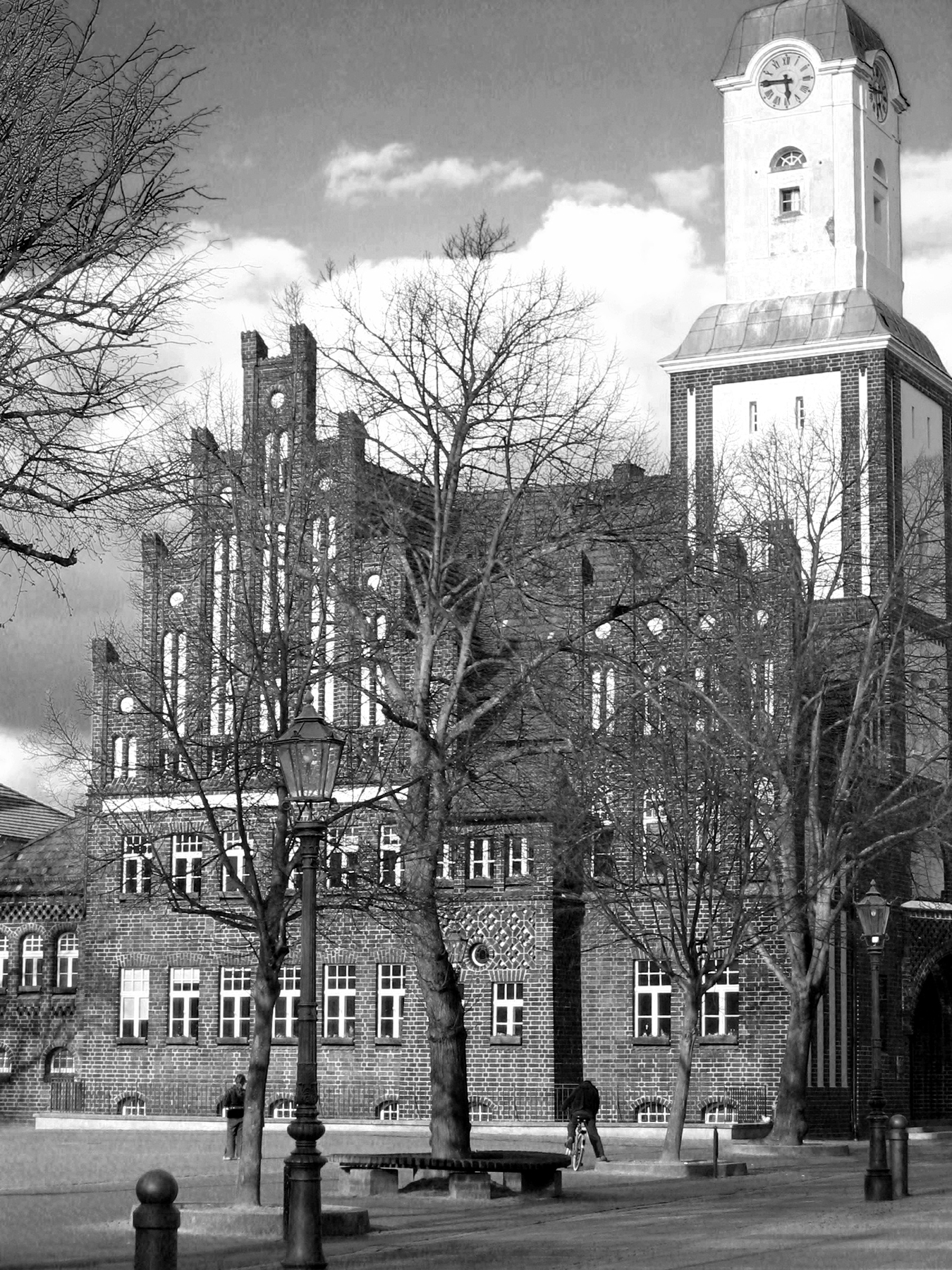
Photographs are from the German state Mecklenburg-Pommern some 15 years ago, where Schubert lives in an artist colony close to Schwerin.

Mismatch

“Worth watching for the cast (period drama heaven), and the bonnets and cloaks and corsets and all the rest, but it ultimately fails to deliver where it most matters.”…. “Effie Gray can effie off.

My kind of movie review.

Yup, I did watch Effie Gray on Netflix over the weekend. Another wasted hour plus of my life, though not completely without pleasure given the visual splendor of the scenery in Scotland and Venice, of all places, and the magic of whoever was responsible for costumes.

Or maybe not totally wasted. It did make me think how intelligent people like Emma Thompson (I’m a fan,) who wrote the script and also plays a supporting role in the movie (with more facial expressions in her short appearances than Dakota Fanning, our heroine, musters in the entire film – come to think of it, she had 2, one with tears, one without) manage to ignore the deeper truth while fixating on one that fits with the Zeitgeist.

Ok, that was too long a sentence. Let me be more succinct. Effie Gray (1828 – 1897) was the love interest – at age 12 – of noted art critic, writer and complex human being John Ruskin (1819 – 1900.) Married to him when she was 19. Rejected by him in all and every aspect of marriage for the next 6 years. She rails against his parents who have an unhealthy hold over him (they were first cousins who married each other), and a Victorian-era establishment that tells women they have to accept their lot. She risks the downfall of her bankrupt parents who are dependent on Ruskin’s generosity, and insists on the passivity of a meek adorer, the painter Millais – eventually, in one big feminist swoop she fights for the annulment of the marriage due to her husband’s unwillingness to consummate it.

Success! Against all odds! (Eventually she marries Millais and has 8 children with him and manages his career quite successfully, even getting back into the good graces of the Queen. We are not granted viewing the happy ending in the movie. Nor the comeuppance awaiting Ruskin, either. The movie pretty much bombed, needless to say.)

The whole marriage dissolution was a huge scandal in its time, but the film provides only subtle hints, if that, at what was going on, so little spark in any of the characters, that you wonder what the fuss was all about. A young woman putting her foot down, when most didn’t? Ok.

The problem could be solved by focusing on the real center of the whole debacle – Ruskin – but we don’t want to give much more time to dead white males, do we? So we cast about some pseudo-Freudian hints (his mother gives her grown-up son a bath/ he flees the room when seeing an adult female naked for the first time in his life/ he takes a creepy interest in a 10-year old young sister, etc.) and then celebrate Effie’s courage.

Ruskin’s marriage cannot be understood outside of the context that, after Gray left him, he fell in love, truly, deeply, again with another child, this time aged 9, Rose La Touche. He proposed to her when she turned 18, she had him wait for 3 more years, and then refused. Her early death a few years later threw him into mental illness and steep decline. The whole topic of idealized purity and virginity by a repressed man in repressive times, his longing obsessively channeled into his admiration and support for pre-Raphaelite painting style, and later into religious conversions, would explain so much more than just being depicted as an emotionally frigid villain who is turned off by his wife’s pubic hair.

The controversy over potential pedophilia – biographers and critics at least agree he did no engage in sexual relations with children or, for that matter, anyone else, – distracts from the intellectual riches of the man, also not exactly spelled out in the film. Ruskin wrote hundreds of essays and books, breaking ground both with art criticism and later with radical views on political economy and social reform. He was revered by the Greats of his time, from Tolstoy to Proust to Gandhi, from T.S.Eliot to Ezra Pound; his work influenced Le Corbusier and Gropius, and more painters than I can list. His engagement for workers’ rights (though insisting on continued hierarchical structures of society) was quite progressive.

Not that the courage of the historical Effie Gray shouldn’t be admired. But the complexity of the psychological and societal interactions cannot and should not be reduced to what we are served here.

Should have read a book about Ruskin or Gray instead. Here are some to choose from – take your pick.

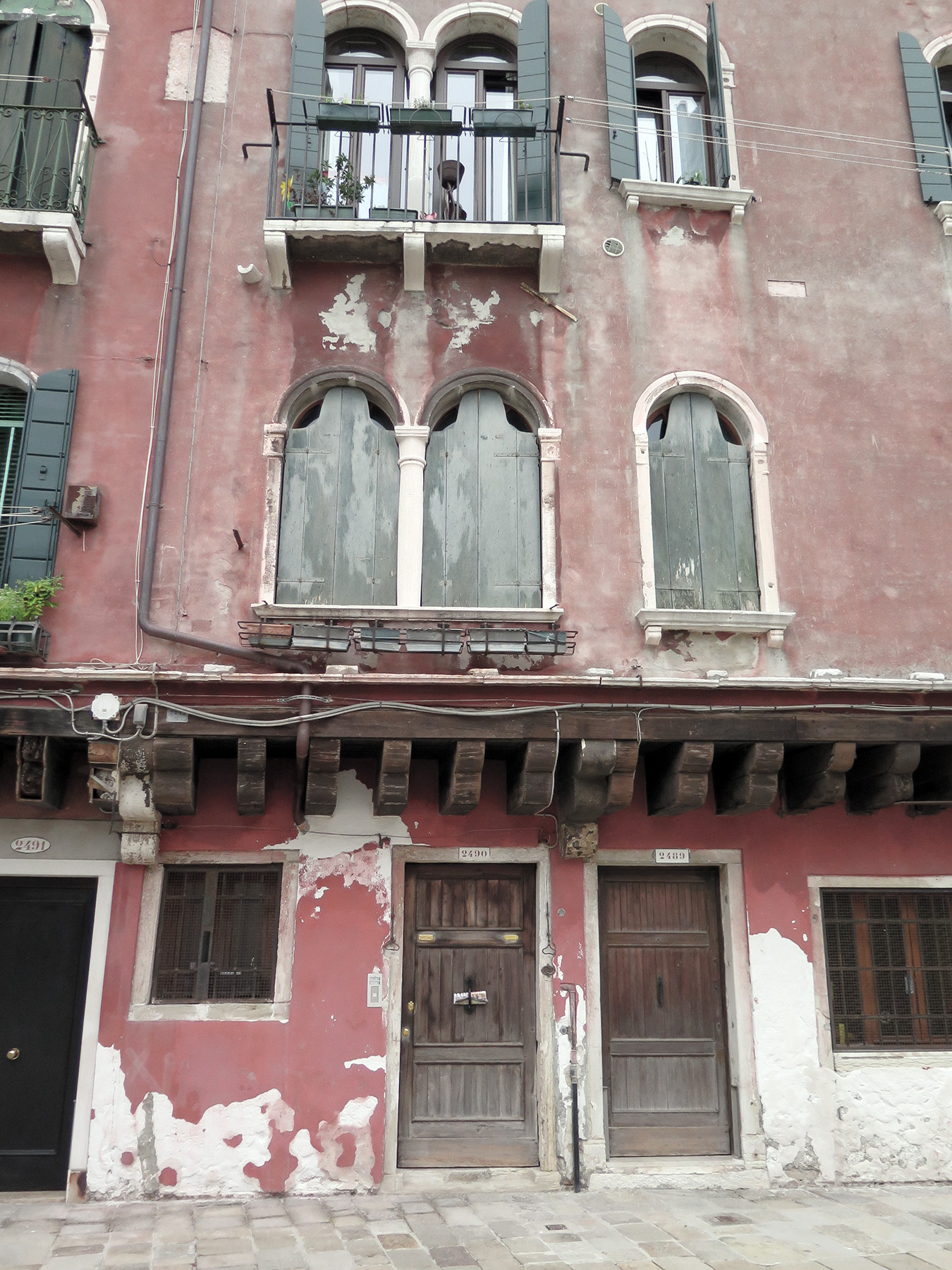
Photographs from Venice since they show some of the same views from the movie. Or maybe the building look all alike…..

Millais’s painting of the death of Ophelia from Hamlet is one of the most famous Pre-Raphaelite works. The first music embracing Shakespeare that came to mind was Mendelssohn’s Midsummer Night’s Dream. Here is the overture, composed ca. 25 years before the painting.

One of my Venice montages (2015)

Re-distribution

There it was again. Bobbing for seconds above the water, then disappearing, leaving a bunch of seagulls screaming in its wake. The head, then the rump of a sea lion, about 100 miles upstream from where it was supposed to be, surfacing as little speck in front of me in the Willamette river yesterday.

Sea lions are driven upriver by hunger, and find a veritable feast in salmon that return to their spawning grounds. To protect the fish whose numbers are in dire decline due to human intervention, people now kill the sea lions, whose numbers are on the rise, due to human intervention.

“Sea-lion populations were once declining, too, but they have rebounded under the Marine Mammal Protection Act. Such is the challenge for humans trying to manage vast, interconnected ecosystems. Put a thumb on one part of the scale, and something somewhere else goes out of whack. Try to correct that, and you create another problem. Eventually, you end up with a policy of fisheries managers killing sea lions.” (Ref.)

Walking downstream, my thoughts stayed on hunger. A passage from the book I am currently reading, Tyll by Daniel Kehlmann, had uncomfortably lodged in my brain. It described a man condemned to die for witchcraft having the first real meal ever – soup, meat, cake – as his last meal. He realizes then that he has been hungry all his life with no exception, an awarenesses only revealed in the hours before his church tribunal – imposed execution.

Put a thumb on one part of the scale, and something somewhere else goes out of whack. Set in early 17th century Europe, in the wake of the disastrous 30 Years’ war (1618- 1648), the novel weaves a tale with the help of its protagonist, the trickster Tyll Ulenspiegel (Till Eulenspiegel,) that draws us deeply into a world of hunger, catastrophe, superstition, religious fervor and conspiracy theories. In some ways, one might argue, not quite unlike our own.

It was Emperor Ferdinand II, a staunch Catholic, who put his thumb on the scale, trying to force his religion on the uneasy detente of Europeans states that had emerged after the upheavals of the Reformation. Hell ensued, and as with all catastrophes in human history, drove people into ever cruel and persecutory forms of thinking and behavior, seeking salvation in authority, often church-associated, and scape goats often linked to the devil and magic.

Daniel Kehlmann’s Measuring the World, a small novel linking the 19th century explorer and mathematician Alexander von Humboldt and Carl Friedrich Gauss respectively, was a literary sensation. When it appeared in 2006, it replaced Harry Potter and Dan Brown from the charts in Germany, no small feat for a historical novel. It had to do something right, given that it elicited major praise across the literary reviews of the globe and major condemnation by the folks at the American Mathematical Society.

The book delivered easy-access, colorfully wrapped, inventively speculated bites of historical facts. You felt smarter afterwards without having to stretch your brain all too much. Tyll, I have to say, is much different. Although it echoes Kehlmann’s earlier writing with its reliance on wit and comical relief, it is much darker, much more opaque, and in some ways much smarter in its subtle ways of drawing parallels between a world from the past and our own. It makes your brain work, while your heart beats faster, more defensively.

A smart review in The New Yorker spells out the focus on magic and survival. It links to historical views of Tyll Ulenspiegel as “a dangerous vagrant, a folk hero, a journeyman magician, a bawdy circus performer, a jester and prankster who, like the Shakespearean Fool, recklessly needled those in power into looking honestly at themselves.” It also provides a perceptive enumeration of all the interesting characters populating the novel, testament to the author’s depth and breadth at this go-around, since historical sources to fall back on are much sparser.

My own reading was hooked more by the narrative line throughout the book of how unequal distribution of riches and power – from the village level to the international state players, the intra-religion conflicts to those between world religions, between emerging scientific rationality and religion-fervored superstition – affect human behavior and its psychological consequences.

Hunger creates catastrophe, a hunger driven by the inhuman conditions of a world divided into those who hold the goods and those who fight for daily survival. Without giving away too much, the small child Tyll, during a traumatic event, is driven by hunger to sacrifice the only thing he is attached to. The psychological consequences forcibly stamp out what we call conscience. Tyll, for no fault of his own, morphs into an amoral and untrustworthy hero, so vividly imagined and described that you see the world through his eyes, and blanche.

How many children are driven by hunger, by daily experience of unfairness and injustice, into life paths that end in catastrophe? Finding the escape as a jester (or a tycoon, a rap star or a sports hero) is the exception to the rule, thus making it into the canon of cautionary or triumphant tales, I gather. Well, here is one number: 13.9 million children in the US alone lived in a household characterized by child food insecurity as of late June. School lunch programs were already struggling to meet rising demand before the pandemic. With COVID-19 now keeping children out of school, many don’t have access to school lunches at all. (Ref.) And we don’t even know the dark numbers, or what it will look like when people start to be evicted from their homes by the end of the year. Nor can we wrap our minds around the likely numbers in even poorer parts of the world.

And no Willamette to fish from…..

Time to think seriously about forms of re-distribution.

Writing with a Crystal Vision.

Instead of a poem I am posting a short essay today, found here, in Vanity Fair of all places, a publication that has soared lately with progressive editorial decisions. My choice is not coincidental. Kiese Laymon‘s books, Heavy – An American Memoir, and How to Slowly Kill Yourself and Others in America, an amazing collection of essays, are already wrapped on my desk, waiting to be delivered come Hannukah and Christmas. (Note the website link offers alternatives to Amazon: Black-owned bookstores.)

Laymon’s descriptions bring us to places located within our own country yet utterly foreign to the privileged existence. They educate and enchant with a brilliant mind, and a gift for story-telling that matches the greats in the literary history of this country. Crystal vision originally referred to hippies or a free spirit doing their thing with the crystals; I like to think of his writing as a gaze penetrating through the opaqueness of the glass, willing a view into clarity.

I also was captured by the video mentioned in the essay below, when it first appeared on my feed, soon to burst into variations across the globe. I knew the Fleetwood Mac song by heart all those decades ago…) That explains today’s musical choice. Photography covers street performers and musicians in Louisiana since I never made it to Mississippi.

Here is the essay:

Now here we go again, we see the crystal visions.

BY KIESE MAKEBA LAYMON

Early this morning, my mailman read me a story. Two stories actually. I met my mailman, Shawn, in July. While sitting on my porch, Shawn had walked up and asked if Biggie Smalls was my favorite MC. Before I could answer, Shawn said he noticed the portrait of Biggie in my sunroom. Shawn placed my delivery on the steps and asked why I had so many books delivered. I told Shawn I was a teacher and writer. Shawn told me he’d never taught but that he was a writer too. I sat out on that porch listening to Shawn rap one and a half songs about his “old life” in Kansas City and recite the synopses of two projects he needed to finish.

“I’m not sure if they’re screenplays or novels or short stories,” he told me.

This morning, I listened over speakerphone as Shawn read the first five handwritten pages of the two stories he started on my porch. I lay on my bed, the back of my head buried deep into a down pillow that 10 minutes earlier I held like a soft someone I hoped would not leave. I never dreamed that my mailman asking me about the most effective use of third-person point of view would be what pleasure on a summer Sunday morning felt like.

Like so many of my friends, my past eight months have been spent dodging death, mourning the dead, creating art, and loving Black people. I’ve lingered in socially distant conversations with strangers. I’ve cried and laughed at what made me cry and laugh. I’ve made recipeless meals that were so nasty, all I could do was giggle in the middle of every bite. I’ve tenderly touched parts of my body I’d forgotten. I’ve found that pulling the hairs out of my corona beard is actually soothing. I’ve reread, rewritten, revised. I’ve done all of this not simply in the hopes of feeling good, but because I long to feel less like we are going to die tomorrow.

I am a Black southern writer from Mississippi. That is my superpower. Aloneness is our fuel. Loneliness our fire. But this, whatever this is, hurts in a new way. Folks across the political spectrum have talked a lot about normalcy this year, prognosticating when and how we’ll get back to it. In response, there have been heaps of brilliant essays, speeches, and webinars about how the obliteration of an inequitable normal is the first step in creating a place where abusers of power are held accountable and the vulnerable actually have equitable access to healthy choices and first, second, and third chances.

When this new normal is created or accepted, I wonder what will happen to sentimentality—that gorgeous monster James Baldwin called the ostentatious parading of excessive and spurious emotion, the mark of dishonesty—in art, artists, and the audiences who give us life. How will we distinguish what feels good from what is supposed to feel good when all of our skies are orange and every stranger’s touch is a violation?

After not having touched another human for over three months, the night before I talked with Shawn, I drove to one of the only restaurants in town that still only offers curbside service. I touched the finger of a masked woman who brought Thai fried rice with tofu level 4 to my truck. I tipped her as much as the meal costs and thanked her for committing to curbside. She put the tip in her pocket and thanked me for committing to her restaurant. There’s a sentimental version of this story where, exploitation be damned, we both wait until we are out of each other’s sight to clean our hands, take off our masks and nod our heads slowly up and down at the grit, grind, and grandeur of Americans.

I did not live that version of the story. The kind woman who accepted my money went directly from my truck to the car next to me. I cried alone in my truck.

Later that night, I saw that someone sent me a clip of a brother who goes by the name of doggface208 gliding on a skateboard from the highway on-ramp with a half-drunk 64-ounce bottle of Ocean Spray Cran-Raspberry juice in one hand and a phone recording himself in the other. Sixteen seconds into the video, doggface208 bends at the waist and sings into the air. I watched the clip a second time with sound, and everything changed. I notice doggface208’s familiar nod to us, and really him, is so in the pocket of the song.

As Stevie Nicks sings, “Now here we go again, you say you want your freedom,” I notice trucks, factories, and two tattooed feathers behind doggface208’s ear. I see yellow and white lines marking the margins of the highway. I see how baggy and plush his gray sweatshirt is. I notice the familiar way he smacks his lips, relishing the punchy sweetness.

I feel, with every ounce of joy in my body, doggface208’s acceptance of fear and joy when he bends and lip-synchs the lyrics, “It’s only right that you should play the way you feel it.…” I’d heard, and loved, Fleetwood Mac’s “Dreams” thousands of times, but I’d never felt the freedom in loneliness I felt when watching doggface208’s TikTok.

The video didn’t make me forget that many of us are dying, dead, or mourning. The clip gave me another portal of entry into pleasure and movement. Doggface208 bended, and really blended, my gendered, raced, classed, and placed expectations of revolutionary desire, and art.

“But listen carefully to the sound of your loneliness,” is the next line of the song we do not hear.

Three mornings later, I am sitting in front of a smudged computer screen. Sixty-eight mostly Black high school students from Baltimore’s City Neighbors High School have invited me into what in 2020 we call a classroom. I am expected to read a chapter from my new book and teach the young people about the multiple uses of point of view in narrative art. I do not want to do what is expected of me because what is expected of me will not feel good to anyone.

I ask the students if they’d rather talk about fear and joy and concrete language. The only rule of the exercise is there are no abstractions allowed.

Two hours later, my computer, our classroom, is closed.

I am on my knees wondering why I am energized, satisfied, but not sobbing. Sixty-eight young people from Baltimore did what our geriatric presidential candidates and moderator could not do the night before. They used word patterns they’d never used. They talked freshly about fear of isolation. They collectively unraveled how capitalism encourages a speed that makes love, pleasure, and actual contemplation nearly impossible. They wondered why school didn’t teach them how to gracefully lose and graciously win. They made critiques of the nation and critiques of themselves. They listened to each other toe the thinnest of lines between yearning for pleasure and aching for escape. They accepted that they are worthy of the most exquisite joy. They argued vigorously about the ethics of seeking pleasure at the expense of essential workers, like many of their parents, who put their lives on the line for a tomorrow filled with remedies to overdue rent, grocery bills, bludgeoning debt. They wondered how to make essential labor into pleasurable labor for essential laborers when the nation insists on treating them as expendable at best, and big-hearted collateral damage at worst.

Those 68 12th graders made themselves feel good. Then they thanked each other for making themselves feel good, all the while pulverizing my understanding of sentimentality.

Later that night, I am sent an essay I read the first time one day after September 11, 2001, called “Blood, Bread, and Poetry.”

“Nothing need be lost,” the exquisite Adrienne Rich wrote. “No beauty sacrificed. The heart does not turn to stone.”

I love Adrienne Rich. I have believed Adrienne Rich my entire reading life. I am not sure I believe this Adrienne Rich passage anymore. Beauty is absolutely sacrificed. Our hearts often do turn to stone. This arduous acceptance is a radical pleasure, a sad but sensuous reminder that we are worthy of looking forward to responsibly feeling good in a world of ruin, where presidents shed their COVID-filled masks, wash their nasty hands of death, and the blood drips from the sky.

When the rain washes us clean, we will know. We will feel so good. I believe that. If we find, however, that the rain has actually left more bruises, soaked us in more sour than we ever imagined, and if that bruised sour feels so good, it is then that the pleasurable work actually begins. Many of our hearts are stone. Much of the beauty here has been sacrificed, and most of it stolen. There is no commercial, doctor, or wellness regimen to smudge that truth. Home is gone, but there is responsible pleasure to be found in the wreckage, in the pathways of the wrecked, and in all the goodness beyond where we’ve been allowed to discover.

Everything, finally, is lost.

Music today from the album Rumors.

Here is the original TikTok clip mentioned in the essay, featuring Nathan Apodaca, who is half Mexican, half Northern-Arapaho.

And here is a report on what dissemination of content on the Internet at times accomplishes. It is actually scary, because it feeds into the “everyone can get rich” myth of the American Dream. It is also encouraging because individual creativity echoes across the globe when it previously would have been restricted to the hard conditions of life on an Idaho potato farm.

A Visit to the Future and the Past.

I had a strange dream last night. A dear friend finally managed to introduce me to Ursula LeGuin, who was somehow still alive, still subject of my adulation, still looking at me with barely restrained irritation like that time when I asked her a pesky question at a public poetry reading at Broadway Books, years ago. (And no, I don’t remember what I asked.) Here, in my dream, was a chance to start fresh and the most pressing thing that came out of my mouth was: “What do you make of The Sunken Land Begins to Rise Again?” Needless to say, I woke up before I got an answer.

The novel of that name was written by M John Harrison, one of the few contemporary authors who I would unhesitatingly put in Le Guin’s league, both as a writer and as someone who dares to jump across conventional genre borders to create amalgams that allow us to see the world from new perspectives. I am currently enrapt by his most recent book, and not alone: the novel won the coveted 2020 Goldsmiths Prize, a prize “that was established to celebrate the qualities of creative daring and to reward fiction that breaks the mould or extends the possibilities of the novel form. The annual prize of £10,000 is awarded to a book that is deemed genuinely novel and which embodies the spirit of invention that characterizes the genre at its best.”

Like LeGuin, Harrison is a master of mood, a welder of worlds that lure us with similarities and then snare us with differences, a wordsmith of poetic proportions who seduces with gorgeous imagery to have us fall into a hole of cognitive dissonance once the underlying catastrophe claws its way into our consciousness.

The new book, his first novel in 8 years or so, is not for the faint of heart or short of patience, echoes of LeGuin here as well. In turn described as unsettling, uncanny, sinister or eerie, it reminds me most of a German term that is translated into English with all the above adjectives: unheimlich. A literal translation would be not like home, but the word carries the same emotional reference in German as its English familiars, something dangerous, creepy – as so many unfamiliar things are perceived.

The brilliance of the novel lies in the fact that it manages to mirror “home” after all, despite or because of all the strange things going on, a home that itself has become unheimlich. The narrative follows a number of characters in an England under the Brexit spell, or perhaps beyond it, fallen out of time, a country paralyzed, disturbed and given to conspiracy theories. Are the strange, aquatic/human things believed to rise their head (again) and enter the land from sunken places, products of the heated imagination of a country in decline or are they all too real? Are they echos of reactions to loss of imperial status, or psychological responses to a system that has turned a threat? Fishy, in every meaning of the word.

Creatures with a watery provenance who slither half-way visible through the English landscape link, of course, back to traditional English fare, The Waterbabies, a book that is prominently represented in the novel and its dedications. The Reverend Charles Kingsley’s 1862 novel about the young chimney sweep, Tom, who finds redemption from the horrors of his work by means of becoming an aquatic creature (really he drowns and joins a fairyland of dead children), was dealing with social Darwinism, class divisions and health issues, including child labor. (Despite its vanguard open-mindedness towards science, it fell eventually into disrepute because it had large streaks of anti-Semitism, and anti-Irish/Catholics/Americans sentiments.)

It is these issues that the Sunken Land tackles, issues rising up again in a world wrecked by increasing divides between the rich and poor. The novel does so in less didactic, moralizing way than the 1862 predecessor. We have to figure it all out ourselves, tangentially reminded of the dilapidated state of the world, while we follow two hapless protagonists who are adrift, quite literally unmoored, in the real world, while the conspiratorial world splashes and gurgles against their habitat.

If you think that all sounds too depressing, let me assure you, it is not. Well, it is intermittently only. It is a rollercoaster of wit, detailed observation, clever mystery and something that the author could not have anticipated during the time of writing: a perfect description of how it feels to be stuck in isolation limbo within the Covid-scenarios. The fluidity of time and space, the feeling of suffocation, the sense of coincidence defining the remaining options, all captured to a T. Elements that are paralyzing and elements that are freeing mix and mingle, and much human contact is enacted through remote means of communication.

For a full review of the novel go here.

Every bit of ill-at-ease that you experience when reading The Sunken Land is counterbalanced by language so powerful that it makes you jittery. Well, that is so for me, when I read yet another chapter at 2 in the morning with my own sleep disrupted. The language is like the water that is source of so much speculation in the book: at times slow-moving like a mud-filled, sluggish southern waterway, at times peaceful like a forest pond, at times sparkling like a fresh brook in the Cascades, always fluid, always moving us along, often keeping a distorting lens in front of our understanding, like looking through a glass of water. It bribes with beauty before we realize it can be drowning.

Here are some of my favorite samples – descriptions of light:

“Gold light, dimly luxurious.. //In the gold light, the bruised eye looked like an embedded prune.// …asleep in a wash of moonlight a curious hyacinthine color – as if it had been stored for later release by the paintwork of the building across…//…elsewhere a curious kind of light – in which several colors were represented but only faintly…//later, thundery light swung in, flat to the flagstones, to which it lent a sullen gloss…//low-ceilinged rooms, where the light flowed slowly from wall to wall like silt//.. glittering under pastel sunlight with a sense of dawn in a foreign country..//..kind of late night city light that, while failing to relieve the darkness in any way, seems to pour in from every direction at once..//..wintry light slanted into the upstream reach at a surprising angle from the broken edges of the clouds, leaving the air architectural yet transparent between darkening banks.//

No hyacinths in November. The Elderberry was as close I could get to the bluish light.

I tell you that painter of light J.M.W. Turner would have had a field day, painting all these descriptions, or maybe Harrison put into words what Turner had already painted…

In any case, if you are up to vicarious travel to a place at once familiar and new, a psychological landscape that can be found here as well as across the pond, a realm that will feed every synapse used in practicing imagination, this is the book for you.

Photographs of autumn light and water birds rather than water babies from yesterday out at a windy, rain-swept Forest Grove.

Here is a sample of Turner’s British landscapes that you will (re)discover in the novel, with a medley of classical music.

And then there is always Ravel’s jeux d’eau.