Browsing Category

Art

Urban Aesthetics (Vienna)

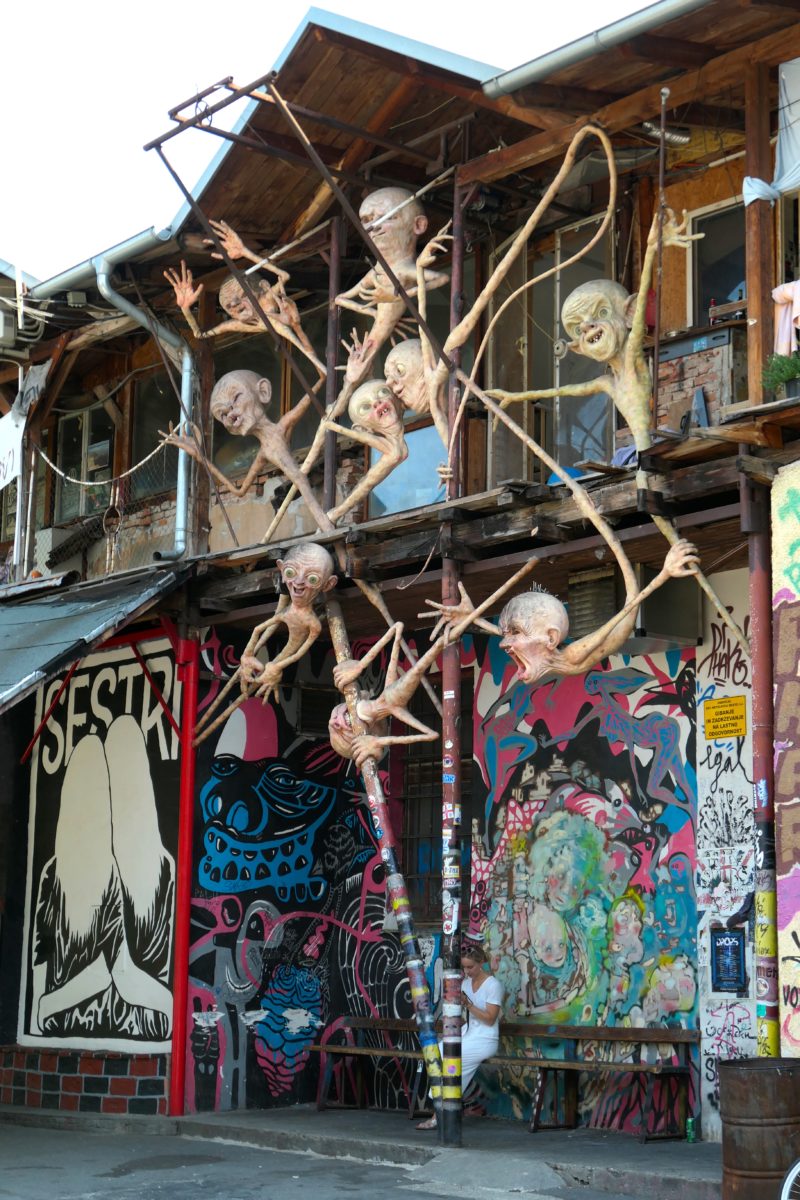
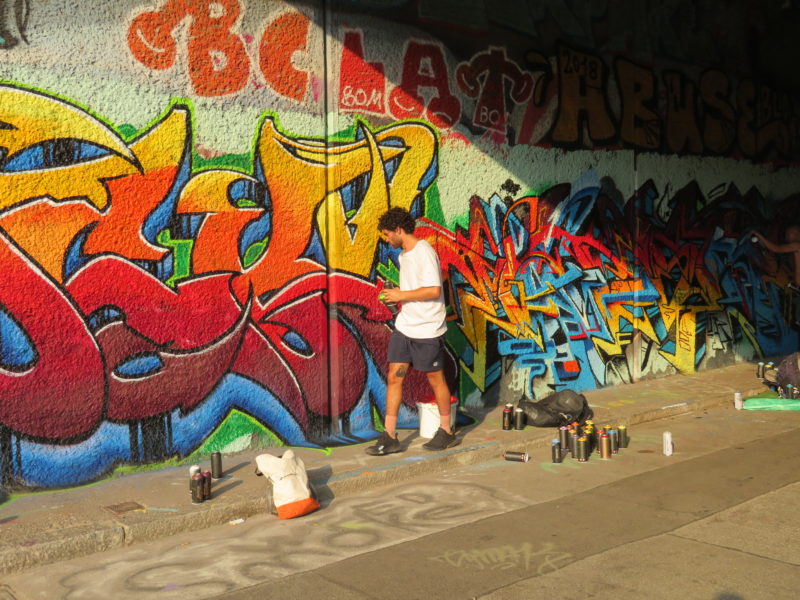
Vienna was recently ranked, for the umpteenth time, the most livable city in the world. One of the ranking factors concerns the quality of the urban environment, actively pursued by a city government that understand the advantages of cutting-edge urban planning. Vienna’s administration has made conscious political decisions to open the public sphere to urban artists, granting rights to paint public property and offering permits for large building walls to national and international artists. The city welcomes intercultural exchange and public discussion of urban art and as a result the city benefits from graffiti that is art rather than pure tagging.

It is no coincidence, then, that the largest European street art festival takes place in Vienna, organized for 5 years now by a group of artists under the name of Calle Libre.  They attract major talent

https://www.callelibre.at/artists/

and the festival has grown to include sponsors and cooperation from the most important museums and political and cultural organizations in town, among them the Museum of Modern Art (MUMOK), Museum Quartier, and Frameout Film Festival.

https://www.callelibre.at/partners/

In Calle Libre’s own words, “Our goal is that of showing a different side of street art, aside from the “writings” or “bombings” often identified as vandalism by the wider public. Through our festival we can inform a wider audience on the nature, proportion and potential of street art as a form of art.”  I believe their approach is effective in removing the stigma still attached to so much of urban art.

The programming this year included, next to the live paintings across a week at various sites, workshops, concerts, film and dance performances. A panel discussion about the role of urban art as gentrifier or enhancer saw high powered speakers from the academic world, art critics, curators from the Albertina Museum and political figures. I missed that one.

I was, however, at the spot where a guided tour was scheduled to take us around to reveal not so obvious new works in various districts. Alas, no guide appeared. Admittedly, they had warned it would be canceled if it was too hot, and hot it was.

Luckily, I had explored on my own, and marveled at the work in progress devoted to artists who died 100 years ago and saw major celebration across Vienna’s museums this summer: Gustav Klimt and Egon Schiele. Photographs of the unfinished works are mine, the finished ones gleaned on the net.

Brazilian artist KOBRA riffed on an old photo of Klimt and his cat;

Portuguese artist Kruella d’Enfer (remind me of that name when I am next looking for a pseudonym) paid homage to both Klimt and Schiele,


as did Zesar Bahamonte from Spain.

This last one is located in the second district’s orthodox Jewish neighborhood. One wonders about the reaction to the lack of clothes….

Here is a link to a piece that gives you a bit of background about the festival.

https://www.tedxvienna.at/blog/calle-libre-urban-aesthetics-in-vienna/

The city becomes, of course, more and more colorful with these large surfaces adorned by major graffiti artists; the art draws a particular section of tourists as well, helping the economy. I was most taken by the spontaneous output though, outside of these organized extravaganzas. You can discover real creativity and fantasy and wit on a daily basis by so many unknown sprayers who come and go, not having to fear retribution.

Here are some of my favorite examples, in no particular order.


You find them at play grounds, along the Donau canal, in the alleys of the city or hidden courtyards.  Creativity surrounds you.

As do reminders that you’ll never get the inside jokes.

And we resume


Your Daily Picture is back, reasonably recovered from jet lag and filled to the brim with materials gleaned throughout my trip to Europe. I will pick and choose some of the things I saw during the last three weeks to give you a little taste of the variety.

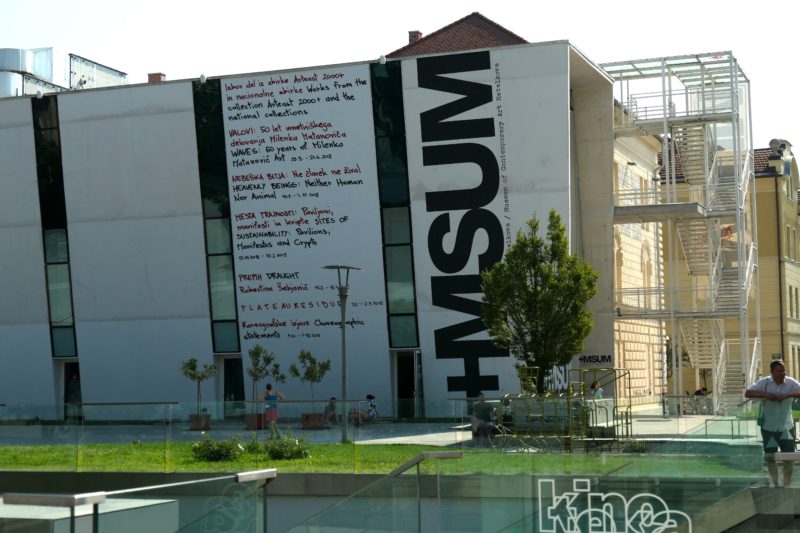
For today I’ll offer my thoughts on a museum of contemporary art in Ljubljana, Slovenia, my last leg of the 4 country  tour. Click on the link below.


Art on the Road: Slovenia

For Love of Nature

The last artists for this week are Jackie Morris and Robert Macfarlane. She does expressive, lush and simultaneously elegant illustrations for the words written, in spellbinding fashion, by him.  I am willing to make an exception and include a man in this week devoted to women artist, because the book they produced together is a treasure.


I am talking about The Last Words, a compilation of poems based on words that are all linked to nature and have been omitted from the Oxford Junior English Dictionary. Blackberry had to make room for BlackBerry; acorn, bluebell, buttercup, heron and nectar are gone and replaced  with words such as attachment, blog, chatroom and voicemail.


As it turns out, British children spend less time outside than prisoners. Urbanization, difficult access, technological developments that keep the entertainment-hungry in thrall all contribute to a loss of knowledge about nature. Kids, and adults as well, are increasingly unable to define things in nature, much less identify them.  And what you can’t name you often don’t see; what you aren’t familiar with will not be loved. And the absence of love will make it unlikely for you to fight when nature is under attack, given the increasing threats to environmental protection and the exploitation of what little is left of nature.


Morris’s watercolors capture both a sense of awe and a sense of dread, teach about details with care and are utterly devoid of patronizing. They make the words come to life and create potentially more lasting memories, particularly for young readers. However, if you read the attached article below, Macfarlane got the primary attention, when the book became an overnight success. What else is new.

https://www.washingtonpost.com/outlook/how-the-loss-of-vivid-exacting-language-diminishes-our-world/2017/12/08/4630e920-c265-11e7-84bc-5e285c7f4512_story.html?utm_term=.50e6dcbe6c21

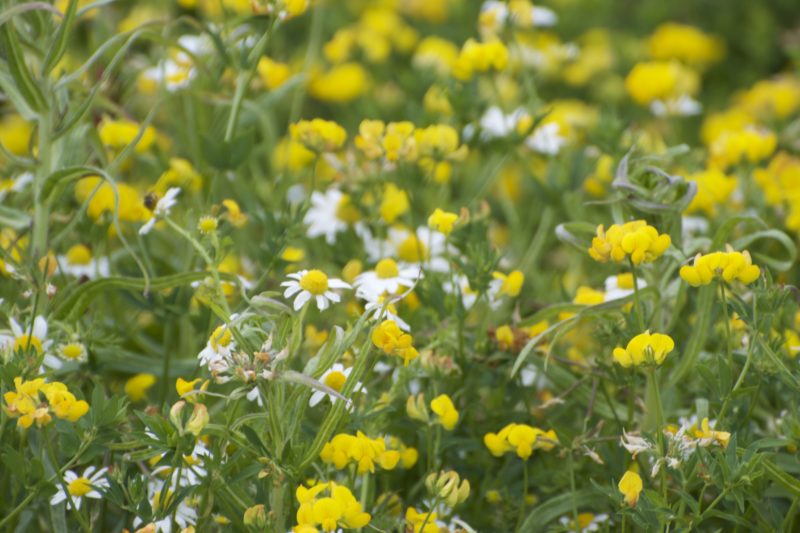
I ventured out into a meadow yesterday, to provide my own illustrations for what is waiting for us out there. Wandering through clouds of chamomile scent, whole fields of it in bloom, surrounded by flitting swallows, I felt uplifted from this rotten week.I have certainly been trained well to be able to name most of what I saw, at least for flora. I wonder if I gave that gift sufficiently to my own offspring, or if they belong to the 2/3 of the population who cannot identify a Hawthorne tree…much less a barn owl.


Here is to feeding the young, their minds as much as their bellies….


A closer Look

In my time I have been known to be a drama queen.  My fits pale, though, when compared to one of the greats: Dora Maar, known, for the most part, as one of Picasso’s muses. That role has always overshadowed her own artistic career. If you take a closer look, you find that she was a brilliant photographer, much involved in developing surrealism, until she gave up photography to heed Picasso’s incitement to turn to painting, (less stellar in its results.) Her photographic documentation of Picasso’s weeks of painting Guernica is revelatory.

Having previously failed, she finally managed to get his attention and his affection by stabbing her gloved hand with a knife drawing blood while seated in a cafe at a neighboring table. The soiled artifact found place of honor in Picasso’s studio, and she found a place in his bed – alas to be shared by not one but eventually two other mistresses.

Detailed bio can be found here:https://www.artsy.net/article/artsy-editorial-surrealist-photographer-picassos-muse

For many years there was nothing but drama, and she was painted by the master exclusively depicting negative emotions and tears. (Do we really want to call someone a master who publicly declared that for him women were either doormats or goddesses? You decide.) When her scenes became violent, and she cracked under the strain of the end-of-war years, she was committed to hospital, forced under electro shock therapy and eventually put by her lover into psychoanalysis with Lacan, his close friend.

(If you want to read a short, incisive, brilliantly funny essay on jocular Jaques, go here. The book review of Lacan’s last lover’s reminiscence is a treat! (In fact it was the only thing that made me laugh on a day where Kennedy’s retirement brought the future of constitutional law up for grabs. But I digress into politics. Must not.)

https://www.spectator.co.uk/2018/04/the-selfish-shrink-life-with-jacques-lacan/

Back to Maar.  I am attaching a link that shows a number of her photographs, some famous, many less familiar.  It is strong work, here and there dotted with humor. It also shows someone perceptively in tune with the social conflicts of their era.

After two years of analysis, Maar regained her poise and for some time re-entered her Paris circles. More and more drawn to mysticism and then the Catholic Church, she eventually became a devout recluse, living in her house in Provence, focusing on painting and religious services. She died, almost 90 years old, in 1997.  I wonder how different her life could have been, and her photography make an impact, had it not been for the fateful alliance with a cruel and abusive man.

http://www.all-art.org/art_20th_century/maar1.html

Photographs are from Paris, selected for what I believe might have suited her sensibilities.

Maar’s Surrealist work is on display at SFMOMA and will be featured at Paris’ Centre Pompidou and L.A.’s Getty Center in 2019.


Ways of Healing

No more pink ribbons

It was today a long time ago that I took the first step to rid my body of cancer. Between the knives on 6/27 and the subsequent poison(s) for many years, it all worked out. The physical remnants are manageable, the psychological ones something you live with, as people do with any other chronic disease. For now, I and so many others I know, are prime examples of the miracles of modern medicine. Grateful, if wary.


Chemo-Brain Freeze

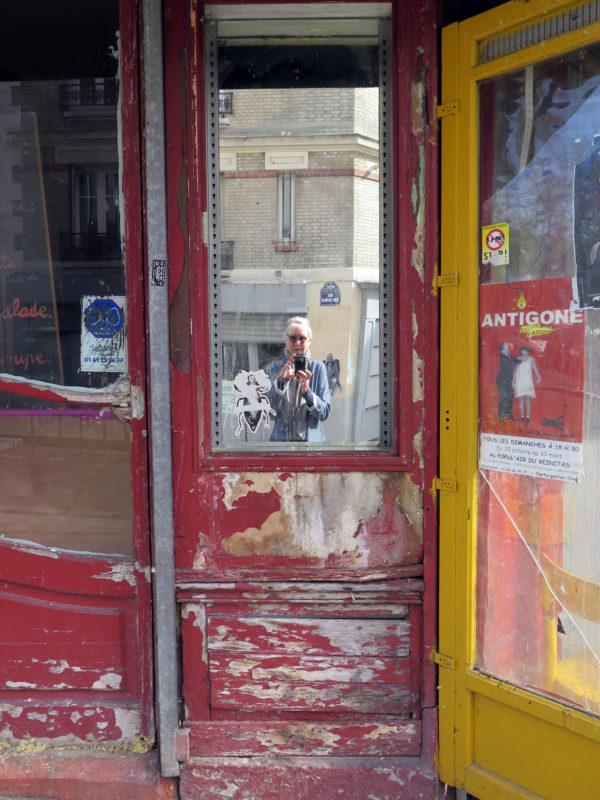
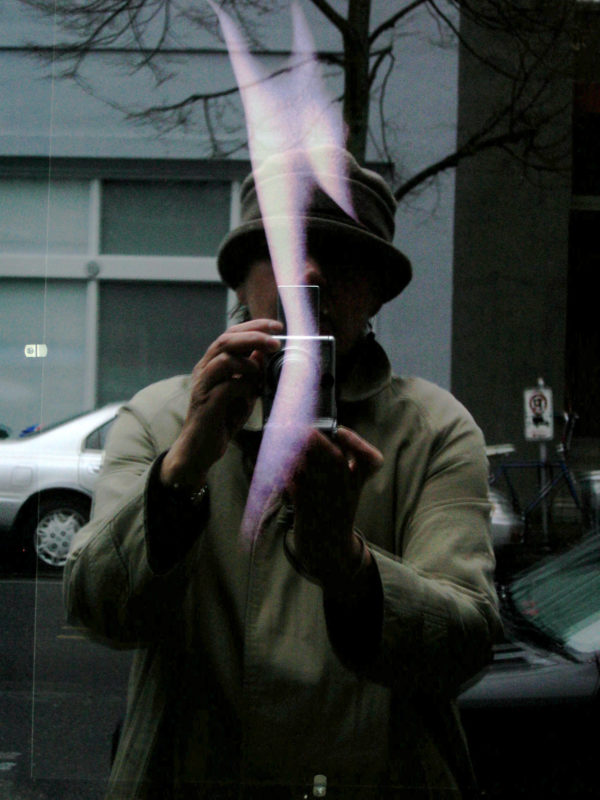
Shortly after treatment I spent some time photographing myself in all kinds of Portland windows that contained some elements I associated with the experience, and wrote short bits about it, getting it out of my head onto a page.  Emerging from Departure Mode was a small-scale attempt to package a long and frightening process into something that signaled creativity over despondence. My first venture into photography, too, long before I started montage work.

Radiation Target

This week a friend sent me the article below about Prune Nourry and her own approach to control the inevitable process of getting your life back after a threatening crisis.  Her’s is large-scale pay-back to an adversary that should bite the dust just looking at the sheer force emanating from her sculpture. A catharsis sculpture, indeed.

Waves of Grief

I have reported on Nourry before here: https://www.heuermontage.com/?p=6793

I will leave it to the article below, to describe her new work in detail, a sculpture modeled on classic Amazon depictions, and then studded with a twist……

Do open the link to see the photographs of her work – the power of it will rub off on all of us!

https://www.nytimes.com/2018/06/24/arts/design/prune-nourry-amazon-metropolitan-museum-of-art-sculpture.html

June 24, 2018

Prune Nourry working on her sculpture “The Amazon” at the Brooklyn Navy Yard. She created it in response to her treatment for breast cancer.Nathan Bajar for The New York Times

For the last two years or so, the artist Prune Nourry has thought of herself as a sculpture. Ms. Nourry, who is French and splits her time between Brooklyn and Paris, was diagnosed with breast cancer in 2016. As she went through treatment, including chemotherapy and reconstructive surgery, she thought of her doctors as the sculptors and herself as the material they were fashioning. Now, Ms. Nourry, 33, has created her own work in response to that experience, as a tribute to breast cancer survivors everywhere.

“The Amazon” is a 13-foot-tall cement sculpture of a female warrior, with bared breasts, her torso and head pierced by thousands of joss sticks, jutting out like arrow shafts. It was modeled after the life-size marble statue of a wounded Amazon at the Metropolitan Museum of Art. Ms. Nourry’s version weighs nearly two tons, and has lifelike hazel-brown eyes, crafted from handblown glass. It made a public debut last week, in a plaza outside the Standard Hotel in Manhattan’s meatpacking district, where it will be on view into July. (The hotel owns the space and offers it to artists; the painter José Parla and the pop artist KAWS have exhibited there before.) In a private performance, Ms. Nourry will eventually chisel away one of the Amazon’s breasts.

Thirteen feel tall, the sculpture weighs nearly two tons and has lifelike hazel-brown eyes, crafted from handblown glass.Nathan Bajar for The New York Times

“It’s really, for me, a catharsis sculpture,” she said, in a recent interview at a studio in the Brooklyn Navy Yard, where she and a few helpers created the work. She added that the artwork, and the medical process that led to it, also re-contextualized all her projects that came before, among them “Terracotta Daughters,” a riff on the famous sculpted Chinese army from the 3rd century B.C. In Ms. Nourry’s 2012 version, her 108 clay soldiers are girls, based on real-life orphans, as a commentary on the gender imbalance in China’s culture, where boys are traditionally more prized. It has been exhibited in North America, Europe and China.

Ms. Nourry, a multimedia artist who often works in sculpture and performance, frequently deals with gender, reproduction and bioethics; an early piece, “The Spermbar,” repurposed a New York food cart, and allowed visitors to create a beverage by choosing the traits they would want in a sperm donor, questioning the pre-selection of human embryos. In The New York Times, the critic Gia Kourlas called it “a witty, disturbing project.”

This life-size marble statue of a wounded Amazon at the Metropolitan Museum of Art served as a model for Ms. Nourry’s work.The Metropolitan Museum of Art, New York

Ms. Nourry had planned to remove one of her Amazon’s breasts in public, but at the last moment decided that was best done in a more intimate setting. She also wanted to extend the timeline of the project, because “healing is a long process too,” she said. So when her sculpture first went on display, she focused on another performance that connected both her earlier work and her life as a patient: She covered her statue with about 6,000 red Chinese incense sticks, symbolic of the acupuncture treatment she underwent as part of her medical care. (Her series “Imbalance,” which she prepared and exhibited while undergoing chemo, also uses acupuncture needles.)

Ms. Nourry, who is now in remission, managed to keep up her exhibition schedule, which included a show at Musée National des Arts Asiatiques in Paris, through her hospital stays. “I felt lucky that I had all the work that I was passionate about,” she said. “I didn’t want to stop. But also the fact of being able to create something out of it is helpful, too.”

Ms. Nourry covered her statue with about 6,000 red Chinese incense sticks, symbolic of the acupuncture treatment she underwent as part of her medical care.Nathan Bajar for The New York Times

On the summer solstice, June 21, as the sky flicked from hot pink to lavender to dusk, a small, fashionable crowd surrounded the Amazon. Among them were boldfaced names, friends of Ms. Nourry and her husband, the artist JR, including Jennifer Lawrence, Grace Hightower De Niro, the director David O. Russell and the graphic novelist Art Spiegelman. Jon Batiste, the musician and bandleader for “The Late Show With Stephen Colbert,” began the event by improvising on a melodica.

As he sat down to play keys, Ms. Nourry’s assistants, clad in medical white, joined the artist, who was in a lab coat. Slowly, methodically, they lit the incense; soon the sturdy warrior, with her sheath of protective quills, had a halo of wispy, fragrant smoke. Ash began to cover the ground as Mr. Batiste played his closing song, requested by Ms. Nourry, called “Don’t Stop.” “It’s a very uplifting song, but it’s also a song about death and mortality,” he said.

Ms. Nourry and her assistants lit the incense on the summer solstice; soon the sturdy warrior had a halo of wispy, fragrant smoke.Nathan Bajar for The New York Times

“She really knows how to tap into the human experience in the most immediate way,” Mr. Batiste added of Ms. Nourry, a longtime friend and, more recently, a collaborator on projects that unite his music and her visuals. “It’s like a musician who knows how to play one note to make you cry,” he said. “And you can’t explain why. It’s just when you look at the sculpture, you feel something, whoever you are.”

The story of Amazon women — that they were a tribe of powerful and skilled fighters who, it was sometimes said, cut off their right breasts to better their archery — remains mostly the domain of Greek myth, although some research by Jeannine Davis-Kimball, an archaeologist from the University of California, Berkeley, found evidence of a class of warrior women in the Eurasian steppe. Ms. Nourry did not delve deeply into what was fact or legend. “I like this gray area,” she said.

As the incense on her sculpture burned, it left in its place seeping red dots. “It looks like she is bleeding,” Ms. Nourry said, contentedly. Passers-by snapped photos from atop the Highline. The sculpture will remain on view for several weeks, at least, and will later be sold, with some proceeds going to cancer charities.

“The sculpture is not especially for me only,” Ms. Nourry said. It was meant to honor all sorts of female warriors, she said. She will replace the incense, but, she added, “I would love if women can come and light their own, as a symbolic gesture for themselves.”

The sculpture made its public debut last week, in a plaza outside the Standard Hotel in Manhattan’s meatpacking district, where it will be on view into July.Nathan Bajar for The New York Times


Here’s to healing.

Limp Threads – Tight Tapestry

Yesterday we looked at Maman, the weaver. I thought for today we might as well go for the real thing – a human weaver who represents one of the few true success stories of women who weren’t meant to be “artists.”

My choice was Anni Albers, a weaver who got her start at the famous Bauhaus in Weimar, and later worked and taught in the US, having found a safe haven here from the Nazi regime. I picked her for two reasons.

One, I am, seemingly eternally, working on an article about the centenary celebration of Bauhaus 100, to take place next year in Weimar. The time to book your tickets and lodging is NOW – Weimar is small, easily overrun, and they have a stellar schedule of happenings planned for spring (with some already ongoing in 2018.) There will be not only the opening of three (!) new museum dedicated to Bauhaus (in Weimar, Dessau and Berlin,) but also Bauhaus-related ballet (6. APRIL 2019 – the tradition of Bauhaus dance will be revived at the Deutsches Nationaltheater Weimar for the opening of the new bauhaus museum. A co-production with the Stuttgart Ballet) and music (12. APRIL – 05. MAY 2019 : Thuringia Bach Festival – the concerts during Thuringia’s largest music festival are being held at authentic Bauhaus locations to mark the Bauhaus anniversary. The program showcases Bach in the musical world of the early 20th century. That program alone is pretty spectacular.)

In the meantime here is “Bauhaus Imaginista” already on the road. (“Bauhaus Imaginista” is a cooperative venture between the three Bauhaus sites in Germany – Berlin, Dessau, and Weimar, the Goethe Institute, and the House of World Cultures. This research project with a variety of exhibition venues is in honour of the centenary of the founding of Bauhaus. The Goethe Institute will expand upon it with an international element, and it will be brought together in Berlin’s House of World Cultures as part of the “100 Years of the Modern”. “Bauhaus Imaginista” is a joint venture with the China Design Museum (Hangzhou), the National Museum of Modern Art (Kyoto), the Garage Museum for Contemporary Art (Moscow), the SESC Pompeía (São Paulo), and the House of World Cultures (Berlin).) More details here:

https://www.bauhaus100.de/en/bauhaus-100/03_Bauhaus-Imaginista/index_Imaginista.html


So, Bauhaus was on my mind. The other reason for my choice was a new exhibit of Albers’ work, curated by the Kunstsammlung NRW and the Tate Modern, London, which can be seen at K 20 in Duesseldorf now until September (it will move on to the Tate Modern in October). The video clip below gives you a short impression.

 https://www.youtube.com/watch?v=QqUKyvoEvnw

So who was she? Born into a rich, assimilated Jewish family, owner of one of Germany’s most prestigious publishing houses, she was determined to escape the boring fate of bourgeois turn-of-the-century girls and become an artist instead. When she enrolled at the Bauhaus art school, she, like all other female students, was directed to textile art (pottery being the only other possible alternative) since the men deemed the traditional areas unfitting and only male students were allowed to choose. At Bauhaus! One of the most progressive places of the German universe whose director Gropius touted equal treatment for both sexes….

In any case. She took general art classes by Paul Klee, absorbed his love of adventurous process, complained about limp threads and somehow grew into weaving with a miraculous hand, and a talent to devise by now iconic geometric patterns.  She was smart, hugely energetic, and open to novelty. She was also lucky – she had the means to leave Germany early, found work and like-minded artists in the US, and did not have to compete with a loving husband who became notable in his own right and was always supportive of her work. Eventually she established a weaving studio at Black Mountain College in North Carolina where she and her husband found a surprisingly progressive home. Working with other artists like composer John Cage, dancer Merce Cunningham and painter Robert Rauschenberg she developed a rich environment and produced spectacular tapestries, with many solo exhibitions soon to follow. Details can be read below.

https://www.artsy.net/article/artsy-editorial-bauhaus-master-anni-albers

One of her most important works was commissioned by the Jewish Museum inNew York. Six Prayers  is a Holocaust Memorial in its own right, echoing the disrupted lives or the perished. https://thejewishmuseum.org/collection/16696-six-prayers

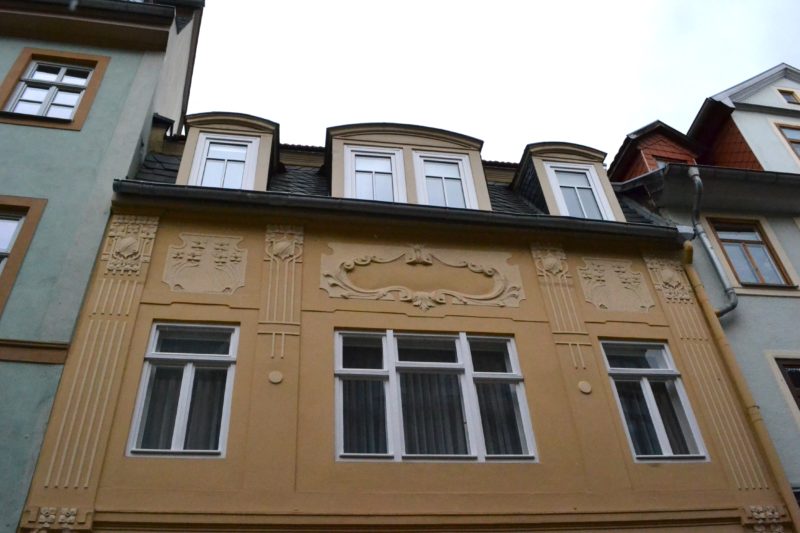
Photographs are from Weimar, home to Goethe, Schiller, Bach, Gropius, the Weimar Republic and, for some years, Anni Albers.


Maman

After reading that the Red Cross has been denied access to the migrant detention camps and that a Betsy deVos-linked evangelical agency is rumored to place the separated newborns and toddlers for adoption, I decided to give myself permission not to read and write much about politics this week. My – and your – sanity probably once again depends on it.

I have moral support for my chosen state of not-knowing, if only for a few precious days, from an unexpected source: a scientific argument in favor of willful ignorance. The argument, developed by two researchers from the Max Planck Institute for Human Development in the context of data collection and dissemination through Artificial Intelligence, in a nutshell is this:

People often decide to remain ignorant because they know that knowledge can be dangerous. It can corrupt judgment – just think of personal medical data, your sexual preferences, your religion – known to hiring agencies or insurance companies or your favorite internet troll. Do you want them to be known? It can instill fear – do you want to know your likely day of death or chance of developing Alzheimers, which many AI programs are statistically predicting in ever more accurate fashion?

Motives for willful ignorance then center around two themes: impartiality and fairness, for one, and emotional regulation and regret avoidance, for another.  Detailed description of the argument can be found in the link attached below.

http://nautil.us//issue/61/coordinates/we-need-to-save-ignorance-from-ai?utm_source=Nautilus&utm_campaign=3d24b9bbbd-EMAIL_CAMPAIGN_2018_06_22_07_57&utm_medium=email&utm_term=0_dc96ec7a9d-3d24b9bbbd-61805813

Speaking to the issue of impartiality: many women artists have taken to apply for exhibitions with initials for first name, or aliases in general, so their gender remains unknown – a precaution in an art world that is still very much a male domaine and known to exclude the second sex. (I use that phrase to remind us of de Beauvoir’s pathbreaking analysis of facts and myths about women, written in 1949 and just as applicable today.)


But this week their names will be available to us, at least those I chose for presentation.

The first shall be Louise Bourgeois, and her 1999 spider sculpture titled  Maman. I think I wrote about Bourgeois here two years ago, but I always find myself going back to this marble and steel miracle, grandiose in scale and hauntingly contradictory in effect. Most people shy away from arachnids, find them disgusting if not threatening. The artist’s associations, though, are couched in love, admiration and pragmatism. They stress the purpose of protection and yet the sculpture emanates a power closely linked to fear. The ambiguity is breathtaking.
“The Spider is an ode to my mother. She was my best friend. Like a spider, my mother was a weaver. My family was in the business of tapestry restoration, and my mother was in charge of the workshop. Like spiders, my mother was very clever. Spiders are friendly presences that eat mosquitoes. We know that mosquitoes spread diseases and are therefore unwanted. So, spiders are helpful and protective, just like my mother.”

“…..my best friend was my mother and she was deliberate, clever, patient, soothing, reasonable, dainty, subtle, indispensable, neat, and as useful as a spider. She could also defend herself, and me…” Louise Bourgeois.

My photographs are from 2012 at the Hamburger Kunsthalle celebrating the artist’s 100th birthday.

Below are alternative sites from the web – Maman sure likes to travel…..


Perceptions

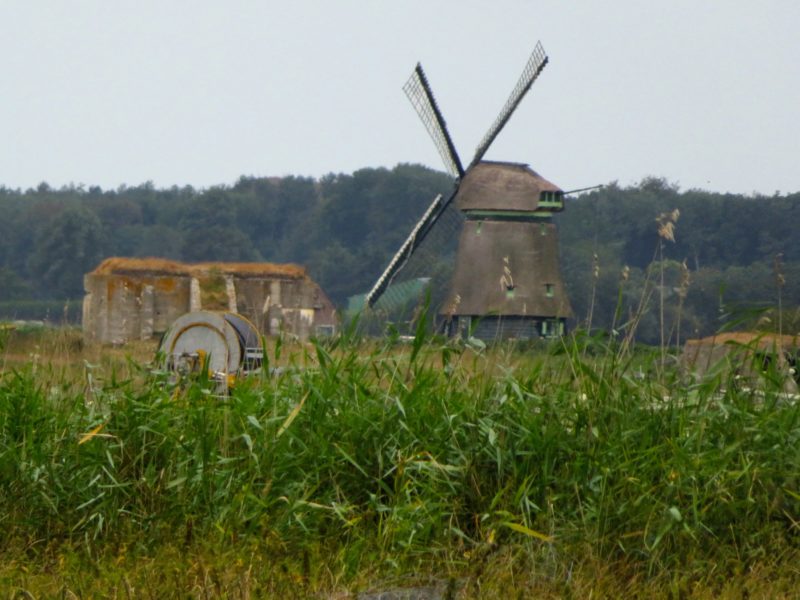
I lived for a year in Arnhem when I was little, and spent a large part of my later childhood in a small village at the Dutch border near Eindhoven. Summers were spent in Holland proper, at the North Sea. Water or inland – these two places shared important attributes: they were as flat as flat can be, and they were washed in soft, ever changing light. These two things are connected – wind rushes across these flatlands and drives the clouds, big old clouds from the sea. They shade the landscape in ever-changing patterns, dark now and beaming with light a minute later.


 Jacob Isaacksz. van Ruisdael – Landscape in the evening with windmill – ca. 1650

I was maybe 12, during summer vacation, when I was allowed to venture out on a small boat, like a canoe, with an outboard motor all by myself, having convinced my host family that I was perfectly fit to do this, never mind I had never set foot in a boat. I proudly navigated a maze of small canals, actually outside of a city, I forget where it was. These were waterways historically used to transport turf. An exciting outing until the motor died. When I couldn’t get it going again, pulling the starter string 100 times in vain, I remember lying down in the boat deciding to wait for some other boat to pass by. In the meantime I looked up to a sky that seemed both beautiful and menacing at once, making me practically dizzy with the speed the clouds were racing. It was the first time that I consciously noted a quality of light. Eventually I gave up the hopeless wait and tried my luck again, this time succeeding and miraculously finding my way back to the harbor. Where I promptly fell into the cold water when trying to moor the boat. Another adventurous day in the life of Heuer. A day that shaped perception.

Jacob Isaacksz. van Ruisdael – Rough Sea ca. 1670

The quality of the light is often misty from all the moisture in the air, a softness that becomes the otherwise pretty monotonous landscape. There is endless grey, unless the sun is for once unimpeded and the sky turns blue, endless green and brown of the land snatched from the sea and used for agriculture, and canals and waterways behind the dykes that reflect the color of the sky, as does the sea in front of the polders.

Inland it becomes even more monochromatic – there is the sky and then there are those endless fields of oats and sugar beets, green rotting to brown eventually, interrupted only by alleys of poplars and the occasional hawthorn hedges, or a few stands of chestnuts.

https://www.nga.gov/features/slideshows/dutch-landscapes-and-seascapes-of-the-1600s.html#slide_1

Jacob Isaacksz. van Ruisdael – Landscape with ruined castle and a church ca. 1665

I have often thought that the preoccupations with tulips (as well as other, often exotic, flowers) originated in being starved for colors other than the muted ones inherent to the landscape. If you look at the still life paintings from the Golden Age, color rules all, down to the last glimmers and subtle hints of it in carefully painted reflections.

Given the commercial breeding of tulips as one of the major Dutch exports these days, the landscape, for a short time each year, undergoes this magical transformation into a riot of reds and oranges, purples and yellows, for acres and acres as far as the eye can see. But the sky looks the same, just as it did 400 years ago. And no one captured it better than Ruysdael and his pupil Hobbema. Well, maybe someone did, but I am just partial to these two during that epoch.

http://www.visual-arts-cork.com/old-masters/hobbema.htm

Meindert Hobbema – Landscape withWatermill ca. 1666

Meindert Hobbema – Kanaallandschap met vissershuisje