Browsing Category

Art

Our Place, Lit Up.

The only tired I was, was tired of giving in.”

Rosa Parks, who would have been 107 yesterday.

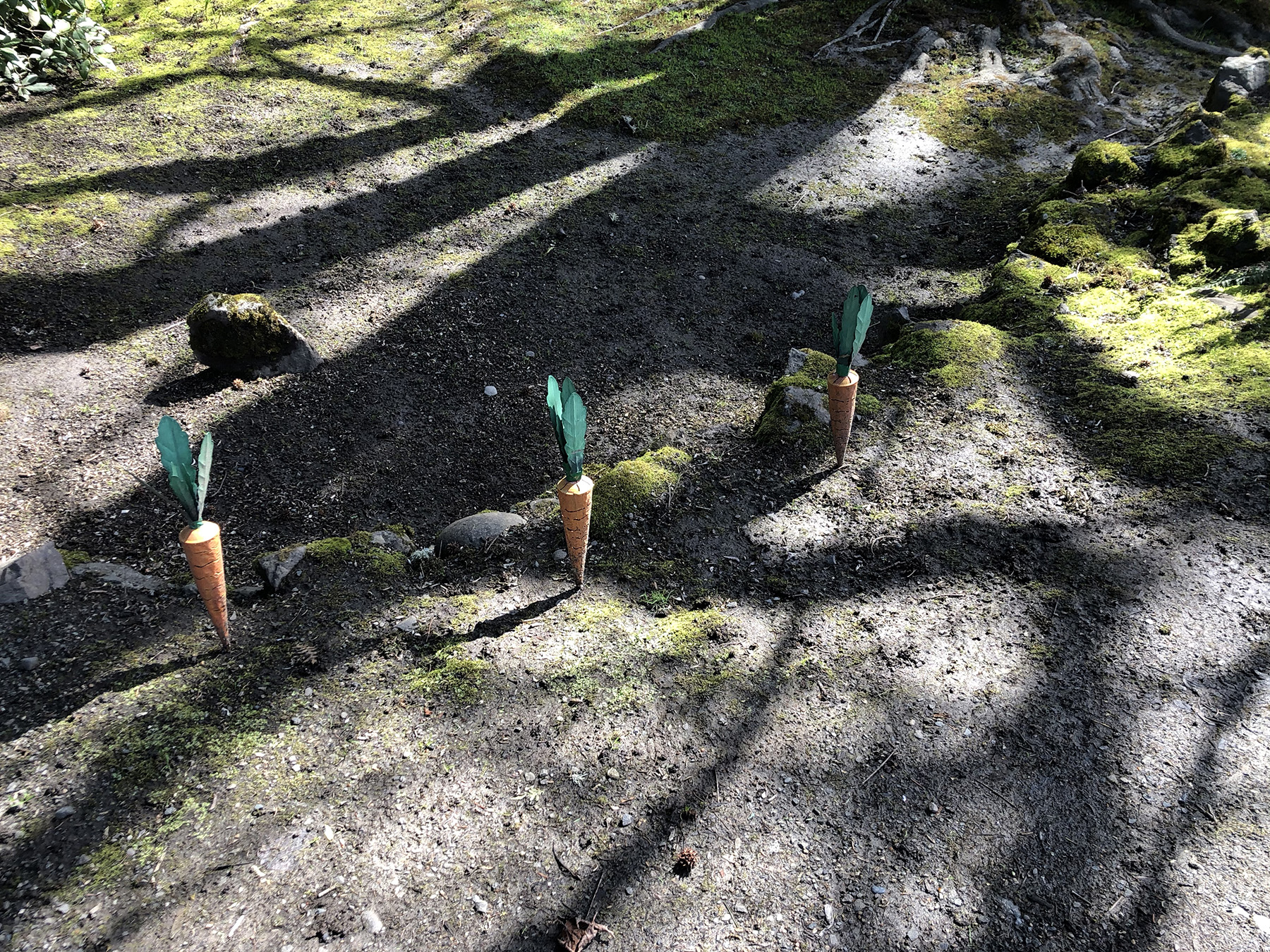
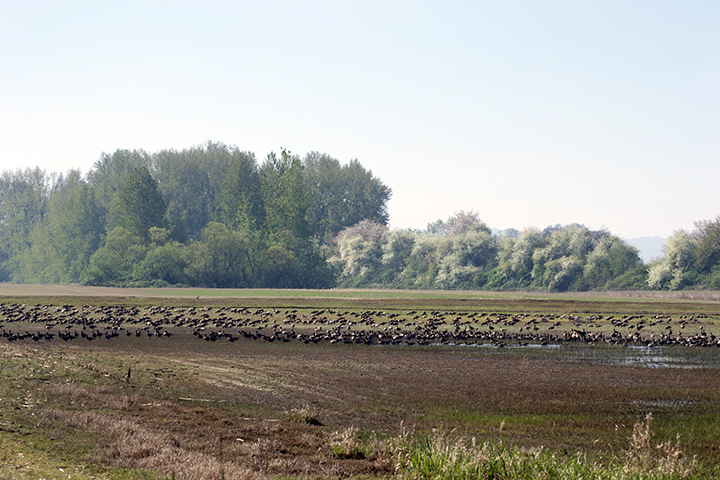
Let’s just look at the BRIGHT side. That’s what the views suggest – there are so many spots lit up. That was true for the landscape as photographed 2 days ago, which had this weird partial lighting when the sun peeked through the clouds.

But it is also present in what is on offer this week in the cultural landscape – I will post longer essays in days to come on two of the three things I urge you to visit, and photographs for the third. Each one in its own right is a testament to resilience, finding joy in hard places, fashioning the world with new perspectives and refusing to give in. In other words, they help us look at the bright side.

For now I recommend, highly, a visit to OJMCHE to see their new exhibition Southern Rites. The expressive photographs of Gillian Laub, thoughtfully and confidently curated by Maya Benton and The Center for International Photography, introduce us to a new generation of young Black people living in the American South, their losses, challenges and perseverance. The exhibition also offers welcome education on some of the legal issues involved with inter-racial relations.

February 5, 2020 – May 24, 2020 724 NW Davis Street
Portland OR 97209 Opening on First Thursday.

*

Also of interest, starting First Thursday as well, is an exhibition at Gallery 114 that will communicate joy. Ebullience, initiated by Gallery 114 member Joanne Krug and her husband, displays both 2D and 3D art created by artists living with intellectual or developmental disability. The artists have found a place to be creative at the Portland Art and Learning Studio, part of Albertina Kerr, under the caring and smartly involved directorship of Chandra Glaeseman. I can’t wait to report in detail on the work that is done there, and the art that will be on display at 114.

*

The third recommendation regards two 50 minute-long performances this weekend of How to Have Fun in A Civil War, created and performed by Ifrah Mansour (Somalia/U.S.). Offered by Boom Arts in conjunction with the 30th Annual Cascade Festival of African Film, the multimedia performance event will make your heart softer.

Mansour revisits her childhood memories during the 1991 Somali civil war to confront violent history with humor, and provide a voice for the global refugee stories of children. How to Have Fun in a Civil War, is a one-act multimedia play, which explores war from an idyllic viewpoint of a seven-year-old Somali refugee girl. The play weaves puppetry, poetry, videos and multiple oral stories taken from community interviews to tell a captivating story about resilience while pushing the audience to engage in a healing process that is still raw for survivors of the war.

Here is a more detailed review. And here is a video of her explaining her project.

February 8th at 1:00pm & 9th at 5:00pmPCC Cascade, Moriarity Hall Theatre, on the corner of N. Killingsworth and Albina ( enter on Albina)

And if you can’t make it to any of these, here is something uplifting to listen to from your armchair: https://www.youtube.com/watch?v=Dc3iX7x73JY

There is always a path forward…

Our Place in the Fabric of the World

The role of the artist is exactly the same as the role of the lover. If I love you, I have to make you conscious of the things you don’t see. James Baldwin The Creative Process (1962) (from The Price of the Ticket: Collected Nonfiction, 1948-1985.)

ONE OF THOSE WEEKS. Unrelenting, miserable downpours, not the drizzle Portland usually knows. Unrelenting, horrid news, death calling with helicopter crashes, earthquakes, viral lung disease. And then three art encounters that stretched the brain and filled the soul with smatterings of joy. Softened the week around the edges.

Details from Amanda Triplett’s studio.

The thread that ran through these encounters was literally that: a thread. Or, more precisely, multitudes of them, fabrics, textiles, hair and other palpable materials fashioned into something different and new. To stay within the textile metaphor, the warp running the lengths of the works were clever, clever ideas about our place in the world, crossed by the weft of invitations for multiple interpretations.

Wool, cotton, fabrics of all sorts used to have a purely functional existence in my universe. One of my earliest memories is that of large groups of German women workers walking to and from work at the factory on the outskirts of the village, chatting and simultaneously knitting, wool skeins held in the front pockets of their aprons. Socks, hats and mittens mostly, easy to transport, the larger sweaters waiting at home. (The factory was aptly called Glanzstoff, shiny fabric, a regional employer for over a thousand workers spinning artificial fibers and Viscose.)

One class up, the ladies met for tea and crochet sessions, producing intricate lace doilies, scoffed at as kitschy by my generation, shamefully ignorant of the enormous skill and creativity displayed. The melodic humming of the Singer sowing machine, pedal-powered by my mother’s feet, was a constant childhood background noise. I can still feel the yearning for store-bought clothes, a half century later…..

That art could be involved did only dawn on me much later. Visits to Bayeux put tapestries on the mental map, and later, post-war exhibitions of the Bauhaus weavings put an end to my stupidly snobbish attitudes towards “crafts.” In the U.S. you still have a chance to see a stellar Bauhaus-weaving – related exhibit at the Chicago Art Institute until middle of February.

*

CLOSER TO HOME a visit to the Portland Art Museum proved the first eye-opener of last week. Diane Jacobs‘ work Global Inversions (2008) literally makes us, in keeping with James Baldwin’s admonition, “conscious of the things we don’t see.” A large panel shows an inverted map of the world, with felted wool indicating oceans and hair defining land masses. It looks amorphous, vaguely familiar when you approach it before knowing what it is. Recognition is achieved by means of a small, transparent, acrylic globe suspended in front of the panel: it reverses the directions of the map into the ones familiar to us.

Diane Jacobs Global Inversion (2008)

Substances from the world that is – animal and human hair – depict a world imagined upside down, containing allegoric truth within a geographic lie. Our world, of course, IS upside down, out of balance, careening into places unknown. The many suffer, the few make the decisions, and economic motivation often supersedes morality. We do not have to see that truth as long as we embrace our looking glass (that little ball) which mirrors the status quo, a comforting illusion for us on top of the world. Or maybe if we see it as a crystal ball we glimpse a future that is rightsize up, a world where justice guarantees more even distributions.

Acrylic ball inverting the perceived display

As I said, open to multiple interpretations; the artist’s goals, to have “the viewer investigate her or his own relationship to the given topic,” was, in my case, met. Wool on the panel sabotaging efforts of the ones in power to pull wool over our eyes. Art making us conscious of things we didn’t see, fighting our ignorance.

Hair and felted wool provide figure and ground

To quote Baldwin again, a different essay:

“Not everything that is faced can be changed, but nothing can be changed until it is faced.” —from The Cross of Redemption: Uncollected Writings (2010)

*

Auch das erotische Kunstwerk hat Heiligkeit. – Egon Schiele, Sketchbook entries (1911)

Erotic works of art as well contain some sanctity.

WHEN I FIRST MET Amanda Triplett at an art auction and opening which displayed one of her pieces, I knew nothing about her other than that she makes sculptural fiber works and installations from salvaged textiles.

Amanda Triplett, textile sculptress and installation and performance artist.

There was something distinctly puckish about her, a delicate elf, a teasing sprite, right out of the cast of a Midsummer Night’s Dream (that is if she had stuck with her passion for theatrical performance before she switched to visual art.) Enough to trigger my curiosity, in any event, and so last week I visited her studio.

Triplett in her studio with interactive structural nest.

Little did I know. This young mother of two has a laser-sharp eye on our preoccupation with our bodies, society’s ways of manipulating female (and increasingly male) confidence through issues of body image and function. A devotee of the erotic expressionism of Austrian painter Egon Schiele (1890 – 1918), her sculptures lack any of the shyness associated with the elfin folks.

Nor their diminutive size, which Shakespeare hints at:

“they do square, that all their elves, for fear,
Creep into acorn cups, and hide them there.”

The works do have a puckish wit about them, though. How else would you describe a series of imaginary female organs, including Hysteria and Plasma, the former appropriately shaped like a giant vibrator?

Or the tactile, sculptural nest (maybe an acorn after all, if not the womb) that invites visitation? A hint of veneration of the sanctity of female function right next to pointers to the harm inflicted by misogyny.

The striking ambiguity in surface and form allows for multiple interpretations. If you didn’t know the intent behind some of these works, you might just look at them as intricately sewn sculptures, with frequent reddish color combinations, the occasional shocking pink aside. They invoke some vaguely biological forms, patterns that can be equally associated with tide pools, oceanic life forms, or even cellular biology.

Which takes us back to our own bodies. Recent larger works represent imaginary layers of skin, their lace-like perforations raising questions about directionality of flow.

Do they allow the poisonous pressure of body image-standards to be absorbed, or do they allow parts of the self to flow out towards connection with the other? No blood-brain barriers here, but rather contemplations about our relative place in the world.

*

TRIPLETT HOLDS A B.A. IN Art and Art History from Sarah Lawrence College in NY. Starting out as a performance major, she soon switched to visual art, mostly focussed on drawing and other works on paper.

She credits the fact that she was raised in fabric-rich societies like Egypt and Taiwan, with parents later living in India, with her eventual settling on fiber sculptures. Her intention to work with discarded materials found the perfect source: Shortly after she moved to Portland from California in 2016 she was awarded one of the artist-in-resident spots at Glean, “a juried art program that taps into the creativity of artists to inspire people to think about their consumption habits, the waste they generate and the resources they throw away.” They work in partnership with Recology Portland, Metro, the regional government that manages the Portland area’s garbage and recycling system and crackedpots, a nonprofit environmental arts organization.

The two strands of environmental consciousness and gender issues run in parallel, just as the sculptress’ work is alternating between small and large, universal and/or site specific.

Amanda Triplett Earthen Body, Auburn WA, Art on Main, January 18th – April 5th, 2020

Lately she has begun to incorporate some performance aspects into her shows, sewing herself in into a sculpture in front of audiences, and then cutting herself out again, adding rings and layers of fabric per performance.

An element of chanting, coming out of her meditative praxis, is explored as well, guided, as she frequently repeats in our conversation, by the heart. It might be a big and busy heart, but it is matched by an incisive brain.

*

“The past is never dead. It’s not even past.” – William Faulkner, Requiem for a Nun (1951)

OF COURSE NOT, all we have to do is re-invent it. Just ask Triple Candie. Their current exhibition at the Portland Art Museum, Being Present – Revisiting, somewhat unfaithfully, Portland’s most experimental art experiment, the Portland Center for the Visual Arts (1972-1987) does just that.

The duo of Shelley Bancroft and Peter Nesbett (collaborating for this exhibit with Sara Krajewski, the Robert and Mercedes Eichholz Curator of Modern and Contemporary Art) creates exhibitions about art without art, their statement reads. I beg to differ. There is a lot of artistic creativity involved in the way they problem-solve around issues of representation. How do you, after all, depict what went down across two decades at an art hub founded by three artists/academics, Michele Russo, Mel Katz and Jay Backstrand who had the vision to bring avant-garde, contemporary art to Portland? In particular, how do you represent the performance history ushered in by Donna Milraney in the 1980s, which superseded the focus on painting and sculpture in the 1970s under Mary Beebe’s leadership?

One of the ways that people solve problems includes the use of analogies. As it turns out, that only works if people do not cling to superficial features, but focus on the structural aspects of a problem, the underlying dynamic that needs to be captured in an appropriate analogy. Triple Candie did just that when using carefully crafted, individualized tapestries that are analogies of the PDX appearances of post minimalist dancers, jazz and electronic music musicians and performance artists. (In the context of today’s focus on textiles, this is the part of their exhibition that I’ll describe.) Small accompanying plaques inform the viewers about the name of each performer, the date of their performance, their artistic approach and a bit on their life story.

Details from the tapestries

Mounted on walls and suspended from up high across a large space in PAM’s Contemporary Art wing above an orange stage, these fluttering, somewhat insubstantial fabric rectangles hint at the impermanence of single performances. Each one was carefully designed to bring out dominant characteristics of the performing artist they represented. What would I have given to be a little mouse in the room where the curators brainstormed for ideas of typicality, and then set out to transform them into surrogates with wit at times bordering on sarcasm, at times on idolatry! Lovingly detailed, patterned textile portraiture. You should go and give that exhibition a look. Some of it might have you in stitches.

Nothing at all of this is fixed

Was glänzt, ist für den Augenblick geboren, 
Das Echte bleibt der Nachwelt unverloren.

That which glitters is born for the moment;
The genuine remains intact for future days.

Johann Wolfgang von Goethe, Faust eine Tragödie, Kapitel 2: Vorspiel auf dem Theater (1808)

I was so cold when I left Dorothy Goode‘s studio after a visit last week that I could barely get the key into the car ignition. During our first ever encounter we had huddled, both in down jackets and hats, in front of a little electric stove in her unheated ware-house abode. The space had beautiful views, brilliant light and a damp iciness that crept into my arthritic bones. I could not help but think of Frans Hals, that radical observer of humanity, who was so impoverished at the end of his life that in the Dutch winter of 1664 he accepted three loads of peat on public charity, otherwise he would have frozen to death. (Of course he then had to portray the administrators of said charity, the Governesses of an Alms House in 17th century Haarlem – those faces all-telling.)

Dorothy Goode, painter

Not that Goode would accept alms. Ever. Fiercely independent, proud, accomplished and not at all risk-averse, she’ll probably persuade you rheumatism is the price you pay for pursuing your art. Or so I wager. After all, I have to run on the impressions of 2 hours of conversation with an artist intensely protective of her inner life.

Wager I shall. Our conversation led my thoughts back to the cautioning words of one of Hals’ landsmen, Vincent van Gogh. In a letter to his brother Theo, he was acutely aware of the temptation to exchange security for creative independence, mediocrity for daring. “How does one become mediocre? By going along with this today and conforming to that tomorrow, as the world wants, and by not speaking out against the world and by only following public opinion!” He compared himself and his brother “so the one, “a certain position or affluence and a businessman,” the other “poverty and exclusion, painter.”… “I feel that the future will probably make me uglier and rougher, and I see “a certain poverty” as my lot — but — but — I will be a painter … in short a being with feeling.” (Letter by Vincent van Gogh to his brother Theo on or about Sunday, 16 December 1883)

Studio Floor

Plus ça change plus c’est la meme chose – if you follow your own path, defy convention, are immune to Zeitgeist and pursue what you – and not the world- want, and if there’s no trust fund carefully hidden in the wings, you do lack security to a degree that can veer into the frightening.

Forget talent. Forget vision. Forget skilled craft. I think John Berger put it best in Ways of Seeing (1972): Capitalism survives by forcing the majority, whom it exploits, to define their interests as narrowly as possible.This was once achieved by extensive deprivation. Today in the developed countries it is being achieved by imposing a false standard of what is and is not desirable.”

Gesso covered hand

*

The pressure to conform to “desirable standard” – dripping paint today, identity politics tomorrow, or was that yesterday? – is intense. Opting for shimmering instead of genuine is only increased by structural factors beyond your personal recognition as an artist. The number of failing galleries, often due to higher real-estate cost, means fewer options for representation, and the surviving ones will understandably select with an eye on their own bottom-line. This includes factoring in the taste of potential patrons and the artists’ ability to draw collectors in with personal connections and the like. Add to that the fact that new generations of buyers, who should replace the older ones now downsizing to their retirement homes, are exceptionally burdened with educational debt, have little homeownership that opens up space for collections and, importantly, tend to spend on experience rather than objects. The perfect storm, if you were not one of the rare break-out artists during the last few decades.

*

Dorothy Goode Transfixed No. 14 (2019) Egg Tempera on Panel

Conforming she ain’t. Mediocrity is the last term that would come to mind when perusing the body of art in her studio or assessing the richness of the conversation. True to a vision, the first.

I had seen and liked Goode’s work across the last decade at Butter’s when the gallery was still a brick & mortar enterprise. A recent show, Transfixed, at Augen, rekindled my interest and led to my request for an interview. What drew me in was what I perceived to be exuberance in these paintings, and the sense of something moving. In fact they recalled one of Piet Mondrian’s claims (I seem to be stuck on the Dutch today!) he made about his work in response to the suggestion by Calder that some of their parts should be made to move: “Well, I think my paintings are fast enough already.”

Dorothy Goode Transfixed No 1 (2019) Egg Tempera on Panel

The perceived speed of Goode’s recent paintings seemed to me in equal part giddy and compulsively driven, a perfect tension between lifting your soul up and weighing your heart down with the emotional valence behind those expressions. One part that helps evoke a sense of lightness is the medium: egg tempera painting (mixing egg yolks with paint pigments and a liquid agent) feels inherently less heavy and foreboding compared to oils, tempera don’t darken over time and they often resemble pastels, in their thin layers and matte finish. Brushstrokes have to be fast and precise with the quick-drying tempera, and crosshatching carefully thought through. It is not a forgiving medium compared to oil, requiring years of practice for the skill levels seen in the exhibits at Augen.

Dorothy Goode Transfixed No 17 (2019) Egg Tempera on Panel

The part that alludes to heaviness lies in the medium as well: heavy wood panels are the base substrate, covered with an absorbent ground, often Italian gesso, that requires tons of physical labor in cooking it up and applying it to the board. Overall, of course, it is the expansiveness of the gesture, and then the unexpected, strange stopping short in those abstracts that is the catalyst for the psychological impact.

Gesso Preparation
Pigments

*

“Mir liegt das Gefühl des sich Ineinander-und Übereinanderschiebens der Dinge.

(I cherish the sense of things merging and overlapping.)

Paula Becker Modersohn, in a letter to her friend Clara Westhoff Rilke, 1903.

As German art critic Adolf Behne pointed out in 1923, Paula Modersohn was not yet familiar with the concept of abstractionism since she died much too early, in 1907, with her pathbreaking work left unfinished. But the concept of constructivism that was so central to her art already contained the idea of abstraction in embryonic form. (Paula Modersohn und der Uebergang zur Bildkonstruktion. In: sozialistische Monatshefte 60 (1923). S. 294-299)

Detail from Scarcity Series (2014)

Things merging and overlapping have blossomed into full form in Goode’s abstractions, who also frequently experiments with flat fields of colors and strong contours, as did Modersohn Becker. It is not where she started out, though. Raised in rural locations in California, a life often defined by scarcity of cultural stimulation and uprooting, she graduated college from Northern Arizona University, strongly attached to representational drawing and illustration. The pursuit of a higher degree in art hit numerous obstacles, some unpreventable, health related, and never came to fruition.

Not that that stopped her. She has been painting ever since, the love for representational human form soon succeeded by increasing abstraction, freeing her perfectionist self from too many constraints imposed by reality that wanted a mirror image.

Drawing Three (1989)

Like her painter sister, 130 or so years ago, she chose art to dominate her existence, with relationships at times subservient, and rules of social commerce or politeness disbanded. Like with her forbear, the life events of psychological importance willed themselves into the paintings, in Goode’s case often in diaristic fashion, with language serving as the underpainting for 144 panels, for example, documenting the dissolution of a relationship. The women painters also both seemed to have a hunger for experience, and openness towards it, while at the same time retreating into intensely needed private isolation and withdrawal. They would have gotten along fine. (A decent biography in English of Paula Modersohn by Diane Radycki can be found here.)

Dorothee Goode in conversation.

*

Of all the work I saw that morning while shivering away, I was most drawn to paintings that had an added element to the fine and precise layers of tempera. The artist uses a tool that adds three-dimensionality to the flat color gesture, scratching finely grained patterns into the surface of the painting.

Scratching Tool
Paint Brush

It struck me as joyful, in the Nabi tradition of embracing something decorative as having the right to exist, belonging in “high” art. Playful beauty.

Untitled (2001)
Detail Untitled (2003)
Untitled (2005)

And it was that playfulness, that geometric lightness in 3D that brought me back to Alexander Calder now talking about his own art, not Mondrian’s. In what is as close to an artist statement as you ever got out of him, he wrote to the abstraction-creation folks in 1932:

Merging. Overlapping. Nothing at all of this is fixed – certainly not how art relates to the rest of life, how varying events – or brushstrokes – bond to ever shifting constellations, how an artist’s growth becomes manifest in her choice of direction. The only thing I see as unmovable is that Goode’s art will out. If she doesn’t freeze to death in the meantime.

Panels waiting to be prepped for a new series.

Art Makes History

Jugaad: Originally from Hindi, Bengali, Marathi, Punjabi, and Urdu

Definition in the Oxford English Dictionary: “a flexible approach to problem-solving that uses limited resources in an innovative way”

One of the side effects of being German is that everybody always comments on the weird words your language generates, and in particular their length. Yes, it’s strange to have (real!) words like Rindfleischetikettierungsüberwachungsaufgabenübertragungsgesetz (loosely translated as the law for the task assignment of monitoring beef labeling,) but then again their length is proportional to the length of German sentences that extend across half a page. There are other languages, less often mentioned, that engage in similar stretching exercises, Turkish, Greenlandic and Finnish among them. How is this for a lingual marathon? Ymmärtämättömyyksissäni suuntautumisvaihtoehtoni opintotukihakemuskaavakkeeseen kuulakärkikynällä kirjoitin is a Finnish statement, I am told, that translates into “In a state of not fully comprehending, I wrote my major thesis on the form for financial aid provided by the state using a ballpoint pen.” Just saying….

Bethany Hayes Erratic 1

In reactive fashion, I have become very fond of truly short words that convey incredibly complex meanings. Jugaad is one of them. Fully aware that I might engage in inappropriate cultural (mis)interpretation, the word implies making do with very little, salvaging what can be salvaged, miraculously coming out ahead. Or, as the Harvard Business Review defines it: “the gutsy art of overcoming harsh constraints by improvising an effective solution using limited resources.”

The word came to mind when visiting the Museum of the Oregon Territories (MOOT) in Oregon City last Saturday, to meet with executive director Jenna Barganski and Tammy Jo Wilson, president and co-founder together with Owen Premore, director, of Art in Oregon.

Gutsy?✓ Harsh constraints?✓ Limited resources?✓ Improvising? ✓ Effective solution? YOU BET.

Jenna Barganski, executive director of MOOT and Tammy Jo Wilson, president of Art in Oregon

Art organizations, particular those only arriving recently on the scene, are struggling. Small museums are fighting for survival. Historical societies are not exactly showered with financial support. The need to improvise is paramount and dependent on the creativity of approaches, skill in networking and envisioning of possible resources – all clearly evident in the two young women who are embarking on a shared fundraiser for their organizations, an art auction and exhibition, Art Makes History.

Kathryn Cellerini Moore Lifelines (Playa) #22

This coming Friday, January 17th, there will be a preview party of art work donated by numerous and diverse local artists, exhibited in the Tumwater Ballroom, the museum’s event space overlooking the Willamette Falls, displayed and lit on a hanging system also provided by a generous donor. Art Makes History will then be open for silent auction bidding (online here) and the winners will be revealed at the closing event, an auction dinner party on February 29th (reservations here.)

*

The Museum of the Oregon Territories is one of those cultural institutions that run under the radar, even though it can be reached in less than half an hour’s drive from Portland. Part of the Clackamas County Historical Society, established in 1952, its collection has steadily grown, and is now housing some 30.000 artifacts, including more than 10.000 digitized photographs, a treasure cove. Its mission includes but is not just restricted to preserving and interpreting the County’s history, including the native peoples’ communities, life in the territories with the advent of the pioneers, or industry’s role in the development of the dam and power generation, a family history archive.

Jenna Barganski

With the leadership of executive director Jenna Barganski, who received her B.A. in Art History from Northern Arizona University and M.A. in History/Public History from Portland State University (and also curates he occasional art exhibit) MOOT will open its newest exhibit: Lines on the Land: Mapping Clackamas County at the end of January. Also on offer is a monthly lecture series, the Murdock Talks, that range from local historical topics to cowboy poetry to a history of Oregon’s women murderers, to cite just a few. A new book club aimed at people interested in history meets monthly at the other cultural site of the CCHS, the Stevens-Crawford Heritage House. And now there will be art on view, reflecting a broad cross- section of artists in the community.

It will have to compete with the extraordinary view from the museum’s windows…..

View of Willamette Falls

*

Just as historical societies are rooted in community, Art in Oregon (AiO) is focused on building bridges between artists and communities. The non-profit wants to link artists, businesses, educational spaces and community spaces to promote art patronage and, importantly, access to art for people who do not necessarily visit museums and established art galleries on a regular basis.

Tammy Jo Wilson

I met Tammy Jo Wilson this summer as one of the participating artists in the Exquisite Gorge project (I wrote about her here) and was impressed by her vision. A gifted artist herself, I think she and her co-founder, sculptor Owen Premore, have put their fingers on the pulse of the current art scene and found it to be, shall we say, erratic. It beats too rapidly when in the presence of the big and shiny, the arrived or the cool, however you want to put it, parts of the established elite. It slows down to a faint murmur, when it comes to local artistic expression, which marches to different standards, perhaps in skill, perhaps in focus of expression, but still pumps the necessary blood to the heart that is community.

AiO wants to change that and offers an on-line database of Oregon artists with their Art Shine Project. Artists can apply on-line to be added to the roster; they can also respond to calls for curated exhibitions. Public venues can easily peruse the offerings and pick what’s appropriate for their needs.

The Art Shine Project is a grassroots venture which builds relationships between Clackamas County artists and local establishments (i.e. businesses libraries, schools, museums, etc.) and facilitate placement of artwork by regional artists in highly visible, public spaces through a micro-grant program. This project increases investment in local artists and expansion of cultural assets throughout the county.”

Natalie Wood The Stevens-Crawford Heritage House

Jugaad. Instead of brick and mortar galleries, of art dealers and agents of exclusivity, you have an effective solution based on local talent and local interest matched at an electronic site that makes art (and artists) visible, with little cost involved.

*

The artists who donated work for the Art Makes History auction and exhibition are a representative sample of what you can find in the data base, from emerging artists to those who’ve already made their mark in the art world.

There are some lovely pieces hanging on the walls of the museum, some traditional, some funky, some abstract, multi-media creations, photographs, collages. Bidding prices start at comparatively low levels, given the sums some of these pieces fetch at galleries around town.

Amanda Triplett Connected Currents

There was fabric art by Amanda Triplett, a piece that should be snatched up in a second, reminding me of Oregon Coast tide pools with their otherworldly creatures, all from recycled materials to not add more burdens to the environment. A watercolor by Bethany Hayes caught my eye for its unsentimental elegance, and a mix of pastel, graphite, charcoal, acrylic paint, colored pencil, silkscreen and conte’ crayon on paper in three works by Kathryn Cellerini Moore was exquisite. And I, full disclosure, splurged on a whimsical oil-on-panel piece with the buy now option which allows you instant gratification. Hey, there have to be perks if you trudge out on a weekend morning to gather materials for a review. Early bird and so on…

Here is the full list of artists on display: Ronald Bunch, Douglas Burns, Kathryn Cellerini Moore, Tamara English, Dotty Hawthorne, Bethany Hays, Sue Jensen, Kendra Larson, Katherine McDowell, Veronica Reeves, Amanda Triplett, Elo Wobig, Natalie Wood, Beth Yazhari – you see what I meant by variety!

Tamara English Tree Moment XI

Many of us bemoan the reduction in arts funding, the decreasing role art is afforded in educational settings with tight resources, the lack of inexpensive real estate that would provide gallery space for emerging artists. Here is an opportunity to act on those concerns and support one old and one new organization that try to remedy these failings. Make it a night (or two) out in Oregon City, check out the art, or bid from the comfort of your computer desk chair, just get engaged with your art community – otherwise it might soon be history.

ART MAKES HISTORY

Art Exhibition & Silent Auction

January 17, 2020 6:30 – 8:30 pm Preview Party
February 29, 2020 6:00 – 10:00 pm Dinner Auction
Museum of the Oregon Territory

Tumwater Ballroom – 211 Tumwater Drive, Oregon City, Oregon

DREAMs Deferred

“The only dream worth having is to dream that you will live while you are alive, and die only when you are dead. To love, to be loved. To never forget your own insignificance. To never get used to the unspeakable violence and vulgar disparity of the life around you. To seek joy in the saddest places. To pursue beauty to its lair. To never simplify what is complicated or complicate what is simple. To respect strength, never power. Above all to watch. To try and understand. To never look away. And never, never to forget.” 
― Arundhati Roy The Cost of Living (1999)

If it weren’t for that pesky number at the end of the quote, dating it some 20 years back, you might as well imagine that Arundathi Roy crafted that paragraph with an eye on the exhibition currently on display at the Oregon Historical Society, DREAMs Deferred.

Roy frequently writes about the fate of minorities, refugees or displaced people on the Indian subcontinent. The focus of the DREAMs Deferred exhibit is somewhat closer to home, asking what happens to those who came to our country from Mexico or Latin America as young children of undocumented parents. The collaborative work on display shows a combination of six portraits and short-form narrative accounts of young undocumented immigrants, joined by photographic documentation of some treasured objects that were chosen by them be taken on the hazardous journey. The thrust is indeed: Watch! Try and understand! Never look away! These are your neighbors. These are people who just like the rest of us seek love, overcome obstacles and indescribable challenges, pursue a simple life and do not confuse the things that matter with those that should be ignored.

Portraits of DREAMERS combined with narrative and object description

The dream, the aspiration, is to live while you’re alive – something not guaranteed in the places that were left behind, with often existential threat forcing parents to bring their children to an unknown country that then was not known for its hospitality if you were non-white and poor, and is even less so today. DREAMERS, as these young people are known, existed in a legal limbo until the Obama administration in 2012 announced the DACA (Deferred Action for Childhood Arrivals) policy, which brought a pause to potential deportation if you qualified. You had to be younger than 16 upon arrival to the US, lived here (endless documentation needed) for at least five years, be between 15 and 30 year old and either in school, or graduated, or a veteran of the Army or the Coast Guard, and have no convictions for felonies, significant misdemeanors (DUI included) or multiple misdemeanors. (Here is a small window into the insane bureaucracy involved for (re)application.)

Yessica Perrez Barrios, portrait by Sankar Raman

Approximately 700.000 people were protected by DACA until the Trump administration decided to rescind the policy in 2017. Their fate rests now with the US Supreme Court, with cases to be decided this June. Add to that the fate of 250.000 offspring of those Dreamers, who are US citizen because they were born here, but would be separated from their parents if deportation ensued. The Supreme Court cases also reach potentially beyond those young people now involved and living in limbo – there is the distinct possibility that any future President will be denied the right to implement progressive immigration reform through executive action. (Legal details can be found here.)

Opening of the exhibit. Sankar Raman, left, with guests.

*

The small, beautifully curated exhibition provides an intimate window into the lives, thoughts and emotions of six very different undocumented people from Mexico and South American countries, made possible with support from the Zidell Family Foundation. The concept was developed by The Immigrant Story (TIS,) a local non-profit organization which is playing an important and increasingly visible role in capturing our attention about the plight of those in our community who do not have the legal protections the rest of us enjoy. “The right to have rights,” to use Hannah Arendt’s phrase from “The Origins of Totalitarianism (1951), is, after all, restricted to citizens, and according to the United Nations, there are a record 65.6 million people who have been forcibly displaced; 22.5 million are considered refugees; ten million people currently stateless, all deprived of basic rights you and I take for granted.

Folks at TIS, guided, pushed, prodded and supported, if my intuition is correct, by founder and Board president Sankar Raman, understand the persuasive power of narrative relative to the value of statistics. If you aim for empathy and inclusion, as their mission statement implicates, storytelling is essential. Trained as a physicist, Raman holds a Ph.D. in Engineering and retired from the High Tech industry some years back, with an arsenal of skills when it comes to the technical challenges of organizing multi-pronged, group-based work. He arrived in the US from India in the beginning of the 1980s, just as I arrived from Germany. Given our similarity in age and comparable levels of education, I could not but wonder, while in conversation with this passionate man, how the difference in the color of our skin affected the process of immigration and integration.

Sankar Raman, President of the Board at THE IMMIGRANT STORY, photographer.

*

By the time you leave the exhibition you have become if not familiar, then somewhat connected to those who shared their thoughts, joys and fears. Partly that has to do with the quality of the portraits, photographed by Raman. Larger-than-life faces all with eyes directed straight at the viewer express a range of emotions across subjects. Whistfulness alternates with exuberance, pensiveness with caution. There is a naturalness to them, even though they are obviously staged, that speaks to both the skill of the photographer and, more importantly, to the trust established between artist and subject. There is a poise that reveals these young people know that what they are doing is important. Telling their stories cannot be an easy thing even for the more gregarious among them. The use of a color palette focused on optimism rather than foreboding also draws you in. Strong work.

Ivan Hernandez, portrait by Sankar Raman

*

“Strong work” is probably the weakest of the descriptors used in evaluation of photographer Jim Lommasson’s output. He is something of a role model if not a hero to many local and national photographic artists both for the quality of his workmanship and the choice of subject matters. A demonstrably humble man, he likely grimaces at such a label, but that is how the community sees him. As does the jurying set who decides to award grants and prizes, including the Dorothea Lange-Paul Taylor Prize (2004) a coveted recognition from the Center for Documentary Studies at Duke University.

Jim Lommasson, photographer.

Lommasson does not shy away from difficult topics, or political discourse transmuted into emotionally charged images and text. The artist somehow manages to communicate the raw essence of his subjects, their suffering and their triumphant survival no matter where he directs his lens. From American boxing rings, to the postwar existence of wounded veterans of the Iraq and Afghanistan wars, to documentation of mementos of generations of Holocaust and genocide survivors in his most recent project: What we carried: Fragments from the Cradle of Civilization, the work invites us to think about our shared humanity. Us and hundreds of thousands of viewers nationally, given that his work has been displayed at numerous museums, including the Ellis Island Immigration Museum, which alone has half a million visitors come through on an annual basis.

Judge Torres’ passport. One of the objects carried to the US.

Invite is perhaps the wrong term. Lommasson forces us to engage with the images, objects – in the DREAMs Deferred display as well – that were selected by those who had to leave home, not just because of their poignancy, captured without any sentimentality in the photographs. We are forced to engage because of the platform given to the voices of those who carried these objects into the unknown: the images provide the surface on which the explanatory narratives unfurl, in the handwriting of the refugees.

What they carried and what it meant to them.

I forget where I picked this up, but the artist from the very start of his career as a photographer was motivated by a child’s question on viewing (bland) images: “So what?” Not for a moment does his documentary work afford this sentiment. No “So what?” possible in the presence of the anguish, grit and will towards survival in his depictions. Lommasson’s desire to show that at the core we are all one, in our vulnerability, in our hopes, in our rights to have rights, finds the perfect expression in his art. In this focus he reminds me of Anjum, the central character in Arundathi Roy’s newest novel The Ministry of Utmost Happiness, who lives in a deserted Muslim graveyard just outside New Delhi. She is able to make borders disappear between men and women, animals and humans, life and death. As the author herself (approximately) put it in her PEN America Arthur Miller Freedom to Write lecture last May – we turn to people like these when seeking shelter from the tyranny of hard borders in an increasingly hardening world.

Sankar Raman and Jim Lommasson, collaborating on this exhibit.

*

How would it feel, if you were ripped out of your teenage universe at age 15, mourning the loss of the all-important cohort, forced to study in a foreign language and live in a foreign country, constantly worried about your ability to put down some roots? What would it take to have great academic success while fearing you will be denied access to college? And now, less than a decade after your arrival, you own a flourishing practice as a family therapist, helping, among others, Spanish speaking clients to deal with the existential strain of displacement, or the hardship of living with uncertainty? Liliana Luna, who I met at the exhibit opening, can tell you all about it.

Liliana Luna, one of the people portrayed in this exhibition.

How would one cope if being sent back to a country that you last saw as a toddler? Having to leave a close-knit community of co-workers in case of deportation, evidenced by many of the OMSI staff who came to the exhibit opening to celebrate their colleague? Miguel Rodriguez is out of the woods in this regard, having been granted legal status.

Miguel Rodriguez, one of the participants, in front of Judge Torres’ portrait.

Given his work in the community through his non-profit engagement at Through a Latinx Lens, he would be able to tell you, however, countless stories of those out there living in constant fear of what the future holds. Dreams deferred, indeed.

It is upon all of us to make sure they do not shrivel, fester, or explode.

DREAMs Deferred: January 10 – April 12, 2020

Oregon Historical Society
1200 SW Park Ave
Portland, Oregon 97205

There will also be a Live event at Lincoln Recital Hall, Portland State University 1620 SW Park Avenue, Portland OR 97201. 

Saturday, April 11, 2020. 7 p.m. to 10 p.m.

DREAMs Deferred Live kicks off at 7 p.m. with a culturally specific musical performance from this region. Afterward, from 8:30 p.m. to 10:00 p.m., six different storytellers from Mexico and Central America will share unique stories about the arduous and frequently dangerous journeys that brought them across the border to the United States.

Your choice:

You have a number of options interpreting today’s photographs.

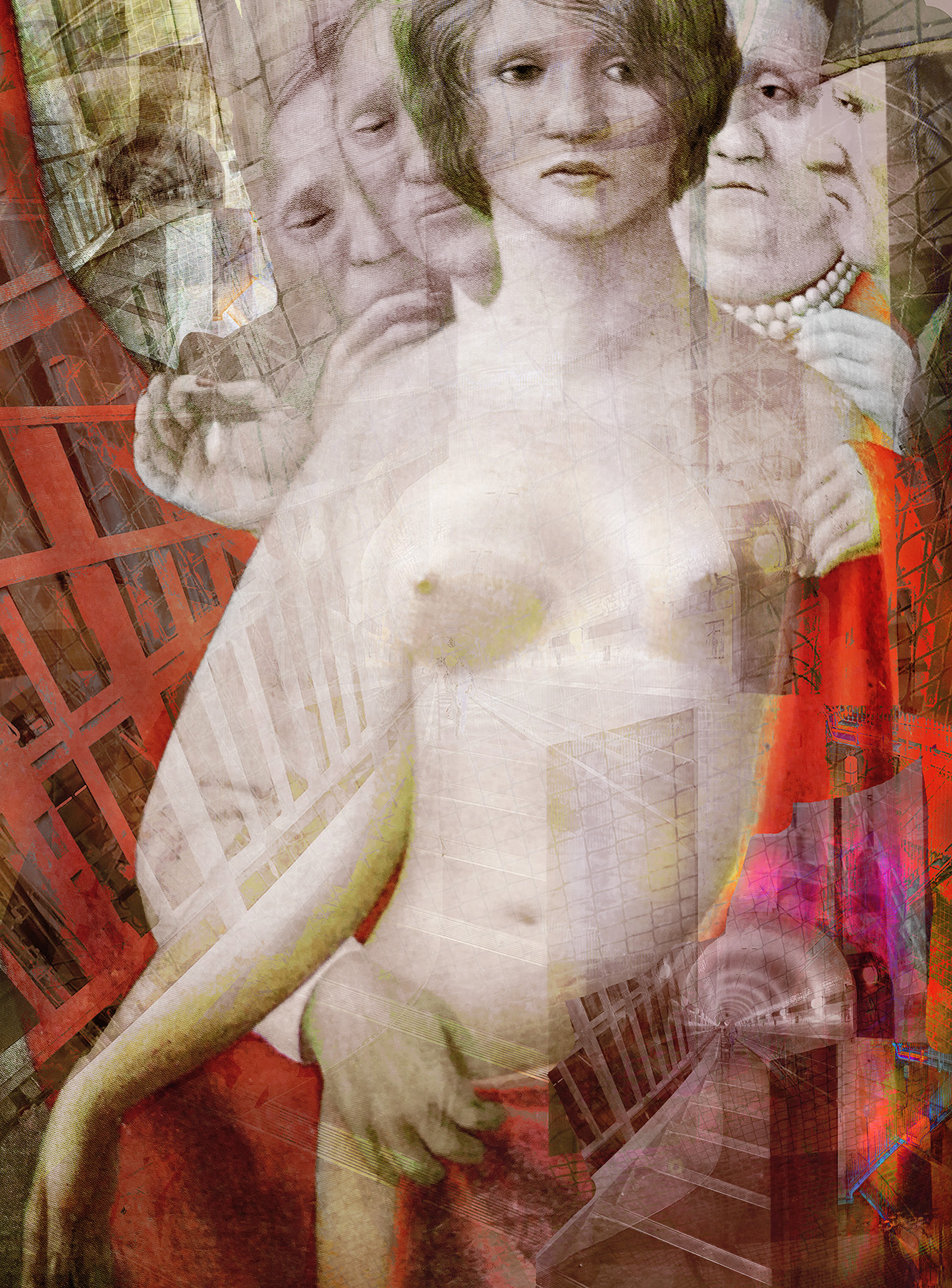
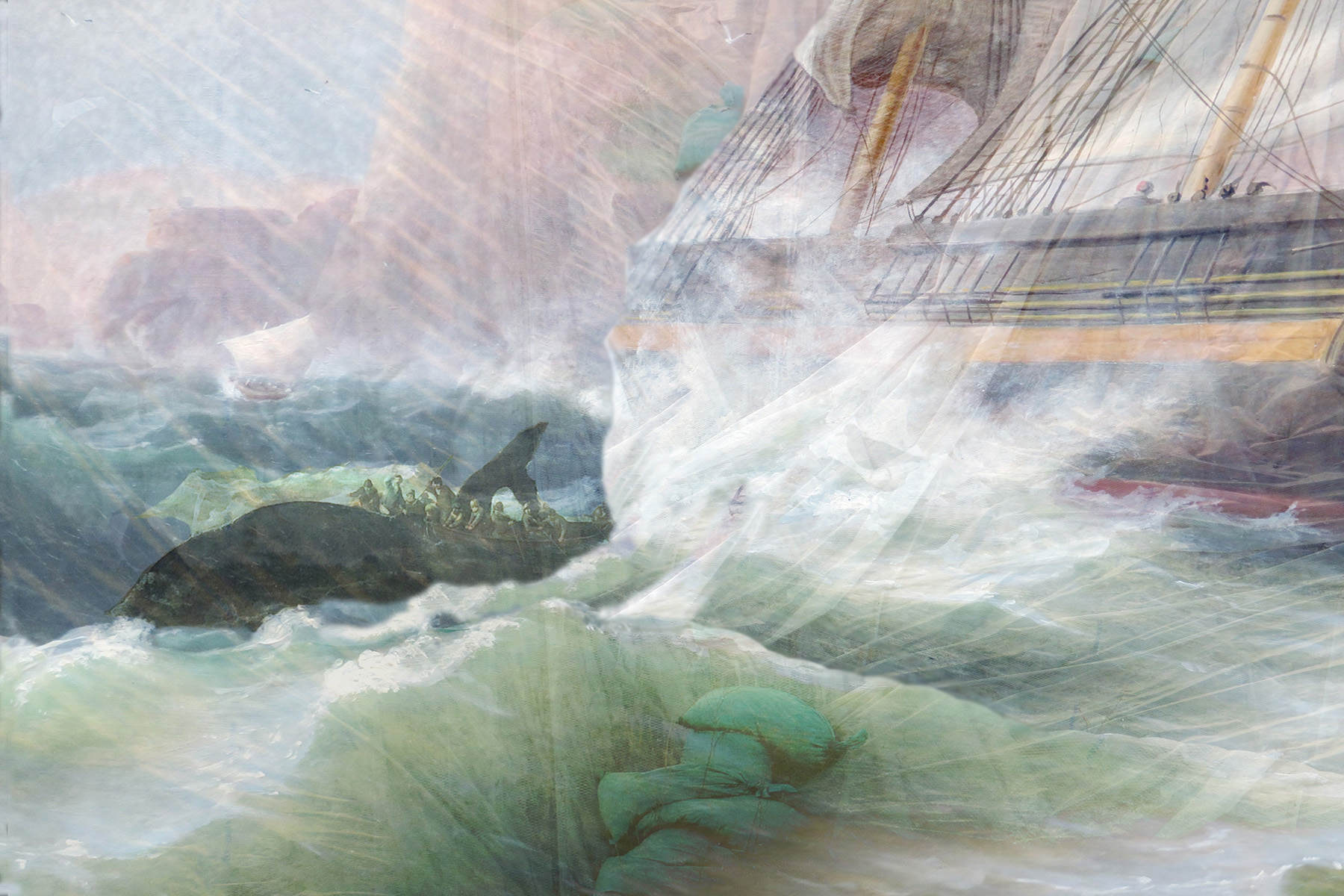
A) This is what my brain looks like when trying to write not one but two really long and involved reviews during a single week. And now darkness descends and all that’s left are the photographs.

B) This is what my cerebrum looks like (the part of the brain that handles some aspect of language) when desperately trying to find words that can be printed in a family friendly blog in reaction to the outcome of Great Britain’s election. Darkness descends there, too.

C) This is what an infinity mirror room looks like when created by a nonagenarian artist obsessed with polka dots, fully insisting that we all are same, connected souls in the world.

If you picked: Yayoi Kusama, you won. If you guessed Brexit, you sort of won. If you said braindead, you are my friend.

C, in other words, rules the objective world. A, B and C, however, are not mutually exclusive…..

The Souls of a Million Light Years Away is currently on exhibit at The Broad and each visitor braving the lines to get in is accorded exactly 45 seconds to explore the experience. Guard with stop watch on hand standing outside and calling you out.

And here are Polkadots and Moonbeams…..

I will greet the Sun again: Shirin Neshat at The Broad.

There could not have been a better introduction to Iranian-born, US artist Shirin Neshat than watching one of her videos, Rapture (1999) early on in the extensive retrospective of 30 years of her work, currently on exhibition at The Broad in L.A.

Whispers (1997) (Women of Allah)

Everything, but everything was binary in that experience. You sit between split screens, having to turn your head to the left to see one part of the video installation, to the right to see the other and never the twain shall meet. The left side depicts hundreds of women, the right the equivalent number of men. The females, cloaked in black hijab or chador watch, often passively, pray, are mostly silent except for an occasion of ondulation, disperse and eventually send a few of their own on a rickety boat into the depths of the Atlantic ocean (filmed in Morocco.) The men, in identical black pants and white shirts, run the length of a citadel, canons and all, climb to the roof, sing, feast, display some hierarchical order and are generally active, eventually waving en masse to the departing women from afar.

Think of it as Buñuel meets Herzog, and I mean that as a compliment. Sort of. It was visually dramatic, exquisitely staged and choreographed. The binary themes of female/male, activity/passivity, departure/arrival, even a dreamlike state vs reality that are central to all of her work, were right upfront. The video brought the issues of gender differences and religious intolerance to the fore with a sledge hammer, black and white for all to see, and yet leaving enough room for ambiguity that even the most fervent feminist could leave the screening room with an inkling of hope. Maybe.

There was that nagging thought – and one that repeatedly crept into my brain while taking in this comprehensive exhibition – as to whether we have made any progress away from the orientalist lens applied throughout history to members of non-western cultures, those exotic figures from a different world. The forced head movements between screens had me wonder about disconnection, the separation of them vs us, but also about how our gaze is steered, often away from taking in the whole picture; the staged costuming and movement of the people evoked a sense of directorial control that was reminiscent of its colonialist counterpart, chador replacing the nude bodies of those Seraglio paintings of yore as a mirror image of exotic otherness.

Don’t get me wrong: I think Neshat is superb in the way she creates visual scenarios, employs melodrama to make a point, ingeniously cashing in on our fascinations. She is powerful in her story telling and quite sensitive to contemporary concerns with exile, gendered existence, the interplay between political power and religious fervor. And she has whatever it takes to become a successful female artist in a male dominated world, never mind her exceedingly dainty, feminine appearance, dangling designer jewelry, heavy make-up and all. More power to her!

*

She also has a story that is carefully tailored to underpin her art. Raised in Iran in a middle-class family in the 1950s, sent to catholic boarding school in Tehran to get a westernized education, she came to the US at age 17 in 1975 to go to college and later grad school to get her MfA. Discontent with her attempts at making her own art, she moved to New York city and worked at the side of her partner for over 10 years, tending to a cultural meeting point The Storefront for Art and Architecture. Those years were not exactly exile – that only began with the political changes in Iran prohibiting her return, and she has certainly refrained from visiting there for the last decades, now openly declaring that she never wants to go home, even if it were politically possible, and intends to leave nostalgia for the place behind.

Women of Allah series 1993-1997

Her first large project in the 1990s after a visit back home after years that included the revolution, the hostage crisis, and the Iraq war, propelled her like a rocket into the successful realms of the art world. The photographic series Women of Allah depicted veiled women with guns in various positioning, often looking directly at you in regal and defiant ways, overlaid in carefully applied calligraphy citing Farsi poetry, often by women poets. No longer object of stares but agents of their own gaze, these women, photographed between 1993 and 1997, projected strength, particularly in the juxtaposition of tenderness, when coupled with children, with rawness, when harnessing the weaponry, another one of those binary plots.

Bonding 1995 (Women of Allah)
My Beloved (1995) (Women of Allah)

The writing across the bodies of the subjects felt like a membrane to me, a distancing device in the sense that the language cannot be deciphered by this Western viewer, but also as a protective barrier against too much exposure of the body parts it covered. If we could read Farsi, we would learn that two very contrasting poets are projected onto the different subjects:

“Farrokhzad’s imagery from the pre-revolutionary Iran, controversially sexual, Western, a modern rebel thirsty for life—and Taherzadeh, the new regime’s idol, utterly alien to the artist, Muslim, traditional, Eastern, revolutionary, daydreaming about martyrdom. In Untitled (1996), the woman is the object of desire, her face covered with Farrokhzad’s text. In Speechless (1996) and others employing Taherzadeh’s text, the woman willingly becomes the revolutionary sacrifice: motherly, subjugated, utterly secondary.”

Untitled (1996) (Women of Allah)
Speechless (1996) (Women of Allah)

While I looked at these determined faces I wondered about how the historical development in the 30 years since these photos were taken would change our reaction: if I knew these women were involved with ISIS, would I see a triumph in their courage to join the fight? If I was a Kurdish female fighter, now raped and killed for participation in a singular social experiment of gender equality, would my Iranian sisters, fighting for the right to veiled themselves again, feel like enemies or allies? Does a change in contemporary context alter the poignancy of contemporary art?

Does a change in politics alter the way we describe a country? I was reminded of one of my favorite travel books of all times, Terence O’Donnell’s Garden of the Brave in War, that describes life in pre-revolutionary Iran in the countryside, introducing world views quite different from our Western perspective and yet assuring a sense of shared humanity. How would he have depicted the contemporary state of affairs?

(Women of Allah)

*

Neshat has won countless awards for her work, among them the First International Prize at the Venice Biennale (1999), the Grand Prix at the Kwangju Biennale (2000), the Visual Art Award from the Edinburgh International Film Festival (2000), the Infinity Award from the International Center of Photography in New York (2002), the ZeroOne Award from the Universität der Künste Berlin (2003), the Hiroshima Freedom Prize from the Hiroshima City Museum of Art (2005), and the Lillian Gish Prize in New York (2006). Her contributions to important collections can be found here.

The early photographic explorations were soon joined by videos and feature films, media that I find frankly much more interesting and a better match for her strength of creating visual drama, and also requiring deeper thinking than her portrait work. The exquisitely mounted exhibition at The Broad meanders from room to room, large spaces that provide breathing room for the XL portraiture. There is something about the size (and the repetitious use of calligraphy obscuring faces across 30 years of work) that eventually strikes as dangerously close to gimmicky.

Corridors at The Broad

The strong emotional impact of the first series, in other words, was not matched for me in later work, now staging subjects from other countries, often by major commissions, in Egypt and Azerbaijan. People propped up in studio arrangements with photographers present (Larry Barns being a frequent and outstanding collaborator), lighting assistants bustling, and Neshat directing pose, are asked how they feel about poverty or what home means to them (the little things like mother’s food, it turns out to little surprise.) Capturing their tears in front of the recording group feels invasive to me, if not exploitative, and the size of the portraits prevents any sense of intimacy with the subjects.

Our House is on Fire (2013)
The Book of Kings (2012)
The Home of my Eyes (2015)

Much more impressive is work that contrasts the smallness of humans, almost always women, with the largeness of landscapes or architectural molochs. The stills anticipate what the video installations confer: a striking sense of visual exploration of psychological states.

Soliloquy Series (1999)

The Broad excels in placing the small auditoriums where the videos are shown in-between the spaces for photographic work – it is almost like breathing room provided, except that your breath is sucked in and held from the tension elicited by these films. It is as director that Neshat succeeds most, on both the emotional and intellectual level. (Unclear, why that did no transfer to her first major directing role in an operatic setting – she was called to direct Aida at the Salzburger Festspiele in 2017, an opera with a love triangle and political and religious oppression, right up her alley, one would think. The showcase production with Muti conducting and Netrebko in the main role was lauded, but Neshat’s directing ruthlessly panned by the critics.)

*

Neshat does not consider herself a political activist. Politics affect her, though, and she talks freely about being exposed to racial profiling immediately after 9/11 and then again since the 2016 election that confronted her with more explicit racism in her own private experience. Her recent work (Roja and Land of Dreams) turns to explorations of living as an exile in the US, providing astute social commentary on trauma and war as experienced by all sides, but also linking to her feeling that she is not welcome in either culture or place.

When asked if she considers herself a feminist she answers indirectly: “If someone asks me that and they often do, I give the question back to the audience. Do they think I am? Yes they do, so I take that, it’s ok with me.” Her recurrent emphasis on the dichotomy of women being extremely fragile and vulnerable vs extremely strong and defiant might need a closer look in the context of feminist theory. The implications of gendered realities in her work, however, are fascinating and if you have a chance to see this exhibition, make sure you do!

Shirin Neshat: I Will Greet the Sun Again

Oct 19 – Feb 16, 2020 The Broad, Los Angeles, CA

I Will Greet the Sun Again
I will greet the sun again
and the little river that once ran in me
and the clouds that were my ruminations
and the aching blooms of poplar trees,
my companions in those seasons of drought.
I will greet the crowd of crows again,
who brought me their rich perfumes,
gifts from gardens of the night,
and my mother who lived in the mirror
and whose shape was the shape of my own old age.
I will greet the earth again,
who in her lust to create me again,
fills her fiery belly with seeds of green.
I am coming, I am coming, I will come again,
with my long hair dripping the scent of dirt,
with my eyes inflicting the density of darkness,
with brambles I’ve picked from the far side of the wall.
I am coming, I am coming, I will come again,
and the doorway once more will be filled with love
and I’ll greet the lovers standing in the doorway,
and the little girl there
still standing in love.
Forough Farrokhzad
Translated from Persian by Paul Weinfield, © 2014

Art on the Road: Käthe Kollwitz: Prints, Process, Politics

Husband: “You really are drawn to dark art, aren’t you? Who is she?” Me: “What do you mean? We have a print of her’s hanging on your side of the bed.” Husband: “Print? What print? ”

Thus I offer you a slice of typical conversation overheard in our household, while dragging my beloved to a striking exhibition of works by Käthe Kollwitz (1867–1945,) one of the icons of German modern art, currently shown at The Getty in L.A.

Entry to the Exhibition with an enlarged excerpt from Charge (between 1902 and 1903)

While he was muttering about the absence of visual memory, my brain was frantically searching for a translation of an untranslatable German term that is often – and mistakenly, oh so mistakenly – cited in connection with Kollwitz’ art: Betroffenheitskitsch. Betroffenheit can be translated as shock, dismay, consternation, sadness. But in this context it is probably meant to describe too much empathy verging into Kitschiness.

Self-Portrait in Profile toward the Right ca. 1938
Chalk transfer lithograph, printed in black ink on buff paper State III of III; printed in 1946

It was the kind of condemnation you heard from a younger generation of German artists, Martin Kippenberger among them, after over-exposure to the works of this celebrated artist who was claimed, for one, by the left (communists, socialists, feminists, you name it) for her anti-war stance and her artistic exploration of themes of social justice. Yury and Sonya Winterberg, authors of a Kollwitz biography (2015), speculate that Kollwitz’ emotional response to proletarian misery and the consequences of war was incompatible with the ironic if not sarcastic self-image that many more recent German artists have come to identify with.

The biography shines new light on her life and work. New to me, anyhow. Painstaking archival work and interviews with three of her surviving grandchildren reveal a complex story. On the one hand, she was preoccupied with death, growing up in a household that saw three of her siblings perish young. On the other hand, she possessed an extraordinary life force, was sensual, and openly acknowledged her bisexuality. The love for her children, it is hinted in the narrative, was overbearing bordering on abuse when it came to interacting with her sons in sexualized situations. Her self-assurenedness made her a center of her social circles, and many a famous artist, including Ernst Barlach and Berthold Brecht adored her. Her membership in diverse women’ organizations can be counted as early feminist engagement.

Woman with Dead Child 1903
Etching, drypoint, sandpaper, and soft ground with the imprint of laid paper and Ziegler’s transfer paper, printed in black ink on copperplate paper
A warning: I tried my best to match my photographs with the given iteration of a print during the evolution to the final version – I might have messed up on occasion. All the more reason to go and see the exhibit for yourself: There the annotation is flawless!

Germany has not one but three museums dedicated to her, the Käthe Kollwitz Museum in Cologne which has a marvelous collection of her works, the Käthe Kollwitz Museum in Berlin where she lived for much of her life, and the Käthe Kollwitz Haus in Moritzburg, where she rented two small rooms at the estate of friends after having been bombed out in Berlin in 1944 and where she died a year later.

Kollwitz was also hailed by the right as a safe bet of someone who had been unfazed by Nazi condemnation and offered sufficient pathos in her sculptures to serve as memorials for those killed in war and by Nazi persecution, needed when Berlin emerged as the German capital again. (None other than Chancellor Helmut Kohl ordered her work for the Central Memorial of the Federal Republic of Germany to the Victims of War and Dictatorship a few years after the wall came down.)

*

So who was this woman? Someone who blazed a path into the Berlin academy at a time when males almost exclusively dominated, who won prizes, who was a sufficient threat to the Nazis to be banned from showing her work – and who simply observed everyday life, refining her skills in perpetuity to depict human suffering of the working class, the poor, and those sent to die for national ideals and imperialistic strivings. She lost a son in WW I, a grandson in WWII; she saw close friends murdered by paramilitary forces after the short-lived November revolution and the Spartacist uprising in January of 1919.

She observed, she depicted. She bore witness.

Various iterations of Woman with dead child 1903

She also made it very clear that she resented being co-opted by any kind of political movement, across decades of diligent diary entries stating that she was not a political artist. She wanted to address political and social issues with her art, but from a humanist perspective, one that did not shy away from the sadness, the futility and misery that surrounded her.

Vienna Is Dying! Save Its Children! January 1920
Crayon transfer lithograph, printed in black ink on light-brown machine-made paper
State I of II

Käthe Kollwitz: Prints, Process, Politics is allowing us a hard look at what she really accomplished. The exhibition features etchings, lithographs and woodcuts, from every phase of the artist’s career, alongside related preparatory drawings, proofs, and rejected versions of prints. It is a terrific learning experience, beautifully curated to showcase the evolution of some of her print cycles. Early etchings are delicate, later woodcuts become darker, more streamlined, expressionistic, although she never joined the expressionist movement per se. The viewer is expertly guided through multiple iterations of one image with explanatory pointers to what was changed and why by the artist.

The Ploughmen ca. 1906
Preparatory drawing for The Ploughmen
Charcoal, graphite, and white chalk on blue-gray laid paper

This includes one of her most famous print cycles, Peasants’ War, produced across 6 years until completed in 1908Its seven prints are eerily prescient of the tragedy about to unfold in 1914, repeating the human suffering that happened during the Bauernkrieg in 1524, a year-long revolt by poor farmers, ruthlessly crushed by the aristocracy, with over 100 000 farmers slaughtered. It was the largest and most devastating, futile uprising before the French Revolution.

Ploughmen and Woman Before June 1902
Rejected second version of sheet 1 of Peasants’ War
Crayon and brush lithograph with spatter and scraping on the drawing stone, printed in dark-brown ink, with a tone stone in orange-brown ink, on light-brown paper State I of II
Charge
Between 1902 and 1903
Sheet 5 of Peasants’ War
I unfortunately did not record which version of the many on offer.

*

From the catalogue: According to exhibition co-curator Louis Marchesano, “Kollwitz is known for her powerful social commentary but what people often don’t fully appreciate is that the immediacy and expressive clarity of her images belie the efforts behind the works, which are products of a deliberate and measured artistic process.”

Exposure to process aside, one of the most moving contents for me was the depiction of mourners around the murdered friend and revolutionary Karl Liebknecht lying in state. As these things sometimes happen serendipitously, the very next day I came across a tattered copy of Alfred Döblin’s novel Karl and Rosa: November 1918, A German Revolution, a book I had read some 40 years ago. The novel by the same author as of Berlin Alexanderplatz describes the fragmentary revolution and the bloody terror that Kollwitz observed as well, so shortly after the horrors of the great war had ended. Here is a terrific review of the book that goes beyond Liebknecht’s and Luxemburg’s fate to sketch a crucial part of German history.

In Memoriam Karl Liebknecht Before October 1919
Rejected first version
Etching, aquatint, sandpaper, lift ground, and soft ground with the imprint of laid paper, printed in black ink on copperplate paper
State II of VII

The novel was for sale as a fundraiser at the Southern California Library in LA. The library’s archive has an extensive collection of pamphlets and political ephemera from social justice causes. Among its substantial holdings are hallmarks of local activism, such as primary documents of the Black Panther Party and the Los Angeles Protection of the Foreign Born, which were saved by local residents during the 1992 Los Angeles Riots. I happened to come by when local organizers wrote postcards for prisoners for the holidays.

The community garden attached to the library is open and welcoming to the many homeless along Vermont Ave. The murals outside depict the history of women in the labor movement, among others.

Kollwitz would have felt right at home.

She was strong, demanding, ahead of her times and probably hard to live with. Her art work is extraordinary (over 100 self-portraits alone) and what is shown (and how it is shown) at The Getty provides much insight into her artistic prowess and her humanistic passions.

Käthe Kollwitz: Prints, Process, Politics – December 3, 2019–March 29, 2020, GETTY CENTER, Los Angeles, CA

https://www.getty.edu/research/exhibitions_events/exhibitions/kollwitz/

Music today is a song about the movement to honor Liebknecht and Luxemburg.

For my German readers there is a fascinating find – a former GDR children’s magazine had a record attached with an educational audio play on the imperialism, communist honor and Liebknecht’s revolt.

A Soldier’s Journey: From Military Life to Art Academy

“It is curious that physical courage should be so common in the world and moral courage so rare.” Mark Twain – (Mark Twain in Eruption: Hitherto Unpublished Pages About Men and Events. Edited with an introduction by Bernard DeVoto. 1940)

IF YOU ARE CURIOUS about the world, have the privilege of meeting a lot of different artists, and risk tackling things that are not exactly central to your own expertise, you’ll expand your horizon. When I set out to portray people with my camera and my writing, the encounters are as varied as the artists who I meet. Some evolve into friendships, others are puzzling, some demand hard thinking, many provide nothing but pleasure. The last year alone introduced me to classically trained musicians turned Ukrainian girl-band, puppeteers from Chile, wheelchair-bound choreographers, Mexican political theatre activists, female conductors of sacred music, and numerous printmakers from around the nation. All offered glimpses into worlds different from my own, and in one way or another challenged the way how I view art or the process of creating art.

This has never been more true than for my most recent conversation with a man who has lived in worlds so distant from mine that they might as well exist in a different universe. I met him by chance in a museum cafe. He had come to Maryhill Museum to pick up paintings that had been on display in a group exhibition of, among others, student work of the Seattle-based Gage Academy of Art, his included. I was there because of my interest in the Exquisite Gorge Project that was in progress across the summer months. We started to talk and agreed to a studio visit, something I finally managed to set up last week.

Charles Burt, artist

*

PLATOON SERGEANT FIRST CLASS Charles Burt joined the army when he was 18 years old. He spent more than half of his life there, with a distinguished career in the tank division, multiple deployments to war zones and eventually operating as a drill sergeant and recruiter. The duties of an SFC typically include managing soldiers and tanks in a combat arms role, with responsibilities such as tactical logistics, tactical casualty evacuations, and serving as the senior tactical adviser to the platoon leader.

Born in Michigan, he moved to Texas at age nine, shunned in his middle school years as a “Yankee” in an environment where the Civil War had seemingly never ended. His love of drawing and art in general sustained him throughout his childhood. His mother, struggling after a hostile divorce, found a spiritual home in a fundamentally Christian, evangelical church which became to dominate Burt’s belief system during his formative years.

Charles Burt Respect
Preparation of the correct blue for the American Flag

One of the hallmarks of his religious eduction was the demand for literal interpretation of the bible. If the world was created from scratch but some 10.000 years ago, then any science telling us otherwise was a work of the devil, meant to distract us. Dinosaurs did not exist. The concept of evolution was a satanic mirage. Heaven and hell were real places, and anyone not born into or converted to Christianity condemned to fry in the latter for all eternity.

Fast forward to Operation Desert Storm in reaction to Saddam Hussein’s invasion of Kuwait threatening US oil demands in 1991, with Burt deployed, now in his early twenties. The Gulf War casualties were enormous. Assumed numbers vary, with Les Aspin, then chairman of the House Armed Services Committee, estimating at the time that “at least 65,000 Iraqi soldiers were killed,” and later sources reporting one to two hundred thousand casualties. MEDACT reports on civilian casualties estimate the number of Iraqi deaths caused directly and indirectly by the Gulf War to be between 142,500 and 206,000.

Charles Burt Tank

Burt could not wrap his mind around the fact that all of these people, many innocently caught between the warring parties, would be condemned to eternal life in flames. It seemed amoral to decide that the element of chance – where you were born or what information you had access to – would determine your fate. Cracks appeared in his armor of evangelical convictions, leading to extensive reading and listening to other views offered by the varied mix of people he met in the army and his exposure to a foreign world. Being religious turned to being interested in religions, with faith eventually discarded and the emerging hole filled with learning about science and philosophy. A turn-around requiring enormous amounts of moral courage – matching his physical one – since it meant to leave behind everything that had been a constant in his life, everything that had been his ethical yardstick. Everything, that is, except his interest in art.

*

“All sorrows can be borne if you put them into a story or tell a story about them.” Hannah Arendt The Human Condition (1958)

WE TALK A LOT that morning we meet at the Atelier where Burt currently finishes his 4th year of art education, after retiring from the army in 2013. At times I find myself holding my breath at the intensity of what he experienced, how every sensory detail is etched into his memory.

“One of the toughest things I had to deal with while in the Army was a Bosnia rotation in 1997. We had to do patrols around towns and weapons inspections as well as patrol the mass grave sites so the UN soldiers could remove the bodies without getting harassed by those who did not want us doing that. I was the gunner on a High Mobility Multipurpose Wheeled Vehicle (HMMWV) and so I rode in the turret on top, and on our way to one of the mass grave sites I can smell that we were getting close. We had to go through an abandoned demolished village and our interpreter would talk to us about how this was one of the towns where the Serbian army went through and committed their mass genocide. They would drive-through with tanks blasting through houses and she showed us the large holes that were blown through different houses. In the middle of the town is the largest building which was the school and she explained to us how children were brought outside of the school and the Serbian soldiers would pull them out one at a time and she showed us a large indention in one of the walls outside where the children would get executed. The parents would try to come down and then they would shoot the parents that were trying to save the kids. It was a tough thing to hear about and be at this place. We had passed that town so many times and never gave it one thought until our interpreter told us about it. I never looked at the abandoned buildings around the country the same way again. It’s something that still haunts my dreams I am really glad that I did get to experience that and be a part of that. I met some wonderful people while I was there and learned a lot.”

Charles Burt Self Portrait (Reflection in the window of his tank, looking out)

I hear about how it felt to be under mortar attack while stationed in Ramadi Iraq in 2006 during the Sunni Awakening, the Iraqi revolt against al Qaeda in Iraq (AQI) in which Sunni Arabs partnered with U.S. forces to fight a common enemy. It was a bad place at a bad time. Burt’s small Forward Operating Base (FOB or camp) was under constant sniper and mortar attacks, often so close that the building would rattle and the noise could be heard by his wife with whom he was on the phone; he tells her white lies to protect her, about the generator blowing up or the gas tank rumbling, while his own men sit with pale faces pinned against the shaking walls.

A subsequent PTSD diagnosis captures the horrors of what was lived. His loving, remarkably kind and supportive wife, eases the re-entry.

*

GAGE ACADEMY OF ART is a non-profit, extended-learning and contemporary art center, that has provided community-based art instruction for some 30 years in Seattle. It offers public art events, lectures, youth programming and exhibitions, but central to its educational mission is the Atelier program. It promises a path to mastery in drawing, painting or sculpture in a deeply immersive environment under the tutelage of internationally renowned teaching artists.

Live Drawing Class before the lecture begins

The first year of instruction is entirely devoted to drawing, mostly with charcoal. The second year introduces but two colors in oil, and in the third year painting with the full palette is encouraged. The fourth year is dedicated to developing your own portfolio, which will be critiqued at the end of the year by the entire faculty, not just the specific Atelier head who guided you through the years.

Burt did his research well and chose wisely: he joined Juliette Aristide‘s Atelier which offers fundamental drawing and painting skills with a strong emphasis on observation from life in the tradition of American Classical Realism. Her own description:

“Like the great studios of the past, working from the human figure in life drawing and painting forms a pillar of our program. With that in mind we spend every morning throughout the year in the life room. The afternoons are spent in your studio working through the atelier’s curriculum of cast drawing, master-copy work and still life painting in a step-by-step progression. As you acquire each skill, new and more challenging projects are assigned. Aristides Atelier students are also provided additional classes in perspective, anatomy, composition, painting techniques and color theory.”
The term Classical Realism was coined by Minneapolis painter Richard Lack who founded the first studio patterned after the 19th-century French ateliers in 1967. By the 1980s a significant number of young artists emerged from this educational setting, continuing to spread the tradition. No-one seemed to mind the contradiction in terms: Classicism, after all, is devoted to subject matters, highly idealized, from ancient Greece and Rome. Realism, on the other hand, is devoted to common objects and themes, beautification be damned. No-one cared about the many voices in the art world either, who heaped scorn on what they perceived to be a reactionary movement.

Study objects at the Atelier

Classical Realism has become a living tradition. It finds its roots in both the techniques and the training approaches of the past: deep immersion in technical skill, draftsmanship and composition. A focus on honing perceptual sensitivities, representational devices and creation of harmonious beauty.

Charles Burt, Drawing of Moses Sculpture

Whatever one’s ultimate judgment of the Classical Realism movement, there surely could not be a better fit for Burt than it. For one who’s life has been a continual experience within structure, be it the stark religious corset of the evangelical movement, or the rank and file hierarchy and code of the military, a highly structured teaching of means and methods, now in a nurturing environment, provides some continuity.

Charles Burt Deployment

More significantly, a life once pressed into the scaffold of literal interpretation of imaginary worlds is now devoted to the literal observation of the real one, the here and now in front of our eyes. Burt’s choice of subjects for his portfolio concern two topics, both helping to externalize the internal struggles: objects associated with military and with religious service. While observing him at work in the studio I was reminded of Monet’s phrase linked to Impressionism: “To see we must forget the name of the thing we are looking at.” An inversion seems apt here: To look allows the painter to forget (for a few hours) the things he has seen.

*

THE US DEPARTMENT OF VETERAN AFFAIRS has a category of injury sustained in war related to, but distinct from PTSD: Moral injury.

Like psychological trauma, moral injury is a construct that describes extreme and unprecedented life experience including the harmful aftermath of exposure to such events. Events are considered morally injurious if they “transgress deeply held moral beliefs and expectations”. Thus, the key precondition for moral injury is an act of transgression, which shatters moral and ethical expectations that are rooted in religious or spiritual beliefs, or culture-based, organizational, and group-based rules about fairness, the value of life, and so forth. In the context of war, moral injuries may stem from direct participation in acts of combat, such as killing or harming others, or indirect acts, such as witnessing death or dying, failing to prevent immoral acts of others, or giving or receiving orders that are perceived as gross moral violations. The act may have been carried out by an individual or a group, through a decision made individually or as a response to orders given by leaders.

I could not, of course, ascertain if or to what degree moral injury was sustained above and beyond PTSD. But I saw moral courage in Burt’s creation of paintings that confront his experiences directly and simultaneously slow us down and force us to contemplate parts of someone’s experience with war and the shattering of faith.

The paintings do tell a story, many stories. One series, for example is constructed within a light box with light shining onto the tableaux from different angles. I forget the exact order, but a grouping of Judaic objects is centrally lit, objects related to Christian worship will be lit from a left angle, and those associated with Islam correspondingly from the right. A shared source of light for these Abrahamic religions, tilted into different perspectives.

Life Tableau in the Studio

Military boots serve as a reminder of deployment, now wiped from all traces of foreign contaminated soil, brushed to full shine. Working boots, by tradition put outside the door of the many wives and families waiting for their soldier to come home, alive and limbs intact.

Charles Burt Tanker Boots
Charles Burt Work Boots

Whether these stories will help to bear the sorrow is a question I cannot answer.

*

“I love the man that can smile in trouble, that can gather strength from distress, and grow brave by reflection.” Thomas Paine, The American Crisis, No. I (1776)

CHARLES BURT HAS BEEN DIAGNOSED with early-onset Parkinson Disease (PD). Many of the early symptoms of this disease overlap with those of Post Traumatic Stress Disorder (PTSD). Tremors, difficulty sleeping and poor emotional regulation, including anger and/or depression, can be evidence of either PD or PTSD. Parkinson Disease is a neurodegenerative disorder that affects predominately dopamine-producing (“dopaminergic”) neurons in a specific area of the brain called substantia nigra. Eventually the limbs will be rigid, the gait changes, there will be sensory loss, and cognitive impairment.

Charles Burt’s hands, steadying each other

Parkinson Disease cannot be cured, although science has produced an arsenal of interventions, from dopaminergic medications to surgical treatment providing deep brain stimulation. These treatment options provide symptom relief, but do not cure or halt the progression of the disease. They also need to be carefully timed across an expected life span, since they loose efficacy over time. Science has been dangling alternative approaches – gene therapy, immunotherapy, and cell transplantation, but so far they have not moved beyond the infancy stages of experimentation.

Recent studies point to the possibility that people diagnosed with PTSD have an increased risk of developing not only neurodegenerative disorders like Alzheimers, but also Parkinson Disease. The exact causal mechanisms are not yet known. The VA, for lack of causal documentation during his service years, has not acknowledged responsibility for Burt’s condition. There will never be proof that exposure to multiple IED explosions hurt neuronic pathways. There will never be a way to determine if the poisonous air inhaled from the oil fires in Kuwait acted as a precursor to nerve degeneration. Burt certainly remembers how they would be finally served a hot meal out in the open after a sortie and the plate would be covered with black soot particles before they reached the tables, the food inedible.

Charles Burt in front of Easel

Imagine what it means for someone in the early years of their painting career to face this affliction. To wonder when the ability to draw realistically will be impaired by uncontrollably shaking hands, when it will be impossible to paint for lack of coherent, fluid motion. How it will affect growing into a mature artist with a developed style.

Burt lives in the moment. His urge to build a body of work is unstoppable. His passion for the beauty of the world undiminished. “Science is my new religion,” he says, with a gentle smile full of optimism, “something will come along.” Thomas Paine’s words float in my brain, about gathering strength from distress and growing brave from reflection. No reflection needed: this man is a paragon of bravery. Sustained by art.

Art on the Road: Transparency – An LGTBQ+ Glass Art Exhibition at the Museum of Glass, Tacoma

“One can resist [oppression] only in terms of the identity that is under attack.” Hannah Arendt Men in Dark Times, 1968.

The title alone made me curious. Was Transparency a less than original descriptor of works made of glass? Was it an absolutely clever pointer redressing the invisibility of members of the LGBTQ+ community, who were the sole artistic contributors to the current exhibition of that name at the Museum of Glass (MOG) in Tacoma? Was it an invitation to shine the light on preoccupations and concerns of this particular community, only to reveal that these are often shared by us all, no matter what community we identify with? Was it a play on the fact that transparency is successfully used for purposes of camouflage in nature, as exquisitely demonstrated by jellyfish, South American glass frogs and clear wing butterflies?

The exhibit, first presented at the National Liberty Museum in Philadelphia during Pride month in 2017, will be on display in Tacoma until September 2020. It celebrates a wide range of subjects, methods and styles equal to the variability within the artistic community that produced these works. I counted the fact that the title alone made me think before I even physically entered the exhibit, as a success. As it turns out, one of many that this show delivers.

*

One of the first pieces you encounter is a large disc heavily ornamented with white roses, reminiscent of a flowery Victorian doily. You see an eye, somewhat off center, which, eerily, begins to move, to blink, quite clearly spying on you. Where we Hide from No One (2017), a glass, Poly Vitro and video sculpture by Tim Tate, is part of a series that he connects to issues of commercial surveillance, a balancing act between needs for privacy and protection from threat, and as a reminder “that we are united in Orwellian defiance.”

Tim Tate Where We Hide from No One (2017)

Alternative interpretations readily come to mind. Peering out from behind an opaque surface to see if it is safe to come out, is reminiscent of what so many generations of the queer community had to do from hiding, just as the peeping Toms who did not dare to live their fantasies, peered in reverse. The saccharine display of clouds of little roses obscures the harsh reality underneath, just like seemingly frivolous costuming hides the hardness of lives often exposed to condescension if not outright condemnation.

Tim Tate, We Rose Up (2017)

Tate, Mount Rainier’s Washington Glass School Co-Director had his work The Endless Cycle from a different series represent the US at this year’s Glasstress, the adjunct event to the Venice Biennale. It elicits an illusion of infinity, also found in the piece specifically created for Transparency: We Rose Up (2017). The optical manipulation, looking from afar like the crown of a martyr, draws the gaze in, at times mesmerizing. It is a memorial to the legions lost to AIDS/HIV infections. Whether with mirrors, or more cutting edge videos, Tate’s incorporation of technology into a millennia-old medium creates striking effects, linking aesthetic form to social substance in innovative ways.

Tim Tate, We Rose Up (2017)

The tragedy of AIDS with its loss of an entire generation of men in the 1980s and 90s, appears in several works. Particularly moving was Jeff Zimmer‘s The Presence of Absence (2016) which depicts a skull overlaid with red crosses symbolizing AIDS and an etched phrase: “Your search – John Miles and Jeff Zimmer – did not return any documents.” Googling his formative first lover who died of the disease in 1995, the artist found no trace of him in the digital universe that contains multitudes of the rest of us.

Jeff Zimmer, The Presence of Absence (2016)

One of the strengths of this show is derived from the fact that it is not just about loss somewhat specific to the LGTBQ+ community, like AIDS. All of us can relate to the mourning of lost loved ones through any kind of illness, most beautifully represented by Eric Hess who lost his husband to cancer. Swings (2017) depicts one intact, one broken swing, with its shadow resembling the shape of a chemotherapy infusion bag. The commonality of shared experience in some way magnifies the fact that there are additional burdens carried by this community that many of us who are not part of it are spared. I only wish that the existential threats to transgender people had also found their way into this display – the most recent statistics of their murders, 22 in 2019 alone, are staggering.

Eric Hess, Swings (2017)

*

Tales of loss and longing recur in this quiet show, told at times with wit and sometimes wistfulness. Take Joshua Hershman‘s Derealization (2017) for example. A panel of photographs, partially obscured by opaque glass, in front of a pin hole camera made of glass (Obscura, 2017), is open to multiple takes. On the one hand, it stands in mocking contrast to the Transparency title of the exhibit. On the other hand, it describes the clinical disturbance that many people who have been exposed to trauma or suffer from PTSD experience. Fogginess of surroundings and a sense that things are not real pervade the sensory up-take of those who have been severely harmed.

Joshua Hershman, Derealization (2017)

Somewhat explicitly sexual works are few and far between, cautiously stashed in corners. One wonders why, given that they exhibit the same dignity present in so many other strong pieces in this show. Whether they deal with ways to explore the malleability of the male gaze, as Amanda Nardone‘s Shatter (2017) does, or carefully tease the viewer’s obliviousness as to what the title could possibly imply, as does Walter Zimmermann‘s Pick of the Litter (2017), they make you think. My measure of success, as should be clear by now.

Amanda Nardone, Shatter (2017)
Walter Zimmermann, Pick of the Litter (2017)

Works that focus on issues of gendered experience are also on display. What it means for women to break into the male dominated glass blowing world – I’ll spare you puns about glass ceilings – is beautifully captured in Kim Harty‘s To Signal to Summon (2016) which she describes as “ambiguous: A sparkling object trying to seduce or a reflective warning, signaling danger.”

Kim Harty, To Signal to Summon (2016)

Pink as in Revolution (2019) from The Wheel of Liberation Series by Sabrina Knowles and Jenny Pohlman is a circle of double-headed spears that evoke imagery of totem and power, of prayer wheels and meditation. Knowing that throughout their 25 year collaboration the two artists traveled wide and far, always searching for inspiration from women throughout time and civilizations, helps to trace the influences. As the artists explain:  “Regarding the symbology of our spears: to us they represent self-empowerment and freedom from oppression and were born from learning about the story of Nehanda during our 1997 Zimbabwe journey.”

Sabrina Knowles and Jenny Pohlman, Pink as in Revolution (2019)

*

Washington State is often considered a LGTBQ+ friendly state. LGTBQ people are legally protected from discrimination; Washington enacted LGBTQ protections in 2006. Same-sex marriage has been legal since 2012, and same-sex couples are allowed to adopt. Conversion therapy on minors has also been illegal since 2018. The state has a new LGTBQ commission with Manny Santiago as executive director, the was created by the Legislature and signed into law by governor Jay Inslee in April 2019. The commission will identify the needs of and advocate for the lesbian, gay, bisexual, transgender and queer communities. The immediate goals are directed at assessing the laws that product this community, to establish a resource guide that can be easily accessed across the state, and to understand the needs of the various sub-segments of the population.

High on Santiago’s list is also education. The Museum of Glass’s current exhibition is certainly a step in that direction. Transparency teaches without ever sliding into didactic boredom.

Joshua Hershman, Obscura, (2017)

*

There is an ongoing discussion among producers, exhibitors and consumers of art regarding the role of identity politics. It is about more than “just” people of a particular race, ethnicity, gender, or religion forming alliances and organizing politically to defend their group’s interests. Hannah Arendt’s principle that one can resist only in terms of the identity under attack points to an important insight: people are not statistically, historically, or economically interchangeable. An economically secure White woman has a different existence from a poverty-stricken Black one. A CIS person is not exposed to the abuse and persecution that those labeled sexually deviant often were across history and cultures. Identity, when under threat, IS political. And the political space to explore the consequences of life as a minority and the implications of discrimination needs to be granted in public – even when it also invites ethnographic-nationalist identity politics that are currently sprouting like poisonous mushrooms on the fertile grounds of European and American right-wing movements.

To pinpoint a political identity that is under attack is a way to fight oppression, rather than a danger to inclusive, democratic values. Calls for a “shared humanity,” then, need to be heeded with caution, if they try to blot out what is the specific fate of a minority. On the other hand, demonstrations of what we all share can open the borders between groups, invite less defensive reflection and exploration. And this, I think, is what Transparency pulls off when it’s at its best.

Pearl Dick, Us (2017)

For one, there is a focus on the human figure in gender-neutral or abstracting ways, whether we are looking at the work by Pearl Dick or Drew Mattei (I could not find a website, alas.)

Drew Mattei, Mask (Self Portrait) (2017)

For me, the most successful pairing was an installation of multiple abstracted figures, Transparent (2017), again by the perceptive team of Pohlman and Knowles, against a paint marker – mural by Natalie Hope McDonald The Line of Beauty (2019.) The figures, from the duo’s Hommage series, display fluent movements of necks, heads and shoulders, as if to turn to us or each other to form connections.

Jenny Pohlman and Sabrina Knowles Transparent (2017)
Natalie Hope McDonald The Line of Beauty (2019.)

Connectedness is also the first impression you have when looking at the web of lines across the wall behind the installation. The intersections are sometimes in focus, sometimes partially obscured by the glass figures, and only eventually reveal the strong triangular elements that hold them together, a motif that is not only common in modern LGTBQ iconography, but was also used as identifier in Nazi persecution of members of this community.

The title of this piece by Niki Hildebrand, What affects one affects us all (2014) summarizes it perfectly: understanding, accepting and embracing connections allow us to act in solidarity with human beings whose identity was the source for persecution. MOG’s exhibit Transparency paves the way for such connection.

Niki Hildebrand, What affects one affects us all (2014)

MUSEUM OF GLASS

1801 Dock Street, Tacoma, WA 98402

253.284.4750info@museumofglass.org

October 2019 – September 2020