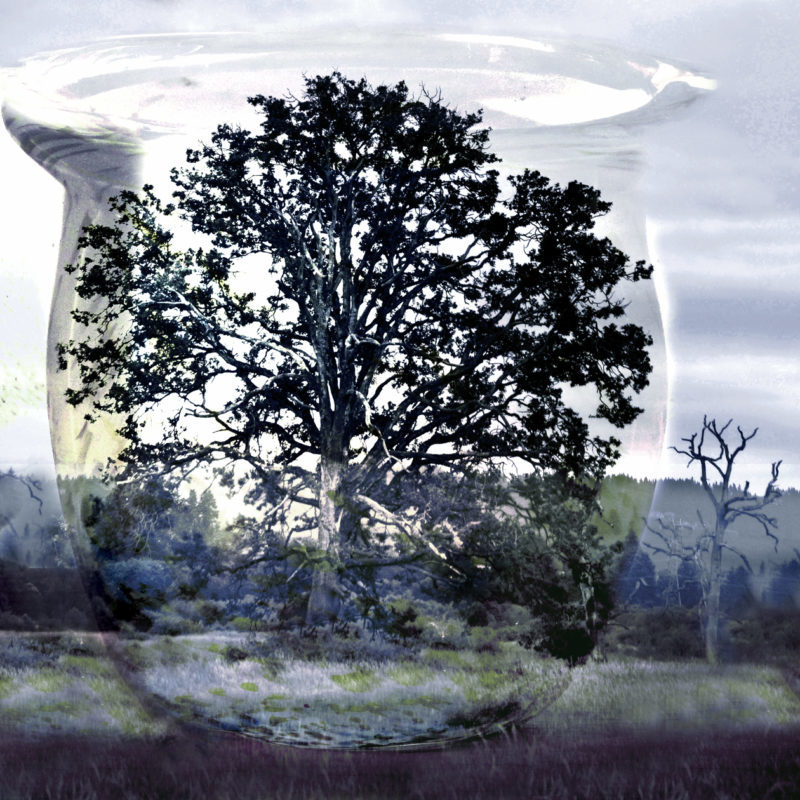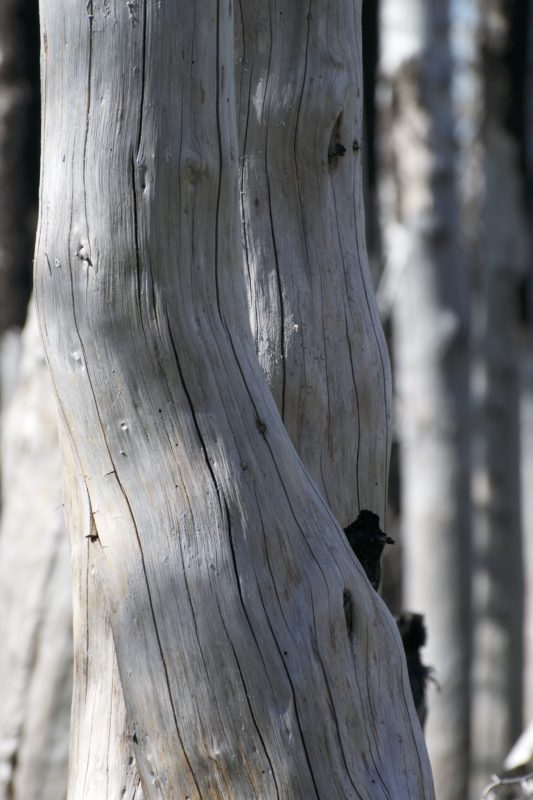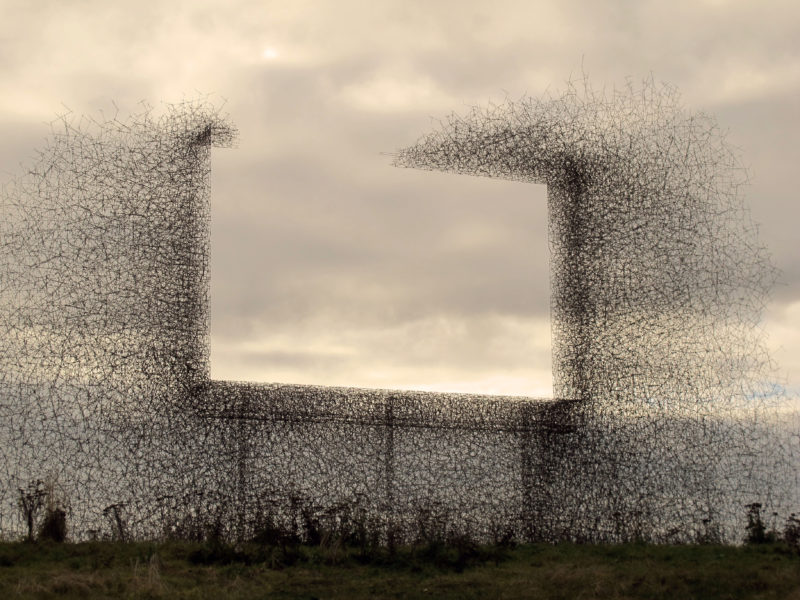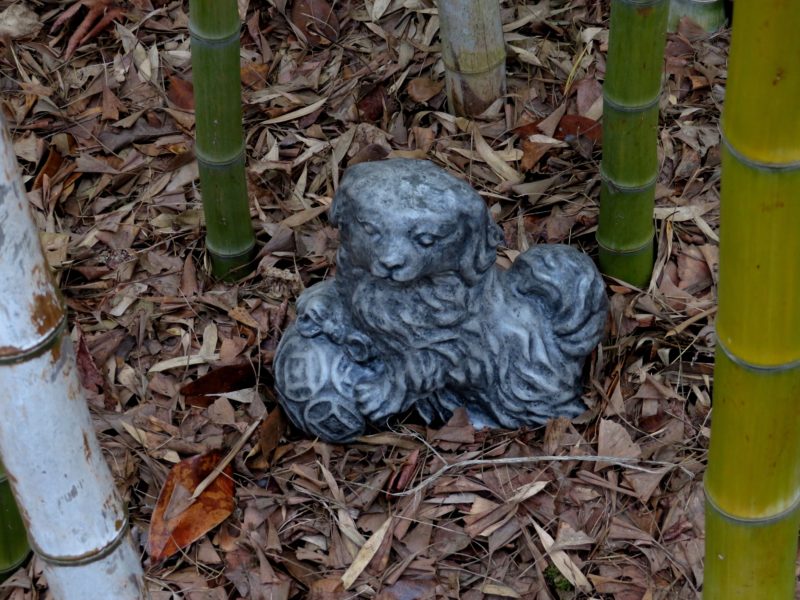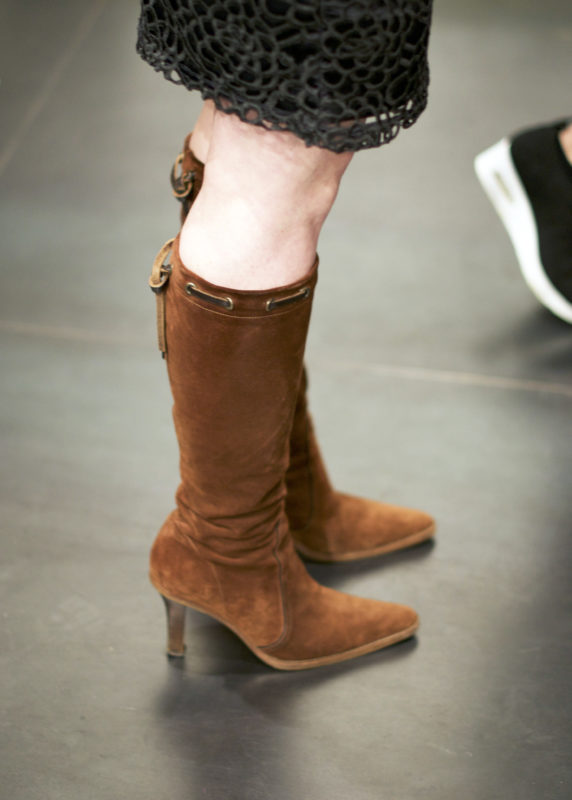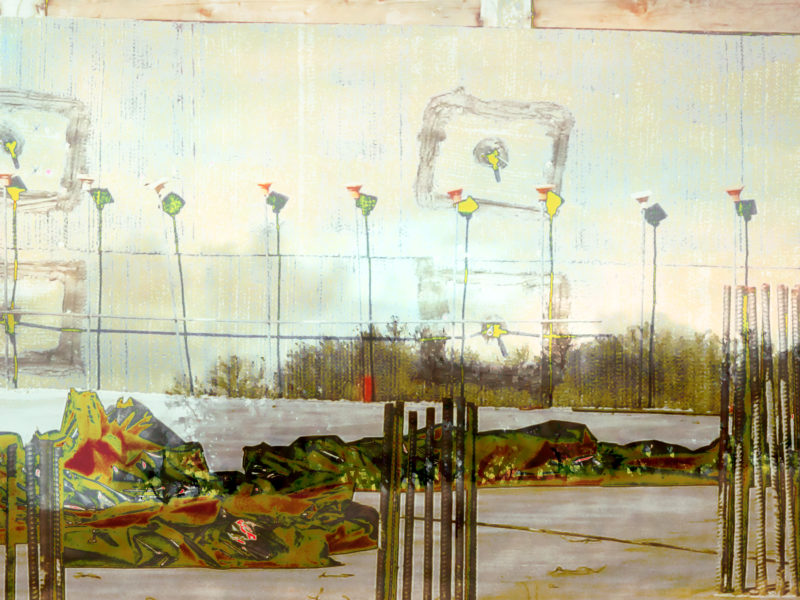
I will bring a few prints of the the series On Transience this Saturday to the studio sale. It is more abstract work than my usual montages, but close to my heart, since it was the first leg in the ongoing project on displacement.
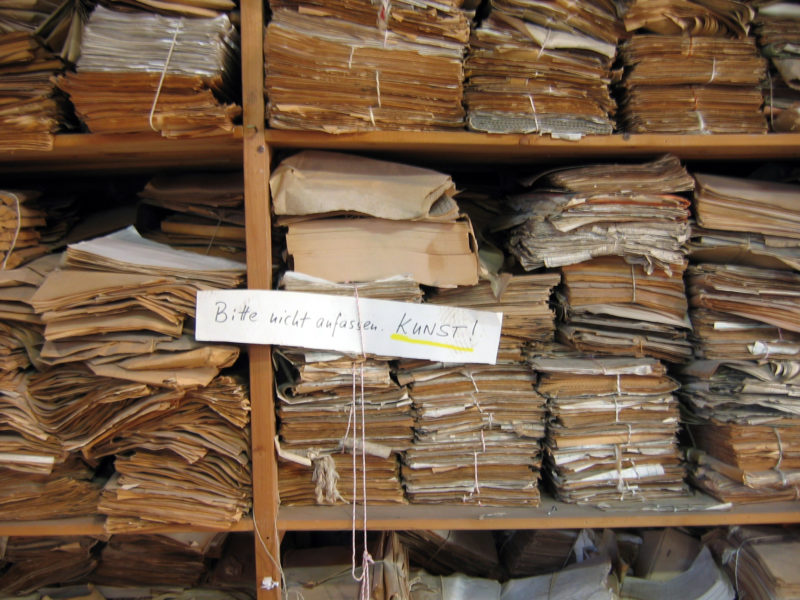
I was inspired by the transient nature of the immigrant experience, in place and emotion, to photograph objects in transition. The images of man-made materials found in trashcans, recycling centers, junk stores and shipyards, were to bring to mind the Jewish scrap peddlers from Eastern Europe who began to arrive in Oregon in the early 1900s. Some of these immigrants made their livings by gathering scrap metal that was cast off, discarded, and broken and by peddling it on the streets of Portland and other Oregon towns. A few of these peddlers eventually turned this “recycling” work into successful enterprises such as the shipyard, where I was photographing as well.
The montages emphasize the transient nature of the materials that historically provided some Jewish immigrants’ livelihood: iron, wood, plastic, paper, and steel. Contemporary immigrants too, regardless of how they made their livings back home, sometimes have no other choice than to turn to menial jobs, cleaning or working in the fields. I wanted to provide the viewer a way to contemplate the mobility of the lives of immigrants, from one land to another, from one life to another.
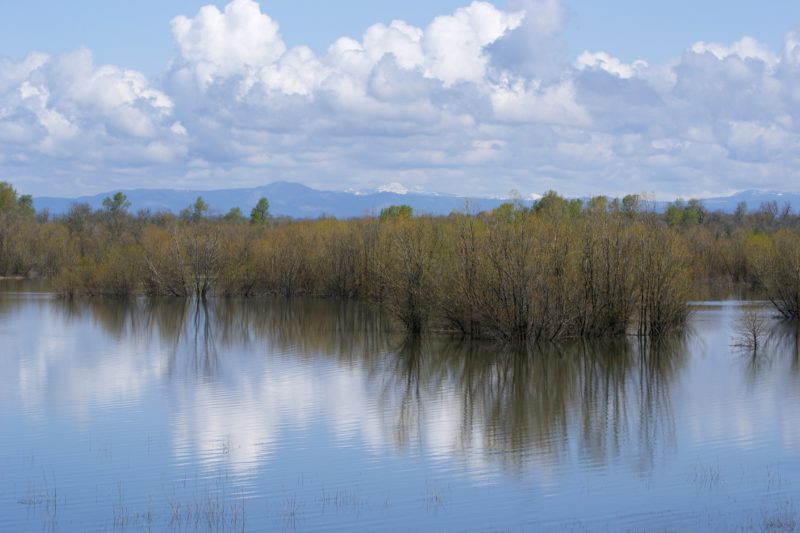
The 2016 series Denizens of Climate Change was intended to showcase the landscapes and bird populations of the Pacific Northwest – all of which will suffer the impact of climate change in the years to come, just like the rest of the world.
While photographing the beauty that surrounds us I was wondering how many of these species and natural sights will still be available to later generations. Will we have failed our children and their children by not pursuing a way to halt the destructive exploitation of our world more aggressively?
Have we done enough to stop the appointment of cabinet members here in the US that consider climate change a hoax, or worse, know it is real but will not forgo short term financial gain regardless of long term consequences? Are we willing to change our own behaviors to delay climate change, starting with how much we drive, how much we consume and what we eat?
For balanced reporting here is some funny reading about the questions you and the birds might have asked yourself about birds at one or another time.
If it makes you feel any better, though, here are some photos of owls getting stuck in toilets.”
I thought I’d copy this paragraph with its link in honor of my mother’s Jahrzeit two days ago – she was a fan of all things owl and would have rolled her eyes over this report. Go fly with them, Lina!
The montages try to conserve the beauty of what is, and also hint at the destruction that will be upon us if we don’t act. The disquieting nature of the montages is hopefully balanced by their appreciation for nature as we still experience it.
There are some stories out there that have survived, pretty much intact, across centuries. The myth of Daedalus and Icarus, as told by Ovid (Metamorphoses VIII: 183 – 235), is one of those. The narrative describes father and son attempting to flee exile in Crete. Daedalus fashions them wings and warns of flying too low or too high. In one case the sea will dampen and weigh down the feathers, in the other case the sun will melt the wax with which they are affixed. In flight, Icarus is overcome by the joy of soaring and plummets to his death after coming too near to the sun.
Manhattan – United Airlines Flight 175 – 9/11/2001
The myth has often been interpreted as an admonition to stay away from extremes and follow the middle path. It has also been called an example of hubris, attempting behavior reserved for the Gods.
Hudson River, NY – United Airways Flight 1549 – 2009 (Birdstrike)
For us who have witnessed a lifetime of airplane disasters the myth provides the easy analogy of things falling out of the sky. As a cognitive psychologist, I am, however, more concerned with the parallels the myth offers regarding the assumption of being in control, falling for the illusion of control. Daedalus was fully aware of the dangers and surely was no fool; nonetheless he was certain he could handle the situation – a certainty that cost him his son. Icarus was warned but got swept up by his desires and threw caution to the wind. In a similar fashion, we invent and use technology; we set national and global policies and make economic or military decisions about situations we consider controllable – or better yet, controlled. Unlike Icarus, we often lack information or warning, but, like Daedalus, we are often alert to the risks but convinced we can handle them – and are profoundly mistaken. The result sometimes involves the same fate as Icarus’ – falling from the sky – and sometimes takes other equally tragic forms.
Schiphol (AMS) – El Al Flight 1864 1992
Free Fall (2015) was a series of photomontages that were intended to remind us of the fallacy described above. The images are composed of photographs that I took either on site or that came from geographic areas that I felt could be stand-ins for sites that I had no access to (Ukraine; South China Seas.) The montages are linked to the story of Icarus via images of birds and to modern tragedy through the disaster locations they include or refer to. They were my take on some of the tragic consequences of the illusion of control.
This week will be my own memory lane. On Saturday, 12/2/2017, two friends and I are showing and selling some of our work for a day – I will bring some of my older series out of storage.
We sent out evites, but I thought I’d use the blog to do a bit of the ground work and dig out images from the archives; some of these prints will be available.
One of my oldest series Affirmation&Negation will be represented (and if I thought its issues of bible touting and social injustice needed our attention then, I do so tenfold now with our current government.)
My approach to this series was dialectical. The images each represent a Biblical passage, placed into a contemporary setting (Affirmation). However, the images also raise questions about whether the demands for principled, ethical and just behavior found in the Old and New Testament are only given lip service by modern society (Negation). Many of the montages included photographs of people I met on the street, homeless.
Luckily, there are always exceptions to the ruling bad guys and good guys still exist:
For the week of Thanksgiving I will list some of the things I am deeply grateful for. As per usual, they are all over the map, which is reflective, I believe, of an interesting life rather than a scattered brain. Or so I tell myself.
I’ll start with the folks at Dark Inquiry who are living proof that you can marry arts and politics in ways that matter (one of my own quests). They are models for applied activism, not just for moving something in our heads.
It took the fact that police departments across the US use software to anticipate hot spots of street crime and turned the concept on its head for us to anticipate where white collar crime might occur. The police software is, of course, guided by algorithms that use biased data sets focussed on poor communities and communities of color. Dark Inquiry reappropriates this algorithm applying it to the community at large. If you click the link above, and allow access to your geographical location, the map will provide white crime targets in red. It is funny, cynical, thought-provoking – and based on the systems art of Hans Haacke, who did something along those lines tracking a particular NYC slumlord in the early 70s. Here is the map that came up when I engaged with the website.
Today’s photographs are of some of the PDX sites above in deep red…
The collective has now turned to a practical, political matter – the fact that multitudes in this country cannot put up bail and so linger in jail before their trials. https://bailproject.org/the-approach/
The new app designed by them and offered as rhetorical software, is called Bail Bloc, conceptual art linked to digital activism.If you sign up to the app, a complicated process is started, all out of your sight, not interfering with what you do on the computer, but using its space for complex computations. Your donation of that computing power earns cryptocurrency that is pooled by the collective, exchanged into real money that is donated to the bail project.
Full disclosure: If you are like me it will take some time to overcome a hesitancy to sign up for this app, since I have no clue what powers I really support in this process, what entry holes into my computer I offer. But I love – and am grateful for – the idea that folks are trying to open-source help for those who need it most. I ask myself what is different for me who constantly answers to kick starter projects or some such? Fear of novel concepts like cryptocurrency or just being digitally vulnerable?
Thoughts to be mulled over while preparing the feast.
“…a translocation with transformation indefinitely delayed” is today’s phrase that is somewhat haunting me. It comes from a perceptive and smart piece of art criticism by Kimberly Bradley whose writing I hold in high regard. The essay describes and analyzes Ai WeiWei’s 2016 exhibition in Vienna titled Translocation-Transformation.
Bradley openly describes her distaste bordering on disgust of Ai WeiWei’s “gimmicky instrumentalization of the refugee crisis,” alluding to narcissism and publicity seeking, but then is admirably open to give a positive review of the art in front of her. I know nothing of this controversy (assuming it is not just her own personal assessment,) but wished I had seen the work since it dealt with the notion that people who move need to change and adapt. That in itself is hard, but becomes particularly so when the move was involuntary and the host culture is hostile.
For sake of argument, assume you had to flee your country of origin and are tolerated in your new residence only if you forsake all of the customs that your religious or ethnic background demands. Let’s make it concrete: you are an orthodox Jew, and you are now required to eat pork and shrimp, not wear Kipot, shake women’s hands, and not to study Hebrew. As I said, for sake of argument. I guess we all agree that we would find it detestable if a Jew was forced to change his diet. Some would, however, possibly argue, that Jews needed to learn English for school and that Jewish girls would be required to share the classroom with boys. I guess most of us would also agree that certain customs – (now not Jewish but centered in African cultures) like clitorectomy for girls – are an absolute taboo in a Western democracy. So we are drawing lines in the sand, and would be hard pressed to explain where we choose to place those lines away from the extremes.
Many, when asked why they require this or that transformation from the refugees, argue that if people want to live here they need to accept our culture and norms. Do they want to live here? Or do they simply not want to die over there? Gives the fact of offering sanctuary the right to make demands? I have no answer to those questions, but think about them a lot since both sides have valid reasons to be wary.
For now, let me quote Bradley’s description of an exhibit piece in the 2016 show which also explains my choice of photographs for today – the wilted Lotus plants.
“Floating on the pond was the piece about which I was initially most sceptical. F Lotus (2016) comprises 1,005 life jackets discarded by refugees who landed on Lesbos (the island’s mayor donated the jackets to Ai). Ai’s refugee-related work has often been tone-deaf and self-centred, most notably the photographic self-portrait in which he posed as the drowned Syrian toddler Alan Kurdi on a Turkish shore, or the occasion when he wrapped celebrities in emergency blankets at a Berlin benefit dinner (both 2016). But F Lotus is a more considered commentary: one with a message beyond celebrity ‘solidarity’ or Instagram selfies with refugee barbers. Here, 201 rings, each comprising five life jackets in blue, red or orange, form lotus flowers symbolizing rebirth and transcendence – perhaps hopelessly optimistic sentiments in a country whose right-wing faction wants to cut refugee support and where refugees still wait months for asylum: a translocation with transformation indefinitely delayed. But, together, the lifejackets form the calligraphic letter ‘f’, which, in a twist on the kitschy lotus, is meant to play on the f-word in English and, in Mandarin, alludes to a phrase meaning, ‘F*** your mother.’ As the horrific causes of the world’s most recent mass migration continue, Ai has at last given us a piece that is provocative while it evokes contemplation.”
Today’s phrase comes from an article about the difficulties faced by the Metropolitan Museum of Art, but could as well describe large stretches of my life (which is probably why it stuck in my brain):
“… the issues were compounded by a surfeit of dreams and a deficit of focus….”
Details of the Met’s woes can be read in the link above, but I thought I’d rather offer more uplifting fare. I came across three articles on museums recently that made me smile, curious and (should that be possible) even more eager to travel.
The first is about a photographer who – or so it is claimed – patiently waited in all kinds of museums for the kind of shot we all dream of: a match between two subjects that is coincidental but happens to be right there in front of your viewfinder. The link offers many of his images, I culled a few below just to give you a taste of what awaits. (They say his name, the rest are mine.)
The second gives you glimpses of various collections now displayed online by different museums. I should be more precise (focus, Heuer, focus!): the video clips offer information on background stories, tricks of the trade, all kinds of things associated with what is going on in a museum behind the walls that display the art. There are some fascinating tidbits.
And then there are these secret museums, some of which actually do allow visitors, while others don’t, and some are simply hard to get to. But they all are way beyond run-of-the-mill and enticing, if you ask me (dream, Heuer, dream!)
A dear friend gave me a German magazine that is devoted to books – a special edition that dealt with women and literature. The photographs of paintings of reading women are taken from it. It made me think about artists and literature and so I thought I’ll recommend some books about fictional artists and some by real artists that were impressive enough that I remember them.
The one that moved me most is A Blazing World (2014) by Siri Hustvedt. Her protagonist deals with issues of aging and trying to make it as a woman in a male-dominated art world. She resolves to take her revenge, in a way that exerts an incredible emotional toll. My admiration for the novel can be traced to the fact that it brilliantly describes suffering, but then balances it out with hope, all the while challenging you intellectually to rethink all the issues of gender wars, specifically located in the arts.
Junge Frau mit Buch (1934) Alexander Deineka
Virginia Woolf’s classic To the Lighthouse (1927) is probably one we all read as teenagers when trying to find our role in the emergent feminist movement. Her heroine Lily Briscoe struggles with the notions that women can neither paint nor write.
Hotel Room (1931) Edward Hopper
I am also a devoted fan of Margaret Atwood. Her novel Cats Eye (1989) describes an artist’s attempt to sublimate unsavory or painful memories by including them in her paintings. I actually did not enjoy reading that book, several of the issues being too close to home, but I could not forget it.
Lesendes Mädchen (1851) Franz Eybl
Both Possession (1990) and The Children’s Book (2009) by A.S.Byatt contain vividly drawn realizations of artists – poets and writers. The novels are really about the layers of various social interactions and the way secrets can shape lives; both are deep, fascinating and not exactly beach reading.
The two books by female artists that made an impact were Boundaries (2000) by Maya Ying Lin and Hold Still (2015) by Sally Mann. The former describes the creative processes used for her designs, the most famous of which is the Vietnam Veterans Memorial in Washington, D.C. The latter is an autobiography by the controversial photographer. Her thoughts on the possibility that taking photographs destroys memory resonate with every photographer I know.
Elegant Women in a Library (no date) Edouard Gelhay
And last but not least there is Emma Reyes. The link below gives you the details. Happy reading in the rainy days ahead!
Yesterday I mused about museums; today I’m thinking about artists. There is so much written about how artists engage in the political process that it is hard to choose what to highlight. In the end, I’ve decided to focus not so much on the making of art with political content, but the ways artists actually influence politics by entering into the public sphere.
My earliest awareness of artists’s political actions was in the 1960’s and 70’s around the persona of Joseph Beuys who taught and worked close to where I then lived. Among other things he was a co-founder of the Green Party, and his lectures focused on the need for space for creative thought which would help bring about structural change in society. His vision of the artist as a social actor has been enormously influential.
Here are some examples of others following later: As mayor of Tirana, Albania, Edi Rama, a former painter, decided to change the city with color (as well as a huge project of planting new green spaces.) The TED talk below has a short video on the project, and it is amazing. It changed the urban, the social and eventually the political landscape, quite literally. https://www.ted.com/talks/edi_rama_take_back_your_city_with_paint
Then there is Tania Bruguera, who announced that she would run for President of Cuba in 2018. Never mind that you can’t run for that office in Cuba…it is the political gesture of entering the public sphere as an artist to promote change. The link below gives an interesting overview of a life devoted to political rebellion.
An important support network for artists as activist is provided by the Creative Time Summits, annual conventions that gather international artists, writers, philosophers and political activists for thematically structured conferences. Their goal is to promote social change through art activism. Last year they met in D.C. before the election, inviting input to the theme Occupy the Future from citizens and grass root movements working within as well as disrupting the electoral process. This year they met in Toronto to discuss Of Homelands and Revolutions, with a particular focus on indigenous people leading ongoing movements across continents.
Here is one of their (timely) projects that caught my attention. It’s called Pledges of Allegiance – a serialized commission of sixteen flags, each created by an acclaimed artist. “We realized we needed a space to resist that was defined not in opposition to a symbol, but in support of one, and so we created a permanent space. The flag seemed an ideal form to build that space around both practically and symbolically,” says Creative Time Artistic Director Nato Thompson. Each flag points to an issue the artist is passionate about, a cause they believe is worth fighting for, and speaks to how we might move forward collectively. Conceived in response to the current political climate, Pledges of Allegiance aims to inspire a sense of community among cultural institutions, and begin articulating the urgent response our political moment demands.
Pledges of Allegiance officially launched on Flag Day, June 14th. Each month a new flag will be raised on a flagpole atop Creative Time’s headquarters at 59 East 4th Street, and at partner sites nationwide. Here you can see the different flags so far and learn about the contributing artists:
Wouldn’t you know it. I thought I knew every major museum in NYC after having lived there for years and visited for many more. Turns out, I don’t – I have never been to the Queens art museum. This is a particularly regrettable fact given that the director of the museum is a woman of courage and deeply held convictions.
Unlike almost all of her contemporary counterparts she is willing to engage in open politics – more power to her. The link attached below describes the role she has played in the last years and the causes she has fought for since Trump’s inauguration, the plight of the DACA recipients in particular. She is clearly paying a price for her outspoken involvement; although her Board seems to support her, various City councilmen are out to have her removed.
One can debate if the role of museums should be one of neutrality, as many insist, particularly the folks at the Smithsonian. The argument for taking the long view, letting art speak for itself rather than the museum speaking for or against political causes seems empty to me, when almost all museums show this or that work of political artists anyhow. If you curate shows that have political content, you might as well be open about where you stand regarding those contents. The viewers are smart enough to form their own assessments, as long as the opportunity to be exposed to differing points of view exist.
There will always be pressure from interest groups to have art suppressed – that has been true for as long as art exists. Just ask around Jewish museums in this country or in Germany, as one example. Or the Guggenheim, recently.
What we need now, in times where the role of art is undermined by those who have lots to loose with a more educated public, is individuals who stand up and speak truth; truth through the selection of what they are willing to show, as well as through directly addressing the relevant issues. Laura Raicovich is one of them.
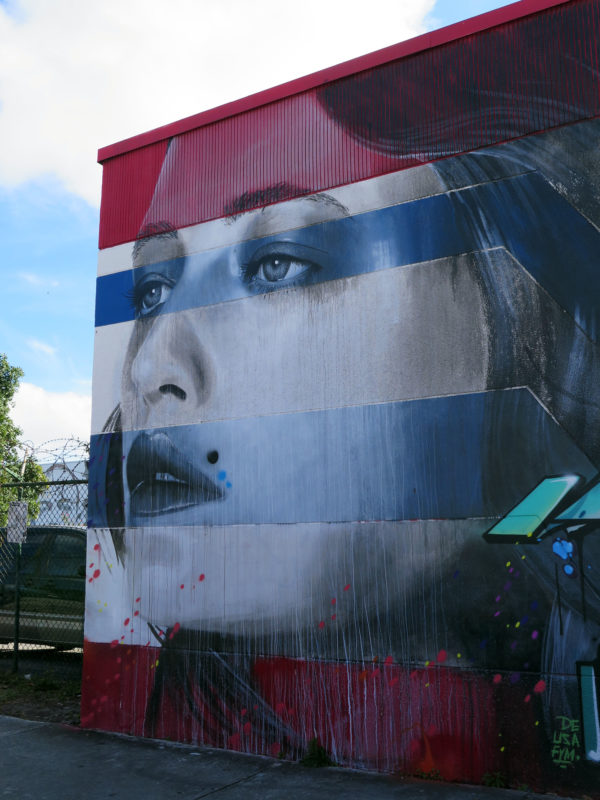
Photographs are of street art found in various boroughs in NYC, most Bed-Stuy.