Browsing Category

Art

The Rev. Billy and the Stop Shopping Choir

Show me someone’s blog that opens with an Emma Goldman quote, consider me hooked. If that quote refers to small communal interactions forming the kernel of possible societal change, consider me sold. Let me introduce you to the Reverend Billy and his Stop Shopping Choir.

Who am I talking about? A group of activists/artists who do both concert stage performances and agitprop actions to raise awareness of how we are mistreating our planet and our neighbors. They fight for earth justice, against consumerism, for first amendment rights and much more. Their recent visit to Portland was once again a coup by Boom Arts – bringing progressive artistry to an audience that is in need of and grateful for cutting edge theatre.

The NYC-based troupe is led by Billy Talen, an actor who uses comic theatre and music to get out the message – in ways that often risk persecution by the powers that be who are quite aware of how he lifts the veil on capital’s agenda. The link spells it out in more detail:

https://www.theguardian.com/business/2015/nov/27/reverend-billy-church-of-stop-shopping-black-friday

On Sunday night the artists met with members of our community, including Portland Resistance and Portland Tenants United for a community supper.

And since this week’s blog is dedicated to women’s issues, let’s focus on the women I encountered.

There were young women of the choir who managed to travel across time zones with infants and toddlers, putting in full performances, and still had the energy to meet new folks; young women who sang with beautiful voices.


There was the director of the company, who writes beautifully and provides organization and structure. There was her daughter who clearly shared her mother’s fierceness as well as the theatrical brilliance of her father.

http://www.revbilly.com/about_savitri_d

There were the Portland activists who lead the cause;

There were the folks from Boom Arts who surprise me every year with procuring ever better acts; doing their magic in getting people to return, fostering relationships, helping to keep the company afloat –  a special welcome here to the recent NYC transplant!

And then there was the kind of woman who models for all of us how to bring more peace and justice to the world in everyday life, managing the Sunnyside Community Center. She was celebrated and shown expressions of gratitude that her kind deserves and yet so infrequently receives.

It was an evening that conveyed energy, activism, community and above all hope – so direly needed in these times.

The troupe is off to England for their next adventure – friends over there, be on the look-out. These are performances you might not want to miss.

ArtsWatch

A recent encounter with a stranger yielded a gift. She had perused my art website, found it to her liking and saw parallels in choice of topics to a favorite artist of her’s, Holocaust survivor Samuel Bak. She gave me a catalogue of his recent show in Boston, Just Is, that pretty much blew my mind. The gallery website below contains biographical and artistic information.

https://www.puckergallery.com/artists/#/samuel-bak/

I had, of course, never heard of the guy. Nor had I heard of any of the women painters focussed on abstract work that I was able to see at a different exhibit in Boston two weeks ago. Today’s photographs give you a pretty accurate description of the range  – from boring to fascinating, traditional to truly inventive. The ones that had an implied narrative stuck with me for the longest – it is just easier for most of us to remember a story than to recall a pattern, no matter how beautiful.

Given the sheer number of people able to make art these days, and the number of real and electronic outlets available to bring the work to the public, it is of course not surprising that even people who are keen on painting or other forms of art know only a minuscule percentage of what is out there. Which brings us to a local treasure, Oregon ArtsWatchan invaluable source of information when it comes to being better informed about art.

Beverly Hallam, Crossed Rock, 1966

About 6 years ago a group of the smartest journalists in town decided to fight the attrition of art news that went hand in hand with the downfall of local print journalism. Single handedly, without serious financial backing at the time, and for all I know around a kitchen table, they started publishing a nonprofit online arts journal,  orartswatch.org

Lest you think that a business model á la The Little Art Critics that Could is doomed, marvel at their success: the group has posted more than 3,000 stories that attract tens of thousands of readers every month. They have sponsorship agreements with more than 40 arts and education organizations, content-sharing partnerships with TravelPortland and Artslandia, more than 200 individual donors (most of them sustaining, annual donors), and an active social media presence.

Barbara Takenaga,  Tremolo, 2005

Writing is done by a diverse set of free lancers of whom 30 or so regularly contribute. Diverse indeed: the organization aspires to offer view points from a variety of writers in terms of age, educational background, active or passive involvement in the arts and political orientation. The only constant element is the quality of the writing. The founders focus on identifying contributors of younger generations and mentor them in what could otherwise be yet another endangered species: smart art criticism.

Meg Brown Payson, Drift, 2006

I learn much from them, beyond staying informed as to what’s going on around town. The essays make me think about my own approach to making art, my difficulties within the art scene, my desire to combine my political reasoning with my creativity as a photographer and writer. I am friends with some of them, owe all of them.

Christin Baker, Diaphanous Leverage, 2016

Do yourself a favor and sign up to their website http://www.orartswatch.org

or Fb  page https://www.facebook.com/ArtsWatch/.

Do all of us a favor by supporting them, if you can, financially, since every $$ comes back to all of us in added value of knowledge about art at a time when art education has dropped from the agenda. Nonprofits like this are never out of the woods – they need us, almost as much as we need them!


Monumental

The earliest three-dimensional art was probably carvings, shortly followed by pottery. Ritualistic and functional purposes found artistic expression. Soon 3-D became large, representing religious ideals and worldly egos by its size – just think of the tomb carvings in Mesopotamia and the statues attached to Egyptian pyramids. The Greeks matched their sculptures to their view of the centrality of man – it had to be the perfect body…..

Early Christianity was hampered by one of the commandments forbidding the use imagery. Once they found a way around that by claiming this prohibition only referred to idolatry, the dam broke. Just look at the ubiquitous carvings, statues, reliefs in Christian churches – I will need a whole other month to blog about the beauty found there. Eventually.

Today I want to focus on the ways sculptures are used as monuments, specifically memorializing power. (Which reminds me I could also do a week on war monuments and comparative sites of unspeakable horror. Maybe.)  Today’s example was found in Innsbruck, Austria. My friends and travel companions who know e v e r y t h i n g about cool historical sites guided me to the Hofkirche, the church and (empty) burial site of emperor Maximilian I, surrounded by 28 of his favorite relatives…

Imagine: on his deathbed, in 1519, this guy expresses a wish to be sepulchered in some chapel, surrounded by 40 larger-than- life statues made of bronze. Well, the 28 who are eventually completed are too heavy for the chapel. So his grandchild Ferdinand builds a new church, the Imperial Court Church, puts a cenotaph (empty grave) into it, and flanks it by the “black men” as they are known. Never mind that about half of them are women. I am not kidding you.

Think how it must feel to come to services every Sunday being surrounded by this wealth, this overwhelming imagery, this size of those who rule you.

Attached link is a video of the church.


Here is another example of monumental expression, with a (from my perspective) lovely political twist. I have never seen the terra-cotta soldiers protecting the grave of China’s first emperor, Qin Shi Huang Di. He, too, had plenty of company for his eternal rest. But I did see a feminist take on this army in Paris, some years back. Prune Nourry, with the help of artisan copyists from Xi’an, created an army of 108 girls, the Terra Cotta daughters, to question gender selection with a bias towards boys in China.  They went on a world tour before they were buried at a secret location in China. I was so lucky to be at the right place at the right time. Looking at all these girls’ faces was a powerful reminder of how selective abortion preempts female lives.

http://www.prunenourry.com/en/projects/terracotta-daughters

And last but not least here is a monument to the photographer, which concludes this week on sculpture.


Grounds for Sculpture

If you ever want to go tripping without ingesting chemical substances into your body, travel to the hidden depths of Hamilton, New Jersey.  You’ll find a sculpture park there that immediately puts you into a state of altered reality, fake poppies included. Disney world for the arts, for lack of a better description.

Originally old Fair Grounds, the 42 acres were purchased by Seward Johnson, heir to the Johnson&Johnson medical fortunes and now a sculptor himself (having majored in poultry husbandry in college…) If you want to laugh today, read this NYT article about him; his biography in some way resembles the feelings you get in his park: larger than life, weirdly concocted, slightly off-color, hard to believe and at its core exhilarating for the sheer force of it.
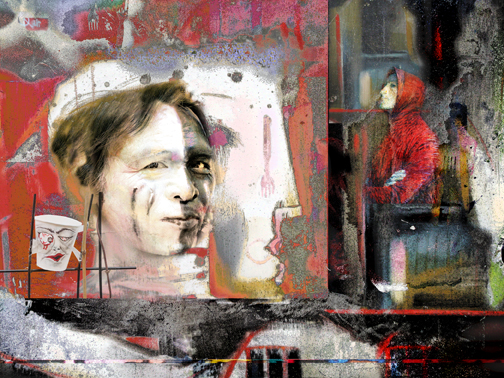
This is said about his art:”Mainline art critics have not been kind to Mr. Johnson, whom they see as a rich guy who bought his way into the club. ”Kitsch,” ”Hallmark” and ”Norman Rockwell,” are barbs frequently hurled by those who feel that art should be cool, collected and at arm’s length. ”Johnson’s work is chocolate-box rubbish,” said the art critic and author Robert Hughes. ”It has no imaginative component that I can see and apparently appeals to dull corporate minds like his own — the sort of people who run American motels and malls.”

http://www.nytimes.com/2002/06/30/nyregion/seward-s-follies.html?mcubz=0

It actually appeals to those average people visiting the park, as the photographs of interactions with the sculptures show. It has elements of fun and accessibility that are inclusive rather than reserved for elites who “know about art.” They might mock it as Seward’s Follies – I’d say, more power to him!

Grounds for Sculpture was planted from scratch with thousands of trees and tens of thousands of plants, delicate grasses included. The collection, other than Johnson’s own work, is varied; it sure is large, though, and the only thing lacking is subtlety.

Actually, I had a fun visit there. Once you overcome the shock of being in this strange environment you cannot help but admire the chutzpah of the people putting it all together, combining serious three dimensional art with skyscraper-sized figures of Marylin Monroe in full skirt-lift mode. I also could not but marvel at the largesse of Johnson’s philanthropy which surely matches the size of his sculptures. I mostly read up on the sites I visit after I’ve been there, so that my eyes are open without being influenced when I first experience the art. But reading about the people who initiate these ventures as private persons gives me direly needed hope in humanity: there are folks out there who care, who are generous, who want to share their passion. The rest of us are grateful beneficiaries. And in Hamilton, New Jersey, getting high.


Blown

Blown. or should I say: blown and blown. I am referring to the sculptural art I am describing today and the hurricane that blew across it. All of this can be visited at Fairchild Tropical Botanic Garden near Miami, FL. Or rather, can’t be visited right now, since they are trying to clean up after the damage, with hordes of volunteers expected tomorrow to pick up the plant debris.

I really wonder what they do with the glass sculptures during natural catastrophes like Irma. The installations are too big, for the most part, to be moved easily. Maybe they have containers that settle around them, anchored in some fashion?

Fairchild is a truly beautiful garden, with humongous cacti and palm tree collections; it contains a large number of pieces of Chihuly’s work. Or at least work that has his name on it – there are now intense questions, accusations and law suits swirling around, claiming that he exploited his assistants, plagiarized them, stole from them ideas and revenue. This kind of conflict is not new when it comes to work made by groups of people when no single person can pull it off solo.

I read somewhere that Henry Moore, for example, did the drawings and small models for his sculptures, then had others execute the large versions we see in the museums. Ideas over craftsmanship, I guess. Except that ideas are shared when you co-produce, too.

http://www.tampabay.com/things-to-do/visualarts/who-is-really-making-chihuly-art/2334662

I visited the garden three years ago and had my usual mixed feelings when I encounter these larger-than-life explosions of Chihuly glass. They did something magical to the landscape, or echoed its magic. They deliver intense color and amorphous forms, cascading at times in ways that are really impressive regarding the skill of their construction. But a hint of gaudy always makes me step back, and all the talk in the world about how Chihuly bridges the gap between the decorative and art is not convincing me to think of it as predominantly the latter. This is of course the person speaking who vastly prefers Biedermeier over Rococo, something elegant but plain over something elaborately ornate.

My Pacific Northwest readers can easily judge for themselves – Seattle has an entire glass garden devoted to Chihuly, and the glass museum in Tacoma has him prominently in their permanent collection.

With all that said, I had a splendid day at Fairchild – walking around corners and discovering these pieces hidden or not so hidden in the vegetation instilled a sense of whimsey.

Almost enough to forget my annoyance that the insanely high admission prices prohibit your average-income family to visit and thus secure a mini paradise for the elites. Which is now blown.

Master of Reflection

I could not believe my luck when I realized the Lincoln, MA sculpture park had a Gormley sculpture in its permanent collection. He is my absolute favorite of the contemporary sculptural artists (although closely followed by Emily Young.)

You can find a good sampling at their respective websites: http://www.antonygormley.com  –  http://www.emilyyoung.com.

Gormley has a knack for site specific installations and quite often they involve reflection. They can be small, like the one in Lincoln, or huge, like the one in Hamburg, Germany, that I visited in 2012 ( faithful readers have gotten their share of those photographs before…. but it’s worth the repetition.)

The former is the form of a man who seemingly looks into a pane of glass and sees his reflection. In reality and very quickly visible, these are two identical sculptures, mirror image reversed, that are facing each other, divided by said glass. The acquisition of this piece was guided by a commitment to showing sculpture both inside the de Cordova and outside in their magnificent park. Or so says the website….

The latter – Horizon Fields –  was located in a former market hall in Hamburg, that has become a place for changing art exhibits. The hall was filled with a platform suspended from the roof across the entire length and width of the building. The top of the platform was a mirror, walking on it (in your socks, once you had overcome the embarrassment of potential holes in them) was not for the faint of heart. The reflections were disorienting, and the suspension of the platform made the hole thing swing lightly. But, oh, the views! The sense of a manipulation in space with you at some difficult-to-assess spatial point right in it was truly exhilarating.

http://deichtorhallen.de/index.php?id=257&L=1

Last year Gormley showed his political colors in a show that featured 600 cast-iron human skyscrapers, expressing his anger about London’s testosterone-fuelled corporate expansion.  “We are living in a really strange time,” Gormley said. “Yet we are all sleepwalking through it. And it is urgent we wake up. We are sort of aware the centre cannot hold, that 250 years of industrial activity has undermined and fundamentally disturbed our world – yet we feel somehow not responsible.” He called Sleeping Fields “manic, but incredible good fun.

Seems like the fun ended, though, when 3 months ago another one of his projects was altered by some unknown artist, or vandal, depending on your point of view. His series of figures at Crosby Beach in England acquired some polka dot bikinis and the like.

Attached is a video of the installation. It give you a taste of the full scope of the installation.

https://www.theguardian.com/artanddesign/2017/jun/22/antony-gormley-crosby-beach-sculptures-vandalised-bikini

This reminds me of my friend Steve Tilden whose large metal horse sculpture in North Portland was “decorated” with a lot of knitted and crocheted garments, time and again.  Maybe someone thought the horse was cold…..


Sculptures

my trip to the East Coast last week I visited a sculpture park in Lincoln, MA. It was founded by a tea merchant of Jamaican descent, Julian de Cordova, who poured his riches into traveling the world and collecting art that he brought home to his mansion – a hobbit-like structure on steroids. After his death in 1945 it all became a museum. His own collection was sold for lack of artistic value, but his generosity enabled a focus on modern art, and eventually sculpture. Details can be found here:

https://decordova.org

The museum and grounds are a spectacular setting for some 60 pieces of art ranging from figurative to abstract to can’t-be-defined by your’s truly but made for a great play ground.


Luckily things are explained to the clueless.

A centerpiece is an area called Alice’s Garden, which contains figurative work that echoes Caroll’s fantasy world, Alice included.

I could not quite understand why a disembodied head of a little black girl was included – I would have placed it next to another figurative bust by Jaume Plensa at the other side of the park.


The works in Alice’s Garden impressed with a variety of materials: wood,

metal that reflected the environment,

plastic casts,

stone and as many ideas.

I think my favorite here was Terrence Koh’s sculpture Children of the Corn – Totempole. A title borrowed from a horror story by Stephen King, by a Chinese-Canadian artist who runs around dressed in white and often donning bunny ears seemed a fitting reference to the state of our world. This self-named asianpunkboy is now represented in major museums of the world, including MoMa, the Schirn, the Whitney, Tate Modern etc.  Here is a clip with his good friend Lady Gaga.

The strongest piece in the collection, for my taste anyways, will be described tomorrow. Until then, let the whimsey seep into your day, if only a little bit.

Envy

Originally I thought I’d write about envy, another of the 7 deadly sins, in the context of being a woman artist. It had come up while reading a review of a current exhibition (NYC friends, don’t miss this one!) of works by an artist I greatly admire, Helene Schjerfbeck.

Four Uncompromising Finnish Women Artists

You can find a detailed description of her life and development as a portrait painter in the link below written by the folks who put on a fabulous retrospective at the Schirn in Frankfurt 2 years ago.

http://schirn.de/schjerfbeck/en/

I find myself often envious of women who have the courage and the discipline to go against the grain of their own time, who believe in the power of their work and don’t succumb to the familiar sense of being an impostor when doing their work outside of the traditional parameters.


I changed my mind about the focus of today’s musings, though, when remembering an article that one of the fellows at the American Enterprise Institute published some years back in the National Review. Not sure if reading it will make you laugh or cry or scream or hang your head in despair, but it is certainly timely food for thought. http://www.nationalreview.com/article/209555/wealth-virtue

The author, Michael Novak, tries to make the case for the superiority of capitalism in both practical and moral terms, the latter clearly linked to tenets of religious, judeo-christian philosophy, as far as I could tell. The list of ten points that he claims make capitalism the moral choice includes things like freeing the poor from indolence (!), strengthening civility to protect people’s achievements etc….. but here is the bit on envy.

“10. Finally, it is one of the main functions of a capitalist economy to defeat envy. Envy is the most destructive of social evils, more so even than hatred. Hatred is highly visible; everyone knows that hatred is destructive. But envy is invisible, like a colorless gas, and it usually masquerades under some other name, such as equality. Nonetheless, a rage for material equality is a wicked project. Human beings are each so different from every other in talent, character, desire, energy, and luck, that material equality can never be imposed on human beings except through a thorough use of force. (Even then, those who impose equality on others would be likely to live in a way “more equal than others.”) Envy is the most characteristic vice of all the long centuries of zero-sum economies, in which no one can win unless others lose. A capitalist system defeats envy, and promotes in its place the personal pursuit of happiness. It does this by generating invention, discovery, and economic growth. Its ideal is win-win, a situation in which everyone wins. In a dynamic world, with open horizons for all, life itself encourages people to attend to their own self-discovery and to pursue their own personal form of happiness, rather than to live a false life envying others.”

I will not begin to count all that is wrong in his assumptions or which phrases had me snort particularly loudly, but point to the simple fact that our undoubtedly capitalist country is riddled with envy. Read any analysis of why our current president was elected, and it partially boils down to that very sentiment. Blacks not waiting in line with the disenfranchised white working class? Welfare queens getting “free passes?” Immigrants scooping up what belongs to the nationalists? Women demanding equal pay? The personal pursuit of happiness seemingly doesn’t cut it when spontaneously engaging in social comparison. Self discovery is not up to par fighting envy when seeing your neighbor’s Porsche while you struggle to pay the rent. The claim that capitalism is not a zero-sum system in which someone’s gain does not come with someone else’s loss is simply idiotic. There, I’ve gone into text analysis after all…

Unfair distribution of riches, at all times in human history, have led to envy. Thus it was imperative to impose strong impediments to acting out on that feeling, particularly given the numbers involved: the powerless many being envious of what the powerful few hoarded. Religion was up to the task: making envy a deadly sin that endangers the immortality of your soul was a significant threat. The story of Cain and Abel, the biblical prototype for envy and its dire consequences, is not coincidentally one of the first we learn about in the Holy Books.

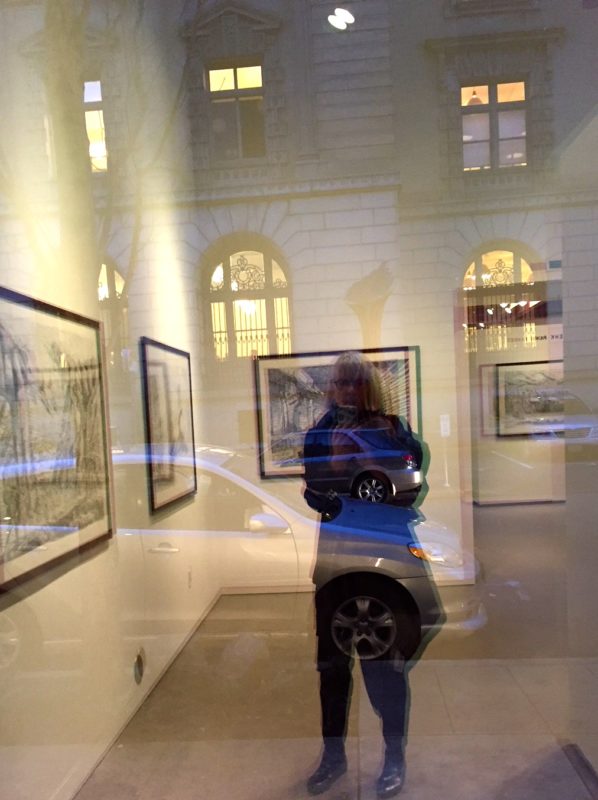
Photographs are Self-Portraits that have none of the freedom of creation that I envy Schjerfbeck et al. – the constraint of seeing yourself in a reflective context leaves much to be desired.

Thursday’s Question

When I came across this treasure trove, conveniently offered to you in the link below, I was embarrassed to the point of a slightly purplish face. Well, maybe it was the heat. In any case: look at the list of the top 35 women composers in classical music of the 20th and 21st century.

https://www.washingtonpost.com/entertainment/music/the-top-women-composers-in-classical-music/2017/08/04/319274d4-76f2-11e7-803f-a6c989606ac7_story.html?hpid=hp_hp-cards_hp-card-arts%3Ahomepage%2Fcard&utm_term=.030fb7dd757e

How many did I know? Hint: I’m not telling since the number is so embarrassingly small.

And yet, such gems among them who I had never heard of, much less heard their compositions. But do I really want to click through all those Youtube samples they offer?

Which brings me to the question of the day:

Where, oh where, does one find the kind of generous, technically astute person who generates a playlist  that shuffles these women composers on my computer? 

One of the chosen was Lera Auerbach. Here’s her clip, Requiem for Icarus, which gives me the occasion to post some of the Icarus series pictures previously shown at Blackfish Gallery.https://www.youtube.com/watch?v=Zyp3YwUYlK8


Wednesday’s Question

Relax! A day without politics. And a topic that will be of consequence only for those who make, consume, like or despise art.

Here is the newest finding in the ever-expanding  effort to show that humans and computers will be alike, whenever.

A team of computer scientists at Rutgers University has exposed computers to 80.000 or so visual artworks from the 15th to the 20th century. They took them in, learned about them and eventually were asked to generate paintings themselves. In other words, they asked machines to display creativity without a human mind attached. You ask, how good could that possibly be?

Quite good, it looks like. When you show these AI paintings intermixed with paintings from famous abstract expressionist and those by artists shown at the most prestigious artfair in 2016, Art Basel, and ask people to rank them, guess what. People largely prefer the computer generated images over those made by humans, and many even thought that the modern Art Basel stuff was computer generated, when it wasn’t.

Do computers make art, then? The machines did not just emulate classic paintings, they most definitely deviated from them, all the while still having some “sense” of what is aesthetically appealing. As the scientists put it: “The fact that subjects found the images generated by the machine intentional, visually structured, communicative, and inspiring, with similar, or even higher levels, compared to actual human art, indicates that subjects see these images as art!”

And their market value seems to confirm that – the Rutgers team has been approached by private collectors and galleries who are quite interested in purchasing these art works.

Humans Prefer Computer-Generated Paintings to Those at Art Basel

Today’s question then: Why the unease to call something art when it is not made by a human being?

We’ve been there in the debate about elephants and primates who paint; is that art?

https://www.theguardian.com/world/2000/mar/26/theobserver

If a machine builds on the history of painting, figuring out the rules, nailing the aesthetics, coming up with some new ways of creating something, why is it difficult to accept that as art? Here is a potential answer, and one I find troubling.

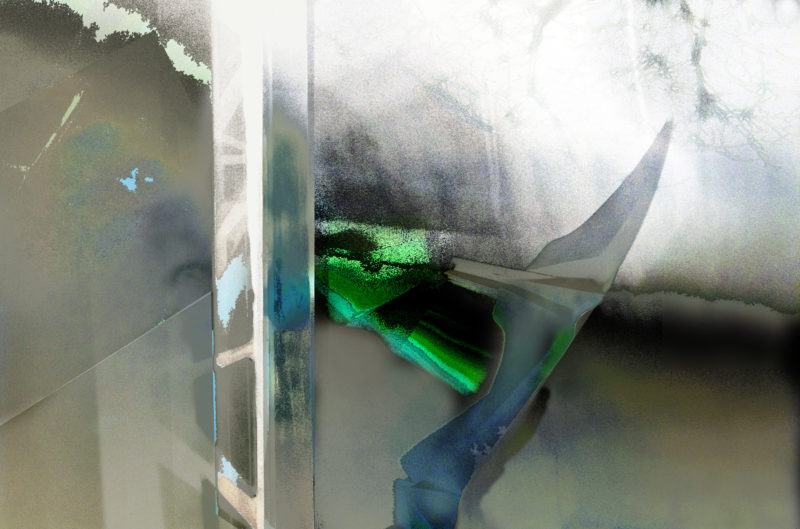
Artwork made by a human using a computer.