
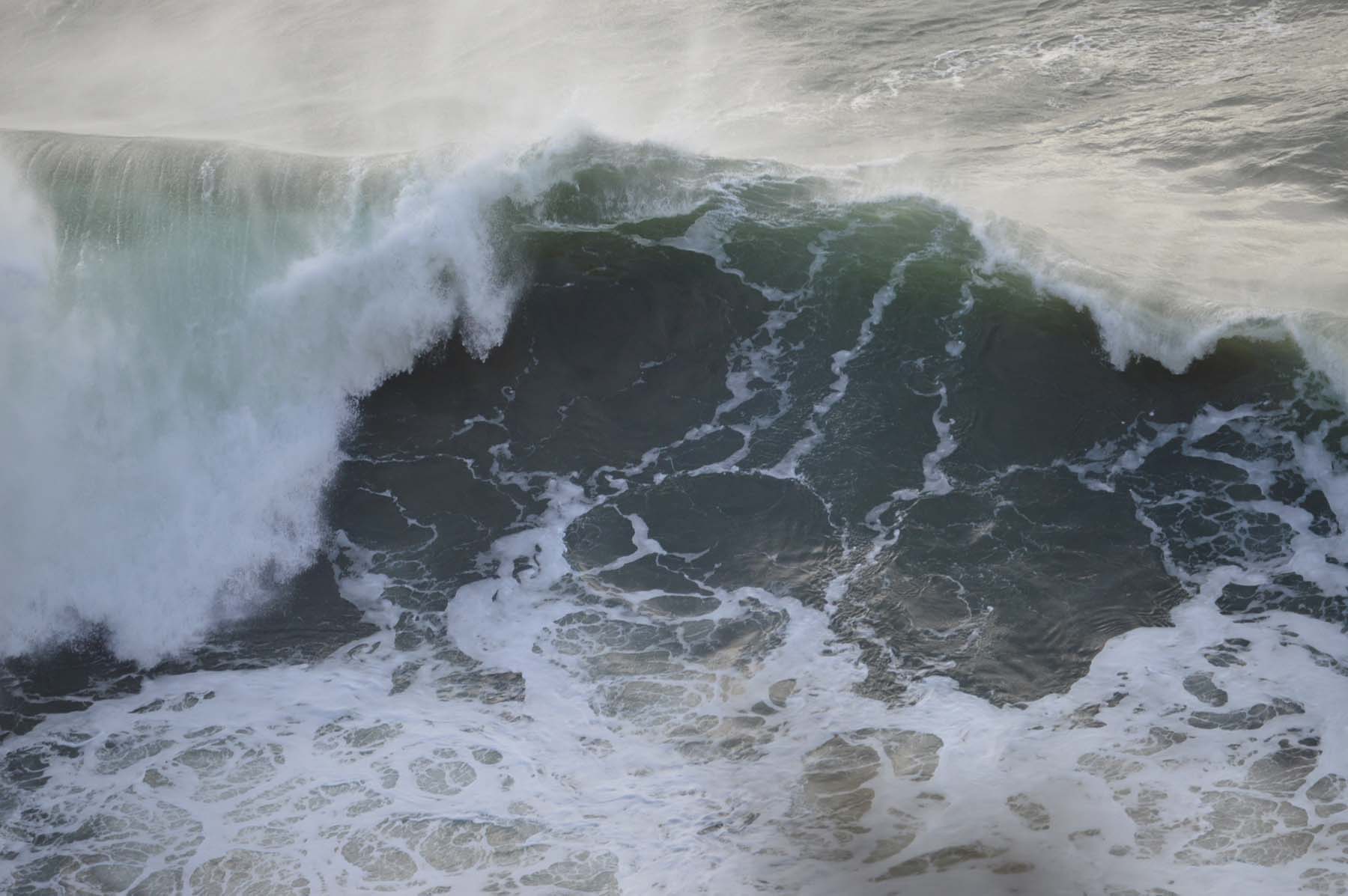
Green King tides on the Pacific coast this weekend. Blue waves in other parts of the country a few days later.


(Photographs from the outing – note how the light shifts in the span of just 48 hours and how the trees are shaped by their environment.)

Got me thinking about William Makepeace Thackeray’s insights about the power (or lack thereof) of men to stop the tides and his savage novel, Vanity Fair, converted into a brilliant movie (2004) by the mother of New York City’s newly elected mayor. Convergence!


Thackeray was an interesting character – born in India, sent to England at age 5 after being orphaned, educated in brutal school settings, gambling away much of his inheritance. A smart, extremely perceptive satirist, allergic to hypocrisy and liberal to the core – he fought for suffrage, legislature term restrictions and an end to classism. Some of his social critique of Victorian society is almost too on the nose for our own times.


His poem below is often misinterpreted to claim the King thought he was almighty and tried to stope the waves, when it really says the opposite. His immoral life full of raids, killing and looting, he gets cold feet towards the end of it. Caught with remorse and fear of consequences (thoughts of will I get into heaven, one might wonder,) he, I speculate, tries to appease the judging power with submission. The sycophantic parasites surrounding him being too dense to even catch his drift. Plus ça change….


King Canute
KING CANUTE was weary hearted; he had reigned for years a score,
Battling, struggling, pushing, fighting, killing much and robbing more;
And he thought upon his actions, walking by the wild sea-shore.
‘Twixt the Chancellor and Bishop walked the King with steps sedate,
Chamberlains and grooms came after, silversticks and goldsticks great,
Chaplains, aides-de-camp, and pages,—all the officers of state.
Sliding after like his shadow, pausing when he chose to pause,
If a frown his face contracted, straight the courtiers dropped their
jaws;
If to laugh the king was minded, out they burst in loud hee-haws.
But that day a something vexed him, that was clear to old and young:
Thrice his Grace had yawned at table, when his favorite gleemen sung,
Once the Queen would have consoled him, but he bade her hold her tongue.
“Something ails my gracious master,” cried the Keeper of the Seal.
“Sure, my lord, it is the lampreys served to dinner, or the veal?”
“Psha!” exclaimed the angry monarch, “Keeper, ’tis not that I feel.
“‘Tis the HEART, and not the dinner, fool, that doth my rest impair:
Can a king be great as I am, prithee, and yet know no care?
Oh, I’m sick, and tired, and weary.”—Some one cried, “The King’s arm-
chair!”
Then towards the lackeys turning, quick my Lord the Keeper nodded,
Straight the King’s great chair was brought him, by two footmen able-
bodied;
Languidly he sank into it: it was comfortably wadded.
“Leading on my fierce companions,” cried he, “over storm and brine,
I have fought and I have conquered! Where was glory like to mine?”
Loudly all the courtiers echoed: “Where is glory like to thine?”
“What avail me all my kingdoms? Weary am I now and old;
Those fair sons I have begotten, long to see me dead and cold;
Would I were, and quiet buried, underneath the silent mould!
“Oh, remorse, the writhing serpent! at my bosom tears and bites;
Horrid, horrid things I look on, though I put out all the lights;
Ghosts of ghastly recollections troop about my bed at nights.
“Cities burning, convents blazing, red with sacrilegious fires;
Mothers weeping, virgins screaming vainly for their slaughtered
sires.—”
“Such a tender conscience,” cries the Bishop, “every one admires.”
“But for such unpleasant bygones, cease, my gracious lord, to search,
They’re forgotten and forgiven by our Holy Mother Church;
Never, never does she leave her benefactors in the lurch.
“Look! the land is crowned with minsters, which your Grace’s bounty
raised;
Abbeys filled with holy men, where you and Heaven are daily praised:
YOU, my lord, to think of dying? on my conscience I’m amazed!”
“Nay, I feel,” replied King Canute, “that my end is drawing near.”
“Don’t say so,” exclaimed the courtiers (striving each to squeeze a
tear).
“Sure your Grace is strong and lusty, and may live this fifty year.”
“Live these fifty years!” the Bishop roared, with actions made to suit.
“Are you mad, my good Lord Keeper, thus to speak of King Canute!
Men have lived a thousand years, and sure his Majesty will do’t.
“Adam, Enoch, Lamech, Cainan, Mahaleel, Methusela,
Lived nine hundred years apiece, and mayn’t the King as well as they?”
“Fervently,” exclaimed the Keeper, “fervently I trust he may.”
“HE to die?” resumed the Bishop. He a mortal like to US?
Death was not for him intended, though communis omnibus:
Keeper, you are irreligious, for to talk and cavil thus.
“With his wondrous skill in healing ne’er a doctor can compete,
Loathsome lepers, if he touch them, start up clean upon their feet;
Surely he could raise the dead up, did his Highness think it meet.
“Did not once the Jewish captain stay the sun upon the hill,
And, the while he slew the foemen, bid the silver moon stand still?
So, no doubt, could gracious Canute, if it were his sacred will.”
“Might I stay the sun above us, good sir Bishop?” Canute cried;
“Could I bid the silver moon to pause upon her heavenly ride?
If the moon obeys my orders, sure I can command the tide.
“Will the advancing waves obey me, Bishop, if I make the sign?”
Said the Bishop, bowing lowly, “Land and sea, my lord, are thine.”
Canute turned towards the ocean—”Back!” he said, “thou foaming brine.
“From the sacred shore I stand on, I command thee to retreat;
Venture not, thou stormy rebel, to approach thy master’s seat:
Ocean, be thou still! I bid thee come not nearer to my feet!”
But the sullen ocean answered with a louder, deeper roar,
And the rapid waves drew nearer, falling sounding on the shore;
Back the Keeper and the Bishop, back the king and courtiers bore.
And he sternly bade them never more to kneel to human clay,
But alone to praise and worship That which earth and seas obey:
And his golden crown of empire never wore he from that day.
King Canute is dead and gone: Parasites exist alway.
By William Makepeace Thackeray
What he said.


***
Before we expect miracles to follow Tuesday’s election outcomes, here are some reflections on what is ahead of us – not meant as downers, but as a reminder that work lies before us.
Election lawyer Marc Elias predicts Republicans’ reactions and further assault on voting rights.
Hadas Thier at Hammer & Hope writes thoughtfully about the challenges to Mamdani’s delivery of much that he promised voters.
Both reads highly recommended.
He will have help, though, from a lot of accomplished women on his transition team:
Former First Deputy Mayor Maria Torres-Springer, former Federal Trade Commission Chair Lina Khan, nonprofit president Grace Bonilla and city budget expert Melanie Hartzog will be his transition co-chairs. Progressive political strategist Elana Leopold, a de Blasio alum and senior Mamdani campaign adviser, will serve as the transition’s executive director.
Together, they have backgrounds in social services, finance, city budgeting and housing development. Their roles on the transition team — meant to smooth the mayor-elect’s path from election in early November to inauguration in January — often serve as a de facto audition for appointments to City Hall. (Ref.)
Music today promises unity in diversity, jazz from Sweden, not too far from King Canute’s home in Denmark, to celebrate what the electorate managed to pull off.


Barbie lost her surf board….

He, on the other hand, is looking for Barbie…
