Browsing Category

Nature

“Finding immortality, one pumpkin at a time.”

“Finding immortality, one pumpkin at a time,” was reportedly uttered by Fight Club author Chuck Palahniuk in response to the work of the Maniac Pumpkin Carvers, Marc Evan and Chris Soria. (I am skipping his newest book published this September, The Invention of Sound, all about mortality in its most sadistic forms….)

The Brooklyn, NY-based duo has been carving pumpkins for many years. One of their approaches, carving famous works of art into their pumpkins, has been recognized by New York’s Museum of Modern Art. MoMa has ordered an annual pumpkin devoted to a piece from their collection for the last 7 years, so has the Whitney and the Queens Museum of Art. And now Chuck Palahniuk.

Here is a sampling of their work, done these days in cooperation with 12 other carvers, using tools from different trades, including kitchen knives, hardware tools, such as small saws, serrated knives, linoleum cutters (typically used for printmaking), and clay loops (used for trimming in pottery). (Photographs from the website.)

Keith Haring
Van Gogh

The pumpkins, internally wired with little lamps, can cost up to $800. That is a lot for a fleeting pleasure, and not much if you consider the skill that goes into it and the fact that this is probably a one-shot-per-year business.

To put the word immortality and pumpkin into one sentence requires some chutzpah. I cannot think of another organism widely available to observe, perhaps with the exception of sunflowers when they go dry and black, that reminds me so visibly of death and decay. Who hasn’t thought about the fleeting of existence when watching the crisp pumpkins melting into pulp and slime, on one’s doorstep as much as in the fields come winter?

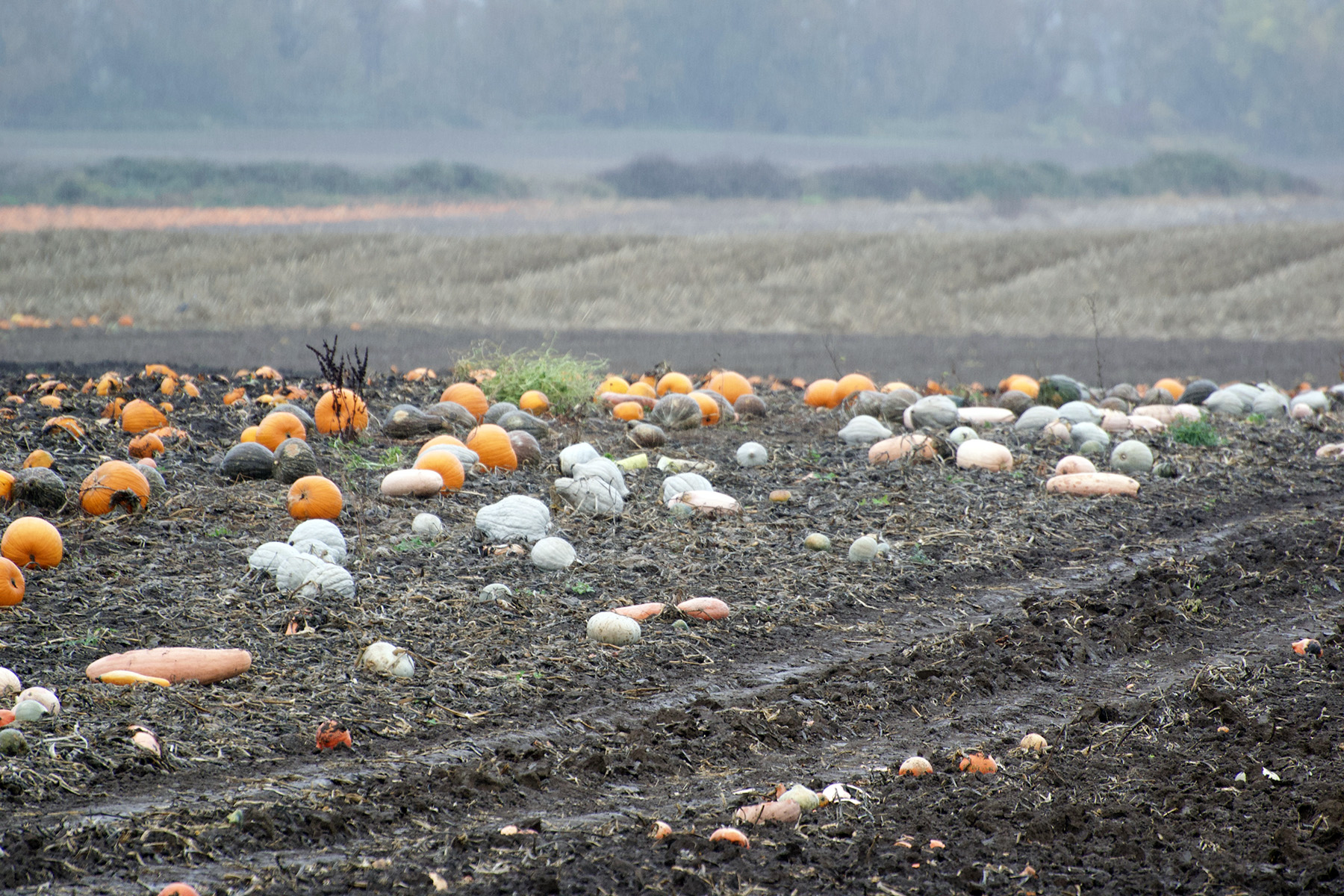
On my visit to Sauvie Island yesterday, the fields were ready to be picked, the greenery already gone, the pumpkins bare for the take. It poured, I could not even leave the car, photographing out of the window. My favorite willow tree had finally collapsed under its own weight, pieces stacked along Reeder Road.

The ponds were dry, not good for November when so much traveling water fowl needs a place to settle.

(The red dirt is where usually the pond resides)

As a result a universe of hunters concentrated around one of the few remaining wet spots, killing scores of ducks by the unrelenting sound of the shooting.

Mortality was on my mind, not immortality. Beauty, of course, as always is the case in nature, visible even in the stark reminders of transience.

Then again, the quest for immortality, or ruminations about it, have also created some – literary – beauty. The ancient Greek texts come to mind, or Wordsworth, but also something decidedly contemporary. Here is Brian Culhane.

THE IMMORTALITY ODE

Bill Evans is quiet, fingers still above the keys,
But ready to begin again and again and again
The first twelve bars before the drums come in,
Just as I am ready for inspiration this evening,
Fingers rehearsing an entrance above the keyboard
Of the Olivetti Lettera 32 I pounded years ago
On Charles Street, nights I wore my father’s
Black cashmere overcoat whenever the steam
Failed to make it up five flights, and back then
Evans waited, too, for his entrance, rain on glass
Waiting to accompany him, and on the B side?
Everlastingness is still there, and all Camus
Said it was, the boulder, the hill, the boulder again
That we come to over and over, pushing—
Quaquaquaqua with white beard quaquaquaqua
As Lucky said and which my annotated Beckett
Traces to the Latin (qua) for in the capacity of.
As in I qua Sisyphus, I quaquaquaqua greybeard
Old father shuffling along in black cashmere:
The Child is father of the Man, a looped immortality,
While happiness, per Camus, if patently absurd,
Nonetheless may rise with the struggle to old heights
And just might be enough to fill a man’s heart,
Even as Evans once more lifts his fingers for
“You and the Night and the Music,” his solo fresh
As when he first sat down, and the night is young.

And here the referenced music by Bill Evans. Stay alive for now, folks. We need to be around for the official calling of the election…..

Crissy Field, San Francisco

· Today's YDP is dedicated to my friend Mecchi who never ceased to be homesick for her childhood San Francisco. I begin to understand why. ·

If you drive north along palmtree-lined Bay Road, passing the Bay Bridge,

the Piers,

and somewhat confusing public art,

you’ll eventually end up at Crissy Field, a large expanse of park, with a bit of marsh enclosed, and sandy beaches to walk on.

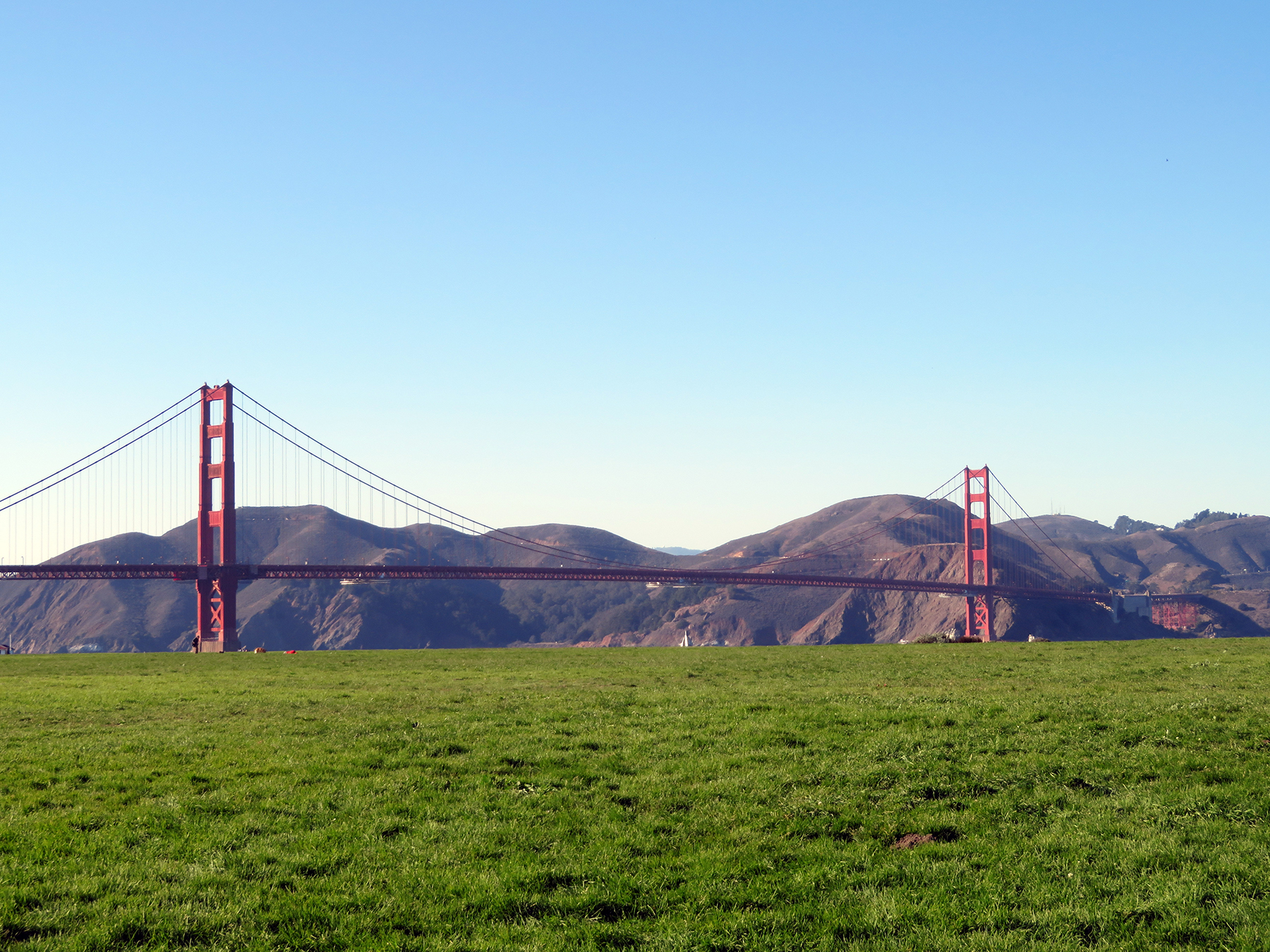
The views of the Golden Gate Bridge are postcard material, and as such sold in every tourist trap in town. That said, the views are gorgeous.

Walking in those green meadows and along the pristine beach you wouldn’t know that the area was for the longest time one of the major military air fields on the West Coast if not the country. Parking lots and concrete- plastered runways covered the area since 1921, with barracks on the infill of what was once a marsh housing enlisted men, and other buildings serving as administrative offices and officers’ quarters.

Fog made for difficult flying conditions, as did the construction of the Golden Gate Bridge in 1937. After World War II the field was primarily used to received MedEvac flights bringing wounded Vietnam soldiers from Travis Air Force Base to Letterman Hospital. It closed eventually in 1974.

The bridge is in that cloud!

In 1994, Crissy Field and the rest of the Presidio became part of the Golden Gate National Recreation Area, under the care of the National Park Service. Three years later they started enormous restoration efforts, the results of which are now enjoyed by throngs of people, tourists and neighbors alike.

About 230,000 cubic yards of soil had to be removed from Crissy Marsh alone to transform it from a parking lot back into a habitat for plants and animals like herons, egrets, crab and fish. The rest of the area had to be cleaned from decades of accumulation of hazardous materials, an undertaking that was supported by millions of dollars in donations from citizens and organization alike.

Here is a detailed history provided by the National Parks Conservancy, with remarkable before and after photographic footage of the transformation. A true restoration.

Have we learned anything?  Cargill Inc., the nation’s largest privately held company, recently wanted to develop nearly 1,400 acres of the shoreline along the San Francisco Bay in Redwood City, destroying existing marsh land. Trump’s Environmental Protection Agency tried to give the green light, ignoring both it’s own agency regulations and the Supreme Court’s decision on the Clean Water Act.

Save the Bay, an energetic environmental protection organization, California Attorney General Xavier Becerra, and three other environmental organizations sued the EPA and EPA Administrator Andrew Wheeler over the agency’s March 2019 decision not to protect the salt ponds under the Clean Water Act. A federal judge has now ruled in favor of the environmentalists, but one wonders, of course, what will happen if and when the issue winds its way up to the newly configured Supreme Court.

Why is it that every bit of nature has to be ripped out of the maw of forces trying to destroy it in these urban environments? Why do always either the state or private business reap the economic benefits of their strongholds, while the damage removal has to rely the generosity of citizens’ purses or the tax payer stepping up? And are people even aware of the work and time and money and sweat and tears provided by conservancy organizations who try to rescue what they still can? Rhetorical question, I admit.

Let’s end with this, then:

Here is music from Crissy Field in 2013.

The Golden Gate

Before there was the bridge there was the strait. Its name was chosen in 1846 by Captain John C. Frémont in analogy to the Golden Horn of the Bosporus (Turkey) when he hoped for rich cargoes from the Orient arriving through the strait.

The treacherous water channel connects the Pacific ocean with San Francisco Bay, and the Sacramento-San Joaquin river system. From 1 to 3 miles wide, it is frequently shrouded in fog. Humid air from the Pacific Ocean floats over the cool California wind current flowing parallel to the coast. The fog stays low to the ground and then the warm, moist air condenses as it moves across the San Francisco Bay or nearby land.

The fog was probably the reason for a relatively late European discovery of the strait – it was first seen by a land party of Spanish colonialists in 1769, and first sailed by a Spanish ship in 1775, giving the native Ohlone tribes a bit more time before death and destruction descended upon them.

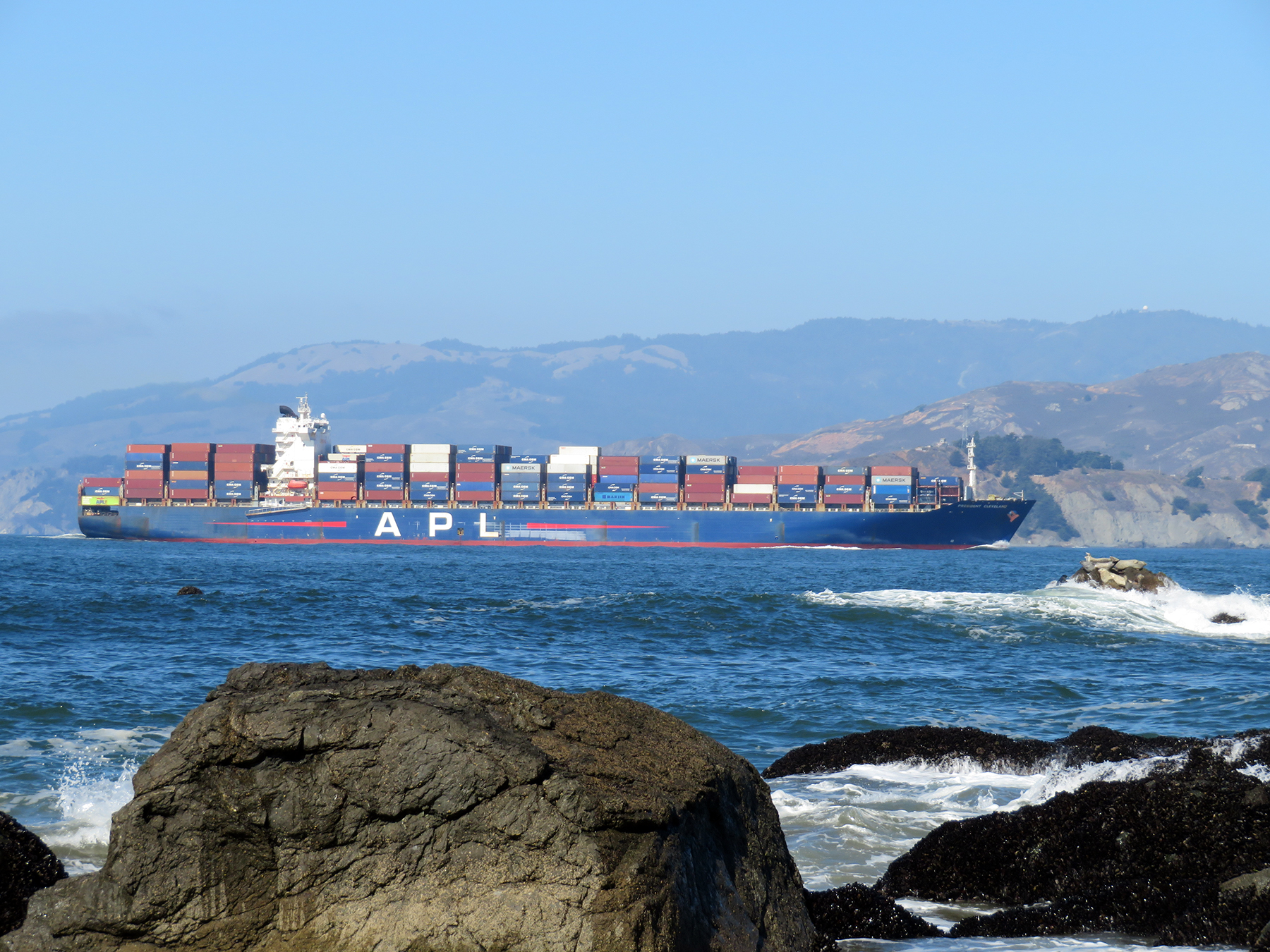
The fog has not been kind to sailors. Estimates claim that between 100 and 300 shipwrecks are buried in and around San Francisco, some truly deadly. A fascinating map of the buried ships (some under the city itself) can be inspected here. These days there are fog horns, situated mid-span and on the Southern end of the Golden Gate Bridge – the most photographed bridge in the world, they say – that guide maritime traffic to safety.

On the other hand, the fog is kind to the coastal red woods who get half of their moisture from the fog during the summer.

The history of the the bridge itself can be found here. No longer the longest suspension bridge in the world, it is still a thing of beauty and technological magic, considering it was opened in 1937.

Photographs of the strait and the bridge today were taken along the Lands End Coastal Trail, which was close to my apartment, sometimes foggy, and sometimes in full sun.

It is a beautiful, well maintained path, but too crowded for my spoiled taste groomed by Oregon’s empty spaces. Homesick, that’s what I am.

Music in honor of 75 years of the bridge (2012-competition.) Something different from our usual fare.

Life

Life has thrown us a curve ball. One of my boys had a serious accident and is going through a series of surgeries. I cannot concentrate or focus on writing. Will be off the blog for a bit. Hope you’ll all be there, when I resume, likely next week.

Breaking Silence

I had to think about this amusingly sarcastic poem, Breaking Silence, by Whitby yesterday, when a gorgeous hike along Mirror Lake trail and up to Tom, Dick and Harry mountain yielded all kinds of beautiful vistas – but no silence. The car noises carried heavily over from US 26, and the trail was populated by all kinds of not so silent people, some blaring loud music no less. Kids happily screaming at the lake

shrouded view in the morning
clear in the afternoon

found their counterpart in screeching Gray Jays, also known as Canada Jay, Camp robber, and Whiskey Jack, as I learned yesterday.

We made our Goretex exodus through ascending crowds of people in flip-flops and slippers later in the afternoon…. no longer silenced, in some fashion, by masks, which had been rigorously worn by the early morning hikers we encountered during ascent at 8 am.

The trail is probably the most heavily trafficked wilderness exposure close to the Portland area, and many conservationists are eager to develop alternative plans to protect the environment in the long run while allowing people to hike along these vistas.

The brooks gurgled, branches made the occasional odd noise when moved by a bit of wind, leaves shaking off the raindrops from previous showers.

The crinkly plastic paper from a devoured power bar rustled in my pant pocket, annoying enough that I had to transfer it into the backpack.

Loose boulders along screes rumble under your feet, and you wonder what the one large rock cairn you encounter would sound like if climbed. I could not figure out, after the hike, who built that cairn, or the rock stacking walls on the overview. Native Americans used cairns either for religious purposes, or as markers to show the way, but there is no information to be found if this cairn comes from a time before their land was stolen.

On top the clouds provided a bit of eeriness, no views of Mt. Hood. The mountain only appeared later in the day.

Even the chipmunks started to vocalize, when chasing each other in competition for the crumbs of my lunch. Rapid, high cadence sounds of chip-chip and cluck cluck in alternation, it seemed. Here is the real thing from National Geographic.
My knees creaked.

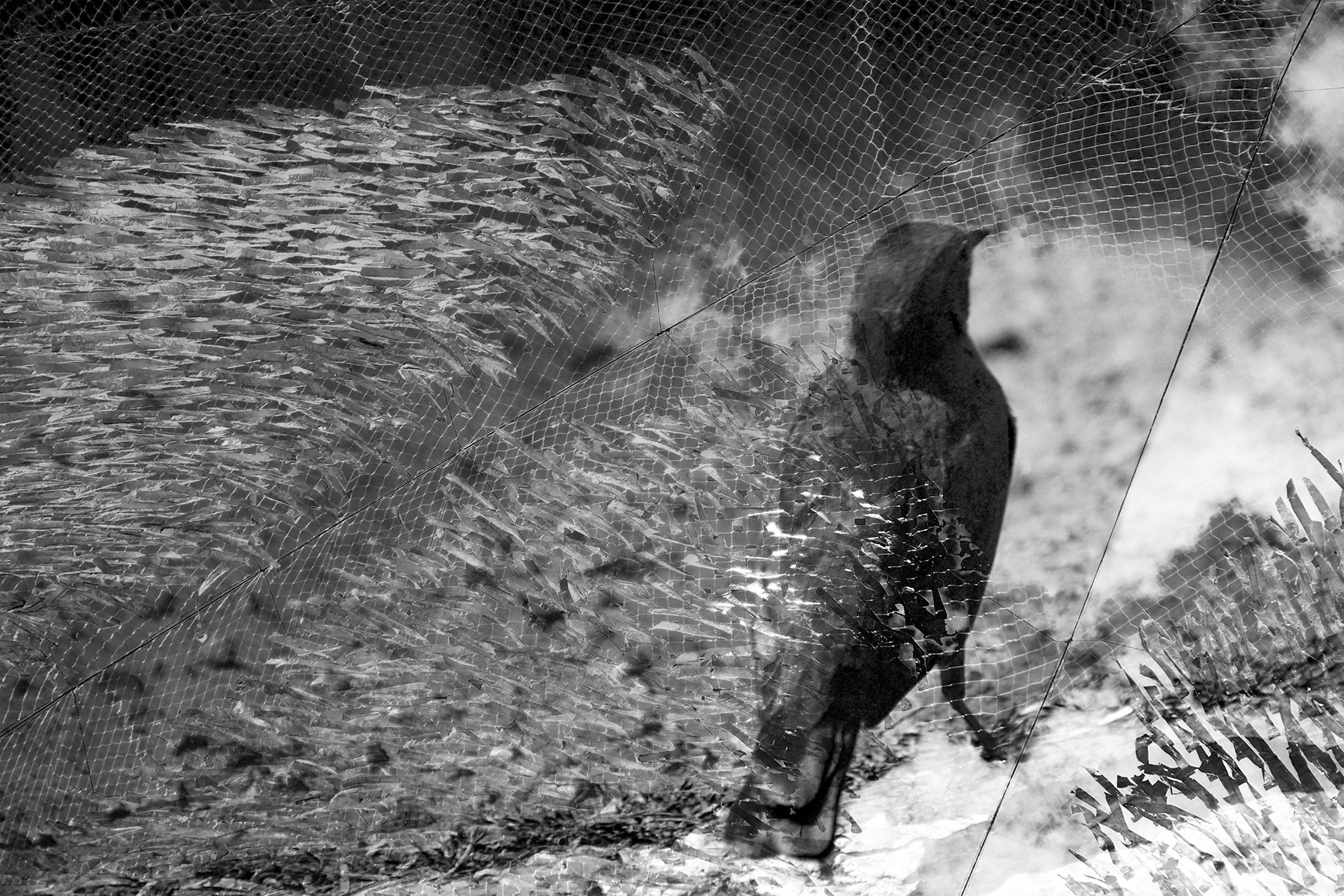
Only the raven on the summit kept his silence. A blissful day.

And since it was such a popular and populated trail, let’s have some popular classical music guide us into the weekend, inspired by landscapes, forests, and a river coming down from the mountain, Ma Vlast.

All is transformed

For the Lobaria, Usnea, Witches Hair, Map Lichen, Beard Lichen, Ground Lichen, Shield Lichen

by Jane Hirshfield

Back then, what did I know?
The names of subway lines, busses.
How long it took to walk 20 blocks.

Uptown and downtown.
Not north, not south, not you.

When I saw you, later, seaweed reefed in the air,
you were grey-green, incomprehensible, old.
What you clung to, hung from: old.
Trees looking half-dead, stones.

Marriage of fungi and algae,
chemists of air,
changers of nitrogen-unusable into nitrogen-usable.

Like those nameless ones
who kept painting, shaping, engraving,
unseen, unread, unremembered.
Not caring if they were no good, if they were past it.

Rock wools, water fans, earth scale, mouse ears, dust,
ash-of-the-woods.
Transformers unvalued, uncounted.
Cell by cell, word by word, making a world they could live in. 

I wrote about lichen and moss about a year ago, unaware of this poem then, otherwise it would have been added.

In some ways fortunate, because it gives me opportunity today to bring together those words with new pictures. I have, of course, no clue what the lichens are called that I saw this week, much less do I know if any of them appear in Hirshfield’s listing. But I love the sentiment of her words, the observation that a world can be made to live in, where life is possible, and that not all agents of transformation call for recognition – they just provide.

Fungus for good measure

Music today celebrates a master of (thematic) transformation: Liszt.

Here is another take, by a master of (Liszt) interpretation, Lazar Berman.

Nothing is Clear

Leave it to me to choose a title that in itself is easily disproven: it IS clear, that speaking in absolutes soon forces you to make room for exceptions.

It was just what I was thinking when we approached the Pacific Crest trailhead yesterday on Lolo Pass for a hike up Bald Mountain.

Dennis the fearless leader …

“Nothing is clear…” the valleys and peaks around us were shrouded in fog and mist.

“Nothing is clear,” again when we reached the top, looking into a bank of clouds, ragged breath from the last bit of steep ascent joining the universe of damp droplets around us. The promise of views of Mt. Hood in all its glory, once the sun lifts the veil, empty. Or more precisely, filled with swaths of white and grey, moving, stretching and consolidating with the bit of wind.

Oh, but everything WAS clear, once you stepped closely, within the woods. Some things were clear along the ridges as well, if you waited patiently, as long as budgeted time allowed, for warmth to rip the clouds apart and offer glimpses.

In sum, we saw the forest AND the trees, all just a matter of proximity and time.

Perhaps it is a helpful analogy to our current circumstances. We have a choice of perspective. The future is diffuse, in some ways shrouded. We can focus on the things at hand, though, revealing beauty, or sustenance, or at least things tolerable, rather than dwelling in fear of being swallowed by the clouds. Shifts, brought on by winds of science, will rip the fog apart, at least in places, allowing clearer views.

And if you want to roll your eyes or slap me for waxing philosophical right now, too bad. It is what nature does to my head. When I see usually domesticated flowers in the wild, spreading with abandon,

when I see new life ignoring all the devastation wrought before,

Charlie the human yardstick in front of a rootball of a fallen tree

when I see hues of nature’s coloration that put any human paint collection to shame,

I cannot help but feeling I’m instructed to take home a lesson. (Particularly on the day before summer solstice, filled with snow and obstacles….)

If you stare at all that’s hazy, blurred, opaque and cloudy, murky, gloomy, foggy, dark and dim – of course nothing is clear.

Feel free to remind me, next time I’ll mope. Or better still, sent me off on the next hike. I know my own cracked imperfections.

Which bridges to the music today: Cohen’s Anthem.

Ring the bells that still can ring, forget your perfect offerings. There is a crack in everything, that’s how the light gets in.

The Rewards of Routine

I am not exactly a creature of habit but I do like the contentment that comes from frequent and regular visits to specific places, like my once-a-week walk at Oaks Bottom. This week it offered a rhapsody in green. The water did not just reflect the canopy of green above it, with trees and bushes having long grown all their leaves. It had developed its own thick coat of paint, a saturated green layer of duck grit.

The migratory winter water fowl were gone, the geese and herons stayed put. It is lovely to see change, experience surprise a n d feel the warmth of familiarity, all in one fell swoop.

That said, in my next life I would like to combine my Wanderlust and artistic preoccupations along the lines of the life and work of the duo Karoline Hjorth and Riitta Ikonen. I had introduced them earlier here, with their project Eyes as Big as Plates, portraits of older people in their natural environment. Alas, the book has sold out on Amazon.

A different project, stretched out over four years, can be explored here.

The project’s title, Time is a ship that never casts anchor, is derived from a Sami proverb which implies that it is better to be on a journey than to stay still. It is wonderfully descriptive about the longitudinal nature of their work.

Sami culture is, like so many indigenous cultures, severely threatened by both climate change and political forces bent on exploiting the Arctic. Here is a guide to the basic facts of Sami lives and customs now under attack as well as the legal means to defend themselves. Worth a look, particularly in view of the horrendous fuel spill last week that is now contaminating the Siberian rivers flowing into the Arctic ocean, blamed on climate warming, but likely also caused by human greed, indifference and ineptitude.

The two photographers explored the transformation of Kirkenes, a vast region at the north-eastern Norwegian border with Russia and Finland. They documented the construction of a new hospital and in the process visited with and photographed hospital personnel and consultants, Sami reindeer herders, detonation workers, midwifes, wrestling coaches, taxi drivers and local peace workers and the local supporters from electricians to the mayor. The completed artworks were eventually on display at the finished hospital.

“…joined a round-up with Sami reindeer herders and learned how to make our arctic charr sushi dance. We’ve taken the mayor to a bog, manned a taxi station in Båtsfjord, wandered ancient cemeteries with academics and archaeologists, driven to the bottom of an iron-ore mine to find a turquoise lake, wrestled with a peace worker at the border and drunk black coffee with a sound recorder in many living rooms, hyttas, cars and offices to better understand the Jack-of-all-trade Finnmarkings.”

Detonation master Pål

Doesn’t this sound like something I would have fun with?

Seriously now, I do find the dual nature of their work extremely appealing. On the one hand they are documentarians in an anthropological sense, concerned with the cultural diversity, the history of the place and the customs of the people they connect to. They invest time and resources in learning about place, seeing things grow, following the path, not without obstacles, around these kind of huge community projects.

Taxi driver Arne

On the other hand they are painters – with a camera, not a canvas and a brush, but still. Their innovative costuming, sensibility for color and form, the intensity of creative use of natural materials for staging all mark them as gifted visual artists. And none of these images are slick or even tinged with a hint of fashion portraits, like I might have argued (on a mean day) for other photographers I introduced previously.

Thus the repeat performance – they deserve every bit of exposure we can provide. I’ll make it a routine, like my Tuesday walk.

Music today is by a Sami woman, Mari Boine, who is a professor for musicology in Norway. She has a strong, openly anti-racist stance, and, for example, refused to perform at the 1994 Winter Olympics in Lillehammer, because she perceived the invitation as an attempt to bring a token minority to the ceremonies.

Here is her single hit Recipe for a Master Race that deals with the racism against the Lapps, and here is a beautiful entire album.

Alas, often interrupted by advertisement. If you don’t have the patience for it, just listen to the third track, starts a bit before 12:00 to get a sense of the language.

The Will to Disobey

“Vorsicht, Kindchen, Vorsicht!” (Careful, kiddo, careful…) was a constant refrain in the household of my childhood, outnumbering even the “Straighten your back!” and “Darling, would you fetch me my cigarettes….”invocations.

Vorsicht – care, caution, precaution, restraint – built an invisible fence around a child’s desire and need to explore, to risk. For my war-traumatized parents, danger (understandably) lurked in shadows and around every imaginable corner. “Don’t jump off that swing, don’t race your bike, don’t hitchhike, don’t spend time to travel abroad instead of proceeding straight to your clerkship,” the variations were endless. Physical danger, psychological danger, danger to the vision of an unencumbered life in a straight line from school to university to career to marriage to happily ever after. Anticipatory fear was literally a cloud forming a cage.

Steep Creek Falls

Except that we escaped through the invisible bars, at every possible turn, skimmed knees, black&blues, twisted ankles, tropical diseases be damned. I never felt more alive than when climbing prohibited trees as a kid, when sleeping rough on the beaches of Morocco in the early 70s, or hunting for orchids in the temperate rainforests of Venezuela. In fact, lovingly imposed constraint continually incited the opposite: a yearning for risk taking, a struggle with conformity, a will to disobey.

Alaskan Bunch Berries
Anemones
Bead Lilies
Avalanche Lilies
AvalancheLilies
Wind Flowers
Bear Grass

All this is on my mind because in some miniature ways I still thrive on adventure, even when it is now limited to scrambling up and down a pile of rocks on an otherwise moderate, although insanely beautiful hike.

Luckily someone lend me gloves…
The top

No more solo hiking for me, like last year in New Mexico. Photographs today are from an outing last week where two kind souls invited me sight-unseen (regarding my physical condition) to explore with them a tiny slice of the Pacific Crest Trail (Rock Creek Pass). Am I ever grateful they took me with them – Charlie and Dennis, I owe you!

Wildflowers abounded, water rushed down the outcrops, lichen glowed in the diffuse light, snakes saw no reason to scurry away, rock wrens serenaded us and old growth forest calmed the soul along the way.

*

Risk taking, of course, also figures in the larger picture of deciding how to approach life while the country re-opens. We are no longer talking about thrill seeking, but a real and present danger to our lives, if we risk infection with Covid-19.

Any decision has to be based on an assessment of the probabilities of both the danger levels in situations we might seek out or avoid and our own specific vulnerabilities. Outside differs from inside, crowdedness differs from emptiness, duration of encounter with others is a huge factor, as is the presence or absence of masks. Your age and your health status has to be part of the equation.

Indian Paint Brush
Penstemon
Balsam Root (I think)

For me, there is also the question of why. It is not just going to be what am I doing, but why am I doing it? What are the reasons that justify for me to take risks? Do I go back to work, because I and my family could not survive otherwise? Am I truly needed for something, or am I too compliant to simply refuse? Am I staying away from the outside world because I let irrational fear rule me or because I legitimately cannot afford to risk infection? Is there such inherent meaning to be part of a community, or not being idle, that it justifies tolerating moderate risk at my work or the market place? Has fear become a mistress that we need to find the will to disobey?

Bleeding Hearts at the Bottum
Pioneer Violet
Arnika

The same is true for the larger question of risk and civic participation, when you decide the time has come to protest even in the face of radicalized police- and state action, perpetuation of historical injustice.

It is even a question when you contemplate actions often associated with protests, rioting and looting. Asking ourselves why people are doing that might provide surprising insights. One of the best explantations, both in content and rhetorical skill, that I have come across is in the attached short video. Note I have not linked to any other reading today, just so you have time to listen to a powerful voice. (Bonus: you will never play Monopoly again….)

And for music today one of the best choirs in the country with a familiar encouragement:We are not AFRAID today! Let that guide us, within reason.

Eau de Casselunettes

I rarely regret my habit of discarding mementos. No kids’ kindergarten drawings clog my drawers, no receipts for memorable journeys, few letters. Except on days like these, when I have to reconstruct what I was told, in a poem no less, by a lover half an eternity ago.

It had to do with cornflowers. My blue eyes? My toughness? (Not only did the plant invade the farmers’ fields taking up valuable nutrients, but it blunted the hand sickles with its tough stems – Thou blunt’st the very reaper’s sickle and so in life and death becom’st the farmer’s foe….) The intensity of blues, found in flower and my moods alike? Honestly, I forget. I do remember, however, that he left me for a violinist, and ended up, despite a brilliant dissertation on Trotsky in exile, teaching Spanish to 6th graders. She switched from concert hall to babies. I wonder what became of them.

Cornflowers are on my mind because of seeing too many images of people’s burnt and swollen eyes from tear gas or other noxious substances. Distilled in the right way, like the famous French concoction of the title, they can calm inflamed ophthalmic surfaces, work as anti-inflammatories and anti-irritant on lids, and as a decongestant for swollen mucous membranes. No use to put it on the officially permitted medic stations helping protesters with water and first aid, though, when even those get destroyed by police in sheer spite like yesterday in Ashville, NC.

I have always been partial to cornflowers (Centauria Cyanus). They grew wild, together with poppies and chamomile, in the fields around our village. We picked them, and they actually lasted in the vase for quite some time. I was fascinated by the story in my book of Greek Mythology in which Cyanos, the child poet, sang the praises of nature so well that the goddess Flora transformed him into cornflower so that we remember him every year anew. Well, these years we lack reminders: the industrial agricultural use of land with its systemic herbicide and pesticide application, has driven the plant pretty much out of our view, other than in ornamental gardens. No swaths of blue alongside and within fields of oats, wheat, barley and rye for us.

*

In ways, however, that remind me of the dilemma of how to approach art you love when you despise the artist who creates it, I have had mixed feelings when I look at cornflowers ever since I learned that is was a secret symbol for the Austrian Nazi part in the 1930s. Wouldn’t you know it that some of the contemporary German neo-Fascists took up the symbol used by the then-banned National Socialists in 1930s Austria before the Anschluss of 1938 brought the Nazis to power in the country?

By obvious chain of association, I have been unable to stop thinking about how political change can creep up on you when disbelief has kept you for the longest time in a state of denial. One of the things that matter and that I have certainly underestimated, is the degree of contemporary conformity – or complicity – despite all historical warnings, that allows the poisonous elements to gain power and solidify it. I hope you have the time to read a rather long, but perceptive case description of personalities who shared beginnings, but ended up in very different positions when it came to stand up against evil. Anne Applebaum’s essay on complicity and its consequences is informative in its detailed description of the process; I am not sure I learned enough to understand the causes that differentiate the psychological profiles of those who resist complicity and those who embrace it. But much food for thought in a week where I think we are so overloaded on emotional facts that counterbalancing it with thinking about underlying patterns is perhaps helpful. If only to distract us.

And if your eyes are strained from all that reading – there’s always Eau de Casselunettes! Or a bit of art to restore you.

Igor GrabarGroup Portrait with Cornflowers, 1914.
Vincent van GoghWheat Field with Cornflowers, 1890.
Isaac LevitanCornflowers, 1894.

Music today is Mahler’s first song cycle of the wayfarer – Lieder eines fahrenden Gesellen. The wayfarer would have seen cornflowers along the fields while traveling, thinking of the blue eyes of his beloved. She dumped him, too, provoking much baritonal despondency…