Browsing Category

Nature

Two poetic reminders.

The Trees (1967)

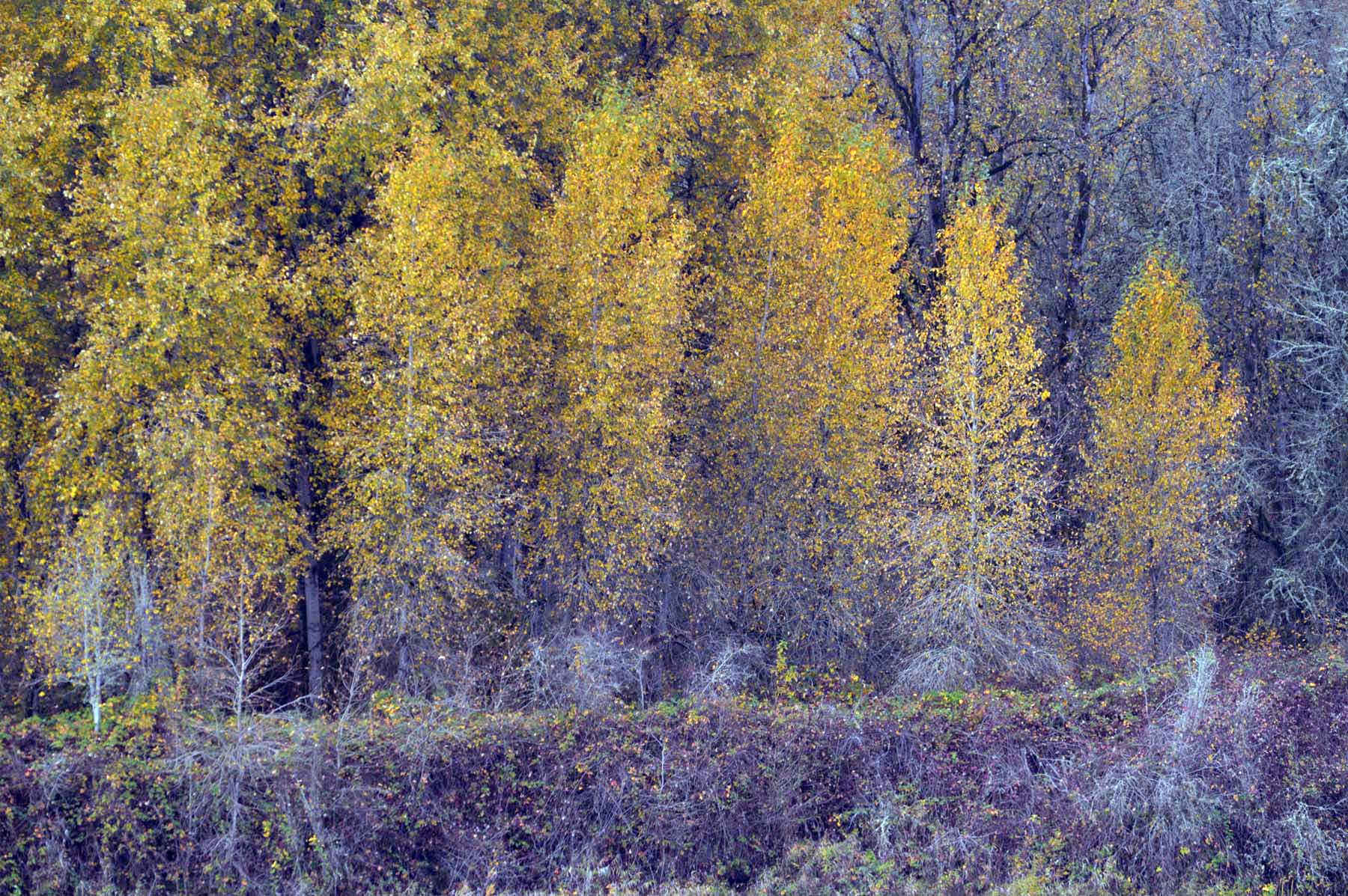
The trees are coming into leaf
Like something almost being said;
The recent buds relax and spread,
Their greenness is a kind of grief.

Is it that they are born again
And we grow old? No, they die too,
Their yearly trick of looking new
Is written down in rings of grain.

Yet still the unresting castles thresh
In fullgrown thickness every May.
Last year is dead, they seem to say,
Begin afresh, afresh, afresh.

By Philip Larkin

Leave it to Larkin to imbue the glory of renewal with melancholic reminders that nothing will last, not even trees, not time, least of all we, ourselves. Even greenness is a kind of grief. And yet: here is a new round, let’s start from scratch, if only for this cycle, knowing full well that all cycles eventually cease.

Afresh, afresh, afresh.

It sure felt that way when I walked my first full round of 2025 at Jackson Bottom yesterday. Trees in leaf, wildflowers covering the pathways and meadows, dog roses climbing ever higher.

There were the last of the irises, the first of the asters,

mallows and forget-me-nots – and varieties of small sunflowers.

There were clover and clumps of hemlock,

cowslip and my beloved daisies.

The darn infection of my ribs, refusing to heal completely, made it painful to lift the camera, but how could I not?

Wildlife was fully present to greet the sunny day, bunny ears lined with blood vessels,

wood ducks tending their young,

as were the swallows.

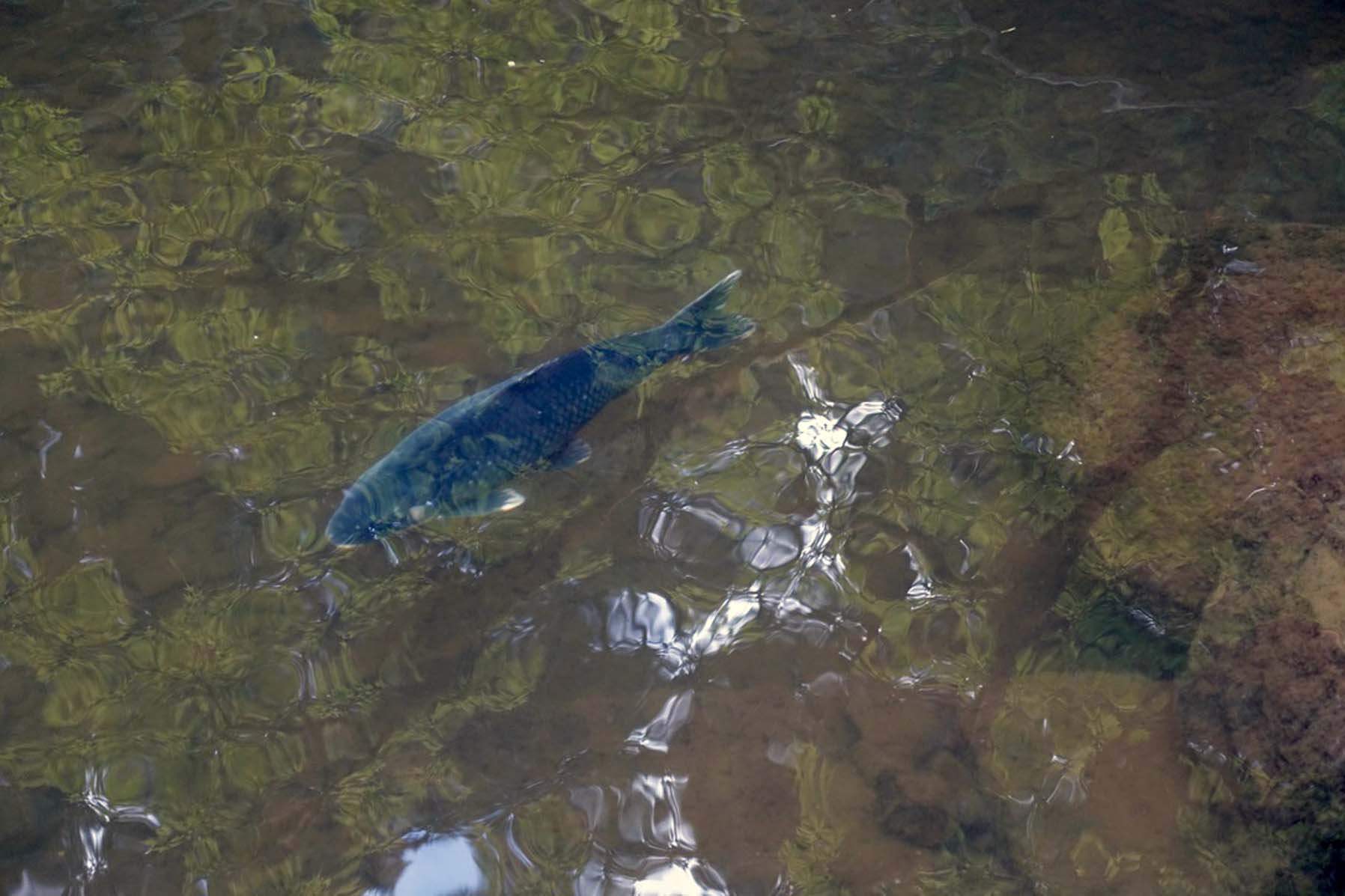
Minnows darted around,

Scrub jay brandished a nice morsel, and the little guys tried to come into their own.

Deer was shy but present until it wasn’t,

and the crowning encounter was that of a coyote hunting, giving me the eye in no uncertain terms that I was interfering with his lunch.

***

That morning a local artist who I respect a lot for who he is as much as what he creates, had posted something on IG, with multiple comments of people acknowledging that they felt the very same way.

I certainly don’t feel like a coward – that would imply that there is the possibility of effective action and I were too scared to take it. But I do feel the same helplessness in view of the tremendous suffering all around us – I simply don’t know what I could do.

Then again, witnessing is a first step, acknowledging the horrors unfolding is a commitment to truth, and focussing on the fact that throughout history things have been evolving to the cyclical nature of ALL there is, helps to not succumb to despair. It is not just the living beings – whether trees or people – that die. It is also tyrants, war mongers, colonialist or generally oppressive systems that eventually bite the dust. Rome fell, so did the Spanish Inquisition. Stalinism is gone, so is Mao; republics have supplanted kings. Yes, some ideologies have only gone underground, ready to reemerge, and yes, there are scum who would like to reintroduce segregation and continue to use indented labor in the penal system if not outright slavery. There are those who pursue ethnic cleansing and genocide for clinging to personal power. But change has happened across Millenia, and human rights have surged in places previously very dark.

Afresh, afresh, afresh. Nature (and poetry) as a reminder that cycles will unfold, no matter how inevitable everything looks like now with power in evil hands. It will not bring back to life those who were brutally killed, it will not change our helpless mourning that currently colors every aspect of our lives, but a more just world can evolve along this historical spiral.

Maybe the artist’s simple uttering of those words allowed some other people not to feel alone, hearing sentiments that matched their own. That is the first step to build community that shares an assessment of facts, making us less vulnerable to manipulation of how we experience reality. There is nothing cowardly about the paralysis so many of us experience, but we have the choice to put our energy into hope, instead, and into local action. Do something for someone – here I cling to the words of Emily Dickinson:

If I can stop one heart from breaking

If I can stop one heart from breaking,
I shall not live in vain;
If I can ease one life the aching,
Or cool one pain,
Or help one fainting robin
Unto his nest again,
I shall not live in vain.

by Emily Dickinson

Jasmine sweetness was suffusing the air.

Music for walking through this world….

Memorial Day 2025.

During law school I worked tons of different jobs to save money for my travels. Some of the jobs were advertised, others came through word of mouth. To this day I cannot decide which was the hardest one: sitting at a production line – stools carefully assigned to alternate German and non-German factory workers (the so-called Turkish “guest workers” at the time) so conversation was unlikely – filling 20 pound bags with birdseeds, and lifting them off, all the while inhaling the dust of that stuff permeating the air of the huge hall. Or standing all day behind the counter of a fried chicken fast-food joint in the caves of a subway station, selling food. I don’t think I lasted more than a few weeks in either.

Then there were jobs I regularly returned to, filing bills and receipts for a renowned bookstore specializing in textbooks, typing in the office for a huge pickle company, and helping with book keeping at a construction firm. The variety in itself was an education – being in environments and with people I would usually not encounter, learning real life skills outside of the privileges of the ivory tower.

One of the more creative, if dangerous, jobs was candle making in the shop of a hippie out in the boonies, who spent most of his time in an Ashram in India, well supported by the candle business it seems, which paid pennies for the student workers. It was fun, but I also have the scars to show for it, hundreds of tiny spots on my arms where hot wax landed.

All this came back to mind while photographing the bees and bumblebees on my salvia plants, which are currently in bloom. Where do they bring the pollen, how much wax is produced for their hives? How are our ever scarcer bee populations affected by the decisions of a conspiracy theorist, who is rolling back 100+ EPA rules, slashing toxic cleanup funds, weakening pollution limits and blocking previous pesticide bans, none of it based on science?

Stopped myself right there, and tried to distract my thoughts away from the horrors, back to beauty instead, deserving of the bees. Focus on art!

Maybe you share my appreciation for the truly astounding installations made from wax by the French artist Juliette Minchin. Likely not bees’ wax, of course, but wax nonetheless.

Here are some pieces from the most recent Art Basel (2024),

Juliette Minchin Hydromancie 33 & 35 (2022)

and those shown in Munich, below; the latter was part of a group exhibition in the newly constructed Bergson Kunstkraftwerk building by Gallery König, METAPHOR TO METAMORPHOSIS, riffing on Franz Kafka.

(Allow me a side comment: Here is the exhibition announcement – when I hear the words “drawing from the aura of his works,” all I can do is try to stop my eyes from rolling at warp speed in my head….

“The exhibition draws inspiration from Franz Kafka, reflecting his exploration of identity and transformation in an ever-changing and threatening world. Central to the show are themes of personal, national, sexual, and other forms of identity, examined as unstable constructs that are constantly in flux and transformation, and often questioned by the artists. Kafka resists categorization, and perhaps it is this elusiveness and indescribability that makes his work so captivating even 100 years after his death. The exhibition does not seek direct references or interpretations of Kafka, nor does it offer an art historical analysis. Instead, it draws from the aura of his work, the sense of relentless search, an attempt to understand the world, and often alienation.”

Elusiveness and indescribability are perhaps apt terms for whatever this signage exhibits: name dropping and fashionable terms that serve as a rubber band heading for diverse approaches to art.

Juliette Minchin Lit 17 (2024)

Here, however, is Minchin’s site-specific installation that took my breath away, even when seeing it only in photographs, with no hope of experiencing it in person. The work was shown last year at the Museo Sant’Orsola in Florence, in a part of the former convent of the same name that is currently being redeveloped, with an anticipated official opening scheduled for 2026. (All images below from Juliette Minchin, Rivelazioni.) Everything you see here within the architectural frame is made from wax.

The specifics below from her website:

For the space in the convent’s first church, Juliette Minchin has designed an installation that unfolds around the remains uncovered during the latest archaeological dig (2014). Her drapes and veils of wax envelop the architecture: the back of the room and the windows come to life, as if breathed through by a new breath of life. In her own way, the artist seems to be resuscitating the convent’s theatrical and fleeting Baroque past, of which there has been no trace since the 19th century. In the convent’s former pharmacy (spezieria), on the other hand, the artist is staging a vigil. Around the room’s imposing pillars, Juliette Minchin has hung panels covered in wax and wicks that will be lit and melted each day, offering visitors the spectacle of silent, ever-changing creativity. The shapes, light and scent of burning wax offer visitors a spellbinding sensory experience, a reference to the liturgical and healing rituals once practised in these places.​”

The combination of impermanence (the wax melting, the convent in ruins) and resurrection (the art reinstating and emphasizing the architectural beauty, the permanence of symbols of faith or attempts at healing) I find it all glorious. and I thought the idea of staging a vigil is an apt invitation for Memorial Day, today, honoring those who died for the rest of us, many in order to prevent fascism’s rise. May their sacrifice not have been in vain.

Of course, the beauty of the salvia blossoms is impermanent as well, while hopefully the collected pollen will be transformed into something a bit more stable and lasting: wax for the hives. Waxing and waning, thoughts coming and going. And the privilege to observe it all, matched by the obligation to remember.

Music today is by an Italian musician, recorded in a 14th century benedictine monastery in Varese, but reimagining sacred afro-cuban music. My current favorite, so beautiful and soothing.

Light at the end of the tunnel.

By all reports, it used to be a happy place. A house right next to a “Tunnel of Many Vistas”, an engineering marvel from 1915 on the original 73-mile route of the Columbia River Highway, the first major paved highway in the Pacific Northwest and the first scenic highway constructed in the United States. By the 1930s, that building became a roadhouse, a service station, a restaurant and a bunch of rental cabins for overnighters who drove their cars out to Hood River, admiring the tunnel along the way. Much dancing, fueled by moonshine, gregarious company and fun throughout the Prohibition.

The original Mitchell Point Tunnel was closed in 1953, no longer safe, and no longer able to accommodate increased numbers of ever larger cars. It was ultimately destroyed and filled with rocks in 1966 to widen I-84. (The basalt that constitutes the surrounding mountain and delivered those rocks, is in itself a thing of beauty – just look at the coloration!)

Want to join me for a short walk? The tunnel is now rebuilt and connected to the Historic Highway State Trail through a steep mountain at Mitchell Point, open for hikers (and eventual bikers) only. (You can reach it by car, but parking is extremely limited (fewer than 20 spaces with no off-rad alternative available. So choose timing wisely.) The State Trail hopes to connect The Dalles with Troutdale once again, a stretch of 68 miles or so.

The choice to visit this place, opened to the public less than two months ago, was the perfect antidote to the feelings incited by this week’s news. For me it was the mix of assaults against individual people or groups combined with attacks on ideas and values, never mind the law, that registered as such heavy burden. To name just a few: a brain-dead Georgia woman kept alive on tubes to serve as an incubator to her unborn baby due to new restrictive abortion laws, with her family having to foot the bill for the next many months, never mind not facing a form of closure. Birthing machines, even in death.

The passage of the “big beautiful bill,” that will deprive millions of kids and people living with disability of food, and kick over 13 million people off health insurance.

  • A bill that will lead to the closure of over 150 rural hospitals, not only making timely health care accessibility close to impossible in those areas, but also kicking 1000s of people off impossible to replace – jobs.
  • A bill that deprives young and adult trans people alike of HRT or surgical treatment compensation.
  • A bill that has hidden clauses like: “no State or political subdivision thereof may enforce any law or regulation regulating artificial intelligence models, artificial intelligence systems, or automated decision systems during the 10-year period beginning on the date of the enactment of this Act.”
  • And, in one of its most authoritarian passages, a bill that order judicial silencing in Sec. 80121(h): “No court shall have jurisdiction to review any action taken by the Secretary, the EPA Administrator, a State or municipal agency, or any other Federal agency […] to issue a lease, permit, biological opinion, or other approval.” In other words, if the government approves drilling, mining, or development, even illegally, you can’t sue. – It applies retroactively, killing lawsuits already in progress. – Tribes, environmental groups, citizens, even states, lose the right to challenge these approvals in court.
  • A bill that contains provisions (sec. 70302) that would block federal courts from enforcing contempt charges against government officials who violate court orders, unless a judge required a monetary bond when issuing the original injunction (which is rarely done.) This would clearly undermine the already tenuous balance of power between our branches of government.

On the disaster preparedness front, the news was equally worrying. The Trump administration canceled 33 million in funding to help prepare and protect Californians from earthquake damage. And FEMA announced that it canceled its Four-Year strategic Plan ahead of Hurricane season, with no replacement given. This came a week after the announcement that FEMA is ending Door-to-Door canvassing in disaster areas to provide aid.

Tunnel as antidote to all this? Yes! Not only is there light at the end of the tunnel. The new tunnel mirrors the historic tunnel with re-constructed arched windows with views of the Columbia River, letting light in continuously along the way. Such a prominent reminder that not all is dark – there are islands of hope, of openness, of change and restoration (like this very tunnel), as well as resilience.

And speaking of which, the wildflowers clinging to the steep cliffs surrounding this site, were in bloom or in brightest green of emergent leaves, on the scarcest of soil. The delicate poppies swayed with the sharp wind, not defeated. Nature’s will and strength to survive on full view. Turned out to be a happy place, indeed.

Anthem of the day: had to be this, right?

Your very own Town Crier.

Walk with me. That way we can talk and I don’t have to yell “Oyez, oyez, oyez!” like the town criers of yore, to get your attention for today’s public announcements. Oyez means “hear me,” (still used in French, originally Anglo-Norman.) I have always wondered if the German expression Oh Je – oh no! – is a derivative, since the news were mostly bad and the expression is one of concern, regret, or surprise….but I digress.

Let’s walk the just re-opened Oak Island Loop, at its most glorious colors this time of year, on a sunny and warm day, too warm for April, really. Trudge across the large meadows and turn a corner into the oak woods – unclear who was more startled, the calves hanging out in the shade or this hiker. But guess who ran!

Vultures hovering close, ever hopeful. Not this day, my friends, not yet!

Golden sheen wherever you look. The unfurling oak leaves green-gold, the poplar leaves not yet covered with dust reflecting sunlight like golden dots, the buttercups not far behind.

Colors in general more on the pastel side, soft pink hawthorne, nettles, the blues of the camassia everywhere, and white, tinged occasionally with pink in the fruit blossoms and emerging white hawthorne.

I had been thinking about colors, having wasted 90 minutes of my precious life time on an inane movie with nothing to show for but admiration for the colorist who designed costumes and backgrounds to sheer perfection. The Room Next Door was on my list for the mere fact that I am a sucker for Tilda Swinton and director Pedro Almodóvar‘s work. I don’t know what they were thinking here. Stilted dialogue, a plot too hard to believe, a display of photogenic suicide with nary a bit of pain in sight.

Narcissistic woman who has managed to drive everyone from her life, is now facing cancer death in loneliness. Neither estranged daughter nor distant friends answer her request not to die alone when taking her own life. Forgotten friend from long ago, who makes a living writing about her fear of death, inexplicably yields to the request for companionship even though both know it endangers her for criminal aiding and abetting. Rent a mansion in upstate NY (costing enough to cover the price of a first class flight to Switzerland, where assisted suicide for any reason is legal, is my bet.) Patient takes her own life, friend barely escapes legal trouble, daughter (also played by Swinton in a ridiculous wig) reappears to find no real answers.

In any case, the ethics of suicide are never discussed, the pragmatics not based in reality, and the question of succumbing to requests that are entirely selfish, not once tackled. Political questions are reduced to the plight of personal trainers not allowed to touch clients any longer, or whiney ex-lovers hinting at their disgust for climate change. Almodóvar, what has got into you? In any case, not recommended, but for the colors which rule in setting up space and personalities.

***

Back to the public proclamations of your personal town crier. On Wednesday, the members of Portland City Council Community and Public Safety committees voted on passing a resolution about the fate of Portland Street Response‘s future to the full City Council. Part of Portland’s Public Safety area, the program is a successful tool in assisting people experiencing mental health and behavioral health crises, rather than calling the police on the frequently unhoused people in distress. The new resolution seeks to strengthen this program, among other things, by fully realizing Portland Street Response as a 24-7 co-equal branch of the first responder system. Here is the resolution in full.

Water is ominously low already. St. Helens in the background.

Two of the committee’s members, Loretta Smith (District 1) and Eric Zimmerman (my istrict 4) voted against bringing the resolution to the full council – really trying to throw a wrench into the gears of progress in dealing with our homelessness crisis. They ignore the positive example of many other cities (Seattle, Albuquerque, and Durham, NC, among them) that have shown that independence – not reporting to either police or fire department, in other words being co-equal – has improved service capabilities. Luckily, Steve Novick cast the decisive vote to bring the resolution forwards.

Mt. St. Helens, Mt. Adams and Mt. Hood in full view.

The meeting for the full council is in early May. If you cannot attend – a lot of presence always helps – I encourage everyone here in Portland to consider writing to their respective council members what you think should be voted for (or against.) Seven ayes will be needed to pass the resolution. (I have already written to Mitch Green, who is the District 4 member to vote next. And to Zimmerman to protest.) Here is the link where you can choose to write to your counselor. There is a spot where you can pick the name of your representative to be alerted.

Back to private proclamations: the woods were full of birdsong, the warblers picking up the golden dot theme,

For obvious reasons called butter butt…

the mourning doves, the red-winged blackbirds, the robins, song sparrows and swallows joining the chorus. Baldies shrieking, Heuer happy.

Instead of music today we’ll have the splendid sound scape of a day’s recording – dawn to dusk – of nature sounds on the Knepp Estates, one of Englands pioneers in rewilding. The album was released 4 days ago and is revelatory. From the producers:

The recordings were made by Alice Eldridge of the University of Sussex, who explained the idea behind the wilding.radio project that inspired this release:
“I have come to believe that nature sounds are not only ‘calming’, but offer a powerful, visceral means to remind us that we are a part of the wider tapestry of life. This simple listening experience has been received with extraordinary enthusiasm and gratitude. Britain is one of the most nature-depleted countries in the world. This reduction in biodiversity has serious consequences for the future of life on this planet. It also radically depletes our sensory connection to wider nature. And if we don’t feel our connection to the rest of life on this planet, we are less likely to care for and take positive environmental action in the future.”

On this Passover.

Yesterday, Robert Reich’s Sunday Thoughts landed in my inbox. He describes the most recent evidence of the “Trump regime’s abject cruelty, viciousness, heartlessness, brutality,” and asks, “How does a moral person live with this? How do we not become complicit?”

We have been asking ourselves these very questions during this year’s Passover, a Jewish holiday focussed on the experience of abject cruelty, viciousness, heartlessness, brutality, (against ALL, by the way) and on teaching our children and grandchildren how you should forestall a repetition of oppression or how you can overcome it. Except that in this very year 2025 the “Never again!” rings hollow.

I had absconded to the Northern California Redwoods to get away from the news, and get together with family. The beauty of those woods is unique, but even there you are reminded of human interference for profit, the harvesting and subsequent charring of century old trees. (The big stumps are the ones logged about 100 years ago, the surrounding forest is secondary growth.)

The secondary growth is still awe inspiring, as is the light that pushes its way through the dense tree crowns, forming intensely contrasting scenery.

The meadows adjacent to the forests are filled with wildflowers at this time of year, and the emerging elk look as if a fairy tale world existed that they freely move in and out of, safe from predators.

Safe from predators: no longer a given in a nation that decides it can disappear people without due process, with no redress once removed from American soil, and put into gulags extracting slave labor until the day you die. It can happen to anyone, Jews no exception, particularly with this administration’s anti-Semitism in plain sight. “What?” you ask? Are they not devoted to fight anti-Semitism?

Is leaving copies of Hitler’s “Mein Kampf” in the military libraries the Naval Academy, while removing books teaching the history of the Holocaust, fighting anti-Semitism? When the superintendent of a school district in the Rio Grande Valley of Texas agrees within minutes to a conservative group’s demands to remove seminal texts about the Holocaust and antisemitism, including Maus and Anne Frank’s Diary? Florida’s state Education Department rejected two new Holocaust-focused textbooks for high school classroom use. “Modern Genocides,” and a course titled “History of the Holocaust.” Is that fighting anti-Semitism? Is using the Hitler salute by an administration “advisor” fighting anti-Semitism?

Is Trump’s election campaign use of featuring ads of Hillary Clinton against a background of hundred-dollar bills and a Star of David, and another promising protection against global special interests and featuring the portraits of three Jewish financiers, Janet Yellen, George Soros, and Lloyd Blankfein fighting anti-Semitism? Both ads are typical renditions of the classic antisemitic smear of Jewish money and Jewish financiers as the sources of power behind an opponent.

Is calling demonstrators marching with swastika and Confederate flags in a Nazi-style torchlit parade, chanting the Nazi slogans “Blood and Soil” and “Jews will not replace us” at a rally in 2017, ““fine people” on “both sides” fighting anti-Semitism?

Trump declared the protesters wearing sweatshirts that said “CAMP AUSCHWITZ,” or those seen elsewhere wearing what seems to be the Proud Boy version, “6MWE” (6 Million Weren’t Enough) during the January 6, 2021 attack on the Capitol, “political hostages” and “patriots.” He regularly dines with anti-Semites and Holocaust deniers like Kanye West and Nick Fuentes. And in the run-up to the 2024 election, he proclaimed that if he lost, it would be because too many American Jews had failed to vote for him—once again a classic antisemitic tactic: if things go wrong, blame the Jews. Is this fighting anti-Semitism?

Is not calling out the arson of a Jewish governor’s home with his family sleeping inside on the first night of Passover fighting anti-Semitism? There was, of course, no official response whatsoever from our President.

In the spirit of Passover, let me recite what I see in the context of our history. So far, the concept of anti-Semitism has been used to stifle dissent, targeting pro-Palestinian or anti-Israel sentiments. It has been abused to stifle freedom of expression at our Institutions of Higher Learning in general. (For detailed and smart discussions of this listen to Timothy Snyder here, or read Elad Nehorai here.)

Polls already taken in 2021 reported that more than a quarter of all American Jews believe that Israel is an apartheid state, while 45% assert the Palestinians suffer from systematic racisms. These numbers are likely to be much higher now. Definitionally, according to the Antidefamation League, these American Jews are anti-Semitic. If the current administration would deport them for their beliefs, and Israel ensures not to allow them to live there (see the new conditions touted by BEHAR), the two countries will render fellow Jews stateless. Again.

Can’t be deported for your beliefs? May I introduce you to Mahmoud Khalil. Can’t be deported (and tortured or left to rot) as a U.S citizen? May I encourage you to listen to your President’s suggestion that he can and will do so? Here is the game plan. Can’t be deported as a declared enemy of the state for criticism of the President? Here is a legal analysis that suggests former Trump cyber security officer, Christopher Krebs, now investigated for treason for asserting that Trump lost the 2020 election, might get ready to leave the country before he ends up unretrievable in El Salvador.

Can’t be retrieved, after admittedly erroneous deportation, even if the Supreme Court demands it (or pretends to do so…)? Indeed, says the administration, oops. When the single proposed safety mechanism against wrongful deportation, Habeas Corpus, is made moot by trickery and lawlessness, we are all endangered. From purported criminals they HAVE rights to due process) to dissidents to personal retribution targets to religious classes – none will be spared.

As we recount the history around the seder table – all of this is not new. But apparently more than 60 million voters in this country were willing to install exactly that kind of ideology. It was not hidden. 6 million dead Jews made no difference. Nor does the attempted erasure of an entire other people, the Palestinians, apparently.

How do we not become complicit? Educate yourself on the issues and speak out! Understand that the core freedoms of our constitution are under attack, regardless of who you are or what you believe. Protect those who are less privileged than we still are. Defy apathy or wishful thinking that it will all work out. This is not just chaos, or economic turmoil, or a multi-pronged attack against science and humanities. This is about sending people to their death in prison camps, ordered by those with immoral inclinations and through lawless means.

To brighten the day after some dark musings (Yes, I’m back, true to form… ) here is a remarkable collaboration between a French and a British musician.

and this from my inbox: Reversible Barnes & Noble display in Georgetown this weekend. (Courtesy of Chris Geidner.)

The Sultan’s Turban.

In memory of my friend, Dutch-American painter Henk Pander. You are missed. –

Henk Pander Remembering Haarlem (1922) Painted a year before his death on April 7, 2023.

***

Walk with me, and you’ll get rewarded with a fun fair ride, or a gigantic ice cream cone or a wine tasting at 11:15 in the morning on a Monday – up to you. I, of course, had come to photograph the tulips and the never disappointing sartorial choices that people make when they visit the fields.

On my way to the Wooden Shoe Tulip Farm, I drove by one of those traffic control machines that flash speed numbers at impatient drivers. Mine said instead: Great Job! I must have been, for once, under the speed limit, but could not help be irritated by patronizing traffic machines that are now talking to me. But I digress. Let us leave quibbles behind and indulge in beauty.

Wooden Shoe Tulip Farm South of Portland, in March 2025.

Claude Monet Tulip Fields at Sassenheim (1886)

Vincent van Gogh  Fields of Tulips (1883)

What used to be a farm with a small store where you could get cut flowers and order bulbs for next year’s planting, is now a consumer’s paradise, with a fun fair, hot air balloon rides, endless booths for food and trinkets.

You have to book tickets on line and decide on a fixed time slot for arrival, so that the acres of parking lots can be managed by the staff. But you know what: it’s fine! Let people have fun in a world that offers little of that, let the kids squeal and the adults delight in a whiff of spring and distraction from daily worries. I certainly had a blast and was grateful to hear so much laughter.

The fields were a bit behind, given the strange weather patterns of this winter, with field color concentrated only in one corner, but found in planters generously spread throughout. What was in bloom showed most frequently shapes that no longer resemble much the sultans’ turbans, etymologically the root of the word tulip, from the Turkish language.

Jacob Marrle Four Tulips: Butter Man, Nobleman, The Great Plumed One, and With the Wind. (1635)

Erkin Tulpen in blauwe Kom (2018) He is a contemporary Dutch realist painter who goes only by one name.

Yellow was definitely coming up, opening wide to a surprisingly warm morning.

Gerhard Richter Tulpen (1995)

Picked this painting despite the ongoing “let’s make them guess” style of this artist (I’m not a fan, as you know), with multiple options including a view from a moving train, fading of memories, or vision problems – which was what I thought about during my stroll. The farm had a sign out that suggested you could borrow glasses that would help overcome color blindness and help enjoy the full glory. I had to look it up, once back home, if these glasses really are able to keep what they promise – and wouldn’t you know it, only IF you have a mild version of the common red-green colorblindness (and not an absence of color receptors,) do they have an effect, enhancing contrast vision more so than color vision per se. (Ref.)

Lots of workers in the fields, picking flowers for sale, transporting goods, weeding, guarding against visitors flaunting the rules. Hard work on a still cold and damp ground.

Lots of appropriately themed garb.

But nothing beats the beauty of the blossoms – or, as a matter of fact, the breeding of new stem colors.

Max Beckmann Stillleben mit Ausblick aufs Meer  (1938)

Paula Becker Modersohn Stillleben mit Tulpen in blauem Topf

One tent housed a wood worker who made traditional Dutch Klompen out of poplar wood.

It made me think of the long history of Dutch colonialism, agricultural brilliance, and the 17th century tulip mania that ended in an economic crash. One thought about speculative bubbles led to another, and here I was wondering why so many young men are so attracted by crypto currency speculation, meme coins, and, for that matter, sports betting.

Anonymous The sale of tulip bulbs (17th Century)

For one, it is interesting to see that there are endless postings on the web where tulip mania and crypto speculation are compared and scathingly disentangled – the former bad, the latter good, in very LOUD voices… Of course, if you dig, you find opposing views and people quite worried about another bubble, eventually bursting and dragging the investments of young men down with them. The numbers are staggering – both in terms of how many young men are drawn to day trading, crypto and betting (relative to women and older populations,) how many of them consider themselves addicted in one form or another, and how much money they gain or loose in short amounts of time.

Roughly one in three young people has traded in or used crypto (when I can barely define what that actually is.) The new administration is helping, in terms of loosening banking restrictions, or active encouragement in investing in these kinds of currencies (Trump just yesterday introduced a new cryptocurrency, the Stablecoin.)

Listen to the expert (and this link leads to a smart, short piece on the psychology of crypto attraction):

Still, the bro-economy exploits its users’ penchant for risk. Crypto companies and betting sites do not generate value; they take cash from their users, reshuffle it, and redistribute it, while keeping a cut for themselves. Postmodern trading platforms encourage excess, making their margins on esoteric trades and superfluous volume. The casino lacks guardrails, not to benefit the bettors, but to benefit the house.

Musk and Trump have given young men something to aspire to. But their ascendance makes the stricter regulation of the bro-economy unlikely—and, in the case of crypto, makes deregulation a sure thing. Guys are about to lose billions and billions of dollars a year on apps designed to obscure risk and keep them coming back for a dopamine hit. Trump and Musk can afford to lose huge sums. Most young American men cannot.

 Jan Brueghel the Younger Allégorie de la Tulipomanie (1640)

Oh, let’s just return to the beauty out there, and not fret, for five minutes.

Claude Monet Vase of Tulips (1850)

Emil Nolde Tulpen, (ca. 1940)

And one of my favorites:

François-Emile Barraud Parrot Tulips (1931)

***

I was not the only one who found joy.

And Easter around the corner.

The pug, on the other hand, was sort of done with it…

As was he.

Careful, Bigfoot, even the curbs have tulips…

Music today are variations on a famous composition by Dutch composer Simeon ten Holt who died in 2012. The piece is called Canto Ostinato (1979). Here is a version for four pianos, recorded live in 1984 and here is one I really like from 2017 at a world music festival, with incredible singing.

Finding Gifts.

Yesterday was a good, a surprisingly good day. I had gone to Sauvies Island, rather than giving in to fatigue, and found myself with an embarrassment of riches. It was as if all of nature conspired to wait for me and shower me with extraordinary beauty, wherever I turned. The wetlands looked like a Dutch landscape painting from the Golden Age.

The willows glowed like little lanterns against soft air.

32 egrets (I counted!) grazed in a field, occasionally flying off to a better spot for hunting.

Sandhill cranes overhead and hopping around in their elegant, if short-lived, staccato dances tugged on my heart strings – I so love these birds.

Ducks joined them.

Swans moved northwards, will I ever see the tundra again? No. That’s ok. Can’t be greedy.

Snow geese rose with a cacophony of noise when spooked by a raptor. When they eventually settled it looked like huge white blossoms tumbling down onto the ground.

And then a pair of eagles decided to show off, noisily announcing their arrival, or yelling at each other, what do I know, maybe they’re courting. Not mutually exclusive, I hear.

So, just for today, I’ll revel in nature’s gifts, leaving politics aside. In that spirit, music will also be enchanting, a new find of an L.A.- based Jazz trio. Little guy below hops in rhythm….

Hope and Ashes

Would you like to walk with me, or, as the case may be, drive from Oregon’s West across the mountain passes to the High Desert? We’ll see varied beauty of landscapes moving from winter to spring, with remnants of snow offset by greening pastures and budding trees.

Once we have crossed Mt. Hood, the Sisters’ and Mt. Bachelor’s snowcapped peaks form the background for grazing horses, some looking decidedly in search for a prince. Soon you start driving along the Deschutes river, not yet raging at full strength expected after the snowmelt.

If you are curious enough for a small detour, we can visit the Pelton Dam, which impounds the waters of the Deschutes to create the deep Lake Simtustus, filling a narrow canyon about 7 miles (11 km) back to the Round Butte Dam built in 1964. The water is intensely green in parts, despite blue skies, making you wonder about algae. The surrounding rock formations are majestic. See me wince when I assume the name “Simtustus” honors a Native American, and then learn that it does indeed, but one who scouted for the U.S. Army during the 1867–68 campaign against the Paiute Indians. The Snake War, as it was known, has been ignored by historians, concentrating on the contemporaneous American Civil War and its aftermath, instead. Yet the Snake War was statistically the deadliest of the Indian Wars in the West in terms of casualties. By the end, a total of 1,762 men were known to have been killed, wounded, and captured on both sides. By comparison, the Battle of the Little Bighorn produced about 847 casualties. The Paiutes fought bitterly against the encroachment of colonial settlers onto their territory.

Driving further South, we eventually land in Sunriver, a community near Bend, and a favorite vacation spot for outdoors enthusiasts and families who love being in nature with their kids, but also enjoy the amenities of pools, nature centers, tennis and golf courts, maintained bike paths and the like.

One of the most amazing natural sights, next to deep ponderosa pine forests and the river itself,

are the lava fields produced by one of the largest High Desert volcanoes, the Newberry Volcano. Three million years old, it covers more than 2,000 square miles and sent basalt flows down the canyon of the Deschutes River as far as 65 miles from the main crater (overall it just looks like a mountain chain rather than a dome.)

The U.S. Geological Survey (USGS) considers it to be a very high threat volcano because of its recent volcanic activity (within the past 1,500 years) in an area where numerous people live. Up until now it has been regularly monitored to detect seismic activity, measuring swelling or deflation of the ground, and trying to detect distinctive volcanic earthquakes caused by molten rock (magma) movement beneath the volcano. Who knows if those services have fallen prey to Musk’s chainsaw as well. (I checked, the answer is YES.)

It is a strange feeling to walk on top of this sleeping giant, something I last did a decade ago, and now again, as if nothing had changed in-between, except for my (reduced) speed and level of fatigue after a ridiculously short hike. I was then and still am a speck in space and time, a particle, a glimmer, given the dimensions of this geological behemoth. And I am still in awe of the beauty around me, the sense of grandeur between the expanse of the High Desert landscape and the height of the surrounding mountains.

Yet I am also aware of human achievement, if lasting so many fewer years, reaching across millennia nonetheless. Thinking here of a poem related to volcanoes, by a smart, formerly East-german poet who weaves into his dry observations allusions to Greek mythology and writing – knowledge transmitted throughout the generations (although who knows if we will see it on U.S curricula after this administration is done, installing the Christian Bible as a textbook instead…)

Active

Then someone says crater and you’re tumbling down.
A word from ancient Greek, a fragment, it means
The pitcher, in which they mixed water and wine.
The volcanic abyss, Empedocles’s tomb.

No more than a word, a splinter, and you see the sandals
Perched on the crater’s rim. Peering down through
The hole in the skullcap at the grey matter.—These pallid
Pockmarks puncturing the map of the moon.

You just hear the word crater—there’s a crack,
And the ear conjures myths out of ceramic and molten rock.
Hephaestus, the smith, in scenes with figures of red.
Or Hades, dragging Persephone down to the dead.

BY DURS GRÜNBEIN
Translated by Karin Leeder from the German, below


“Aktiv”

Da sagt jemand Krater, und schon stürzt du hinab.
Ein Wort aus dem Griechischen, Bruchstück, es meint
Einen Krug, in dem mischten sie Wasser und Wein.
Den vulkanischen Abgrund, Empedokles’ Grab.

Ein Wort nur, ein Splitter, und du siehst die Sandalen
Am Trichterrand. Starrst durchs Loch in der Schädeldecke
Auf die graue Substanz. – Diese riesigen, fahlen,
Im Mondatlas abgebildeten, pockennarbigen Flecken.

Du hörst nur Krater – es knirscht, und das Ohr,
Aus Keramik und Lavaschutt, zaubert Mythen hervor.
Rotfigurige Szenen mit Hephaistos, dem Schmied.
Oder Hades, der Persephone in sein Totenreich zieht

Newberry National Monument – Lava lands

The poem is, unfortunately, rather badly translated, which is surprising given the talent and caliber of this award-winning translator.

In my own understanding of the German, the first line describes a rather more violent, instantaneous crashing than tumbling down the slopes of a crater at the mere mention of the word. This sets the tone for the juxtaposition of “active” and “reflexive” or passive, that runs through the poem. In the second verse, the word crater is no longer a fragment but compared to a shard (not a splinter, fitting way better into the theme of the ceramic pitcher). At the end of the verse the poet refers to actually printed maps of the moon on which huge pallid flecks look like pock marks and which hung in children’s bedrooms during the poet’s youth . In the last verse, the translator uses “crack” instead of “crunch”, which is far more applicable to the crumbling lava and ceramic mix that conjures myths. But maybe I’m nit-picking. Let’s look at the references that really make this a memorable poem.

Both meanings of the word crater, volcano and ceramic pitcher, weave through the poem. Both are provided with references to Ancient Greek mythology, from writing, or found in the imagery painted onto the vessels.

The reaction to the mention of “crater” is linked to Empedocles, a philosopher who, as far as we know, was the first to offer a theory about the connection between light and vision, something picked up and developed later by Euclid. He was a strict vegetarian, had some significant ideas about human psychology and was said to have jumped into an active volcano to prove that he was immortal and live on as a God, leaving his sandals at the rim to “prove” that he had departed. There are numerous version about his demise, some claiming he faked it, others attributing it to an erupting Vesuvius which blasted his sandals up to the rim.

Empedocles’ example of a voluntary jump into the abyss provides a clear contrast to the narrator’s sense that he is inescapably falling into the depth. His imagination is active, but the experience is reflexively forced on him.

The next allusions pick up the theme of catastrophic endings by active means or passive experience. Remember who Hephaestus was, so often depicted as a red silhouette on a black vase? He was the God of fire, volcanoes, metalworking, artisans, metallurgy, carpenters, forges, sculpting, and blacksmiths, creating all the tools needed for unleashing war. And if that was not enough, he also brought a first gift to man: Pandora and her miserable box. All of it drowning the world in evil by active design. Contrast this with Persephone, who was abducted into the Underworld, tricked into eating some pomegranate seeds so that she had to stay there for most of the year, no active resistance possible.

Then again, not all is black and white, or red on black, as the case may be. Persephone still helped to bring spring and harvest about together with her mother, upon her temporary jaunts back into the world, and was Queen rather than pure victim in the underworld.

And Pandora, sent to us by a God who also provided us with habitat and tools as well as the weapons of war? She used to be a life-bringing goddess in early renderings of the Greek cosmos (in fact her name means “all-giving”), before she was eclipsed by the death-bringing human Pandora. And in contrast to the misery she unleashed, one thing stayed permanently in the box, not irretrievably dispersed across the corners of the earth: HOPE, still available.

Maybe we feel like being sucked into craters, drowned by evil that has existed amongst humans since people started to record their histories, left with a torched and jagged, infertile landscape. But we have choices: the choice to think of something as providing sustenance rather than demise (pitcher vs crater), the choice to focus on hope rather than conditioned fears that drag us down the slopes of the volcano. And we have all this because the ancients laid out the maps, and our schools taught us the history. The grey matter might be pockmarked, but it can still be put to use. Let it be active and lead to the right moves.

Chem trails in just the right position….


Music today is a life version of Genesis’ Dance on the Volcano. Here is another song from that album that remains one of my favorite of years gone by, Trick of the Tail.


And another one in the interesting people department….

It is March, spring is around the corner and nature is slowly waking up. Dainty snowdrops do their ballerina imitation.

Croci clusters shine in cheerful purples and yellows, attracting early bees.

Early azaleas beckon with soft pinks.

And hellebores rule my friend’s garden, compact, round, frilly or solid, joyfully dotting the landscape.

March is also Women’s History Month, and I’d like to remind us all how much gardening was tied to the Suffrage movement, or any other progressive social reworking since the earliest 20th century. (Much of what I summarize today I learned from George McKay’s book Radical Gardening (2011) and the splendid Smithsonian website about Women’s History in American Gardens.)

Gardens and Garden architecture was for the longest time considered a man’s world. Just think about Winston Churchill commenting to Siegfried Sassoon in 1918: “War is the natural occupation of man … war – and gardening.” In the late 1800s, however, women started to form garden clubs, push for public parks as a health issues, and engage in the conservation of native plants.

No longer content to embody a sentimental and idealized single vision of women posing decoratively in gardens or with plants (as many of the period paintings do that I am introducing below,) women started to use their collective power found in new organizations centered around gardening to support social change.

Frederick Carl Frieseke Lady in a Garden, (ca. 1912.)

The first garden club in the US was founded in 1891. Next, the American Society of Landscape architects saw one female founder in 1899, Beatrix Farrand, who was soon joined by several other women. Soon several schools and colleges dedicated to landscape design and agriculture opened for women. In 1914, the Smith-Lever Act funded the deployment of home demonstration agents – mostly women – to teach up-to-date agricultural, gardening, and food preservation techniques to families of all races living in rural areas. One of the goals of the project was to “develop leadership abilities in rural women and girls.”

Jane Peterson Spring Bouquet, (ca. 1912)

During WW I, there was a mobilization of a Women’s Land Army to harvest crops and produce food during World War I as men left to fight overseas. The organization later leveraged women’s role in the war to win voting rights for women. During WW II they were instrumental with Victory Gardens, soon recognized by the USDA.

Matilda Browne Peonies (cira 1907) They grew in an Old Lyme garden. The woman in white is thought to be Old Lyme, CT resident Katherine Ludington, portrait painter and noted suffragist.

Similar, sometimes more radical, developments happened in Europe. In Great Britain, for example, the Women’s Agricultural and Horticultural International Union was founded in 1899 (nowadays know as Women’s Farm and Garden Association.) The founders were believers in universal suffrage. Soon a Women’s Land Army was established there as well, increasingly popular during WW II with “‘land girls’ central to the anti-fascist ‘Dig for Victory’ campaign, with their gendered perspective and an emancipatory rhetoric.” Suffragists, all. And very much in consensus with Suffragist Emmeline Pankhurst’s statement: “We are here, not because we are law-breakers; we are here in our efforts to become law-makers.”

Violet Oakley June, (ca. 1902)

By then, the Suffragettes, more actively engaged in militant action of all kinds, had also blazed a path. As McKay writes: “Suffragettes were gardeners, suffragettes targeted gardens for attack—in each instance horticulture was politically positioned.”

The most prominent attacks happened in 1913, when Suffragettes attacked the Orchid House at the Royal Botanical Gardens at Kew, and burnt down the Tea Pavilion a bit later. Three greenhouses were smashed, and rare and delicate plants, under bell-glasses, destroyed. The gardens were targeted in implicit or explicit acknowledgement of their link with empire, tradition, and male establishment. The women tried to point to their refusal to be “rare and delicate plant”, severing the link between flowering plant and old-style femininity.

The attack on Kew Gardens is one of the most famous incidents for women’s suffrage. It illustrates the political nature of gardening and its symbolic meaning, just like the example of Kew’s role in the British Empire. Destroying flowerbeds and greenhouses seems insane, unless the gardens and the destruction of them by ‘female vandals’ are seen in terms of the power relations in society. Just as the orchid can symbolize extreme wealth, so a flower-bed can express the power of patriarchy in the political order. (Ref.)

Philip Leslie Hale The Crimson Rambler, ca. 1908

Two of the Suffragettes were captured and sentenced to prison for more than a year. Both went on hunger strikes that were undetected for almost a month, leading to such precarious health status that both were released from prison, after unsuccessful and risky attempts to force feed one of them, Lilian Lenton, an activist who scores in my “interesting people I’d like to have met” department.

She was a dancer, and committed Suffragette at an early age – “deeds not words.” She believed that arson attacks on symbolic locales would create a crisis that would make people re-think power relations. When she was force-fed in prison with a tube through her nose down her throat, she aspirated food into her lungs and got seriously ill. The government then passed the Cat and Mouse Act (in reaction to multiple Suffragette hunger strikers who they did not want to become martyrs,) which allowed for the early release of prisoners who were so weakened by hunger striking that they were at risk of death. They were to be recalled to prison once their health was recovered, where the process would begin again.

Lenton became famous for escaping the authorities multiple times after release from prison by using the most daring costumes and escape routes, earning her the nickname the Leicester Pimpernel. She fled the city in a delivery van, dressed as an errand boy. Taxis took her to Harrogate and then Scarborough from where she escaped to France in a private yacht, although she soon returned to Britain, setting fire to things again.” She served in Serbia with a hospital unit during WW I, and was awarded the French Red Cross medal. She lived to the age of 81, seeing the fruit of her activism with the eventual right of all women to vote (The Representation of the People Act (Equal Franchise) of 1928).

Mary Cassatt Children in a Garden (1878)

Am I saying arson and destroying plants is a good thing? Am I saying political activism that employs radical means after other things failed, has historically moved movements about equality and justice forward? Am I saying individuals can make a difference, when their role becomes symbolic of a “David vs. Goliath” struggle? Am I saying we need models of previous progressive movements in our own learning-curve, when trying to defy a re-introduction to patriarchal hierarchies and norms (check out the proposed SAVE act, people!)?

What do you think I am saying?

Anna Ancher Fisherman’s Wife Sewing (1890)

Here is a list of militant tactics presented by the BBC, of the documented actions of Suffragettes.

“Whether you agree with direct action or not, the suffragette’s militant tactics had a great impact on the government and society. Some of the tactics used by the WSPU were:”

  • smashing windows on private property and governmental buildings
  • disrupting the postal service
  • burning public buildings
  • attacking Church of England buildings
  • holding illegal demonstrations
  • burning politicians’ unoccupied homes
  • disrupting the 1911 census
  • ruining golf courses and male-only clubs
  • chaining themselves to buildings
  • disrupting political meetings
  • planting bombs
  • handcuffing themselves to railings
  • going on hunger strikes

Historians still argue whether or not the militant campaigns helped to further the women’s suffrage movement or whether it harmed it. But presumably they’ll agree, crocheting won’t do the job. And we did get the right to vote. For the time being.

Mary Cassatt Lydia Crocheting in the Garden (1880)

I’ll tackle that debate another day. For now, let’s enjoy the spring bloom!

And listen to Elisabeth Knight.