Browsing Category

Psychology

Jamming, Blocking, Grunting, Screaming.

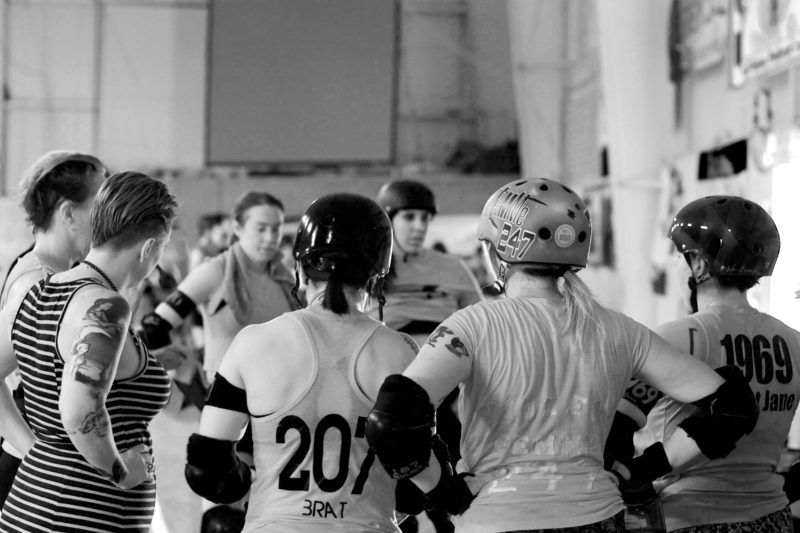
Here are photographs of the joys of roller derby as I experienced them (as an observer, alas) for the first time in my life last week: speed, strength, athletic skill, camaraderie, and funny derby names. And – given the theme of this week – I’ll ask you to imagine a lot of commingling sounds, from the noises of the players to the gasps of the spectators, the whistles and commands of the many referees and the relentless techno music firing them all on. Imagine the sounds of the roller blades themselves, the sounds of rapid breathing, of thudding into bodies, the occasional muted yelp over some turned ankle and empty water bottles thrown into the trashcan. There was laughter, grunting, screaming. A cacophony.

Even though it was about 100 degrees in the old hangar where the Rose City Rollers practice, and the women were not in the eye-catching costumes and makeup you see during real competitions, I had a blast. I also had an interesting psychological experience, of being the outsider rather than the norm, during the practice session that I was allowed to photograph as part of a documentary film team. These young women were a tightly knit group, all quite comfortable with the aggression and physicality this contact sport requires, all of them tattooed in interesting ways,

and quite creative in their choices of pseudonyms, or derby names – apparently a hallmark of the sport just as the campy elements when you rise up into the more famous leagues. https://papers.ssrn.com/sol3/papers.cfm?abstract_id=1755305

Check out some of them…. https://www.devaskation.com/Roller-Derby-Name-of-the-Year

The women were also unafraid of pain which surely occurs when you bang full body into someone else, crash to the floor, twist your ankles when you try to jump over those already down and so on. I, on the other hand, go to great length to avoid sports and/or physical exertion, reserve pain for the required doctor’s visit, and would not dream of getting a tattoo, my scars suffice. That said, I did feel a certain attraction to the unabashed vigor with which women slammed into each other, blocked the opposing team and raced away triumphantly.

The value of sports as a means of sublimating aggressive urges is nowhere clearer than in contact sports. To see women or trans people engage in what used to be more males domains is thought-provoking.

On the one hand, women have always been restrained by society in the expression of aggression, verbal aggression perhaps being the exception. Even there, though, you’d be quickly labeled a harpy or worse, assigned a shrillness that devalues. Ask Elizabeth Warren if you don’t trust me. So it counts for something if gender differences are erased.

On the other hand I think wo/mankind in general should aspire to decrease physical violence, and not make it into an amusing spectacle or use it as training grounds for times when the state requires cannon fodder. (The rules, by the way, are pretty strict here, no foot, hand, head or below the waist contact – just body against body push from front or side.) So I’m not sure on what side I come down.

The link below explains the game and has some good sections on the sounds that surround you. Not recommended if you are trying to subdue an oncoming migraine……


Stay Brave

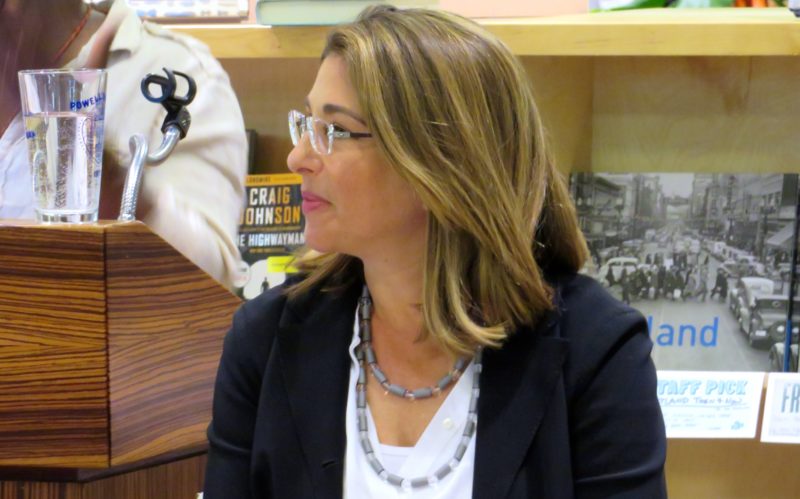
After last night’s outcome in the Georgia and South Carolina elections I’m challenged to stay optimistic. At least my search this week for role models that encourage optimism did not have to venture far – it found its perfect target right in Beaverton, or, more precisely, at Powell’s in Beaverton.

Naomi Klein was in town on a book tour for her new book, No is not enough, written with lightening speed during the last 5 months ( it usually takes her that number in years to complete one. ) As you know, she is a Canadian author, social activist, and filmmaker known for her political analyses and criticism of corporate globalization and of capitalism. I closely follow her writing in the Guardian and the Nation, and get regular instructions by progeny to read her books (The Shock Doctrine was the last.) 

The evening unfolded in conversation with Jo Ann Hardesty, who served in the Oregon House of Representatives from 1995 until 2001. You probably know her from her Voices from the Edge Thursday mornings on KBOO. You should, in any event, it’s a terrific program.

Moving introductory remarks and territorial acknowledgement were given by Cathy Sampson-Kruse (she was also part of the water protectors in ND.)

Closing remarks with support for local activists were offered by folks associated with The Leap. https://theleapblog.org/aboutleap/

The house was packed, mean age, due to the presence of babies, probably around 40, modal age more like 65, a sea of us gray going on white-haired folks…..

Below is a link to a short essay that basically encapsulates the discussion that unfolded yesterday. I am quoting the very last paragraph which was mirrored by Klein’s closing remarks.

“For decades, elites have been using the power of shock to impose nightmares. Donald Trump thinks he’ll be able to do it again and again—that we will have forgotten by tomorrow what he said yesterday (which he will say he never said); that we will be overwhelmed by events and will ultimately scatter, surrender, and let him grab whatever he wants.

But crises do not always cause societies to regress and give up. There is also always a second option: that, faced with a grave common threat, we can choose to come together and make an evolutionary leap. We can choose, as the Reverend William Barber puts it, “to be the moral defibrillators of our time and shock the heart of this nation and build a movement of resistance and hope and justice and love.” We can, in other words, surprise the hell out of ourselves—by being united, focused, and determined. By refusing to fall for those tired old shock tactics. By refusing to be afraid, no matter how much we are tested.

The corporate coup that Trump and his billionaire cabinet are trying to pull off is a crisis with global reverberations that could echo through geologic time. How we respond to this crisis is up to us. So let’s choose that second option. Let’s leap.”

The most interesting part of her talk focused on the fact that saying No is not enough, we have to fill it with a Yes that proposes alternatives. For me the urgent question is how to conceive of and formulate alternatives that realistically work as political programs. Not (just) to get elected but to change the dominant system of policies and political philosophy, of the economy at the base of it all.

Klein signed her book with “Stay Brave” – a fitting exhortation from a woman who inspired optimism.


Daring to Dream in the Age of Trump

Vita Activa

Today’s choice of visionary (the blog’s theme of the week, remember) is closer to home. It is someone I know well, have known for a long time in a variety of roles, including that of friend, temporary employer, and member of a shared community. It is a person who with singular vision, determination, engagement and insane amounts of work has managed to build a museum in town that has grown from an idea around the kitchen table to a modern, inclusive and smart institution that has finally found a permanent home in the park blocks.

I am, of course, talking about Judy Margles, the director of the Oregon Jewish Museum and Center for Holocaust Education. Before I turn to photographs of the new place, let me hasten to add that there were many helping hands, planning minds, engaged hearts and open checkbooks that made the transition from hole in the wall to shining flagship possible. I respect all of them, the talented and committed staff in particular, adore some of them and am grateful for a community that pulled through. However, let it be said, pulling teeth is also a term that comes to mind when thinking of the process, or pulling your hair out, when things, years back, faced obstacle after obstacle.

It takes a person with vision to pull it off, but also many other skills. It takes someone with patience, with the ability to persuade people, with a flexibility to change plans when necessary, with imagination regarding the asks, with smartness in choosing personell including curators, with a willingness to take risks where the rest of us would have long chickened out. We did not always see eye-to-eye when I worked at the museum, but I really want to express my boundless admiration for a lifetime work that generated something big, something important and something meaningful.

Hannah Arendt’s case for the Vita Activa included a philosophy of judgment as something that enables political actors to decide on actions in the public realm, on what goals to pursue and what actions, past or present, to praise or blame for their consequences. This is what you DO when you build a museum that ensures remembrance of Jewish history, including the Holocaust, out of practically nothing, investing most of your adult life. This is what Judy did.


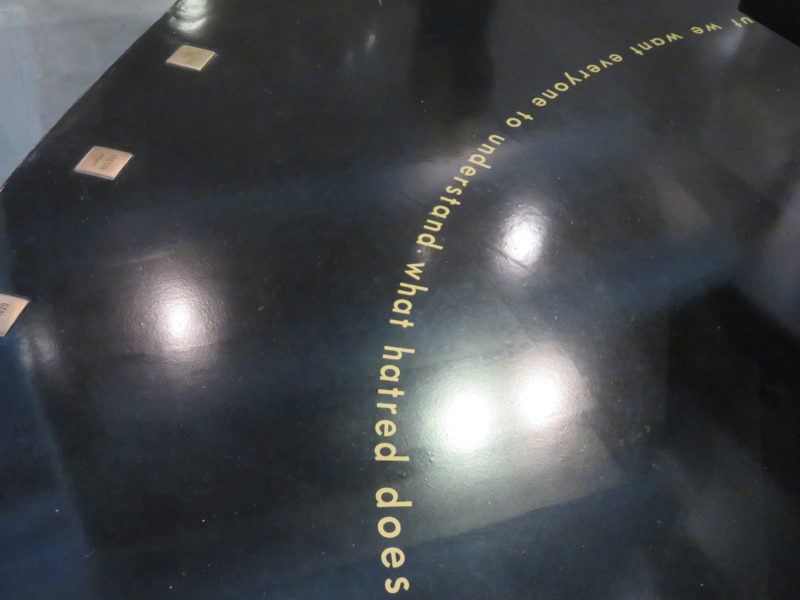
Photos are of the museum in its new space; for detailed insight here is a link to a fitting review. http://www.orartswatch.org/a-bigger-bolder-jewish-museum/

A bigger, bolder Jewish Museum

The current Bruskin exhibit is wondrous; do yourself a favor and go look at it.

The café will open this week; an auditorium awaits lectures and discussions. The giftstore beckons.

DO GO!

Stumbling blocks, echoing the Stolpersteine you see all over Germany these days, inscribed with the names of those deported and killed, located in front of the houses they lived in.

Juneteenth

Lesley Dill Vision Catcher – McNay Museum, San Antonio, Tx

I was strongly encouraged – hm, roundly scolded – hm, lovingly prodded –  last week to deal with my current pessimism regarding world affairs. Given that I take to the advice of my friends I decided to give myself a boost by looking at inspirational people this week.

And since it is Juneteenth today, I start with a memory of a man who I met during my volunteer days at Hospice. He was a small black man, shriveled to next to nothing in his last weeks of life, in his 90s, and of the sunniest disposition I have ever encountered in anyone. The range of laughter, sounds of mirth, clucking of amusement could have filled a whole symphony.

He was pain free – the gift of Hospice – and content with his life, ready to hang up his boots. We spent several afternoons talking about his life and all the adventures he had, growing up in Texas and eventually migrating to the North West.

He vividly remembered the Juneteenth celebrations – the holiday that commemorates the June 19, 1865 announcement of the abolition of slavery in Texas, and more generally the emancipation of African-American slaves throughout the Confederate South. The news came late to Texas – almost 3 years late, to be precise. And it did not go down well with the slave holders – at the time 250.000 slaves were seen as property in the state. The freedmen, however, started to celebrate the day in years to come, despite obstacles put in their path.

(Here is a link to a good article about how the day is memorialized:http://www.dailykos.com/stories/2017/6/18/1670962/-Juneteenth-and-the-memorial-to-black-history-in-Texas)

One such hurdle was the fact that state-sponsored segregation of facilities prohibited celebration in public parks. Freed people pooled funds to purchase land on which they held the Juneteenth celebrations in the larger cities, like Houston’s and Austin’s Emancipation Park. In smaller towns, folks like my guy instead went to the woods.

He described an annual frenzied week of preparation. The men would take a herd of swine to the woods. The pigs would root out all the poisonous snakes and eat them so that the place was made safe for the picnic to come. The women would prepare foods in advance and then every one would arrive for the celebration to sing and dance around the spits where those very life-saving pigs were now roasted for dinner. He swore that the meals of snake made the pig meat particularly tender and delectable. Hm, what do I know.


He had many stories to tell, some of them sad, but he always came up with a version that celebrated the good, focused on fierceness and overcoming. I’ll try and follow the model in the spirit of “Beat the Pessimism”!

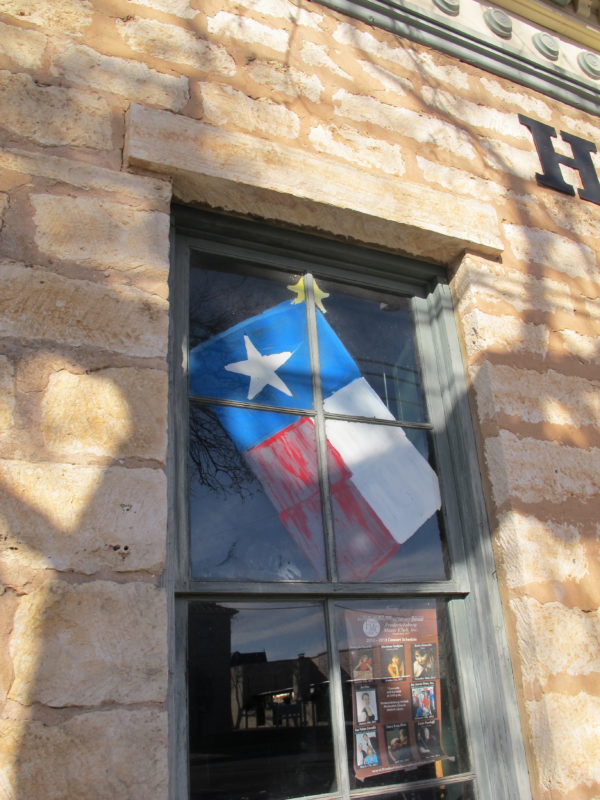
Photographs are from Texas.


Then and now,

especially now: 

Astrological Aestethics

For Thursday’s timely entertainment here are your horoscopes in art terms…. that is if you are an artist or interested in art. Or not. Never mind what I think about them, or that the astrologer considered Michael Jackson as the greatest US post war artist…..

Astrological Aesthetics: June 2017 Horoscopes

They are, of course fun to read and nonsense, but that is true for most types of entertainment….

(Photographs depict some, not all, of the signs – you get to figure out which is which….)

And just in case, let’s follow up with horoscopes that scientists would write….

http://www.newstatesman.com/sci-tech/2013/01/if-scientists-wrote-horoscopes-what-yours-would-say

I won’t go into the details of the debate – after all, this week is about entertainment, not education…. says the bossy, assertive pisces  🙂


Throwing

This week we had marching, hiking, flying, switching lanes and finally: throwing. As in throwing obfuscation out there, sowing confusion.

Despairing mermaid?

Meet Robert Proctor, a science historian at Stanford, who studies how people deliberately obfuscate evidence that undermines their claims and, more importantly, their bottom line. He coined the wonderful term agnotology, the study of deliberate propagation of ignorance. Now why would we, at this point in time, be so interested in willful acts of spreading confusion or deceit, to sell a product or win a favor? You tell me 🙂

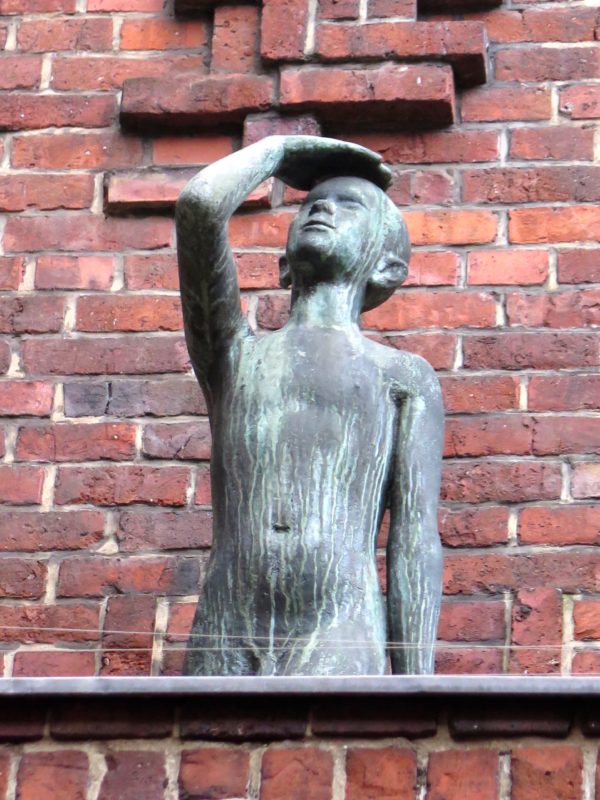
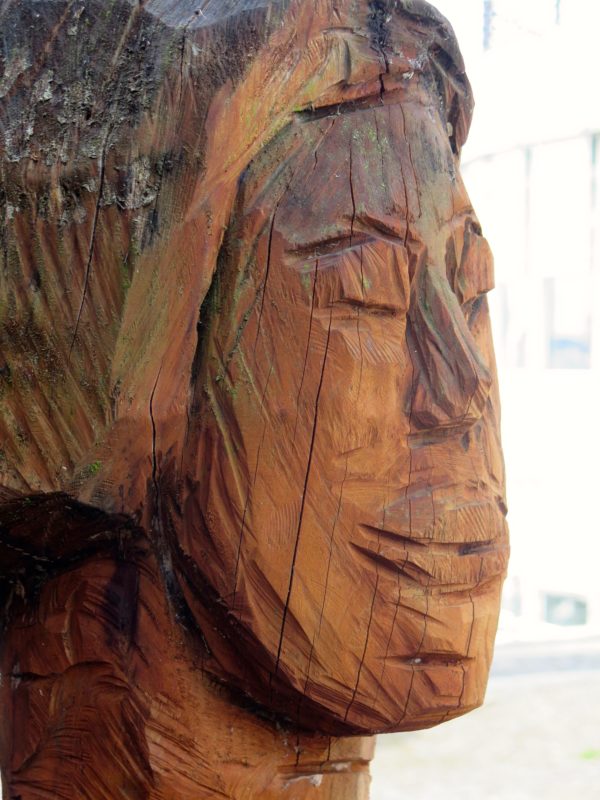
Wooden statues at base of crane

The link below is a wonderful article about Proctor’s work – starting with an investigation of the actions of the cigarette industry, continuing with a look into climate change denial and a focus on the current administration’s skills in deliberately keeping people ignorant or worse, convincing them of things that are not true to fact.

http://www.bbc.com/future/story/20160105-the-man-who-studies-the-spread-of-ignorance


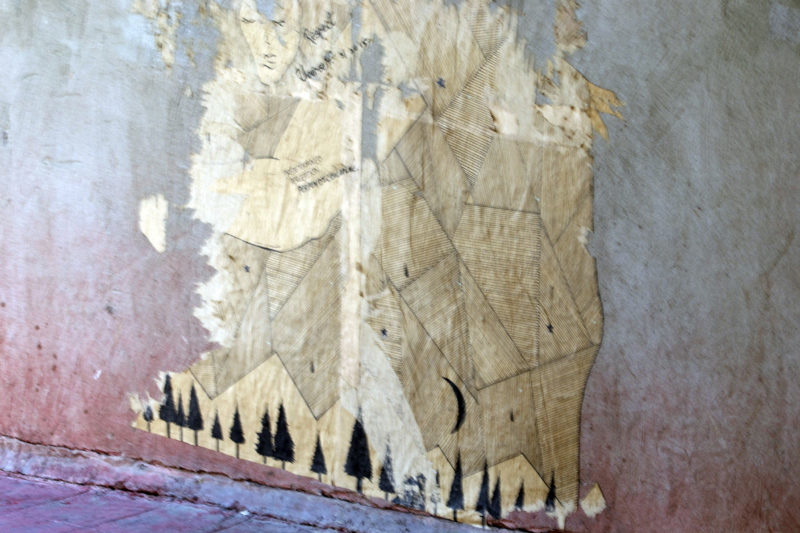
Stained glass windows in a derelict building

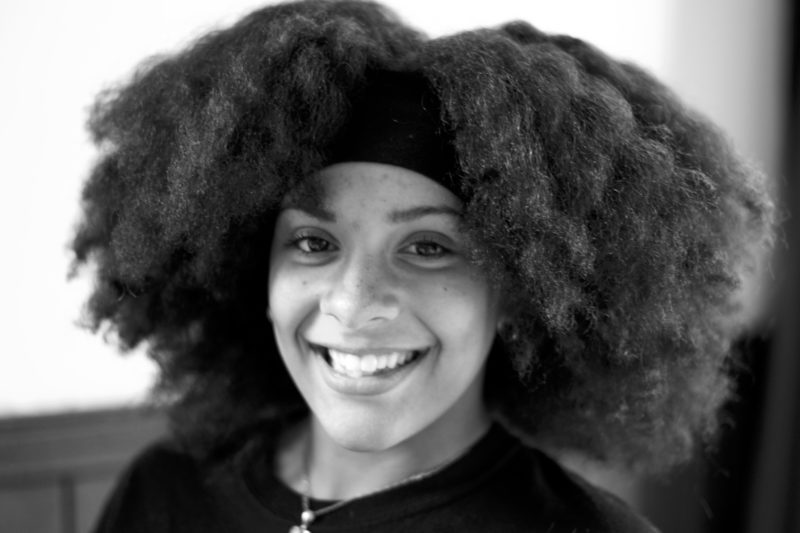
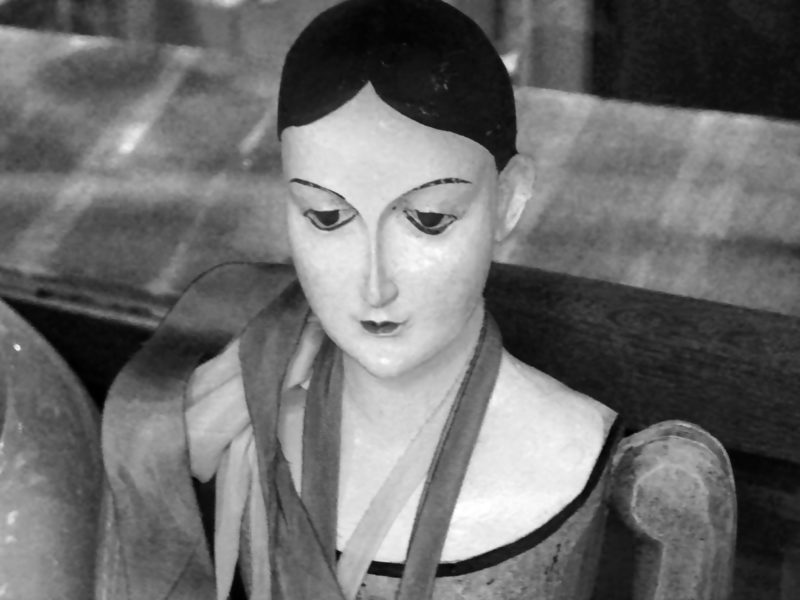
Photographs are of some of the more confusing vistas I encountered over the last months and a face that mirrors confusion pretty accurately, in my opinion.

Now what?

Switching Lanes

If you google Wilfrid Voynich, Wikipedia lists his professions as: Revolutionary; Antique Book Seller. How’s that for an interesting shift in live(s)?  If you read up on him, he was switching lanes many, many times in his life, sometimes voluntarily, sometimes forced, in politics, relationships, (pre)occupations and more.

Voynich, Voynich you mutter, where do I know that name from? Most likely in connection with the famous  medieval manuscript that to this day has never been deciphered – a vellum codex filled with an unknown language, drawings of scientific matters, and all kinds of other riddles now residing at Yale. The articles below provide you, in turn, with the newest insights about the manuscript and a short history of Voynich’s life.

Regarding the former, I simply adore the idea that it was after all a hoax perpetrated by some person in the 14oos (carbon dating proved that the codex was indeed generated at that time) trying to make a quick gold ducat from some gullible aristocrat. The smartest cryptographers of our century have not been able to break the code, and the drawings do not concur with any realistic botanicals of our world. It sure fooled many, seemingly continues to fool, for a long time.

Secret Knowledge—or a Hoax?

Regarding the latter, the life of this Polish Leftie, it was one hell of a ride and certainly he’d be on my list of people to take to a deserted island.  (As, for that matter, would be his wife Ethel Boole Voynich, an amazing character in her own right, allied with Karl Marx’ offspring, supporter of revolutionary causes, novelist – here is a video of her on her 95th birthday  https://www.youtube.com/watch?v=TYoxNOJ5fwk in 1959.) Check her out.


Traversing the Globe….

Just think of a life like this:

http://www.historyfiles.co.uk/FeaturesEurope/EasternPoland_Voynich01.htm

Short summary : Voynich was born in 1864 to a Polish family in Lithuania. While a student at the University of Moscow in 1884 graduating in chemistry, he joined the Polish nationalist movement. A year later, he was arrested and accused of engaging in revolutionary activity. He spent 18 months jailed in the Warsaw Citadel and was sentenced without trial to five years exile in Siberia. There he acquired a working knowledge of some 18 languages (!)  – and here I was proud that I have working knowledge of 4…..

He escaped into Mongolia in 1890, made his way through China and eventually reached Hamburg, Germany, boarding a ship to England.

He joined a circle of political exiles in London and worked for a period translating and publishing revolutionary propaganda for distribution in Russia; he abruptly stopped when his political mentor accidentally died; on recommendation of someone from the British museum who knew about his language skills, he opened a bookshop  in London and quickly gained a reputation as a resourceful and knowledgeable dealer. Unclear where his starting capital came from, although he has been rumored to be allied with wealthy female admirers. In any case, he discovered several astounding books, the Voynich manuscript included, and was convinced until his death that we would crack the code to figure out the black magic contained in it.

The flexibility, the stamina, the determination to survive, the smarts and the ability to adapt all truly impress me.

Please don’t touch. ART!

Hiking

Yesterday it was all about marching. Today it’s going to be about hiking.  Alas, not the real thing, given that trails are muddy streams and/or blocked by landslides wherever you look in this extraordinarily wet state this spring.

Instead, it is about what a Black woman experienced when hiking the Appalachian Trail last year. A young friend sent me the link in response to my “profiles in courage” some weeks back.  The article is long, revealing worlds most of us simply never encounter much less understand, heartbreaking and uplifting at the same time. Do yourself a favor and read it through to the glorious end. I felt that if only an iota of the gleaned knowledge sticks in my memory and helps me act differently in this world, there might be progress.


https://www.outsideonline.com/2170266/solo-hiking-appalachian-trail-queer-black-woman

Photographs are of young people of my acquaintance. I experience them as quite resilient right now and try to imagine that that carries over into their young adulthood – I even have the occasional fantasy that things might have improved by the time they hit their twenties. Probably groundless optimism, or wishful thinking or both. I so want them to be not harmed permanently  by racism.  It almost hurts how much I want that.


Resilience

Today’s profile in this week on courage is about a man who lost his face. It was literally eaten up by a bacterial infection the day after birth. Worse than the physical assault and the endless reconstructive surgeries it necessitated throughout his life, was the fact that his parents abandoned him on the spot.

He lived to write a book about surviving in the absence of love, a void confirmed by a harrowing meeting with his mother when he seeks her out as an adult. 38 years of the most painful life culminate in encountering a shallow, narcissistic, defensive human (?) being who accuses him of making her feel bad. Howard Shulman, then, is testimony to resilience, a capacity to persist in the face of, in his case, unimaginable difficulties.

http://narrative.ly/as-my-face-disappeared-so-did-my-mother-and-father/?utm_source=Narratively+email+list&utm_campaign=89cbd9ffd2-EMAIL_CAMPAIGN_2017_04_02&utm_medium=email&utm_term=0_f944cd8d3b-89cbd9ffd2-66322689

Passover inspired my associations with courage this week; it was a week that saw official US governmental reflections on the holocaust describe it as a something where chemical weapons were not used on “one’s own people,” who had been sent to holocaust centers (known to the rest of us as concentration camps). The decision who is one’s own, and who is not, based on race, orientation, religion and in Shulman’s case mere looks, who deserves abandonment or even death is not something only from the history books. Imagine my joy, then, when a message of inclusivity reached me from North Dakota, headlined: the most radical seder in the history of North Dakota: progeny had created a special seder plate.

“Last night our seder plate included the normal stuff (bitter herbs, boiled egg, lambshank-beet, matzoh) and then:
an orange symbolizing gender equality;
a brick symbolizing stonewall + trans liberation;
a key symbolizing an end to mass incarceration;
olives symbolizing Palestinian liberation;
coffee beans symbolizing modern slavery;
a tomato symbolizing undocumented liberation;
a burning cop car symbolizing burning cop cars;
a packet of yeast symbolizing RISING UP;
and a shell with burned sage acknowledging our host, and acknowledging that this is all stolen land. “
There is hope!


The Fight against Racism

Today I want to celebrate the courage of a woman known to all of us and the determination and ingenuity of a man known to – I daresay – none of us. I am talking about Rosa Parks, whose courage to insist on her bus seat when challenged by a white man gave rise to the civil rights movement. (Coincidentally, another person not giving up his seat made the news yesterday – a doctor was forcibly and violently dragged from his United Airline seat, paid for and entered legally, after United failed to find volunteers to accommodate their own employees’ needs, and did not offer the amount of money needed to persuade fliers to volunteer their seats.  Flying while Chinese has become another source of danger, apparently. But I digress.)

Rosa Park’s house was about to be razed rather than made into a museum – this country has apparently no interest in a memorial to the successful fight of racism, however unfinished. Ryan Mendoza, an artist living in Germany, managed to dismantle it and reconstruct it bit by bit in his Berlin garden, covering the cost of the transatlantic transport himself.  Details of this amazing feat below.

http://www.dw.com/en/why-rosa-parks-house-now-stands-in-berlin/a-38343924

And while we’re at it, here is another example of private initiative and determination to fight racism. Leaves me in a good mood this morning (as long as I don’t read the rest of the news.)

http://www.dw.com/en/children-are-our-future-german-footballer-gerald-asamoah-tackles-racism-at-school/a-37826264

Featured image says: Mobile Tolerance Zone