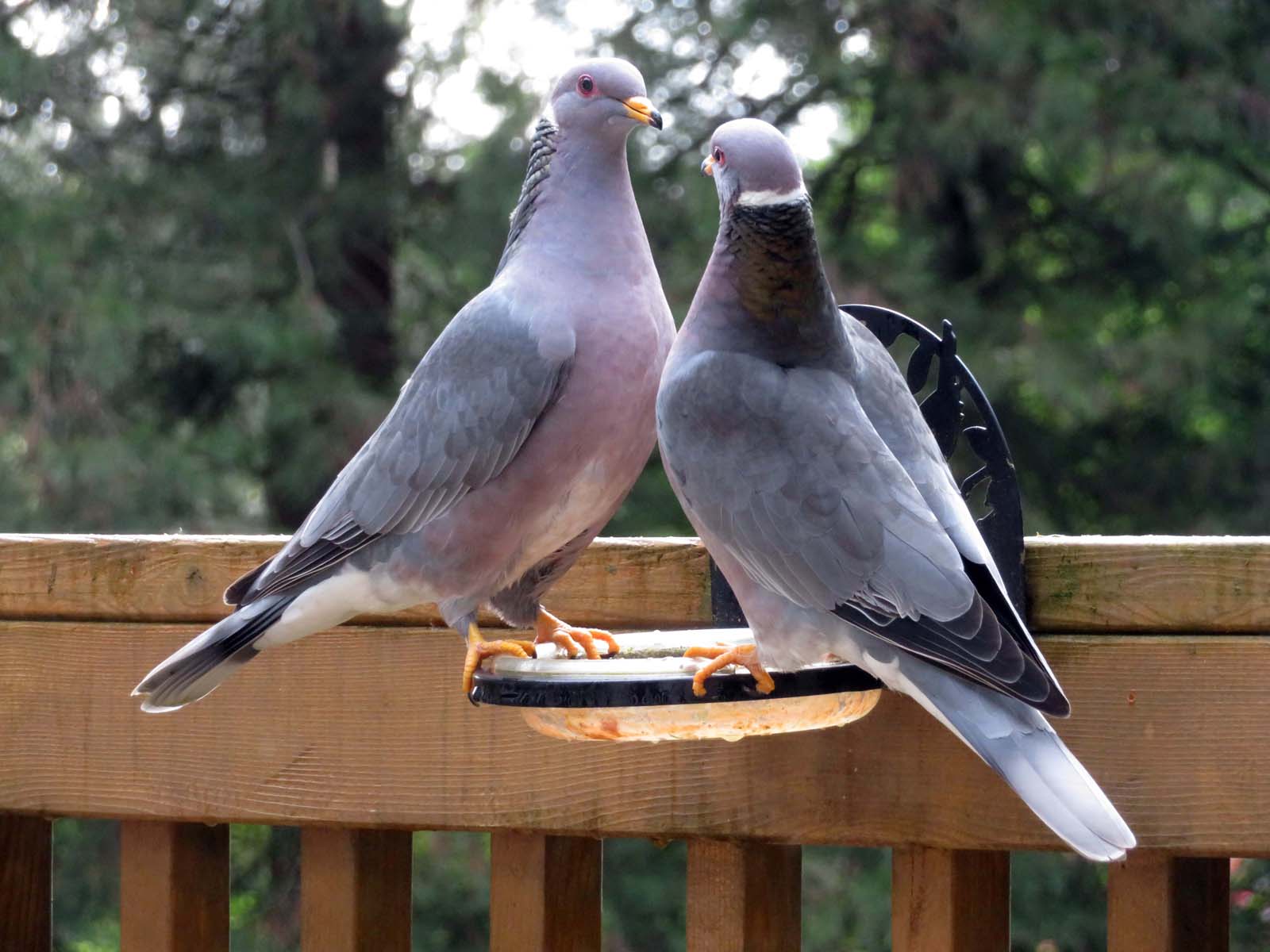
They are sitting in front of my window, courting, day after day. Sometimes they come as a small flock, sometimes just the two of them, she more cautious, reserved, but eventually joining him at the bird bath. We used to put seeds out, but that attracted too many squirrels onto the balcony.
These birds have been struggling, over-hunted, numbers slowly picking up for a while, now declining again. They eat berries, love to hang out in the Hawthorne and munch, sitting upright. I wave to them, they blink at me, unperturbed. Leaving as suddenly as they appeared.
Originally, I meant to write about my Trouble with Change. I decided to get a grip instead – let me explain.
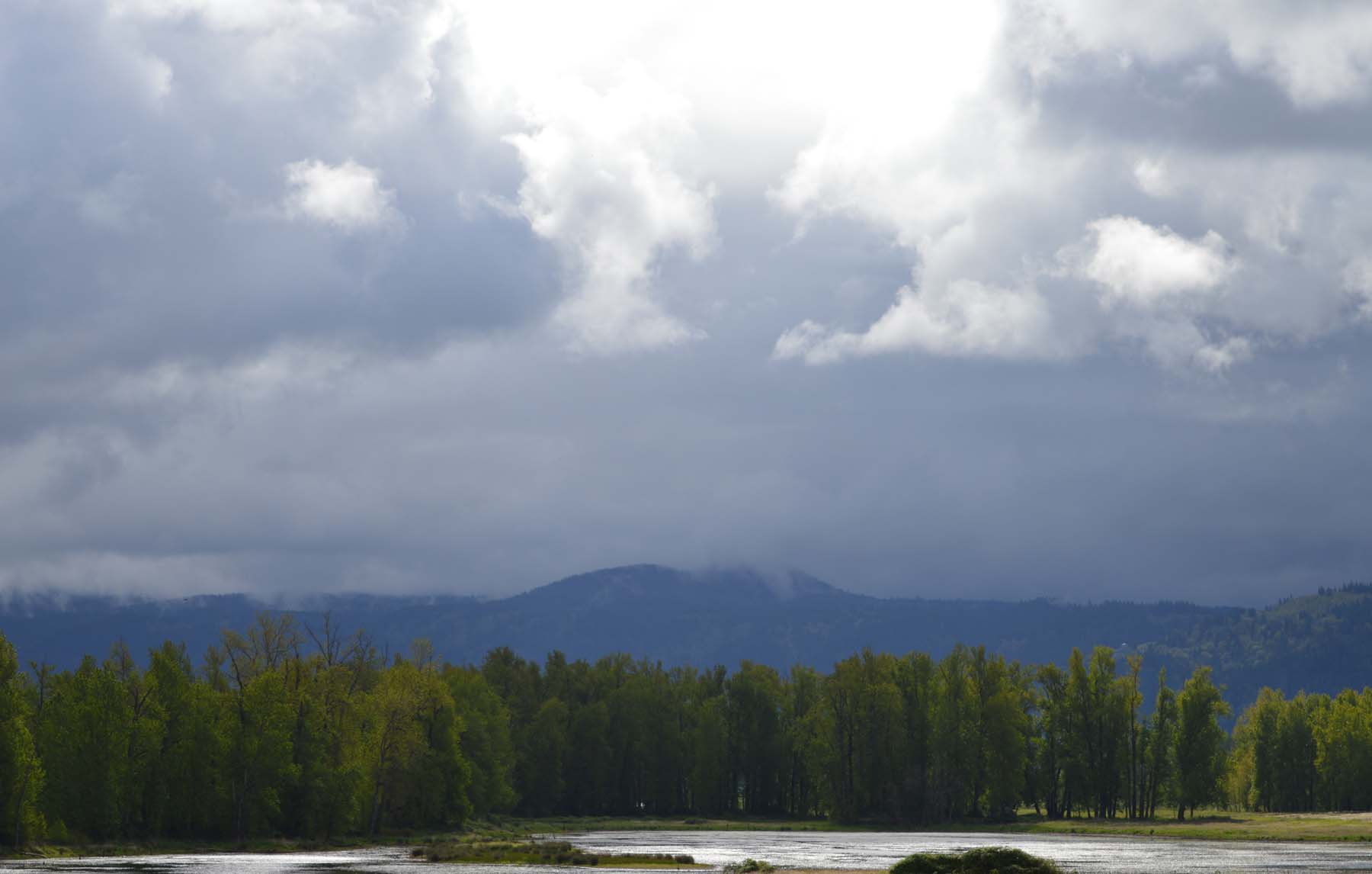
Columbia River, looking East
Two of my regular haunts, the Steigerwald Lake National Wildlife Preserve in WA, and parts of the Tualatin River National Wildlife Preserve south of Portland closed a while ago for considerable amounts of time, 3 and 1.5 years respectively, to restructure the landscape, reconnecting the rivers with floodplains. Altogether important environmental improvements, with me (and others) moping about years of lost access even while acknowledging the need, and now celebrating the re-opening.
Restored flood plain and lake, respectively
When I first learned about the closures in 2019, I was upset that everything changes, even landscapes, usually reliable points of constancy. In fact, hiking through both preserves this week, I was again sad about some paths no longer accessible, while others were rerouted and still bore signs of human construction and interference, which will soon disappear, I guess.
Harrier Hawk
I consider myself a person pretty open to change, even if it is not always chosen by myself. I have lived through and adapted to major changes, the types of environments I lived in, from small rural German village-life to years in metropoles like New York City, the languages I have spoken, careers that came and went, constellations within my household, rise and decline of friendships and last, but not least, changing capacities of an ailing body. All taken, with the exception of short interims of sadness or agitation, in stride. So why is the change in the faces of familiar landscapes such an issue? You tell me.
Herded goslings and flock of lesser yellowlegs, I think
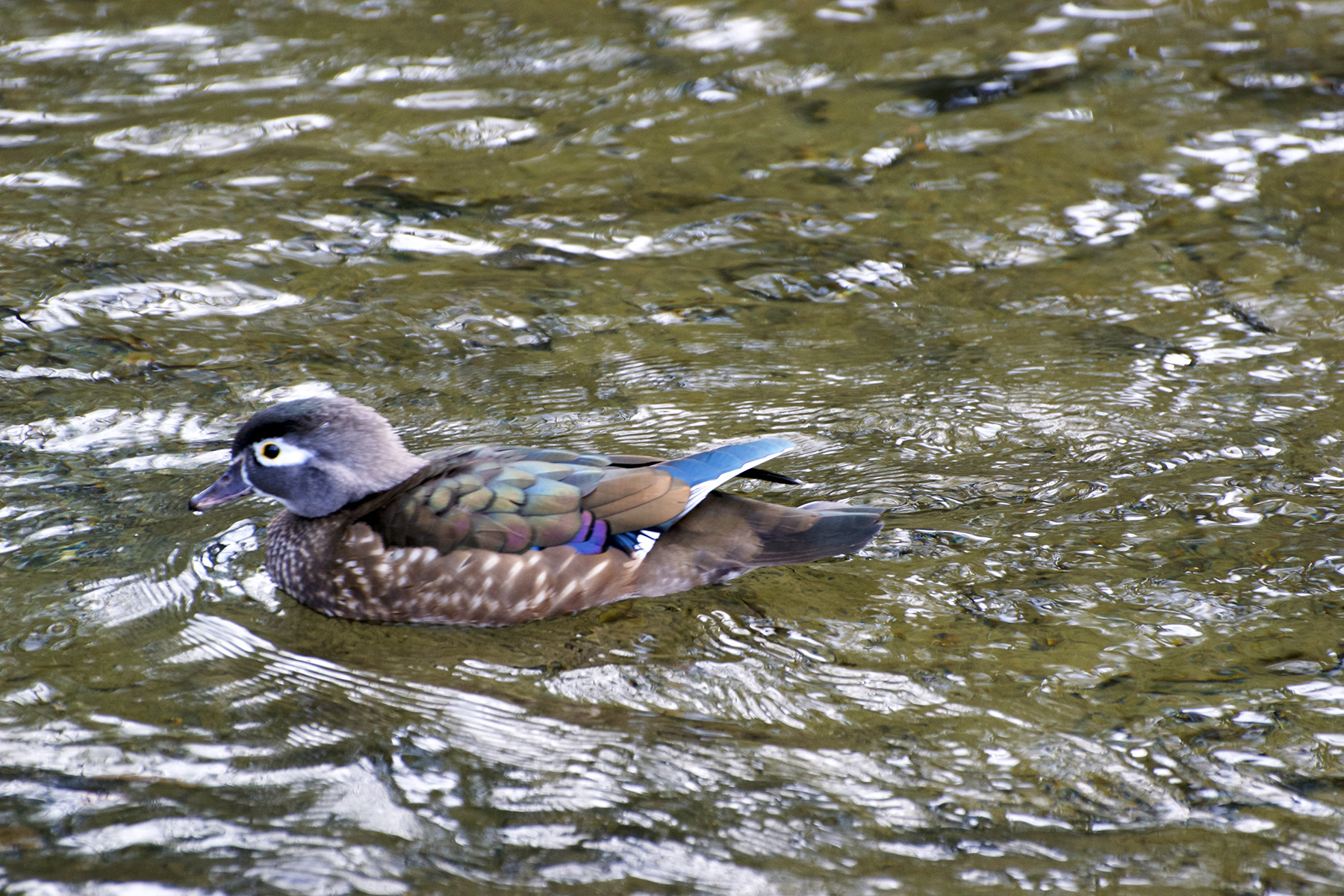
Plain old ducks
It makes me embarrassed. Almost ashamed, given the intense demands for adaptation to change required by the many refugees in this war- and misery-torn world of 2022. Think about the psychological burdens for any given refugee, with Ukraine of course holding a special place in my consciousness right now. The trauma load often consists of the pre-flight part, where violent events, threat to life or loss of loved ones and destruction of home are experienced. Then the flight itself whether under a carpet of bombing, or across ocean with unstable boats, drowning in the Mediterranean, burning to death in dry Greek island camps or freezing to death at closed Polish borders, you name it. Then the arrival in the host country, which reacts to despondency with varying degrees of helpfulness, often dependent on the color of your skin, the (dis)similarity of religious and cultural practices, your ability to speak or learn the language and degree of prior education.
Northern flicker, joined by swallows
Add to this forms of survivor guilt, that you escape a dreaded fate that others didn’t (think of the large number of Afghans who were left behind by those who were allowed to flee,) the separation of family units (men not allowed to leave their country of origin, for example, to be recruited) and the complete loss of trust when your very own friends and neighbors became the enemy who killed you and yours (think Bosnia, for example,) or refused to believe the reality of your plight (your Russian family not accepting that war occurs in Ukraine.) It is no surprise, then, that studies indicate that depression and anxiety are at least as common as post-traumatic stress disorder (PTSD)and suggest that one or a combination of these conditions affects at least one in three refugees. (Ref.) One in three…
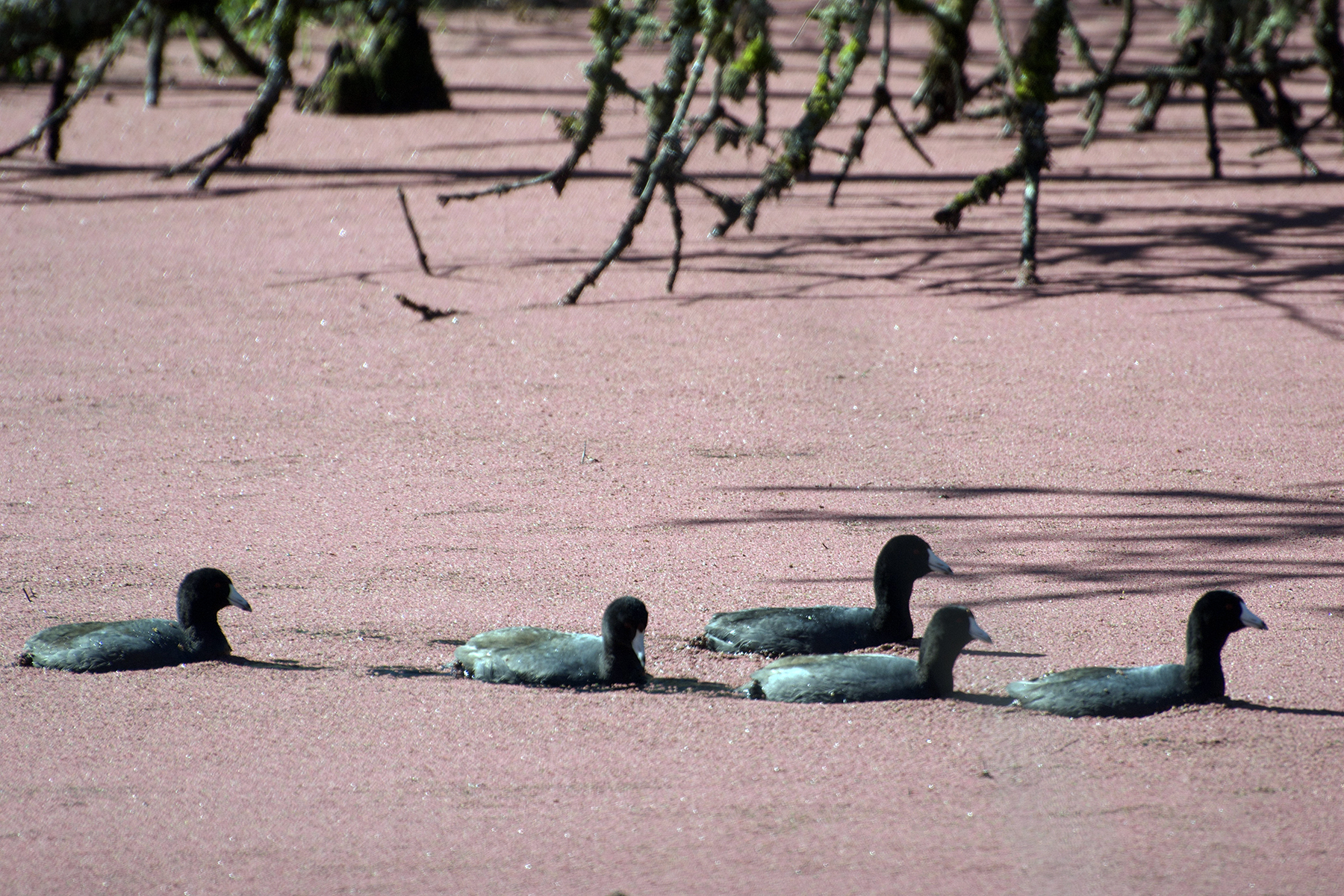
Turtles
Of course there are exceptions – here is a well-told story of a Syrian refugee in Germany whose intelligence, achievement orientation and a good portion of luck enabled successful adaption despite cultural and bureaucratic obstacles. Here is a thoughtful document for professionals how to help children through the acculturation process that speaks to a larger, more general need and seems to have been successful. (Source is Canadian, the only thing I could find in English.)
Blue herons roosting
In any case: the burden of required change while under psychological duress, or even traumatized, is immense.
My own reaction to changes in nature should be nothing but endless gratitude for what I have and what I’m spared. Duly noted. Grip gotten.
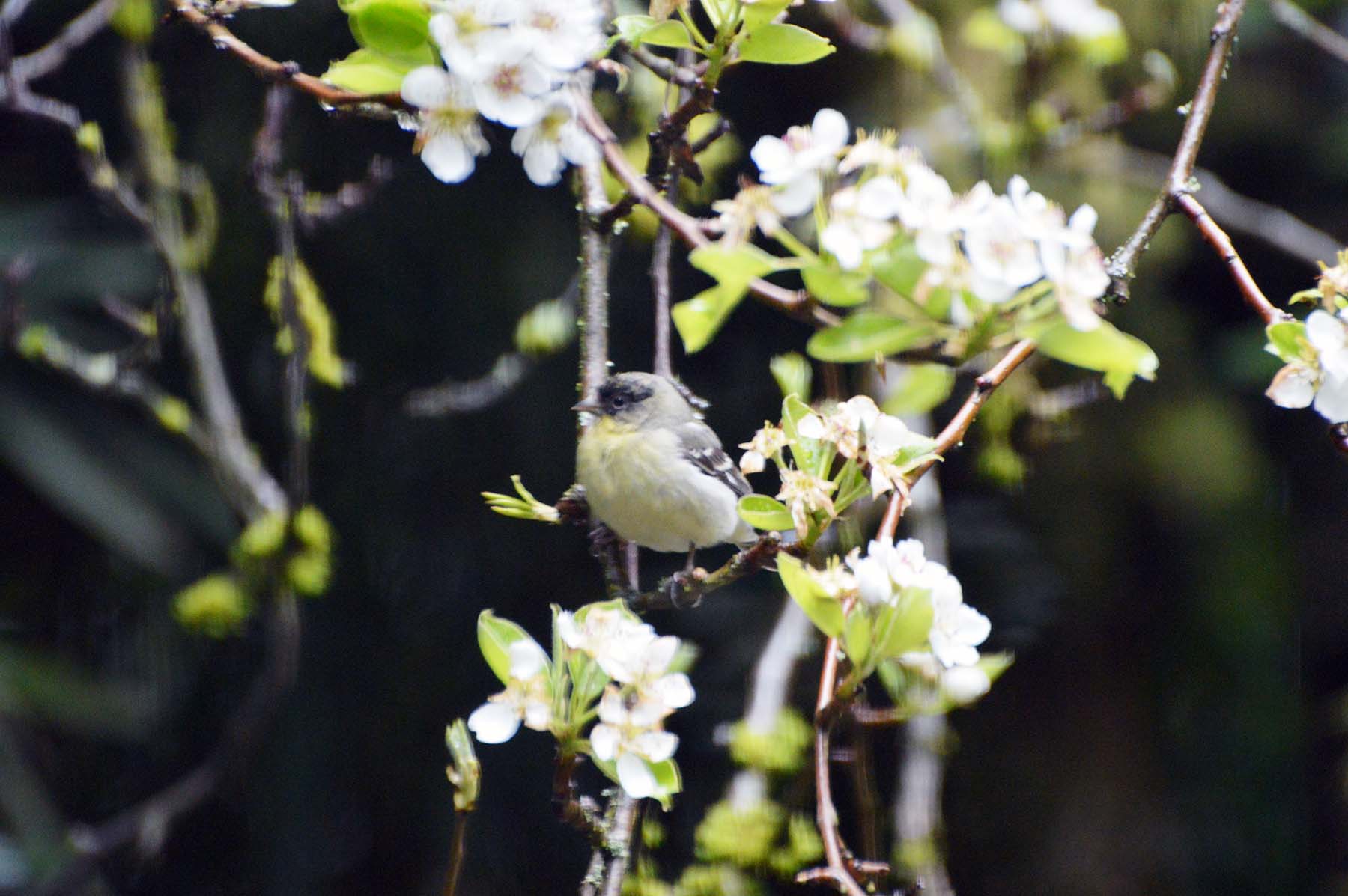
Common yellow throat
Yellow-rumped warbler (Butter butt!)
Music today is a favorite cello concerto. War horse, I know, doesn’t make it less beautiful.
And here is someone waiting for the mosquitoes to enter his beak:
Today I want to draw your attention to a superb essay, in ever so many ways. It describes both, the exploration of some churches in a particular neighborhood of Portland, Ladd’s Addition, and also a secular pilgrimage in search of something larger, deeper than ourselves by a man who has left traditional churchgoing long behind. The author, David Oates, lives here in Portland. His latest book, The Mountains of Paris – How Awe and Wonder Rewrote my Life won the 2021 Eric Hoffer Award and was also a finalist for the Oregon Book Award. I have not yet read it, another item in the growing pile of nature-related writing on my nightstand.
The linked essay is longish (hey, weekend is coming up!), and made me grateful, once again, that healing exists from psychological wounds inflicted in childhood.
Grateful, too, that people don’t allow themselves to be cut off from things or themes associated with the hurt, when these offer independent source pf learning or grace.
Grateful, last but not least, that there are writers who can write about topics of spiritual meaning without being didactic, proselytizing, or worse, saccharine, in my ears, pairing wit with humility. As I said, a superb piece.
I was reading it while sitting in my chair at the window across the pear tree. This year’s addition to the garden has been a raised bed where we planted – oblivious to the snow and hail to come – the first rounds of peas, leeks and lettuce.
So far the squirrels are eating the lettuce, long yellow and flat from the cold snap. The finches and chickadees, on the other hand, have found the perfect source for nesting material – they are relentlessly pecking away at the twine that holds the bamboo stakes together, harvested from our hedge and rigged in a makeshift attempt to provide a structure for the climbing peas.
There they were, birds searching – and finding – essential necessities, their and their offsprings’ continued existence dependent on it. No meaning required. Just biologically ingrained task performance. Something, I suppose, somewhat similar for humans under existential threat – no time to waste in pursuit of higher-order concepts when survival is at stake. But if we have the luxury to pursue them, if we have the chance to find meaning, what a gift for cognitive creatures who cannot help themselves but asking about the nature of and reason for their existence since time immemorial.
We obviously long for some evidence that there is something out there beyond the mere facts of burdensome existence, something that could, perhaps, prove guidance or protection or allow us to bask in its reflected glory (made in the image of whatever deity…).
I always wonder what characterizes those who seem to be able to find it.
For my part, I believe that our existence has no more – and no less – meaning than that of the finches and chickadees. We are a coincidental by-product of an evolutionary process in a random universe. I strongly believe, though, that we can make meaning, live a meaningful live, by focusing on others rather than self, refuse to be bystanders, force ourselves to be witnesses and adopt an ethic that favors solidarity with those in need and contribute with whatever talents we possess.
Today’s music is about dancing unhatched chicks – I envision those bird eggs snug and warm in a bed of twine in their nest….
We started the week with Native American art and we will close with it too. LeAnne Howe (Choctaw Nation of Oklahoma) is the Eidson Distinguished Professor in American literature at the University of Georgia, who “connects literature, Indigenous knowledge, Native histories, and expressive cultures in her work.”
You can learn more about this brilliant poet here. Photographs are of fowl in action, busy in March.
Ya kut unta pishno ma* Ya kut unta pishno ma Ya kut unta pishno ma Ya kut unta pishno ma
So I moved to this place, Iowa City, Ioway Where green-headed mallards walk the streets day and night, and defecate on sidewalks. Greasy meat bags in wetsuits, disguise themselves as pets and are free as birds. Maybe Indians should have thought of that?
Ya kut unta pishno ma Ya kut unta pishno ma Ya kut unta pishno ma Ya kut unta pishno ma
Maybe you would have left us alone, if we put on rubber bills, and rubber feet, Quacked instead of complained, Swam instead of danced waddled away when you did what you did…
Ya kut unta pishno ma Ya kut unta pishno ma Ya kut unta pishno ma Ya kut unta pishno ma
So I moved to the Place The “Jewel of the Midwest” Where ghosts of ourselves Dance the sulphur trails.
Fumes emerge continuous from the mouths of Three-faced Deities who preach, “We absolve joy through suffering.”
Ya kut unta pishno ma Ya kut unta pishno ma Ya kut unta pishno ma Ya kut unta pishno ma
So I moved to this place where in 1992, up washed Columbus again like a pointy-chinned Son of Cannibals. His spin doctors rewrite his successes “After 500 years and 25 million dead, One out of 100 American Indians commit suicide One out of 10 American Indians are alcoholics 49 years is the average lifespan of American Indians.”
Each minute burns the useful and useless alike Sing Hallelujah Praise the Lord
Ya kut unta pishno ma Ya kut unta pishno ma Ya kut unta pishno ma Ya kut unta pishno ma
And when you foreigners build your off-world colonies and relocate in outer space This is what we will do We will dance, We will dance, We will dance to a duck’s tune.
Ya kut unta pishno ma Ya kut unta pishno ma Ya kut unta pishno ma Ya kut unta pishno ma
Time for a walk, along the edges of the ponds. Intensely blue sky yesterday, hints of greenery emerging, some swans still hesitating to fly further North.
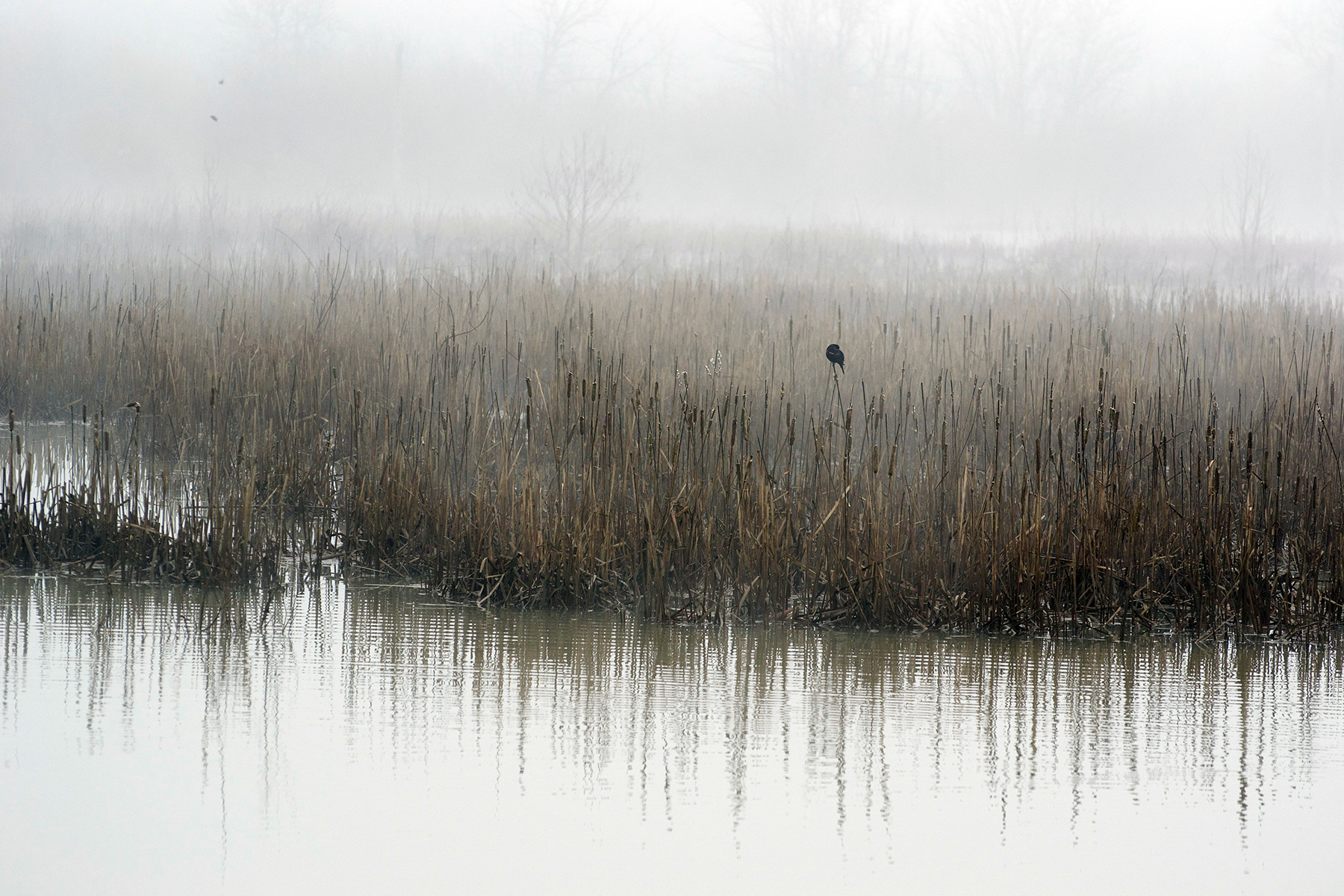
The reeds caught my eye, swaying in the water.
Raptors hanging out, enjoying a bit of spring in the air.
Just birdsong today, not much text. I’m tired from so much writing last week.
The sounds are from an album by the Bowerbird Collective that topped the Australian charts after its release last December.
I have never been to Australia, don’t know the birds.
Just thought it is such a clever idea to raise our consciousness about needs for preservation by recording all this beautiful sound.
Which reminds me, here is some sound with human instruments, but speaking to the same goal.
If there’s still time. The book that explains it all can be found here.
And here is “Verse 2” of Bulu Line, Aboriginal George Dyuŋgayan’s rhyming tercet — “guwararrirarri yinanydina / dyidi yarrabanydyina / nanbalinblai yinanydina” —translated by Stuart Cooke into twenty lines describing the courtship flight of snipes, whose feather vibrations in the slipstream produce a throbbing sound known as “drumming,” as in this sample:
No snipes to be seen here. All I heard yesterday was the buzzing of the geese wings. The song of red-winged blackbirds. Some quacking ducks. It was enough.
Don the down-coat. Pack the parka. Meet the early morning mist.
If you are lucky – and I was early Monday morning – you’ll see some wispy clouds evaporate over the water, hear the different birdcalls and have the wetlands practically to yourself.
Well, the birds were naturally on location. Pretty active, too, fighting the lingering cold and scoring on breakfast. Red-tailed hawk preening…
The diffuse light blocked out the harshness of the world and gave rise to thoughts about peace against the backdrop of war.
And talking about war and peace, have you ever considered why so few birds are equipped with weapons? I mean, snakes have fangs, tigers have teeth, elephants, narwhales and walruses have tusks, deer have antlers, bees have stingers – a whole arsenal of martial gear can be found in nature. The occasional evening spent in front of PBS’s NOVA programs about animal warfare confirms this.
Scientists have devoted their lives to figuring out the evolutionary pressure behind this all, notably Douglas Emlen, who wrote one of the best overviews in the field, Animal Weapons, the Evolution of Battle. Here is a short review of the book which includes this:
“Throughout the book, Emlen’s demonstrations of the many parallels between human and animal weapons are fascinating, even when the possibilities are frightening. “I stand awed and shaken,” he writes, “thrilled by the parallels and, at the same time, terrified by the prospects.”
Back to birds, though, who have not participated in the arms race. The reason? They practically get all they want or need by flashing colors, elaborate dancing, song competition and only occasional claws, pecking or spores. (I’m summarizing what I read here.)
The REAL reason? Flight. Anything that flies has to worry about weight. Flying consumes much more energy than movement on the ground or in water, and energy need increases with added weight, even tiny bits. We have indeed mathematical models of flight that spell out in detail how leg or wing spurs, no matter how small, increase fuel cost in untenable ways (given that fuel acquisition itself – searching for food – costs energy as well,) particularly for smaller birds.
(A funky comparison from the article: United Airlines started printing its inflight magazine on lighter paper to reduce the weight of a typical flight by about 11 pounds, or 0.01% of an airplane’s empty weight. Through this tiny decrease, the company cut its annual fuel use by 170,000 gallons, saving US$290,000 yearly. Think through this with today’s news about gas prices….)
Spurs, then, are primarily found on land fowl and in fewer than 2% of all avian species. And beaks used for fighting are rare as well, given that any injury to them might compromise the ability to feed – a direct threat to survival. Yes, some raptors fight with their talons, but overall, we are seeing a peaceable kingdom, if interrupted by screaming matches over territorial rights..
Evolution, you botched this. Should have provided mankind with wings!!
Swallows already returned, harbingers of renewal.
Killdeer twittered.
Hummingbird glowed.
The morning softness continued, sun broke through clouds.
Later the rain set in. What better reminder of “teaching our troubled souls… to heal.”
Mother rain, manifold, measureless, falling on fallow, on field and forest, on house-roof, low hovel, high tower, downwelling waters all-washing, wider than cities, softer than sisterhood, vaster than countrysides, calming, recalling: return to us, teaching our troubled souls in your ceaseless descent to fall, to be fellow, to feel to the root, to sink in, to heal, to sweeten the sea.
Today’s post is dedicated to my grandfather Eduard (1894 – 1977) a musician, bird lover and gentle soul. His birthday was yesterday.
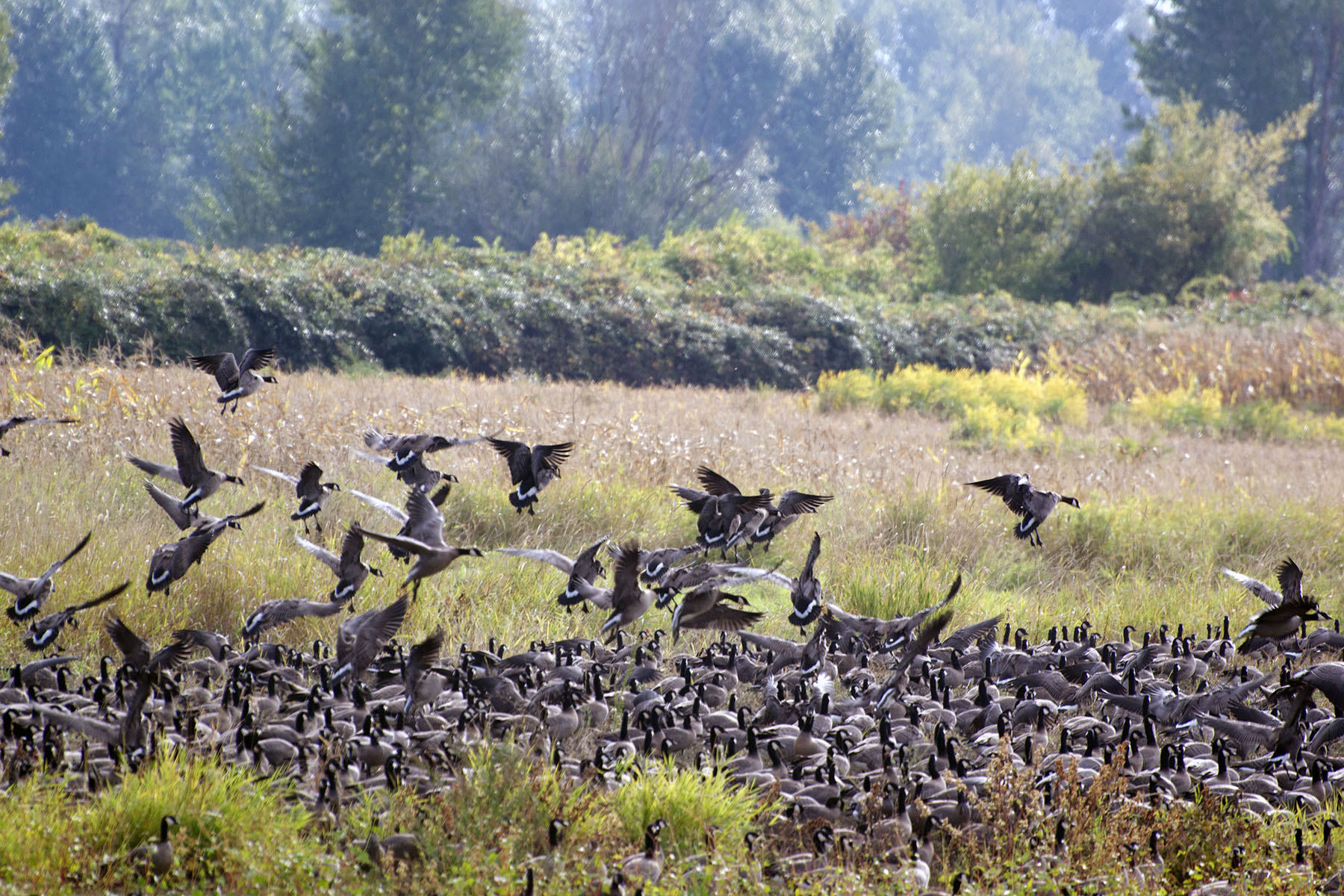
Canada Geese
Buckle up folks, it’s going to be all over the map today.
It all started with a reminder notice that one of the strangest pieces of music, John Cage’s ORGAN2/ASLSP –As SLow aSPossible – was about to change to a different tone on February 5, 2022. The longest composition ever – duration 639 years, you read that right – started in 2001, with a seventeen month-long pause before the first tone of the organ, especially built for the performance of this piece, was to be heard. Here is a video clip that shows the special organ in a small church in Halberstadt, Germany.
One particular tone emanates continually, and is changed at irregular time intervals according to the composer’s instructions. (Here is a calendar that shows the me changes and tone variations.) The current sound will last 2 years. This announcement had me wonder:
While we had to wait for more than 6 long years for the 14. sound change in 2020 , the next one is occurring only a few months hence, on February 5th. Quite a challenge for a subjective sense of time to get the hang of this. For those clinging to their subjective sense of time we might mention that the new sound will last exactly 24 months. Could very well be that those months will pass in a flash.
Honestly, I could not tell if this was meant seriously or ironically – probably a combination of my addled brain and being German. But be that as it may, it reminded me of a dominant topic in my current conversations. How is our sense of time shaped by the pandemic, the isolation, the sameness of the days and, admittedly, by aging?
Snowgeese yesterday
Snowgeese from other years
Cage’s composition was not the only reminder of the languid, unending spread of hours and days that I – many of us – feel, like time stalling. (This stands, of course, in extreme contrast to young families for whom the double burden of professional work and unrelieved childcare at home leads to a sense of having not enough time ever, time on 3x speed fast forward.)
One of the best cinematic experiences I’ve had in these last months also managed to capture a sense of time that is altered, aided by the elongated storytelling formats of TV series—those time-indulgent, episodic ways to weave a tale, unhurried by a two-hour time limit of movies. And no one knows how to unfold a plot in slow-mo better than the modern Korean film makers.
Steller’s Jay yesterday – Grey herons from other years
In Beyond Evil (directed by Shim Na-yeon, available on Netflix) it’s not just about the tempo of the narrative, though. Time itself seems to stand still in a small town haunted by age-old murders and secrets, with an unlikely coupling of 2 unmatched policemen churning the dregs and bringing new sorrow. It is not a serial murder case in the traditional sense, but rather a psychological study of a variety of characters stuck in time as flies are on those strips hanging in country kitchens. The protagonists are honing their compulsions, tending to their losses, and deciding what to sacrifice to remain on the ethical side of things. I know, does not sound enticing, but honestly, it was brilliant.
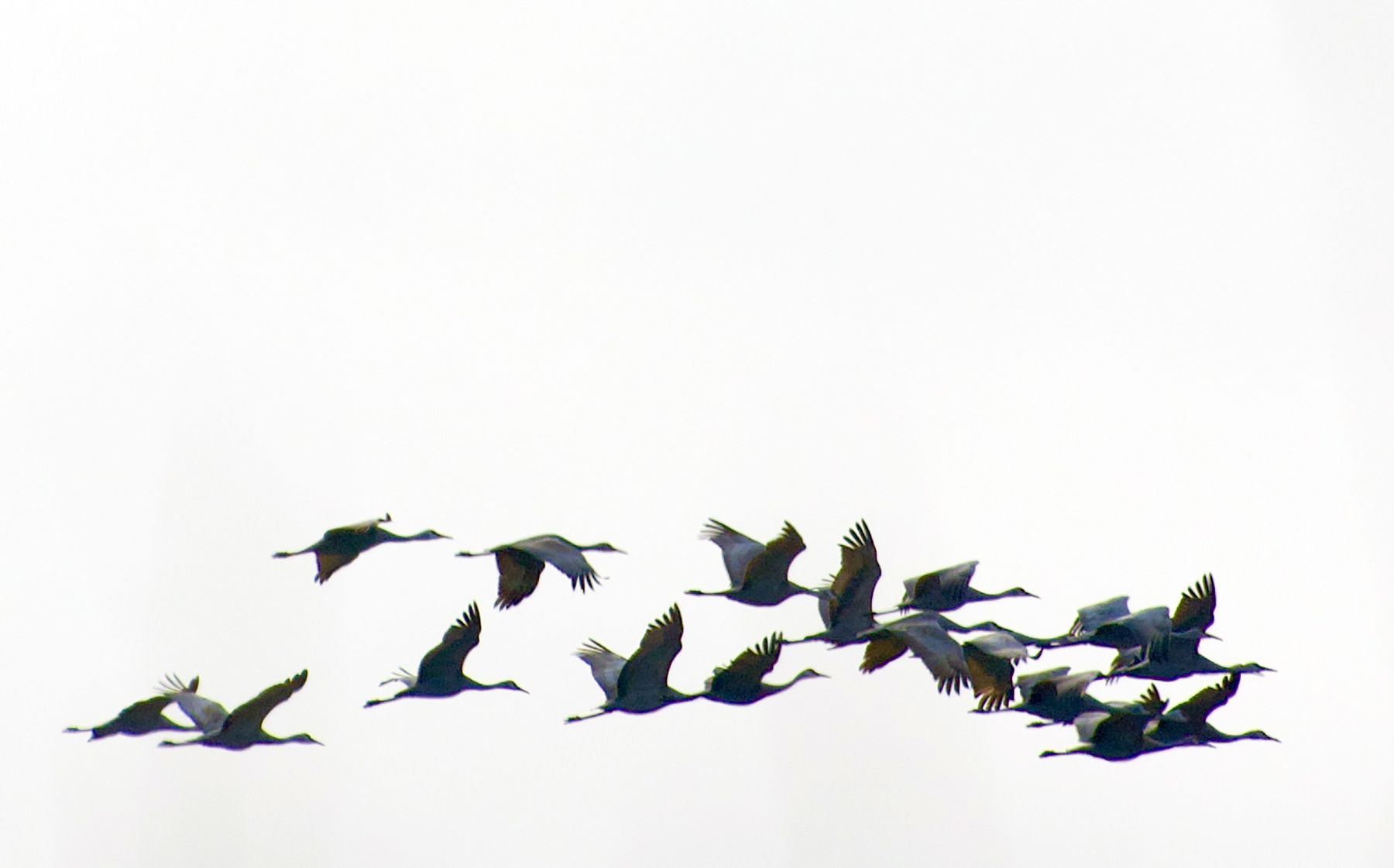
Sandhill Cranes yesterday
Sandhill cranes from other years
So, I thought, perhaps we should delve into the scientific psychology of time perception, since a lot of research has happened in the field lately. Nah, you can read up on it here. I much rather learn from poets than deal with my own field today.
Hawk from yesterdayHarrier HawkRedtail Hawks from other years
Both of the poems below managed to drag me away from moping about the altered sense of time’s passing, the feeling of being hermetically closed off from a perception of forward movement. They helped me, pushed me towards remembering what I sort of know but always forget: what matters is attention to the moment, the noticing and processing of what is afforded to you by grace of nature or the kindness of others or the tasks that give you pleasure or a sense of having something gotten done or the simple acknowledgment you’re still functioning reasonably.
Bald Eagle from yesterday
Baldies from other years
With Forever- is composed of Nows – Emily Dickinson celebrates recurrence, sameness, un-differentiation, all the while she spent her life in something akin to self-imposed lockdown.
Hummingbird (in February!) from yesterdayKingfisher from other years
Seems like good advice. I figured I’d drag a series of “nows” out of the archives, selecting samples of the last 5 years of early February photographs all taken without travel, in my immediate vicinity (2021 excluded since it was spent in hospital…) The same ducks and geese, sandhill cranes and variety of raptors, the same small folk and an occasional outlier (elk!) thrown in – a forever of joy from repeat excursions, the last one just yesterday afternoon. It helps to live in Oregon, one of the most beautiful places imaginable.
Elk from other years
You can slow down time as much as you want, if you ask me, if it still contains the possibility of momentary encounters, anchoring us in the NOW. Even robins, bushtits, woodpeckers and sparrows in the yard suffice.
Forever – is composed of Nows – ‘Tis not a different time – Except for Infiniteness – And Latitude of Home –
From this – experienced Here – Remove the Dates – to These – Let Months dissolve in further Months – And Years – exhale in Years –
Without Debate – or Pause – Or Celebrated Days – No different Our Years would be From Anno Dominies –
Rufus Towhee from yesterdayDowny woodpecker from other years
With Clocks, Carl Sandburg extends a warning that a focus on the measurement of time can distract us from using or enjoying the one we still have, since we don’t know when time will be cut short for good. Don’t focus on the perception of passage then, but what you can do to fill time with. (Never mind that that opens another problem set during a pandemic…)
HERE is a face that says half-past seven the same way whether a murder or a wedding goes on, whether a funeral or a picnic crowd passes. A tall one I know at the end of a hallway broods in shadows and is watching booze eat out the insides of the man of the house; it has seen five hopes go in five years: one woman, one child, and three dreams. A little one carried in a leather box by an actress rides with her to hotels and is under her pillow in a sleeping-car between one-night stands. One hoists a phiz over a railroad station; it points numbers to people a quarter-mile away who believe it when other clocks fail. And of course … there are wrist watches over the pulses of airmen eager to go to France…
White throated sparrow from yesterday
Sparrows from other years
And for good measure, let’s throw in the advice of Vietnamese Buddhist master Thich Nhat Hanh who died last month:
“While washing the dishes one should only be washing the dishes, which means that while washing the dishes one should be completely aware of the fact that one is washing the dishes.” Why? If we are thinking about the past or future, “we are not alive during the time we are washing the dishes.” (from The Miracle of Mindfulness.)
Told you, it would be all over the map. Off to wash the dishes now.
Sandhill from yesterday. Music today in honor of my Opa who played the stand-up bass in a small-town orchestra named Fidelio. Here is a creative – and timely – version by the Washington National Opera of Beethoven’s Fidelio, with an explanation of how the new version came to be. Fidelio is a story of hope and resilience, a more desirable focus than speed of time…..
It. Was. Insane. On a single early morning walk, less than two hours long, I saw more birds coming and going, resting, feeding, or just passing through, than I would usually photograph in a whole month. It was the first day after a few days of rain, the light ever shifting with clouds still lingering, and the noise in the air was a cacophony.
Canada Geese arrivingCanada Geese
There were geese. Sandhill cranes. Ducks. Pelicans. Red-tailed hawks. Bald eagles. Kestrels. Egrets. Finches, sparrows, jays and red-winged blackbirds. All concentrated in one area where water was to be had – so much of the island’s ponds and canals are still empty elsewhere due to the drought. By the time it was around 10 a.m. lots of other people appeared, often looking from their cars on a one-lane road where I walked, so I was ready to get out. Mixed feelings. I love being alone out there, but I also appreciate when large numbers of people take an interest in nature and enjoy it, however it works for them.
Bald Eagle PairEgretPelicans
Which brought my thoughts to a somewhat related topic, environmental concerns – you guessed, didn’t you? Oh, to be predictable… A slight variation, though. I came across an insightful and smart essay by an author who specializes in reviewing children’s literature. (Alas, only in German, which is why I’ll summarize in English. For my German readers: Christmas is coming, all the kids need books!) Julia Bousboa has a website with reviews and a fun podcast together with a friend where new children’s literature leads to sometimes surprising discussions.
Back to nature, or more precisely the environment under climate threat, or the real topic: the way children are encouraged to be our saviors. Bousboa lists a plethora of Children’s books starting at age three that try to persuade kids to be climate heroes and save the world. There are scores of biographic books about Greta Thunberg, there are non-fiction books about climate change and sustainability, and there are books that ask kids to become involved in protecting our planet, and doing the right thing.
Red Tailed HawkDucks
The advice given has not changed much since the 1980s – save electricity, avoid flying or vacations abroad, bike to school, take short showers, wear sweaters instead of overheating the house, and buy local food, preferably organic and avoid meat. Bousboa notes correctly that these admonitions really fall within a decision-making pattern for the middle- and upper classes, who can decide where to spend a vacation, who have cars that could be used less and who have the economic means to buy more expensive food. A convincing observation that was new to me also argued that the appeals will only convince those who have learned since early childhood “that their voice counts and that they will be heard. For a lot of kids (and their parents) that is not true due to their origins.”
Sandhill Cranes
While fully acknowledging that it is a good thing to familiarize children with the climate crisis and instill a love for nature that will eventually make them stewards of our planet, the author wonders about the justice of burdening young individuals with obligations that are really those of politics and international corporations, the real culprits when it comes to earth’s destruction. This parallels the argument made for adults: Individuals can at most be responsible for their own behavior, but governments have the power to implement legislation that compels industries to act sustainably, given the planetary-scale of the threat. But for kids there is an additional reason not to be convenient scapegoats for corporations that deny their own responsibilities:
“Kinder und Jugendliche sollen lesen und lernen und spielen, sich mit ihren Freund*innen treffen, Quatsch machen, sich ausprobieren, groß werden und dabei ganz selbstverständlich ein Gefühl für ihre Umwelt entwickeln, vom Regenwurm bis zu den Mitmenschen. Doch bei all dem müssen sie Kinder sein dürfen und keine Held*innen. Sie sind zu klein, um die Welt zu verändern. Kinder sollen die Erde retten? How dare you? Das müssen doch wirklich wir Erwachsenen übernehmen!”
“Children and youth should read, learn and play, hang out with their friends, clown around, try on new roles, grow up and of course grow awareness of the environment, from earthworm to fellow wo/men. Through it all they should be allowed to be kids, not heroes.They ARE too small to change the world. Children shall save the earth? How dare you? It is truly the responsibility of adults!”
Couldn’t agree more.
Music is a perennial favorite. Here’s the Children’s Corner by Debussy.
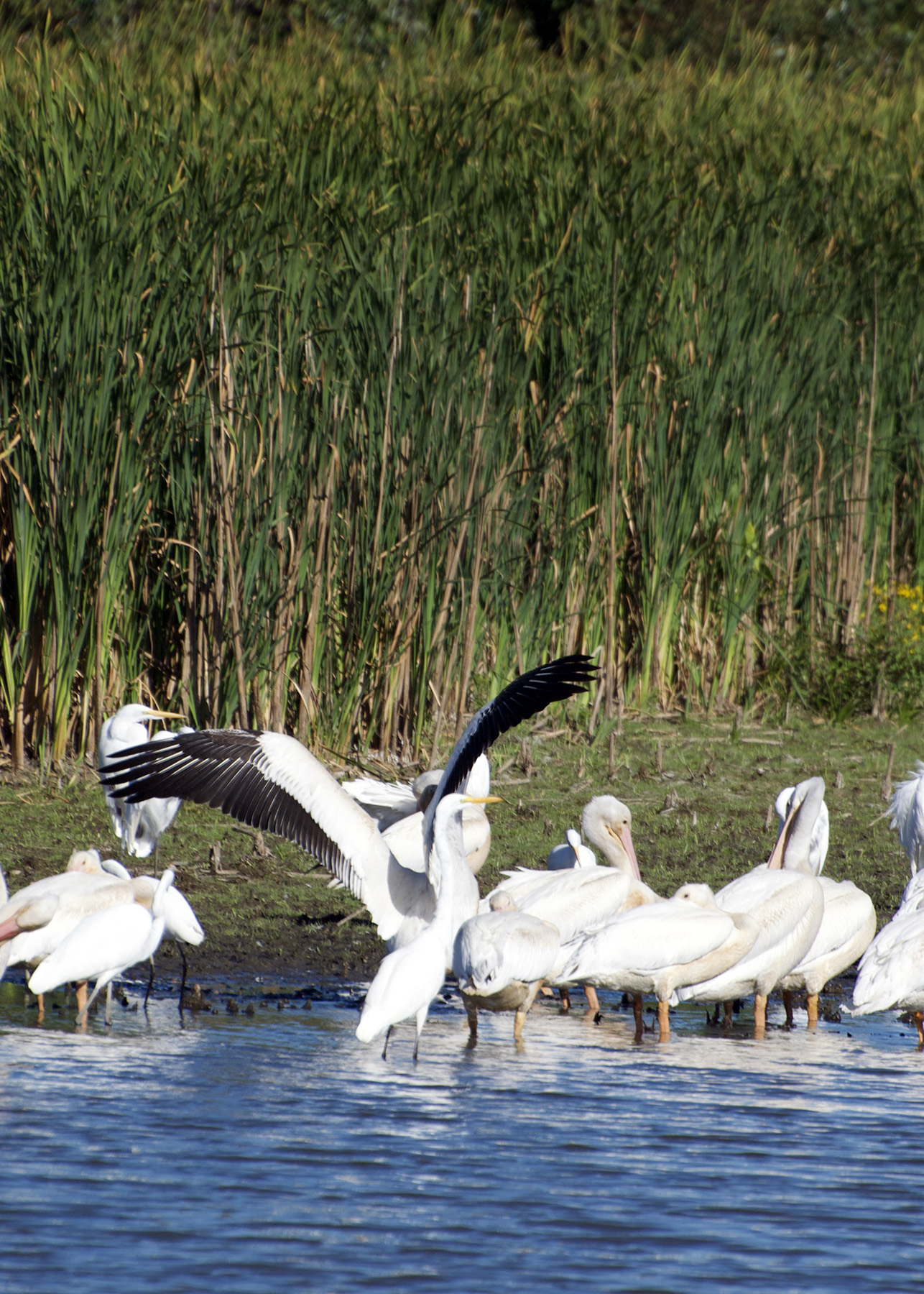
I could not believe my eyes. I had stumbled upon a pod of pelicans in Forest Grove, not just in the air on their southwards migration, but actually resting among the unperturbed egrets.
Here they were preening, snoozing, fishing as a fleet. Their large beaks can be adjusted in size not to hold food, as is erroneously presumed, but to serve as a kind of fishing net, which is not exclusively used for fish, by the way. Pelicans do eat smaller birds as well, including pigeons…
Pelicans have played a role in Christian iconography ever since the 3rd century. Some strange story, in a tractate called Physiologus, started to make the rounds: pelican mothers were claimed to kill their rebellious offspring, and then pecking their own breasts to revive them with their blood after three days. Comparisons to salvation history ensued, human kind being punished by G-d for its disobedience, but then the Son redeeming folks with his blood.
Detail from the Salimbenis’ Crucifixion: The Pelican
The punitive part of the story was eventually dropped, and the redeeming part enhanced. The narrative influenced art throughout the Middle ages, with images of pelicans feeding their chicks as a symbol of G-d’s sacrifice for his flock. The paintings could be found on tabernacles and the top of crosses, as well as frescos of Crucifixion scenes.
“These legends may have arisen because the pelican used to suffer from a disease that left a red mark on its chest. Alternatively it may be that pelicans look as if they are stabbing themselves as they often press their bill into their chest to fully empty their pouch. Yet other possibilities are that they often rest their bills on their breasts, and that the Dalmatian pelican has a blood-red pouch in the early breeding season .” (Ref.)
The point, though, is that rebellion was flagged, punished, and resolved with the pointer to salvation through religious adherence.
The Pelican Symbol
Christianity was not the first religion to imbue pelicans with symbolic meaning. In Egypt the birds were thought to be divinity and guide the passage of lost souls through the underworld. However much they were worshipped in those ways, their treatment on earth was not exactly preferential. Pelican populations in this country have been endangered in a variety of ways since the 1880s in competition for fish. “They were clubbed and shot, their eggs and young were deliberately destroyed, and their feeding and nesting sites were degraded by water management schemes and wetland drainage. Even in the 21st century, an increase in the population of American white pelicans in southeastern Idaho in the US was seen to threaten the recreational cutthroattrout fishery there, leading to official attempts to reduce pelican numbers through systematic harassment and culling(Ref.)” Pesticides and oil spills affect them as well, as do hooks of discarded fishing lines.
I hung out with the birds for a while, watching how comfortable they are with each other and how quiet (it is only chicks who vocalize during nesting seasons.) Pelicans are quite social, they have communal courtship rituals, they nest in colonies, they hunt together and they often fish as a fleet.
They eventually took off, single birds rising, then forming groups, circling in formation trying to find the thermals that would lift them to traveling height.
The circles reminded me of another iconography of rebellion, one probably approved by pelicans prone to comradeship. I learned about these solidarity circles which somewhat protected rebels from persecution from comments by Nick Kapur, a Professor of History at Rutgers with a focus on Japan and East Asia.
“In Japan’s Edo Period (1603-1868), when impoverished peasants finally couldn’t take it anymore and decided to revolt, they would sign their list of demands with all their names in a big circle. They had specific reasons for doing this: First, this format expressed their solidarity and commitment to each other, like an endless ring that cannot not be broken.
But perhaps more importantly, the usual way daimyo lords dealt with peasant revolts was torturing and executing the ringleaders but letting everyone else live. After all, they needed peasants to till the fields! By signing in a circle, nobody could tell who the leaders were.”
Apparently, these kinds of circular documents – now known as Round Robins – could also be found in 17th century French petitions to the Crown, in the British Royal Navy when sailors petitioned officers, and in the Spanish American War with demands that embarrassed then President McKinley.
Here’s to pelicans’ unity, robins’ evasiveness, to solidarity and rebels of all kinds! And nature’s endless ability to lift my spirits with surprises.
Music today by an adventurous young artist who is performing Edward Lear’s poem about pelicans (Pelican Chorus) in a Hungarian bath house.
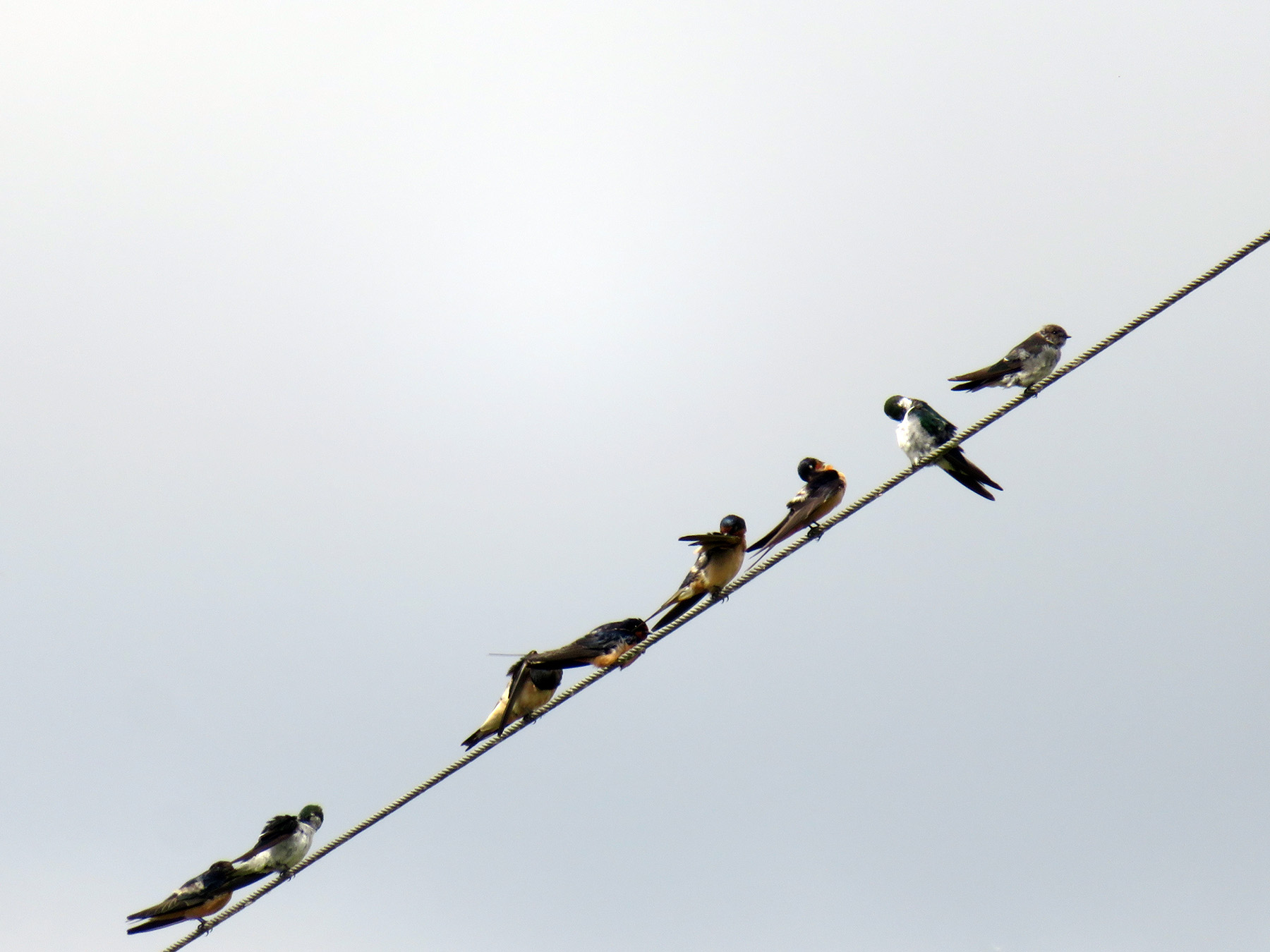
The wires in my head got all crossed. So many different associations triggered by the sight of swallows congregating on steel cables, perhaps getting ready to leave for warmer climes.
There was the train of thought associated with one of my favorite childhood fairy tales, Thumbelina by H.C. Andersen, the story of a tiny girl conceived through magic. Many a critter plays a role in this story, toad kidnappers, mouse guardians, mole suitors, and last but not least a swallow, coming to the rescue of our thumb-sized heroine who bravely survives attempts at forced marriage to a furry creature. Eventually, heartlessly, she dumps the infatuated swallow in favor of a flower-fairy prince. Growing wings herself, she happily-ever -after bumbles with him from blossom to blossom.
Oh, being picked up by a swallow and released in Africa – this then imaginative German girl could think of nothing more exciting! (Swallows from Northern Europe did indeed migrate to that continent.) Finding a prince and no longer being an outcast almost felt like an after-thought, but one that raised some pleasant goose bumps nonetheless. It seemed like a story capturing my own sense of being different during childhood, and one of isolation overcome, and also one of agency – the girl did things, however secretly, that suited her, and had the gut to disobey instructions.
Second train of thought fastened on a different tale of surviving isolation, this one decidedly for adults, and literate ones at that, since it revolves around allusions to Defoe’s Robinson Crusoe and many other literary characters of the Western canon. Jane Gardam (the book blurb correctly proclaims her Britain’s best writer you have never heard of – certainly true for this reader) weaves a spell around another outcast girl raised in rather lonely circumstances, finding an anchor in the willpower of Defoe’s stranded protagonist when she seemingly has none of her own. Crusoe’s Daughter (1985) is a small book, describing nuances of psychological interiors of people caught in or between two world wars in Britain, faith lost and found, and love becoming an afterthought to purpose. It, too, describes the solipsistic power of a woman who defies instructions, social mores and in her case the demands immanent to the last gasps of a struggling empire. An old-fashioned, comforting book, on one level. One that slyly sinks into your brain to make you face some hard truths that you tried to forget and that ultimately shifts to a novel structure of narrative, on another level.
Third train of thought revolved around the fact that age, experience and education really do provide perspectives that were previously missing. Take Anderson’s tale, for example, read for adventure and romance then, and understood now as an attempt of retelling even older tales – Persephone’s travels through the underworld and her reemergence come to mind. There is something of a Christian underpinning as well, the acceptance of the lepers and the grotesque, every outcast being worthy of a happy ending. But his narrative was also a moralistic warning: stick with your own own – hierarchical worlds of upper and lower classes or races (the dark, the brown, stay underground… ) should not mix.
Which brings us to the final train of thought elicited by all those birds on a wire. One of the most exciting discovery of recent months for me was a young South African artist, Igshaan Adams, who is not only a spectacular observer of his environment and a committed bridge-builder between divided groups, but a creative visionary when it comes to weaving wires. His first solo show in the UK, Kicking Dust has recently closed at London’s Hayward Gallery, for me, of course, only digitally available (photos from their website.)
It displayed tapestry and three dimensional installations that allowed you to walk paths between them. The artist was raised in Bonteheuwel, a former segregated township in Cape Town, and his work draws on the country’s history of Apartheid, as well as the behavioral patterns of its inhabitants – whether defined by poverty, customs, segregation or indigenous tradition.
In other words, here is an artist who is willing to witness what defines his environment, able to see the patterns that are laid down, and willing to reach across divides by creating representations full of connections (rather than stay rigidly with one’s own like H.C.Andersen would have us.) He does this with a tool kit of wires, ropes and twine, beads, trinkets and household dyes, all materials easily available at your neighborhood hardware store, with neighbors and family members helping with the weaving process.
The large installation represents the mapped spaces of different townships, connected by “footpaths” that were spontaneously trod by people from diverse, often hostile neighborhoods. The latter were created by an actively segregating government that did not wish to see solidarity between and politically aggregated power among the different ethnic groups – the Khoikhoi, Basters, Xhosa, Tswana, Cape Malays and Indian South Africans. Above the lines of these paths are representations of dust clouds – configurations that pick up the forms of clouds that are made when people performing indigenous dances kick sand.
“One of the oldest indigenous dancing styles in southern Africa, the Riel is traditionally performed by the San (also known as Bushmen), Nama and Khoi people of South Africa. Adams’ grandparents are Nama and as a child he would often join them to see young people dance the Rieldans in rural villages in the Northern Cape. Described as ‘dancing in the dust’, the dance is a courtship ritual where clouds of dust erupt from the ground as performers energetically kick the dry ground.”
You can see the dance and the artist’s explanation here. It’s short and worthwhile!
A state-bound exhibition of his tapestries,Veld Ven, depicting the selectively worn-out linoleum of his township neighbors’ floors, just closed at New York City’s Casey Caplan Gallery.
Here is a good visual overview of the individual tapestries and arrangements, photographed by Jason Wyche. Looking at the photographs, I found the patterns reminiscent of good translation, with all the hard work to capture the essentials in both content and form barely visible beneath the impression of likeness and flow. Then again, he could also be called a kind of cartographer, mapping movement onto two-dimensional patterns, serenely sharing presence and absence of design. Below are samples of the work.