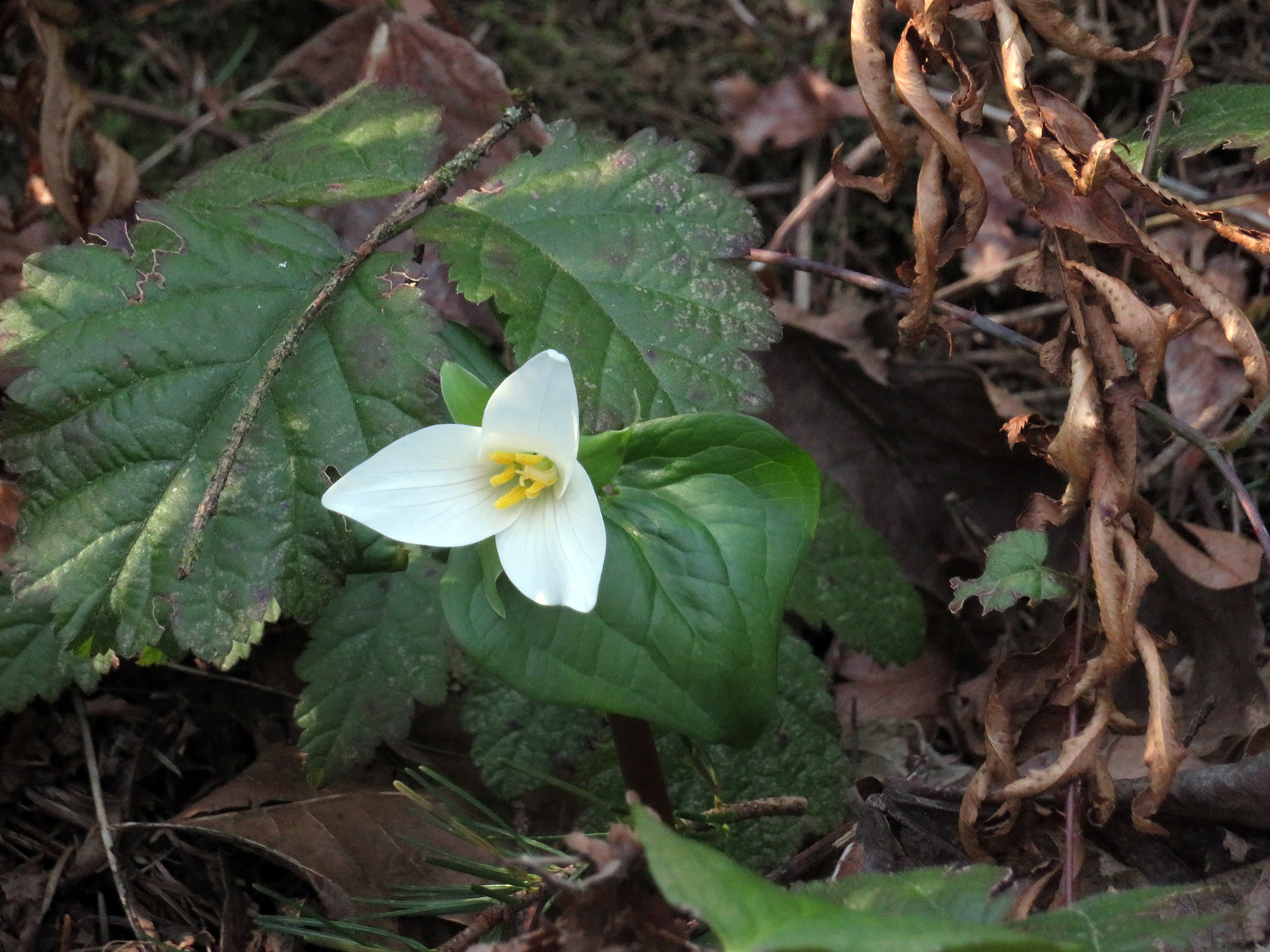
Spring is officially on the calendar and sure enough, the first messengers, trilliums, are popping up left and right in the woods. These wondrous little sentinels from the Lily family grow from rhysomes, have three furled leaves, a short stalk and, in these parts, mostly white flowers.
Before the flowers unfold, the shoots are easily overlooked, and I worry when Hundchen does his exuberant run in the woods that things get trampled – just like the damage done to the wildflowers by the tree cutter in Frost’s poem below.
Frost’s protagonist goes to the woods to collect birch boughs for a trellis for his peas.
As much as he is in favor of utilizing what nature has to offer, he also cares about the damage done – the axed stumps are bleeding and the wildflowers might be crushed by all the debris on top of them – go, clean up the mess! In fact, it might be too late for the trilliums, having been “crooked” by man’s arboreal harvest. I assume that means sort of crushed.
Somehow, though, nature seems to prevail. That last line reminds of the inevitability of growth, even if damage awaits. They just push through, next after next.
That certainly seems to be the case in the woods here, still bruised from the recent storms, windfall wherever you look. The little stars dot the landscape – affirmation of resilience, or nature doing its thing, unperturbed, you choose.
I walked down alone Sunday after church To the place where John has been cutting trees To see for myself about the birch He said I could have to bush my peas.
The sun in the new-cut narrow gap Was hot enough for the first of May, And stifling hot with the odor of sap From stumps still bleeding their life away.
The frogs that were peeping a thousand shrill Wherever the ground was low and wet, The minute they heard my step went still To watch me and see what I came to get.
Birch boughs enough piled everywhere!— All fresh and sound from the recent axe. Time someone came with cart and pair And got them off the wild flower’s backs.
They might be good for garden things To curl a little finger round, The same as you seize cat’s-cradle strings, And lift themselves up off the ground.
Small good to anything growing wild, They were crooking many a trillium That had budded before the boughs were piled And since it was coming up had to come.
Here is some music that captures the sparseness of the woods and the still cool light in March, reflected off the white petals of the Trillium.
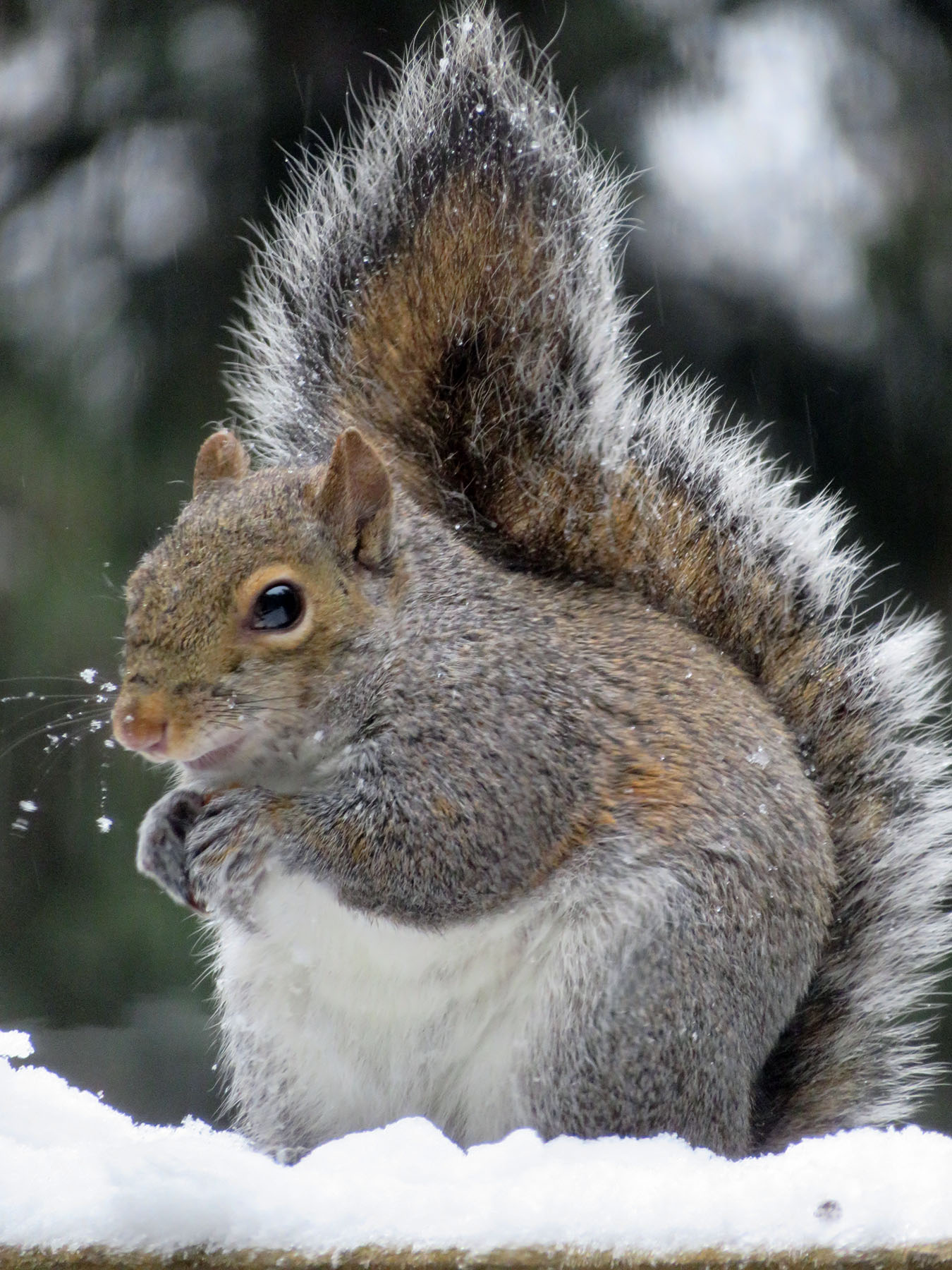
Photographs mostly from archives, a few from this week, 4 legged creature included.
Kissed by privilege. Not only do I live in a place surrounded by old-growth trees, but from my bed I look directly onto a balcony that has become a cafeteria for all kinds of creatures during the cold months. The crows visit, as do the thrush and the nuthatches, the juncos and the towhees, some sparrows and the occasional shy chickadee. And then there are the squirrels, scrambling up the side of the house.
We had put seeds and nuts out onto the railing before the snow hit. The squirrels lost no time to dig them all up and either eat them right there or abscond with them to refill empty caches. It brought nature as close to me as possible, a source of considerable joy and distraction. Photographing with my small digital camera – I am not allowed to lift or hold the large one until the incisions are healed – through the window yielded some fun images.
It also made me think about the double-edged sword of the fragmentation of boundaries between human and animal territory with our human incursions into nature’s spaces. On the one hand, you gain so much knowledge if you can observe and research animal behavior of populations close to you. On the other hand, we all know how pandemics are generated if territorial lines are crossed. I feel like Cassandra just mentioning the fact that 7 Russians were the first humans found to be infected with the H5N8 bird flu last week.
Let’s start the week on a more optimistic footing, though. Here are two amazing things about squirrels.
They have not only the capability to listen for and identify predators’ calls, like owls and hawks, predators that could become dangerous to them. They also eavesdrop on the general bird population around them. If other birds continue to chatter unperturbed, the squirrels relax.
“Eavesdropping on alarm calls or eavesdropping on chatter is a cheap and easy way to supplement the information they have access to. Because it’s free. It’s produced by other individuals in the environment. It’s publicly available to any organism that has the cognitive ability to recognize and interpret that information.”
Nifty, but nothing in comparison to what other squirrels’ brains have to offer in the fight against human disease, Alzheimers in particular. Recent research of the brain of arctic ground squirrels revealed some facts that no one ever anticipated.
These critters, at home in Siberia, Alaska and Canada, burrow about a meter under the tundra surface to hibernate for 7 months. During that process, their body temperature plummets, below the freezing point of water!, and their brains stop producing a lot of neural activity. Structurally their neurons shrink and the connections between neurons shrivel away. Think of it as if a tree crown sheds all of its twigs and branches, just leaving a few big limbs intact.
But here comes the amazing part. When the squirrels wake up, they grow back, within only two hours, not just all the synapses lost during hibernation— their brain cells now boast many more links than those of an active squirrel in the spring or summertime. A day later, their brains prune many of these ties, probably recognizing them as superfluous, and so end up in exactly the state before they started hibernation. The details of this process can be found here. The implications for brain plasticity and potential application to brains that have lost a lot of their dendritic connections (dementias) are now explored by scientists around the world.
Maybe my own synapses start firing again, one of these days, emerging from this semi-hibernating interlude. And I will walk in nature again. Which reminds me of one of my favorite poems about walking while stewarding nature’s cycles or mythology, your pick. It was written by former Oregon Poet Laureate Paulann Petersen. The story of Demeter and Persephone really focusses on the eternal cycle of sowing, growth, harvest, withering and dying back, questions as to the nature of human life and death, including the possibility of resurrection from Hades. A mother, Goddess of the harvest, Demeter, carries her tears with her grains, missing her abducted daughter. The pomegranate seeds, mentioned late in the poem, hold life but also the banishment to the underworld, if you remember Persephone’s fate. A temporary excursion into the realm of the dead, just like squirrels in hibernation….
Music by Stravinsky, I’m indulging in the incomparable German version with Fritz Wunderlich.
Folks, bear with me. I am coming up from under water, recovery from lung surgery is harder than I had – wildly optimistic – expected. So it might be stop and go for the next couple of months. Or it might be possible to put something interesting and coherent in front of your eyes three times a week, for starters. I’ll give it a try, if only to feel connected to the outside world from which I am de facto quarantined.
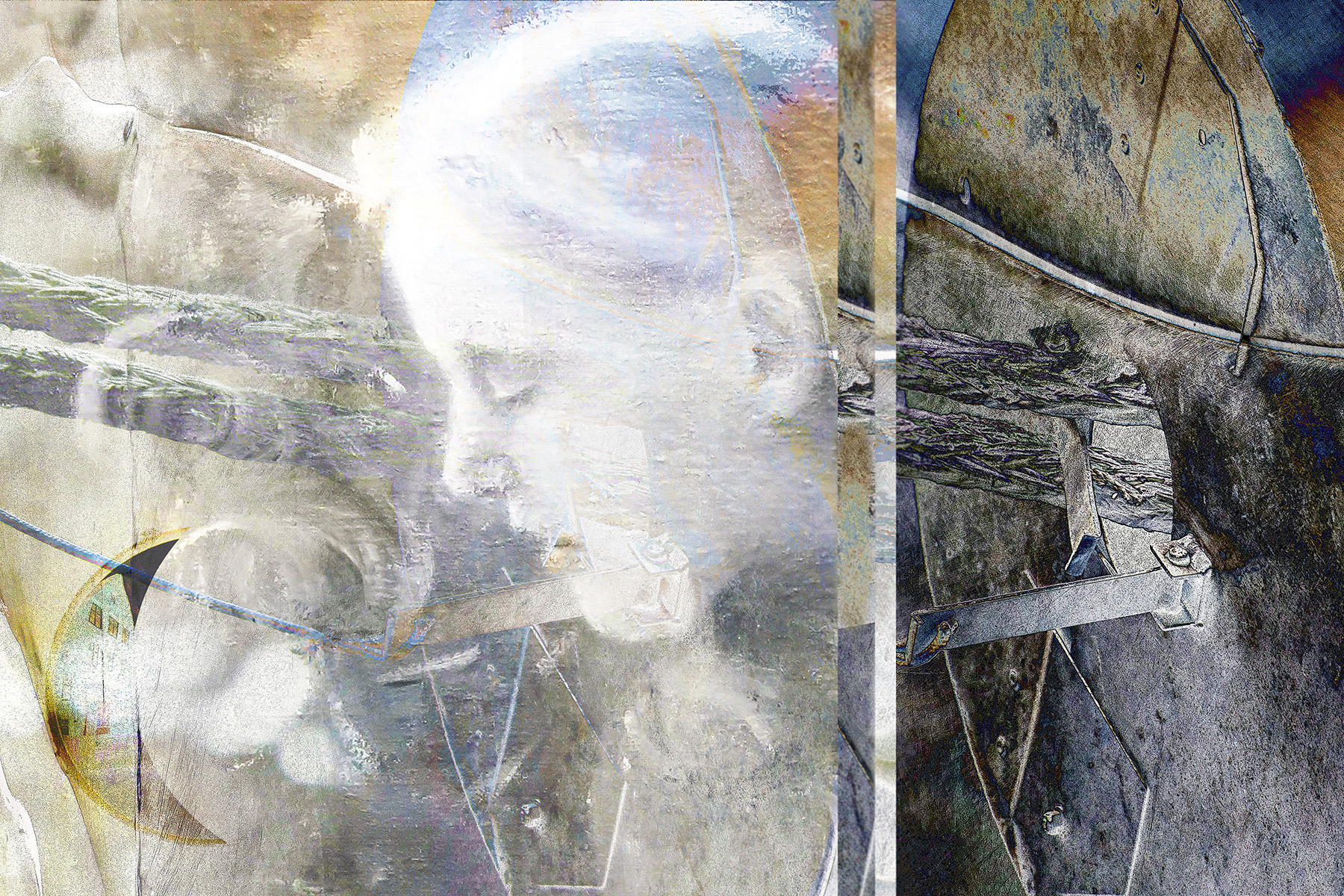
Photomontages are from the series Tied to the Moon (2019.)
Music is another one of those bonuses that make up for Armageddon: Grieg’s Lyrical Pieces I and II. (There are 66 in all – but these are favorite selections.)
The poem about migratory birds below was written at the end of World War II by one of the more prolific Flemish poets, Hubert van Herreweghen. Tricky translation – in the original the very last sentence really conveys that you should learn to love life or what is left of it. There was, with winter approaching, probably longing to follow the birds, away from the fields of Flanders, to a a warmer South, leaving the violence, the losses and serious hunger of those years behind.
MIGRATING BIRDS
The summer that has cheated us; the gloomy lesson autumn brings. Beneath the slow, high cumulus, I see a black bird fly across, heading south with beating wings.
The magical flight of the wild geese and cranes with their clamouring cries over the land like a golden fleece. Winter brings shadows, dark without cease, until a new journey fills up the skies.
Vulnerable heart and senses in pain, There is no home, in east or west, where, landed, you’re not restless again. You must learn to love life, that’s plain, Or, anyway, to love the rest.
By Hubert van Herreweghen, translated by Paul Vincent
I picked it as a bridge to one of my favorite clips of all time, my go-to when I need peacefulness.
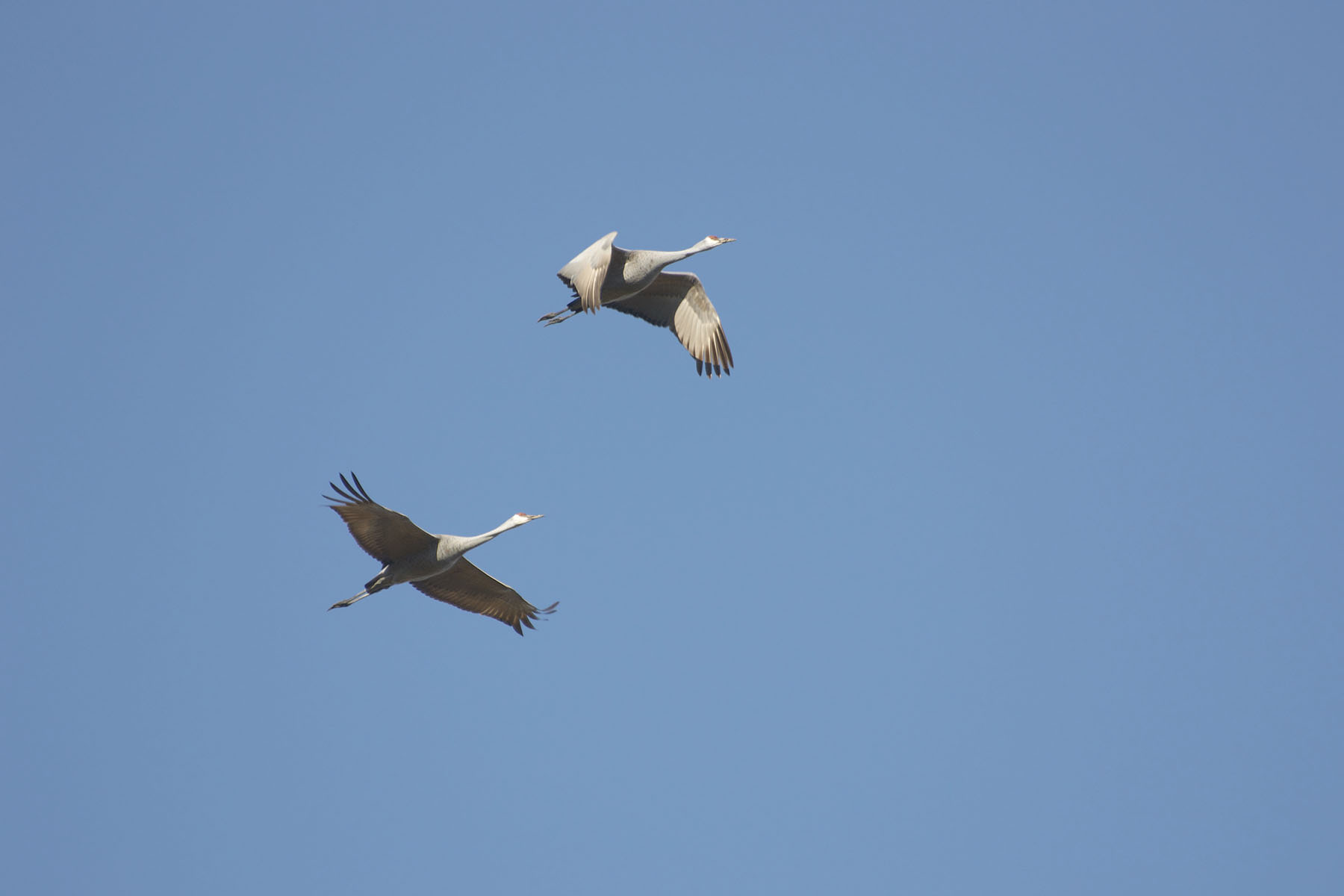
I photographed the migratory swans, geese and cranes this week on their journey in the opposite direction – going North to meet longer days, more light, the delights of mating and nesting season. No longing to follow them – in love with my home, that does exist here in the West, and loving life as always, no need to learn that. Magical flights, though, indeed.
Swans
Joys to be had then, this week. Attached to change, in nature and elsewhere. Grateful for the respite.
Geese soaring
TREKVOGELS
De zomer die ons heeft bedrogen; o weemoed die de herfst ons leert. Onder de wolken, trage en hoge, een zwarte vogel voor mijn ogen die naar het zuiden keert.
Magische vlucht der wilde ganzen en kraanvogels met luid gekrijs over het land vol gouden glansen. Dan valt de schaduw die de ganse winter verduistert tot de nieuwe reis.
Ontvankelijk hart, kwetsbare zinnen, er is geen honk in oost of west of gij zijt rusteloos, er binnen. Leert toch het leven te beminnen of wat er van het leven rest.
Music today comes from a vision of migratory destinations for swans. As you can imagine the whole cycle of Cantus Arcticus is a favorite of mine.
And these are about 1000 snow geese on a stop-over, that white strip on the horizon.
22-year old poet Amanda Gorman was chosen to read at the inauguration of President-elect Joe Biden. I am linking back to my post from 2019, below, where I had introduced her while writing about reasons for optimism. The poem I chose, “In This Place (An American Lyric),” was her work for the 2017 inauguration of U.S. Poet Laureate Tracy K. Smith. It celebrated poetry as a tool in the service of and fight for democracy.
Apparently Jill Biden recommended her for this week’s inaugural reading. The poet lives in L.A., hence today’s choice of photographs.
As reported in the Baltimore Sun: “She is calling her inaugural poem “The Hill We Climb” while otherwise declining to preview any lines. Gorman says she was not given specific instructions on what to write, but was encouraged to emphasize unity and hope over “denigrating anyone” or declaring “ding, dong, the witch is dead” over the departure of President Donald Trump.”
Now, personally, I wouldn’t mind hearing ding, dong the witch is dead on Wednesday. Except that would be a lie – let us not, ever, forget that we are dealing not with a singular witch but a coven, which is going to have its tentacles in our political and social fabric for a long time. Or was that the Kraken? Getting my metaphors mixed here, which is why you’ll never hear anything written by yours truly at any inauguration of any kind or anybody.
Better that way. I am sure the powerhouse that is Amanda Gorman will move us all with her words, the words of a generation that has to live with the consequences of the disastrous policies of the last 30 years – yes, I mean it – longest.
I was thrilled when I heard the news, just at the moment when I finished reading Anand Giridharadas’ short piece in the.Ink proclaiming hope and optimism.
“And I see then that this is both a very dark time and, potentially, a very bright time. It’s important to hold these truths together.
When I look down at the ground of the present right now, I feel depressed. If I lift my head to the horizon, I see a different picture.
This is not the chaos of the beginning of something. This is the chaos of the end of something.”
……
“We are living through a revolt against the future. The future will prevail.”
AMEN!
Poetry matters, but so do books from 2020 about politics, by Black women writers. MLK would have approved – Happy Birthday, Martin Luther King!
“”Silence is the real crime against humanity.” – Nadezha Mandelstam
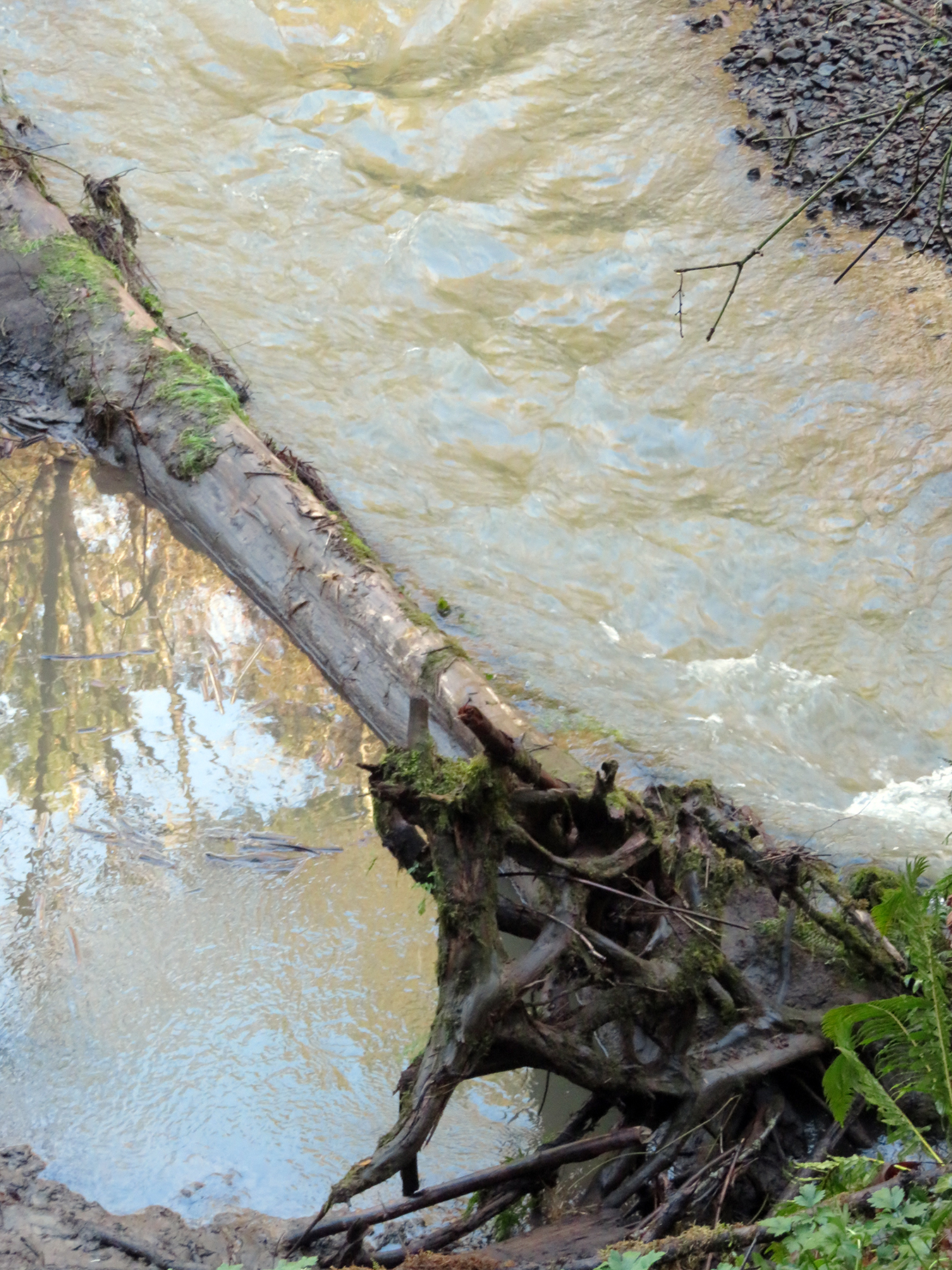
Two nights ago there was a lot of wind and rain. I do not remember that a storm was announced, but by the next morning trees and branches were all over the place, ripped out of the earth or from their trunks. I had to remind myself that nature is served by an occasional house cleaning, rather than thinking, man, it all comes crashing down.
And since language was on my mind, given this week’s focus, I was saddened by another kind of crash: apparently so many Native American Elders are felled by Covid-19, some the sole bearers of languages at the brink of extinction, that a true cultural crisis unfolds. The few who remember the languages, gone.
I decided that we need some real cheer to counterbalance the ominous thoughts. Something that reminds us that even in the middle of catastrophe or the ramp leading up to it, there are glimpses of hope. And courage. And love!
What better than a love poem written by Osip Mandelstam (1891- 1938) for his wife Nadezha, before Stalin managed to finish him off by sending him to a Siberian Labor Camp for his outspoken criticism of totalitarianism?
Nadezha Mandelstam (1899 – 1980) was an unusually strong person, who escaped Stalin’s henchmen by luck and led a quasi-nomadic existence for many years, crashing with friends, doing odds-and-ends jobs, learning her husband’s poems by heart so that they would be preserved, and smuggling copies of them out of the country. She was said to have had a Homeric memorythat allowed her to memorize both original poems and some of their variants. Later she pushed for publication of his collected works, both in the West and later in Russia. Her own memoirs, Hope against Hope and Hope Abandoned (both finished in 1970) are a worthwhile read if you can stomach eyewitness testimony of the Stalinist purges.
Note the crack in the ground with the roots trying to lift up
She remembered his language, ensuring survival of some of Russia’s most important poetry of the 20th century. He was ripped from her side because of his relentless willingness to open his mouth. And yet she insisted: “Silence is the real crime against humanity.”
Let’s hear it for love.
This
This is what I most want unpursued, alone to reach beyond the light that I am furthest from.
And for you to shine there- no other happiness- and learn, from starlight, what its fire might suggest.
A star burns as a star, light becomes light, because our murmuring strengthens us, and warms the night.
And I want to say to you my little one, whispering, I can only lift you towards the light by means of this babbling.
By Osip Mandelstam
Anyone “babbling” to me like this – I promise eternal devotion……
Music is by one of their contemporaries, Scriabin, in a smooth if theatrical rendition of his Fantasy #2. And here is Horowitz, with a different take on a different piece.
And since you’ve followed me through a week with long and complicated topics, here is a bonus bit of cheerful language (and genuine loving sentiment) from a few days ago:
German is known for its compound words, the joining of two words that then create a new meaning, some of which have gained enough of a reputation to be understood by readers who primarily speak English. Schadenfreude, joy in other people’s misfortune, might be one such, as is Weltschmerz, the heartache over the world’s woes, or your own, for that matter.
I have different favorites, all connected to my own person, Weichei among them, literally a soft egg, but referring to one decidedly wimpy. Then there is the innere Schweinehund, literally an internal pig dog, which refers to one’s weakness of willpower. (Not to be mistaken for Schweinehund, pig dog, which refers to a particularly mean villain. Deutsche Sprache….) Let’s add the Tagedieb, the day thief, who dawdles away her time, that lazy layabout, and Eselsbrücke, the donkey bridge, a name for mnemonic devices, those memory aides which have become indispensable for this aging brain.
Beware of words
One of the joys of reading poetry in your own language is the discovery of compound words that do not exist in the extant language. There is a real thrill when these inventions make perfect sense or suggest something that is new but obvious, or create a hook for you to think about language as it should be but has never seemingly come about. They are also often creating an uncanny mood for their simultaneous familiarity and unfamiliarity.
These invented compound words are also a nightmare for the translator, and a struggle for the second-language reader, since they would not know what is established and what is designed vocabulary.
Even they, though, might not quite capture what a native speaker intuits: Take Celan’s creation Sprachgitter, for example, translated as speechgrille. Gitter are primarily used in German to refer to prison bars. Bars keep you in. Bars can also keep others out. A languagebar or speechbar is obviously not a good translation since it would sound like an obstacle. But the sense of language as a force that prevents departure or entry, a separation device, is not exactly embodied in grille, which rather suggests permeability.
These difficulties aside, it is remarkable that a poet who survived the Holocaust (his entire family did not) sticks to the language of the murderers, admittedly also the language of his mother, even though he is fluent in many other languages.
More importantly, the poet was aware of the abuse of the German language by the totalitarian perpetrators. He called it murderous speech.
“Only one thing remained reachable, close, and secure amid all the losses,” he later said of his experiences in the camps: “language. Yes, language. In spite of everything, it remained secure against loss.” “But,” he added, “it had to go through its own lack of answers, through terrifying silence, through the thousand darknesses of murderous speech.” (More on this here and here.)
The ideological core message of supremacists, as we discussed earlier, is one of separation: us vs. them, the good against the bad, the nation against the enemy, the White against the Black, the Nazi against the Jew. Celan’s language systematically undermines separation by fusing words together, words that never belonged in a pair, the compounds creating an ambivalence that stands in direct opposition to the absolutist value and expression of murderous speech. His new words allow us, on occasion, to cross the threshold of separation joining something new.
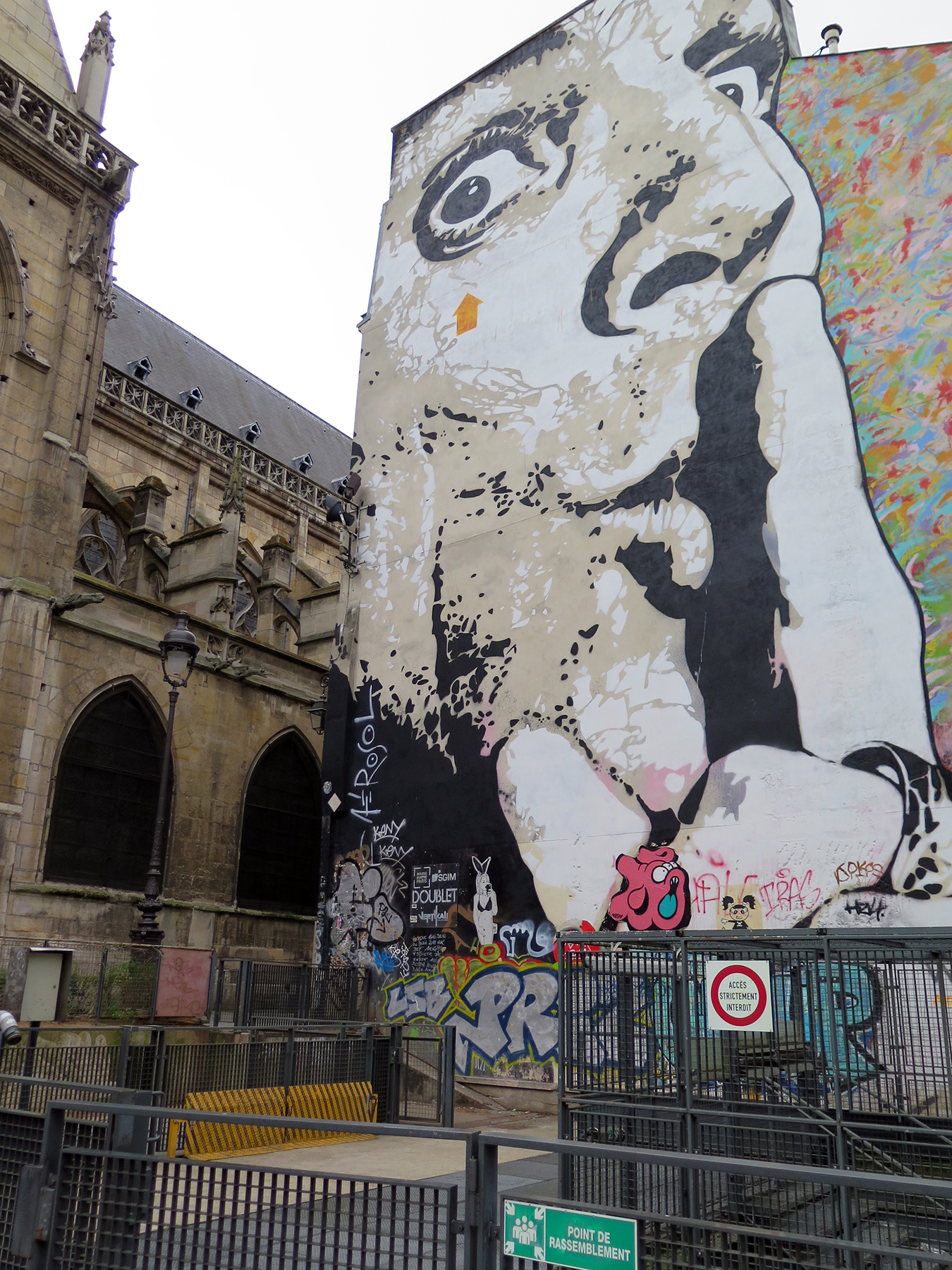
Graffitti on a store for Judaica
What is a memoryrose?
What is breathturn, what is timestead?
What is ashglory in the context of the Holocaust? Have to read the poems!
Here is Celan reading his own work, translation in subtitles.
Photographs are from Paris where Celan lived until his suicide at age 50 in 1970.
Bonus: Here is an excerpt from Jewish Currents that analyzes one of my favorite poems (a stanza, really) as the professionals do…. I just liked the imagery placed into my hometown, otherwise had no clue.
Today I am thinking about a ruler contemplating the invasion of Persia. Croesus, not tRump, in case your thoughts went there. There are admittedly some parallels, of course. Filthy rich comes to mind (although purportedly rich, in the case of the latter,) invading and subjugating, and eventually facing a downfall through overreach. (Hello Georgia: a shout-out to all the organizers and voters!)
Croesus (c. 560–546 BC,) having successfully conquered Ioania, was in turn subjugated by the Persians under Cyrus when he went to war with them. His country paid the price, he, on the other hand, got away with it – Herodotus claims that the King, condemned by Cyrus to be burned alive, was saved by the god Apollo and eventually accompanied Cyrus’ successor, Cambyses II, to Egypt.
Will we see something similar unfolding in our contemporary situation with Iran and the slinking off of a defeated ruler, escaping his just punishment? According to Israeli news sources, the war pressure is on. According to the pattern of a life time, he just might.
Croesus was on my mind because of the puzzling observation that a wonderful poem about him and his relations to the oracle of Delphi pretends that we don’t know what important question he asked. History has, after all, preserved exactly that question and the catastrophic misinterpretation of the oracle’s answer. The king wanted to know whether he should go to war against the Persian Empire and the oracle replied: “If Croesus goes to war he will destroy a great empire.” Turns out he did. His own.
Brian Culhane, the poet, is perfectly aware of what the question was. He is educated in classics, his work steeped in them. (I had earlier presented one of his poems here. The King’s Question, the book that contains today’s selection, was the winner of the Emily Dickinson First Book Award, which recognizes an American poet over the age of fifty who has yet to publish a book of poetry.) The interplay between ancient history and his contemporary writing is what made me choose him for today’s musings in the first place.
Before he put his important question to an oracle, Croesus planned to test all the famous soothsayers, Sending runners half around the world, to Delphi, Dodona, Amphiarius, Branchidae, and Ammon, So as to determine the accuracy of their words; His challenge: not to say anything of his future
But rather what he was doing in his capital, Sardis (Eating an unlikely meal of lamb and tortoise, Exactly one hundred days after messengers had set out). This posed a challenge, then, of far space not of time: Of seeing past dunes and rock fortresses; of flying, Freighted, above caravans and seas; of sightedness,
As it were, in the present construed as a darkened room. Croesus of Lydia sought by this means to gauge The unplumbed limits of what each oracle knew, Hesitant to entrust his fate to any unable to divine Lamb and tortoise stewing in a bronze pot. When only the Pythia of Apollo at Delphi correctly
Answered from her cleft, her tripod just the lens For seeing into the royal ego, she put his mind to rest, But not before speaking in her smoke-stung voice: I count the grains of sand on the beach and the sea’s depth; I know the speech of the dumb and I hear those without voice. We know this because those present wrote it down.
Of the King’s crucial questions, however, there is nothing. We have no word. The histories are silent. My analyst, Whose office on Madison was narrow as an anchorite’s cave, Would sit behind me as I stared up at her impassive ceiling, As the uptown buses slushed all the way to Harlem, And I would recount, with many hesitations and asides,
The play I was starring in, whose Acts were as yet Fluid, though the whole loomed tragically enough. She would listen, bent over knitting, or occasionally note Some fact made less random by my tremulous soliloquy. When much later I heard of her death after long cancer, I walked across town and stood, in front of her building,
Trying to resurrect those afternoons that became the years We labored together toward a time without neurosis, When I might work and raise a family and find peace. Find, if not happiness exactly, some surcease from pain. What question had I failed to ask, when the chance was mine? When she, who knew me so well, could have answered?
Let just one of those quicksilver hours be returned to me, With my knowledge now of the world, and not a boy’s, With all that I have become a lighted room. One hour To ask the question that burned, once, in a King’s throat: The question of all questions, the true source and center, Without which a soul must make do, clap hands and sing.
The pretense of not knowing what the king’s question was serves a Gedankenexperiment that leads to today’s oracles, psychoanalysts. Here is a power hungry guy, itching to go to war, testing his soothsayers’ capabilities by inquiring about the mundane issue of what’s for supper. Only the wise woman from Delphi correctly identifies what’s on the menu: the (sacrificial?) lamb and the tortoise (Χελωνη,) the one so perfectly shielded against assault.
The tortoise, it turns out, who used to be a nymph refusing to go to divine weddings, loving to stay home. Subsequently punished by Zeus with transformation into an animal that has to carry that home forever on her back. Also the one that is reported to have killed playwright Aeschylus when dropped on his head by a bird. Also the one that was a sacred symbol of Hermes, the swift messenger God and all around trickster. And of course the one mentioned by Freud In Totem and Taboo as one of the animals used for totemic meals, the annual sacrifice and consumption of the animal, symbolizing the murder of the archaic father. Pick your preferred symbolism from the soup bowl!
But no mention of the question.
So let’s turn to the analyst’s office of years gone by, a place to choose symbolic meaning and interpretation with care, as if it mattered. The poet reminisces about the construction of a life narrative with certain roles and uncertain outcomes, perceived at the time as a tragedy with the self-pity of youth.
The quiet lady is a knitter – now where did we hear about yarn last? Moirai, the fates, where Clotho (the nicest of the three) spins the yarn, the thread of life, that is tied to your destiny. But also Ariadne, who plies Theseus with a sword and a ball of red yarn that helps him escape the labyrinth after he kills the Minotaur. It was Freud himself, after all, who claimed in an interview in 1927 that psychoanalysis “supplies the thread that leads a man out of the labyrinth of his own unconscious.”
Spinning a yarn, as some conceive of therapy, is not to be dismissed. Threads weave patterns, and they become stories, with a beginning and an end, mapping the maze, which is, after all, finite as well. Would any particular question change that? Would an oracle/ therapist supply an answer any less ambiguous than that which led Croesus astray? The very fact that the narrator is even wondering what question he failed to ask, suggests it could not have made that much of a difference. Narratives shift, narratives might not be based on reality, but narratives do bring some order into the experienced upheaval. They need to be cohesive, but they do not depend on definitive answers. The very fact that the oracle of Delphi denied certitude – like the Gods, or life itself – to the questioner, frames how loaded questioning – and answers – can be. Catastrophe might well ensue.
Without definitive answers Culhane’s last line suggests we “must make do, clap hands and sing.” Action is what counts in this play that we have been assigned to, or this script that we constructed ourselves, preferably with joyful expression. Living a life rather than thinking about it. The only way out of the maze.
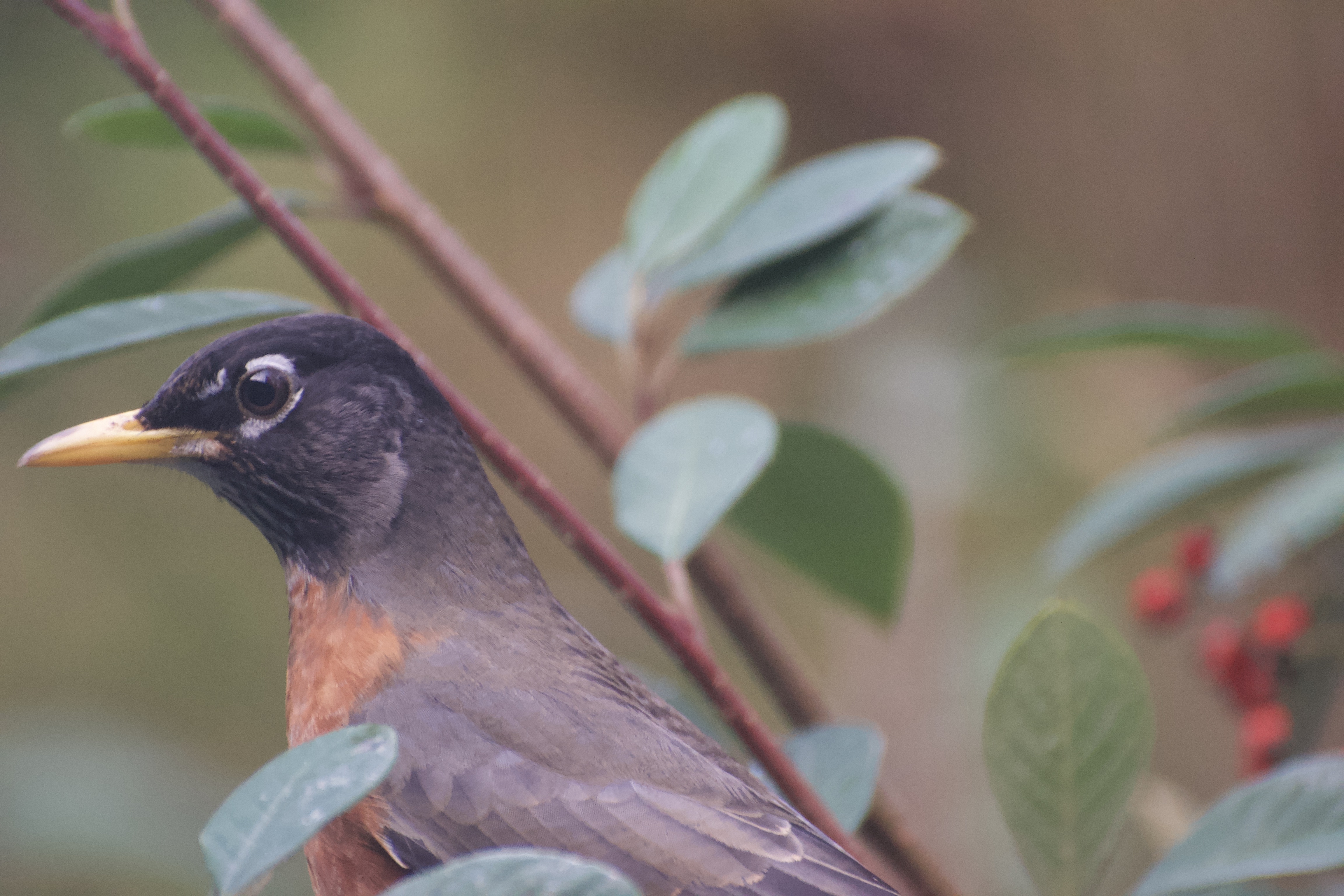
Photographs today are of a different kind of invasion: not kings, but robins decided to pick the last specks of colors in my wintry yard, gorging on the red berries.
Music by Strauss tells the tale of Ariadne, one who saves with love and pragmatism.
Bonus: There is a lovely 1971 album by Francoise Hardy called La question. Available in full on Spotify. Here is the title song.
I think we can all agree that thoughts and feelings interact with each other. What I think can shape what I feel – if I think highly of myself or one of my accomplishments, I will feel pleasure, or elation, or sustained confidence. If I think poorly of myself or the outcome of my actions, I can feel insecurity, or shame ore guilt.
The opposite is true as well: my emotions can affect my thinking. If I am feeling happy-go-lucky, self-confident and optimistic, I might be protected from catastrophic thinking. (I might also fail to prepare for potential disaster and caught helpless when it strikes, just saying….). If I feel needy for approval, or belonging, or fearful of change, I might think in ways that make sure these needs and fears are dealt with. In these cases, I will think along the lines of the group I want to belong to and avoid dissent even if data suggest I have the wrong ideas (think climate change, for example.) I might not see the world as it is, but my feelings will be protected.
Julia Galef, a co-founder of the Center of Applied Rationality, offers a persuasive explanation of how different categories of emotional needs and skills interact with how rationally and accurately we assess the world. Her book, The Scout Mindset, will be released this April. For a lightening overview of her model, here is a 10 minute TED talk.
Galef’s ideas begin with the assumption, shared by a host of contemporary psychologists, that there is such a thing as directionally motivated reasoning. Most of us are trying to make ideas that we like “win” and those that we don’t like, “lose.” In a nutshell, we ask for those things that we want to be true if we can believe the evidence. For undesirable conclusions, on the other hand, we ask ourselves if we must believe the evidence. In the process of forming our beliefs we have a lot of flexibility: we can choose what evidence to include and which to ignore, who we find trustworthy and who we avoid, whether we consult second opinions and so on.
The author suggests that two different mindsets, that of a Soldier and that of a Scout, decide how we approach the world and look at evidence to protect our feelings. The Soldier Mindsetdefends what it believes, advances arguments, holds positions on issues and fights what contradicts their beliefs, shoots down ideas, refuses to concede points. Importantly, sticking to your preconceptions or beliefs despite evidence that they might be false, is driven by feelings of need for belonging and approval (tribalism,) fear of showing weakness if changing opinion, and a choice to see the world through optimistic glasses to feed your psychological immune system with positive illusions against the threats of the world.
(I talked about some of these processes, including confirmation bias, previously here.)
The Scout Mindset, on the other hand, is all about being able to see things as they are, not as you wish they were, even if that implies unpleasant or inconvenient insights. It explores the actual lay of the land rather than defending assumptions about how the land is configured.
” It’s what allows you to recognize when you were wrong, to seek out your blind spots, to test your assumptions and change course. It’s what prompts you to honestly ask yourself questions like “Was I at fault in that argument?” or “Is this risk really worth it?” As the physicist Richard Feynman said: “The first rule is that you must not fool yourself – and you are the easiest person to fool.” Easier said than done, of course. The Scout Mindsetis about how, concretely, to keep from fooling yourself. Throughout the book, I lead the reader through key techniques for becoming aware of your own rationalizations, making more accurate predictions, learning from disagreements, and noticing what you’re wrong about.”
What feelings drive this more rare and difficult mindset? Feelings of curiosity, it turns out, and feeling grounded enough that you are not dependent on ideology or others’ opinions or them liking you, feeling ok rather than weak when you are openminded and proven wrong, and full of yearning to understand the world as it is. I very much hope that her book’s publication in April provides the promised pointers as to how pursue this way of thinking so that we are able to discern truth amongst all the noise and prejudices surrounding it. I believe in a world where polarization has increasingly grown, with tribalism encouraging group think and constraining available information, it is more urgent than ever to help us get to scout mode.
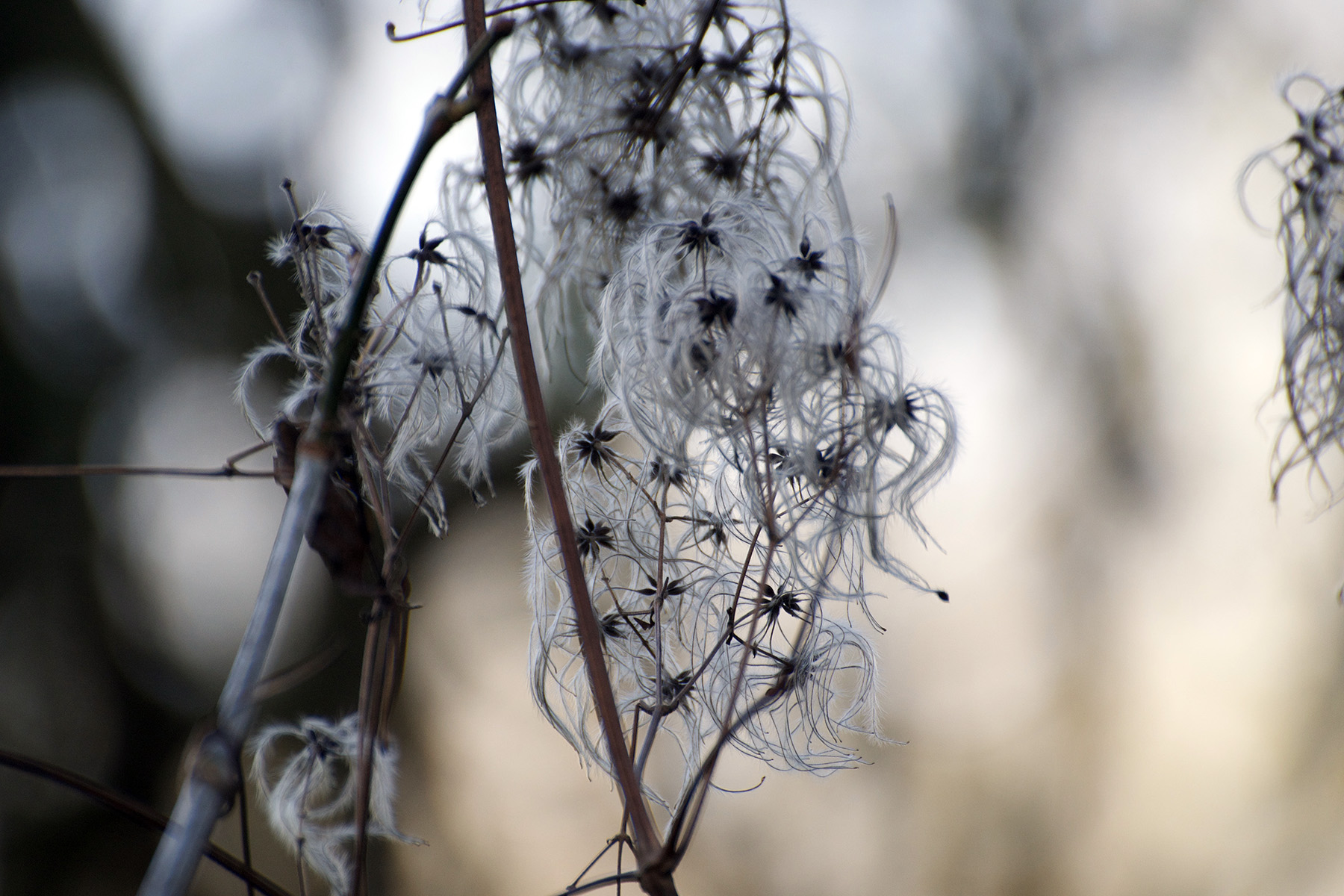
Photographs today depict seedpods of the Western White Clematis, Clematis ligusticifolia. It grows in our NW forests and wetlands. I thought they’d serve as a good example of the difference between what you believe to be true – here are flimsy, fluffy things, their vines probably strangling trees, beautiful but useless – and what you learn when you apply scouting:
The seed floss has been used by natives as tinder for starting fires, as insulation in shoes, and as an absorbent in baby diapers; the stems to make carrying nets and bow strings; the roots to make a shampoo. An infusion or poultice of this plant was applied to sores, wounds, bruises, swellings, painful joints, and was also used to treat chest pain and backaches and to treat horses and other animals. Crushed roots were reportedly placed in the nostrils of tired horses to revive them. Stems and leaves, which have a peppery taste, were chewed for colds or sore throats. (Ref.)
Music is by Chopin. His Preludesinclude one titled Uncertainty (Op. 28. #5) – we need to tolerate uncertainty to become good scouts…
“Be courageous when the mind deceives you Be courageous In the final account only this is important” ― Zbigniew Herbert
I am not good with New Year’s Resolutions. Not good in devising them, and certainly not good in keeping them. I am, however, taking a benchmark date like January 1st at least to think through what I have accomplished with things I cared about, where to continue and possibly how to improve. And then I forget about it…..
My daily writing has been important to me as a tool to focus my thoughts, learn new things, exercise my brain and either offer some teaching, or some cheer, or simply some tangible evidence that we are all in this together, sharing thoughts if not able to keep company with each other.
The delight of writing about my experience of art has been curbed by the restrictions we all face: inaccessibility of travel and museums or galleries. The passion of writing about politics has been severely impacted by the depth to which this realm has sunk into ugliness and despair, at the existential expense of the most vulnerable among us, and the emotional expense of all of us who often can’t bear to hear yet another piece of bad news.
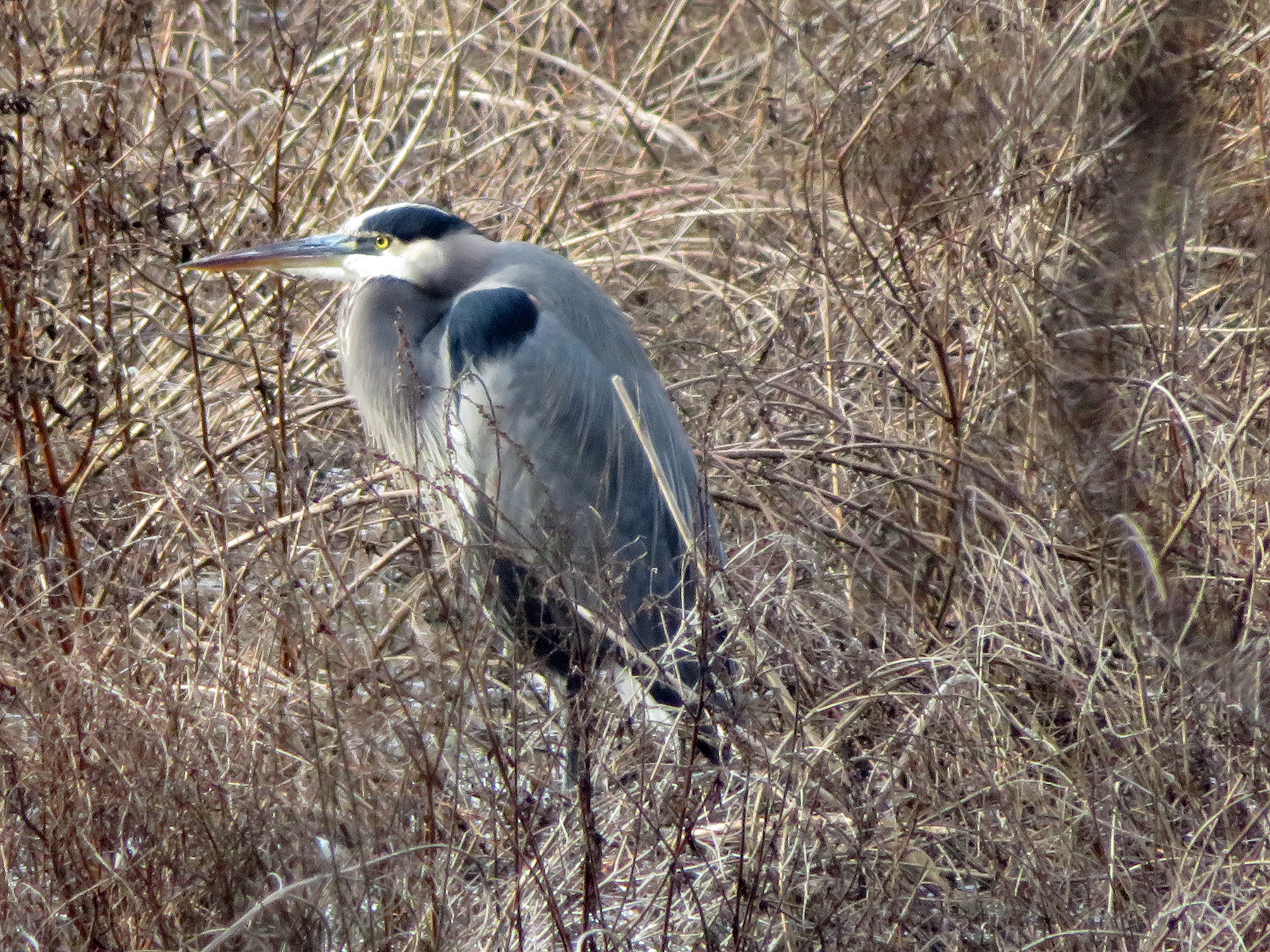
Luckily, the realm of science remains open for exploration as does the domain of literature and poetry, both providing insights and beauty to come in a year that will still not be easy. Gratefully, the everlasting joy provided by nature has no limits either, even if my current photographic explorations are narrowed to the Pacific Northwest – plenty of beauty all around! (Photographs are from last week’s walk at Oaks Bottom. The herons were out in droves – look closely at the water’s edge.)
So I will go on to describe my thoughts, difficult as it may be.
When it comes to the difficulty of describing feelings, I defer to a writer who, for me, has the distinction of infusing us with the courage to live like no other poet I know. (OK, scratch that. I have discovered Emily Dickinson this year, after all. They are in a tie.) The Polish poet Zbigniew Herbert died of causes related to poverty in 1998, despite being recognized as one of the most brilliant European minds of our life time. As a staunch opponent of communism he was later betrayed by many in the Solidarity Movement he had supported, when they turned NeoCon. His work was shaped by the fall-out from the traumas Poland experienced throughout its history, and he managed to convey the history itself, the issue of moral necessity, human suffering but also human resilience, all at once. Here is a fine introduction to the man and his work by his latest translator.
Here is his quest to find the right words, or, more importantly, the right insights.
I would like to describe the simplest emotion
joy or sadness
but not as others do
reaching for shafts of rain or sun

I would like to describe a light
which is being born in me
but I know it does not resemble
any star
for it is not so bright
not so pure
and is uncertain

I would like to describe courage
without dragging behind me a dusty lion
and also anxiety
without shaking a glass full of water

to put it another way
I would give all metaphors
in return for one word
drawn out of my breast like a rib
for one word
contained within the boundaries
of my skin

but apparently this is not possible

and just to say - I love
I run around like mad
picking up handfuls of birds
and my tenderness
which after all is not made of water
asks the water for a face
and anger
different from fire
borrows from it
a loquacious tongue

so is blurred
so is blurred
in me
what white-haired gentlemen
separated once and for all
and said
this is the subject
and this is the object

we fall asleep
with one hand under our head
and with the other in a mound of planets

our feet abandon us
and taste the earth
with their tiny roots
which next morning
we tear out painfully
I’ll settle for dragging a dusty lion behind me in the new year, and drinking the water that was not spilled by trembling hands, embracing feelings as well as thoughts, in whatever fashion they are described, all the blurriness contained in me, grateful for new beginnings.
Happy New Year – or at least a content one where we can still connect to planets and taste the earth, something that is happening in today’s music selection as well. Here is Beethoven’s Piano concerto Nr. 4, Op 58.