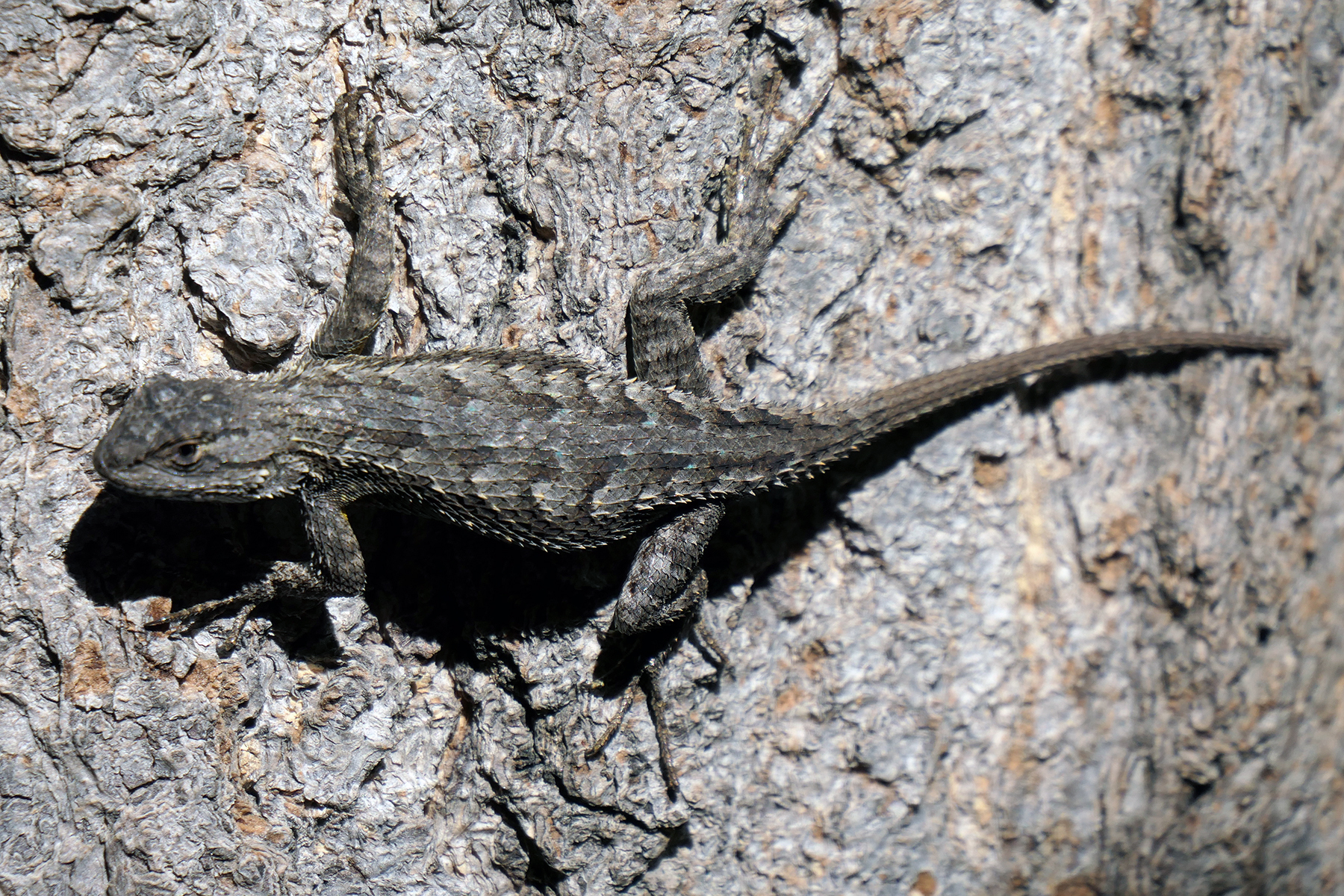
In the parched path I have seen the good lizard (one drop of crocodile) meditating. With his green frock-coat of an abbot of the devil, his correct bearing and his stiff collar, he has the sad air of an old professor. Those faded eyes of a broken artist, how they watch the afternoon in dismay!
Is this, my friend, your twilight constitutional? Please use your cane, you are very old, Mr. Lizard, and the children of the village may startle you. What are you seeking in the path, my near-sighted philosopher, if the wavering phantasm of the parched afternoon has broken the horizon?
Are you seeking the blue alms of the moribund heaven? A penny of a star? Or perhaps you’ve been reading a volume of Lamartine, and you relish the plateresque trills of the birds?
(You watch the setting sun, and your eyes shine, oh, dragon of the frogs, with a human radiance. Ideas, gondolas without oars, cross the shadowy waters of your burnt-out eyes.)
Have you come looking for that lovely lady lizard, green as the wheatfields of May, as the long locks of sleeping pools, who scorned you, and then left you in your field? Oh, sweet idyll, broken among the sweet sedges! But, live! What the devil! I like you. The motto “I oppose the serpent” triumphs in that grand double chin of a Christian archbishop.
Now the sun has dissolved in the cup of the mountains, and the flocks cloud the roadway. It is the hour to depart: leave the dry path and your meditations. You will have time to look at the stars when the worms are eating you at their leisure.
Go home to your house by the village, of the crickets! Good night, my friend Mr. Lizard!
Now the field is empty, the mountains dim, the roadway deserted. Only, now and again, a cuckoo sings in the darkness of the poplar trees.
by Federico García Lorca
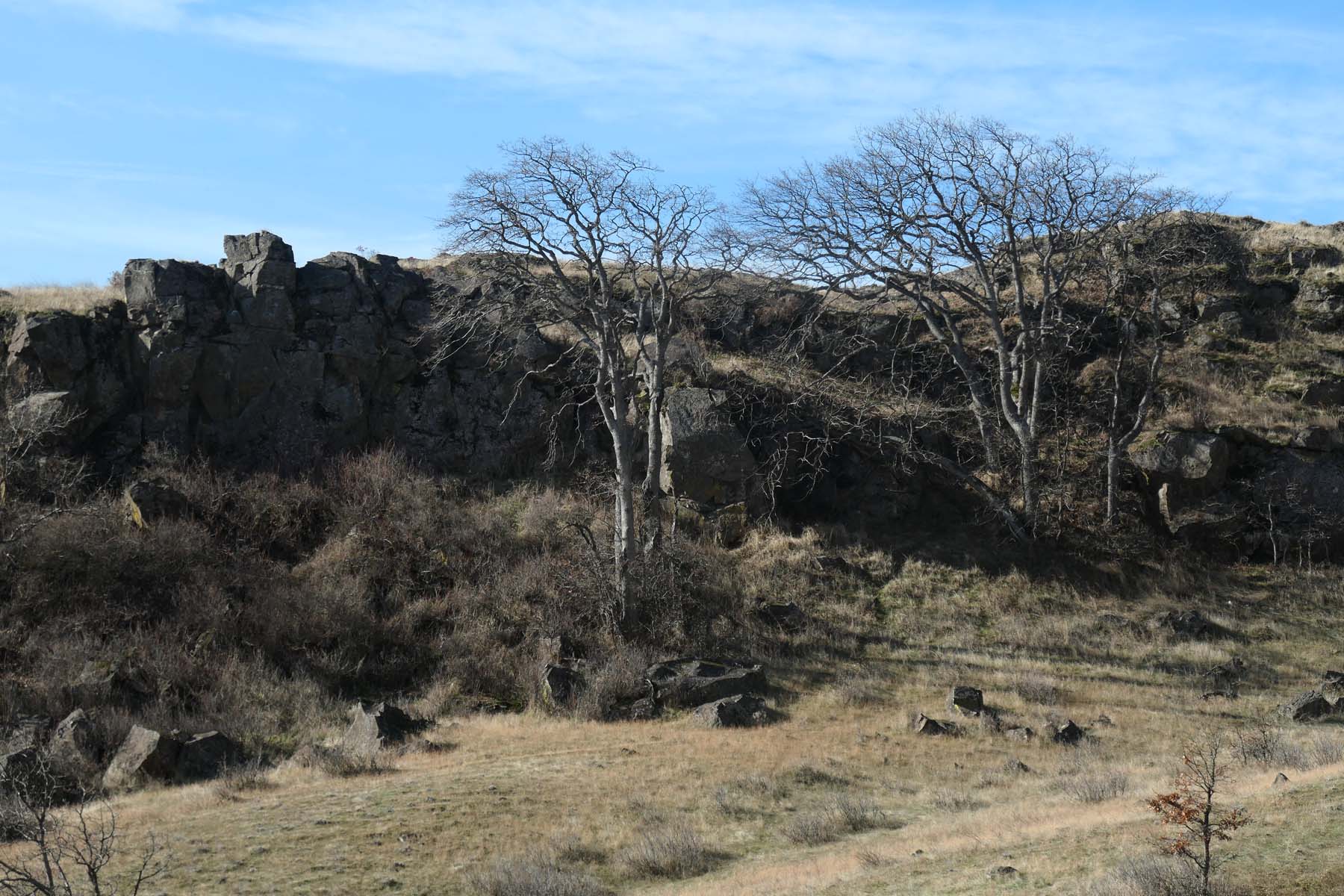
The heat this week made me lounge like a lizard,
occasionally getting up to seek a place further in the shade
too lazy to do much else,
just hanging and watching the insects fly by,
until it was time for dinner.
Every single one of these strangely hot days in May…. refusing to move.
Here is Pink Martini with a tune about the black lizard, leading us hopefully into a cool(er) weekend.
I was primed for color, after watching Yimou Zhang’s recent film Shadow. It is a visual and a psychological master piece from the maker of so many famous martial arts movies, and drew me in, although the levels of violence were at peak. According to the director, the visual scheme is based on the brush techniques of Chinese painting and calligraphy, a world of black and white (and grey) were it not for the flesh tones of the actors’ faces and bodies, and the voluptuous dark blood that splatters the screen whenever swords, knives, arrows, and crossbow bolts start to fly. The cinematography, particularly of group scenes, is stunning, and the psychological dilemmas around court intrigue, peace or war, and the impossibility of love freely given and received keep you drawn in, with a complexity of evil and good that matches the multitudes of grey shades in a bleak black and white landscape where it perpetually rains.
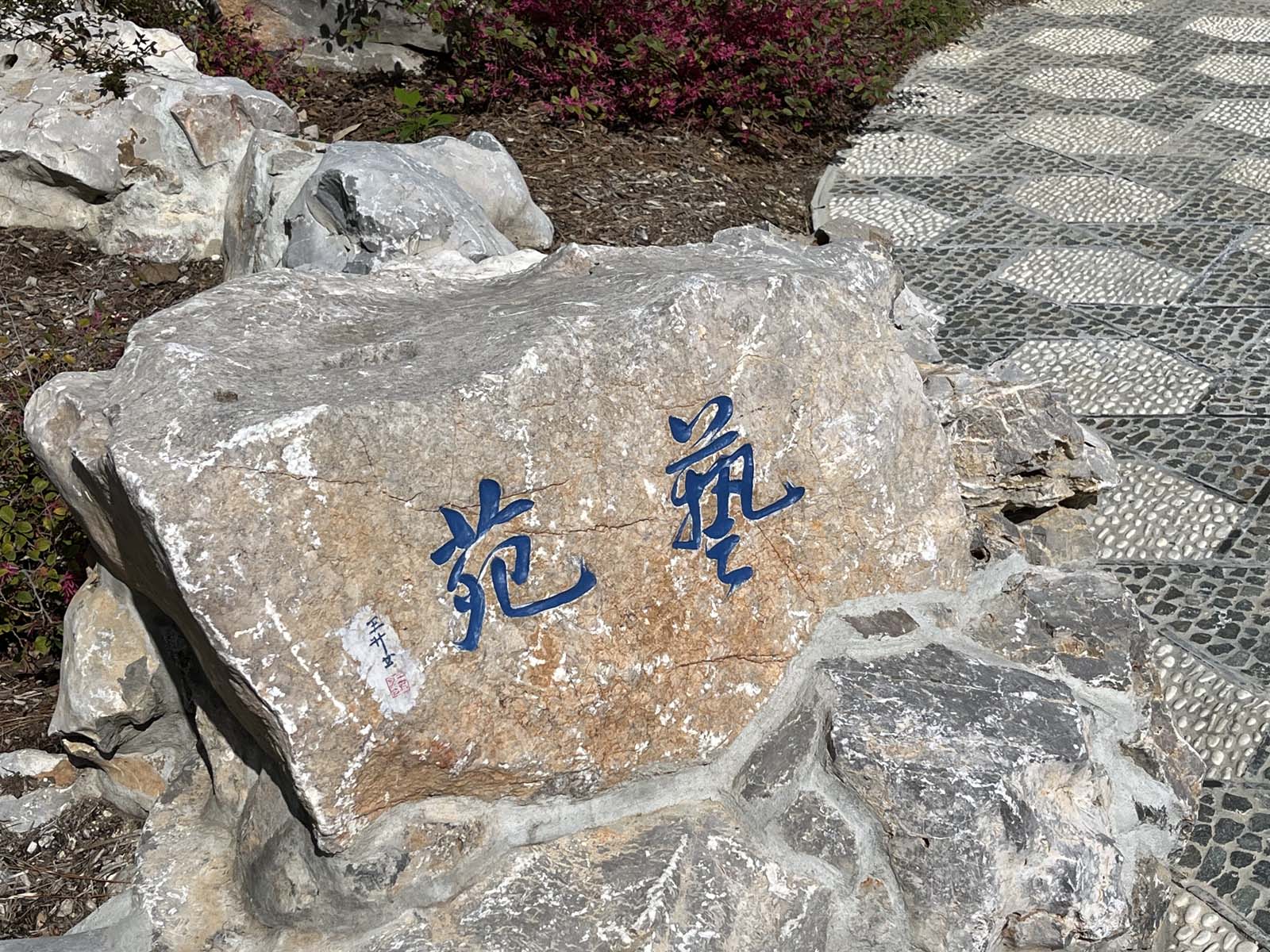
So, I was ready for color, real color, and the universe complied. The Huntington’s Chinese Garden, Liu Fang Yuan 流芳園, the Garden of Flowing Fragrance, was filled with color, both natural and man made. Established in 2008, the 15 acres garden is one of the largest and most authentic classical-style gardens outside of China, according to the website. The link above will allow you to learn more in detail – I will just share the beautiful sights, particularly of the Bonsai collection which was breathtaking.
Here is the Library building:
Pathways lead to a large pond with happy turtle families.
Eventually you climb up to the area displaying the bonsai. I could have stayed there the whole day…
But so much else clamored for attention. There were the touchstones, warm where the sun hit, but completely insulated on all other sides, rubbed blank by exposure to the elements and peoples – invited – hands.
And there was the bamboo forest in all its green glory, its swishing sounds in the breeze and its surprise inside.
On a day sunny last week, my son took me to a beach, El Pescador, near Malibu, where he occasionally fishes.
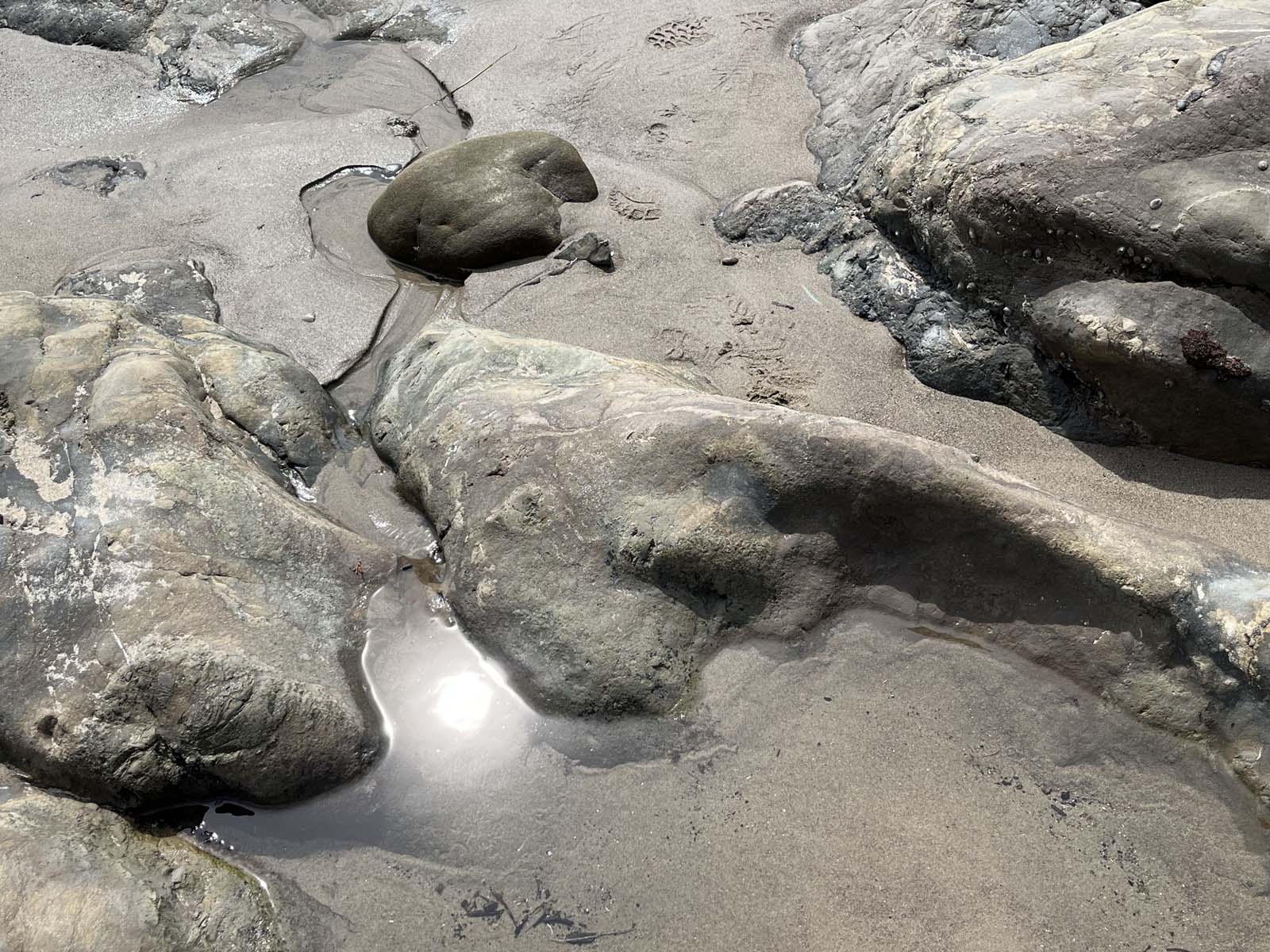
A beautiful spot, with the tide still out, allowing me to explore the rocks and tide pools and all that they house. Every new bird set off a quick heartbeat, from cormorants, to king fisher to whimbrels.
A beach where benevolent pirates decided to make it easy for you to find treasure… DIG HERE!
I was particularly taken by the range of colors, not those of the sea as in Mary Oliver’s poem, but those of the rocks, fauna and flora surrounding me.
Reds, greens, yellows, ochres, turquoise, purple, oranges, grey and blues filled the eyes if you looked closely. Lots of pictures, then, and few words – treading with light feet and a full heart in view of nature, once again.
Tides
Every day the sea
blue gray green lavender pulls away leaving the harbor’s dark-cobbled undercoat
slick and rutted and worm-riddled, the gulls walk there among old whalebones, the white spines of fish blink from the strandy stew as the hours tick over; and then
far out the faint, sheer line turns, rustling over the slack, the outer bars, over the green-furred flats, over the clam beds, slippery logs,
barnacle-studded stones, dragging the shining sheets forward, deepening, pushing, wreathing together wave and seaweed, their piled curvatures
spilling over themselves, lapping blue gray green lavender, never resting, not ever but fashioning shore, continent, everything.
And here you may find me on almost any morning walking along the shore so light-footed so casual.
By Mary Oliver,
From A Thousand Mornings, 2012
The stone formations and differing colors never cease to amaze.
Here is a musical offering to the oceans from around the world.
Walk with me. A first exploration of a neighborhood, with many more to come, I’m sure. Share my pleasure at discovering diverse sights, some funny, some spectacular, some moving, all embedded in a long history of a place that was originally inhabited by the Hahamongna (or Hahamog’na) tribe of the Tongva people. Spanish colonialist built the San Gabriel Mission a bit southeast of Altadena before they settled Los Angeles.
The Mexican government had dibs on the region in 1826 after they had claimed independence from Spain, before it came into the possession of the US in 1848. A 14,403-acre area called Rancho San Pascual* was given to Mexican citizen Juan Maríne in 1834 as a land grant. The rancho (which covered parts of modern-day Pasadena, South Pasadena, Alhambra, San Gabriel, San Marino, and San Pasqual in addition to Altadena,) was eventually parceled into many distinct neighborhoods. (Much of what I learned comes from the Altadena Historical Society, founded in 1935.)
Non-hispanic immigrants started to move into the area that is bounded on three sides by wilderness (the Arroyo Seco, Angeles National Forest, and Eaton Canyon), and on the south by the city of Pasadena, founding nurseries and farms. One of the new nurseries owners, Byron O. Clark, coined the name “Altadena” from Spanish “alta”, meaning upper, and “dena”, a Chippewa word meaning “crown of the valley”. This was a reference to the fact that Altadena was in higher elevation or north of Pasadena, which was founded years earlier. His friends, the so-called “fathers of Altadena,” John and Frederick Woodbury who brought development to the subdivision with hotels, roads, train station all attracting new settlers, were given permission by Clark to use this name in 1887.
Fences echo diversity – from Piet Mondrian to rushes.
Main crops grown were grapes, expanding into oranges, olives, walnuts — and in the early 20th century, dates, avocados, and commercial fruit and ornamental plant nurseries. The vineyards were one of the reason that Altadena insisted on staying unincorporated, since Pasadena which tried to stall the area was ruled by temperance minded Mid-western immigrants and serious about prohibition. To this day, that independence has held, with around 40.000 citizens preferring a looser political structure.
Altadena originally attracted rich folks, in addition to the farmers, with many millionaires building large estates to flee the heat of the summer wherever they lived. An originally 96% white population saw a large change with a subsequent flurry of white flight during the 1960s and 1970s civil rights movement, the Vietnam War protests and issues of school integration combined with the ever increasing, thickening layer of smoke from L.A. that piled up against the surrounding mountains. Non-white residents moved in, establishing Altadena as one of the most diverse places of the region today. Ethnic diversity is reflected in civic life, making for a wonderfully integrated community.
Horses hang out in front yards, unicorns in garages. Chatted with a friendly leather worker who restored a saddle in his garden.
On Sundays, families meet in the public parks for soccer games, taking their picknick lunches and blowing bubbles for the kiddos. You hear predominantly Spanish, but other foreign languages as well. I had just read Clint Smith’s new poem Nomenclature in The Atlantic and was thinking of how language of familial origin gets lost across generations for so many reasons, a topic to be explored at a future point. The facts that words with similar sounds can mean different things, or change meaning with just a barely perceptible sound switch fascinates me to no end – fully aware that none in my family will ever share the complexities of the German language, and not really sad about it, as long as they use the riches of language of their own. But that would be different if the language of origin is at the verge of disappearance, as for so many enslaved tribes, or small minority groups.
Your mother’s mother came from Igboland though she did not teach your mother her language. We gave you your name in a language we don’t understand because gravity is still there even when we cannot see it in our hands.
I ask your mother’s mother to teach me some of the words in hopes of tracing the shadow of someone else’s tongue.
The same word in Igbo, she tells me, may have four different meanings depending on how your mouth bends around each syllable. In writing, you cannot observe the difference.
The Igbo word n’anya means “sight” The Igbo word n’anya means “love”
Your grandmother said, I cannot remember the sight of my village or Your grandmother said, I cannot remember the love of my village
Your grandmother’s heart is forgetting orYour grandmother’s heart is broken
Your grandmother said, We escaped the war and hid from every person in sight orYour grandmother said, We escaped the war and hid from every person in love
Your grandmother was running from danger orYour grandmother was running from vulnerability
Your grandmother said, My greatest joy is the sight of my grandchild or Your grandmother said, My greatest joy is the love of my grandchild
Your grandmother wants you present or Your grandmother wants you home.
In any case, hearing everyone’s supportive screams during the game produced joy – like any sense of community in action. Kids getting ice cream, just dropping their mini scooters, people proud of their old timers.
And since today is International Women’s day I’ll celebrate one of the strongest female wordsmiths of the English language and equally strong champion of community, MacArthur fellow Octavia E. Butler, who lived and is buried in Altadena. Here is funky music compiled in her honor.
Facing west from California’s shores, Inquiring, tireless, seeking what is yet unfound, I, a child, very old, over waves, towards the house of maternity, the land of migrations, look afar, Look off the shores of my Western sea, the circle almost circled; For starting westward from Hindustan, from the vales of Kashmere, From Asia, from the north, from the God, the sage, and the hero, From the south, from the flowery peninsulas and the spice islands, Long having wander’d since, round the earth having wander’d, Now I face home again, very pleas’d and joyous, (But where is what I started for so long ago? And why is it yet unfound?)
by: Walt Whitman (1819-1892)
Departure Day in PDX
I have always related to the feeling that (most) travel implies search; even if you can’t quite name what you are searching for: you do know if you found it or not. It might be the thrill of adventure, it might be vast increments in knowledge about the world otherwise unavailable to you, or, as was regularly true for me, new insights into who you yourself are, when taken out of your habitual context. You might or might not like what you discover, but there you are.
Stop for a Covered Bridge (1907/1945) originally fording the Willamette river – now an interpretative center for the history of the region before the Dexter Dam flooded the area.
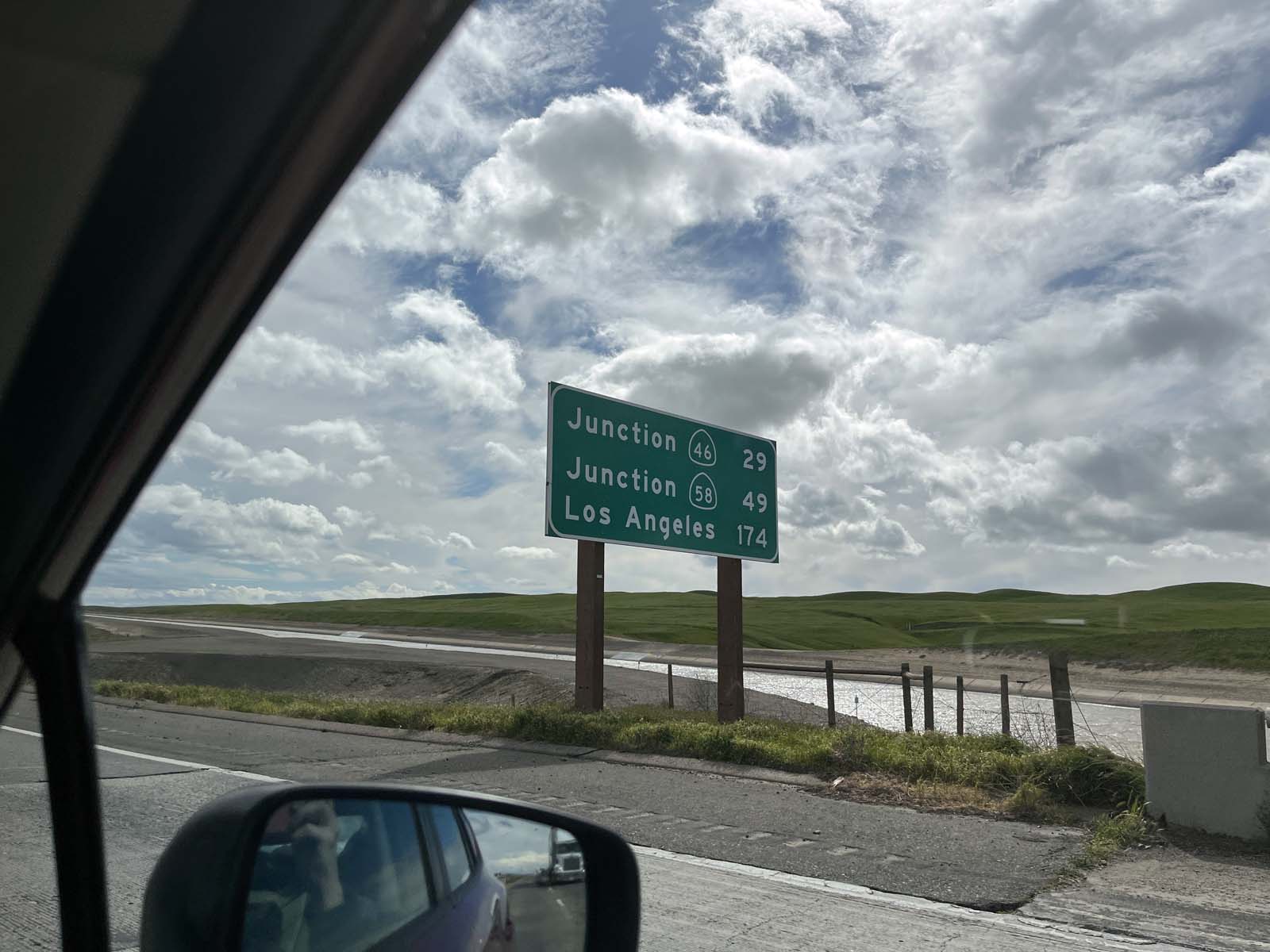
All of this still applies even when you travel primarily to be with someone, if the journey takes you to a place that is sufficiently different from the one you come from, as is the case here and now, in Southern California. Really, the entire drive down once again affirmed the incredible spectrum of landscapes this beautiful continent offers.
Closed pass over Mt. Shasta re-opened the next day. Plowed snow and abandoned trucks on the right.
It was not without challenges. What looked like a sunny day after a safe escape from the snows of Portland, turned into a nail biter. Winter weather closed more southern portions of I 5, forcing an unanticipated stop in Ashland, OR. Luckily we found accommodations.
Major damage to blossoming fruit trees once entering the plains. I wonder how much the weather will hurt a region dependent on agriculture. It is not just the break from the load of the wet snow, or the freeze. The heavy rains probably decimated the blossoms a lot.
Not what you expect the California’s fruit bowl to look like…
Rains and thunderstorms made for intense navigation out of San Mateo, the next stop, once yet another closed part of the Highway across the San Gabriel Mountains reopened. But no ice and snow on the road, at any time, with plows working overtime.
Crossing the bay in San Francisco.
Getting greener once south of San Mateo, although the storm clouds gathered and opened their spigots eventually.
Flooding along the road and cold cows….
First palm trees appeared, whipped by win
as did miles of fracking for oil.
Green hills giving way to snow-capped mountains along the stretch of I5 called The Grapevine.
Then snow flakes in L.A.! Or more precisely Pasadena, where I rented a small studio in lush green gardens that didn’t quite know what to do with 35 degrees.
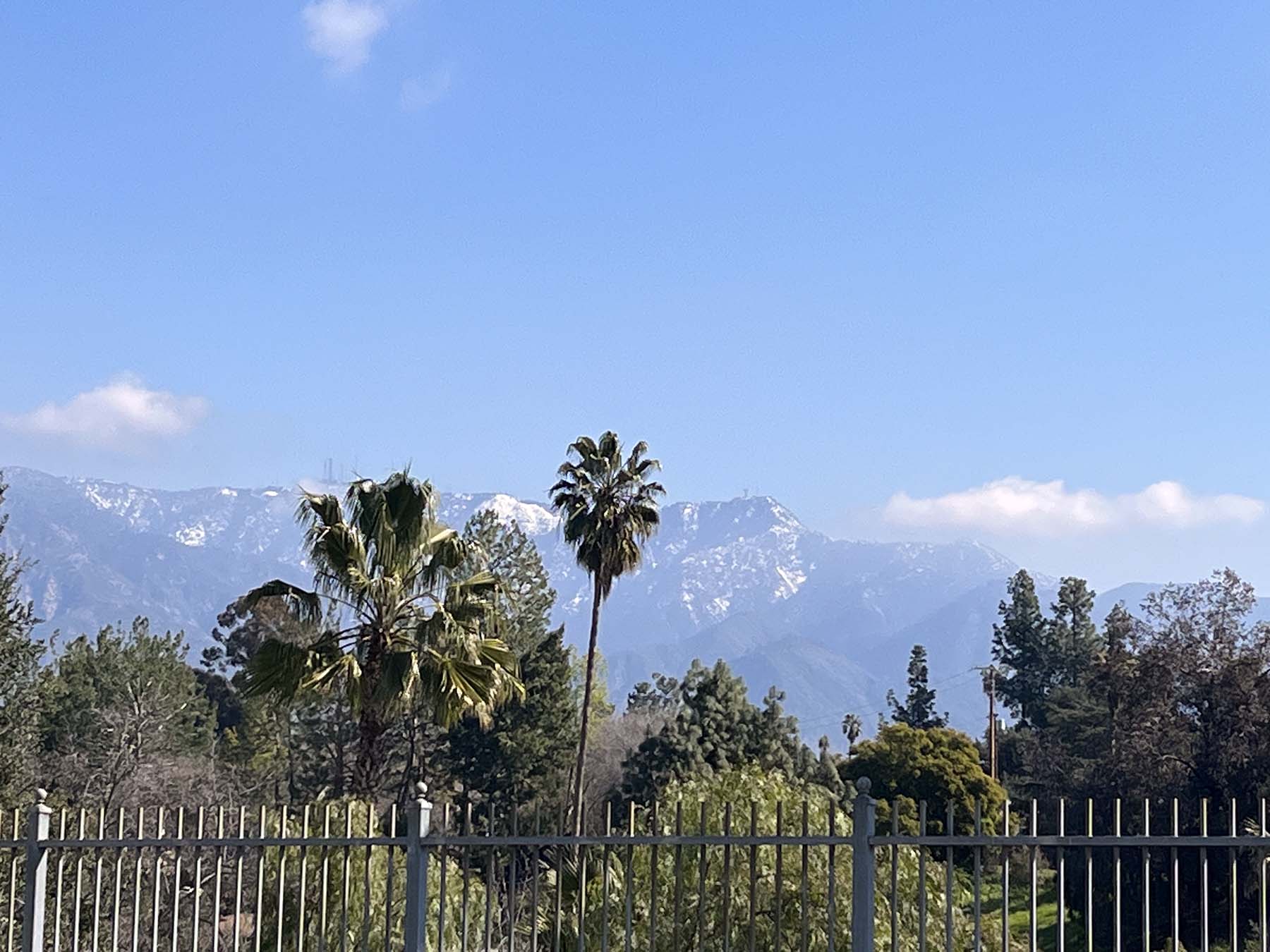
You’ve got the visual diary of the route. Once I’m settled, I will report on the current sights. Here is a teaser from the view out of my window. No bird remains unfound…
Music today is more of an introduction to the diversity of immigrants and their folk music (16 languages) of California. A fascinating project in the 1930s that withstood the xenophobia of the time. Here is a link to the Library of Congress where you can choose which of the above mentioned music you want to listen to.
Pull up a chair. We are not walking today but looking out of my window, something I was forced to do most of last week since I had to navigate the consequences of a fall. (All good now, no worries.)
I resumed photographing the squirrels on my balcony. When you stare out of the windows for hours at a time you can eventually identify a cast of characters by their distinct markings. By now we are on a first name basis.
Meet Fire Ear, my favorite, since s/he’s fearless, happy to look me straight in the eye and defiantly pees into my flowerpot during visits. Every single time.
Then there’s Mohawk, whose tail is either fashionably barbered or the proud emblem of victory in a previous fight.
Nipped Ear has obviously been victorious as well, and is aggressively defending his position at the peanuts when other squirrels arrive.
Red dot is the leanest of them all and shy,
Butterball only appears when the big guys have had their share,
and occasionally there’s an enterprising Baby.
The word squirrel is Greek in origin: it comes from skiouros, from skia, meaning “shadow,” and oura, meaning “tail.” When they sit up and move their tail straight one could think of it as a bit of an umbrella, I guess.
There are a whopping 200 species across the world, all born altricial, or completely dependent on their mothers for the first three months of their lives. They hoard food in caches for lean times, able to dig up stuff even under a foot of snow. Some 25% of those stores are lost to raiders, some are never dug up, which in turn helps to grow new trees, in theory. Not in my flowerpots, where nuts disappear en masse.
They are crepuscular, that is most active at dusk and dawn, so they can hang out when it gets hot during the middle of the day. They also sport hyper mobility (they can rotate their ankles by 180 degrees,) which allows them to climb in amazing ways, with forearms stretching, while the backless are anchored to the tree limbs. Oh, and their teeth never stop growing. Good thing, too when your perennially wear them down on hard nuts.
It brings me such joy to watch them, prohibitions to feed them close to the house (they might start nesting in the rafters) be d-mned. The poem below could not be more apt.
Checking out what’s inside the house!
Here is a field recording of Squirrel Flower – longtime readers might remember the location, deCordova sculpture park in MA, I wrote about it here.
Hike with me. Pack the sunhat, yes, I mean it. If you are lucky we encounter another windless, cool but sunny day that brings the landscape into sharp relief and makes for long shadows.
The hike leads up to an old cherry orchard with a single remaining tree, on the Washington side of the Gorge, a longish hour’s drive straight East from PDX. I did the whole 5-mile loop some years ago, this time managed 2/3rds of that which counts as a grand achievement given the steep inclines.
The views of the Columbia river and the basalt cliffs are spectacular, once you up there after parking at river level.
The screes are impressive, walking on the unstable stones path is another matter. Not so much dangerous as simply requiring tons of concentration that you don’t loose your footing. Much time spent with eyes on the ground when they should be scanning the surround for its stark beauty.
Should you be so lucky, you’ll see a bald eagle flying in the distance just when you look up, eventually settling in one of the dry oak trees that dot the hillsides. If you quietly approach, you might find flickers as well, perfectly camouflaged against the lichen covered rocks. And always, always, ravens.
During the breaks to catch our breath, my fellow photographer and I talked about how differently serious photographers approach the views of the landscape.
What for us is still a marvel, a breathtaking exposure to beauty no matter how much affected by human habitation and intervention, is for others a grievous example of the loss of all that was pristine.
Some long for untouched nature, while I certainly am grateful for the roads and tunnels built into the mountains so I can reach meadows that are crisscrossed by paths carved by men, and orchards built into oak tree habitats.
Which is, of course, not to say that we should not be stewards of the earth. Plenty of reminders all around – the drought is visible, even this early in the year,
the river low.
Evidence from where we looked down the promontory confirms that we continue to ravage the planet – trains carrying oil or coal that traverse the Gorge endanger us all. Coal trains pollute the air, contaminate the ground and water with coal dust, and contribute to climate change. Oil trains endanger lives and environment with their potential for accidents. In 2016 a 96-car Union Pacific train carrying highly volatile Bakken crude oil derailed near this location, setting off a massive blaze. 47,000 gallons of escaped oil, 2,960 tons of oil-drenched soil, contaminated groundwater, and $9 million in cleanup costs, cause by Union Pacific’s failure to maintain the tracks. It was a miracle that the small town of Moisier was mostly spared. (Here is the link, once more, to our documentary film that tells the whole story.)
Of course it is stunning, as always, how tenaciously nature clings on, even under challenging conditions.
I was reminded of a poem by Lucille Clifton that urges us to rethink our relationship to nature and the responsibilities we have not just for our own species but for all others as well. A perfect entry into a week where I will follow up with another hike that shows the effects of climate change in a different fashion.
generations
people who are going to be in a few years bottoms of trees bear a responsibility to something besides people if it was only you and me sharing the consequences it would be different it would be just generations of men but this business of war these war kinds of things are erasing those natural obedient generations who ignored pride stood on no hind legs begged no water stole no bread did their own things
and the generations of rice of coal of grasshoppers
from How to Carry Water: Selected Poems of Lucille Clifton.(2020)s
Music today is an incredibly beautiful tune from Mongolia’s steppes – Wandering, played at about the tempo that I was walking up those cliffs. The whole album Cycle by Hugjiltu 胡格吉乐图 can be found here.
I’ve been to Paris, the proverbial city of love, three times in my life. The first visit, driving there all the way from Germany with a new crush, was supposed to be a romantic weekend – which ended up anything but, holed up in a small hotel room with a severe case of food poisoning. Love didn’t last either.
The second time I spent a week there with my youngest, then around 12 or 13, bursting with love for this young travel companion. He surprised me with unexpected flexibility, adapting to (mis)adventures, king of the Metro once he figured out the system, getting us everywhere we wanted to be. Seeing the world through the eyes of a child new to travel was revelatory.
The third time I was there for a fortnight, all by myself, grateful for the steady love of the one who sent me off. “Do what makes you happy, you need a break. I’ll hold the fort until your return.” I’ve never walked so much in my life. Two weeks spent on foot, exploring the neighborhoods until the light waned and I could no longer photograph.
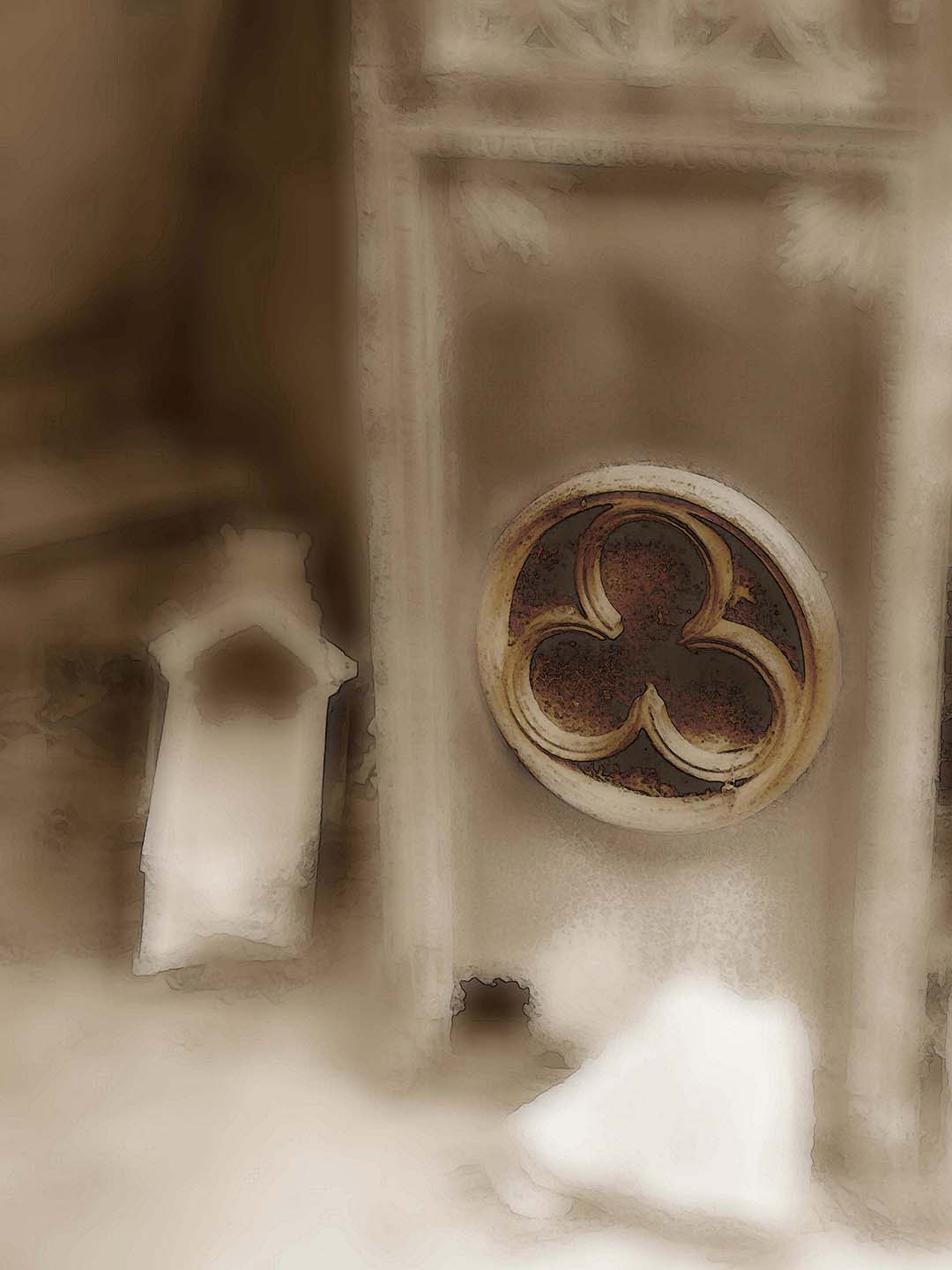
Some of the exploration happened at the various cemeteries, green oases amidst the city’s bustle, and reminders that love lasts beyond a life time. At least that’s what so many of the memorials, in their detailed marble and sand stone sculptures and engraving, seem to promise. Whether we can trust that promise is another matter.
Today’s poem is an exhortation to keep it up.
Alfred de Musset (1810 -1857) a French dramatist and poet from the post-Napoleonic era makes it very clear: you better remember me, I’ll haunt you just in case! He clings to the idea of eternal love, despite the fact that throughout his life time love was always a form of suffering. He had an on/off affair with George Sand during his formative years until he was dumped by her. The loss of her to other lovers inspired much of his creative writing, but also fed into his mental instability. He died young after a life of debauchery and alcohol abuse, an emergence of multiple personalities and eventually alcohol-induced dementia. Not sure how many remember him.
Remember Me
by Alfred de Musset
Remember me, when Morn with trembling light Opens her enchanted palace to the Sun; Remember me, when silver-mantled Night In silence passes like a pensive nun. Whene’er with ecstasy thy bosom heaves, Or dreams beguile thee in the summer eves, Then from the woodland lone Hear a low-whispered tone, Forget me not!
Remember me, when unrelenting Fate Hath forced us two for evermore to part, When years of exile leave me desolate, And sorrow blights this fond despairing heart; Think of my hapless love, my last farewell: Absence and time true passion cannot quell, And while the heart still beats, Each throb for thee repeats, Forget me not!
Remember me, when ‘neath the chilly tomb My weary heart is wrapt in slumber deep; Remember me, when pale blue flowerets bloom O’er the green turf that shrouds my dreamless sleep. I shall not see thee, but from realms above My soul shall watch thee with a sister’s love, And oft when none are nigh, A voice at night shall sigh, Forget me not!
from Poésies Nouvelles (1850)
Here is the spoken French version. I have no clue who did the translation into English, but note that the first and last line of each stanza use different phrases which dilutes the French original where the command “remember!” is repeated verbatim.
More importantly, if this poem strikes you as a narcissistic outcry, let’s give some love to more collectivist action. Yesterday France saw a major wave of strikes and protest against neo-liberal pension reform. The Interior Ministry said more than 1.1 million people protested, including 80,000 in Paris. Unions said more than 2 million people took part nationwide, and 400,000 in Paris. (Ref.) The unions have shown the most unity in decades, fighting against the plan to exploit workers. Here is a good summary article of the political agenda of Macron and allies, once again haunting the working class.
Musset is buried at Père Lachaise Cemetery in Paris, where some of today’s images are from.
Music today is a French chanson about the two lovers and an old Woody Guthrie song about unions, for good measure.
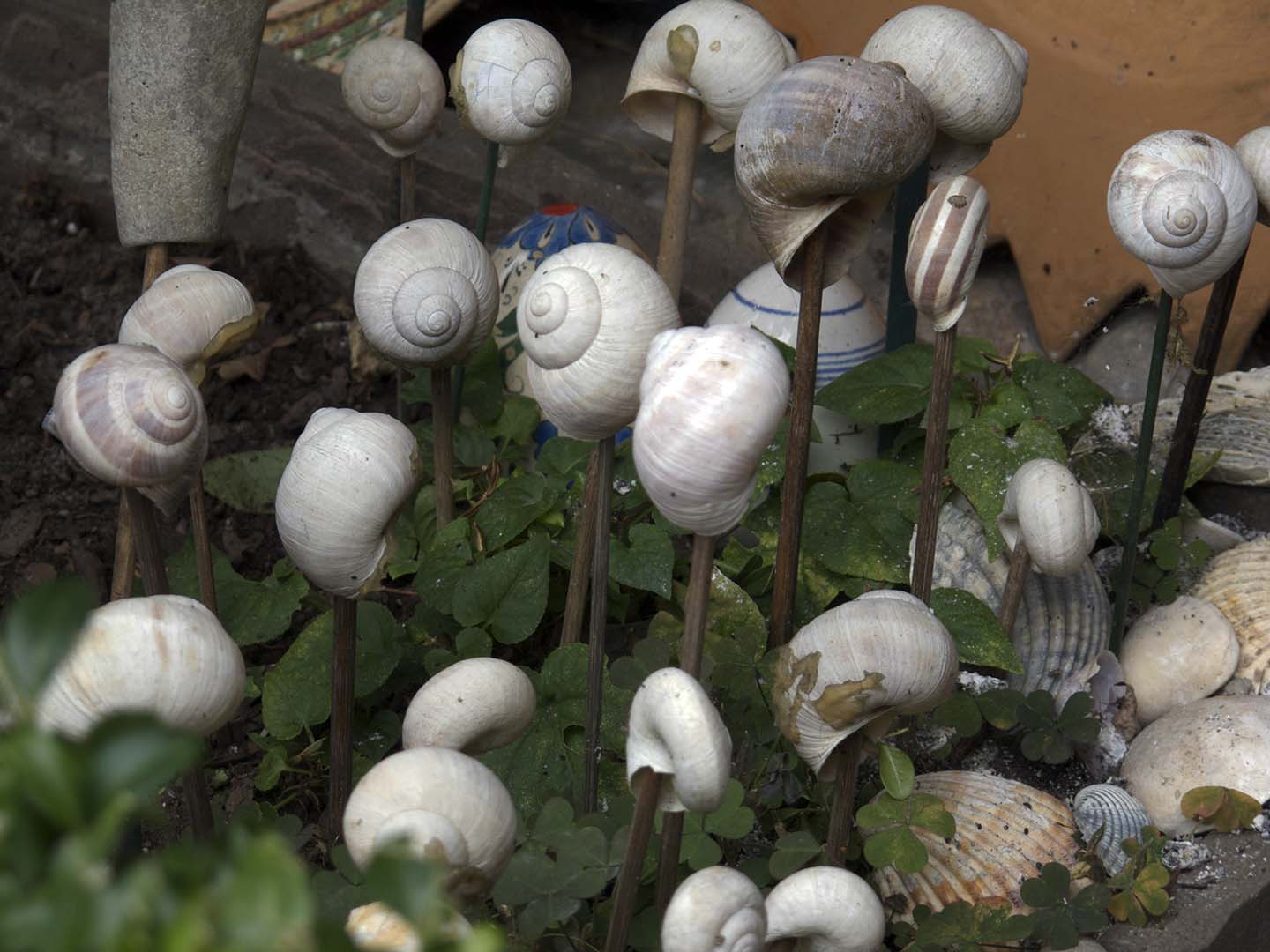
I mean, the analogy writes itself like the onion in a grand conceit though we really are like two slugs in a derelict mausoleum. Google “snails are…” Dangerous. Slow. Destroying my garden. Our jobs and our women.
You, who cannot speak snail, wouldn’t understand how the shell was the gift and curse of diaspora, how our songs and laments resound in our half-remembered houses that we carry to forget, to carry on.
This poem by Elmi, a young British-Somali poet, Ph.D. candidate and musician has been on my desk for a while. I wanted to pair it with photographs I shot some time ago, but it took me ages to find them. Thus is the curse of an unorganized archive. That way, though, I had occasion to read the poem repeatedly, always reacting with a mix of admiration of the poet’s craft and sadness, the way an immigrant’s life and burden so perfectly captured in his analogies. He won the 2021 Geoffrey Dearmer Prize with this work, the annual prize for the best poem published in The Poetry Review written by a poet who doesn’t yet have a full collection.
The snail analogy is of course the Black/Brown/Muslim/Latino immigrant who destroys gardens, jobs, women – ours‘ no less. Next we are redirected to the other’s perspective, in that abrupt break between stanzas, visually mirroring the distance between “us and them.” All this while analogy itself is made a subject in the first line, disorienting the reader in some fashion, trying to figure out if it really writes itself while we are grasping for understanding. It brings us right back to the fact that there is a schism between two worlds, being strangers to each other, with xenophobia so closely related to our disgust reaction to the slimy invaders known as snails.
The snail shell serves as an echo chamber, the repository of the cultural memories of a former belonging, now half remembered, and in need of forgetting to force integration. How could we understand, the loss it implies, and the demands that will never be met to Whites’ satisfaction, we who live here with our jobs, or women and our gardens?
It is all so sparse, so economical and yet so rich in meaning.
It’s dusk. My sons are tall. And one of them became a father this week, starting a new cycle of life. I feel like my heart is encapsulated in light, radiating awe and joy in view of natality, the miracle of birth and new beginnings.
I can’t help but think of how I have been influenced by Hannah Arendt’s writings in What is Freedom on the centrality of beginnings to human beings. In reference to Augustine’s City of God she conveys it is not just the beginning of that new life, but also the ability for each life to initiate something new.
“Man is free because he is a beginning. . . . ‘Initium ut esset, creatus est homo, ante quem nemo fuit.’ [So that beginnings would be, humans were created, before whom there was no one] In the birth of each man this initial beginning is reaffirmed, because in each instance something new comes into an already existing world. . . . Because he is a beginning, man can begin; to be human and to be free are one and the same. God created man in order to introduce into the world the faculty of beginning: freedom.“
In The Human Condition” she writes: “when we speak of birth, we speak not of the beginning of something, but of somebody, who is a beginner himself.” She later describes the possibility of action in this context, and the impact on community derived from plurality. But that has to wait for another day. Right now I can only marvel at birth itself and the existence of someone who has not been in this world but five days earlier. Let’s give that new human being some time to grow before she decides if she wants to participate in the lineage of activism.
I was listening to Arun Ghosh’s new album Seclused in Light when the news of the arrival of this child reached me. (Composed during lockdown, he invented the word as a mix between recluse and secluded.) So much in this music that I wish to be true for her life to come: a clear, melodious voice (his brilliant clarinet), often playful and surprising, sometimes insisting, never shrill. A steady, measured rhythm, never frenetic. An integration of traditions, both across continents and across time, making for a truly international fusion. A mix of spirituality, humor and joy, with an explicit embrace of nature and communal action, and an occasional stoic trait. And, importantly, all written in major keys, sad minor keys making but split second appearances. (Full album – hopefully – here. Two favorite tunes below.)
A life full of light.
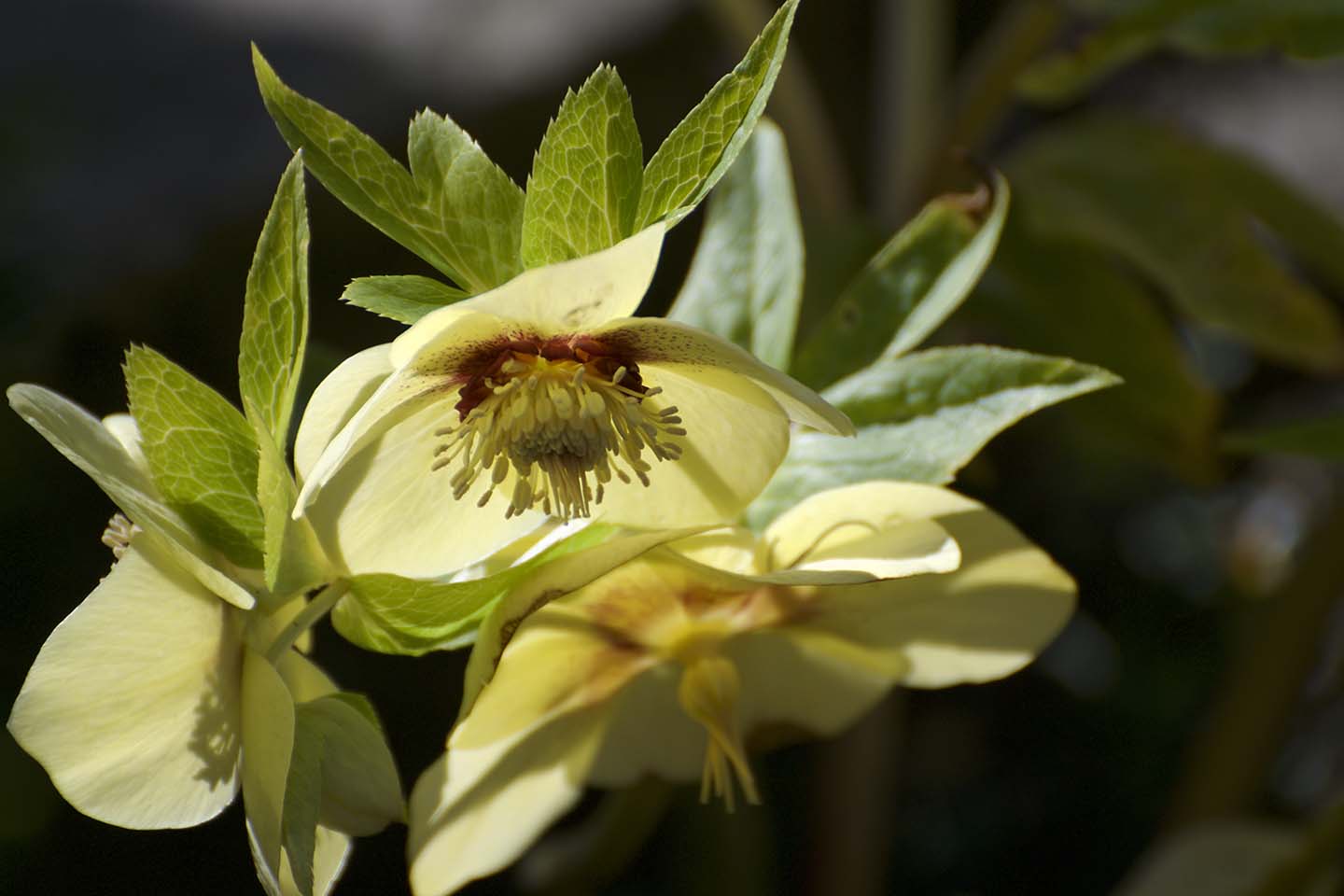
A life filled with beauty, variability and resilience like the hellebores that bloom in my granddaughter’s month of birth (snow, cold, rain and all!)