Browsing Category

Culture

The Punch of Words

Today I’ll offer a random sampling of words that came across my desk in the last few days eliciting feelings – disgust, dismay and delight among them. One bit relates to German history, lessons not learned. The next to Portland, lessons papered over. And the last comes from a completely unfamiliar source but felt so uplifting that I thought I’d share.

Germany: “On today’s national memorial day for the victims of flight and expulsion we remember particularly the 14 million German expellees. Their fate is a warning for the present and the future. #World Refugee Day”

This was posted on Sunday by the most right-wing party in the German parliament, save the Neo-Nazi AfD. The CSU is particularly known for its anti-immigrant stance and hard-line approach to restrictive immigration policies and forced cultural assimilation. Rather than acknowledging the plight of today’s refugees, they bring attention to Germans who lost their homes due to a war that happened 80+ years ago. One that was started by Germany, if I recall. However traumatic the refugees’ flight from the Russians was – and it WAS – they did end up in a (part of their) country of which they were still official citizens with unrestricted rights, where they spoke the language, knew the customs, shared the religion. They were assigned housing with their fellow Germans until they were able to get back on their feet, even if they had to endure resentment for crowding private households. And they were able to go back, if they so chose, to their former regions, and received monetary compensation. – Dogwhistle for Nationalism. Nothing but.

Portland, OR: This was a large advertisement taken out by Travel Portland in Sunday’s New York Times.

And here is a perfect commentary by journalist Leah Sottile that captures every ambiguity brushed over or left out by the ad, revealing the true face of Portland in its current configuration. A worthwhile read – she is pulling no punches.

Finally my favorite for today, something that fluttered in on my Twitter mentions:

Can someone please remember to write an obit sort of like this when it is time for me to catch the bus? Not that I am a woman of menageries, savior tendencies, or approving of glitter; I even have my hesitations about Terry Pratchett.

But this woman was KNOWN for who she was, loved, obviously, for who she was and sent off with an acknowledgement to loss that refuses to bow to despair.

Words, then, that packed a punch.

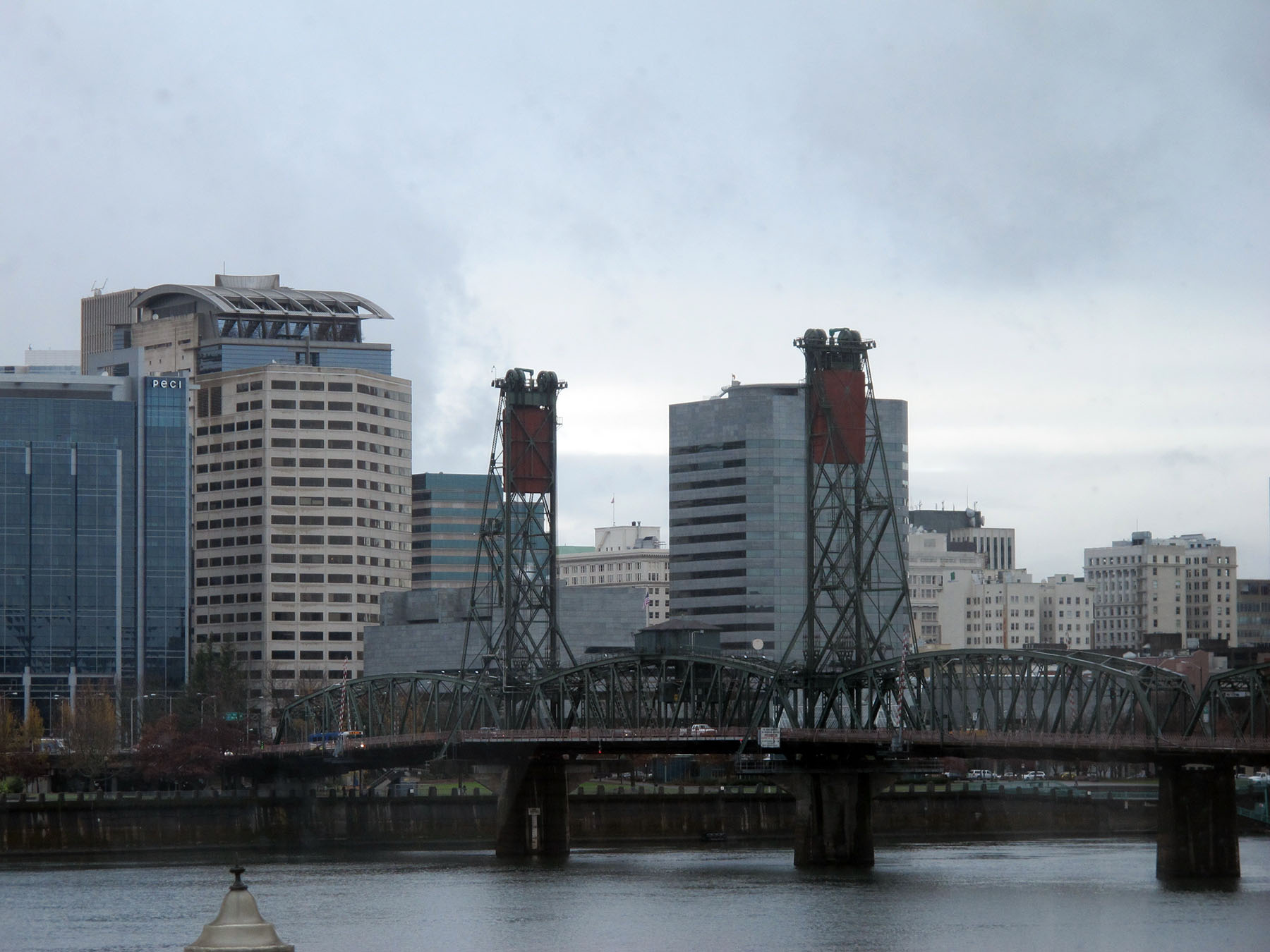
Photographs are of Portland just as TRAVEL Portland would like them…..

Music, in turn, is Mahler’s ADAGIETTO from the 5th Symphony, elegantly analyzed in a lecture excerpt on The Delights and Dangers of Ambiguity by Leonard Bernstein. Ambiguity in music intensifies feelings, quite obviously, just in case we aren’t riled enough yet.

From Micro to Cosmic Scale

Let’s end this week with a smile and a frown given my eternal attempts at balanced reporting.

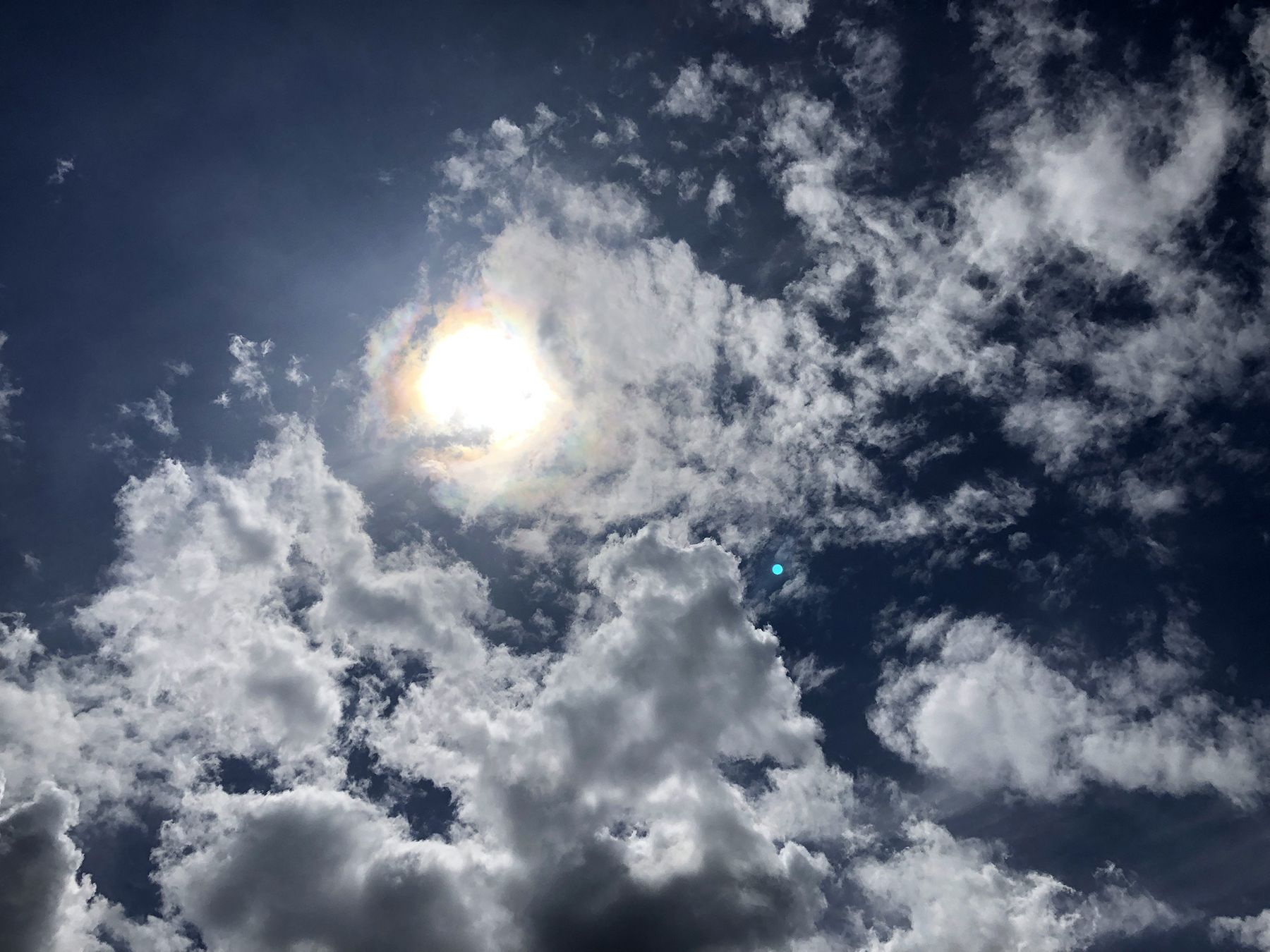
(Photographs, since the topics range from small/close to huge/far, are of things in-between – the clouds I photographed this week.)

Smiles first. A flourishing of miniature scale art offerings is delivered to your neighborhood, or theoretically could be, by Free Little Art Galleries . FLAGs are found in numerous cities across the nation since 2017, many added during the pandemic. Modeled after the free little libraries where used books are offered at cute boxes on our streets, these FLAGs offer tiny pieces of art to be exchanged for your one creations or simply taken home. Or admired. Or smiled at.

These galleries can be spotted in Atlanta,GA, Oakland, Calif.Phoenix,AZ, Hyattsville, Md., and in Eugene,OR, to name a few. One of the most prominent ones was started by artist Stacey Milrany and is located in Seattle, WA. The box contains tiny props like gallery furniture and patrons in addition to constantly changing art, of a quality that regularly goes beyond laypeople’s creative urgings.

That said, I think one of the biggest achievements of these share sites is the invitation it gives to all of us, artists, lay people and children alike, to BE creative. They beckon you in, mostly without quality expectation or control, the small size making access easier than having to paint or draw large works. What encouragement if you see your art has been picked up by someone, a regular occurrence with free offerings.

Of course, not all of them are free. Here in Portland we have a mini gallery at Morrison Street that features small scale works by local artists for sale, exchanged monthly. June was planned for needlework cacti.

And not all of them are found on the street. Miniature art works by notable artists will be exhibited later this month in more traditional surrounds as well. Pallant House Art Gallery in England is curating a major show featuring 80 artists. No trade-in for your own works, I’m afraid….

“Staged in a less than five-foot-long display case, Masterpieces in Miniature: The 2021 Model Art Gallery, will make its debut on 26 June at the English gallery. It will feature new works by high-profile artists like Damien Hirst, Magdalene Odundo, Fiona Rae, Pablo Bronstein and Rachel Whiteread, created over the past year using a variety of mediums, including sculpture, ceramics, photography and painting. Filling an entire room of the model will be a miniature installation by John Akomfrah.”(Ref.)

So why go big if you can go small? Or, and this is the part where the frowning starts, why go cosmic, when the cost attached to that could provide solutions for so many sources of suffering here on earth? I am, of course, talking about the news that Jeff Bezos and his invited brother are going into space for 11 minutes later this summer. He built his space flight company Blue Origin over the last 20 years, and will be on its inaugural flight. You can personally bid (in excess of $ 3.000.000) if you want to join them in July. You’d be among 6000 other bidders of whom we know so far, hailing from 143 countries.

Generally, people can visit the NASA space station (which has cost us tax payers in excess of $ 100 billion,)if you can spare $10 million for each private astronaut mission — for crew time to support flights to the space station, mission planning and communications. It also charges other, smaller fees, including $2,000 a day per person for food. Must get hungry, up there in space. That’s down from $55 million that early space visitors laid down.

So much wealth. So much waste.

I join in Gil Scott Heron’s assessment expressed below:

Bezos &Co. are of course more likely to pump this Whitaker piece through the rocket loudspeakers…

But they are unlikely to take the kind of luggage that their wealthy predecessors had schlepped by the help. A new book delves into the Louis Vuitton archives to describe a history of early travel by the 1 %… little has changed about privilege, I guess, other than the speed and distance covered. Because you can.

What could have been, coded in memes.

Humor me. After all I spent hours in front of the TV yesterday, with goosebumps rising and tears falling. Tears of relief, as well as of exhaustion, as well as frustration because all of the optimism on deliberate display will only bring us what’s truly needed if it is followed by action.

Action that will have to be more than mild remodels of the status quo.

The luminous Amanda Gorman, aware that history has her eye on us, said it softly: There’s always light…if only we were brave enough to be it.

Back to the fun stuff: when Lady Gaga emerged to sing (exquisitely) the National Anthem, I almost spilled my coffee. Was that outfit some A+ trolling of a Babushka costume reminiscent of a Slovenian model/escort/Flotus? Did that peace dove on steroids make it safely through the metal detectors, not classified as a martial arts weapon? I learned that the outfit was Schiaparelli (elite French couture,) that it was not an attempt to cross Heidi with the Hungergames, and that she did not accidentally braid her scarf into the golden locks….

It was all so quickly made irrelevant by the tears shed in gratitude for the fire captain Andrea Hall signing and speaking simultaneously the Pledge of Allegiance.

And then there were tears of regret, for what might have been in times less polarized than ours and more willing to fight radically for distribution of justice and redistribution of wealth.

The image of Bernie Sanders sitting in his Parka and hand knitted Vermont mittens at the inauguration as if he had interrupted his run to the post office, was cherished not by me alone. A man true to himself. Honoring this icon was a river of memes that flowed throughout the day.

He was not given a cabinet position as Labor Secretary, but remains in his old job, Biden too worried we would otherwise loose the Senate. Let us celebrate courage and relentless fighting, which will happen no matter which position he holds.

Today’s music was written by Verdi in support of unification of another country: that of the Italian States, a process referred to as the Risorgimento (resurgence) which proliferated in the mid-19th century and was finalized in 1871. Masses (4500!) singing the movement.

Knowledge, coded in images

I overheard that someone whose name shall no longer be mentioned, asked for 2 billion dollars to establish his presidential library. Hah!

That made me think of libraries in general, how I miss to be able to browse them in person. Nowhere in all of Portland was I so regularly surrounded by a truly multi-cultural environment. My neighborhood library had lots of patrons from the nearby mosque and synagogue, has a great section of Spanish language books for the Latino community and the friendliest help ever to guide novices with computer use, frequented by visibly old(er) people, young job seekers and language learners alike. Lots of languages could be heard from mothers shushing to their children during story time.

It is also amazing how much access libraries provide to things you did not even know existed. I recently learned of the Smithsonian Libraries Website, for example. They have, among other offers, a Digital Collections link where you can access over 35,000 digitized books and manuscripts (available in either our Digital Library or as part of the Biodiversity Heritage Library) as well as digitized photo collections, ephemera, and seed catalogs. If you open this link you get an idea of the mind-boggling breadth of the collections. The Image galleries alone are worth a visit.

I mean, how can you not get sucked into topics like the Historical Trade Literature for Sewing Machines that opens with the advertisement below from the Standard Sewing Machine Company in Cleveland, Ohio?

How about a dishwasher? A washing machine? Guaranteed childcare?.

What brought me, specifically, to the Biodiversity Heritage Library was the incomparable Maria Popova introducing an interesting naturalist in one of her latest blogs. George Perry, together with his engraver John Clarke, published Conchology, or, The natural history of shells at the beginning of the 19th century. If you click the picture at the very end of the blog, you get to marvel at the beauty and detailedness of their work. (Somehow when you open that website it does not allow you to get back to my writing. That’s why I put it at the end.)

The drawings are testimony to a man’s passion for exploring invertebrates and leaving us with a record of nature as it once existed. Paving the way for Darwin, some decades later.

Not much is known about Perry, other than that he lived in or near London, England, and had two exquisite books to his name, the one introduced here and anther one, Arcana – or the museum of natural history,(1810) which included animals of many species.

Conchology (1811) shows only shells, printed by an expensive hand-colored aquatint process, with little text other than an index and an introduction. Perry was a remarkable artist, but not all drawings in the folio are by him, and some which he drew were copied (with acknowledgment) by him from other artists. He sourced his shells in various collections, from 29 private collectors and museums, as well as his own.

The folio was neglected, maligned, ridiculed, partly by professional jealousy, partly because some of the engraver had added fantasy elements of detail and color, partly because people hated the way he named the specimens. There were established, competing camps of naturalists who despised each other and it seems Perry had the bad luck to not fully belonging to either as well as being held responsible of what his engraver had thought to add. (Ref.)

I can’t judge the scientific quality of the work, obviously. I can just revel in the beauty. Brought straight to you by the efforts of a library to implement its mission, and draw from its immense holdings and archives.

Now what was that about a presidential library?

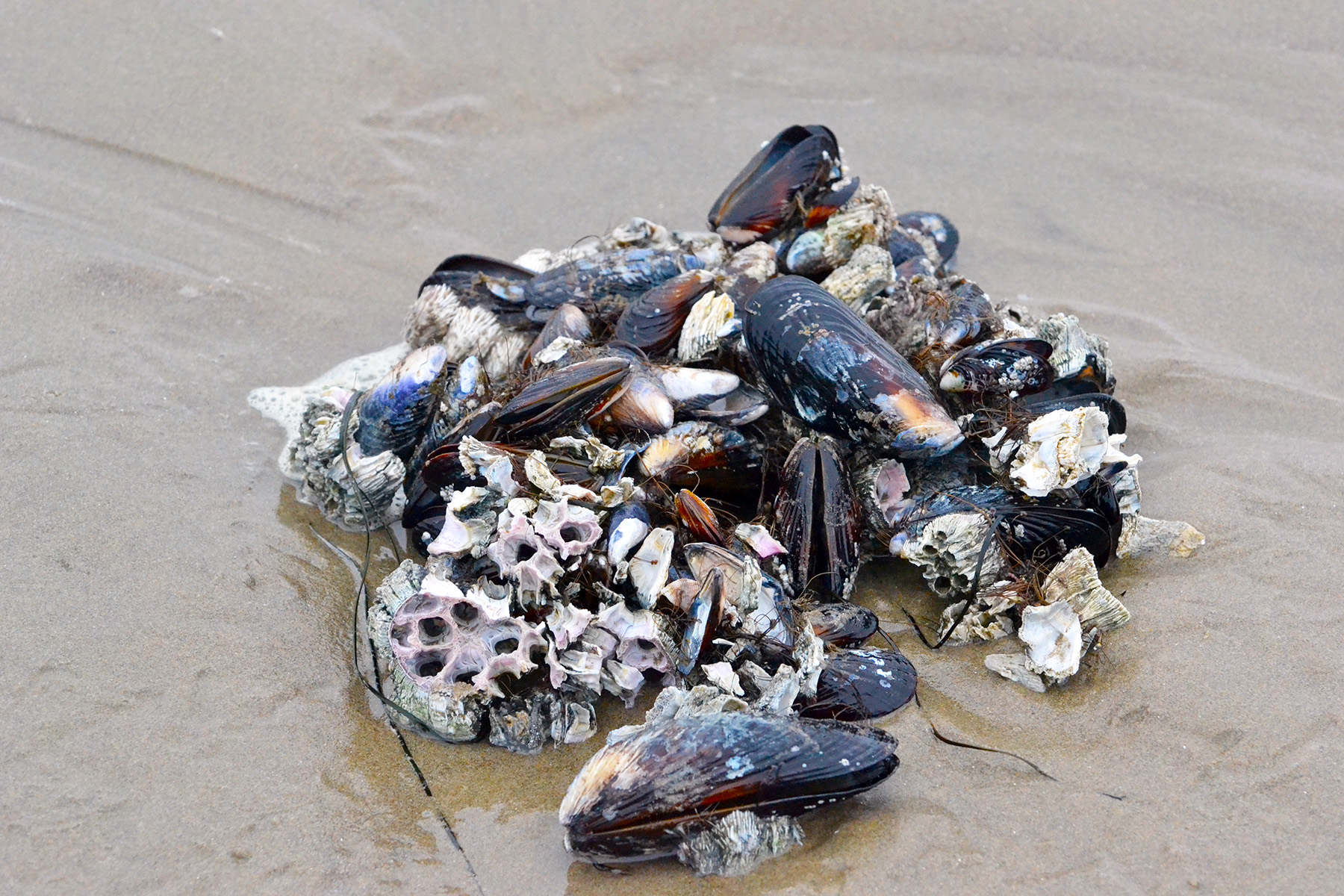
Photographs today are not from collections and museums, but straight from the beaches at Astoria, Manzanita and Newport, OR.

Music brings us to the ocean.

Click on this picture to see the seashell collection.

n262_w1150

Of Presepi and Snark and Pique

I got scooped by the New York Times. Well, I had started to write about a tempest in a manger on Thursday and then this article about it appeared in the NYT on Friday: uproar over the Vatican’s choice of a publicly displayed Nativity Scene.

The Italian word for creche or nativity scene is presepe, Italy the latter’s place of birth, as well as the place where controversy erupts over the Vatican’s annual choice of what they display in St. Peter’s Square at this time of year.

The 2020 scene is made up of large, somewhat abstract, cylindrical ceramic figures made by high schoolers in the late 1960s to early 1970s. Displayed are a few pieces of a 54-statue collection which include a blonde Mary, the Magi, a bagpiper, an executioner, a shepherdess holding a jug and even an astronaut, meant to reference the history of ancient art and scientific achievements in the world. (All images of the creche are from the articles below.)

The Vatican has called the Nativity scene “contemporary and unconventional,” hoping it would entice viewers to dig deeper into their faith and understanding. The presepe is “infused with contemporary events from recent years” that include “setting foot on the moon, the Second Vatican Council and the abolition of the death penalty” (the latter two themes reflecting matters being close to Pope Francis’ heart). (Ref.)

The “milder” criticisms attack “its post-modern artistic look, which critics say radically breaks with traditional Nativity scenes and fails to evangelize or inspire others about the mystery of the Incarnation.”  (It sure inspires about the mysteries of high-school art, though, don’t you agree?)

Others complain that in this year of all years we need something traditional and tender to counteract the constraints on Christmas as usual.

Then there are those who assume the negative reactions are simply the result of not understanding the Nativity scene: “this was something that Pope Francis commissioned. And obviously, the whole anti-Francis brigade went berserk.” (Details in the link below)

None of these compares to our very own Breitbart News, though, linking to a website Now the End Begins, which calls the Pope the anti-Christ:

“THE NIGHTMARE BEFORE CHRISTMAS: VATICAN UNVEILS VISUALLY REPULSIVE 2020 NATIVITY SCENE THAT WOULD BE RIGHT AT HOME IN ANY HORROR MOVIE”

The Bible tells us in Isaiah 14 that Satan wants to be just like God, wants to take everything God has, pervert it, and present it as deception. If Satan was to design a nativity scene, it would be unsettling, repulsive, ghastly, creepy, and it would stand in utter opposition to Almighty God. This is exactly what Pope Francis and the Vatican have given the world, a nativity scene that glorifies the Devil in this crazy year of 2020 where the Devil has been given a charge to begin preparations to rule the world for 7 short years during the time of Jacob’s trouble.

Still read by millions of people. I must admit this was the first time I actually went to a site like this, and felt like I landed in a truly unknown world.

Unknown to me is also the Abruzzo region of Italy where the traditional pottery, developed by Benedictine monks in the middle ages, is centered around the town of Castelli. It is where this year’s presepe was created at the local art school, Liceo Artistico F.A. Grue some 50 years(!) ago, trying to educate kids in the traditional crafts of the region.

Maiolica, a ceramic bathed in a tin-based opaque white glaze and painted with bright colors became a trade mark by 15oo. The town made a name for itself with “historiated,” or story-telling ceramics decorated with popular scenes from religion and mythology.

(This plate could be yours for a trifling $3,321….)

Watercolor-like landscapes that treated the white glaze like a blank canvas also delighted the noble classes who consumed these pieces.and is now collected in museums around the world, The Met in NYC, the Hermitage and the Louvre included. (Links lead to display of their maiolica exhibits.)

A far more extensive and perhaps informative collection can be found in the local museum, Castelli Museo Ceramiche which was luckily spared by the 2016 earthquake.

Back to the presepi, though, in this week’s quest for seasonally appropriate cheer. They light up in some parts of Italy, and include tons of references to present-day issues and stars, from Milan to Naples. Here is a lighting ceremony in Liguria.

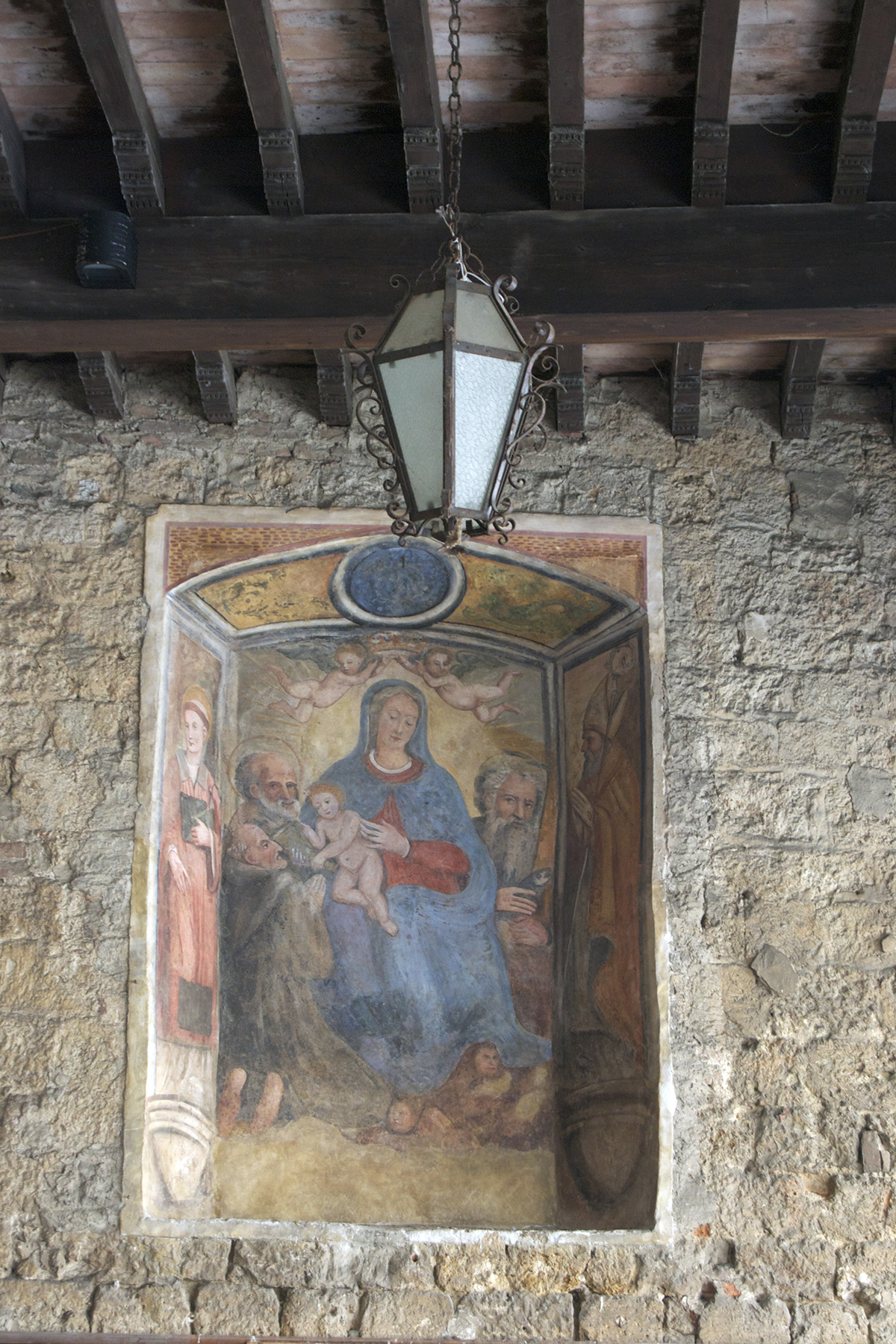
Photographs today try to capture the range of Nativity scenes I encountered in Italian churches across my travels. Cylindrical they ain’t….but they all stand for something that still carries with it a sense of hope.

Of Trains and Excuses

With Christmas upon us, I tried to find some cheerful sights that bring us into a mood appropriate for the season and/or the message of the celebration.

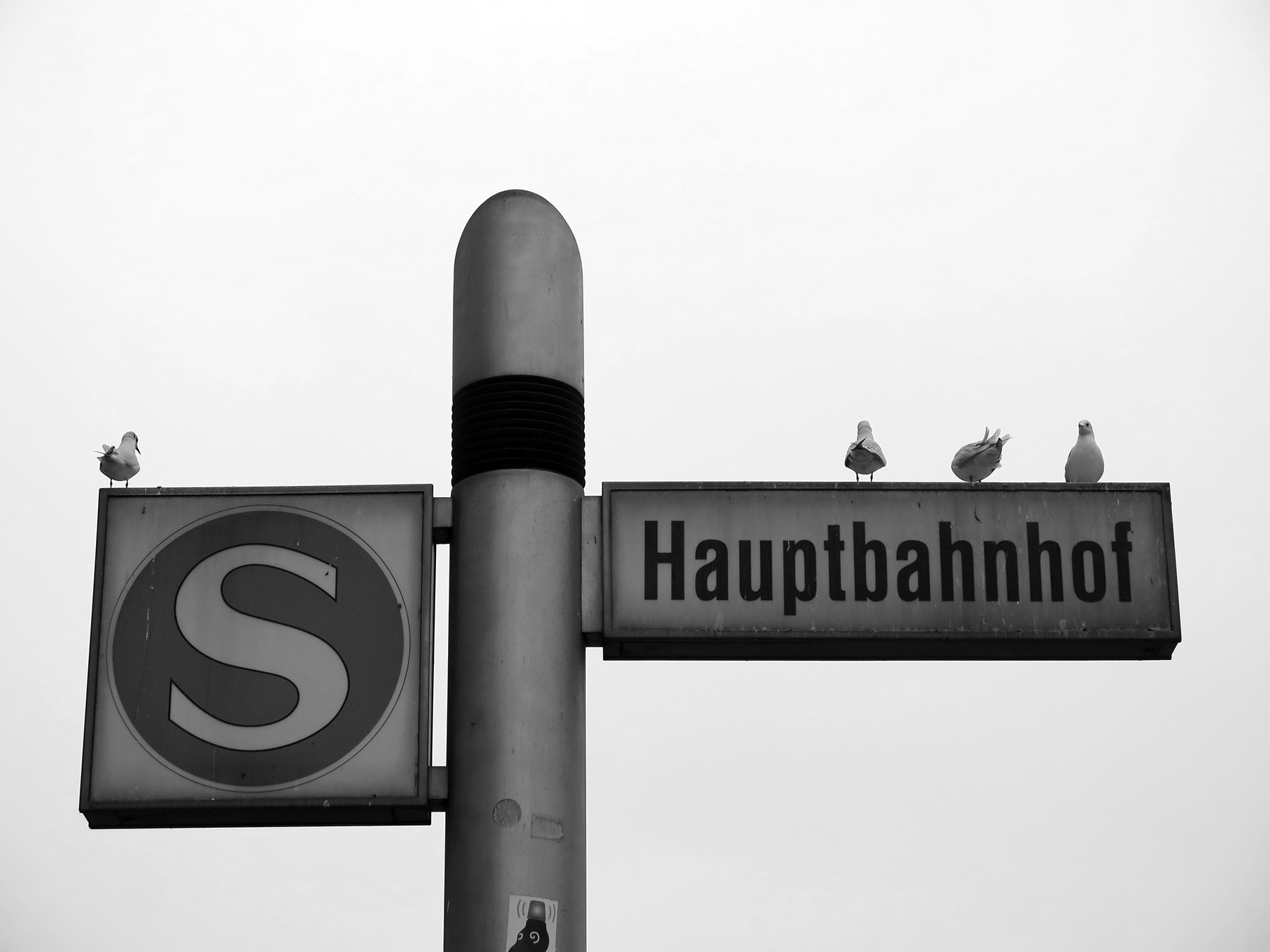
Hamburg Central Station, built in 1906.

Today’s pick was the jingle above, a clever little scenario which requires that you push the unmute button, so you can hear the music. It was produced by Miniatur Wunderland (actually from 2 years back,) an attraction in Hamburg, Germany, which sports a model area of over 2,300 m2 (24,757 sq ft). The exhibit includes 1,300 trains made up of over 10,000 carriages, over 100,000 moving vehicles, ca. 500,000 lights, 130,000 trees, and 400,000 human figurines.

The world’d largest miniature railroad set is, of course, now closed, due to the Covid-19 lockdown to which Germany committed at last. But you can still explore all of its little worlds virtually.

Here is the website. It has an option for English, and if you click on any of the geographic names it shows you a bit of that “world.” Or the way German engineers envision those worlds…

Here is a train ride through the Rocky Mountains during x-mas….

Make sure you also visit the imaginary place of Knuffingen, capital of hearts, with its favorite destination of arsonists, Löwenstein Castle – I kid you not.

It’s not exactly a museum, which is what I usually cover. I felt, though, that it deserved some exploration, because these kinds of collections celebrate something that is increasingly rare to find: passions or hobbies that run across different sections of society and/or nationalities. This kind of cross-section might enable people to talk to each other when they otherwise would not. It might be about the trains first, but it could eventually humanize the vision of the other. As I said, clinging to cheerful thoughts this week….

Speicherstadt – a warehouse area around the harbor where the Miniature Wonderland is housed.

The old trade and merchant areas areas around the harbor have given way to gentrification, as everywhere else in the world.

Model trains were a typical Christmas present in the late 50s and 60s in Germany, for boys, of course, and often usurped by their fathers. It is a hobby that has strangely not gone out of style. Just this summer the Wallstreet Journal had a long piece on the implications for real estate (people build these large rooms around their passion) and the insane money that gets stuffed into these created worlds. These days new miniature locomotives retail for up to $1,800 each, while collectible antique trains can sell for $8,000 each. Better start saving up.

This is a different train station, Dammtor Bahnhof, built ca 1866.

Tales that model building makes you smarter or improves your mental health are to be taken with caution…have you ever heard the screams of frustration when the glue didn’t hold or a piece broke off? Which is why I enjoy visiting these engineering wonders in museums – here in the Northwest you can, under normal circumstances, admire midget trains in Tacoma, WA, at the Washington State History Museum. Worth a trip!

Today’s topic really serves as an excuse, though, to look at my photographs of the city of Hamburg where I lived before coming to the US, including the Speicherstadt, the area where the exhibition is located, and two of the main train stations where I arrived and departed innumerable times. Another cheerful thought: there WILL be travel opportunities again!

For music it shall be Auden today….

Haight-Ashbury

This is the last of my on-site San Francisco reports, I will be driving home next week. It covers part of a neighborhood, Haight-Ashbury, that was synonymous with San Francisco for us European kids in the 60s, home to musicians, hippies, flower power and other cultural aspects that defined some of our youth.

It was the America of our imagination and our dreams, naive as we were, having no clue how diverse a country this is, how diverse even a single city like San Francisco, in its multiple neighborhoods.

More importantly, it is the neighborhood where my local land-lady and overall fairy godmother grew up, a woman who is the definition of grace, social justice- and civic – engagement, as were her parents and her 8 siblings, by all reports. Thank you for all you did for me in these difficult months, Purcell! Your wit, your wise counsel and your cooking sustained me.

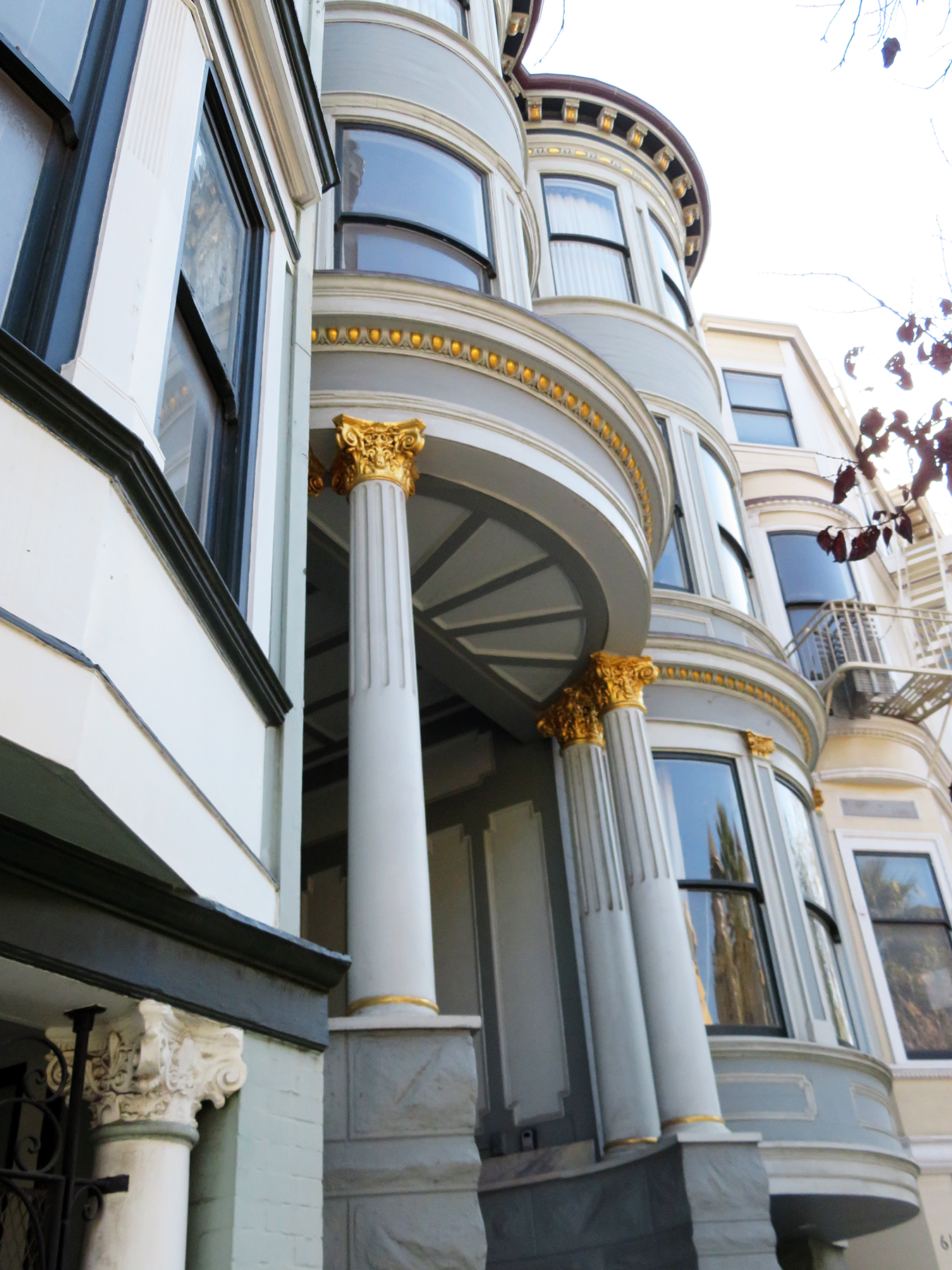
My walk today never took me to Haight street, a central aspect of the neighborhood, but centered on Waller St, Oak St and over to Steiner St in order to explore the famous Edwardian and Victorian houses, called Painted Ladies. The 1906 earthquake spared this area for some reason, so you have an accumulation of old architecture, some imaginatively renovated.

Other are still in various states of decay, but all given towards pastel colors.

Progressive politics can be spied through the windows,

Healthcare is a human right

in the name of the local High School ( Ida B. Wells!)

and in the signage on churches, local businesses and bars.

Memories of yore were frequently triggered, although I was so hooked on Frank Zappa at the time, that many of these other bands did not get fair play.

There was something a bit surreal today, wandering in the bright sun and heat while approaching November, with ubiquitous wealth displayed while an unhoused person digging through a public trashcan was yelled at by pedestrians, with an election unsettled while Bernie clings to the window….

A clear signal to witches, ghosts, and other scary creatures that it’s time to descend on us….

Have a safe Halloween. Maybe it’ll provide this:

Meanwhile, let’s fly back in time with Jefferson Airplane….

Cornucopia of Culture

You could probably live in San Francisco for a decade or more and not exhaust all of the cultural options. The sheer variety on offer is mind-boggling, and many cultural organizations have distinct ethnic roots.

Just walking through the neighborhood(s) I saw so many different things that I would have explored in detail if not for the horrid virus.

Starting in Potrero Hill, for example, you walk by a 1916 art deco building that has stood the test of time.

Originally a meeting place for working class Italian families to dine, celebrate benchmarks or simply watch sports,

it is now an institution where people gather for Friday night dinners, or take-out as needed.

A bit further southwest you come by a book binder museum, open by appointment.

There are gathering halls everywhere,

some with religious affiliations.

ST. Peter’s church on 24th St. relates to the history of colonialization.

In the Mission district there are places to learn about San Francisco’s mural culture,

theatres and art centers,

and the headquarter of the San Francisco Mime Troupe, which has spoken truth to power for over 60 years.

You can listen to their epic podcast Tales of the Resistance” here.

I photographed all these images just ambling outside, with no tourist guidance or website for “quirkiest museums of SF,” which do exist….. although yesterday’s goal was Balmy Alley, a magnet for people interested in murals and a separate subject for a future YDP.

Music today a classic Santana Album – his music is closely connected to the Mission district.

Yerba Buena Gardens

In what seems another lifetime, I used to go to San Francisco for psychology conferences, or to attend the opera, or, as you might remember, document some of the climate change-movement protests last year. Whirlwind trips that focussed on the task or pleasure at hand, not leaving much time to explore the city’s history.

I did walk once or twice through Yerba Buena Gardens, to or from a visit to SF Moma or the Contemporary Jewish Museum, mostly engaging in people watching. People who were nowhere to be seen this time around – when I came to photograph the site, I was one of maybe three or four people hanging out there in the middle of a Tuesday morning. We are talking an area comprising a few city blocks! The name means Good Herb in Spanish, referring to Spearmint and other herbs in the mint family. None of those to be seen, either.

The space is organized on several levels, with a pedestrian bridge, meandering pathways, large swaths of lawn, cafés, iceskating rink and bowling alleys, kids’ playgrounds, conference centers and art exhibits. The public art ranges from middling to beautiful, with no real cohesive curation detectable. Or maybe that’s just me, too hot on a mid-October day going on 90 degrees having fought yet another battle for parking, drowning my judgement in sweat.

Playground closed due to Covid-19

There is a kinetic sculpture, Urge by Chico MacMurtrie, a half man half woman who moves when you do, sitting down or standing up on top of the world.

There is a sculpture that reminds too much of a certain Californian actor elected president, The Shaking Man by Terry Allen. Judging by the shininess of his hand(s) people are eager to shake indeed.

Covid-19 related landscape art the has seen better days in the but three weeks or so since installation by artist Tosha Stimage. The social distancing devices are supposed to fade and make room for the next artwork to arrive mid-November, but it is a pity that their original beauty can only be guessed at.

Photograph above from the garden web site

And then there are the walls and reflecting streams by Danish artist Lin Utzon, a compelling area of stillness, movement, pattern and integration of the surrounding cityscape through reflection. The fluted granite walls, perforated with large-scale silver fissures, seem to belong to the sky, the air, the light in all its San Franciscan brightness. Or the light belongs to them – depending on your shift in perspective. A photographer’s pleasure.

By chance I came across a fabulous illustrated history of the area once I started reading up on the site. The historic photographic footage alone is worth checking this document out, compiled as The Memory of Traces by artist Jenny Odell during a residency at the Yerba Buena Art Center 5 years ago. Anybody interested in or from SF should check it out – it is revelatory!

www.jennyodell.com/ybc.pdf

I learned that the area was originally home to Filipino immigrants and hotels for elderly veterans, pawnshops, and small businesses. When developers swooped in, the people formed a citizen group to prevent displacement, with limited success (public housing was erected in other places for the people who had to leave.) After court battles and infighting among developers for the best use of the area, a proposition passed in 1976 that allowed an underground convention center, with a park and cultural facilities above it.

The gardens were finished in the mid 90s. During construction, a lot of burial sites and Native American artifacts ranging back to 6000 (!) years were discovered. A memorial to the indigenous tribe of the Muwekma Ohlone is now part of the gardens.

A huge entertainment center, the Metreon, was erected after the gardens. It did not do well, and has re-emerged, now as a High tech experience, in 2012. Suffice it to say, that Rebeccah Solnit mused “a more obsequious monument to capitalism would be hard to find.” 

I leave it at that. The gardens certainly enrich people who need to stop for a moment in a green oasis when the surrounding intensity of the city starts to grate. If I say so myself.

Music today is by a trio from the San Francisco Chamber Orchestra, playing Beethoven and friends in their backyard two weeks ago.

Move those feet!

Done with doom.

To end the week on something uplifting, let’s turn to the current wave of people all over the world dancing to the song “Jerusalema.” The gospel-inspired song by Kgaogelo Moagi, better known as DJ Master KG, featuring female vocalist Nocembo Zikode, has inspired a huge international following trying to combat the Covid-19 infused malaise. The song, in IsiZulu, one of South Africa’s 11 national languages, is a prayer to God to take the singer to the holy city of Jerusalem.

Originally published in 2019, it became a dance challenge in February 2020, with the lockdowns all over the place (and before the mask requirements!) starting with a ground of friends from Angola, soon followed by people in Portugal, and now all over the world, with home-made videos surfacing from almost all continents.

Angolan friends dancing.

It took the world by storm, so many of us hungry for something, anything that shows humanity, solidarity, communal spirit and joy.

South African President Cyril Ramaphosa encouraged all South Africans to perform the dance challenge on Heritage Day, a celebration of South Africa’s multiple cultures.

Priests in Italy dancing. Catholics in Canada dancing. Dads with babies dancing.

Creative expression, historical inheritance, language, the food, and land, aspects of South African culture which are both tangible and difficult to pin down, are recognized on this occasion according to the South African government. “There can be no better celebration of our South African-ness than joining the global phenomenon that is spreading across the world and that is the Jerusalema dance challenge.

Here a wild life workers from Zimbabwe dancing. Kids in Transylvania dancing.

Former President Nelson Mandela proclaimed in a speech on Heritage Day in 1996: “When our first democratically-elected government decided to make Heritage Day one of our national days, we did so because we knew that our rich and varied cultural heritage has a profound power to help build our new nation.

That culture now proves powerful to lift our spirits from a struggle not just to overcome racial division and conflict, but the losses inflicted by a mismanaged virus. We will mourn them in due course. For today let’s take up some joy.

Here is the original version of the song.