Browsing Category

Religion

Beyond Steeples

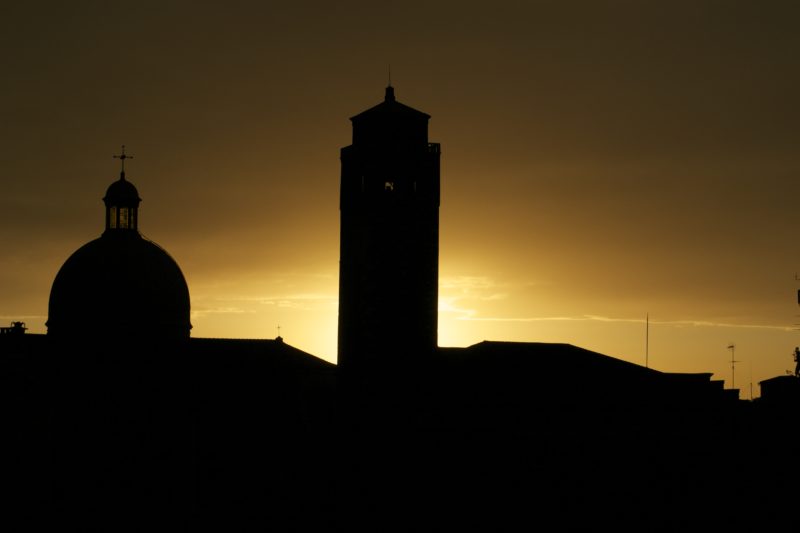
Churches will be on display this week.  Whatever complex – and complicated – relationship I have with organized religion of any kind, I often stand in awe at what was built in the name of it, from cathedrals to mosques to synagogues. For some moments I can forget the issues of money, power, oppression, proselytizing, misogyny and the like, and just marvel at the mountains of stones moved by faith.

This is particularly true for medieval cathedrals where those who started the project did not live to see its completion, with sometimes three generations of stone masons from a family consecutively working on the same building. The grandeur of these churches, their overwhelming size but also their interior beauty surely helped to keep the locals in check, remind them of power relations; but it was also, I strongly believe, testament to deeply felt devotion to a God who deserved beauty and sacrifice beyond a sermon on the mount, in the minds of his followers.

It is also true that the church was a patron to the arts for centuries, certainly across the middle ages. During that era religion was integrated into every day life. Its rites, feasts and fasts, in line with the seasonal rhythms, provided the structure of the Catholic existence. Religion flourished through this integration, and ecclesiastical patronage tried to be inspirational to keep it that way  – as well as keep an eye on the artistic output being in line with what was to be taught. These days, of course, religion and life are separate for most people, and the dearth of inspirational art is one of the consequences.


There is an exception, though. Music is interwoven with our daily life, and it is astonishing to see how many widely distributed forms of music are inspired by religion and communicating that inspiration. For this week, then, I have picked a number of diverse contemporary, popular musicians for us to listen to, who are deeply grounded in one or another faith tradition.

My first choice is this song by Bob Dylan, since I had just read this article about the exploitation of nuns, who were historically required to serve the church males….


The Album of Death

The ten days between Rosh Hashana and Yom Kippur give people who are not completely saintlike (those latter automatically inscribed into the Book of Life) or completely wicked (who will be inscribed into the Book of Death) a chance to escape the fate of death next year: by doing a lot of things that convince the scribe to put your name in the right book.

Death, then, is a concept that comes up a lot during the High Holidays, even if well meaning friends had not sent you a -as it turns out- quite moving essay from the New Yorker, when they know you don’t particularly like to read the New Yorker….  https://www.newyorker.com/culture/personal-history/questions-for-me-about-dying   

What I like to read, wouldn’t you know it, are analyses that show how the manipulation of what we see or don’t see of death can affect our willingness to support our government’s decisions to go to war. Particularly if they are written by a smart legal scholar from Emory, who – Boston folks take notice -will talk on this topic at a Harvard International and Global History Seminar this Wednesday.

The link below is a short abstract of Mary Dudziak’s paper; the gist of which goes as follows: as long as we are prevented from paying attention to the product of war – dead human bodies – we will allow the restraints on presidential powers to shrivel. Our distance to visible death “helps to produce the profound apathy that characterizes contemporary American war politics. This apathy enables the current legal structure of war authorization: Congress fails to act, and presidents rely on new interpretations of outdated authorizations, or their own constitutional power. Ultimately, I argue, a crucial and unexamined factor in the atrophy of political restraints on presidential power to use military force is the distance between American civilians and the carnage their wars have produced.”

Her paper goes on to show how the US manipulated imagery so that war efforts were supported by the civilian population already during WW II. “Using censored and uncensored World War II casualty photographs, I show the way the very view of war death was managed by the U.S. government for the purpose of maintaining domestic mobilization. Civilians therefore engaged a curated view of death meant to enhance their support for the war effort.”

https://papers.ssrn.com/sol3/papers.cfm?abstract_id=3004292#.WXYfKGHPxhM.twitter

One of our nation’s New Year resolutions, then, should be an increased awareness of the multitude of factors that support war mongering. Only if we know the strategies used can we fight them to decrease our spreading of death across the world.

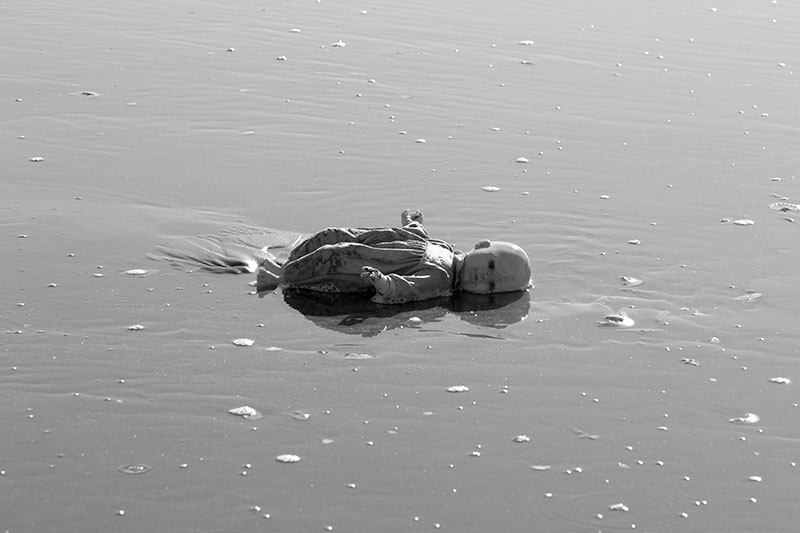
Assuming you have squeamish reactions to the chosen images for today, let’s just say they ain’t images of humans… just a lost doll and some beach jetsam.

Pride

What a difference some centuries make. For Aristoteles pride was the crown of all virtues. Of course you had to both be and think of yourself worthy of great things (otherwise you were simply vain.) For the next millennia we see the opposite sentiment emerge: pride will be defined as a cardinal sin. I’m not going to waste my limited number of words here on quotations, but if you google Pride and Bible you’ll find 30 some citations popping out of nowhere, all dire warnings of what happens to you if you are proud, pride comes before the fall being the least of it.

We nurture pride in our children, wanting them to be proud of their accomplishments and adding our voice to the chorus of maddeningly proud parents. We relish the pride in our athletes when they pull off yet another incredible feat. We cling to national pride (until we don’t – Germany had the hardest time with Nationalstolz after 1945, not feeling it or certainly not displaying it until some recent soccer championship where all of the sudden flags hung out of every window once again.) Gay pride is the only sentiment strong enough to conquer the centuries of enforced and oppressive shame. And of course, then there are the Marines….https://www.youtube.com/watch?v=22b3LZIzEoE

And yet we get the Sunday sermon about the mortal sin of pride and the benefits of humility. Don’t get me wrong, I believe humility is an incredibly important characteristic to work on when trying to be a decent social being. But isn’t there something about harping about pride that keeps people lying low within their assigned social strata? A person who is proud feels strong, empowered, capable. That could lead to all kinds of uppity rebellion! Might even lead to questioning the fact that others control your life or questioning the existence of a supreme being that decided you are doomed if you twitch.

And last but not least, we also get the kind of psychology today musings of many a minister who extends the notion of pride to its mirror image: self-pity.  Well, that’s what I am walloping in right now, since I am off for a root canal after three days of despicable pain. Yet another blemish on my questionably immortal soul…..


Think of the butterflies as untethered as my fluttering soul will be!


La Villa

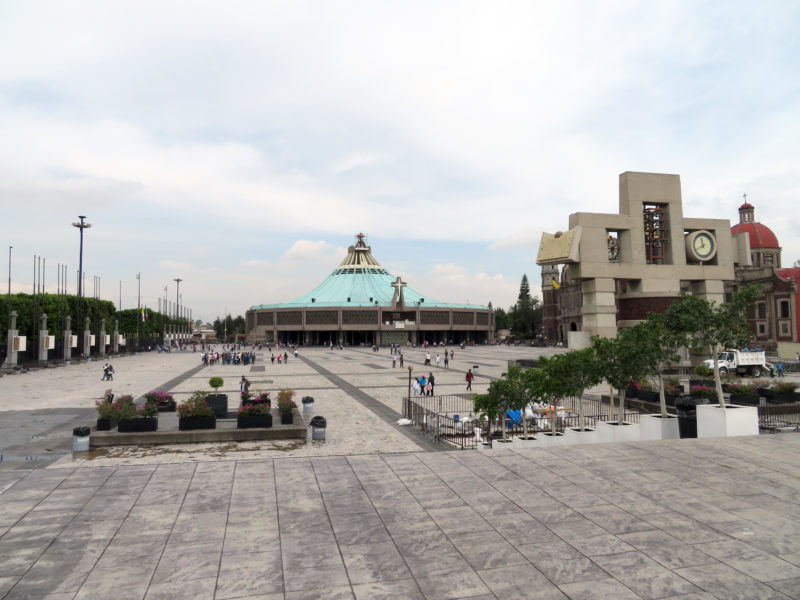
The Basílica de Nuestra Señora de Guadalupe can be found in the north of CDMX next to a number of other older churches and buildings (hence the name “the village.”)

It is a national shrine near the hill where the Madonna of Teypeac is believed to have appeared to a young man, Juan Diego, in December 1531. The Marian apparition was miraculously fluent in Aztec and suggested a church should be built in her honor. The youngster informed the bishop whose documented incredulity I share. So she came to the boy again, and instructed him to pick some roses in winter, which he did, carefully wrapping them in his mantle. When he showed them to the bishop,  Mary’s face and figure had magically imprinted themselves onto the cloth. That’s the gist of the story – the long version is a comedy of errors that would have made Shakespeare proud. I believe she appeared 5 or 6 times, even intercepting the boy when he had to take a detour.

That’s the past. In the presence, 2002 to be precise, Juan Diego was canonized under the name Saint Juan Diego Cuauhtlatoatzin. And the Basilica, replacing the older church in honor of Our Lady of Guadalupe which is sinking into the ground, is something to behold. I was not surprised to hear that the world’s third most visited religious site, containing the shrine with his mantle, sees 20 million visitors annually. (The numbers I read for the capacity of the building went from 10.000 to 50.000. Don’t know which number is correct, do know the church is very, very large.)

The building was designed by the same architect who built the phenomenal Museum for Anthropology, Pedro Ramirez Vazquez. He died 4 years ago and was a complicated figure when looking at his politics (details in link below.)

http://articles.latimes.com/2013/may/06/entertainment/la-et-cm-architect-pedro-ramirez-vazquez-journalist-elena-poniatowska-20130506

The modern structure, almost industrial in shape, dimension and building materials, provides an interesting contrast to the baroque, gold-studded church next to it.

The interior lamps struck me as interesting abstractions of the tale of flowers.

The devotion felt inside, in both old and new church, and the authenticity of faith in the faces of the pilgrims, however, are moving.

Also moving are the walkways (!)  – all four of them – in front of the shrine. It dawned on me that they probably need these things otherwise known from airport corridors to make sure that no-one kneels in front of the tilma for a long time and everyone else is left to wait. But theoretically you could go back and forth gently propelled forward under a piece of cloth that has meaning for millions.

The harshness of the building’s outline is softened by a huge plaza through which you approach the Basilica, filled with the faithful and punctuated by many a young person traversing the extent of the space on their knees.

The space is surrounded by large stations of the cross, which I rather liked in their simple elegance.

A large edifice on the plaza has sort of a theatre where mechanical puppets rotate and play out the meeting between the peasant and the Madonna.  I found the childlike version of the play echoed in the sermons that you can hear hourly in both the old and the new church – the tape-recorded sermon sounds like someone reading a book to 5 year-olds. Voice shifts included.

A separate chapel invites families to bring their children for baptism, and if you are so inclined you can just stand in front of a blessing-distributing priest on a stage, thurible and all, on the plaza.

The old church is still open for visitors, would not want to be in there during the next earthquake, though.

And then there are the vendors –

And a (coincidental?) commentary on it all, located right at the corner of the whole compound….

Here is a link to a documentary trailer about the miracles.


Letters and Treatises

The last entry for this week’s proposed reading list suggests yet another topic tied to religion.

The first items of interest are about Muslim identity. The book review below covers a compilation of letters and a treatise on Muslim as Atheist.

https://www.nytimes.com/2017/01/11/books/review/kareem-abdul-jabbar-letters-to-young-muslim-atheist-muslim.html?emc=edit_bk_20170113&nl=bookreview&nlid=23546060&ref=headline

Reading James Baldwin or Ta-Nehisi Coates we have probably all shared the stirring experience of an elder transmitting their insights, beliefs and warnings to a younger generation. Ghobash’s Letters to a Young Muslim follow that tradition and I look eagerly forward to reading it.

The second of Jabbar’s recommendations, The Atheist Muslim, sounds like a contradiction in terms. Pity the person who inhabits two of the more denigrated identities in this country, Muslim and Atheist…..

Then again, any journey from religion to reason – the subtitle of the book – is worth exploring. Which reminds me of the book of a dear friend and colleague of ours, a treatise which deserves attention.

Peter Steinberger’s The Problem with God – Why Atheists, True Believers, and even Agnostics must all be wrong certainly had my head spinning when I first read it.  I leave our dinner table conversations to your imagination…..
Book

While I finish today’s writing I am, for the first time in 36 years, rueing the decision to have come to this country. The House vote on the ACA repeal has left me – literally – in tears. Maybe I need to write on issues of (a)morality next week. Or maybe on good places to move to. Or maybe I have to do something completely, utterly distracting from a politic landscape that gives me the shivers. I have the weekend to think about it……..


Hater, Renegade and Prophet

Now who could that be? One of the most revolutionary agents in history whose actions 5oo years ago changed the Western world, an unknown theologian from a backwater province: Martin Luther.

I am actually reading Lyndal Roper’s Martin Luther right now, and it is a fascinating read, if a slog.  She is interested in the inner life of the man, who was an anti-Semit, a hateful misogynist, glory-hungry in some way, all around not a particularly nice person. And yet he was someone who saw institutionalized greed, injustice and power grabbing by the church as something that needed change in accordance with the true meaning of the bible and who fought relentlessly for that change regardless the consequences. He was courageous beyond belief, heroic in the risks he took, risk that could have resulted in being burnt on the stake. His protestations against the catholic church founded the protestant church.

“I want to understand Luther himself,” Roper writes. “I want to explore his inner landscapes so as to better understand his ideas about flesh and spirit, formed in a time before our modern separation of mind and body.”  Along the way, at least so far in my reading, she does a terrific job to lay out some of the interrelations between religion and politics of the time.

Luther’s anti-Semitism, it turns out, was anything but incidental. He was virulently intolerant of Jews and called for their cultural annihilation, an adjective that we all know was subsequently dropped in Germany.

Some reviewers have argued that Roper gives short shrift to both the role of Katharina von Bora, Luther’s wife (the marriage between this ex-nun and him, an ex-monk, alone was a major act of defiance) and an early feminist, and to any explanations why the ground was so ready for his revolutionary seed. I cannot judge that, given that I have not finished the book.

https://www.theguardian.com/books/2016/sep/07/martin-luther-lyndal-roper-review

Here is a quote from a recent review in the Washington Post which is the link to current affairs (in bold by me), in case the semi-millennial celebration of Luther Year doesn’t suffice.

“Let me stress that “Martin Luther: Renegade and Prophet” isn’t written by an atheistical Christopher Hitchens wannabe, but by a highly respected historian. Roper’s tone throughout is one of evenhanded scholarly inquiry. Along the way, though, she drives home a harsh truth: People who are reasonable, empathetic and civilized make ideal neighbors but it’s usually the zealots and extremists who, for good or ill, change the world.”

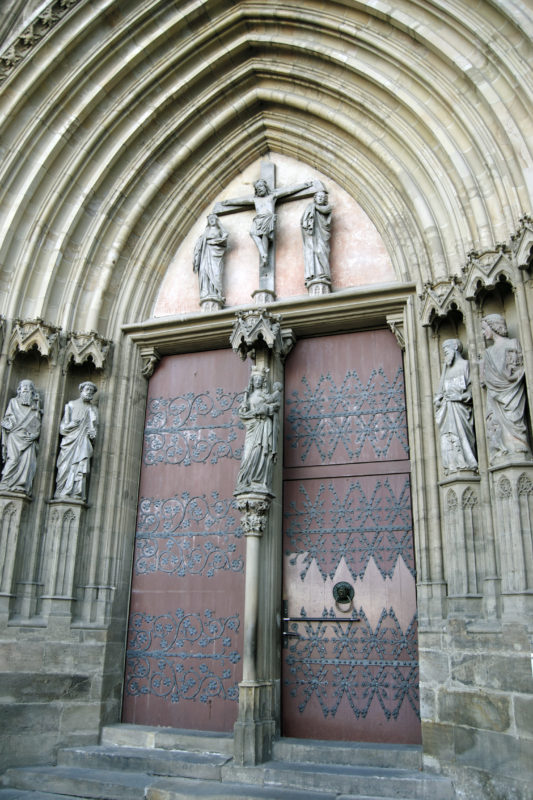
Photographs were taken in Erfurt, where Luther enrolled at one of Europe’s best universities to study law at his father’s behest, only to drop out and join a religious order 2 weeks later. He was ordained as a priest at the Mariendom, Erfurt’s cathedral in 1502. To the right of it is the St. Severi church.


Reading List

This week I am drawn to books that are in some ways related to current events. Since two of my friends are currently in France and are posting photos that make me yellow with envy I thought we start with something related to that country.

Of course there was no way I could avoid focussing on the upcoming election drama between LePen and Macron. Or rather focussing on the fact that an anti-Semitic woman bent on destroying the European Union might be the next President of France.

https://theintercept.com/2017/04/27/le-pen-promotes-holocaust-denier-plans-ban-kosher-butchers-yarmulkes/

Given the resurgence of explicit anti-Semitism, I thought the books below, about the fate of French Jewry, might be something to read. Note: NOT YET READ! Several of this week’s books are on my list, not in my head. They all just struck me as interesting.

The first one is authored by Susan Rubin Suleiman, Hungarian immigrant, now a Harvard professor of the civilization of France and of comparative literature. During the 2009-2010 academic year, she was the invited Shapiro Senior Scholar-in-Residence at the Center for Advanced Holocaust Studies of the U.S. Holocaust Memorial Museum in Washington, D.C.  In  THE NÉMIROVSKY QUESTION  – the life, death, and legacy of a Jewish writer in twentieth-century France – she tackles the fate of an assimilated Jewish writer who thought her relationship with the Petain administration would save her – it didn’t.

The second author is Shannon Fogg, chair of the Department of History and Political Science at Missouri, a European historian who specializes in the history of Modern France from the Enlightenment to the present.  More specifically, her research focuses on daily life in France during the Second World War. Her first book, The Politics of Daily Life in Vichy France: Foreigners, Undesirables and Strangers, described the effects of shortages on attitudes towards the French government and towards minority groups such as Jews and Gypsies. Her most recent book, the one on my list, is Stealing Home: Looting, Restitution, and Reconstructing Jewish Lives in France, 1942-1947. It explores the looting of Jewish apartments in Paris during World War II and the restitution of goods after the war. Or the cruel joke of restitution, as the case may be.

Here are the reviews:

Memory wars

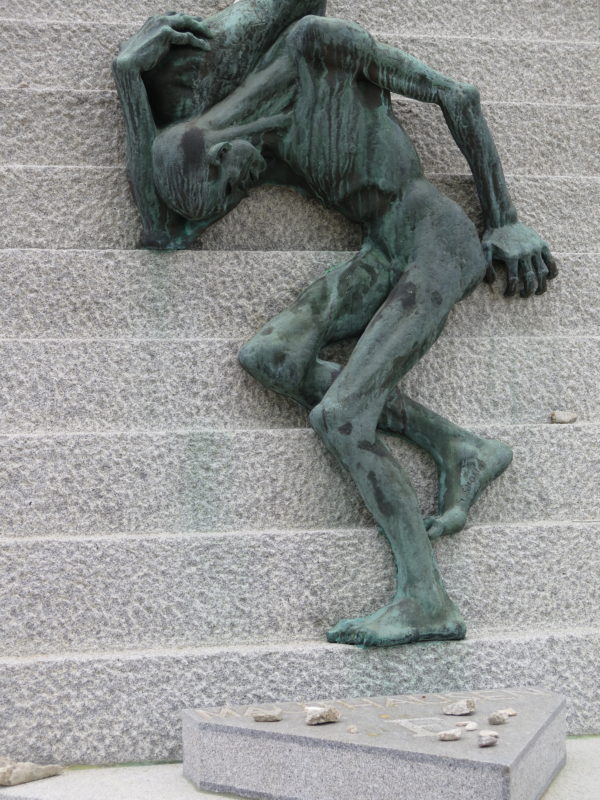
Photographs are from Paris: cemeteries and memorials.

He lives here

A story by Axel Hacke a German journalist and author, translated by yours truly.

He Lives Here

I met God the other day at the recycling container. He lives in the neighborhood but we hadn’t met for a while. The tired creases around his eyes had deepened, his white hair could have used a trim, he still wore the old grey wool coat and leather gloves; it’s been cold, he seems to be susceptible.

We went for a coffee. “Aren’t you tempted,” I asked: “to come down hard, to show the murderers who’s in charge, sort of hashtag #Noah’s Deluge, Sodom, Gomorra?” “Yes, but where to begin, where to stop?” Evil exists in the world day in, day out, he’d be busy to no end. He created evil because he thought: How could we recognize the good if evil doesn’t exist? How could you greet the day if night didn’t exist? How would it be possible to appreciate life if death didn’t exist? “Don’t you agree?” But it tortures him, he understands what he provoked, and he regrets it, all the way back to the big bang. What can he do? He is creator, not a repair man, he doesn’t even know how to fix it.

“What are you even doing here in the neighborhood,” I asked him. “That’s the other side of the story. The terrific life you built here, civilization, tolerance, culture. The cold drinks.” He could not longer bear to be outside, he practically fled here, he shouted, louder, and almost tipped his cup over with roving arms. He was a refugee from the universe. The loneliness. Eternity. The vastness. The unmoored drifting. No human could imagine what it felt like. Do you know how boring infinity is? And that’s why he was here, because he wanted, for once, to share in what he had created. Yes, that’s how he phrased it, “created,” and added – “I’m finally here!”

“Bad timing,” I said. “You can say that again,” he said. “Truth be told, it weighs on me. Not because it interferes with my enjoyment of life, don’t get me wrong. It gets me down because it’s ultimately all my fault, for one, and secondly, because I am unable to help you. Honestly. You have to help yourself. And you can. And you will.”

(If you want to read the non-religious, philosophical version of this, go back to Hannah Arendt On Revolution. FH) 

Ps – I had a conversation with a friend yesterday, about the two options open to us – each equally tempting. One we can just crawl under the covers and seek refuge in privacy. Or two, we can get active and join the fight against injustice that we perceive to be in our immediate future. I believe we can do both, depending on our energy levels. If enough people do both, and not all are in sync – there will be a movement, even if one occasionally drops out because it is all too depressing.  We’ll see.

The Week between the Years

This week will be catch as catch can.  I’ll indulge myself in talking about religion and allowing myself sentimental musings (strictly verboten during the rest of the year as all of you who know me know…) I will also try and focus on the positive, which really isn’t restricted to the week between years, although too often it’s slipping my mind. Remind me!

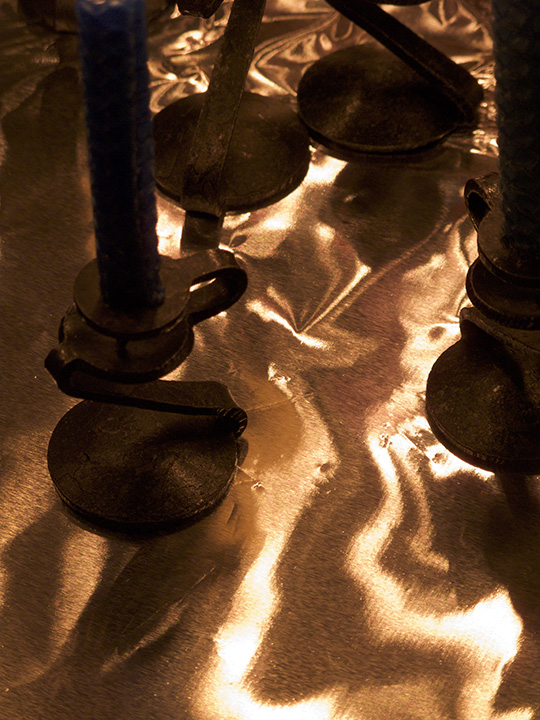
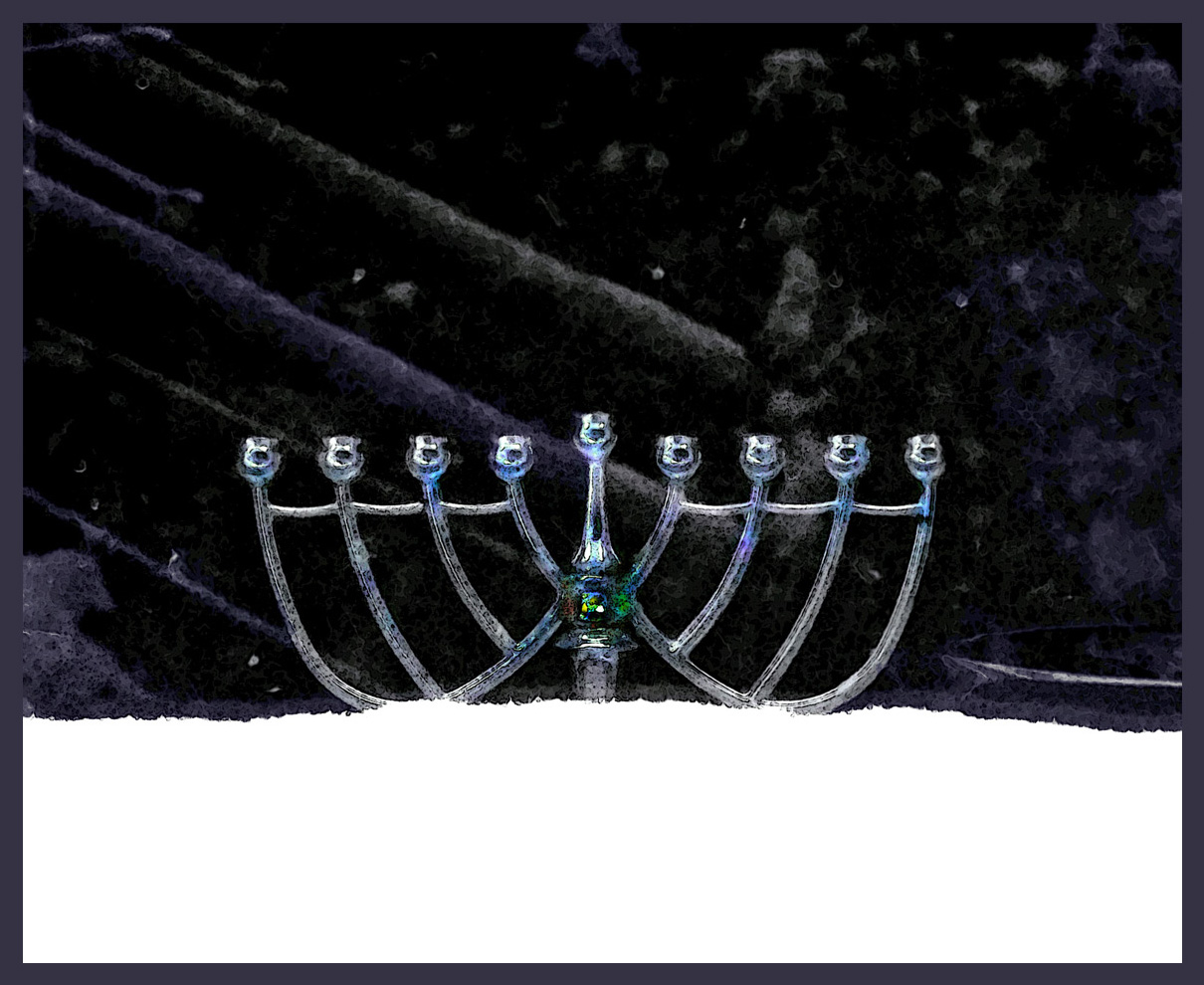
On this third day of Hanukah, here is a message from a woman rabbi who gets it right. The last sentences of her essay:

We will need to be brave. We will need to resist.

We will have to make the miracle ourselves.

https://www.washingtonpost.com/posteverything/wp/2016/12/23/what-the-hanukkah-story-teaches-us-about-the-trump-administration/?hpid=hp_hp-cards_hp-card-posteverything%3Ahomepage%2Fcard&utm_term=.6447e38a8e1b

(You didn’t seriously think politics would drop out of the blog???? Always on the lookout.)