Browsing Category

Politics

Fauna in Fall (of an election year)

dsc_0168

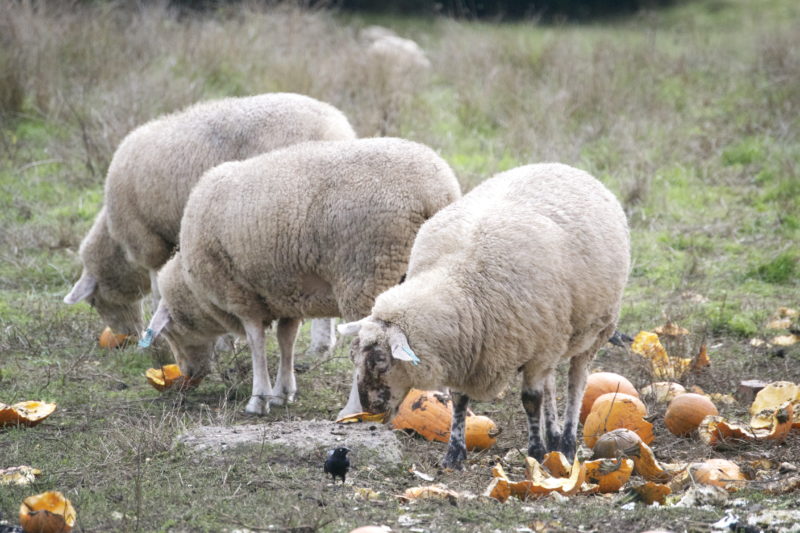
I am writing this about an hour before the presidential debate – you will be reading this the day after. Any of today’s photos of animals preparing for the season could have a different meaning, depending on the debate outcome.

dsc_0150

Sheepish, bullish, lies multiplying like rabbits, pecking, pouncing like a praying mantis –

take your pick.

dsc_0074

I think that’s what we call ambiguous pictures ….. which is fine as long as the debate outcome is unambiguously in favor of a candidate who is not racist, not scheming, not narcissistic, not mendacious, and above all able to handle a world in turmoil with sufficient intelligence, information and respect for the facts that we will not descend into further wars and inequality.dsc_0145

Postscript, the morning after: Wasn’t prepared for the sniffles.  Ever heard a boar sniffling and grunting through the brush?dsc_0162

Postcards from Pundits (5)

“There is a cult of ignorance in the United States, and there has always been. The strain of anti-intellectualism has been a constant thread winding its way through our political and cultural life, nurtured by the false notion that democracy means that ‘my ignorance is just as good as your knowledge.”
― Isaac Asimov

Carpe Diem copy

What’s wrong with phrenology and divination? Let’s shred the lab reports and turn to intuition!

– Your’s Truly (paraphrasing certain political candidates.)

Postcards from Pundits

This week we’ll keep it short – I’ll be sending a “postcard” each day, as if on vacation (I wish….) Any associations to current politics are, of course, purely accidental.

Men think highly of those who rise rapidly in the world; whereas nothing rises quicker than dust, straw, and feathers. – – Lord Byron
DSC_0134 copy


Philanthropy

DSC_0482 copy

We’ll end this week on a positive note: people with big brains and big money care and give us some constructive ideas.

The link leads you to a talk by Stefan Norgaard, Stanford University Tom Ford Fellow in Philanthropy at the Ford Foundation. (Thanks, F.X., for sending this!)

https://www.fordfoundation.org/ideas/equals-change-blog/posts/why-the-olympics-and-other-major-sporting-events-usually-increase-inequality-in-the-host-city/

Here is the upshot for a fast read:

“What can philanthropy do to ensure to equitable development models for major large sporting events and arenas benefit everyone? Here are some possible courses of action:

  • Lift up untold stories of injustice. For example, Ford’s investigative journalism grantees, such as Agencia Publica, are working to find cases of injustice related to the Rio Olympics and tell them to a broader public. They recently launched a project on the recent militarization of the Rio police in advance of the games.
  • Convene organizations and make civil society connections. What is happening in Brazil is far from unique and philanthropy can connect grassroots and civil society organizations in Rio with organizations in Cape Town, Athens, Qatar, the United States, and elsewhere. Groups can share common stories, brainstorm potential solutions, and consider new global development models for the Olympics, World Cup, other major sporting events, and domestic sporting leagues.
  • Build community capacity to engage in urban development policies and debates. Community organizations such as the Observatório de Favelas in Brazil and the Sports Fan Coalition in the United States need critical capacity to build local power and to counter prevailing assertions that major sporting events always leave lasting social and economic benefits for everyone. The Ford Foundation’s commitment to building institutions and networks seeks to support and grow social justice institutions—which often outlive any one battle or campaign—to do just this.

Major sporting events can ignite a city’s spirit and civic capacity, can lead to a sense of citywide pride, and can certainly help to increase tourism and economic stimulus. But major sporting events and projects only benefit everyone when they are deliberately designed to do so. If we change the approach to development, large sporting events like the Olympics can reduce, rather than drive, inequality.”

Wabi copy

Belo Monte

DSC_0311

Does the name Belo Monte sound familiar? Let me guess: not. I certainly knew nothing about this dam construction project until I started to read up on graft and the interrelations between Brazilian politics and (inter)national construction companies.

The dam, with a price tag of more than 10 billion dollars, has been built in Brazil’s second largest state, Pará, and is rerouting the Xingu river. Its construction (the third largest of its kind in the world) destroyed the local ecology and made fishing in the Amazon areas practically impossible, thus voiding the local, self-sufficient economy. Ten thousands of people were forced to relocate in cheaply and quickly built satellite townships, which are already falling apart. There are no jobs, and there is no public transit that could bring people to where the jobs are. A few schools and hospital were built, but fewer than promised, and too little too late. Crime rates and drug abuse have risen to astronomic proportions.

DSC_0006

DSC_0126

DSC_0172

The energy and the profits from the dam are not staying in the region – the electricity is used to fabricate aluminium for car manufacturers – our way of life in the fast lane is based on flooding of the rain forest, and the abuse of Indigenous peoples’ rights. There were laws, from the 1980s, that were used by the lower courts to try and stop or delay the destruction. However, court decisions are now regularly overturned by the high court with suspensão de segurança, a claim of danger to national interests if the industry is not allowed to proceed. That clause was kept on the books from the times of the military dictatorship. How can this happen? Political parties in Brazil get their income primarily from industrial donations. These mega projects are ideal to cement the quid pro quo.IMG_3589

Why mentioning this with regard to the Olympics? Guess which firms built the infrastructure used for the games…..

(Here is Part 1 of many parts of a documentary film on the project – alas in German)