Today is the start day of the Global Climate Strike week. We don’t know how big it is going to be, but my prediction is: massive! Here are some known statistics:
Globally, 72 trade unions and federations are supporting the climate strike, with unions in Quebec and Italy taking formal strike action to join the youth school strikers. In the U.S., workers in major tech companies like Amazon, Facebook, and Microsoft are walking out of work to demand their companies take real action on climate change.
6,300 websites, including Kickstarter, Tumblr, and Tor will be green-screening their sites and directing visitors to the climate strike website as part of the Digital Climate Strike.
Globally, over 2,500 businesses are supporting the strikes —from those going all out, like Patagonia and Lush, with poster-making areas in their stores or closing their doors for the day completely, to others allowing workers to walk out for a short period to join the strike.
In the United States, a monumental mobilisation will see over 1,000 protests across the country, taking #StrikeWithUs outside of the major cities to every corner of the nation. New York public schools have given permission for all 1.1 million students to skip classes! More than 1,240 actions will be held in Europe across seven countries. There will be mobilisations in every country in Latin America, including countries that have not participated in climate action before such as Cuba and Venezuela! From Brazilright up to Mexico, there will be protests: A massive march in the south of Brazil against the proposal of the biggest coal mine in the country.
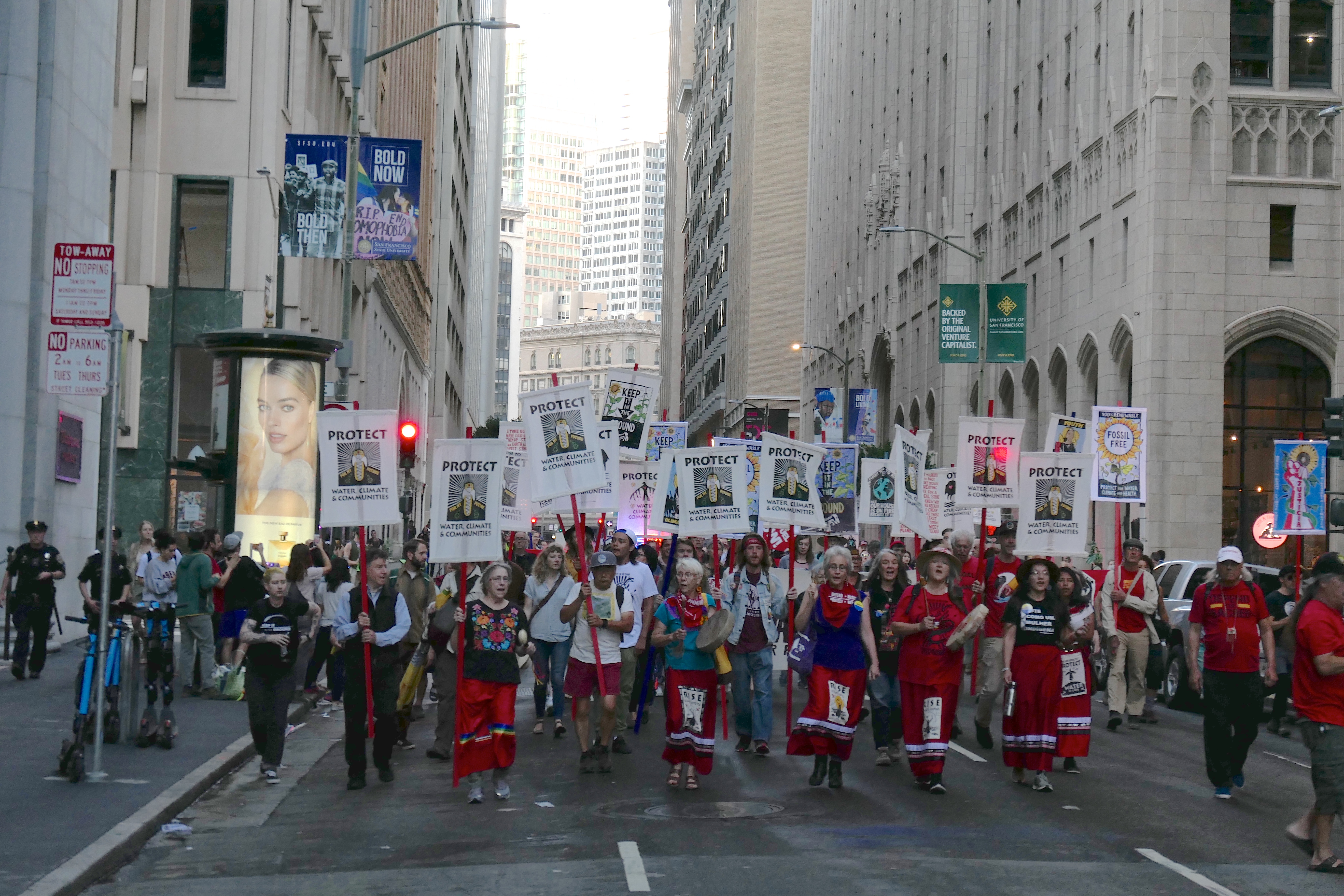
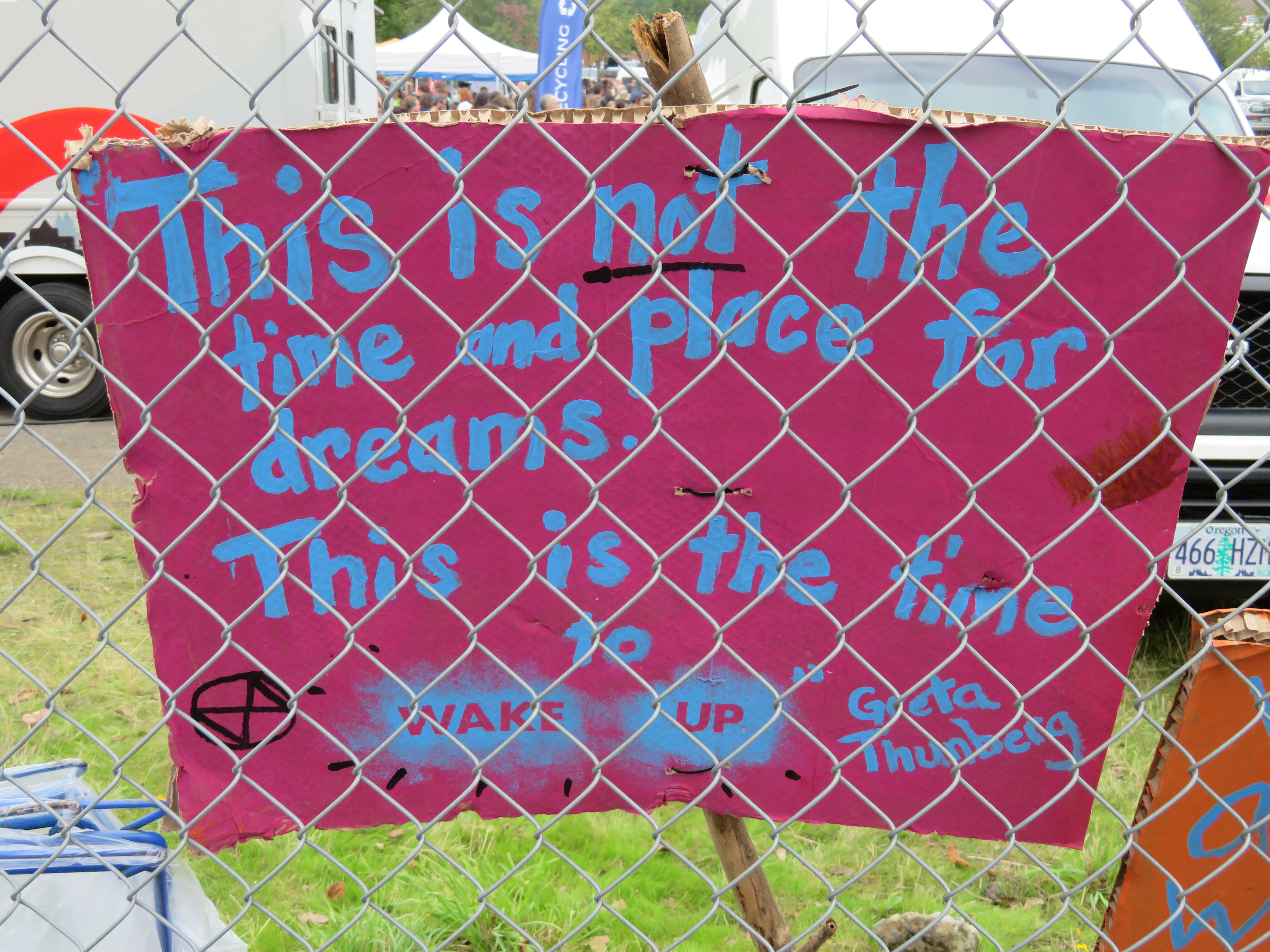
Here are some pictures of what this Friday so far looked around the world.
In Berlin 230.000 are in the streets, below that is Hamburg. Performance artists stand on ice blocks to demonstrate the world’s potential fate.
Here is the FridaysforFuture Map that shows events near you. For us in PDX, the demonstrations begin at City Hall in the morning and will then march over the Hawthorne bridge down to OMSI where there will be events all afternoon until 5 PM – Meet me there! You will join scientists, artists, and, of course, the youths who are leading the way.
I will also be involved with documenting some climate change actions in CA, part of next week. Expect some interesting postings, even if irregularly sent.
Photographs today from threatening skies, hung over us all week when they weren’t already pouring down….
If the photographs of ospreys seem unconnected – well, they are mostly captured in flight and I will be flying too, reading Kendi en route to the East Coast. Ibram X. Kendi is Professor of History and International Relations and the Founding Director of the Antiracist Research and Policy Center at American University in Washington, DC. His newest book just came out: How to Be an Antiracist. His previous book, STAMPED FROM THE BEGINNING: THE DEFINITIVE HISTORY OF RACIST IDEAS IN AMERICA, won the 2016 National Book Award for Nonfiction.
It will be the usual, then, the occasional Art on the Road report, but no regular posts until I return from my travels. And speaking of which: here is a proposal by the German Green Party to ban domestic flights by the year 2035. In a country the size of Germany that is conceivable, if trains pick up the slack. Not so much here, when you consider what it would take to visit anywhere in the country….
In any case – I’m off. Just think: you’re getting a break!
Music offers a couple of selections for Labor Day!
On my way home in the car from a terrific but exhausting weekend at Maryhill Museum (more on that to come later this week) I heard an interview with Christine Lagarde, leader of the IMF until recently.
When asked about what had possibly confounded her in all her years in leadership positions, she answered, “A study that showed that 90% of the 189 membership countries of the International Monetary Fund had legal and/or constitutional restrictions, discriminating against women.”
Here is more on that. We are talking about issues concerning inheritance, or custody of children, or being allowed to own businesses. Some countries forbid women from doing specific jobs, 59 countries have no laws against sexual harassment in the workplace and there are 18 countries where women can be legally prevented from working. And this is only a partial list!
My work is loving the world. Here the sunflowers, there the hummingbird – equal seekers of sweetness. Here the quickening yeast; there the blue plums. Here the clam deep in the speckled sand.
Are my boots old? Is my coat torn? Am I no longer young and still not half-perfect? Let me keep my mind on what matters, which is my work,
which is mostly standing still and learning to be astonished. The phoebe, the delphinium. The sheep in the pasture, and the pasture. Which is mostly rejoicing, since all ingredients are here,
Which is gratitude, to be given a mind and a heart and these body-clothes, a mouth with which to give shouts of joy to the moth and the wren, to the sleepy dug-up clam, telling them all, over and over, how it is that we live forever.
This is the first poem in Mary Oliver‘s collection Thirst, titled, “The Messenger.
I encountered it at a writing workshop for houseless vendors at StreetRoots this week. Mary Oliver had been previously introduced to me by the workshop leader who continually excels in expanding my horizons and I took to this poem in no time. Hey, gratitude for nature! Up my alley. Loving the world? A familiar task. Mouth shouting joy – my readers are my witness!
And then a participant pointed out, with anguish bordering on rage, that it was not their job to love the world. A world that mistreated them, rejected them, punished them, tortured them, deprived them and excluded them. A world where safety was non-existent, food unreliable, pain untreated. Where admiration of nature was not exactly high on the list when you could but fear the elements. Where the very idea of living forever is blacked out by the worry about living for another day.
You know that feeling when heat creeps up your neck, into your cheeks, the blushing that interferes with breathing? That was me: caught in my bubble of middle-class existence, originally not even tangentially aware how gratitude of the kind the poet references is linked to privilege. The privilege to have time to notice, room to appreciate, means to express and capacity to love nature within my safe surroundings.
I am not saying that homelessness precludes gratitude. On the contrary, I am often floored when seeing the generosity of spirit expressed by the folks I’ve gotten to know. I am more concerned with the demand characteristic or the taking for granted in my own head that the world is to be loved.
Mary Oliver’s work might have been to love the world. (She died this January – a remembrance from the New Yorker is in the link.) My work right now is to become more aware of how automatically we apply standards that seem self-evident to us – gratitude for nature! – but which are wholly inappropriate for those whose very existence is under attack. And then my work is to fight the causes for the differences in standard. Actually: the work of all of us. 38.000 houseless people in our city deserve that.
Photographs today are from another habitable building making room for another luxury hotel in downtown Portland.
Music today is from an interesting cross-over album Now and Then Music from the Great Depression(s) 2010/1929 ( to which we might add 2020, I gather.)
Someone else’s words, again, for your weekend reading. Written by Rebecca Solnit in April, I wish the essay had more circulation.
I value Solnit as a feminist thinker and writer; usually her pieces, which she seems to churn out by the minute, are tightly structured and argued with heady measure. This one seems like passion took over and the language erupts, at times almost like stream of thought. An interesting experience.
I’ll be back with more reports from the Exquisite Gorge project on Monday!
Music to day by another strong woman, Louise Farrenc (1804- 1875) Following her marriage, she interrupted her studies to play concerts with her husband, the flautist Aristide Farrenc. Despite her brilliance as a performer and composer, she was paid less than her male counterparts for nearly a decade. Only after the triumphant premiere of her Nonet for wind and strings – in which the violinist Joseph Joachim took part -did she demand and receive equal pay.
Photographs are from Portland State University’s Walk of the Heroineshonoring women.
Let’s face it: I am on overload. There are 4 more artists to interview and write about before the grand finale of the Exquisite Gorge project in 2 weeks. No matter how much I enjoy the project – and I do, it has been intellectually satisfying beyond my expectations – these pieces are long and require a lot of informational reading on my part, as you might have guessed if you followed the accumulation.
So I am copping out just a little bit: depending on where I am in the process I will let others speak for YDP.
Today, then, I leave you to words that are magical, in more than one sense of the word, and deeply moving. Obviously not my words. One of the most powerful pieces of writing I’ve come across in a long time.
One of the sources of racism as well as one of the consequences of racism is segregation between the races. Segregation has served a purpose to keep the races apart (and I will not even start to lay out the reasons why that was advantageous to one of the races under discussion.) It has in some domaines been institutionalized de jure by the administration and nowhere is that more visible than when you look at Housing Acts.
The Color of Law, a book by Richard Rothstein, a former columnist for the New York Times and a research associate at the Economic Policy Institute, as well as a Fellow at the Thurgood Marshall Institute of the NAACP Legal Defense Fund, documents the evidence that government not merely ignored discriminatory practices in the residential sphere, but promoted them. Here is a strong voice, telling us about racism in politics.
If you have an hour, listen to the conversation between Rothstein and Ta-Nehisi Coats on the topic. Time well spent.
Otherwise, here are the highlights of the argument (basically borrowed from here. )
Already existing housing segregation inherent to the New Deal’s housing projects were made worse by a 1934 Federal Government policy called redlining (the term comes from the colors used to map out where racial divisions ran in any given area – red for Blacks.) It concerned a refusal to insure mortgages in or near African-American neighborhoods. The FHA was also subsidizing builders who were mass-producing entire subdivisions for whites — with the requirement that none of the homes be sold to African-Americans. The rationale? If African-Americans would buy property in white areas, property value would sink and thus loans would be at risk.
The FHA actually had an Underwriting Manual which explicitly said: “Incompatible racial groups should not be permitted to live in the same communities.” It recommended that walls should be built to divide neighborhoods, that highways or rivers would be a good way for separating them. Many neighborhoods legally prevented anyone but a white person to acquire property.
The wealth differential between white Americans and African-American – the latter own about 5% of what the former own – can be economically traced back to the equity in homes that was available for the former and not the latter. This was implicitly acknowledged in the Fair Housing Act that was finally passed in 1968, now giving the right to African-Americans to buy property in any neighborhood they wished. One small problem: none of the housing in the neighborhoods they were always excluded from was within financial reach at this point, with housing prices in those neighborhoods going through the roof.
All this is in my head because of the news that Raj Chetty, an economist in Seattle, believes there is a way to improve the situation. Here is an experiment by his research group, together with the Seattle Housing Authority and the King County Housing Authority. Noting that people who received housing assistance (Section 8 vouchers, essentially a rent subsidy) stayed in their usual neighborhood instead of seeking housing in neighborhoods with more opportunities, particularly for their children with good schools etc. they offered the following:
“A random subset of people receiving vouchers for the first time would get more than just the rental subsidy. They would also be given information on which neighborhoods promise the most opportunity for their kids, based on the research data. They’d also be assigned “navigators” whose job it was to walk them through the apartment application process, and receive additional financial assistance with down payments if necessary. “
A year later: the additional support raised the share of families moving to high-opportunity neighborhoods from 14 percent to 54 percent.
Let’s be clear: this is a large effect, and it means potentially a better life for those random families who were assigned this role in the experiment. It is, however, NOT dealing with the systemic issues underlying the decay of poor neighborhoods and the exponential improvement in wealthier ones. Until we are willing to deal with the economics (and politics) of segregation, social science interventions will be just a drop in the bucket. But knowing that some seem to work is a good start.
Photographs today are from Seattle, where the intervention took place.
The National Center for PTSD estimates that 28 percent of people who have witnessed a mass shooting develop post-traumatic stress disorder (PTSD) and about a third develop acute stress disorder.
Research also suggests that mass shooting survivors may be at greater risk for mental health difficulties compared with people who experience other types of trauma, such as natural disasters.
The American Psychological Association summarized data and suggested treatment approaches last year here. The focus is not just on disorders following trauma. Psychologists are also eager to study other questions about survivor well-being, including how such experiences—particularly at a young age—shape one’s sense of safety and self-efficacy. We have, in other words, no clue yet about the long-term effects of massacres in our schools, churches, synagogues, night clubs, shopping malls and Garlic Festivals. And we have not even begun to look at the long term consequences for those who are not immediate, but related victims, the families, the clergy, the teachers and friends of those killed or maimed.
I found the poem below just as striking, if not more so, than reading the statistics and all they imply.
at the movies my eye on the Exit sign on the aisles the doorways the space between the seat in front of me and my legs how far could I crawl before I die?
wednesday after it happened I went to a work event at a gay bar I stood near the exit when I could when I couldn’t I stood near a window I made sure I could open and fit through made sure I could jump out and land on the roof of the building next door just in case after the event my coworker was leaving thought about hugging him but I don’t I waived asked myself is this the last time I’m going to see him?
two weeks after the massacre my partner is getting ready to attend Pride I am staying home
I watch him pick out his outfit I sit quietly on the couch when he is dressed he holds me I hold him a little longer ask myself is this the last time I’m going to see him? he leaves I feel as if I should go with him just in case
has I love you always meant I would die holding you for people like us? has I love you always tasted like two boys scared to form the word amor with their lips terrified to say things like belleza te quiero libertad would you die holding me?
when it happens if it happens do we run towards the fucker together? do we die in each other’s arms?
I will be your shield will you be mine?
I’ve never used my body as a shield is this what true love is? is this what queer love is?
if our genes our DNA truly hold onto memory then we remember our ancestor’s gay love remember our ancestor’s queer communion the ceremony of maricones before us their trauma their struggle and if that is in us then so is their survival!
to all the fuckers out there ready to shoot us down we will survive you we have survived fires we have survived camps we have survived plagues and
we will survive you
I’m sitting at work everyone has moved on to the next tragedy Nice Quetta Baghdad Istanbul
my eyes focus on the exit sign then the door the front lobby then back to the exit sign the door
Hope comes from the strength demonstrated by individual survivors: just look at how the young people of the Parkland murders are present in public debate and refuse to be cowed in face of personal attacks and the relentless re-triggering of the trauma with each new attack. Then there are the parents of Joaquin Oliver, one of the Parkland victims, being in El Paso to unveil a memorial at the day of the terrorist act. Manuel Oliver has worked on almost 20 public murals – walls of demand – since the shooting, trying to raise consciousness. I stand in awe.
It is probably safe to assume that we are all reeling from the news of the weekend, the mass murder inflicted on innocent people by young white men with automatic weapons. As I write this we know that the El Paso shooter was a White supremacist; not much is published this early Sunday morning on the second killer. What we do know is that incitement of hatred from the highest positions in government leads to action, that the availability of guns increases the carnage and that money in politics prevents even the smallest attempts at combating domestic terrorism.
I will offer portraits of people this week who are or were strong under siege of a society that exploits them, excludes them, hates them to the point of violence. And who better to start with than James Baldwin, who would have been 95 years old on August 2nd, had he not succumbed early to cancer. May he rest in power.
Lots of people posted in his honor, citing some of the more familiar words of wisdom he had to offer. I want us to look, though, at an unflinching analysis of racism, painful as it may be for those of us who are White.
An article in the New Republic 2 years ago had a succinct summary of Baldwin’s evolution and his literary output in the context of a review of a documentary about him, I am not your Negro, that explores the continuing perilsAmerica faces from institutionalized racism. Here is the article.
The film can be watched on Amazon Prime, I believe, or here for free if you have your library card at hand.
And here is an essay by him from 1966 – plus ça change, plus c’est la même chose.
It is not as if we had no warnings of right-wing violence. But just as the government is not interested in protecting us from election interference by external forces, it is not interested in protecting us from domestic terrorism. Details here from 2 years back already, by Daryl Johnson a former senior analyst for domestic terrorism at the U.S. Department of Homeland Security.
Even the simplest measure, curbing access to guns, is blocked by Republicans. The House, among other attempts, sent McConnell a bill requiring universal background checks and a bill that closes the Charleston loophole. But he refuses to bring it up for a vote. Profit rules.
Texas’ Governor Greg Abbott: (Oct 28, 2015) I’m EMBARRASSED: Texas #2 in nation for new gun purchases, behind CALIFORNIA. Let’s pick up the pace Texans. @NRA
James Baldwin: “It is certain, in any case, that ignorance, allied with power, is the most ferocious enemy justice can have.”
I fear, we have to swap ignorance for racism.
Photographs for today are from the streets of Paris some years ago, where Baldwin fled to and where he died.