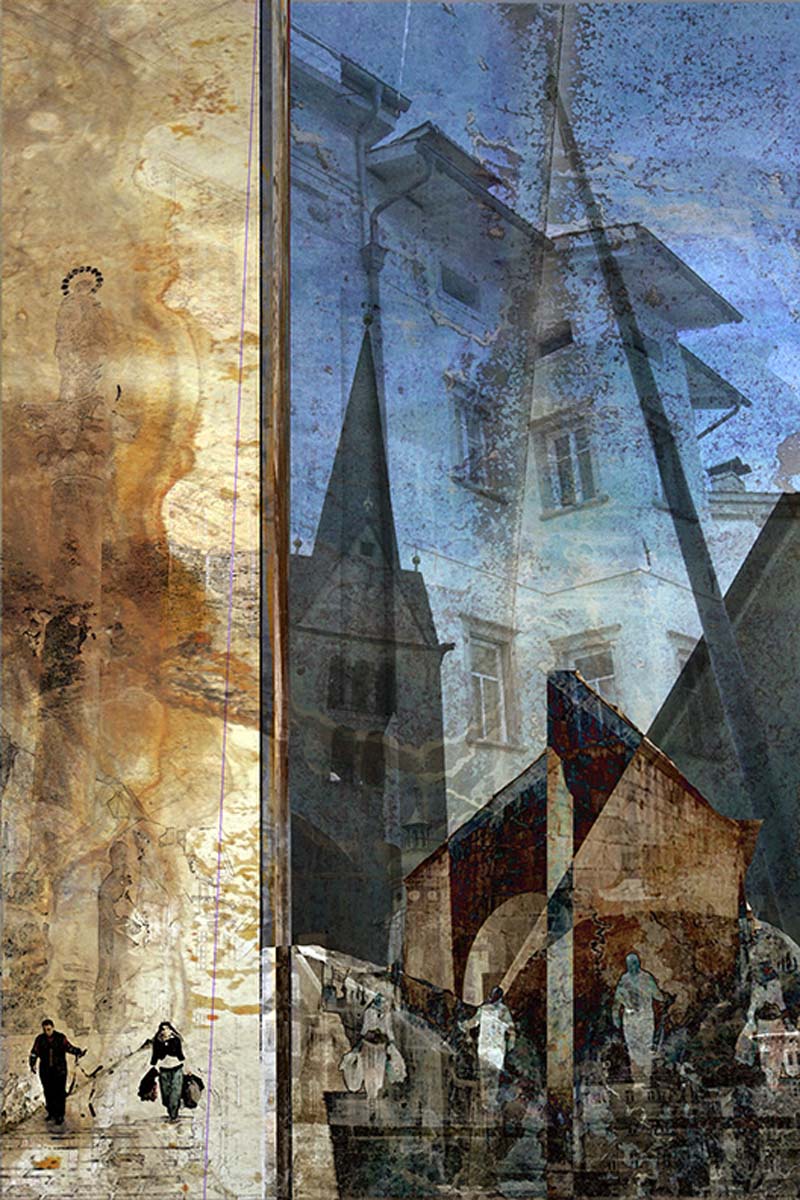
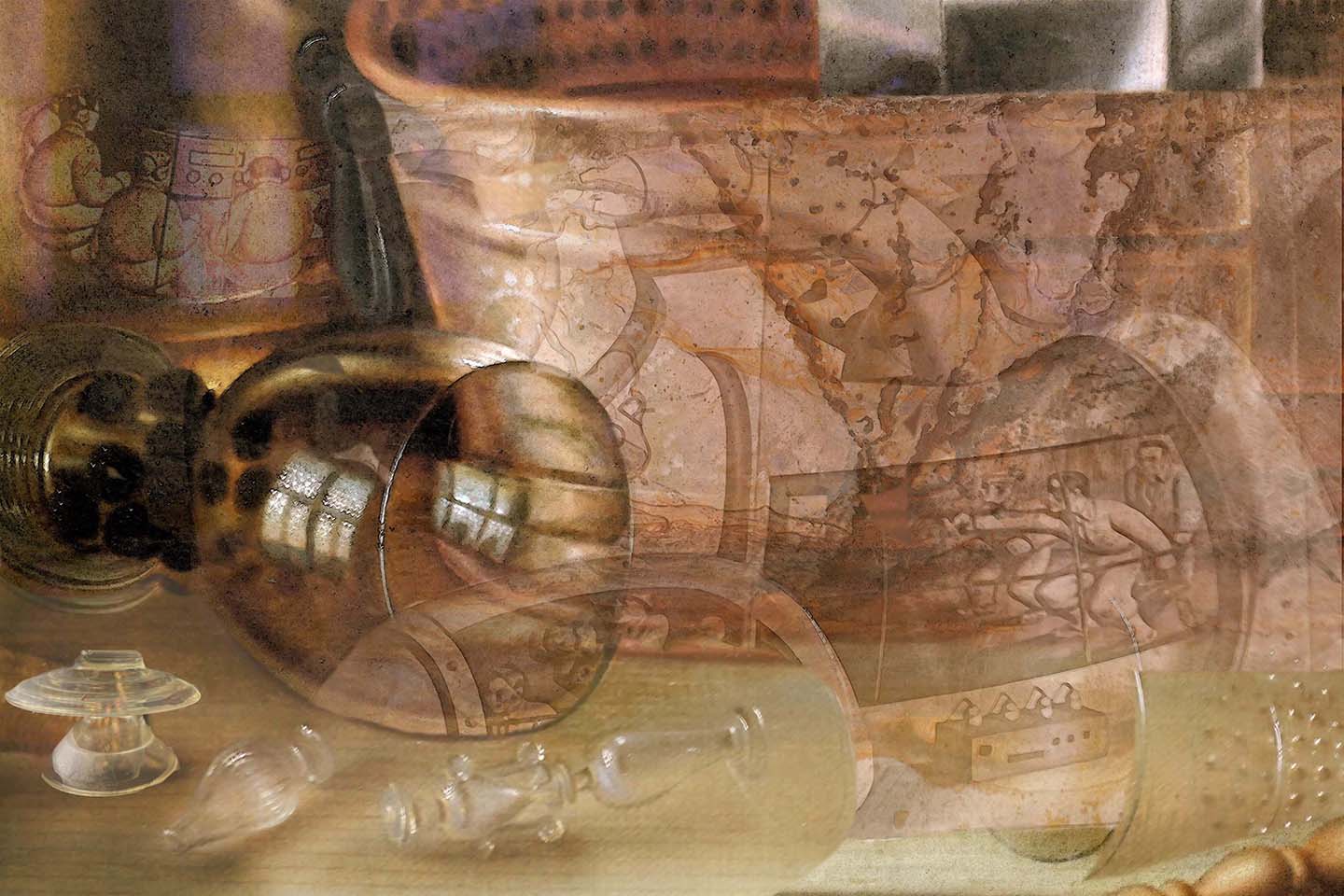
Some claim that Valentine’s Day had its origins in the Roman festival of Lupercalia, held in mid-February. The festival included fertility rites, wild bacchanalia and the pairing off of women with men by lottery. “Young women’s names were drawn by bachelors from a jar. These matches, initially formed for the festival’s duration, often led to long-term relationships and marriages.”
Enter the church, eager to replace Pagan rites with Christian values. Up pops the symbolic martyr St. Valentine who secretly married lovers, ignoring Roman Emperor Claudius II’s edict that prohibited young men from marrying, as to serve more efficiently as soldiers. Valentinus was executed for his defiance, but lives on as a champion of love. (Ref.)
First comes love, then comes marriage. And then comes the forfeit of women’s right to vote.
Think I am joking? Here is what Wendy Weiser at the Brennan Center for Justice has to say about the consequences of a new Republican voter registration bill sponsored by Texas Republican congressman Chip Roy, the SAVE Act, which experts warn could be a major threat to voting rights for all Americans, and particularly for married women, in addition to people of color, young voters, and other marginalized groups.
“The legislation would require all potential voters to provide, in person, proof of citizenship, such as a passport or birth certificate, when they register or reregister to vote.” The bill would not only impact the 21.3 million Americans who do not have ready access to a birth certificate or passport, as well as anyone who relies on voting by mail. It would also have a direct impact on anyone whose legal name does not match the name on their birth certificate or passport, such as the 79% of heterosexual married women, per Pew Research, who take their spouse’s last name. “If a married woman hasn’t paid $130 to update her passport—assuming she has one, which only about half of Americans do—she may not be able to vote in the next election if the SAVE Act becomes law.”
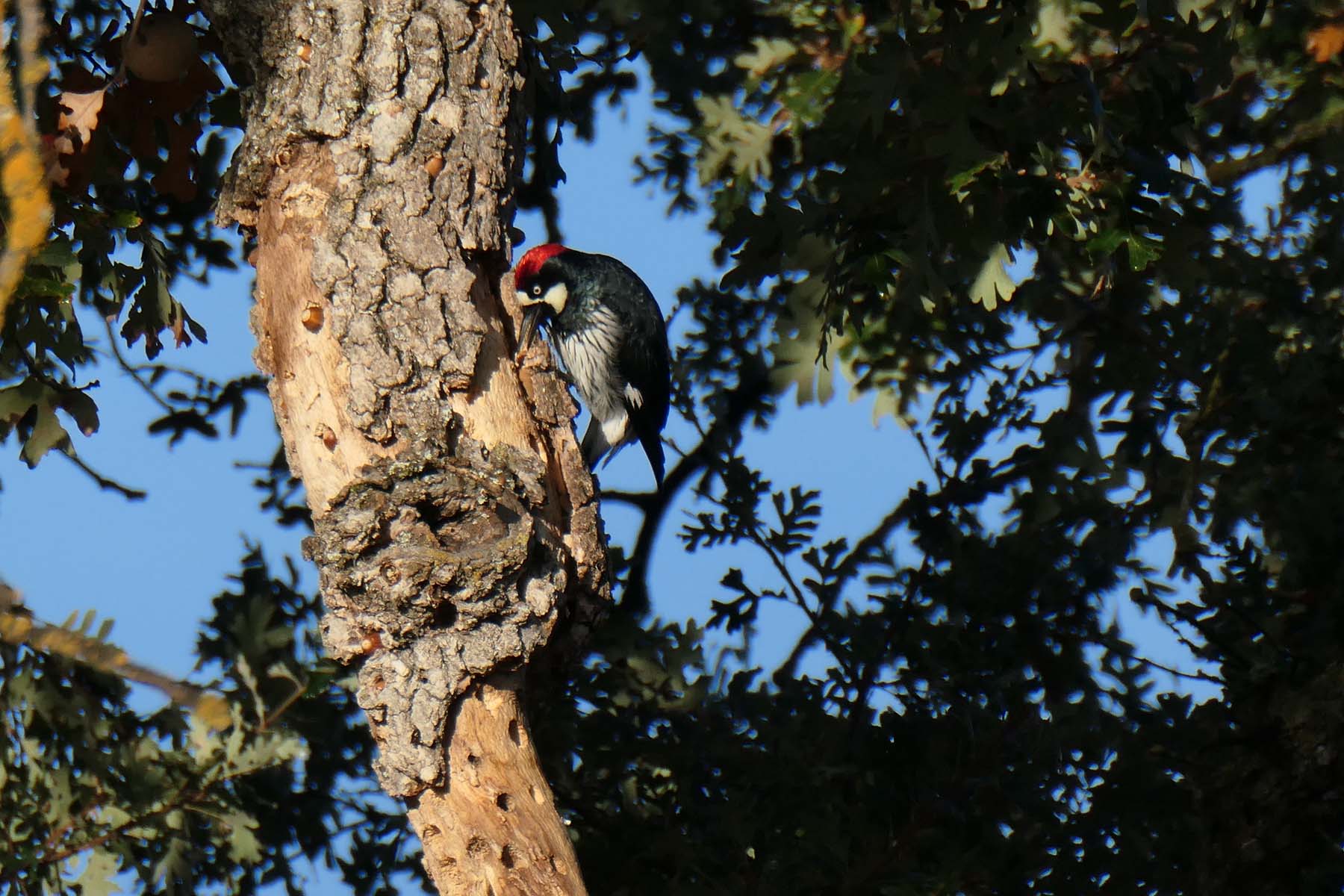
They chitter at each other violently, then hop at each other, until one flies off.
The festival Lupercalia was celebrated in and around caves. Looks like that is the location we are pushed back towards – Project 2025 explicitly condones and seeks to enforce a family structure where only the head of household, the man, votes. This was, of course, a common argument against women’s suffrage before the 19th amendment was introduced.
While I might angrily scream at the hostility extended towards all those threatening the top tier of the power hierarchy, there are others devoted to peace – probably way more effective (and certainly better for your blood pressure…)
You can join them in a Multicultural Celebration for Connection, Love, and Peace this Sunday in Hillsboro, OR. Here are the details:
A Community Event Promoting Unity and Understanding
The Oregon Society of Translators and Interpreters (OSTI), Lutheran Community Services Northwest (Beaverton Office), the Immigrant and Refugee Community Organization – Greater Middle East Center (IRCO GMEC), DAWN, and Unite Oregon, in partnership with the City of Hillsboro and the Office of Immigrant and Refugee Advancement, are proud to present the Multicultural Celebration for Connection, Love, and Peace.
This inaugural event will bring together community members from diverse backgrounds to celebrate culture, share stories, and promote unity through music, dance, art, and meaningful conversations. This event aims to foster a sense of community amidst the attacks on immigrant and refugee communities in Oregon and across the country by the new administration.
Date: Sunday, February 16, 2025 Time: 2:00 – 5:00 PM Location: The Walters Cultural Arts Center, 527 E Main St, Hillsboro, OR 97123 Website: https://tinyurl.com/connectionlovepeace
Here is a poem that will be read on Sunday, in various translations as well.
A Proclamation for Peace
Whereas the world is a house on fire; Whereas the nations are filled with shouting; Whereas hope seems small, sometimes a single bird on a wire left by migration behind.
Whereas kindness is seldom in the news and peace an abstraction while war is real;
Whereas words are all I have; Whereas my life is short; Whereas I am afraid; Whereas I am free—despite all fire and anger and fear;
Be it therefore resolved a song shall be my calling—a song not yet made shall be vocation and peaceful words the work of my remaining days.
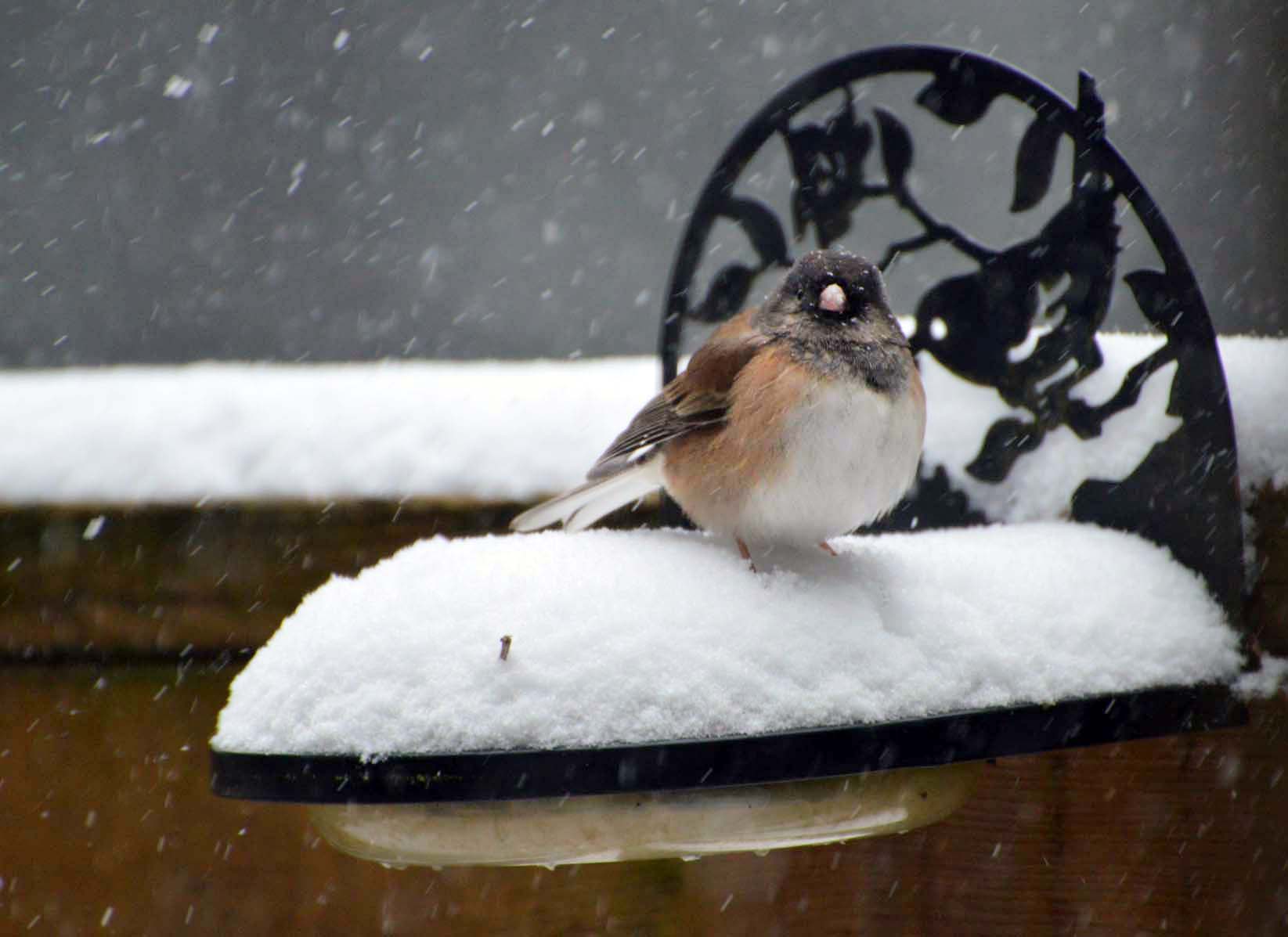
Photographs from yesterday through my (dirty) window, with House Finches and Junkos going at it, competing for seeds rather than showing some loving solidarity. Then again, maybe they are off mating in a cave, once fed. Happy Valentine’s Day!
Music is a Romanze by Schumann so long held apart from his beloved Clara. I really like this slow version. Brings out the longing.
When I wrote about my worries regarding the novel Corona virus in early (!) January 2020, I got some push-back. Did I have to be catastrophizing all the time? Couldn’t I provide a bit more levity or at least some art? 1.9 million U.S. deaths later, much as I’d like not to, I am back in Cassandra mode.
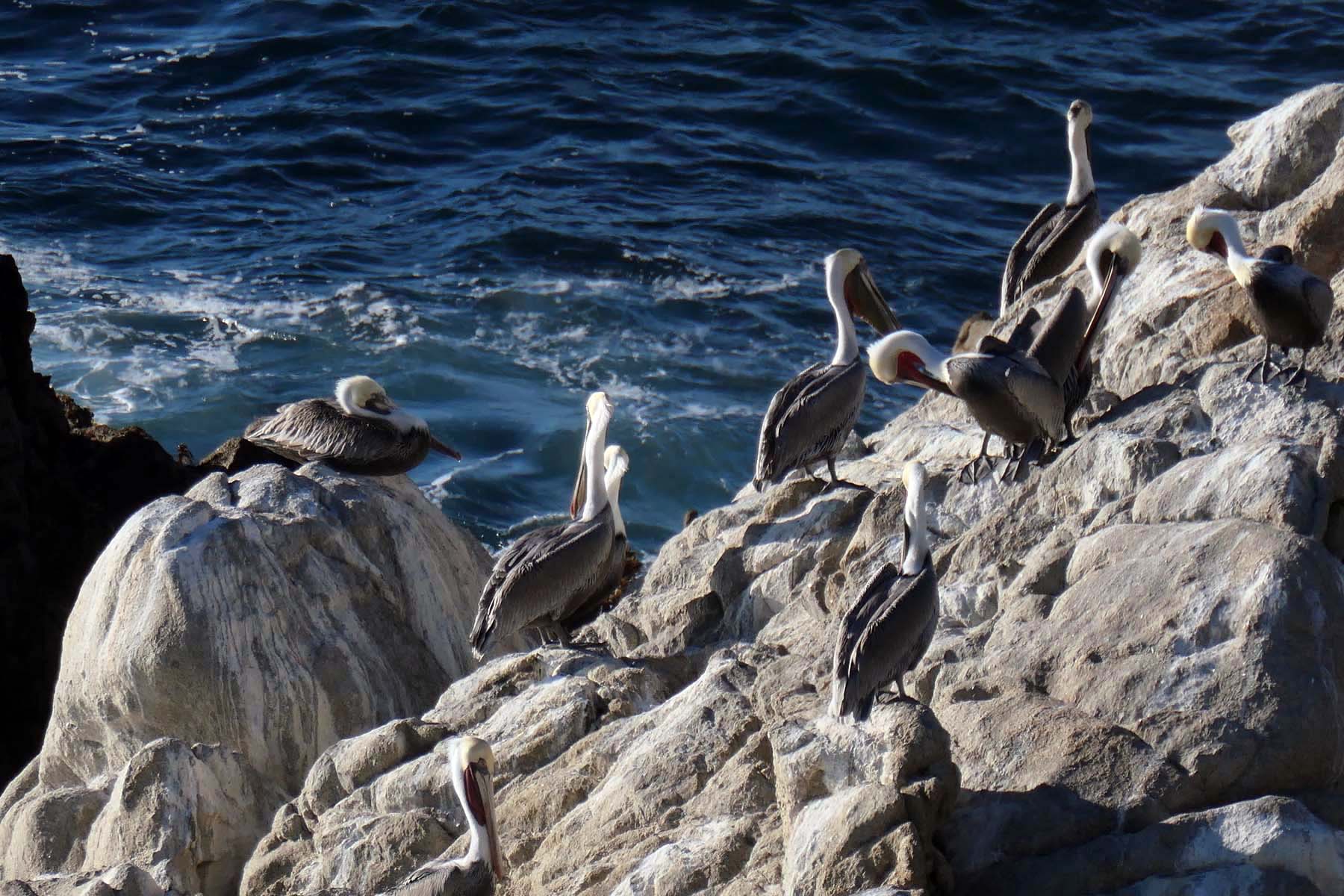
I’ll provide art (a poem below), all right, and photographs that I took at beautiful Point Lobos, CA last November, but today’s focus are issues related to the bird flu. Don’t yell at me. I am as sick, literally, as the next person, under the barrage of bad news. And today’s musings are as bleak as they come. But we must think things through to reach some kind of preparedness. That much we’ve learned from the last epidemic.
Let’s try a thought experiment, given that the Republicans’ slashing of NIH/NSF grants by more than half curtails actual scientific experimentation. (Here is a detailed, excellent review of the new rules.) Assume you learn the most important facts and statistics about the new H5N1 virus. Why assume? Well, since last week, many official publications of information about infectious diseases have disappeared from government websites. Data that briefly appeared on a C.D.C. website were gone a short time later, irretrievable despite scientists begging for a full report. For example, according to the NYT, “Cats that became infected with bird flu might have spread the virus to humans in the same household and vice versa, according to data that briefly appeared online in a report from the Centers for Disease Control and Prevention but then abruptly vanished. The data appear to have been mistakenly posted but includes crucial information about the risks of bird flu to people and pets.”
So what facts do we actually know? The disease originated in Asia, almost 30 years ago. It spread among poultry farms, caused some 400 deaths in humans across these years, but rarely spread human-to-human. The virus started to explode exponentially since 2020, when it did not simply jump from poultry farms to wild bird populations, but when the latter started to disperse it along migration routes, spreading from flock to flock. It arrived on our shores in 2021, with 148 million poultry alone ordered to be euthanized since 2022. More than 5 million egg-laying chickens died in the first 16 days of 2025. (Ref.)
From North America it jumped to South America where it traveled 6000 km in just 6 months. It caused mass mortality, not just in birds, but in infected mammals as well, with elephant seals, sea lions, porpoises, dolphins and otters all affected. Almost 50% of the Peruvian pelican population succumbed. The ecological consequences are still up for grabs but likely devastating up and down the food chain.
Deceased elephant seal pups line the beach at Punta Delgada in Chabut, Argentina, along with a bird carcass. Cause of death: bird flu. Ralph Venstreets/University of California, Davis
Now cows are infected with the virus. As of last week almost 1000 herds across 16 states in the U.S. tested positive. In fact, cows in Nevada exhibited a new variant of the virus which has scientists alarmed for its potential to trigger a pandemic in humans. The genotype, known as D1.1, contains a genetic mutation that may help the virus more easily copy itself in mammals—including humans. This D1.1 version of the virus is the same variant that killed a man in Louisiana and left a Canadian teen hospitalized in critical condition. (Ref.) The real worry: with each genetic mutation, so easily accomplished since this virus mixes with other flu viruses quite rapidly, we might see increased severity of the disease and increased probability for human-to-human infection.
Back to our thought experiment. You now know that the virus is around us, mutating, and you start seeing people felled by it (by current expectations, it has a mortality rate between 40 and 50%. Compare that to Corona Disease mortality rate: about 1%. Imagine the hospital overload, increasing otherwise preventable deaths outside of bird flu mortality as well.) Let’s assume that scientists do find a vaccine (we have to be optimistic until the last minute!), just like they did for Covid, and it proves to be safe and effective in tests done outside of the U.S., since stateside we no longer support much contagious disease research. And now factor in the fact that you have an anti-vaxxer health tzar voted into office by a Republican Senate, instructing the FDA not to approve the vaccine. (You can still write to your Senator about Kennedy’s confirmation… their websites have a contact me link.) Fantasy? Read the proposed law debated on Friday in Montana (House Bill 371) that would ban the use of mRNA vaccines – you know the ones used to treat tuberculosis, malaria, zika, the rapidly mutating influenza viruses, hepatitis b, HPV, Covid 19 and in treatment of pancreatic, lung, prostate, and brain cancer.
What would you do?
Rich folks traveling abroad to inoculate themselves and their families? Would foreigners even be served if there are limited quantities available? What about poor folks?
Stock up on masks? There are already 16 states with masking prohibitions in effect, with more legislation in the works. And always think of the babies and toddlers that can’t be masked…
What will we do?
I can’t help but wonder about questions raised a decade ago by America’s smartest Cassandra, Sarah Kendzior, who has previously predicted everything we have seen unfolding since January 20th, 2025. in great detail.
***
Omnicide
And when our children ask, Why did you do nothing as the world was dying? what will we tell them?
Will we say, We didn’t know how sick it was, or admit that We gathered our rosebuds while we could,
Old Time was still a-flying—? It’s now the end of everything, our children will say, go crawl
into your arks and sail off destitute into your doom, and leave us only your shadows. And our children
will light candles across seven continents empty now of lions, kangaroos, ravens, squirrels, javelinas, pelicans—
devoid of praying mantises, koalas, ants, cobras, snails, Doberman pinschers, pigs, vultures, lizards, and alley cats.
Our children will hide in caves with blind cockroaches, together feeding on the algae glowing in neon greens and blues
across dolomite and limestone walls. They’ll leave no pictographs behind, no sprayed handprints, no artful gods.
Such silence now, they’ll say, this you’ve bequeathed us, this human indifference. And we’ll beg them, Survive.
Walk with me through a landscape touched by frost, a layer of glistening, crystalline beauty sheathing every blade of grass, leaf and branches. Something delicate, fragile, lasting just hours before the rising temperatures make the sublime views disappear, melting the hoar frost and then evaporating the water.
Rising temperatures, across the span of seasons, not just during a 24 hour cycle, are the main culprit globally, it turns out, for our ever increasing droughts. It is not the lack of rainfall, but evaporation of water due to heat that account for over 60% of the exceptional drought in the American West. And so we face dry wells, dwindling reservoirs, parched ground, forest fires.
Some, of course, believe that all you have to do is turn on “a valve” and let the water run, providing needed help to farmers and fire fighters alike. The current President of the United States among them. And so he did, ordering his Army Corps of Engineers to release a maximum amount of water in California’s San Joaquin Valley, with an unheard-of one-hour notice to local authorities.
“Consistent with the direction in the Executive Order on Emergency Measures to Provide Water Resources in California, the U.S. Army Corps of Engineers is releasing water from Terminus Dam at Lake Kaweah and Schafer Dam at Success Lake to ensure California has water available to respond to the wildfires.”
All hell broke loose, with local authorities, farmers, Republican State Senators all trying to persuade Trump’s minions to stop the planned volume of release, for fear of flooding the down stream communities, since the river channels could not hold the masses of water. Local water management officials called on members of Congress to intervene, including Democratic Rep. Jim Costa and Republican Reps. David Valadao and Vince Fong. None responded to requests for comment. Farmers needed to move equipment, migrant workers needed to flee from their riverbed camps near harvesting locations, Potterville fields needed to be protected. It was reckless endangerment of a community that had voted this President in, even after the authorities managed to curb the outflow somewhat from what had been initially intended.
It was also an act in the President’s renewed California water wars that was based on completely wrong assumptions about the potential uses of this water for firefighting in L.A., one big mountain chain to the South blocking the natural dispersion of water. Just one assumption in a series of spurious claims about the state’s water policies.
The release of billions of gallons of water will have long-term hurtful consequences in the valley region. The water, now running off into the Pacific Ocean, was stored for farmers’ irrigation needs in the dry season. Agricultural business has already been hurt on multiple fronts with water scarcity, the rounding up of undocumented agricultural workers, and now the tariffs. Depleting the reservoir of water at this time will increase the vulnerability of agricultural communities in the summer, already struggling with ground water pumping restrictions.
Under California’s Sustainable Groundwater Management Act (SGMA), which tries to compensate for the fact that farming has for decades used twice the amount of groundwater than is replenished by nature. This has caused the land to sink, causing enormous infra- structure damage that the state is now trying to staunch. The restrictions led to plummeting values of farms, endangering many smaller agricultural operations who cannot pay their loans. “The Public Policy Institute of California estimates that about 500,000 acres – one-fifth of the San Joaquin Valley’s farmland – may need to be taken out of cultivation by 2040 to stabilize aquifers. Small and medium-scale farmers appear most vulnerable.” (Ref.)
Value evaporating.
Common sense evaporating.
Water evaporating, flowing useless at this time of year for communities falsely claimed to be helped.
Our protections from unscientific, vengeance-, ideology- or greed-driven decisions, evaporating.
As of this writing, we have a non-elected civilian with unidentified, potentially non-American minions downloading on his personal servers every single data point of every American’s existence he found while forcing access to the US Treasury. Our social security numbers: no longer protected. Data about our taxes, our income, our health status, you name it: an open book to be read by potentially hostile powers. The U.S.Treasury holds the nation’s money. Its dispersement (or withholding) is now under the control of someone who is unaccountable and was not able to receive top security clearance and is under investigation for flouting security clearance rules.
We are talking all of our tax money, the social security money we earned and paid in, the money for clean air, safe food and water, safe air travel and highway management, medical research, and so on. A system responsible for distributing Social Security and Medicare benefits, salaries for federal personnel, payments to government contractors and grant recipients, and tax refunds now at the whims of unaccountable individuals. As our own Senator Wyden warned, this creates potential cybersecurity vulnerabilities, given Musk’s significant business ties to China. It also creates potential havoc for upcoming debt ceiling negotiations, given the assurances needed for ongoing payment flow.
A private citizen taking control of established government offices, seizing physical control of government payment systems, now able to shut down federal funding to any recipient he personally chooses. Closing entire departments (USAID) and locking out thousands of government employees. An unvetted, congressionally un-appointed individual illegally usurping Congress’s most important authority, the power of the purse, shredding the constitutional protection guaranteed by the separation of powers. Some call it a constitutional crisis. Others fear that It is no less than a coup.
Democracy evaporating.
We are advised to make our voices heard, seemingly the only thing we can do right now.
Once again, here is the easiest way to find out how to contact your state representatives, your governor, your senators, whoever you wish to address with questions about what they intend to do to protect you, your entitlements and the privacy of your data. A question as simple as that.
OR State Attorney General Dan Rayfield: (503) 378-6002
Call. PLEASE. Drip is not enough. Needs to be a flood, slowing down evaporation of our rights. Blue state calls matter, too.
And now for the good news: Rebecca Solnit has started her own occasional newsletter – you can sign up for free here. Probably the most encouraging and empathetic writer out there next to Heather Cox Richardson.
Let’s end with a defiant smile: here is a body of water not likely to evaporate soon. He/she/it/they even have their own social media announcements now.
Music today about cold times, followed by something better….
In the dark times, will there also be singing? Yes, there will be singing. About the dark times. —Bertolt Brecht
I would not be surprised if one or another of you read the document below and thought: “History is written by the victors…”
The special observances to be eliminated by fiat of the new administration include Black history month, Holocaust Days of Remembrance, Women’s History Month, and so on.
Memorial Site of Concentration Camp Buchenwald.
Once you discard the public remembering and teaching of history, you can fill in the blanks with anything you like, likely falsehoods that will stay with the next generations who have no access to the actual records, if it is done thoroughly enough. The current attacks on the contents of teaching materials, and even independent sources like Wikipedia (reported in Newsweek,) clearly speak to the issue. As journalist Adam Server from The Atlantic commented: “They want to ban the teaching of the unpleasant facts of American history because people might conclude injustices in the past that contribute to inequalities in the present should be rectified, instead of their belief, which is that some groups of people are inherently superior to others.”
The quote about victors shaping the narrative in their preferred fashion was attributed to Winston Churchill for the longest time. Falsely, as it turns out. People then pointed to words uttered by Reichsmarschall and war criminal Hermann Göring, a coward who did not even face his Nürnberg Trial sentence of death by hanging, resorting to suicide by poison the night before. “Der Sieger wird immer der Richter und der Besiegte stets der Angeklagte sein,” “the victor will always be the judge, and the vanquished the accused.”
Apparently, the sentiment had been around for a much longer time, in various European nations, France in 1842, Italy in 1852 and Great Britain in 1889. It arrived at our own shores a few years later:
Well, if you have (and abuse) the power to erase history when it is at odds with your ideology, you sound more like a loser than a victor to me. Might as well go golfing on Holocaust Remembrance Day…. (yes, he did.)
The real question is, of course, what can be done when the powers that be try to eliminate our remembering of acts of horror as well as acts of heroism, acts of oppression met by acts of resistance, of an evolution of rights for those who had been denied them since times immemorial. The prohibitions of public remembrances, the choice of names for institutions, the restriction of text book contents might not be easy to stop, particularly when appeals to “forgetting” are voiced by some of the largest communication platform owners in the world. (e.g. Musk’s contribution to the neo-Nazi party AfD rally last week in Germany.)
But this can be counterbalanced by art (although admittedly much harder to distribute to large enough audiences.) Films that try to document the past as it unfolded can be useful and convey content pretty directly. Poetry can be a teacher. One of the best collections I can think of is Carolyn Forché’s Against Forgetting (1993). The classic anthology contains hundreds of poems centered around events that changed history. No other than Nelson Mandela introduced the book at the time:
“Poetry cannot block a bullet or still a sjambok, but it can bear witness to brutality—thereby cultivating a flower in a graveyard. Carolyn Forché’s Against Forgetting is itself a blow against tyranny, against prejudice, against injustice. It bears witness to the evil we would prefer to forget, but never can—and never should.”
Primroses and bush anemones under the beeches of KZ Buchenwald (Beechwood) near Weimar.
A more recent one is Poetry of the Holocaust (2019), edited and translated by Jean Boase-Beier and Marian de Vooght. This volumes contains work by many lesser known poets, intended, with the help of 35 translators from languages as varied as Yiddish, Norwegian, Japanese and Hungarian, to present the poems in original and translation, with a contextual note for each. It is a remarkable book.
A particularly timely read, too. I am writing this on the day of the signing of an Executive Order to prepare a 30,000 capacity migrant detention camp in Guantanamo Bay. The site of previous human right abuses (including torture) identified by the UN, Amnesty International and Red Cross. A site three times the size of Auschwitz, outside of U.S jurisdiction (leased from Cuba,) so that many of our legal protections don’t apply and access of observers and journalists can be restricted or altogether prohibited. The justification, at this point, is that it will house undocumented immigrants, to be deported. When will the first US citizen be shipped off shore as well? According to NBC news, the President himself “suggested Monday that the United States could pay a “small fee” to foreign countries to imprison Americans (bolded by me) who are repeat criminal offenders, floating a kind of modern-day penal colony. Trump billed the idea as a cost-saving measure in remarks at a conference for House Republicans in Miami.” Gitmo next?
Crematorium at Buchenwald
Photographs today from my visits to memorial sites of German concentration camps.
Music today is unfortunately just a snippet of a piece we should have access to in its entirety. Click on the blue arrow in the lower left corner to listen to the excerpt of Jüdische Chronik, organized by Paul Dessau.
KZ Ravensbrück
The Vanished
For Nelly Sachs
It wasn’t the earth that swallowed them. Was it the air? Numerous as the sand, they did not become sand, but came to naught instead. They’ve been forgotten in droves. Often, and hand in hand,
like minutes. More than us, but without memorials. Not registered, not cipherable from dust, but vanished— their names, spoons, and footsoles.
They don’t make us sorry. Nobody can remember them: Were they born, did they flee, have they died? They were not missed. The world is airtight yet held together by what it does not house, by the vanished. They are everywhere.
Without the absent ones, there would be nothing. Without the fugitives, nothing is firm. Without the forgotten, nothing for certain.
The vanished are just. That’s how we’ll fade, too.
Nelly Sachs, to whom the poem is dedicated, was one of the foremost Holocaust poets who escaped to Sweden. The German original can be read here. It references themes of one of her famous poems, Flight and Metamorphosis.
Walk with me, but bring the gloves, on a brilliantly sunny and cold day at the wetlands. Puddles covered with ice, ponds slightly frozen, fallen leaves coated with sparkling crystals putting to shame any jewelry store – display.
My avian friends are warming up in the sun. For every heron at rest, there is an egret flying to the next perch, surveying their realm.
The sky occasionally fills with geese spooked by some raptor, and I wish I could add the sound here of them chattering and honking, a spectacular chorus. Eventually they come to rest, returning to snoozing.
I, on the other hand, have not been snoozing this week, driven by a sentiment probably shared by many of you: What can we do? I have been reading quite a bit, soaking up good advice from trusted sources, and making use of many helpful sites that display what we need to know in straightforward and legible ways.
Much of the advice overlaps: inform yourself, pace yourself, don’t give up in advance, protect the most vulnerable, engage, build and cherish community from the ground up. Two things I found particularly helpful:
Ask yourself what your strengths are: not all of us are able or willing to do public work, or join committees, or have the resources to support causes financially, or get engaged in elective office. We all have something to contribute, however. If you like baking, organize bake sales. Agreed, chocolate chip cookies are not going to defeat fascism, but a community nourished by seeing members contribute in whatever ways they can, will be more resistent and more effective in coming together and taking the necessary steps.
Focus on your interest. You cannot fight on every front. Pick the arenas where you have the most expertise or the most passion, and join efforts there.
In my case, I have a platform with this blog where I can summarize both relevant sources and write about my interpretations of them. I can do much of the reading you don’t have time for, and pick the best pieces with a critical eye on informational value, not necessarily ideology. I am also deeply interested in science and climate crisis, so that is where I will be particularly involved. Note, though, it really is up to everyone – if you are interested in protecting immigrants, DEI-or women’s rights, or fight against racism, Islamophobia, anti-Semitism or newly established prison camps, it matters. There is no hierarchy of what needs to be protected- there is much under attack and requires advocates.
Here is a nifty google drive action tracker listing all the Executive Orders and memos proclaimed so far, grouped by targets. That allows you to inform yourself about your area of interest and what is currently affecting the status quo.
***
Given one of my interests, science, here is another bit of news (in more detail in Paul Krugman’s assessment today):
As of now there is a new communications ban from HHS. The gag order includes the publication of scientific information, including reports that are already done, prohibits emergency alerts for pandemic information, or rising health risks, including weekly data on respiratory disease developments.
Meetings and report releases for the National Vaccine Advisory Committee and the Presidential Advisory Council for Combating Antibiotic Resistance are canceled. HHS is searching for DEIA programs and threatening anyone who disguises them. They are asking for people to report colleagues.
NIH study sections are canceled/postponed. These are the sections that approve grant proposals and provide funding for institutional research. This affects more than 300.000 researchers and 2500 institutions. All travel is suspended and conference publications must be approved in advance by a presidential appointee. That affects nearly $50 billion of scientific research.
Pausing public health communications and research means delays in responding to emerging threats, like H5N1. But these measures also have an economic impact. Public health protects more than health—it safeguards our economy. Disruptions in systems can ripple across industries, as we’ve already seen with avian flu and egg prices.
Note that every $1 spent by NIH generates $2.46. For example, in 2023, $47B in NIH spending generated ~$93B. Halting it all will cost us money, create worse health outcome and might motivate all the scientific talent that is now losing their grant funded jobs to go elsewhere. As of now, it is all gone, with health and education directly implicated.
If you click this link, it offers map and you can tap on your state and find out what is affected by the new administration’s directive towards the National Institute for Health (NIH). Here are the OR and CA impacts, respectively.
Before we are getting too discouraged, here is the long read for the weekend that argues the world isn’t as bad as you think. I agree with much of it, but also want to point out that it is psychologically much harder to relinquish a right or protective matter that you already held or is available to you, than experiencing improvements of a state of need. If we know we can protect our children with vaccines or health risk alerts and they are subsequently blocked by political maniacs, it is a huge blow, individually for all the little ones I love and societally for what the future will hold.
Music today dates me since I still saw it live – album by The Band. RIP Garth Hudson, who died this week.
Someone once called propaganda the art of selling lies. It’s a catchy summary but obscures the extent to which communication can be used to influence public opinion. Sure, our beliefs can be manipulated with lies, but also with truths, half-truth, loaded language or simple omission of facts. Propaganda seeks to influence us, persuade us, and often drags us into emotional rather than rational reactions.
Now why would I want to muse about propaganda on 1/20/2025, when we should be celebrating Martin Luther King and the lives of Black Americans like Thurgood Marshall, Booker T Washington, W. E. B. Du Bois, Malcolm X, James Baldwin, Travon Martin, Breonna Taylor, Eric Garner, Tamir Rice, Kendrick Johnson, George Floyd Emmett, Freddy Gray, Michael Brown, Ahmaud Arbery? Can’t quite put my finger on it.
Propaganda is, at its best, indeed an art, but it uses art as well. You may remember my recent writings about propaganda art which blossomed in the beginning of the 20th century before WW I and then surged to power in Russia and Germany in the years to come. The mass production capabilities of printing posters and the technical advances in the movie industry made it possible to reach millions of people.
Of course, visual propaganda had been around for centuries before that, with roughly two messages, still in action today:
“Be part of the struggle! Belong to those fighting for a better future! Join!”
Eugène Delacroix, Liberty Leading the People (1830)
-or-
“Resistance is futile! Revolt and you’ll get crushed! Withdraw!”
Two Assyrian soldiers forcing Babylonian captive to grind bones of his family, 7th – 6th c. BCE. From Nineveh palace.
The topic called me again when I came across an enticing painting last week. It was posted on social media as Paul Klee’s An Allegory of Propaganda from 1939, obviously titled about propaganda, not propaganda itself. I was not familiar with it, and puzzled about the imagery in the context of the title. Ok, I thought, what can I make of it? (Screenshot of text and image below.)
Oranges and yellow dominate in a warm color scheme, a golden era upon us, preying on our need for hope? The person’s face looks rather androgynous, but is dressed and bejeweled like a woman. (“Propaganda” was actually a term for the most male of concepts: the name for a congregation of cardinals originally, established in 1622, charged with the management of missions. But in German, the word is female – perhaps because of the stereotypes of seduction and manipulative lying associated with the gender. Just speculating.) She holds a flower, often a symbol of magic (providing mystical powers in fairy tales). Or a symbol of innocence to be taken, the veritable deflowering. The woman’s dress is strangely configured. My first association was court jester costume shapes (they are hired to tell lies, amuse, distract, but ensure allegiance to the king.) Then I thought it could be a hint at rags, in German “Lumpen,” which immediately gave rise to the idea of Lumpenproletariat. The term, coined by Marx, can be roughly translated as the mob, a class of “outcast, degenerated and submerged elements that make up a section of the population of industrial centers. It includes beggars, prostitutes, gangsters, racketeers.” (Ref.) Well, mob and propaganda make a good pairing, as recipients of same, or, racketeers and propaganda, as seen in full view at the time of this writing.
OOPS.
Started to look at the date on the canvas. 1906, not 1939. Checked the title of the work on museum sites. Klee’s Allegory of Propaganda turns out to be an altogether different painting, created the year before he died, namely this:
Paul Klee An Allegory of Propaganda or Voice from the Ether,and you will eat your fill! (1939.)
(Some serious sleuthing revealed the 1906 painting as Klee’s Hesitation, which is a far better match between content and visual imagery. )
So here I was fooled into accepting false information, mentally elaborating on it in perfectly sensible ways to make it work (note, how you can make up an interpretative narrative out of thin air as guided by a presumed title…), and only rescued by an ingrained habit to look closely and to check the facts before I disseminate them to a larger circle of readers.
The true portrait’s subject is obviously salivating at the propaganda from the radio, words promising wealth and “Lebensraum,”( eat your fill!), as the Victoria and Albert Museum describes it, having purchased the painting in 1965. Alongside a matchstick that fronts fiery clouds in the back, his hair resembles barbed wire, his saliva could be mistaken for blood, his ears are open to the SS, and his cheeks flare pink in excitement of a new dawn, and a chilly palette overall, despite the prevalence of reds and browns.
***
The voice from the ether spills words, promising or threatening, dependent on the minute of the day and the target of manipulation. One of the most famous and most reproduced “art” works of the Nazi era, in itself propaganda but also about propaganda, was Hermann Otto Hoyer’s In the Beginning was the Word (1937).
Herman Otto Hoyer In the Beginning was the Word, (1937). United States Holocaust Museum, courtesy of U.S. Army Center of Military History.
The painter drew on two sources: the Gospel of John which reads: “In the beginning was the word, and the word was with God, and the word was God.” Secondly, the word is by Hitler, found in Mein Kampf, “All great, world-shaking events have been brought about, not by written matter, but by the spoken word.”
Hitler, now as the god-like figure, uses oratorial magic that keeps the listeners enthralled. In real life as well, not just an imagined painting.
We will be flooded with words in the coming years from on high, in the form of administration pronouncements, threats, executive orders, legislative proposals, commission summaries, Supreme Court contortions, brown-shirt fashion advice and media reporting that is already bending to the will of the newly empowered (and paying into oligarchic coffers in the meantime).
Flooded with words arriving from social media that spread disinformation far faster, and in higher frequency, than any posters and art reproductions in the history of politics ever could. Words from bots that proliferate like mushrooms, for every blocked one another one popping up in the next dark, moist corner.
Words from a state that, in the wonderfully sarcastic voice of Catherine Rampell, “now owns the memes of production.” Loathsome AI will make it (near) impossible to distinguish the false from the real, creating a sense that reality can no longer be grasped, just as Hannah Arendt predicted in the words I posted at the entry of this blog.
Yet we do not have to surrender to words.
We do not have to buy into propaganda. We do not have to believe every lie, every threat, every hint, every bribe, a tsunami of misinformation to the point where we throw up our hands, withdraw in sheer exhaustion, give up the good fight and quit, walking away fearfully into a steadily hotter sunset.
We still have the power to think and judge, (and check our sources critically, I’ll add, having myself been duped not just once.)
They might win their battle to enshrine inequality and forsake justice, but at least they will have to fight, if we don’t capitulate in advance.
Music on this Martin Luther King Day is chosen to celebrate hope. Let’s be a chorus to Sam Cooke’s “Change is gonna come.”
Christmas is upon us, and I thought I would remind us of the disconnect between the deeper truth of the narrative contained in the Christmas story on the one hand, and the way those newly elected are ignoring it despite professing to be eager to return to the “real” lessons of Christianity. I know, not what you really want to hear – “Can’t she be uplifting at least this week?”
The way I see it: after hearing what I have to say, maybe you’ll be in the mood of uplifting others a bit more, and so on net, there’s going to be more uplift in our community. For those who need it the most.
Here’s a Blitz recap of the biblical story: poor, pregnant folk forced to travel for census, (and later forced to flee to Egypt to escape King Herod’s order to kill all baby boys born in Bethlehem over the last years) seek refuge at the inn, which is denied. Birth happens in a stable. Inherent to the narrative: there are some who get in and some who don’t, there are those who are worthy and those who get to make decisions about who is and who isn’t. The moral imperative, when you read the story in the larger context of the redemption narrative, is, I believe, this: we have collective and moral responsibilities to protect the powerless and weak, to extend our support to those who suffer.
The Holy family suffered through stages of displacement and incremental, existential danger. So do millions of displaced people in 2024 – 120 million, to be precise, according to the latest report by the U.N. refugee agency, UNHCR, covering both internal displacement and refugees crossing borders due to ongoing crises and newly evolving conflicts. The report was done even before the last 6 months of the Gaza and Lebanon wars.
Despite – or maybe because – of these ever increasing numbers, the sentiment in favor of closing borders and rejecting further immigration has been steadily rising, fanned by the propaganda of right-wing sources who see a convenient tool in the scapegoating of others and by inflaming racist resentments. Curiously, you hear these sentiments even from immigrants themselves – many Latino voters explicitly turned to Trump for his promises of closing the border, firmly believing that it would not endanger them or their families as well adjusted community members, and threats of deportation were overblown. What explains this pulling up the ladder behind you, once you’ve reached a certain point?
In a more tragic example, the perpetrator of the Christmas Market attack in Germany this weekend was an immigrant from Saudi Arabia, a psychiatrist who had renounced Islam and fully embraced the neo-Nazi party’s agenda of closing the borders to asylum seekers. He killed 5 people, a child among them, and seriously hurt hundreds more, full of rage that Germany allowed an influx of Muslim refugees.
(His twitter account with 47.000 followers was conveniently cleaned of the years of comments that worshipped the AfD, the neo- Nazi party, applauded a genocide of Palestinians and threatened to kill Ex chancellor Merkel for her openness to refugees, after the attack.)
The Saudi government had warned the German authorities about his threats three times; the Twitter folks had been peppered with warnings and complaints about his racist outcries, only to ignore them. Musk, of course, just this week, gave his endorsement to the AfD in the upcoming German elections.) Is this identification with the perceived strong men in hopes they might accept you in your idolation, called by some racist assimilationism?
Let’s look closer to home, though. Last week, the citizens of Lincoln county found a personally addressed letter in their mail box, urging them to do this:
The authorities as well as some in the community reacted with an outcry, and the “Lincoln County Sheriff’s Office noted that Oregon law does not allow the inquiry of collection of a person’s immigration or citizenship status, explaining that is why deputies do not document or share that kind of information with Immigration and Customs Enforcement (ICE).
“One of the things we tell each person when they join our team is to ‘do the right thing,’” officials said. “We are encouraging our community members to do the right thing and use compassion as we encounter these types of messages.” (Ref.)
Compassion to combat racism. Hmhhmmmm.
How about education? Here are two sources that really help us understand the myths around immigration – so many of the factual assumptions that folks use to justify a closing of borders are simply wrong. Here you can read a summary by a U. Penn Wharton professor of economics, and here is a fact sheet about the myths from the folks at the International Institute at New England, neither hotbeds of radicalism….
Let me just summarize the main findings:
Immigrants are less rather than more likely to be criminals compared to US born individuals.
Immigrants are not a drain on the US economy. Quite the opposite, they contribute in many ways, taxes and the founding of new businesses which provide jobs, included.
Immigrants are not taking jobs from the US labor pool. The reality is that the labor market is absorbing immigrants at a rapid pace, while simultaneously maintaining record-low unemployment for U.S.-born workers. In addition, they take the back breaking jobs that US citizen won’t.
Asylum seekers are not just coming here for the jobs.
The Democratic Party did not “import” immigrants to sway the election.
It is, of course, not just a discussion concerning the admission of further people seeking to live in the U.S. It is clearly about ridding ourselves of those who are already here – if they are undocumented, brown, or even born here to parents not officially part of the citizenry. We will see what will happen come January 20th and if the deportation threats delivered during the election campaign and spelled out in Project 2025 will be fully enacted.
No room at the inn? Certainly room at the prisons. We know that ICE detains an average of 37.000 people per night. Here is the history of immigration detention, from the early 1900s to know. Even the Wall Street Journal is worried about how the private prison complex gears up for the expected mass deportations and what damage it will do to the economy, much less the moral fiber of the country. Then this here from FORBES:
“WHY PRIVATE PRISON STOCKS ARE UP SO MUCH
Boosting CoreCivic and Geo Group stocks further Monday was Trump’s appointment of Tom Homan as his “border czar,” with the former acting ICE director an advocate of a “humane” but “necessary mass deportation operation.” In a conference call last Thursday, Geo Group chairman George Zoley said he expects the government to fund 70,000 to 100,000 beds in ICE detention centers, roughly double the 41,500 beds now funded. Geo Group can up its operational ICE detention center beds from 13,000 to 31,000 by next year, forecasts Brendan McCarthy, an analyst at independent research firm Sidoti. McCarthy projects $3 billion in revenue for Geo Group in 2025, a 24% jump from its blended 2024 sales.”
Merry Christmas to those who celebrate! We should all become inn keepers, with open doors and even overcrowded rooms, not cages. Ethics, if not religion, demand it.
Photographs today are montages from an old series The Immigrants’ Dream.
1: an exhibition of optical effects and illusions 2: a constantly shifting complex succession of things seen or imagined 3: a bizarre or fantastic combination, collection, or assemblage
- Merriam-Webster
Since March of this year I have been working on an art project that tries to capture where we are as a nation, and speculate about some of the factors that led us to our current status quo. Trying to think out loud about it today, so bear with me, it’s going to be all over the map.
It started by renting a house in L.A. that had belonged to artist Jirayr Zorthian (1911-2004). The living room was lined with small prints of an originally large mural, Phantasmagoria of Military Intelligence, which he had been commissioned to paint by the OSS (Office of Strategic Services, the U. S. Intelligence Agency preceding the CIA,) during WW II. How did someone who fled the Armenian genocide at age 11, received an MFA from Yale and studied art in Italy during the late 1930s, become enthusiastic about Psy Ops for the military, serving first in the 603rd Camouflage Engineer Battalion and then at Camp Ritchie, working for army intelligence? I guess – and it is only my guess – when you have escaped a murderous regime, and encountered the stirrings of early fascism, and now see the country that gave you safe haven engaged in a war against fascism, you surely want to give back and join the forces. (He went on to be a successful muralist and painter, a bon vivant on friendly terms with many of the rich and famous of his time. He was known for bacchanalian parties on his sprawling property in the foothills of the San Gabriel mountains, and a close friendship with the physicist Richard Feynman.)
In any case, I looked at the facsimile mural each day for a month, seeing depictions of legions of young men squeezed into pipelines of preparation for masculine jobs, a surrealist depiction of a process meant to harden and prepare them, both physically and psychologically, for battle. Allies and enemies were clearly delineated and the presented tribal conformity of the young men hinted at belonging, rather than necessarily brainwashing. Not that one excludes the other, mind you. Below is a short video about the history of the mural and provides a view of the panels.
As my readers know, for much of this year, a short burst of mistaken hope in October excepted, I had feared that this country would vote for a convicted felon and usher in the beginnings of a slide towards oligarchically-led authoritarianism. The question then and now is, of course, how this could happen. The margin of the popular vote was very, very small nationally – less than 1.5%, not a resounding mandate.
But he won news desert counties by a massive average of 54 percentage points. So there is the factor of what messages get sent, who gets reached and who has managed to find means of communication that seem to penetrate more (and are believed more) than the traditional media. The role of social media, talk shows and podcasts was important, depicting or even creating realities that would not be recognized by the opposing parties.
Of course, other factors might be equally or more important. I think one has to differentiate between a loss incurred because people did not show up to vote (1), and a victory secured because new constituencies moved towards the radical right wing (2).
(1) A lot of people who used to vote for the Democratic party or would have voted as first-time voters, decided to sit this one out. Why? Let me count the ways, all connected to varieties of hopelessness which made voting seemingly irrelevant. A large basis of the Democratic party experienced some degree of state-sponsored safety net during the pandemic, which was taken away from them in the early years of the Biden administration. What seemed to be perfectly doable was now gone, government once again forsaking a struggling group of people, and yes, the price of eggs went up. More importantly, though, since the price of eggs is not existential for the larger part of the Democratic base, solidly middle class, we were seeing no intervention by the administration regarding the skyrocketing prices of housing, health insurance, child-care support. There was no accountability – not for the industries given free reign to fleece the middle class, nor for those flouting the law, our President elect among them, who got away with everything from illegal enrichment to insurrection, thanks to Republican obstruction and AG Garland’s decisive running out the clock. The dread that the majority of Americans feel regarding climate change was ignored, for the most part, by the Biden administration, an existential fear for many that increased a sense of hopelessness. What the administration did to protect the environment did not get communicated sufficiently to the base either. And then there was Gaza – with significant swaths of voters incredulous that Harris would simply adopt Biden’s support of a state they perceive to perpetrate genocide.
(2) As it turns out, the Biden administration did pass the most economically progressive legislative agenda in two generations. Why did that not score? Because study after study finds that ‘racial resentment’ is a far bigger motivator to vote for Trump than ‘economic anxiety’. Which brings us to a factor that has nothing to do with economics: the psychological need, felt, and now expressed, by many to exist within a social hierarchy where someone is beneath them. The far-Right worked hard to reinforce and establish those structures. If you look at who benefits from turning back the clock to an earlier age of White male supremacy in this nation, you find who flocked to vote for everything promised by and associated with Project 2025, including abandonment of any efforts towards equality, diversity and inclusion: male voters.
Indeed, male Black and Latino voters as well, because they, too, are happy to abandon any notion of social equality if they can find a rung on the ladder that is not the lowest one. Anti-Black racism, the strongest historic impulse in our nation’s existence, can certainly be found in Hispanics as well, not just Whites. And who might be on the bottom? Why, a small new class of people labeled as enemies of our culture, namely trans people, an easy target. Immigrants, wrapped in narratives that were misleading at best and propaganda at worst, regarding their influx, their contributions and their purported criminality, never mind their racial origins. But then there was also a much larger group, some 50% of the population: women. Women who could be and were deemed unequal to men.
Again, the added new votes that led to the victory of the Republicans were not so much votes against the neo-liberal policies of the Democrats, but votes in favor of a promised world of domination, of identification with high-status males, and in hopes of belonging to some part of a tribe that knew to keep others in their place and keep them out of the professional realm in which they increasingly and threateningly competed with men.
Women have been deprived of the right to bodily autonomy by a Supreme Court dominated by Trump-installed conservative judges. Not satisfied by that, there are now calls for the death penalty for women who have abortions and the doctors who help them. Women have died from ectopic pregnancies and miscarriages not attended to, and infant mortality has gone up in the states that ban abortion after the Dobbs decision. Doctors are leaving those states in droves, with pregnant women increasingly deprived of gynecological care. Access to contraception has become more difficult, and there are laws proposed to hinder pregnant women from traveling to states where they can obtain an abortion. Texas is now suing health providers in other states who provide Texan patients with plan B medication. A federal complete abortion plan with no exceptions for rape or the life of the mother has been called for in republican circles.
Conservative voices are calling for a repeal of the right to no-fault divorce, and some even for abandoning the constitutional amendment that gave women the right to vote. House Republicans will have not a single woman in committee leadership positions (nor any person of color.)
Last week a study identified 30 000 pieces of deepfake pornography-related content targeting members of Congress, 25 women and 1 man. 1 in 6 women are targeted compared to 1 in 386 men. The new administration has numerous members proposed for Senate approval that are associated with sexual misconduct allegations, either adjudicated as the President himself, or with non-disclosure agreements after payments, or still under investigation. This includes the Secretary of Defense, Health and Human Services and Education Department, as well as one of the advisors in DOGE.
Broader attacks on women’s rights have historically always been associated with democratic erosion.
Here is a summary from a Carnegie Democracy, Conflict and Governance program essay that tackles the linkage between misogyny and far-right authoritarianism. (It’s long, but a riveting read since it explores the issue internationally.)
” …authoritarian views—which are associated with an embrace of traditional values, submission to authority, and a perception that the world is a dangerous place—are linked to both paternalistic attitudes about women (“benevolent sexism”) and feelings of antipathy toward women who seek equality (“hostile sexism”). The same link exists for individuals who display a strong social dominance orientation, defined as a preference for inequality and group-based hierarchies. ”
So, voters who hold these traditional views are drawn towards candidates who espouse them, display strong masculinity, and sanction their sexist beliefs.
“..Trump made concerted efforts to appeal to young male voters especially, tapping into their economic anxiety and sense of cultural dislocation and taking advantage of liberals’ general reluctance to speak to the struggles of men.”
Once elected, the leaders push forward regressive policies and legislation on gender-related issues that are out of sync with majority opinion or threaten vulnerable minorities. They use misogyny, endorsement of gendered violence and hate speech to intimidate and silence critics and opponents.
***
Back to my art project, then. Zorthian’s pipelines of military recruits struck me as perfectly symbolic for the scores of young men flocking to authoritarian institutions. The indoctrination by right-wing radio hosts, piping fake news and hate speech through their channels, also seemed to be captured by the convoluted apparatus. I decided to bury snippets of those murals into classical still lifes for a number of reasons. For one, I never forgot a lesson received as a 12 year-old from a Hungarian refugee, trained by Joan Miró and inexplicably ending up as an art teacher in a small German village, about the role of still lifes. Firmly established during the Dutch Golden Age, with riches accumulating from colonial exploits, these paintings provided a voyeur’s description of what the rich possessed and the poor envied. They assured the wealthy, who commissioned and paid for those beautiful renderings of their belongings, of their status and reminded those who struggled that there was something to aspire to. A notion of hierarchy, class defined.
But still lifes also remind us of domestic beauty, care of the household with the provision of food or flower arrangements, all “women’s work.” This is particularly pertinent with regard to the current fashion of “trad” wives, women who long for the traditional role assignments of earlier times, trying to serve their husbands and family and create feminine beauty round them, preferably instagrammable for lots of clicks. It is about aesthetics, but with the hidden content of ideological beliefs, just as the early still lifes were.
(Let me flag one important exception: the phenomenal 17th Century painter Rachel Ruysch who was one of the few successful women artists of the time and whose botanical still lives sprang from a distinct interest in botanical and biological sciences. My European readers can visit a first major retrospective of her work until mid-March in Munich’s Pinakothek. By mid-April it will be available in Toledo, Ohio, and by mid-August at the Boston Museum of Fine Arts. Something to look forwards to! )
The combination, then, tries to capture the horrid regression of gender-related norms, the renewed assignment of gender-specific roles (battle-field/home) and our fixation on the beauty displayed in the foreground, at the expense of hate looming in the background and violence lurking in the shadows. Whether it is ignorance, indifference or fear: we blind ourselves to new realities at our own peril.
Last but not least, I added photographs of glass and porcelain electrical insulators to some of the montages. Zorthian was an avid collector of these things, and embedded them in all of his various building projects, inside and on top of walls. When I asked his foreman, who is still alive and active on the property that houses descendants and docents, what the story was with these antique beauties, he thought they just caught the artist’s interest when he bought a bunch of telephone poles to be wired for electricity lines on the ranch and they were lying around in the scrap yard. I have no idea if that is all that’s to it. They sure are perfect phallic symbols.
But for my own purposes the idea of insulation – something being prevented from affecting something else – made perfect sense for my question about the politics of the moment. We are insulated from half of the nation, not knowing what they believe or how they could possibly believe it (and vice versa), no longer experiencing a shared reality, with large swaths of the population living in some kind of phantasmagoria, a landscape of hate, sprouting conspiracy theories fertilized by denial of and hostility towards science, extending so far to question the validity of vaccines, and religious fervor that preaches the superiority of men over women, Whites over all other races.
I was surely not the only one who did not realize how many young, disaffected, perhaps economically, but certainly socially anxious men would be ready to shout “Your Body – My Choice” after the election, freed to voice misogynistic dominance by permission (and example) of the very leader they had chosen.
Today’s images are a sampling of the new series.
Music today is from Wozzeck. That opera tells the story of an impoverished soldier, abused by his superiors and traumatized by war, who murders the mother of his child for fear that she’s cheating on him.
The latest report on domestic femicides was published by the UN less than a month ago, on November 25th, the International Day for the Elimination of Violence Against Women. In 2023, globally 140 women and girls died every day at the hands of their partner or a close relative, which means one woman killed every 10 minutes. Lives, stilled.
Imagine yourself on a mountain ridge between two deep canyons. The city is spread out at your feet, the mountains behind you.
You are surrounded by olive, palm, eucalyptus and pine trees, with an occasional sycamore thrown in.
The vegetation is dry to the bone ,
and when you marvel at the fiery sunrise in the mornings your heart goes out to all those affected by wildfires, enraged by the thought that soon we will have a president and his minions who will make disaster help contingent on political lockstep, as announced by them.
Worse, they will do away with environmental protection and pollute as long and as hard as they can, climate change be damned, its science ridiculed or overruled by the demands for profit.
You feel privileged, up there on that beautiful ridge, to be able to look at the changing sky,
to hike down the small private trail to the city, along the waterline, sandy, steep, surrounded by dead yuccas and a landscape filled with luminous rusty colors. The only official access is a one-lane dirt road crossing the canyon with a small bridge, your car soon anticipating the worst potholes and getting the hang of serpentine curves.
Imagine yourself waking up in the middle of the night to the acrid smell of fire, loud crackling and popping noises, flames already sky high. You don’t know what is burning in your vicinity, one of the other structures, and how far away it is. You grab your meds, your purse, your computer and the car keys, and race down that hill fully aware that once a firetruck comes up you are stuck on the ridge.
This happened to me Tuesday night. I am still processing, rattled to the core.
The first fire-police jeeps came within a minute after I had exited the lane onto the street, where I had stopped the car, shaking too much to drive safely. The firetrucks, later, could not cross the bridge. The fire was extinguished with hoses on site and helicopters dumping their load, onto the vicinity as well, to prevent the spread of fire into the wilderness. One person hospitalized, some non-human life lost.
I went back the next day, still in my nightshirt, to pack up my unharmed stuff, my house completely unscathed as all the others in the neighborhood but that one structure and parked truck that burnt to the ground. I can no longer envision myself up there without fear, forever hyperalert to the smells and sounds. And I cannot help myself but thinking of the symbolism mirroring our current situation, ever aware of potential catastrophes and then, in a flash, they have arrived. Yes, it could have been far worse here, but in many instances it HAS been and WILL be far worse, with so many people affected, around the world for lack of appropriate leadership.
I lost nothing other than a cherished place to spend my time in SoCal, and even that loss is entirely psychologically grounded in my own fear to return to the place. I don’t want to think about how it must feel for people who lost loved ones, or their entire material existence, or a community that will never again cohere, thrown into the winds, and still floating many years later. In fact, I don’t want to think about it much at all, since I still get these waves of flash-backs of that drive down the mountain, the overpowering noises still in my ears.
I had meant to visit the World Forestry Center’s current Exhibition Following Fire once back in Portland. Can’t see myself doing that, either. Subtitled A Resilient Forest/An Uncertain Future it is a photography project by photographer David Paul Bayles and disturbance ecologist Frederick Swanson, documenting the 2020 Holiday Farm Fire that burned 173,000 acres along the forested McKenzie River canyon in the Cascade Range of Oregon. You should, though, if only to get motivated to help protect our world against the dark forces.
Onwards. With the appropriate musical accompaniment.
“We do not know what will happen. But we can know who we can commit to be in the face of what happens. That is a strong beginning.” – Rebecca Solnit
So who do we want to commit to be in view of being surrounded by voters willing to tolerate or invite fascism, voters manipulated into ignorance about the consequences of their actions, or non-voters indifferent enough to fail to prevent it? (I think it is important to remember how many people did not vote at all.) Who do we want to commit to be in anticipation of the catastrophes brought to our neighborhoods (and the world) by agents of hate, retribution and lust for power?
In my own case, I want to commit to nourish community, in my real as well as my digital life, as expressed here on the blog. I will stand on principle and not make compromises halfway between the truth and lies, as appeasers in the media would like to have us. I will continue to use the tools I have, to stimulate thinking about politics and history, to use my background as a scientist to educate about the domains of psychology, health and climate change. I will also add a new feature once a week, Does this makes sense?, linking to one or two long-form pieces of writing that were particularly thought-provoking in my perusal of the week’s publications (and not necessarily something I agree with), perhaps prompting a community discussion in the comments. I will post reading recommendations from people who are smarter and more organized than I am, geared towards the issues at hand. You’ll find some at the end of today’s blog. Solnit’s encouragements are a good way to start. Mind you, I completely understand if reading is too much now, or ever; it’s just my frantic default option….
I will commit to balancing the reports on the frightening with all that we can still be grateful for, the beauty around us, nature that models resiliency, indigenous wisdom that guides us, art that encourages resistance, poetry that fortifies us. Today’s choice, written during the horrors of the Civil War, describes adaptation as a form of resilience, not defeatism. Let that be the manner in which we tackle our current universe!
We grow accustomed to the Dark-
We grow accustomed to the Dark – When light is put away – As when the Neighbor holds the Lamp To witness her Goodbye –
A Moment – We uncertain step For newness of the night – Then – fit our Vision to the Dark – And meet the Road – erect –
And so of larger – Darknesses – Those Evenings of the Brain – When not a Moon disclose a sign – Or Star – come out – within –
The Bravest – grope a little – And sometimes hit a Tree Directly in the Forehead – But as they learn to see –
Either the Darkness alters – Or something in the sight Adjusts itself to Midnight – And Life steps almost straight.
I am currently in Southern California, surrounded by nature in the foothills of the San Gabriel Mountains. The noisiest birds that visit me are the California acorn woodpeckers. I wrote at length about this fascinating species here two years ago. They are perfect models for what we have to learn: to live in “bushels” of community, tending to our broods and granaries as a cohesive group, rather than fixating on individual success. They are a prime example of the evolutionary benefits of cooperation, across many generations, both with regard to breeding patterns, raising the young and creating, using and restoring granaries for acorns, riddling oak trees with custom-sized holes which provide storage for food during winter. Cannot think of a better symbol for the road ahead.