Browsing Category

Politics

Spring

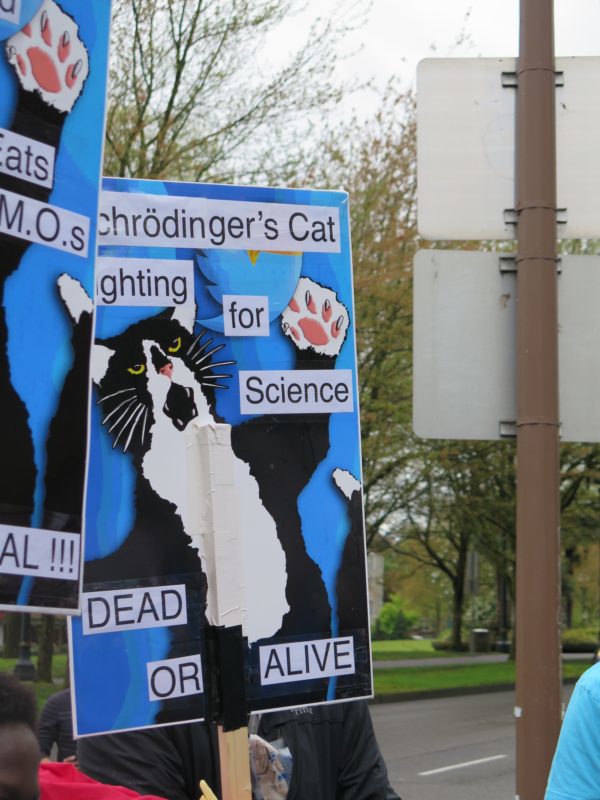
What do we do during spring here in Oregon?


On Monday we tiptoe through the tulips, and ponder which of the below is the best curse to memorize…. courtesy of Aaron Spiegel …

Yiddish Curses for Republican Jews


  • May you sell everything and retire to Florida just as global warming makes it uninhabitable.
  • May you live to a hundred and twenty without Social Security or Medicare.
  • May you make a fortune, and lose it all in one of Sheldon Adelson’s casinos.
  • May you live to a ripe old age, and may the only people who come visit you be Mormon missionaries.
  • May your son be elected President, and may you have no idea what you did with his goddamn birth certificate.
  • May your grandchildren baptize you after you’re dead.
  • May your insurance company decide constipation is a pre-existing condition.
  • May you find yourself insisting to a roomful of skeptics that your great-grandmother was “legitimately” raped by Cossacks.
  • May you feast every day on chopped liver with onions, chicken soup with dumplings, baked
  • carp with horseradish, braised meat with vegetable stew, latkes, and may every bite of it be contaminated with E. Coli, because the government gutted the E.P.A.
  • May you have a rare disease and need an operation that only one surgeon in the world, the winner of the Nobel Prize for Medicine, is able to perform. And may he be unable to perform it because he doesn’t take your insurance. And may that Nobel Laureate be your son.
  • May the state of Arizona expand their definition of “suspected illegal immigrants” to “anyone who doesn’t hunt.”
  • May you be reunited in the world to come with your ancestors, who were all socialist garment workers.
  • And when we are done muttering under our breath we just hum this:
  • https://www.youtube.com/watch?v=umw-8J-O14o

Resilience

Today’s profile in this week on courage is about a man who lost his face. It was literally eaten up by a bacterial infection the day after birth. Worse than the physical assault and the endless reconstructive surgeries it necessitated throughout his life, was the fact that his parents abandoned him on the spot.

He lived to write a book about surviving in the absence of love, a void confirmed by a harrowing meeting with his mother when he seeks her out as an adult. 38 years of the most painful life culminate in encountering a shallow, narcissistic, defensive human (?) being who accuses him of making her feel bad. Howard Shulman, then, is testimony to resilience, a capacity to persist in the face of, in his case, unimaginable difficulties.

http://narrative.ly/as-my-face-disappeared-so-did-my-mother-and-father/?utm_source=Narratively+email+list&utm_campaign=89cbd9ffd2-EMAIL_CAMPAIGN_2017_04_02&utm_medium=email&utm_term=0_f944cd8d3b-89cbd9ffd2-66322689

Passover inspired my associations with courage this week; it was a week that saw official US governmental reflections on the holocaust describe it as a something where chemical weapons were not used on “one’s own people,” who had been sent to holocaust centers (known to the rest of us as concentration camps). The decision who is one’s own, and who is not, based on race, orientation, religion and in Shulman’s case mere looks, who deserves abandonment or even death is not something only from the history books. Imagine my joy, then, when a message of inclusivity reached me from North Dakota, headlined: the most radical seder in the history of North Dakota: progeny had created a special seder plate.

“Last night our seder plate included the normal stuff (bitter herbs, boiled egg, lambshank-beet, matzoh) and then:
an orange symbolizing gender equality;
a brick symbolizing stonewall + trans liberation;
a key symbolizing an end to mass incarceration;
olives symbolizing Palestinian liberation;
coffee beans symbolizing modern slavery;
a tomato symbolizing undocumented liberation;
a burning cop car symbolizing burning cop cars;
a packet of yeast symbolizing RISING UP;
and a shell with burned sage acknowledging our host, and acknowledging that this is all stolen land. “
There is hope!


The Fight against Racism

Today I want to celebrate the courage of a woman known to all of us and the determination and ingenuity of a man known to – I daresay – none of us. I am talking about Rosa Parks, whose courage to insist on her bus seat when challenged by a white man gave rise to the civil rights movement. (Coincidentally, another person not giving up his seat made the news yesterday – a doctor was forcibly and violently dragged from his United Airline seat, paid for and entered legally, after United failed to find volunteers to accommodate their own employees’ needs, and did not offer the amount of money needed to persuade fliers to volunteer their seats.  Flying while Chinese has become another source of danger, apparently. But I digress.)

Rosa Park’s house was about to be razed rather than made into a museum – this country has apparently no interest in a memorial to the successful fight of racism, however unfinished. Ryan Mendoza, an artist living in Germany, managed to dismantle it and reconstruct it bit by bit in his Berlin garden, covering the cost of the transatlantic transport himself.  Details of this amazing feat below.

http://www.dw.com/en/why-rosa-parks-house-now-stands-in-berlin/a-38343924

And while we’re at it, here is another example of private initiative and determination to fight racism. Leaves me in a good mood this morning (as long as I don’t read the rest of the news.)

http://www.dw.com/en/children-are-our-future-german-footballer-gerald-asamoah-tackles-racism-at-school/a-37826264

Featured image says: Mobile Tolerance Zone

Words

Occasionally you read something in public places that gives you pause. That is, if you scan your environment, rather than burying your nose in a book or rushing along…. if you are of the former kind you might have caught the subtle messages displayed in subway trains in NYC and who knows where else….

http://hyperallergic.com/364131/artist-remixes-if-you-see-something-say-something-posters-in-nyc-subway/?utm_medium=email&utm_campaign=When%20Experimental%20Music%20Resonated%20with%20Abstract%20Art&utm_content=When%20Experimental%20Music%20Resonated%20with%20Abstract%20Art+CID_aa18ac7eba309946f4fd5a724e4566cd&utm_source=HyperallergicNewsletter

Once you exited the trains and walked through the stations you might have encountered this:

http://www.huffingtonpost.com/entry/trump-poster-halt-action-group-art_us_58c2fcd4e4b054a0ea6a8d94?fd1fcngkj8dcuwhfr&ncid=inblnkushpmg00000009

You have to be the change you want to see in the world

Clearly people are trying to get a message across to populations they might otherwise not reach. I commend them, given the amount of work that goes in such a project, the risk of legal prosecution and the likelihood of “low return.” If you are glued to the one or two sources of news that match your politics you will not hear what the other side has to say. If you are too exhausted from work and poverty, you might not notice.

Real life is always uncomfortable. It is never easy or thought-free and that’s how it has to be.

And speaking of messaging – here is an interesting bit on how you can try to manipulate language to pursue your goals:

https://www.washingtonpost.com/politics/the-political-lexicon-of-a-billionaire-populist/2017/03/09/4d4c2686-ff86-11e6-8f41-ea6ed597e4ca_story.html?hpid=hp_hp-top-table-main_trumplanguage740p%3Ahomepage%2Fstory&utm_term=.560a13cc993f

Photographs are of words that caught my roving eye in January. The featured shot says War starts here, as does the resistance.

Will happiness find me?

2nd Act


One of my favorite voices these days is British: George Monbiot writes for the Guardian, when he doesn’t write books. (Regarding the latter I recommend his thrilling read for anyone who loves nature: Feral. 

http://www.monbiot.com/2013/05/24/feral-searching-for-enchantment-on-the-frontiers-of-rewilding/

For today’s topic, though, I’ll attach 2 of his columns. One is a scathing take-down of neoliberalism, providing an analysis that helped me understand more about where we are now and why. Here is an excerpt:

“It was inevitable that the blazing, insurrectionary confidence of neoliberalism would exert a stronger gravitational pull than the dying star of social democracy……. the result is first disempowerment then disenfranchisement. If the dominant ideology stops governments from changing social outcomes, they can no longer respond to the needs of the electorate. Politics becomes irrelevant to people’s lives; debate is reduced to the jabber of a remote elite. The disenfranchised turn instead to a virulent anti-politics in which facts and arguments are replaced by slogans, symbols and sensation. The man who sank Hillary Clinton’s bid for the presidency was not Donald Trump. It was her husband.”

Here is the whole essay: http://evonomics.com/ruthless-network-super-rich-ideologues-killed-choice-destroyed-peoples-faith-politics/

The other is one of his occasional musings on how effective resistance can happen, a helpful guide for the passive perplexed. http://www.monbiot.com/2017/02/09/all-together-now/

An opera that fits with the theme of money in politics is, of course, The Rise and Fall of the City of Mahagonny. Weill, who wrote the music, and Brecht, who wrote the libretto, parted ways after this collaboration. As someone once said, Weill wanted success while Brecht wanted revolution. Brecht urgently called for resistance to a social order that descended from some kind of feudal capitalism that rots the soul into Nazism. Weill, a plain liberal, wanted to reach a broader spectrum of people with his music; after Mahagonny he never wrote opera again, but rather succumbed to showbiz music. Second act is fun, but the best known song from this opera, which Hitler hated and regularly had interrupted by the brown shirt youth, is Alabama.

Here are some versions:

Lotte Lenya, Weill’s wife, https://www.youtube.com/watch?v=6orDcL0zt34  1930

David Bowie, in his Peter Pan outfit, https://www.youtube.com/watch?v=Cz1ypTjChcA, 1978

Marianne Faithful, https://www.youtube.com/watch?v=9T59ej_TlXE

And yes, I did not care for the Doors version…..


First (Class) Act

I have a few people who recommend books to me that invariably hit the spot. Those people are from different backgrounds and of different ages, and I agree with them 90 or so % of the time. I am grateful to them because they alert me to authors that I might otherwise never have encountered.

That does not hold for Naomie Klein – I have met her in several of the journalistic sources I read, among them the Guardian, the NYT and lately the Intercept. The book recommended by my handlers and still on my library reserve list is This Changes Everything: Capitalism vs The Climate (2014), but I am sharing here her acceptance speech at the Sydney Peace Prize.

https://www.thenation.com/article/intersectionality-is-the-only-path-forward-for-the-climate-movement/

I like Klein’s naming Trump “the grabber-in-chief,”but, more importantly, I am impressed with how she summarizes the looming climate disaster and its political antecedents.

Matching her theme of resistance to capitalistic ruthlessness that could, quite literally, kill us all, with operatic music was hard because of too many choices; Beethoven advanced revolutionary ideas in Fidelio.  Kurt Weill wrote  Die Bürgschaft — about a mythical land under a totalitarian, money-driven dictatorship. When it was criticized, he used words that could come from a contemporary composer. “I believe that the task of opera today is to move beyond the fate of private individuals toward universality,” he wrote. “Die Bürgschaft undertakes an attempt to adopt a position on matters that concern us all. Such an attempt must elicit discussions as a matter of course. That is part of its job.”

And then there is CO2, an opera by Giorgio Battista, commissioned by the Milan Scala and premiered there in 2015. Taking its focus from Al Gore’s An Inconvenient Truth, it is a small modern masterpiece implicating us all in the destruction of the earth and suggesting potential remedies we could adopt.

Klein herself cites Leonard Cohen, so I’ll add her chosen song as well – all this music should motivate us!

From Prelude to Swan-Song


Maybe we should look this week at some favorite pieces of music paired with some writings that have the shared attribute of making us think. We’ll cover preludes, swan songs and a number of things in-between; all choices are related to ways one might make sense of what is going on around us and put it in some historical context.

I want to start with Carl Sandberg’s poem in the link below, published in 1920, shortly after WW I had ended. Four preludes on playthings of the wind is a cautionary and repetitive tale about the fleeting nature of past, present and future, faith in nations; it is also a dire warning against nationalistic pride that comes before the fall.

The last stanza claims:

And the wind shifts
and the dust on a doorsill shifts
and even the writing of the rat footprints
tells us nothing, nothing at all
about the greatest city, the greatest nation
where the strong men listened
and the women warbled: Nothing like us ever was.

https://www.poemhunter.com/poem/four-preludes-on-playthings-of-the-wind/

(PS For your laugh of the day: the poem hunter site that displays the poem has it categorized as: about girls.)

The matching musical prelude can be found here, from Glass’ opera about the pharaoh Akhenaten: a pharaoh who was one of the first founders of a monotheistic religion, oblivious to the country falling apart around him. It did not end well. Blind nationalism and blind religion never does.


Reconnecting

Back to normal, or so I hope. Your daily picture resumes with an interest in connections/connectedness this weekObviously a broad umbrella term, which I hope to fill with diverse reports.

We start with some photographs that made me happy. Kukatonon, the afternoon dance and drumming program in North Portland, had their annual fundraiser on Saturday. A mother, Bahia Overton, openly talked to the assembled crowd about the difficulty of being Black in lily white Portland, and how much safe spaces with a focus on shared Black history, African traditions and simple connectedness meant for the kids as well as the parents.

It took courage for Bahia to talk so openly about discrimination and fears in front of a partly White donor crowd and I applaud her. Meanwhile, in the backroom where the kids were eagerly awaiting their performance, that connectedness was displayed in spades. They laughed, they sang, they helped each other with their hair and costumes, and they took, of course, ubiquitous selfies.


And the guests formed their own community, however limited to their once-a-year encounter, since many of us are repeat visitors, feeling connected by a sense of supporting an important cause.

Anti-apartheid activist and former congress woman Elizabeth Furse.

It took an incredible amount of work for all the staff to pull this event off, superb volunteerism that makes safe spaces possible. Nothing but respect for them.

Community. One of the best forms of connection!


Two other voices

I find my aging brain is slow in thinking through a number of issues connected with the barrage of new facts awaiting us every day.  I need my own kind of time.

So while I think, permit me to offer two other voices who have something interesting to say. For one I have a link https://medium.com/@…/trial-balloon-for-a-coup-e024990891d5…  and hope you find something in there that helps understand what is going on.

The other is a short post by Heather Cox Richardson, educated at Harvard, now teaching history at BU; she posted it on FB and gave permission to share it. I just copied the whole thing below.

“What Bannon is doing, most dramatically with last night’s ban on immigration from seven predominantly Muslim countries– is creating what is known as a “shock event.” Such an event is unexpected and confusing and throws a society into chaos. People scramble to react to the event, usually along some fault line that those responsible for the event can widen by claiming that they alone know how to restore order. When opponents speak out, the authors of the shock event call them enemies. As society reels and tempers run high, those responsible for the shock event perform a sleight of hand to achieve their real goal, a goal they know to be hugely unpopular, but fromwhich everyone has been distracted as they fight over the initial event. There is no longer concerted opposition to the real goal; opposition divides along the partisan lines established by the shock event.

Last night’s Executive Order has all the hallmarks of a shock event. It was not reviewed by any governmental agencies or lawyers before it was released, and counterterrorism experts insist they did not ask for it. People charged with enforcing it got no instructions about how to do so. Courts immediately have declared parts of it unconstitutional, but border police in some airports are refusing to stop enforcing it.

Predictably, chaos has followed and tempers are hot.

My point today is this: unless you are the person setting it up, it is in no one’s interest to play the shock event game. It is designed explicitly to divide people who might otherwise come together so they cannot stand against something its authors think they won’t like. I don’t know what Bannon is up to– although I have some guesses– but because I know Bannon’s ideas well, I am positive that there is not a single person whom I consider a friend on either side of the aisle– and my friends range pretty widely– who will benefit from whatever it is. If the shock event strategy works, though, many of you will blame each other, rather than Bannon, for the fallout. And the country will have been tricked into accepting their real goal.

But because shock events destabilize a society, they can also be used positively. We do not have to respond along old fault lines. We could just as easily reorganize into a different pattern that threatens the people who sparked the event. A successful shock event depends on speed and chaos because it requires knee-jerk reactions so that people divide along established lines. This, for example, is how Confederate leaders railroaded the initial southern states out of the Union. If people realize they are being played, though, they can reach across old lines and reorganize to challenge the leaders who are pulling the strings. This was Lincoln’s strategy when he joined together Whigs, Democrats, Free-Soilers, anti-Nebraska voters, and nativists into the new Republican Party to stand against the Slave Power. Five years before, such a coalition would have been unimaginable. Members of those groups agreed on very little other than that they wanted all Americans to have equal economic opportunity. Once they began to work together to promote a fair economic system, though, they found much common ground. They ended up rededicating the nation to a “government of the people, by the people, and for the people.”

Confederate leaders and Lincoln both knew about the political potential of a shock event. As we are in the midst of one, it seems worth noting that Lincoln seemed to have the better idea about how to use it.”

When I tried to summarize her argument in conversation with someone who is politically astute and passionate, I was reminded by him that calls for unity have a place, are important, will lead to effective outcomes, BUT – they are too often one sided. Blacks and Native Americans have called and weren’t headed in the history of our nation, only co-opted when it fit; now they are scolded if they don’t help with the cause (the women’s march, for example.) For one, they DO come out and join in a united outcry against what has been happening in the last week. Secondly, if individuals pass on any particular march due to personal fatigue, having for so long shouldered the burden of resistance without general support, it is perfectly justified.

I hope that the division along established lines will crumble, as they seemingly did yesterday at the demonstrations against the muslim ban. I hope that marching together will open the eyes and brains of us privileged ones when coming in contact with the historically oppressed. The focus on current emergencies could then be expanded to a joint focus on restorative justice. I hope that the historical lessons of divide et impera can be undermined by solidarity freely given and reciprocated after this wake up call.

Calling all Opas und Omas…. with the appropriate attitude…. 


Stream of Consciousness

Can you tell this week’s blogs are spontaneous musings, rather than carefully researched topics?

Blame it on being overwhelmed daily by ever more frightening news, on struggling to get my body back into this timezone, on pre-occupation with the upcoming exhibit.

With regard to the news, Politico summarized it for me: 

With regard to time-zone: When I am overtired I am even more susceptible to questionable  humor: so this struck me, when found on some site, maybe it was Slate:  Who wears it better?

And this on the day the refugees were condemned to stay in Syria.

With regard to the exhibit – could I have chosen a more poignant time to create art about refugees? You tell me.

What I am telling you: Please join me on Sunday, February 5th, from 2-4 pm for a reception and short talk about the work. The exhibit is at Camerawork Gallery, http://www.thecameraworkgallery.org

There will be matted montages (limited editions) and one beautifully framed image that is open to silent bidding. Those latter proceeds will go in their entirety to Mercy Corps for their refugee program.  The piece is called REST. (Something we might faintly remember when looking back 4 years from now…. )