Flatulence, you know, the activity that releases methane into the atmosphere, is not usually a topic discussed in polite company. But since we all appreciate some good news these days, flatulence it shall be. Or the absence thereof.

Many of you might have heard the report already on NPR 2 days ago. It has been picked up all over the place: one of the major sources of methanol emissions, gas with high global warming potential, heating up the atmosphere, are the burps and farts of cows. There, I said it.

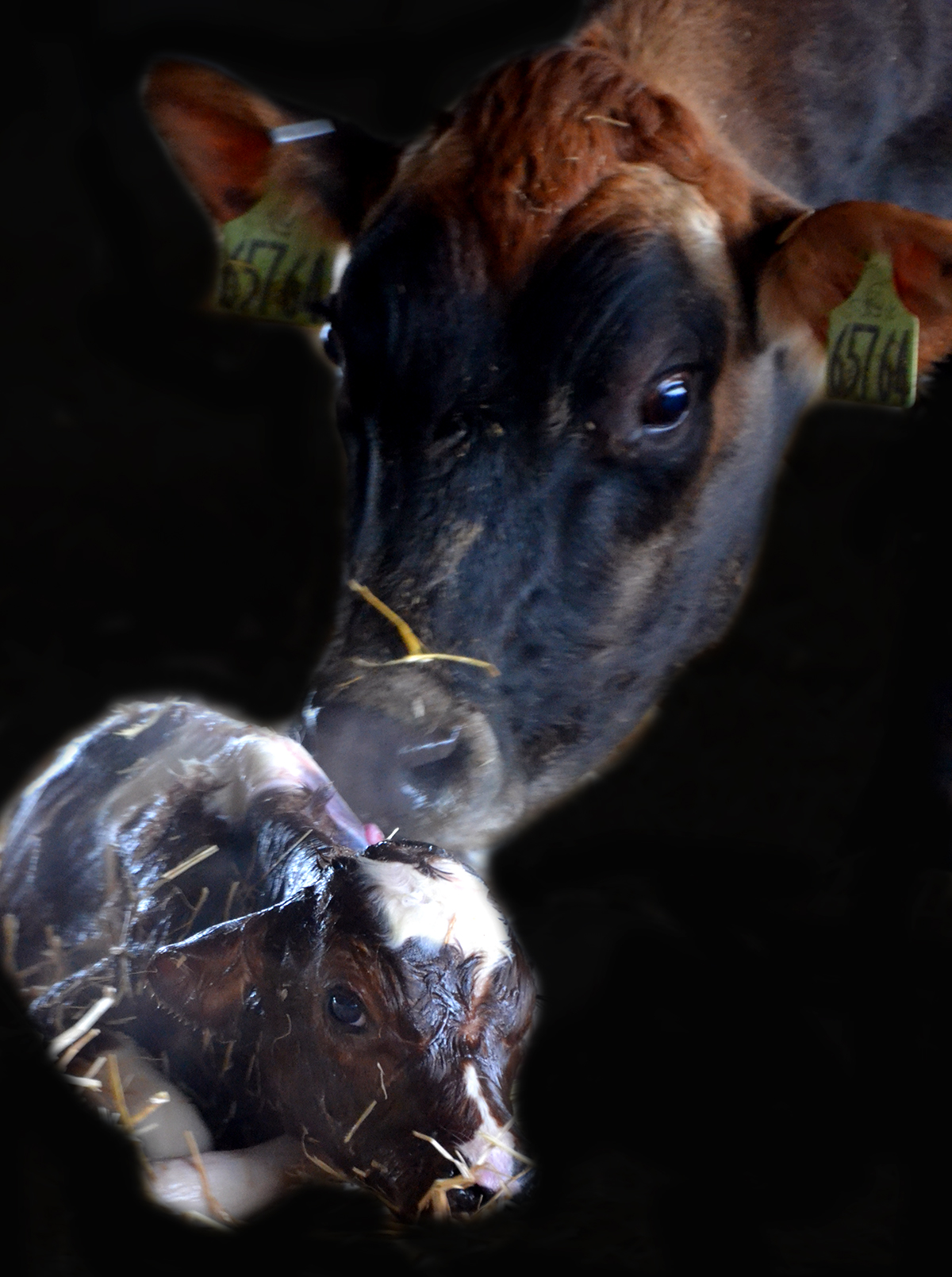
Cows have several stomach chambers, in which microbes help digest the food. They belch due to enteric fermentation, which is the digestive process of converting sugars into simple molecules for absorption into the bloodstream and which produces methane as a by-product. On the other end of the cow, manure is dropped which contains and releases methane as well.

It turns out (and it seems to be a bit of a rediscovery, if you look at what the ancient Greeks or 18th century Icelanders reported,) adding seaweed to the bovine feed helps reduce methane emission by an astonishing 98%. Minute amounts of those submarine grasses seem to be enough.
Asparagopsis taxiformis and Asparagopsis armata are 2 species of a crimson submarine grass that drifts on waves and tides all around the world’s oceans. These 2 species are emerging as an effective tool in innovative, regenerative, and cleaner production for the wider agriculture sector. Asparagopsis and other types of seaweed have specialized gland cells that make and store bromoform, an organic compound. When this deep red seaweed is freeze-dried, powdered, and sprinkled as a garnish on a cow’s meal, bromoform blocks carbon and hydrogen atoms from forming methane in the stomach. (Ref.)

Given that there are about 1.5 billion cows on our planet, this seems an exciting step forward in our attempts of decarbonization to save the earth.

Incidentally it also seems to make the cows healthier and increase milk production. The whole seaweed issues started in this newest version, in fact, when a farmer noticed that his cows that feed near the ocean shore thrived in comparison to his other ones that fed at higher pastures. The power of observation, leading to scientific exploration.
Unclear to me, though, is how large-scale seaweed production will impact marine environments, and how much global efforts to get people away from eating beef will be undermined if we now think cows are no longer complicit in climate change. There are still the countless acres of Amazon rainforest cut down to make pastures for cows, who surely will not be fed seaweed in the first place…


But for now, let’s celebrate diminished flatulence – we take our small victories where we can find them these days – and amuse ourselves by going back to what Benjamin Franklin had to say in 1781 on the very topic. “It is universally well known, That in digesting our common Food, there is created or produced in the Bowels of human Creatures, a great Quantity of Wind.” The essay can be found here. A fun read. It is titled: A Letter to a Royal Academy about Farting. Gone with the wind, I guess, since it never arrived at that august body.

Music today is by Tcherepnin from his Le Monde en Vitrine – The Greyhounds and the Cow. It was incited by the vitrine of a patron of the arts that held numerous chachkas. “The first movement,” the composer wrote, “is inspired by a group of miniature greyhounds in glass, which in the show-case stands next to a massive porcelain cow. The greyhounds are full of action, whilst the cow is placid. This contrast inspired me deeply. How often in life is our enthusiasm thwarted by something as placid as a cow!” To which I say: Give me placidity any day….
(Placidity – a feeling of calmness; a quiet and undisturbed feeling. placidness. calmness – a feeling of calm; an absence of agitation or excitement. 2. placidity – a disposition free from stress or emotion.)

Here is fuller menu of his piano works, if you click play all.