Browsing Category

Literature

Andantino

One of the most beautiful pieces of music I know is Schubert’s posthumously published Sonata D 959 – 2nd part of a trilogy, all three goosebump-producing. They came to mind when I heard yesterday that the new administration undermined the application of a hard-fought law that protects transgender rights. It was serendipity that my search for Brendel’s version of the Sonata produced a cover image of a bathroom…..although I hear someone say it is as little about bathrooms as it was about water fountains…

For today’s literary bit I refer back to an old short story by Willa Cather – Paul’s Case – A Study in Temperament (1905). It is a poignant exposition of someone who does not fit in, runs away from home after an act of defiance, has a day to explore his (subtly insinuated) homosexuality before he commits suicide for shame. The most heartbreaking aspect of it is the fact that he regrets that step when it’s too late.

The audio book version https://www.youtube.com/watch?v=dL_tnkGOwdA

And here is a 4 minute encapsulation of the story in pictures…. https://www.youtube.com/watch?v=0FRJGGZfNms

So now we have Blacks, Muslims, Jews, Queers, Mexicans and the poor as targeted populations – who will be next?

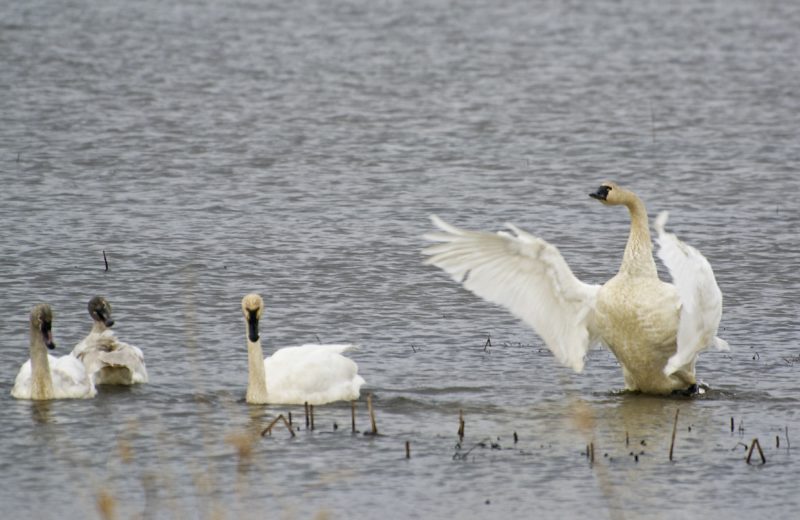
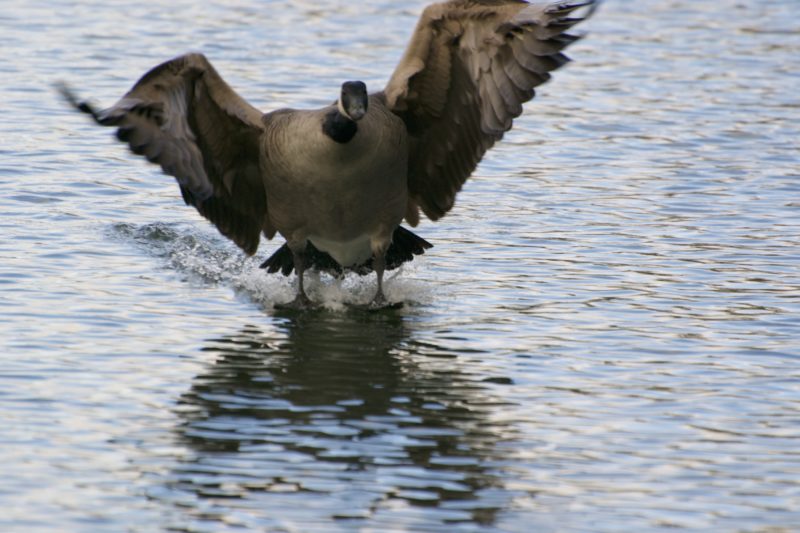
I insist on ending on an upbeat note: you all know Andersen’s Fairy Tale of the Ugly Duckling? The “misfit” is a lone outsider – but s/he holds a promise that nature fulfills. May everyone figure out who they are and take wings, ducks, swans, geese and anyone in-between!

First (Class) Act

I have a few people who recommend books to me that invariably hit the spot. Those people are from different backgrounds and of different ages, and I agree with them 90 or so % of the time. I am grateful to them because they alert me to authors that I might otherwise never have encountered.

That does not hold for Naomie Klein – I have met her in several of the journalistic sources I read, among them the Guardian, the NYT and lately the Intercept. The book recommended by my handlers and still on my library reserve list is This Changes Everything: Capitalism vs The Climate (2014), but I am sharing here her acceptance speech at the Sydney Peace Prize.

https://www.thenation.com/article/intersectionality-is-the-only-path-forward-for-the-climate-movement/

I like Klein’s naming Trump “the grabber-in-chief,”but, more importantly, I am impressed with how she summarizes the looming climate disaster and its political antecedents.

Matching her theme of resistance to capitalistic ruthlessness that could, quite literally, kill us all, with operatic music was hard because of too many choices; Beethoven advanced revolutionary ideas in Fidelio.  Kurt Weill wrote  Die Bürgschaft — about a mythical land under a totalitarian, money-driven dictatorship. When it was criticized, he used words that could come from a contemporary composer. “I believe that the task of opera today is to move beyond the fate of private individuals toward universality,” he wrote. “Die Bürgschaft undertakes an attempt to adopt a position on matters that concern us all. Such an attempt must elicit discussions as a matter of course. That is part of its job.”

And then there is CO2, an opera by Giorgio Battista, commissioned by the Milan Scala and premiered there in 2015. Taking its focus from Al Gore’s An Inconvenient Truth, it is a small modern masterpiece implicating us all in the destruction of the earth and suggesting potential remedies we could adopt.

Klein herself cites Leonard Cohen, so I’ll add her chosen song as well – all this music should motivate us!

Learning from others

The week concludes with recommended reading about how artists function under authoritarian regimes. Mostly because it is so apropos in our current situation here in the US. (I do believe it is because some elements of fascism are hard to deny. For an in depth analysis of that argument go here: http://www.counterpunch.org/2016/12/14/the-empire-has-no-clothes-trumps-class-war-cabinet-the-f-word-and-the-coming-resistance/)

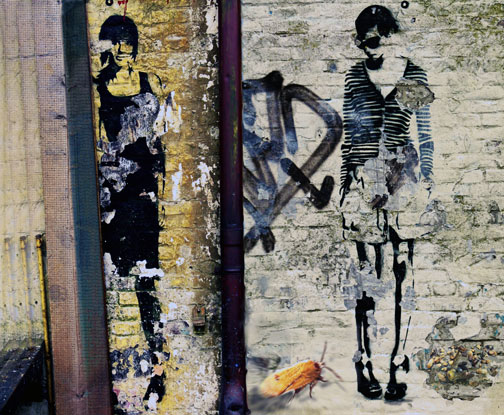
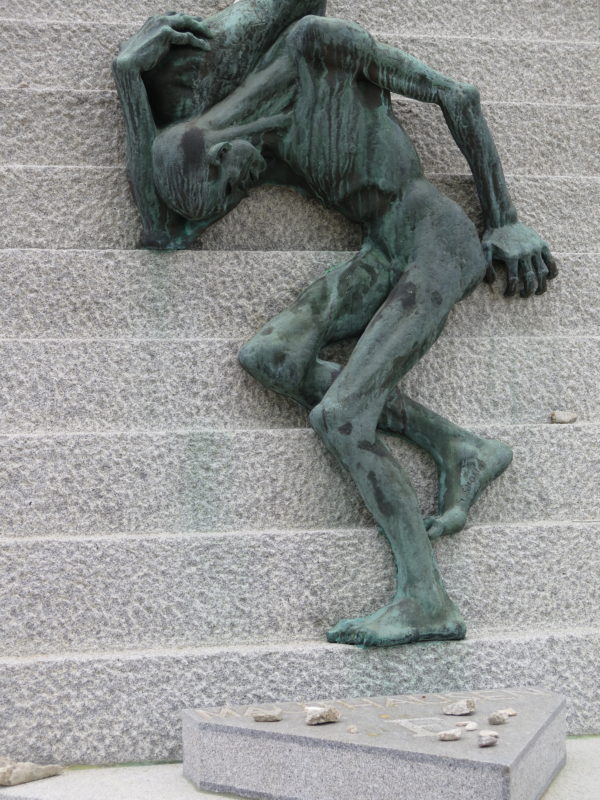
Images and montages are from Weimar, Hamburg and Berlin.

Here are the books that might inspire artists and anyone else who tries to figure out how to resist:

Beth Irwin Lewis, George Grosz: Art and Politics in the Weimar Republic

University of Wisconsin Press, 1971; reprint Princeton University Press, 1991

Peter Paret, An Artist against the Third Reich: Ernst Barlach, 1933-1938

Cambridge University Press, 2003

Klaus Mann, Mephisto

1936; reprint Penguin Classics, 1995

Alan Riding, And the Show Went On: Cultural Life in Nazi-Occupied Paris

Vintage, 2010

Alice Kaplan, The Collaborator: The Trial and Execution of Robert Brasillach

University of Chicago Press, 2000

And here is the source for these recommendations, with detailed description of each book.

5 Books to Read About Artists Under Nazism


Meeting canceled

The Moth

We can be short today: there will be no meeting with the women I’d like to talk to. They are beyond mediation – not that I’d be daring to offer that given the depth of the abyss between them. You have probably heard of each of them, after all they are both famous, justly prize winning writers, and some of their books have been made in to successful movies. (Possession – see review here http://www.rogerebert.com/reviews/possession-2002 for one, The Waterfall for the other.)

Yes, I am talking of A.S. Byatt and Margaret Drabble, sisters known as much for their incredible gift as their unending feud. I just don’t get it  – yes, there was favoritism of one at home, yes there was a pushy mother making achievement into a competitive sport, yes, they both chose the same métier. But going to war over the use of a familial tea-set as a prop in one of your novels? Depriving yourself of the shared memories of childhood that bring such comfort in later years? Condemning each other for unfair reckoning with your parents in your novels?  Their loss. http://www.telegraph.co.uk/culture/books/8632911/Margaret-Drabble-Its-sad-but-our-feud-is-beyond-repair.html

I like to read them both, but am partial to Drabble, since she got to me early and in formative years when it came to feminism. Where Byatt seduces with a vivid, colorful narrative explosion, Drabble goes sparse but deep into psychological exploration. I still consider The Millstone a seminal book. Motherhood was never described more accurately within a feminist context.

(Review here:https://www.theguardian.com/books/2015/may/15/the-millstone-the-crucial-1960s-feminist-novel)

Tilde- Gerhard Richter copy

Which brings me to the conclusion of this week: I like movies, I prefer books. I like the idea of meeting people who strike me as interesting, but would probably be at a loss if that really happened. Let’s keep it a fantasy.  See you next week.

We’ll never know

· The Armed Man/Charge! ·

“Cousin Swift, you will never be a poet!” John Dryden, famous man of letters at the end of the 17th century, is alleged to have said this to Jonathan Swift, one of the brilliant minds of the beginning of the 18th century. We’ll never know if this encounter actually occurred and led to Swift’s realization of his strength, satirical prose (think: Gulliver’s Travels), but we do know that Swift nurtured a life-long enmity toward his distant relative Dryden, even after the latter had long died. This in spite, or perhaps because of, so many parallels in the lives of these gifted men, their shifting allegiances towards crowns and religions, their insight into the irrational nature of man and the fact that economic considerations were a driving force behind imperials wars.

Why am I bringing this up? Jenkins’ 7th movement of The Armed Man, called Charge! is using words from both sources, intermingling Dryden’s patriotic call for duty with the lament offered by Swift.

(Music here:https://www.youtube.com/watch?v=BNrD305XbXg). Did the composer or did he not know about the strained relationship between the writers? Was he just taking familiar words that seemed to express the polar experiences towards engaging in battle, or was it an inside joke, to join the two at last? We’ll never know that either.

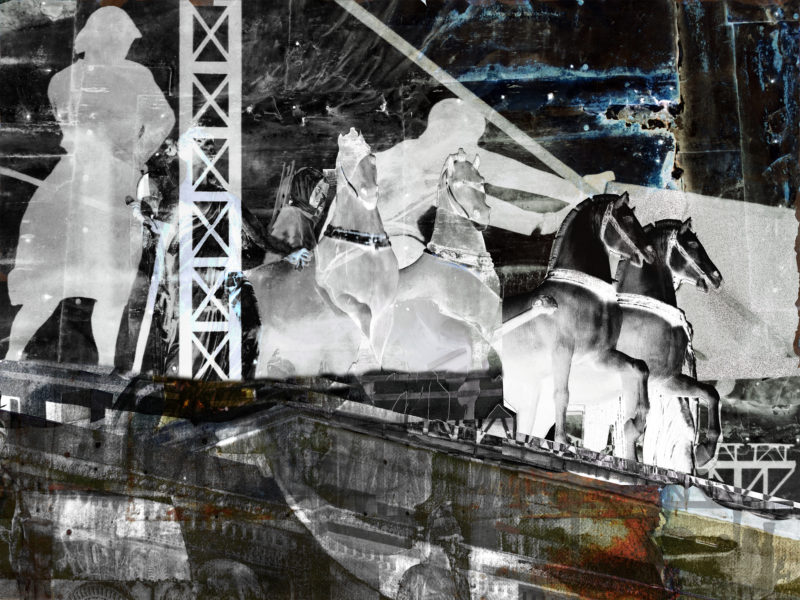
I admit to using my own inside jokes occasionally when creating montages, or to using allusions that make only sense to me. That is the privilege of creating. Explaining them makes little sense, and, more importantly, ruins the personal or overall interpretation viewers might bring towards the image, narrowing their impression to “trying to get it.” That said, the horses that charge into battle in the montage are from an arc de triomphe in the Louvre courtyard celebrating military victory.  However, they reminded me also of Swift’s Houyhnhnm society, a nation of horses. That nation was founded upon reason, and only reason and therefore the horses practiced eugenics based on their analyses of benefit and cost, as we can read in part 4 of Gulliver’s Travels. Gulliver adored the horses despite them not having pity or believing in the intrinsic value of life. It did not end well….IMG_2371 copy