The Right to Dry
· The American ban on Clotheslines ·
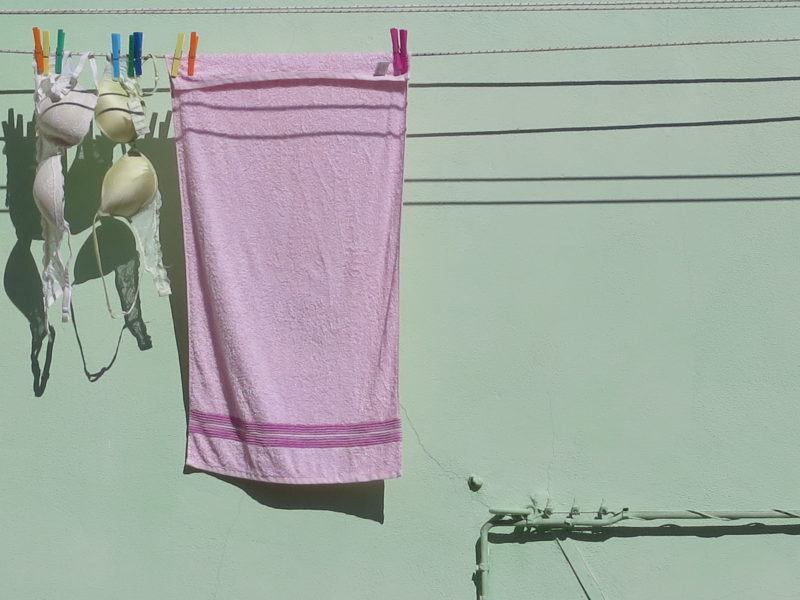

I cannot take credit for inventing this slogan – it is the name of a movement that fights against state laws and community bans on drying your laundry outside. Officially more than 60 million Americans are prohibited from hanging their laundry outside, in their own yards or balconies and porches. The 2 minute clip below is a poignant introduction to what served the interest of the electricity industry (with former President Regan and Nancy as their spokespeople!) and those selling dryers. https://vimeo.com/36605168

Hurrah for sustainability movements that fight these bans with clever digging out of laws that can be used against them. As of 2012 they voided the ban (or made it unenforceable) in 19 states (including Oregon) by referral to solar access laws. Many of these are from the 1970s and hidden clauses in state property laws. A 1979 Oregon Law, for example, says any restrictions on “solar radiation as a source for heating, cooling or electrical energy” are “void and unenforceable.” Clotheslines appear to fit under the umbrella of Oregon’s and other states’ solar rights because systems for hang-drying rely on the sun’s radiation to evaporate water in wet laundry. Given how much electricity and money you save, prolonging the lifetime of your clothing and eliminating pollution, it seems insane not to allow outside drying. (However, my clothesline does not look as arranged as this one….)
Since my photos were taken in Italy I though it fitting to match them with Lavanderas, by an Italian painter, Antonio Donghi (1897- 1963), who was part of Italy’s neoclassical movement in the 1920s and was sometimes compared to Rousseau. 







 because it reminded me of the blond young man in my photograph. The latter might not be flying, but his hair is and his headband might just as well, given all the butterflies……


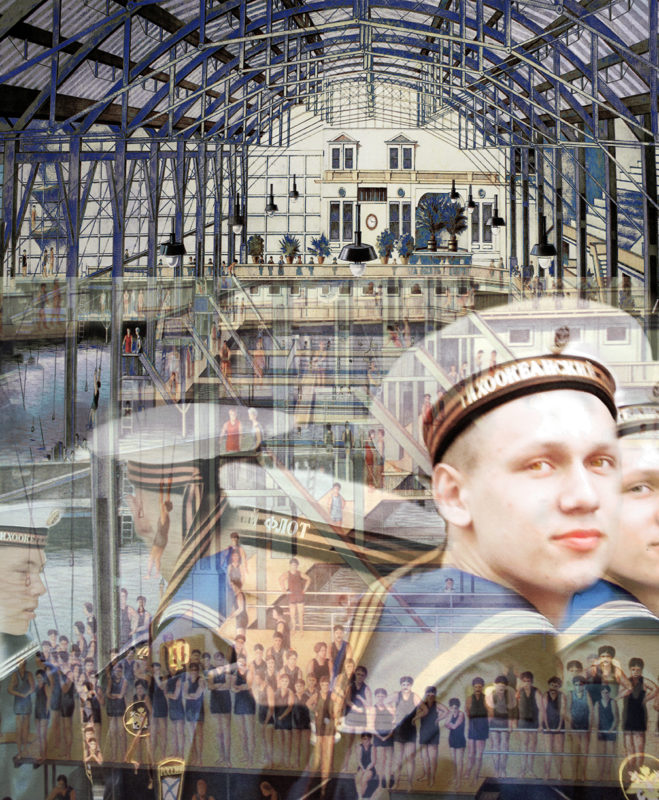

 Below is a painting of a sailor by Bohumil Kubista one of the founders of modern Czech painting. (
 If you google Eugène Carrière and click on images you’ll face an astonishing array of somewhat monochromatic brown/sepia/beige/black paintings. Lots of them, and all a little bit mysterious, glowing, or, as Wikipedia describes it, with a misty color scheme. I had first seen his famous portrait of Paul Verlaine at the Musée d’Orsay and then encountered the one below, of Alphonse Daudet, in some small museum in San Antonio, Tx.

 ( Music here:

