Browsing Category

Art

Art on the Road (5), Hands over Heels.

I often pay particular attention to how people paint hands. It is not an easy task as anyone who has ever tried doing it can confirm. And clearly, people vary in their ability to capture something that looks like the real thing. In addition, though, I believe that people who lived in eras that depended on the work of hands more than does our own, took extra care to draw our focus to them. Today’s photographs, all from the last 6 days, can attest to that.

Hands hold something of interest so that the gaze moves over to it.

Hands reach,

point,

grab.

Hands represent activities of writing, reading,


Hands reference thinking, mourning.

Over and over they are central to music being played.


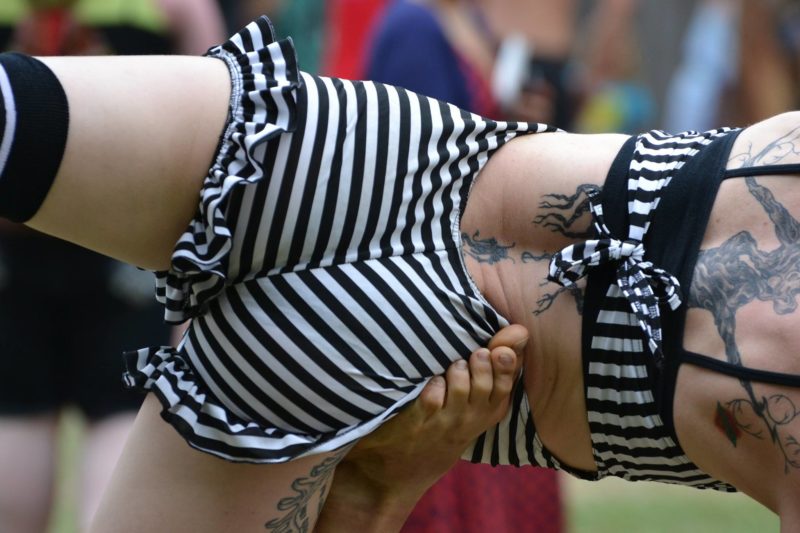
Sometimes they are the foil for detailed fashion exploration.

They pray.

They promise.

And sometimes they simply rest.

For me they often provide fodder for little sketches, montages that play on them with my own invented surrounding, something that reminds me of all the wonderful art I encounter in my travels. Travels that are possible as long as your body is willing, your hands can grab the backpack, your feet can carry you through the landscape, your back is cooperative and your stamina not exactly undiminished but still in existence….”Kinehora,” as they say in Yiddish when they’re thinking “Knock on wood…”


This came to mind since on the topic of hands – artificial hands, that is – there is good news. An Italian research team has developed a new hand prothesis that is way lighter and better able to function than all existing robotic models.

And this concludes this week’s travel report; I hope I was able to instill some vicarious joy. I sure had a blast.


Art on the Road (4) – Longwood Gardens

I have always felt that gardens, carefully planned, tended, designed gardens, can be a form of art. Add to the garden an additional creative element – fountains that move water in magical ways – we can include a garden, Longwood Gardens, in this week’s Art on the Road series unhesitatingly.

(For those of you expecting yet again contrasting takes as per theme of the week, I spare you the sight of my garden – a.k.a. the Buttercup Biennale – and me the embarrassment.)

Longwood Gardens, about an hour away from Philadelphia, were originally created around 1906 by yet another man with a passion, means and openness towards philanthropy: Pierre S. du Pont. A traveler after my own heart with a keen interest in technology and a sucker for spectacle, he created not only beautiful and increasingly impressive gardens, but established a series of waterworks that are indeed spectacular, particularly in their new, just recently opened form. Attached is a short clip that explains these developments. (I had to bite my tongue when the fountain display designer talked about using both sides of the brain – that old misperception of where creativity and rationality are lodged…. but other than that I found him amusing.)


I obviously saw the daylight version, which was impressive enough. The nighttime technicolor performance is on my list for another visit, it must be a sight to behold. From the catalogue: “After a two-year, $90 million dismantling and near-total rebuilding of a fountain garden unveiled in 1931, the revived five-acre garden increases the number of fountains from 380 to 1,719 and incorporates LED lights that will bring colors unknown to the old show — along with bursts of water propelled by compressed air and flames of propane gas that flare atop columns of water. The jets sway and pirouette to music on a stage of interlaced basins, canals and circular pools. The highest reach 175 feet.”

$90 millions – I wonder how the Flint, MI water supply could be improved against lead poisoning with such numbers…..

But really, for me the garden itself was the jewel. I forget how big it is (enormous is a specific enough description, trust me), but I remember that 1600 people are working on it either as employees or volunteers. They have gone to green power, pursue new projects that include native plants and an 86 acres meadow garden that focusses on ecological design.

https://longwoodgardens.org/gardens/meadow-garden

At this point in the year the subtlety of large swaths of creeping blue phlox under the bright green new leaves were a highlight. So was the still golden color of the emerging leaves on the young copper beeches, and the already reddish version on the mature trees.


Carefully tended flower walkways (that alas included my pet peeve of combining plants that do not naturally co-ocurr in a given season, viz. snapdragons next to the tulips) alternate with stretches of park dominated by old growth trees or french design hedges.


I did not have the time or energy to explore the vast conservatories, and the day was too beautiful anyways to stay inside. It was enough to marvel at all the vision and care that went into this place from the very beginning, as well as, frankly, money. Which brought me to random thoughts on philanthropy in general – do people support causes because they want to leave foot prints? Because they have to somehow spend some of all these riches and might as well do so to applause? Do they mainly care about making the world a better place? Are yesterday’s art collections and water gardens today’s space exploration? Sort of boys and their toys? As it turns out this morning’s NYT has someone touching on the same topic:

https://www.nytimes.com/2018/05/09/opinion/jeff-bezos-spend-131-billion.html?action=click&pgtype=Homepage&clickSource=story-heading&module=opinion-c-col-left-region&region=opinion-c-col-left-region&WT.nav=opinion-c-col-left-region

Asking myself what current woman philanthropist I could name I only came up with Melinda Gates, and her as part of a power couple. Had to look it up – and it doesn’t look too good (in terms of wealth unchained from family relations) :

https://www.insidephilanthropy.com/home/2014/2/25/meet-the-15-most-powerful-women-in-us-philanthropy.html


Better go and weed now, leaving my own footprint in a buttercup meadow that otherwise will take over…..

Art on the Road (3): The Barnes Foundation, Philadelphia

Soutine

It’s all about education.I could not get these words out of my head at the end of an extraordinary day spent first at the Barnes Foundation and later in the streets of North Philadelphia.


Miro

The Barnes is an exuberant place with a wild history. North Philly is a wild place with a desolate future. I’ve decided to contrast those two today, motivated by the fact that artistic expression, jubilant or despairing, can be found in both places. The desire to depict wills out, regardless of geography, historical time, and fame – or lack thereof – of the painters. (Photographs are paired with the Barnes first, what I found on the streets second.)

https://www.barnesfoundation.org


Cézanne

Albert Coombs Barnes was born into a working class family in 1872. As a German-educated chemist he made a fortune from co-inventing the silver-based antiseptic Argyrol, a successful treatment for gonorrhea. Between 1908 and 1929 he ran his own company, based in Philadelphia, making sure that his workers had 2 hours of instruction each day during their regular wok hours: they were trained in philosophy, read about education (John Dewey was a close friend) and most importantly instructed in art. Barnes was a truly passionate champion of education and believed in experiential learning; he started to collect art in 1912. It was eventually hung in his home and gallery of a large estate and arboretum that he built in the outskirts of town and opened to the public and art students.

Matisse

Collected art? The NYT’s Roberta Smith once called him an omnivore art shopper. I wonder how long it took her to find that polite alternative to the term hoarder. The collection is vast, encompassing some 6000 paintings, furniture, sculpture and iron wrought gadgets that dot the wall. He seems to have enjoyed putting fine, functional and decorative art on the same level.


Matisse

Fast forward to this century, long after Barnes’ untimely death in a traffic accident. The Foundation wanted to leave its old home in Merion to attract more visitors in a more central location. Mismanagement of funds, strife among Board members, a community that did not want to loose one of its landmark attractions, and above all Barnes’ will that prohibited any changes to location and arrangement of the artworks led to endless legal fights. They eventually resulted in green light for the construction of a new building in the central museum district, which emulated the exact internal lay-out of the inside of the old estate, covered the walls in the same mustard yellow fabric (amazingly effective) and hung the collection within an inch of its old composition.

The building itself has garnered mixed reviews since it opened in 2012. I found it sterile on the outside – maybe he’d appreciate the involuntary reference to his medicinal antiseptic that enabled the amassing of the art displayed in the beautiful interior. The sparrows defiantly build their nests in the fissures of the walls, breaking up the monotony…. I’m sure the architects will be apoplectic.

http://articles.latimes.com/2012/aug/25/entertainment/la-et-cm-barnes-foundation-20120522

Courbet

There is irritating lack of signage, both with regard to finding your way around (getting tickets, for example, in a far off basement is hard to do on intuition alone); and none of the paintings has written information next to it – therefor no titles for today’s photos, I could not run around chasing information sheets discreetly placed in corners of the rooms.

Pippin


But that preserves, of course, a sense of intimacy akin to experiencing a private art collection, rather than a sense of visiting a museum. Intimacy spread among some 6000 paintings…… the variety is stunning, the color bursts elating, the sense of someone’s love for art and need to teach about it overwhelming. There are more Renoirs and Cezannes than I have seen in all my visits of European museums combined.

Modigliani

The collection is valued at 25 billion dollars. According to a research report by the Pew Charitable Trust from last November, 25%, or more precisely 25.7% is the number of Philadelphia’s population that lives below the poverty level. Philly is the poorest big city in the nation. In absolute numbers that is over 400 000 people concentrated in the city, almost half a million who are truly poor, more than half of them African Americans.

Matisse (Joie de Vivre)


http://www.pewtrusts.org/en/research-and-analysis/collections/2017/11/poverty-in-philadelphia

Housing is cheaper and transportation more reliable than in the suburbs, which keeps the poor in inner city environments. There are, however, no jobs in the city to lift them out of poverty, job growth has only happened in the periphery. The few jobs added in the city since 2005 and the ones that are accessible to most people are in sales and service industry with a median annual income of $29.250. Almost 30% of the poor have not even a finished high school education and only 13% have a bachelor degree – the minimum needed for participating in the opportunities offered in the larger region for a more educated work force.

Tintoretto

At the root then is a lack of education – a fact surely determined by multiple factors, but required skills and knowledge sorely missing nonetheless. I can just envision Barnes turning in his grave in frustration with a society that does not emulate his example of providing supportive access to education for all. If we continue on our current path, Bosch’s vision might well come true.

Bosch


Art on the Road (2): Museum of Fine Art, Boston

I had never been to the Museum of Fine Arts (MFA) in Boston before. It has been in existence since 1876, steadily growing. Its most recent home, designed by Guy Lowell in 1909, is an imposing art palace paying homage to the BeauxArt movement. Current modernization and additions by Norman Foster did not take away the grandeur, but make traversing the museum more like moving through a rabbit warren.

https://www.mfa.org

The sequences of galleries and corridors crammed with art can be overwhelming. But if you are willing to just float through and let the art find you rather than vice versa, it is a glorious experience. My habit of going to these places unprepared and then read up on them later served me well once again. I felt like a kid having stumbled into a candy store, sampling treats I’d never seen before.

Josiah McElherny Endlessly Repeating 20th Century Modernism 2007

 And in random association to kids and candy: I always wonder how children feel when they come into buildings of this imposing size, just like I wonder about centuries of people entering huge cathedrals: will the grandeur overshadow the experience of the contents? Will it inspire a sense of separation rather than belonging? Will it increase or diminish focus on and admiration for art and/or religion?

Museum visits, in any case, can be quite up-lifting.

Jonathan Borowsky I dreamt I could fly  2000

The big draw at the MFA this spring is a Klimt/Schiele Drawings special exhibit – the curatorial descriptions were more informative than the art under weirdly low lighting. It did not leave a particular lasting impression.

Egon Schiele The Artist’s Mother, Sleeping 1911

Below is more information:

https://www.mfa.org/exhibitions/klimt-and-schiele-drawn

In fact, no one thing I saw bowled me over. What did was the diversity of the offerings overall, a sense of artists being driven across time and place to document their environments or express their thoughts. You can get a glimpse of that through my random choices of photographs from that visit, sprinkled through today’s writings. (I checked out the Escher exhibit for old times sake’s – when teaching Perception to my undergraduates he was always good for visual examples.)


I did skip the Rothko exhibit, and Art of the Americas – samplings of European art will be covered in a later blog. I simply could not walk through every door….)

The museum is much engaged in education; I particularly like the idea of spot light talks, 15 minute pop-up tutorials on a single piece of art given by an expert. Here is an upcoming example, picked by me for the clever title: https://www.mfa.org/programs/gallery-activities-and-tours/18th-century-instagram-0


Claude Monet La Japonaise (Camille Monet in Japanese Costume). 1876

Sometimes they get it wrong big time, though. Viz. the Kimono Controversy 3 years ago – visitors were invited to wear replicas of the depicted kimono and pose in front of the painting – cultural appropriation screams erupted and the MFA did not exactly handle the situation well.

Kimonos and Controversy: What the Boston MFA Got Wrong

And in another random note: the giftshop sucked. Ok, politely expressed, it did not provide the postcards or small gifts to bring home that I was looking for. There is such a difference in museum gift shops, have you noticed? Clever ones need not be big, but they need to offer a variety, starting with price ranges.  Turns out, the Philadelphia Museum of Art rocked. No one will be disappointed!

Ivan Navarro  Man Hole 2011

And this is why you need curators for people like me – how could I have known? Three cheers for art educators, of all stripes!


Art on the Road


Harvard Art Museum

Something is in the air – and I am not just referring to mobiles, although every museum I set foot in during a short trip to the East Coast seemed to have something floating about.


Philadelphia Museum of Art
MFA Boston

Rather, the air is suffused with a desire to take stock of periods of the past that just might inform us about how to handle the present, in our understanding of art history as well as that of our times. Two current exhibits are perfect examples of this: Inventur at the Harvard Art Museum in Cambridge, MA and Modern Times at the Philadelphia Museum of Art.

(All photographs are paired from the exhibits, Inventur in first position, followed by my best match from Modern Times.)

Wilhelm Rudolph Drawings of Dresden 1945-46/Diverse Industrial Scenes by Benton Murdock Spruance, Charles Turk, Jolan Gross Bettelheim, Ida Abelman mid 193os to 1943


Inventur (I) focusses on German art, while Modern Times (MT) covers the American departure into modernityThere are striking parallels of curatorial choices and artistic achievements in both of these exhibitions. They cover a limited period of time (1943 – 1955 for I, 1920s to the 1950s for MT,) display an incredible diversity of artists active during those periods, include painting, photography, collage and sculpture, and rely on core themes equally important for the artistic developments in both countries during the first half of the last century.

https://www.harvardartmuseums.org/visit/exhibitions/5388/inventurart-in-germany-194355

http://www.philamuseum.org/exhibitions/866.html?page=2

Harald Duve Carnival Feast 1952/George Biddle  Whopee at Sloppy Joes 1933

The mood, in turn, is strikingly different. And how could it not be? Modern Times reflects the optimism,  dynamism and daring of the American art scene of its epoch. Inventur, on the other hand, conveys the trauma, pain, but also resilience of German artists digging themselves, sometime literally, out of the rubble of the post-war years.

Karl Hofer Nights Of Ruins, 1947/ Kay Sage Tanguy Unicorns came down to the Sea 1948

Both exhibits make room for experimentation, architecture, urban scenery and the race towards industrialization.

Erwin Spuler Bombed out Buildings 1946-48/Arnold Rönnebeck Wall Street 1925

Both represent women artists, those known and those less familiar, including two of my favorite queens of subversion, Hannah Höch and Dorothea Tanning.

Hannah Höch Poetry around a Smokestack 1956/Dorothea Tanning Birthday 1942

As someone who grew up in Germany during the the latter years covered in Inventur, I felt a stronger pull to the themes of that show: the artistic reaction to the horrors, destruction, fear, disbelief and eventually hope of those living through the aftermath of the war in Germany.

The title of the exhibit (Taking Inventory) was borrowed from a 1945 poem by Günther Eich, which I am attaching in English translation. https://www.poetryfoundation.org/poetrymagazine/poems/52394/inventory-56d230d30ccb8

This is a strange choice, to be frank. Eich, born in 1907, preached before the war that poets should not be political, and yet showed extreme conservative opinions in his scathing literary criticism of others. In 1933 he applied for membership in the NSDAP, but was rejected. He then produced some 160 radio plays that very much spoke to Nazi issues and values and were widely broadcast. After the war, he opportunistically claimed one had to be critical of the fallen regime – and went on to be a celebrated writer, winning honors ad awards, while considered by others to have been a Mitläufer, a Nazi hanger-on. To have this turn-coat’s poem spearhead an exhibit of true dissenters is puzzling, to say the least.The power of the exhibit has you forgive this, however.

The visual works take inventory, indeed. They depict the destroyed landscapes, the vagaries of every day life, the attempts to escape the post-war reality of hunger, illness and despair by either documenting the catastrophic conditions or escaping from them into fantasy worlds. There are also hints of the unquenchable desire to return to some kind of normalcy, to rebuild a sense of home and focus on things like modern furniture, car ownership and the like, to move forward.

Konrad Klapheck Typewriter 1955/Charles Sheeler Cactus 1931


The curators note that the exhibit conveys not just an artistic, but also a physical and moral stocktaking of artists who stayed – and were endangered – during the Nazi regime and the hard years that followed, with a Nazi-indoctrinated public and critics trying to suppress their work way into the 50ies. I completely agree – many of the paintings I saw were testimonials in the truest sense of a world destroyed by fascistic ideals and action – something worthwhile to remember here and now.

Modern Times, in contrast, leaves you buoyed with a sense of energy. Where the German art makes you hold your breath, the American exuberance makes your heart beat faster. Given the vast collection of the Philadelphia Museum of Art, it also allows glimpses of lesser known artists beyond the panoply of the famous cohort.

In the end both shows pull off something extremely valuable: they evoke feelings without giving in to  irritating pathos and they link to critical thoughts about our past without yielding to nostalgia.

If you happen to be traveling to Boston or Philadelphia in the near future, I recommend you make time for a visit.


Reversals

I’ll close this week on art tidbits with two items that might interest you.

One is an exhibit in NYC (friends there: you have exactly 2 days to catch this show at Bookstein Projects….) that focusses on how a deviation from a traditional art subject can make things more interesting. Reversing the trend, in some ways.

Artists Who Unlocked the Modernist Grid

As someone who uses lines and circles as geometric anchors a lot in my own work, the art in this exhibit was mind-opening. Grids have been a staple in modern art ever since the Russian painter Kazemir Malevich and of course Piet Mondrian established them ass anchors in their work. The link below gives a short and fascinating art-history overview of the grid’s evolution in contemporary painting.

https://www.artspace.com/magazine/art_101/art_market/how_the_grid_conquered_contemporary_art-51540

To see several blue chip artists finding creative ways to break the grid while still using its visual power just spoke to me. Here are some samples from the show.

The second item of some kind of reversal has to do with photography.

In the normal progression of things, you come to a moment that catches your attention and you try to preserve it with your photograph. In the – fun! – link below, the photographer in some ways reversed that sequence. He stood in place, waiting for the moment to come to him.

(If you open the link  you need to push the cursor a bit to the right to get to the photographs – at least that was the case on my computer)

http://www.jonathanhigbee.com/coincidences  

When I first saw these pictures I was was assuming that they were staged. No one would have so much luck chancing upon so many meaningfully matching constellations. But when I read that Higbee visits certain promising locations (advertisement posters etc.) several times a week, waiting for hours, sometimes across two months, it all made sense. Of course he has one of the most photogenic and variable populations at his disposal: the citizens of NYC.

But perhaps hanging out on the street corners of PDX might yield just as delightful results…..

Photographs are my own grids, caught here or there.


Too Late

If you and I had a bit of foresight, we would have gotten our yellow fever inoculation about 8 weeks ago. That way we could happily travel to Sao Paulo, Brazil, to attend this week’s most intriguing art fair: SP-Arte/2018. It started yesterday and lasts for 4 days, but the satellite shows in the local galleries, museums and collections are up for several months. Galleries, museums and cultural centers in São Paulo feature a wide variety of events including exhibition openings, institutional collection visits, panel discussions, book launches, performances and guided tours fostering a unique art immersion week.

It’s become one of these it occasions, where the rich, the famous, the wannabes and the hanger-ons all congregate, not to mention the dealers, the connoisseurs, the investors and the art students. (Yes, I am jealous that I can’t be there. And no, I’m not going to reveal into which of the above categories I might fall.)

SP-Arte is known for showing Latin-american artists that have otherwise little exposure, in addition to the many already famous. The two shows I’d be certain to catch are one by Franz Manata and Saulo Laudares, ‘After Nature’ and Paulo Nimer Pjota’s ‘Medley’. You’ll easily discern why these two are of interest to me.

Pjota first: He used to be a graffiti artist and has turned into an installation artist with a focus on painting. His work is full of socio-political commentary, he uses found or recycled objects to interact with his paintings, and he has a sense of humor that appeals to me.

http://paulopjota.com

He’s also not above milking the it crowd for their money; you can buy a small volume of photographs together with an XL tshirt and some decals representing his paintings for a mere 150 Euros…. between philosophy and crime, indeed. Making me smile.

Manata and Laudares, my second choice, will have a 20 year retrospective at the fair. They are true multimedia artists, who have an affinity for works including sounds, but add to that everything imaginable in the realm of installations. In 2008 in a work called After Nature they placed speakers in the trees of Brazilian parks which had been invaded by parakeets who drove out the indigenous population of song birds. The speakers played the songs of the latter, much to the pleasure of people visiting the parks – until they discovered that these were artificial sounds….

https://www.youtube.com/watch?v=5qVCdWbiWY0

Graffiti, birds, art, travel – why am I not in Sao Paulo as we speak????

Photomontages are my own after nature versions…. from an older series called Feux Follets.

Nimble Women in Miami

Riddle me that: what does nimble mean in the context of an art museum’s mission? 

I found this on the website of the Patricia and Phillip Frost Art Museum, since I was drawn to explore the current exhibition, Dangerous WomenThe  museum is associated with the Florida International University and housed in an interesting building  designed by Yann Weymouth who was the chief of design on the I.M. Pei Grand Louvre Project. With 46,000 square feet of energy efficient exhibition, storage, and programming space, the museum achieved LEED silver certification.

https://frost.fiu.edu/exhibitions/index.html

After getting over my surprise that they mix nouns, verbs and adjectives in their value statement, and list them in no particular context and/or order, I was left with the real puzzle what is the value of nimble and how would an academic institution pursue it? Did they perhaps mean risk taking, as in showing controversial work? Or does it mean they are aware of current public taste and nimbly trying to accommodate it? Whatever – the current show is perhaps nimble in its title but less so in its contents.

The dangerous women in the show are all biblical characters, as painted by 16th and 17th century artists. Described variously in the exhibit introduction as purveyors of sin, harlots or hussies, or deadly temptresses and seductresses, they are given credit at shaping biblical history. Maybe we could think of the vocabulary as nimble?

Or the advertised coda: The exhibition will conclude with a modern and contemporary coda: Robert Henri’s sensuous Salome from 1901 and Mickalene Thomas’ Portrait of Madame Mama Bush 1, 2010, a reminder of the tenacious appeal of the subject. 

https://frost.fiu.edu/exhibitions/2018/dangerous-women.html

The Miami Press commented:The show promotes new ways of seeing many historic female characters, whose power to topple the strongest of male rulers made them “dangerous” but whose strength serves as an historical foundation for thinking about contemporary issues. Though the exhibition was organized well in advance of trending conversations and emerging movements such as #Me Too, “Dangerous Women” could not be more opportune or compelling.

Aha. I thought those were already pretty established ways of seeing. But what do I know. (Link below is a compendium of feminist biblical studies in the 20th century. Countless scholars have assessed the strength of biblical female rebels for at least a century.)
https://www.sbl-site.org/assets/pdfs/pubs/066002P-front.pdf

Jordana Pomeroy, director of the Frost Art Museum, adds, “’Dangerous Women’ demonstrates how throughout history, men have feared women who wield power through their intellect and sexuality. This new exhibition of old-master paintings demonstrates how powerful women were feared even when their acts were heroic.”

Maybe they were too nimble.

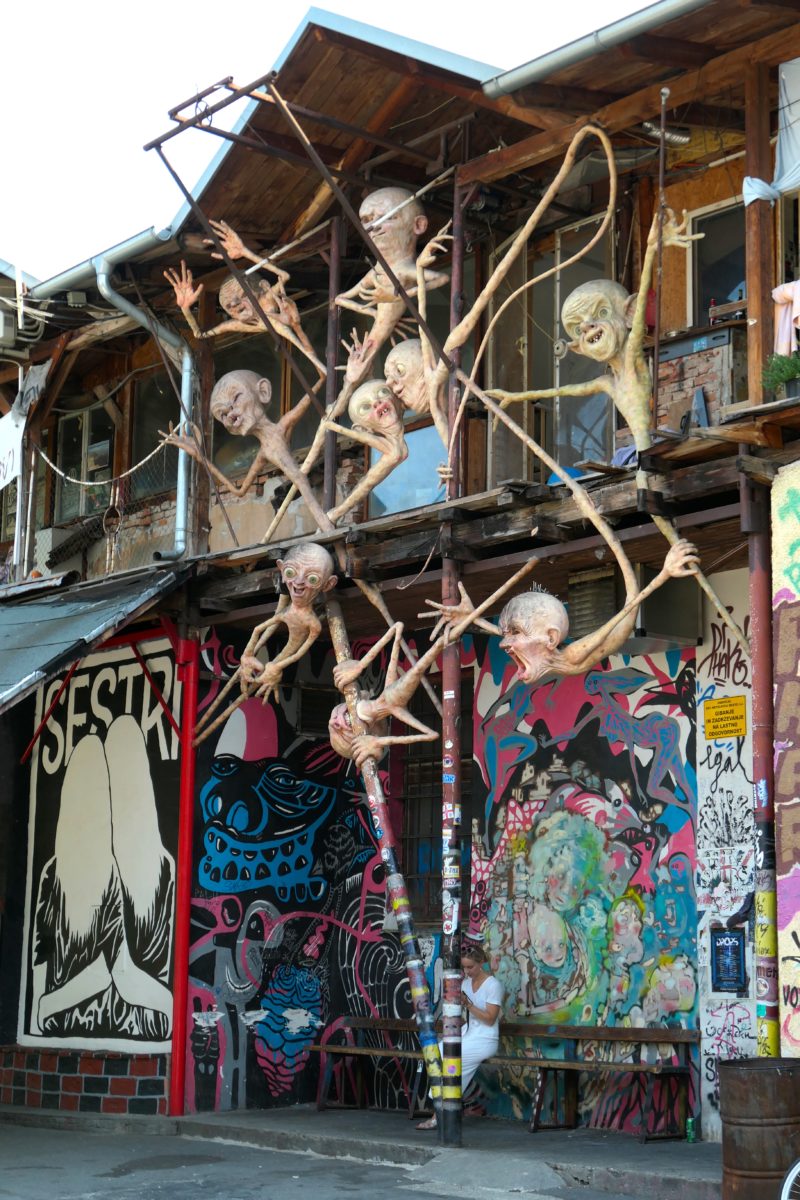
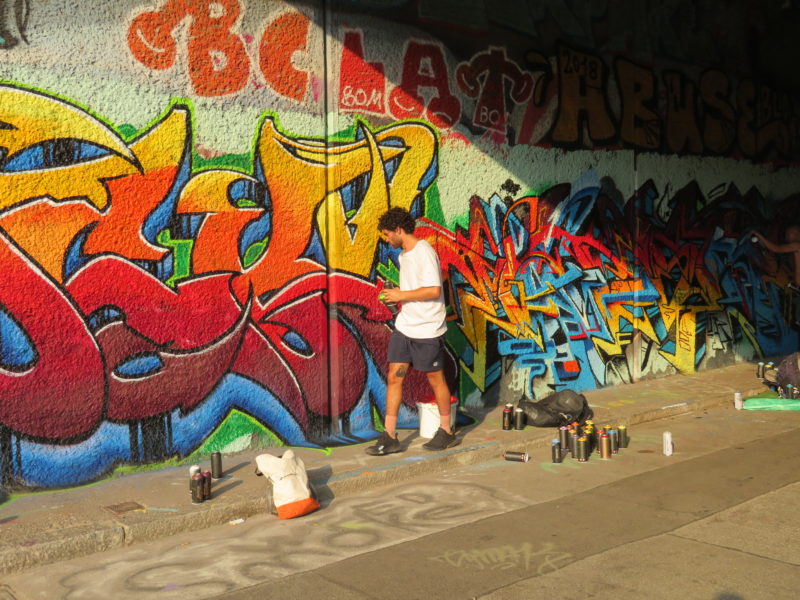
Which can also be said for the graffiti artists of Miami who certainly depict a nice subset of dangerous women, photographed a few years ago. (And who, no doubt, provide instantaneous joy for a subset of pubescent and not so pubescent boys who can innocently bask in the art rather than secretly surfing the net.)


Tidbits from the Art World

I figured after some weeks of heavy-duty politics I’ll turn to some events in the art world that caught my attention. Do I hear a collective sigh of relief?

You might have read about a recent incident at Honk Kong’s Harbour Art Fair. Cleaners mistook a sculpture by Carol May for thrash and threw it out; when they realized their error, it was too late, the sculpture was already compacted and destroyed. I don’t blame them – the object was a screen-printed cardboard box with the McDonalds Logo on it – looking like the real thing, with the twist of an unhappy mouth instead of a happy one.

I can’t help but grinning at the irony – this is not the first time that art focussed on the throw-away mentality and excesses of our society experiences that very fate.

In 2015 an art installation by Goldie Chiari of empty booze bottles and party favors, titled Where shall we go dancing tonight, was removed by the cleaners. Luckily the champagne bottles and party poppers survived their trip in the trash bags and dustbins, and were re-installed after discovery of the mishap. https://nypost.com/2015/10/27/modern-art-exhibit-mistaken-for-trash-and-thrown-away/ 

The director of the Museion Bozen Bolzano even touted this mishap as a great opportunity to discuss what is art. A question I am unable to answer, in this and so many other cases…. and I am seemingly not the only one.

In 2008 someone fell into a 9ft tall ceramic sculpture by Tatiana Fernandez at London’s Royal Academy and broke it. Subsequent museum visitors and staff thought that the hundreds of shards and larger broken pieces lying around were part of the exhibition. We have clearly added refuse to our schema of what constitutes modern art.

Except for the cleaning crews. Untouched by the intricacies of the evolution of art, they blithely go about their business.

It has happened to Damien Hirst – in 2001 a janitor at London’s Eyestorm Gallery cleared away his pile of beer bottles, ashtrays and coffee cups (meant to represent the life of an artist).

It has happened to Gustav Metzger –  in 2004, the German artist’s installation Recreation of First Public Demonstration of Auto-Destructive Art was on display at the Tate Britain. A museum employee accidentally threw part of it away, a trash bag standing in close proximity to the sculpture. The bag was later recovered, but it was too damaged to display. What is an artist to do? Well, Metzger replaced it  with another bag full of trash. Go figure.

My favorite of all times, though, are mishasps based on good old German Hausfrau values. “In 1986 a 400,000-euro grease stain by Josef Beuys was simply mopped up in Duesseldorf. In 1973 two women cleaned up a baby bathtub Beuys had wrapped in gauze and bandages so they could use the container to wash dishes after an event.” And in 2001 a cleaning lady scrubbed away the “dirt,” a thin layer of paint, in an installation of a bathtub in Dortmund by the late Martin Kippenberger .

http://www.dw.com/en/cleaning-lady-destroys-contemporary-sculpture-with-her-scrubbing/a-15510231

Photographs are of  “art pieces” in another universe, perhaps.


It’s a Distortion.

Objects reflected in water are one of the most (over)photographed subjects I can think of. What makes some of those images interesting is the slight distortion of the reflected scene – like a visual echo, fainter, disrupted just like the auditory ones.

The water must be reasonably still for reflection to work, and so it is no surprise that its reflective surface reminds me of glass.

Glass Blowing is an ancient art, believed to be first found in 1600 BC among the Phoenicians (who were in due course not allowed to travel if they knew the secrets of the art, for fear they would reveal them to potential competitors. Which they, if they escaped, unhesitatingly did….)  Here’s a short  historical overview.


https://www.americanvisionwindows.com/history-of-glass-blowing/


I selected three women glass artists because I have mostly come across men in the profession; glass blowing is arduous and not particularly good for your health; given the clannish approach (not just for the Middle Eastern realms) it is no wonder that women emerged relatively late on the scene.


But they sure bring their own aesthetic, as you can see in the work below. The first two take their inspiration visibly from nature; the last one, from Japan, has a more indirect approach.


Wind & Water


http://www.habatat.com/artist/169-kait-rhoads/

https://www.artsy.net/artist/niyoko-ikuta


I thought I would use both landscape and cityscape reflections to show the range; the latter are more glass inspired simply because of the vibrant colors; but I think the former are the ones that echo in the soul. Well, mine.