Browsing Category

Art

Autumnal Ambling

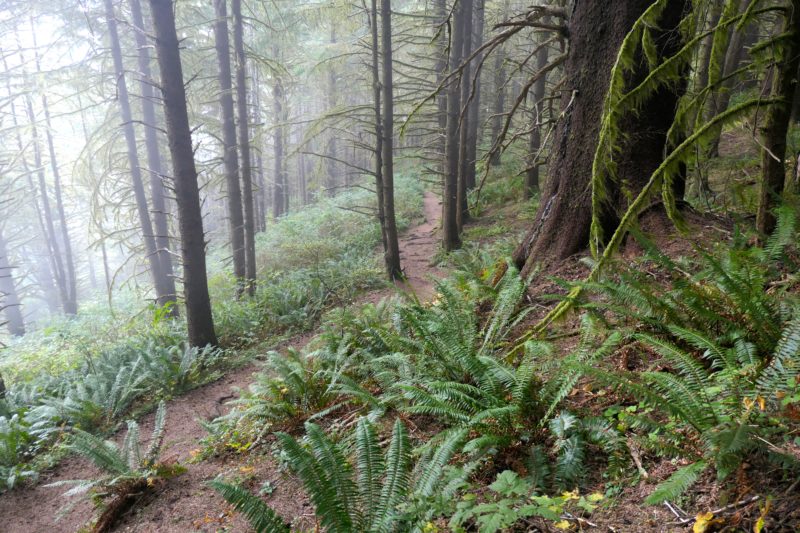
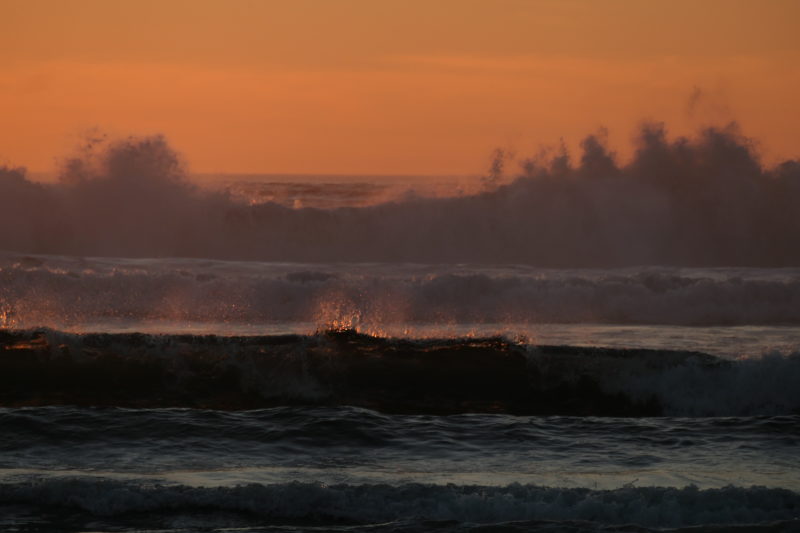
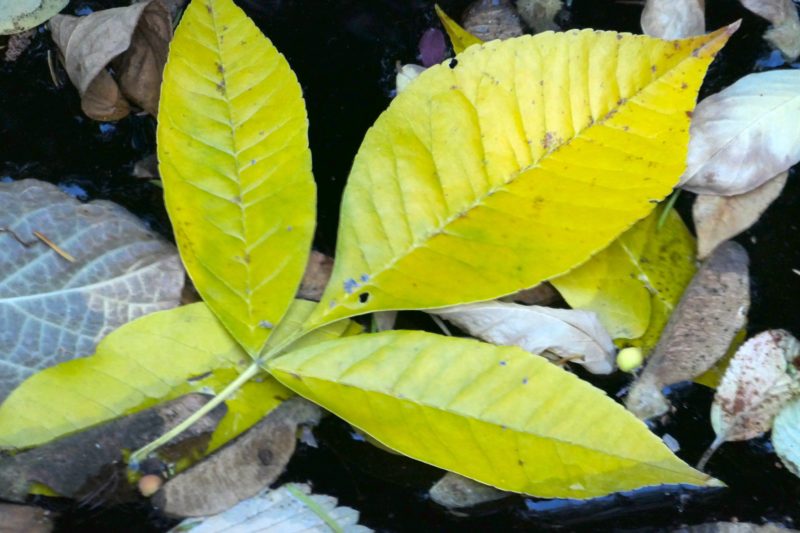
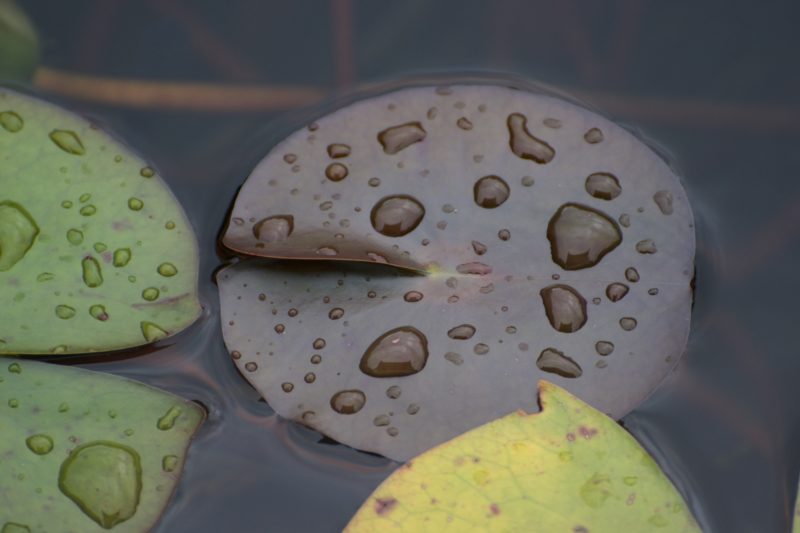
Portland’s Lan Su Chinese garden is a great spot for a fall walk. Or rather an ambling, since something beckons to be looked at every 2 seconds. I have written about it before, and indeed today’s images were taken last October, but they perfectly represent what is there now. What they did not capture is this month’s exhibit, though, by Alice Debo, a graphic artist, and Jen Fuller who works with glass. I had the opportunity to see Jen’s representation of leaves in the making – she works in the studio of a friend of mine – the botanicals look like being made out of spun sugar and have a tender fragility that captures the mood of fall.

The mood of fall, the fragile, not tender, version, hits you if you sit down at any corner of this contemplative garden and allow your thoughts to gather. Not sure what’s in yours, but some of my thoughts circle around the various attempts these days, by a variety of actors, the bad as well as the seemingly less bad ones, to curb our constitutional rights.

There is the concerted attempt to curb protests in DC by effectively blocking them along the north sidewalk of the White House and making it easier for police to shut them down. The National Mall, site of MLK’s rousing speeches, Lafayette Square, Pennsylvania Ave, the area at Trump’s hotel. Not coincidentally this comes at the heels of protesters being labeled “angry mobs” and constitutional dissent describes as mob rule.

As Mara Verheyden-Hilliard, executive director of the Partnership for Civil Justice Fund, which opposes the effort, describes: ‘‘And now you have the Trump administration that is not only engaging in extreme rhetoric against demonstrators and suggesting that protests should be illegal, [but] taking concrete actions to suppress dissent and suppress free speech.’’

https://www.seattletimes.com/nation-world/trump-proposal-could-squelch-washington-d-c-protests/


Then there is the National Park Service. It proposes charging organizers for the cost of erecting barricades or reseeding grass.   Arthur Spitzer, legal director of the American Civil Liberties Union (ACLU) in the District of Columbia points out that fee requirements could make mass protests “too expensive to happen.”

So many inroads to curb dissent. It all reminds me of the 1970’s in Germany, where a new law stated that even peaceful demonstrators could be charged for the entire cost of police operations, helicopters, wate canons, over- time and all, if they were present at a demonstration where violent actors did not disperse upon police instruction. Think about your willingness to go and demonstrate if by no action of your own your life can be ruined if you are the bystander the cops happen to get their hands on.

Closer to home, we had  yet another violent clash between white supremacists and left protesters this week. https://www.portlandmercury.com/blogtown/2018/10/15/23708319/joey-gibson-encouraged-proud-boy-violence-in-portland-they-are-going-to-feel-the-pain

In response, beleaguered Portland Mayor Ted Wheeler proposed an emergency ordinance that would clamp down on how protests are handled. It would allow the police commissioner in charge (currently Wheeler) to assess if a planned protest will become a threat to public safety based on “statements or conduct” by members of any protesting groups or based on “other credible information” obtained by police before the event. He can then restrict time and place of any planned protests well as how many people are allowed to participate.  This is particularly worrisome given the Portland Police Bureau’s use of the “both sides” narrative, equating aggressors from the alt- right with reactions from the Antifa -left.

As commissioner Chloe Eudaly, who is not happy with how fast this proposed ordinance is pushed through, points out:”There is a legitimate balance to be struck between public safety and free speech,” Eudaly went on. “In my view, this begins with an acknowledgment that in our city, although our policies must be content-neutral, it is far-right extremists and hate groups who are necessitating these measures.” PPB, for example, has only now acknowledged that they confiscated whole caches of fire weapons brought in by the white supremacists at previous brawls back in August. No charges or arrests, the and now, just like there were no arrest in NYC some days back when the very same Proud Boys engaged in violent clashes. No wonder comparisons of police passivity during the Jim Crow era and police inactivity now are starting to crop up in the media.

The ACLU gave this statement:

“The mayor’s proposal grants broad authority to the mayor’s office to regulate constitutionally-protected speech and assembly with no meaningful oversight for abuse,” said dos Santos in a press statement. “This action by the mayor demonstrates a lack of trust in the public and is an end-run around our usual democratic processes.”

https://www.wweek.com/news/city/2018/10/15/aclu-on-portland-mayors-new-policy-we-already-have-laws-against-street-fighting-and-violence/

Art today:

北宋 郭熙 樹色平遠圖 卷
Old Trees, Level Distance

Artist:Guo Xi (Chinese, ca. 1000–ca. 1090)

Period:Northern Song dynasty (960–1127)

Date:ca. 1080


Heavy Metal


“I’m interested in cultural phenomena that symbolize oddness and excess. Currently I’m looking at competitive table-setting competitions, home decorating in the era of Reaganomics, and Louise Linton’s infamous Instagram post full of designer goods and hurt feelings.” So answered Katherine Vetne when asked about the sources of inspiration and influence for her metal art.

http://katherinevetne.com

This was one of five question posed to many of the women artists in a show currently on view at the National Museum for Women Artists in Washington, D.C., titled Heavy Metal.


It is another show I’m not able to visit, but that caught my interest for a number of reasons. For one, the exhibit is the 5th installment of a Women to Watch series, where artists are found through collaboration between outreach committees and museum curators, thus widening the circle of potential participants that might otherwise escape curators’ attention.

Secondly, I really like the project of giving the same questions to almost all of the artists and then putting their answers on the website. Beyond asking what they like best about working with metal and how the current work emerges from their overall body of work, what their favorite tool is, and the above mentioned query about inspiration, they are also asked which recent exhibit they saw made the biggest impression. In combination you really learn something about each artist that could never be conveyed through a simple artist statement alone, and the comparison between the participating artists is enlightening and helps to reflect on their work.

https://blog.nmwa.org/tag/heavy-metal/

Third, the title of the show caught my attention.  Too cutesy by far, I thought first. But when you are told this show is touching on gender discrimination with metal work being a male domain, it elicits some curiosity, particularly when viewing the lightness, almost ephemeral quality of many of the displayed object. More importantly, though, the title could perhaps refer to the heavy topics tackled by many of the works, from environmental destruction to the Syrian war.

Here is a video of one of the participating artists, whose work Palmyra captures the grief over the war in Syria in ways that are palpable even if you just see a photograph of the artwork.


Overall, a show of women working in notably diverse ways with metal, from process to size of the artworks is enlightening. Give it  look. https://nmwa.org/exhibitions/heavy-metal 


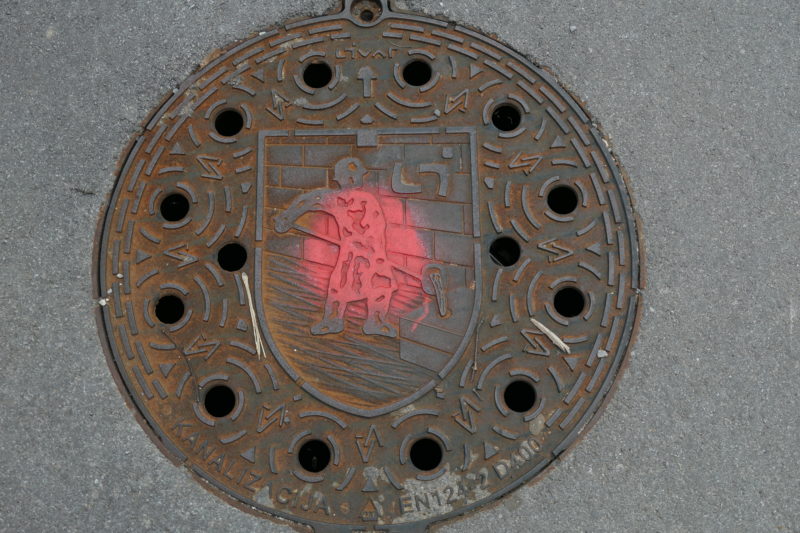
Photographs today are of metal details caught on camera in my walk abouts.


Mihrab

“My art focusses on the power of women – to remind myself I have power.” I heard this sentence in an interview with Hend al-Mansour, a Saudi-Arabian artist working with screen printing and installation, who emigrated to the US in 1997 at age 41. The oldest of 12 siblings, born in the small town of Al-Hasa in Saudi-Arabia, she seems quite powerful to me. She went to medical school in Egypt, practiced cardiology for decades, engaged in her art that was quite controversial in her Islamic environment, and took the harsh step of leaving for work at the Mayo Clinic. Upon arrival she was diagnosed with cancer, and treated throughout her 2 years of internship, working all the while.

The forced recognition of how short life might be led to a decision to engage fully in the arts – promptly working towards a an MFA from MCAD in 2002 and an MA in Art History at the University of St. Thomas in St. Paul in 2013. Al-Mansour received a Jerome Fellowship of Printmaking in 2013/14 and the Juror’s Award of the Contemporary Islamic Art exhibition in Riyadh, Saudi Arabia, in 2012. This year she received a McKnight fellowship and has a solo show at the Arab American National Museum in Michigan.

http://www.arabamericanmuseum.org/About-the-Museum.id.3.htm

Her Mihrab project combines her passions: a focus on women, on (in)equality in the Islamic world, on introducing Western viewers to modern Arab art which is often figural in contrast to the traditional calligraphy of Islamic art.

She installs portraits of several women in prayer niches in the style of traditional mosques called Mihrab (usually unavailable to women,) made out of paper and assorted ephemeral materials. Prayer rugs display some relevant symbols for each woman and they hold, in their portraits, objects of value to them that squarely place them either in the places they lost and long for, or the places where they have arrived.

https://www.hendalmansour.com/mihrab-project.html

Another exhibition I wish I could see for myself instead of reading about. What I did see can be found in the photographs from this weekend’s Arab Festival in PDX. Lots of strong and successful women in the picture, including some of the lawyers who organize this annual event. Vibrant colors, too, just like in al-Mansours art.

Urban Aesthetics (Ljublijana)


You can find a lot of art, both curated and spontaneous, in the streets of the old city center of Ljublijana. (And a lot of tourists taking care of their blisters…)

There are sculptures,

sudden vistas appearing on street corners,


church doors incongruously modern on their baroque hosts,


surprise alleys,


windows and corners


and facades.


Across the river, however, you encounter an explosion of graffiti, sculpture and objects defying description when you enter the terrain of the Autonomous Metelkova Cultural Center Mesto -an umbrella term for one of the liveliest cultural, artistic, social and intellectual urban areas imaginable on par with other alternative and underground cultures in Europe.

In 1990 a group of more than 200 partner organisations facilitated by the Movement for the Culture of Peace and Non Violence and the ŠKUC Association, formed the Network for Metelkova trying to propose a new use for the former Fourth of July Military Barracks, which had housed troops since 1882 by whoever was currently occupying or running the country. Negotiations with the government showed no results, so that in 1993 the Network occupied the former military barracks in order to prevent its illegal destruction and redevelopment. The squatters have remained to this day, and since 1995 the space of 7 buildings has been a self-organised autonomous zone. Although it has not yet succeeded in achieving a proper legal status, the area was partly registered as national cultural heritage in 2005.

Despite the legal limbo, the many music venues and cultural organizations on location are these days supported by state and municipal funders as well as by diverse local and international sponsors, foreign Embassies, and cultural institutes. The Center is  organized non-hierarchically, with its Forum making decisions using consensus and direct democratic principles. The participating members are too numerous to list here, spanning galleries, music clubs, NGOs, queer festivals, peace initiatives, a hostel and  Infoshop, a social space for research and development in the theory and practice of anarchistic and related movements.  http://www.metelkovamesto.org

It holds up to 1300 concerts annually and young Europeans flock to the festivals organized around underground music.

Equally, if not more importantly, the center offers a home and workshops to both the LGBTQ and disabled communities. Both constituencies face a far more hostile environment in the Balkans than we are used to, evidenced also in that after the addition of some feminist and LGTBQ organizations, the center has faced increasing attacks from the neo nazi right. Metelkova’s biggest challenge, though, is to hold off the forces that ogle this urban location for private housing development. So far they have been successful in persuading the city that as a magnet for cultural events and concerts they enhance the tourist value of Ljublijana overall, which fills public coffers, but the situation is tenuous.

Below is an article from 2015 that comprehensive tells the history.

https://www.theguardian.com/cities/2015/jul/24/metelkova-ljubljana-abandoned-barracks-europe-squat

As a photographer you could spend a week there, just documenting details. I was only able to visit briefly, but certainly caught enough to give you an idea of the profusion.


Urban Aesthetics (Vienna)

Vienna was recently ranked, for the umpteenth time, the most livable city in the world. One of the ranking factors concerns the quality of the urban environment, actively pursued by a city government that understand the advantages of cutting-edge urban planning. Vienna’s administration has made conscious political decisions to open the public sphere to urban artists, granting rights to paint public property and offering permits for large building walls to national and international artists. The city welcomes intercultural exchange and public discussion of urban art and as a result the city benefits from graffiti that is art rather than pure tagging.

It is no coincidence, then, that the largest European street art festival takes place in Vienna, organized for 5 years now by a group of artists under the name of Calle Libre.  They attract major talent

https://www.callelibre.at/artists/

and the festival has grown to include sponsors and cooperation from the most important museums and political and cultural organizations in town, among them the Museum of Modern Art (MUMOK), Museum Quartier, and Frameout Film Festival.

https://www.callelibre.at/partners/

In Calle Libre’s own words, “Our goal is that of showing a different side of street art, aside from the “writings” or “bombings” often identified as vandalism by the wider public. Through our festival we can inform a wider audience on the nature, proportion and potential of street art as a form of art.”  I believe their approach is effective in removing the stigma still attached to so much of urban art.

The programming this year included, next to the live paintings across a week at various sites, workshops, concerts, film and dance performances. A panel discussion about the role of urban art as gentrifier or enhancer saw high powered speakers from the academic world, art critics, curators from the Albertina Museum and political figures. I missed that one.

I was, however, at the spot where a guided tour was scheduled to take us around to reveal not so obvious new works in various districts. Alas, no guide appeared. Admittedly, they had warned it would be canceled if it was too hot, and hot it was.

Luckily, I had explored on my own, and marveled at the work in progress devoted to artists who died 100 years ago and saw major celebration across Vienna’s museums this summer: Gustav Klimt and Egon Schiele. Photographs of the unfinished works are mine, the finished ones gleaned on the net.

Brazilian artist KOBRA riffed on an old photo of Klimt and his cat;

Portuguese artist Kruella d’Enfer (remind me of that name when I am next looking for a pseudonym) paid homage to both Klimt and Schiele,


as did Zesar Bahamonte from Spain.

This last one is located in the second district’s orthodox Jewish neighborhood. One wonders about the reaction to the lack of clothes….

Here is a link to a piece that gives you a bit of background about the festival.

https://www.tedxvienna.at/blog/calle-libre-urban-aesthetics-in-vienna/

The city becomes, of course, more and more colorful with these large surfaces adorned by major graffiti artists; the art draws a particular section of tourists as well, helping the economy. I was most taken by the spontaneous output though, outside of these organized extravaganzas. You can discover real creativity and fantasy and wit on a daily basis by so many unknown sprayers who come and go, not having to fear retribution.

Here are some of my favorite examples, in no particular order.


You find them at play grounds, along the Donau canal, in the alleys of the city or hidden courtyards.  Creativity surrounds you.

As do reminders that you’ll never get the inside jokes.

And we resume


Your Daily Picture is back, reasonably recovered from jet lag and filled to the brim with materials gleaned throughout my trip to Europe. I will pick and choose some of the things I saw during the last three weeks to give you a little taste of the variety.

For today I’ll offer my thoughts on a museum of contemporary art in Ljubljana, Slovenia, my last leg of the 4 country  tour. Click on the link below.


Art on the Road: Slovenia

For Love of Nature

The last artists for this week are Jackie Morris and Robert Macfarlane. She does expressive, lush and simultaneously elegant illustrations for the words written, in spellbinding fashion, by him.  I am willing to make an exception and include a man in this week devoted to women artist, because the book they produced together is a treasure.


I am talking about The Last Words, a compilation of poems based on words that are all linked to nature and have been omitted from the Oxford Junior English Dictionary. Blackberry had to make room for BlackBerry; acorn, bluebell, buttercup, heron and nectar are gone and replaced  with words such as attachment, blog, chatroom and voicemail.


As it turns out, British children spend less time outside than prisoners. Urbanization, difficult access, technological developments that keep the entertainment-hungry in thrall all contribute to a loss of knowledge about nature. Kids, and adults as well, are increasingly unable to define things in nature, much less identify them.  And what you can’t name you often don’t see; what you aren’t familiar with will not be loved. And the absence of love will make it unlikely for you to fight when nature is under attack, given the increasing threats to environmental protection and the exploitation of what little is left of nature.


Morris’s watercolors capture both a sense of awe and a sense of dread, teach about details with care and are utterly devoid of patronizing. They make the words come to life and create potentially more lasting memories, particularly for young readers. However, if you read the attached article below, Macfarlane got the primary attention, when the book became an overnight success. What else is new.

https://www.washingtonpost.com/outlook/how-the-loss-of-vivid-exacting-language-diminishes-our-world/2017/12/08/4630e920-c265-11e7-84bc-5e285c7f4512_story.html?utm_term=.50e6dcbe6c21

I ventured out into a meadow yesterday, to provide my own illustrations for what is waiting for us out there. Wandering through clouds of chamomile scent, whole fields of it in bloom, surrounded by flitting swallows, I felt uplifted from this rotten week.I have certainly been trained well to be able to name most of what I saw, at least for flora. I wonder if I gave that gift sufficiently to my own offspring, or if they belong to the 2/3 of the population who cannot identify a Hawthorne tree…much less a barn owl.


Here is to feeding the young, their minds as much as their bellies….


A closer Look

In my time I have been known to be a drama queen.  My fits pale, though, when compared to one of the greats: Dora Maar, known, for the most part, as one of Picasso’s muses. That role has always overshadowed her own artistic career. If you take a closer look, you find that she was a brilliant photographer, much involved in developing surrealism, until she gave up photography to heed Picasso’s incitement to turn to painting, (less stellar in its results.) Her photographic documentation of Picasso’s weeks of painting Guernica is revelatory.

Having previously failed, she finally managed to get his attention and his affection by stabbing her gloved hand with a knife drawing blood while seated in a cafe at a neighboring table. The soiled artifact found place of honor in Picasso’s studio, and she found a place in his bed – alas to be shared by not one but eventually two other mistresses.

Detailed bio can be found here:https://www.artsy.net/article/artsy-editorial-surrealist-photographer-picassos-muse

For many years there was nothing but drama, and she was painted by the master exclusively depicting negative emotions and tears. (Do we really want to call someone a master who publicly declared that for him women were either doormats or goddesses? You decide.) When her scenes became violent, and she cracked under the strain of the end-of-war years, she was committed to hospital, forced under electro shock therapy and eventually put by her lover into psychoanalysis with Lacan, his close friend.

(If you want to read a short, incisive, brilliantly funny essay on jocular Jaques, go here. The book review of Lacan’s last lover’s reminiscence is a treat! (In fact it was the only thing that made me laugh on a day where Kennedy’s retirement brought the future of constitutional law up for grabs. But I digress into politics. Must not.)

https://www.spectator.co.uk/2018/04/the-selfish-shrink-life-with-jacques-lacan/

Back to Maar.  I am attaching a link that shows a number of her photographs, some famous, many less familiar.  It is strong work, here and there dotted with humor. It also shows someone perceptively in tune with the social conflicts of their era.

After two years of analysis, Maar regained her poise and for some time re-entered her Paris circles. More and more drawn to mysticism and then the Catholic Church, she eventually became a devout recluse, living in her house in Provence, focusing on painting and religious services. She died, almost 90 years old, in 1997.  I wonder how different her life could have been, and her photography make an impact, had it not been for the fateful alliance with a cruel and abusive man.

http://www.all-art.org/art_20th_century/maar1.html

Photographs are from Paris, selected for what I believe might have suited her sensibilities.

Maar’s Surrealist work is on display at SFMOMA and will be featured at Paris’ Centre Pompidou and L.A.’s Getty Center in 2019.