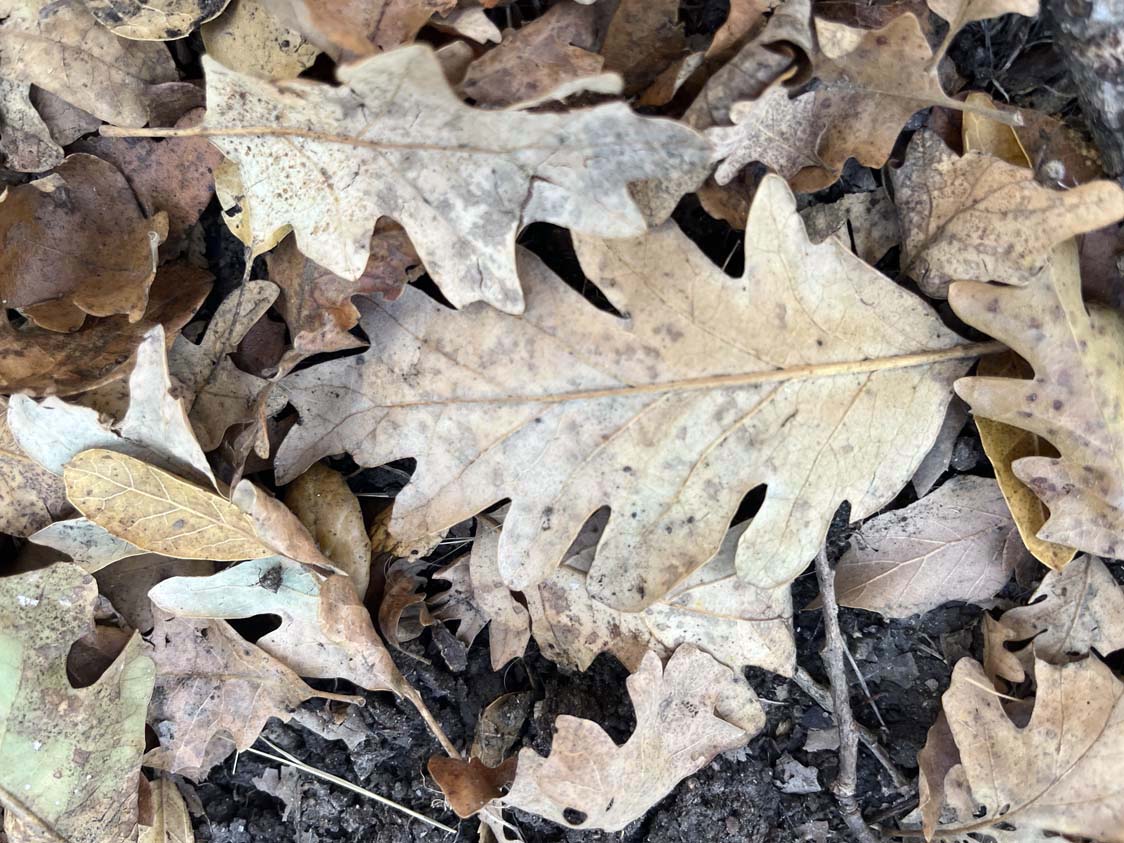
Be prepared for a lot of all over the map musings today, started by my thinking about the beauty of nature after a walk through the glorious fall leaves. In the middle of a city, no less, during a season where nature seems to dominate the man-made surround from all sides, above and below.


Two things came to mind: is it ok to have a conversation about leaves at a time where so many other topics eagerly await our attention? After all, this is what Bertolt Brecht, one of my favorite writers, advised in his poem “to those who follow in our wake”: “What times are these, in which a conversation about trees is almost a crime for in doing so we maintain our silence about so much wrongdoing!” (Below is a great translation by Scott Horton of this poem written in Danish exile in 1935-1938, which can be found, with annotations, here.)
I
Truly, I live in dark times!
An artless word is foolish. A smooth forehead
Points to insensitivity. He who laughs
Has not yet received
The terrible news.
What times are these, in which
A conversation about trees is almost a crime
For in doing so we maintain our silence about so much wrongdoing!
And he who walks quietly across the street,
Passes out of the reach of his friends
Who are in danger?
It is true: I work for a living
But, believe me, that is a coincidence. Nothing
That I do gives me the right to eat my fill.
By chance I have been spared. (If my luck does not hold,
I am lost.)
They tell me: eat and drink. Be glad to be among the haves!
But how can I eat and drink
When I take what I eat from the starving
And those who thirst do not have my glass of water?
And yet I eat and drink.
I would happily be wise.
The old books teach us what wisdom is:
To retreat from the strife of the world
To live out the brief time that is your lot
Without fear
To make your way without violence
To repay evil with good —
The wise do not seek to satisfy their desires,
But to forget them.
But I cannot heed this:
Truly I live in dark times!
II
I came into the cities in a time of disorder
As hunger reigned.
I came among men in a time of turmoil
And I rose up with them.
And so passed
The time given to me on earth.
I ate my food between slaughters.
I laid down to sleep among murderers.
I tended to love with abandon.
I looked upon nature with impatience.
And so passed
The time given to me on earth.
In my time streets led into a swamp.
My language betrayed me to the slaughterer.
There was little I could do. But without me
The rulers sat more securely, or so I hoped.
And so passed
The time given to me on earth.
The powers were so limited. The goal
Lay far in the distance
It could clearly be seen although even I
Could hardly hope to reach it.
And so passed
The time given to me on earth.
III
You, who shall resurface following the flood
In which we have perished,
Contemplate —
When you speak of our weaknesses,
Also the dark time
That you have escaped.
For we went forth, changing our country more frequently than our shoes
Through the class warfare, despairing
That there was only injustice and no outrage.
And yet we knew:
Even the hatred of squalor
Distorts one’s features.
Even anger against injustice
Makes the voice grow hoarse. We
Who wished to lay the foundation for gentleness
Could not ourselves be gentle.
But you, when at last the time comes
That man can aid his fellow man,
Should think upon us
With leniency.
—Bertolt Brecht, An die Nachgeborenen first published in Svendborger Gedichte(1939) in: Gesammelte Werke, vol. 4, pp. 722-25 (1967)(S.H. transl.)

***
I decided in favor of talking about nature, regardless. Partly because I am still grappling with one of the most interesting things I picked up last week. The French philosopher Bruno Latour argues that ‘nature’ can’t exist in isolation, but only in relation to the ‘artificial’ or the ‘human-made. In drawing a solid line between these two domains, we’re making a moral judgment rather than an ontological one: nature as good, its opposite as bad. Thinking outside that binary, he suggests, means rethinking the world not only as something acted upon by human agents, but as populated by other beings with agency of their own. (Ref.)
Not sure I buy the premise that we like to think of nature as good and artificial as bad – there are cultural objects, “man-made” paintings or buildings, for example, that take my breath away just as the fall leaves surrounding me right now; there are natural manifestations like pandemics that are inherently horrid. But I am interested how the philosopher exposes a link, rather than divide, between the two concepts.

Watch how his argument unfolds in this 6 minute video – with memorable footage by Barcelona-born, London-based filmmaker Gerard Ortín Castellví. Latour suggests a clever solution allowing us to abandon the dichotomy: everything is artificial because everything is the result of agency of someone or something that produced the outcome. Everything has been “engineered” by life forms, some of it good, but not all of it good.
(The video is one in a series of remarkable works dating back the last decade or so – A Vocabulary for the Future is a project out of Spain that grapples with the question of whether or not we have the words we need for thinking about the future. They ask: “Do they serve ideas and concepts of the past or must we create new ones the to name another possible world? Where will we find these words that have not yet been spoken?” Contributors are philosophers, cultural thinkers, sociologists, scientists, artists – you name it.)
Think this through while your feet are shuffling through leaves on asphalt….

***
Confronted with arguments about unnecessary or even mistaken binaries – natural world/artificial world – I was reminded of another claim around political binaries (I warned you, we are getting into the weeds today!).
After the remarkable U.S. midterm election outcome, a lot of people are wondering if the Democratic party needs to adjust to the more progressive forces that were so overwhelmingly elected, or if moderation is the call of the hour, as to not scare off a large part of the population. An interview with Daniel Schlozman, professor of political science at Johns Hopkins, provided a valuable reminder of how these questions pop up.

What can the Democrats’ majority accomplish?
“This majority is big enough that it’s not dependent on the most conservative members of the caucus to pass things—but it doesn’t have anything like a veto-proof majority.”
Do we have pointers if the centrists or the progressives have more to offer for the future, or was either camp over/underperforming?
“In February 2020, E. J. Dionne published a book that mostly went unnoticed—because it was February 2020—called Code Red: How Progressives and Moderates Can Unite to Save Our Country. The thesis was that progressives and moderates are not only stuck together in the Democratic Party, inside a two-party system that isn’t going anywhere, but also that each bloc has qualities the other doesn’t and can’t have. Moderates have a special sauce when it comes to winning races in places that are hard to win. Progressives have a special sauce in that they have a long-term vision of where they want to take the country, and in identifying and instantiating core values—real core values, not the fake, TED Talk kind.“
Progressives are facing powerful incumbents, but they have also an ally: time. It was overwhelmingly the younger voters who pushed in progressives, readying for a change of guard. The older centrists in congress, both House and Senate, are so invariably believed to be linked into a corrupt system of spoils that there will be a push for change. One can only hope that internal party wrangling is not opening a venue for reactionary external forces to divide and conquer.
More importantly, people who lived through an era of advancing fascism, knew that a withdrawal into passivity or compromising spells out disaster – just reread the poem at the beginning of this post. The hardships imposed by fighting, the way it changes you, deprives you, harms you in the process, are real. It is, however, the only option to secure a better world for the generations to come. What was true in 1939 is true in 2026 as well.

Music today: Ernst Busch sings Brecht, compositions by Eisler, Brecht himself reads the poem at the end of the video.