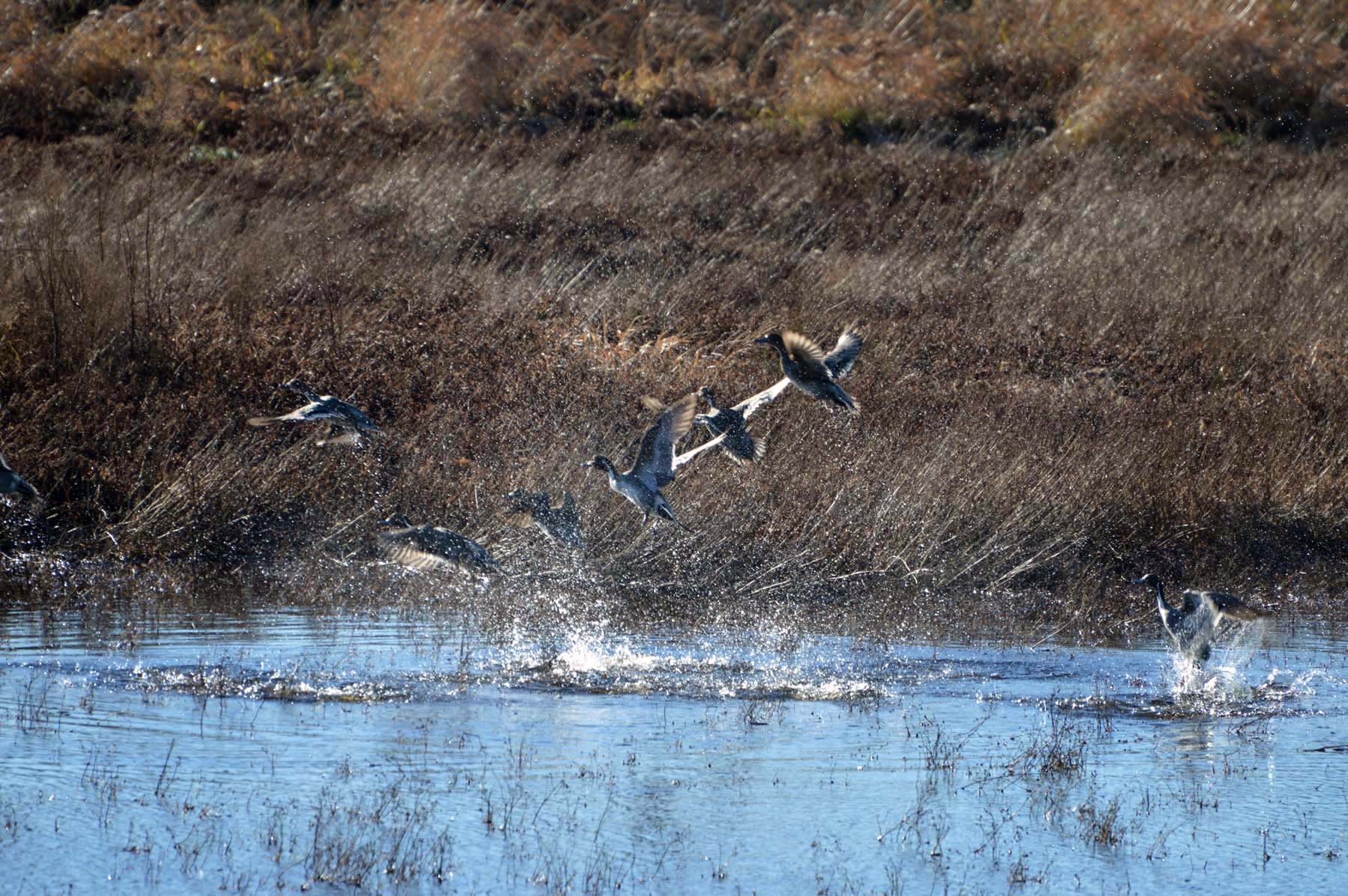
A lot of eggs popped up last week. First a nest with duck eggs right off the footpath – unclear who was more startled, the duck who sat on them when I walked by, or I, when the duck flew up in a panic, practically fluttering into my face. (If s/he does that every time someone walks by, I predict there will be zero ducklings hatched…)

Next I saw a number of eggs or egg-shaped forms of various materials arranged in the house of a friend. A ceramic artist herself, she creates beauty with whatever she finds.


We shared the excitement of seeing bushtit parents flying in and out of a nest next to her kitchen window. Alas, the very next day the nest was destroyed by predators. Another generation lost.


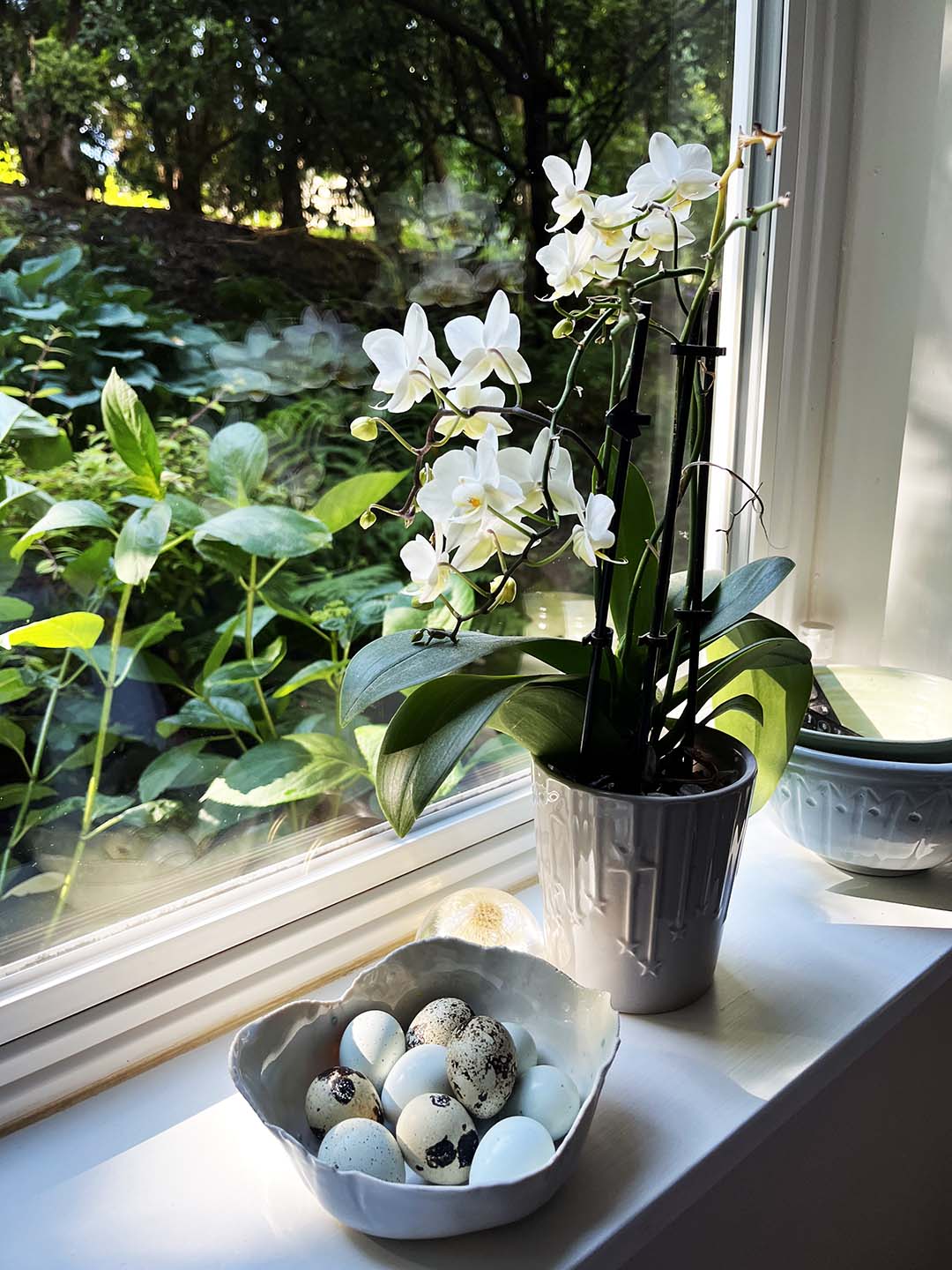
My friend sent me home with a bag of quail eggs which are now on my windowsill until they, predictably, rot and start to smell up the kitchen. The eggs, in turn, triggered thoughts about genetics, since I had just read Brian Klaas’ fascinating essay about research into genetics and the question who owns your genome. If researchers discover information about our genome that contradicts everything we believe to be true about ourselves, should we be allowed to interfere with publication of that knowledge? Should they be allowed to withhold that information from us? And how are those questions linked to potential abuse by people with racist agendas? If you find the introduction below of interest, here is the link to the whole piece:
“…..Thus began a descent down a fascinating rabbit hole into the thorny philosophical debates that define modern research into population genetics. What happens when longstanding historical narratives of identity collide with hard genetic evidence? Should DNA scientists always publish findings that could destroy a population’s sense of itself? And, if not, who gets to decide which kinds of scientific research are too sensitive to release?”

Science caught my eye, or my brain, as the case may be. But so did poetry – again related to stories of origin, linkage to tribal membership as juxtaposed to “others,” and, of course, quail eggs. The lines below were published in 2022 (link in the title.)
1. Seventeen months after I moved off the reservation, I traveled to London to promote my first internationally published book.
2. A Native American in England! I imagined the last Indian in England was Maria Tall Chief, the Osage ballerina who was once married to Balanchine. An Indian married to Balanchine!
3. My publishers put me in a quaint little hotel near the Tate Gallery. I didn’t go into the Tate. Back then, I was afraid of paintings of and by white men. I think I’m still afraid of paintings of and by white men.
4. This was long before I had a cell phone, so I stopped at payphones to call my wife. I miss the intensity of a conversation measured by a dwindling stack of quarters.
5. No quarters in England, though, and I don’t remember what the equivalent British coin was called.
6. As with every other country I’ve visited, nobody thought I was Indian. This made me lonely.
7. Lonely enough to cry in my hotel bed one night as I kept thinking, “I am the only Indian in this country right now. I’m the only Indian within a five-thousand-mile circle.”
8. But I wasn’t the only Indian; I wasn’t even the only Spokane Indian.
9. On the payphone, my mother told me that a childhood friend from the reservation was working at a London pub. So I wrote down the address and took a taxi driven by one of those London cabdrivers with extrasensory memory.
10. When I entered the pub, I sat in a corner, and waited for my friend to discover me. When he saw me, he leapt over the bar and hugged me. “I thought I was the only Indian in England,” he said.
11. His name was Aaron and he died of cancer last spring. I’d rushed to see him in his last moments, but he passed before I could reach him. Only minutes gone, his skin was still warm. I held his hand, kissed his forehead, and said, “England.”
12. “England,” in our tribal language, now means, “Aren’t we a miracle?” and “Goodbye.”
13. In my strange little hotel near the Tate, I had to wear my suit coat to eat breakfast in the lobby restaurant. Every morning, I ordered eggs and toast. Everywhere in the world, bread is bread, but my eggs were impossibly small. “What bird is this?” I asked the waiter. “That would be quail,” he said. On the first morning, I could not eat the quail eggs. On the second morning, I only took a taste. On the third day, I ate two and ordered two more.
14. A gathering of quail is called a bevy. A gathering of Indians is called a tribe. When quails speak, they call it a song. When Indians sing, the air is heavy with grief. When quails grieve, they lie down next to their dead. When Indians die, the quails speak.
(Alexie has acknowledged sexual misconduct allegations in 2018, and apologized. Many of his prizes and fellowships were rescinded or renamed. I do not know if he has written a novel since then, but his short writings appear on his substack. As always, we can debate if you can separate the person from the work, but I often go back to reading his words.)

May the quails be silent this weekend, and may lots of eggs hatch….
***
Speaking of hatching: PLEASE SAVE THE DATES:
I have two exhibitions coming up. One will hang at the Columbia Gorge Museum in Stvenson, WA, starting June 24, 2026 with a reception on September 11th, 2026 ( a combined celebration of lace artist Maggi Hensel Brown and community lace makers and my photographic work.)

Fragility is a 2025 series of photomontages that grew out of ongoing concern about insufficient environmental protection. Fauna and flora in the depicted landscapes – photographed mostly around the Pacific Northwest – are endangered. Climate change and the renewed threat of industrial extraction of resources, forests and minerals alike, will do irreparable harm. I thought the ephemeral nature of clouds and the fragility of lace (superimposed on the landscapes) were fitting symbols for why we need step up in our efforts to turn things around.
—
The other one opens with a reception on February 5, 2027 6-9 PM at the Patricia Reser Center for the Arts.
Collective Effervescence brings together the work of Diane Jacobs, Susan Murrell and my own to explore our evolving relationship with the natural world. Rooted in shared energy, connection, and interdependence, the exhibition examines how human actions shape and destabilize the landscapes we inhabit. Through painting, photography, printmaking, and mixed media, we create environments that are at once familiar and altered. Together, we invite viewers to look closely, to explore and perhaps share the artists’ fervent belief that we can have a positive impact on preserving nature, once we shift from individual awareness to shared responsibility, and from observation to action. My contributions come from a new series When We Broke the World.

I will post more detailed information closer to the dates – just put them in your calendars for now!
Music today is from all around the world, I guess every shared gene pool! A collection of modernized folksongs. A beautiful album by Marisa Anderson.