Browsing Tag

Climate Change

Plums

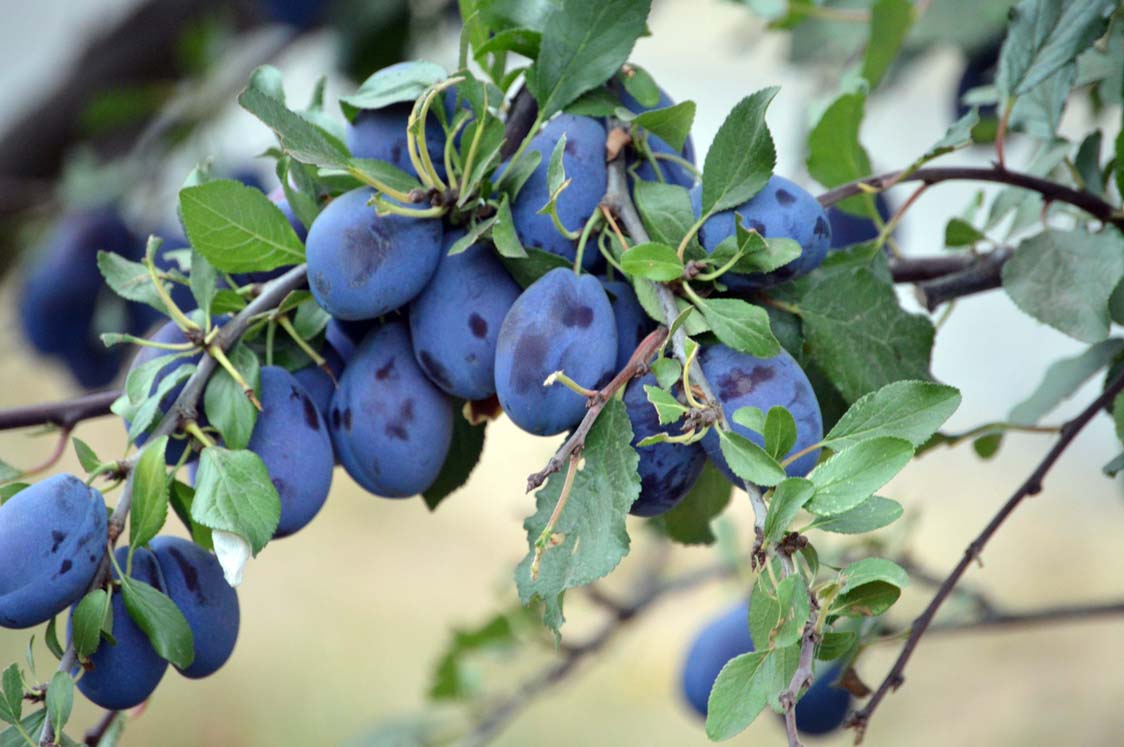
We went plum picking this week before the rains set in. An afternoon as good as it gets – with a happy three-year old bouncing around the orchard,

a happy baker filling her bags with ripe, juicy fruit,

a happy photographer relishing saturated colors, happy bees and wasps providing constant noise in the background, late summer sounds.

Some of the fruit trees not so happy, alas, the heavy load ripping branches right off the stem. What got flung into the nearby grass looked like late season Easter eggs.

Plums are one of the earliest fruit domesticated by humans, over 2000 years ago in both China and Eastern Europe. They can be dried and thus kept for lean times. Both fresh and dried plums have enormous nutritional value and are helpful for digestion. They are filled with antioxidants which helps combat inflammation in the body and also protects against cancer. They contain quercetin, a type of polyphenol that can improve heart health and brain function related to memory. They are also packed with potassium which helps bone health. A study of postmenopausal women who had prunes in their daily diet found lower rates of bone loss and improved overall bone health. Plums against osteoporosis! They do contain a lot of sugar, but apparently also a chemical that prevents sugar spikes in your blood.

And, of course, their beauty provided models for painter throughout the ages, as you can see below.

Lest you think I have changed and stick to the happy stuff – here are some thoughts that occurred to me after our outing, elicited by an article in Vox that I’ll summarize below.

The urge to eat locally produced food – and what is more local than U-pick farms? – has increased, given the many food-borne illnesses we have witnessed blossoming under the Trump Administration. There isn’t a day where there is not another food recall. Since May, the United States has seen more than 17,000 lab-confirmed cyclosporiasis cases, likely a huge undercount of what is happening in the general population. People have died from listeria infection brought on by cottage cheese, salmonella outbreaks originated in eggs and jalapeños. Frozen blueberries have been contaminated with e-coli, leading to highest warning level recall last week. Alfalfa sprout sickened people, contaminated with salmonella AND e-coli.

There are several factors contributing to these outbreaks, not just the administration’s decision to sharply curtail its ability to monitor for and respond to these outbreaks. Between the FDA and the US Department of Agriculture, which also oversees food safety, and several related agencies, more than 11,000 workers have been lost.  The CDC, which helps respond to outbreaks once they start, has lost about a quarter of its workforce from January 2025 to October 2025. The federal government also shut down several national monitoring programs for foodborne illness in 2025—including for the cyclospora parasite specifically. The state and local agencies that surveil for and respond to food outbreaks have also faced staff cuts because they depend on the federal government for their funding. 

The more general factors for the increase in illnesses we are seeing, are related to climate change, however, and the fact that we rely on globalized food chains. Warming temperatures across the globe increase humidity which helps both salmonella and e coli to thrive. Cyclospora has historically been found in subtropical climates, but now it grows inside the US as well. With warmer temperatures in more northern regions, it is likely to become epidemic here.

In addition, “the sometimes international trip from the farm to the store for a bagged salad kit offers multiple moments for potential contamination, including tainted irrigation water, local wildlife excrement, and poor storage practices, making it possible for dangerous pathogens to take hold before a person even buys their groceries.”

Carefully choose where you get your lettuce from, then, and buy full heads. Better still, get your vitamins with grilled vegetables, with heat putting an end to the offensive buggers. Best: live on prunes! Oh, I wish we could.

Jacob van Hulsdonk Still life with grapes, apricots and plums 17th Century


William Henry Hunt (1790 – 1864) Plums Date unknown by me

HENRY ARCHIBALD MAJOR Plums 1883


Jean-Simeon Chardin Still Life with Plums (1730)

Louise Moillon Still Life with Plums 17th Century

Unknown Early 20th century

Sasja Wagenaar Plums (2022)

Postcard from Provence

Music today is by Dvorak, celebrating natural beauty.
A Path towards Transformation

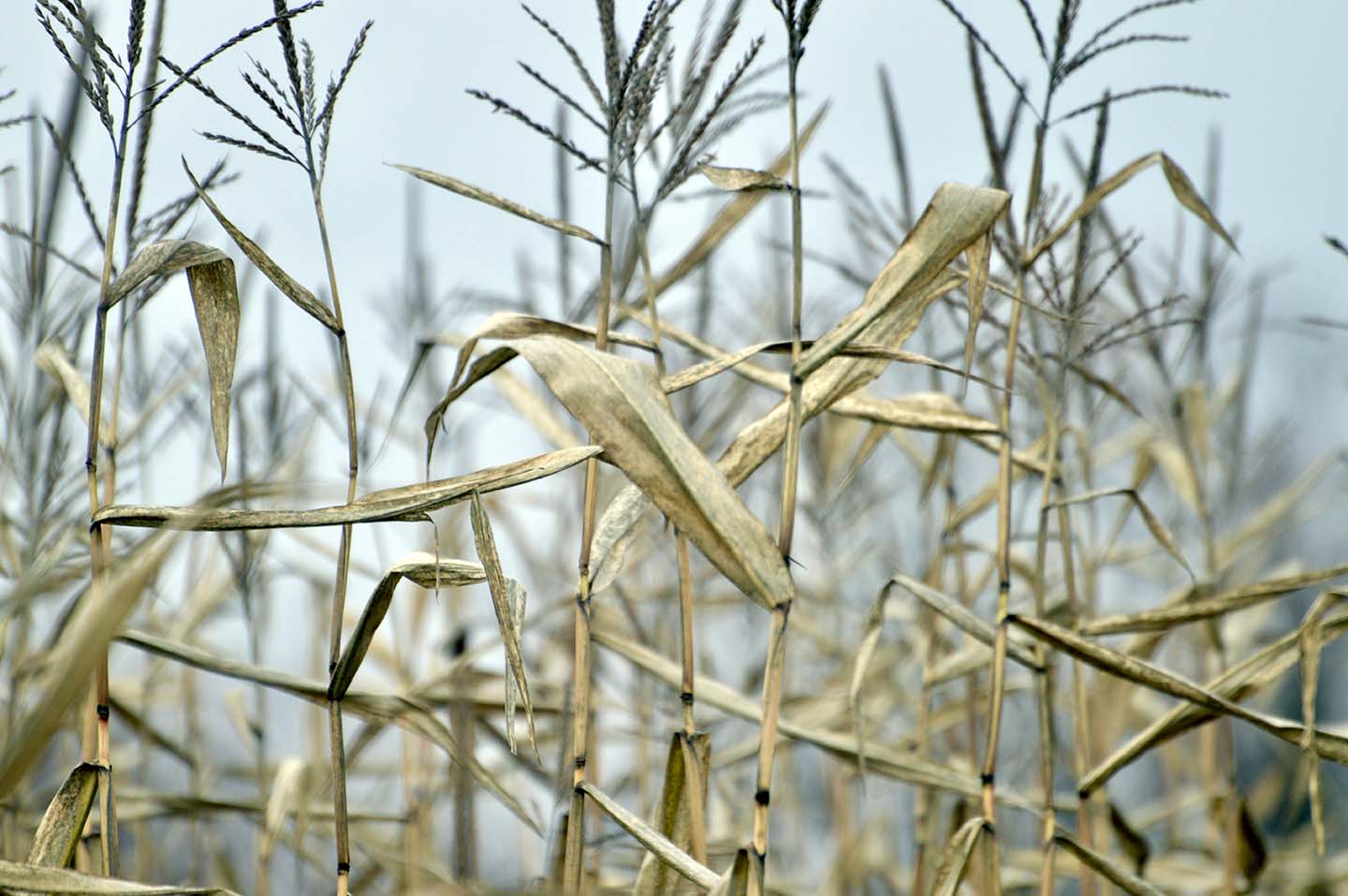
On a dry day last week I walked among the cornfields, aware of climate change with the water levels in the ponds still unseasonably low.

A bunch of corn stalks looked to me like a little band of marchers, moving forwards in determined protest. (Yes, my tendency to anthropomorphize has made it into 2023 intact…and you were worried!)

It got me thinking about what I’ve read in the scientific literature about how to communicate climate change for effective public engagement, in preparation for the documentaries I’ve been involved with. One memorable bit of instruction about collective action came from a TED talk by Maike Sippel, a Professor of Sustainable Economics at the University of Applied Sciences Konstanz, Germany.

Her name popped up again this week in an essay full of suggestions about what might help to change the world’s or our own approach to climate action. Her introduction refers to the proposal of the scientists of the IPCC that presence or absence of climate action in our decade will determine the living conditions on earth for the next 1000 year, a claim I agree with. Humanity is at a turning point. (And yes, I know I repeat myself. That, too, won’t change in 2023.)

Here (in German) are her 12 ideas to aide transformation, loosely summarized and translated by me below.

  • Think of yourself as part of the world, embedded within a community, but also within a timeline. Our actions need to be considered in the context of multiple generations to come.
  • Be grateful. A sense of gratitude to be alive and part of a larger whole can immunize you against the constant push to consume, to own, to search for novelty. Gratitude, perhaps captured in a diary or expressed in other forms of regular communication, can make us more content, and plays a role in how we treat others: it increases a sense of connectedness and generosity amongst ourselves.
  • Acknowledge pain and grief. Surveys reveal that 60 to 90% of respondents admit to climate anxiety – the burden of hearing about ongoing disasters, the fears about an uncertain future and the sacrifices that have to be made. If you talk about your own reactions with others you are strengthened by not being alone, being part of a community that shares both feelings and goals.

  • Base your actions on your values. This will be hard. Our behavior is entrenched, our joys often derivative from sources that are not climate friendly (think consumption of meat, or flying and driving, among others.) Listen to the unease that cognitive dissonance – I want x, but I’m doing y – brings about, and figure out what you can do.
  • Remember that change is possible. Social movement have historically been successful in ways nobody had anticipated. Things now are in flux, with many organizations, scientists, politicians and even international structures starting to call for and implement change.

  • The handprint matters. We all know about our climate “footprint,” the way our individual behavior contributes to noxious emissions. Personal decisions, however, take place within a framework of conditions, set by societies to influence choices, often in favor of industries that call the shots. Price regulation (flying is cheaper than taking the train), food availability (cafeterias are not offering vegetarian fare), social and legal covenants of acceptable behavior all constrain what the individual can do. Individual or collective efforts to change these structures are “handprints” – complementary efforts to the restriction of “footprints”. Individual contributions (fight for meat-less Mondays at your office, join groups to make the cities partly car free, engage in efforts to re-direct subsidies to industries that are not fossil fuel based, etc.) towards more climate friendly, structural conditions might have transformative results.
  • Use tools available for transformational processes. There are lots of leadership trainings available by people who have successfully helped groups with climate projects, for example Art of Hosting and Collective Leadership.
  • Seek out Good News. Fight the click-bait, over-representation of bad news to give your brain a break from permanent stress.
  • Talk about climate change. Not necessarily about the science or statistics, facts and morality, but about your experience with engagement and action, your own, personal way of dealing with the challenges.
  • Consider it an adventure. Transformation is not a walk in the park. You will encounter obstacles and resistance – just like in a real adventure. As heroes and heroines in this story we need courage, and, of course, allies. We will experience growth by overcoming obstacles, and we will persist without knowing if we will ever meet our goals. Every single human being bent towards transformation across history had to live through this, consider yourself in good company.
  • Take care of yourself. Everyone of us is needed for change. It’s imperative that we engage, invent solutions, and join the process with courage and positivity. All that is only possible if we are mindful of balance, and don’t overdo it to the point of burn-out. Too many balls in the air? Consider which one can be safely dropped. Stick to what’s most meaningful for you and is sustainable.

Music today by one of the most talented young cellists around, an arrangement of a Welsh song and excerpts from a classical Elgar concerto. Sheku Kanneh-Mason is a name you will remember and part of a generation that is spearheading change.