Reshuffling the Natural World.
· Vögel, höret die Signale! ·
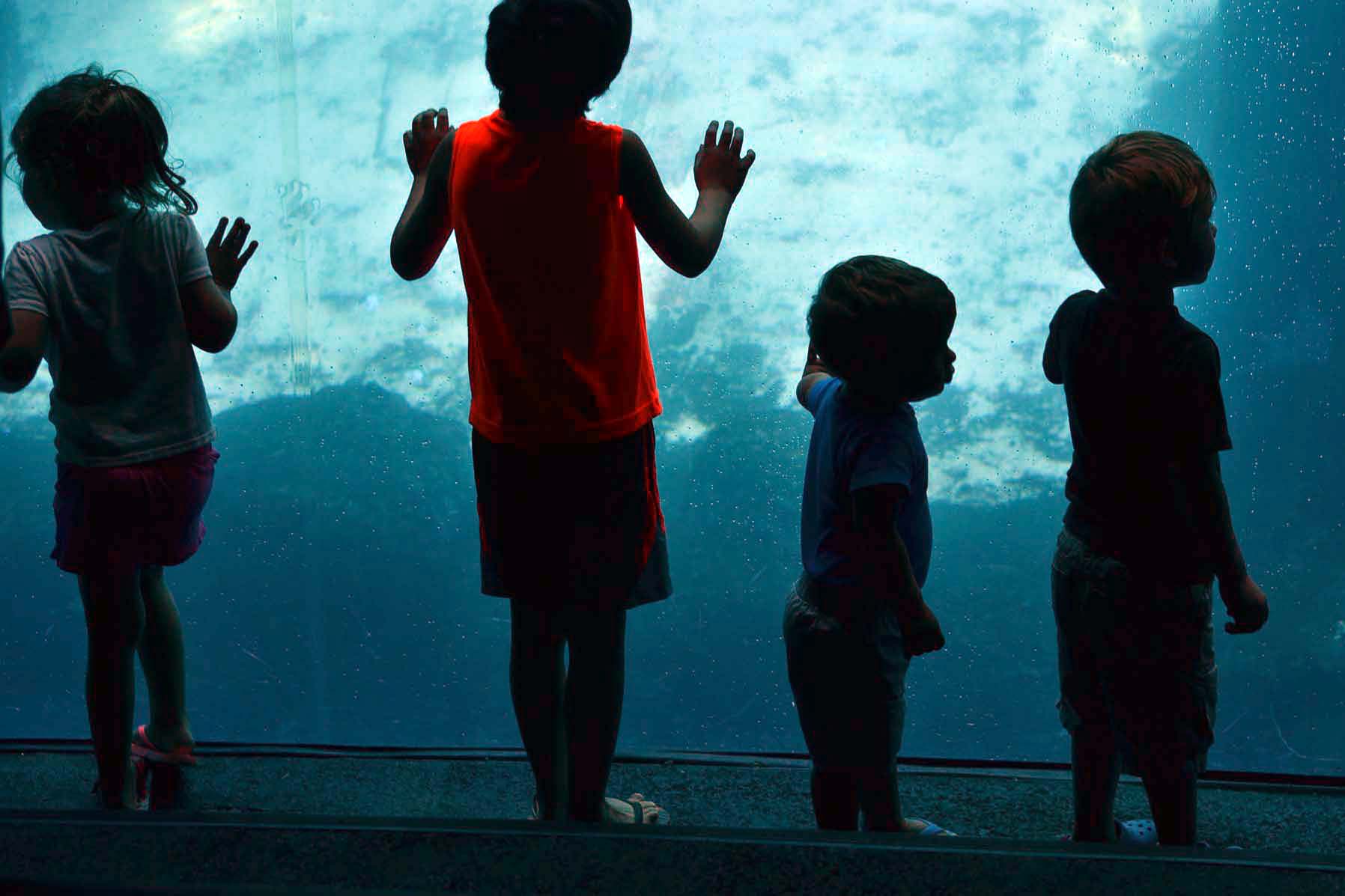
I don’t know about you, but when I go to aquariums or zoos there are a lot of conflicted feelings – from what it means to deprive animals of their freedom and often put them in torturously narrow cages deprived of stimulation, to what it means to have this way of keeping species alive when they are no longer safe in their natural environments. I sometimes wonder if the decorations we find in various tanks and cages are an expression of humor to distract from the zoo keepers’ own conflicted feelings, or if there are yet another sign that we have to put our “civilization” stamp on everything…..


Cue Zed Nelson’s new photo book “The Anthropocene Illusion.” I read a captivating review of it in the New Yorker, a magazine that I avoided to subscribe to for 44 years, long story. Clearly my loss, now that I discover the power of Elizabeth Kolbert’s writing – but I digress. Again.
(Link here to Nelson’s spectacular photography – all the captions below the photographs are provided in his book.)

Polar bears are the largest land carnivore in the world, weighing up to 800kg and growing up to 3 metres in length.
The typical zoo enclosure for a polar bear is one-millionth the size of its range in the wild, which can reach 31,000 square miles (80,290 km²).
Polar bears live in Arctic regions in Canada, Alaska, Russia, Greenland and Norway, in temperatures as low as -46°C (-50.8°F)
–
The book displays photographs taken across the world of settings containing or pointing to animals, settings that try to reproduce the natural world they would inhabit if free. The attempts at providing verisimilitude are, of course, futile, and the photographer very much hones in on the artificiality of the backdrops. In addition, there is magnificent photography capturing civilization encroaching on habitat, or humans making encounters with nature into a distraction, at best.

–
Kolbert summarizes Nelson’s main message:
“But Nelson’s point seems to be that all efforts to reproduce the natural world, whether motivated by crassly commercial interests or ones that are, ostensibly, more edifying, are much alike in the end. The Anthropocene illusion is that we can somehow connect with the natural world at the same time that we have, as Nelson puts it, “turned our back” on it.”

Established in 1885, Niagara Falls is the oldest state park in America. Over 8 million visitors visit annually. More than 5,000 bodies, mostly suicides, have been found at the foot of Niagara Falls.
–
Or as Nelson himself phrases it:
“While we destroy the natural world around us, we have become masters of a stage-managed, artificial ‘experience’ of nature – a reassuring spectacle, an illusion.”
Kolbert again:
“From the mountains to the savanna, it’s alienation all the way down. The volume’s power lies in its relentless impulse toward disenchantment. Wonder isn’t really an option.“

On the southern edge of the Arctic, Hudson Bay is known as the ‘polar bear capital of the world’. Bears come ashore here in the summer when the sea ice melts, to wait for the ice to return in November.
Tour companies cater to an annual influx of tourists eager to see polar bears during the six-week ‘bear season’, when the bears roam the shoreline, waiting for the sea ice freeze over.
–
I see that somewhat differently, having just taken a beloved 2.5 year-old to the zoo, including their fish tank. There is still wonder galore, even if it is somewhat restricted to the short set. And there is something unsettlingly privileged about the claim that connection to nature is lost if it is presented in artificial environments. For inner city kids and poor families in general, the only access to seeing a live animal and not just something on a screen, might very well be the zoo or a cage in a city park. That experience, in turn, might make them more interested and engaged in thinking about habitats or what we do to species other than our own.

At the Chimelong Penguin Hotel in China, visitors can dine alongside captive penguins in a 1,600-seat, glacier-themed restaurant. While guests enjoy a curated spectacle of nature, wild emperor penguins face an uncertain future. The slow-evolving birds have survived for millions of years, yet nearly 70% of their colonies could vanish by 2050 as a result of climate change.
The hotel also offers close-up penguin encounters at the Penguin Pavilion and a Penguins on Parade show at the Penguin Ice Palace Theatre.
–
I am the first to mourn our devastation of nature, as my blog’s writing over and over demonstrates.
Here, for example, is the latest compilation of all the assaults on the environment committed by the current administration. Read it and weep.
But experience with something alive, even if corseted in artificial settings, might teach future generations that there is something worth rescuing.

***
The relationship between nature and human interference has been one of the main topics of art, through the ages, but is particularly prominent in contemporary art informed by climate action. Regular readers might remember that I offered a somewhat whimsical series some years back, focussed on the way habitat is encroached by cities, and animals, in turn, intruding closer into our spaces, a destructive development in both direction, but heavily weighted against them. For Guardians of the Towers (Turmwächter) my photographs of cityscapes were combined with the wild life I captured elsewhere.


There are many more serious approaches, with strong work presented in Germany by, among others, Dennis Siering. His 2022 exhibition Unnatural territories, speculative landscapes was enthusiastically reviewed at the time.

He has turned to a different version of reshuffling nature this year. Together with experts in ornithology, bioacoustics (Andre Siering), audio design (Aleksei Maier), and artificial intelligence (Bastian Kämmer), he has developed sound installations – Radical Climate Action Birds – that translate melodies composed by humans into artificial bird calls.
The synthetic bird songs are broadcasted with solar power for about three hours a day in a public park in Karlsruhe (Supported by the UNESCO City of Media Arts Karlsruhe Project Funding Program for Media Arts), potentially leading to uptake by the birds: mimicking the melodies and gradually importing them into their repertoire. I have no clue if this is actually happening, or if the claims that black bird were the fastest learners, is verified as more than wishful thinking.

Here is the fun part of this installation, though: the melodies are all from anti-fascist protest songs. Bella Ciao, whistled by a black bird, might be quite the wake up call! The idea is, of course, that the resurgence of nationalist and neo-fascist ideas, generally inclined to extract rather than protect natural resources, should be of concern to all of us, with direct reminders from nature itself as brilliant a messenger medium as is conceivable. Instead of illusions of nature transplanted into human environments, it is illusions of culture transplanted into nature itself then, in theory. Would be a riot if it worked….
(For non-German readers: my subtitle “Vögel, höret die Signale! plays on a line in the German version of the International, which says Völker, höret die Signale! Birds (people) listen to the call!
Völker, hört die Signale!
Auf, zum letzten Gefecht!
Die Internationale
Erkämpft das Menschenrecht!
In the English text, the refrain begins with:
So comrades, come rally
And the last fight let us face
The Internationale unites the human race.
The original French refrain: (the anthem was written by Eugène Pottier, in Paris, June 1871; he was a refugee from the Paris Commune, who wrote the poem while in hiding in the aftermath of the massacre of the Communards. It was set to music 2 years after his death by Pierre Degeyter in 1889.)
C’est la lutte finale
Groupons-nous et demain
L’Internationale
Sera le genre humain.
Here is the anthem sung in German for today’s music. And here is Bella Ciao.
Let’s hope the birds are fast learners!